Richard Renaldi: Billions Served
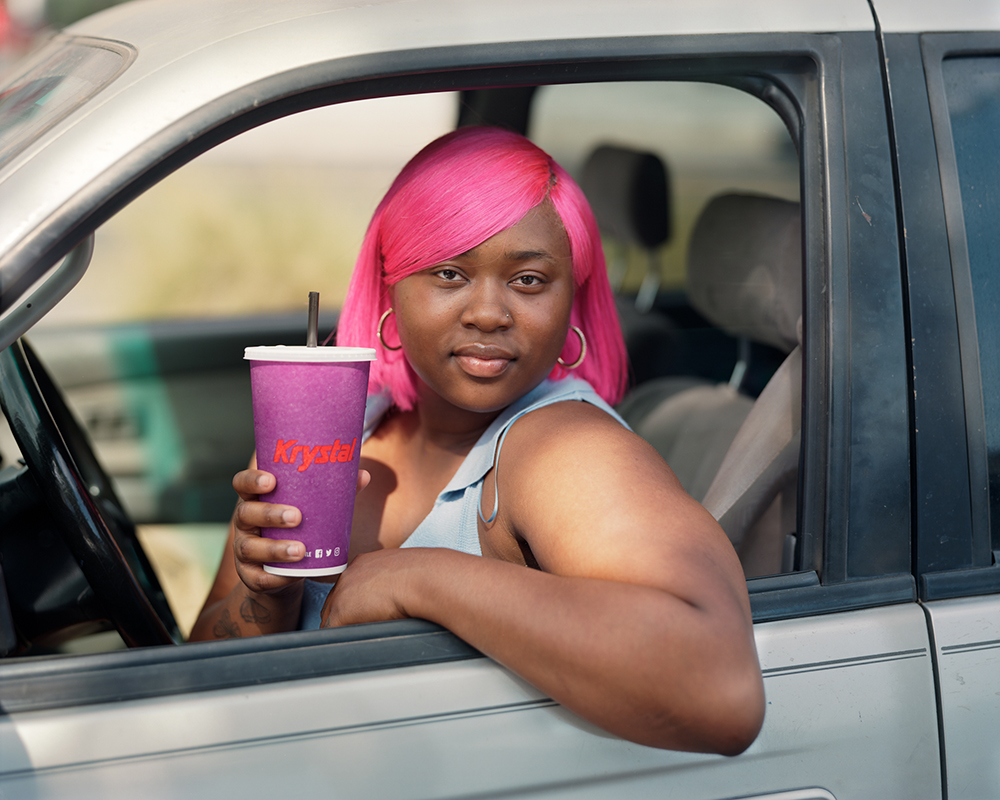
©Richard Renaldi, Billions Served, published by Deadbeat Club
Diving into the global environment of fast-food chains, Richard Renaldi makes up a delicate survey of both a socio-economic reality and an American cultural hallmark.
When I was a child growing up in Los Angeles, I remember vividly the first set of golden arches that appeared in my Silverlake neighborhood. Located at 4348 Sunset Boulevard near Fountain, it quickly became a beacon of good times with my dad—especially on nights when my mom didn’t feel like cooking. Those glowing arches signaled more than convenience; they embodied a cultural shift in American eating habits, one that continues to define the food landscape of our country. So it was with a mix of nostalgia and curiosity that I approached the new visual exploration by another cultural icon, photographer Richard Renaldi.
Richard Renaldi is celebrated for his humanistic portrait series, Touching Strangers, and other projects that probe the connective tissue of contemporary life. He now focuses his lens on fast food’s sprawling cultural footprint in his latest book, Billions Served published by Deadbeat Club. The project examines not just the ubiquity of the fast food industry, but the people, architecture, discarded remnants, and small, telling details that orbit this world of cheap, quick meals. Through Renaldi’s sharp and compassionate eye, the familiar becomes newly strange and revelatory, exposing the ways in which fast food has shaped both our landscape and our daily rituals.
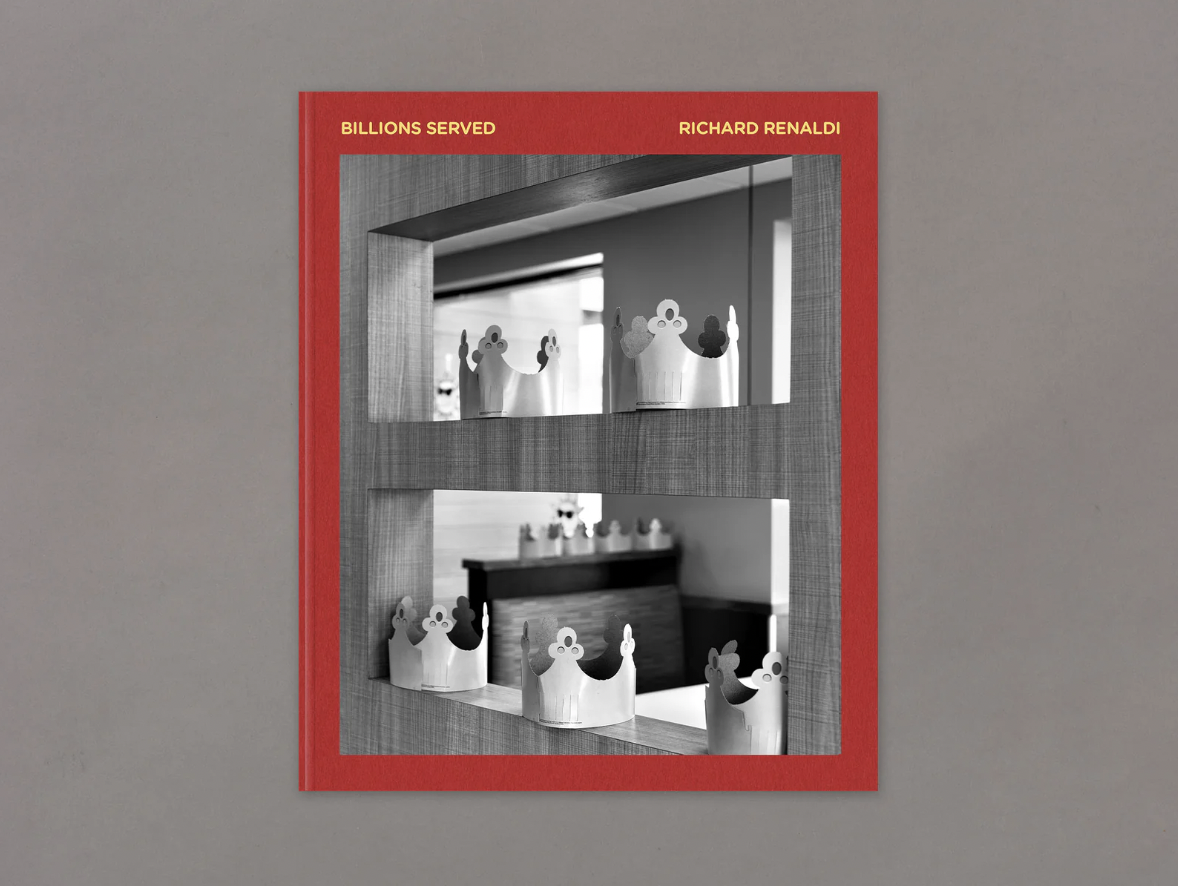
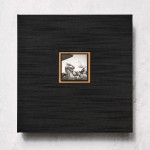
©Richard Renaldi, Cover of Billions Served, published by Deadbeat Club
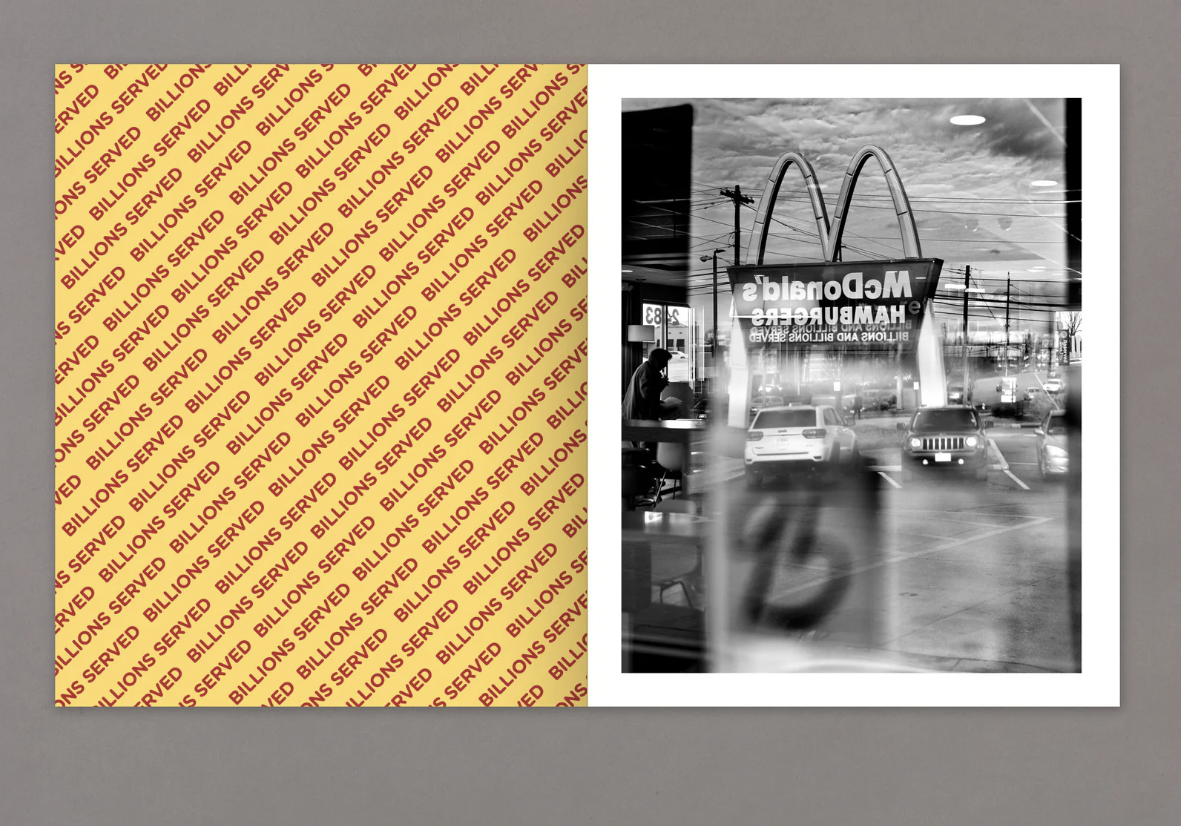
©Richard Renaldi, Spread from Billions Served, published by Deadbeat Club
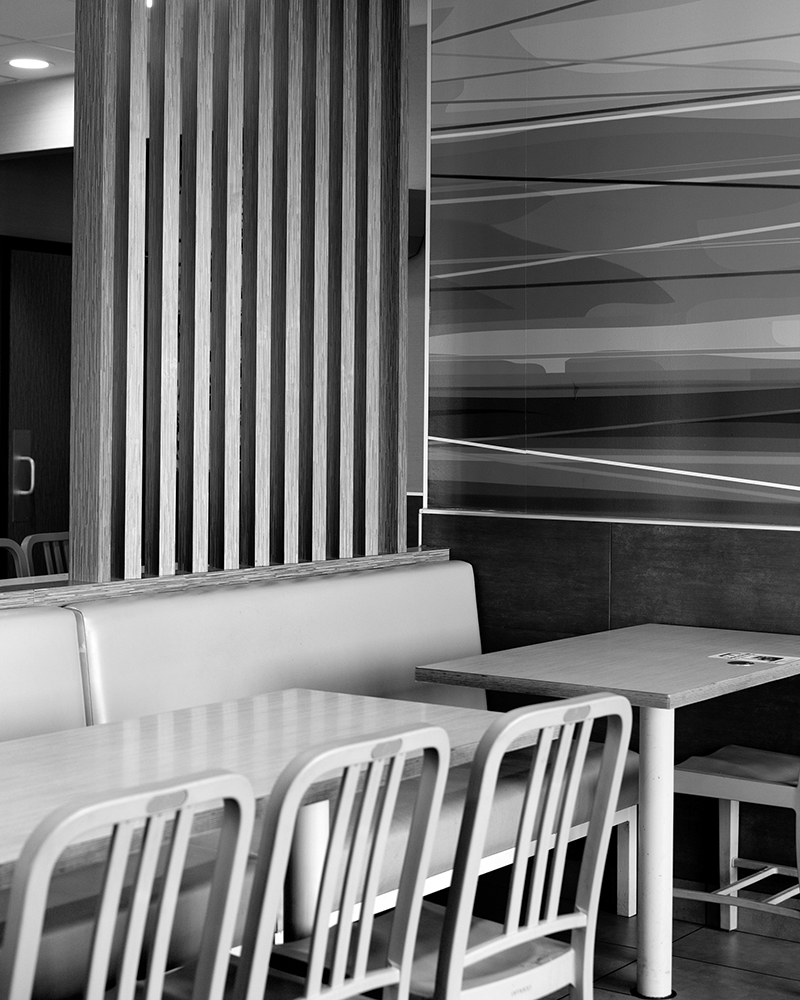
©Richard Renaldi, Billions Served, published by Deadbeat Club
In Billions Served, Richard Renaldi once again offers his large format portraiture as an invitation to slow down and see familiar sights in new light. The title, taken directly from the boastful catchphrase “Billions and billions served”, at once acknowledges the economics of American fast food while simultaneously signaling that those billions of burgers have been served both to and by billions of people.
Contrary to the nature of fast food environs where subtle cues direct us through choreographed movements toward ever swifter commerce & consumption, Renaldi implores the viewer to pause and actively participate in each moment.
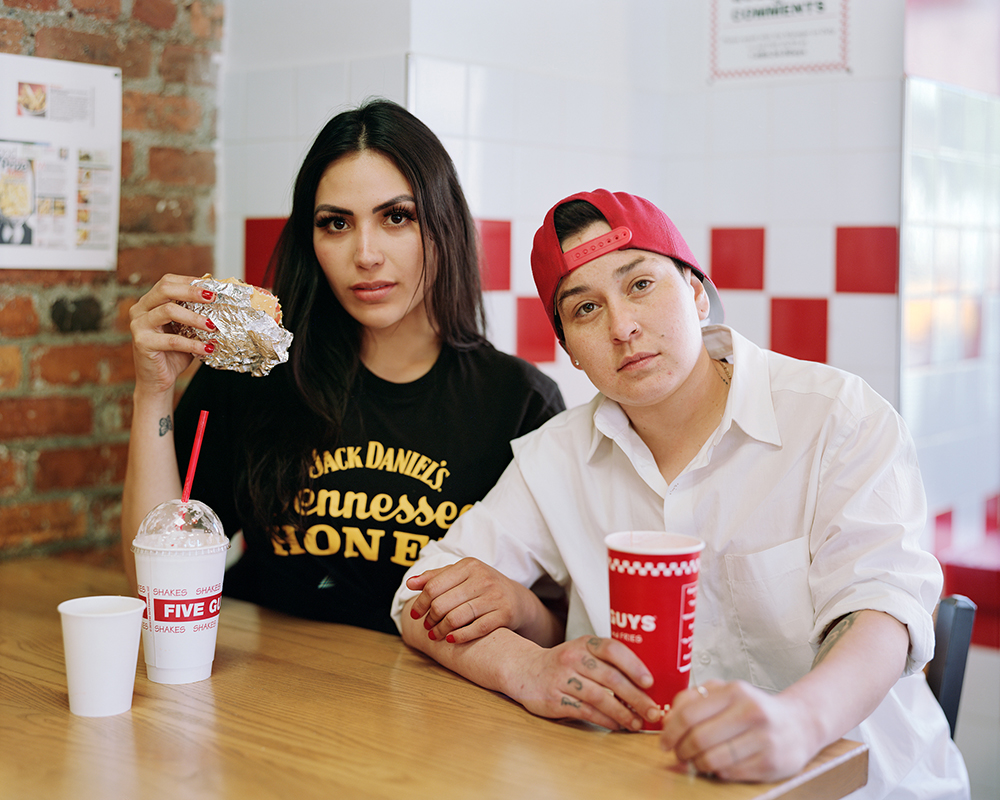
His black & white photos neutralize the riot of color otherwise drawing our eyes; color portraits place fellow patrons center stage, from out of the recesses where corporations would let them fade. The result is a new way of actively engaging these often frequented but seldom-considered scenes with a spotlight on humanity.
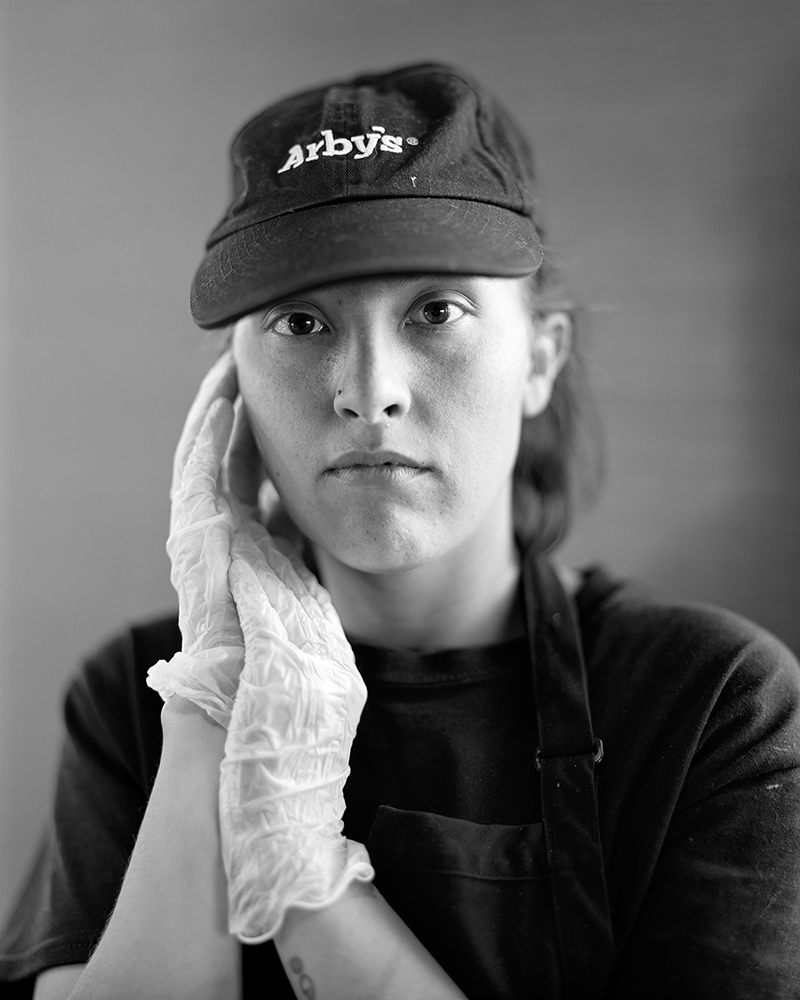
©Richard Renaldi, Billions Served, published by Deadbeat Club
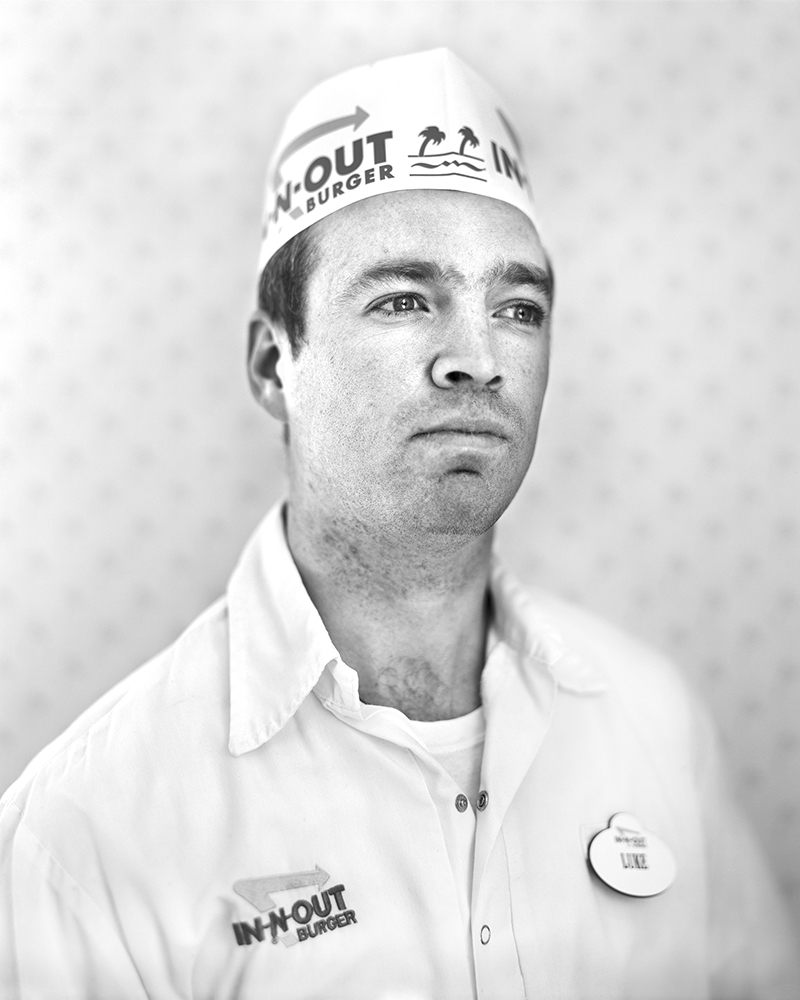
©Richard Renaldi, Billions Served, published by Deadbeat Club
Tell us about your growing up and what brought you to photography…
I was not an athletic child, so when it came to activities outside of school, I gravitated toward the arts. My first real encounter was in junior high, with an art instructor in Chicago, where I took pastel drawing lessons after school. I loved those sessions, and they instilled in me a deeper and more lasting engagement with art-making.
By my junior year of high school, when I finally had the chance to choose an elective, I naturally signed up for the art class—only to find it was already full. Instead, I enrolled in a photography course, almost by accident. It turned out to be a fortunate detour: I quickly realized that the camera was the perfect instrument for my creative impulses. I continued studying photography through my senior year and ultimately chose it as my major in college.
As a result of this early and sustained interest in the medium, I’m grateful to now have an archive of negatives that stretches back to 1985.
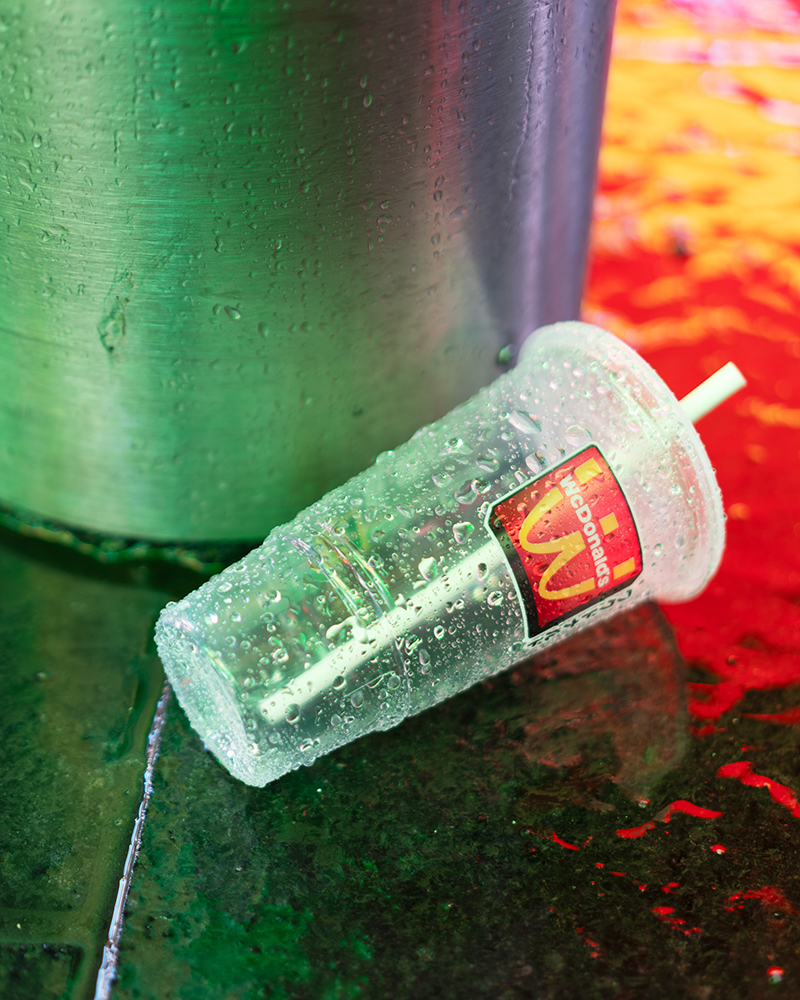
©Richard Renaldi, Billions Served, published by Deadbeat Club
How did this project come about?
Though I enjoy making individual, stand‑alone images, I would more accurately describe myself as a project‑based photographer. I think in terms of themes or narratives that I can build into a larger body of work. Starting in 1999, I began working with a large-format view camera, and over the course of several projects—many of which explored class as a subtext or structural component—I noticed that portraits of fast-food workers appeared intermittently across different series. I made a mental note that one day I might want to develop those images into a project of their own.
In 2012 in New York City, a group of fast-food workers launched what became known as the Fight for $15, a broad social movement demanding a minimum wage of $15 per hour and the right to unionize—a response to decades of stagnating wages and widespread economic inequality in the U.S. As that movement gained national prominence, and as my sympathies lay with the workers being exploited by large fast-food corporations and franchises, it became clear that the moment was right to pursue my idea more seriously. I began the project on a photographic trip to South Texas in 2019, where I made the portrait of Ivan at Jack in the Box. I had the sense that these workers needed to be photographed in black and white—so their individuality could come through, unmediated by the corporate branding.
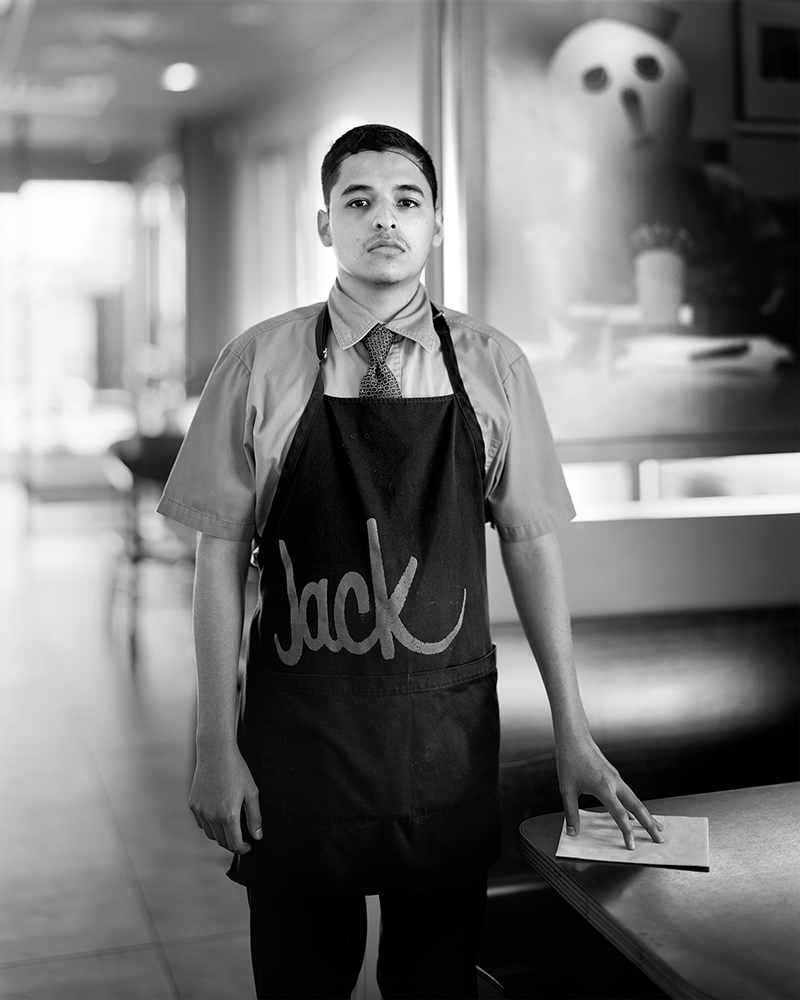
©Richard Renaldi, Ivan at Jack in the Box, Billions Served, published by Deadbeat Club
It wasn’t until a couple of years later that I expanded the scope of the project to include patrons, detritus, and the architecture surrounding these spaces—offering a broader view of the fast-food systems across the country, not just the labor force within it. In doing so, I aimed to reflect not only the individuals behind the counters, but also the environment shaping their lives—a system defined by economics, consumption, and the forces that govern their labor and surroundings.
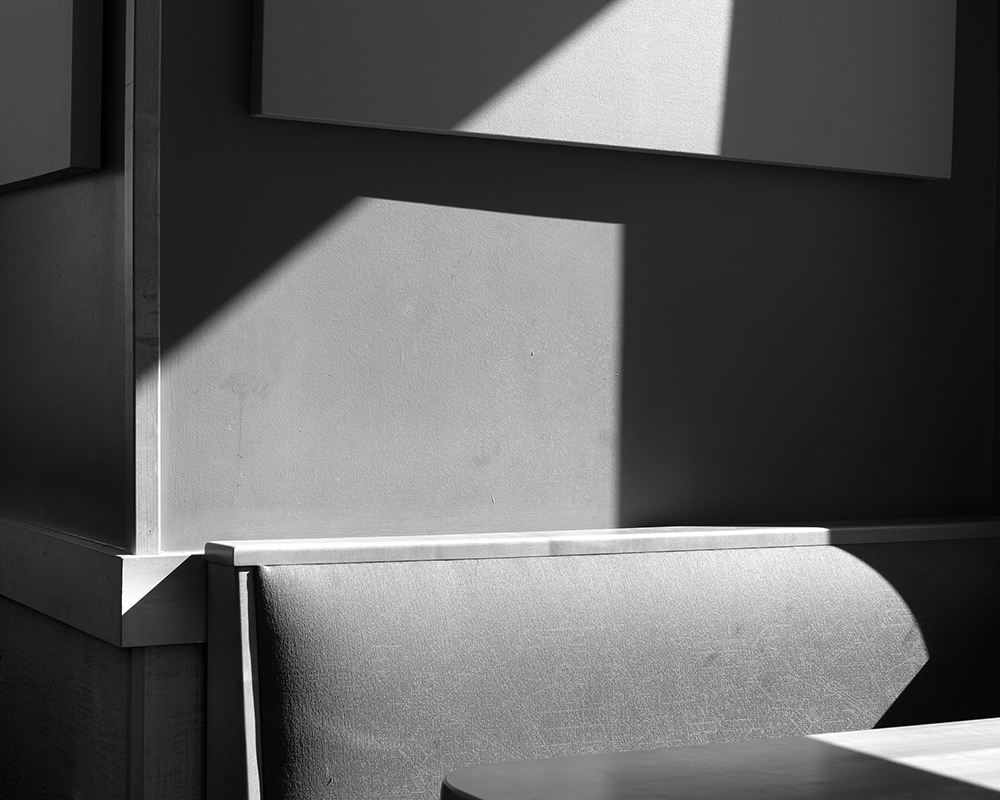
©Richard Renaldi, Billions Served, published by Deadbeat Club
What was your first fast food experience? Did you ever work at a fast food restaurant?
It must have been McDonald’s in suburban Chicago, where I spent my childhood. I still remember the rush of excitement when I heard we might be going there to eat. At the mere mention of a trip to McDonald’s, my mouth would water in anticipation of their fries — hot, golden, salty, and irresistibly crispy with that first bite. As a child they tasted like comfort and reward; only later did I come to see them as part of a broader culture of convenience and highly processed foods designed for overindulgence. I was also captivated by the ads over the years — the jingles, the colorful packaging, the sense that this was something special. Even now I can almost hear that familiar 1970s refrain: “Two all‑beef patties, special sauce, lettuce, cheese, pickles, onions on a sesame‑seed bun.”
I never worked in fast food. Instead, I was a busboy — first at a fine-dining restaurant in Chicago, then at a West Village spot in college. At the latter, the owner told me to cut my hair; I refused, and I quit.
Those early experiences — the anticipation, the sights, and the smells — lingered in my memory. Years later, when I began photographing fast-food workers, I realized I wanted to explore that tension: the seductive design of the food, the collective nostalgia it evokes, and the human labor behind the counters that makes it all possible, often at great cost.
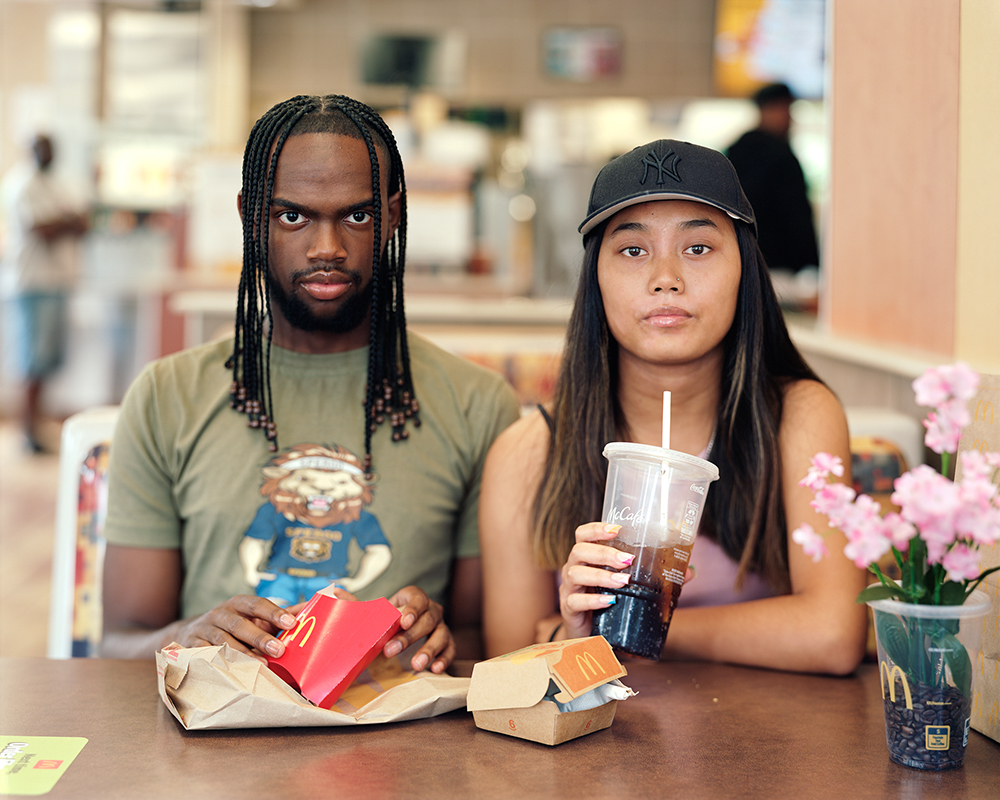
©Richard Renaldi, Billions Served, published by Deadbeat Club
You have an uncanny ability to elevate the common man/woman/person in your photographs. How do you approach your subjects?
Thank you for that thoughtful observation. I don’t know that I have the power to “elevate” anyone so much as the ability — and perhaps the responsibility — to recognize them as equals, as fellow human beings moving through the world with their own histories, vulnerabilities, and strengths. I approach each person with the belief that we share a common humanity — that we are, in a sense, siblings in the ongoing experiment of navigating life’s complexities. My aim is simply to acknowledge that shared condition and to make a portrait that honors it.
When I approach someone, I do so with openness and clarity of intent. I’m friendly, but purposeful, and I try to convey that I’m asking for a brief collaboration rather than taking something from them. Sometimes that involves a small gesture — a compliment, a moment of recognition, or an honest explanation of why I’m drawn to them. Most people did not wake up that morning imagining they’d have their portrait taken, so I try to meet them with a mix of respect, curiosity, and confidence. If they sense that I’m genuinely seeing them, not just photographing them, they’re usually willing to trust me for that brief moment.
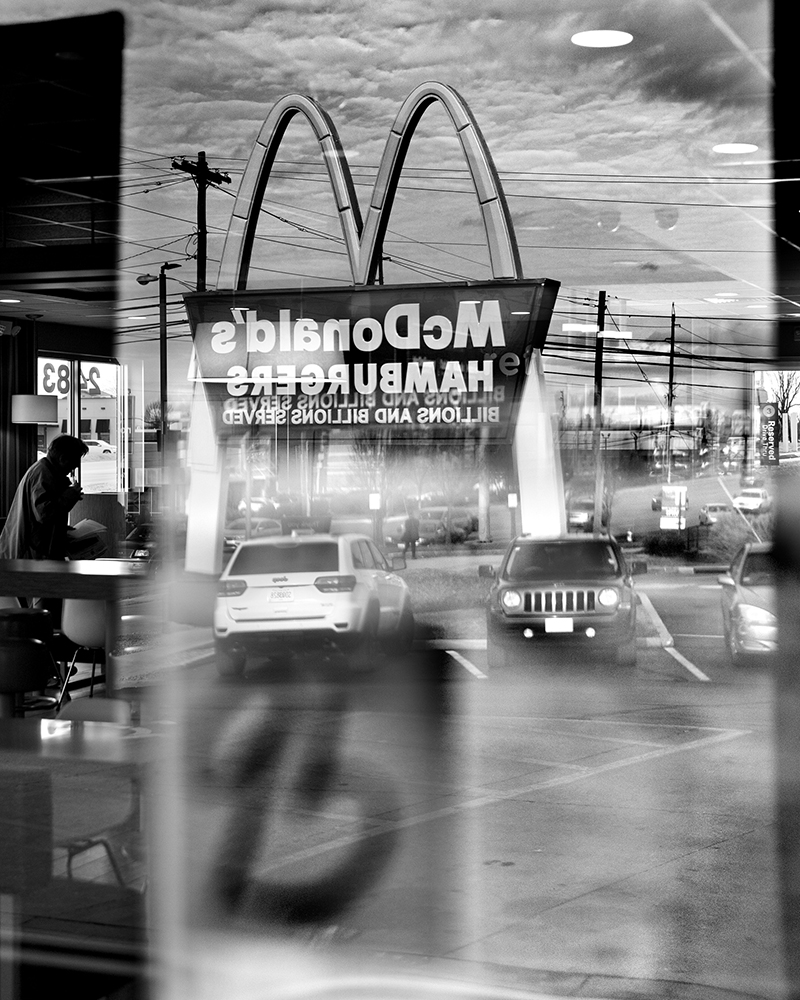
©Richard Renaldi, Billions Served, published by Deadbeat Club
Were there any surprises in making the work?
Yes, a couple of things in particular. I was surprised by how easy it often was to walk into a fast-food restaurant, speak with the manager, explain my project, and be allowed to make portraits. The main exception was In-N-Out Burger, which maintained a strict no-photography policy — though one manager let me photograph him, perhaps out of curiosity. Moments like that highlighted how workers are usually unseen, and how quickly they can emerge into view when given the opportunity.
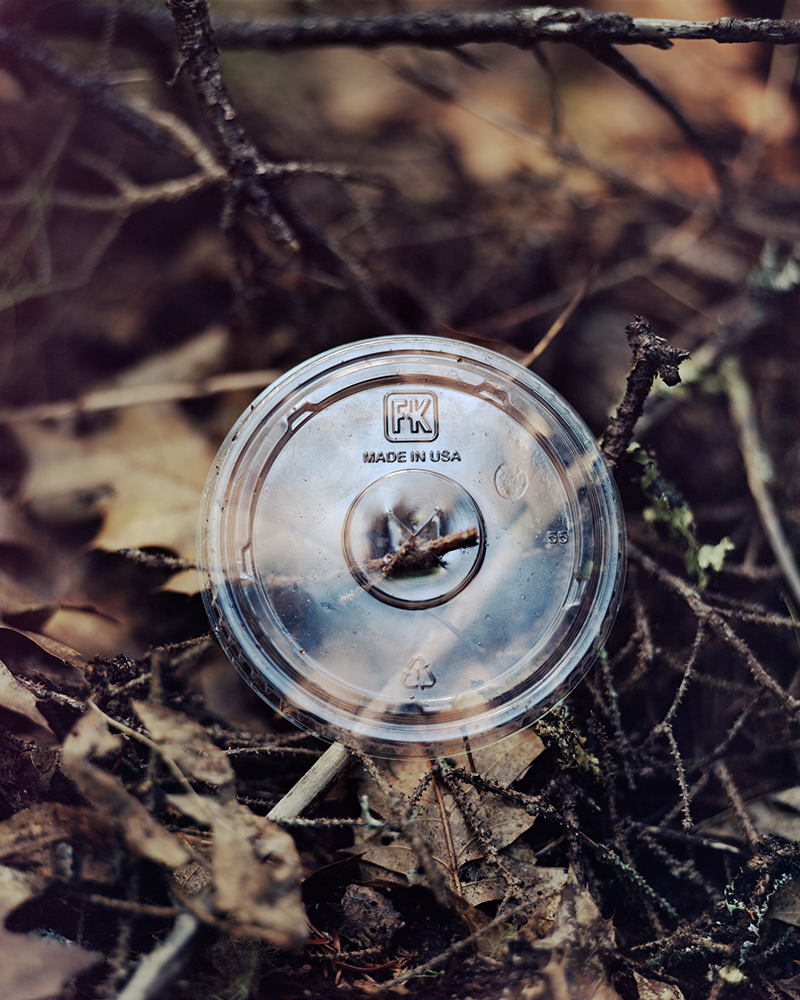
I was also surprised by how much I enjoyed photographing fast-food garbage. Unlike the collaborative energy of portraits, this was solitary work, and using the view camera to make still lifes was a new and unexpectedly satisfying experience. At the same time, it was sobering to see how depressingly pervasive fast-food trash is.
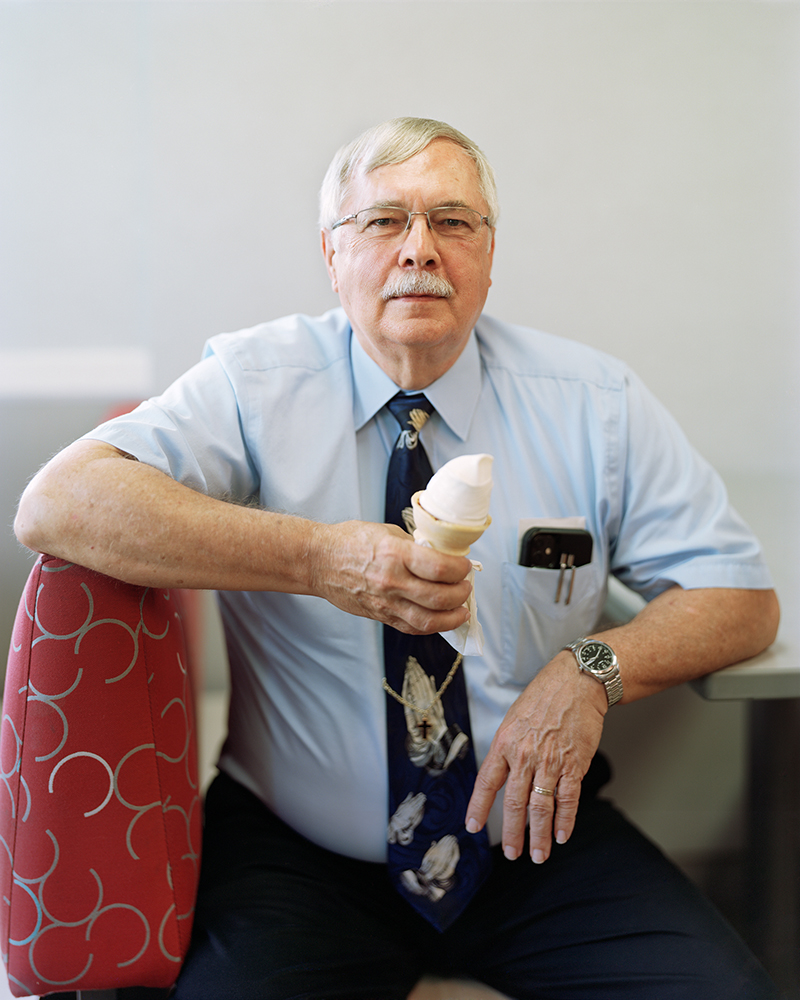
©Richard Renaldi, Billions Served, published by Deadbeat Club
Who or what inspires you?
This question could easily generate a novel-length response, and there are far too many artists across mediums whom I admire to list here. I also try not to have heroes, because I find it difficult to single out one person when so many people inspire me in different ways. A more fruitful way to think about inspiration is through those whose work is often unseen or undervalued: civil servants, nurses, first responders, aid workers, researchers, and service industry workers. They sustain society and contribute profoundly to our collective well-being, yet rarely receive the recognition given to musicians, actors, or other public figures. Their dedication, resilience, and quiet labor are deeply inspiring, and their example has shaped my own photographic practice: an attentiveness to the often-overlooked, the people and moments that sustain everyday life.
I’m also inspired by direct engagement with the world. Taking a walk — especially through a forest or along the beach, where I can smell the air and observe the minutiae of life — is endlessly invigorating. A well-crafted photo book, film, or literary work that resonates on a deep level can have the same effect, reinforcing the power of careful observation and human connection.
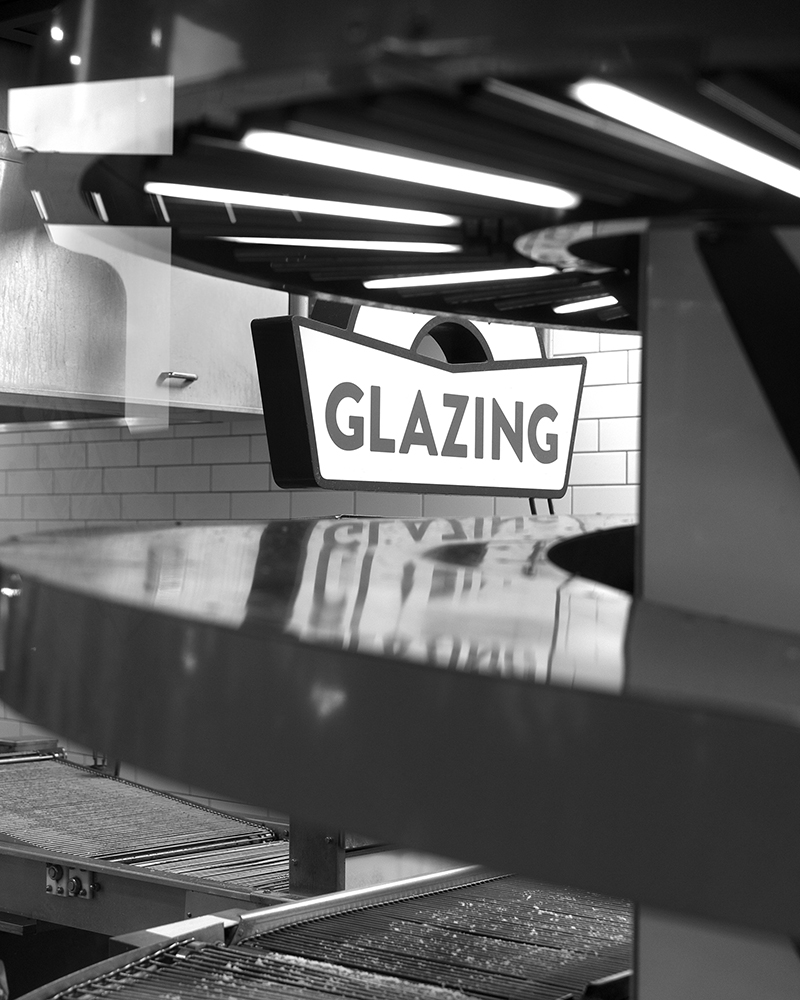
©Richard Renaldi, Billions Served, published by Deadbeat Club
And finally, what is your favorite fast food meal?
My favorite fast-food meal is a Popeye’s spicy chicken thigh with a biscuit and coleslaw.
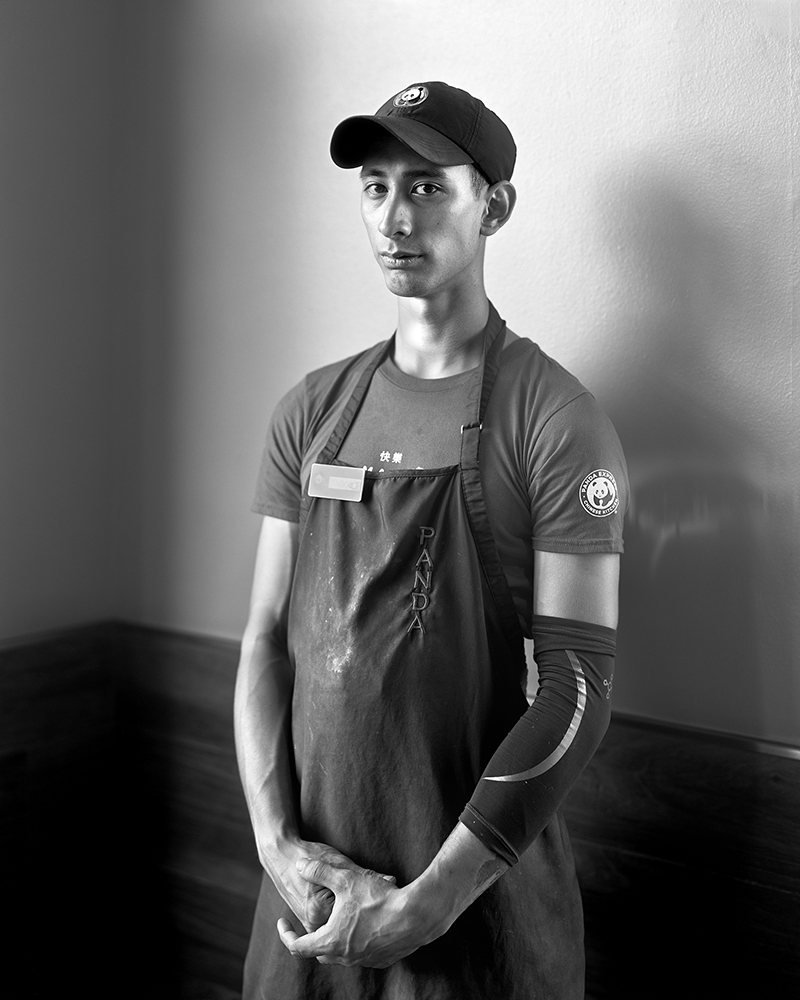
©Richard Renaldi, Billions Served, published by Deadbeat Club
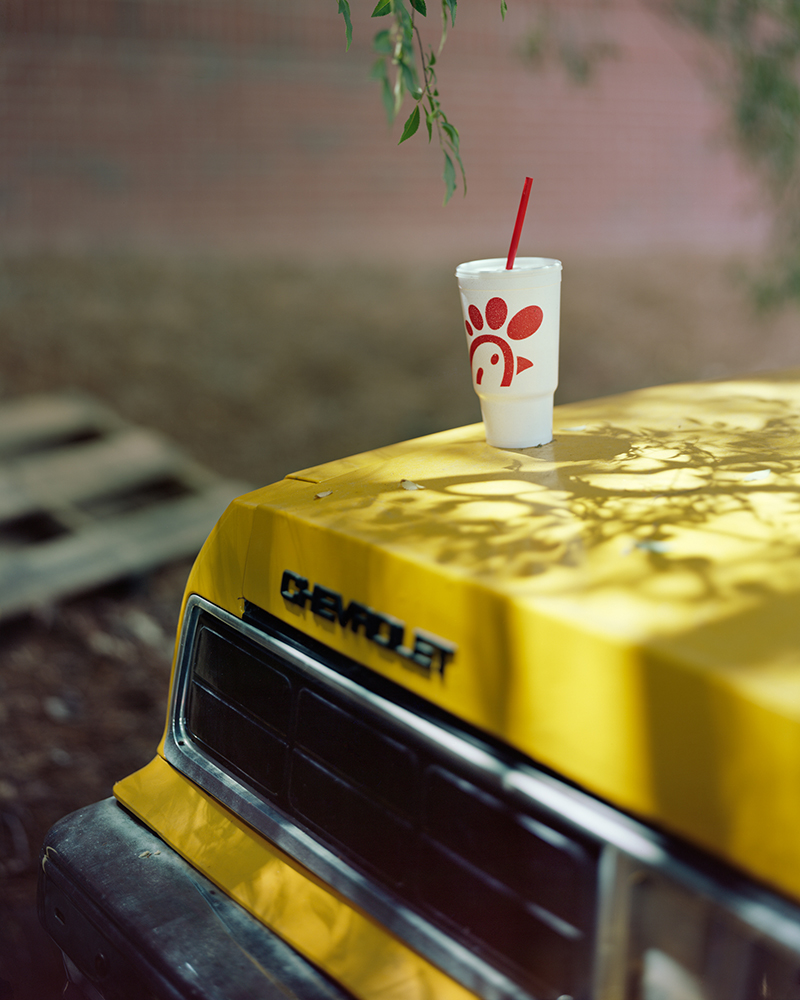
©Richard Renaldi, Billions Served, published by Deadbeat Club
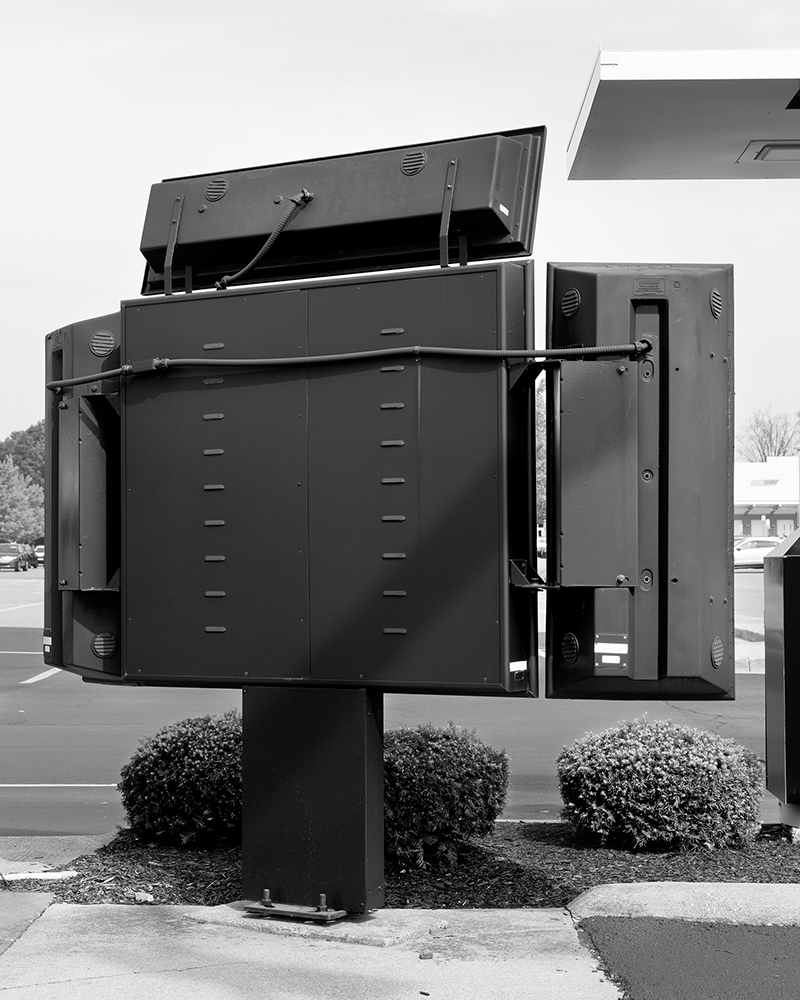
©Richard Renaldi, Billions Served, published by Deadbeat Club
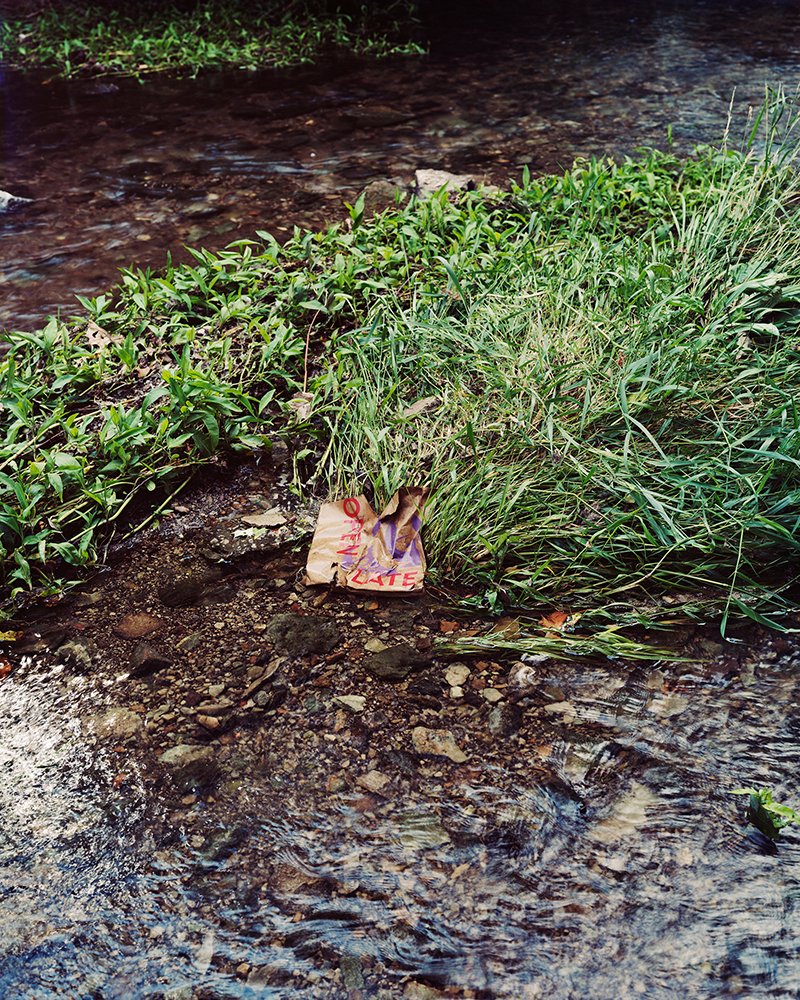
©Richard Renaldi, Billions Served, published by Deadbeat Club
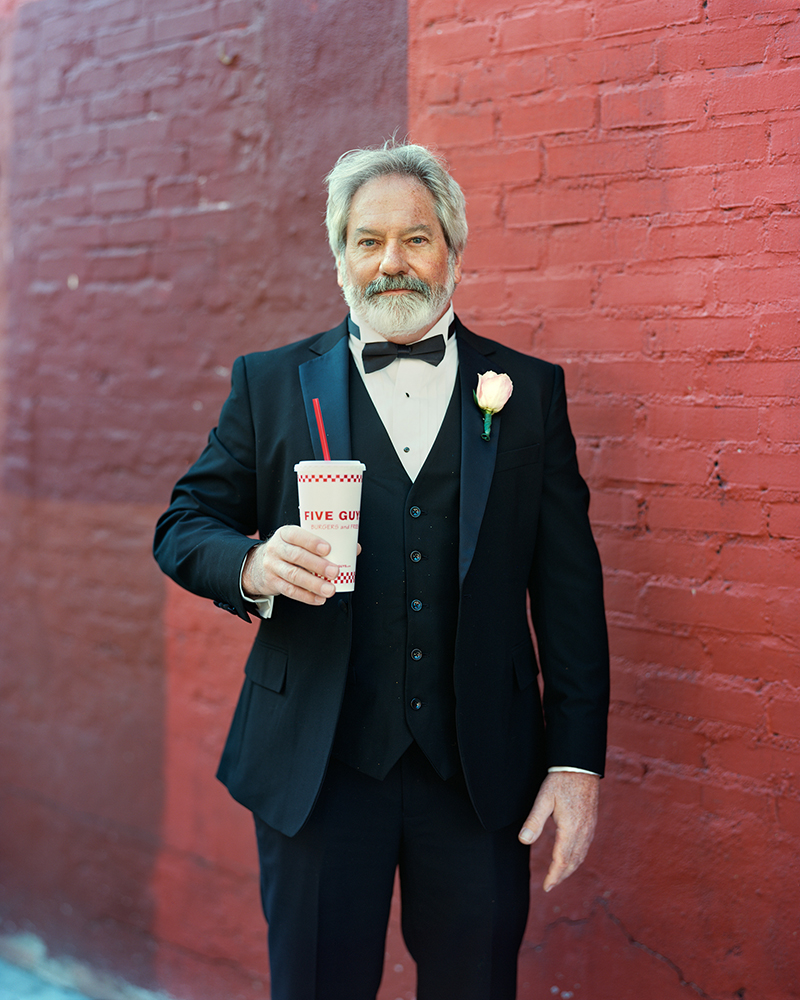
©Richard Renaldi, Billions Served, published by Deadbeat Club
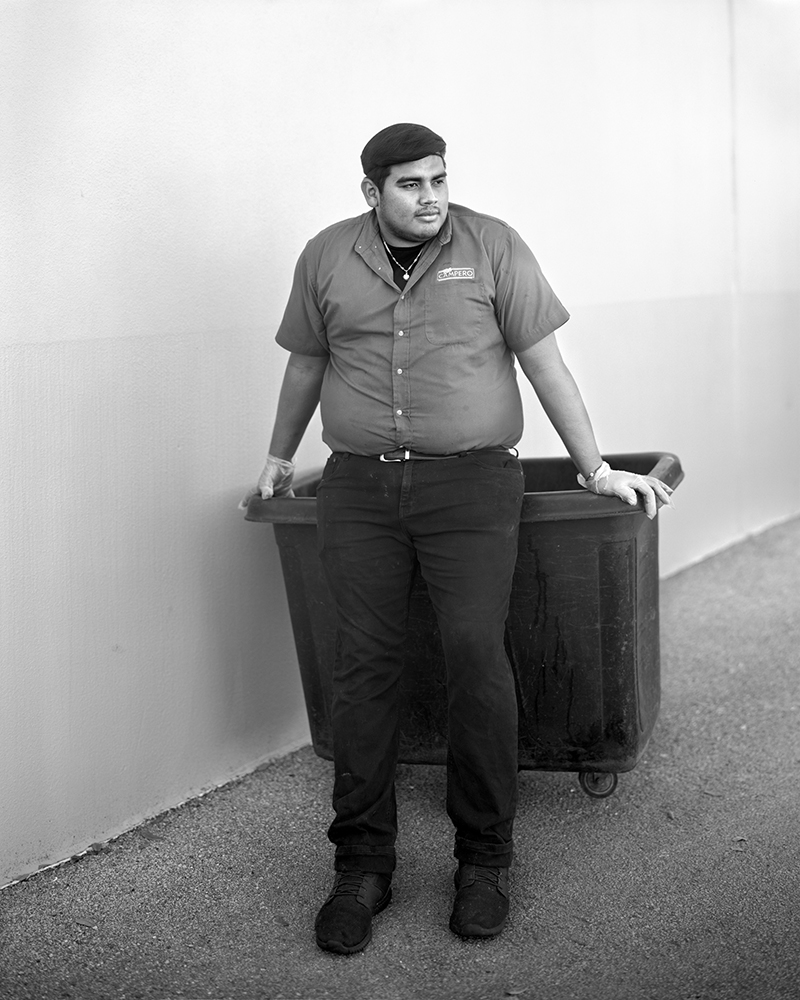
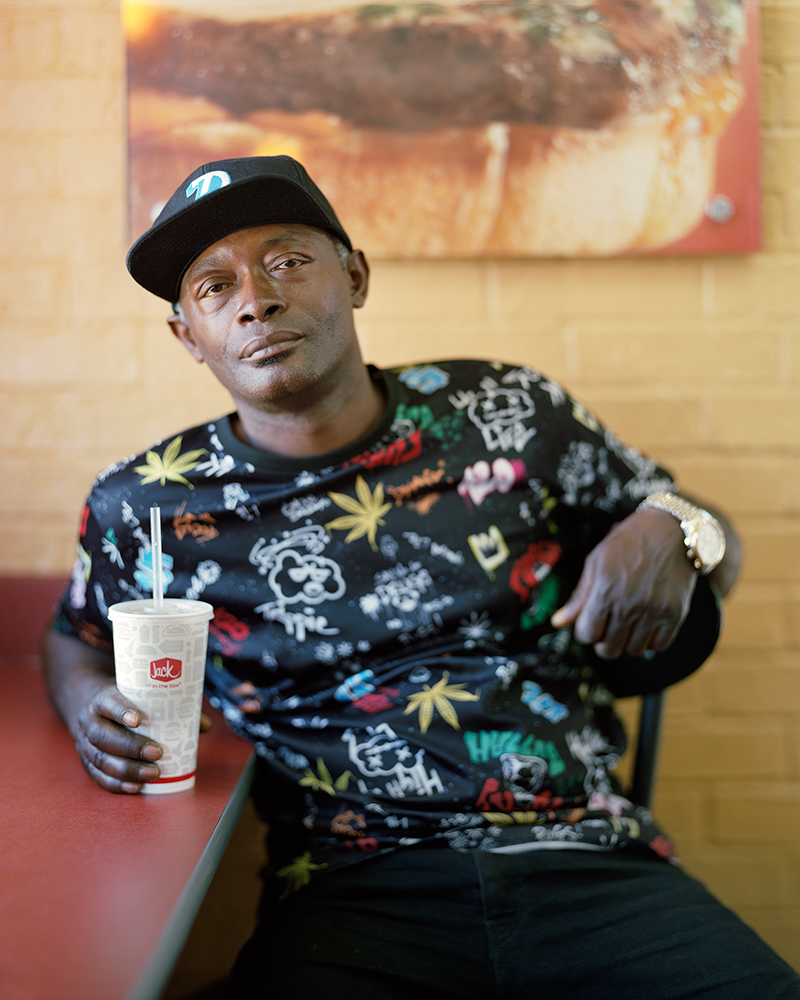
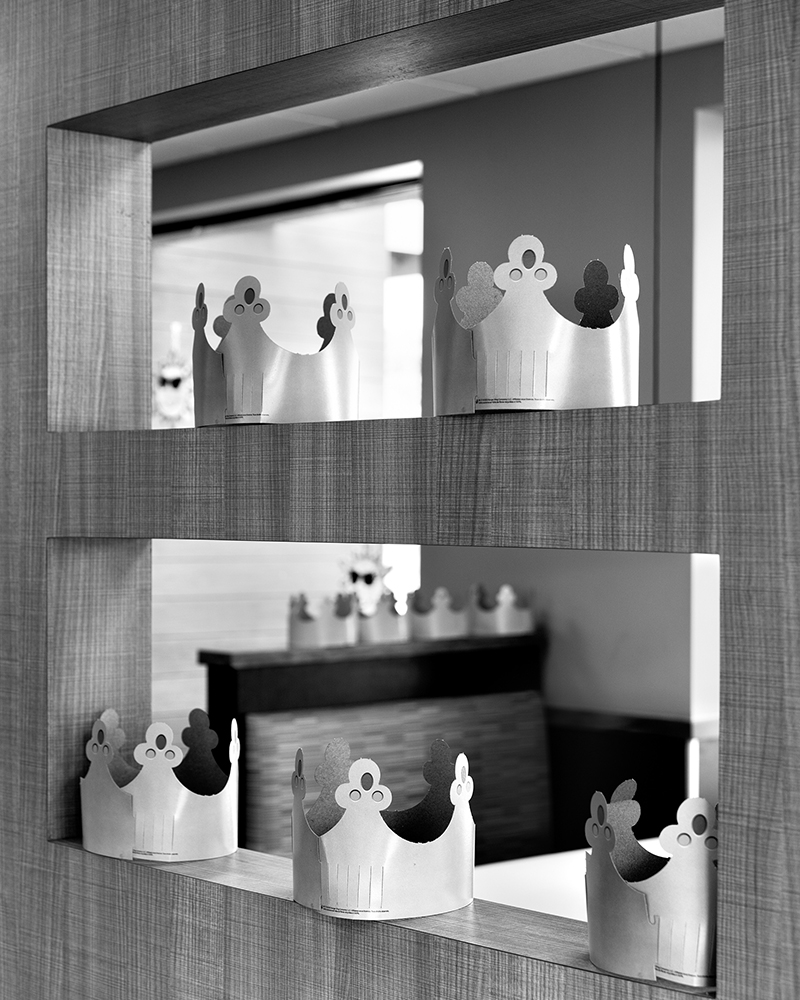
©Richard Renaldi, Billions Served, published by Deadbeat Club
Richard Renaldi
Billions Served
Essay by Seth Boyd
132 Pages
Hardcover
Full Color Offset
9.25” x 11.25”
ISBN: 978-1-952523-33-5
about Richard Renaldi:
Richard Renaldi (b. 1968, Chicago) lives and
works in New York City. He received a BFA in
photography from New York University in 1990.
He is represented by Benrubi Gallery in New
York and Robert Morat Galerie in Berlin.
Billions Served is his sixth monograph, after
Figure and Ground (Aperture, 2006); Fall River
Boys (Charles Lane Press, 2009); Touching
Strangers (Aperture, 2014); Manhattan Sunday
(Aperture, 2016); I Want Your Love (Super Labo,
2018). He was the recipient of a 2015 fellowship
from the John Simon Guggenheim Memorial
Foundation
about Deadbeat Club:
Established in 2011 by Clint Woodside,
Deadbeat Club is an award winning independent
publisher & coffee roaster located in
Los Angeles, California. Rooted in contemporary
photography, their ethos on small run,
limited edition publications carries into their
small batch single origin, signature blend and
limited release coffees.
Each Deadbeat Club project is selected
with the expectation of collaboration and a
longstanding partnership. Working closely
with photographers and artists around the
world, making sure their original vision is never
compromised, Deadbeat Club produces a body
of work that they are proud to share with their
community.
Posts on Lenscratch may not be reproduced without the permission of the Lenscratch staff and the photographer.
Recommended
-
Michael O. Snyder: Alleghania, A Central Appalachian Folklore AnthologyJanuary 18th, 2026
-
David Katzenstein: BrownieJanuary 11th, 2026
-

Amani Willet: Invisible SunJanuary 10th, 2026
-
THE 2025 LENSCRATCH STAFF FAVORITE THINGSDecember 30th, 2025
-
Kevin Klipfel: Sha La La ManDecember 29th, 2025