Kevin Cooley: In The Gardens of Eaton
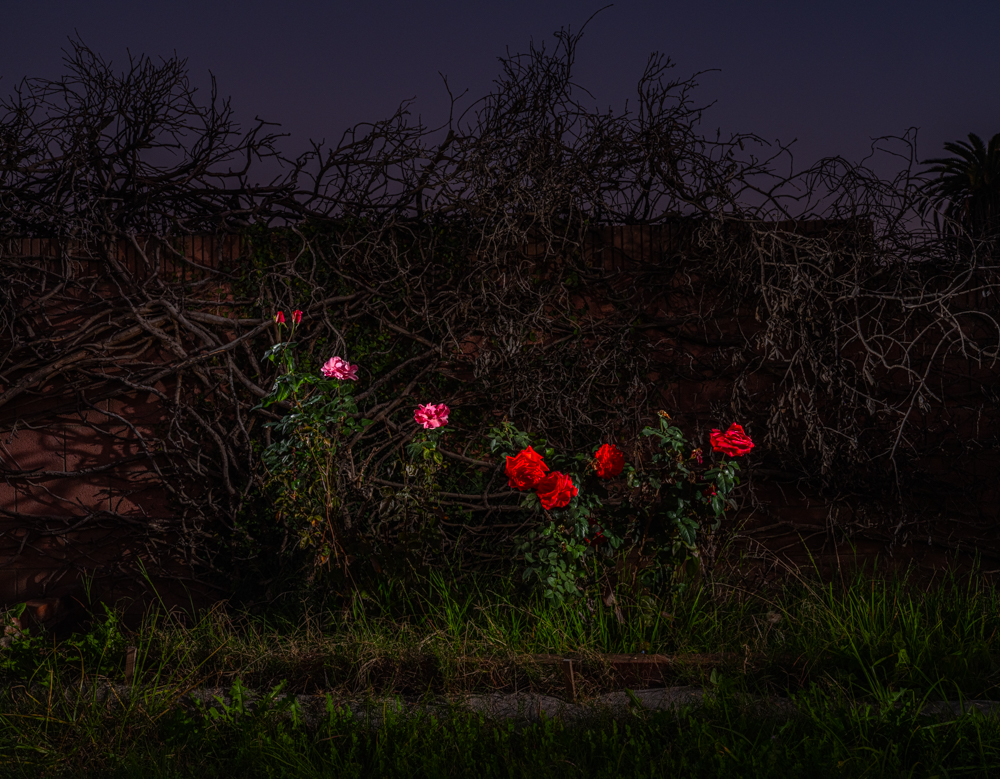
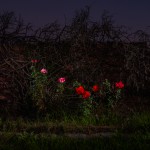
©Kevin Cooley, Roses — Calaveras Street, from In the Gardens of Eaton
Last year in May, I featured a book by Kevin Cooley, The Wizard of Awe, published by The Eriskay Connection. It was an irony not lost on me that a book centered on another man’s experience with fire appeared just months after Cooley lost his own home in the Eaton Fire in Altadena. I remember thinking how remarkable it was to see him out in the world, speaking publicly about a subject that was still so immediate and so raw. Today, we feature the photographs he has made over the past year, alongside an essay reflecting on that experience.
In these photographs, Cooley finds a haunting beauty in what struggles to survive. Ash, scarred ground, and altered vistas speak to endurance rather than erasure. As the land and its community move from loss toward recovery, his images mark a moment of transition—when the damage is still visible, but the possibility of renewal has begun.
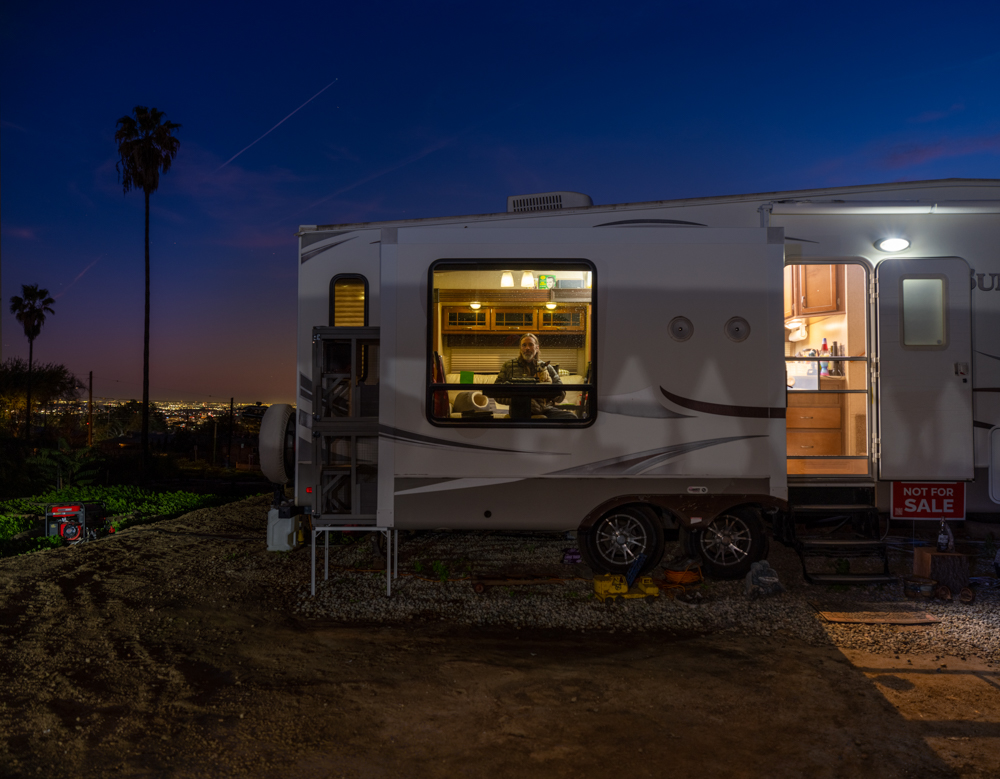
©Kevin Cooley, Homesteader Dave Racs — Palm Street, from In the Gardens of Eaton
In The Gardens of Eaton
One year ago, I stood in my driveway and watched my house burn to the ground in the Eaton Fire. As a veteran fire photographer, the scene itself was not new. I had spent much of the past decade making images of wildfires, destruction, controlled burns, smoke, and explosions. My mother and uncle lost their childhood home in the 1961 Bel Air Fire and still talk about it often. I had recently published a photobook documenting the story of a man who experiments with homemade fireworks in his backyard. On the day of the fire, I was in the Palisades photographing what I believed was the worst fire I would ever see.
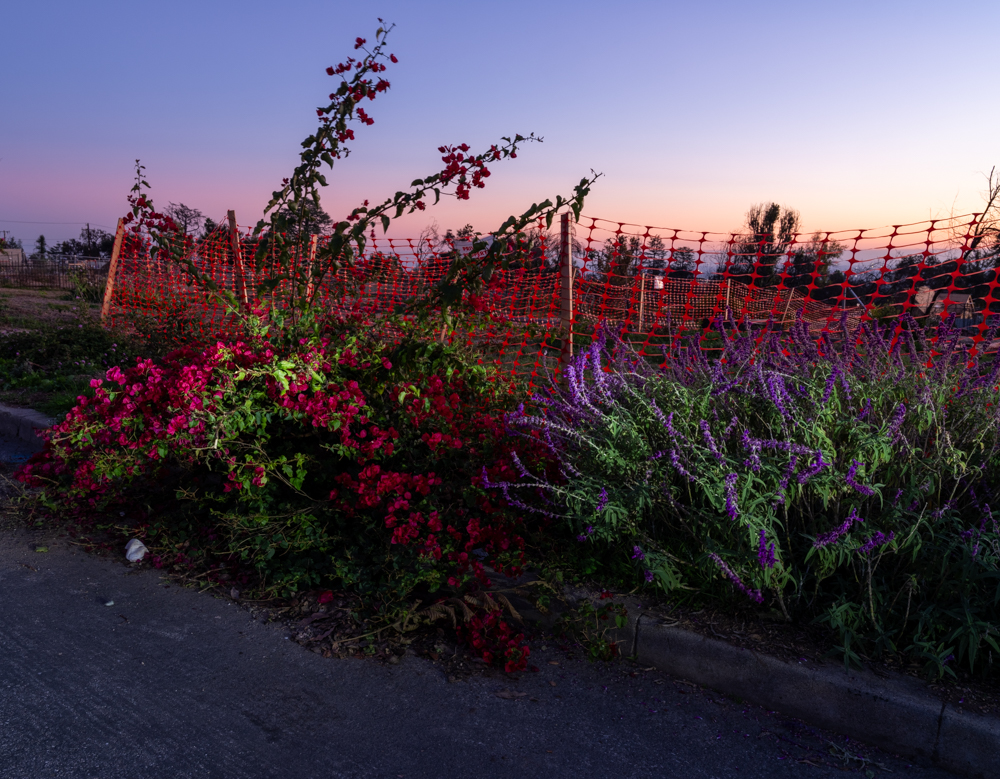
©Kevin Cooley, Lavender and Bougainvillea — Poppyfields Drive, from In the Gardens of Eaton
All that knowledge and experience did not prepare me for the moment when my home, my studio, and years of accumulated life were erased in a matter of minutes.
My family moved to Altadena precisely to get away from extreme wildfire danger. Our previous home had come dangerously close to burning in the 2017 La Tuna Fire. We are talking in yards, not miles. My wife Bridget noted that we would be two urbanized miles from the chaparral this time—miles that would have to burn before a fire could reach us.
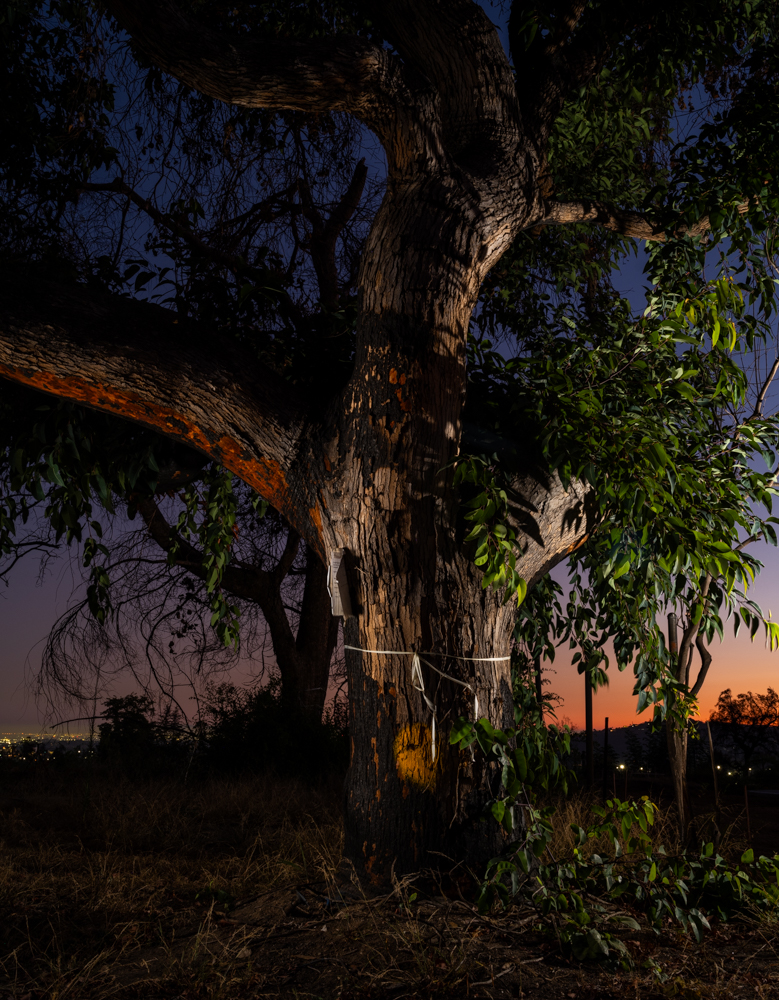
©Kevin Cooley, Eucalyptus Tree — Las Flores Drive, from In the Gardens of Eaton
Like many of the fourteen million Californians that a 2020 CalMatters analysis said live in the Wildland–Urban Interface, I held a suspension of disbelief—one that allowed me to live without constant worry, despite fully understanding the risk. Even as my family evacuated, I fully believed we would be back home in a couple of days.
In the aftermath of the fire, I was a mess. I sought refuge in the only tool I trusted. Photography has always been a way for me to understand systems larger than myself—environmental, technological, physiological. This time, it became a way to understand time. Disaster does not end when the flames are out. It reshapes communities not through spectacle, but through duration.
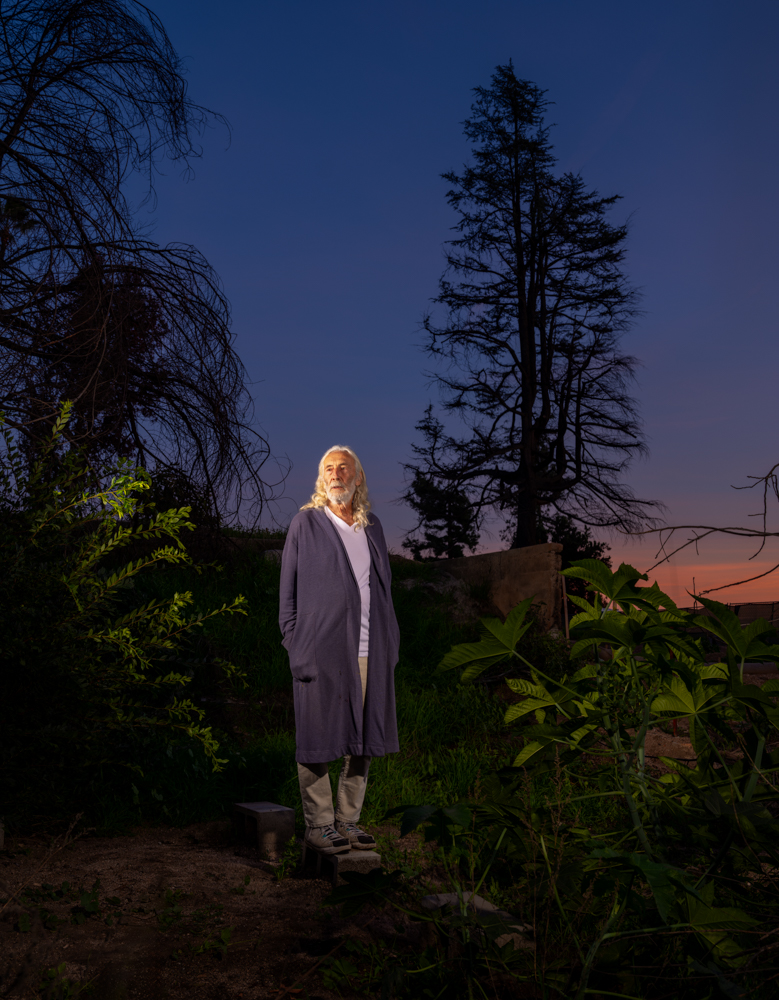
©Kevin Cooley, Homesteader Almadeus Star — Tonia Avenue, from In the Gardens of Eaton
The landscape began to speak first. I photographed flowers reemerging through the ashes, green shoots piercing blackened debris, succulent pups pushing up from beneath their charred parent plants, and grass reclaiming scorched front yards. It soon began to feel like a race to capture it all before the Army Corps of Engineers methodically removed the debris.
Eventually, it felt incomplete to photograph the land alone. By fall, I began photographing people living in temporary conditions on their own lots—the human equivalents of that resilient flora—in an effort to bring a deeper sense of humanity to the work. It is already starting to feel like a race again, this time within an ocean of rebuilding.
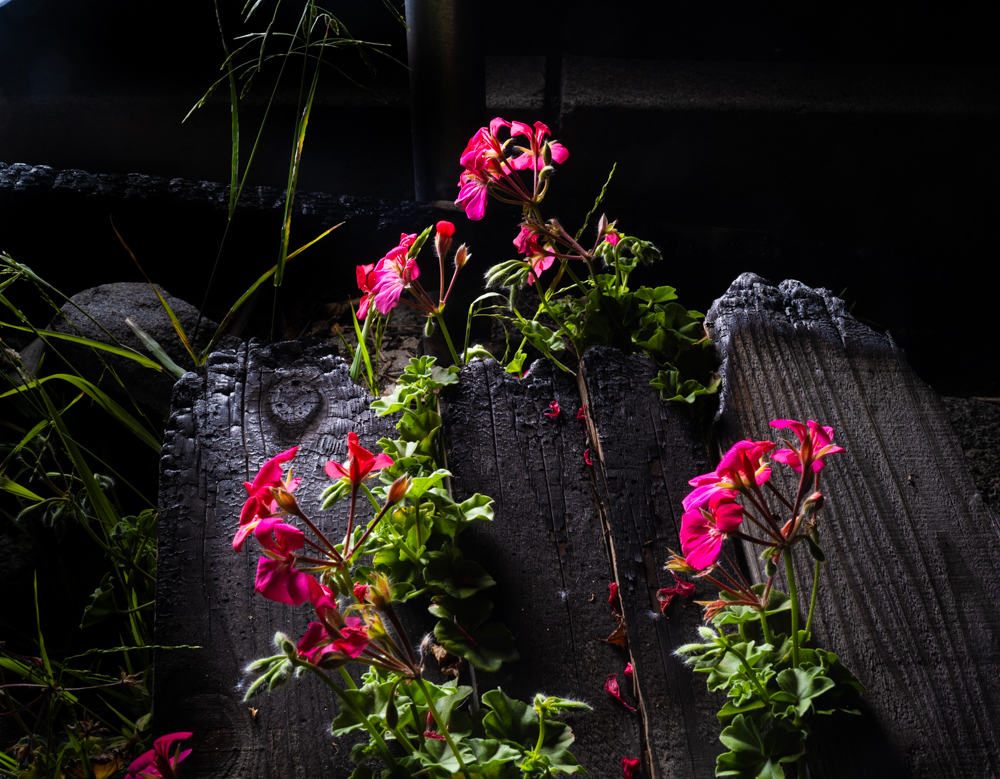
©Kevin Cooley, Geraniums — El Molino Avenue, from In the Gardens of Eaton
Los Angeles has always been a meeting point: between city and wilderness, cultivated gardens and wild chaparral, human settlement and fire. Now it may become something else—a model. We have the chance to turn tragedy into adaptation, to rebuild not just what was lost but what is needed: fire-resistant materials, defensible space, native plantings, and a culture of preparedness and care. At least, this is how my family is framing our rebuilding effort. Altadena, the Palisades, and Malibu have the potential to become some of the most fire-adapted communities in California—perhaps anywhere.
What struck me most this past year was not despair, but persistence—in nature and in people. The recovery process has been largely administrative, psychologically draining, and deeply uneven for everyone I know. I often hear that Altadena is a resilient community. Resilience suggests elasticity—a return to form. What my camera has witnessed instead is transformation under constraint. The fire did not test Altadena and reveal its strength; it changed it irrevocably. It will not be the same place, and that may be the hardest truth to accept.
Yet it remains a place I want to be.
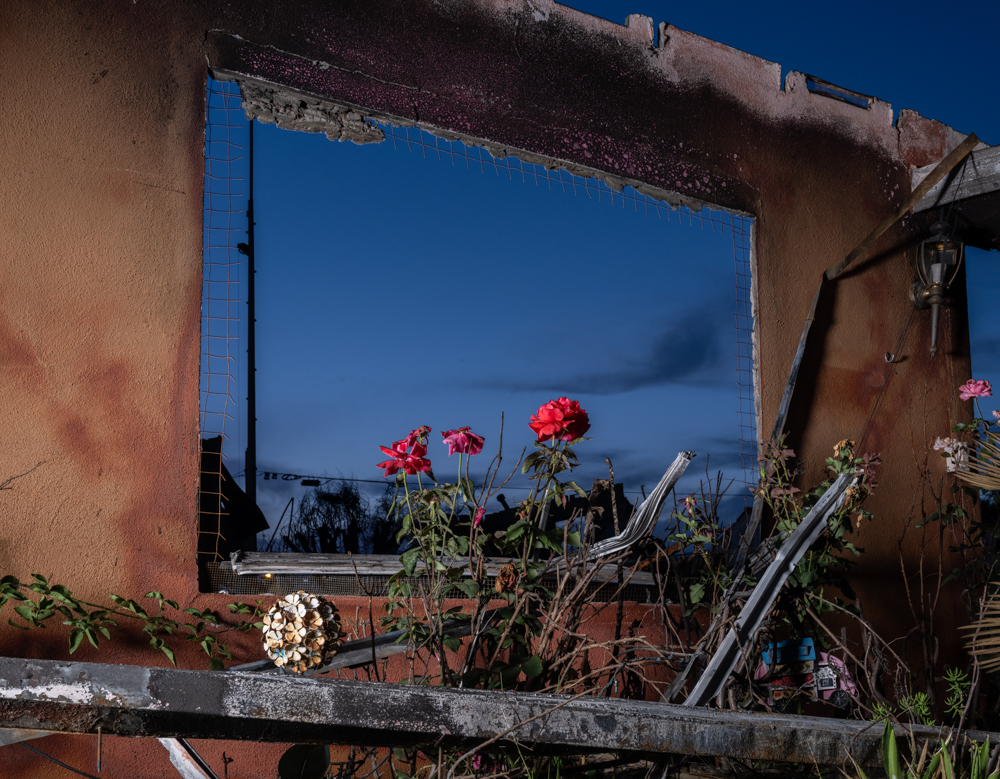
©Kevin Cooley, Roses — Harriet Street, from In the Gardens of Eaton
Kevin Cooley’s multidisciplinary practice centers on humanity’s volatile relationship with nature, environmental narratives, and climate change—engaging both local and global concerns. His recent focus on fire and its ecological implications took a profoundly personal turn when he lost his home and studio in the 2025 Eaton Fire. Experiencing this devastation firsthand dissolved the boundary between his art and life in a way he never could have anticipated. This loss deepened his connection to the themes he has long explored and sharpened his focus, reinforcing—viscerally—the urgency of his mission. In the face of crisis, his work insists on the necessity of reimagining a future in which renewal remains possible.
Cooley received an M.F.A. in Photography from the School of Visual Arts in New York. His recent environmentally focused exhibitions include The Jones Institute, Laney Contemporary, Kopeikin Gallery, and the California Air Resources Board. His work is held in the permanent collections of The Solomon R. Guggenheim Museum, The Los Angeles County Museum of Art, The California Museum of Photography, The Museum of Fine Arts, Houston, The 21C Museum, and The Nevada Museum of Art. He has also been commissioned for climate-related stories by publications such as The Atlantic, The California Sunday Magazine, The New Yorker, and The New York Times Magazine.
Instagram: @kevincooley_
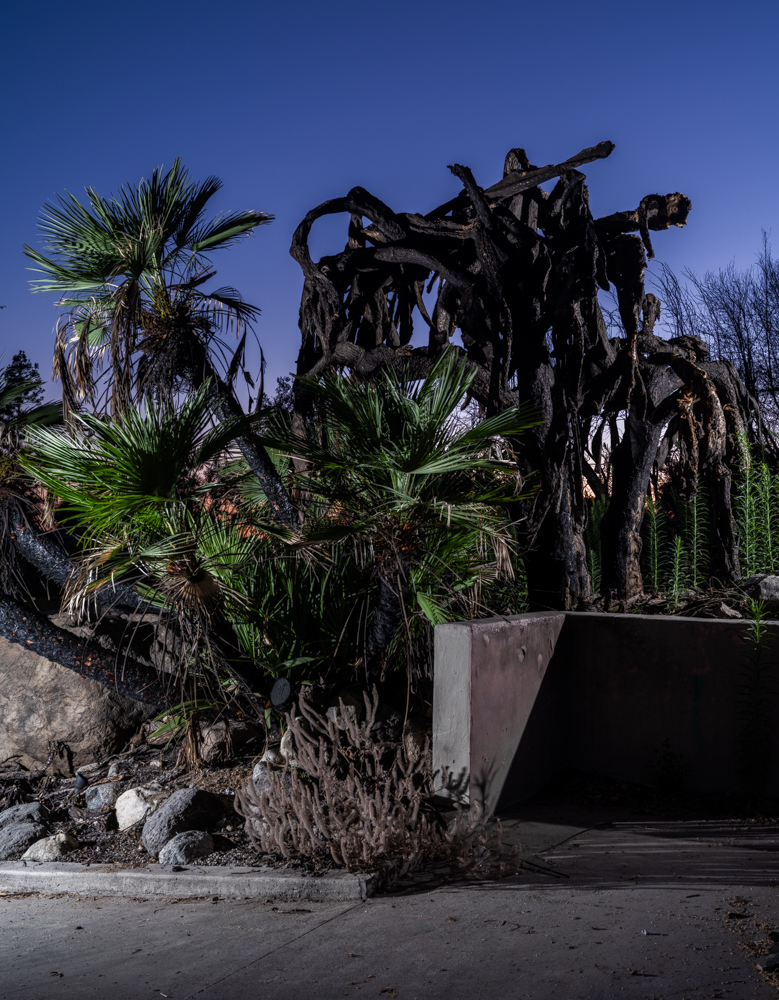
©Kevin Cooley, Cactus — Alta Pine Drive, from In the Gardens of Eaton
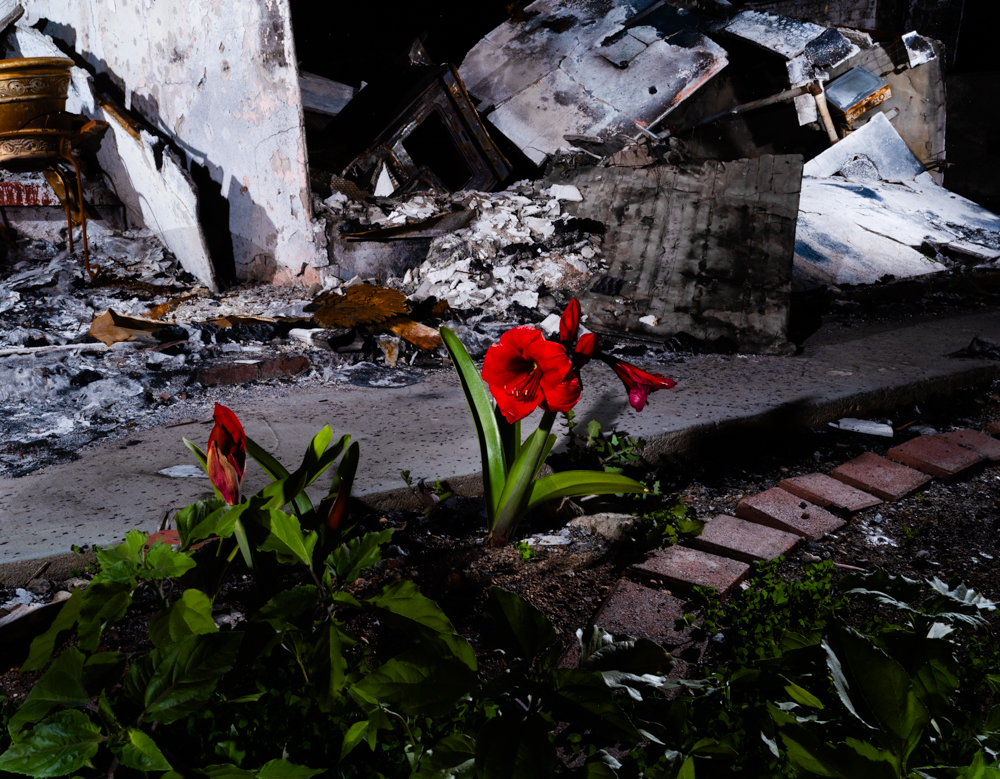
©Kevin Cooley, Amaryllis — Manor Street, from In the Gardens of Eaton
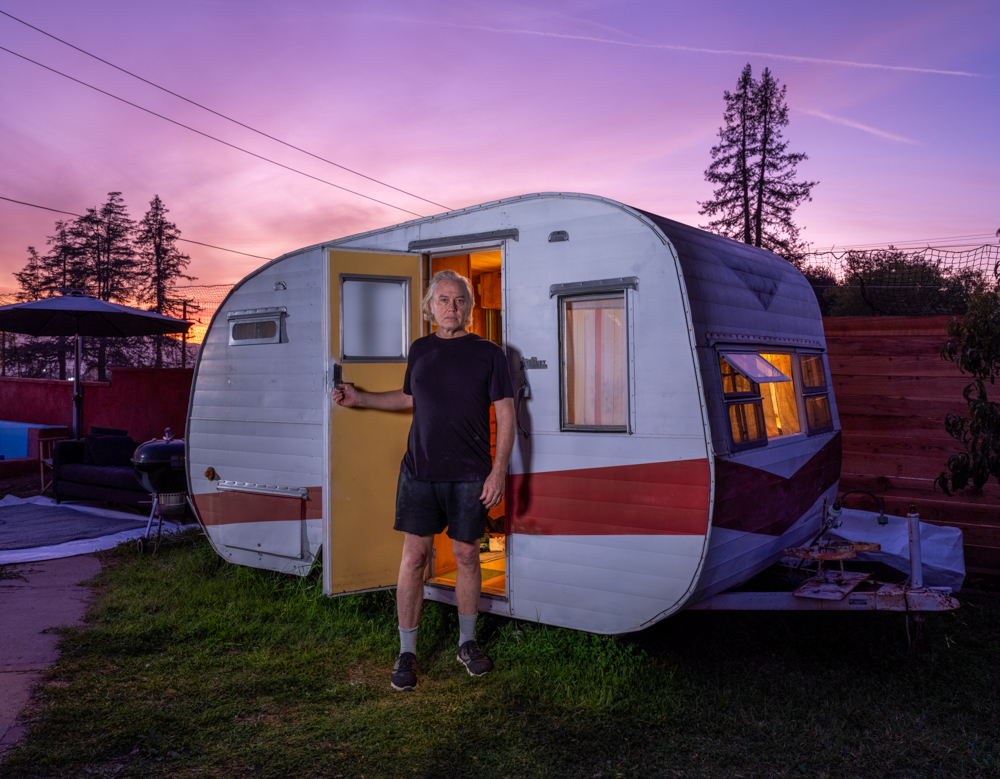
©Kevin Cooley, Homesteader Tom Stern — Harriet Street, from In the Gardens of Eaton
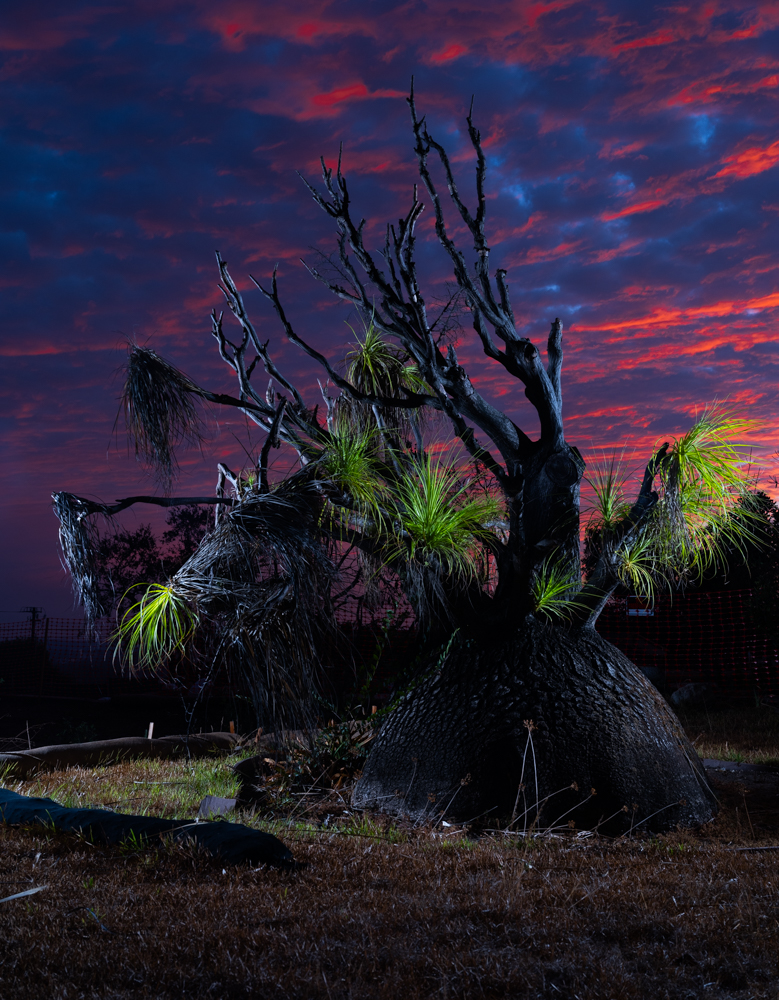
©Kevin Cooley, Ponytail Palm — Athens Street, from In the Gardens of Eaton
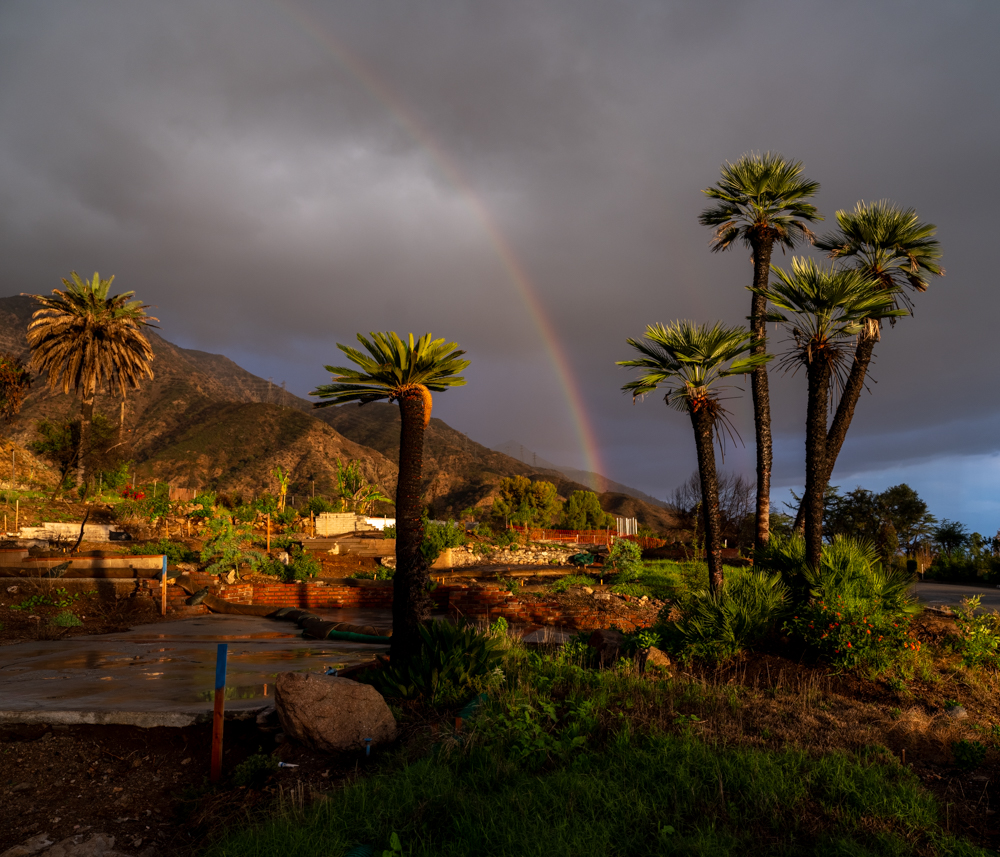
©Kevin Cooley, Fan Palms — Alta Pine Drive, from In the Gardens of Eaton
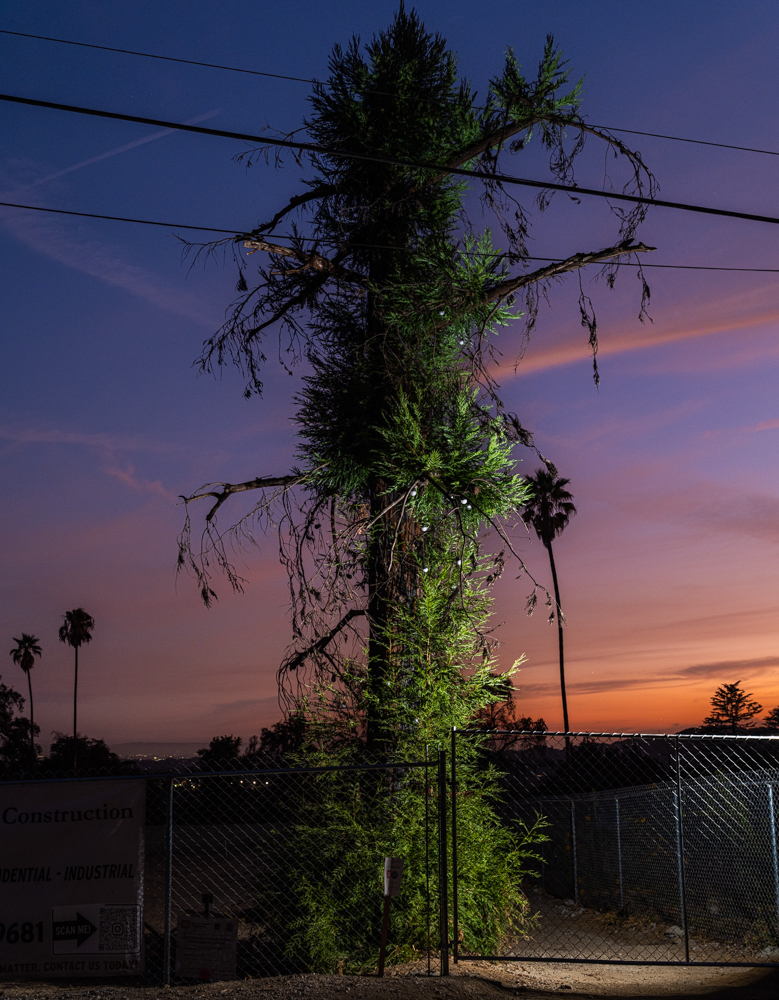
©Kevin Cooley, Redwood Tree — Wapello Street, from In the Gardens of Eaton
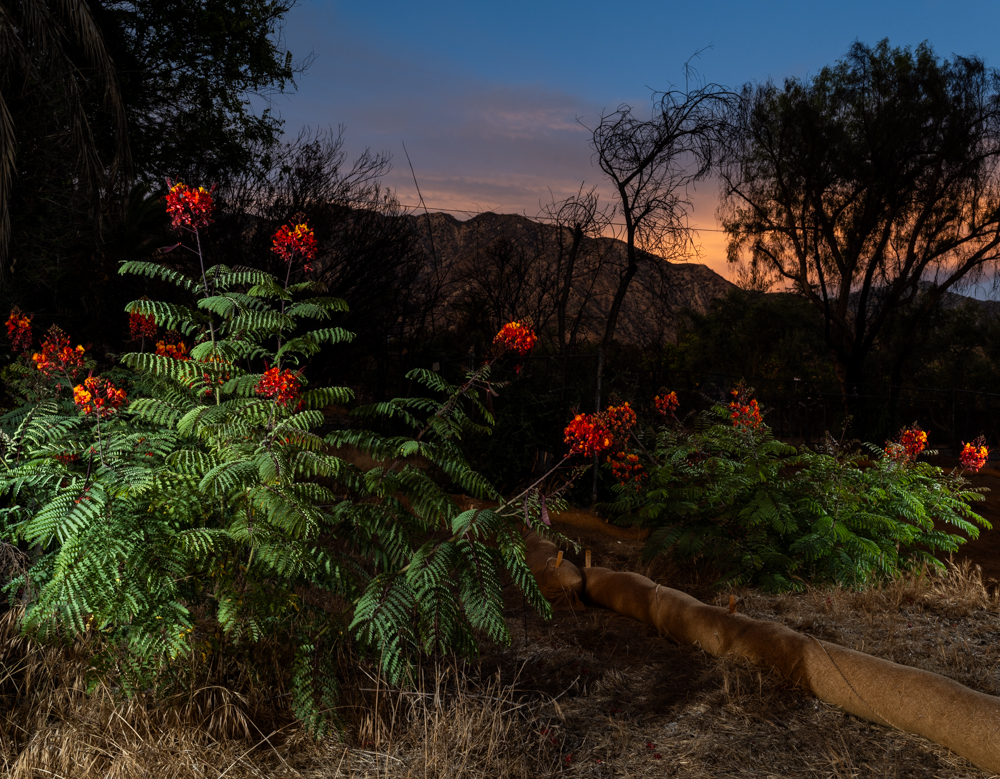
©Kevin Cooley, Mexican Flame — Santa Rosa Avenue, from In the Gardens of Eaton
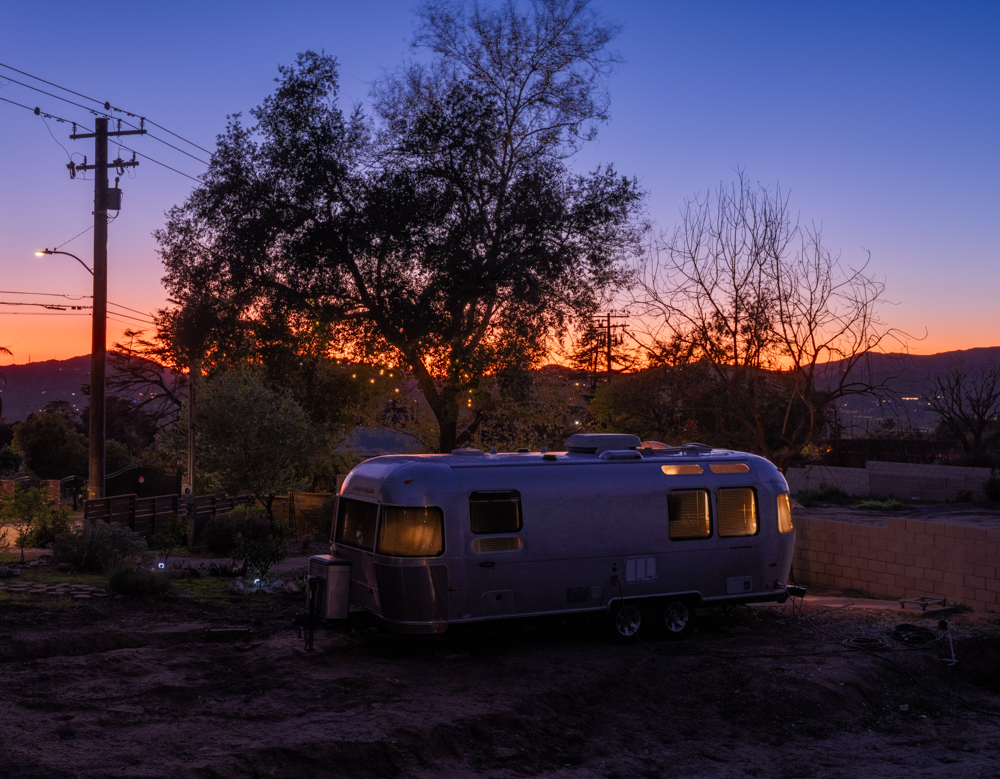
©Kevin Cooley, Homesteader Airstream — Loma Alta Drive, from In the Gardens of Eaton
Posts on Lenscratch may not be reproduced without the permission of the Lenscratch staff and the photographer.
Recommended
-
Kevin Cooley: In The Gardens of EatonJanuary 8th, 2026
-
William Karl Valentine: The Eaton FireJanuary 7th, 2026
-
Sean Stanley: Ashes of SummerJanuary 6th, 2026
-
Nathan Bolton in Conversation with Douglas BreaultJanuary 3rd, 2026
-

Andrew Lichtenstein: This Short Life: Photojournalism as Resistance and ConcernDecember 21st, 2025