Amanda Marchand and Leah Sobsey: Art + Science Competition First Place Winners
We would like to thank all of you who submitted to Lenscratch’s Third Art + Science Competition. The sheer number of thought-provoking entries was beyond our expectations. We were introduced to many new artists and bodies of works that provided a tremendous source of information in addition to inspiration!
Science is an intriguing companion to art as both exist side-by-side in our daily lives and are woven through our everyday experiences. The projects we are featuring this week address this symbiosis with perspectives that range from personal to global, tranquility to tragedy as well as from fascination and intrigue. Each image keeps us looking and wanting to learn more.
Linda Alterwitz and Jeanine Michna-Bales
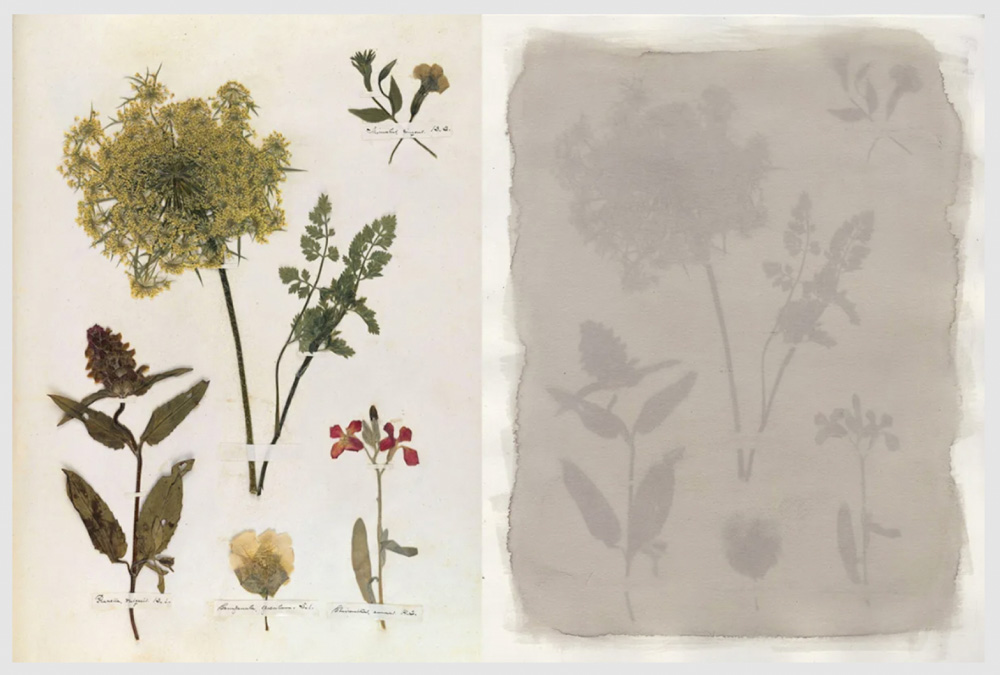
© Amanda Marchand and Leah Sobsey, Emily Dickinson’s Herbarium; “This Earthen Door” Herbarium Plate 9 – Poppy
Collaborators Amanda Marchand & Leah Sobsey pay homage to renown poet Emily Dickinson in their project This Earthen Door. They recreated all 66 pages of Dickinson’s herbarium in large-scale anthotypes, an alternative photographic process that uses photosensitive pigment compounds in place of laboratory chemicals. The pigments are made from juices from 66 species of the plants the poet grew in her garden.This multi-faceted work offers the viewer a unique opportunity to know Dickenson not through words alone, but through the beautiful and colorful environment she created.
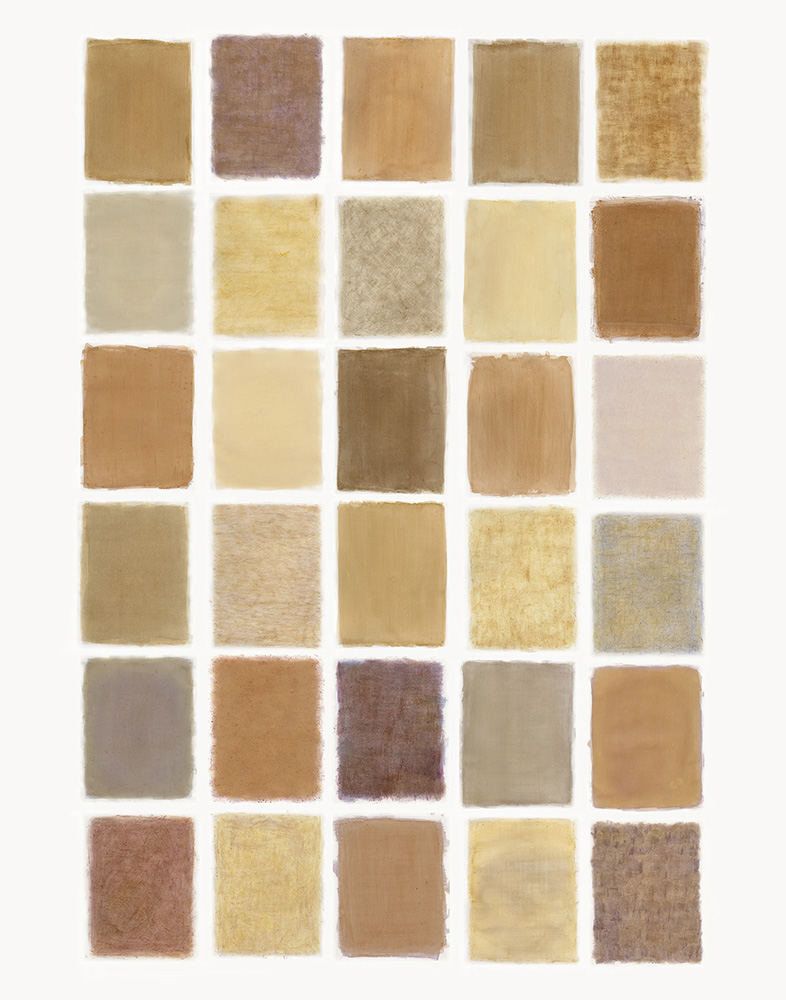
© Amanda Marchand and Leah Sobsey, This Earthen Door (Earth tones)
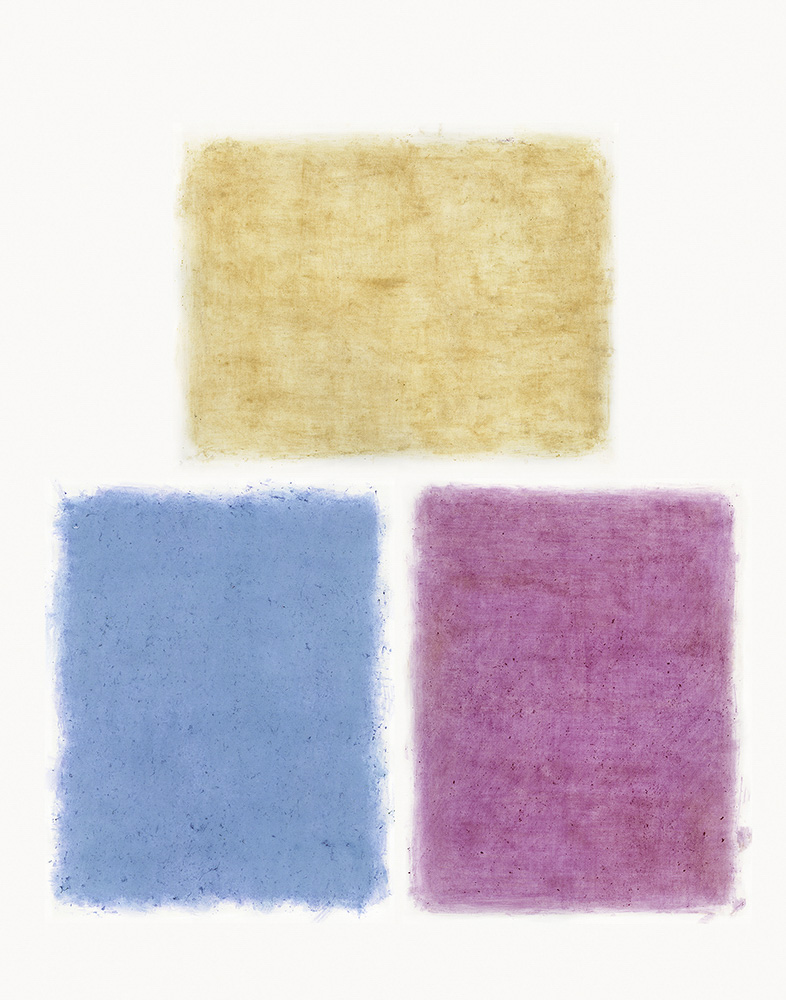
© Amanda Marchand and Leah Sobsey, A transport one cannot contain (Invasive species)
Since 2020, we have been collaborating on the making of “This Earthen Door,” a work documenting our encounter with poet Emily Dickinson’s herbarium. Published, largely, only after her death, the iconic 19th-century poet was better known as a gardener during her lifetime. Over one-third of her poems and half her letters reference flowers and plants, illuminating her deep connection to the natural world.
In a gesture honoring Dickinson’s nearly 200-year-old effort, we grew and harvested plants to remake her flower-sampler with an alternative photo process known as anthotype. Antho means flower in Greek. Anthotypes are plant-based photographs, an innovation dating back to when Dickinson was at work on her herbarium in the 1840s.
Reanimating Dickinson’s 19th century flower book led us to imagining a 21st century herbarium. We began with Marta McDowell’s scholarship on the poet, writer of “Emily Dickinson’s Gardening Life.” Understanding the vastness of our subject, we then partnered with two scientists: Dr. Kyra Krakos, a professor of biology (and her students); and Peter Grima, botanist and Dickinson herbarium scholar. “This Earthen Door” is a two-part work: in conversation with scientists and Dickinson scholars, it is forging a necessary conversation between art and ecology. Part I, HERBARIUM, reanimates Emily Dickinson’s original herbarium pages in shimmering plant hues. Part II, CHROMOTAXIA, is our “research project,” employing our plant-pigment papers (our photo papers) before exposed to the sun. Led by the science, we have created 33 abstract “data-drawings” that address ethnobotany, climate shifts, and the poet’s relationship to the natural world.
What valuable information can be excavated from this 200-year-old nearly forgotten archive? “This Earthen Door” gives a glimpse into the nature-inspired world of the enigmatic poet and asks where she might point us in this moment of “plant invisibility” and climate chaos.
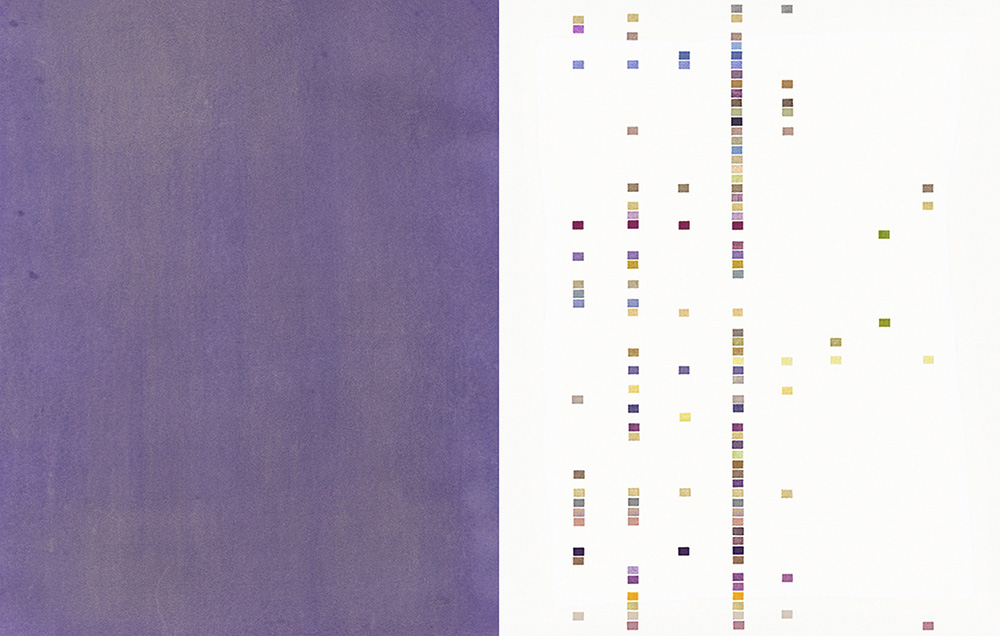
© Amanda Marchand and Leah Sobsey, Purple Petunia (wash); The Wind begun to rock the Grass (Pollinators)
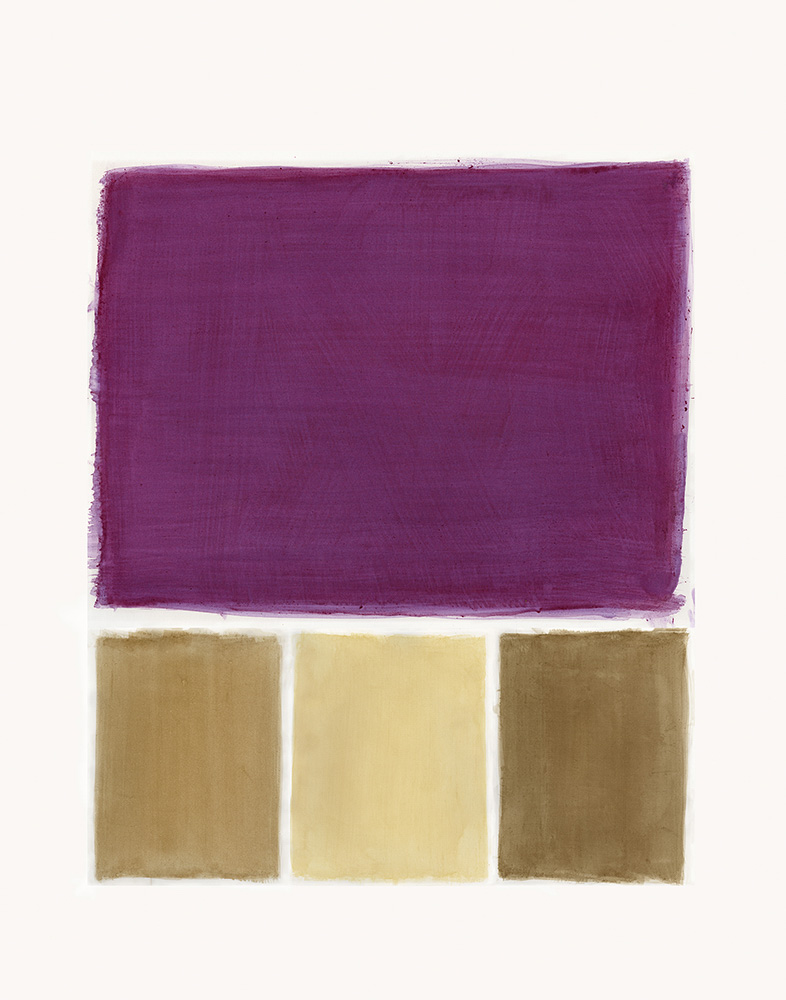
© Amanda Marchand and Leah Sobsey, I held a Jewel in my fingers (Rare or endangered species)
“This Earthen Door” premiered at Photofairs NYC 2023. A solo show was exhibited at the Stephen and Peter Sachs Museum, and a forthcoming exhibition at the Brandywine Museum opens spring, 2025, as well as at Rick Wester Fine Art. “This Earthen Door: Emily Dickinson’s Herbarium,” was published by Datz Press, 2024, and was featured at Paris Photo 2025 by “The Eyes” artist talks. The work has been reviewed in “Lenscratch,” “ARTnews,” “The Marginalian,” “Lensculture,” “The Emily Dickinson Journal,” among others.
——————————————————-
Amanda Marchand is a Canadian-New York-based photographer. Honors include the 2024 LensCulture Awards; the 2023 Julia Margaret Cameron Photography Awards; The 2022 Silver List; Medium Photo Festival’s Second Sight Award Winner, 2021; Photo Lucida’s Critical Mass Top 50, 2021. She is represented by Traywick Contemporary, Koslov Larsen, Rick Wester Fine Art, and photo-eye Gallery’s Showcase.
Leah Sobsey is an artist, Associate Professor of Photography, Curator, and Director of the Gatewood Gallery at the University of North Carolina, Greensboro. Recent exhibitions include the Huntington Museum CA, The Harvard Museum of Natural History, “In Search of Thoreau’s Flowers” at the Gregg Museum. Sobsey has exhibited internationally, and her work is held in private and public collections across the US, including the Microsoft Collection. She is represented by Rick Wester Fine Art.
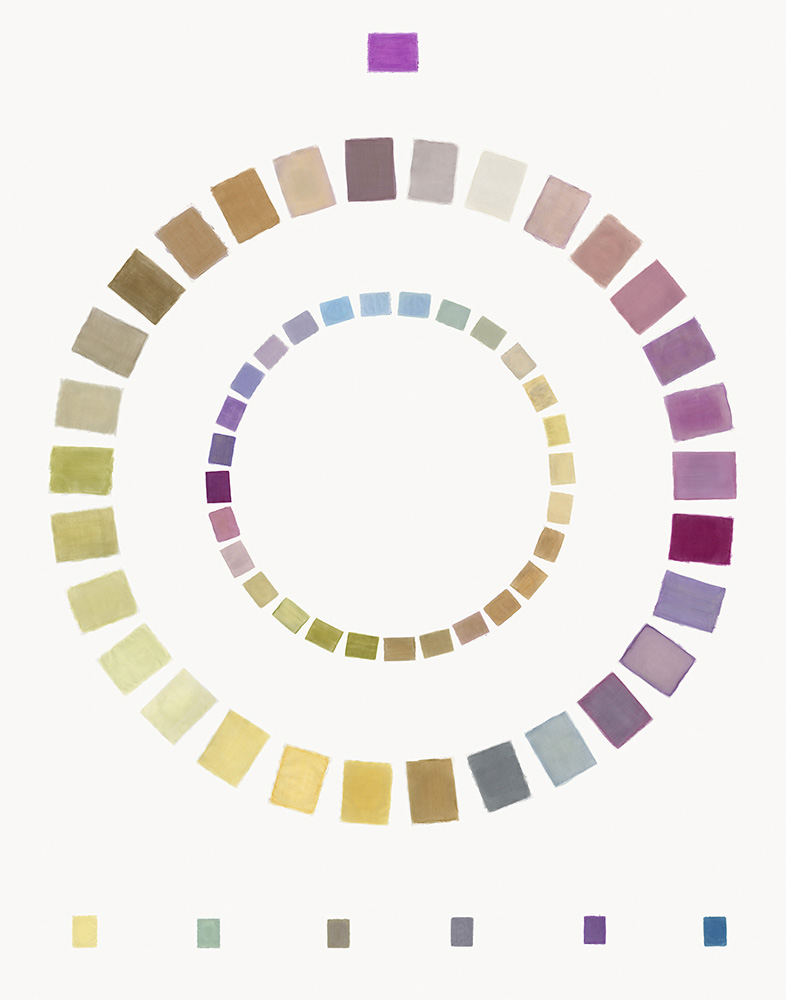
© Amanda Marchand and Leah Sobsey, Bloom – is Result (Blooming seasonal wheel)
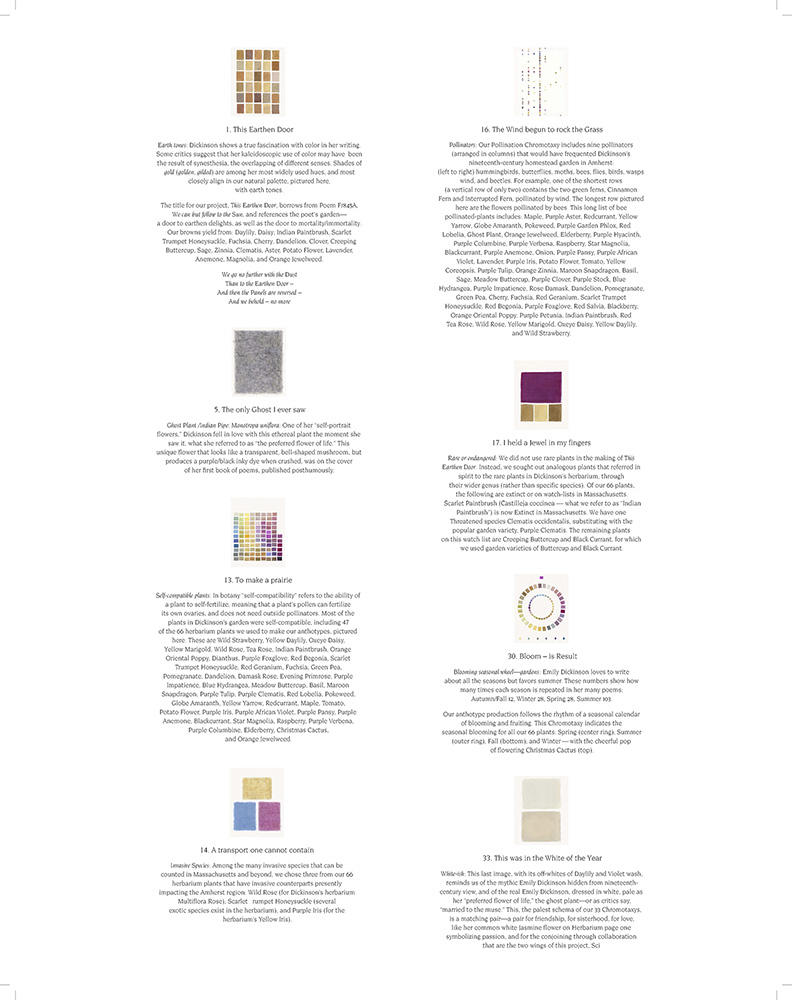
Chromotaxia thumbnails with stories
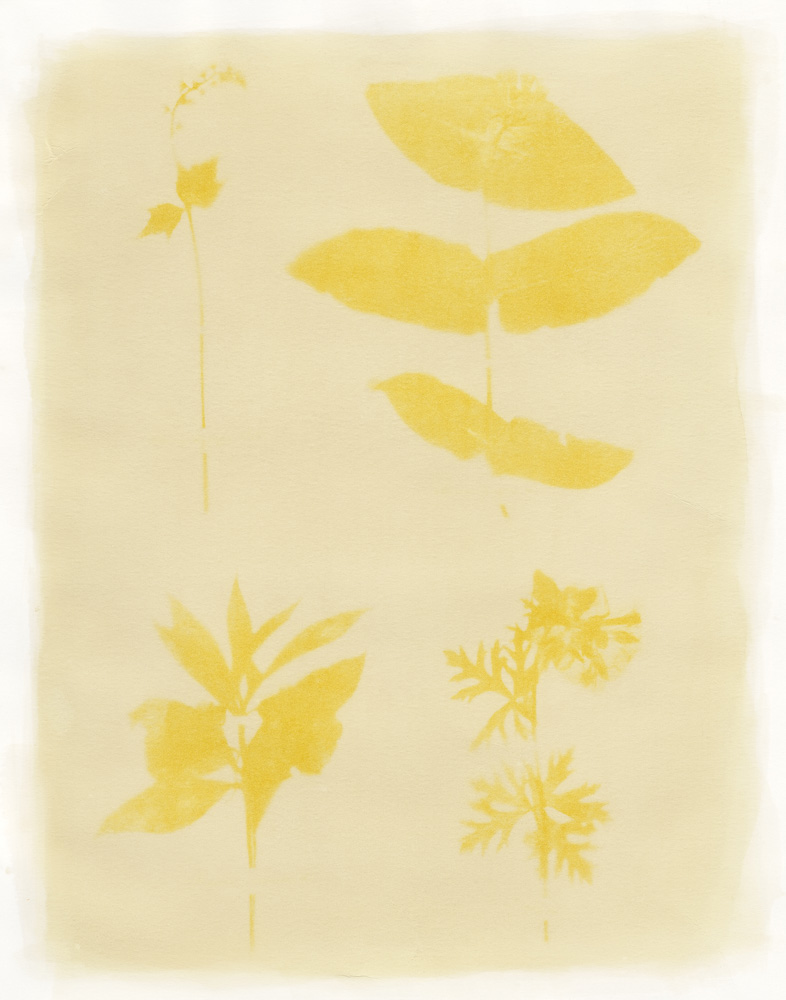
© Amanda Marchand and Leah Sobsey, Herbarium Plate 4 – Marigold

© Amanda Marchand and Leah Sobsey, Herbarium Plate 8 – Purple Petunia
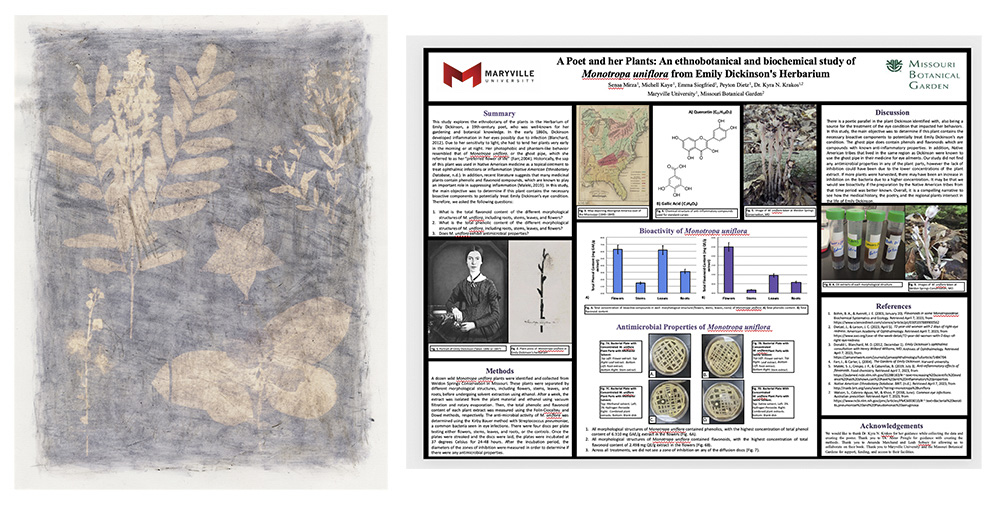
© Amanda Marchand and Leah Sobsey, Herbarium Plate 66 – Ghost Pipe; Research poster by Maryville University student Senna Mirza
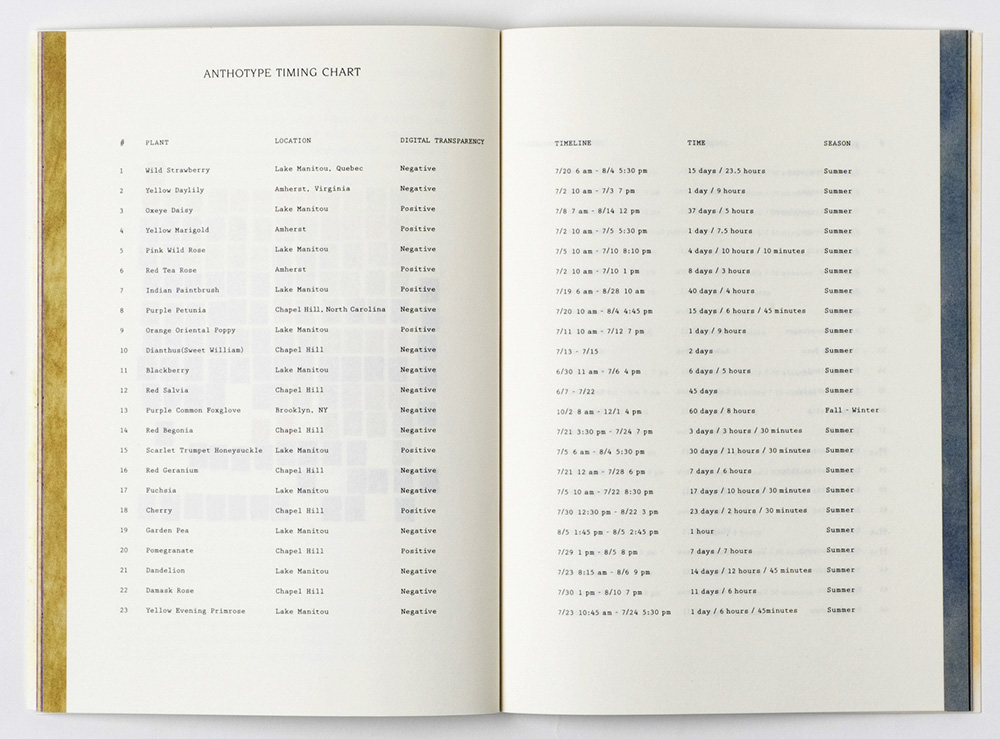
This Earthen Door Anthotype timing chart
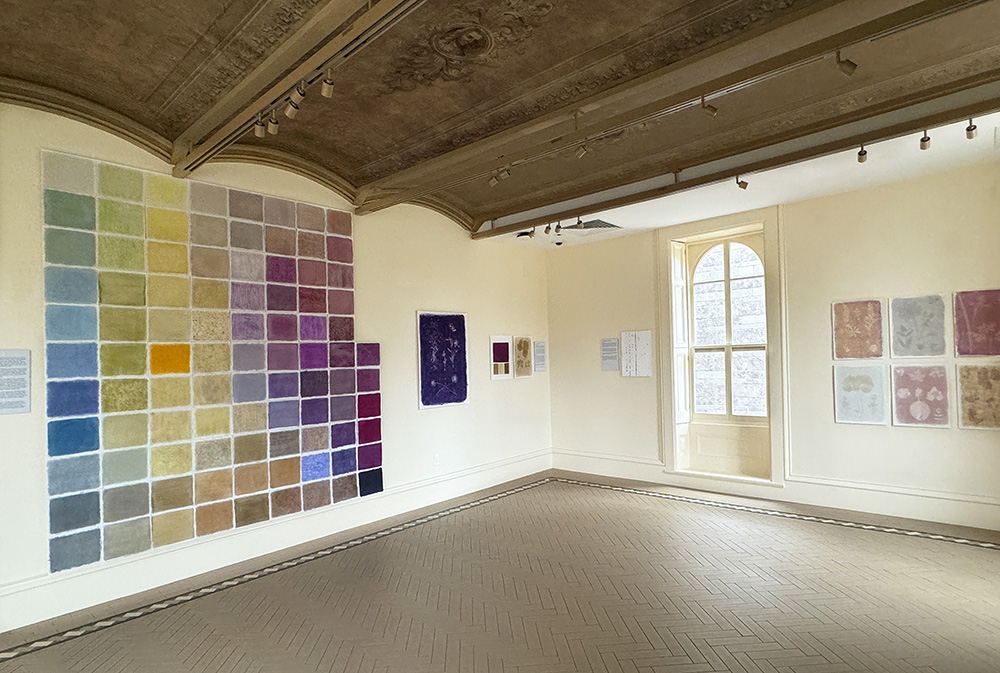
Installation view Stephen and Peter Sachs Museum at the Missouri Botanical Garden
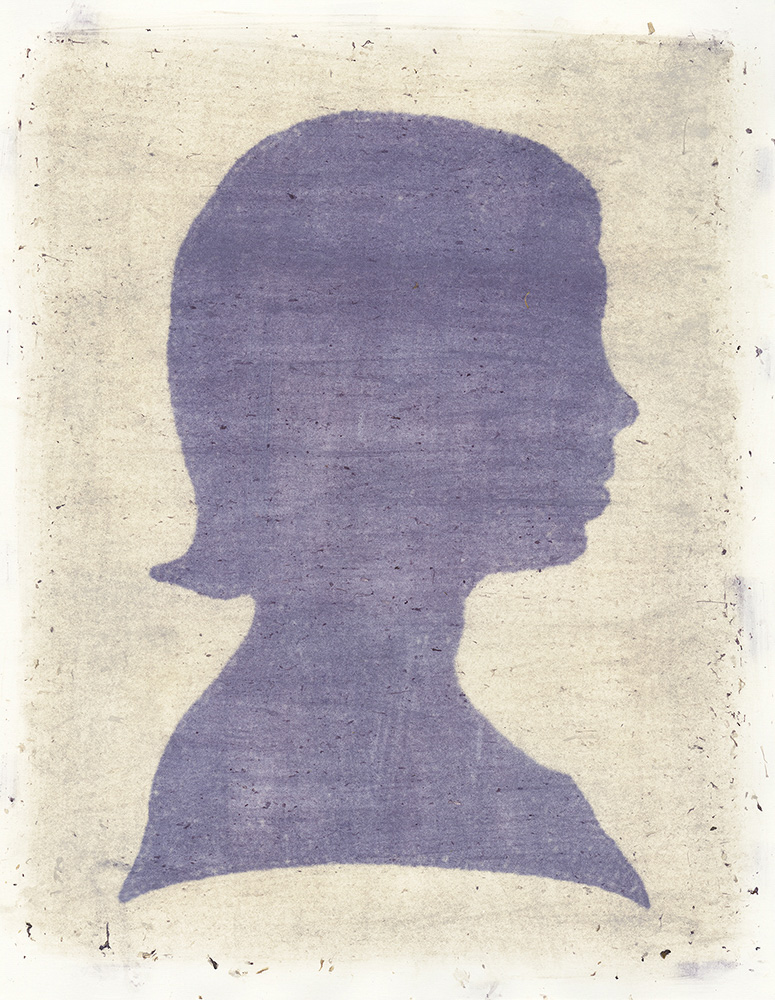
Red Daylily, Emily age 14 – negative

Jurors of 2024 Art + Science Competition: Linda Alterwitz and Jeanine Michna-Bales
Linda Alterwitz
Linda Alterwitz (American, b. 1960) is an interdisciplinary artist utilizing photography, collage, and interactive methods. Her practice focuses on envisioning the unseen rhythms of the human body and our relationship to the natural world.
Alterwitz sees art as a catalyst for change, highlighting the transformative power of creative expression in addressing societal challenges. By integrating the authenticity of science and the communicative power of art, she creates a bridge between the visible and the unseen, inviting the viewer to reimagine our connection to one another and the world around us.
Alterwitz’s work is held in permanent collections including Center for Creative Photography, Tucson, AZ; Getty Research Institute; Hilliard Museum of Art; Nevada Museum of Art, Center for Art & Environment archives; Nelson Atkins Special Collections Library; Santa Barbara Museum of Art Fearing Library; Rochester Institute of Technology, Wallace Library; Barrick Museum, UNLV; and the Lilley Museum of Art, UNR.
Jeanine Michna-Bales
Working in the medium of photography, Jeanine Michna-Bales is a fine artist exploring the impact of cornerstone relationships on contemporary society- those relationships between ourselves, others and the land we inhabit. Her work lives at the intersection of curiosity and knowledge, documentary and fine art, past and present, anthropology and sociology, and environmentalism and activism. Michna-Bales’ practice of in-depth research, often from primary source materials, enables her to consider multiple points of view, understandings of cause and effect, and the socio-political context of the subject matters she pursues.
Michna-Bales’ work is held in many permanent collections including Archive of Documentary Arts, Duke University, Durham, NC; Capital One Corporate Art Collection, Richmond, VA; Comer Collection of Photography, The University of Texas at Dallas, Richardson, TX; Everglades National Park, Homestead, FL; Harn Museum of Art, University of Florida, Gainesville, FL; Hunter Museum of American Art, Chattanooga, TN; Lehigh University Art Galleries, Bethlehem, PA; Library of Congress, Washington, D.C.; Louisiana State University, Hill Memorial Library, Baton Rouge, LA; Museum of Fine Arts, Houston, TX; Portland Art Museum, Portland, OR; Princeton University Art Museum, Princeton, NJ; The Nelson-Atkins Museum of Art, Kansas City, MO; The Phillips Collection, Washington, D.C.; and University of North Texas, Denton,TX.
Posts on Lenscratch may not be reproduced without the permission of the Lenscratch staff and the photographer.
Recommended
-

elin o’Hara slavick: Art + Science Competition Honorable MentionDecember 21st, 2024
-
Leslie Gleim: Art + Science Competition Honorable MentionDecember 20th, 2024
-

Zac Henderson: Art + Science Competition Third Place WinnerDecember 18th, 2024
-

Julie Anand & Damon Sauer: Art + Science Competition Second Place WinnersDecember 17th, 2024
-

Amanda Marchand and Leah Sobsey: Art + Science Competition First Place WinnersDecember 16th, 2024