The Female Gaze: Lara Gilks – Just Outside the Frame
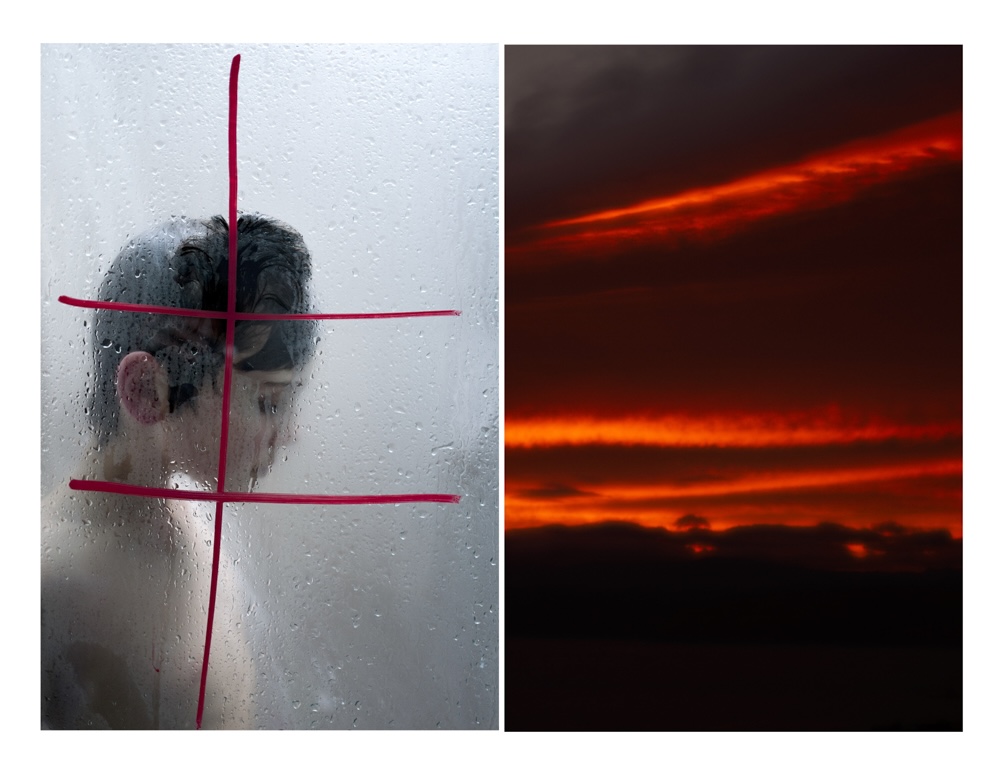
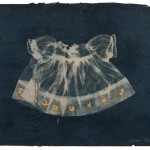
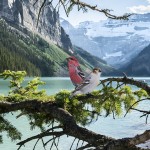
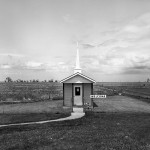
©Lara Gilks: Crossroads from the series To Dust (2024; pigment print from digital imagery; right image made with a Diana lens.)
Lara Gilks’s photographs explore the precipice between human and inhuman, dream and reality and the themes of metamorphosis, mortality, escapism, ascension and silence. She has received multiple awards for her work including as a finalist at the Kuala Lumper Portrait Prize 2022 and the Lucie Foundation Portrait Awards 2021, and winner of Australasia’s Top Emerging Portrait Photographer for 2018. Her work was published in Art New Zealand the winter issue 2022 and SHOTS magazine in the USA in 2021. She has exhibited widely including group shows in Spain, Hungary, Italy, USA, Thailand and New Zealand. Lara lives in Wellington, New Zealand.
Instagram: @laragilks
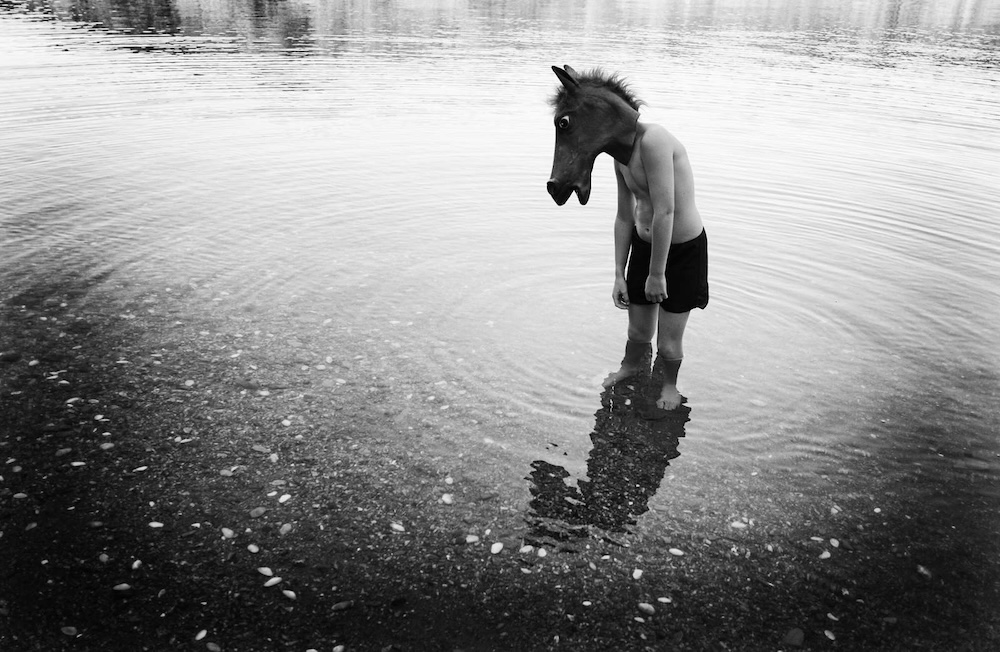
©Lara Gilks: Untitled from the series White Lies (2016; pigment print from digital photograph.)
I met Lara Gilks in an online class given by Laura Valenti somewhere around 2015-16. I was instantly drawn to her work, which at the time was darkly humorous B&W photos of masked children. I found a Roger Ballen sort of quality to those images. I’ve continued to follow her work; it’s changed directions, but still captivates me.
Gilks more recent works seem more personal, more rooted in her life story and relationship Aotearoa. The work is elegant and beautiful, though the images often carry a sense that the foundational story is just beyond the viewer’s glimpse, allowing (or forcing?) the viewer to bring their own meaning to the frame.
I hope you enjoy finding out more about Gilk’s and her practice.
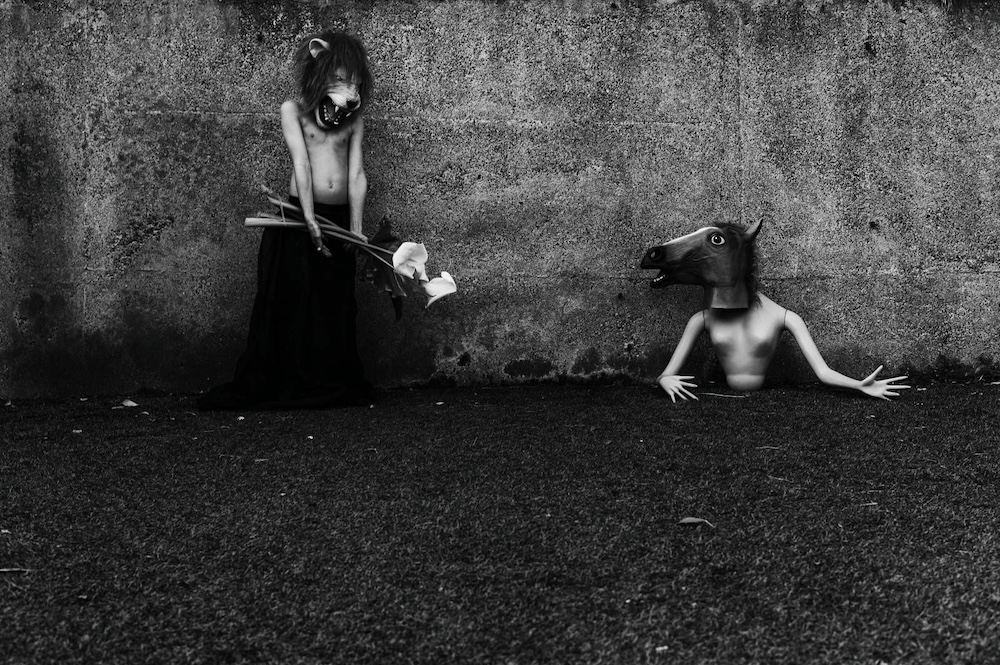
©Lara Gilks, Lion gives Flowers from the series My Backyard Theatre (2017; pigment print from digital photograph.)
DNJ: Tell us about your childhood.
LG: I would describe my childhood in two distinct dimensions, one shaped by the natural world and the other by the complexities of family life. I was incredibly fortunate to grow up in Dunedin, a small coastal city on the South Island of New Zealand/Aotearoa, where I was immersed in nature and surrounded by stunning landscapes. We lived just a block from the South Pacific Ocean. During storms, I could hear the roar of the waves. The water was fierce, cold, unforgiving, and profoundly beautiful.
Most holidays and many weekends, our family would travel inland to Wanaka, a small town in Central Otago, where we had access to magnificent Lake Wanaka (roto), Mata-au (river/awa), and wide-open spaces. Access to these landscapes instilled a deep connection to nature and a strong sense of independence and adventure.
At home, life was more complicated. My father was an ambitious businessman and a gifted gardener. My mother shouldered a significant portion of the household responsibilities while also studying at university. There was a constant unspoken tension between them, a clash of ideologies that shaped the energy of our home. There was so much left unsaid. My brothers and I learned to navigate that emotional landscape as best we could. We leaned on each other, found comfort in our friends, and for me, nature became the ultimate escape.
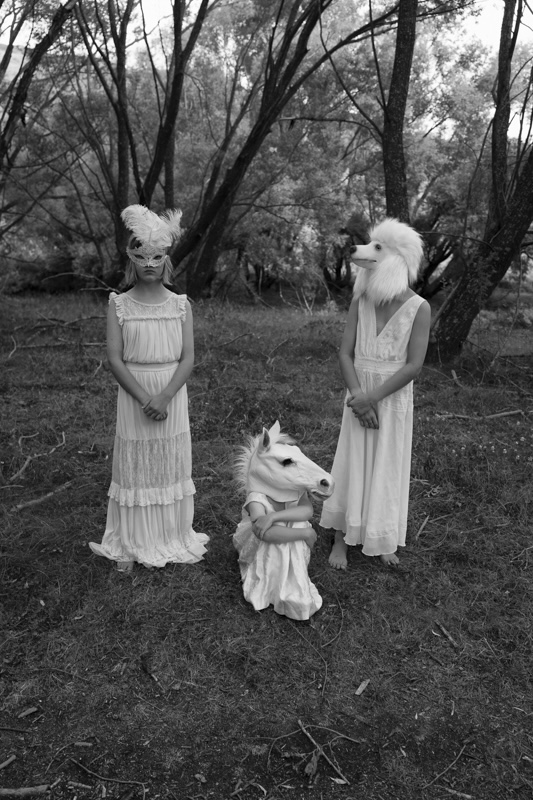
©Lara Gilks: Before the Party from the series White Lies (2021; pigment print from digital photograph.)
DNJ: What were you like as a child?
From an early age, I was especially drawn to birds. I memorized facts from New Zealand bird guidebooks and kept detailed records of the species I spotted. At age twelve, I joined the New Zealand Ornithological Society. I loved to take part in wader counts and coastal surveys of deceased birds. It was a quiet but deeply immersive way of engaging with nature.
Creativity was also present in my surroundings. My father expressed himself through his garden, my aunt was a gifted creative, and my mother ran a gallery and framing studio after studying. Both of my brothers would go on to pursue their own creative paths. Despite being surrounded by this creative energy, I struggled to find my own outlet during my school years. Art class never quite resonated with me; I suspect now that my perfectionism played a part in that. I longed for a creative outlet, but I was often too critical of my own efforts to enjoy the process.
Looking back, my desire to observe, care for, and document birds, animals, or landscapes was the beginning of a creative instinct that would eventually find its place.
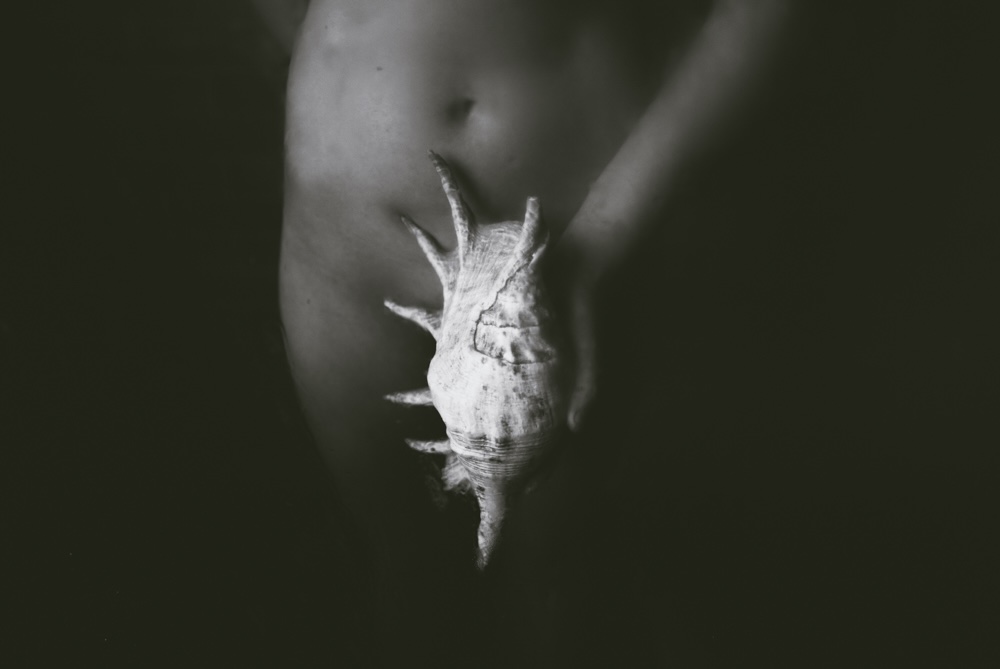
©Lara Gilks: Woman with Shell (2020; pigment print from digital photograph.)
DNJ: How/why did you start in photography? What’s kept you with it for all these years?
LG: My introduction to photography was around the age of five. My aunt was attending fine art school at the time and created a beautiful series of large-format black and white portraits of my brother and me. As a child, I recall poring over the contact sheets and negatives from that shoot with intense curiosity. The prints are raw and honest; to this day, I treasure them.
On my 21st birthday, I received a Pentax film camera as a gift. I used this sporadically over the years that followed. The real catalyst for my love of photography came when my youngest child was around one year old. I enrolled in a night class for beginning photographers. That was a turning point—the course ignited something in me, and from that moment on, photography became a core part of my being. Since then, I have participated in numerous workshops and courses, both online and in Wellington
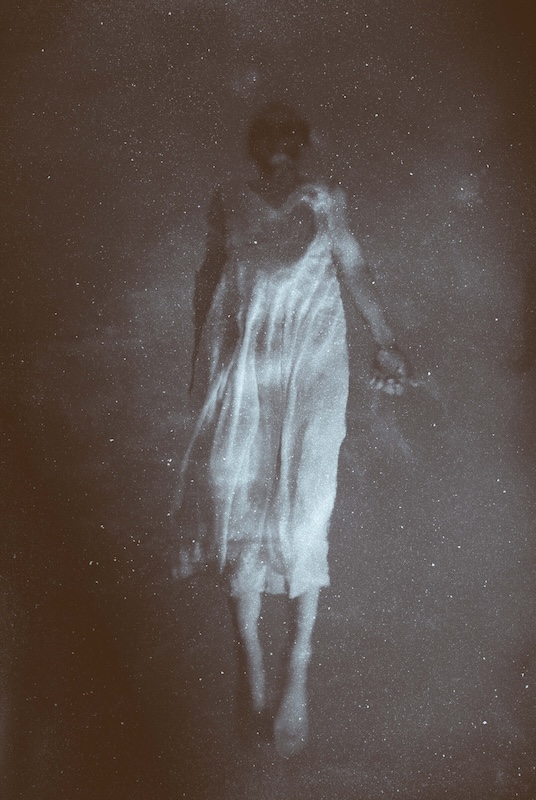
©Lara Gilks; Ghost Light from the series Between Two Worlds (2020; pigment print from digital photograph.)
Photography became my ultimate escape, a way to carve out space for myself amid the rhythms of family life. My two boys, now 17 and 20, became central to my practice. I wasn’t interested in conventional child portraits; instead, I was drawn to playful and at times macabre photoshoots, which in retrospect perhaps reflect the complexities of my own childhood and family dynamics. Our holidays were often accompanied by a suitcase full of masks and props, and as a family, we have humorous memories of shoots on the road. As my boys have grown and their willingness to model waned, my focus shifted. While they occasionally still model for me, I have turned the camera more towards nature.
Photography remains one of the great constants in my life; it gives me space to be quiet and to make sense of the world around me. I hope it stays with me, always.
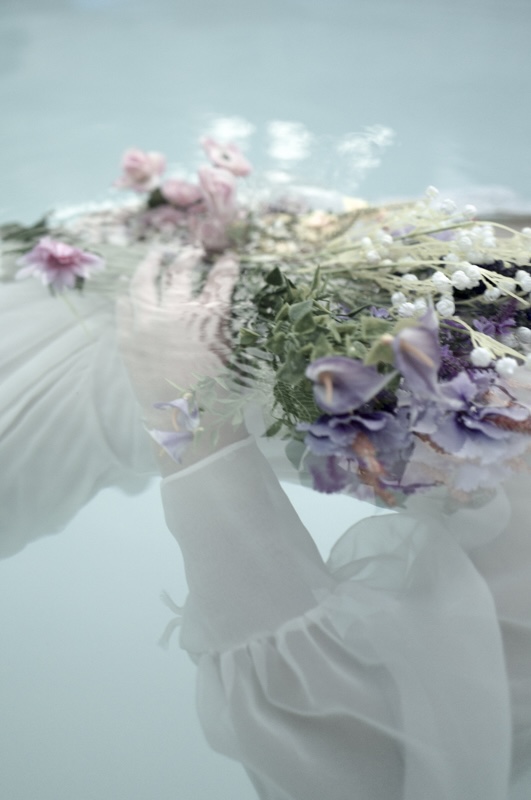
©Lara Gilks: Requiem (2021; pigment print from digital photograph.)
DNJ: Water has played a large part in your work. Can you speak about that?
LG: I live in Wellington (Pōneke), a city that borders Cook Strait, the narrow channel that separates New Zealand’s North and South Islands. Known as the world’s windiest city, Wellington’s harbour (Te Whanganui-a-Tara) is a place where ocean and wind are constant and a powerful presence.
For the past twenty years, my family and I have lived in a small suburb at the mouth of the harbour. The ever-changing sea and weather have become an inseparable part of my daily life. Water is a natural subject, one that never fails to inspire and challenge me.
Water holds emotion, beauty, and immense power all at once. What draws me most is the tension: floating and sinking; light and shadow; control and surrender. For me, water symbolizes change and mood, a delicate balance between resistance and letting go.
I am fascinated by how light interacts with water, revealing and concealing, and transforming the familiar into something mysterious and timeless. There is something profoundly human in water’s capacity to hold memory, tension, and transformation. It is this timeless quality that continually calls to me.
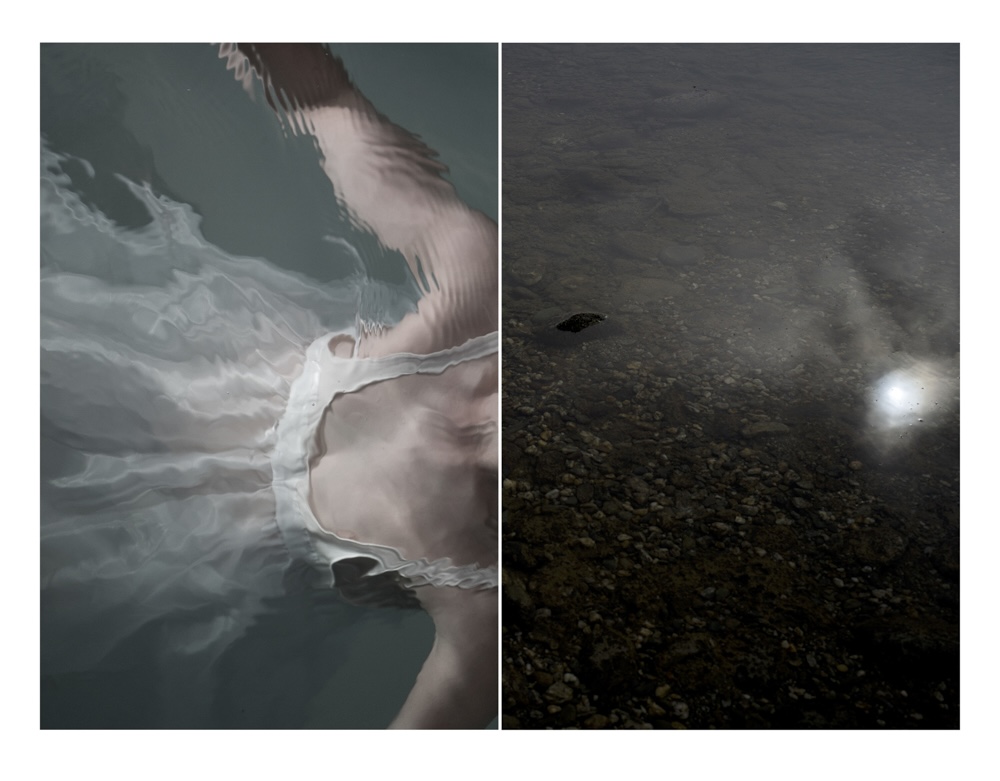
©Lara Gilks; Guiding Light, from the series To Dust (2024; pigment diptych print from digital photographs.)
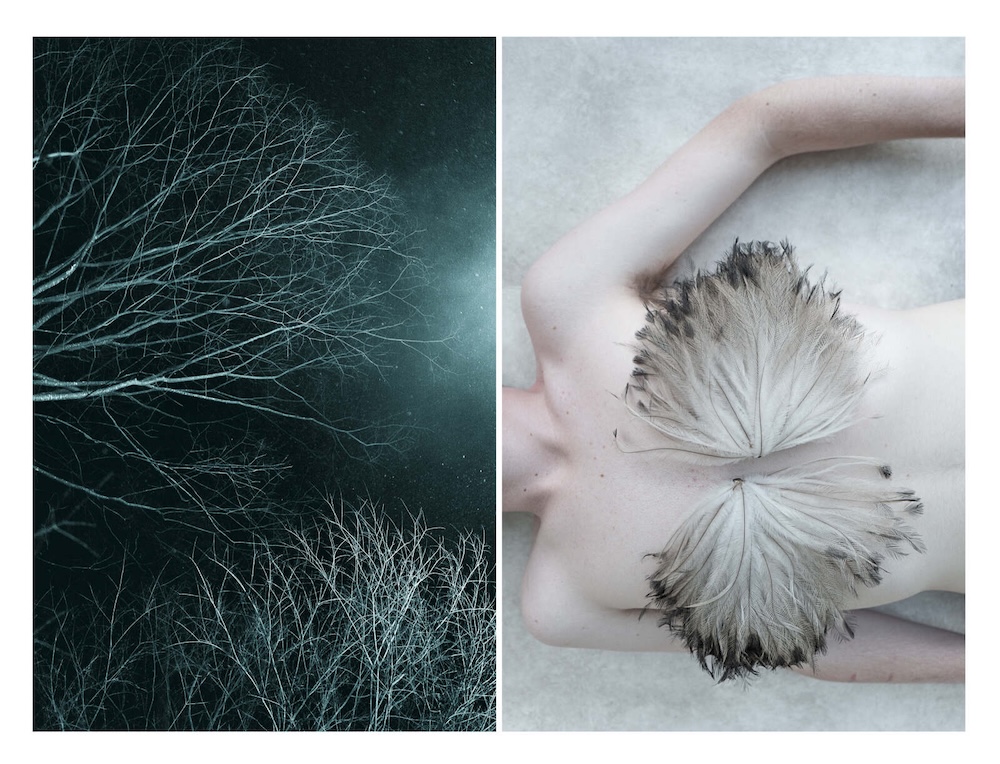
©Lara Gilks; Grasp from the series To Dust (2023; diptych pigment print from digital photographs.)
DNJ: Where do the ideas you work with come from? How do they influence each other if they do?
LG: Ideas don’t usually come to me in a linear way; they tend to grow out of one another, like a web. Often, a few images from one body of work will quietly point me in a new direction. One project leads into the next, sometimes without me fully realising it at the time. That was the case with my series “To Dust,” which eventually led to the publication of the book with the same title. Likewise, “My Backyard Theatre” and “White Lies” were created around the same time and feed off one another; they’re in conversation, in a way.
Often, I don’t know exactly what I’m making or why, but over time, connections start to appear. Specific themes or feelings keep coming back, and that’s usually when things start to make sense. I’ve learned to trust the process. I keep showing up to make work and follow what I’m curious about.
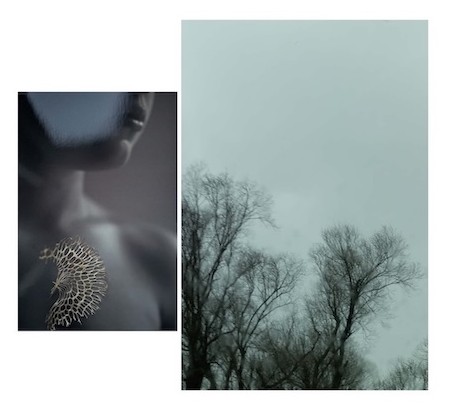
©Lara Gilks; Whispers of What Was from the series To Dust (2023; diptych pigment print from digital photography and re-photography.)
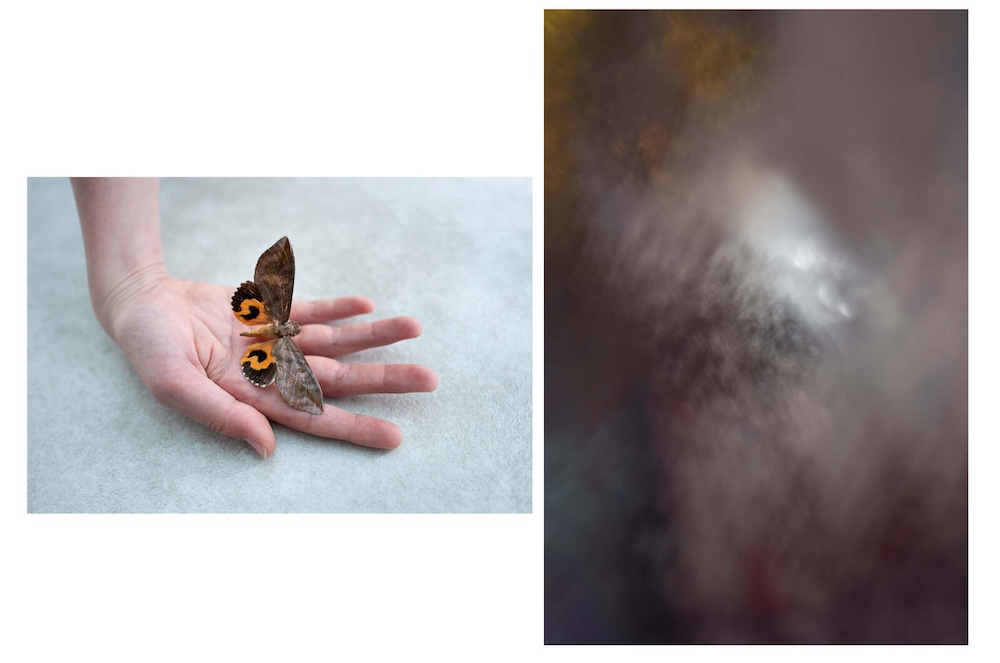
©Lara Gilks; The Long Flight from the series To Dust (2023; diptych pigment print from digital photography using Diana lens.)
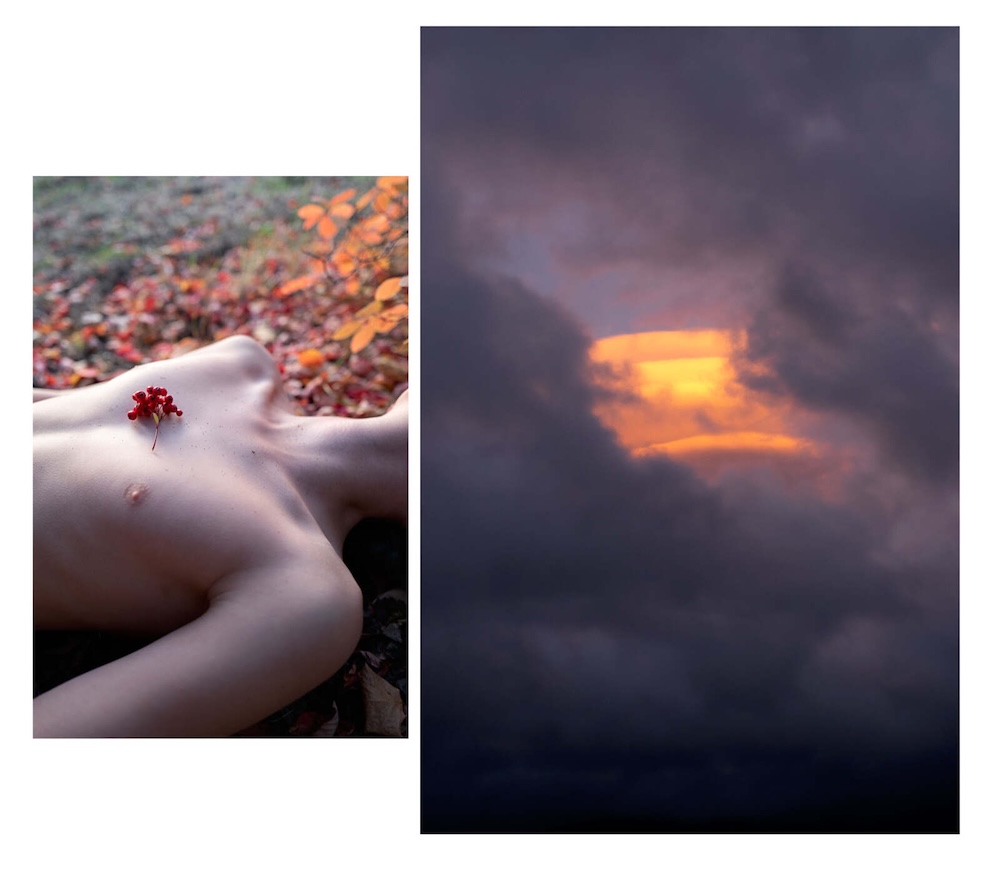
©Lara Gilks; Ephemeral from the series To Dust (2023; diptych pigment print from digital photography using Diana lens.)
DNJ: You’ve worked with different styles in photography. Do you always have a concept when you start a project, or do you shoot and let the images guide you to what the project will be? How do you determine which process or style is best for any given project?
LG: I work in different styles depending on the project, though it’s not always a conscious choice at the beginning. Often, the process begins intuitively, allowing the style to reveal its direction over time.
What remains consistent is a desire to see deeply and thoughtfully. I’m drawn to work that feels honest and emotive. Style for me isn’t fixed. It evolves and is subject-dependent, or a reflection of my personal perspective at the time.

©Lara Gilks: Remnant (2022; pigmernt print from digital photograph)
DNJ: Can you share your approach to creating the work? What do you do when encountering a period of creative block?
LG: My latest series, “Held by Water”, began with a concept I wanted to explore, but I didn’t know exactly what the images would look like. The process was intuitive, and as I began working, the project started to take shape. The concept and the process aligned, and it began to feel like a natural and cohesive fit.
Sometimes I take images with one idea in mind, but they end up leading me somewhere entirely different. Others begin as whispers of something, but then it takes years for its meaning to become clear, as if it needed time to ferment and grow into something different.
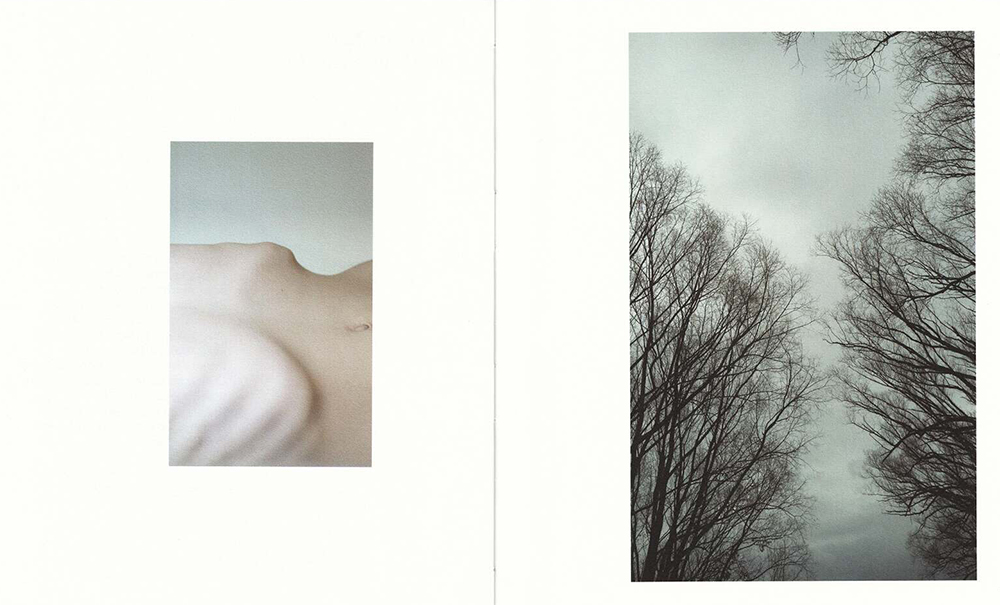
©LaraGilks: detail: untitled half spread from To Dust photobook (2025; digital photograph, HP Indigo printed, Murex Studio)
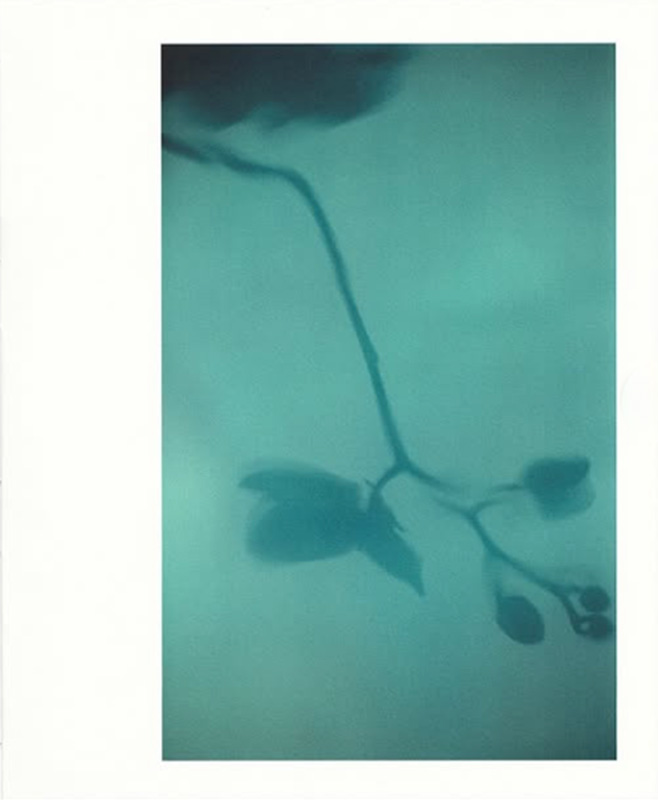
©LaraGilks: detail-untitled half spread from To Dust photobook (2025; digital photograph, HP Indigo printed, Murex Studio)
My creativity definitely moves in cycles; it waxes and wanes, and I’m learning to recognize and accept those rhythms. In low periods, I can find it frustrating, especially because time is so precious. I may still produce work during those times, but it often feels disconnected. When I am blocked, I explore other creative outlets. In recent years, I’ve experimented with printmaking and ceramics. That time away gave me space, yet reminded me that photography is my first love.
I think about my practice frequently, and feed my creativity through reading, exploring a range of art, and visiting galleries. I am learning to accept that lacking direction is an uncomfortable but inevitable part of the creative process.
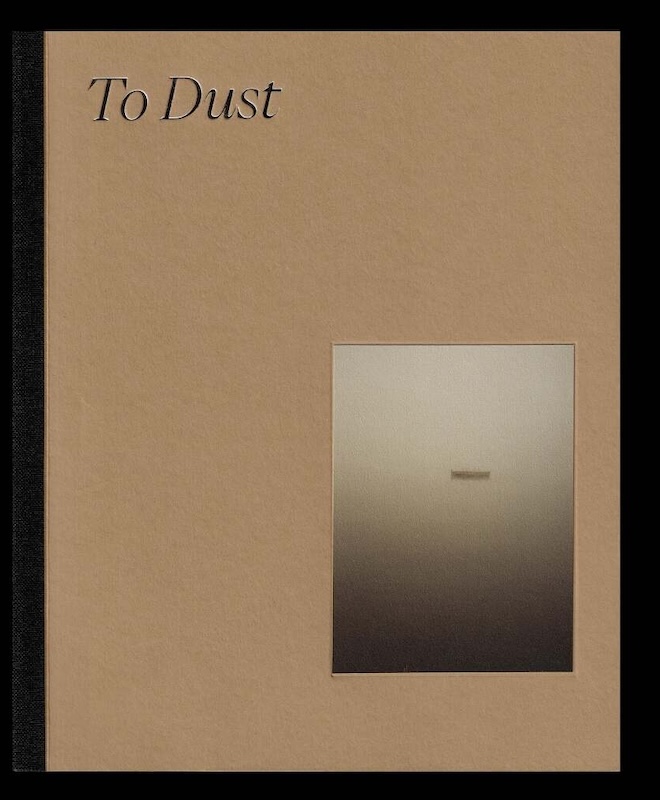
©Lara Gilks: detail-photograph of To Dust photobook cover (2025, Murex Studio)
DNJ: You have a book out, To Dust. Could you talk about your experience making it?
LG: “To Dust” began as a photo series exploring ideas of metamorphosis and inevitability. I had built up a large body of work over time, and I wanted to present it in a more contemplative format.
Although the idea of making a book had been something I considered for some time, attending the Photobook/NZ Festival in August 2024 became the catalyst. Viewing the wide range of photobooks made me realize how powerful imagery can be in book form—how pacing, sequencing, and physicality shape the viewer’s experience of a body of work.
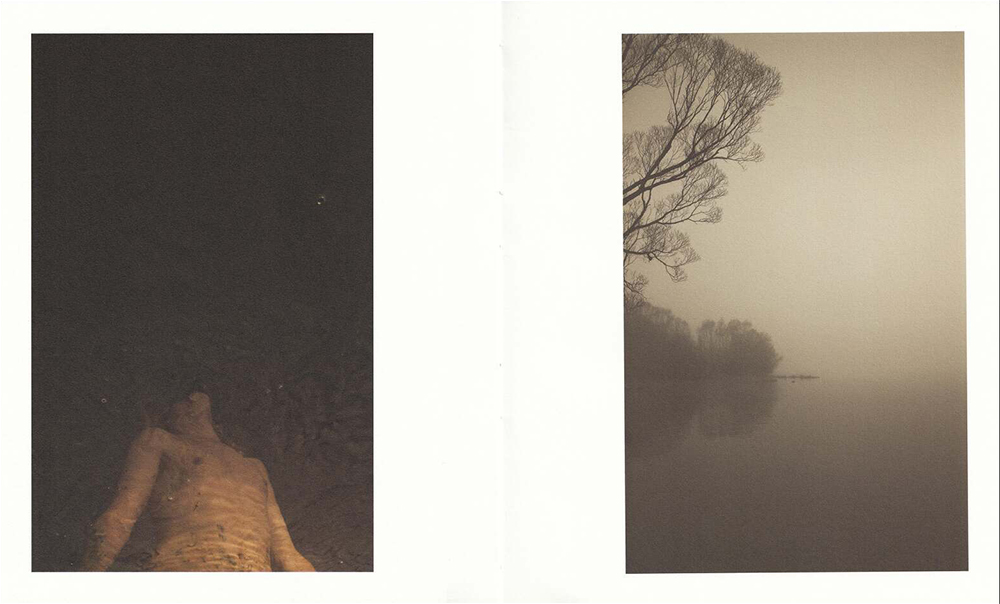
©Lara Gilks: page spread from To Dust photobook (2025; digital photographs, HP Indigo printed, Murex Studio)
While at the festival, I was fortunate to be connected with Kyra Jensen of Murex Studio. She’s a designer and independent publisher. From our first meeting, I felt a strong creative connection. I began by selecting three guiding words that represented my direction when making this work. I used those as a framework to gather images. I started with approximately 160, which I printed and reflected upon. Over time, I culled 120 images, which I sent on to Kyra. We worked closely over six months to define and refine the project with the intention of crafting a cohesive and immersive experience for the viewer. Every detail was considered: which images, text; image placement; sequencing; paper stock; type of binding. The process was about much more than just selecting strong images; it was about sequencing, flow, rhythm, and restraint. The book includes a poem, “Come To Dust,” by Ursula K. Le Guin, whose words beautifully echo the themes I was working with. Ultimately, “To Dust” became a tightly curated visual narrative that unfolds over 82 pages.
Kyra’s fresh perspective and intuitive design sense were invaluable, especially as I was so emotionally close to the work. She helped me gain the necessary distance to see the material more clearly and ultimately bring the book to life in a way that felt both deeply personal and thoughtfully constructed.
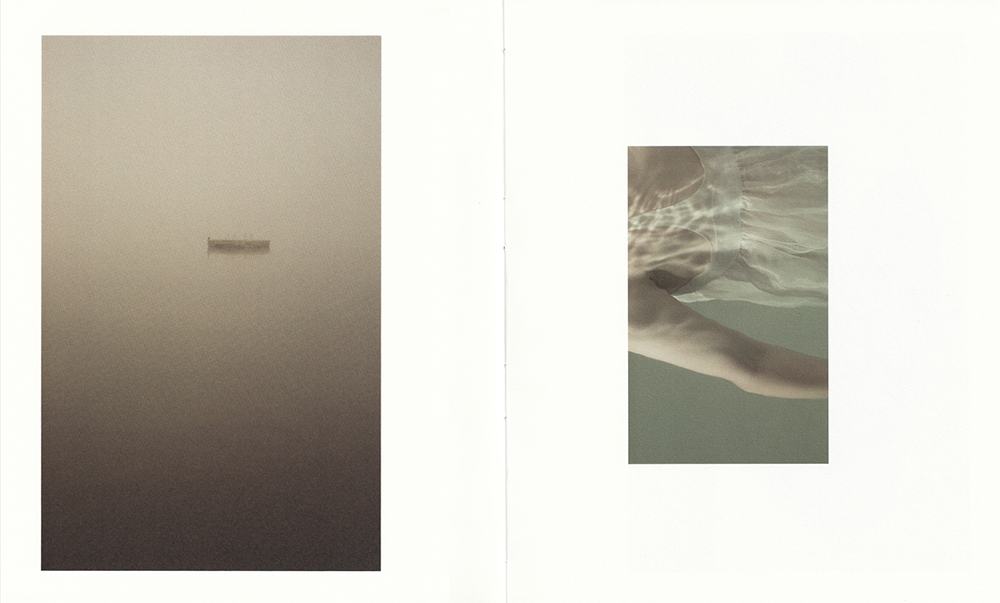
©Lara Gilks: page spread from To Dust photobook (2025; digital photographs, HP Indigo printed, Murex Studio)
©Lara Gilks: page spread from To Dust photobook (2025; digital photographs, HP Indigo printed, Murex Studio)
I was committed to keeping production local, which made the process more collaborative and allowed me to review materials in person. A trusted contact recommended a printer who worked with an HP Indigo press. We wanted to use a paper with a fine art feel, we ultimately chose a Mohawk stock that suited the project beautifully, despite the limited options typical of the smaller New Zealand market. The printer had established relationships with several local bookbinders, and we ended up working with his nearby recommendation. Stepping into the bindery studio felt like entering another era, full of beautiful old machinery and an impressive library of books they had produced. the binder.
“To Dust” was self-funded and produced as a limited edition of 50 copies. It was printed and published here in Wellington/Te Whanganui-a-Tara. It has been shown at book fairs across Aotearoa and Australia, and I held a launch and selected print sale in August.
Creating the book was a deeply rewarding experience. It allowed me to consider how the images breathe together in physical form. The images express a curiosity, not just in what we can see, but also in what lies beneath or beyond.
DNJ: What do you hope the viewer takes from your work? Does it vary by series?
LG: There are tensions, space, and uncertainty in my work; room for the viewer to form their own quiet connection, to sense something soft in the darker edges.
Each series holds a slightly different tone or energy. “To Dust” reflects on change and decay with a kind of still reverence. “Held by Water” explores transformation using nature as the modifier.
I’m interested in how we, as humans, endure—how we hold on, let go, and transform. Although my bodies of work explore that differently, I’ve shared something meaningful if I leave viewers with that sense. My work creates space for reflection, emotion, and perhaps, a moment of pause.
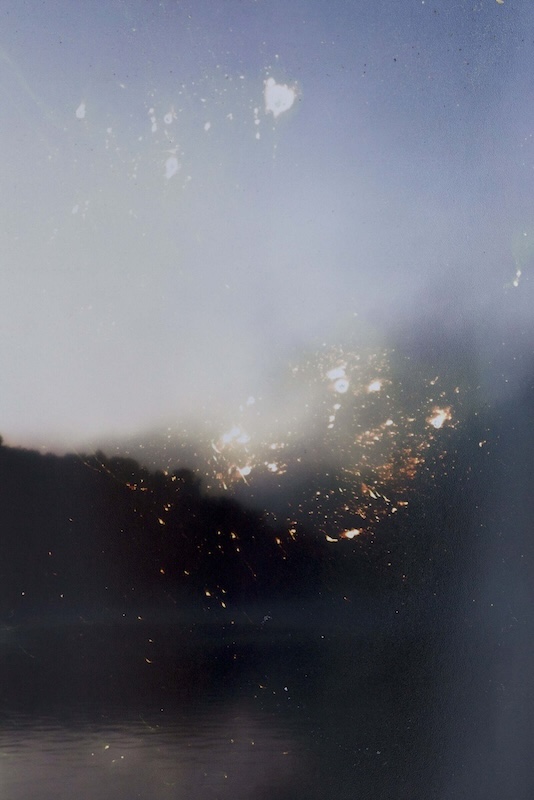
© Lara Gilks: Untitled from the series Held by Water (2025; digital photograph made using Holga lens, C-Print, immersed in water for 24 hours.)
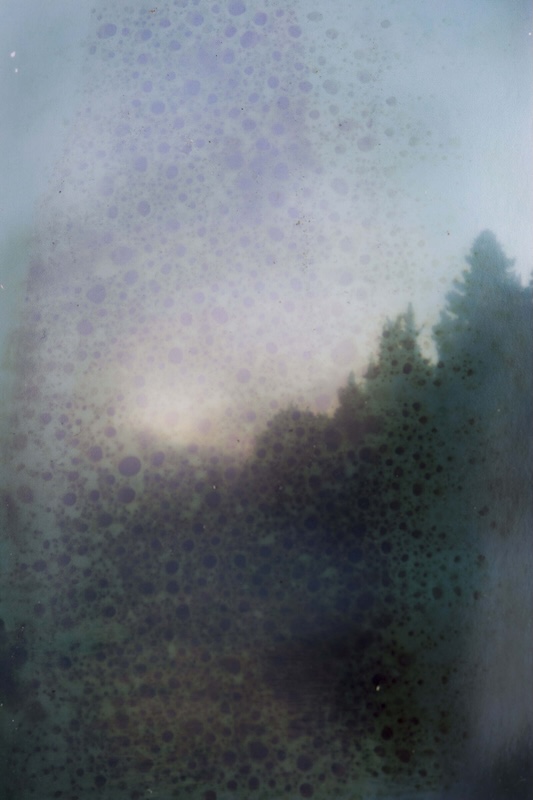
© Lara Gilks: Untitled from the series Held by Water (2025; digital photograph made using Holga lens, C-Print, immersed in water for 60 hours.)
DNJ: What is influencing your work lately?
LG: Over the past two months, two close family members have been unwell. In the midst of that uncertainty, I found myself drawn back to the water seeking something steady, still. From that place, a new series emerged—”Held by Water.”
I’m exploring how water weathers, shapes, and erodes. Like love, it can hold us, but not without leaving traces. It soothes, but it also softens, shifts, and, sometimes, takes.
The work came quickly, more so than any series I’ve made before. There’s something urgent in it, a need to respond, to make sense of the unseen. Currently, I’m refining, extending, and allowing it to unfold.
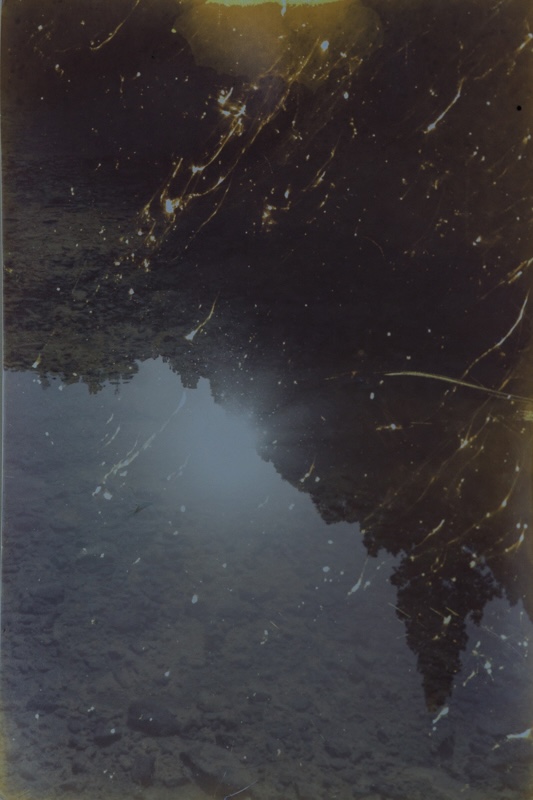
© Lara Gilks: Untitled from the series Held by Water (2025; digital photograph, C-Print, immersed in water for 80 hours.)
DNJ: Please tell us what you are working on now. What’s coming on the horizon for you?
LG: Looking ahead, I aim to continue exhibiting and participating in upcoming festivals in NZ and abroad. I’m hoping to take copies of “To Dust” to the next Photobook/NZ Festival in 2026.
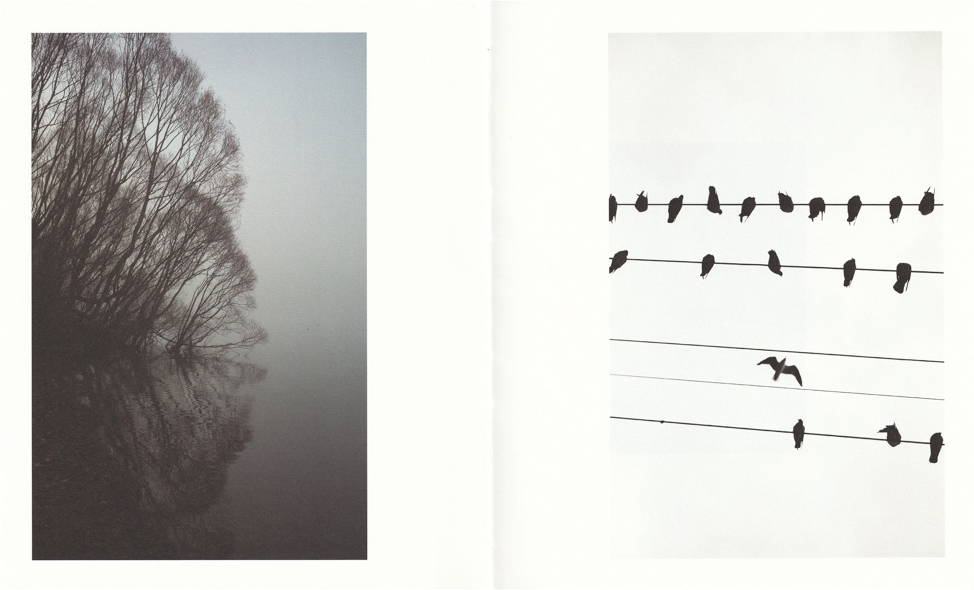
©Lara Gilks: page spread from To Dust photobook (2025; digital photographs, HP Indigo printed, Murex Studio)
I’m continuing to work on my latest series, “Held by Water.” I want to give it more space to breathe. I feel like the work has legs, and I’m following that momentum with curiosity and enthusiasm. The series involves creating physical prints and allowing nature to modify, manipulate, and re-imagine them. It’s nice to get away from the computer for a change, and I’m enjoying trusting the work to chance. I’m also exploring the idea of developing it into a small publication. I’m excited to see where this current work takes me.
DNJ: Thank you ever so much, Lara, for the time you took to speak with me about your background and your work. I look forward to seeing what you do next!
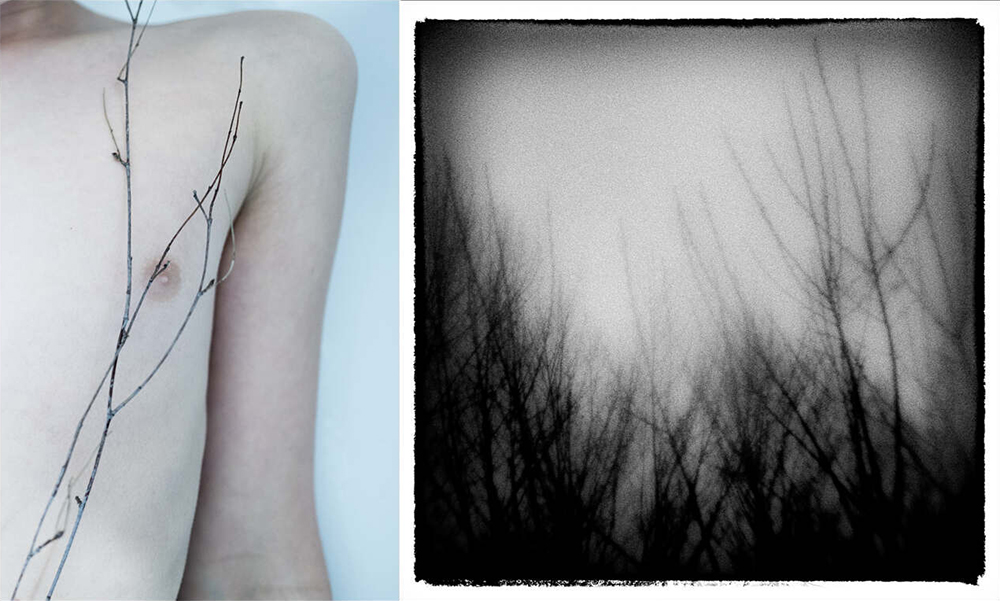
©Lara Gilks: Winter Bare, from the series To Dust (2024, diptych pigment print from digital photgraphs; right image used Monochrome Subjektive lens.)
Posts on Lenscratch may not be reproduced without the permission of the Lenscratch staff and the photographer.
Recommended
-
Olga Fried: Intangible EncountersFebruary 18th, 2026
-
Anne McDonald: Self-PortraitsFebruary 17th, 2026
-
Review Santa Fe: Leslee Broersma: Tracing AcademiaFebruary 11th, 2026
-
Review Santa Fe: Ilana Grollman: Just Know That I Love YouFebruary 10th, 2026
-
Review Santa Fe: jessamyn lovell: How To Become InvisibleFebruary 9th, 2026