South Korea Week: Yang JaeMoon: Blue Journey

©Yang Jaemoon_Blue Journey_1994
The spirit of a nation is often intangible, yet it breathes through the tangible forms of its culture—its food, architecture, and most vividly, its clothing. In the Korean tradition, attire is not merely a covering; it is a canvas of wind and curves that visualizes the inner soul.
Photographer Yang Jae-moon captures this invisible spiritual realm by blending the dynamic movements of Korean traditional dance.
In the dance of a Korean woman, the Hanbok becomes a second skin. The elegant curve of the Jeogori (jacket) and the voluminous flow of the Chima (skirt) are beautiful in stillness, but their true essence awakens in motion. Yang uses his camera as a brush, recording the fluid rhythms of “knotting and untying”—a visual metaphor for the flexibility and hidden strength of the Korean people.
The dancers captured through Yang’s lens are no longer mere individuals. They are mediums of the “Pungryu” (appreciation of arts and nature) and the prayers that our ancestors lived by. The bold yet soft strokes of light reveal an explosive vitality hidden within the modest elegance of the Korean woman, evoking a profound sense of national pride.
Yang Jaemoon is a photographer specializing in traditional Korean dance. He captures the mysterious line flows and harmonious color combinations of traditional Korean dance to showcase the beauty of Korean aesthetics. Using traditional photography methods, he has created captivating images that convey emotions such as sorrow and joy. His works include “Blue Journey,” exploring self-identity; “Bicheonmong,” showcasing the spirited nature of Korean dance; “Arirang Fantasy,” depicting resilience and dynamism; and “Cheoyong Narsa,” portraying the boldness, generosity, and patriotism of Cheoyong. As the next work, Nongak` which is the sound and dance of the people, contains freedom and the Korean flavor and style.
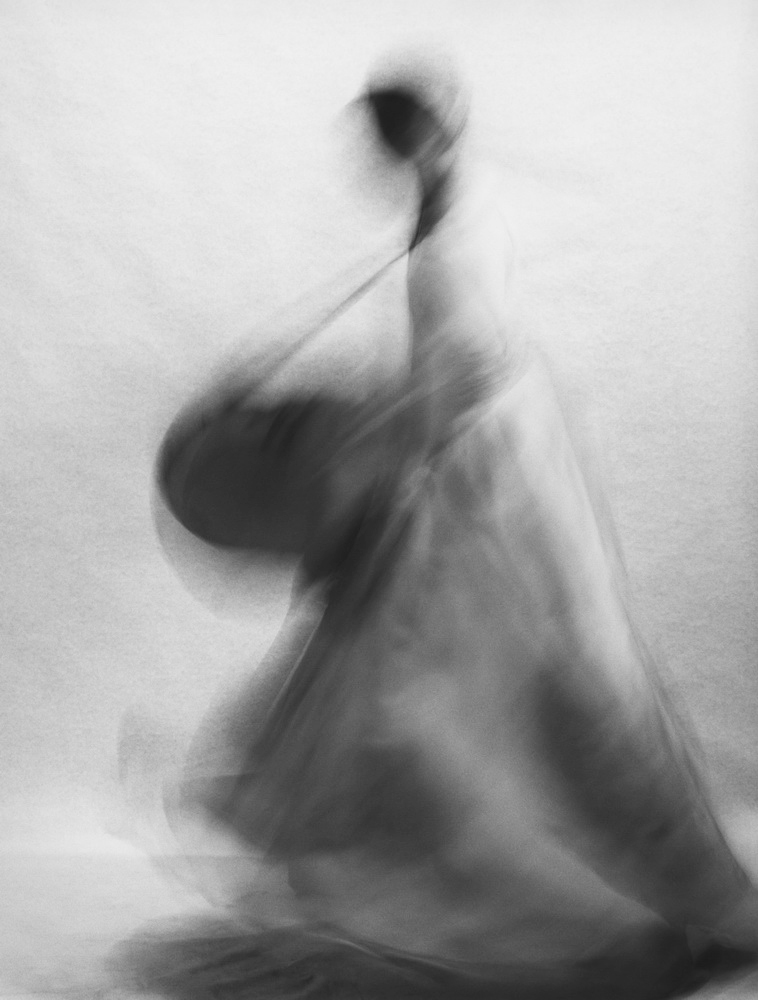
©Yang Jaemoon_Blue Journey_1994
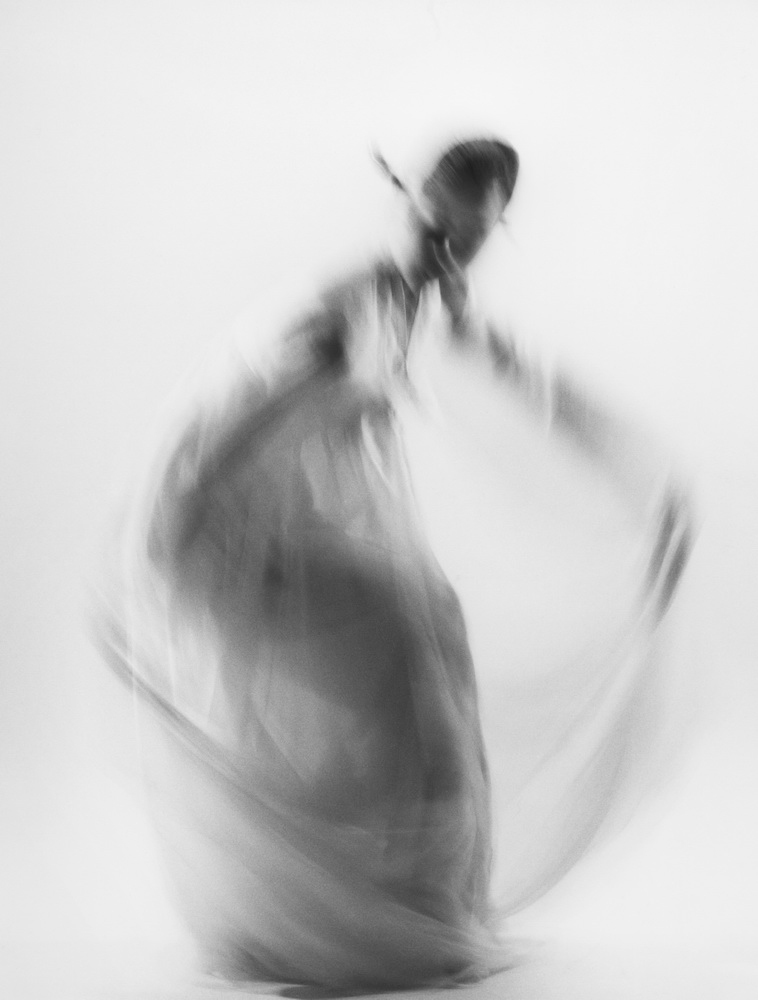
©Yang Jaemoon_Blue Journey_1994
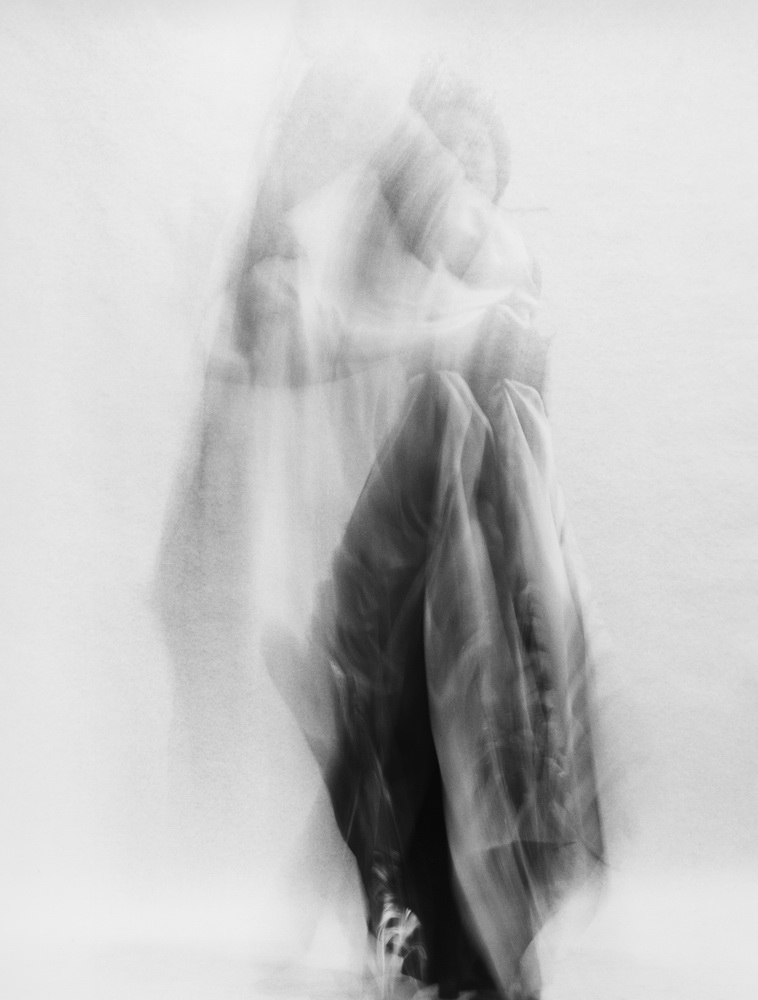
©Yang Jaemoon_Blue Journey_1994
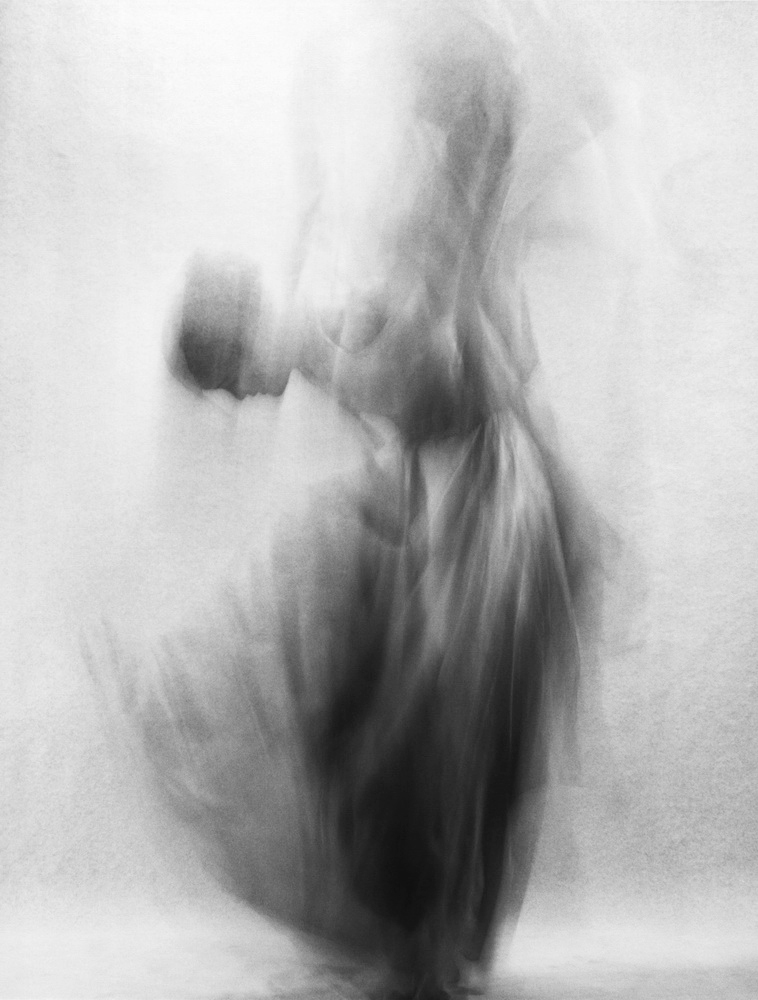
©Yang Jaemoon_Blue Journey_1994
Yang Jae Moon
Yang Jae Moon presents Journey of Green, a work that delves into a traditional concept of han (a deep-seated sorrow) in traditional Korean dance and the meaning of time captured by the camera. The traces of dance movements in his photographs connect the depth of emotion with the flow of time, expressing a visual afterimage that seems to keep moving even within the still images. This space of presence and absence invites viewers to sense the intangible han of the people who have lived on this land. Unlike Western or contemporary dance, traditional Korean dance embodies and conveys a collective spirit grounded in communal values, religious symbolism, and reverence for nature. The fluttering sleeves and dignified facial expressions of the dancers in Yang’s photographs go beyond from being individual gestures to resonate as a collective echo, leading viewers to discover “we” beyond “I.”
-Work description Busan International Photo Festival 2025 by Lee Jeongeun
Honbul, Undying Fire
Present-day Korea has achieved splendid development that astonishes the world, and it abounds with vitality and changes to shape the future. Meanwhile, our memories of the past are fading like an old photo, and the unique spirit and culture that define our identity are overshadowed by grand agendas such as globalization and development.
However, there are values that must be preserved and passed on in our culture. Carried down from the past, the values remind us of who we are and guide us toward what we should seek. It is for this reason that we constantly reflect upon our cultural heritage to apply values in it to our lives today.
The 2025 Busan International Photo Festival, with the theme honbul (“soul fire”), turns its attention to the deep values of spirit embedded in the long history and unique culture of Korea as well as the cultural identity of Koreans. The festival’s exhibits invite us to reflect on our present reality, contemplate on the human condition, and discover the Korean worldview that has been passed down generation to generation.
The exhibition features works by fourteen Korean artists — Kim Woo Young, Park Jin Ha, Sung Nam Hun, Yang Jae Moon, Woo Chang Won, Lee Gap Chul, Lee Sun Joo, Yi Wan Gyo, Lee Jong Man, Chang Sook, Cho So Hee, Han Chung Shik, and Hwang Gyu Tae — and six international artists — David Krippendorff, Henrik Strömberg, Rainer Junghanns, Ralph Tepel, Setsuko Fukushima, and Yana Kononova. The artists’ works compose a narrative of hope and insight uncovered in the abyss, complementing and overlapping each other like the pieces of a patchwork. Honbul is not a mere flicker of flame. It is an affirmation of the effort to inherit and carry forward Korea’s unique culture and spirit; it is the resonance of our bodies and minds speaking in their truest form; and it is a profound return to human dignity and the communal bonds that sustain us. At the same time, honbul is also a conversation with the world—a shared meditation on human existence itself.
-Artistic Director, 2025 Busan International Photo Festival, Lee Il Woo
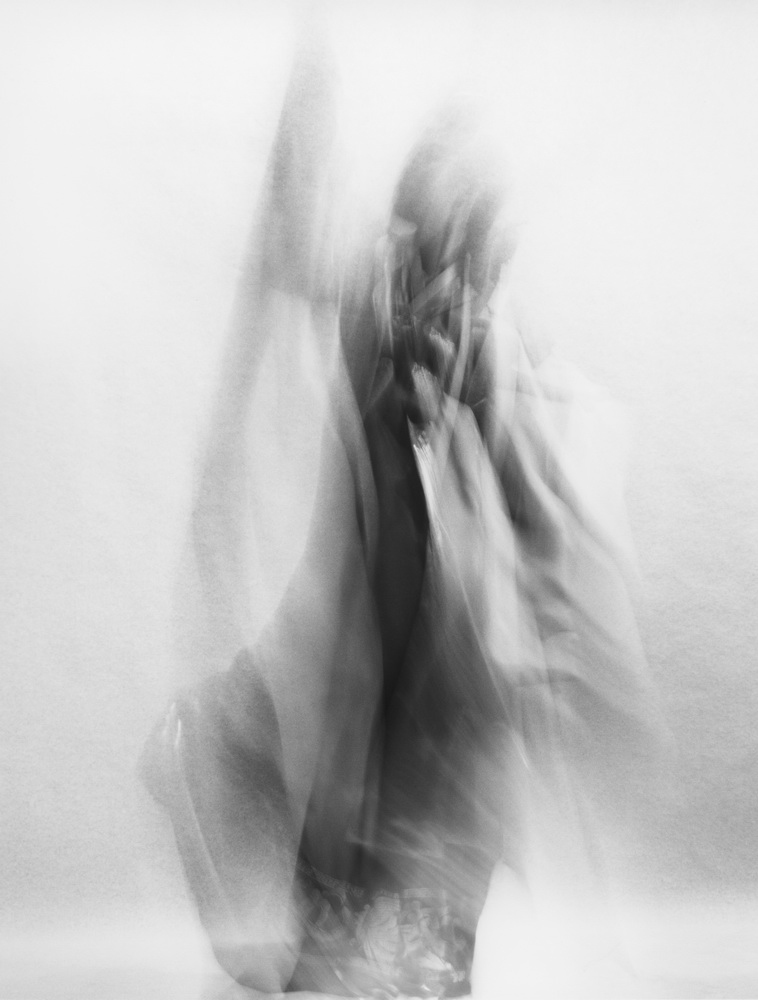
©Yang Jaemoon_Blue Journey_1994
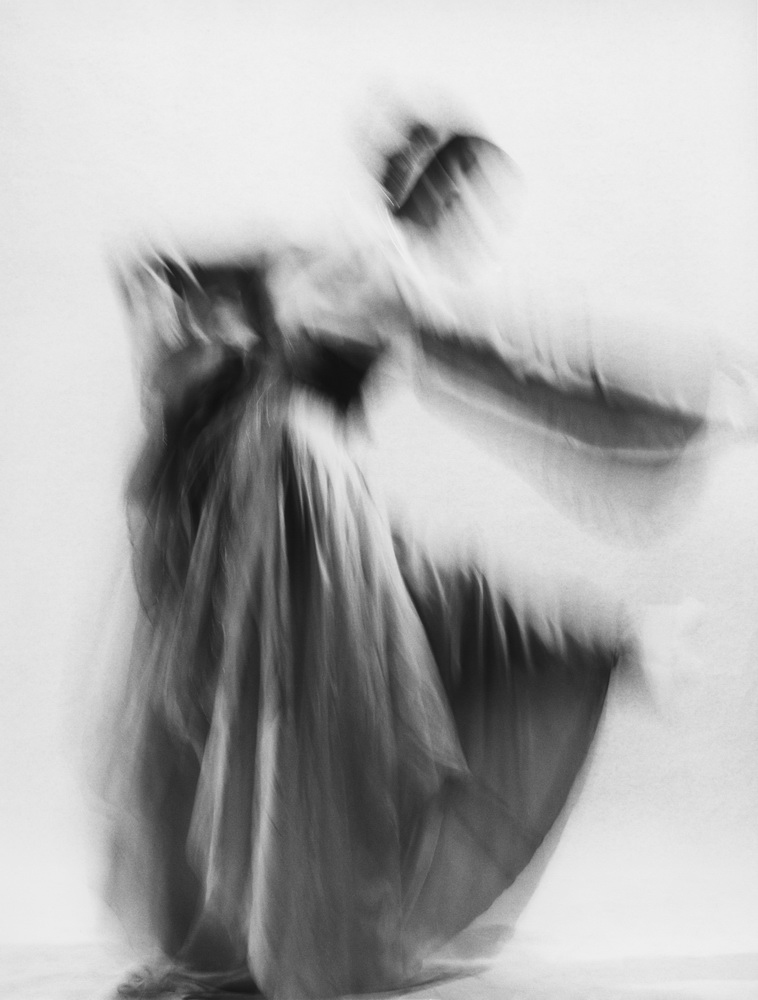
©Yang Jaemoon_Blue Journey_1994
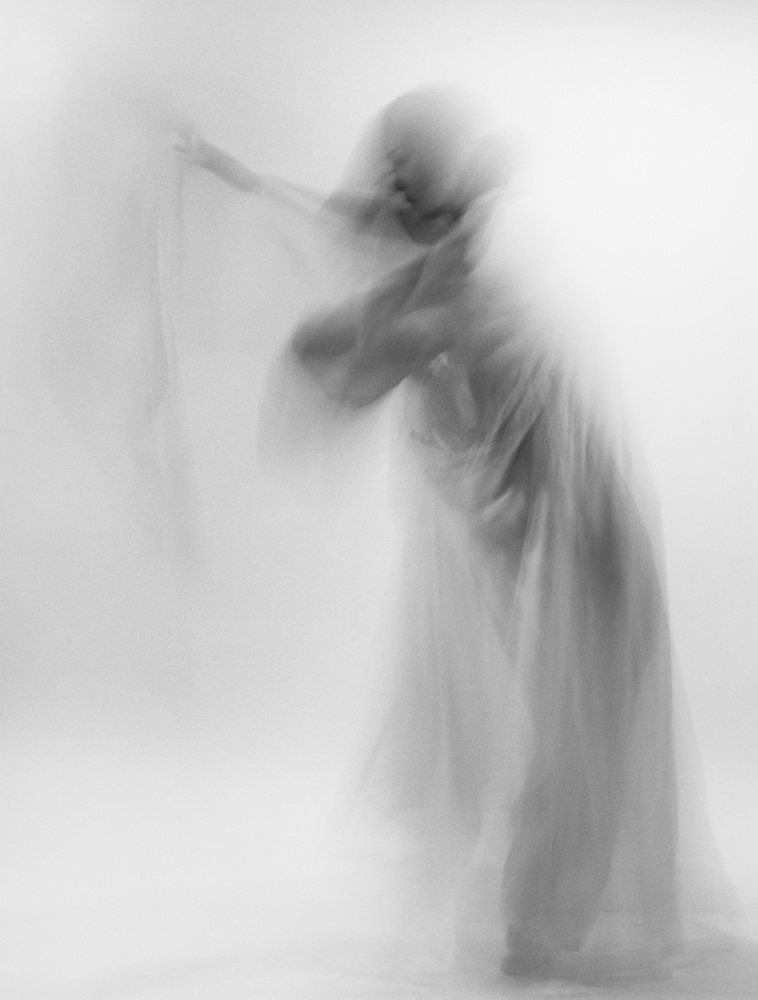
©Yang Jaemoon_Blue Journey_1994
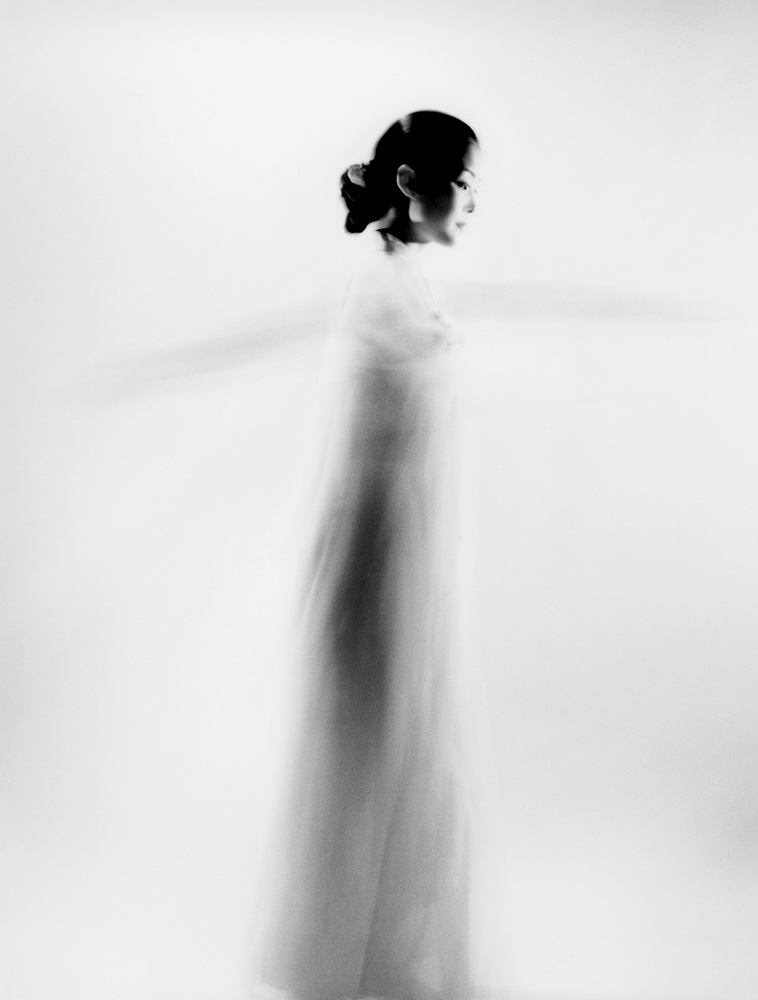
©Yang Jaemoon_Blue Journey_1994
Blue Journey
The Art of Movement, Dance
Dance is a moving art form. Within its motion lies a harmony of spirit, inherent rhythm, emptiness, and the resonance of lines. When fleeting lines are captured, a sense of three-dimensionality emerges. Yang Jae-moon’s subjects are traditional Korean dances such as Hwagwanmu, Seungmu, Salpuri, Janggochum, and Yangbanchum. Just as the traces of movement differ between Western ballet and contemporary dance, the essence of Korean dance is found in its concept of emptiness. Emptiness is both the existence of nothingness and the nothingness of existence—what we sometimes call han (sorrow).
Photographer Yang Jae-moon captures the traces of dance—sometimes objectively, sometimes cynically, and sometimes through the beauty of afterimages. The difference between his work and press photography lies in the depth of his imagery. Like the free-flowing strokes of cursive calligraphy, his images breathe with fluidity. They embody the spatial three-dimensionality of dance, the living presence of emptiness. Even without visible facial features, there is movement. There is breath. There is the beauty and excitement of our dance, yet also the sorrow (han) within it.
“Beauty exists only when it moves.”
– Kenneth Burke”One line is one force.”
– Helene van der Velde”Art (including photography) is a series of tensions.” – Gio Ponti
In Yang Jae-moon’s work, I encounter movement painted over movement, a continuous pattern of tension. His images are an experiment in capturing breath within the flow of traces, afterimages, three-dimensionality, and emptiness. Much like this verse—
There is a warm arm floating on the water
Between breath and high breath,
I fold my arm into my body
In the rhythmic dual lines of Yang Jae-moon’s images, the lifeline of dance writhes—no, it blooms. Dance is close to poetry. They are kindred spirits. If architecture is “frozen music,” then dance, the poetry of the human body, is connected to “the instinct of a sixth sense beyond imagination.” The photographer embraces this sixth sense. I have met many photographers who specialize in capturing dance, yet only a few pursue artistic imagery beyond mere documentation. In this sense, Yang Jae-moon’s sensibility embodies both the erasure and projection of lines, the formlessness of three-dimensionality, the silence, and the resonance. His work is a variation of traces, breath, rhythm, and undulating waves of the human form.
“The vitality of dance, the occupation of space.”
Kim Young-tae (Poet, Dance Critic)
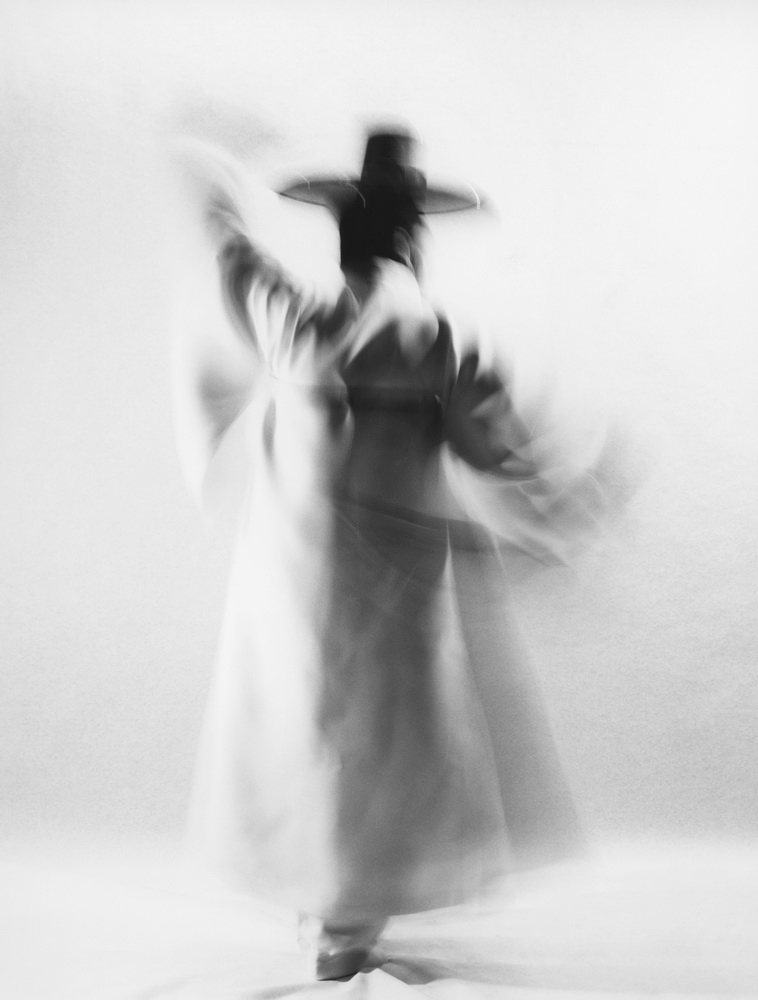
©Yang Jaemoon_Blue Journey_1994
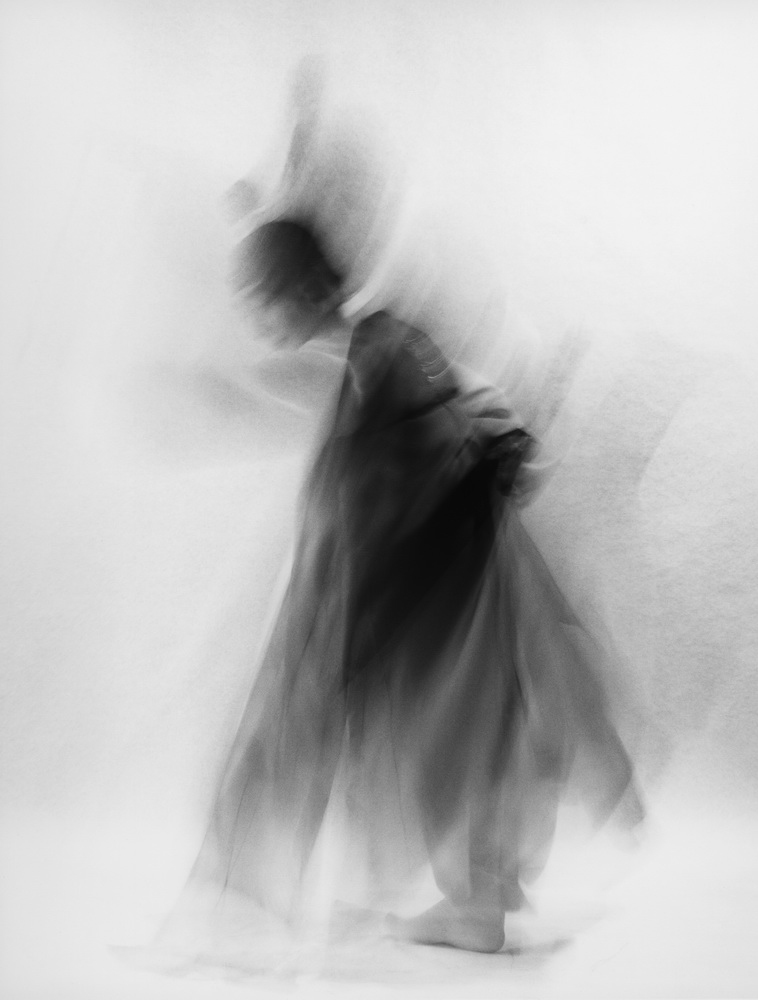
©Yang Jaemoon_Blue Journey_1994
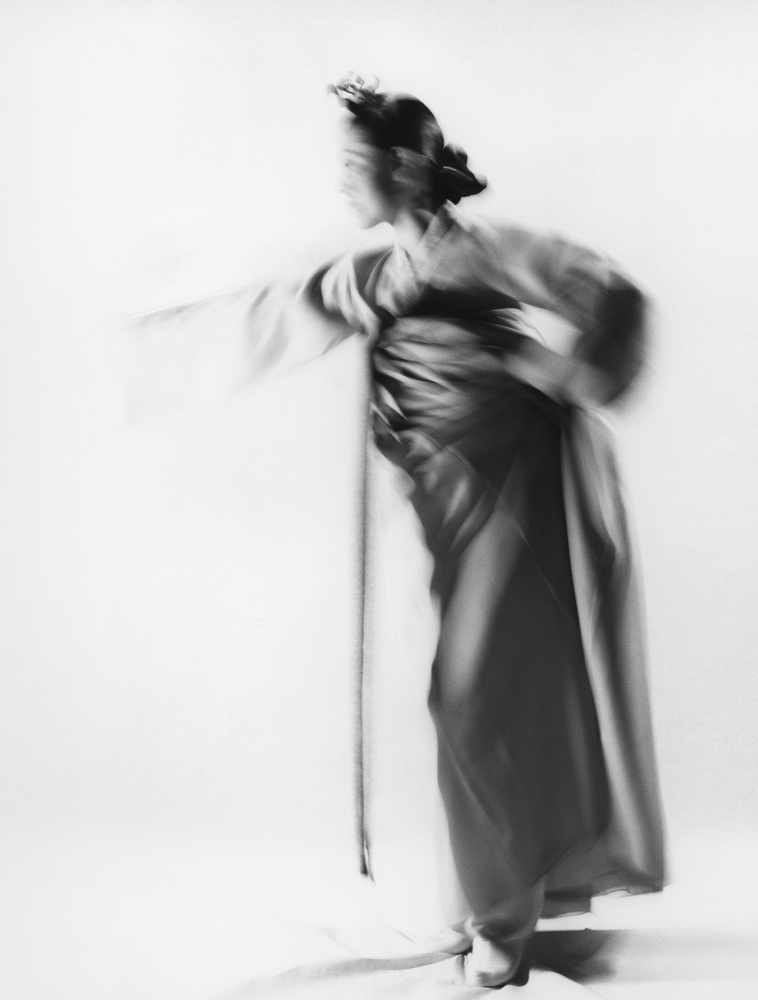
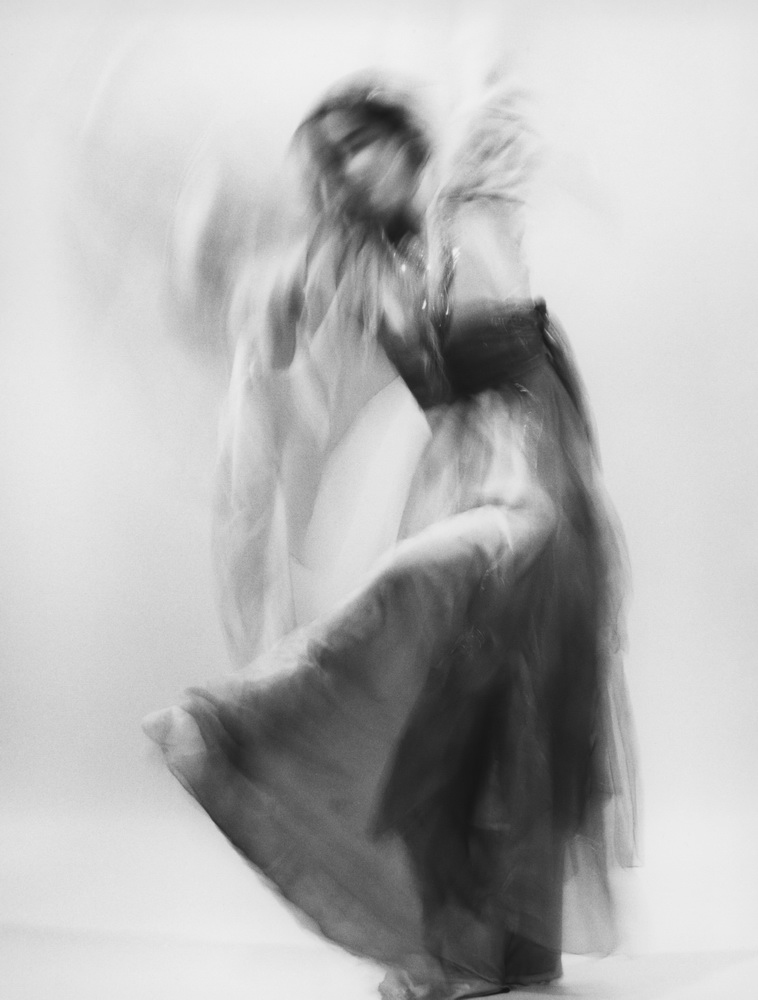
Yang Jaemoon has absorbed the continuous movements of dance sequences and the tail end of their lingering effects into a single photograph instead of capturing a decisive moment of dance. The translucent and serene skirt in the five colors of oriental medicine seems to become the wings of the dancer, lifting him up. In this case, the dance becomes a dance as an indication suggesting the truth or essence of some situation rather than a dance movement as an act. The resonance achieved by the meeting of photography and dance is relaxed.
-Jung Jae-sook (Director of Cultural Heritage Administration)
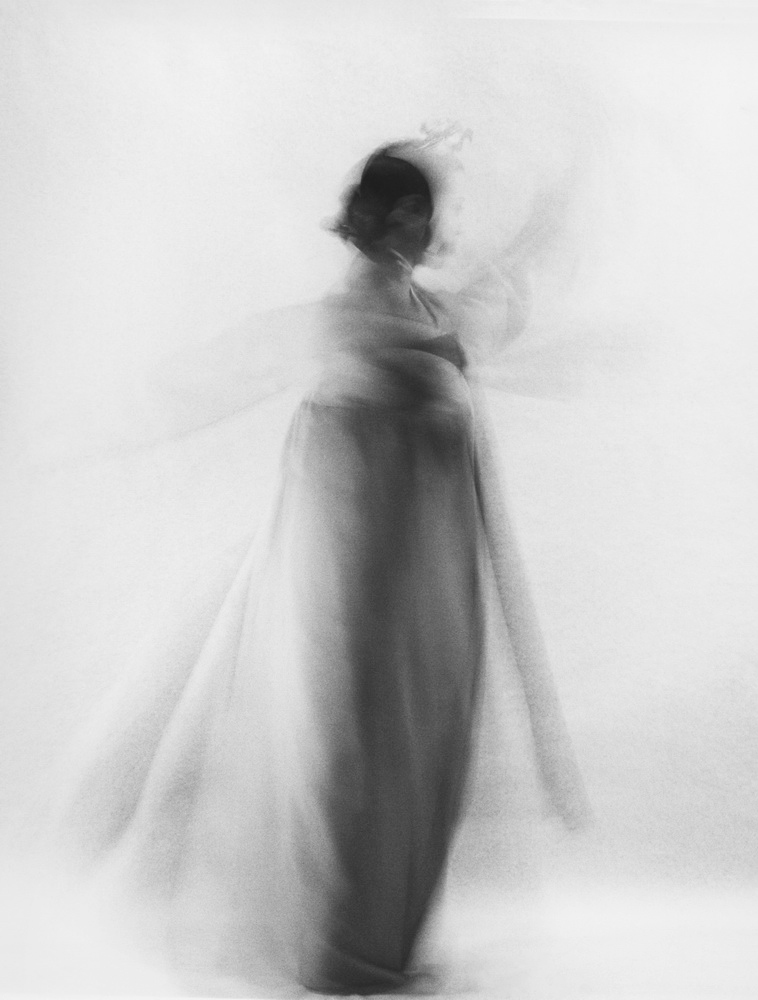
©Yang Jaemoon_Blue Journey_1994
The origin of a shamanic ritual transcending existence is the archetype of Yang Jaemoon’s dance work. The photograph that expresses the appearance of Bicheon as if dancing on the Silk Road by omitting the background and vaguely and dreamily representing the figure of the dancer is like the paradoxical double expression of dreams and reality.
-Yoon Beom-mo
(Director of the National Museum of Modern and Contemporary Art)
“The Artistic Nature of Photographic Creation”
Today, within the context of photography as a media art, there is a widespread misconception—especially among younger generations—that artistic value can be pursued only through so-called “constructed photography,” rather than by simply taking photographs. However, Yang JaeMoon demonstrates that without resorting to other media or manipulating the photographic image, one can reveal the inherent artistry of photography through its own independent techniques—specifically, the use of slow shutter speeds—while at the same time presenting the fantastical beauty of Korean tradition. The significance of his creative practice lies precisely in this: when photography preserves its photographic nature—its own unique expressive language—it shines even more brightly.
Duane Michals overcame the conceptual limitations of photographic spatiality through the technique of sequence. Yang JaeMoon, however, transcends the flow of time by employing the slow shutter. By overturning the fixed notion that photography expresses frozen moments through high-speed shutter action, he proves that artistic expression can be achieved without entering a process of alteration or construction, using only slow shutter techniques that remain faithful to the medium itself.
Hong Soon-tae Professor, Shingu College
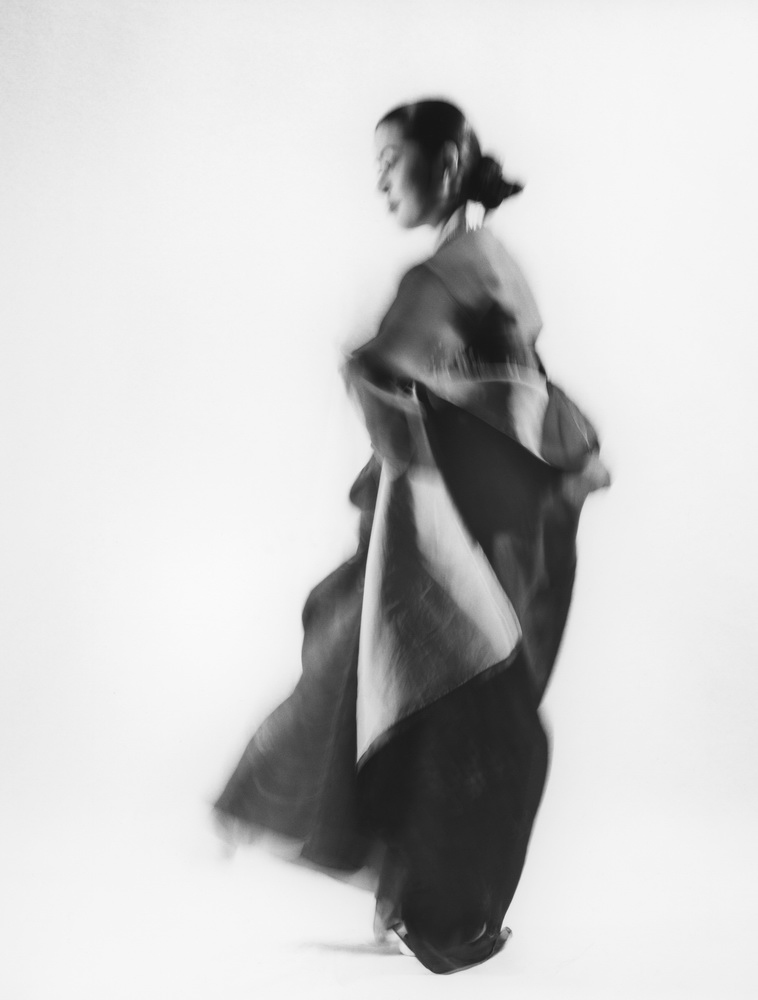
©Yang Jaemoon_Blue Journey_1994
©Yang Jaemoon_Blue Journey_1994
©Yang Jaemoon_Blue Journey_1994
Blue Journey
I have so far lived my life in the pursuit of illusions that were intended to be expressed in this photograph book of “Blue Journey”, standing aloof from the struggle for existence.
The vision I saw in the dream is still alive in my heart. Isn’t it a part of the reality.
The pictures in this book are about such a dreamy journey in the fantastic images of Korean dances (Hwagwan – Mu, Sung – Mu, Salpuri, Janggo – Chum, Yangban – Chum). These pictures were taken in a studio with a slow shutter speed of one second. The movemente in a photograph taken in one second take on a new mental afterimage like a ripple. The images expressed in this way free ourselves from a fixed idea of the movement in a photograph.
We say that photograph is the act of splitting time. However, the splitting of time in a picture does not necessarily mean a pause. We can express an image that is still alive even in the very moment of the picture being taken, by adding a concept of time and space to the plane shape of photographs. It is the image of “the fantasy of continuance of a moment”. This idea of space and time may represent the very moment I travel for in my dream, and it may be an illusion where I wander deep in the fantasy of my own imagination.
Had it not been for the help from Korean dancers I-Jo Lim, Yu – Rim Jin, Eun- Ja Lee, Soon -Kyung Seo who spared their time for photographing, despite their tight schedules, this work would not have been possible. Finally, I express my appreciation to Kyu- Sang Lee at the publishing company “Noon – Bit” who showed interested in photograph and issued this book regardes of circumstances.
From Yang Jae-Moon Photobook
Posts on Lenscratch may not be reproduced without the permission of the Lenscratch staff and the photographer.
Recommended
-
Zanele Muholi: 2026 Hasselblad Award LaureateMarch 13th, 2026
-
Greg Miller: Morning BusMarch 5th, 2026
-
Binh Danh: Belonging in the National ParkMarch 4th, 2026
-
Tom Zimberoff: The White Fence and more..March 2nd, 2026
-
The 2026 Black and White Portraits Lenscratch ExhibitionMarch 1st, 2026