Photography Educator: Hillary McCullough
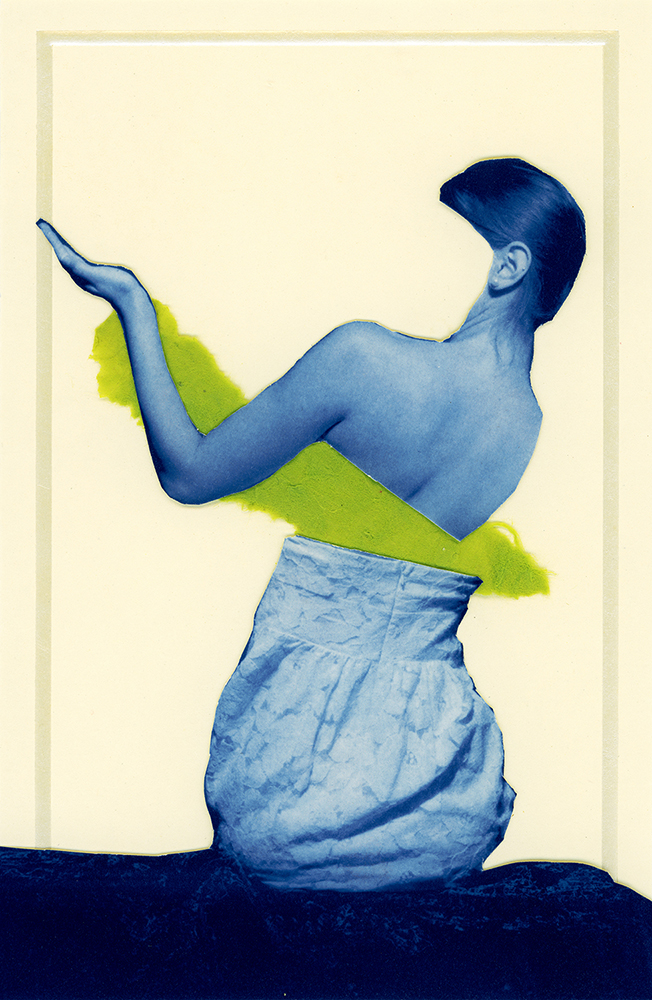
©Hillary McCullough, Assembled Futility I, Cyanotype, handmade paper collage, 25
Photography Educator is a monthly series on Lenscratch that highlights outstanding photography teachers who inspire students of all ages. Each month, the series celebrates an educator’s insights, strategies, and excellence in fostering creativity and resilience.
For September, it gives me great pleasure to feature the work of educator and artist Hillary McCullough. Hillary brings a sensitivity and curiosity to not only her own photography but to her exceptional work as an educator. This article includes an interview with Hillary, a selection of her artworks and work by her students. Her thoughtful approach to image making and mentorship creates space for her students to experiment, reflect and push the boundaries of expression through photography.
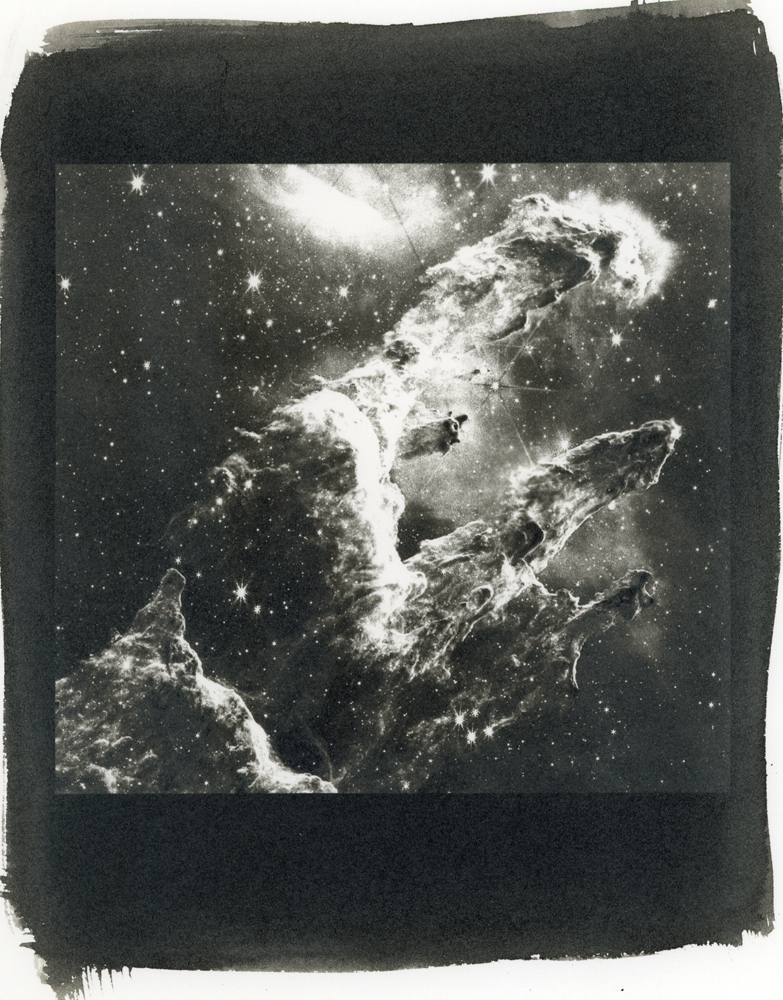
My work explores the relationship between the body and its surroundings through processes of reconstruction, repetition, and disruption. I am interested in how we search for meaning within the brief and uncertain span of a human life, and how our internal experiences shape the ways we understand ourselves. Since late 2024, I have been reclaiming digital negatives I created more than a decade ago, reconstructing fragments of these forgotten images into new cyanotypes and salt prints. There is something poignant in destroying something I once created in order to make something new from it—a process of revisiting, altering, and reconsidering the past. I punctured these reconstructed prints repeatedly, initially intending to incorporate thread, but kept returning to the copper wire that inspired the punctures. This practice led to incorporating other materials to create collage work- often the collages would end up as deconstructions of a deconstruction. The resulting work, including Isolation, Faulty Wires, and Assembled Futility, became an unexpected reflection of my own struggle with self-acceptance. The wounds, repairs, and connections began to speak to the tension between the person I am and the inner critic that learned early on that I was too strange, too loud, or asked too many questions. Those parts still exist, but what was once a conflict has become more of a mutual disagreement. Through these processes, I explore how the past can be altered, carried, and reconnected without being erased.
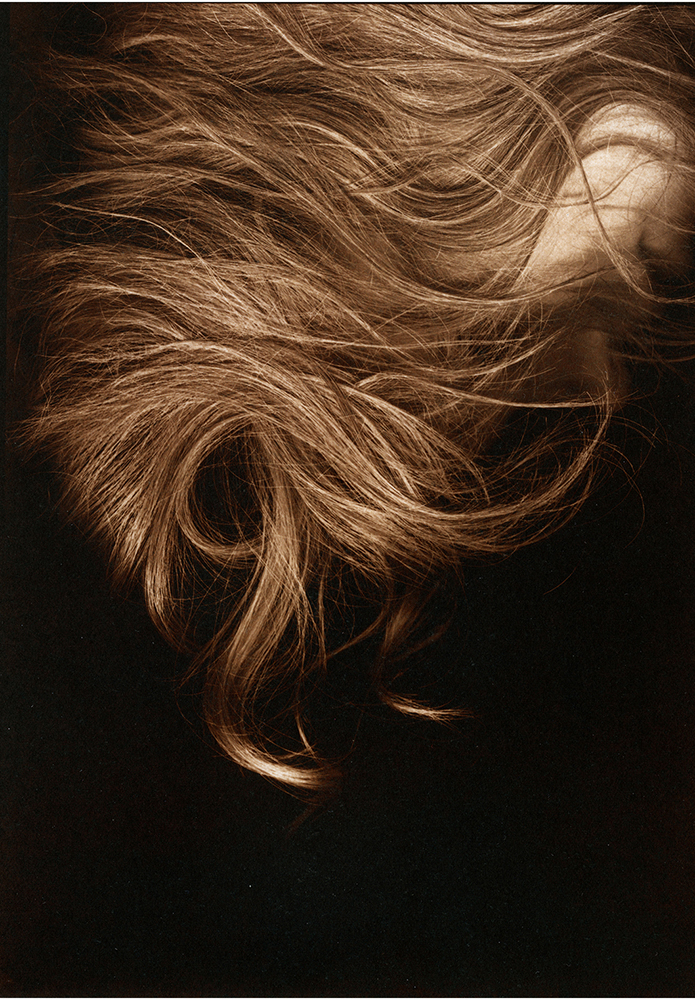
©Hillary McCullough, Assembled Futility II, Salted Paper Print, 2023
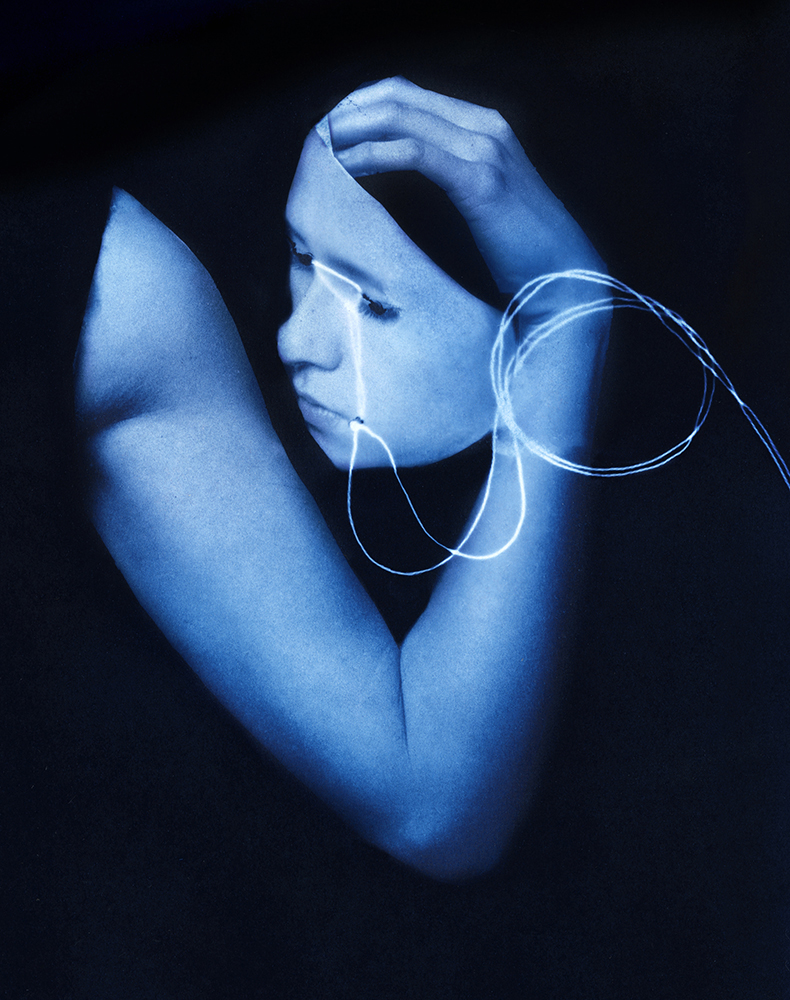
©Hillary McCullough, Assembled Futility III, Cyanotype, 2024
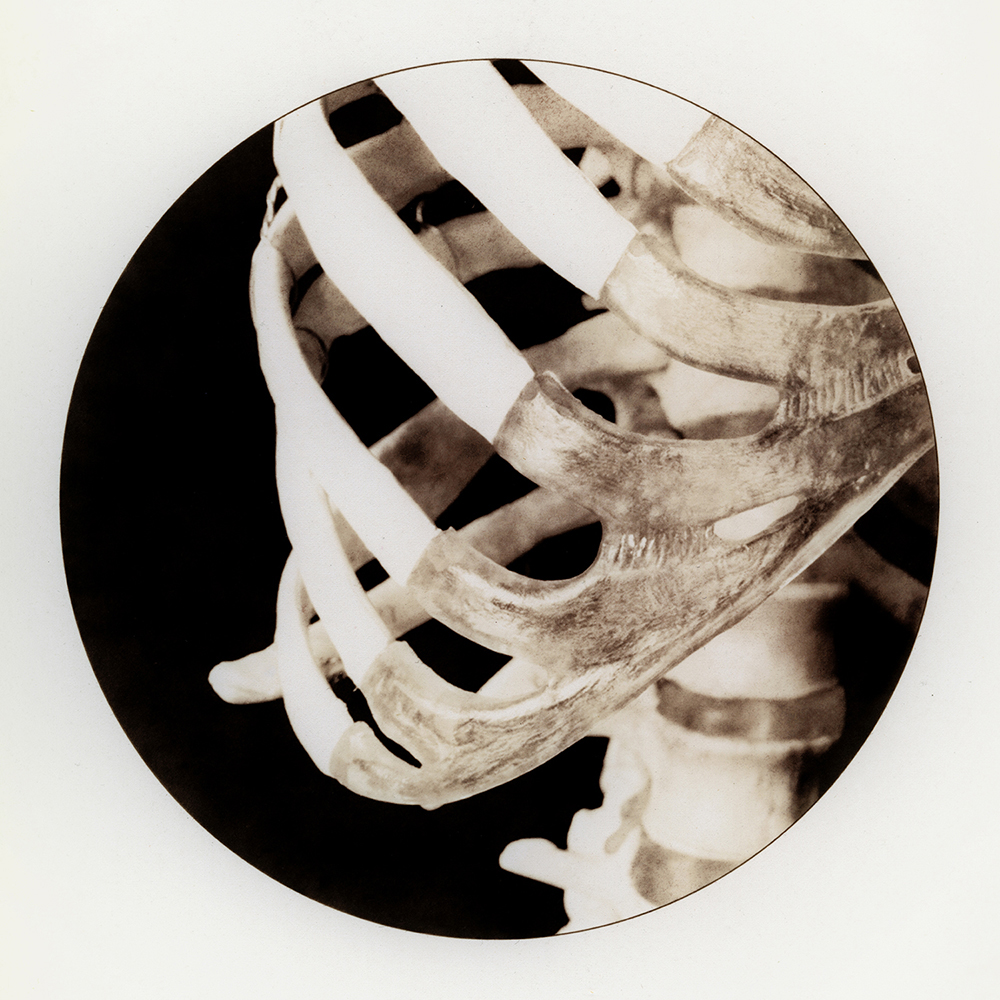
©Hillary McCullough, Assembled Futility, Cage, Salted Paper Print, 2023
ES: For a little background, can you share how you got into teaching? Did you always want to be a teacher in the arts?
HM: Put simply, I was fortunate enough to have a photo professor at UNF, Paul Karabinis, who cared enough about his students to notice that I had a knack for alternative processes early on in that class. I was a lab tech so I had key access and I would get to the photo lab around 6am (it was a Friday-only 9am-2pm Alternative Processes Class) and would get everything set up because I wanted to test new versions of negatives- occasionally for myself (though I usually just stayed until midnight working on my own digital negatives) but also to troubleshoot and test negative density vs. exposure in UV box vs. the sun for some classmates that ran out of time or were just too frustrated to keep testing. Not long after midterms my professor emailed me asking if I felt comfortable being the designated “assistant” during his brief absence. I was TERRIFIED but said “absolutely”. I was not expecting to be beaming with joy during that class- I didn’t have the chance to make any of my own work and I didn’t care! Because two of my classmates finally made prints they were excited about. I hadn’t given teaching much thought until that experience. After I graduated Paul (affectionately known as PK to his former students) allowed me to join his next Alt Process class as a post-bac student and gave me the responsibilities of a graduate-level teaching assistant. He gave me the space and support to find my footing as a budding photo-educator.
ES: How would you describe your teaching philosophy and style?
HM: I could probably write ten pages on this subject! But I will do my best to hit the most important elements. A good educator, in my opinion, understands that a terminal degree, or tenure, or reaching Full Professor doesn’t mean our education is complete; and a large part of that understanding requires us to be present, authentic, and holding space to learn from our students. If we aren’t present enough to notice that a teaching method that worked for the last five years just isn’t working anymore, how can we expect to keep our students engaged enough to absorb the material?
Of course I have clear boundaries and expectations outlined in my courses’ materials, but I think it is important to be authentic (not just performing for the classroom) and to leave room for the students to feel like they truly connect with me, can trust me as their educator, and show that I am human! With flaws and shortcomings, and capable of making mistakes. Being honest with my students (within reason and healthy boundaries) too. If I don’t know the answer to a student’s question, instead of making something up / avoiding the question, or pretending, I say something along the lines of, “you know, I’m actually not sure… why don’t we find the answer as a class?” I’ve found this approach creates an atmosphere where students feel more empowered to take risks and leads to more creative experimentation.
ES: What is the most meaningful part of your job?
HM: Picking out one *most* meaningful is tough because I feel like there are many, and I also feel like my answer to this question will continue to evolve each academic year and might change as the generations of students change.
What I love about this job is the opportunity to not only help guide the next generation of photographers (and educators in photography), but to be able to pass on what I have learned from the most influential mentors and educators in my years of study. I also love seeing my students grow as artists and as human beings. I am not new to teaching in higher ed, but I am in the first few weeks of only my 4 th year as a full time professor; I can honestly and confidently say that, for me personally, there will never be a job or role that I love as much or be as fulfilling.
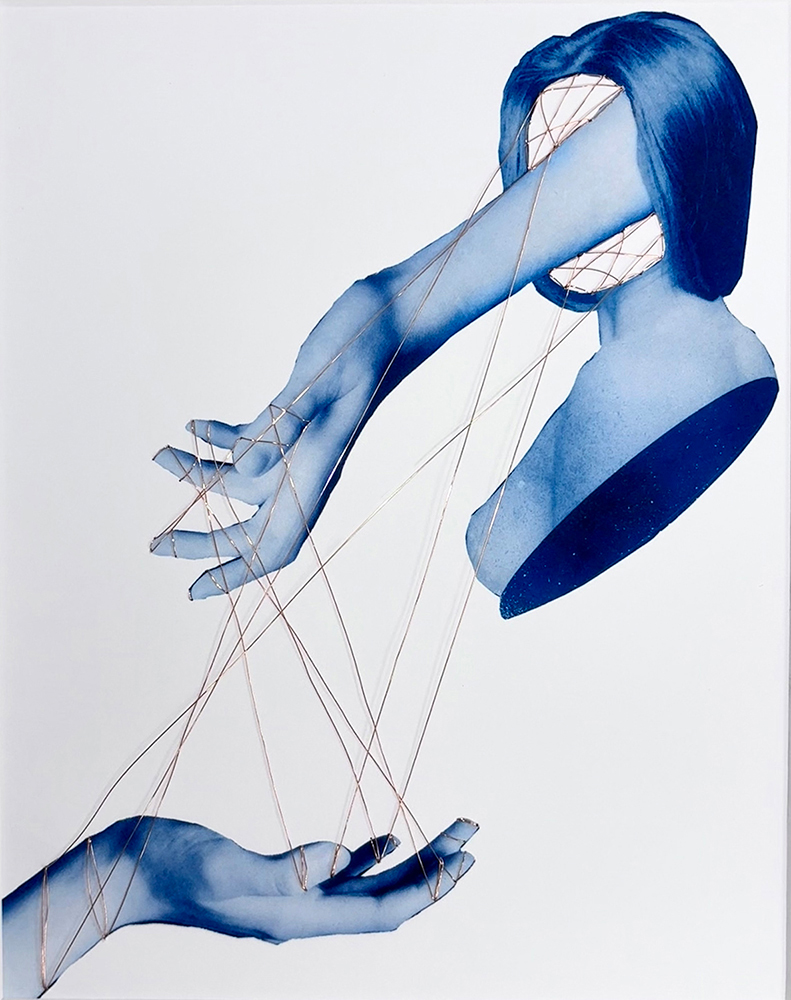
©Hillary McCullough, Faulty Wires IV, Cyanotype with copper wire, 2025
ES: What are some of the challenges that you face as a teacher in the arts? And what challenges do your students face?
HM: I think the most obvious and primary challenges as an arts educator, especially in higher ed, are more or less universal- most of us are overworked and underpaid, and it seems like every year the workload outside of the classroom grows, yet we see little to no increase in pay OR funding to the arts programs. I think the only aspect more challenging then the above is the fact that students in the arts know their area of study isn’t taken as seriously as other programs, or taken seriously at all. I can reconcile with my own challenges because, like I stated earlier, I know I would be miserable doing anything else.
ES: I know that teaching can be both inspiring and draining, how do you recharge?
HM: I have to thank my 20 year old self for having the guts to walk into the counseling center in undergrad. I have been seeing therapists semi-regularly ever since (nearly 16 years.. which is showing my age!) I developed invaluable skills and a foundation of self-awareness (which includes the oddly (yet common) struggle to have grace with myself. I still use the methods I learned over those years not only to help regulate my stress and anxiety, but it has also given me the intuition to understand my students a bit more.
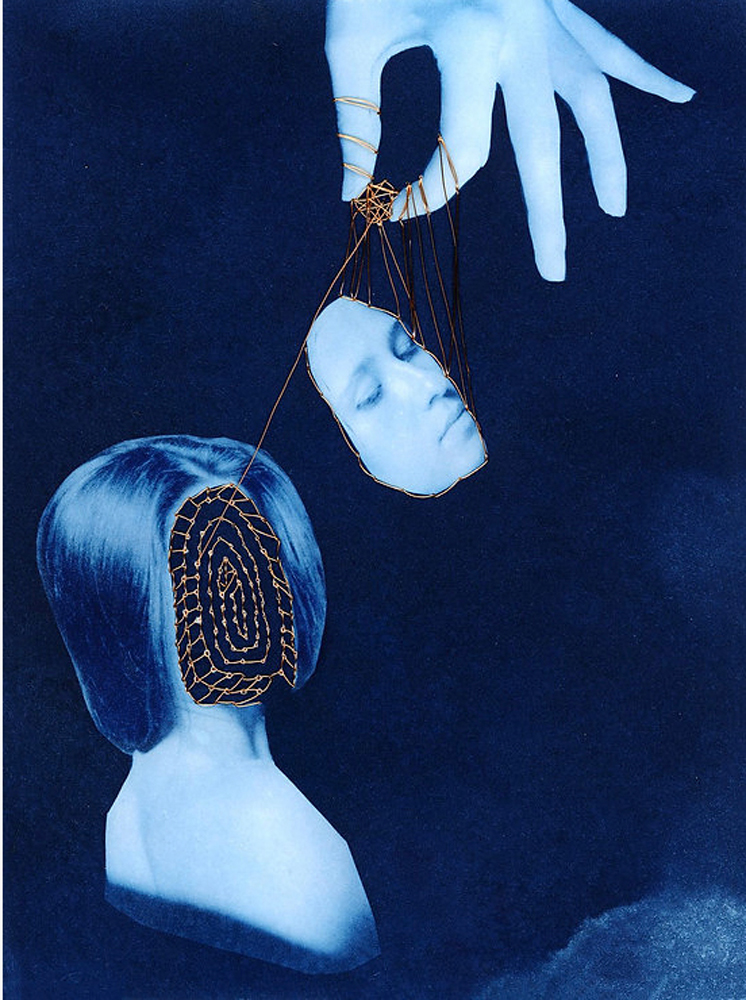
©Hillary McCullough, Faulty Wires I, Cyanotype with copper wire, 2025
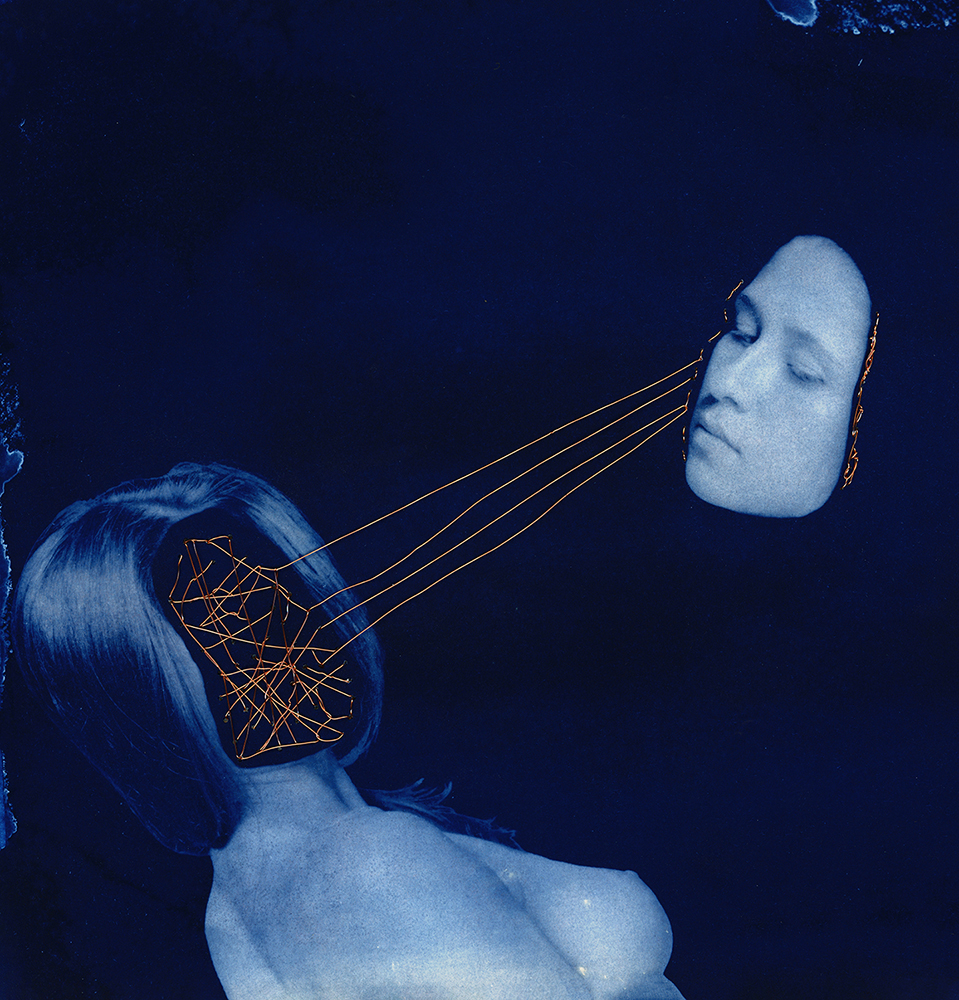
©Hillary McCullough, Faulty Wires II, Cyanotype with copper wire, 2025
ES: Do you have any regrets?
HM: Sometimes I wish I’d had the opportunity to take a year or two between undergrad and grad school. While I wouldn’t change my experiences in grad school, I think I would have been able to defend the work I wanted to make and not feel so pressured to act on every comment or suggestion and end up looking at a wall of work I didn’t really feel passionate about halfway through the program. Any regrets in regard to teaching? Absolutely not. I feel pretty damn lucky to have found my calling in my 20’s and feel the exact same way more than 12 years later.
I regret that my generation and those born in the mid 80’s-mid 90’s were so discouraged from trade jobs out of high school. The idea that they are “unskilled” or “blue collar” labor is abysmally damaging, and why we see such a deficit in the number of people who are qualified for specific trade jobs that our society depends on. If I could go back and change one thing right out of high school, I’d have pursued an apprenticeship as a carpenter or welder and go to college part time. I can say with full confidence that I would have still ended up in the same trajectory, just with less debt.
ES: How do you help your students tap into curiosity and the creative process? What are some of the assignments that you give your students?
HM: I intentionally create an environment that not only encourages and rewards exploration, experimentation, and self-reflection. I also remind my students often that no one can create their best work without making “bad” work. The key is to keep working, learn from what didn’t work, and never take a rejection or rough critique to mean that they aren’t / won’t be a “good artist”. Regarding the question about some of the assignments I give my students, I am still in the point of my career where I change / add / alter or sometimes axe assignments based on my observations of my students. That’s probably another thing that goes into my pedagogy; if I feel like an assignment no longer challenges or is relevant to my students, I change it or come up with a different assignment entirely, and go from there.
ES: How do you connect with your students?
HM: Well number one I am fortunate enough to have an average of 10 students to teacher ratio at our private liberal arts university, which automatically allows for more one-on-one time between my students and I. I did touch on this a little bit in earlier questions, but I am committed to being a reliable figure and mentor for my students. If they mention something they want to learn that isn’t in my original course plan (and it’s somewhat relevant to the objectives) I will do my best to work that into the schedule. Sometimes, like this past summer, I have very eager and ambitious students; after my Alternative Process class ended in the spring I had about 6-7 students, most of which aren’t even photo majors, stay behind after the final crit to ask if they could learn more processes over the summer. We didn’t have any classes scheduled for the summer, but if I had a handful of students practically begging me to give them a demo of a new-to-them process over the summer??? I mean, what kind of educator could say no to that? So I held up my end of the bargain and in late June I invited those students to come hang in the photolab and learn the basics of PT/PD. I have to be honest, I was expecting maybe 2 – 4 of them to actually show, but to my surprise I had 6 of those students show up, bright and early and spent the entirety of the available 5 hours making prints / editing digital negatives and testing more prints, and studying the various resources I had to determine their drop count.
I didn’t always feel connected to my students at this university, which I assume isn’t that unusual when a new professor starts in their junior or senior year, especially when they were taught by a revolving door of adjuncts for years after the former full time professor retired. My first two semesters I posted an “open lab” schedule; for 90% of the semester it was me and one, maybe two, other students. But I stuck to those hours because I wanted my students to be able to rely on me and be confident that if I had the open lab hours from 4pm-10pm they could come in at 8:55 and I would be there.
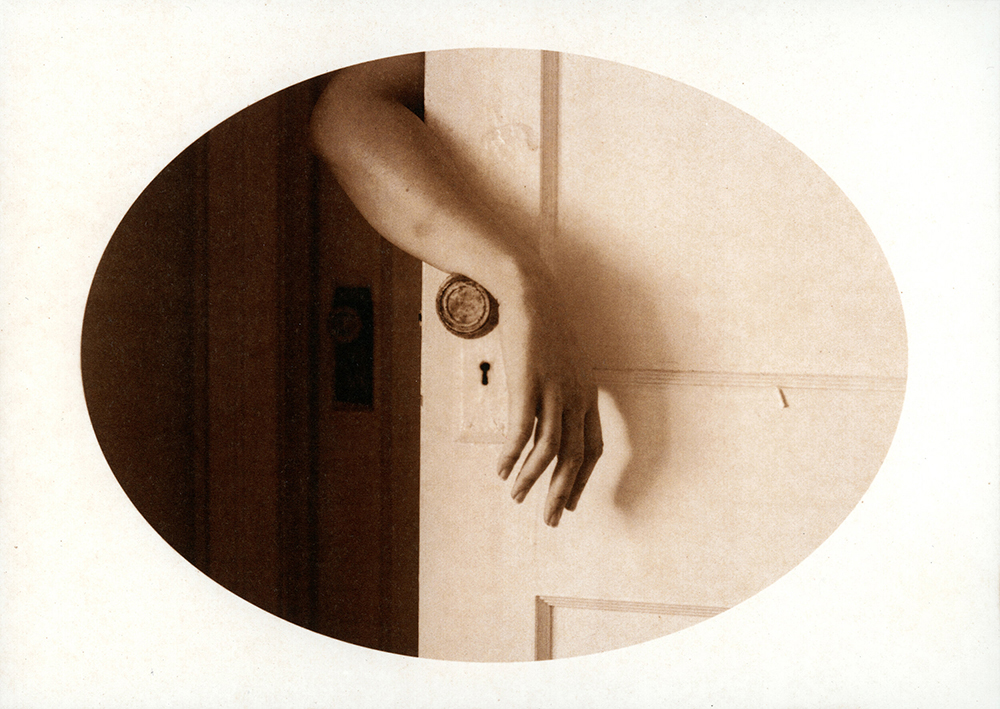
©Hillary McCullough, Isolation I, Salted Paper Print, 2020
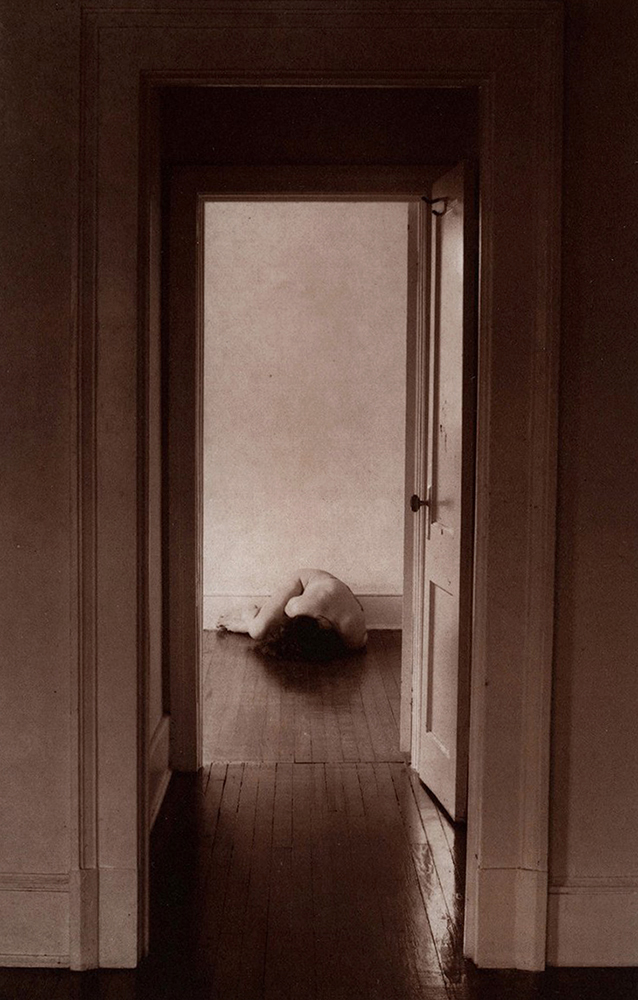
©Hillary McCullough, Isolation II, Salted Paper Print, 2020
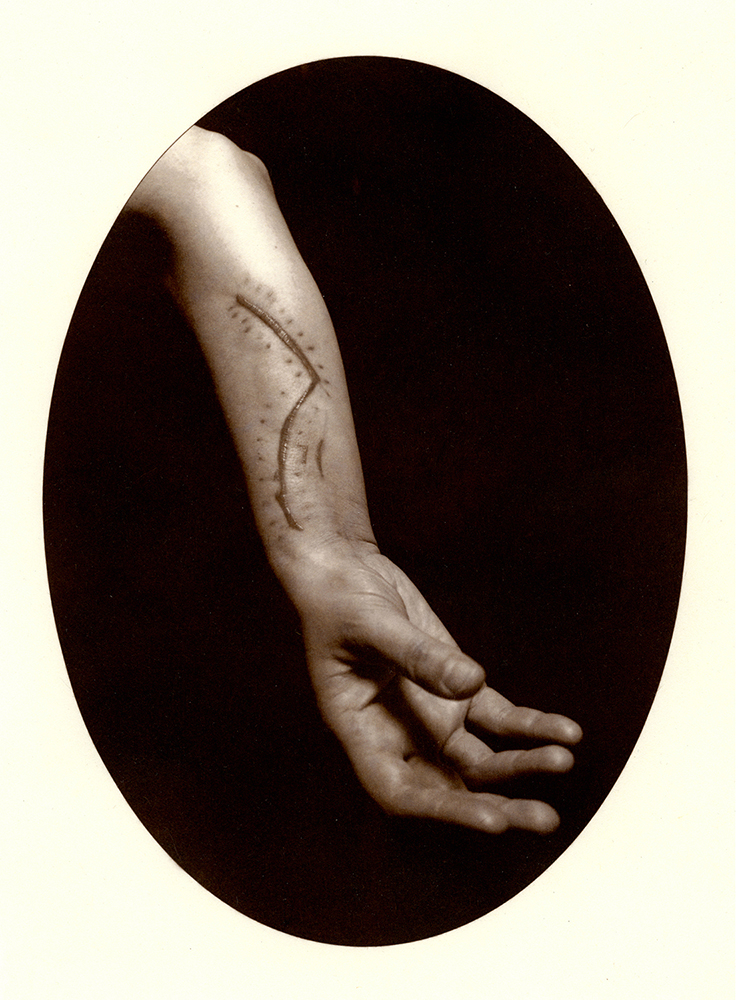
©Hillary McCullough, Assembled Futility, The Scar, Salted Paper Print, 2024
ES: What is your vision for the future of photography education? Are there any new classes that you’d like to see being offered?
HM: That is a brilliant question, and the only one so far that I’ve struggled to articulate my thoughts… I can say that I am optimistic about the potential future of photography education, though my fellow educators and I will need to commit to demanding that the system maintains the integrity of the medium in the age of generative AI. Which can be tough when every week the department of education technology is trying to force us to “embrace” AI even at the detriment of our mediums. I am optimistic, and a tiny bit anxious. (I don’t think I’d be a good artist if I didn’t have anxiety considering the state of our society, to be frank.)
ES: Has your personal work been affected by your teaching experience? How?
HM: I think it would be silly to say that the evolution of my work over the last 4 years wasn’t in part influenced by my teaching experience. I struggle to pinpoint specifics, but I have noticed a shift in my ability to embrace (and even admit to my students!) when I am in a little slump or just unsure of which direction I want to go… and to my surprise there was a student who overheard me explaining to one of my lab techs that I was cutting up a bunch of 10+yr old digital negatives because I had some artist’s block and was hoping it might lead to some inspiration. The student commented in the evaluations that he had never heard a professor or other mentor or authority figure be very open and totally fine with admitting that I had no idea what I was doing or what I wanted to do with my own work. (and by the way, the cutting of old negatives did inspire some work that I am very proud of!)
ES: What’s next for you as an artist?
HM: If we are talking specifics my next big goal is to be accepted into an international residency, but I will always settle for a residency program that will shake my practice up a bit. Otherwise I have been keeping my fickle brain happy with teaching myself areas of chemistry related to photography that weren’t covered in the very basic chemistry classes I took in undergrad. I’ve actually been looking at taking some chemistry classes. Every now and then I slip into psychosis and think, “should I find a doctoral studio art program abroad?”, and “I’m sure I can manage to get a Ph.D in Photo History while keeping up with my current course load… I don’t N E E D more than 5 hours of sleep… right?”
It is safe to say that I will always be finding workshops, residencies, classes, etc. Not only for my own edification (because I’m an artist AND an academic… and we just can’t help it) but so that I can continue to be engaged with the art and photo community, pass on as much as I can to any student willing to learn, and be thankful every morning that I am fortunate enough to have a full time position and job that I know is my true passion.
Thank you Hillary!
STUDENT WORK
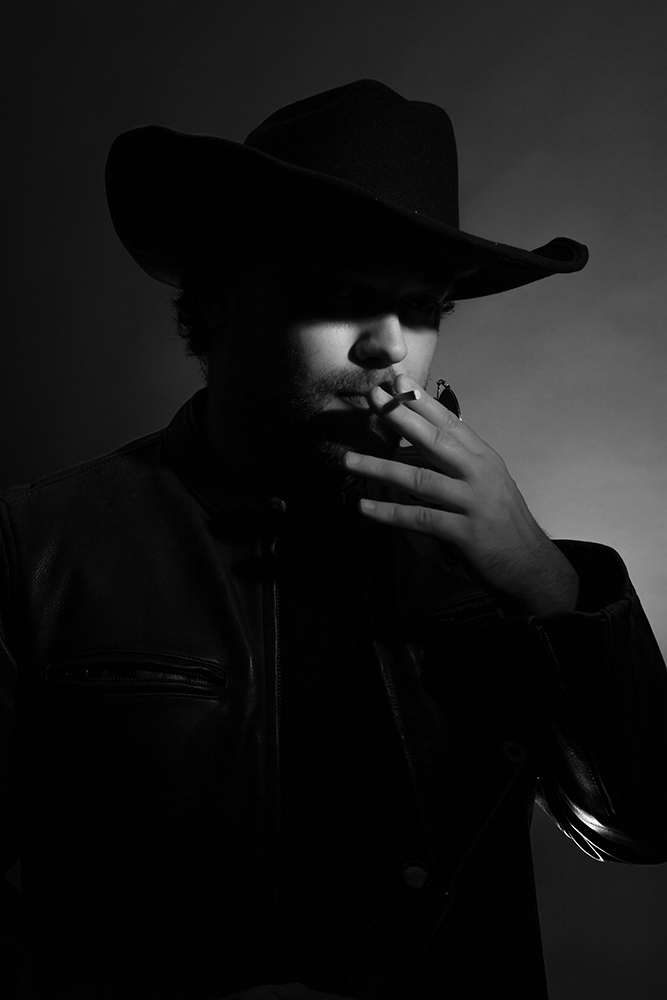
©Kyla Foster
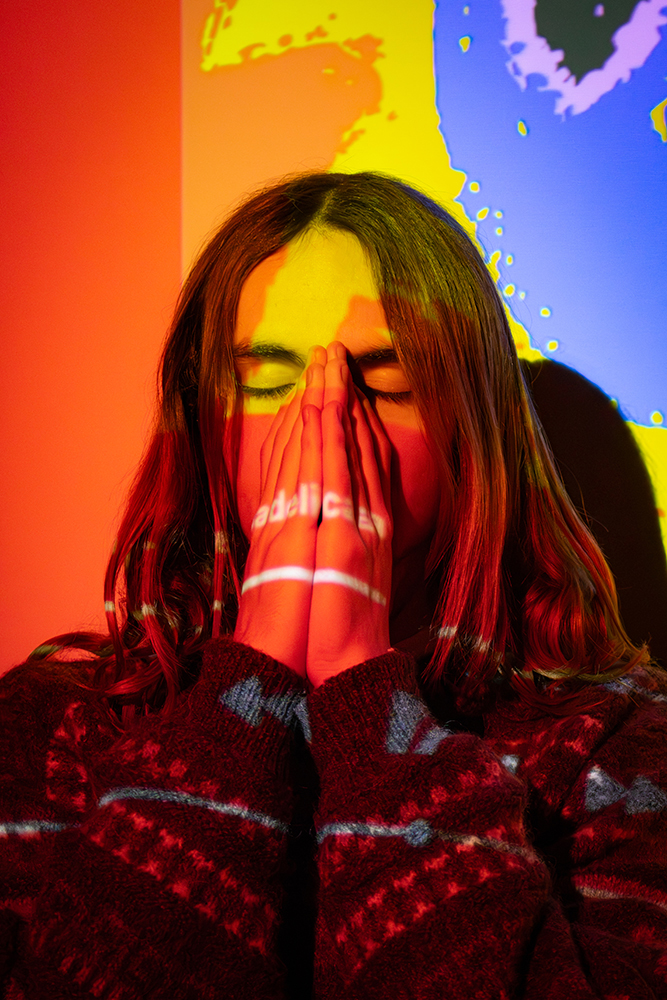
©Kyla Foster
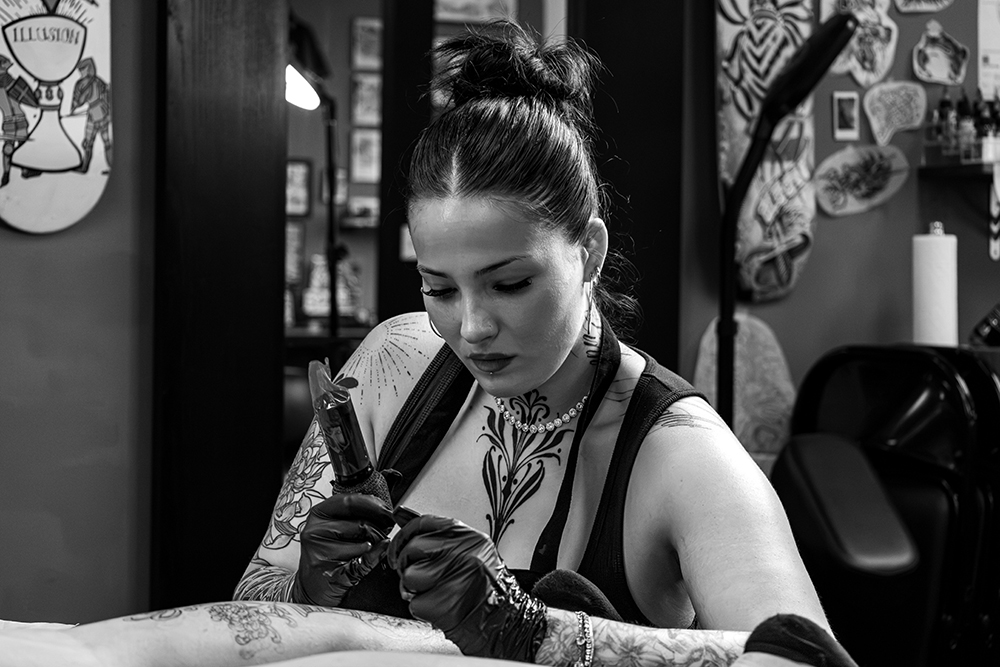
©Kyla Foster
Hillary is the type of photographer who thrives in creativity. She not only encourages this in her students; she leads them by example. Hillary focuses on the artistic side of photography. How do her photos make the viewer feel? What message is she as a photographer trying to say? It is because of this that she doesn’t want her students’ assignments to be a robotic experience. She wants to challenge their thought process and gently nudge them out of their comfort zone. Instead of taking a photo straight on, find an angle that emphasizes a specific part of the subject. If you tend to only shoot with frozen motion, try experimenting with long exposures. Hillary teaches us students that photography is a marathon, not a race. Take the time to slow down and bring an idea to life. Don’t be afraid to go beyond those initial ideas. She doesn’t want us to think outside the box; she wants us to think outside the room the box is in. If there’s ever a question of who can expand the mind of a mechanical thinker, it would be Hillary.
Kyla Foster
Instagram: @ky_fosterrr
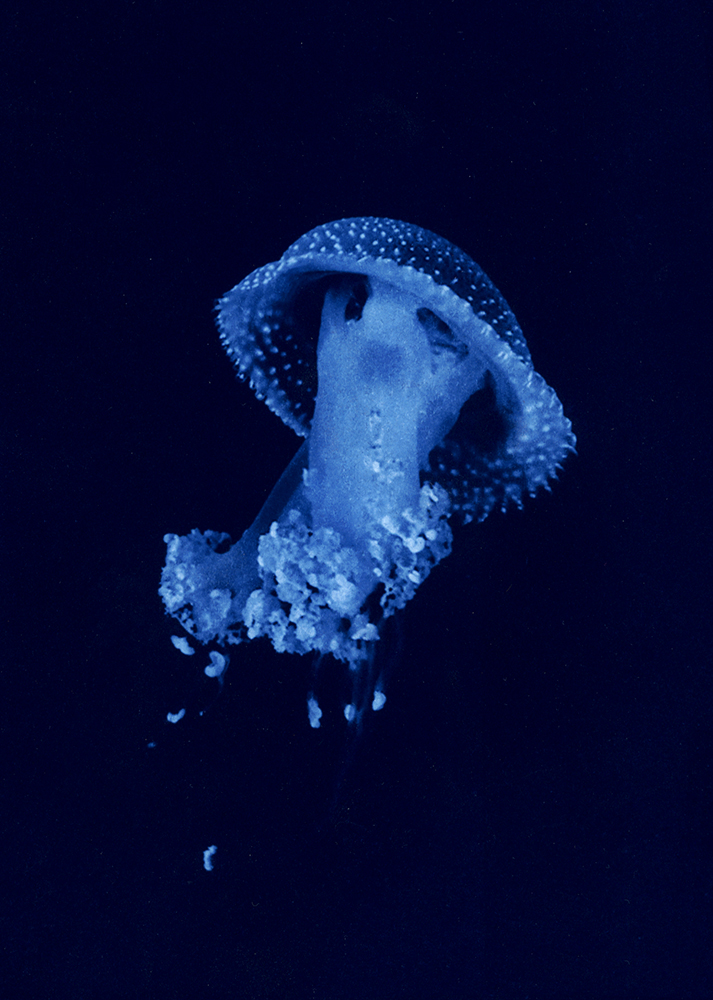
©Taylor Sloan
My experience with Professor Jones-McCullough started back in the spring of 2025 when I enrolled in Intro to Film Photography. It was my very first photo class and I immediately fell in love with film photography and the developing process. In the beginning, I struggled with rolling my film and would get frustrated on multiple occasions in the film changing room and panic. However, anytime I needed help she was there to assist and told me to just keep practicing. Professor Jones-McCullough walked us through every step making sure we were comfortable in the dark room, and I remember her saying that the dark room has become one of her favorite places and it actually has become a place to relax for me too. I have taken two more photo classes since then and the most recent class was Alternative Processes, which is the photo I have chosen to show. Learning cyanotypes, salt prints, and Polaroid emulsion lifts are just some of the processes she taught us. I am very excited to continue learning from Professor Jones-McCullough.
Taylor Sloan
Instagram: @tes_photography_
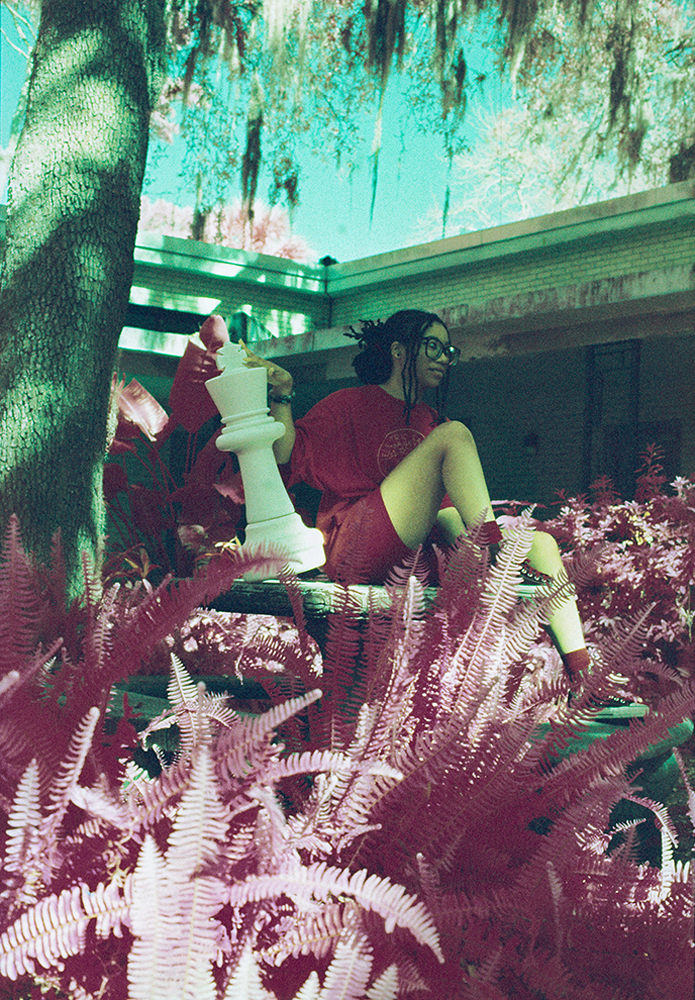
©Gunner Overgaard
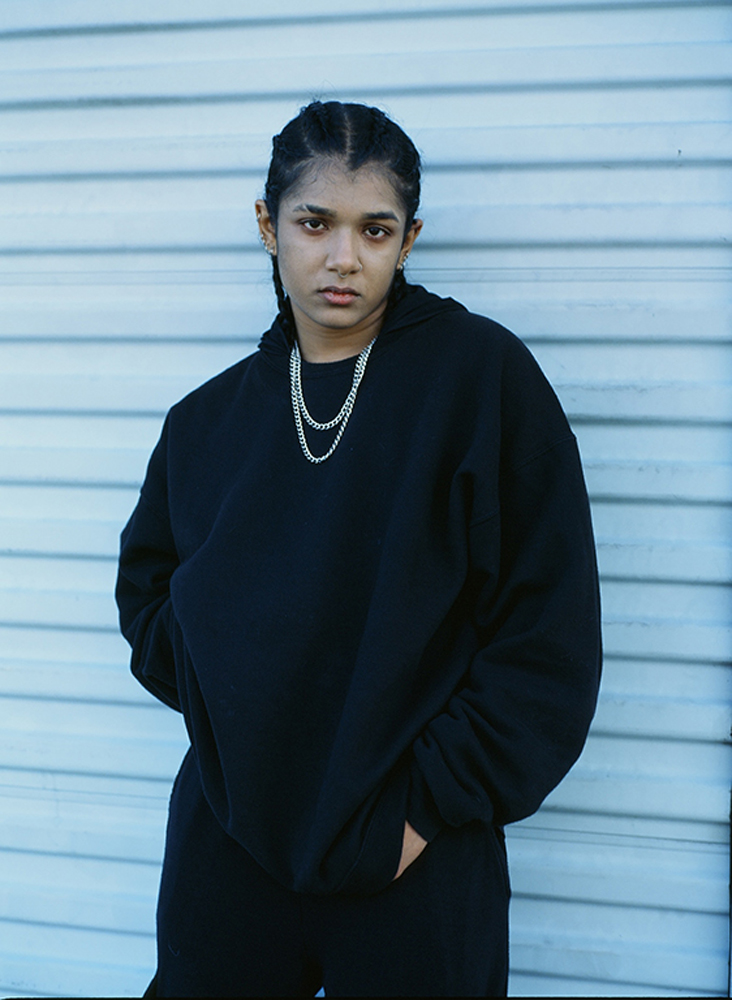
©Gunner Overgaard
Hillary has been my photography professor for the past 3 years at Jacksonville University. In that time, I have had the privilege to attend some very insightful courses, such as conceptual photography and alternative processes. These classes challenged me to shoot more creative photographs and implement more thoughtful compositions and concepts. Recently, myself and Professor Hillary have been discussing how to use archives as a photographic tool, implementing older photographs from my past into my current work.
Gunner Overgaard
Instagram: @gunner45718
©Melanie Jimenez
©Melanie Jimenez
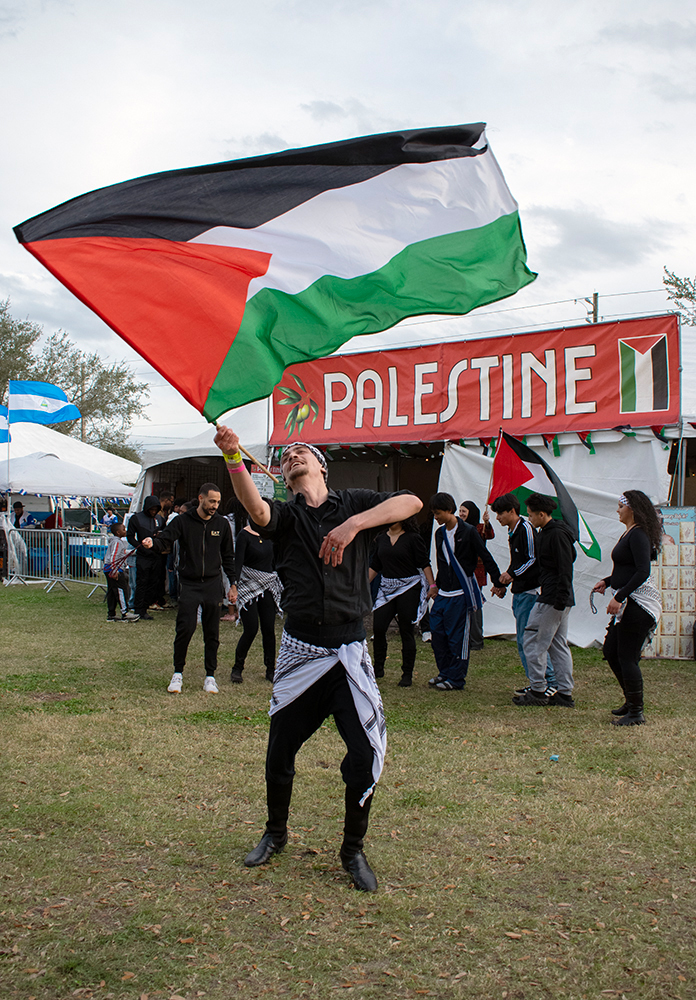
Hello my name is Melanie Jimenez; I’m an Illustration major with a minor in photography and my experience being a student with Hillary as my Professor has been one of the greatest decisions I’ve made as a Jacksonville University student. Under Professor Hillary’s guidance, I’ve come to learn and appreciate what photography is all about. I’ve come to find that another passion of mine is the cyanotype process within the realm of photography, and Professor Hillary has taught me ways to achieve better results with every print that I do.
Melanie Jimenez
Hillary Jones McCullough is an artist and educator currently based in Northeast Florida. She received a BFA in photography from the University of North Florida (Jacksonville, FL) and an MFA in Studio Art, emphasis in photography, from the University of South Florida (Tampa, FL). She is currently a professor of photography at Jacksonville University in Jacksonville, Florida. Her handmade prints incorporate a range of historical printing processes, her preferred being the Salted Paper process, though she has dedicated the last year to Platinum/Palladium. She would say her work at its core stems from chronically, crippling, and untreated anxiety from childhood into her 20’s. Her body of work subtly provokes introspection upon the vulnerability of the human psyche, the existential futility of existence, and the intrinsically human condition of searching for meaning in our ironically short,
fleeting existence.
Website: hillarymccullough.com
Instagram: @hillarymccullough
Posts on Lenscratch may not be reproduced without the permission of the Lenscratch staff and the photographer.
Recommended
-
Photography Educator: Hillary McCulloughSeptember 25th, 2026
-
The 2026 Lenscratch 3rd Place Student Prize Winner: Diana SosnowskaAugust 5th, 2026
-
Student Prize: Top 25 to WatchAugust 2nd, 2026
-
Motherhood: Nadine Levin: Inconstant HarmonyMay 9th, 2026
-
Alison Chen: The Tenderness of TidesDecember 23rd, 2025