Tom Zimberoff: The White Fence and more..
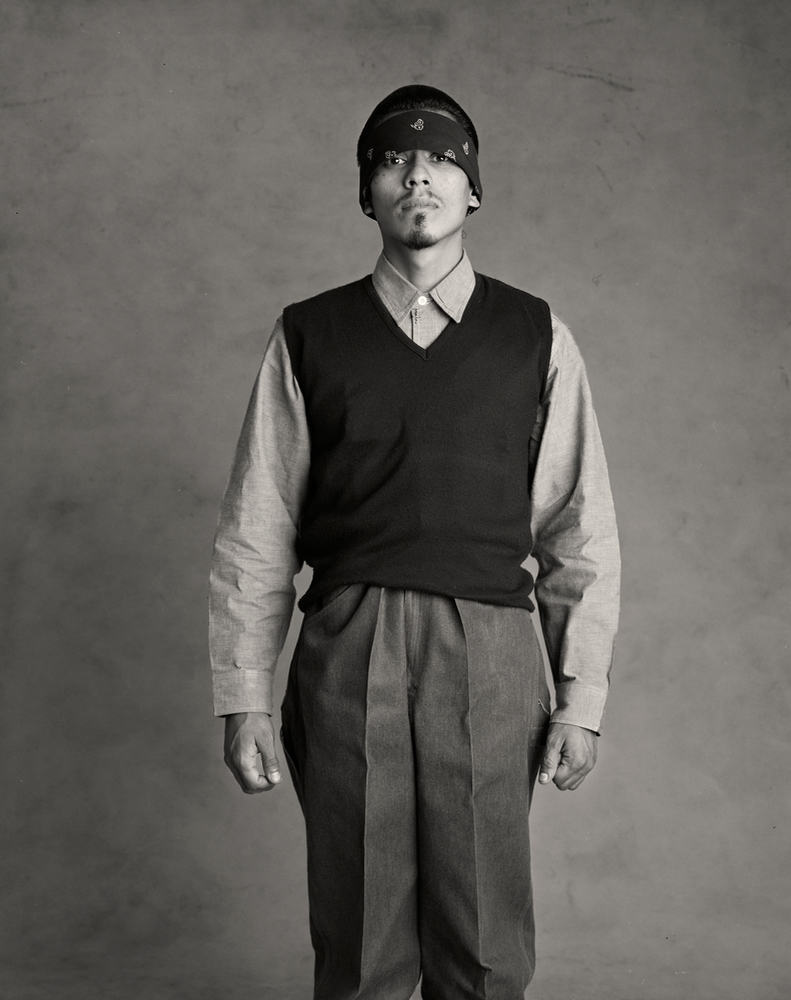
©Tom Zimberoff, Carlos
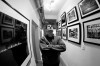
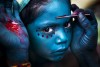
After yesterday’s Black and White Portrait exhibition, today continues our exploration of faces in monochrome. As an Angeleno, I was excited to discover the photographs of Tom Zimberoff, particularly his project on Mexican-American immigrants in East LA, through his recognition in the 2025 Critical Mass Top 50. We met at the opening at the Duncan Miller Gallery and shared stories about growing up in Los Angeles. Zimberoff has a long legacy of portraiture and today we feature the portraits created for his series, The White Fence, but also finish with some of his iconic celebrity portraits.
An interview with the artist follows.
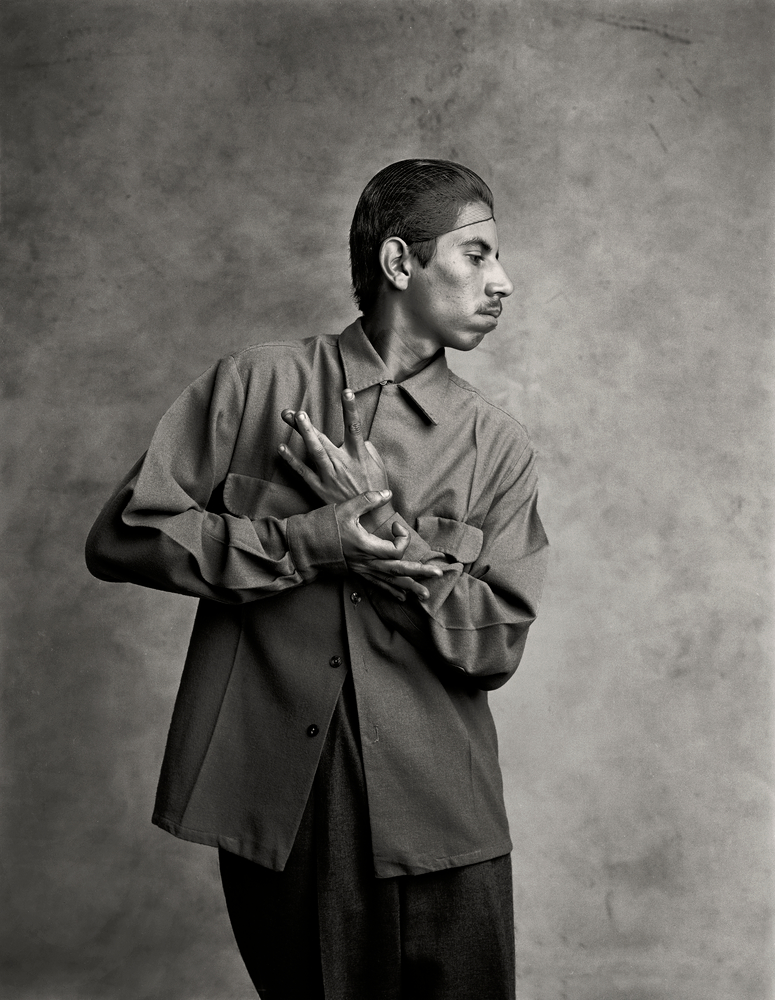
©Tom Zimberoff, Condido “Mouse” Guztamonte
Tom Zimberoff’s career bridges classic photojournalism and portraiture. He apprenticed in the crucible of magazine assignments when print magazines still ruled the media. Shooting for dozens of periodicals, mostly for TIME, and represented by the Sygma Photo Agency, he covered breaking stories and people in the news worldwide.
He began with a clarinet, not a camera, studying orchestral music on scholarship at USC. But photography , as he says, “grabbed him by the eyeballs and wouldn’t let go.” He soon found himself looking through a viewfinder at John Lennon: his first magazine cover, at 21. Next came Groucho Marx. Marx and Lennon—an improbable pairing for one’s first two portraits, not to mention the Lenin pun—set the stage for a career navigating the intersections of art, history, and serendipity. His portraiture—of both celebrated and anonymous subjects—is guided by a belief that portraits are made, not taken. Each one is the still life of a human being.
Having just returned to photography four years ago after a twenty-year hiatus, Tom continues to photograph people who live and work on the margins of convention, finding a story about identity in each and every individual or group Tom’s film archive was accessioned by the Briscoe Center for American History at the University of Texas at Austin in 2016, and he has recently completed a memoir: A Photographic Memory.
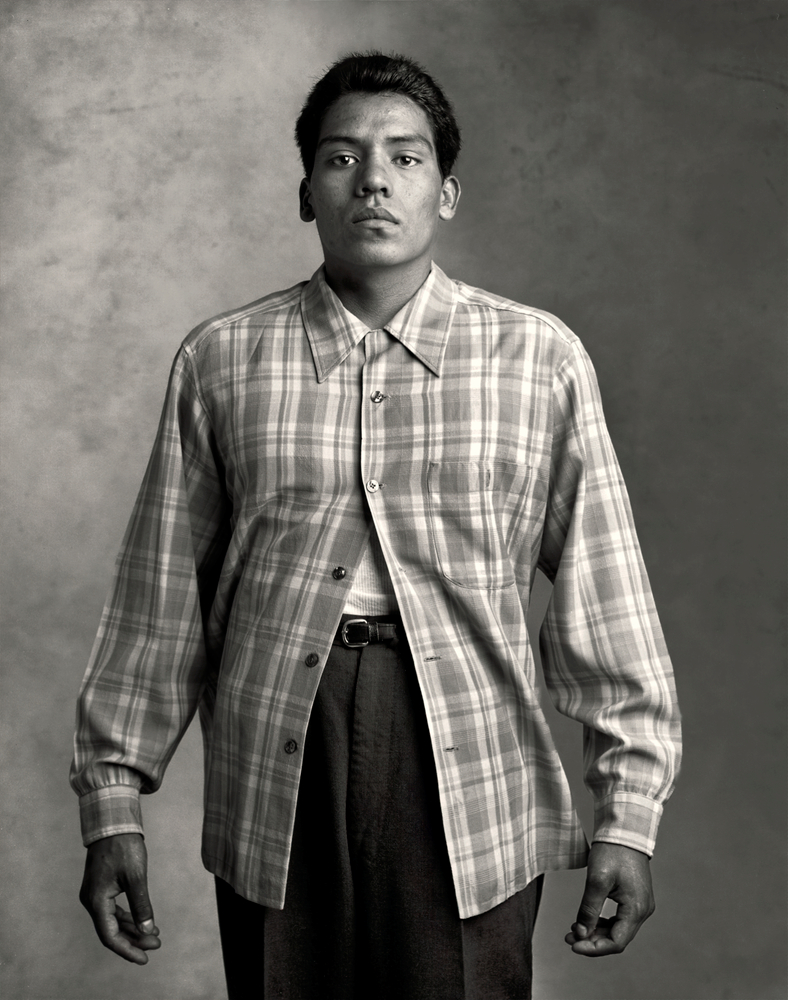
©Tom Zimberoff, Damon Ignacio
The White Fence
A portrait is the still life of a human being—a collaboration, a performance, a kind of psychological hack; the way it allows viewers to stare into a stranger’s eyes without apology. And when they look, they can’t help imagining what the sitter is thinking or feeling, though observed neither in real-time nor moving about in the real world. Portraits remind us that others are always looking at us, and we are all subject to someone else’s perception.
The opportunity to make these studies arose while shooting a magazine assignment about Mexican-American immigrants in East LA, where I found myself getting eyeballed by The White Fence—LA’s oldest and most violent gang, dating to 1900—its history as unforgiving as the streets they rule. But what struck me wasn’t menace; it was their pride—and style: theatrical, self-curated, and precise, a visual assertion of identity and status. I proposed portraits, not on the street, but in my studio, a neutral zone miles away from their turf, closer to Beverly Hills than Boyle Heights.
They agreed—reluctantly. Curiosity won out. In exchange for gas money and beer, they endured the strange ritual of posing in front of an “old-timey” camera and a big bright boxlight. It wasn’t trust, exactly, but it was participation. The big 4×5, always on a tripod, slowed things down, demanded deliberation—on both sides of the lens. They let me see them—on their terms and mine.
An impulse to create art helps define humanity. Seeing humans as the subjects of art comes full circle with portraiture. A portrait is made, not taken. When photons bounce off living beings and pass through the aperture of a glass lens, propelled by an occult force called “the mind’s eye” to converge on a light-sensitive substrate inside a dark box, two parties on either side of this contraption—the camera—are committed to telling a short story for one endlessly enduring moment. I aim to preserve what happens when people allow themselves to be seen. That’s the magic I chase.
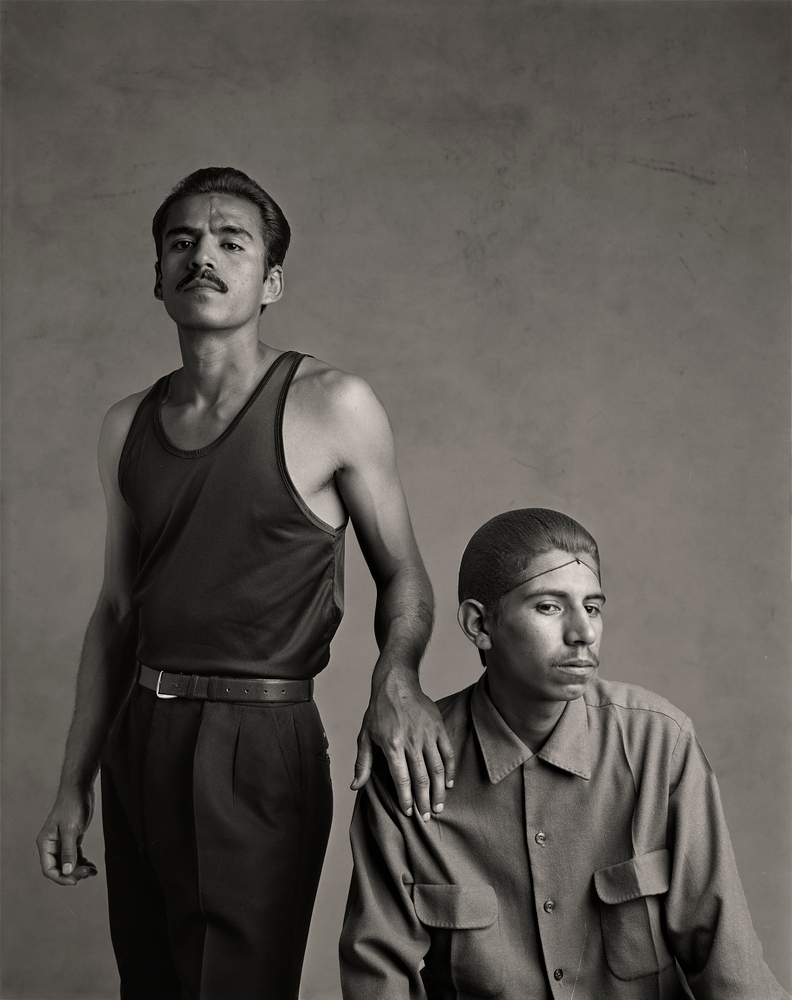
©Tom Zimberoff, Dos Hermanos
Tell us about your growing up and what brought you to photography…
The topless showgirls, I remember, were intrigued by my little black bag and toy stethoscope. They bent over me in their stiletto heels, feathers, and rhinestones, patted my head, and told my mother how adorable I was. I was about seven. Mom and I were backstage at the Tropicana, the Sands, the Flamingo, the Stardust…
I was a Las Vegas boy in that my mother peddled haute couture backstage between shows to the ladies of the Folies-Bergère and similar revues because they slept during the day when her boutique was open. They needed clothes. She brought samples to try on. And she took requests. She was the in-person Amazon Prime of 1950s Las Vegas.
My father was a musician who, having forsworn long stints on the road with big bands, accompanied crooners like Bobby Darin, Wayne Newton, Nat King Cole, and Judy Garland in the hotel orchestras on the Strip.
At the same time, I was an L.A. boy because I went to school there as often as I did in Las Vegas and lived with one or another of my three much-older siblings and their own kids when I was not interned at L.A.’s Black-Foxe Military Institute.
My Vegas memory of half-naked women comes from summers and holidays when I “visited” my parents, who felt they were too old to start parenting all over again.
I didn’t grow up wanting to be a photographer—or, despite my plastic medical kit, a doctor. I wanted to be a musician, like my father.
Ultimately, the clarinet became my anchor, my greatest expression of hope and joy.
Then I was parachuted into Beverly Hills High School for my senior year, when my parents moved us back to L.A. for good. The culture shock was seismic. In Nevada, if a boy’s hair inched over his ears, or—God help you—if you wore bell-bottoms, you were a hippie. Girls wore skirts and beehive hairdos.
You’d do serious jail time if caught smoking a joint. I didn’t know anyone who succumbed to “reefer madness,” but one of the kids I’d hung out with got busted for robbing a drugstore at gunpoint. I suppose almost smoking a hapless sales clerk was less reprehensible to Nevada’s prosecutorial satraps than smoking weed; he got probation. I knew other kids who jacked cars and never got caught. One young hoodlum’s father was known around town as “Icepick Willie.” I guess we know what he did for a living.
And then there was the draft.
A sadistic Vegas High history teacher convinced every boy in his class that his fate was to be cannon fodder in the rice paddies and jungles of Vietnam. No one in my family had gone to college, so unless I became the first and got a student deferment, I was likely to get a free—and perhaps one-way—ticket to Saigon.
In Beverly Hills, girls came to class in mink coats over bikinis—at least one did—and The Doors played the senior prom. I went from square-dancing at school recess in Las Vegas to late-’60s Southern California libertinism overnight. That dislocation sharpened something in me. I watched more than I spoke.
In 1969, I earned a full scholarship in music to USC. With a student deferment, the draft was kept from blowing my way. I believed my future was first chair in a symphony orchestra.
At USC, though, matriculation came with a quid pro quo: conscription into the USC Trojan Marching Band. We scholarship kids with draft deferments did more drill practice than the kids we derided for joining the Army ROTC. Anyway, that’s when I began carrying a camera.
At first I was drawn to it the way I was drawn to musical instruments—beautiful, mechanical, something that gave me agency. At first, it was more like a fashion accessory—all the cool kids (i.e., rich) had Nikons. Then it became something more.
It was a gradual transfer of allegiance. I didn’t renounce the clarinet; I simply kept raising the camera to my eye. My first one was a peculiar-looking Pentax, custom-clad in gaudy—I mean waaaay over-the-top—blood-red, scaly snakeskin. And as if that wasn’t affected enough, I’d stolen it.
To state my confession less egregiously, I expropriated a forgotten artifact, consigned to oblivion, as evinced by its ostentation having gone unrecognized, despite my using it in public places and showing it off to friends. Besides, to paraphrase Honoré de Balzac, behind every great enterprise lies a crime. It had also been broken, and I paid $35 to fix the shutter curtain.
I was lucky—unlucky?—to be on campus at USC when a horrible stabbing unfolded, and the photograph I made ran on the front page of the awkwardly named Daily Trojan. I was offered a staff position on the strength of that one picture. I knew just enough about the camera not to ruin the film. The rest was luck. But I felt the shift. The camera didn’t just record events; it placed me inside them.
Eventually, the camera eclipsed the clarinet.
Looking back, growing up between two worlds—backstage Las Vegas and the libertine, psychedelic upheaval of late-’60s California—I found my footing in a world where magazines ruled the media, standing close to fame without inheriting it, trying to stay grounded. I stumbled into life as a photographer. And I got lucky.
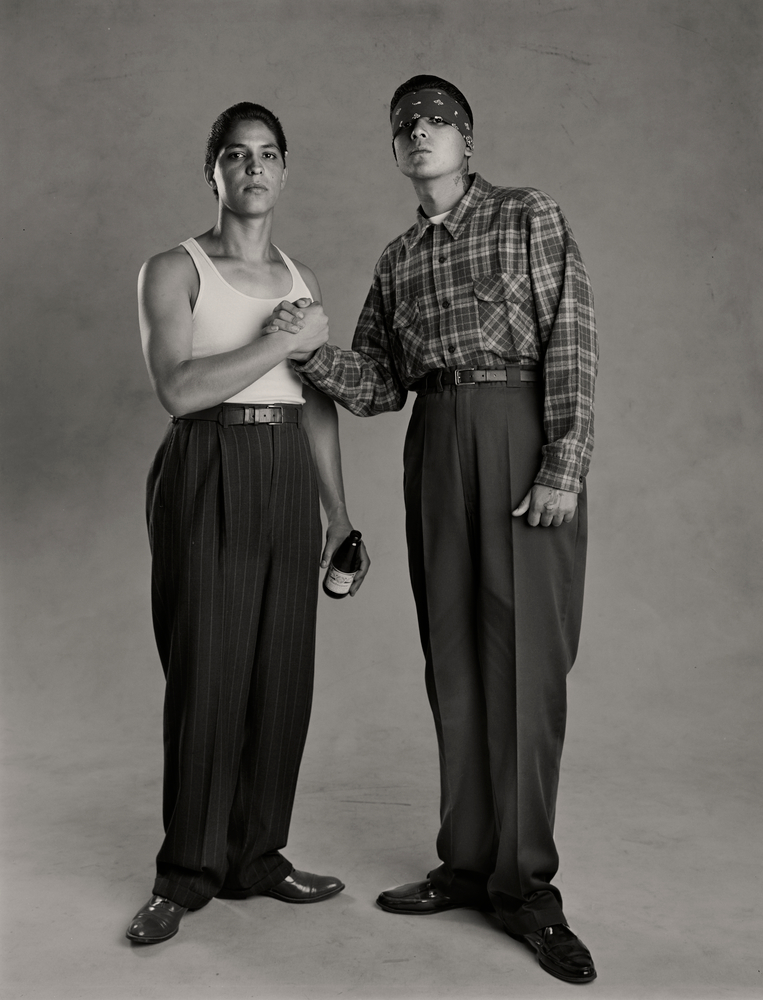
©Tom Zimberoff, Handshake
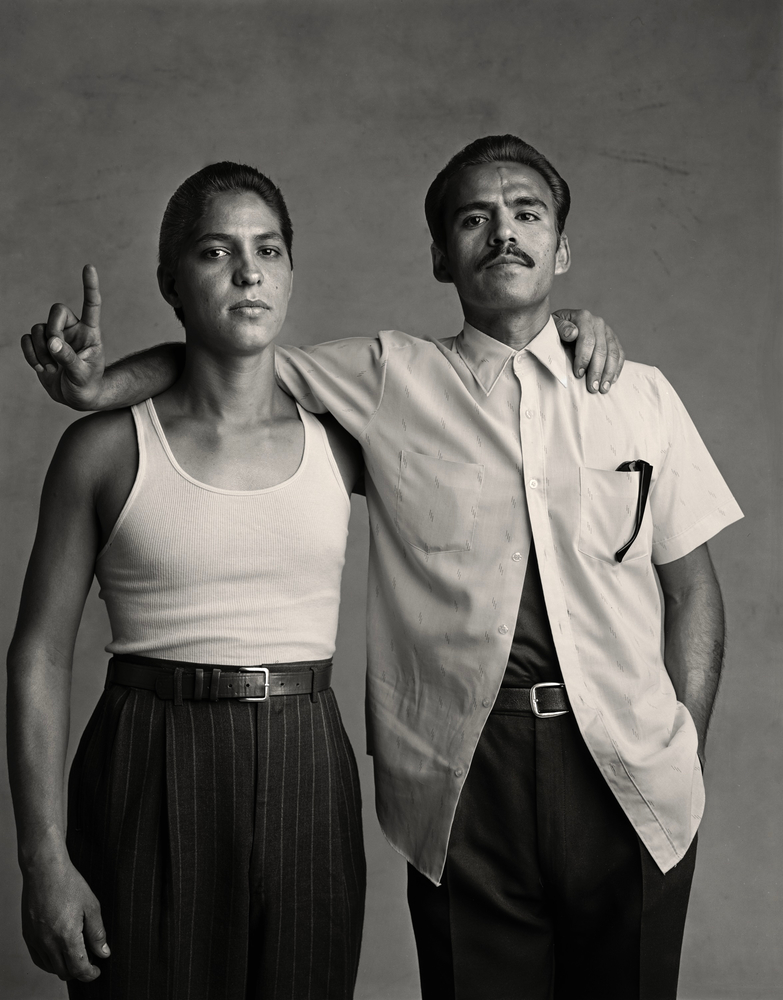
©Tom Zimberoff, Numero Uno
What drew you to portraiture?
At USC, shooting for the Daily Trojan, I was surrounded by journalism majors—no photography degrees back then. My fellow student-photographers’ interests in both the social impact of published pictures and the still nascent movement to accept photography as art led me to the work of Gordon Parks, W. Eugene Smith, Cartier-Bresson, Capa. I absorbed the reductive drama of Ansel Adams’s black-and-white landscapes and the impact of color graphics through Ernst Haas and Pete Turner. When I encountered the portraiture of Penn, Karsh, Halsman, Avedon, and Arnold Newman, something clicked.
Susan Sontag’s On Photography had just been published. In it, she likened the camera to a gun—photography to predation. People as prey. I appreciate the tension she described between photographer and subject, but what she framed as aggression, I came to experience as collaboration—tension intact, but transformed.
Fewer photographers load cameras now—batteries, maybe; film, not so much. Yet we all still aim and shoot. I get a bang out of describing my pursuit of portraits as hunting for big game—but not in a predatory sense. The challenge—and the joy—comes from memorializing each new encounter with a human being in one shot, so to speak. I may bag my quarry with a four-by-five instead of a thirty-aught-six—digitally now—but I still mount their heads on a wall to admire like trophies—not of conquest, but of connection.
Music trained me for this. As a clarinetist, I learned discipline through practice, and how to respond to emotive stimuli. Portraiture is similar. It is contrived in the best sense—constructed, considered, deliberate. There’s no such thing as a “candid portrait.” That’s an oxymoron. The light is shaped. The frame is chosen. The moment is negotiated.
I’m very opinionated about portraiture. Documentary photographs support an agenda. Photojournalism is reportorial. Conceptual art philosophizes. But none of those genres guarantees a portrait. In those kinds of photographs, a person is the vehicle for an idea; in a portrait, the person is the idea. And in that context, no portrait is anonymous. It is not of someone; it is about someone.
Something else: a portrait is made, not taken. It is the still life of a human being.
A compulsion to create art helps define humanity. Seeing humans as the subjects of art comes full circle with portraiture because when photons bounce off living beings and pass through the aperture of a glass lens, propelled by an occult force—the mind’s eye—to converge on a light-sensitive substrate inside a dark box, two parties on either side of this insensate contraption—a camera—are committed to telling a short story for one perdurable moment.
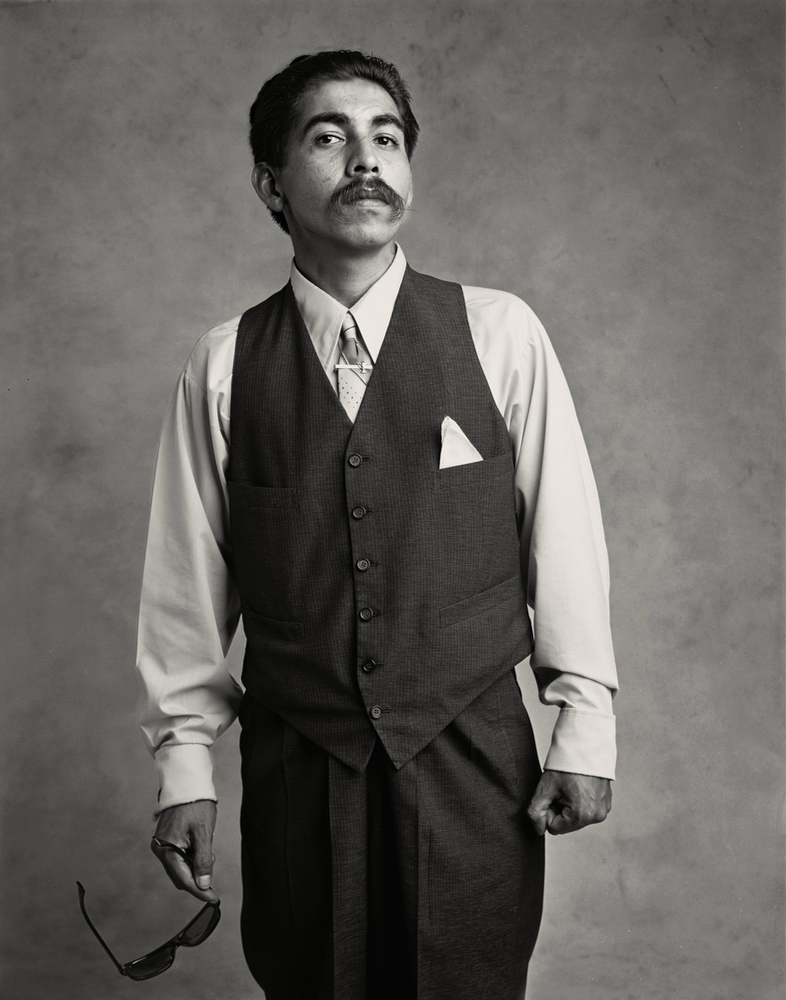
©Tom Zimberoff, Pumpkin
Does creating a portrait for an editorial client feel different than creating one for yourself?
Short answer: yes.
The difference—when print magazines ruled the media—was often about making a choice: color or black-and-white. Perhaps a deeper difference is that clients pay for and expect a specific commercially viable result; I pay attention to a person and the creation of art.
The Penn, Avedon, Halsman, Karsh, and Newman portraits that caught my eye when I first picked up a camera came from an epoch when black-and-white reproduction was still the editorial default. Color coexisted, but it was costlier and less common inside magazines—more often reserved for covers and, less frequently, feature spreads. National Geographic was a conspicuous outlier, having leaned heavily into color early on.
Even though I was on assignment to shoot color for what would be my very first magazine cover, I wanted to create something special on the side—for me, something I had yet to try: a deliberate portrait. It would be pre-visualized and carefully composed, more substantive than a candid photo. A portrait, I thought, would strive for artistic merit and also indicate a level of collaboration with my subject. Incidentally, that first portrait and first magazine cover was of John Lennon, as improbable as that seemed even to me at the time.
Since my initiation at the USC Daily Trojan, I was holding out for a medium- or large-format camera like the ones my heroes used for really sharp, grainless, detail-rich portraits. But by the time the Lennon opportunity presented itself, in 1973, my only tools were a Nikon F2, a Leica M4, and five lenses. I wasn’t about to forego a portrait just because I didn’t have a bigger camera—or lights, so I compensated for the “miniature” 35mm negatives by shooting extremely high-resolution b+w film: Kodak Panatomic-X would allow me to make prints with as much detail as I could wring out of a small negative. However, higher-resolution film is less light-sensitive and therefore requires longer exposure times. I brought a tripod, as useful for studiously composing a picture and locking in my composition as to stabilize the camera for long exposures—and maybe shaky hands. And I shot available light.
In late pre-digital days, color television became the dominant visual storytelling medium. The influence of picture-heavy magazines like Life and Look had waned. Look folded in 1971; Life stopped its weekly run at the end of 1972 (though each would later reappear in diminished, episodic form). But working in the crucible of magazine assignments for newsweeklies like Time and Newsweek meant shooting color was mandatory, to be competitive with color TV. Some periodicals, like Rolling Stone and People, still assigned b+w now and again for feature stories. Many big-city newspapers didn’t go all-in for color until the 1990s—some late 90s.
Clients almost always assigned color when the story was about someone in particular, so at the end of a shoot I would often ask my subject to spend just a little extra time to do something “special,” just for me—for them, too, if I promised a black-and-white print. If they were kind enough to agree—usually—I’d whip out either the 4×5 film holders or the interchangeable Hasselblad backs loaded with Plus-X.
Those of us who were represented by photo agencies, like I was by Sygma, usually shot both black-and-white and color film at the same time because our agents found lucrative relicensing opportunities for the former, particularly with European magazines like Paris Match and Stern et al. That meant juggling two sets of cameras on every job, loaded with different film stocks. And that’s not counting a medium-format camera, a tripod, and lights for posed magazine covers. (Not so bad if the subject comes to your studio.) Many chiropractors owe their livelihoods to us photographers today.
I’ve often found that unless color is integral to a composition, unless it is doing real work, it competes with the subject’s personal character. Color is seductive. It can dominate a composition. Sometimes you want it to. Black-and-white reduces the variables. It clarifies structure and emphasizes presence. So if color doesn’t advance the idea, then black-and-white it will be, for me. That said, some of my favorite portraits—mine and others’—depend on color. When it matters, it matters.
A good case study is my portrait of Paul Newman. At fifty-six, his azure headlights still made women swoon. So of course my client, Columbia Pictures, demanded color. But I thought it would be cool to get Cool Hand Luke’s baby blues to pack as much punch in monochrome as a Technicolor cinema screen—for my own portfolio.
I expected the reductive drama of black-and-white to be the defining feature of my portrait, with Paul’s eyes laser focused on the viewer. So I screwed a blue filter onto my lens and shot Plus-X to lighten his pupils—well, darken them in the negative. I shot Ektachrome for my client. But the b+w worked so well that Columbia used my b+w of Paul in tandem with my color portrait of his costar, Sally Field, on the poster for Absence of Malice.
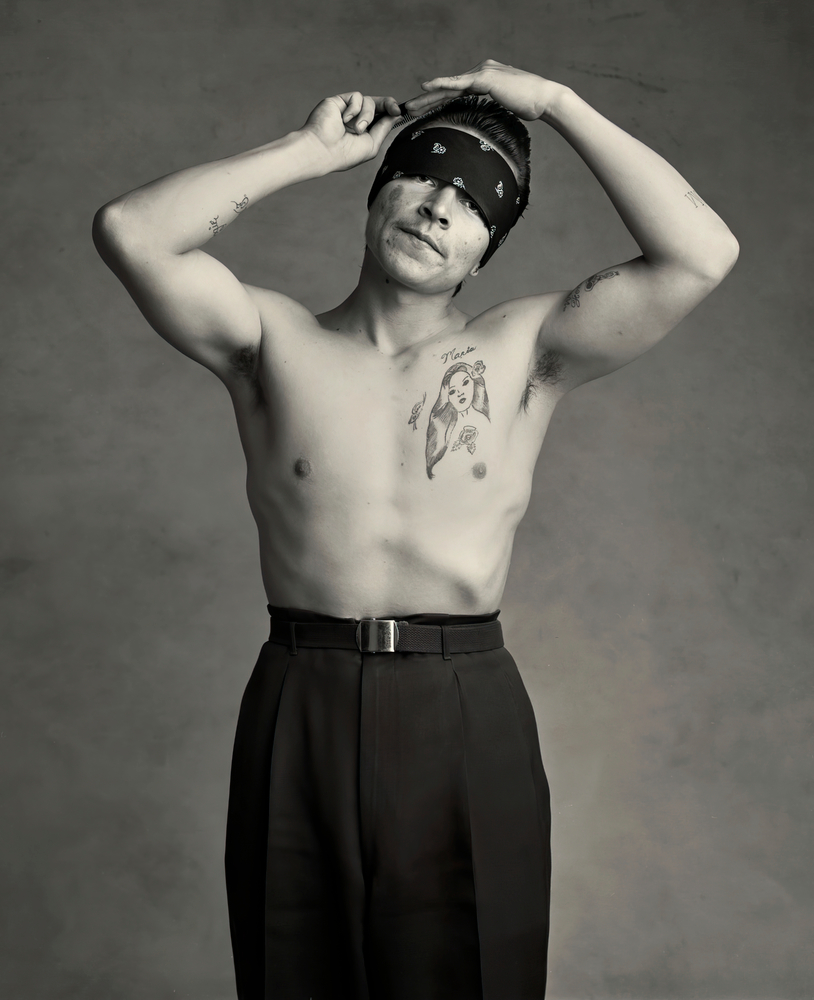
©Tom Zimberoff, Raul Alaniz
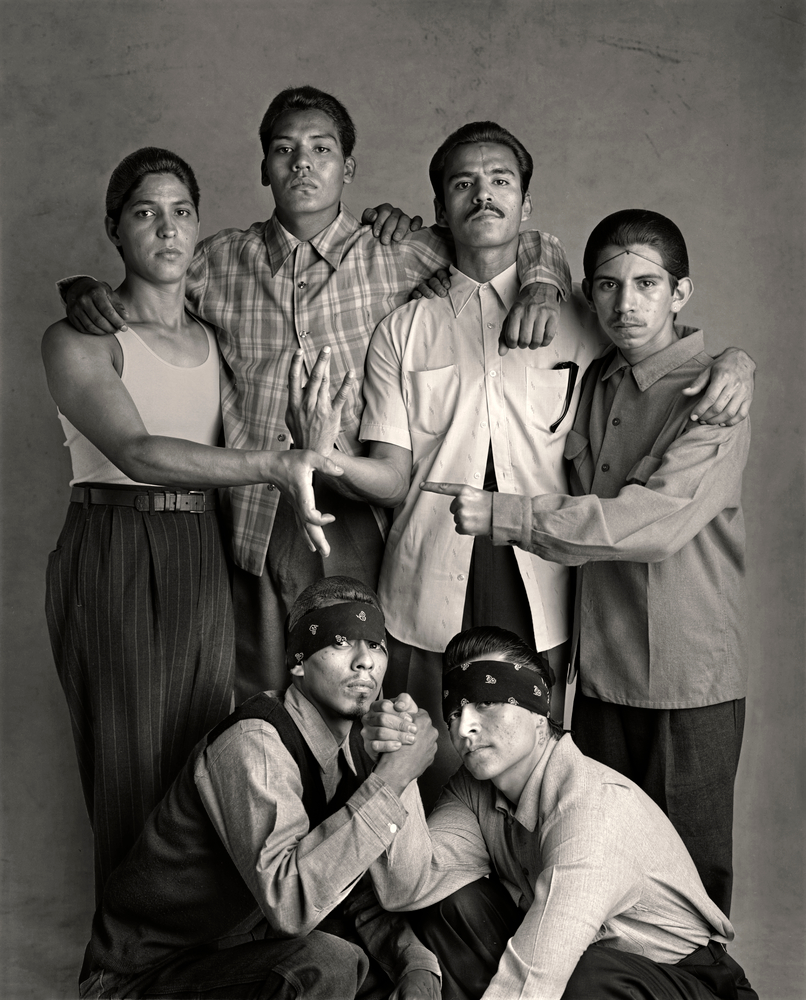
©Tom Zimberoff, Seis Homeboys
Can you share a story about a difficult shoot or difficult subject?
That would be my portrait of Joan Baez in 1988 for a San Francisco Examiner Sunday Magazine cover.
When I arrived at her home, she was polite but circumspect. Once inside, we got to Joan and Tom quickly enough, but it was clear that something was eating at her.
It’s hard enough to frame a portrait for a magazine cover on location; there has to be plenty of neutral space above the subject’s head for the magazine’s name, and on one side or the other for story blurbs. But Joan insisted we shoot in her den, a room that fought hard against a successful photograph. The ceilings were low, the walls felt close, and what scant light came through a window was swallowed by furniture and carpeting. Bookshelves left no empty wall space. It was impossible to erect a backdrop, let alone a bevy of light stands.
Joan’s disposition was as dark as the room—nice set for a hostage video.
I suggested moving outside to her colorful garden. She demurred. She told me a chill in the air would affect her voice before an upcoming performance. Nonsense, I thought. It wasn’t very cold outside, and the sun was shining. Our brewing stalemate was less about temperature than temperament.
Every photographer knows the feeling: one bad photo could be your last.
I put my Hasselblad on a tripod. I put one light on a stand, for effect—pretty much aimed up her nose. I pretended to look through the viewfinder, a maneuver indistinguishable from actually looking through the viewfinder. I was framing my thoughts, not the picture. Buying time. Working the problem. Joan fidgeted on the other side of the lens. She was still not cooperating.
I didn’t tell her in so many words she was acting like a diva. But I had to dish her disposition right back to her. This was no longer a lighting-and-composition problem; it was a negotiation.
First, I tried again to explain the technical difficulties we faced in that room. But she was adamant about staying inside. I suggested coming back on a warmer day—my deadline was a week away. She said her performing schedule wouldn’t accommodate a delay. So I put a little steel in my voice.
I told her I’d just photographed the great tenor Plácido Domingo in a dank, unheated cellar in New York City—in the dead of winter—where a spalling stone wall made the perfect backdrop. That shifted the dynamic.
I told Joan we could wrap her up in a coat and scarf, cozy and warm, and that if I set up my lights outside while she waited, she could simply step out for ten minutes. Maybe one roll of film. All done.
She relented. We shot outside.
Joan’s performance came several days later at the Paul Masson Winery amphitheater in Saratoga, California. My Examiner assignment required some shots of her singing onstage. No backstage candids, no need to engage one-on-one again. But when she saw me in the wings, she gave me an arch wink. Joan of Arch.
The last time we met was May 17, 2010, at the Great America Music Hall in San Francisco. She was there to eulogize photographer Jim Marshall, our mutual friend who had died two months earlier. After she sent Jimmy off with her rendition of “Swing Low, Sweet Chariot,” I reminded her of the portrait we shot twenty-two years earlier and that it turned out pretty good.
“Yes, it did,” she said.
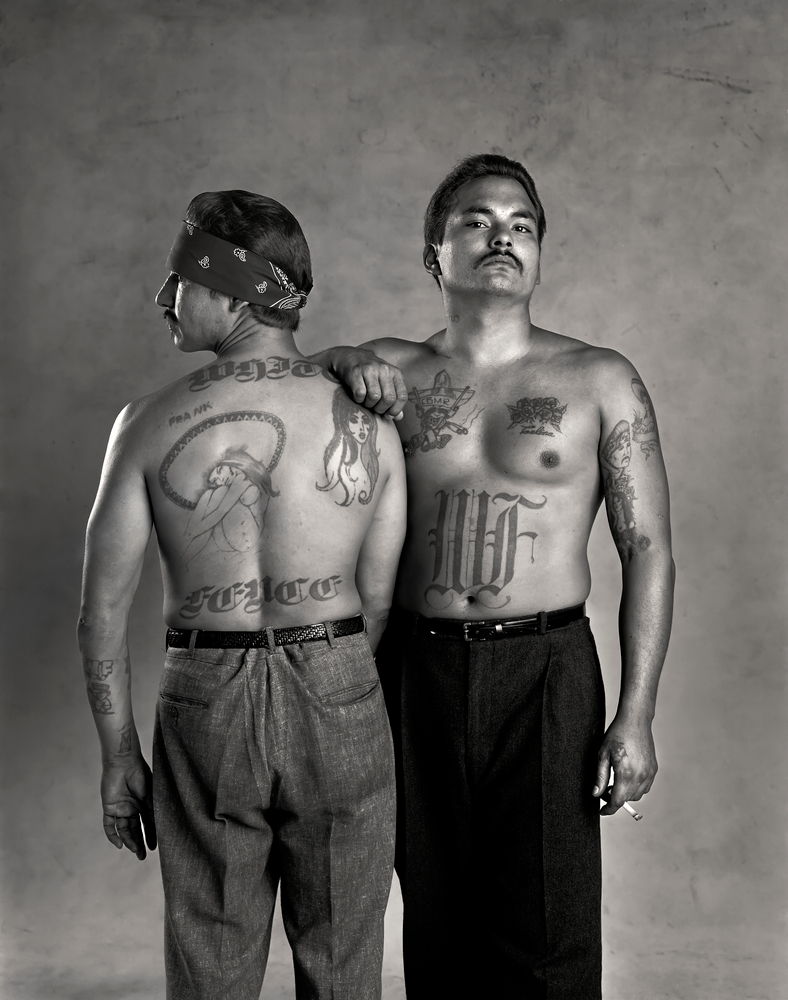
©Tom Zimberoff, Tatt-Two
Dream experience when photographing a celebrity?
My sister Carla’s late husband, Chuck Berman, a generation older than me, was a flight engineer and gunner in a B-17 Flying Fortress dodging Zeros over the Pacific in World War II. After the war, he worked on the X-15 program at North American Aviation. He brought this starry-eyed eleven-year-old kid autographed 8×10 glossies of the test pilots who flew it—Scott Crossfield, Joe Walker, and a guy named Neil Armstrong.
Chuck Yeager didn’t fly the X-15, but he pioneered the X-plane program and, with the X-1, became the first pilot—the first anything alive—to travel faster than sound.
As a kid, I worshiped those guys. Still do.
Years later, while visiting the armed services public affairs office in Los Angeles, I mentioned to an officer friend of mine how extraordinary it would be to meet Yeager—better yet, photograph him. He slid a Rolodex across his desk like he was pushing a stack of poker chips into a high-stakes pot.
“Call him,” he said.
I was staring at Chuck Yeager’s home phone number.
I hesitated, pondering the hand I was dealt. Call or fold? Then I picked up a desk phone, got an outside line, and dialed.
One ring. No hello. Just a bark: “Yeager!”
Oh, shit! The most famous test pilot in the world was on the other end of the line, a man who might be careening wing over wing, spinning like a drill bit, yet reporting his fearsome predicament in real time with unflappable composure over a staticky radio while struggling to keep his obdurate airplane from augering into the earth. His dauntless legacy endures, emulated by every pilot who has ever flown a jet into a tight squeeze. Whether they hail from the Bronx or Biloxi, they all channel the dispassionate West Virginia drawl of Chuck Yeager. It can come over a mic to a combat wingman or soothe anxious airline passengers on a bumpy ride through the wild blue yawn. Even through a telephone, hearing this man—the real deal—utter just the two syllables of his surname hit me like the double thunderclap of a sonic boom.
After a very long and awkward beat, I managed to state my own name, then come up with a plausible reason for interrupting this man’s day. Somehow, I got around to asking if he’d pose for a portrait. I must have made sense, though, because he agreed to meet me in Barstow, about a two-hour drive from L.A., where he was already book to film a TV commercial. He said he could make it a “two-fer.”
America’s first “Ace in a Day,” having shot down five Nazi Messerschmitts on one mission, flew to Barstow in a magnificently restored P-51 Mustang, a replica of the one he flew in 1944. It was awe-inspiring to watch the general march up to that warbird, gleaming under the sun, looking sharp as a propeller blade himself in a green flight suit embellished with an Ad Inexplorata squadron patch (Into the Unknown).
After the commercial wrapped, I had Yeager and the Mustang all to myself for the afternoon. Between camera setups, the world’s foremost living aviator (astronaut Neil Armstrong notwithstanding) regaled me with firsthand accounts of the exploits I had read about in The Right Stuff and seen dramatized on the big screen. I’m sure Yeager was tired of straightening out the apocryphal twists and turns of other people’s artistic license, but he could reel out his telling of those tales at the drop of a flight helmet.
And he did. You could crane you neck straight up to see where the drama played out. He made me feel like I was right there with him.
In his unflappable West Virginia drawl, he told me what it felt like to go supersonic—and what it felt like to lose control of a rocket-boosted Starfighter, so high up you could see stars in a black sky at midday, and punch out.
“It’s not the fall that kills you, son,” he told me, “it’s the sudden stop.”
Later, I asked him to sign a print of his portrait, standing beside the Mustang, the palm of his hand resting on its nose cone. He wrote, “Tom, you sure know how to show the feeling a guy has for his airplane.”
It was more than a celebrity assignment. It was a full-circle moment—myth meeting craft, childhood awe meeting professional opportunity. I got to photograph one of my heroes, and for an afternoon, I wasn’t just the photographer. I was the kid again, standing close to history.
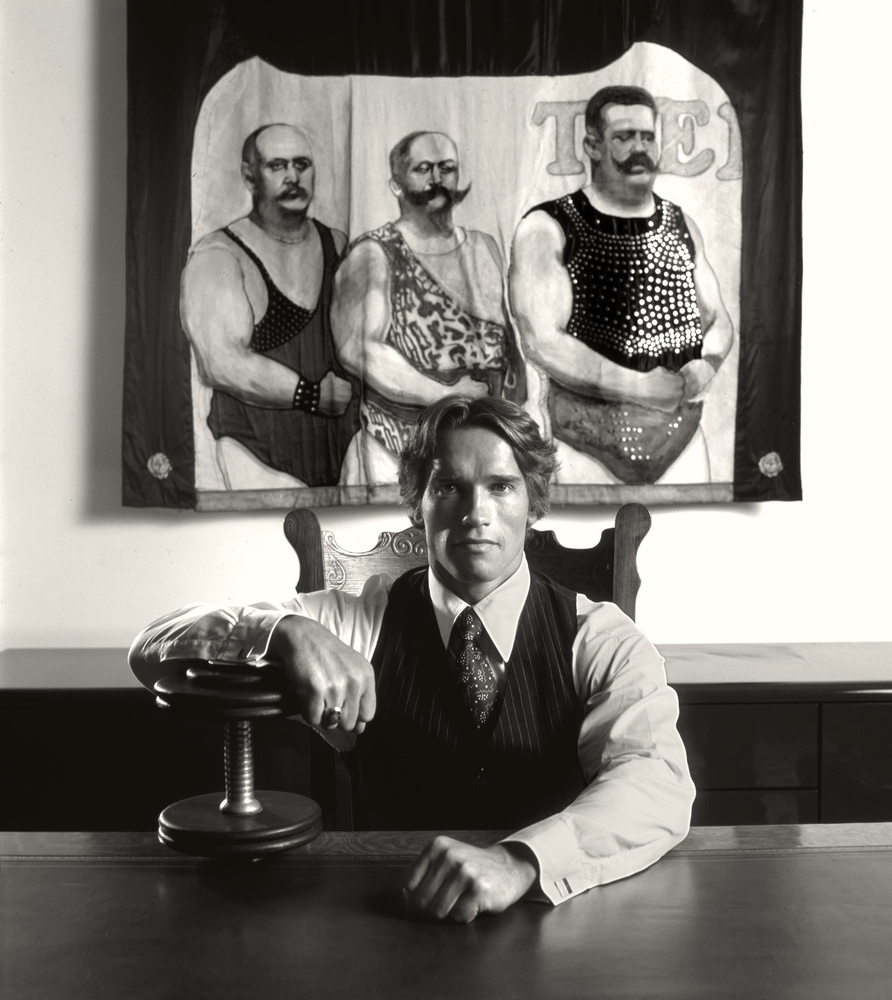
©Tom Zimberoff, Arnold Schwarzenegger
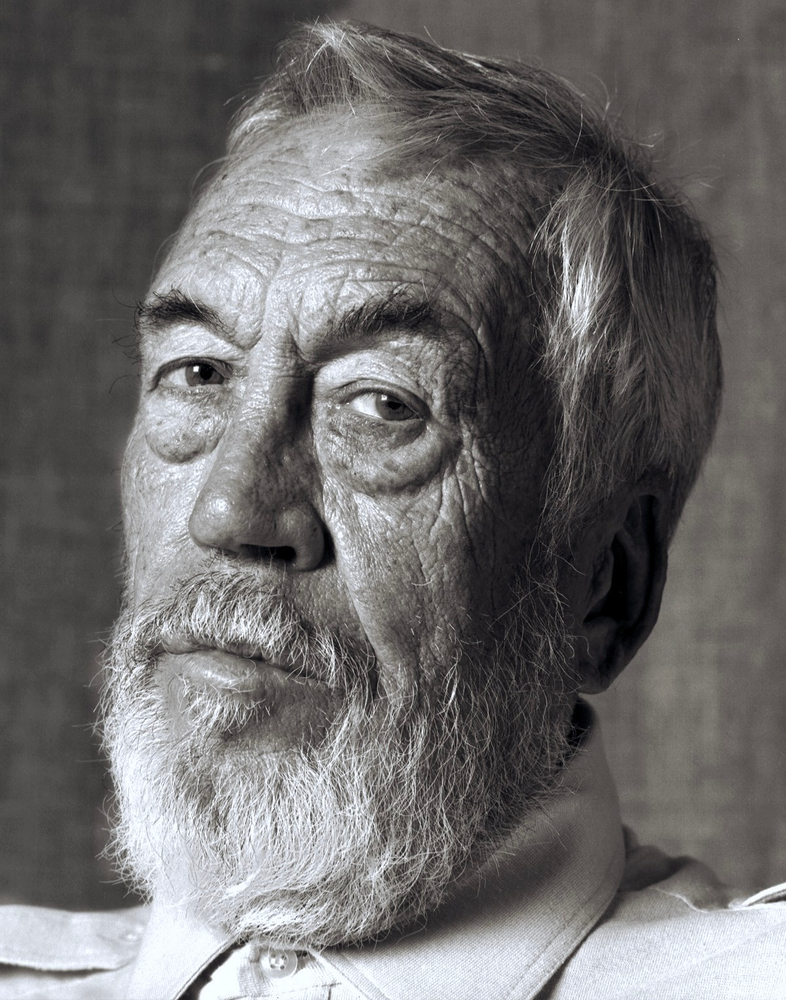
©Tom Zimberoff, John Huston
What have you learned from your long career of looking at someone else’s face?
I’ve learned—and portraits remind me—that we are all subject to someone else’s perception, and that to be seen is as essential as to see.
I’ve watched a sitter cross an invisible line between performing and simply being there; that’s when the portrait becomes possible. It’s the moment when intention meets permission—anticipated, but not forced.
My presence with a camera is either invited or tolerated. Either way, there is a tacit agreement: permission is granted for personal moments to be seen and captured within a reasoned range of revelation. These are never stolen moments; they are always gifted ones.
A portrait is made, not taken. It is not of someone; it’s about someone. It is the still life of a human being.
I’ve learned how to listen. I’ve learned how to watch.
I’ve learned that people reveal themselves despite themselves.
Everyone has armor. It’s not impervious.
A face reflects impermanence even though a photograph is relatively permanent.
Everyone has a mask. Some can hardly wait to peel it off, to feel their own skin again.
Portraiture is also a hack of human psychology: you can stare deeply into someone’s eyes without the instinct to flinch and look away. That is as true for a photographer, looking at a groundglass or through a viewfinder, as it is for a viewer looking at a print.
Also, it’s impossible for someone looking at a portrait not to form ideas about what the sitter is thinking or feeling, even though the person portrayed is neither moving about in the real world nor observed in real time.
I’ve also learned that subjects seldom see themselves the way the camera does.
“That’s not me,” they’ll say. Or, “I never look good in pictures.”
They may agree it’s a fine photograph; just a cockeyed likeness.
There happens to be a technical explanation for that phenomenon.
The image we see every day in our bathroom mirror, when we first wake up and just before we go to bed, is an optical illusion. It is the result of light reflecting off your face, traveling to the glass surface, then reflecting back again. In other words, the light travels measurably twice the distance from your eyes to the mirror, revealing an effect called optical foreshortening. It changes the apparent distance —your perception of distance— between objects in the foreground and the background, relative to where you are standing.
A telephoto lens does the same thing. Same effect. Same principle.
Some people call a telephoto lens a “portrait lens” because it flatters. That flattery comes by flattening perspective, compressing it, thereby making the tip of your nose look almost imperceptibly, but nonetheless, closer to your ears.
The effect is subtle but it’s plane to see in two dimensions. (Pun intended.) Alternatively, if you are photographed up close with a wide-angle lens, you’ll have a big schnoz and smaller ears—the way you’d look to someone standing nose to nose , in your face, or vice versa.
You don’t look bad in photos, but you probably expect to see something different, more familiar: your reflection in a mirror.
There’s more. Your reflection is backward. Flipped. Reversed.
That, too, plays tricks; this time with facial symmetry. The camera sees you the way everybody else does: un-flipped.
The mirror’s makeover is complimented by the quality of bathroom light. Bouncing off walls, ceilings, and countertops, or coming through a skylight, it’s shadowless. It diminishes facial lines and wrinkles. Sometimes bathroom mirrors are surrounded by soft-white lightbulbs (imagine a dressing-room vanity) designed for makeup application and, again, to flatter.
Sorry, but the way you look in photos is the way you actually look. But don’t worry. You’ll discover how, magically, you become more attractive as your photographs age.
Portraitists—whether we rely on film, pixels, pencils, or paint—are storytellers. Those of us who use a camera are concise storytellers indeed. We work with only two dimensions, unlike sculptors; one frame, unlike filmmakers; and without the luxury of explication writers enjoy. Yet within those limitations, the medium thrives.
A compulsion to create art helps define humanity. When photons bounce off living beings and pass through a lens to converge on a light-sensitive substrate inside a dark box, two parties on either side of this insensate contraption—a camera—commit to telling a short story for one perdurable moment.
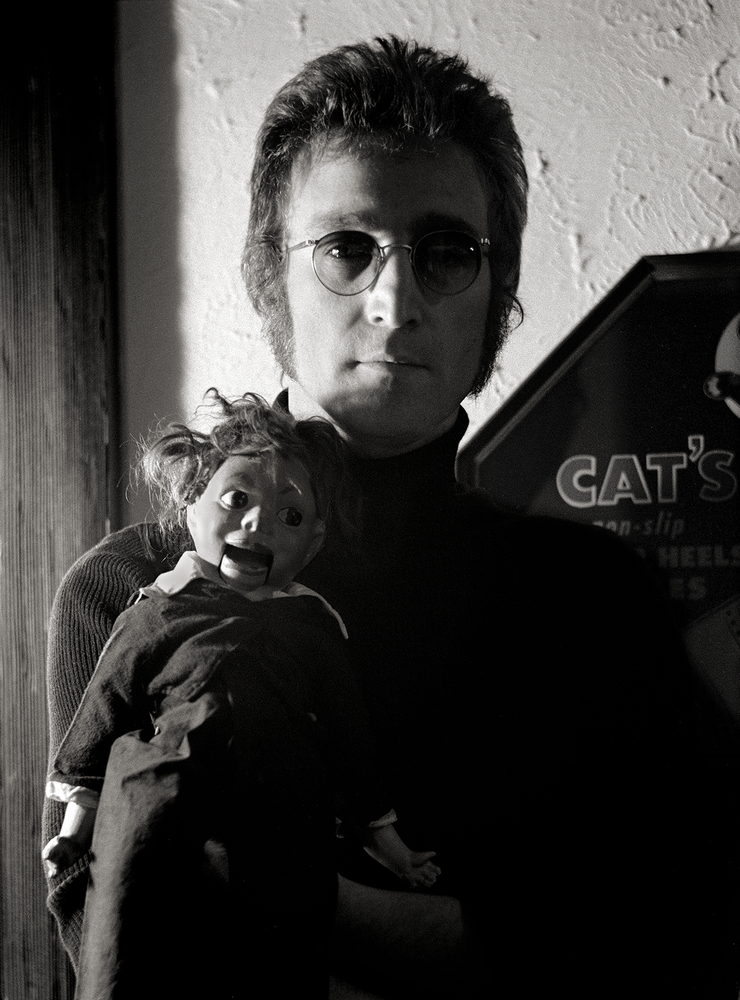
©Tom Zimberoff, John Lennon
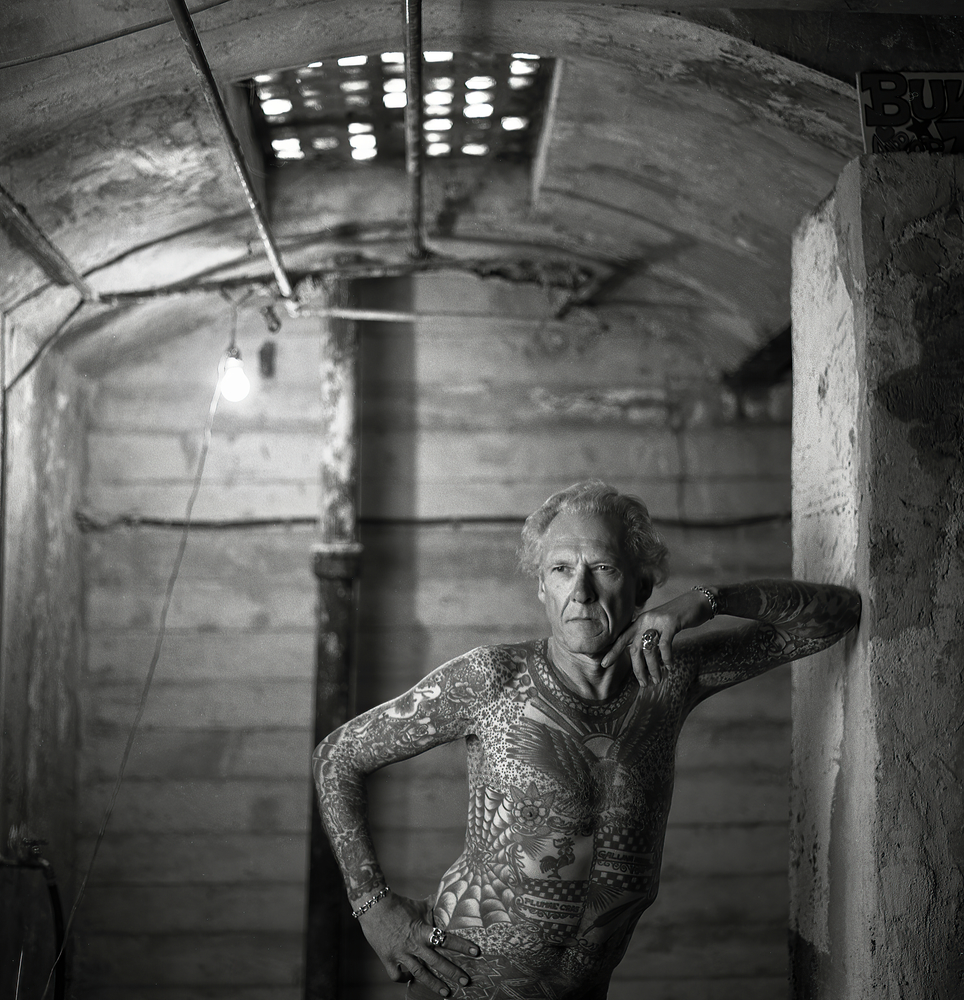
©Tom Zimberoff, Lyle Tuttle
Who or what inspires you?
I’m inspired by people who make extravagantly gorgeous things—or do wonderful things—and yet know they will never achieve the kind of perfection that drives them. They know that quality doesn’t derive from flawlessness, but from the always getting closer. The best thing is always the next thing.
I’m drawn to tangible things, objects, that embody that same tension—analog cameras, musical instruments, motorcycles, even wristwatches. They are mechanically precise, unforgiving in their reach for perfection—always a step away. There are some sublime and excruciatingly rare exceptions, I suppose. I can also find inspiration in more abstract, ineffable expressions of art—a symphony for example.
Exquisite photographic prints live there for me. The portrait is the print, by the way, not some image, some facsimile on a flat screen—not even in a book. Every portrait is an attempt to align light, character, timing, and design to tell a coherent story. I fall short of what I imagined as often as I exult in what might be considered success. But success is always temporary, anyway, a stopgap. Occasionally, I get close enough that success feels earned for a while. That striving—toward something I can define but never fully capture keeps me engaged.
And then comes kindness. Or rather, first comes kindness. I see it. I admire it. I’m aware of how much more I could practice it myself. Even in portraiture, kindness matters. I’m asking people to let themselves be seen by a stranger—and to accept what they get back. It’s often not the way they see themselves. But gratuitous flattery isn’t kind if what is intended is a portrait.
As for who inspires me (professionally I presume), can I make a distinction between the works and the artists who’ve created them? We know who the greats are.
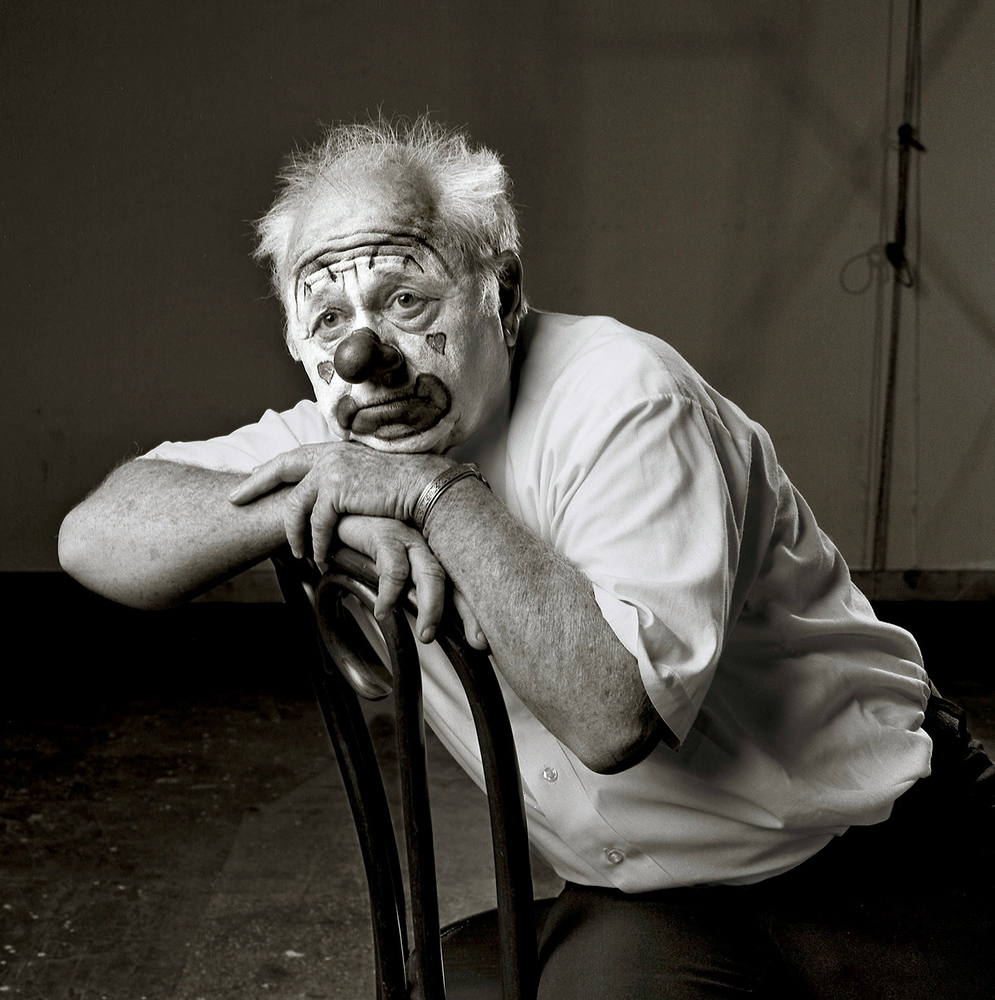
©Tom Zimberoff, Mickey Rooney
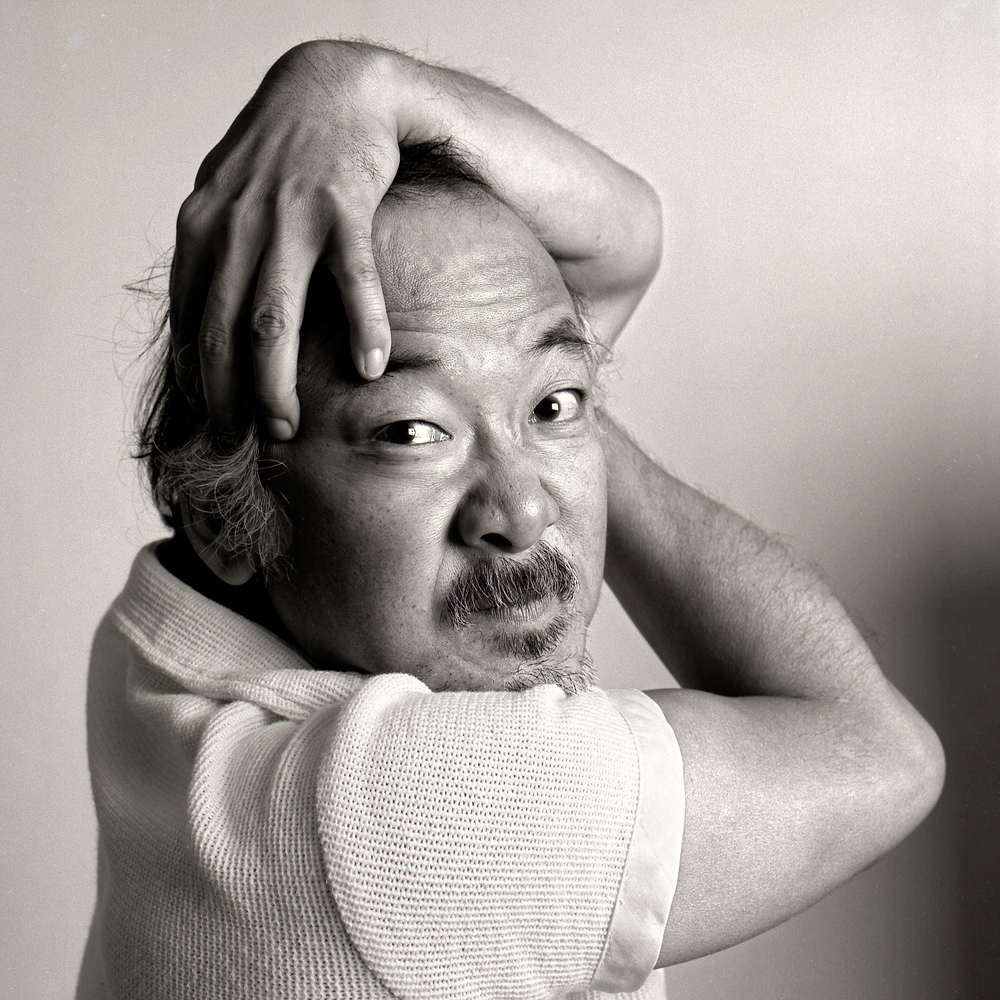
©Tom Zimberoff, Pat Morita
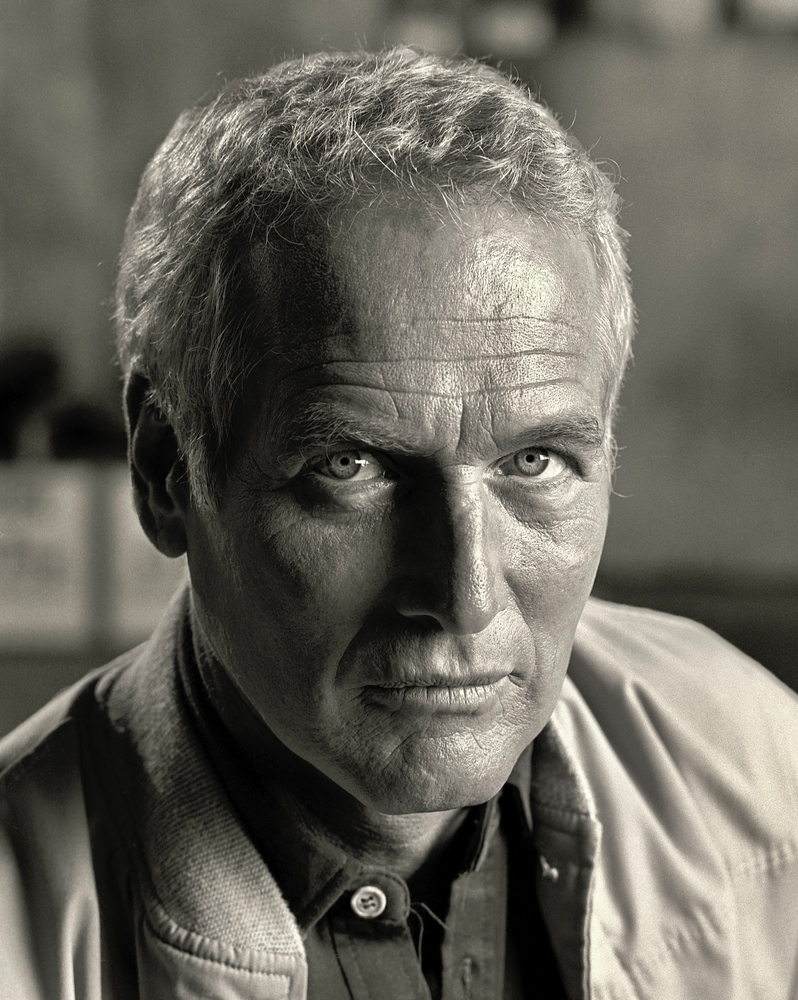
©Tom Zimberoff, Paul Newman
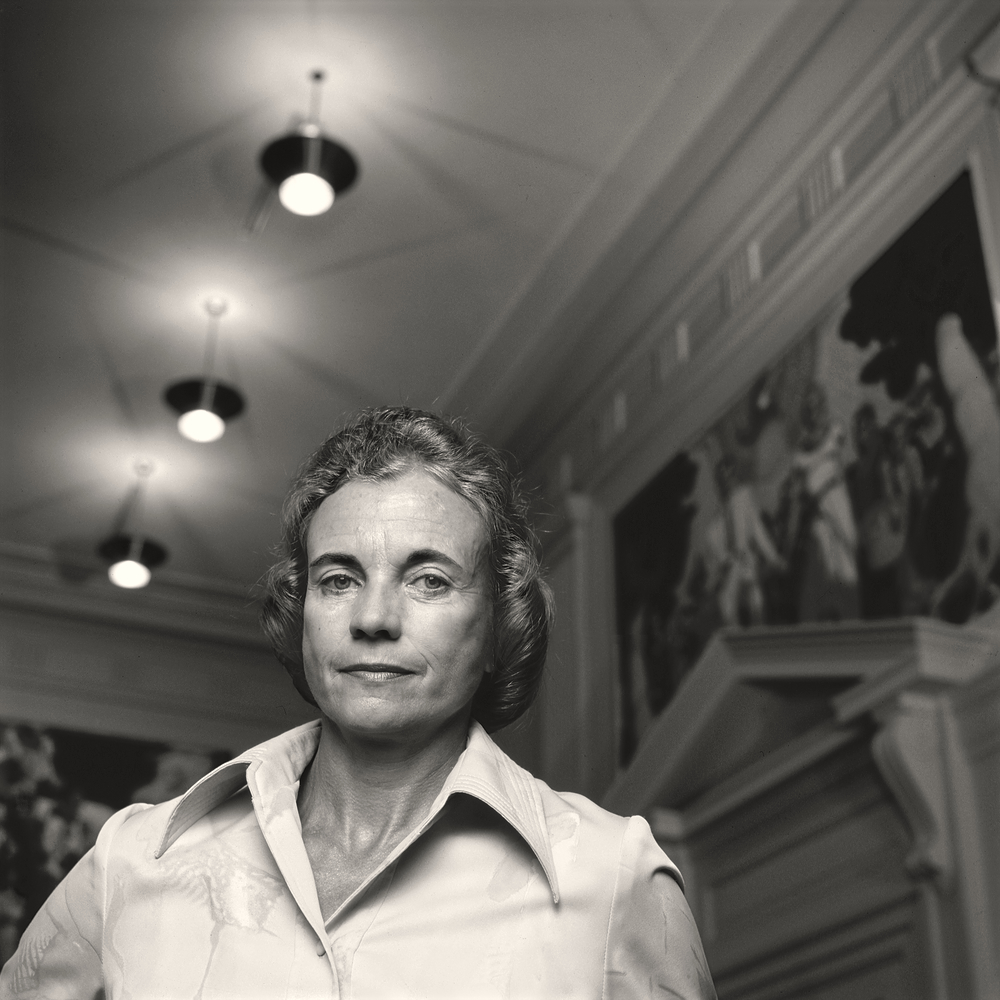
©Tom Zimberoff, Sandra Day O’Connor
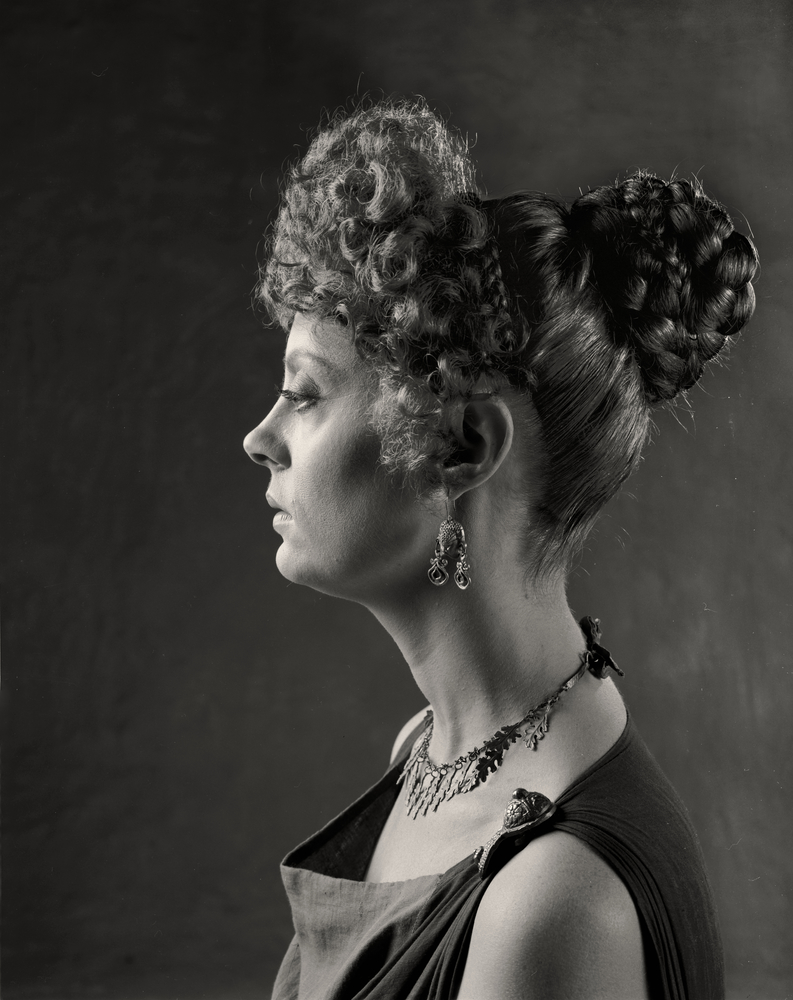
©Tom Zimberoff, Susan Sarandon
Posts on Lenscratch may not be reproduced without the permission of the Lenscratch staff and the photographer.
Recommended
-

Mexico Week – David Muñiz: Between the Archive and the AlgorithmMarch 29th, 2026
-
Mexico Week – Tomás Casademunt: Time Frozen by LightMarch 24th, 2026
-

BEYOND THE PHOTOGRAPH: Q&A WITH COMMERCIAL PHOTOGRAPHER ANDY MAHRMarch 22nd, 2026
-
Zanele Muholi: 2026 Hasselblad Award LaureateMarch 13th, 2026
-
Greg Miller: Morning BusMarch 5th, 2026