Overshoot #10 – Alexandre Dupeyron
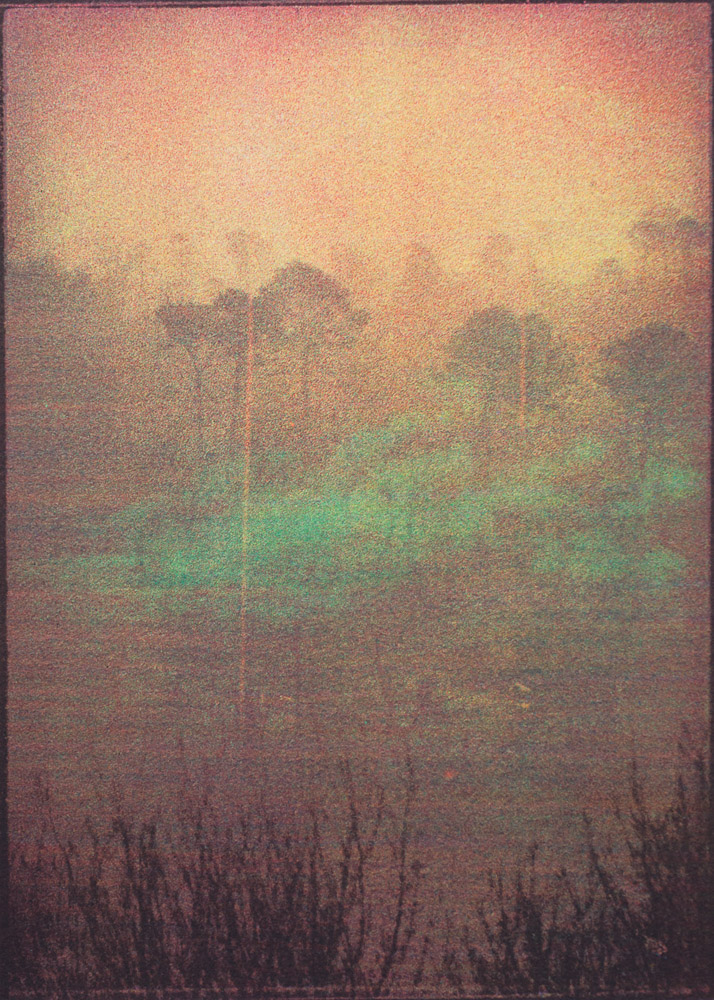
Hapax#53, 2024, Gum bichromate on cotton rag paper, 11×7.87in (28x20cm), edition of 1. Courtesy: Alexandre Dupeyron.
Yogan Muller: Alexandre, we met at Approche, an independent photography fair in Paris in November 2024, where your gallery Galerie du Jour presented your series on the fires that scorched SW France in summer 2022, which led to a residency at the Rocky Mountain Research Station and Fire Lab in Missoula. What new perspectives did you gain from this residency?
Alexandre Dupeyron: My collaboration with the scientists at the Rocky Mountain Research Station and the Fire Lab was a fundamental turning point in my practice. I am deeply grateful for their openness.
The residency was a total immersion into the scientific rigor of studying wildfires, a subject that I have been working on since my time in Australia in 2019. It gave me a lot of input and also a lot of material that, as a photographer, I would not have been able to get anywhere else.
Digging into the archives at the Manitou Experimental Forest Center was a particularly moving experience. It confirmed my belief that artists and scientists often vibe on the same frequency, searching for the same truths with an equal sense of obsession. This dialogue has been vital to my process. It allowed me to move beyond merely witnessing the charred remains of a landscape and instead begin to map the invisible architecture of wildfires and grapple with their unpredictable nature.
This residency was a catalyst for a new, hybrid methodology to examine this global issue in a concentrated way.
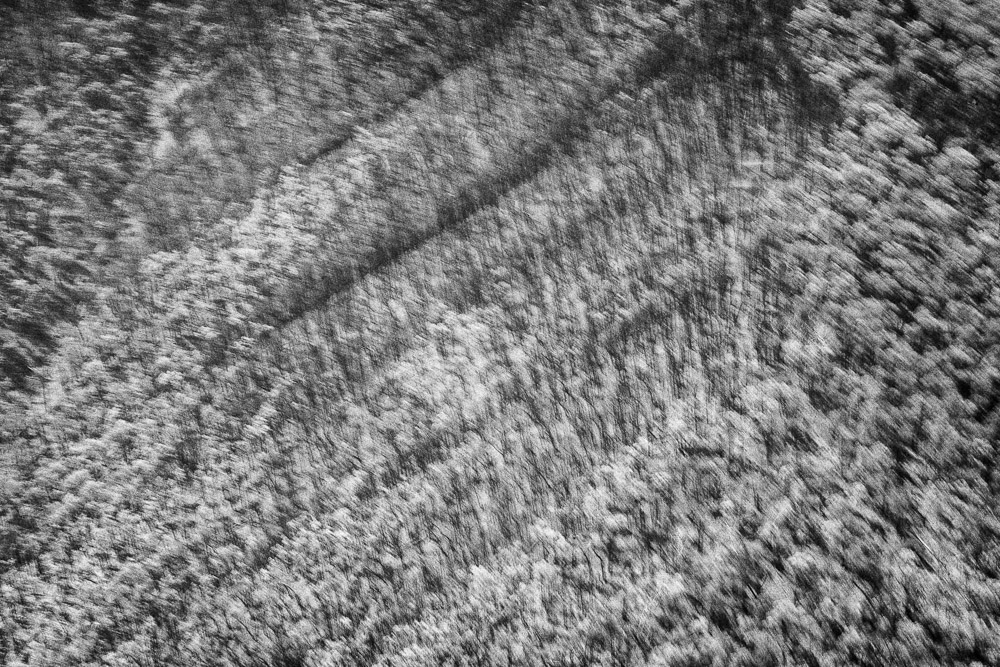
From the series Ashes of the Future (2020-2025). Courtesy: Alexandre Dupeyron.
Yogan Muller: Your work examines the human condition in large cities using allegorical, dreamlike fictions rather than straight documentary photography. Why did you choose to move away from straightforward, indexical black-and-white photography?
Alexandre Dupeyron: I started out as a photojournalist, so I was very much after objectivity. That is definitely something you’re trying to achieve as a photojournalist, but it always left me wondering whether we as photographers can ever achieve objectivity.
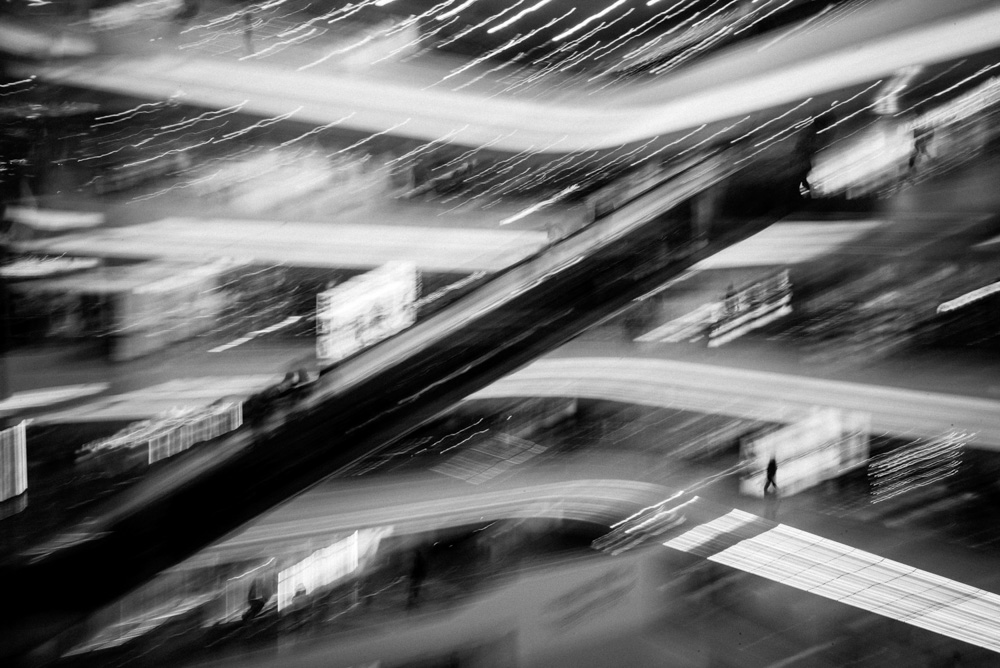
From the series Runners of the Future (2010-2018). Courtesy: Alexandre Dupeyron.
Black-and-white photography allows me to take a bit of distance from reality because, to me, black-and-white is more akin to what we see while I am dreaming. On top of that, I use motion blur to create even more distance from reality to finally reach a level of abstraction. That leaves more space to the viewer to create their own reading of my work.
My photography is more connected to feelings. It is more suggestive than revealing.
Yogan Muller: Motion blur is central to your process. As a result, your pictures exude fragility and transience. I’m curious to know what you’re trying to capture.
Alexandre Dupeyron: It has to do with serendipity.
I’ve been wearing glasses since my early childhood. From an early age on, I looked at the world from two different perspectives.
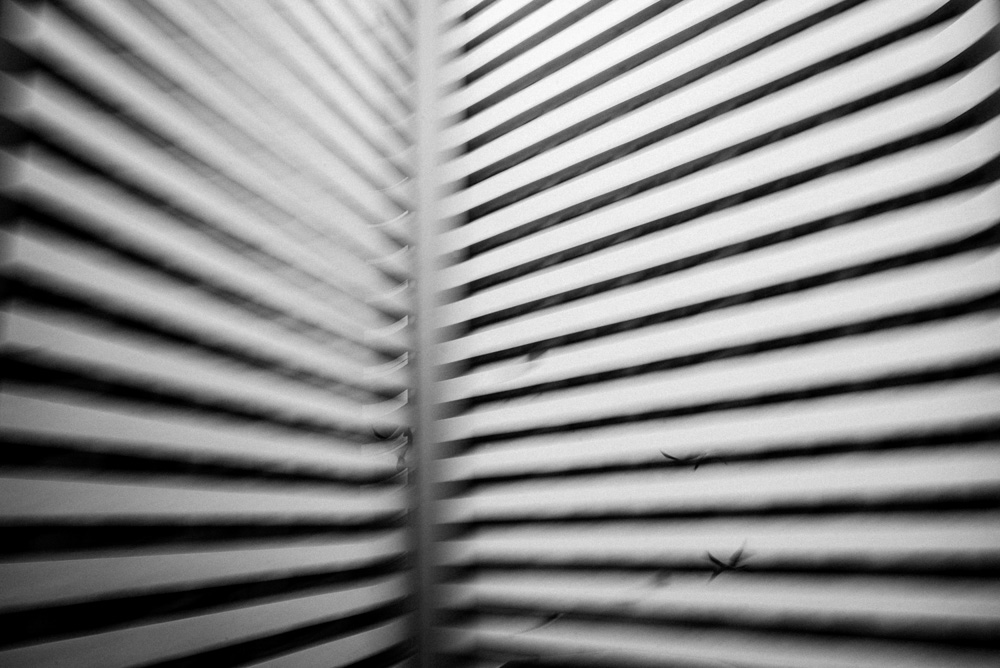
From the series Runners of the Future (2010-2018). Courtesy: Alexandre Dupeyron.
To me, the camera is a fascinating tool that stretches time and matter, allowing me to access a dimension of perception that remains beyond my full control, something almost sacred.
I have a way of shooting pictures that is almost like dancing. I’m trying to connect to things that are always moving. When I am photographing, I try to synchronize with the world that surrounds and engulfs me. By doing so, I am constantly surprised by what I encounter and photograph. Other moments of awe occur when I develop rolls of film and come to print my pictures.
I’ve been perfecting the proper printing technique that directly serves this way of photographing. In 2019, I came across the gum printing process, a very old-school and traditional printing process. It is a simple process in theory, yet it’s also very versatile and very difficult to master. When I am printing, I let the unknown come out on me by surprise.
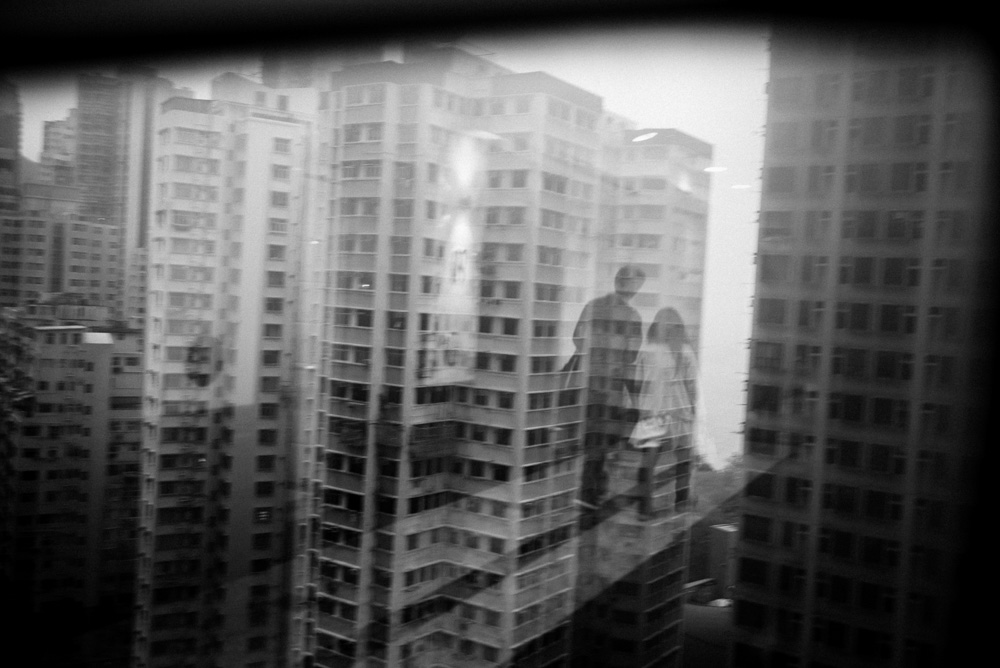
From the series Runners of the Future (2010-2018). Courtesy: Alexandre Dupeyron.
Yogan Muller: The future is a recurring subject in your work. Tell us about working with this significant theme.
Alexandre Dupeyron: The future is unpredictable and fascinating to me. By observing the world we’re living in, there are signs and clues about where we’re collectively heading.
In 2010, I moved to Singapore after living in Morocco. I lived there for two years. Singapore is one of the world’s most advanced megacities, and arriving there felt as though I had taken a sudden leap into the future.
After moving there, I immediately sensed that the hyper-urban landscape I saw and photographed was eventually going to take over the entire planet. It felt as though we were endlessly running after something that was ultimately going to consume us, with no end in sight. That’s why I called the series Runners of the Future (2010-2018). Ultimately, the project became a single, unified dystopian metaphor of a generic megacity.
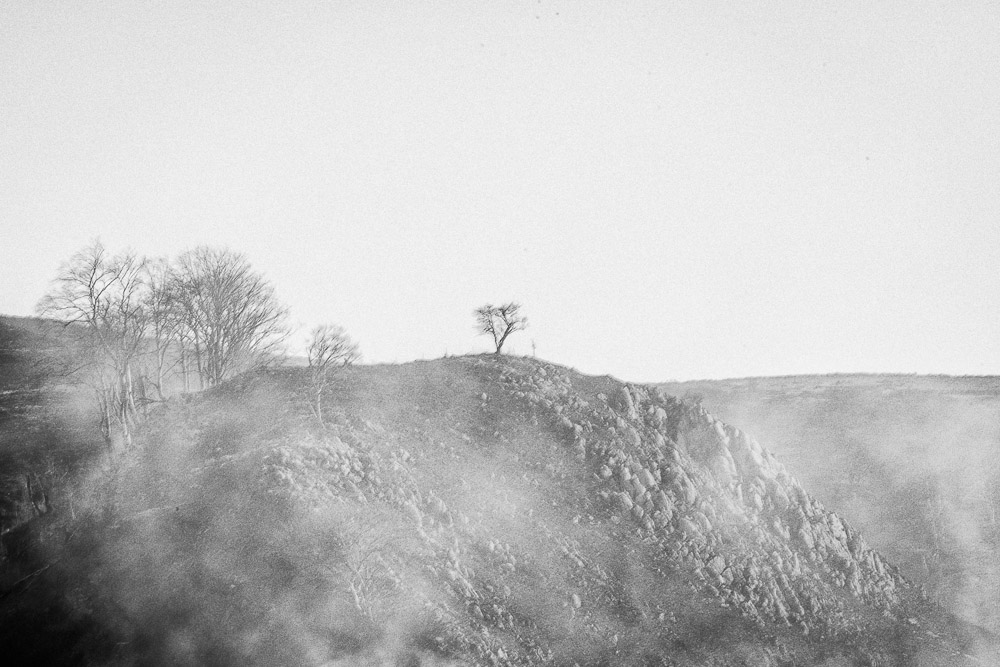
From the series Ashes of the Future (2020-2025). Courtesy: Alexandre Dupeyron.
Another series that draws on the future quite literally is Ashes of the Future (2020-2025). As I mentioned earlier, what really fascinates me about fire is that it’s both a destroying and creating force. Fire, to me, creates the proper conditions for the future to sprout. There are specific plants, for example, that need fire to bloom and blossom. You could say that to destroy is to create, and the future has its own creating force.
Yogan Muller: It’s interesting because we just talked about the future, but your process utilizes older photographic and printmaking processes, such as gum prints. What creative freedom have you found in the analog world?
Alexandre Dupeyron: The technique goes back to Pictorialism. It sits exactly between painting and photography, and it has a lot of plasticity. You can wholly change and reinterpret a picture. You can completely disrupt existing colors.
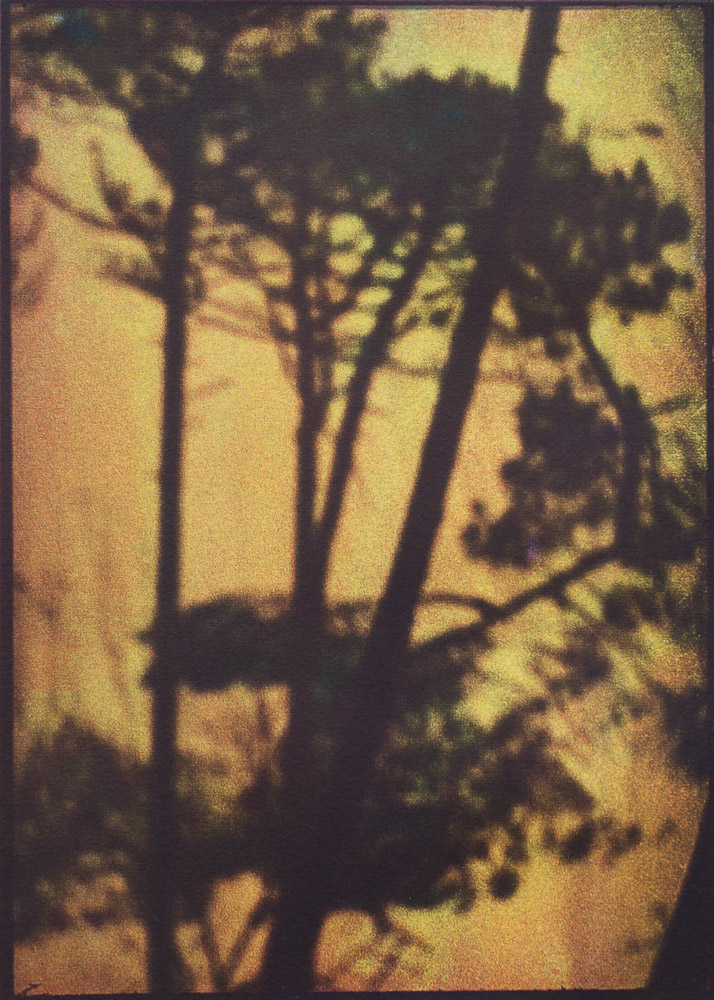
Hapax #83, 2024, Gum bichromate on cotton rag paper, 11×7.87in (28x20cm), edition of 1. Courtesy: Alexandre Dupeyron.
The series called HAPAX (2024), which is part of Ashes of the Future, is when I first experimented with color gum printing. Essentially, gum printing is an iterative process that combines multiple pigment passes that ultimately form the full chromatic spectrum of the picture. So when I print, there are four distinct passes: yellow, cyan, magenta, and black. In between each pass, I use a pencil and water to alter certain parts of my picture. By doing so, I can influence the final color balance. But again, I cannot fully control the final result. Not being able to control things completely is something that infuses my entire photographic process, from photographing to gum-printing them.
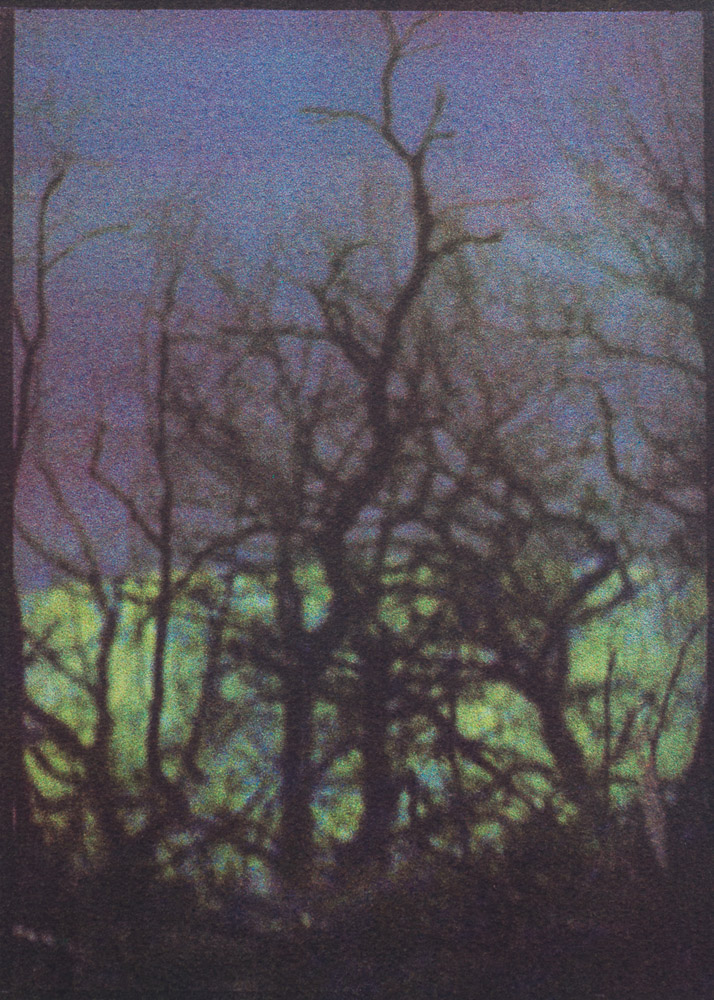
Hapax #45, 2024, Gum bichromate on cotton rag paper, 11×7.87in (28x20cm), edition of 1. Courtesy: Alexandre Dupeyron.
There is one more thing I like about gum printing, something I am unable to do with any contemporary printing technique. Gum bichromate is a pigment based process, so I can make my own custom pigment formulas. In the series called Pinus Pinaster (2023), I did not just want to photograph the “tree cookies” (the cross sections of burnt pines from the 2022 fires). I wanted the prints to actually be the fire by developing a custom pigment using soot collected from the burned bark of those very trees. The resulting print is not just a record of the climate crisis: it is physically composed of the disaster itself.
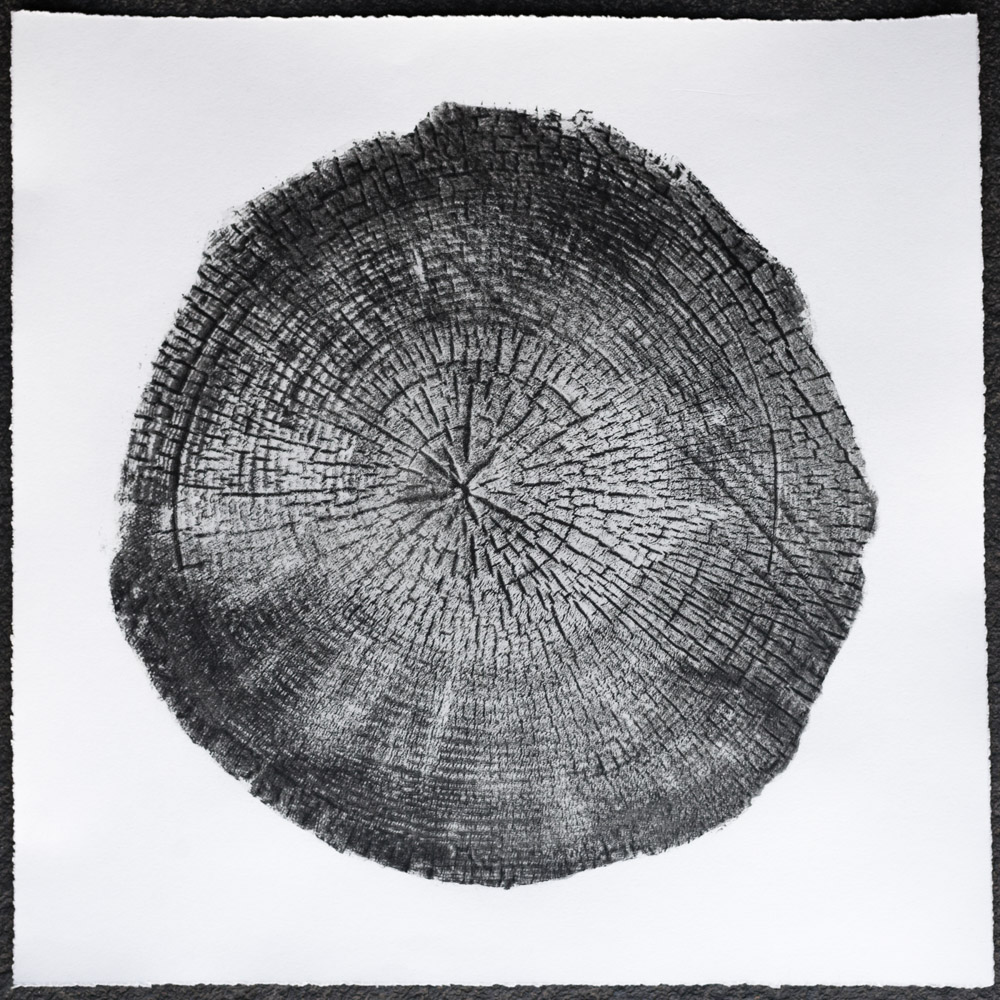
Pinus Pinaster no. 6891, 2023. Courtesy: Alexandre Dupeyron.
Yogan Muller: Now, tell us about your current project called Dysnomia and your investigations into blending photography and music.
Alexandre Dupeyron: The name Dysnomia operates on multiple levels. Astronomically, it is the moon of the dwarf planet Eris. In Greek mythology, Dysnomia is the goddess of anarchy and chaos, which really echoes some of my past series. And finally, medically, dysnomia is a form of aphasia, the inability to find the exact word for a familiar object. This “trouble of naming” perfectly echoes the questions driving my work: What is true? Is reality what my eyes see, or what the camera allows me to see?
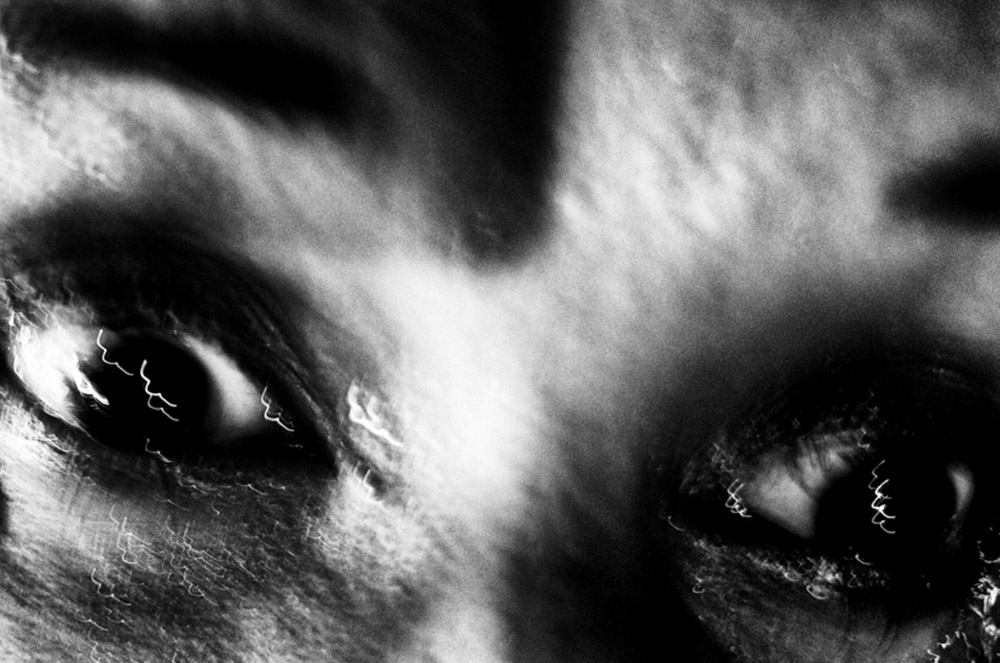
From the series Dysnomia (ongoing). Courtesy: Alexandre Dupeyron.
But back to the project itself. When I was working on my first photobook, which was initially designed to present my Runners of the Future series, I became unhappy with where I was going, although this series was quite easy to lay out in a book. But I wanted my first photobook to achieve something more ambitious, to become an entire conceptual system.
It dawned on me, with the help of my editor, that the works I had previously completed were all connected. So I flipped back and went through all my works in search of a throughline. I needed a larger architecture to hold them together. This is how Dysnomia was born.
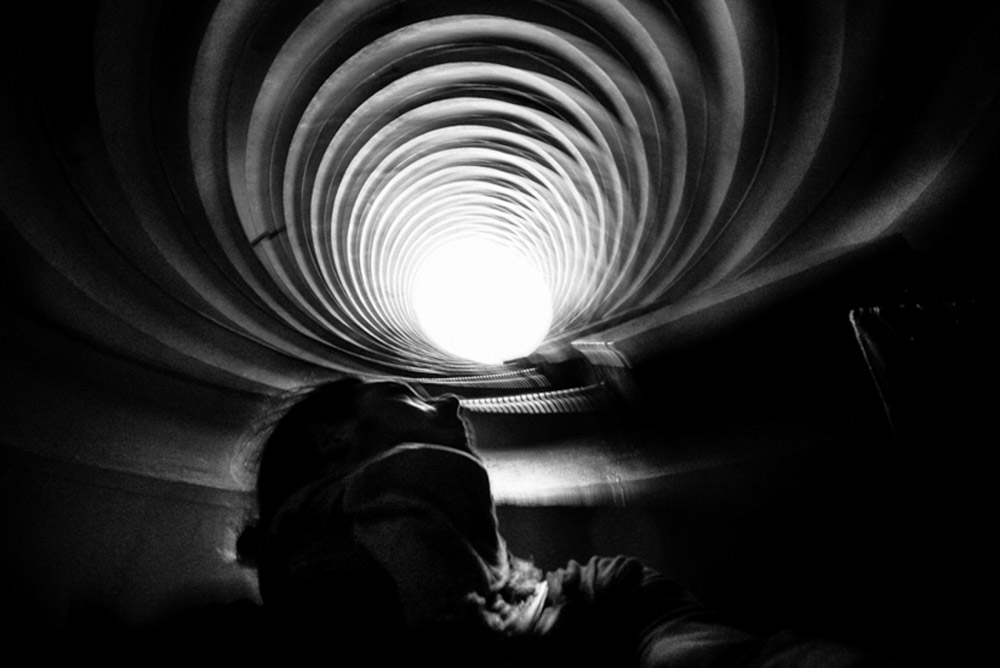
From the series Dysnomia (ongoing). Courtesy: Alexandre Dupeyron.
Dysnomia is a journey that goes from the original matter (the primordial bricks intrinsic to everything on Earth) to modernity’s hyperobjects and loops back to matter. Hence, a cloud or a piece of bark becomes raw matter caught between two states.
Narratively, Dysnomia maps a vast cycle. It is structured around three ontological questions: Where do we come from? What are we? Where are we going? The journey opens with primordial matter representing creation. It then jumps into the frenetic, crushing pace of modernity, notably using my Runners of the Future archives. Finally, it loops back to the earth through my Mondes Oubliés series, where I look for human shapes hidden in natural forms.
Yogan Muller: Harkening back to your investigations in mixing music and photography, tell us in a few words what you’ve been up to.
Alexandre Dupeyron: To me, photography is musical. When I shoot, it is all about rhythm, tempo, and moving through space.
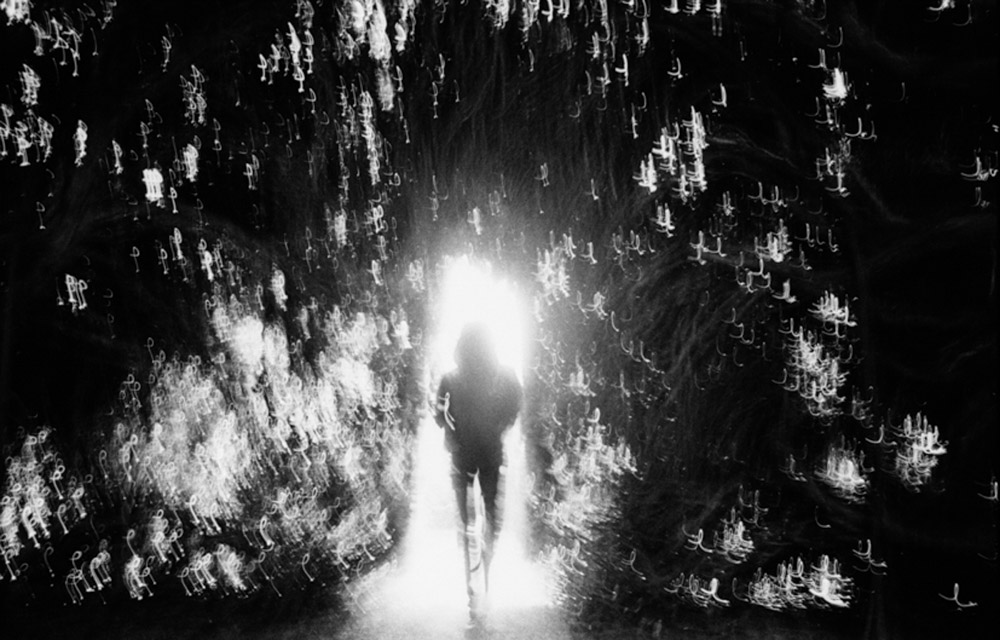
From the series Dysnomia (ongoing). Courtesy: Alexandre Dupeyron.
I started mixing photography and music about ten years ago with my close friend, the bassist and composer Thomas Julienne.
At that time, though, I was projecting my photos in a slideshow. It was too predictable. Also, I was always very frustrated because my material was stuck in the past and was fixed. Unlike musicians, I couldn’t improvise and create new interpretations in the moment. So this frustration led me to find a language and setting inspired by VJing that put my pictures into motion again.
This is how the performance Dysnomia Live was born. I wanted to free the images from the static pages of a book or exhibition walls.
I built a system that enabled me to project and manipulate my archives live on stage. Now, I play images like an instrument using morphing and crossfades. It feels like a live version of my gum printing process. Instead of layering physical pigments in a darkroom, I am layering light and time. New pictures emerge out of this live process and exist as ephemeral impressions.
Because it has improvisation, every performance allows Dysnomia Live to grow and evolve. I also love the idea of keeping the project open to other artistic forms. In 2024, we performed with the painter Yann Chatelin in Bordeaux and with the FANGLAO dance company, directed by choreographer Olé Khamchala, in Laos.
I am thrilled to announce that Thomas Julienne and I are 2025 laureates of the Villa Albertine Artist Grant. We’re bringing a completely new version of our show to Pioneer Works in NYC, thanks to this grant! Stay tuned for more details about our performance on Sunday, September 13, 2026.
Yogan Muller: What does photographing in a warming world mean to you?
Alexandre Dupeyron: I will go back to my definition of being an artist.
We have a political position and responsibility towards the world. If there is one reason we are here, it is to force a pause, to make people think, and offer them to take a side step from their fast-paced daily lives. We create spaces where they can dream, think, and truly contemplate the phenomena that are quietly shaping our existence.
In a warming world, an artist cannot just be a passive observer. Our role is to draw attention to the slow-burning ecological crisis we face, giving it emotional and poetic weight.
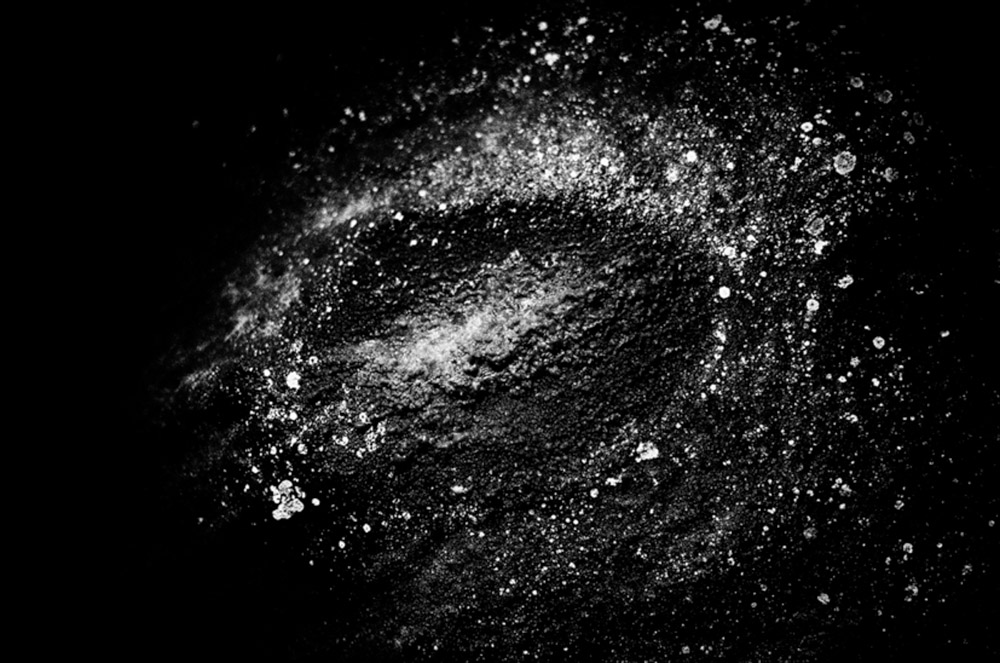
From the series Dysnomia (ongoing). Courtesy: Alexandre Dupeyron.
Posts on Lenscratch may not be reproduced without the permission of the Lenscratch staff and the photographer.
Recommended
-
Overshoot #10 – Alexandre DupeyronMarch 14th, 2026
-
Overshoot #9: Liz Miller KovacsDecember 13th, 2025
-
Overshoot #8 – Arturo SotoNovember 15th, 2025
-

Overshoot #7 with Ayda GragossianOctober 11th, 2025
-
Overshoot #6 with Siobhan AngusSeptember 13th, 2025