Matthew Finley: An Impossibly Normal Life
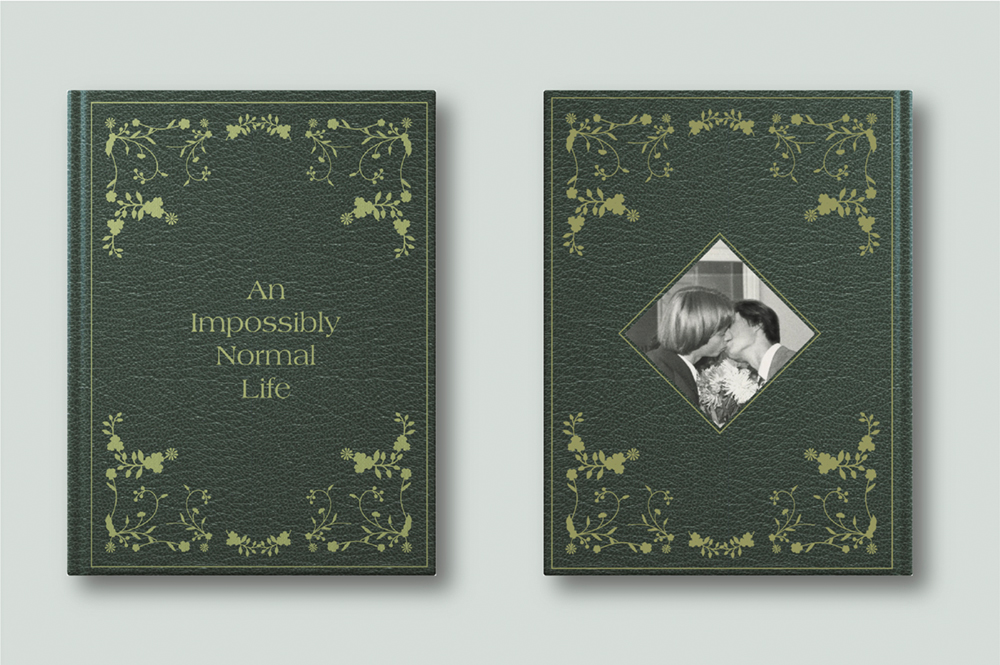
©Matthew Finley, Front and Back Cover of An Impossiby Normal Life, published by Fall Line Press
Imagine a world where it doesn’t matter who you love, just that you love.
In 2024, we were thrilled to celebrate Matthew Finley on Lenscratch as a recipient of the CENTER Award for Personal Work. The Personal Award recognizes projects engaged in exploration, expression, and the power of self-representation—particularly work that centers underrepresented experiences. That recognition both solidified and helped jumpstart Finley’s project, An Impossibly Normal Life, which has since grown into numerous exhibitions and a profound and magical book of the same title, published by Fall Line Press. I had the opportunity to experience his retrospective at the Los Angeles Center of Photography earlier this year. Alongside four or five additional projects, Finley created a living room (with furniture) for this work, allowing the viewer to imagine life in a home that celebrates and showcases a family life where fluidity in gender and sexuality is the societal norm.
The book has been sitting on my desk, and each day I return to it—slowly turning a few more pages, reading the captions, studying the ephemera tucked between them. With each visit, I imagine a world that truly celebrates everyone with love and acceptance. This is a book about joy, intimacy, and living one’s best life, yet it carries a quiet, persistent weight. Told with such inventiveness and care, the work immediately captivates the reader, even as it gently reminds us that the freedom, tenderness, and visibility it portrays are not yet guaranteed for all. Using found photographs, Finley tells the story of an uncle and a life he imagines filled with support and happiness, love and marriage and fatherhood. The book is a testament to what a life of acceptance can be.
Matthew Finley’s An Impossibly Normal Life is currently showing at MOAH: Cedar in Lancaster until March 15th and will open at the Colorado Photographic Arts Center in Denver on Feb. 27th and run until April 18th.
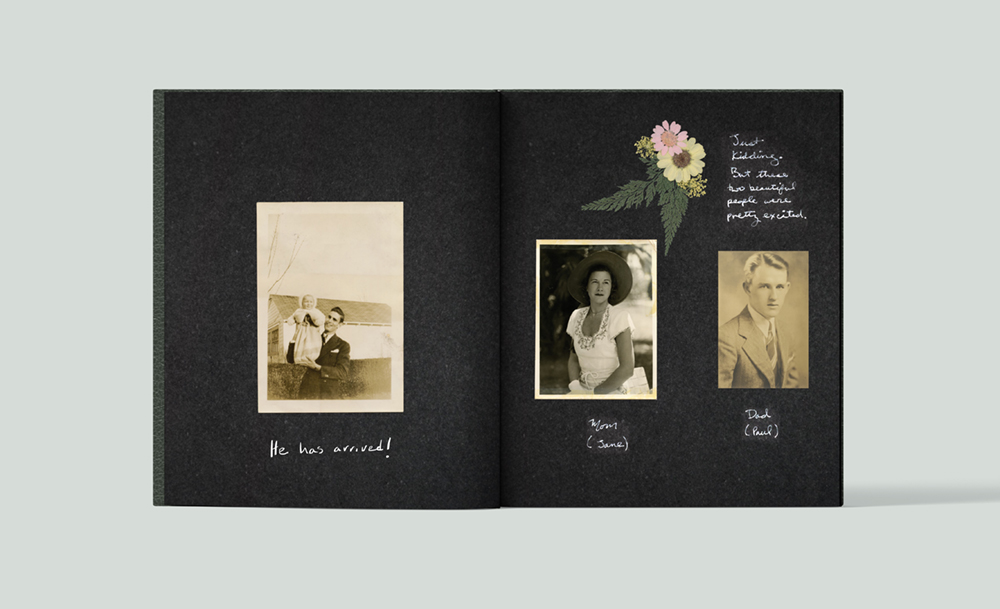
©Matthew Finley, Spread from An Impossibly Normal Life, published by Fall Line Press
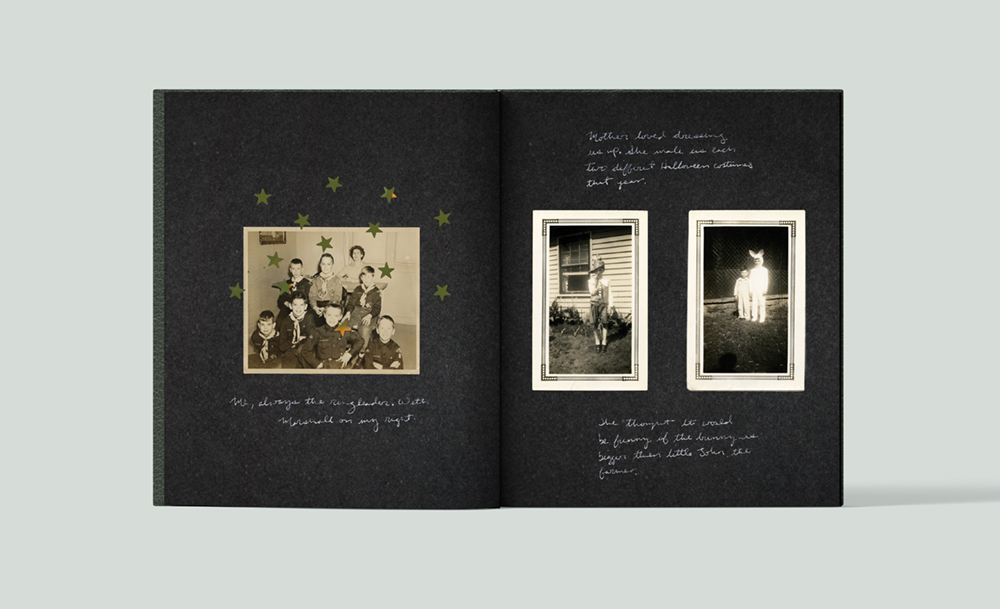
©Matthew Finley, Spread from An Impossibly Normal Life, published by Fall Line Press
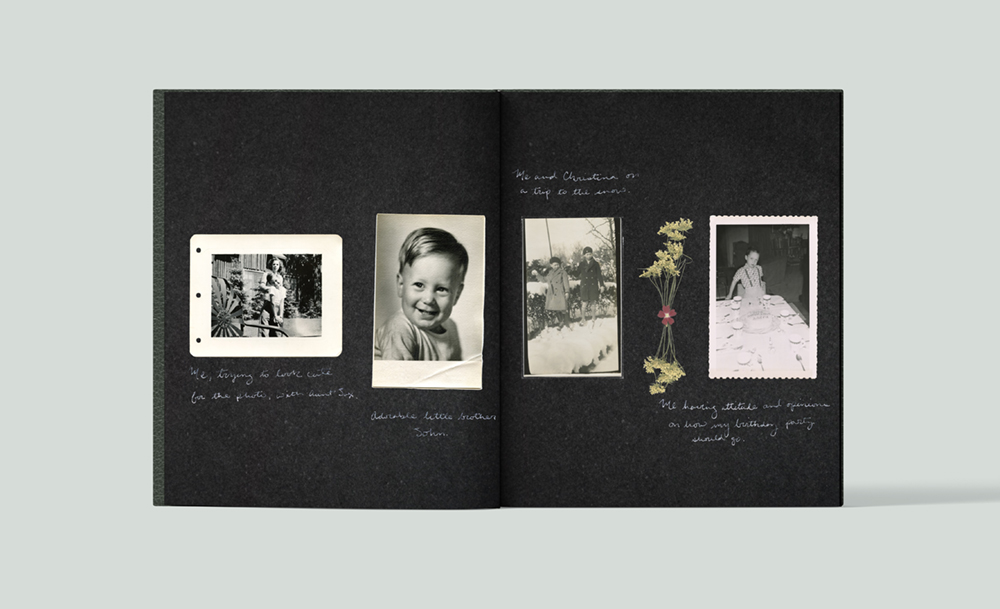
©Matthew Finley, Spread from An Impossibly Normal Life, published by Fall Line Press
Imagine a world where it doesn’t matter who you love, just that you love. An Impossibly Normal Life is an artifact from another world, a more loving, inclusive one where who you love is of little societal importance. This fictional story, centered on my imagined uncle’s idealized life, is created from collected vintage snapshots from around the world. Four years ago, my mother offhandedly mentioned that I may have had an uncle who was gay, but he died not long after I was born. Hearing this revelation for the first time, thirty years after I had struggled to come out to my disapproving family, sent my mind spinning. The thought of a family member so close to me going through some of the same things I did inspired me to create this story. Instead of returning to the hiding or shame of most pre-1970’s queer stories, a reality of how our world was (and in some cases, still is), I have created an alternate history where fluidity in gender and sexuality is the societal norm. Re-contexualizing found photographs and creating a new narrative, my Uncle Ken’s life becomes full of acceptance, friends and love, and shows anyone struggling with identity today, and those around them, the joy of what could have been and can still be. – Matthew Finley
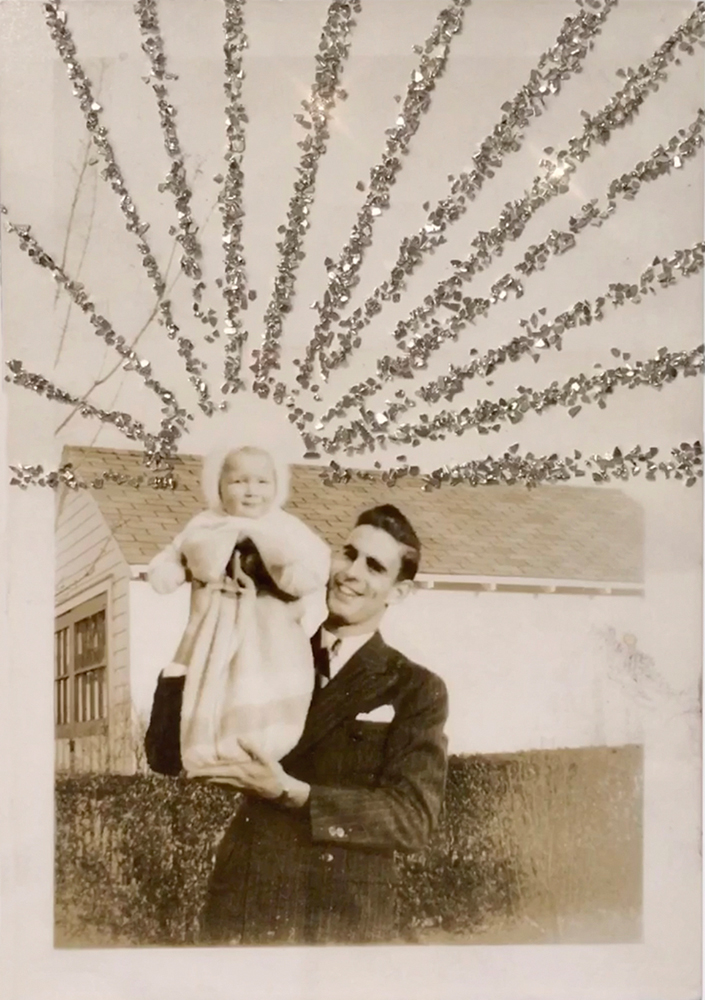
©Matthew Finley, He has Arrived!, from An Impossibly Normal Life, published by Fall Line Press
Matthew Finley (b.1972) uses a variety of photography processes to communicate his life’s experience and form emotional connections to viewers.
Growing up queer, Finley’s experiences of loneliness and separation from the world around him fostered a fear of being singled out, yet at the same time a desire to see and truly be seen by others. Now, as an adult with social anxiety, the studio is a safe space where he can be vulnerable and express his true self that wants to dialogue with an audience. Creating and exhibiting his work is a way to forge relationships with viewers outside of traditional social pressures. The photography tells autobiographical stories which convey an emotional honesty of experience. He addresses issues such as his coming out story, intimate relationships, and the healing power of nature.
Matthew Finley’s images are conduits to expose his personal and closely held emotions which would otherwise go unexpressed, and start a dialogue around queer issues, personal growth and universal emotional commonalities.
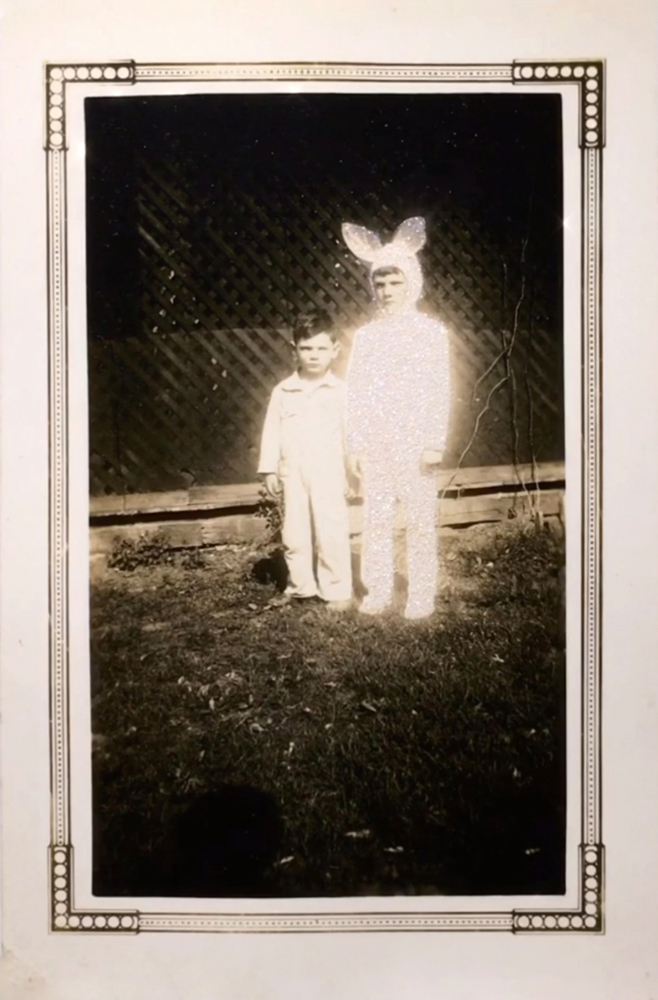
©Matthew Finley, Halloween with little brother John, from An Impossibly Normal Life, published by Fall Line Press
Tell us about your growing up and what brought you to photography…
M: Hi Aline! Thank you so much for having this chat with me. Since Jr. High, I wanted to be an actor, which admittedly was a strange choice for the shy person I was. But looking back, I think it appealed to me because someone had written the lines I was supposed to speak. I didn’t have to be clever or witty off the cuff. It gave me a chance to be seen when I felt so very invisible. I pursued acting for many years but by my mid-30’s I grew tired of running headlong into the wall of the audition process. I knew that I needed a new artistic outlet to preserve my sanity and so I landed on photography. It was something that always intrigued me and I thought it might actually fit my personality better. So I got a camera and started taking classes.
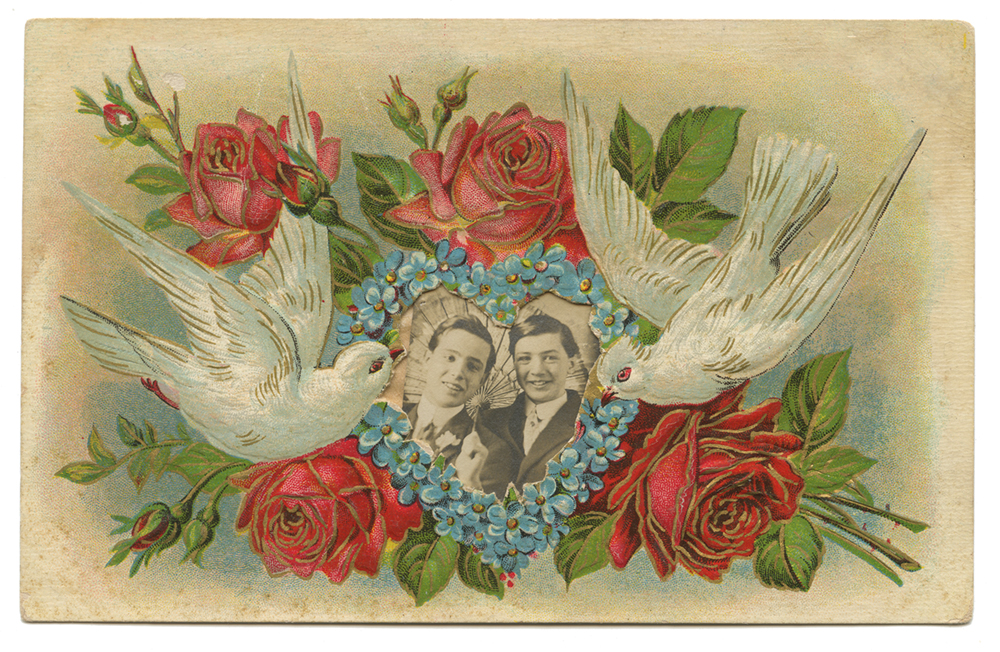
©Matthew Finley, Marshall and me in a postcard, from An Impossibly Normal Life, published by Fall Line Press
Congratulations on your book and all your exhibitions of “An Impossibly Normal Life”! It’s such a beautiful story about a world we wish were possible. Once you got the idea for the story, how did you set out to create it?
In the summer of 2020, I was researching my family history online. My parents had divorced when I was a baby and I had very little contact with my father and his family. In passing, I mentioned this sleuthing to my mother and she casually dropped this bomb: “I think you father had a brother who might have been gay, but he died young.” I can’t tell you how shocked I was. When I came out to my family over 30 years ago, it was a very lonely time. They are religious and did not take it well. Now, so many years later, I was struck hard by the fact that there might have been someone so close, in my own family, who went through some of the same things I did. I quickly knew that I wanted to make work about it but it took time to figure out how. I considered standing in for my uncle or photographing someone else playing his part, but once I struck on the idea of use vintage photographs, those ideas didn’t appeal to me.
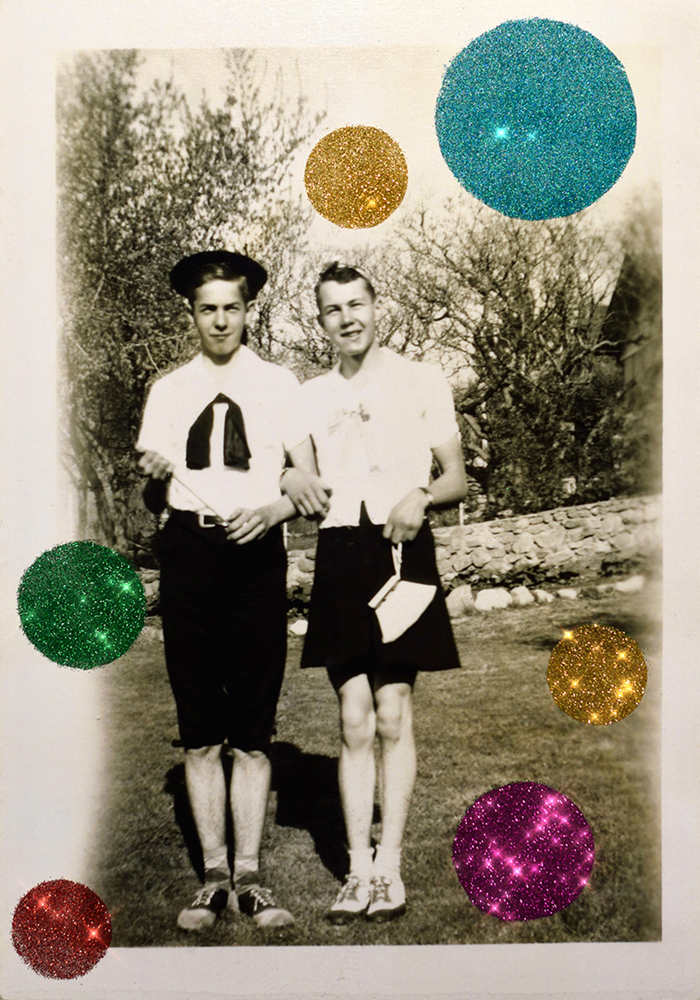
©Matthew Finley, Marshall and me off to our joint Sweet 16 Party!, from An Impossibly Normal Life, published by Fall Line Press
Did you have an Uncle Ken?
My father did have a brother, but I didn’t know anything about him. With the possibility that my mother’s memory was incorrect, yet with me so wanting it to be true, I decided not to dig too much until I had a firm handle on the project. Once I decided that I would be the author of a fictional, queer uncle’s story, instead of giving him a realistic, closeted life during the more conservative mid-20th century, I decided to put him in a parallel universe where sexuality and gender expression are non-issues and where he could be loved and supported his whole life.
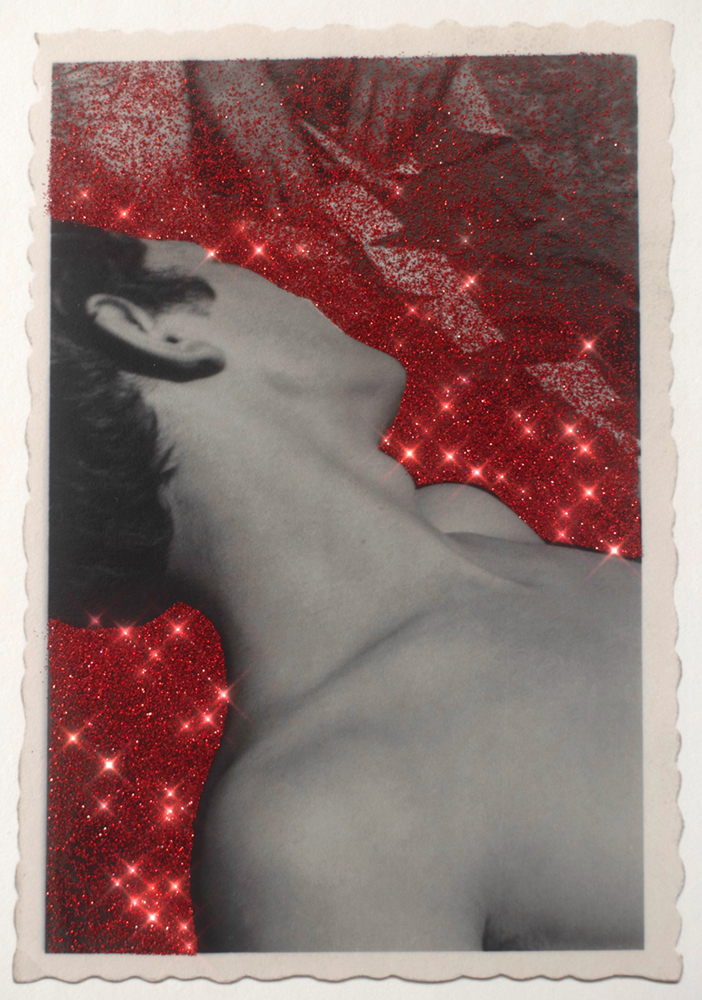
©Matthew Finley, Marshall was my first friend, best friend, first boyfriend and first heartbreak, from An Impossibly Normal Life, published by Fall Line Press
Where did you source your photographs? Finding certain images must have felt exciting.
I purchased most of them individually through eBay from all over the world. Every day for five years I searched. It was exciting to come across the perfect image or one that could fill holes in the story. I needed enough photographs with vaguely similar faces that allowed the viewer to suspend disbelief and accept that this was indeed the same person in all the photographs even though they are all of different people. Sometimes, I got frustrated when I would lose a bidding war for the perfect image, but I came away with over two hundred of them that I am quite happy with.
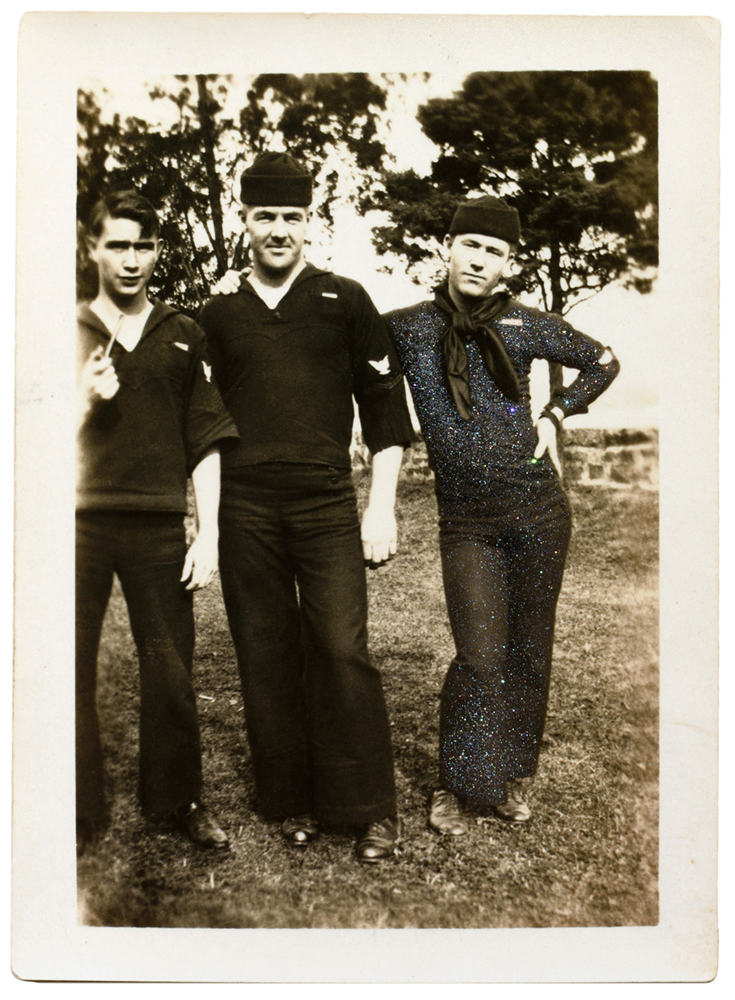
©Matthew Finley, Rebel, Brute and I in the Navy, from An Impossibly Normal Life, published by Fall Line Press
Let’s talk about the book! It’s produced to replicate a photo album, but it’s also filled with surprises that make it feel even more real. How did the book come about? Did you have to insert the add-ins yourself?
As I collected more and more images, I needed a way to organize them. The idea of an album came to mind. We usually find albums in some kind of chronological order. It’s just a natural way we think of time. As I utilized this structure, I had the idea of making it as if Uncle Ken made the album to hand down to me. Then, as the album came together, it just naturally felt like it should be a book. I mean, it was a book already, in a way! The next step was to make it reproducible, so that everyone could have a copy of this deeply felt story. I took a book-making and publishing workshops as I developed the look and story, then started sending out submission emails. Eventually, I met with Fall Line and they were excited to suggest a designer, Margaux Fraisse, with whom I collaborated. Knowing that we had to crowd-fund the book printing, we tried hard to keep the budget down but having the letters as something you could pull out and read was important to me. The cost quote to have the printer print and insert them was shocking, to say the least, so I suggested I do it myself! It actually ended up being being a win because I was able to print each letter on different paper and make them even more unique. Fall Line helped me with the insertion task. It was a lot of work but they turned out great.
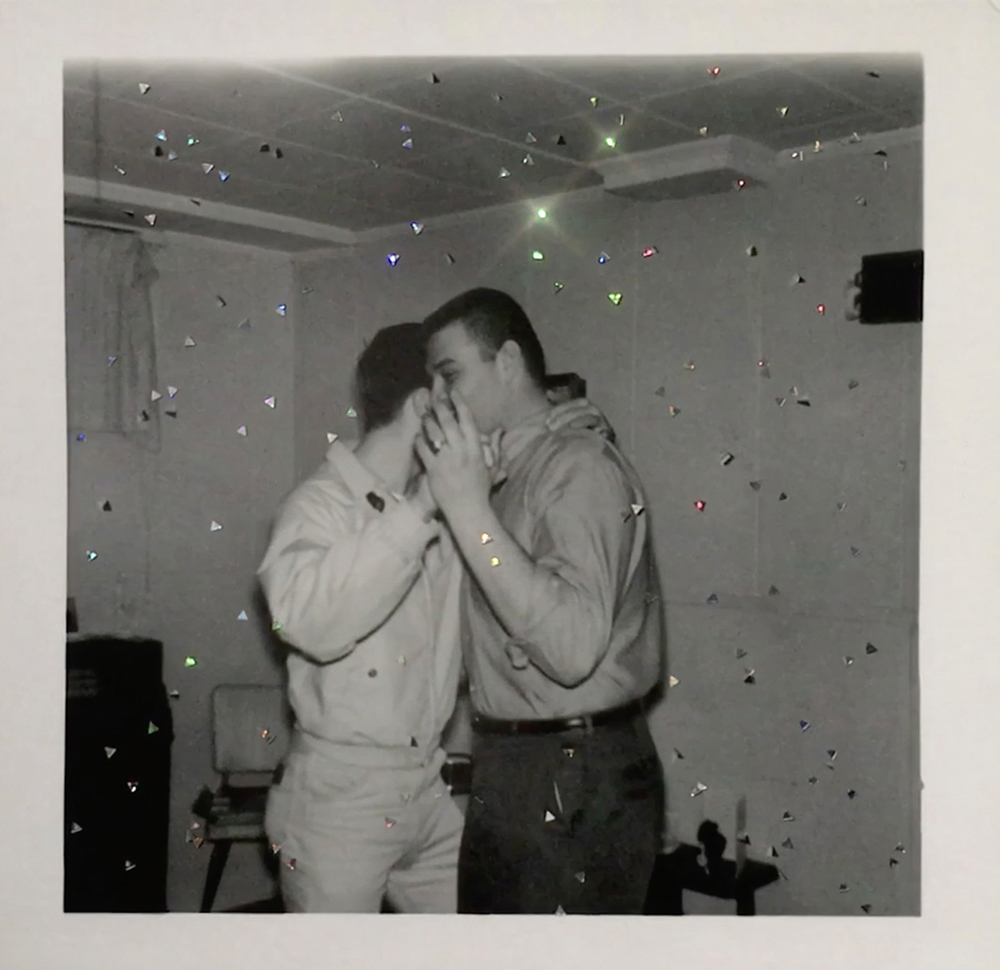
©Matthew Finley, Dormitory dance with a cute guy, from An Impossibly Normal Life, published by Fall Line Press
Can you share a bit about the production?
Much of the design was established by my album mock-up, and Margaux did a great job of refining things. We worked with SYL Printing in Spain. The biggest hurdle was choosing the paper, specifically, deciding between coated and uncoated paper. With coated papers, you get richer blacks and sharper images but they also have a bit of a shine because the ink is sitting more on top of the paper whereas with the uncoated paper, the ink sinks in and you get more of a matte surface. After much back and forth and looking at example papers, I chose an uncoated paper because it looked and felt more reminiscent of classic black photo album paper. It took about a year and a half of work with Fall Line for the book to be done.
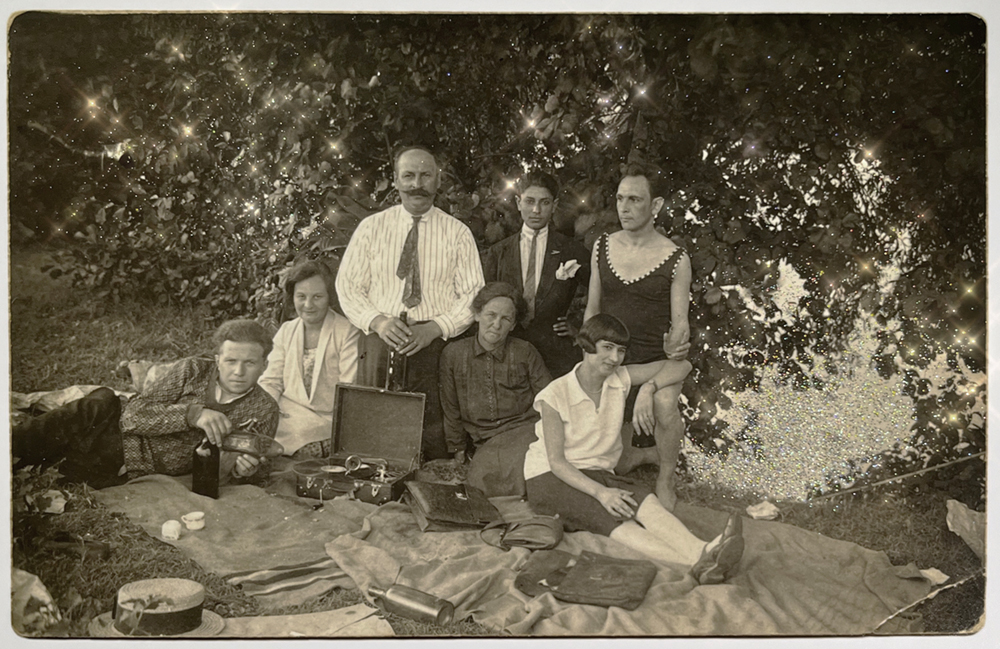
©Matthew Finley, My mother (bottom RT), as a teen, with her family outside Lucca, Italy, from An Impossibly Normal Life, published by Fall Line Press
It’s interesting that the work in exhibition has more color and glitter, yet the book reflects other elements like pressed flowers and old birthday cards. Can you speak to the difference between the prints and the book?
I first conceived of the project as a gallery show because that is how I have shown my work in the past. I wanted to interact with the prints in some way and I had tried a number of elements, but I kept coming back to glitter. It just fit so perfectly with with joy and energy I wanted my uncle’s life to exude. For the book, I had tried to take photos of the glitter but it doesn’t translate very well, so I put effort into finding other ways to make the book engaging. The three letters and postcard came out of that. Also, with the book, you get the opportunity to expand his story, meet more friends, have more adventures. It was important for me that it feel substantial, like a full life.
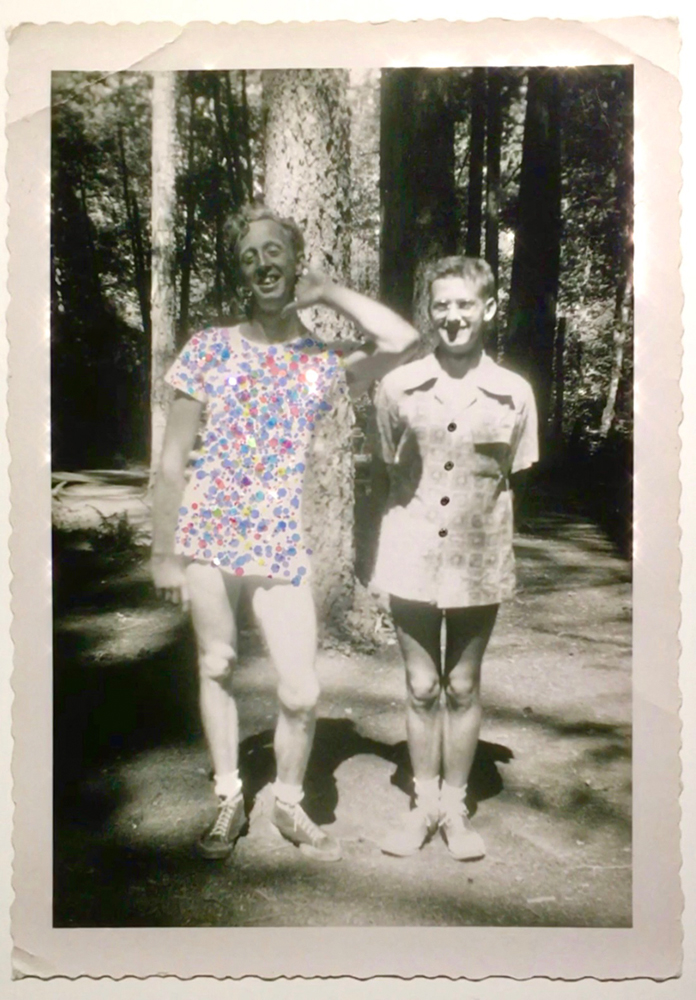
©Matthew Finley, Friends camping, from An Impossibly Normal Life, published by Fall Line Press
What has been the reaction to the book/work? You’ve had numerous exhibitions (and a massive retrospective of multiple projects at the Los Angeles Center of Photography) and I can only imagine the support and love you have received for the work….
When I started this project, I really had few expectations. I’ve always felt that if my work connects with just one person, or brings them comfort, it’s a success. But An Impossibly Normal Life has resonated with so many people that the experience has turned more wonderful than I ever could have hoped. People at every show have shared with me how they had a queer relative when growing up and how the work has triggered memories for them. And a great variety of people have been touched. In one exhibition, it was a curator from an arts organization. At another event, it was a volunteer there for day. And several times of course its been the guests themselves that I’ll see lingering over one photo or reading some of the written material and they’ll share what they’re feeling. Their stories have been so special ,and I have been honored to hear them. Now, the book is just starting to get out into the world, so I hope to reach even more people with this story of joy in the coming year.
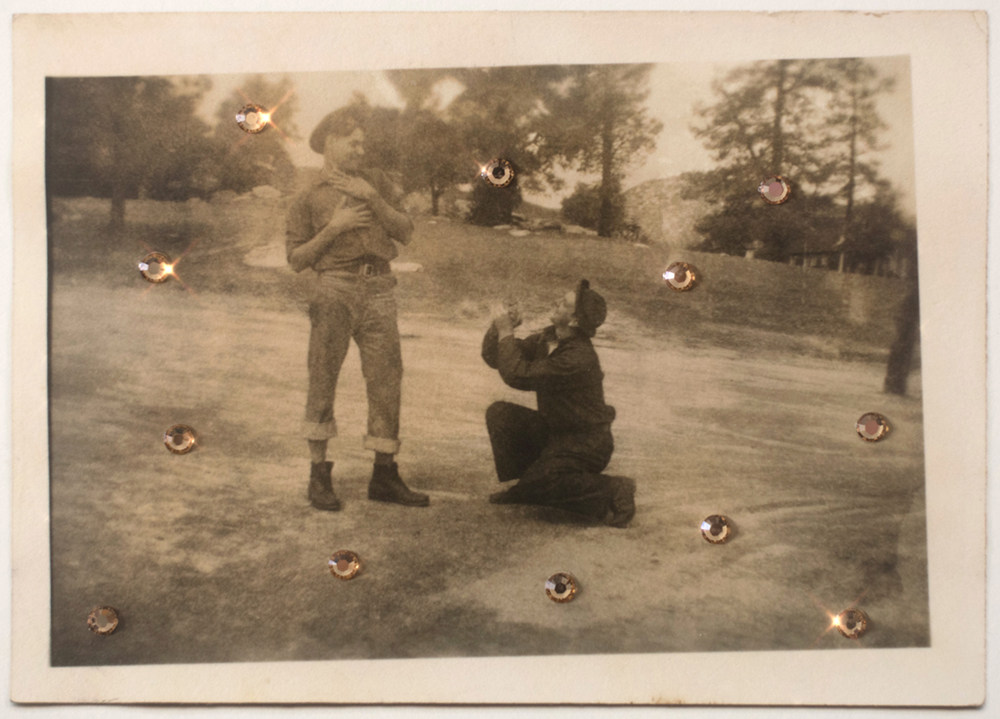
©Matthew Finley, Reenacting our engagement. We didn’t have a camera for the real thing, from An Impossibly Normal Life, published by Fall Line Press
What do you know now after going through this experience, personally and professionally?
Making this work has been truly healing. After five years, Uncle Ken is almost real to me. Having that emotional connection has soothed some of those familial scars. In the beginning, I was worried that such specific story details in the work would limit its appeal to a small audience, but it turns out that the very specificity brings it to life for the viewer. People from many walks of life are relating to it. In a full-circle way, specificity was always something we talked about and practiced in acting class. Perhaps that’s where the instinct was ingrained in me. After making photographic work for the last fifteen years, this has been my most popular work so far. So for those out there reading I want to say, don’t give up, don’t compare yourself or your career to others, and just keep making work that is important to you and showing it to the world.
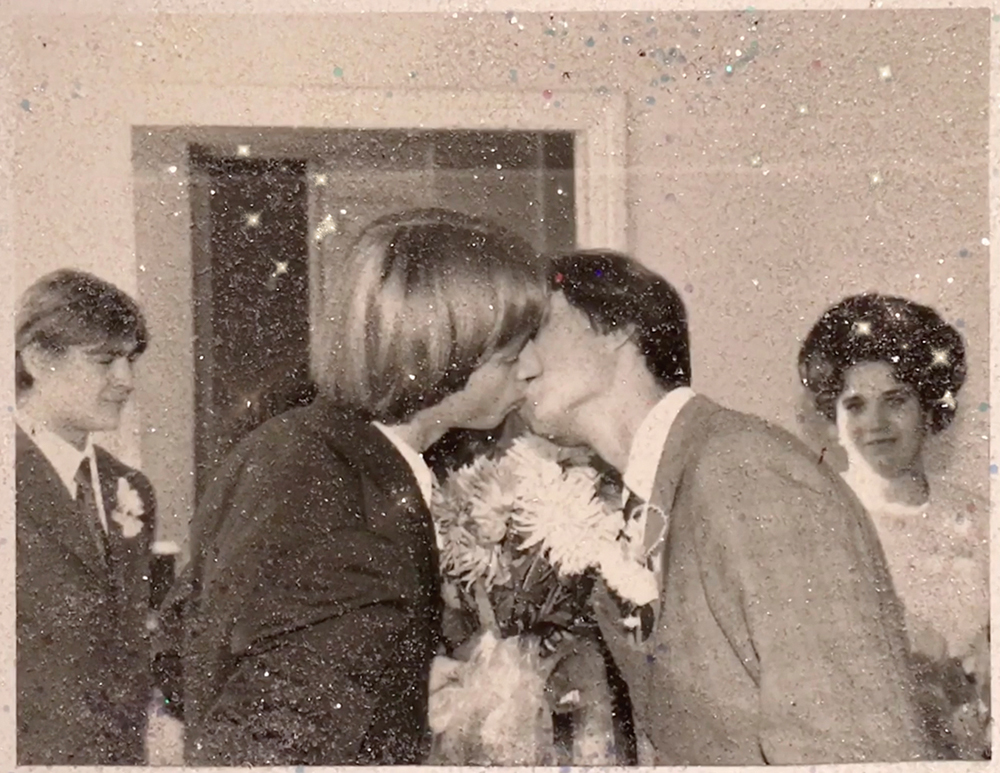
©Matthew Finley, Grant and I couldn’t stop kissing on our wedding day, from An Impossibly Normal Life, published by Fall Line Press
I hope Ken’s story continues….
M: Thank you Aline, me too.
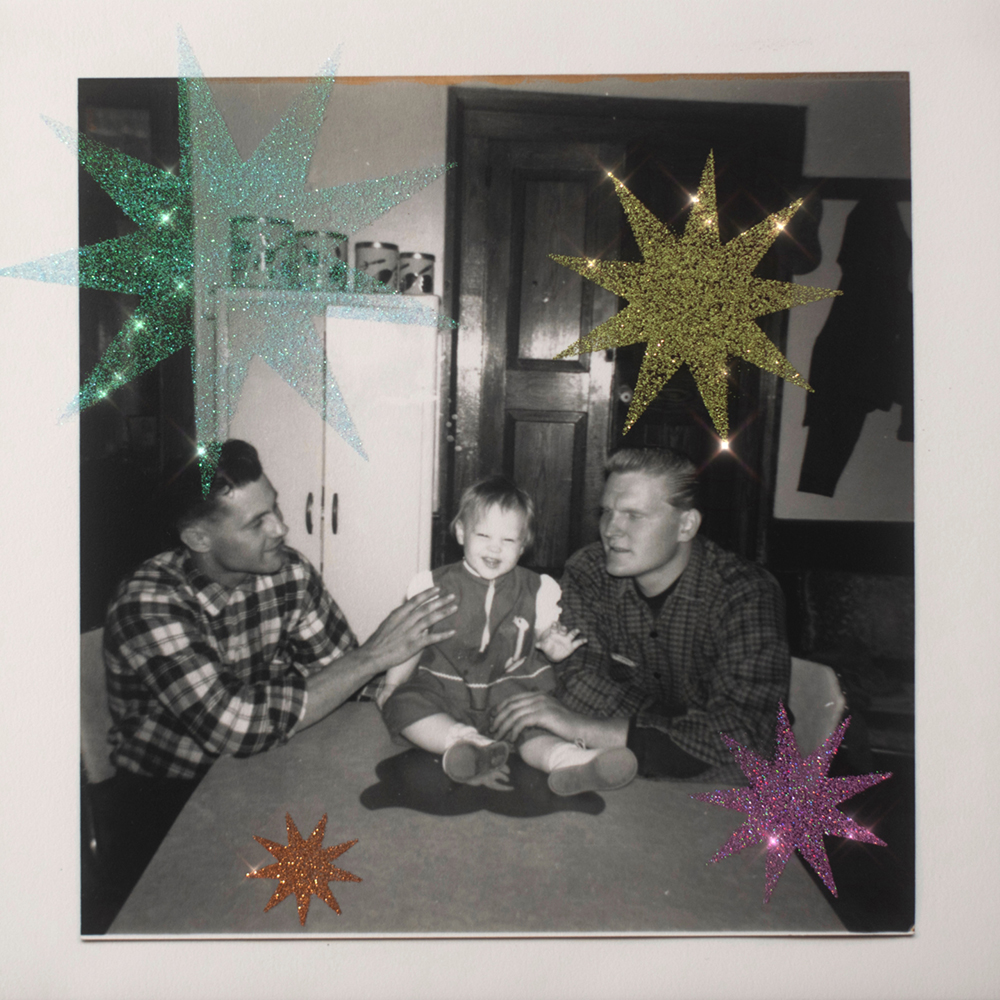
©Matthew Finley, Me Daisy and Grant at our kitchen table, from An Impossibly Normal Life, published by Fall Line Press
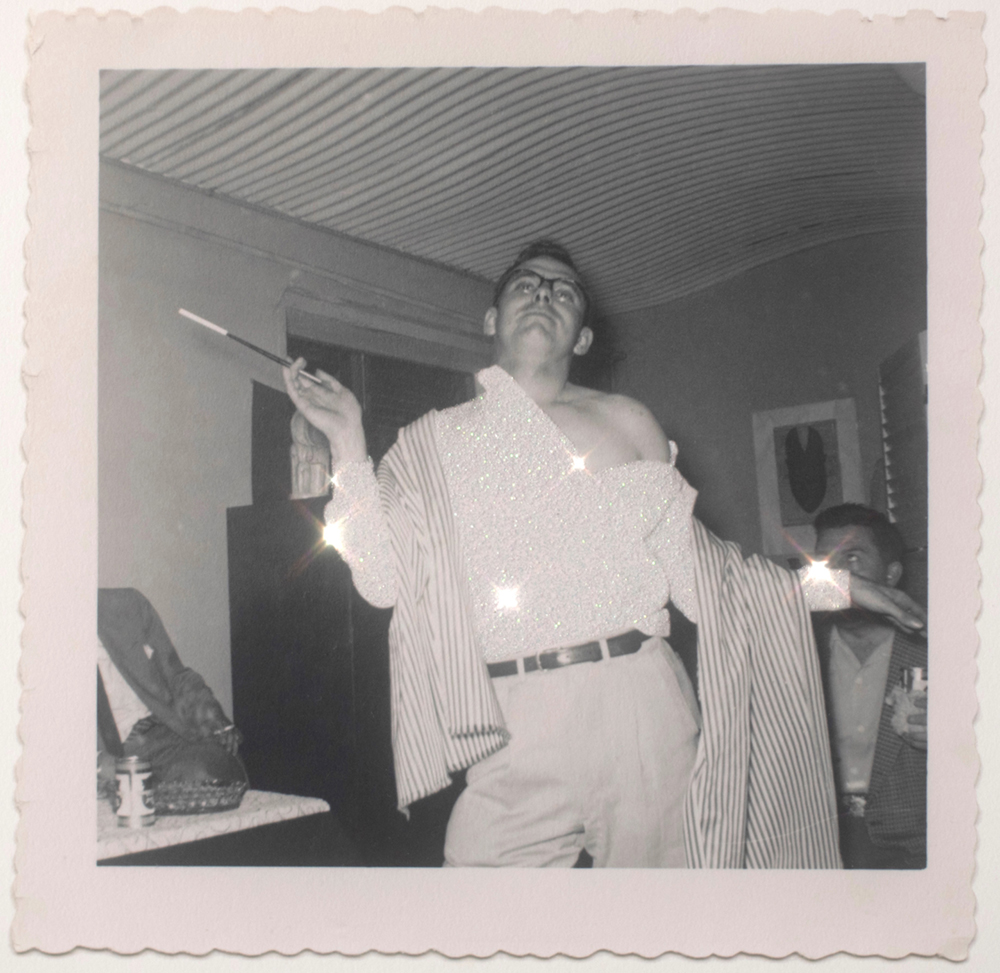
©Matthew Finley, Me camping it up at a party, from An Impossibly Normal Life, published by Fall Line Press
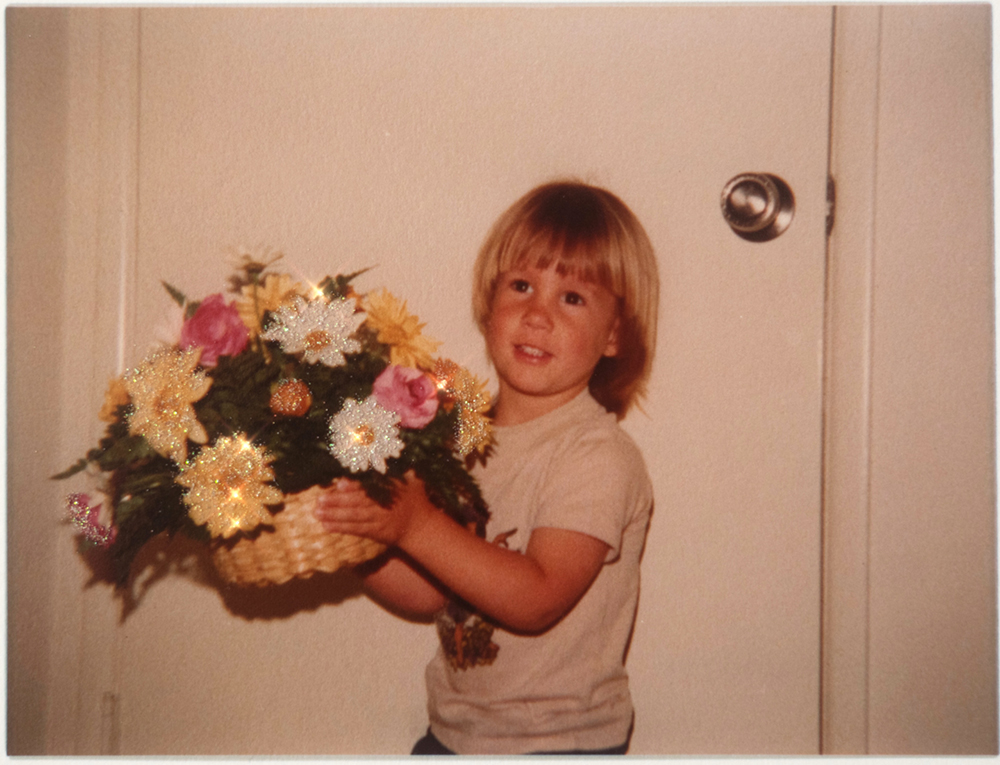
©Matthew Finley, You, bringing us flowers on our Anniversary, from An Impossibly Normal Life, published by Fall Line Press
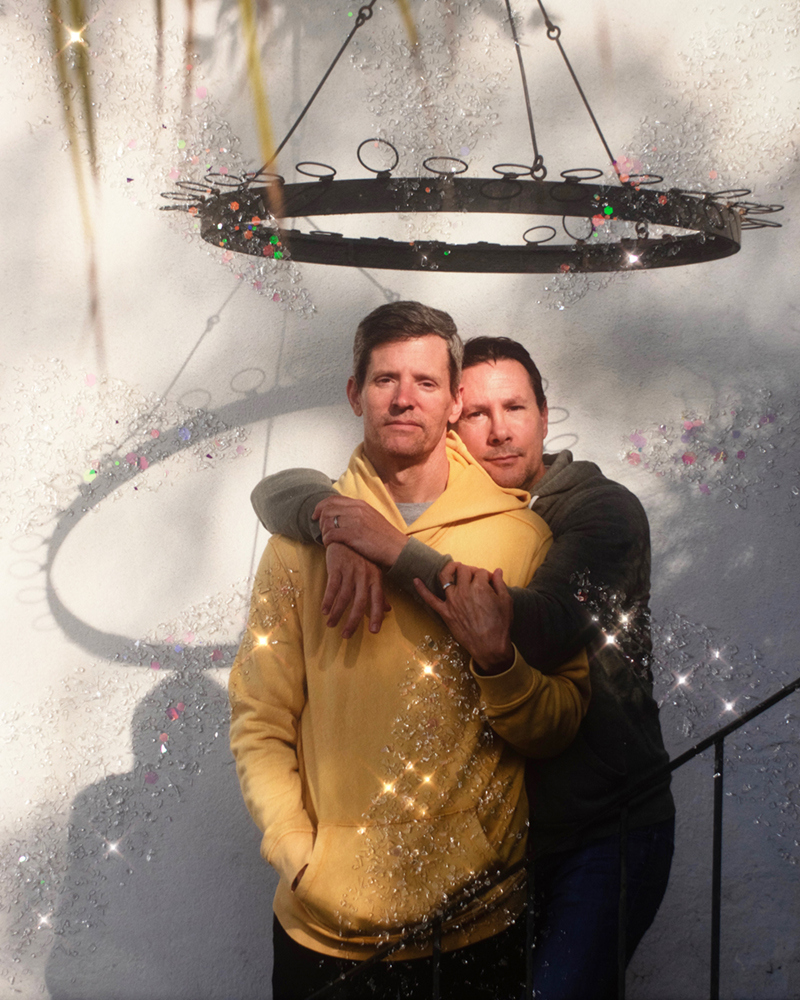
©Matthew Finley, We will tell them, from An Impossibly Normal Life, published by Fall Line Press
To Purchase book:
https://falllinepress.com/products/an-impossibly-normal-life-by-matthew-finley
Socials –
Fall Line Press: @falllinepress – https://www.instagram.com/falllinepress/
Matthew Finley: @mfinleyphoto – https://www.instagram.com/mfinleyphoto/
Websites:
Fall Line: https://falllinepress.com/
Matthew Finley: https://www.mfinleyphoto.com/
Posts on Lenscratch may not be reproduced without the permission of the Lenscratch staff and the photographer.
Recommended
-
Andrew Fedynak: The Last Snows of a Warming WorldMarch 15th, 2026
-

J. Lester Feder: The Queer Face of WarMarch 11th, 2026
-
Curran Hatleberg: Blood GreenMarch 9th, 2026
-

Kiana Hayeri: No Woman’s LandMarch 8th, 2026
-

McCall Hollister in Conversation With Douglas BreaultMarch 6th, 2026