Photographers on Photographers: Quincey Spagnoletti in Conversation with Pelle Cass
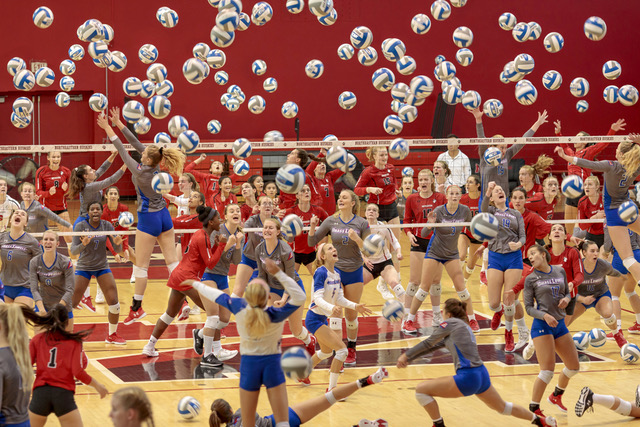
© Pelle Cass, Volleyball at Northeastern, from the series Crowded Fields, 2018
Every August we ask the previous Top 25 Lenscratch Student Prize Winners to interview a hero or a mentor, offering an opportunity for conversation and connection. Today we share the conversation with Quincey Spagnoletti and Pelle Cass. Thank you to both of the artists.
I recently had the pleasure of sitting down over coffee with photographer Pelle Cass to discuss his work, creative process, and life in Boston. Our conversation flowed easily. We bonded over our distinctive names, our shared love of photography, and a deep appreciation for the city we both call home.
I first encountered Pelle’s work during his solo exhibition at Abigail Ogilvy Gallery in 2021. I was immediately captivated by his use of repetition and controlled chaos—images that feel both overwhelming and meticulously orchestrated. During our chat, we unpacked this signature visual style, as well as what it means to sustain an artistic practice in Boston over the years.
Despite the acclaim and recognition his work has garnered, Pelle remains grounded, curious, and excited for what lies ahead—qualities that are as inspiring as his photographs.
Pelle Cass is a photographer from Brookline, Massachusetts. His work in the collections of the Fogg Art Museum, the Addison Gallery of American Art, the Polaroid Collection, the DeCordova Museum, the Peabody Essex Museum, and the MFA, Houston, and others. Cass’s work has been published and exhibited widely in such places as the New York Times, Die Zeit, and The Atlantic. He’s received fellowships from Yaddo, the Polaroid Collection, and the Artist’s Resource Trust. Recent gallery solo shows include Praise Shadows Art Gallery, Boston; Abigail Ogilvy Gallery, Boston (now Los Angeles); and Koslov Larsen, Houston.
Instagram: @PelleCass
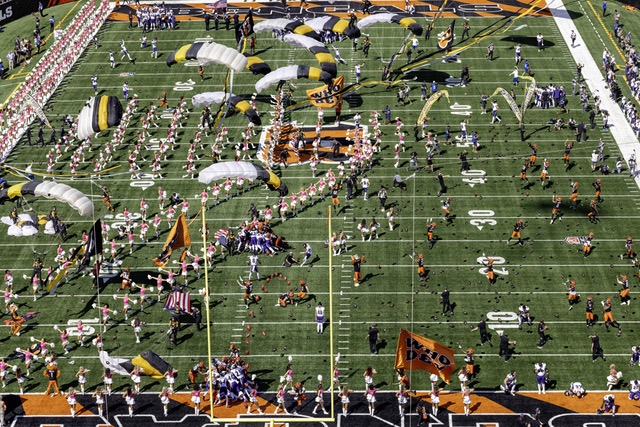
© Pelle Cass, Bengals Half Time, From Crowded Fields, 2024
Quincey Spagnoletti: I know from a recent interview you shared that your mom was an artist. Was she a photographer as well? I’m curious what initially drew you to photography as a medium?
Pelle Cass: My mom was a painter and sculptor. At one point, we had moved to Florida, and I was out of school briefly, and a pitying friend of my parents gave me a camera to have something to do. I wouldn’t say that was when I started becoming a photographer. I liked the camera but I didn’t really know anything. I was 13 or maybe 12 when I got my first camera. I also got a couple of trays and chemicals. I’m not sure I actually developed anything. They were just shadows it looked like.
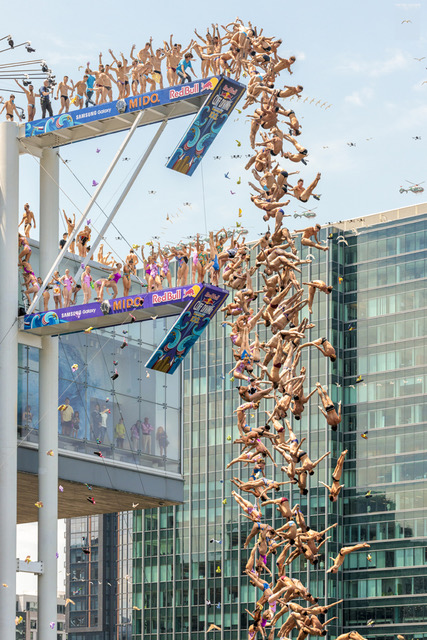
© Pelle Cass, ICA Roff Diving, From Crowded Fields, 2024
Quincey Spagnoletti: When did this transition happen then? Where did you start to enjoy photography and grow into the photographer you’re today?
Pelle Cass: In my later teen years. I stayed interested in cameras and then I started looking at photobooks. There was a teacher at my high school who was a photographer. He’d been a Photographer of Life Magazine. I took the class and I started to get interested in art. I don’t think I was too interested in art until I was 17 and I decided to go to art school.
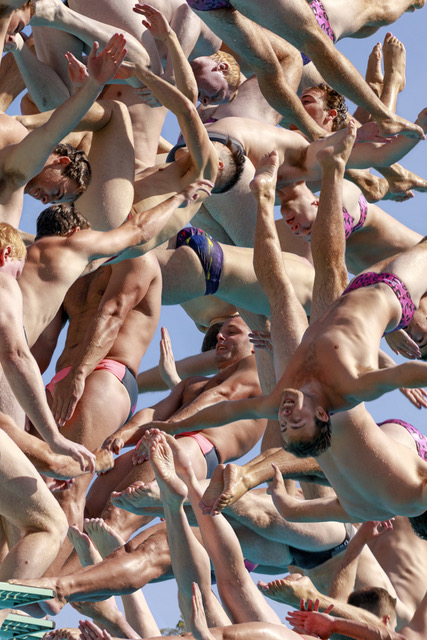
© Pelle Cass, Mission Viejo Diving, Close, From Crowded Fields, 2019
Quincey Spagnoletti: You went to the School of the Museum of Fine Arts at Tufts as well, right? I just recently graduated from there in May of 2024.
Pelle Cass: I did for a brief period. I went for a year. I have lived in Boston for most of my life. I think that is my main school even though I went to all my different undergraduate schools briefly. Feels more like my home school and it was my favorite.
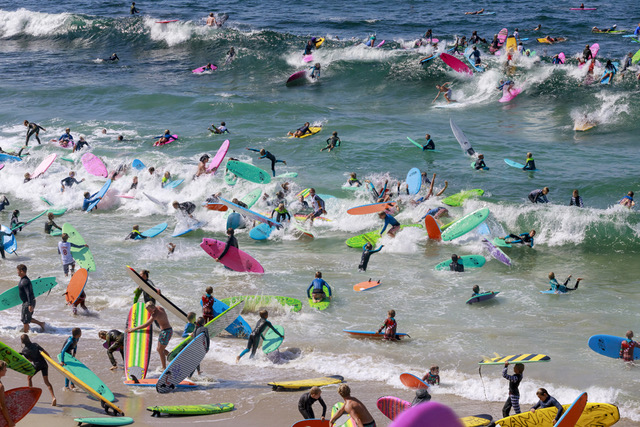
© Pelle Cass, Thalia Beach, Friday, No. 2, From Crowded Fields, 2019
Quincey Spagnoletti: Where did this shift come from into digital photography? Everything you’re doing now is digital correct?
Pelle Cass: I did some graphic designs for a job and I had to learn Photoshop. I was interested because I was a photographer. I learned the basics there, and when I started working the way that I am working I couldn’t have done it if it wasn’t digital. I figured that out, and that’s when I got really interested in the technical side of photography. I think I took one class when I learned about layers, I didn’t figure that out myself, so that really made the difference.
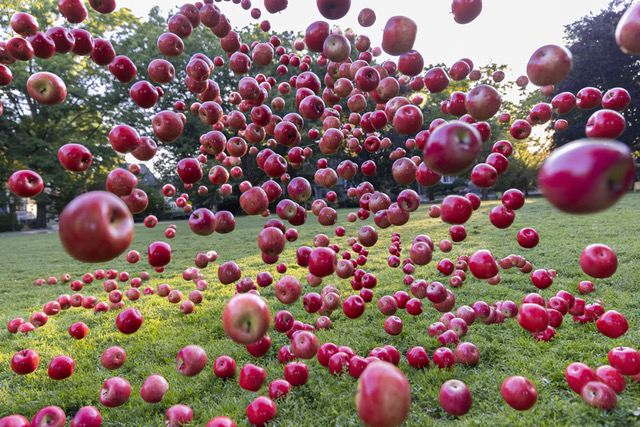
© Pelle Cass, Apples at Emerson, From Tossed, 2011
Quincey Spagnoletti: Well that leads me into my next question. Your work is all a series of layers, I have listened to a few interviews you have done, so I know some of your pictures have 800 to 1,000 layers to them. Because of this, how do you know when a picture is done? When do you stop editing?
Pelle Cass: In one way, when it starts to get worse, then I pedal back for a bit. In another way, I’ll do that process where I work on it, work on it, work on it and it starts looking bad, I’ll stop. I must have done something in the beginning that sent it off. I often start with my favorite figures in it and then build it from there. During the pandemic, I went back and looked at all my work and redid it for the pandemic. And it’s never done necessarily.
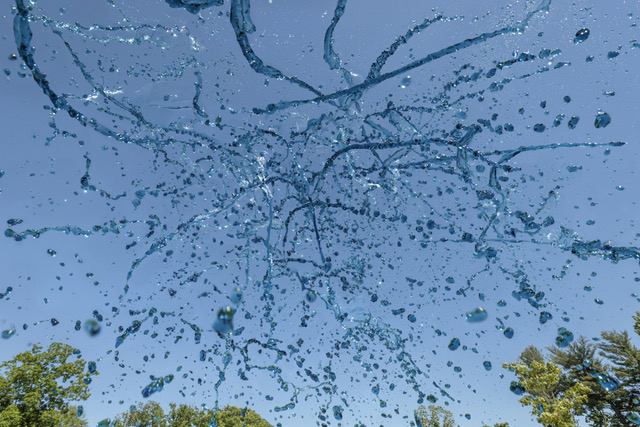
© Pelle Cass, 7. Blue Water, From Tossed, 2014
Quincey Spagnoletti: I’ve seen you work with the human figure so much in your work and I am seeing a bit of a transition now, where you’re working more with objects. Can you talk a little bit about this?
Pelle Cass: I did it exclusively for a year and a half. It was a distinct project that I was doing and that did come about from the pandemic pictures. I’d go back and redo a picture and the only thing left would be the balls or non-people. I started a series called Tossed where I purchased volleyballs or balls off Amazon and tossed them in various places, just to see what would happen. I think of sports as a kind of drawing, where everybody is making a path and taking up space with their bodies. I wanted to see what would happen if the drawing was me so to speak, and it was just me standing in front of the camera tossing things over and over. It makes a distinct shape. It’s not like I can get anything to be completely random. I saw you have a picture where you have tossed balls as well.
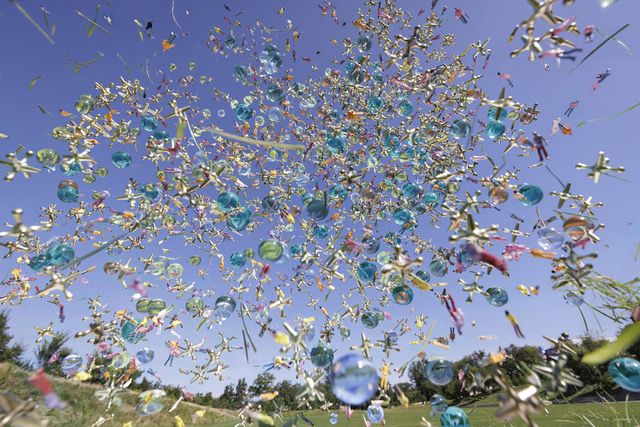
© Pelle Cass, Plastic Figures, Marbles, Jacks, Grass, From Tossed, 2023
Quincey Spagnoletti: I do, yeah. I was inspired by you and your use of multiples in your work. There are a lot of reasons I’m drawn to your work. I like this idea of chaos and confusion that you bring to your work and I’m curious where this interest in athletics comes from?
Pelle Cass: Well it’s the chaos and confusion. You go out there and you have a plan, and you decide how you want to play. If you’re on a team, then there is a plan for the team. Then it all wants to fall apart as soon as you start and the experience is that your opponent is trying to turn you into chaos and you’re trying to stay organized aside from various effort and exertion and physical things. Usually it was chaos, even if I was doing well. That’s one influence of sports and the other is composition where I did pictures of people walking in the street and they wouldn’t go everywhere. My street pictures are kind of silent and quiet and so when a kid or someone would run by I would get excited and that would make me think of sports. I came to it the way you might think a dorky fine art person might reluctantly come to sports. People might not take it as seriously because it is sports and of course we know better. I have a lot of reasons why I like it. One is the way people’s bodies describe space but also the way the rules of sports make a piece. When I use sports for my work that’s how I see it. It’s meant to be a little anti-sport. People have tried to learn things about sports and sometimes people ask me, “what have you learned about sports?” In general, I’m trying to fracture it.
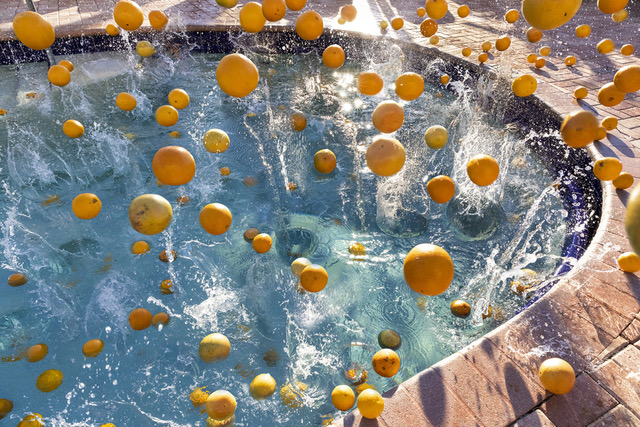
© Pelle Cass, Pool at the Colony, From Tossed, 2023
Quincey Spagnoletti: Has anyone ever recognized you? You have this reputation in Boston at these college campuses so I also wonder if people know you’re at these sporting events?
Pelle Cass: No, sometimes people write to me and they will say, “oh that’s me.” But I don’t think anyone has ever recognized me in the stands. Where I did get recognized when I was doing the Tossed series. I would go out into an open field, and people would walk over and say, “what are you doing?” They would recognize me from my photographs they had seen. But never at a sporting event. That’s because I don’t have a crew. I don’t have a lot of equipment. I look like anyone there filming their kid. You’d have to be really searching for me.
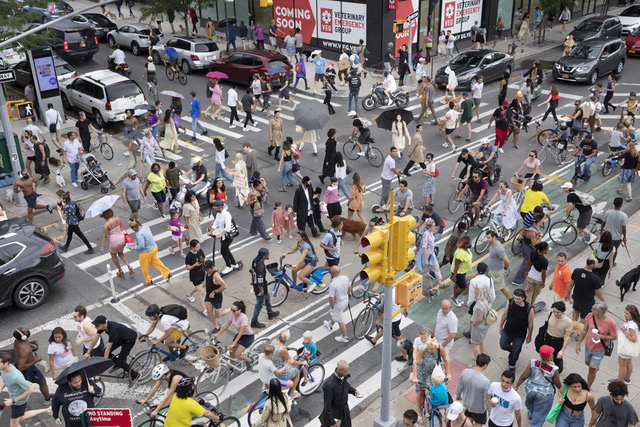
© Pelle Cass, Williamsburg, From Selected People, 2021
Quincey Spagnoletti: Humor is a big part of your work. You will decide to leave your arm in a photograph or your nose during the editing process. Can you talk about how you bring humor into your work?
Pelle Cass: There’s a tradition in street photography, which I don’t count myself part of, but it’s something I’ve learned as sort of a reflex is to look for something funny. I guess just being funny is a reflex for some people and I’m one of them. Not that I am necessarily funny, but my reflex is to make a joke. It’s always a way to thumb your nose at art. Even among enlightened people, who’re sophisticated, it’s seen as less serious, and I’ve always liked doing that. Sometimes I don’t even know I’m being funny. I’m just practicing the way I would always do it. The other thing about humor, it’s my point of view to look for somebody doing something new, and somebody doing something that I haven’t seen before. I feel lucky that I can incorporate it in my work.
Quincey Spagnoletti: I have to ask you a technical question. You use colored water in some of your recent compositions, where you throw the water up into the air. Anyone who has ever used a layer mask understands the level of difficulty to mask something that doesn’t have a defined outline to it. It makes me think about your waterpolo images and it must have been incredibly difficult to mask all of the water droplets that surrounded the athletes. Can you explain this process?
Pelle Cass: The tossed water is much easier than you would think against a blue sky. Photoshop has some silhouetting features that have gotten better every year. I used those and it wasn’t a problem because with those droplets in the air they’re frozen, and they’re so distinct they do have defined edges. It’s actually easier to work with water than you think because it’s transparent. It looks perfectly natural to have some water becoming more transparent by my hand, transitioning into other water. In the waterpolo picture I like best, I looked for all the foamiest white parts of it and it really wasn’t hard because you get a big foamy spot and then around it you get an aurora of bluer water that was easy to blend. The hardest photo technically was the Surfing photo. To make it look natural, the level of the water changed so that a person surfing on water could be anywhere from 2-feet from the sand all the way up from 10-12-feet. I didn’t have to deal with that dimension of height and so I had to build a background of real waves. If somebody happened to be at the right height to fit on that wave, then I would use them. If they were at different heights they would have been up to their knees in the water. That one was the hardest to conceptualize and to figure out that I had to build a scene of waves first and then look for people. My main rule that I have is everything appears in its absolute real spot. I don’t move it. I couldn’t just put a surfer down so they look natural. It is harder but that’s how I do it with water.
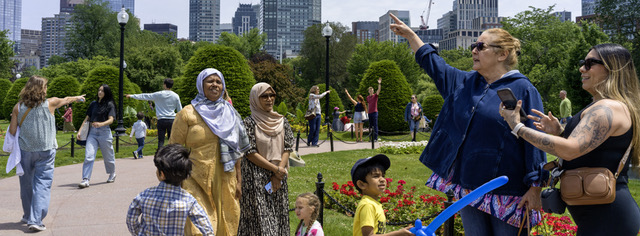
© Pelle Cass, At Washington Statue, From New Selected People, 2025
Quincey Spagnoletti: I always find this to be an interesting question. But I’m curious who you’re inspired by and what photographers you continue to turn to for inspiration.
Pelle Cass: For photographers, it’s Gary Winogrand and Lee Friedlander. It’s more compositional, it’s not their attitude towards taking pictures as much. They’re more admirable because they were able to get this chaotic feeling that I liked in the real world in a single frame. I’ve absorbed the way they make work and when I’m looking at people moving into a space I’m thinking of them. That’s what’s influenced me, the feeling of chaos and disparate things happening in different quadrants of the frame, and I think you kind of have that too. That’s part of photographic chaos is that it can be gridded up and different things happen and coexist in a totally plausible space or a real space and that’s what I like about it and that’s the lesson I learned from Winogrand and Friedlander.
Quincey Spagnoletti: As someone who is still trying to find a studio space of my own. I’m curious, what does your studio look like? You spend so much time editing, where does this take place?
Pelle Cass: It used to be in the foyer of our apartment. Just a tiny little space like where we are sitting here. But I moved it into the living room so it’s a desk in the living room and I spend a lot of time there. I might be a slightly different kind of artist if I had a big messy studio and I could do whatever I wanted there. Before that’s the kind of artist I was and I still do those things sometimes.
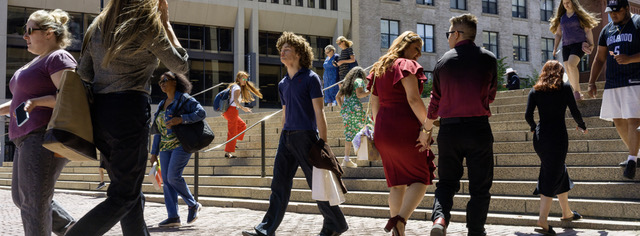
© Pelle Cass, Five Iron, Colors, From New Selected People, 2023
Quincey Spagnoletti: Are you working on a new series now? I know a lot of artists hate this question so I apologize, but I am curious what you’re working on now?
Pelle Cass: I’ve started to go out and sort of redo some of my earlier pictures from my series Selective People. I have a slightly different angle or take on it. It’s not exactly the same thing, it’s a long silly panoramic format. It’s fun to do my least favorite thing, which is a panorama. I never thought I would voluntarily do a panorama but I thought I would try it. A lot of what happens with people walking around is horizontal. I didn’t want to photograph the sky or buildings so I’m working on that now.
Quincey Spagnoletti: Where do you think this drive is coming from to go into your archive and remake these photographs? This is the second time I have heard you say this so I’m curious?
Pelle Cass: In the past, I had a premium in what I decided to do. Knowing what was going on in the field of photography and art that I was interested in and making sure I wasn’t doing something that was exactly the same or as different as possible. That was important to me and I didn’t want to repeat myself. I got used to two years being the unit of working on something. It was important to me to do something different. That’s why I’m more likely to go back and I remember doing this kind of thing before but I can do it differently now. My work has changed a lot, I’ve also learned a lot as I’ve gone along. And I’m trying to redo things in a new way. I’m sort of committed to this technique for some reason of multiple images in one. I may try and think of another way to do that in the future.
Quincey Spagnoletti is a Boston-based photographer whose work explores identity and womanhood through photo installations and performance. Drawing inspiration from her own upbringing, she weaves together human representation and archival imagery from her childhood, creating layered narratives. Spagnoletti earned her BA from Colgate University and an MFA from the School of the Museum of Fine Arts at Tufts University. Her work has been featured in the Boston Art Review, Der Greif, Photoworks UK, and the Leica Gallery, Boston. Recognized as a rising talent in contemporary photography, she was named a Top 25 Photographer to Watch by the Lenscratch Student Prize (2024), a Top 200 Critical Mass Finalist, and a Top 30 Finalist in the KLPA Autoportrait Awards.
Instagram: @QuinceySpagsPhoto
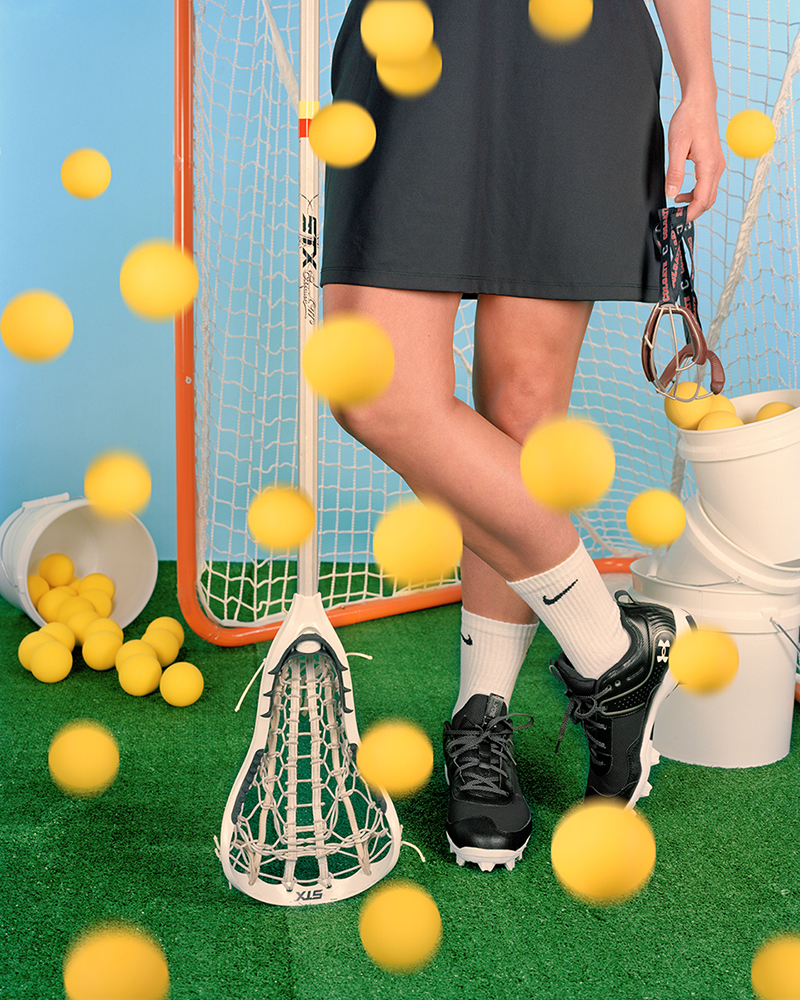
© Quincey Spagnoletti, When the Game Stops Being Fun, 2023
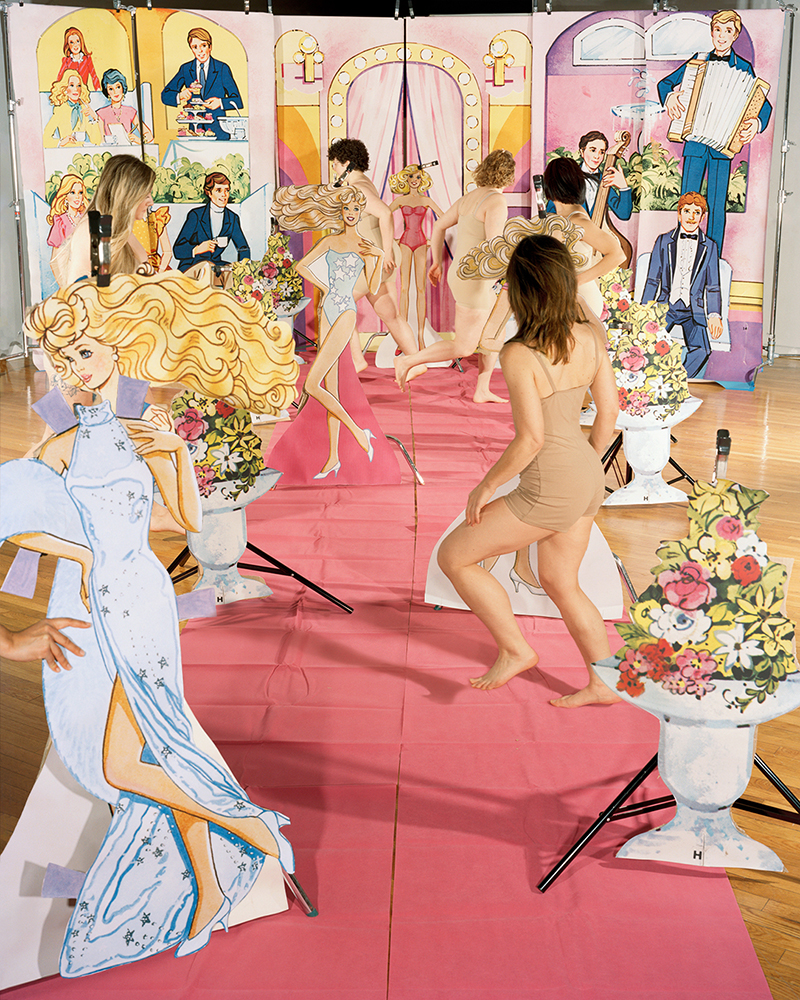
© Quincey Spagnoletti, Runway Fashion Models, 2025
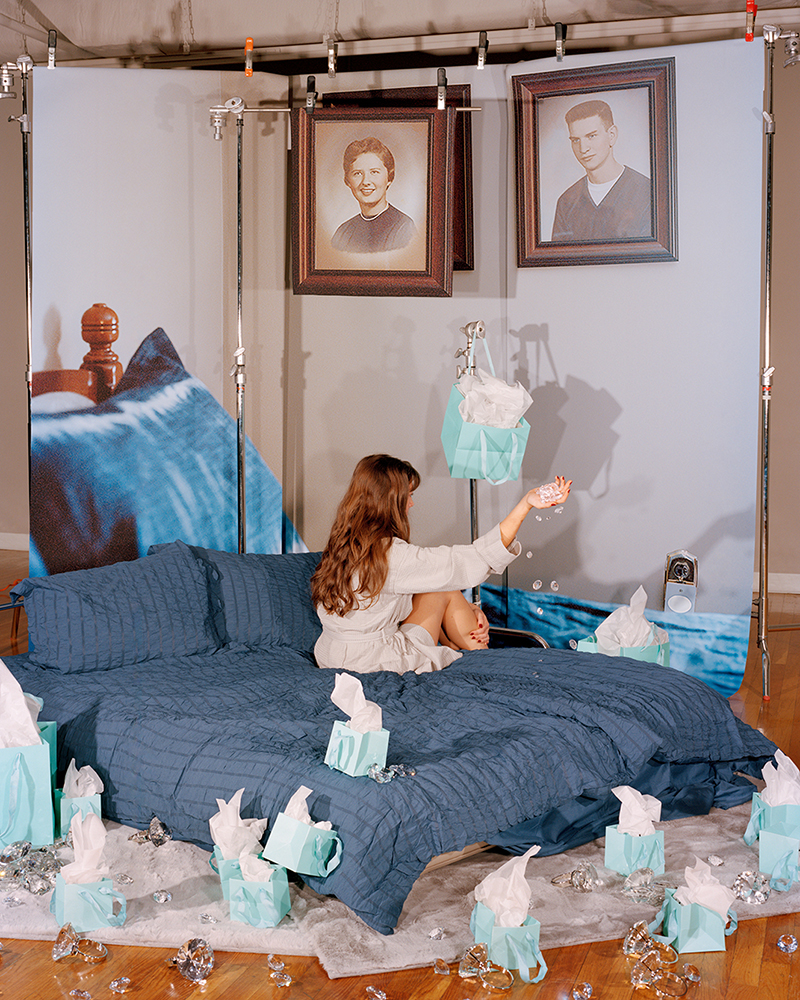
© Quincey Spagnoletti, A Girl’s Best Friend?, 2024
Posts on Lenscratch may not be reproduced without the permission of the Lenscratch staff and the photographer.
Recommended
-
McCall Hollister in Conversation With Douglas BreaultMarch 6th, 2026
-
Olga Fried: Intangible EncountersFebruary 18th, 2026
-
Anne McDonald: Self-PortraitsFebruary 17th, 2026
-
Richard Koenig: Field Notes: View from a Hotel WindowFebruary 13th, 2026
-
Beyond the Photograph: Editioning Photographic WorkJanuary 24th, 2026