Hsing-Chia Hsieh: Recover from Oblivion-Together Again
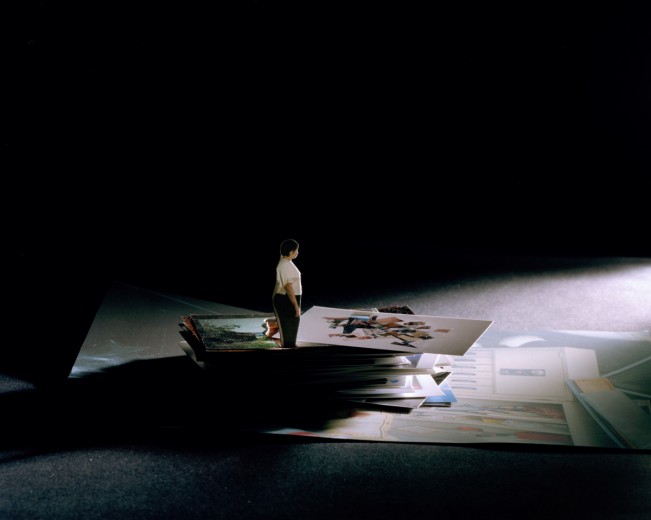
© Hsing Chia Hsieh, Let somebody go
This week we are looking at projects exploring issues of family, archives and community. Today the focus is on Hsing-Chia Hsieh, a Taiwanese artist utilizing large-format photography to examine family histories and ties. In Recover from Oblivion-Together Again, the artist crafts a visual dialogue across distances and generations. Building intimate tabletop-scale tableaus from Facetime screenshots and family photographs, she captivates with her frames-within-frames and playful use of the family album as a material. Through these constructed scenes, Hsieh illuminates the challenges of separation and the loss we carry when a loved one passes. For those of us who spend hours pondering the stories behind the photographs on our elder’s family albums, Hsieh’s project offers a playful and compelling reimagining of these intimate narratives —and the hidden parts of their lives we may never come to know. An interview with the artist follows.
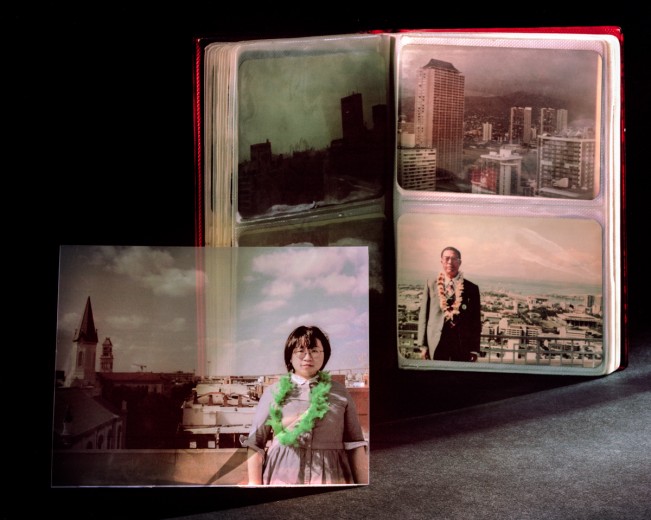
© Hsing Chia Hsieh, Black Cat
Hsing-Chia Hsieh (she/her) is a Taiwanese artist who uses photography as her creative tool. Growing up interested in performing arts, she volunteered for the performing art group Our Theatre (Chiayi, Taiwan) for seven years as an assistant director, stage crew, and theater-still photographer. After graduating from Chinese Culture University in Taiwan with a B.F.A. in Mass Communication; she has also been a full-time portrait photographer for five years, mainly shooting for engagements, wedding documentaries, and family portraits in Taipei, Taiwan. She recently graduated from the Savannah College of Art and Design in Savannah, Georgia, with an M.F.A. in Photography. She currently resides in Savannah, Georgia, United States.
Instagram: @riantlove
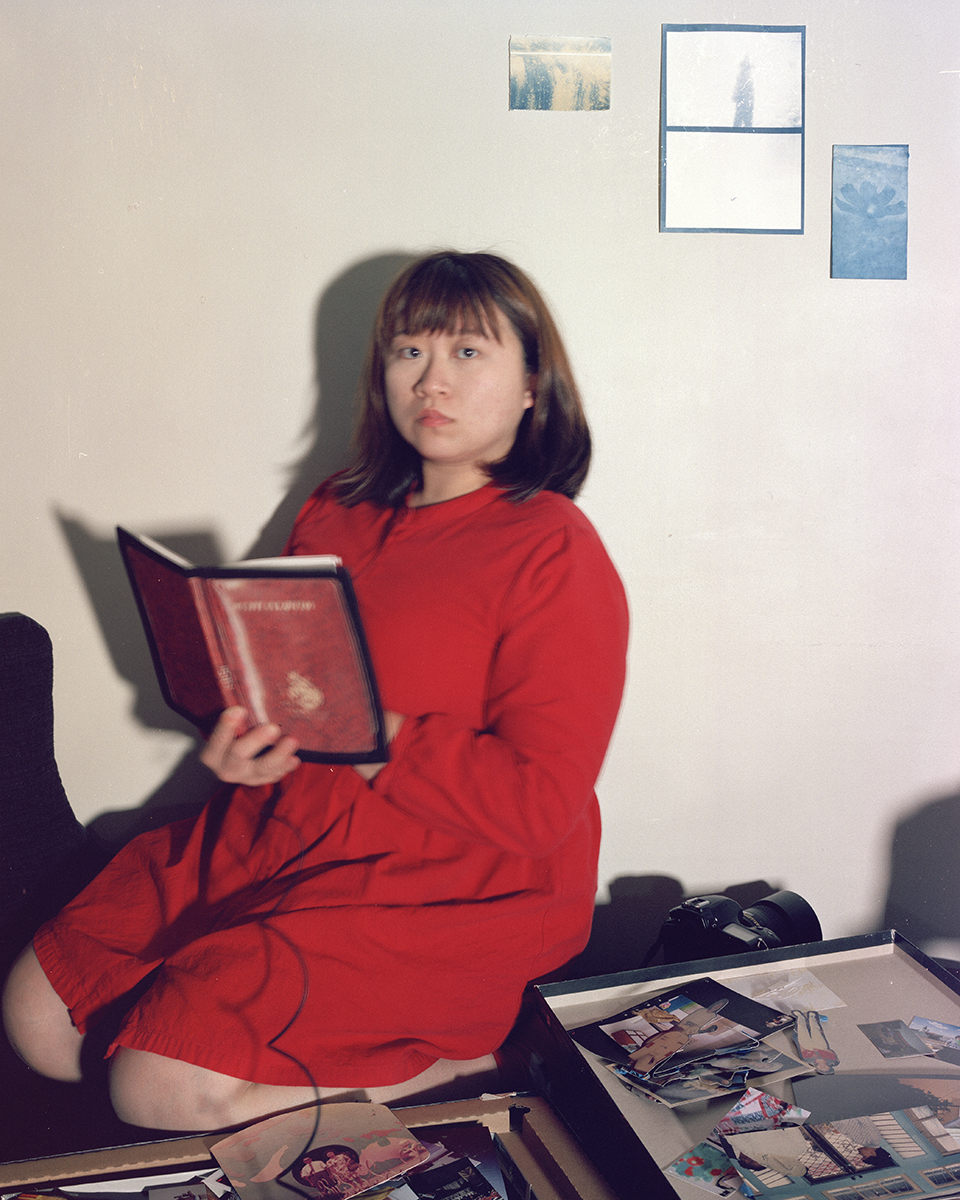
Portrait of Hsing-Chia Hsieh. Courtesy the artist.
Recover from Oblivion-Together Again
Recover from Oblivion-Together Again is a series of works about collective memories and the media changes in family archival images. It is an extended project of my handcrafted book Recover from Oblivion. After three years in the U.S., I visited my grandparents’ house in Taiwan. In the garage, I found an old cabinet overflowing with family albums. My grandfather passed away when I was 4 years old, so I barely had memories of him. I started to rephotograph photographs. Using images from my family albums from the 1980s and pictures of Facetime screenshots with my family in the 2020s, I layered photographs and created juxtapositions to narrate a mixture of truth, fiction, and memories. From past to present, memories intertwined, seeing the photographic media changed over time, disregarding what medium we use, one mutual thing that makes us take photos from all time is that we want to remember and be remembered.
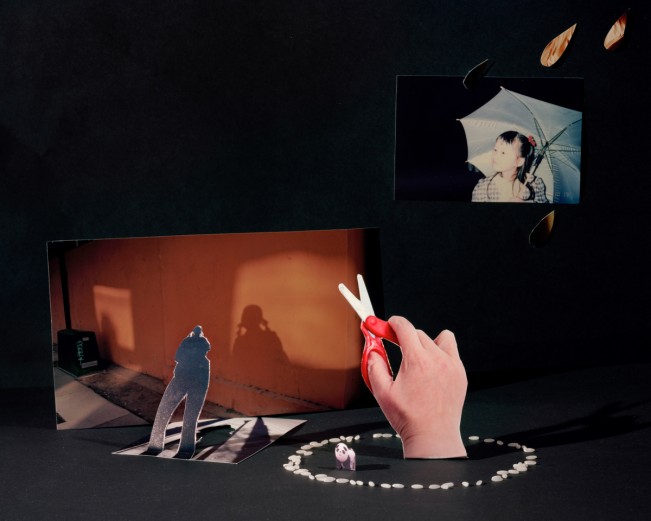
© Hsing Chia Hsieh, What makes me become myself
Family and remembrance is a guiding topic in your practice, especially in your project Recover from Oblivion-Together Again. How does photography help you explore these issues in a way that other expressions do not?
Hsing-Chia Hsieh: Photography helps me understand my family. When I look through family archive photos, I notice resemblances — like I have the same eye shape as my grandfather, or my childhood face looking so much like my mom’s childhood face. Photography doesn’t just document those connections, it also becomes my interpretation of family. When I flip through the archives, even if I don’t remember the exact moments, the images spark stories in my mind, which is my interpretation. For example, I see my grandpa looking relaxed, smoking in front of the Golden Gate Bridge, or the picture of my dad before he married my mom — his eyes showing determination during his military service. That’s what I love about photography: it combines memory, imagination, and illusion in a way that invites everyone to interpret the images differently.
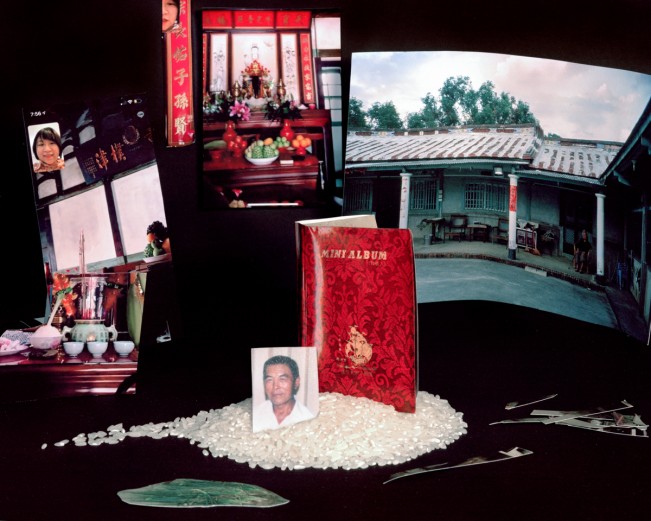
© Family Album
You shoot your physical collages with a 4×5 large format film camera. Have you always shot in large format?
HH: I haven’t always used a 4×5 large format film camera. I first tried it while working on this project in an introductory class. At first, it was new to me, but I really enjoyed the process and wanted to keep exploring it. I studied under Professor Rebecca Nolan at the Savannah College of Art and Design, and later became her teaching intern, which gave me even more opportunities to learn.
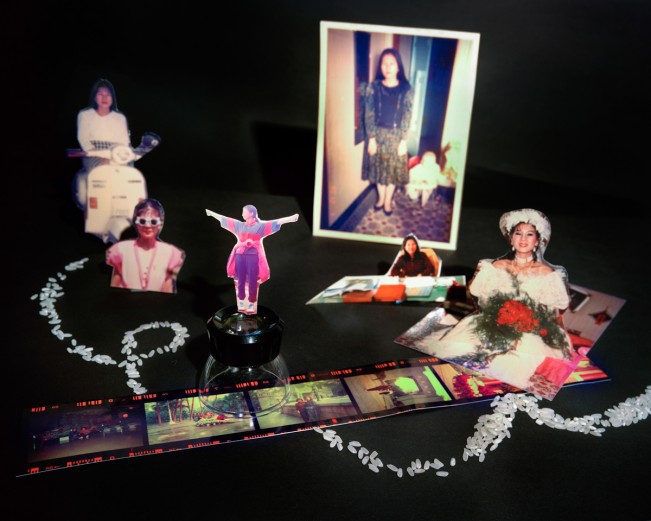
© Hsing-Chia Hsieh, Becoming Mom
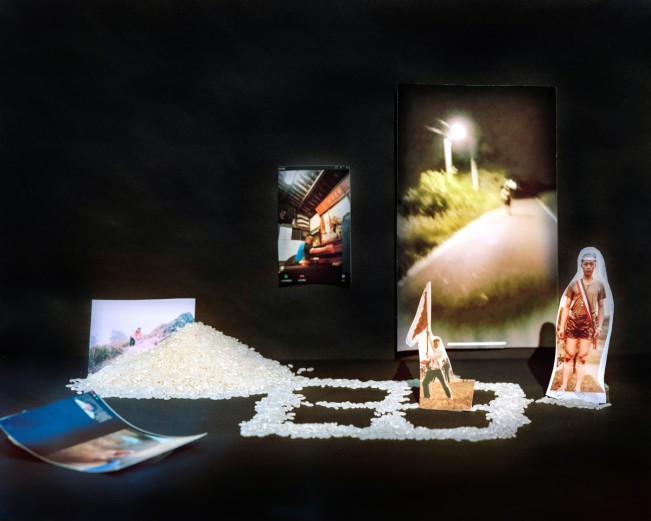
© Hsing-Chia Hsieh, Origin
What draws you to constructing scenes for the camera? And what do you feel when you’re manipulating these images?
HH: At the beginning, I started by playing with reprinted family archive photos, which allowed me to cut them into pieces. I would play with layering printed out screenshots from video calls with my family when I was abroad. By combining past and present images of family and myself with them, I could see how those visual elements shaped my understanding of them — almost like building a visual record of their lives. Eventually, I started including my own self-portraits, home scenes, and notes I had written about family. I began treating these elements like stage props, layering and arranging them almost theatrically. I think my background in performing arts influenced this approach — I joined a drama club at 16, and that sense of staging and storytelling has carried over into how I construct images.
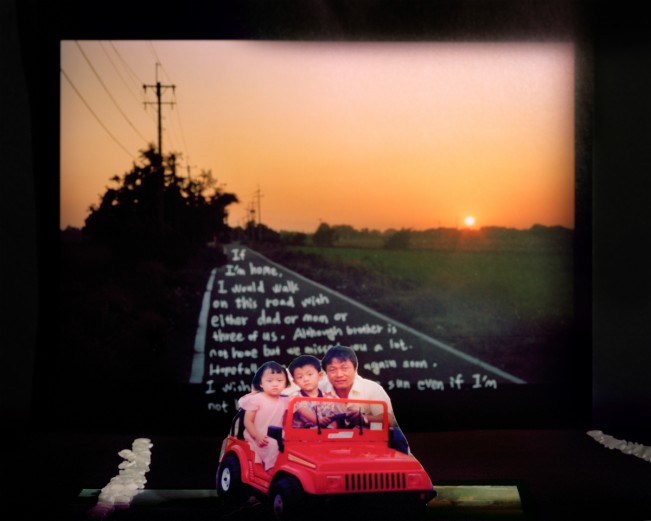
© Hsing-Chia Hsieh, Go On
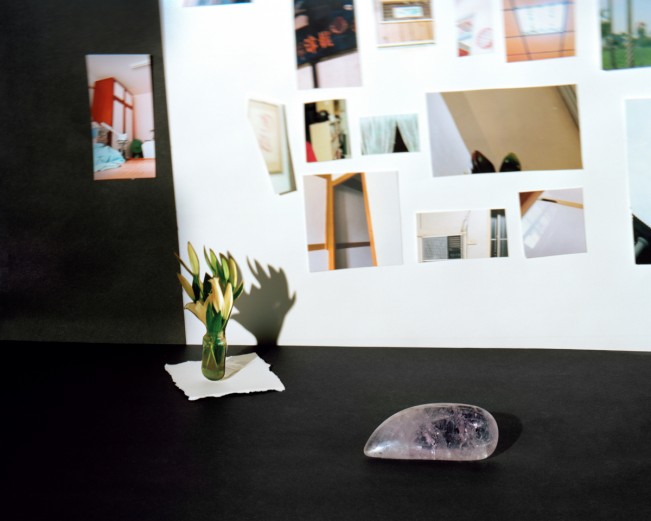
© Hsing-Chia Hsieh, Memory Fragments
I love your image, Seeing Through, 2023. Would you tell me more about it?
HH: That work is tied to my hometown. In the image with the palm tree, my grandmother is there feeding the cats and dogs in the yard. The old armchair she always sat on had faded from years of sunlight. The pond with its bamboo raft near my mom’s old house gave me a sense of stillness and calm. Then I added my own eyes — a selfie I took while I was far away from home — as if I was looking through all those memories stacked together. For me, the piece is about how everything changes: the leaves fall, colors fade, and we all change too.
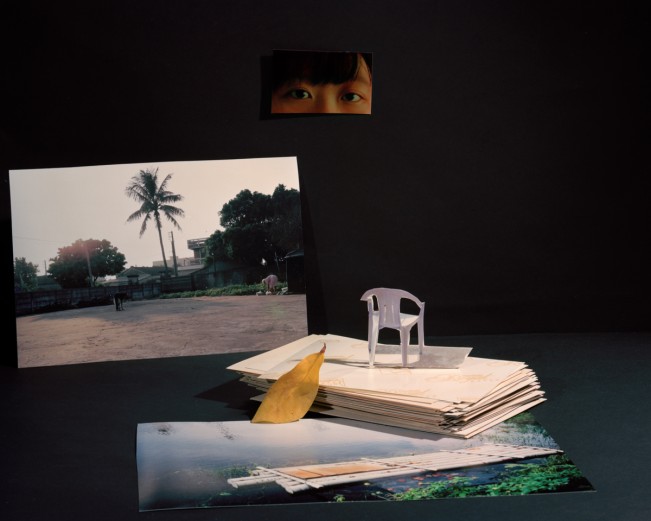
© Hsing-Chia Hsieh, Seeing Through
Finally, What’s in store for you?
HH: My work is usually based on my feelings and life experiences. Right now, I’m working on a new project about my relationship. I combine text and images to create my work.
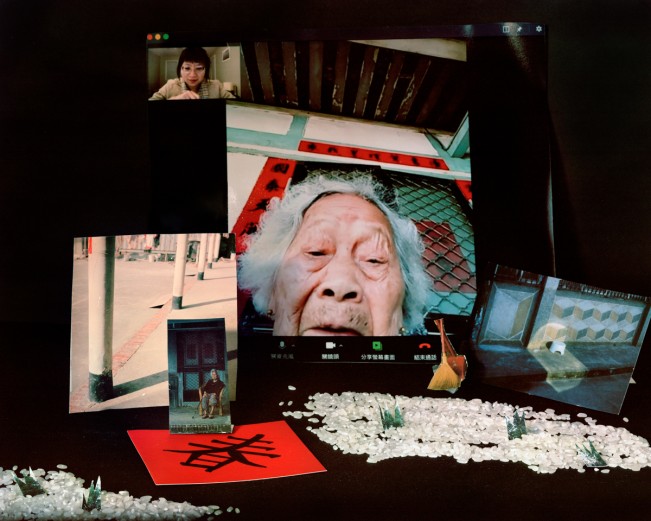
© Hsing-Chia Hsieh, Spring
Posts on Lenscratch may not be reproduced without the permission of the Lenscratch staff and the photographer.
Recommended
-

BEYOND THE PHOTOGRAPH: Q&A WITH COMMERCIAL PHOTOGRAPHER ANDY MAHRMarch 22nd, 2026
-
Bryan Whitney: The Spiritual LightMarch 17th, 2026
-
The 2026 Lenscratch Student Prize is OPEN!March 16th, 2026
-
The 2026 LOVE Exhibition, Part 2February 14th, 2026
-

The 2026 LOVE Exhibition, Part 3February 14th, 2026