Mexico Week – Paola Dávila: Beyond the Landscape

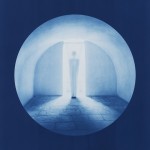
©Paola Dávila, Salar (Salt) series, seawater sediments, Laminariales, and cyanotype emulsion on cover glass
When I think of Mexico Week I don’t just see it as a series of interviews, but as a compass of what’s yet to come.
Seven artists, each working from a different place—whether it’s femininity, nature, society, history, identity, architecture, or the unconscious—share an undoubtable longing to express themselves in an innovative and true way.
While doing these interviews I didn’t only find photographs. I found passion, devotion, ideas, processes, humor, time, effort, and a true sense of humanity that deserves to be shared.
This isn’t an academic work. It’s a series of conversations about how our practice as photographers continues to evolve day by day. About how life shapes us and grants us the power to give meaning to what we capture with a click.
In a rapidly changing world, these artists continue to honor the origin of the word “photography” by bringing light and stories into it.
These photographers can look to the past and the future, move between worlds, and build a contemporary curiosity that will inspire many more to follow the path they’ve traced. The image is changing, and I believe we should stop for a moment and ask “What is Mexican photography saying today?”
The artists are: Iñaki Bonillas, Tomás Casademunt, Paola Dávila, Carol Espíndola, Cristina Kahlo, Gerardo Montiel Klint, and David Muñíz.
Paola Dávila has never stopped moving. Whether it’s from one city to another, from a camera, to ink, or from her bedroom to the sea. Through her personal experience of navigating and surviving in an unfamiliar city, Paola began to question what it means to inhabit a space—how we construct intimacy and how these modes of dwelling shift across different social and cultural contexts. In recent projects she transforms landscapes into active agents through camera-less processes and photosensitive materials, blending nature with art and science. She searches for the traces that light and time leave on an emulsion surface. In this process, she brings the invisible together with the visible, creating an experience for both the eyes and the mind.

©Paola Dávila, Salomas (Sea Shanties) series, cyanotype on silk
Paola Dávila (Oaxaca, Mexico, 1980) has received the National Photography Award at the Visual Arts Biennial of Yucatán, the Acquisition Award of the Fourth Arte Libertad Competition, and the 19th National Photography Biennial Award at Centro de la Imagen, Mexico City. A FONCA Foreign Residencies and BANFF Centre grantee, her research-based projects have also been supported by the Tierney Foundation and by international residencies such as Art/Sci Summer Lake in Oregon and La Wakaya Current: Desert 23°S in the Atacama Desert. Her work has been shown at the Griffin Museum of Photography (Winchester, MA), FotoFest Houston, Museo Amparo (Puebla), Museo de Arte Contemporáneo de Oaxaca, Museo del Chopo (Mexico City), Centro de la Imagen (Mexico City), and Denver University, among others. Since 2020, she has been a member of the National System of Art Creators (FONCA). She lives and works in Mexico City.
Follow Paola on Instagram: @paoladavilap

©Paola Dávila, Todos los días son lunes (Every Day Is Monday) series, cyanotype on paper
I am a visual artist whose work explores photography and its expansion into other media. Drawing from my personal experience, my practice investigates home, inhabitation, intimacy, and landscape, examining inner and outer spaces and their boundaries, and proposing new ways to understand intimate environments through gender and socioeconomic perspectives. In recent projects, I transform landscapes into active agents through camera-less processes and photosensitive materials, challenging traditional photographic practices. I capture moments of light shaped by specific contexts and environmental conditions, including temperature, humidity, and climate change. Approaching the work from a scientific perspective, I record traces of displacement, social conditions, and environmental change while redefining contemporary photographic narratives. – Paola Dávila

©Paola Dávila, Temporales interiores (Interior Seasons) series, C-print
Lou Peralta: To go from your natal Oaxaca to Mexico City was the first big step to getting where you are now. How did you sail through that change, both personally and professionally?
Paola Dávila: Ever since I was in middle school it was clear to me that I wanted to go to the National Autonomous University of Mexico (UNAM) to study art. I moved to Mexico City on my own when I was only 17 years old. It was hard because my family didn’t have the financial resources to support my artistic education: like art supplies, special papers, charcoal pencils, pastels, etc. Those were tough years. Besides, Mexico City is a huge city, it almost ate me up. I didn’t know anyone nor my way around. In Oaxaca, I could go out and use the Fortín Mountain as a reference and guide. In the capital, I needed to find a place where I could get my bearings and find myself—not only geographically, but also mentally—and feel safe in a rather violent environment at the time. As I said, I was very young, so honestly, I was just trying to survive and find refuge in my art, my mind, and my inner world.
LP: And how did you move from art to photography?
PD: Despite studying art at UNAM, my photographic practice started in Oaxaca. After six months, a strike began in the university and I decided to go back home. Unexpectedly, it worked out well for me because I had the opportunity to take different courses and workshops to see what I was truly drawn to. Then, I studied at the Manuel Álvarez Bravo Photographic Center—my alma mater—where international artists frequently led workshops and you know, it was pretty organic how photography was growing on me. I met a few photographers that I now consider friends and they guided me to help me find my place. I realized my calling was to work with light, chemicals, and time. I liked knowing that light could leave a trace on a support, and that exposing and revealing were invisible processes I could apply to art. During that process I understood that I wasn’t only searching for a technique, but a way of thinking and working. Photography emerged as a space where the process was as important as the result, and where I could experiment with time and matter much more directly.
LP: Is that why in your early works “the habitat” and “the refuge” are the main axes?
PD: Yes, definitely. Not having a place made me wonder about my refuge and my early projects were about intimacy, the indoor space, my bed, the idea of a home, my displaced body. Over the years the notion of the habitat has changed but is still a central concept in my practice. It works as a main engine from which I analyze space, contention, and dialogue with whatever is around me.
During the pandemic, I continued to explore the idea of “the habitat,” just from another time and place. In my project “Every Day Is Monday” I started paying attention to my daily movements inside my house, almost mapping them, and I realized that the space was no longer just a refuge. It had become a place filled with repetition, fatigue, and a strange kind of stillness. There was no clear boundary between resting, working, eating, or being with family. Everything overlapped. The house was no longer a space I could simply inhabit.
And in my recent projects, these axes and concepts remain present, but my focus has shifted toward how nature inhabits space, and how environmental and climatic conditions reshape its forms of dwelling.

@Paola Dávila, Salar (Salt) series (watch glass), seawater sediments, Laminariales, and cyanotype emulsion on watch glass

©Paola Dávila, Salar (Salt) series, seawater sediments, Laminariales, and cyanotype emulsion on watch glass

©Paola Dávila, Salar (Salt) series, seawater sediments, Laminariales, and cyanotype emulsion on microscope slides
LP: Nearly all of your work is analog. Is there a specific reason for that?
PD: To me, that analog process is essential. To have that physical support, the negative, the object—all of it. Even when I make artworks without my camera it’s still analog. It has a direct relationship with matter. The negative, the paper, the emulsion, or the photosensitive material are all part of the process, not merely a medium. There’s something about it that allows me to better understand what’s going on during the making of it. To go beyond the resulting image.
And it’s not like I’m against the digital world or anything. It’s simply that I haven’t had a project that asks for me to use it. Everything has to revolve around a theme, so I ask “why should I use this technique for this?” And the answer comes on its own. You don’t need to use something just for the sake of using it. My approach to art is built from that silent contemplation and listening. Technique appears as a consequence of the project, not the other way around. That logic has guided me from the very beginning. You have to feel there’s a reason to do what you do.
LP: Does the same thing happen with the format? Why did you choose to use the medium one?
PD: First, I started working with a 35mm format, but then I discovered the medium one and never went back. Besides, the square format reinforces that idea of being contained, having structure and safety that I was exploring at the time. It made perfect sense.
LP: Temporales Interiores (Interior Seasons) was a turning point. How did it come about?
PD: Well, that series talks about the habitat, the inner world, and the landscape. But it was a turning point because it challenged me to use color—after years of having most of my portfolio in black and white. It made me make decisions that up until then I had evaded. Color didn’t appear as a decorative resource, but as a conceptual need to talk about the inner world and landscape from a different sensory register. Besides, these are photographs that I build piece by piece, sketching and planning them beforehand. I realized that an image doesn’t spontaneously appear. Each one had to be thought of, designed, and constructed previously. They are more like scenes, really. The process became slow and meticulous. That’s also where my relationship with installation began: I would produce the setting for the scene to take the picture. It was both a three-dimensional process with a two-dimensional result.

©Paola Dávila, Temporales interiores (Interior Seasons) series, C-print

©Paola Dávila, Temporales interiores (Interior Seasons) series, C-print
LP: You also work with live-works like fungi, grass, and other organic materials, right?
PD: Yes. Working with live-materials meant assuming a new rhythm and responsibility in my day-to-day life. I couldn’t hurry the process or impose a result on it, either. I had to walk through its growth. Look at it day after day and understand that the image depended on conditions that weren’t completely under my control. In Interior Seasons, for example, I ended up collaborating with a specialist biologist who cultivated his own mushrooms in Huitzilac. The ideal substrate for shiitake mushrooms to grow is holm oak, which is illegal to cut down, and there was a lot of interest in the community about how they were cultivated. So, when I sought him out to ask how I could cultivate them, he thought that my request was very strange. After a couple of phone calls to tell him about my project, he allowed me to collaborate with him. I went to his greenhouse and, in exchange, we went on identification walks in the area where I took photographs of local species for his records and research. For Interior Seasons I grew grass on beds, and mushrooms on pillows.
LP: And in Flare, you used vintage rolls, light, and a different approach to your usual practice. Why did you decide to do so?
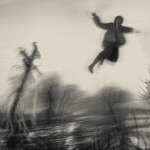
PD: Flare is a series I shot in 2006 while in Europe. I was 26 and it was my first time there. I took all the pictures I could possibly take and then, when I came back, I didn’t have enough money to develop the 30 rolls I had; so, I kept them, tagged them, and forgot them. Years later, my cat decided they were a fantastic snack and bit one of them leaving them with two holes. There, I conceived the idea that light comes in like a parasite. In photography, the “flare” is a mistake, a light that’s not meant to be there, so it allowed me to think of the error not as a flaw, but as a possibility. Having to develop those rolls nearly two decades after they were taken was a conscious decision for working with distinct temporal layers. The image didn’t only contain the moment it was snapped, but also the time that had passed, its oblivion, the accident, and the waiting. The light that peered through those perforations didn’t belong to the past that the image showed, but to the revealed present. It was then that I understood photography could work as a space where different times could coexist together. Light behaved as a living agent, capable of infiltrating and modifying an extant image. That idea of light as something that invades, is unfiltered, and capable of transformation strengthened my interest to search for processes that escape control.
Flare turned out to be a reflection on chance, randomness, error, and temporality. I wasn’t interested in mending the image or restoring it, but in accepting that unexpected intervention as a fundamental part of the process. The series talks about how time and light can rewrite an image. How photography is not a fixed object, but something that can change with time.

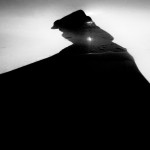
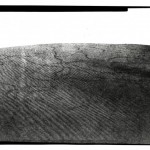
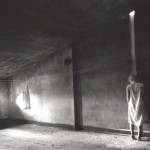
©Paola Dávila, Flare series, print made from intervened BW 120 negative film
LP: In Juegos (Play), you tour through parks with different tenors and then play with textiles. How was that conceptual constellation formed?
PD: The series came about after wandering through multiple parks and gardens I considered making it a daily report, but I didn’t want it to be just my “mini travel journal”; so, I started to think of the city as a grid or a network, with a plot that could be read, interpreted, and reinterpreted. That’s why it’s called “Play.” In French, according to Roland Barthes, the verb “jouer” means not only “to play”, but also “to interpret.”
To me, those weeks of wandering were interpretations of the city. Each day the story was different. Every day I was able to read a different thing about it, even though it was technically the same place.
The reason why I used wool textiles visibly overlapping and crossing its fibers was because it allowed me to visually translate the idea of the network, an unnoticed plot made of multiple readings. Textiles are the material extension of a journey, like a record of interpretations that are sewn over time.
In Play, the act of walking, observing, and interpreting becomes as important as the result they produce. The series talks about the city as a readable, playable, and open to intervention space shaped by daily experience, where each movement generates a new possibility of meaning.

©Paola Dávila, Juegos (Play) series, down thread on indigo-dyed wool. Pre-Hispanic technique made in the workshop of master craftsman Román Gutiérrez, Teotitlán del Valle, Oaxaca
LP: Afterwards comes the sea, cyanotype and a different process. Tell me, how does Mareas (Tides) appear?
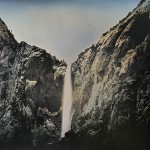
PD: I started working on Mareas during a residency I did on the shoreline. I began to experiment with cyanotype not as a controlled process in a lab, but in nature: with the landscape, the sea, the sun, humidity, and wind. The tide would rise and fall and I’d work with it. The sea intervened in the image, with all of its unpredictability. It stopped being my process. It made me accept a much more radical loss of control. As opposed to the lab where everything can be measured and planned, being in the ocean introduces a constant state of uncertainty. Each wave, each change of light or humidity modified the result, and I had to react in those conditions in real time. It left marks that couldn’t be corrected or repeated. I would prepare the paper, the chemicals, and the moment, but when you’re there, the sea takes over. Each piece becomes a living archive of the sea. I wanted to collaborate with the landscape rather than turn it into a subject to be captured, so each piece traces the number of waves that interacted with the paper and the precise geographic location where it occurred. Mareas arises from that fascination of letting the image occur on its own; of accepting the process as a dialogue built upon oneself and uncontrollable forces that bring it to life.

©Paola Dávila, Mareas (Tides) series, cyanotype on paper
LP: Does the body act as a part of the process as well? How does it relate to the making of the piece?
PD: Of course. The body—my body—is there, moving, holding the paper, getting into and out of the water. Being there involves having to stand through fatigue and resistance in order to find balance. The body answers to the environment and its changes; and it’s that very response that helps give shape to the image, even if it’s invisible to the eyes. There isn’t a clear line between acting and waiting.
The photograph isn’t just the final image we see; it’s the process as a whole. And within that I found a key element of my practice: landscape as a laboratory. And not just as a metaphor, but literally. The natural lab demands presence, attention, and more importantly, adaptation. The body becomes the contact point between the designed processes and the natural ones; between what can be prepared and what happens. In other words, both labs: the chemical and natural one merge. The sun expands, the tide reveals, the wind dries. Time becomes the central theme, and the image is left as a witness to that.
LP: How did you realize that time needed to play such an important role in your work?
PD: I believe the concept of time is something I inherited from my grandmother. She was essential both in my practice and my life. She lived in a world where one had to resist, where life was knitted through the home and the body. And that resilience appears in my creative process. It’s not literal, but it’s there: in every long, insistent, silent, careful process.
Time for me has never been abstract. I grew up observing how life would preserve itself through repeated gestures, and constant, silent practices that weren’t looking for immediate results, but permanence. That way of being translated naturally to my creative practice: my long, detailed processes are response to that inheritance. I am interested in that which is built little by little, without rushing.
LP: In some parts of your work silk, macroalgae, chemistry, color, and camera-less photography appear. How would you define that?
PD: This body of work began when I was working with algae, macroalgae, and other sea materials. I became interested in the interrelation between the support and the image. Silk is fragile and sensitive, nearly weightless, like skin. Algae leave chemical trails, inks, and markings. Some of these works are impressions that don’t require a camera. They are photography in its most literal sense: light creating a reaction leaving a print on a surface. At that point, the image stops being something that is captured and turns into something that happens.
That “happening” unfolds through two different processes, each one leading to a distinct chromatic presence. In the first, I use a rigid paper support and place silk pre-treated with cyanotype emulsion on top of it, followed by the algae. Under the sun, the reaction produces deep greens and blues—tones that feel dense, almost submerged. In the second process, the silk is left untreated and the paper activates the emulsion instead. The silk absorbs the ferric salts directly, resulting in pieces with a white background. The atmosphere shifts completely: the color becomes lighter, more open, more exposed.

©Paola Dávila, Salomas (Sea Shanties) series, cyanotype on silk
LP: And on this topic of printing, you also have a piece that became a book, right?
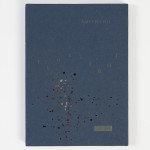
PD: Yes. The book is called La orilla es horizonte (The Shore Is Horizon). It was published by Sexto Piso and I’m really excited that it’s finally available. We put a lot of work into it. It’s a book that groups and knits together 25 years of my work. From chemical and photography processes, to the simple act of walking, waiting, or observing. All of these are linked through time. I feel that rather than it being the end of an era, each project would begin a new path to continue. That’s why I chose the title. My practice on the edge isn’t a border; it’s a threshold.
Personally, the shore has always been the horizon because you know something lies beyond it, but you also see what’s left of the surface you’re on. I never think of it as a limit that marks an end; I prefer to see it as a place where other possibilities come to light.
LP: And why do it now?
PD: I decided to do it because I felt it was the time to bring together my thoughts and images. This project explores my understanding of photography not only as an image, but as something alive. I work with algae that arrive to wash up on the seashore to die; with waters that crystalize differently depending on their origin; with the silk’s protein that reacts differently to chemicals; and with light that marks different times. All of this, to me, is photography, and I believe the book establishes that clearly. It’s not closure, it’s expansion, a conversation.

©Paola Dávila, Laminariales series, cyanotype on paper

©Paola Dávila, Laminariales series, cyanotype on paper
LP: Nowadays, photography is being redefined with the immense number of images and techniques available. What are your thoughts on that?
PD: I can see that we, as a society, are living in a time where technique is no longer the focus. What matters is the what and the why. Having a camera doesn’t guarantee anything. You can do photography without one, you can do it with vintage rolls, chemicals, and nature. What truly matters is the purpose and articulation of the project. In that context, photography goes from a matter of medium to a matter of thought. What matters is asking: what does it want to say and why say it in that specific way. Technique, then, is the path of that thought, not its goal.
I think that shift is healthy. It forces one to stop, reflect, and take a stance in front of the world. In that sense, the redefining of photography isn’t about how new or advanced the tools are, but about the depth of the questions each project poses.
LP: And lastly, if someone were to enter an exhibition of yours for the first time, without knowing your work, what would you like for them to grasp?
PD: I’d like them to know that they’re not just looking at an image, but at a process. That work, time, landscape, body, and mind were put into it. That photography isn’t just a moment; it’s a state. And that sometimes photography can happen before or after the click, like a seed that takes years to bloom.
For me it’s important that the landscape, the body, and the environment are not passive constituents. They are elements that actively participate in the construction of the piece. Time isn’t frozen in the image; it’s contained in it, accumulating memory itself.
I’d also like it if viewers approached the work without expecting an immediate or definite reading. My work doesn’t give easy or quick answers. It’s an invitation to stop and calmly look and accept that not everything is revealed at first sight.
If someone can walk out of my exhibition understanding that photography can be a prolonged experience; something that is lived beyond a mere instant; something that is built with patience, then my work has done its job.
Lou Peralta is a visual artist and contemporary photographer based in Mexico City. She belongs to the fourth generation of a family dedicated to portrait photography—a legacy that continues to nourish her ongoing exploration of the genre. Her practice expands the limits of the two-dimensional photographic image, reimagining portraiture as a sculptural and spatial experience through hand-built structures using materials such as paper, fabric, agave fiber, and wire.
Her work has been featured in solo and group exhibitions in Mexico and abroad. Peralta is a Fujifilm brand ambassador through the X-Photographers program. Recent recognition of her work includes being selected for the Photolucida Critical Mass Top 50 (2023 and 2025), the FRESH Photography Award (2025), the 22nd Santa Fe Photography Symposium in New Mexico (2023), the selection of one of her works for the Ibero Puebla Biennial (BIP) 2025, and an artist residency at The ANT Project (2026).
Instagram: @lou_peralta_photo_based_artist
Posts on Lenscratch may not be reproduced without the permission of the Lenscratch staff and the photographer.
Recommended
-

Mexico Week – Paola Dávila: Beyond the LandscapeMarch 25th, 2026
-
Mexico Week – Tomás Casademunt: Time Frozen by LightMarch 24th, 2026
-
Bryan Whitney: The Spiritual LightMarch 17th, 2026
-
Binh Danh: Belonging in the National ParkMarch 4th, 2026
-
Vaune Trachman: Now IS AlwaysMarch 3rd, 2026