Overshoot #4 / misha de ridder
I met misha de ridder (the artist prefers using lowercase) during the NFT boom of fall 2021.
Oh, those Covid years… And the NFT boom… I recall the insatiable energy that flowed through Discord channels and Twitter. Photographers united and created platforms to learn, share, and discuss the then rapidly emerging ecosystem of NFTs.
DAOs (Decentralized Autonomous Organizations) were modern-day Photographers Associations, offering a drastic new model of redistribution, support, and transparency.
Among the few cohorts that rapidly emerged and consolidated, Assembly.art, which represents misha, Fellowship (now postphotography.xyz), and Obscura were among the first. Each created onboarding portals into the world of NFTs, blockchain technology, and digital art, while curating distinctive programs and aesthetics.
Besides being an active artist, misha generously shared and unraveled the latest blockchain updates and tools in technology-centric channels, especially on Assembly and Obscura. He would always present them with a unique artistry. That blend of tech and art made me curious about his work.
At Paris Photo in fall 2024, I rediscovered his work at Caroline O’Breen’s booth. I instantly recognized his style. generative by nature, which began as an NFT-native project that launched on Twitter around Earth Day in April 2022, attained a new life as a series of large tableaus impeccably printed and framed. Installed in the context of the Grand Palais, de ridder’s prints gave the impression that nature had begun to coil up on the lofty green arches of the stunning 1870s building.
de ridder creates new ecologies by embracing the digital nature of today’s photographic images. Perhaps, digital photographs were meant to circulate on every conceivable network, the blockchain being one of them. His work also challenges the generative art nomenclature. He draws our attention to the generation that underlies everything we do: the seasonal cycle, and more specifically, the colorful burst of spring. If there is a code that programs this explosion of colors and forms every year, then it operates with stunning precision once all the meteorological conditions are met. Though, to be clear, spring occurs at an earlier date due to climate change, a worrisome conundrum de ridder touches upon, inspired by Donna Haraway’s Staying with the Trouble (2016).
What follows is an edited transcript of our long conversation, recorded on June 6, 2025.
Make sure to check out misha’s dedicated webpage for generative by nature here: https://generativebynature.mishaderidder.com/

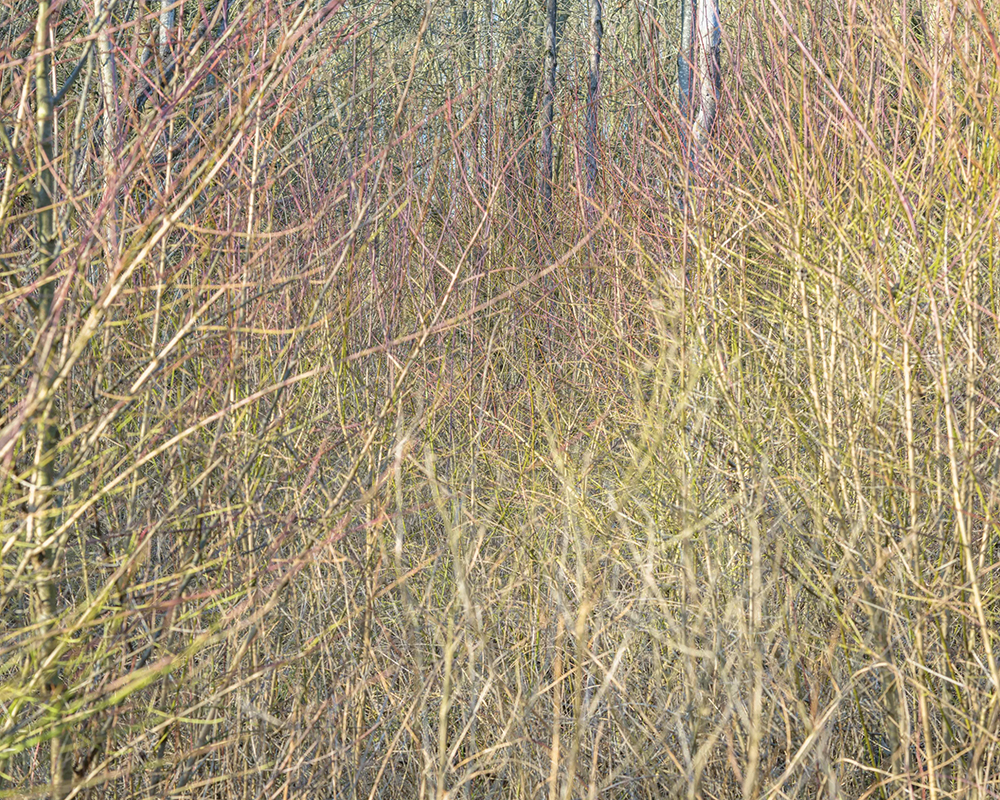
misha de ridder, 24 march 11:20, from the series generative by nature, 2021-2022
Yogan Muller: Misha, we met during the NFT boom of fall 2021. The focus of our conversation today is your generative by nature series, a wondrous, ecologically-minded body of work you released in 2022. Before we look at it as an NFT-native collection, let’s discuss what drew you to this specific polder and please discuss your photographic process.
misha de ridder: During the Covid-19 lockdowns, I kept going to a polder called Stille Kern, literally “silent core.” I enjoyed spending time there because it is, in my opinion, very close to what wilderness is like. Of course, that’s really weird to say because in Holland, everything is human-made and modeled. This place, Stille Kern, is no exception. It sits on the former bottom of the sea, and it went dry in the 1970s, so it’s a very young land. They planted trees in a grid-like arrangement. These trees are now grown and stand in blocks. The nice thing is that at a certain point, they decided, “well, we don’t need this anymore for timber, and we don’t need the land either, we want to have a wild nature area.” So they just let it go, planted more trees and thorny plants, let in wild horses and cows, and other animals to make the area look and feel wilder. They also dug some water bodies, and then they just let them be. What is very unique about this polder is that you can walk everywhere. In Holland, you always have to stay on paths, whether in a park or forest, because everything is very fragile. In Stille Kern, one can just walk without following paths. Even nicer is that a lot of the trees are what they call “pioneer trees.” A lot of them are dying or falling. When there’s a storm, trees go down. All this grid-like forest is falling apart. I have my word for it, and I call it “feral mimesis.” The human agency mixes with the wild, so there’s something new and unexpected that continuously arises there.
More theoretically, in the West we have this idea about ecology where humans are here, on the one hand, and nature is there, on the other hand. This is a theorized and consequential, but of course, romantic gap artificially created in the 19th century. When you go to a place like Stille Kern, this theoretical gap disappears because you can’t say what it is, you know? Is it human-made? Is it wild? And this mix has a seed for the future when we ponder climate change, for example. To reference Donna Haraway and her book “Staying With the Trouble,” we have to accept that we sometimes change the world for the better. However, a lot of times we change the world for the worse. In Stille Kern, seeing nature take over human-designed elements so quickly is a very positive feeling. You can see nature just doing its thing. It doesn’t matter if it was all human-made or human-planted. Nature will generate itself. That’s the core of “generative by nature.”
In addition, I wanted to make work that was very positive because we were caught in the dark times of the Covid-19 pandemic. The good thing I could work in Stille Kern as much as I wanted. Nobody was there. It’s remote. I spent days and days and days by myself. I was the only car parked. I love the colors of winter in nature because, contrary to popular opinion, there’s a lot of color. I stood there and decided to start photographing the coming of spring. Simple.
Photographically, I only went there when it was sunny and very bright. You can have this bright spring light here in Holland, really fresh. And only with that kind of weather, I would go and photograph because I wanted to capture this positive feeling. If you have the light, the colors come out. If you look at the photographs, everything is very high key. It’s almost overexposed. I learned to do that in Los Angeles. Although, as it is, this harsh sunlight with harsh shadows makes for very ugly pictures in my eyes. But if you measure your light in the shadows, the darks will glow up and the highlights will almost be pure white. It becomes beautiful because the colors are full and open, but subdued at the same time.
This series is about the positive, and it’s about, you know, how you can regenerate worlds. But also, what is this forest? What is nature? What is this generative force? Coming from the Web3 space, where you see a lot of generative art made with algorithms, I had the idea that it may be impossible for humans to replicate its mystical algorithm in a computer. It may not be necessary. It’s already there. Each year, this magical algorithm creates what we experience is happening in spring. You can just step away from your screen, go outside, and there it is! It’s a powerful force.
misha de ridder, 2 March 15:53, from the series generative by nature
Yogan Muller: This series was conceived as an NFT native collection and released through 36 “drops” starting in spring of 2022. Tell us more about those mechanics.
misha de ridder: I’m going to tell you more about this. There’s only one thing I have to add to my last answer, something that’s at the core of my work, and also explains why I’m doing this. The world exists through how you look at it. So the way you look at the world creates the world, and if you look at the world in a positive way, you’re going to be in a positive world. You can also look very darkly at the world, and you will be in a dark world. This is the idea, and with a camera, you can focus on it. A camera is a looking machine. So through it, you can show your idea of the world and your perspective. For me, it is a very core idea that you shape the world by looking and looking better and looking more, and the more you see and the more you look, the more you get to see stuff like that.
Coming to the NFT nature of the series, I simply wanted to have my marketplace because at the time, there was a lot of discussion about Open Sea (editor’s note: a major NFT marketplace) and royalties. In Web3, you can do it all yourself; you don’t need Foundation (another major NFT marketplace), you can just build something.
So I decided I wanted to make my own marketplace. I also wanted to do everything myself, mint my own smart contracts, for example. I did my 36 drops on the Tezos blockchain because at the time Ethereum was still proof-of-work (editor’s note: A more energy-hungry process, as opposed to Tezos’ proof-of-stake, a lighter minting process). I thought making and minting a series about nature and generative forces on a proof-of-work blockchain didn’t seem right. I also had a lot of fun in the Tezos space. I met a lot of nice artists and people. Tezos was, at the time, very cheap in gas (editor’s note: gas refers to a processing fee to put a token on the blockchain). Now everything is cheap, especially with the Ethereum layer two; it costs pretty much nothing. Even layer one Ethereum is crazy cheap right now. But back then, you had these crazy mint prices. These high fees of Ethereum held me back. I launched the generative by nature website on March 1, 2022, with an almost completely blank page and a note of pink. And then, you know, on the days I photographed, they appeared on the website, I would just literally mint them. So that was quite an intense process because I didn’t realize I was doing a drop of like three months straight. It was also crazy because I had to do the minting, which was also stressful because I wanted to mint exactly on the right time and the right day. In the end, I restructured my whole life around doing this drop for three months. 36 pictures, it’s quite a lot to mint. But for the viewer, it was quite interesting because you could see spring developing on your screen, which is how the drop went down.
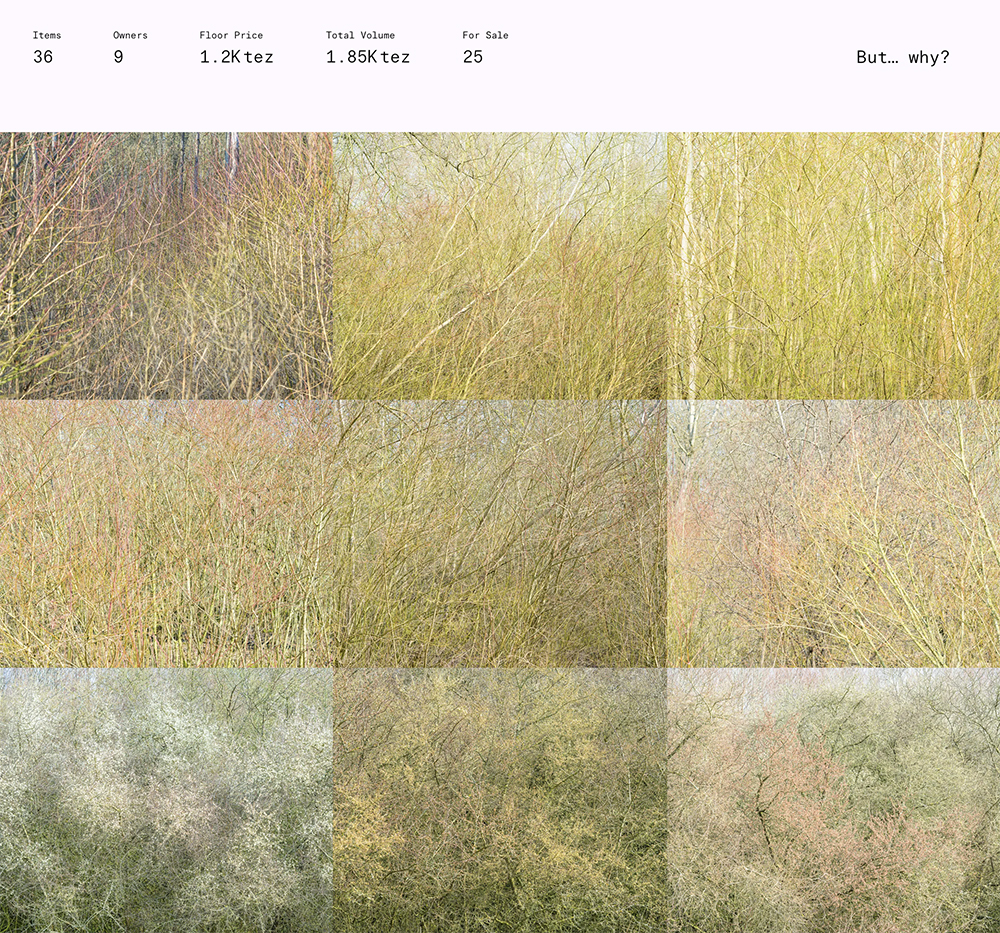
Screenshot the generative by nature NFT collection, https://generativebynature.mishaderidder.com/
Yogan Muller: Back in 2021-2022, it seems to me that people questioned the ecological footprint of NFTs and blockchain technology at large, citing their gluttonous power consumption. Did you choose Tezos and OBJKT as a way to kind of lessen the series’ footprint? What’s so special about Tezos?
misha de ridder: I used Tezos because it didn’t use that much energy. I thought generative by nature, a nature project, should not have this ecological burden; it didn’t feel right. So that’s primarily why I chose Tezos. As for OBJKT, it’s a very open platform. In fact, it’s open source. It’s built by people with a lot of love. The API is also really open. What I did was I built my marketplace using the API endpoints and data feeds of OBJKT. So the whole series is powered by OBJKT’s open mechanics, which I thought was fantastic. So I can have access to prices, who collected it, and all this data I’m just pulling from OBJKT and that’s fantastic that they have this open API everyone can use. Folks there also constantly got back to me and helped me a lot, as opposed to the bigger marketplaces that worked like a closed circuit, like Foundation where you have to get an invite to get on board and market your work. Similarly, Open Sea tried to capture you in a certain way that wasn’t as transparent and open as OBJKT. I think that nowadays, with all the layer 2 chains, like Ethereum, there are a lot of new opportunities. For example, with Manifold, which was at the time still developing, there is an incredible toolbox for making NFTs, which truly empower artists. The irony is that all the tools and all the stuff we were complaining about in 2021-22, and all the hurdles we had to overcome then, are all solved now! Everything is much smoother and better, and faster today. Everything has improved a lot. If we were in 2021 and we had an NFT boom right now, it would be an absolutely crazy time for NFTs, probably. Anyways, we’ve got here because we had this intense discussion, research, and put out our work in the open back then.
I think my work is also adding to the discussion of what it means, as an artist, to mint your work and to create your marketplace, to make all of this yours. How do you empower yourself? I sell work through traditional galleries who represent my work; Assembly in Houston for the US and Caroline O’Breen in Amsterdam for Europe, so more conventionally, but it’s very interesting to see that through the digital space, an artist can have this new relationship with their collectors and a brand new way of distributing their work. Fundamentally, it becomes more open, not unlike public art. NFTs are more like, as I always say playfully, a bench in the park. Everyone can sit on this bench, but only one person has a name plate, like “funded by…” or other mentions.
I did another project last year called glitch, where I really wanted to go a step further, and also because flipping pictures didn’t do it for me. And of course, with generative by nature, I already tried to build a conceptual framework with my three-month drop and laid out other ideas through designing host websites for my NFTs. With glitch, I wanted to build something dynamic, because the Ethereum blockchain and all blockchains, by the way, are sort of a world computer. Everybody can use it. And so I went back to the building block of what we call a “smart contract.” It’s an application that runs on the blockchain. So if you write a smart contract, you actually write an application. And with this application, you can do a lot of stuff. So, for glitch, I wanted to revisit this common conception of digital art that once you mint it on the blockchain, it lasts forever. I wanted to make digital art that would deteriorate over time. I wanted to introduce entropy. I built this smart contract so that every time collectors resell the work, it deteriorates. At the end, you have an almost blank image. You can see traces of what it was, but at a certain point, it’s destroyed, and you can print it, you can make it physical. Ultimately, Glitch creates a move from the digital to the physical. You can also decide “I want to have my old work back” and refresh it by paying a little fee. Since glitch is royalty-free, this refresh fee is a form of royalties.
I think the future of blockchain art is what I call “protocol art.” You design rules, like a game. This way, you can concretely involve people in the work itself. Works can be dynamic, and collectors can engage with them in all kinds of new ways.
Yogan Muller: Speaking of which, I remember all the posts that you made on Assembly’s Discord server. I remember you consistently posting in a channel dedicated to NFTs and technology. How do you nurture your tech curiosity?
misha de ridder: I was doing that because information is so important, and there was a constant influx of new people coming into the space. This space, by the way, is like the wild west. It’s very dangerous if you don’t know what you’re doing. One can lose money very easily. My goal was to educate people on safety, what is possible, and also have this discussion about royalties, marketplace, and ownership. I was also asked by Alejandro Cartagena to do the same for Obscura DAO, where I’ve run a channel about philosophy and technology. It was even nicer than what I did with Assembly because I could go deeper while engaging with people.
I joined a project called JPG founded by María Paula, building a canon for digital art on the blockchain. We had this idea that art historians and all these curators they’re going to tell a story about Web3 art. As primary adopters and practitioners, we knew what happened, what this means, and what we wanted to say with this work. So we group-curated the history of blockchain art. But then the money disappeared suddenly when the bear market came (editor’s note: winter/spring 2022) and then this whole project collapsed.
After JPG sunsetted María Paula told me about this guy Tim Daubenschütz creating a crypto news feed called Kiwi News, a “prime feed for hacker engineers building a decentralized future”, inspired by hacker news. So I bought a Kiwi NFT and joined Kiwi News which was then starting up. It’s still going strong. We group-curate crypto news. Every day we discuss what’s happening and where it’s going. Every day I am posting and commenting on crypto news. That’s how I’m still following what’s happening. It is a lot of fun.
I’m still interested in following crypto news and having that discussion, but also it’s getting harder because the space is changing. Part of it is being captured by the government, especially the American government. You also have all the meme coins and the speculation. So a lot is going on. That said, these are things I didn’t sign up for. I signed up for privacy, ownership, own your identity, own your money, and self-banking, which I do through Gnosischain and Gnosis DAO, running a node, validating, etc – I think I found my tribe.
Yogan Muller: Going back to generative by nature, you write: “Nature is the teacher of the arts. It may be impossible for humans to ever replicate its mystical algorithm in a computer. It may not be necessary. It’s already there. Embrace the positive beauty of reality.” I found it quite mystical. I’m curious to hear you speak about this.
misha de ridder: It’s this idea that we are nature ourselves. Simultaneously, we try to replicate nature in all kinds of ways. We marvel at how nature works, and like I said earlier, photography is the way to do just this. Through photography’s looking machine, you come to realize how complex the world’s inner workings are and how mystical everything is. With our technology, we can try to emulate nature. Large Language Models replicate neuron networks, for example. Also, going back to blockchain, it looks a lot like nature. If you run a blockchain load and look at the stations and how it runs, you look at the logs, it has the same feelings and patterns you see if you look at water, for example. At the same time, think about the infrastructure we’ve built with the internet. It’s so complex that nobody knows what we’ve built and how much power there is right at our fingertips. A few months ago, you had a tiny Microsoft update, and all the airports went blank. A lot of it hangs on little threads.
Another interesting thing is that we don’t know the world around us. Nature’s inherent mystery unfolds in front of a camera, but also when you sit in the grass and start looking at grass leaves for a longer time, noticing little insects walking. Suddenly, the world opens up. What does it mean, you know? What’s the mechanics behind it? No idea! In that sense, nature is the teacher of the arts. Artists look at nature and wonder how it works, and how we can translate the world. Nature is also an inspiration. For example, in Amsterdam, there is a zoo commonly called Artis, but whose full name is Natura Artis Magistra, which is Latin for “Nature is the teacher of art” That’s it. If you want to know more about the world, you have to go outside and make long walks, and look, and take time, and sit still, or go camping. That said, you will never really find out what is happening, and that is why we have art. We can talk to each other in English, but it’s hardly sufficient to fully describe what we feel and see. So we need other ways–photography, painting, music, etc.– to convey what we see and feel about the world and convey some of this mystery which we will never fully grasp.
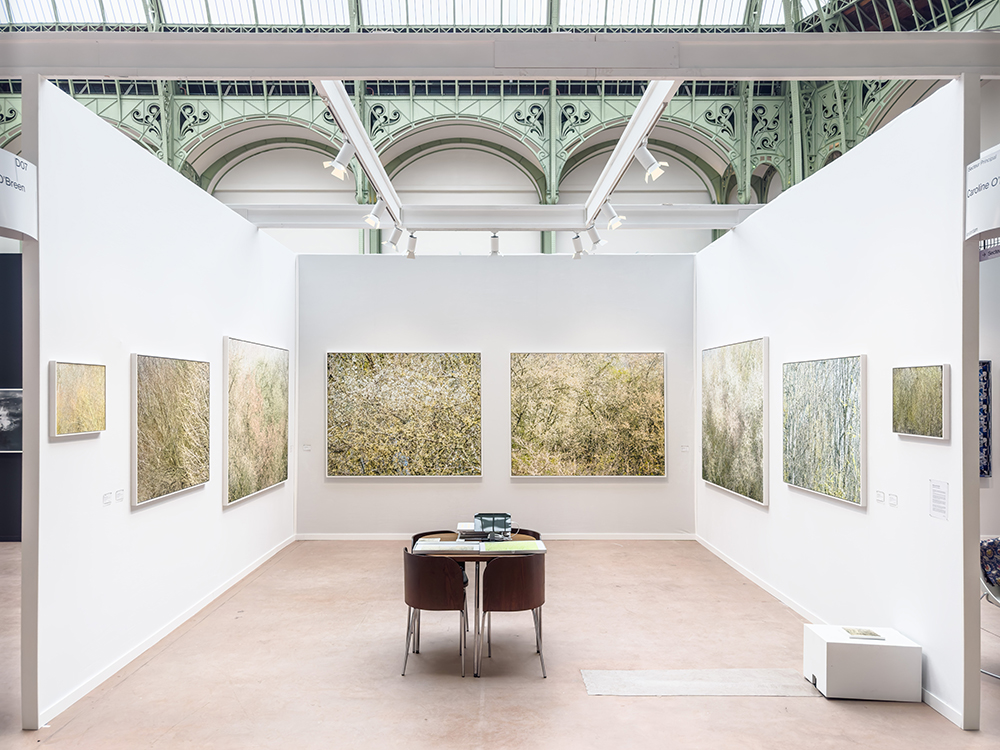
Caroline O’Breen’s booth at Paris Photo 2024. Photo courtesy: misha de ridder.
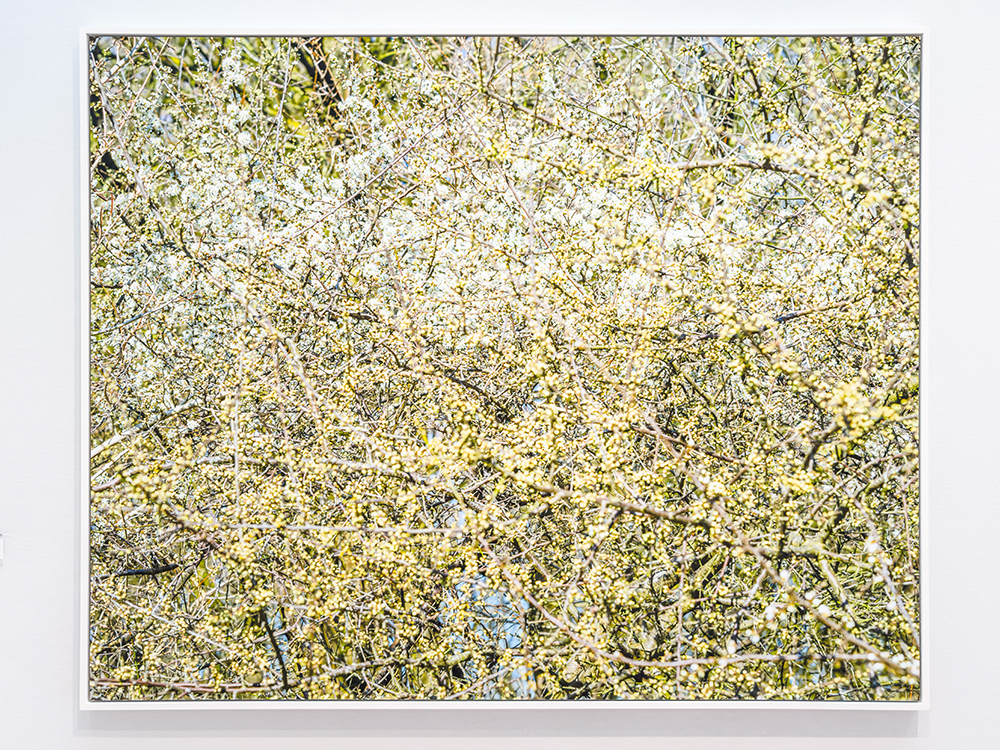
Installation view, generative by nature, Caroline O’Breen gallery, Paris Photo 2024. Photo courtesy: misha de ridder.
Yogan Muller: misha, you showed “generative by nature” as a gorgeous collection of large framed prints with Caroline O’Breen during Paris Photo last year. Can you tell us more about how you brought this NFT-native series to the Paris Photo walls?
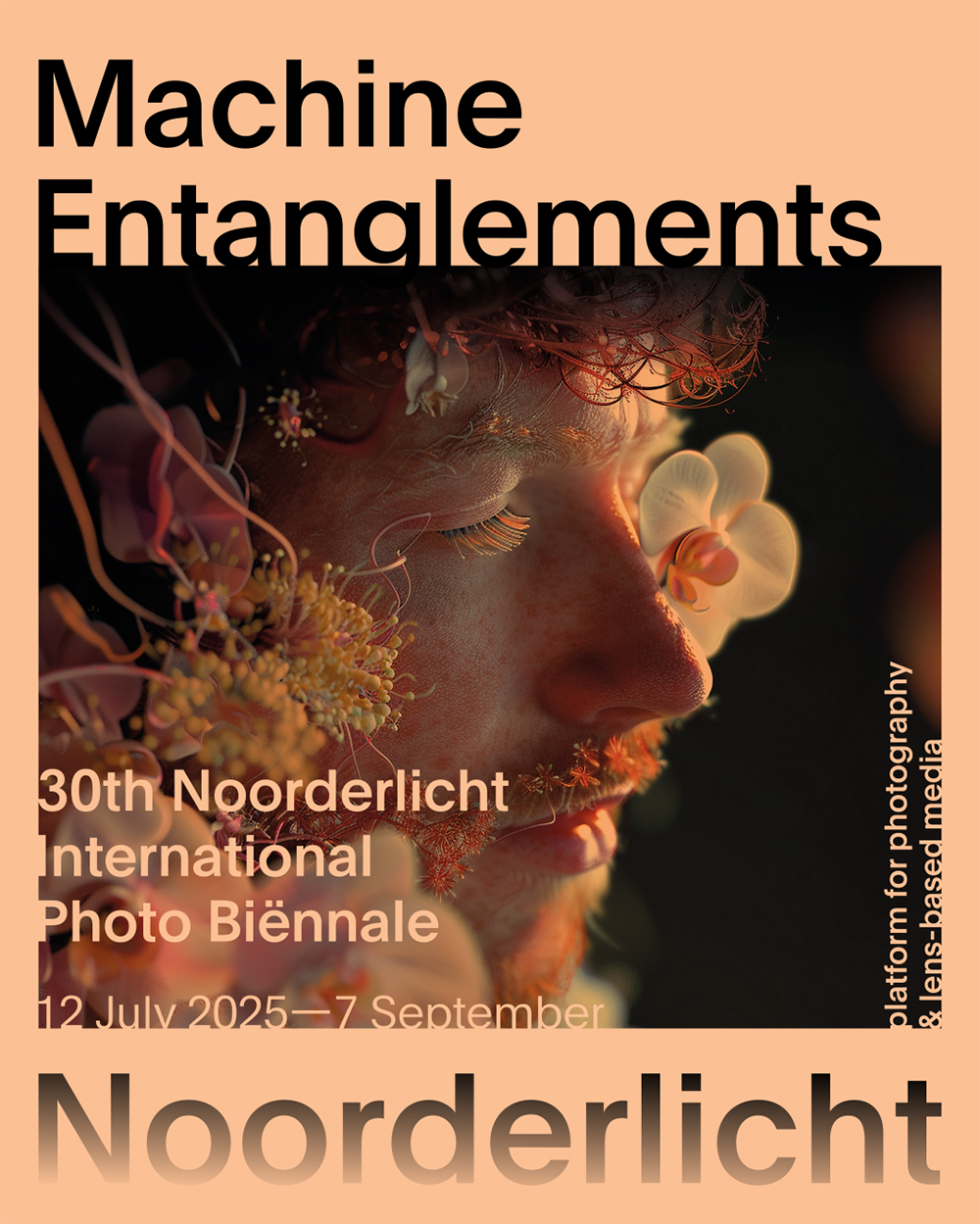
misha de ridder: The work is very high resolution, so I wanted to have a physical edition, and I happen to have access to a very good printer. I love printing. I print everything in my studio and partly with the help of a lab in Germany. I first created large-scale prints that I showed at the Unseen fair in 2023. I was also nominated by the Meijburg Art Commission in the Netherlands. After this, with Caroline O’Breen, we applied for Paris Photo and they loved the project because Paris Photo presents more and more digital-native work. Today, photography is digital native. Take a photo with a digital camera, it’s firstly a digital file and secondly it’s a print. Now the work is going to Noorderlicht International Photo Biënnale ‘Machine Entanglements’. They just picked that up today (editor’s note: when we recorded this interview on June 6, 2025), and it’s going to show this summer in the museum Belvédère.
Yogan Muller: What does photographing in a warming world mean to you?
misha de ridder: The camera is a looking machine, like a microscope or a telescope. It’s also a tool to look at the world. Now, if you think about ecology, you walk through nature and you don’t really see what’s happening. You only know if you take the time. A photo really gives another perspective, especially nowadays with high-resolution prints. It stands dead still in front of you, and you can look at the world in a wholly different way, and you can also realize how mysterious it is. In my work, I gravitate toward abstraction and try not to photograph landscapes in a romantic way or according to the classical trope of having a foreground, middle-ground, and background. Instead, I try to honor nature in a way that the viewer can look at this world anew. I think this beautified idea, this trope, of nature imagery, let’s say, it stands between you and the world. There are so many beautiful pictures of nature which are well crafted, but because it’s a mirror image of what the naked eye sees, we don’t look at them twice. My images are much weirder with a lot of sharpness and abstraction and brightness, plus you don’t know what you’re looking at, what the scale is. My hope is that by engaging with my pictures, people look at the world anew. I think that this is my contribution to this discussion. I mean, we’re not going to solve our climate problems and other problems in the world if we don’t first solve our relationship to the world. We have to feel we are part of this world. We’re embedded. We’re the world, it is us, and we are in it. I think photography can make people conscious of this fundamental connection.
Posts on Lenscratch may not be reproduced without the permission of the Lenscratch staff and the photographer.
Recommended
-
Overshoot #9: Liz Miller KovacsDecember 13th, 2025
-
Overshoot #8 – Arturo SotoNovember 15th, 2025
-

Overshoot #7 with Ayda GragossianOctober 11th, 2025
-
Overshoot #6 with Siobhan AngusSeptember 13th, 2025
-
Overshoot #5 – Alex Turner’s “Blind Forest”August 9th, 2025