CENTER Producer’s Choice 2nd Place Award: Muriel Hasbun
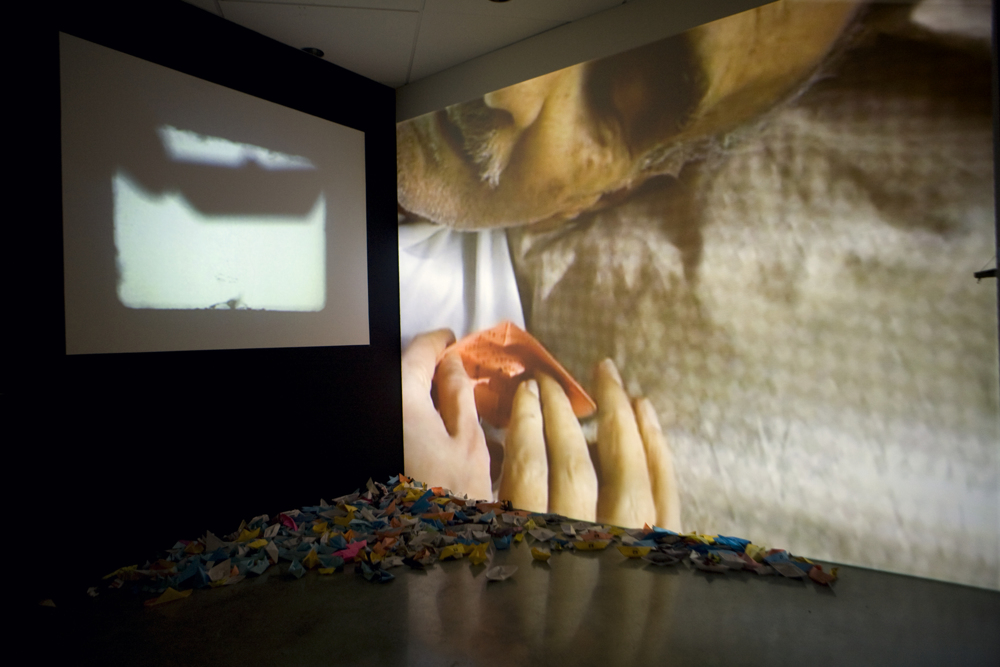
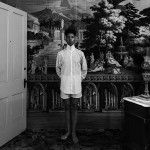
©Muriel Hasbun, barquitos de papel/ paper boats, installation view, American University Museum, Washington, DC, 2008.
Congratulations to Muriel Hasbun for her Second Place win for CENTER’s 2018 Producer’s Choice Award for her projects, Barquitos de papel / paper boats, Pax Tecum Filomena, and Documented: The Community Blackboard. The Choice Awards recognize outstanding photographers working in all processes and subject matter. Images can be singular or part of a series.
Juror Keith Jenkins, Director of Visual Journalism, NPR; formerly Supervising Senior Producer, Multimedia, NPR shares his insights on his selections:
For me, if there is one word that separated the winning entries from all the others, that word would be ‘consistent’. The work that stood out was consistent in its storytelling and execution; consistent in theme and approach, and consistent between the stated intent and the final result. Finally, the work was of a consistent high quality that could sustain repeated viewing; revealing new layers of content each time.
The ‘triptych’ presented here challenges our perceptions of multimedia storytelling, presenting the viewer/listener with stories that are both linear and asynchronous. In one, we are led through a collage of media – photo, video, sound, and take a journey through the natural world and the world of the mind. We finally reduce the experience and, by extension a life, to a single object, a folded paper boat, set adrift on an eternal sea. The ambition here, throughout these pieces, attempts to force us out of understanding through knowledge and into understanding through feeling; largely succeeding with its variety of storytelling for the eye, ear, and heart.
Keith Jenkins, Director of Visual Journalism, NPR; formerly Supervising Senior Producer, Multimedia, NPR
Jenkins has been a digital manager and strategist specializing in visual storytelling. Jenkins’ teams have earned Pulitzer, Emmy, Peabody, Murrow, World Press, and Webby awards for The Washington Post, NPR, and National Geographic. Jenkins first came to NPR and spent 5 years setting up the Multimedia department at NPR.
Muriel Hasbun’s expertise as an artist and as an educator focuses on cultural identity, migration and memory. Through an intergenerational, transnational and transcultural lens, Hasbun constructs contemporary narratives and establishes a space for dialogue where individual and collective memory spark new questions about identity and place. Hasbun is the recipient of numerous distinctions: 2017 CENTER Curator’s Choice 2nd Place award, AHCMC Artist Project Grant, Smithsonian Artist Research Fellowship, Howard Chapnick Grant/W. Eugene Smith Memorial Fund, Maryland State Arts Council Individual Artist Awards (Photography and Media), a Museums Connect grant, Corcoran’s Outstanding Creative Research Faculty Award, and a Fulbright Scholar Grant. Hasbun’s work has been exhibited and collected internationally: PINTA Miami, Civilian Art Projects, American University Museum, Centro Cultural de España, Smithsonian American Art Museum, Maier Museum of Art, Light Work, EL Museo del Barrio, Mexican Cultural Institute, NYU’s Hemispheric Institute, Centro Cultural Recoleta, Museum of Photographic Arts, FotoFest, Corcoran Gallery of Art, Venice Biennale, Centro de la Imagen, and the Musée de l’Arles Antique/29ème Rencontres Internationales de la Photographie d’Arles. Most recently, she was Professor and Chair of Photography at the Corcoran College of Art + Design and she is now Professor Emerita at George Washington University. Building upon her socially engaged art and teaching practice, she is the founder and director of Laberinto Projects, a transnational arts, education and cultural memory initiative, fostering contemporary art practices, social inclusion and dialogue in El Salvador and its U.S. diaspora.
Barquitos de papel / paper boats
2006- present
barquitos de papel / paper boats from Muriel Hasbun on Vimeo.
Video and interactive mixed-media installation
3:19 minutes
2006 – present
barquitos de papel shows images of the last week of my father’s life as he and I made paper boats together, while also alluding to the role of lens-based media in the telling of our family’s stories of migration. The installation also beckons to the public to add their own paper boats to the space, inscribed with their own families’ stories of migration. The barquitos de papel collective archive continues to grow each time this piece is shown.
When my father was sick, I felt the need to talk with him about many things, including some that were not so easily broached. Before leaving for El Salvador on what became one of my last visits before his death, I found a little blue paper boat that he had made for my son. The side of the boat advertised the miracle of antioxidants. But we all knew that neither antioxidants nor any other treatment would save his life.
That’s how the idea came to me: we would make paper boats with documents that marked our lives and the history of our family. We would remember births, weddings, deaths, and migrations, along with houses and land still owned or already sold, in El Salvador or even in Bethlehem. Together we reminisced, and while we deciphered stamps and dates on the documents before us, we also managed to speak about his wishes after he’d no longer be with us. – Muriel Hasbun
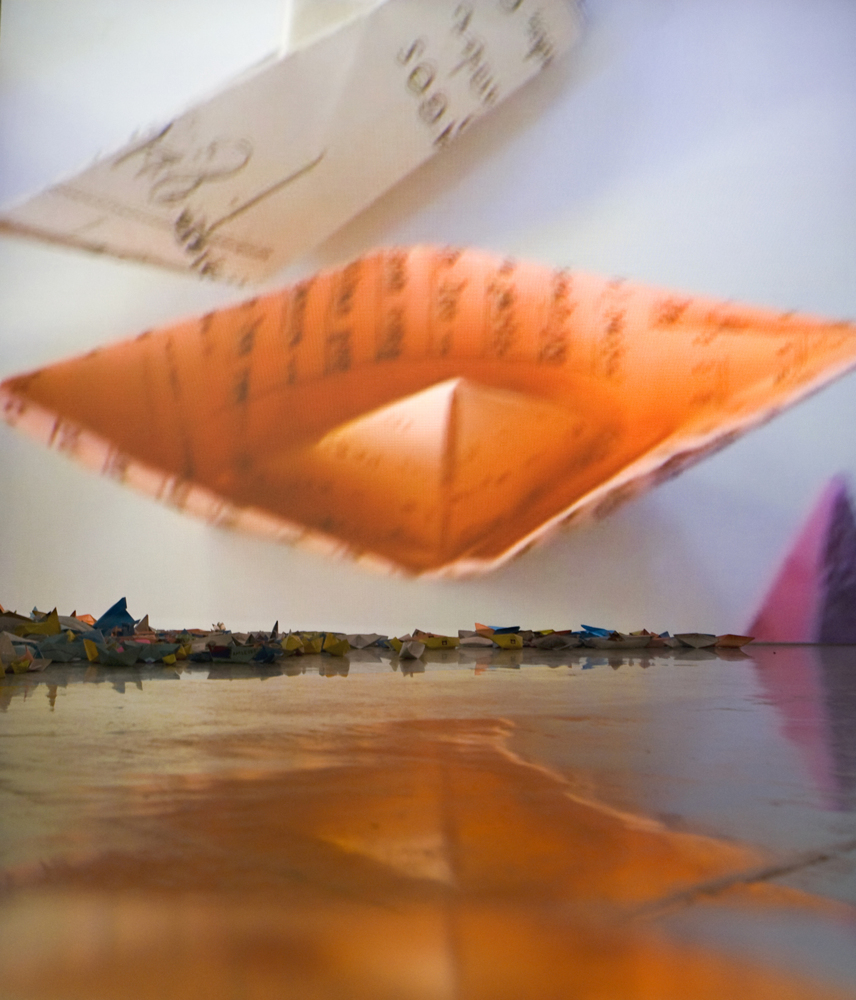
©Muriel Hasbun, Installation view, barquitos de papel/ paper boats, American University Museum, Washington, DC, 2008

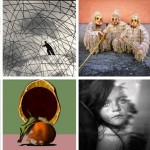
©Muriel Hasbun, barquitos de papel/ paper boats, video stills 2006 – present
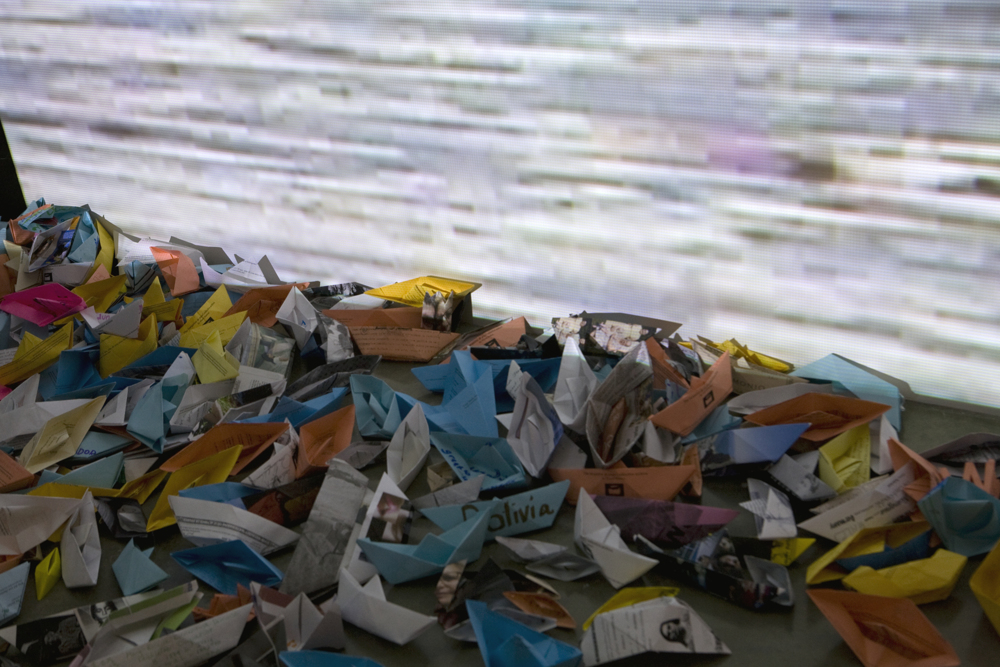
©Muriel Hasbun, Installation view, barquitos de papel/ paper boats, American University Museum, Washington, DC, 2008
Pax Tecum Filomena
Pax Tecum Filomena from Muriel Hasbun on Vimeo.
1:57 minutes
2007
An intense war zone during the civil war, the last time I had been anywhere near the Eastern part of the country was when I was 15, a few years before I left El Salvador to come to the United States. Seeing my cousin Janet’s picture (a.k.a. Filomena) amongst the fallen heroes and martyrs at the Museo de la Revolución thrust me into a charged psychological space where past and present merged, opening the wounds of traumas not completely healed.
May peace be with you.
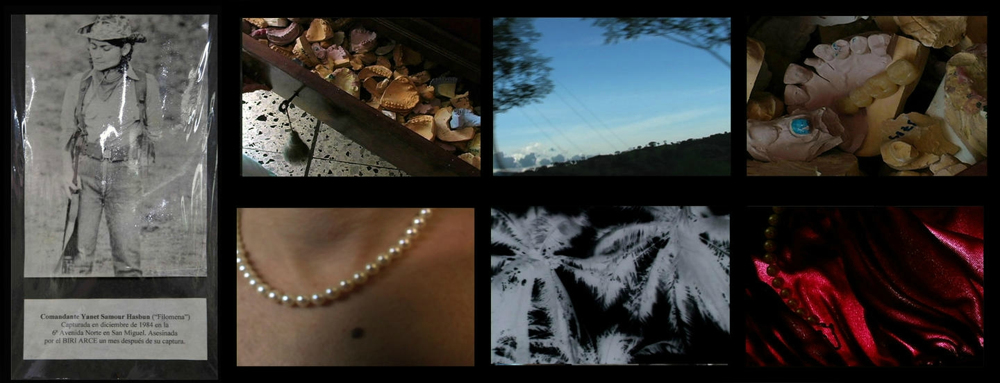
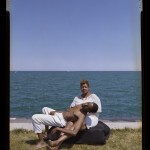
©Muriel Hasbun, Pax Tecum Filomena, Janet Samour Hasbun + video stills, 2007.
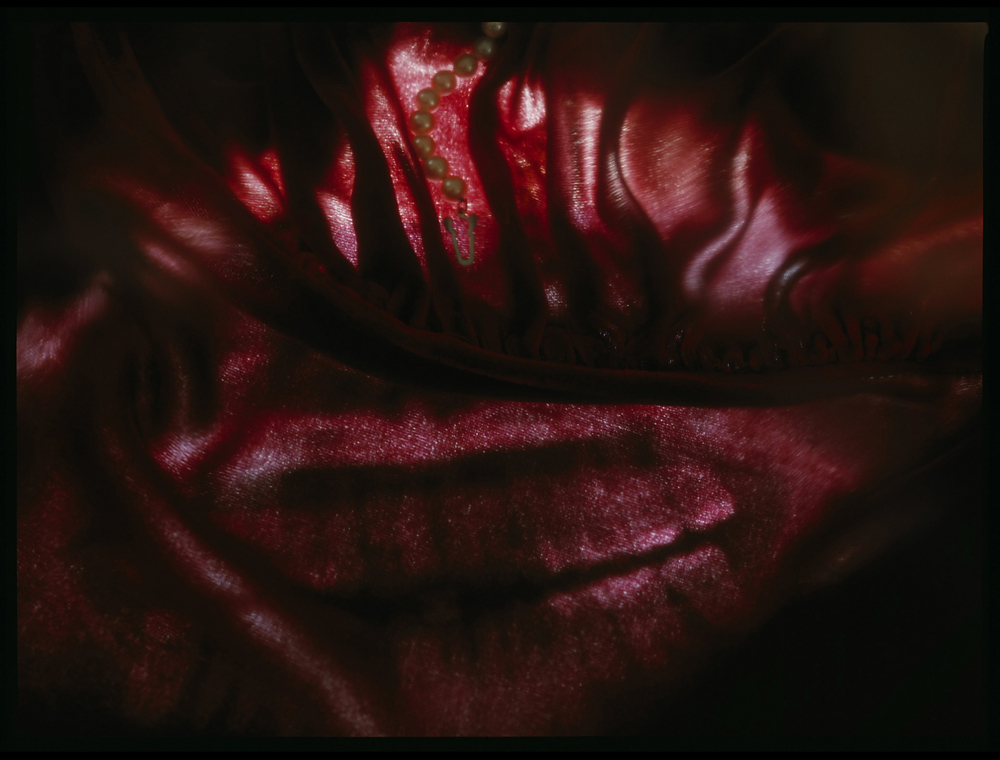
©Muriel Hasbun, Sub secreto, from the video installation, Pax Tecum Filomena, archival pigment print, 31″ x 40″, 2007.
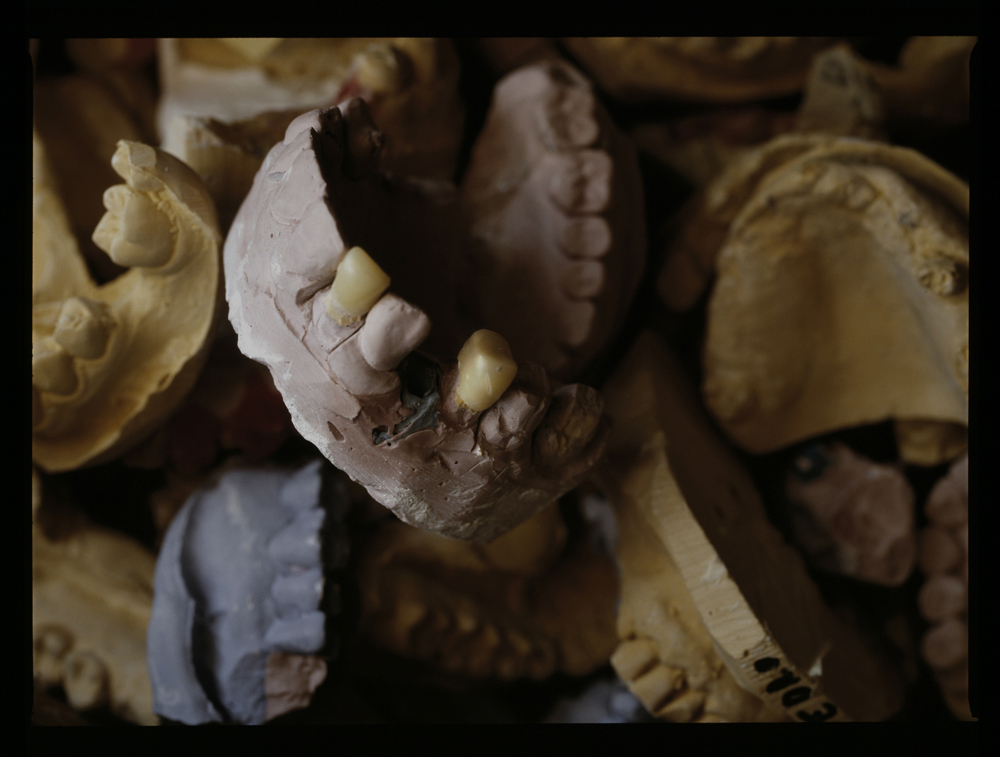
©Muriel Hasbun, Quae vide, from the video installation, Pax Tecum Filomena, archival pigment print, 31″ x 40″, 2007.
Documented: The Community Blackboard
Interactive audio and mixed-media installation
2:42 minutes
2006
A site-specific, interactive and transnational space created for the Art Museum of the Americas in Washington, D.C. (2006), with family photographs gathered during my Fulbright residency in El Salvador. The audio installation invites the public to add their family photos and write their own migration story onto the museum walls while a collage-like bilingual sound piece, streaming into the space, weaves together my own reflections on migration as gathered from oral testimonies and other aural impressions recorded in El Salvador, as well as from excerpts of poems that I wrote when I first came to the U.S. in 1980.

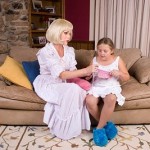
©Muriel Hasbun, Installation detail: Pues dicen que éramos judíos en España…, Documented: The Community Blackboard, Art Museum of the Americas, 2006

©Muriel Hasbun, Installation detail: Generación Spanglish, Documented: The Community Blackboard, Art Museum of the Americas, 2006.
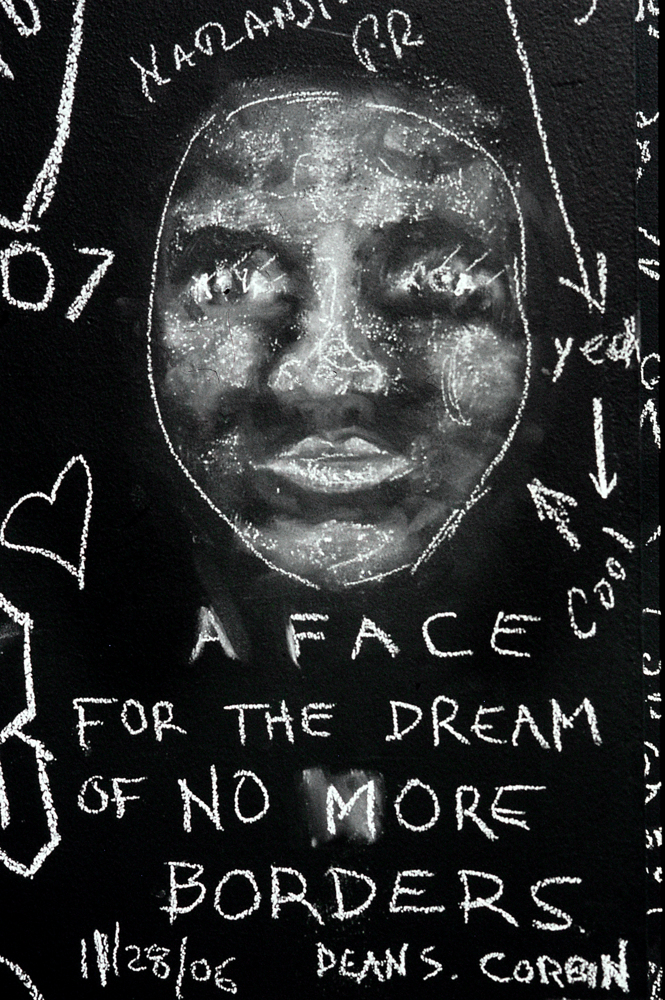
©Muriel Hasbun, Installation detail: A Face for the Dream of No More Borders, Documented: The Community Blackboard, Art Museum of the Americas, 2006.
Posts on Lenscratch may not be reproduced without the permission of the Lenscratch staff and the photographer.
Recommended
-
Shane Hallinan: The 2025 Salon Jane Award WinnerFebruary 12th, 2026
-
Greg Constantine: 7 Doors: An American GulagJanuary 17th, 2026
-
Yorgos Efthymiadis: The James and Audrey Foster Prize 2025 WinnerJanuary 2nd, 2026
-
Arnold Newman Prize: C. Rose Smith: Scenes of Self: Redressing PatriarchyNovember 24th, 2025
-
Celebrating 20 Years of Critical Mass: Cathy Cone (2023) and Takeisha Jefferson (2024)October 1st, 2025