Eva Stenram: Cord Prize Winner for Drape
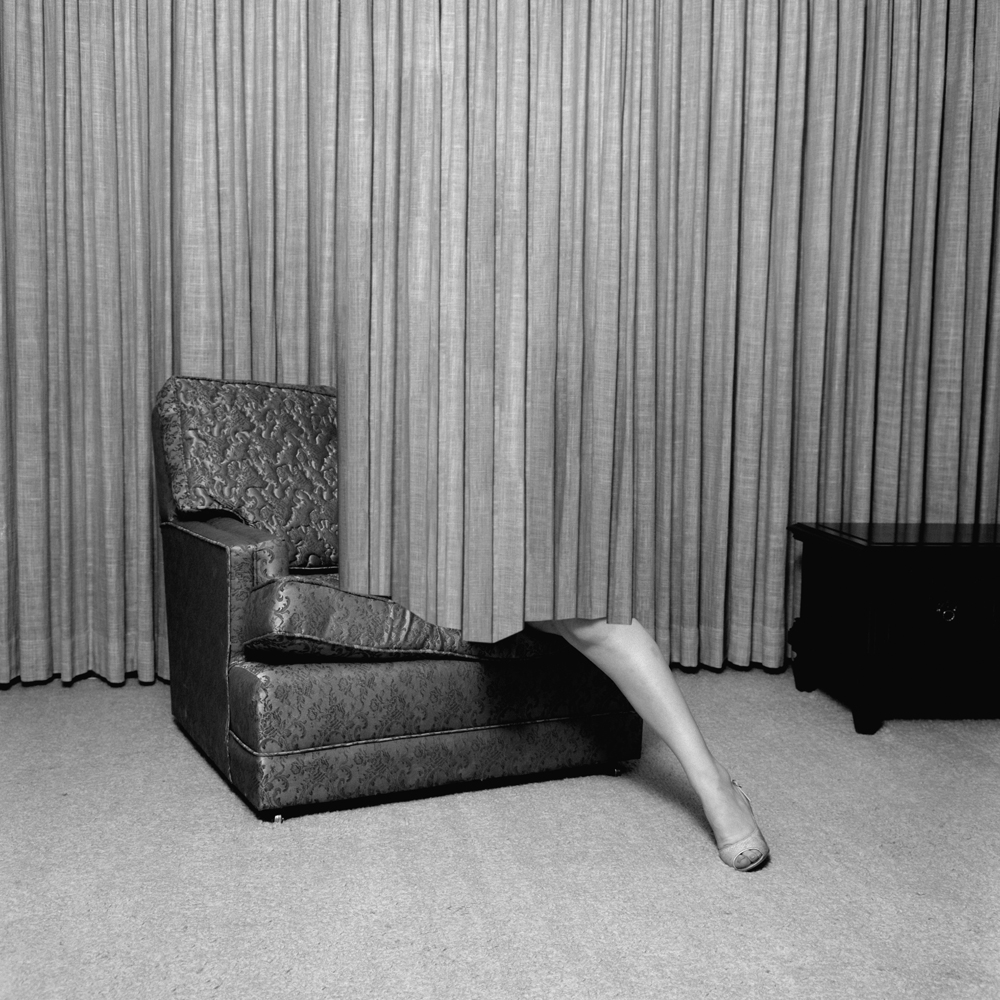
©Eva Stenram
Eva Stenram is the 1st Place recipient of the Cord Prize, an annual international contemporary art award established to support and acknowledge the practice of early and mid-career visual artists. The award comprises an individual first prize of $10,000, second prize of $1,000 and third prize of $500. Additionally, twenty-two artists will be selected for online exhibition. The inaugural prize, is focused on contemporary art photography, with future awards continuing a photo-based thread. The jurors for 2013 were Diana Edkins and Charlotte Cotton.
Charlotte Cotton states: “If I had to characterize the final selection of twenty five photographers that Diana and I made, I think it is a sense of photographers whose contemporary art practices clearly respond to the current image-making climate. The first general trend that we have seen in contemporary art photography in light of Web 2.0 (and phenomenal growth in image-led social media) has been to reinforce the notion of photography as a material form. What has happened in the 2010s is that the inherent ‘objecthood’ of the photographic print – a physical form rather than a neutral or invisible framing of a real moment – has become pronounced and I would argue that all of the photographers that we selected seem to be contemplating this contemporary fact, and creatively working with the idea that photography is an active process of choices and decisions of the maker who renders a photograph.”

©Eva Stenram
Born in Stockholm, Sweden, Eva currently lives and works in London. Since graduating from the Royal College of Art in 2003, Eva has exhibited internationally; she has been included in shows at the V&A Museum (UK), Seoul Museum of Art (South Korea), Bhau Daji Lad Mumbai City Museum (India) and Zendai Museum of Modern Art (China).
In 2012, she was nominated for the Les Rencontres d’Arles Discovery Award. In 2013, Eva has solo exhibitions at Ravestijn Gallery (Amsterdam), Open Eye Gallery (Liverpool), and Pobeda Gallery (Moscow) and was selected as a finalist in the Hyeres International Photography Competition as well as the Aperture Portfolio Prize and is the first prize winner of the inaugural Cord Prize.

©Eva Stenram
Eva Stenram brings together analogical archival material and digital manipulation, creating scenarios where the uncanny takes centre stage. Stenram often uses found images, such as negatives, magazines and images from the Internet, as her source of inspiration and working material. These are scanned or downloaded to digital files that the artist manipulates, reinterpreting at each time the image anew.

©Eva Stenram
Drape uses vintage pin-up photographs as its source material. Stenram sought out images, mainly from the 1960s, in which women are posed in interior (semi-) domestic sets in front of curtains or drapes. Manipulating these, she extended the curtains to partially obscure the women, re-enforcing the former’s role as a marker between public and private. The curtain vacillates between striptease-drape and blind or shutter. The background, meanwhile, envelopes the focal point and the foreground slips into the background.

©Eva Stenram
The square images all derive from original medium format negatives by unknown photographers; the rest of the (rectangular) images are derived from the 1960s men’s magazine Cavalcade and retain their original size and layout in relation to the magazine page, with blank areas standing in for excised text.

©Eva Stenram

©Eva Stenram

©Eva Stenram

©Eva Stenram

©Eva Stenram

©Eva Stenram

©Eva Stenram

©Eva Stenram

©Eva Stenram

©Eva Stenram
Posts on Lenscratch may not be reproduced without the permission of the Lenscratch staff and the photographer.
Recommended
-

2026 PPA Photo Award Winner: Roland HartleySeptember 5th, 2026
-
The 2026 Lenscratch Student Prize Honorable Mention: G. Chevalier FustecAugust 9th, 2026
-
The 2026 Lenscratch Honorable Mention Student Prize Winner: Anton ZdanovichAugust 8th, 2026
-
The 2026 Lenscratch Honorable Mention Student Prize Winner: Anastasia SierraAugust 7th, 2026
-

The 2026 Student Prize Honorable Mention Winner: Luke RosingAugust 6th, 2026