Bryan Whitney: The Spiritual Light
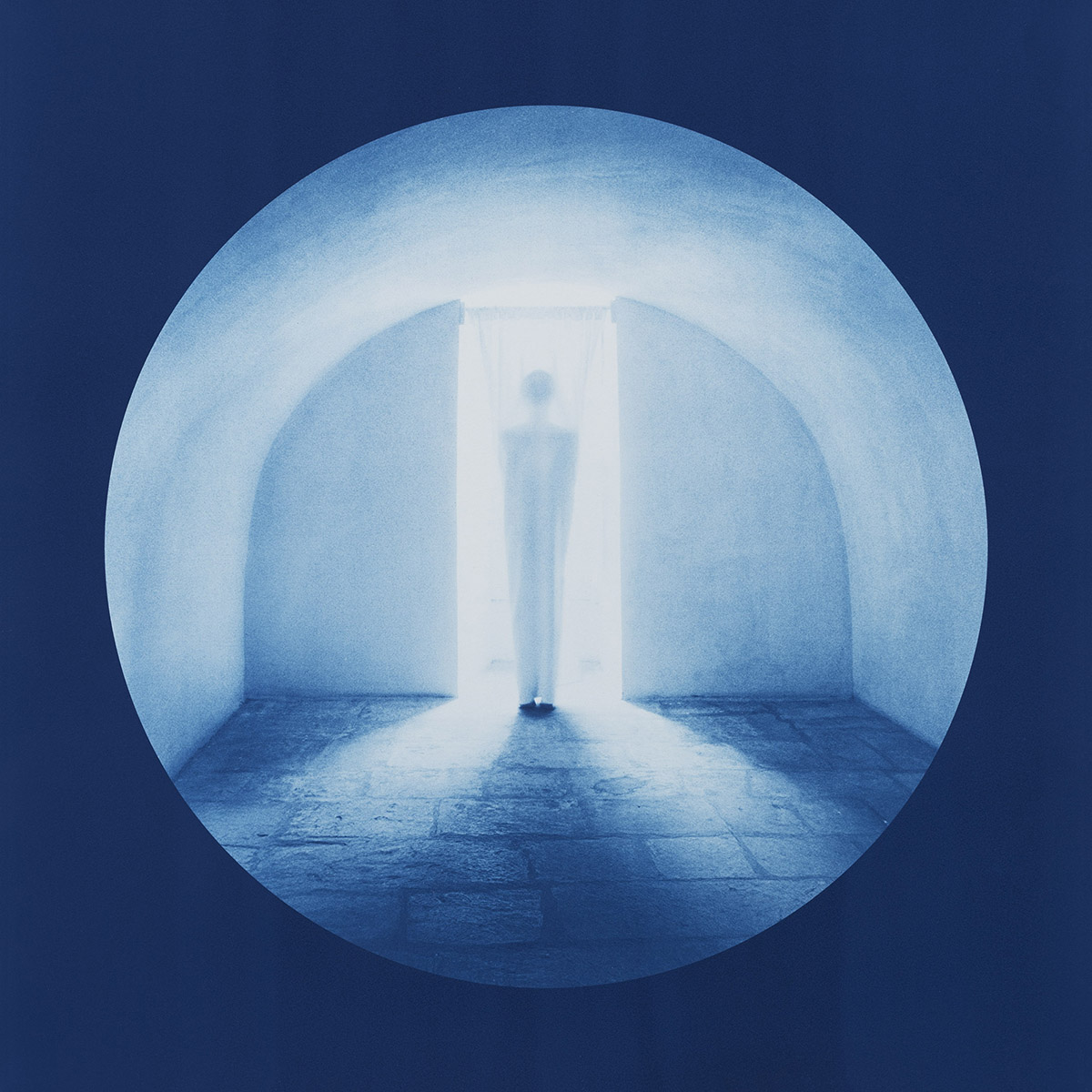
© Bryan Whitney, Italy. Cyanotype on Arches Platine Paper, 2026
For Bryan Whitney, photography is a magical process that allows him to capture some of the mysterious visions that would otherwise have stayed in his head. The New York City-based artist and educator explores the intersection of spiritual and photographic practices and also how photography functions in the real, physical space, beyond prints, screens and gallery walls. Whitney’s installations and cyanotypes touch on the transcendental aspects of the creative and human experience. His work is characterized by its focus on light, abstraction, symbolism and, at times, humor. (Who would have thought to exhibit fish-eye photographs of forests on the real, functioning washing machine glass doors of an East Village laundromat in New York?)
I’ve known Bryan’s work since he submitted his beautiful X-Ray cyanotypes to last year’s cyanotype open call celebrating Anna Atkins’s 226th birthday, organized in tandem with the Griffin Museum of Photography. Among 700 submissions, Bryan’s work stood out. Not because of the obvious, hard-earned skilled that all his botanical X-ray evince. Rather, I was caught off guard by Bryan’s ability to explore beauty beyond the unexpected, in the most invisible of places. I believe his practice point others to enjoy the transcendental essence of what it means to connect deeply with the natural world, even when we’re all so pulled away from it.
Today, I’m re thrilled LENSCRATCH is featuring an interview on his years-long practice and artistic philosophy.
A brief interview with the artist follows.
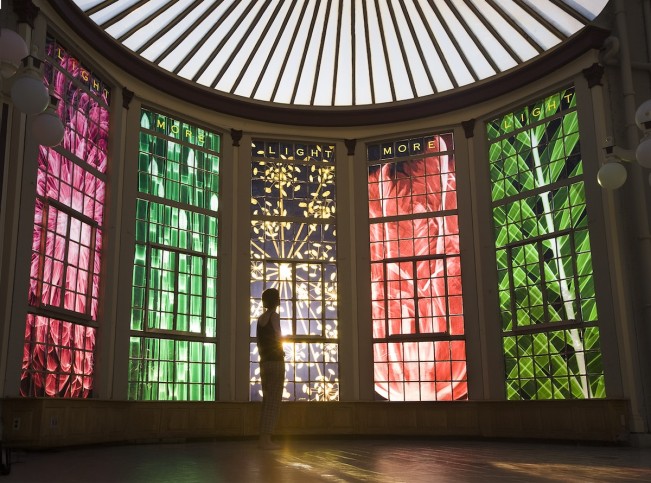
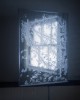
© Bryan Whitney, Light, More Light. Installation 2008. Transparency on Glass.
Bryan Whitney is a photographer and artist in New York City whose work involves experimental imaging techniques including x-rays, lensless imaging and alternative processes such as cyanotype. Whitney holds an MFA in Photography from the Tyler School of Art and a BA in the Psychology of Art from University of Michigan. He has taught photography at Rutgers University and currently teaches at the International Center of Photography in New York City and the New York Botanical Garden. A recipient of a Fulbright Grant for lectures on American Photography he has exhibited across the United States and internationally. His work has appeared in magazines such as Harpers Bazaar, Fortune, the New York Times, as well as being featured in books, posters and billboards. His X-ray botanical images have recently been acquired as a stamp designs by the US Postal Service.
Follow Bryan Whitney on Instagram: @bryanwhitney.art
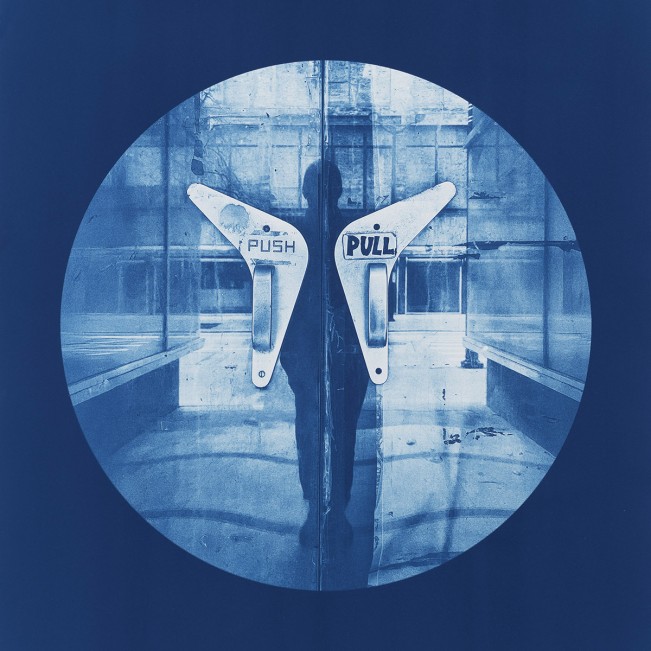
© Bryan Whitney, Cincinnati. Cyanotype on Arches Platine Paper, 2006.
What role does spirituality play in your overall work and in your photographic teaching practice?
Bryan Whitney: Spirituality is at the core of our understanding of life, and creative practice is one of the ways in which we can express these insights. Being enraptured by what you see and what you make is essential for an artist—and it is a gift to be able to share that with others. As a kid I remember very early experiences of wonder, awe, and profound peacefulness, floating outside of my body. When I began photographing in my teens, I realized what a magical process photography was. It was more than the mysterious engraving of light onto film in the dark; it was a way to capture some of the ecstatic visions that would otherwise have stayed in my head.
In my classes I introduce these concepts and encourage students to play with ideas and approaches that they might not be familiar with. I want to see what people intuit and understand natively—the “things no one told me,” to borrow a phrase from an early work of mine.

© Bryan Whitney, Lotus, 20×24″ Cyanotype on Arches Platine Paper, printed 2024
Your series of Botanical X-Rays is made from beautiful cyanotypes of plants and flowers seen through the X-ray imaging technique. Is there a spiritual component in this body of work?
BW: Yes. There is a profound beauty in knowing that all things, including ourselves, are transparent to energies that are flowing through the world, such as radio waves, gamma rays, X-rays, and so on. I believe that transparency can be a visual equivalent for seeing through the opaque, individual nature of objects, and it suggests that there is a reality beyond what the human eye and psyche ordinarily perceive.
Is there something particular about photography that allows you to connect with the spiritual realm of life that you haven’t found elsewhere?
BW: There is something special about photography in that it is a collaboration with what already physically exists in the world, yet it can still express a personal vision. There is also the important idea of grace in creative work—being open and receptive to receiving inspiration or of finding what you are seeking. Artists of all kinds are aware of this sense of being a conduit or channel for ideas and forms that are suprapersonal- “Not my will but Thine”.
You’ve also worked on installation projects, such as Light, More Light, that have a spiritual component. Can you talk more about this project and the role photography played in its creation?
BW: The installation “Light, More Light” was created at an important point in my life. I was given a show at Dowling College, whose campus was originally a Vanderbilt estate. One of the buildings on the campus was a turnofthecentury palm garden, a lovely greenhouselike structure. I proposed an installation on a series of 13foothigh windows, turning them into stainedglasslike panels using my X-ray botanical images.
My mother had passed away just a few months earlier, and the piece was dedicated to her—an attempt to express my deepest love and gratitude in the midst of loss. Light plays an important physical and symbolic role as the source of life. The superscript “Light, More Light” references the dying words attributed to Goethe, who asked that the windows be thrown open so he would have more light in his final moment. Light is transformative, and in many spiritual texts—such as the famous Tibetan Book of the Dead—refer to passing into the light at the moment of death.
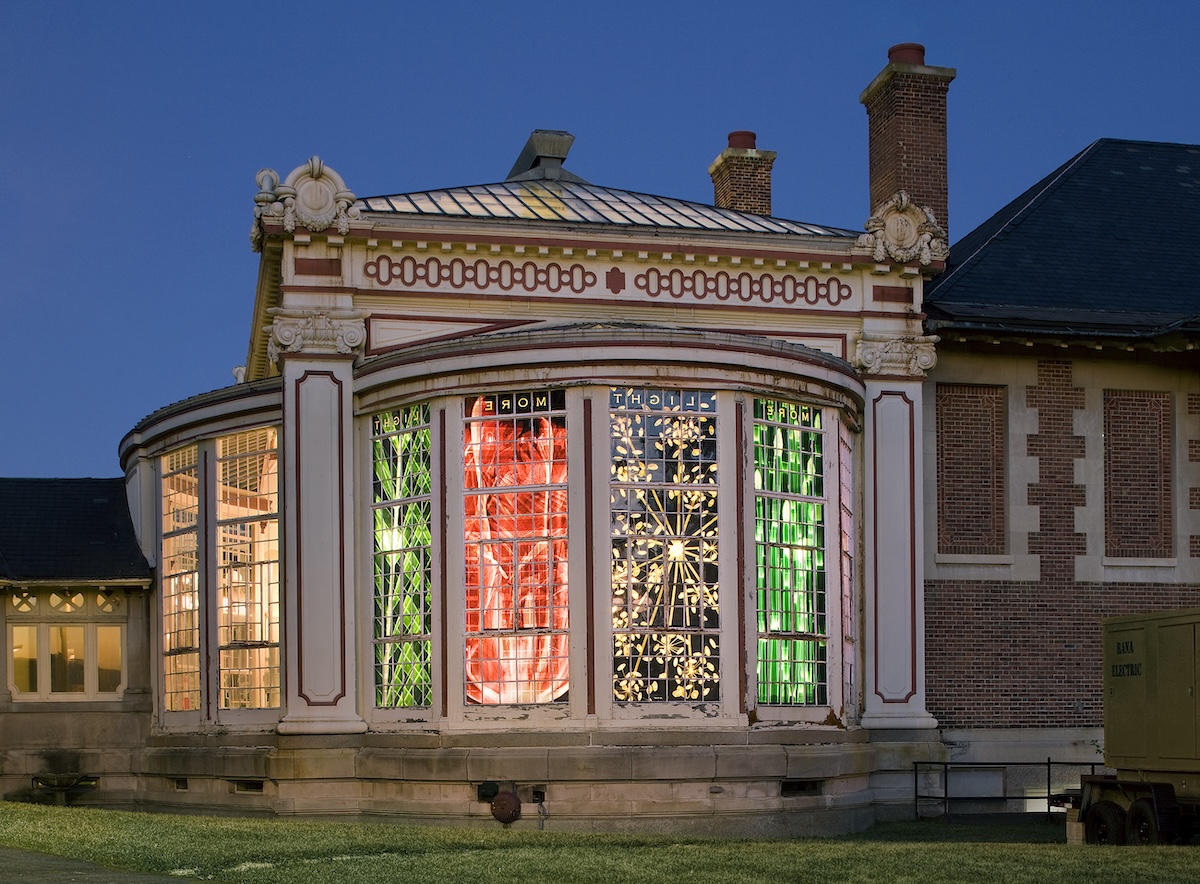
© Bryan Whitney Light, M0re Light, Installation 2008. Transparency on glass.
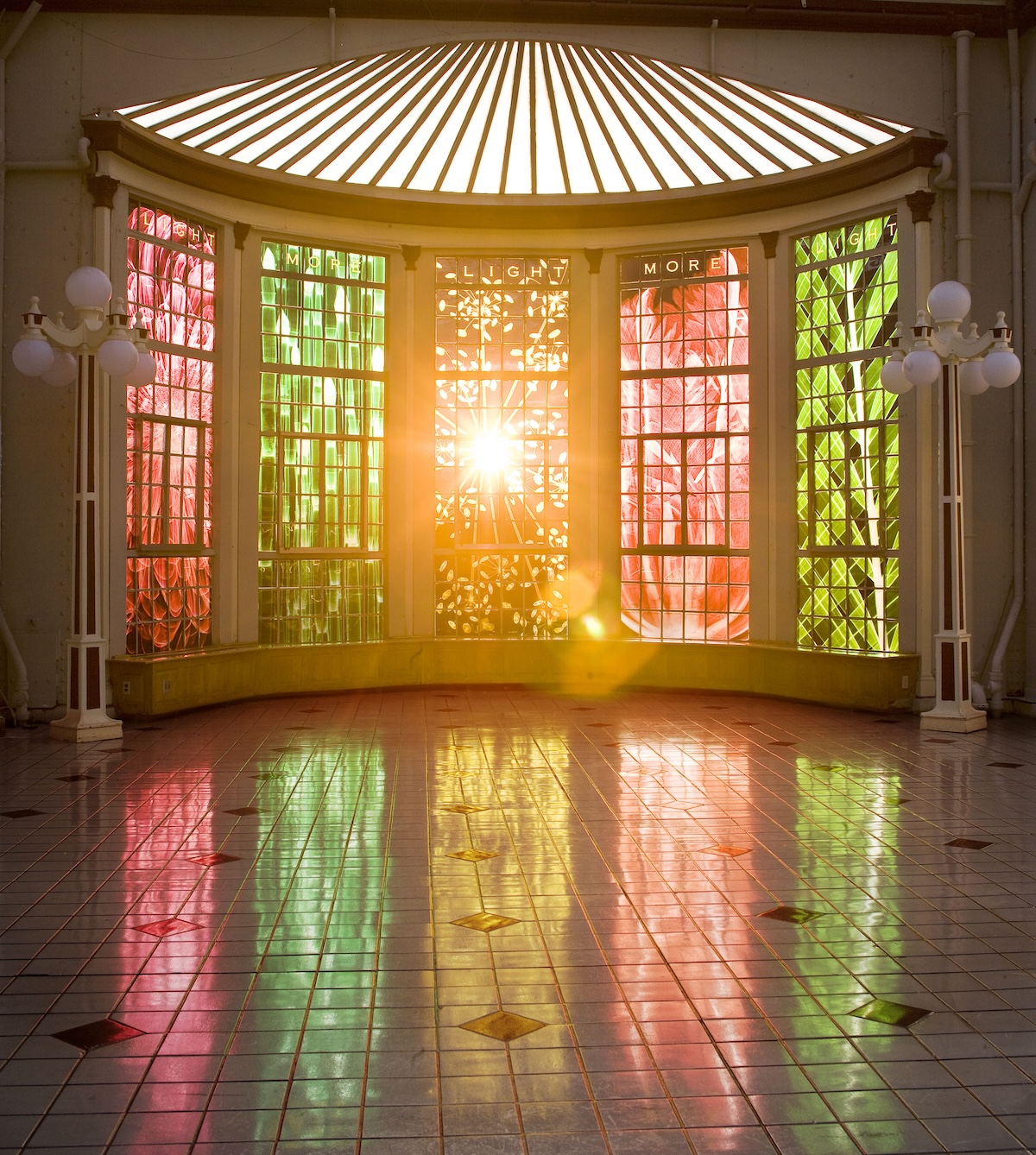
© Bryan Whitney, Light, More Light. Installation 2008, Transparency on Glass.
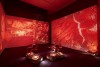
“G A Z E” is an installation that used miniature “gem” tintypes, about the size of a thumbnail. These were the earliest affordable portraits and helped democratize the ability to create a likeness. I found these tiny abandoned portraits at flea markets and on eBay. Using an ultramacro lens, I photographed these rouged and scratched images, creating an anonymous menagerie of characters from the 1860s–70s. The portraits were then enlarged roughly 5,000% onto long bolt of silk and hung in a circle into which the viewer entered. Standing in the center, the viewer became the subject of the photographic gaze of these long-forgotten souls.
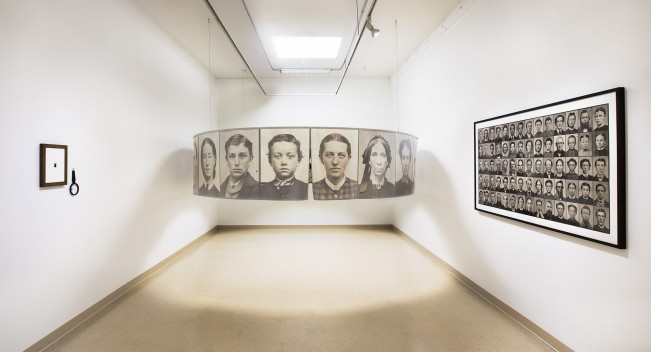
© Bryan Whitney, G A Z E. Installation 2016. Fabric, Paper, Metal, Magnifying Glass.
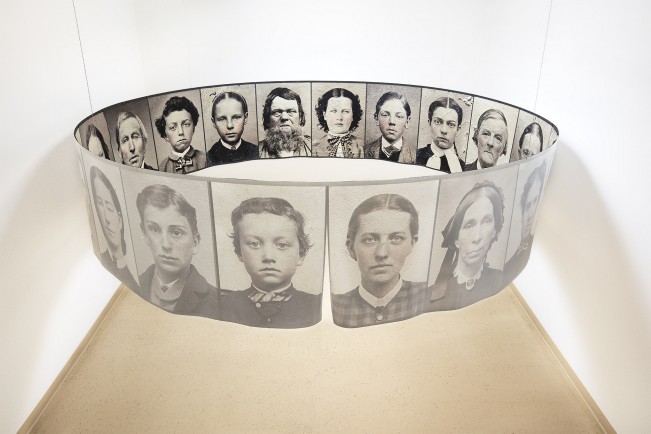
© Bryan Whitney, G A Z E, Installation 2016. Fabric, Paper, Metal, Magnifying Glass.
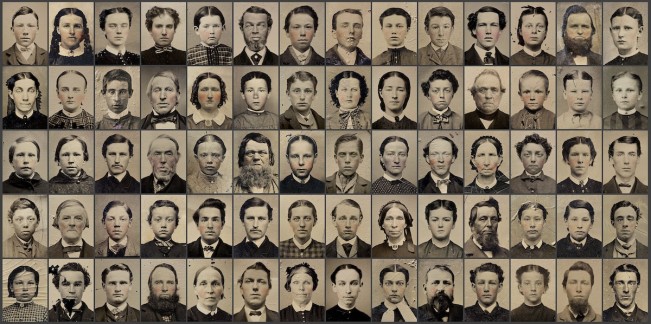
© Bryan Whitney, G A Z E, Installation 2016. Fabric, Paper, Metal, Magnifying Glass.
“La La Laundry” was a unique popup installation in a real, functioning laundromat in the East Village in New York (and yes, that was its actual name!). This took place during Covid, when I had been extensively photographing trees with a fullframe fisheye lens, creating yet another menagerie of sylvan characters in a series I called The Enchanted Forest. I printed 38 of these circular “tondo” images at the exact size of the flat dryer windows and attached them temporarily inside the doors, which created a perfect framing element. The opening and closing of the exhibition occurred on the same night and was streamed live on Instagram. The unexpected and humorous nature of the installation makes it unique in my work.
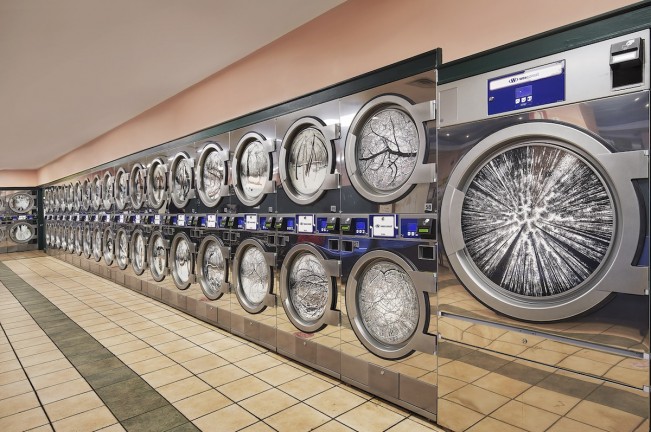
© Bryan Whitney, La La Laundry. Installation, 2020. Circular Prints Mounted in Dryers.
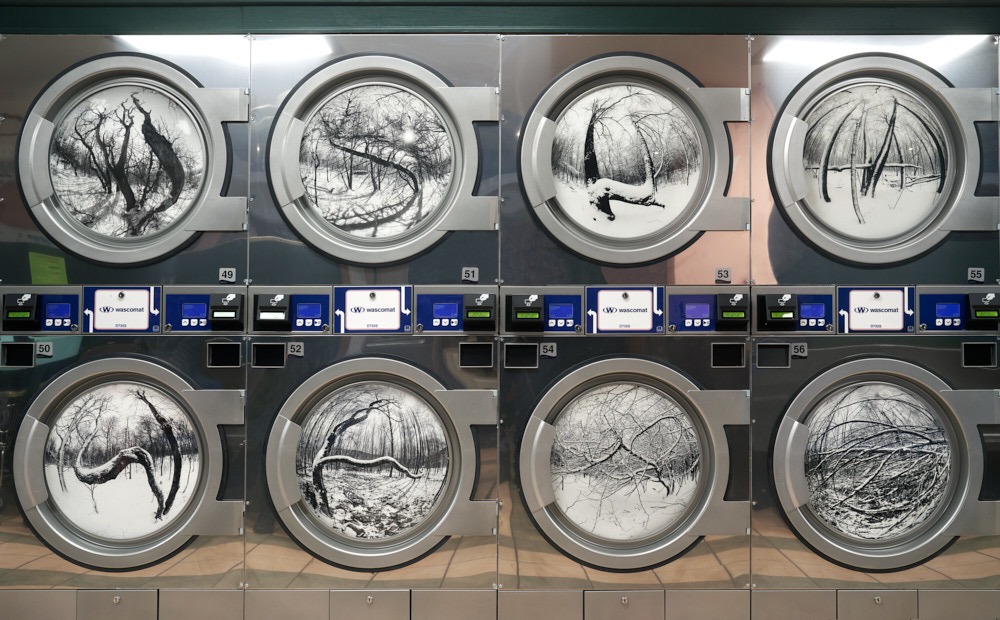
© Bryan Whitney, La La Laundry. Installation, 2020. Circular Prints Mounted in Dryers.
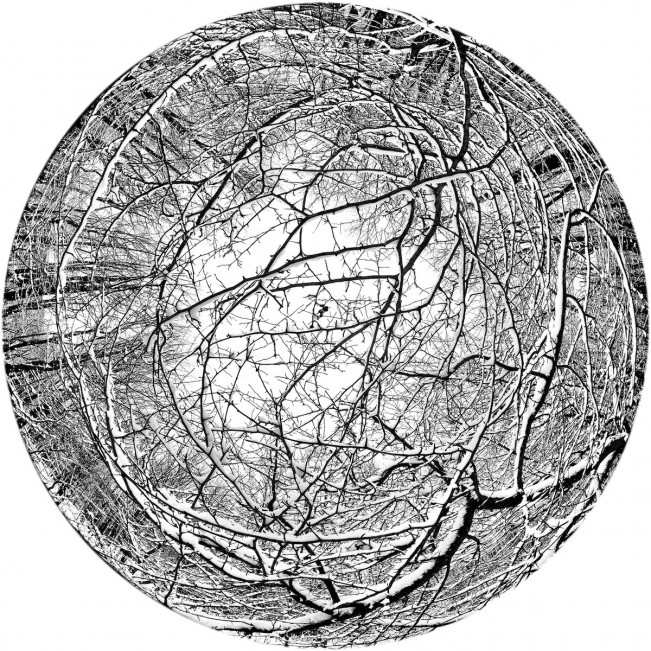
© Bryan Whitney, Crown of Thorns
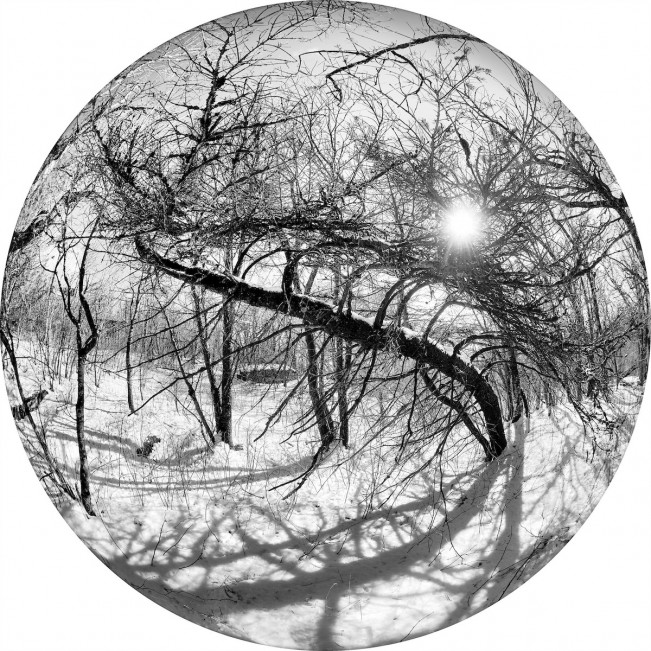
© Bryan Whitney, Sinuous Tree
What are you currently working on? And what’s in store for you?
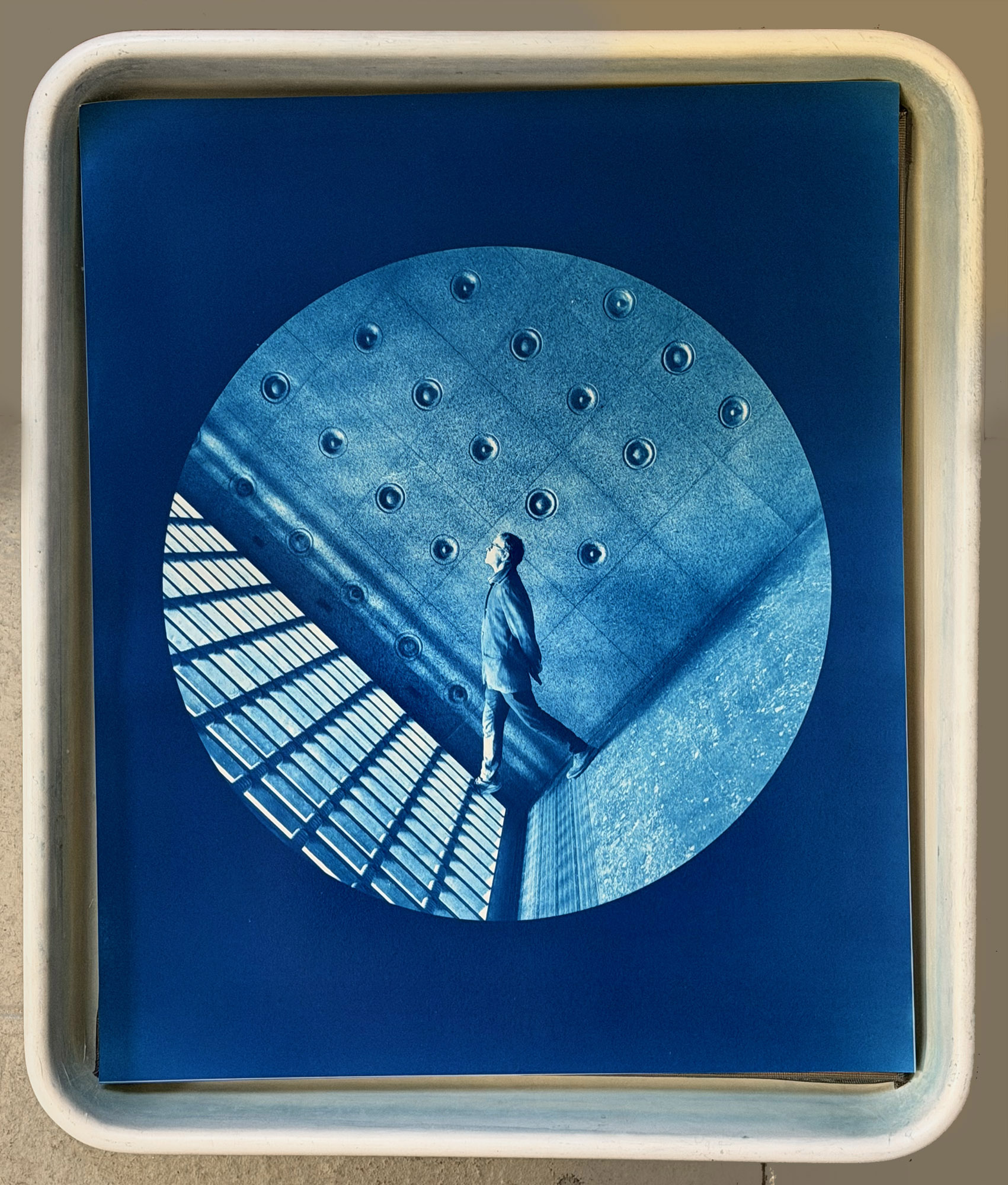
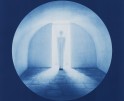
BW: “Blue Body” is a new series of circular cyanotypes — self-portraits made across decades. The images are not about me, precisely; they are about the body’s presence in space, the body as a locus of awareness. The figure often appears transparent, or as shadow, while the interplay of light and darkness, positive and negative, yields something at once abstract and symbolic. I love the tactile quality of cyanotype on heavy watercolor paper, and the way the blue lends an ethereal quality to the image.
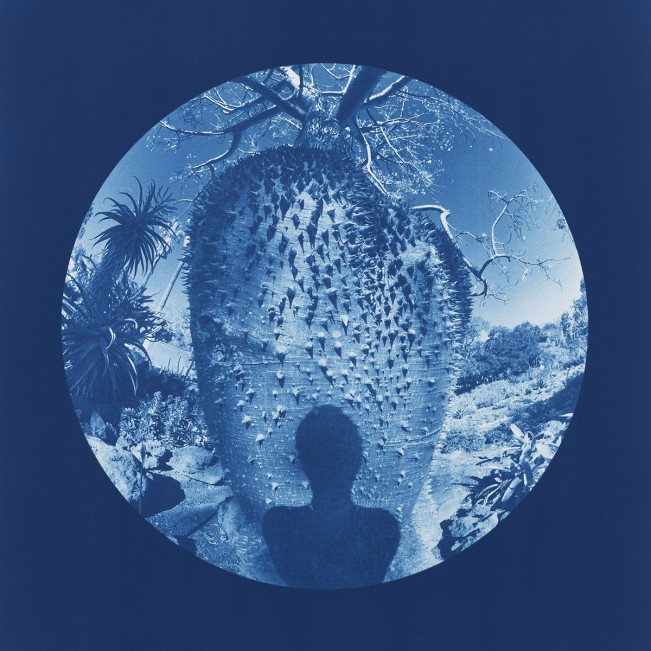
© Bryan Whitney, Pasadena. Cyanotype on Arches Platine Paper, 2006.
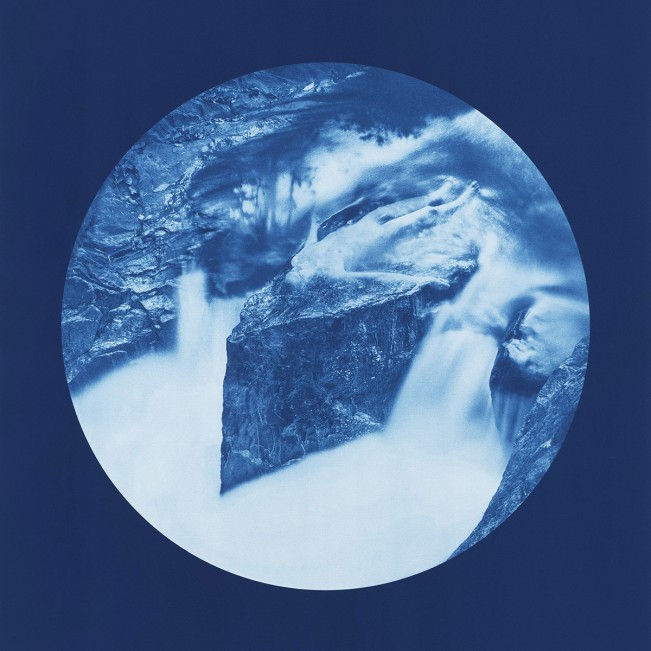
© Bryan Whitney, Columbia. Cyanotype on Arches Platine Paper, 2006.
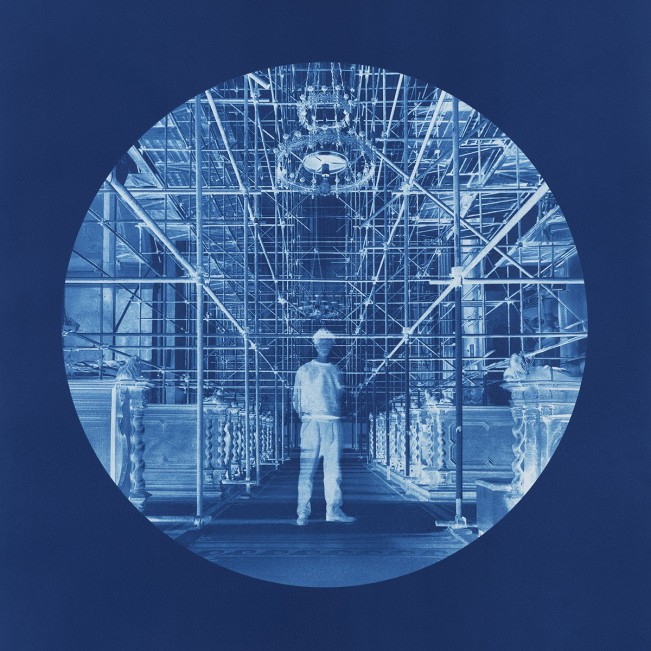
© Bryan Whitney, Romania. Cyanotype on Arches Platine Paper, 2006.
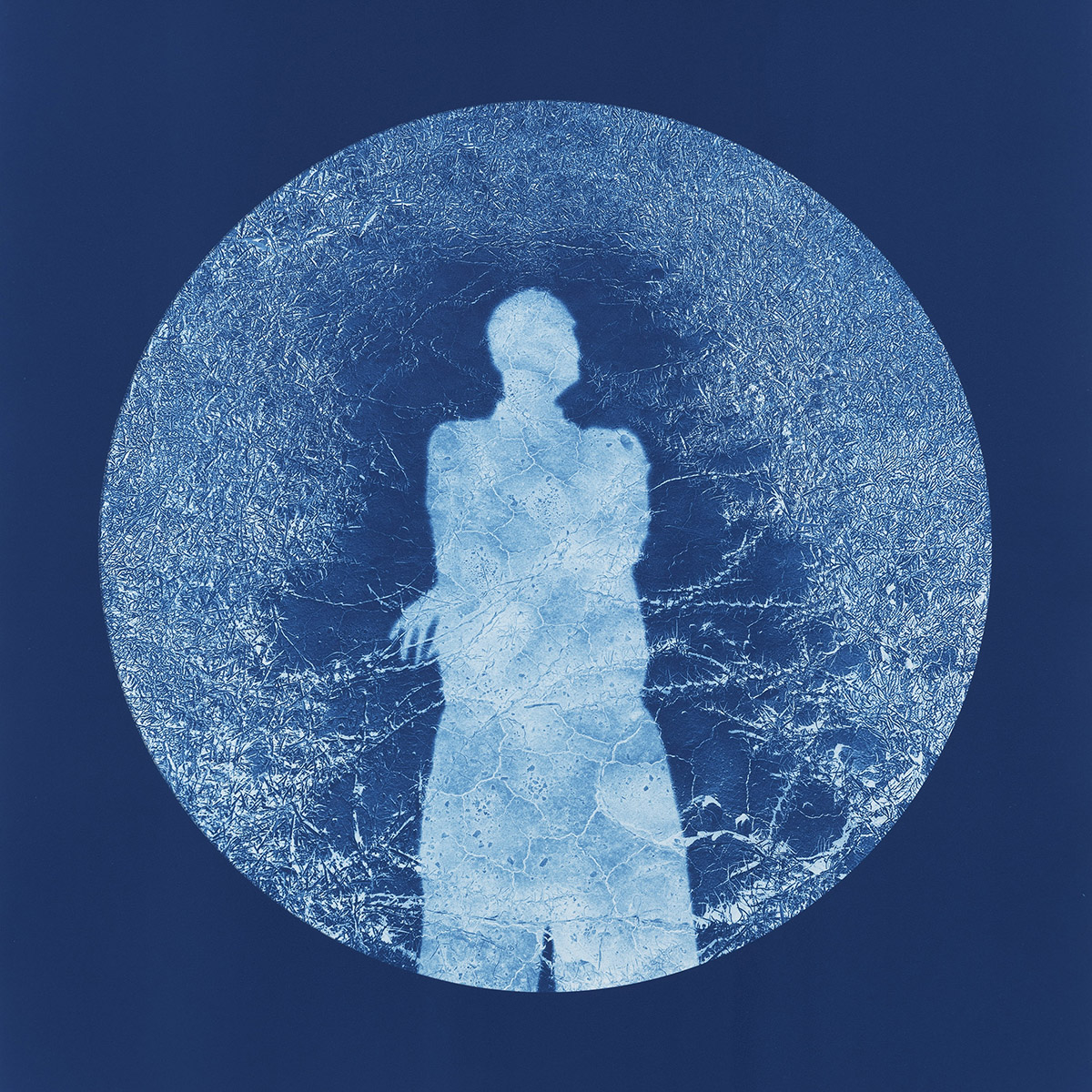
© Bryan Whitney, Alabama. Cyanotype on Arches Platine Paper, 2006.
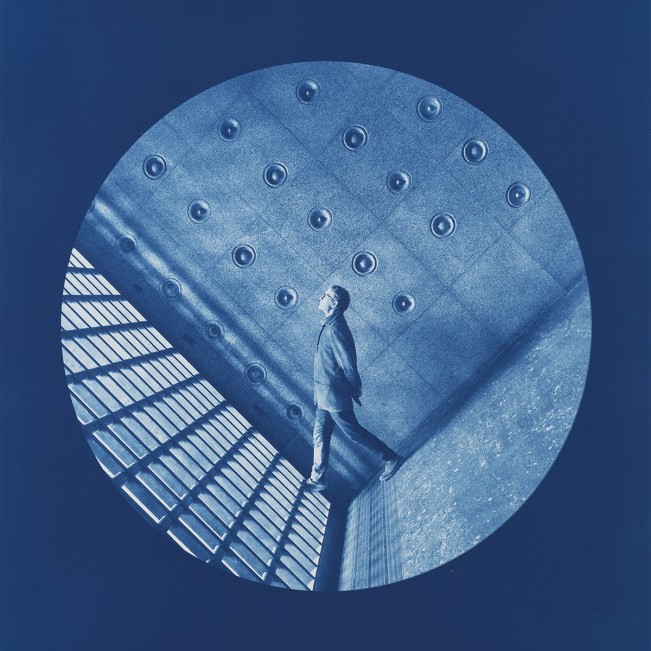
© Bryan Whitney, Milan. Cyanotype on Arches Platine Paper, 2006.
Posts on Lenscratch may not be reproduced without the permission of the Lenscratch staff and the photographer.
Recommended
-

Mexico Week – Paola Dávila: Beyond the LandscapeMarch 25th, 2026
-
Mexico Week – Tomás Casademunt: Time Frozen by LightMarch 24th, 2026
-
Bryan Whitney: The Spiritual LightMarch 17th, 2026
-
Binh Danh: Belonging in the National ParkMarch 4th, 2026
-
Vaune Trachman: Now IS AlwaysMarch 3rd, 2026