A Collaborative Photographic Exhibition by Heather and Ben Mattera: Weight of It All
©Heather Mattera, from Weight of it All
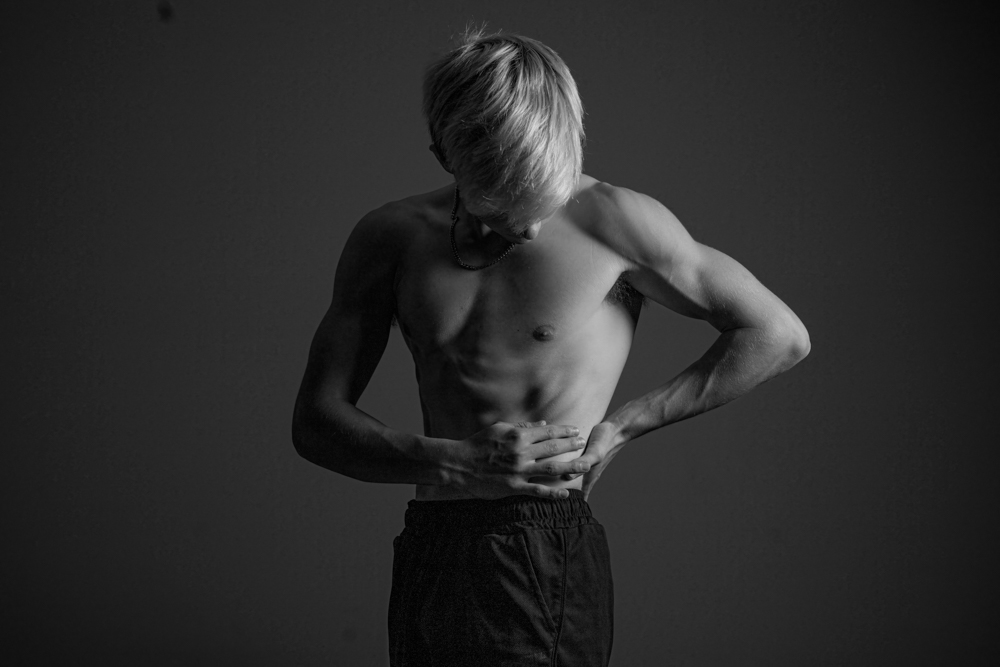
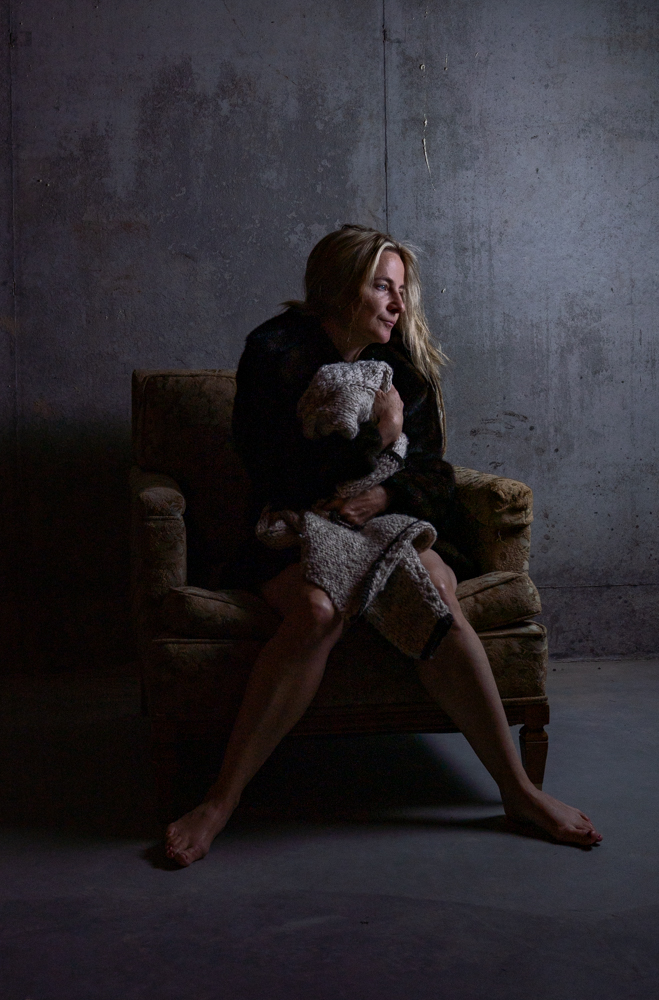
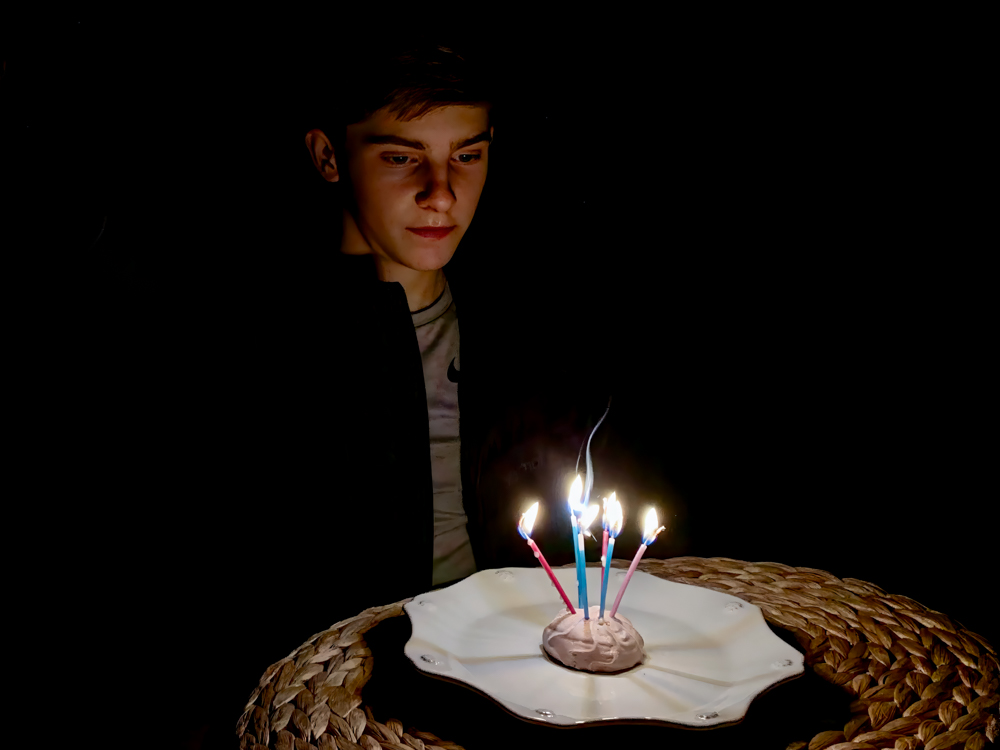
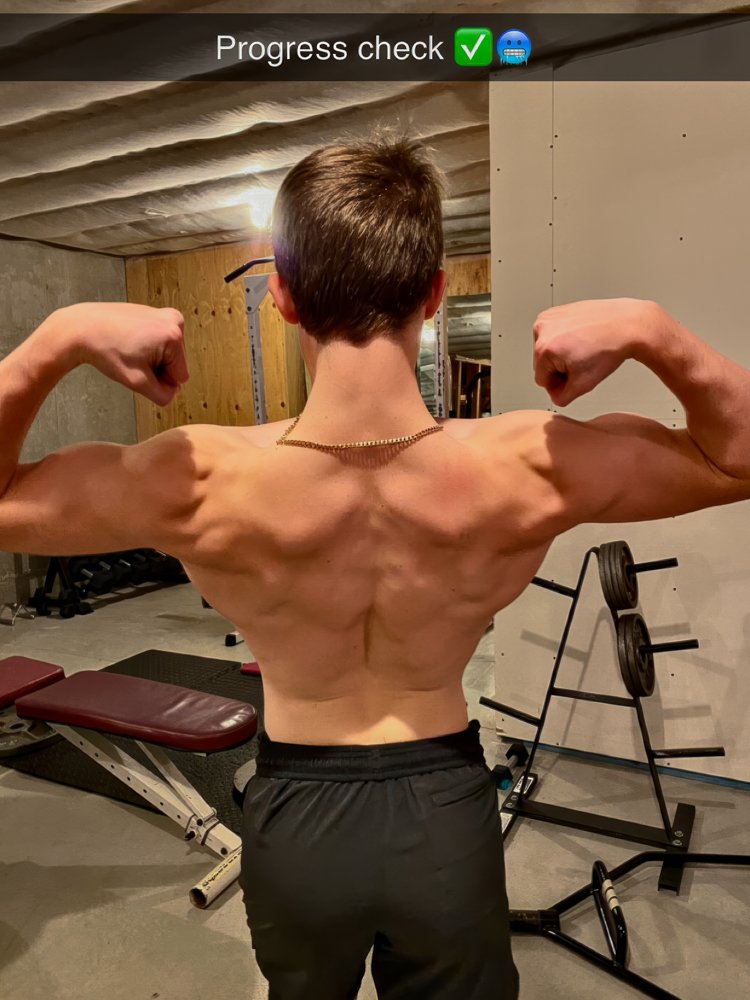
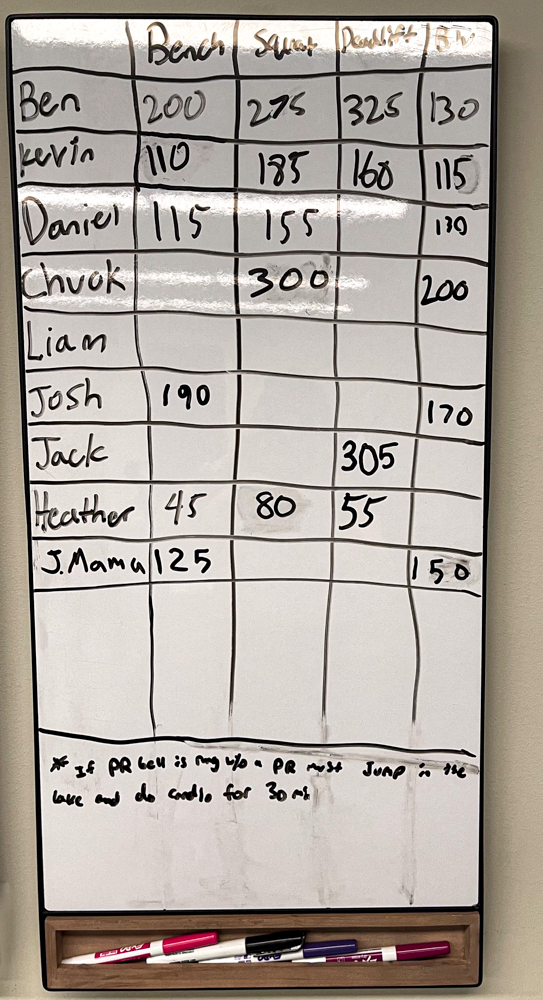
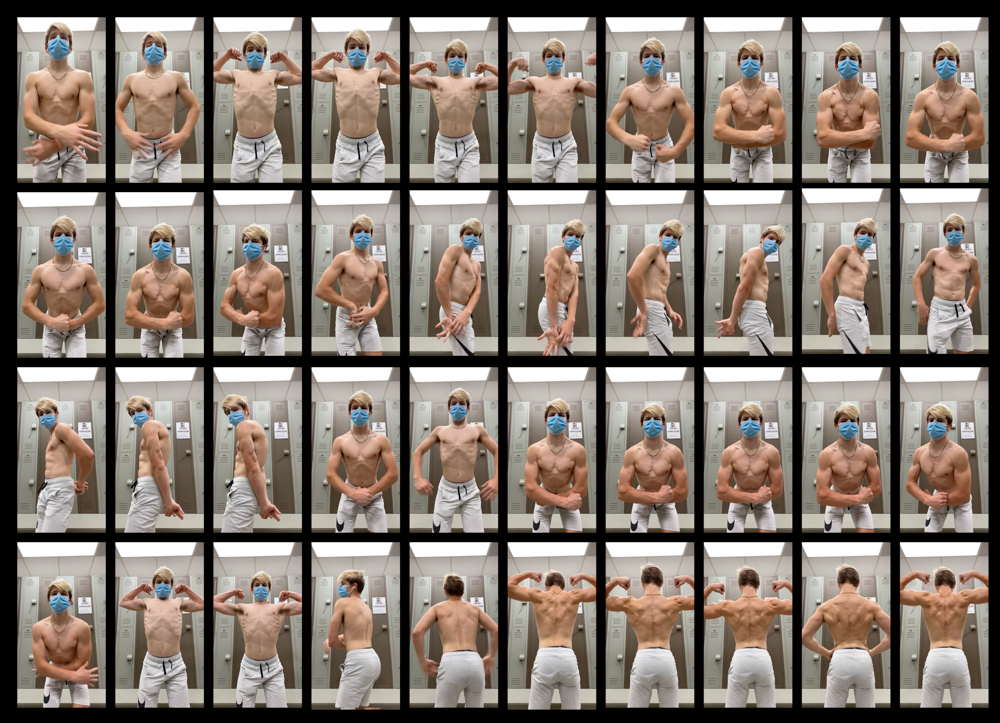
CENTER, the nonprofit photography organization based in Santa Fe, New Mexico, is presenting the Weight of It All, a collaborative photographic project by Heather Mattera and Ben Mattera. The exhibition will be on view at CENTER through March 13, 2026. Weight of It All is a collaborative photographic project born from the quiet terror of watching a teenage son disappear into an eating disorder and a mother’s desperate instinct to reach him. Created over several years, the work traces a family’s emotional landscape as they navigate body dysmorphia, fear, and the fragile hope of recovery.
The project began unintentionally, with the mother staging still-life images of the foods her son once loved but no longer allowed himself to eat–photographs that became a wordless language when conversation collapsed. These images functioned as a way to remain present, to grieve, and to bear witness when words failed.
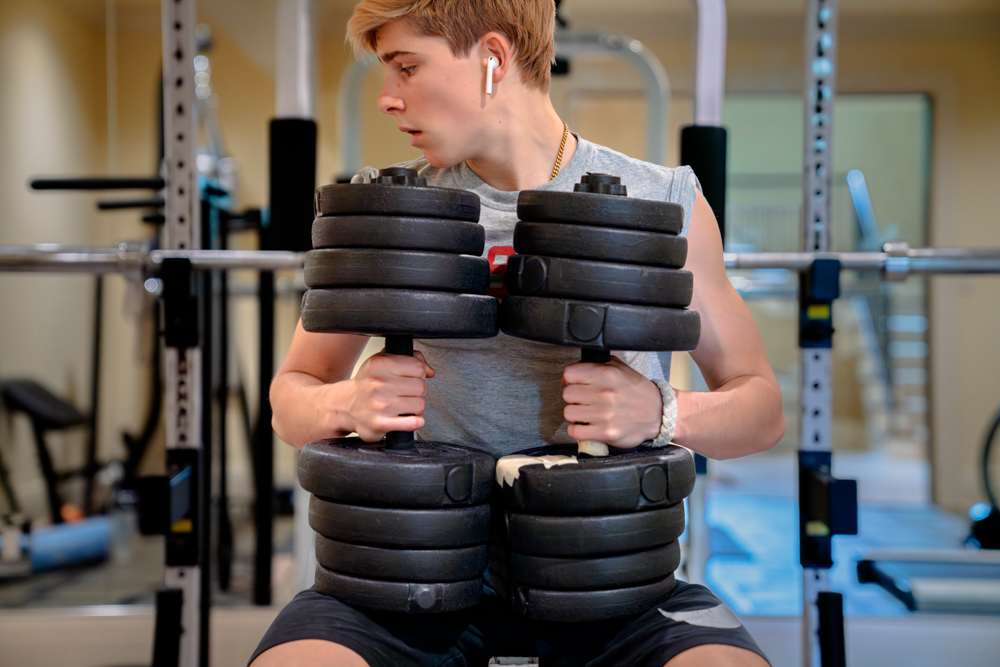
Weight of It All examines both the visible and invisible dimensions of eating disorders, with particular attention to their reverberations within the family system. The work captures the fraught reality of a parent witnessing a child’s withdrawal: rigid rituals, constant vigilance, the feeling of walking on eggshells, and the paralyzing fear that any misstep might hasten a downward spiral. The illness does not exist in isolation. It inhabits the household. It reshapes language. It tests love.
Two years later, she invited her son into the frame. Together, they shaped a visual dialogue that carried them through isolation, confusion, tenderness, and the slow work of return. More than an art project, their photographic collaboration became a bridge built from vulnerability and a shared longing to understand one another beyond fear.
©Heather Mattera, from Weight of it All
In the United States, approximately 30 million people — nearly 9% of the population — will experience an eating disorder in their lifetime. Conditions such as anorexia, bulimia, and binge eating disorder remain widely misunderstood and frequently misdiagnosed. Only about 6% of those affected are clinically underweight, and men are often overlooked entirely. Among the deadliest of mental health illnesses, eating disorders claim thousands of lives each year — driven not by food itself, but by profound struggles with identity, self-worth, control, and agency.
Weight of It All offers an intimate view into the tension between nourishment and refusal, the rituals of control, the quiet grief of watching a child fade, and the stubborn love that endured. It reflects the truth they discovered together—that love is not measured by the meals one could not give, but by the presence that never withdrew—and stands as a testament to resilience, reconnection, and the power of art to hold what words cannot.
Created collaboratively by Heather Mattera, a trained clinical therapist, and her son, Ben Mattera, the project traces the delicate and fractured terrain of living alongside body dysmorphia, fear, and the tentative possibility of recovery. The work began unintentionally. As Ben turned away from food, Heather began photographing the meals he once loved. These still lifes became a surrogate language when conversation faltered. As the illness deepened its hold, Heather invited Ben into the frame, transforming photography into a shared act of presence — and ultimately, a bridge.
In the following conversation, Heather and Ben reflect on the origins of the project, the complexities of collaboration within a family system, and the ways photography can offer voice when language falls short.
©Heather Mattera, from Weight of it All
In Conversation: Heather Mattera and Ben Mattera
Excerpt from a recorded conversation
Heather:
Looking back, what was your first thought when I floated the idea of us creating a project on eating disorders as your senior project?
Ben:
Candidly? My first thought was that it sounded like a great way to get out of doing a school project I didn’t want to do. But it quickly became something much deeper. It was a struggle that was very relatable to me — something I had dealt with closely. The idea of giving a voice to that experience through photography, especially when I didn’t always feel like I had one, was powerful. I already had a lot of ideas about what I wanted to say, and many of the images came from those original instincts.
Heather:
When I asked you, did you feel obligated to say yes?
Ben:
No. I was part of the driving force behind it from the beginning when we first talked about it. It was something I wanted to do.
Heather:
Let’s talk about some of the images. One that comes to mind is the photograph of you with tape over your mouth.
Ben:
For me, it was a very literal representation of how I felt as a teenage boy — especially in high school — and what I thought was expected of me. I didn’t feel like I could talk about the things I was struggling with.
Heather:
Why tape? And why that bright orange?
Ben:
I liked the orange because it shows how loud silence can be. It’s about not talking — about what I’m not eating, what I’m not letting in. Sometimes you go into the pantry and it’s almost like you’re putting tape over your own mouth, not allowing yourself to indulge or even eat a healthy amount of food.
©Heather Mattera, from Weight of it All
Heather:
There’s another large photograph
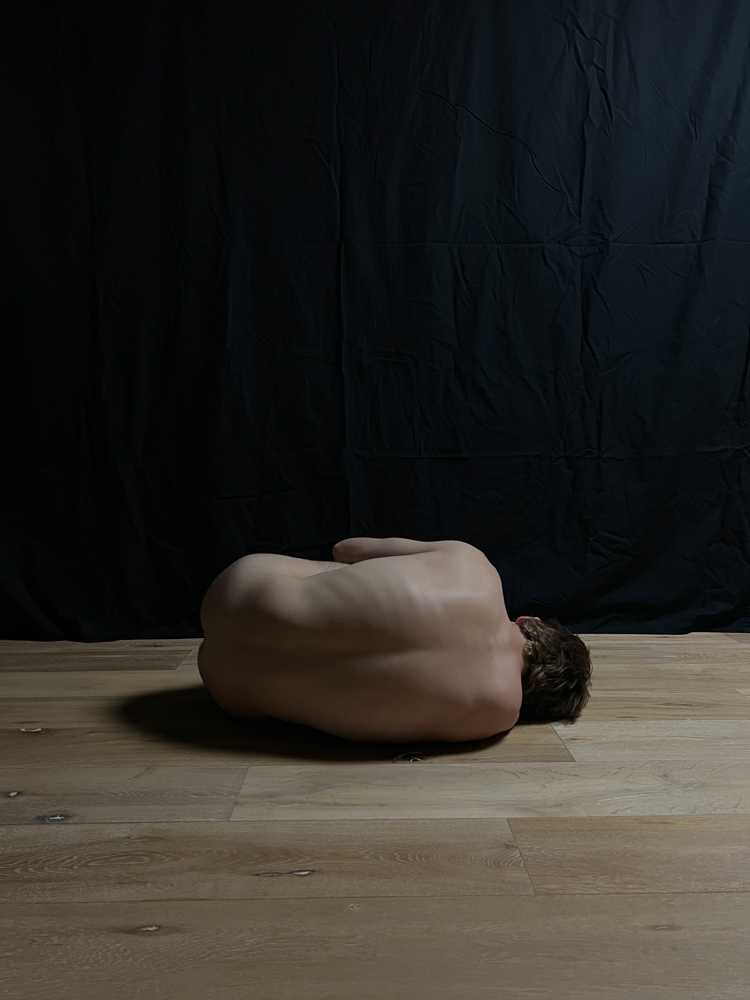
Ben:
It’s feels especially raw and uncomfortable. That’s exactly what it’s meant to evoke. It’s lonely. It’s scary. It’s uncomfortable. It’s not something you almost want to look at. I wanted to show what it can feel like when you’re alone in the darkest, most miserable parts of your life, that’s how you are. If someone feels uncomfortable looking at it, then I think we’ve done our job as artists and that’s what I wanted to convey.
Heather:
In another image, we see yo a teen boy, he doesn’t have his shirt on, wearing only a napkin around his neck, holding a utensil with a single piece of macaroni.
Ben:
You can see me contemplating that one macaroni, but in the reflection of the knife you see the whole dish. That’s how overwhelming it felt. It wasn’t about the whole plate — I was fighting just to get that single piece into my mouth.
Heather:
What was it like creating these images together — sharing what you were going through so I could better understand?
Ben:
It was easier for me because I could express things visually. I could create images that said what I wanted to say without saying it out loud, though the creation of the image.That helped me begin to talk about it more.
©Heather Mattera, from Weight of it All
Heather:
Later, we combined your original images with some of mine. What was that experience like?
Ben:
Honestly, I love what you’ve done. They’re meaningful additions— things that, given more time back then, we might have made ourselves. The newer images communicate in the same way and elevate the story and message I was trying to show.
Heather:
One of those additions is the photograph where I was sitting on the dock, it was early morning, and it was foggy— where you had the opportunity to be behind the camera and pressed the shutter.
Ben:
That image feels like a quiet moment of you — maybe loneliness or struggle as a Mother going through all of this. And it’s me capturing that, just like it was you who captured my struggle throughout the rest the project. That exchange feels really unique.
Heather:
Were there lessons you learned from this project?
Ben:
I learned that you can have a voice louder than yourself, louder than you realize. You can show yourself to the world and have a voice and say, “This is me — take it or leave it.”
©Heather Mattera, from Weight of it All
Heather:
Looking back across your journey with disordered eating, do you think this project played a part in your recovery?
Ben:
Yeah — 100 percent.
Heather:
How so?
Ben:
It gave me more power over myself and over those, I don’t want to call them urges — maybe “gremlins.” It’s something I can always reflect on and think of the power I have and sort of the bravery I had to do this project. I feel it gives me strength. Even now, talking about it can still be uncomfortable. But if a little bit of my discomfort helps someone feel seen or encourages someone to reach out to a friend or family, or significant other, or makes someone feel heard, then I would take that discomfort any day of the week and it will always be worth it to me.
©Heather Mattera, from Weight of it All
©Heather Mattera, from Weight of it All
Heather:
Would you say it helped your healing?
Ben:
Definitely. 100% It gave me agency — that’s the word. Agency over my relationship with food and my relationship with myself. It made me feel like I have the final say in what I do and how I feel.
Heather:
On that note — is there anything else you’d like to say?
Ben:
First, thank you for guiding me and collaborating with me. You helped turn this into something bigger than I could have imagined. And thank you to everyone who experiences the work and sees it. Check in on your friends and family — you never know what someone is going through. I hope this exhibit allows people to look inward and outward, and to see eating disorders through a different lens.
Heather:
Thank you for being so brave, bud.
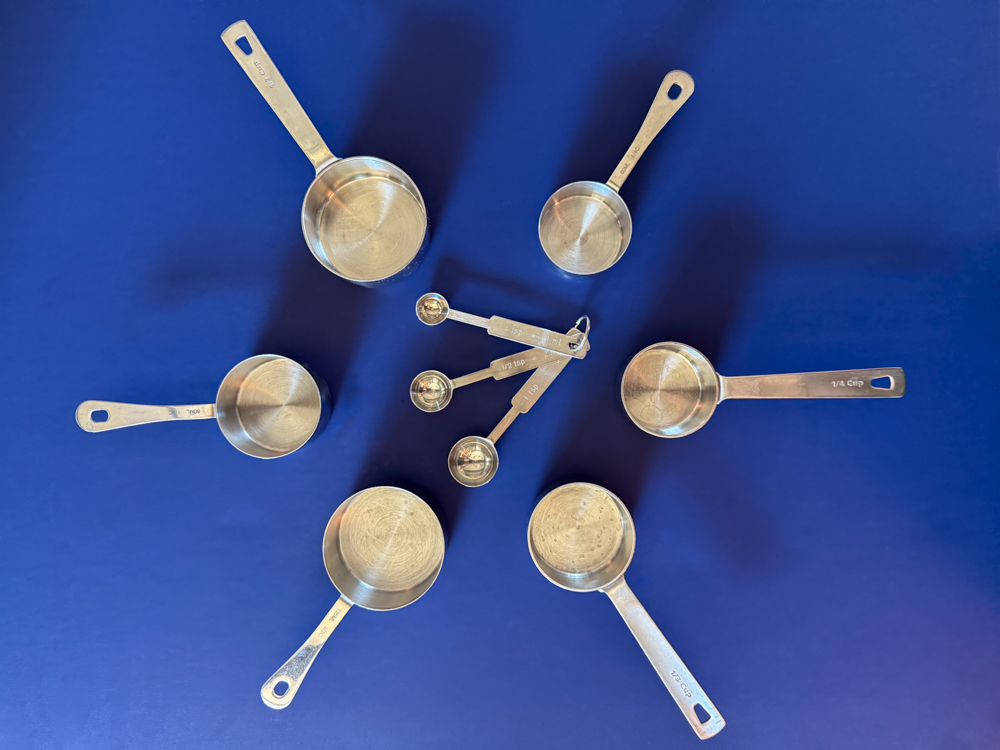
©Heather Mattera, from the Weight of it All
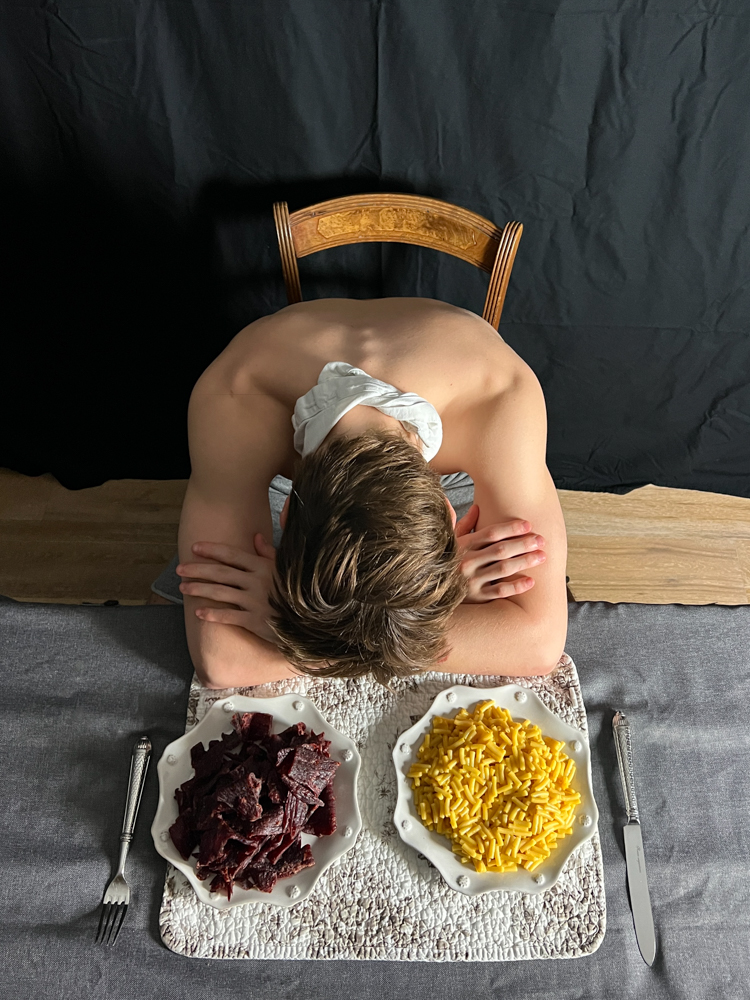
©Heather Mattera, from the Weight of it All
At a time when conversations around mental health are gaining visibility yet remain fraught with stigma — particularly for young men — Weight of It All offers a compassionate intervention. The project resists spectacle and instead insists on intimacy, collaboration, and shared authorship as acts of care. By transforming private struggle into visual dialogue, Heather and Ben Mattera remind us of photography’s capacity not only to document, but to witness, to hold space, and to return agency to those whose voices have felt muted. In doing so, the work expands the cultural narrative around eating disorders, inviting viewers to confront discomfort, extend empathy, and reconsider what recovery can look like within the fragile architecture of family and love.
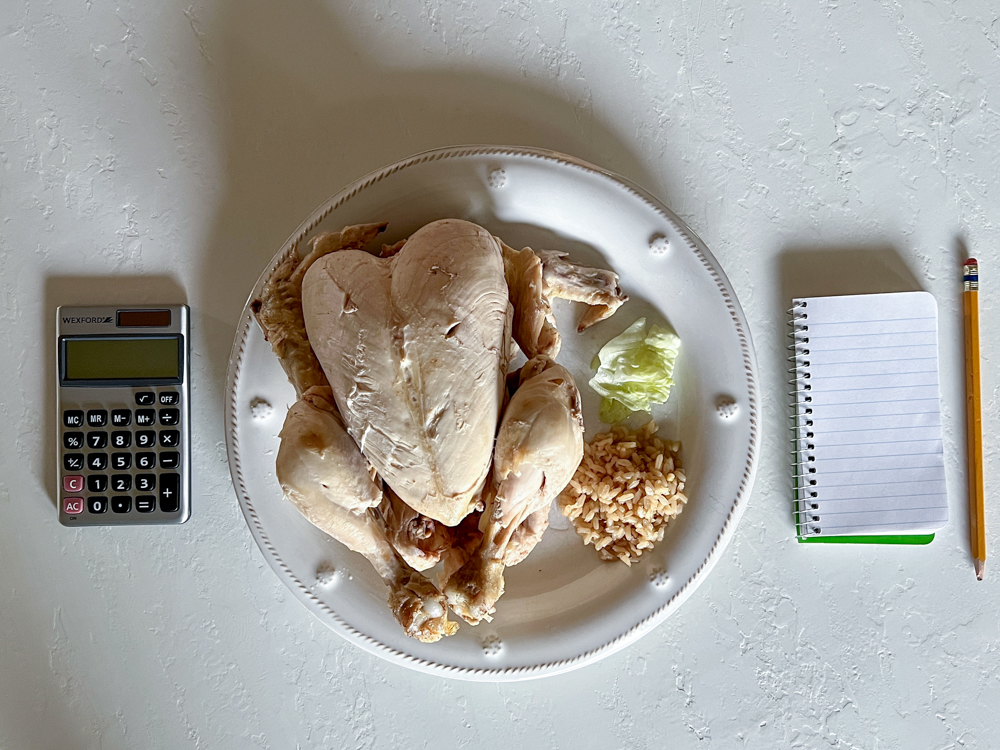
©Heather Mattera, from the Weight of it All
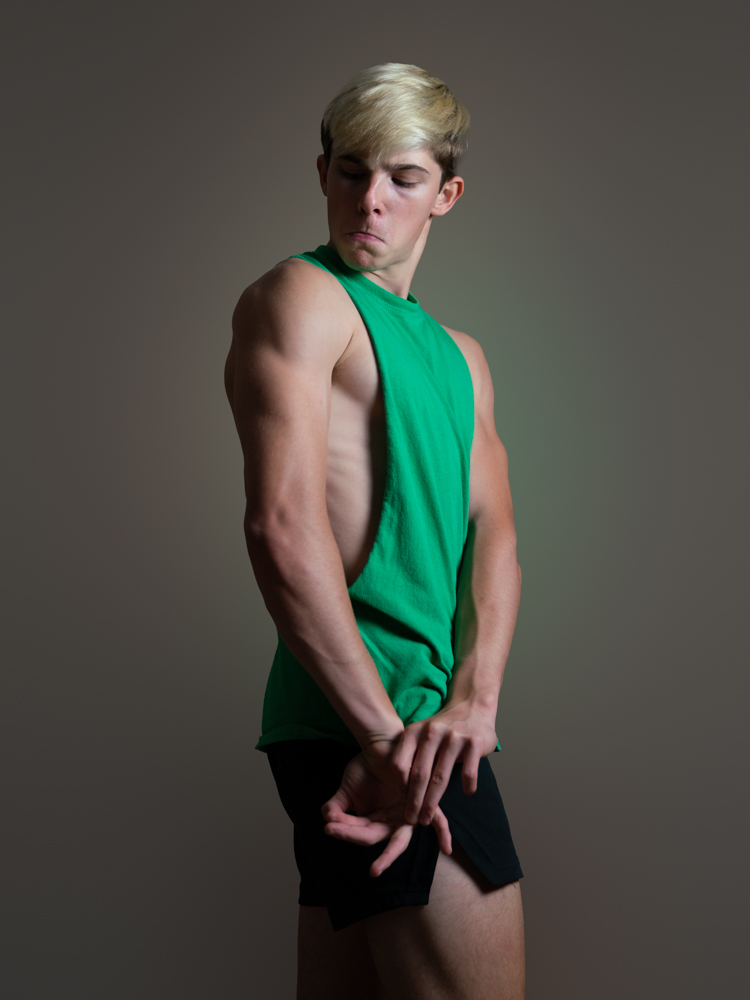
©Heather Mattera, from the Weight of it All
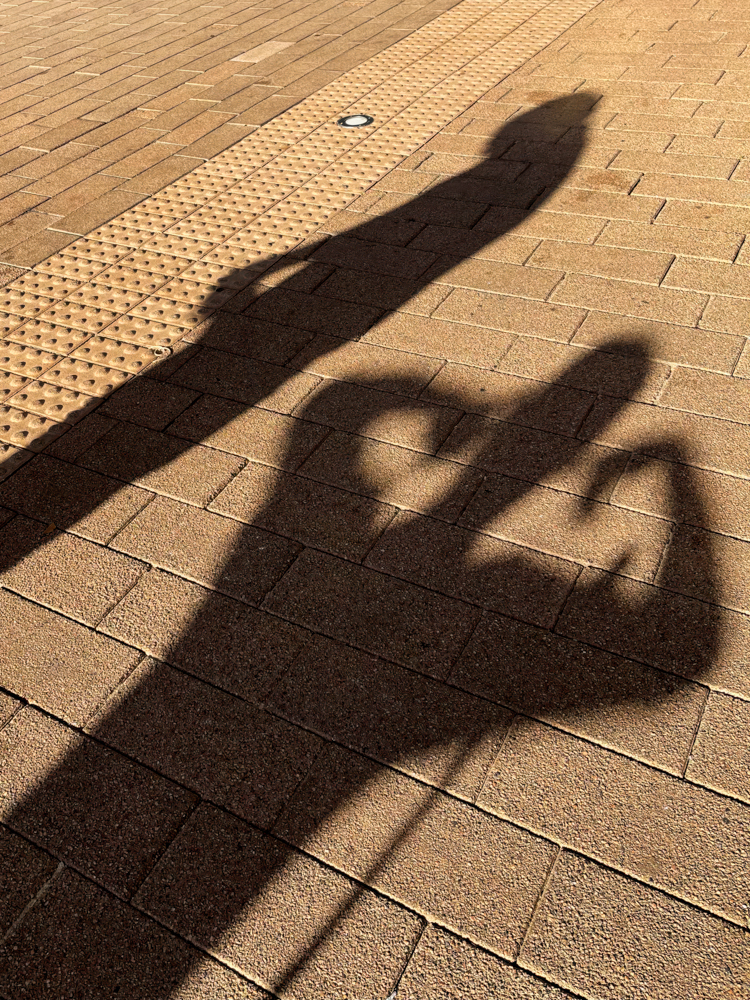
©Heather Mattera, from the Weight of it All
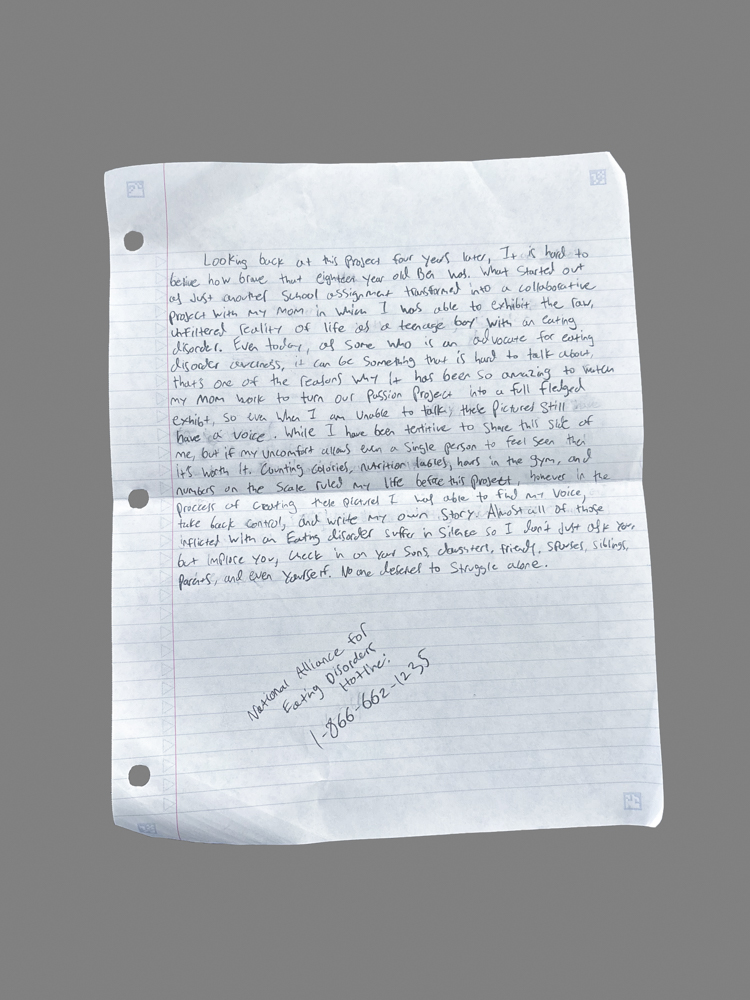
©Heather Mattera, from the Weight of it All
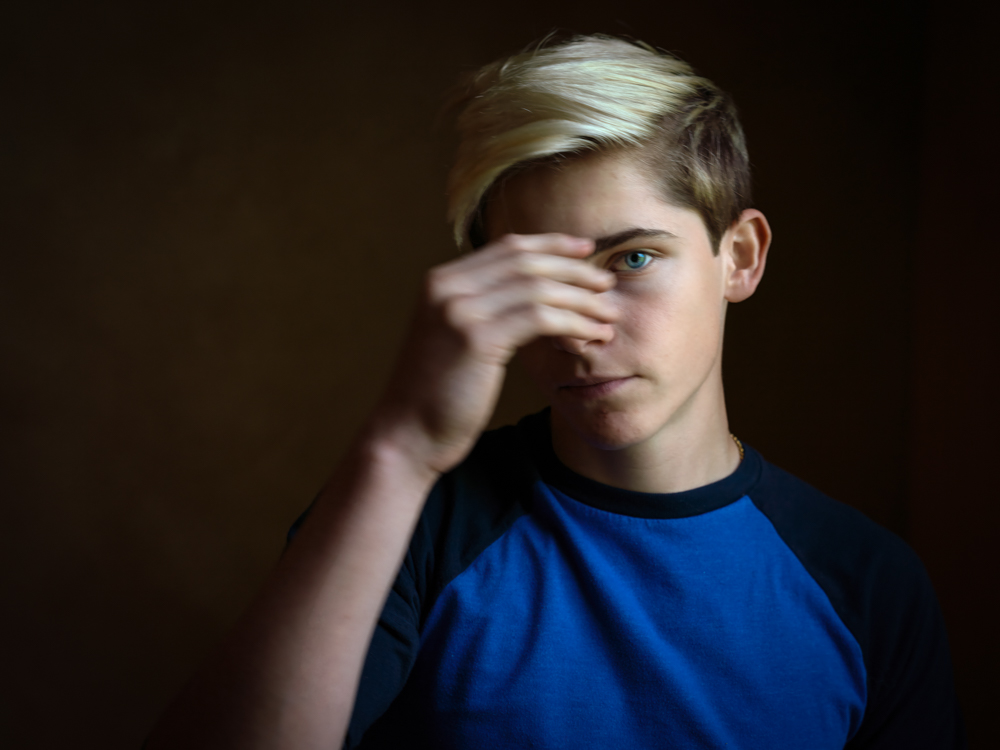
©Heather Mattera, from the Weight of it All
Heather Mattera has spent much of her life helping marginalized individuals feel seen, heard, and understood, and her photographic work centers on the complexities and tenderness of human relationships. An Internationally award-winning photographer and mother of two sons, she has exhibited widely, including “Nomad’s Breathe” with Geste Gallery in Paris, “Forever Happy” with Fotofestival Lenzberg in Switzerland, A Love Letter to Nature with Photo Vogue in Milan, The Weight of It All in Minneapolis (2023), and Open Walls at the Rencontres d’Arles photo festival (2020). Through her collaborations with non-profits, she supports at-risk youth, unhoused teens, foster families, women with eating disorders, and families facing terminal illness in creating new and empowering personal narratives. She founded a global scholarship program for emerging photographers and a mentorship initiative that connects students with subsidized professional mentors. Earlier in her career, Heather worked as a published, licensed therapist, developing an outpatient PTSD treatment program and therapeutic art initiative for the Veterans Administration while facilitating individual and group therapy across several inpatient psychiatric units.
Instagram: @heathermattera
ABOUT CENTER
Founded in 1994 in Santa Fe, New Mexico, CENTER is a 501(c)(3) that supports socially and environmentally engaged lens-based projects through education, public platforms, funding, and partnerships.
Posts on Lenscratch may not be reproduced without the permission of the Lenscratch staff and the photographer.
Recommended
-
Jordan Tovin: A Shaw DiaryMarch 21st, 2026
-
Houston Center of Photography: THE VANGUARD,Rebel Girl, and Soft Heat…and a conversation with Anne MassoniMarch 12th, 2026
-
A Collaborative Photographic Exhibition by Heather and Ben Mattera: Weight of It AllMarch 7th, 2026
-
Binh Danh: Belonging in the National ParkMarch 4th, 2026
-
Landscape ReEnvisioned Exhibition At the Monterey Museum of ArtFebruary 26th, 2026