Mexico Week – Cristina Kahlo: When Memory Meets the Lens
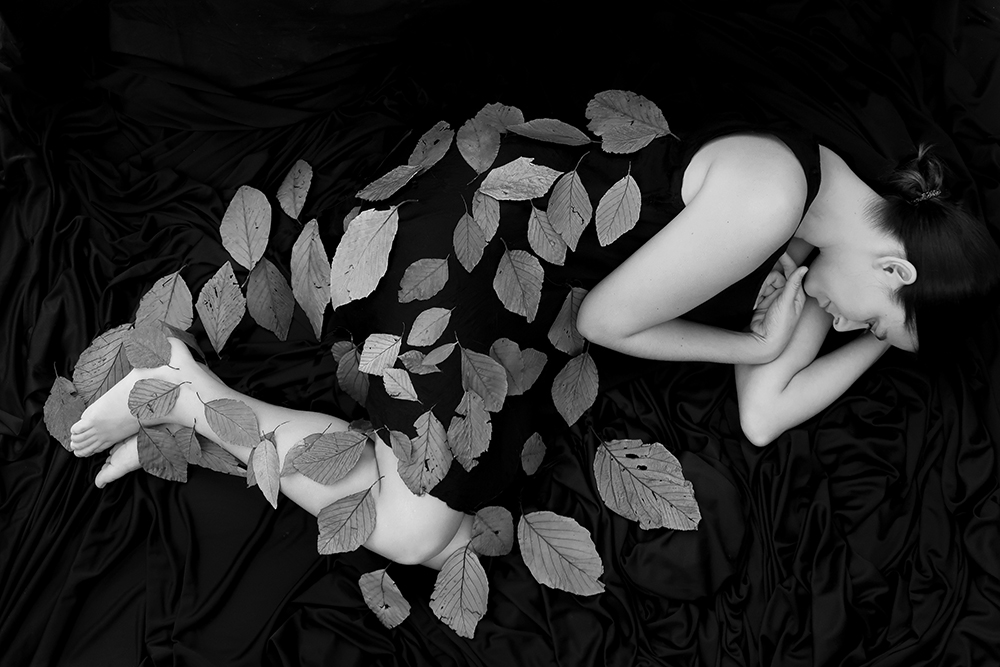
©Cristina Kahlo, from the series Crecí a la sombra de los árboles (I Grew Up in the Shadow of Trees)
When I think of Mexico Week I don’t just see it as a series of interviews, but as a compass of what’s yet to come.
Seven artists, each working from a different place—whether it’s femininity, nature, society, history, identity, architecture, or the unconscious—share an undoubtable longing to express themselves in an innovative and true way.
While doing these interviews I didn’t only find photographs. I found passion, devotion, ideas, processes, humor, time, effort, and a true sense of humanity that deserves to be shared.
This isn’t an academic work. It’s a series of conversations about how our practice as photographers continues to evolve day by day. About how life shapes us and grants us the power to give meaning to what we capture with a click.
In a rapidly changing world, these artists continue to honor the origin of the word “photography” by bringing light and stories into it.
These photographers can look to the past and the future, move between worlds, and build a contemporary curiosity that will inspire many more to follow the path they’ve traced. The image is changing, and I believe we should stop for a moment and ask “What is Mexican photography saying today?”
The artists are: Iñaki Bonillas, Tomás Casademunt, Paola Dávila, Carol Espíndola, Cristina Kahlo, Gerardo Montiel Klint, and David Muñíz.
I met Cristina Kahlo in 1989, when she reviewed my portfolio at the photography gallery she ran in Mexico City. Today, for this interview, she welcomed me into her home, where she shares her journey towards affirming her identity and her passion for being a photographer.
Here, we find her family history intertwined with nature, technology, order, and rebellion, coexisting in an unexpected harmony. In the same way, she opens the door for us to discover an artistic practice that moves between the documentary and the fantastic, the analog and the digital, the intimate and the collective. Her lens has captured the passage of time while remaining faithful to her obsessions, open to transformation, and deeply rooted in the experience of looking, remembering, and imagining.
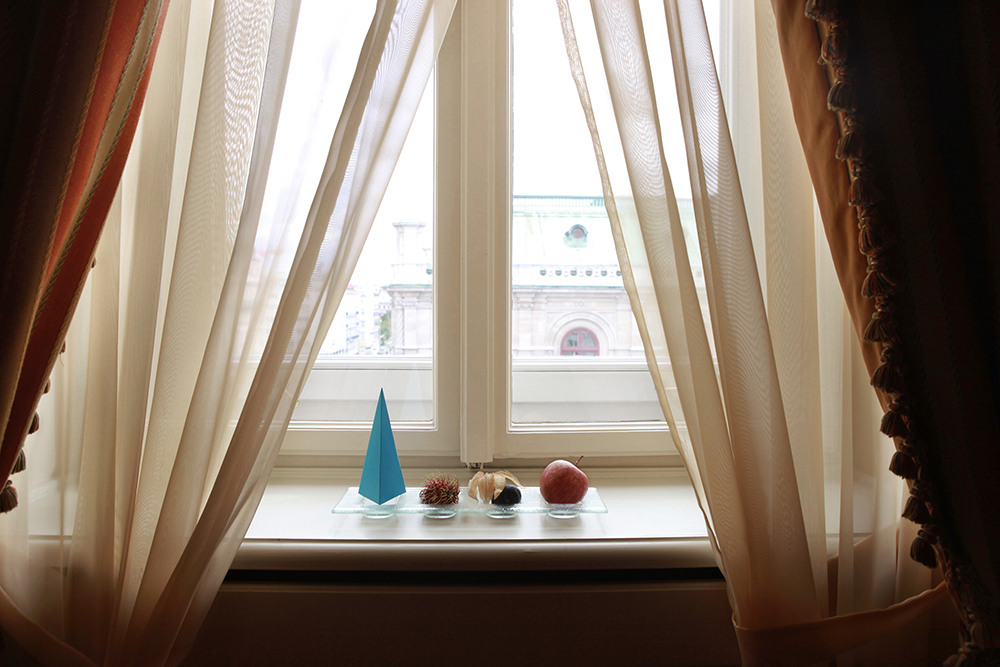
©Cristina Kahlo, “Hotel Sacher, Vienna,” 2010, from the series Laboratorio de Ficciones (Laboratory of Fictions)
Throughout her artistic career Cristina Kahlo has addressed a number of facets of both Fine Art and Documentary photography. In creating her images Kahlo has used numerous photographic printing techniques including platinum, cyanotype, heliogravure, as well as collage and intervening images. Over three decades this Mexican photographer has addressed subjects such as the feminine universe, geometry, rituals, music and architecture, and her recent work has focused on an exploration and reinterpretation of nature. Her pieces are in private and public collections in the USA including the Eli and Edythe Broad Art Museum at Michigan State University; El Museo Latino in Omaha; Philadelphia Museum of Art; Judy and Sidney Zuber Collection of Latin-American Photography in Stanford; as well as Bartels Foundation in Basel, Switzerland, and the Fundación Coppel and BNP Paribas in Mexico, among others.
As an independent curator, she was the founder of the Galería Alternativa (1983–1985) and Galería Kahlo Coronel in partnership with Juan Coronel Rivera (1986–1991) in Mexico City. She has also carried out projects and exhibitions for major museums, such as the Museo del Palacio de Bellas Artes and the Museo Casa Estudio Diego Rivera and Frida Kahlo in Mexico City; Museo Casa Diego Rivera, Guanajuato, Mexico; Parrish Art Museum, Water Mill. N.Y.; Eli and Edythe Broad Art Museum at Michigan State University; Martin Gropius Bau, Berlin; Bank Austria Kunstforum, Vienna; and the Palazzo Ducale, Genova, Italy. She has also given lectures on art and photography at the Modern Art Museum of Fort Worth; Santa Fe University, New Mexico; New Mexico Museum of Art, Santa Fe; Dallas College, Tarrant County College, and Southern Methodist University in Texas; the National Museum of Mexican Art, Chicago; El Museo Latino, Omaha, NE; Swarthmore College Intercultural Center, PA; Freie Universität in Berlin, Germany; Pera Museum, Istanbul, Turkey; the Universidad Anahuac and Museo Frida Kahlo in Mexico City; and MUSA, Museo de las Artes de la Universidad de Guadalajara, Mexico.
Follow Cristina on Instagram: @cristinakahlo

©Cristina Kahlo, “Pájaros en confusión” (Birds in Confusion), 2017, from the series Fábulas del aire, el agua y la tierra (Fables of Air, Water, and Earth)
The photographic image has been part of my life as long as I can remember. Each of my series is comprised of a double testimony: the history of what is photographed and my own history. Time is implied in both senses: the images as memory and during the act of photography. A constant in my work lies in my interest in the life cycles in nature; and of human beings, their mobility in territorial and corporeal space. My main sources of inspiration are literature, poetry, and philosophy. In my creative process, the exploration of different photographic printing techniques and media are recurrent. I am interested in the results of a single image when it is worked in different formats and with different techniques, such as gelatin silver prints, digital, palladium/platinum, cyanotype printing, and in some cases pictorial interventions, shifts through elements from nature and collage. Since my first solo exhibition The Appearance of Animals and the subsequent Hour after Hour, Laboratory of Fictions, Marco Polo Is Metaphor, Contemplations, and I Grew Up in the Shadow of Trees among the most representative, the images of each series interweave a bond always connected to nature, the feminine universe, and philosophical thought of the human being. – Cristina Kahlo
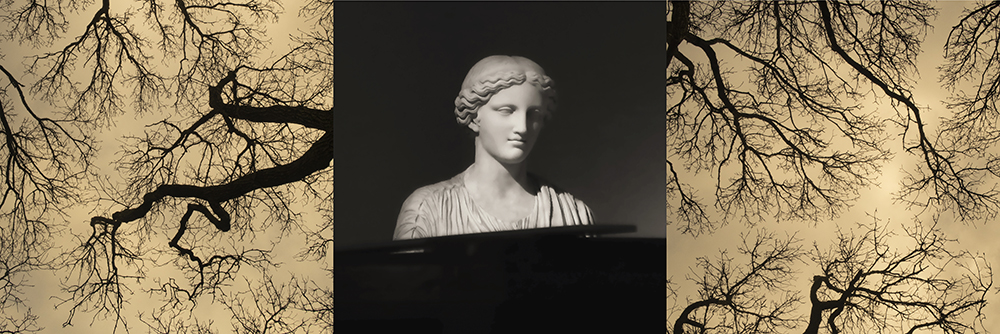
©Cristina Kahlo, “Vuelo sin rastro” (Flight without a Trace), 2019, from the series Contemplaciones/Hora tras hora (Contemplations/Hour after Hour)
Lou Peralta: What is your first significant memory related to photography and how did that world become one with your family and your personal path towards becoming a photographer?
Cristina Kahlo: I grew up in Coyoacán in a house that deeply marked me. Especially because my father’s darkroom was there—a place we weren’t allowed to enter as children because it was dangerous due to the risk of chemical exposure. We called it “the secret room,” which is truly what it was, since the door was hidden behind a bookshelf with a mechanism of metal rods that had to be moved in a certain order to open it.
The first time I went in, I was 11 or 12 years old. My father invited me in and handed me a piece of paper to place into the developer under the red light. For me, that was pure magic. That’s when I decided I wanted to be a “magician” like him, not a photographer. From that moment on, I had no doubts about what I wanted to do in my life.
Sadly, my father died when I was 13, and the darkroom was left empty. A year later, someone I knew taught me how to develop film for the first time. Everything came out badly exposed and stained, but it was my first attempt, so I tried again and again. Then, when I was 16, the Escuela Activa de Fotografía opened in Coyoacán, two blocks away from my house, and for me it was a gift. That’s where I studied.
Years passed, and when I finished high school, I was already studying photography, but my mother sent me to take a course in Spain to separate me from a boyfriend who had a motorcycle and lived on his own. When the course ended, I stayed in Madrid, living with some of my mother’s friends, and enrolled at the Centro de Estudios de la Imagen. I spent a year studying photography there. I had no money, but I was very happy.
When I returned to Mexico, I began teaching at the Escuela Activa, even though my mother wasn’t exactly thrilled about the idea. In the end, it’s ironic: my mother didn’t want my father to be a photographer because it was hard to make a living from it, so she ended up having two children who are now photographers, a photographer son-in-law, and grandchildren devoted to cinema. I truly believe and can prove that images are deeply rooted in my family, and I love to think it all began in my father’s “secret room.”
LP: How did the idea and the courage to open a gallery dedicated to photography come about at a time when there was practically no scene for it? What led you to partner with Juan Coronel to create Mexico’s first specialized gallery?
CK: I entered the gallery world when I returned from Spain. A friend of my mother’s put me in contact with Patricia Sloane, who was about to open the Sloane-Racotta Gallery. I had no experience, but they hired me, and that’s where I started. It was a wonderful school. That’s where I met a young collector named Alfredo Valencia.
Alfredo proposed opening a gallery aimed at a younger generation than that of Sloane-Racotta. I accepted and we opened the Alternativa Gallery in Coyoacán. There we exhibited artists like Magalí Lara, the Castro Leñeros, Carla Rippey, as well as photographers like Gabriel Figueroa Flores, Javier Hinojosa, Lulú (Lourdes) Almeida, and Dornith Doherty. The idea was to show young art. We thought it would sell quickly, but it didn’t. Eventually, we closed Alternativa.
Some time later, Juan Coronel proposed opening a gallery with me. I asked that it have a strong focus on photography, he agreed and that’s how Kahlo Coronel was born in San Ángel. We divided it into two: photography on the ground floor and contemporary art upstairs. We were so enthusiastic that we would inaugurate two exhibitions at once (photography downstairs, painting/sculpture/printmaking upstairs). The photography gallery attracted a lot of people, but economically it was the paintings that supported everything.
The gallery was a labor of love. We paid for invitations, shipping, cocktail parties, rent, upkeep, a secretary—everything. We sold in installments to young collectors, and they did pay, which encouraged us to continue. Sadly, there came a point when we had run out of money. Juan and I had to pawn personal jewelry to keep the gallery going a little longer. That’s how we survived until 1991, when rent went up and the situation became impossible to keep up so we closed.
That’s where my phase as a gallerist ended. I enjoyed it and learned a lot, but I always knew I wanted to take photographs. After closing the gallery, I returned to my own work, taught workshops, and rebuilt my darkroom. From then on, I continued on my path as a photographer, my true path.
©Cristina Kahlo, from the series Crecí a la sombra de los árboles (I Grew Up in the Shadow of Trees)
LP: Continuing with childhood, what role do childhood, memory, and imagination play in your creative process? Where does your interest in geometry, nature, and myths come from?
CK: The theme of childhood has grown stronger recently in my life when at 65, I understood that much of my work came from there. The countryside, days fishing, snails under the bed, my rock collection, the little ceramic print of my foot saved by my mother, chameleons in jars, and being in constant contact with nature. That imagery is present in my work without me consciously seeking it.
Geometry also comes from my childhood. A neighbor who was an architect taught us about Platonic solids using toothpicks and modeling clay. Watching how light struck those forms became a source of fascination. From there, I arrived at nature, light, myths, and everything began to connect.
My book Crecí a la sombra de los árboles (I Grew Up in the Shadow of Trees) speaks precisely about that: nature, childhood, and genealogy. I grew up in the shadow of Frida Kahlo and Guillermo Kahlo. That shadow weighs heavily, but it also nourishes. Like ferns or moss: they grow in the shade and grow differently. For me, that book is memory, myth, and botany all at once.
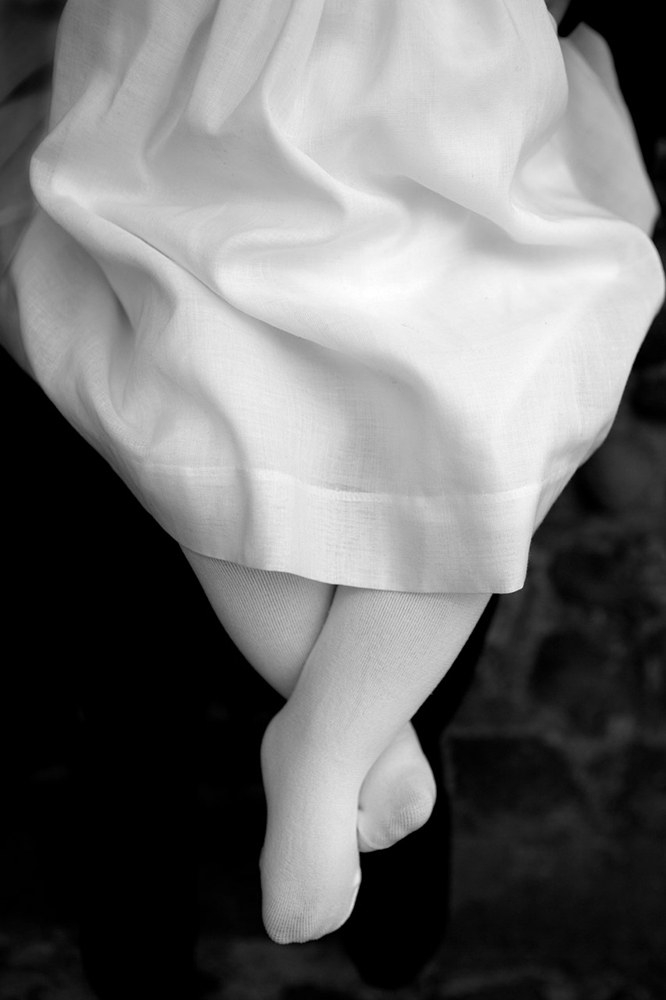
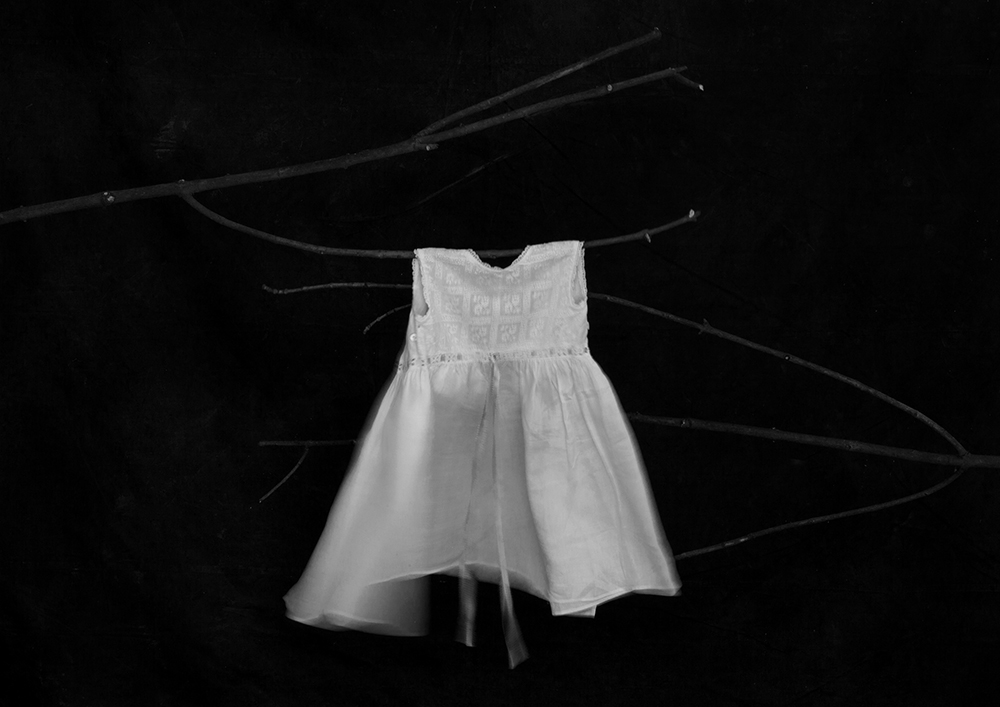
©Cristina Kahlo, “Día de bautizo” (Baptism Day), 2012, from the series Entre telas y telones (Amidst Cloth and Curtains)
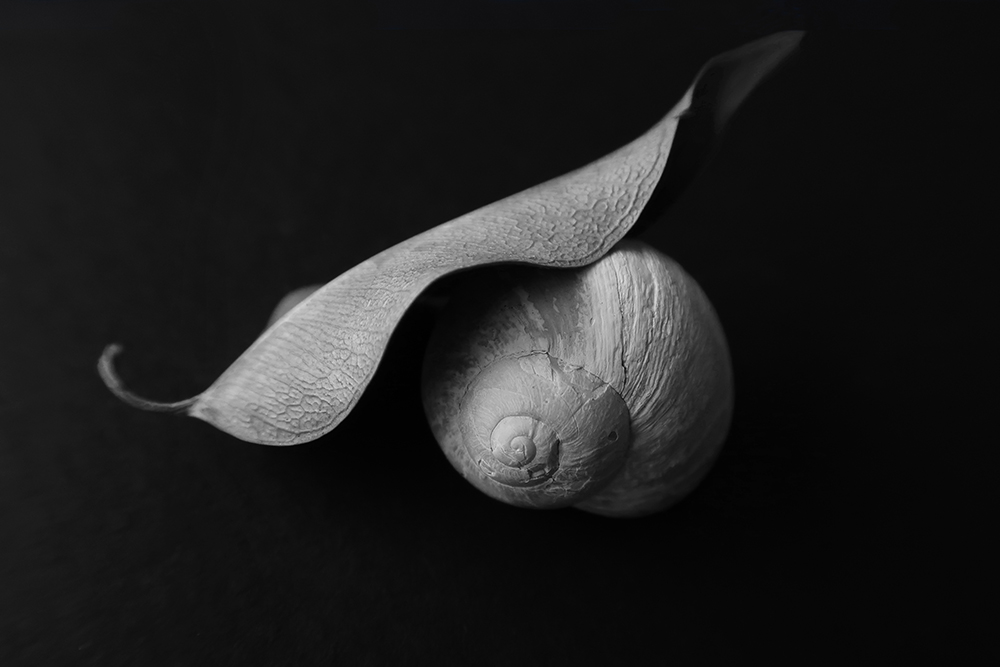
©Cristina Kahlo
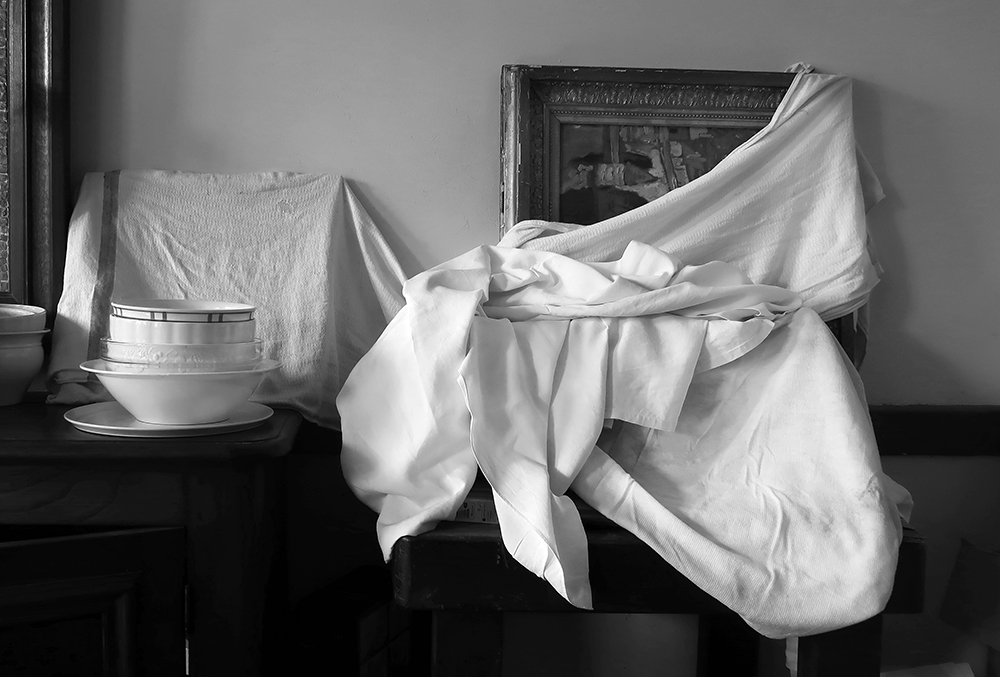
©Cristina Kahlo, “Entre telas” (Amidst Cloth), 2018, from the series Entre telas y telones (Amidst Cloth and Curtains)
LP: Your work moves between the documentary, the personal, and the experimental. How do these areas dialogue in your practice? Do you experience them as separate paths or as one force taking different forms?
CK: I’ve always felt my work as two currents that coexist. One is “the documentary,” such as when I photographed danzón for almost ten years, traveling to congresses, festivals, and communities. There I learned to dance, met many people, and understood that world from the inside. And the other current is “the fantastic,” a more playful, literary, and philosophical approach. This appears in series such as Marco Polo es Metáfora (Marco Polo Is Metaphor), Contemplaciones (Contemplations), and Laboratorio de Ficciones (Laboratory of Fictions), where myths, geometry, nature, and intervention emerge.
In the end, I don’t feel them as separate. In both, there is a double narrative. The documentary part speaks as much about the external world as it does about me: where I was and what moment in my life I was living. The fantastic part speaks of the imaginary and my internal states. For me, photography is a way of existing. I can’t fathom my life without a camera, without visual memory, without that way of being in the world.
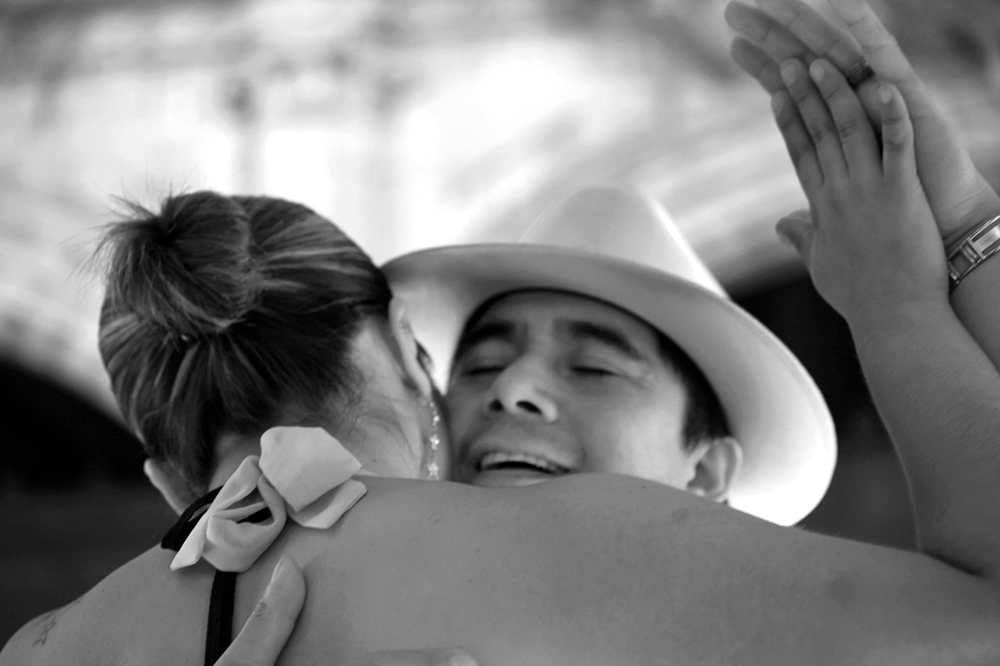
©Cristina Kahlo, “El suavecito” (The Smooth Guy), 2011, from the series Tiempo de Danzón (Danzón Time)
LP: When did your work ask you to leave bidimensionality and begin intervening, painting, or expanding the image?
CK: Very early. My first images intervened with oil paint date from the 1990s, when I left the gallery and returned to my work. Since then, I’ve never stopped. Later came cyanotype, platinum printing, toning with organic dyes, axiote (annato), black tea, cempasúchil (marigold), and an enormous technical freedom that I combined with my Mexican identity.
The transition to digital was difficult at first, but when I understood the digital negative, I reconciled with it. I could make negatives in any size I wanted and return to the analog darkroom with new tools. Today I work in a hybrid way, using analog and digital techniques without any conflict. What matters is the image and its meaning.

©cristina Kahlo, “Maravillas de esta tierra” (Wonders of This Earth), 2013, from the series Marco Polo es metáfora (Marco Polo Is Metaphor)
LP: Speaking of your Mexican identity, tell me about this series Posthispánico MX (Post-Hispanic Mexico) where you mix contemporary photography with pre-Hispanic pieces. What were you interested in exploring, and how did you work with color, connections, and the sense of myth?
CK: This series was a tribute to pre-Hispanic culture. There, I place people I photograph today in dialogue with pieces from the Anahuacalli Museum. I don’t direct anyone. The visual coincidence happens on its own—like a child with a bandana or a woman with a knotted element that coincides with a sculpture. Then, I print both images on the same paper and intervene them with axiote.
I’m interested in formal parallels and myths. One of these works is called “Llegó la noche y se vistió de estrellas” (Night Arrived and Was Dressed in Stars), inspired by a goddess whose cloak is the night sky. I also reference Egypt and the Virgin of Guadalupe. With the tzompantli, I emphasize how highlighting an architectural element can change the meaning of an image. Sometimes I use digital intervention and collage to expand possibilities—it depends on what the photograph asks for.
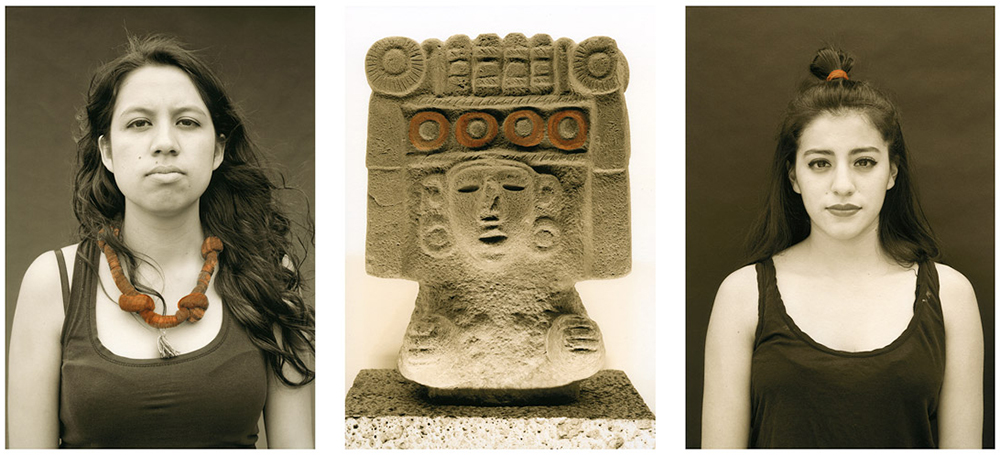
©Cristina Kahlo, “Nudos” (Knots), 2016, from the series Posthispánico MX (Post-Hispanic Mexico)
LP: How did your interest in installations and taking photography out of the traditional frame begin? What happened to you during that transition, and where is it heading?
CK: I felt the need to take the photograph out of the frame and turn it into the environment itself. At the Patricia Conde Gallery, I created an installation with leaves, nests, and objects that refer to my childhood. It wasn’t meant to be sold, but rather for people to enter the space. It’s like staging what I would have collected as a child: snails, stones, leaves and so on.
That installation continues to evolve. My series don’t close; they’re expanding stories, like Crecí a la sombra de los árboles. New pieces can always be inserted that continue the same narrative.
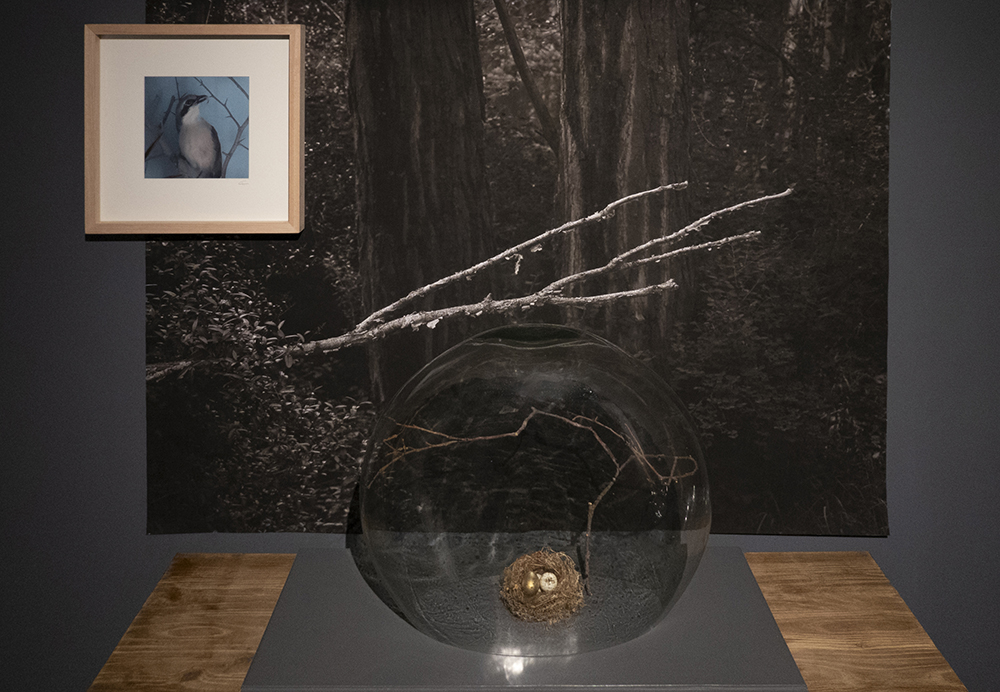
©Cristina Kahlo, from the series Crecí a la sombra de los árboles (I Grew Up in the Shadow of Trees)
LP: You’ve worked with community documentaries, childhood disability, extreme poverty, and danzón. What has that journey meant to you, and what does photography give you in those contexts?
CK: I photographed danzón for years, living alongside its community and learning to dance. I also worked in communities with childhood disabilities (autism, Down syndrome, cerebral palsy) and later with extreme poverty inside people’s homes.
For me, photography is a way of learning. Each project teaches me something about the world and about myself. The interaction is the cake; the photograph is the cherry on top. These projects took away my shyness and taught me how to communicate. Before photographing, I form a bond: I talk, I ask, I listen.
Each project has given me something special. Danzón showed me rituals, clothing, and discipline. Seeing disability up close taught me how to approach with respect. And experiencing extreme poverty from the inside changed my perspective and helped me understand dimensions that can’t be grasped from the outside. Photography has taken me to worlds I would never have entered without it.
LP: How do you select your images? Do you have any visual obsessions that define how your intervened photographs dialogue with one another?
CK: My studio is where everything originates. There I review my family archive and experiment digitally—especially on the computer, where I color black-and-white photos. I’ve been working this way for over twenty years, and now, with the rise of artificial intelligence, it takes on a new meaning to talk about the manual, the intervened, and the archive. Digital and analog techniques can coexist, and it’s important to make that visible.
My studio is sometimes pristine and at other times pure chaos when I’m intervening, but that’s all part of the process. It’s the change and the reinvention that sets off my creativity.
As for the second part of the question, I’ve noticed something interesting in some of my works. When we see two photographs together, one of my obsessions becomes evident: framing from above, cutting the body at chest height. It’s a way of looking that I hadn’t seen in other photographers and that feels very natural to me. What’s interesting is that these can be two different sessions with different people, yet the visual gesture repeats itself, creating unity. It’s about finding coincidences and patterns in my way of seeing when I make portraits.
What appears in the obsessive images, the interventions, the family archive, and the digital work are layers of my practice. There’s a family historical line, a technical line, and an obsessive line that runs through my framing. Together, they tell something that can’t be said with a single image. That’s why everything is connected.

©Cristina Kahlo, “Llegó la noche y se vistió de estrellas” (Night Arrived and Was Dressed in Stars), 2019, from the series Contemplaciones/Hora tras hora (Contemplations/Hour after Hour)
LP: After all this, what are you working on now? What stage comes next?
CK: Although I remain deeply connected to Crecí a la sombra de los árboles, I feel that a deeper stage is coming. Through that project, I understood a great deal about myself—especially my childhood, my obsessions, and my relationship with nature, geometry, and the feminine so I don’t want to close it. I want to explore how far it can go.
My themes don’t change that much either. When I look at my photographs, the compositions are almost identical years apart. That’s a guiding thread I follow, one that leads me creatively to stay true to myself.
I also remember that in 2001 I was obsessed with water and worked with fragments of the human body swimming alongside dolphins. I didn’t show the whole body—only hands, legs, small portions that suggested more than described. Everything was intervened with oil paint directly on the photograph. In those pieces, something appears that repeats throughout my work: body fragmentation, cuts, an interest in light in water, and a sense of suspended movement. They are early works, but they reveal things that would later reappear—in different forms—in more recent projects.
Another project was Noviembre Dos (November Second), which I did in 2004 and 2005. To make it, I set up a small studio in my home and photographed the children who came to ask for their calaverita (a Mexican version of trick-or-treating). It was a game, but also an important photographic project because it forced me to talk to the children, ask permission from their parents, stage the scene, and deliver the photograph.
From there, I see certain key themes that have run through my work from the beginning: the fragmented body, movement, water, manual intervention, portraiture, play, and close relationships with people. All of that is still alive, though transformed. In a final composition, I like the stages to be visible and for the text to be accompanied by images that allow the viewer to understand the journey without the need for over-explanation. So, I believe that’s what awaits me. A series of photographic interventions that will transform my past and my present to make them one with art.
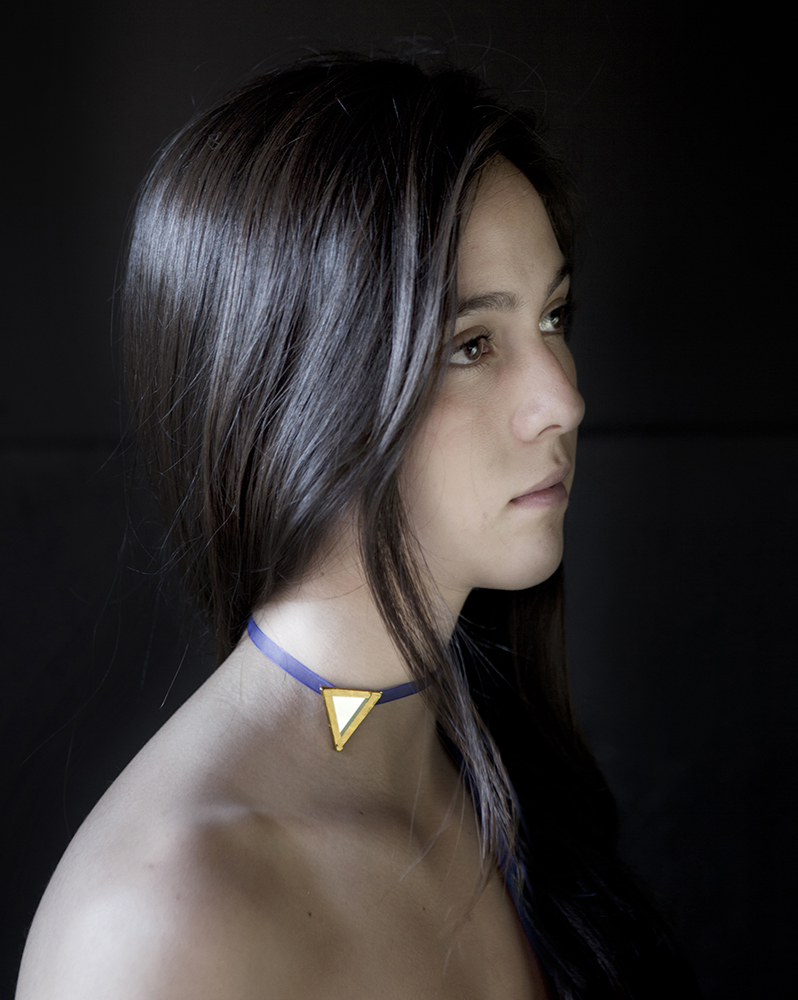
©Cristina Kahlo, “El Origen” (The Origin), 2014, from the series Marco Polo es metáfora (Marco Polo Is Metaphor)

©Cristina Kahlo, “Pirámide estelar” (Stellar Pyramid), 2010, from the series Laboratorio de Ficciones (Laboratory of Fictions)
Lou Peralta is a visual artist and contemporary photographer based in Mexico City. She belongs to the fourth generation of a family dedicated to portrait photography—a legacy that continues to nourish her ongoing exploration of the genre. Her practice expands the limits of the two-dimensional photographic image, reimagining portraiture as a sculptural and spatial experience through hand-built structures using materials such as paper, fabric, agave fiber, and wire.
Her work has been featured in solo and group exhibitions in Mexico and abroad. Peralta is a Fujifilm brand ambassador through the X-Photographers program. Recent recognition of her work includes being selected for the Photolucida Critical Mass Top 50 (2023 and 2025), the FRESH Photography Award (2025), the 22nd Santa Fe Photography Symposium in New Mexico (2023), the selection of one of her works for the Ibero Puebla Biennial (BIP) 2025, and an artist residency at The ANT Project (2026).
Instagram: @lou_peralta_photo_based_artist
Posts on Lenscratch may not be reproduced without the permission of the Lenscratch staff and the photographer.
Recommended
-

Mexico Week – Gerardo Montiel Klint: Cartographer of the UnconsciousMarch 28th, 2026
-
Mexico Week – Cristina Kahlo: When Memory Meets the LensMarch 27th, 2026
-
Mexico Week – Carol Espíndola: The World Is My Own BodyMarch 26th, 2026
-

Mexico Week – Paola Dávila: Beyond the LandscapeMarch 25th, 2026
-
Mexico Week – Tomás Casademunt: Time Frozen by LightMarch 24th, 2026