Photographers on Photographers: Elizabeth Blackie in Conversation with Pia-Paulina Guilmoth
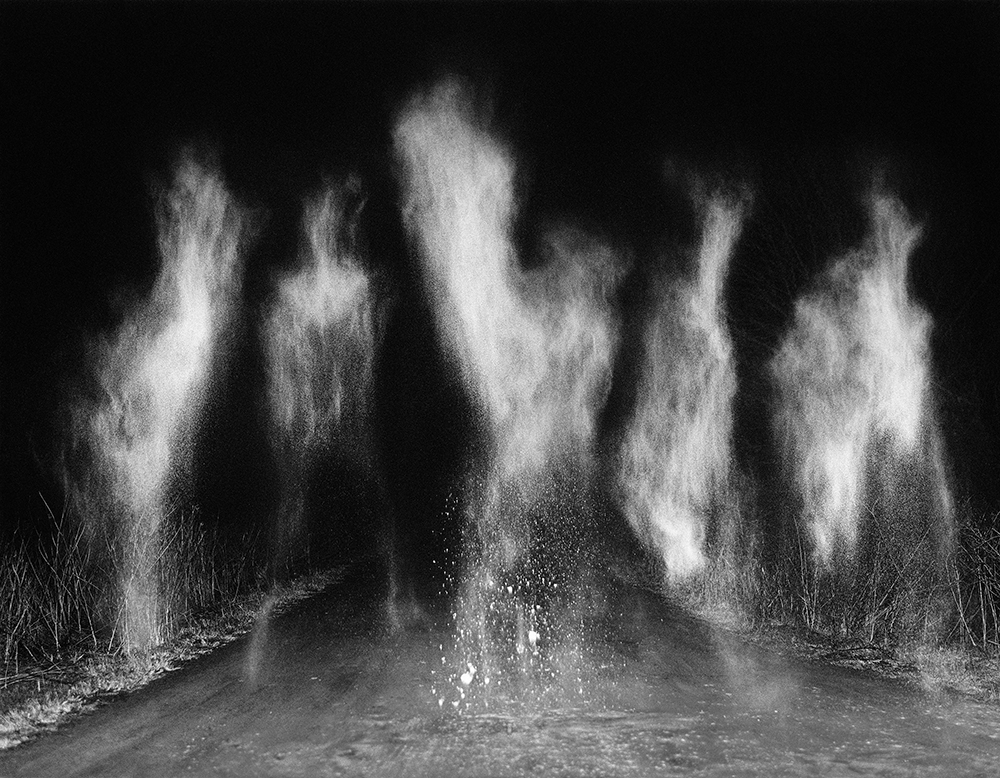
© Pia Paulina Guilmoth, dust, 2021
Every August we ask the previous Top 25 Lenscratch Student Prize Winners to interview a hero or a mentor, offering an opportunity for conversation and connection. Today Elizabeth Blackie and ia-Paulina Guilmoth are in dialogue. Thank you to both of the artists.
I was first introduced to the work of Pia Paulina Guilmoth during my final year at University, at a time when I was working on a project that navigated questions of identity and my place within the environment around me. A friend shared her work with me, and I was immediately drawn in by its dreamscape quality. Pia’s images felt both familiar and entirely new, alive with beauty and vulnerability. Rooted in the rural landscape she inhabits, and the intimate presence of family and friends, Pia’s work explores themes of beauty, decay, escape, and growth, often unfolding in the natural world. Speaking with her offered more of an understanding of her process, how her work emerges from walking the land, noting its subtle shifts, and embracing photography as a medium that reveals not only what is seen, but what is felt.
Pia Paulina Guilmoth lives in rural Maine on unceded Wabanaki territory. She makes work thinking about gender, ritual, class, dysphoria, euphoria, beauty, and relationships to the land. Pia uses large format photography, sculpture, and collaged found ephemera gathered white wandering around the backroads.
Instagram: @p_guilmoth
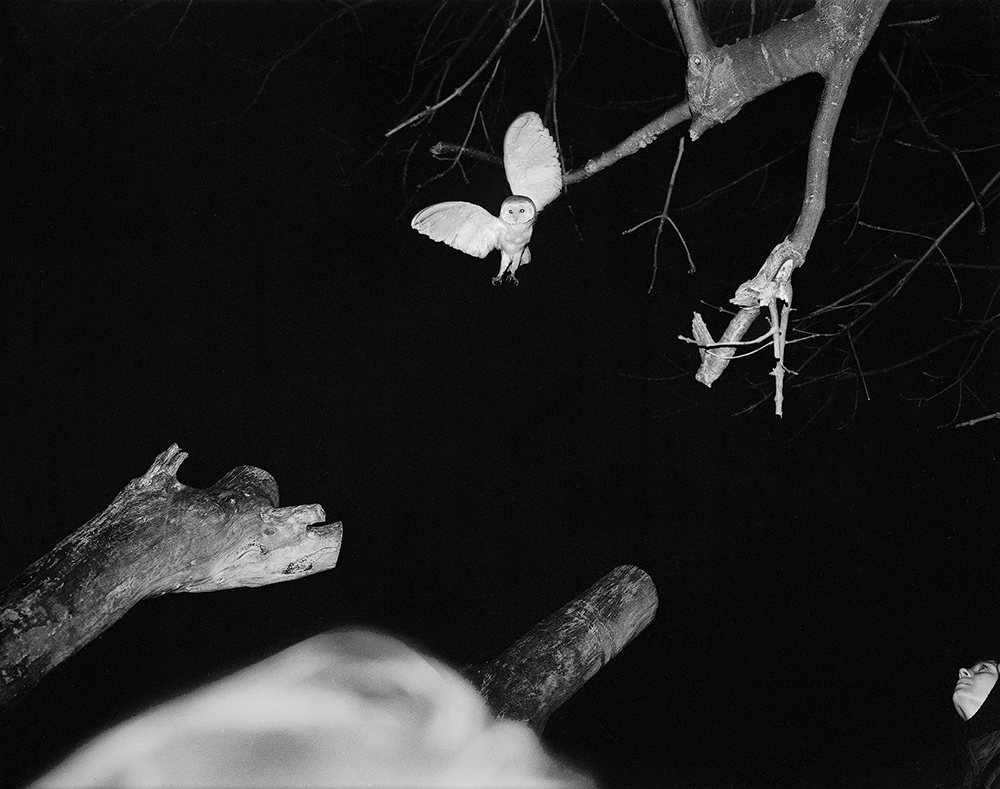
© Pia Paulina Guilmoth, injured owl
Elizabeth Blackie: I perceive your work as requiring a lot of preparation and staging, is this true? I’m interested in knowing whether post manipulation is a key factor in your work. In the case of (I’d look like a flower if I could and orchard (ghillie suit, apples, scent killer gold)) can you share how you made such remarkable images?
Pia Paulina Guilmoth: There is a lot of planning with each photograph I create, which is necessary for the camera and processes I use. It’s slow photography but I’m often shooting subjects that move quickly and are fast and unpredictable. Often this looks like finding something to focus the camera on, and then waiting for whatever the subject is: deer, moths, snakes, etc, to move into that particular spot of focus. All of my images are made in-camera, or in the darkroom (like the one of the horse). Either using double exposures, split field filters, homemade blur and star-cross filters and other analogue methods. I use photoshop to adjust the tones, and levels in the photographs before I send them off to print for a show or book.
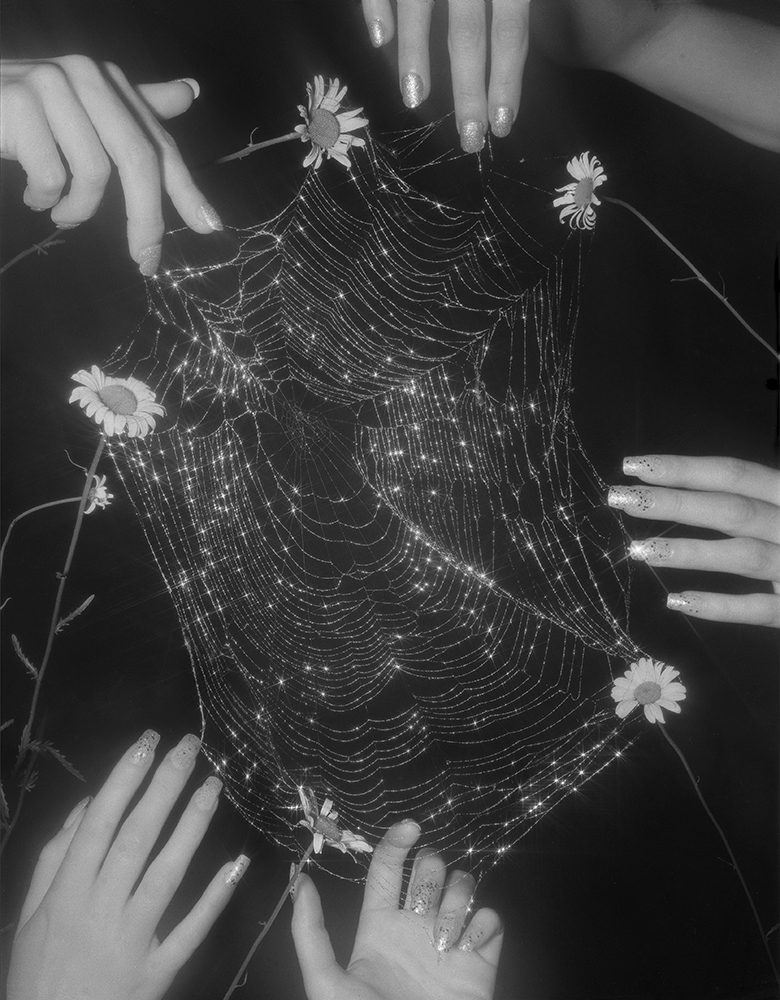
© Pia Paulina Guilmoth, we make a flower, 2022
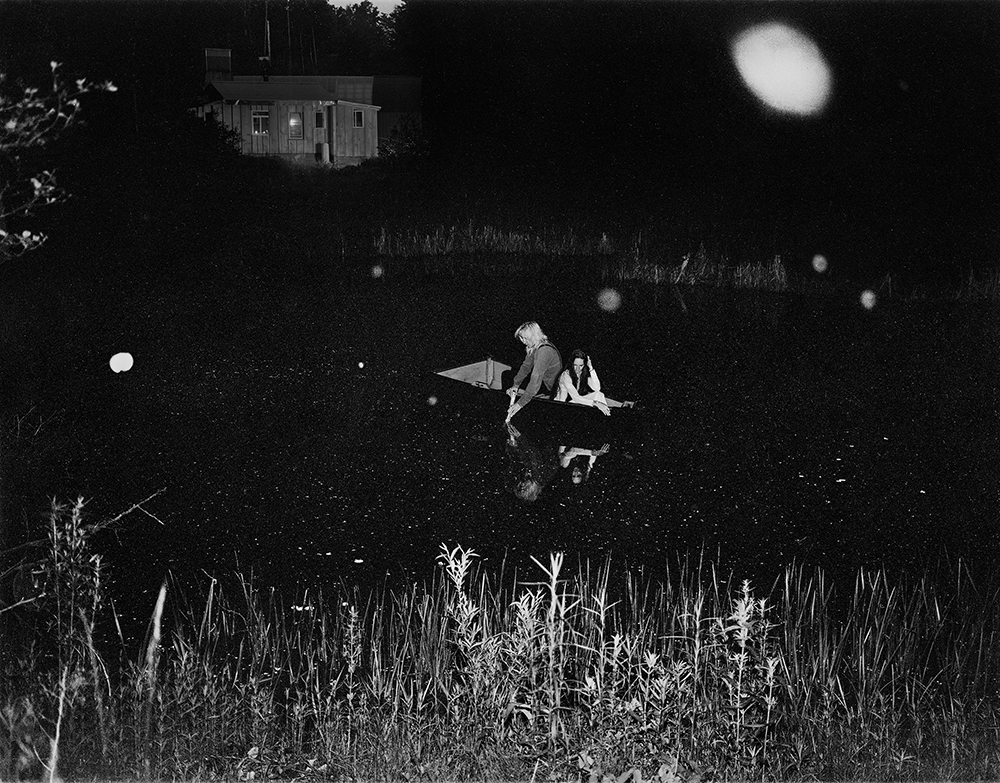
© Pia Paulina Guilmoth, A. & O. (bass pond), 2022
EB: In relation to the last question, are you working from a topic or do you find your subject through taking images? (i.e., are you a finder or seeker?)
PPG: I never think about themes, concepts when I’m making work. I’m constantly just trying to make things that I think are beautiful and give me a feeling of transcendence from everyday life. After I’ve finished shooting for a period of time I look back and can find threads of meaning, and traces of my identity and the things I was experiencing in my life at that time. My life and the people that I care about seep through into the work regardless of if I’m trying or not.
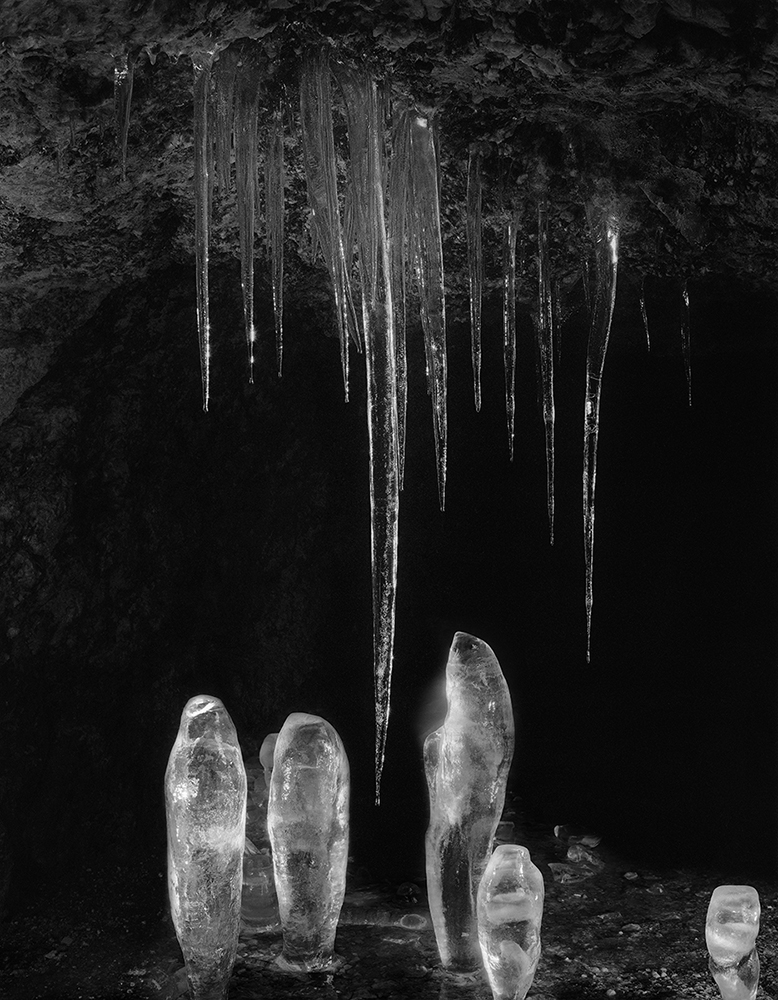
© Pia Paulina Guilmoth, sanctuary/glowing, 2023
EB: Your images suggest that you are attracted to the natural world, to take a particular example, the spider webs, to me they seem to be a metaphor rather than a documentation, can you elaborate on your use of nature in your images?
PPG: I have respect and fascination with the natural world that is totally removed from logic and rationality. It’s about the beauty of things, and the way things look. Nature has been a constant reminder of change, growth, and letting things die, then resurrect. For me, the use of spider webs for example is an obsession with the beauty of their form. I guess they are symbolic of the importance of ritual in my own life. At night I often sit in front of a spider to watch her weave the web from start to finish.
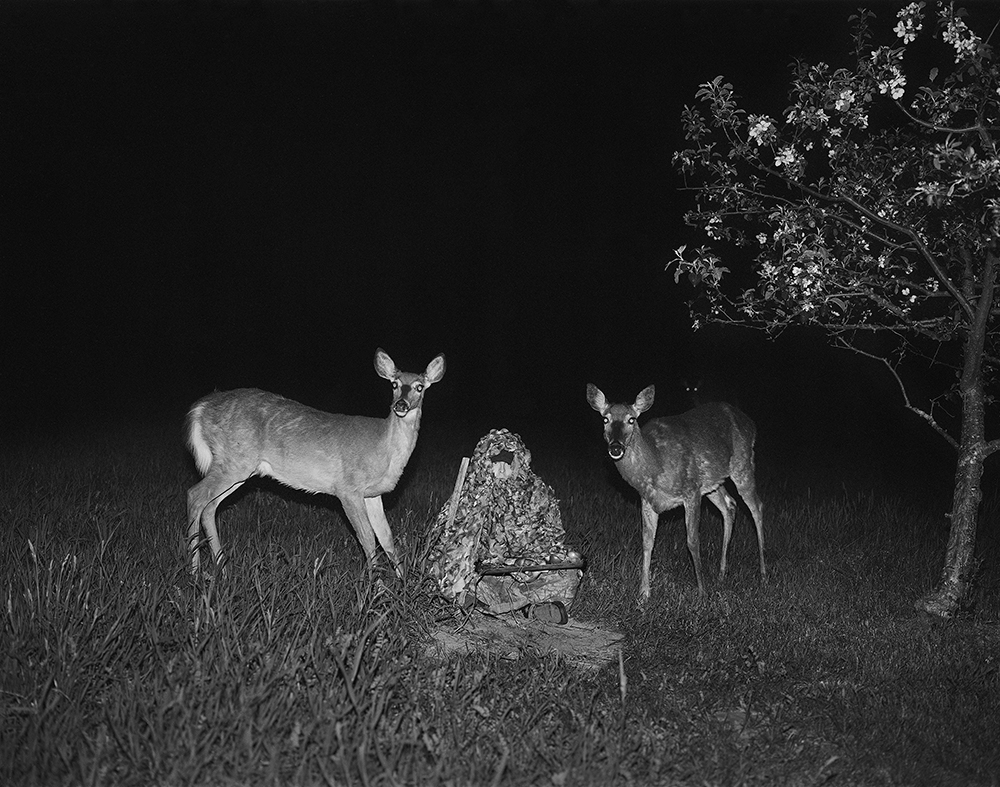
© Pia Paulina Guilmoth, the orchard (ghillie suit, apples, Scent Killer Gold), 2022
EB: I find the process of photography is a process of self-discovery, images express feelings that words are incapable of. Is this the case in your practice?
PPG: Absolutely yes. I have a hard time putting words to my feelings, and get overwhelmed by the permanence, directness of words. With photographs you can say many things all at once, and the viewer has the freedom to choose their own relationship to whatever you’re showing I feel like. I also have a really hard time writing to begin with.
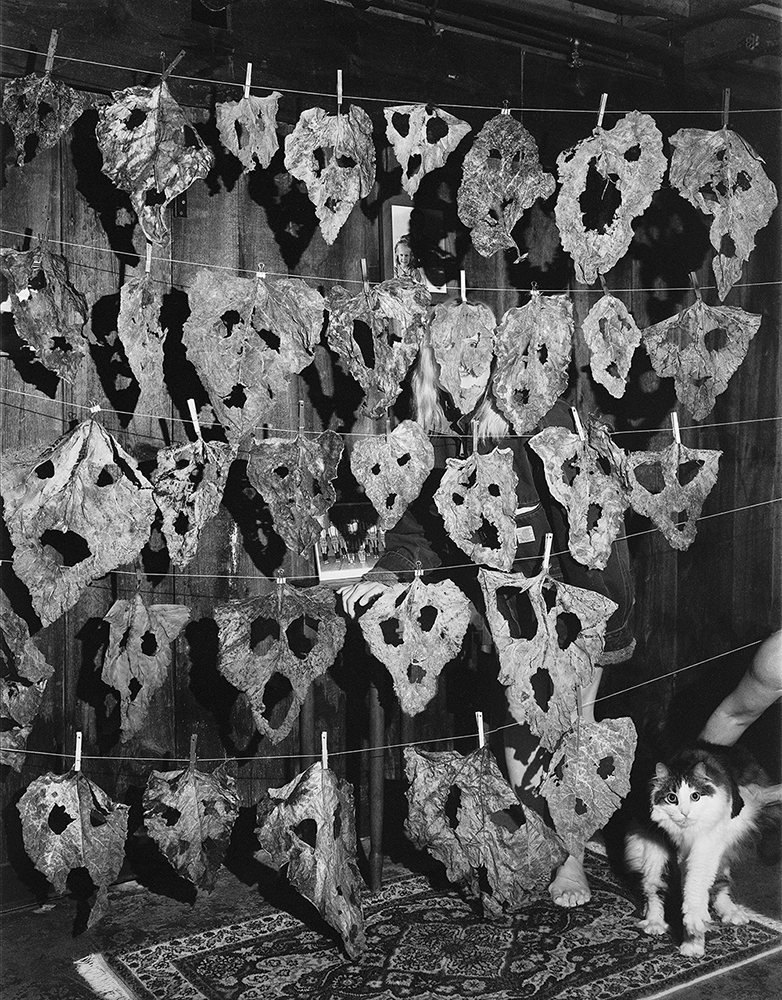
© Pia Paulina Guilmoth, rhubarb mother
EB: Related to the above, you have said that since your transition, you now feel fully grounded and that you are making work that truly feels like you. This sounds as though you are being more intuitive, trusting your instincts, is this the case? Or are there other factors that come into play?
PPG: I am finally living my truth which I think might show in the work. I’m on a path of growing and evolving so I just have more excitement it feels like. I feel like I was devoid of sensuality before transitioning too. Like I could understand it as a concept, and think that I could feel it. In reality though and looking back from now I KNOW that I was so removed from my own senses. Dysphoria is hell. Pre transition I feel I was completely dissociated from my body 24/7 without even realizing it. The body is like an awkward, cumbersome, wretched thing so naturally you neglect it since it causes so much pain to even acknowledge it. I think I was freeing my body from that prison that made it possible to actually feel boundless and like I was free to start living as myself.
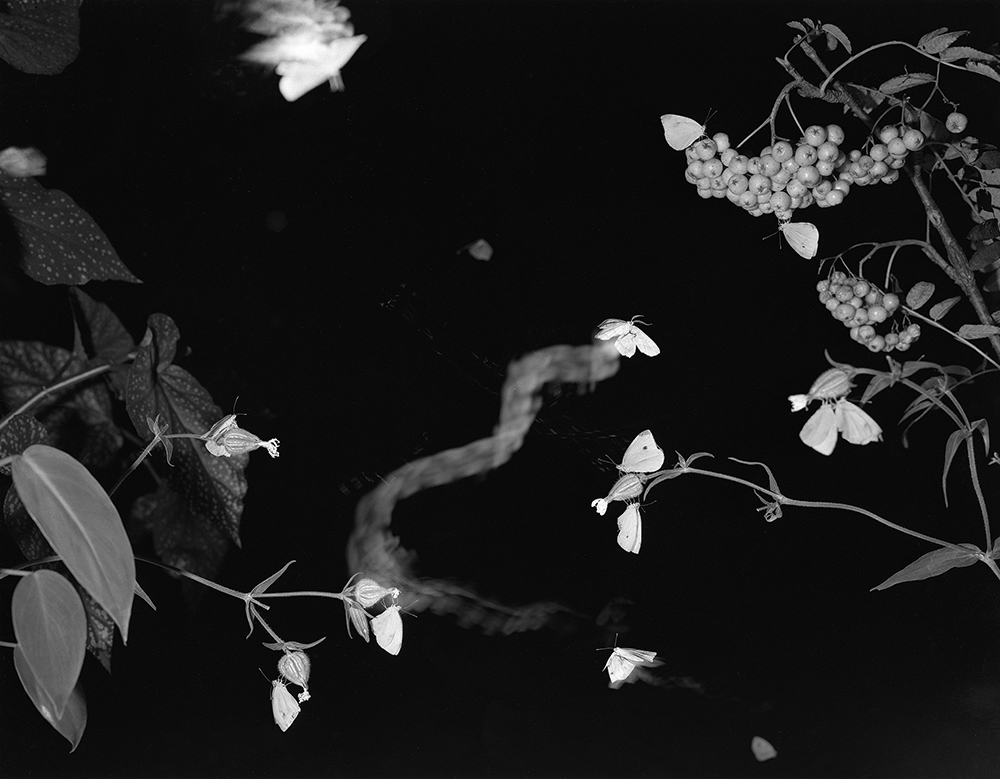
© Pia Paulina Guilmoth, moths
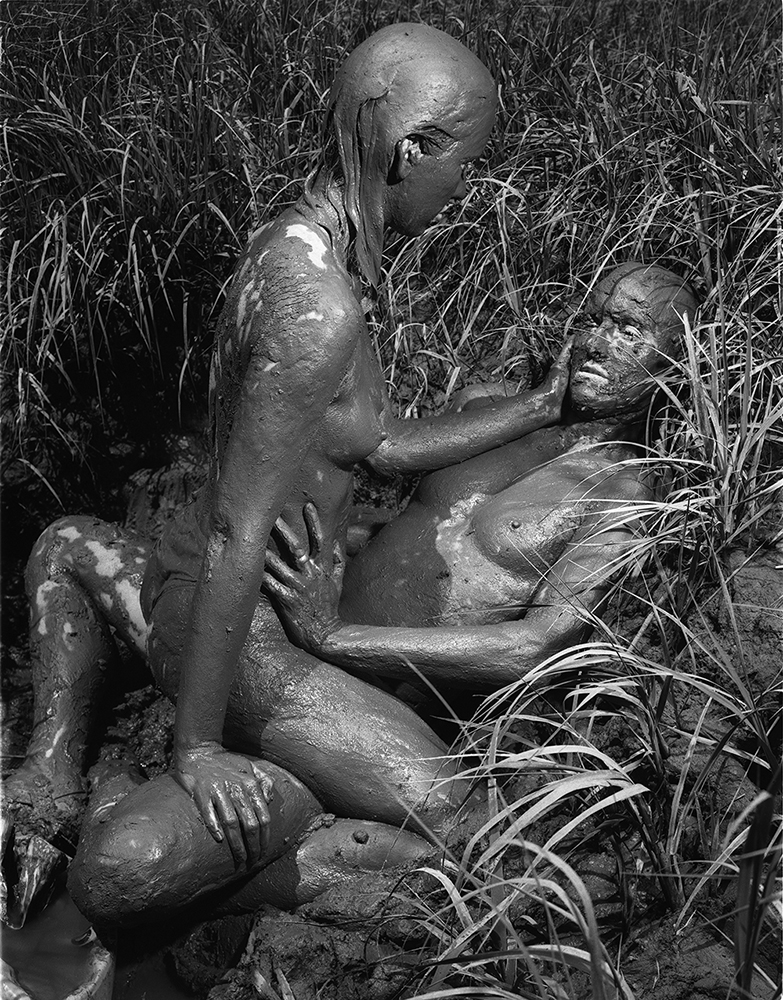
© Pia Paulina Guilmoth, matriarchy
EB: Now that you have become more successful and better known. I imagine you are now living the private world of making in a much more public or exposed way. Does this threaten the freedom you have said you have found since transitioning? Do you anticipate that the process of your making will change in the future?
PPG: I think in ways I feel more spotlit than I once was. But really this is only on the internet and social media. I don’t feel that in my daily life. There is no “art scene” or like elitist art culture scene where I live, so nobody knows who I am, other than my friends. I love that. I think I have to be extra diligent now though about what information exists about me online. And keeping my whereabouts hidden.
I think I am always making the same body of work really. I photograph the people in my life and the place that I live. But, recently I have also been working on outdated colour film, and am in the process of making a new book that is very different from my last two. It involves xerox machines, lots of dust, and trespassing.
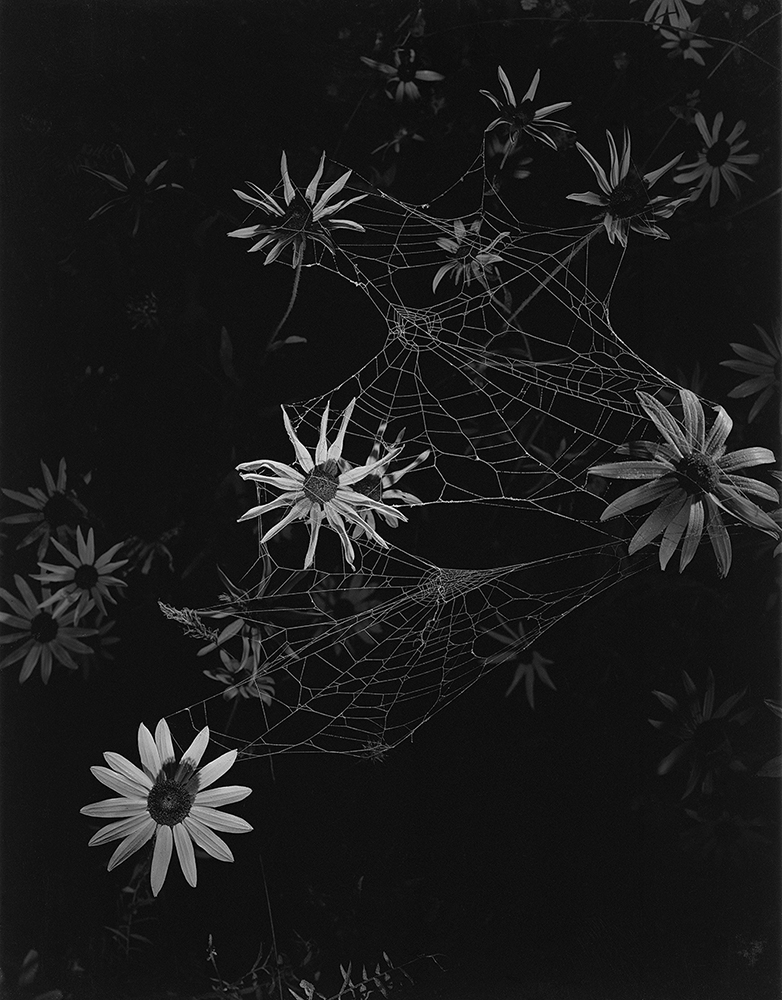
© Pia Paulina Guilmoth, resting silk above ground
Elizabeth Blackie is a fine art photographer based in the UK, whose multidisciplinary practice spans photography, performance, and installation. Her work is rooted in a personal narrative with images that give conscious form of an intimate journey of self discovery. Blackie seeks a dialogue with external landscapes, creating staged scenes that resonate with her own private world. The photograph becomes a mirror in which Blackie finds emotions formally buried within the subconscious. Blackie’s monochrome, minimalist images are an inquiry into the uncanny.
Instagram: @elizabethblackie_
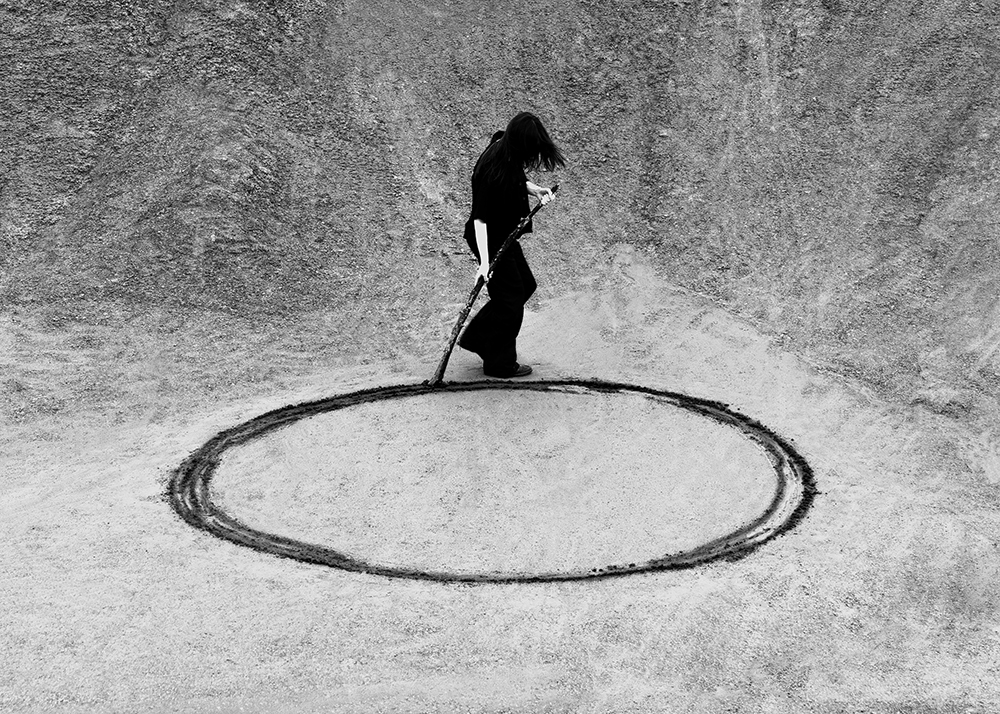
©Elizabeth Blackie, Image 3 from Outlines, 2024
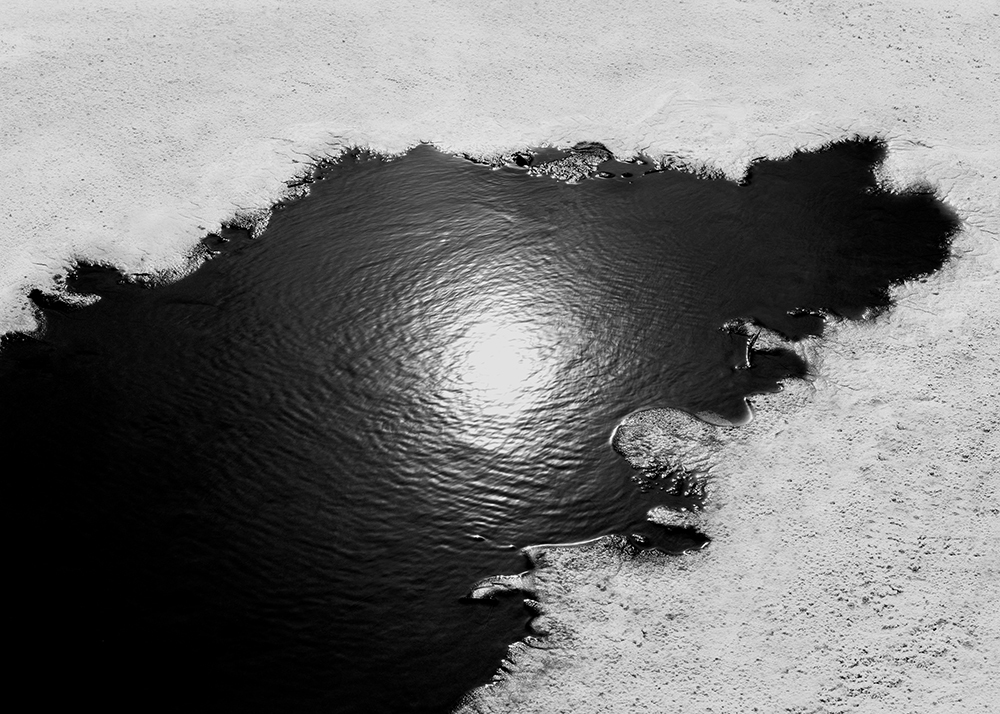
©Elizabeth Blackie, Image 2 from Outlines, 2024
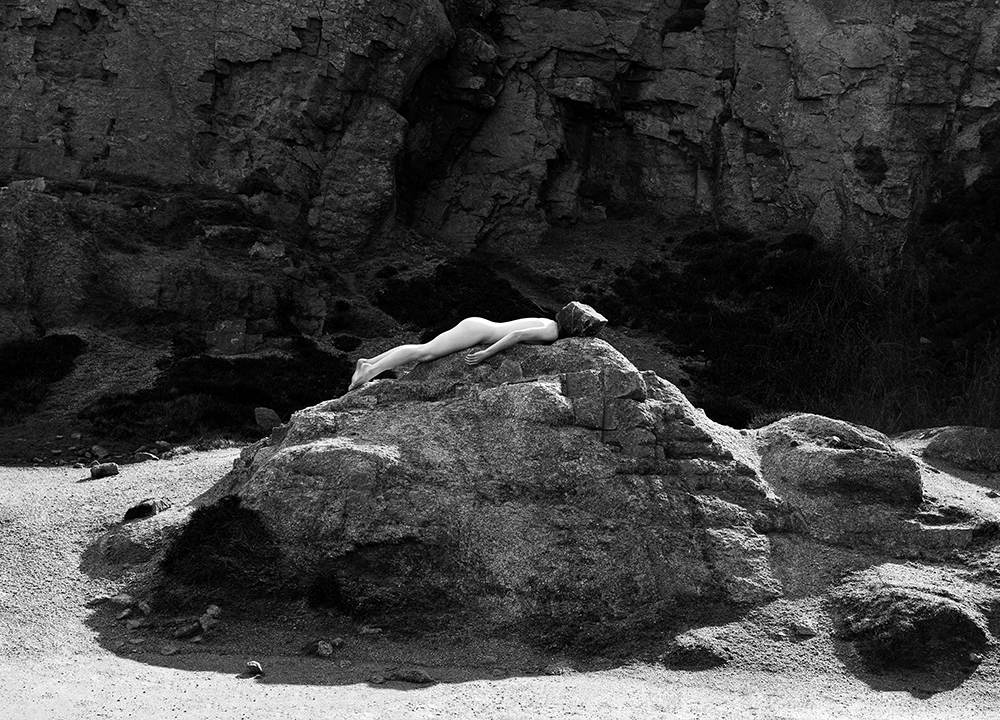
© Elizabeth Blackie, Image 1 from Outlines, 2024
Posts on Lenscratch may not be reproduced without the permission of the Lenscratch staff and the photographer.
Recommended
-
Beyond the Photograph: Editioning Photographic WorkJanuary 24th, 2026
-
Ben Alper: Rome: an accumulation of layers and juxtapositionsJanuary 23rd, 2026
-

The Next Generation and the Future of PhotographyDecember 31st, 2025
-
Aaron Rothman: The SierraDecember 18th, 2025
-

Photographers on Photographers: Congyu Liu in Conversation with Vân-Nhi NguyễnDecember 8th, 2025