The Art of Documentary Photography: Rebecca Kiger
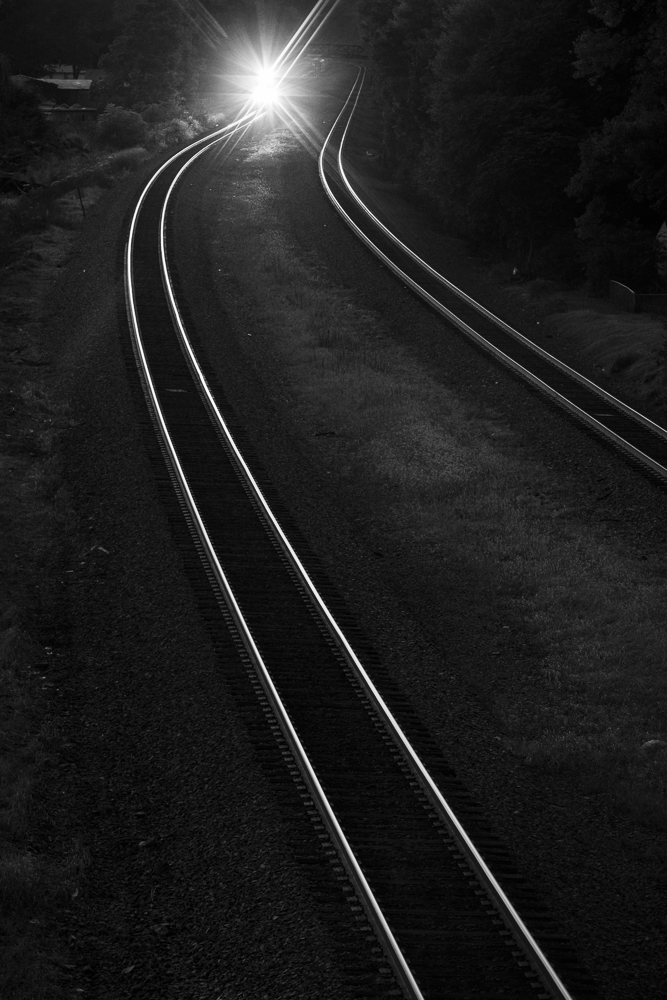
© Rebecca Kiger, East Palestine, One Year After the Derailment, A train approaches East Palestine October 7th, 2023. Eight months prior, a toxic train derailment contaminated the town’s air, water, and soil. The cleanup from the train derailment and controlled burn continues to this day.
The photographers we are featuring over the next few days are exceptional documentary photographers and photojournalists. What really stands out is their ability to capture reality and translate it into something poetic and powerful.
They are successful because of their extraordinary powers of perception. They often work under the toughest of conditions and are forced to make quick decisions on framing, light and gesture. They tackle subjects that are sensitive and complex. Their photos are often hypnotic, mysterious and emotional.
These photographers are successful because they are always in command of the scene. They have a clear vision of what they want to say. And they see things others miss.
When I was a reporter, I worked with some of the best photojournalists and documentary photographers in the business. What struck me was how present they
were, how they connected with people. I was always amazed when we would work a big crowd, they could spot the person who would open up, who had a gripping story to tell.
With so many complicated issues facing us, it seems crucial to have probing photographers bringing clarity to these debates.
Rebecca Kiger is a documentary photographer and the current Knight Fellow at Ohio University. She has led year-long photography projects in high schools in the Rust Belt of Appalachian Ohio through the Rural Arts Collaborative and the Ohio Arts Council. Through an additional grant from the Center for Contemporary Documentation, she led students through an exploration of environmental issues in their community. Her project on the toxic train derailment in East Palestine, Ohio was also made possible by support from Center. Her photos appeared in the Washington Post and Time. The story received awards from POY, the Society of Environmental Journalists, NY Press Club, and World Press Photo.
Instagram: @rebecca_kiger
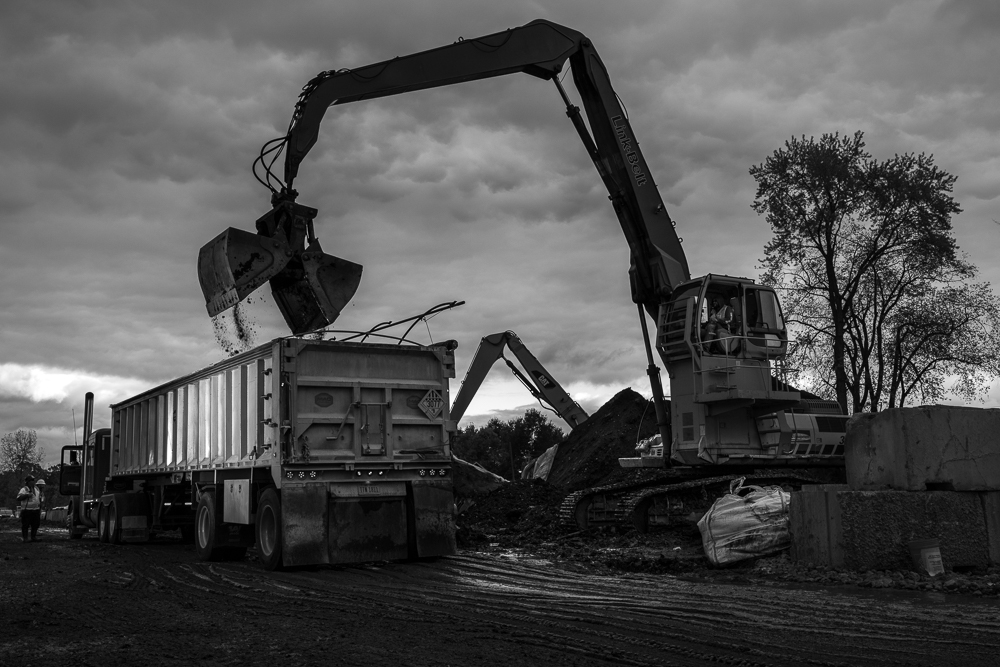
© Rebecca Kiger, East Palestine, One Year After the Derailment, A bulldozer drops contaminated soil into a truck in East Palestine on October 16, 2023. As of March 2025, the EPA had overseen the removal of 222,000 tons of contaminated soil and 74 million gallons of impacted water.
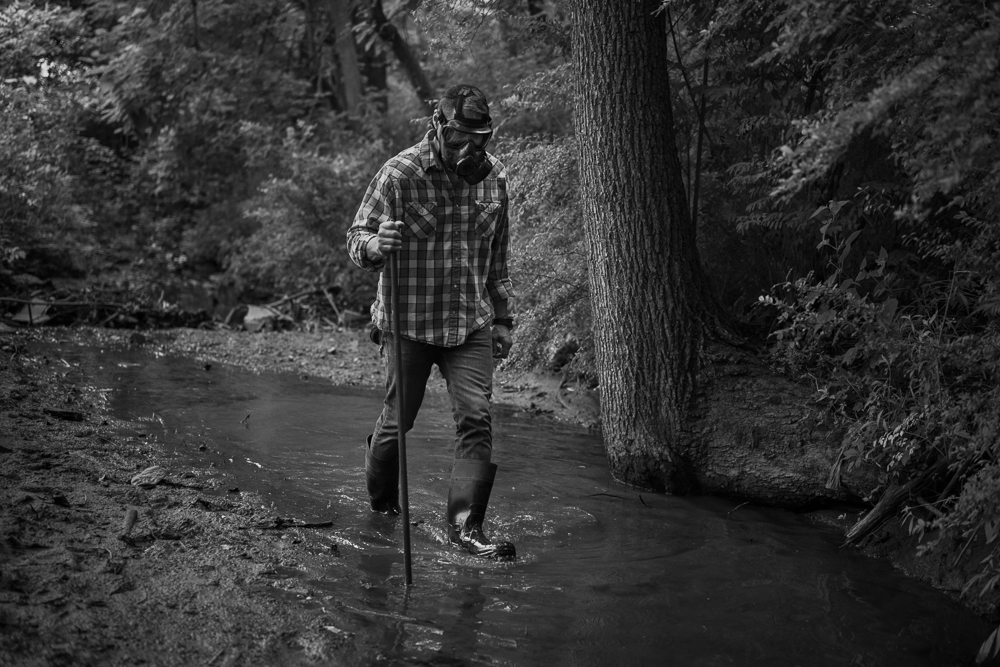
© Rebecca Kiger, East Palestine, One Year After the Derailment, Rick Tsai, an East Palestine resident, walks in Sulphur Run near the train derailment site on August 7, 2023. He first waded in the creeks running from the derailment site in an attempt to assuage his wife’s fears of chemical contamination. He was ill for weeks afterward. He began revisiting the creeks regularly, wearing protective gear and disturbing the sediment with a stick to film the oily sheen that would emerge, posting the videos to his YouTube channel. He believes the EPA has misled East Palestine residents about the town’s safety. In December 2023, he announced he was running for congress in Ohio’s 6th district but later lost in the election.
Q: Congratulations on your World Press Photo Award and other awards. Tell us a bit about the project. What were the first days after the derailment like?
RK: When I arrived in East Palestine, I couldn’t believe the smell that hung in the air. This was just a few days after the “controlled burn” in which the toxic chemicals from the derailed cars were leaked and then burned, an act that was deemed unnecessary after a National Transportation Safety Board investigation.
I was sick after my initial reporting, and that was eight days after the derailment, a few days after the burn. When I say ’sick’, I mean my lungs felt like they had lead in them, or rather, I felt a weight in my chest, which made breathing more difficult
Folks may remember the visuals of the explosion in which a giant black cloud emanated from and covered the town. The pollution then proceeded to migrate across 16 states, even into Canada. Residents were evacuated from the town but were allowed to return a couple of days after the burn.
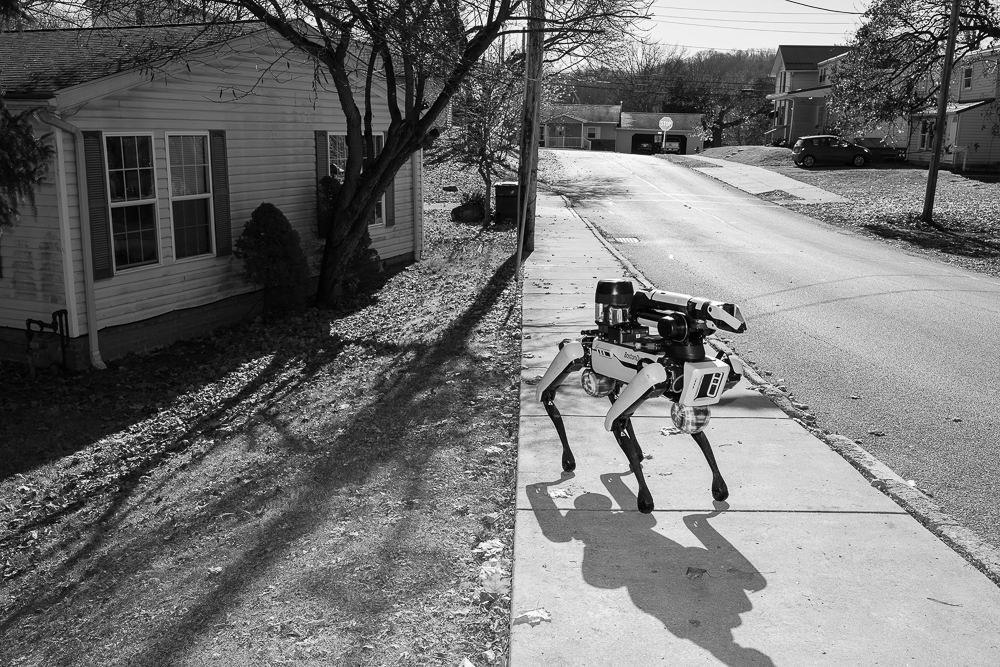
© Rebecca Kiger, East Palestine, One Year After the Derailment, A robotic dog used by contractors to measure air quality in culverts under East Palestine’s downtown prior to sending in workers to remove sediment and debris, on Nov. 12.
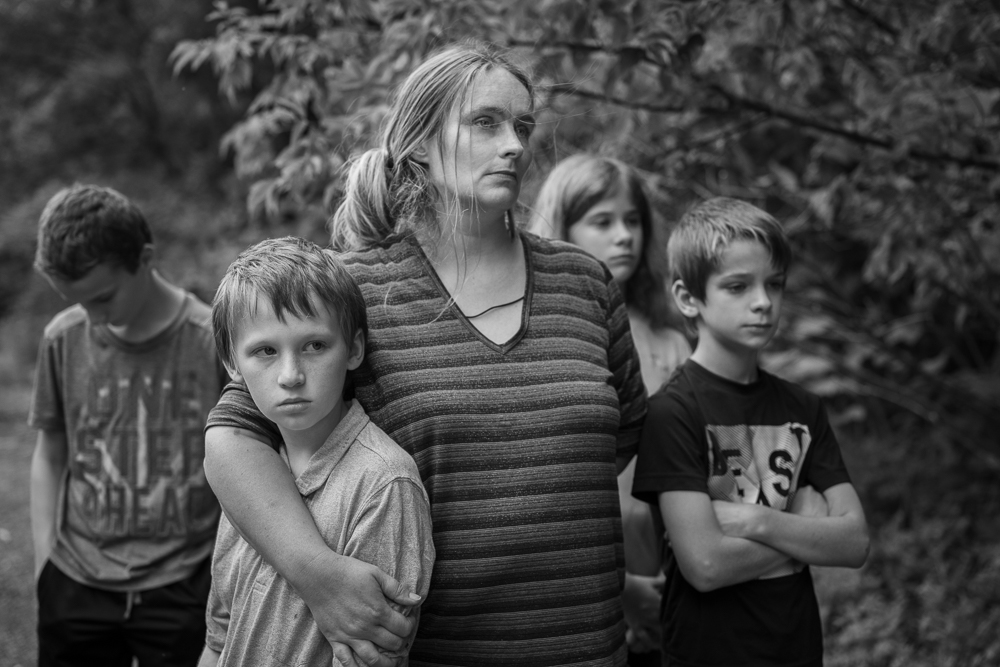
© Rebecca Kiger, East Palestine, One Year After the Derailment, Robin Seman and four of her children during a moment of silence at an event marking the six month anniversary of the train derailment, as featured on the cover of TIME’s special report on the aftermath of the chemical spill.
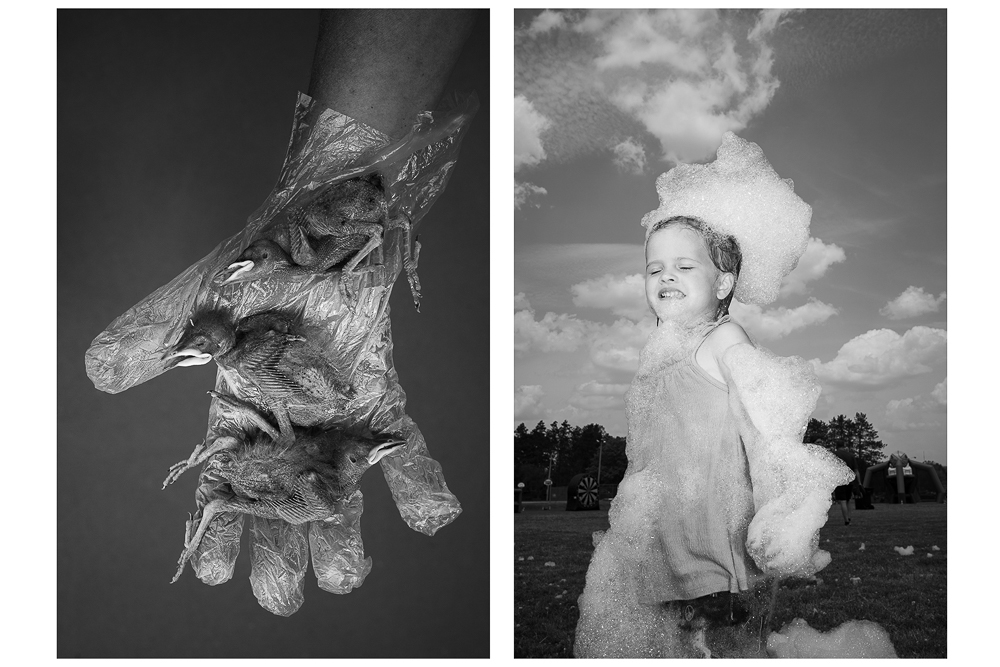
© Rebecca Kiger, East Palestine, One Year After the Derailment, Zella Blythe, 3, plays with bubbles at the Summer Kickoff sponsored by Norfolk Southern at East Palestine City Park on June 11. Zella’s father was elected to Village Council that November.
Lisa Mahoney holds three dead baby birds she found on a walk around East Palestine. She almost never found dead baby birds around town in previous years; she and her husband Dave found about 20 this year.
Q: There is an intimacy to your photographs. It’s clear you didn’t just parachute in. For example, the photograph of the young girl selling lemonade. Can you tell us how that photograph came about?
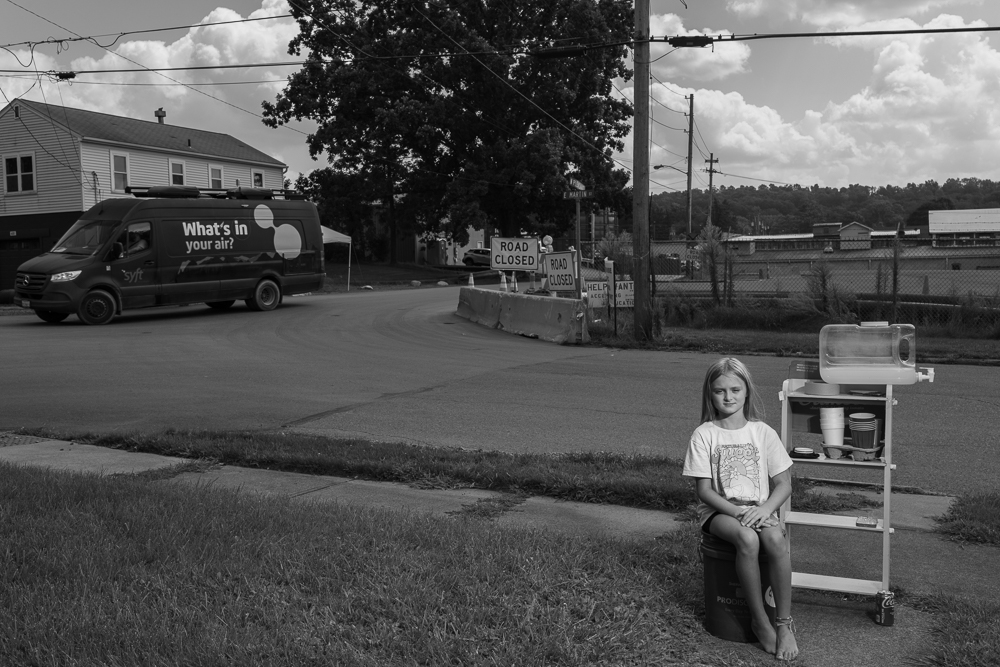
RK: This is a street I drove down many times during my year in East Palestine, because it is as close to the toxic train derailment site as you can get. When I drove down one day in August, I saw 8-year-old LaBrea Letson selling lemonade, sitting adjacent to the remediation site. I couldn’t believe the irony, shock, and concern. Before I photographed LaBrea, I went into the house and spoke with her grandmother Jennifer to make sure it was OK that I took photographs. That’s when I found out that she watches both Labrea and her little brother while their mother (her daughter) is waitressing.
While I was photographing, I noticed the “What’s in your air?” van circling the block. The van, operated by a Norfolk Southern contractor, tests the air for hazardous chemicals. These vans circled the derailment site during portions of the remediation. I crossed my fingers and hoped it would pass again.
LaBrea’s mother Daisy wasn’t comfortable with her daughter spending time near the derailment site, but Jennifer was the only option for childcare while Daisy worked as a waitress. LaBrea had hoped to save enough money from her lemonade sales to buy a puppy; ultimately she earned $678, primarily from workers at the site. Unfortunately, health issues have since put too much strain on the Letson family to add the responsibility of a new pet—the family believes the issues were exacerbated by chemical exposure. For Christmas, LeBrea received a snow-cone machine. She hopes to use it this summer to try again to raise money for a puppy.

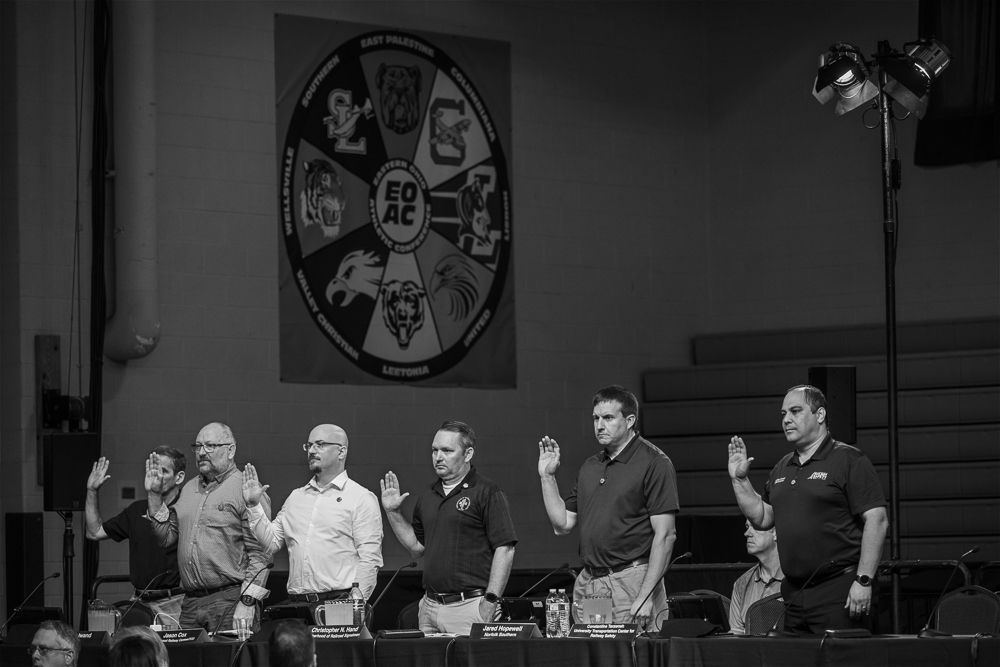
© Rebecca Kiger, East Palestine, One Year After the Derailment,A panel of witnesses from academia, labor, and the railway industry is sworn in at the National Transportation Safety Board hearings in East Palestine’s high school gymnasium on June 23. The investigation was finalized June 25, 2024 and the NTSB revealed that the controlled burn of the toxic materials had been unnecessary. Norfolk Southern had withheld the information in February 2023 from the Village leaders responsible for the decision to leak and ignite the chemicals.
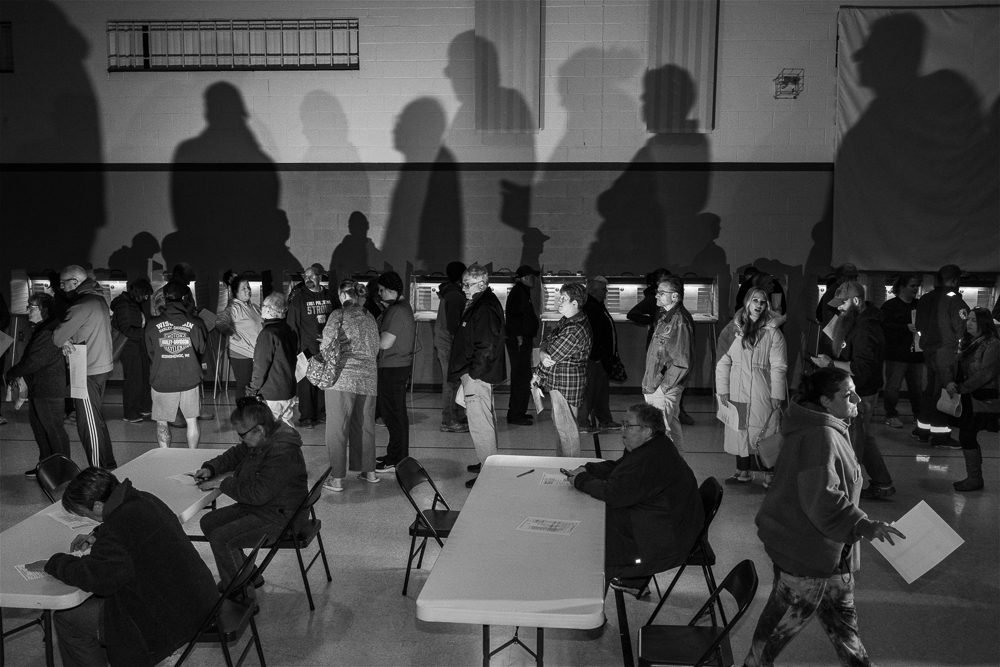
© Rebecca Kiger, East Palestine, One Year After the Derailment,Residents line up to vote at First Church of Christ in East Palestine on Nov. 7.
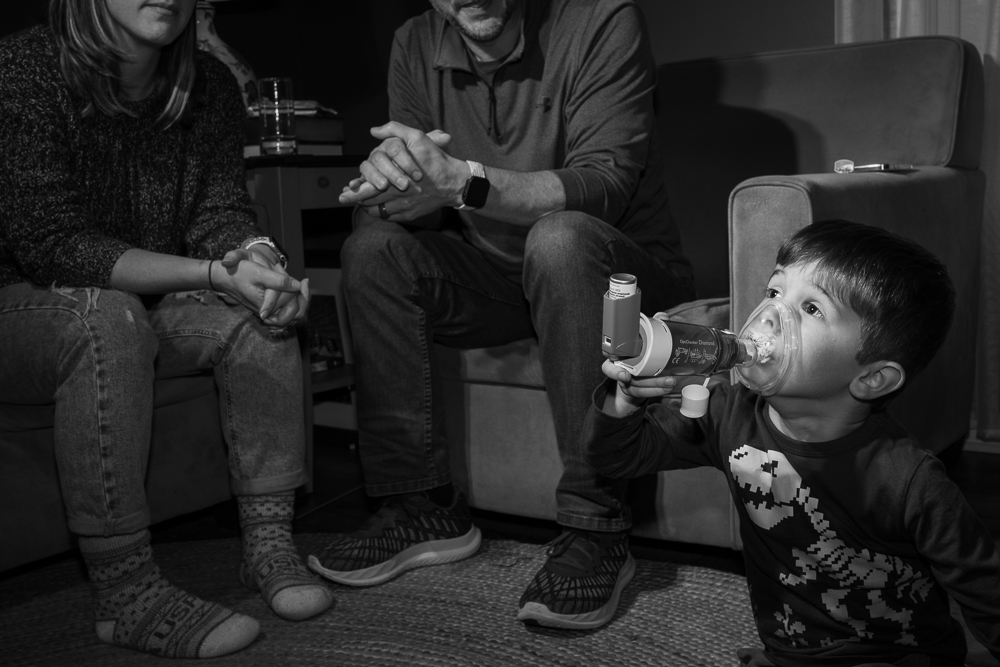
© Rebecca Kiger, East Palestine, One Year After the Derailment, Jess Conard and her husband Chad with their 4-year-old son Rhys. After weeks of constant coughing, Rhys began to have difficulty breathing one day in May, and Jess rushed him to the hospital. He was diagnosed with mild persistent asthma, and now uses the inhaler twice a day. Jess became the Appalachia Director for the environmental group Beyond Plastics in August, 2023.
Q: Tell us about yourself, where you grew up, what drew you to photography? You often mention your roots in Appalachia. How does that influence your photography? How does working with students influence your work?
While I was born in Illinois and spent some early years in Indiana, when my parents had the chance, they moved home to WV. I was around 4 years old. I loved looking at photographs when I was a child. I didn’t fully realize that I enjoyed taking them until I met Benita Keller, who was my B&W I photo professor at Shepherd College.
During my early years of college, I was exposed to great photographers both in class and through books found on the library shelves – like Emmet Gowin: Photographs. I think when I saw work made by photographers like Gowin, Diane Arbus, Henri Cartier-Bresson, Nan Goldin, Shelby Lee Adams, etc. I realized that there was a poetic, revealing, and sometimes haunting way of showing the world. I wanted to be able to speak their language.
Regarding working with youth, I want to be the best adult I can be for the younger version of myself. One of my greatest motivations is giving back and giving a leg up because of the generosity shared by so many photographers I’ve met along the way.
© Rebecca Kiger, East Palestine, Eight-year-old LaBrea Letson sells lemonade—made with bottled water—outside her grandmother Jennifer’s home near the derailment site. The van passing by, operated by a Norfolk Southern contractor, tests the air for hazardous chemicals. LaBrea’s mother Daisy wasn’t comfortable with her daughter’s spending time near the derailment site, but Jennifer was the only option for childcare while Daisy worked as a waitress. LaBrea had hoped to save enough money from her lemonade sales to buy a puppy; ultimately she earned $678, primarily from workers at the site. Unfortunately, health issues have since put too much strain on the Letson family to add the responsibility of a new pet—the family believes the issues were exacerbated by chemical exposure.
© Rebecca Kiger, East Palestine, East Palestine High School at the Homecoming dance in the school’s gym on September 23, 2024.

© Rebecca Kiger, East Palestine, Spectators watch Fourth of July fireworks in East Palestine City Park, sponsored by the fire department. Assistant Chief Rick Gorby, who initially managed the response on the night of the toxic train derailment, oversaw the event. “East Palestine is not a dying city,” he said. “There are more people present here tonight than we’ve ever had.”

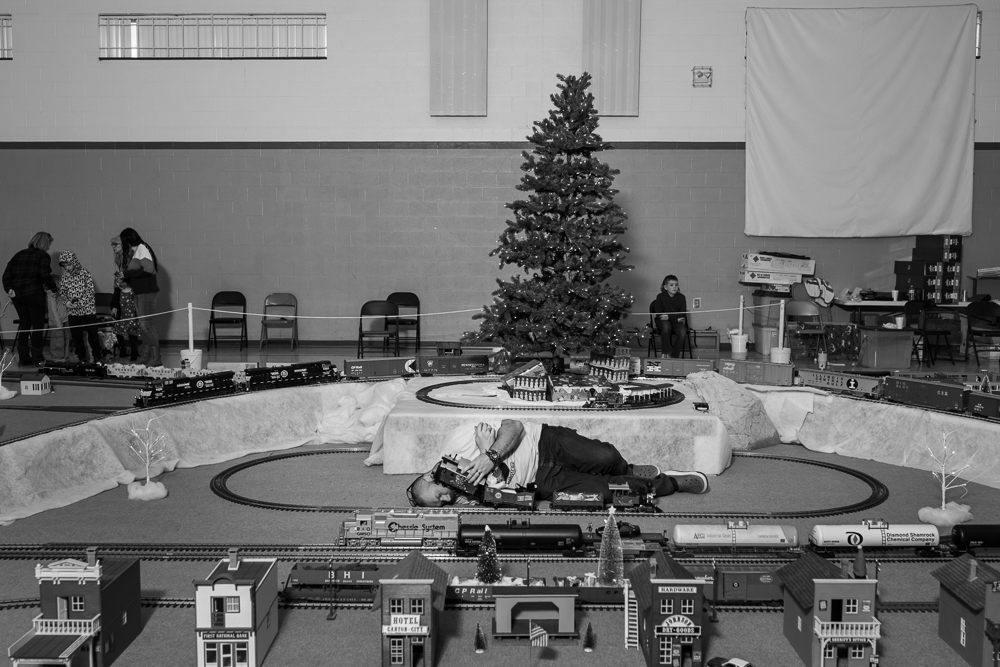
© Rebecca Kiger, East Palestine, Jonathan Strazinsky, a member of the Gold Spike Garden Railroad Club, at the club’s annual train display at East Palestine’s Snowflake Festival at First Church of Christ on Dec. 2, 2023. Norfolk Southern helped pay for the display along with local businesses. “Some people didn’t want to support it because it’s train-related,” says the club’s founding member and president David Peters. “As far as Norfolk Southern is concerned, they’re going above and beyond to do what’s right.” *In 2024, Norfolk Southern reneged on several promises they had made to the Village through a gentleman’s agreement (handshakes), including the building of a $20,000,000 first responder training center, which would have prepared volunteer firefighters and other first responders in the region for chemical disasters like the one that took place in East Palestine.
© Rebecca Kiger, East Palestine
Posts on Lenscratch may not be reproduced without the permission of the Lenscratch staff and the photographer.
Recommended
-
William Karl Valentine: The Eaton FireJanuary 7th, 2026
-
Sean Stanley: Ashes of SummerJanuary 6th, 2026
-
Nathan Bolton in Conversation with Douglas BreaultJanuary 3rd, 2026
-

Andrew Lichtenstein: This Short Life: Photojournalism as Resistance and ConcernDecember 21st, 2025
-
Paccarik Orue: El MuquiDecember 9th, 2025