Overshoot #9: Liz Miller Kovacs
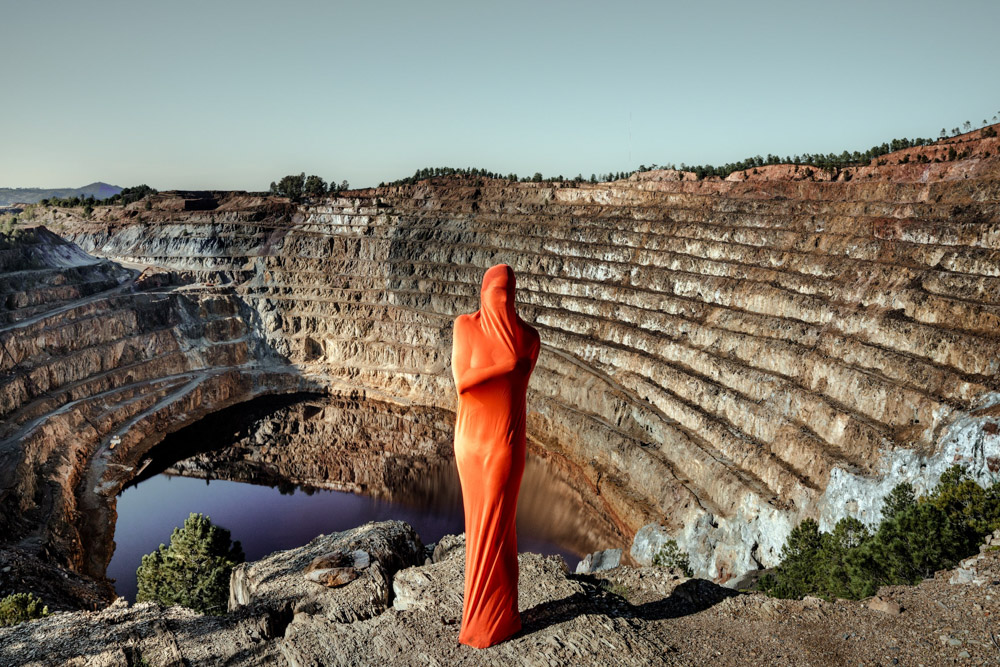
©Liz Miller Kovacs, Atalaya Venus, from the series Supernatural, 2020-2025. Photo: courtesy of the artist.
Generative AI? Smartphones? Data centers? You bet. Their life begins in quarries and mines. Their processing and shipping absorbs untold amounts of energy.
Liz Miller Kovacs pushes us to rethink our relationship to the sites where our gluttonous digital economy extracts ores indispensable to its 24/7 functioning.
By pointing her camera at sites of extraction and staging her draped figure in front of them, Liz Miller Kovacs redirects our gaze toward sites of entropy.
The scars extractivism leaves are magnified by a haunting figure, standing or sitting, often vulnerably, as though it carried the incommensurable weight of resource extraction.
Subtle and yet direct, her work reestablishes metabolic flows between the Earth, body, and technology.
What follows is a conversation recorded shortly after Paris Photo 2025.
Yogan Muller: Your work is deeply rooted in your felt experience of the ecological crisis, the Anthropocene, and extractivism. Can you trace this sensitivity back to a single reading event or trip?
Liz Miller Kovacs: Yes, certainly. It was the summer of 2020 during the pandemic. I was looking for a project to work on, and I only felt comfortable working outdoors due to the pandemic. One day, I was searching the internet for interesting landscapes to photograph that were within driving distance, and I found a photo of this canal with an iridescent turquoise water in the middle of the desert. It was maybe 90-minute drive from me. I was in California at the time, and I was captivated by it and really curious about it, so I decided to drive out to it. I knew it was some kind of industrial site, but at that point I wasn’t really invested in extractivism or mining.
I drove out there and photographed myself in some fabric that I had sitting around because I wanted to create something that was visually captivating and create contrast between my body and the landscape. I really wasn’t prepared for the discomfort I was about to endure. You know, putting my body in this kind of rough industrial space, I couldn’t sit on the ground. I ended up having to sit on a pair of flip-flops to make it bearable to pose for the shot. It really made me think about the vulnerability of the body against the elements, and how vulnerable we really are. After that, I went home and I started researching the location. I found out it was the National Chloride Company’s evaporation ponds. These are industrial salts. And I decided I wanted to do more work like this and investigate more about these kinds of places and see if there were other constructed landscapes I could visit.
I found quite a few of them within driving distance. So I started on this series slowly. I had time and a car and it was something I could do with very little money, a piece of fabric, a camera, a tripod, and one assistant. This was the birth of Supernatural. I made a digital world map and each time I found a new site I spent a lot of time researching it. Each time I found a site worth photographing, I would mark it on my map and I still have this map.
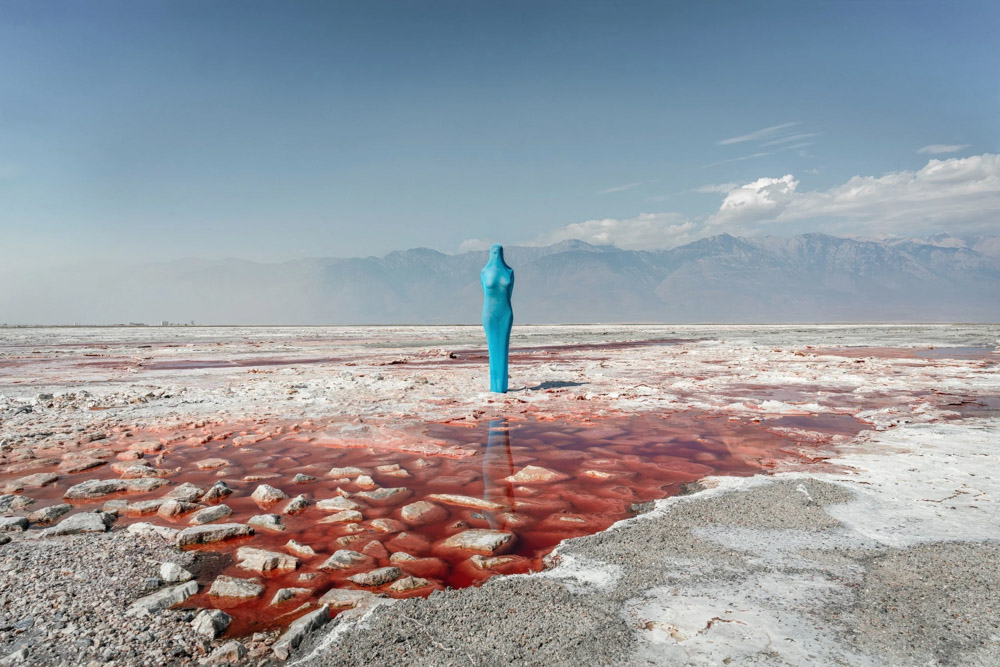
©Liz Miller Kovacs, Owens Venus, from the series Supernatural, 2020-2025. Photo: Courtesy of the artist.
YM: Supernatural is your most recent series. It is set in mines and quarries in different places and countries. Why are such sites so attractive to you?
LMK: My grandfather and uncle on my mother’s side were coal miners, although my mother didn’t really talk about this part of the family history too much. I think this working class history was something she would rather not touch upon. My grandfather passed away before I was born, and I’ve always been curious about his life as an immigrant working as a coal miner doing such labor-intensive work while also being a minority in Ohio not speaking the language. When I’m out working on location, I often feel and think about what he must have endured working these long hours in that time in history. Otherwise, I’m an explorer by nature. I’ve always been a person who likes to visit other cultures and their environments. That’s my constitution, I would say. Also, I’ve always wanted to see things that are hidden or unknown and uncover the truth about them, experiencing them with my own eyes. So, these sites are visually fascinating, and they’re the closest thing I’ll ever come to seeing another planet or traveling in space.
As a photographer, I want to capture these spaces not only to prove they exist, but also to show the scope and scale of mining. By making these intriguing, very colorful, accessible photos, that are a bit of eye candy to me in some ways, I hope to create more interest and awareness in environmental damage and extractivism.
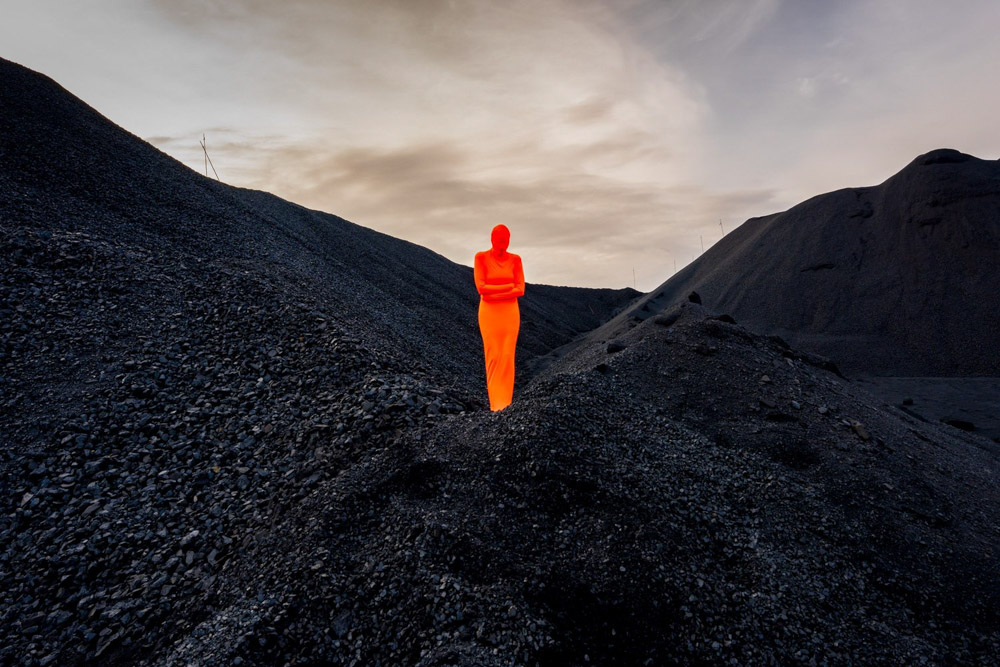
©Liz Miller Kovacs, Longyearbyen Venus, from the series Supernatural, 2020-2025. Photo: Courtesy of the artist.
YM: You use self-portraiture to stage a draped figure standing or sitting in front of sites where our gluttonous economy extracts ores essential to its 24/7 functioning. How do you negotiate the tension between embodied figuration and resource extraction?
LMK: Well, firstly, I need to clarify that I’m not anti-mining. That would be extremely hypocritical because I live in contemporary society. I use a camera. I use a cell phone. I drive fossil fuel-powered vehicles. I think that it’s really important not to be didactic in art because that tends to alienate the viewer.
Supernatural contemplates extractivism both in terms of what it means and the possibilities for a more sustainable future. What this project has really changed in me is to consider before I consume, and try to really think about moderation, and consume more things secondhand. All of our choices are important. However, by making more sustainable individual choices, I’m aware I’m not going to change extractivism, nor are you. So, for me, the most important thing is to continue making the work about it and hope it will have some collective influence and reach a broader audience.
YM: Previous works that immediately come to mind are, of course, Gaspar David Friedrich, the German romantic painter, and closer to us, American photographer Johnnie Chatman and Finnish photographer Elina Brotherus, although both artists stage figures facing natural landscapes and raise radically different questions with their work. Your drape figure, however, conveys closure and a sense of mourning, as it often turns her back on environmental degradation. Do you feel we’ve reached irreversible landscape transformations?
LMK: In some of the images, I do show despair, but in others, I choose to address the viewer with the feminine presence, which, to me, represents hope and determination in the face of this environmental destruction rather than just turning away from it and ignoring it altogether.
My project intertwines my heritage and personal experience as a woman in the context of the climate crisis. I reflect on the vulnerability of humanity as a whole. I’ve come to realize that, as far as these sites go, regardless of the positive intentions behind them, once a landscape is mined, it’s irreversibly transformed. But that doesn’t mean that all mining sites become environmental disasters. Some of the ones that I chose to show are. Some of them displace communities and cause ecological destruction. But sometimes, new ecosystems develop there. Some of the places become community spaces. So, I think that it’s important to show the scope of extractivism but always be aware that it’s creating change.
And thank you for comparing my work to figurative works. I started my career as a painter and then, at one point, really focused on performance. So, this transmediation is a key component of the series Supernatural. I reference other forms of art and historical art.
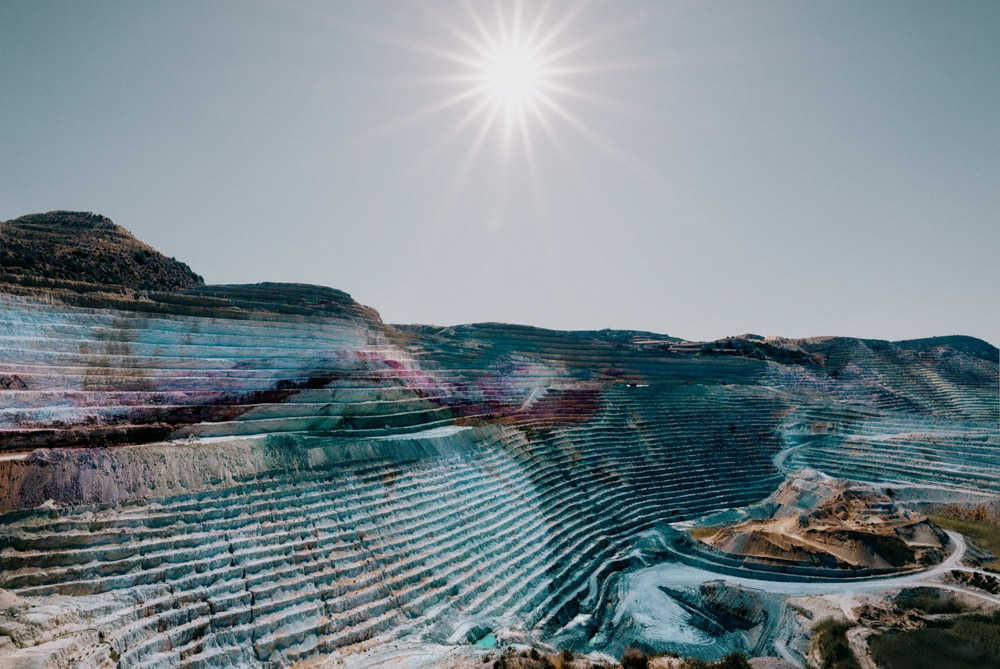
©Liz Miller Kovacs, Aggeria Mine, from the series Rare Earth, 2020-ongoing. Photo: Courtesy of the artist.
YM: There is a strong feminist undertone in your work. In your bio on your website, you write, “I see parallels between our culture’s exploitation of nature and its objectification of the feminine.” Can you expand on how those parallels intersect in your work?
LMK: In many cultures, and Western culture in particular, the feminine and nature have been viewed as property, to which the male-dominant culture is entitled to use for profit and other forms of gratification. There’s a lack of respect for both nature and the feminine. It’s as if the feminine and nature are both trivialized and taken for granted when in reality they’re finite resources and essential for life on earth. Nature in particular is seen as something to take from for financial gain or power, especially in the current political climate in certain countries, particularly the U.S., where I’m from.
YM: Speaking of places of abode, you live and work in Germany, but you’re from California. How has this distance from the homeland nourished your work?
LMK: The distance gives me clarity. It’s easier for me to focus on my work now that I’m not in a place that’s constantly surrounded by social injustices like homelessness, lack of health care, and violent human rights abuses. I mean, and those things really matter. And when I lived in the US, I spent too much time thinking about them. I’m an empathetic person and I was always thinking how I could solve these issues. I really wanted to help fix the system, but I really couldn’t. In Europe, there’s more press coverage of environmental issues. German documentaries, DW for example, don’t cover everything equally, but their environmental documentaries are fantastic. There is also more support for the arts in general. Spending most of my time working abroad helps me focus and gives me more time and resources to work on my projects. I don’t have to work a full-time job anymore, for instance. Currently, the US is hyperfocused on domestic issues while my work is about global issues, so I wanted to reach beyond those borders and beyond my own personal identity politics, even though, of course, you can’t avoid that in your work.
In my opinion, sustainable Indigenous land management practices should be researched and prioritized by governments and corporations. I believe they hold clues to long-term solutions for the environment.

©Liz Miller Kovacs, Panorama Park, from the series Rare Earth, 2020-ongoing. Photo: Courtesy of the artist.
YM: What does photographing in a warming world mean to you?
LMK: Documenting current events and reflecting their time in history has always been the objective of photographers. We have a particular responsibility to capture this era because everything is happening so fast and we’re on the brink of a possible turning point–or at the turning point–for climate change. We’re living in a time when the world is warming at an alarming rate and where the topography is changing at an accelerating rate because of extractivism. So things are changing so rapidly that it’s almost impossible to fully document this transformation as it unfolds. All I can do is my best to capture some of it and capture the nature of it. But I feel a sense of urgency to get out there and do what I can so that a record of these times and places exists.
Another thing I’ll add is that photographic processes are calibrated to function in a certain temperature range that’s comfortable for humans. I mean, if the climate warms too much, these processes could begin to break down, or they’ll have to evolve and change. Some of the cameras won’t work above a certain temperature: they start to overheat, especially the ones with larger sensors. That’s another interesting point: will they be able to change that technology and re-engineer it in time? That’s something I question. Regardless, the ecosystems on earth will continue to evolve and flourish whether our culture takes the environment seriously or not.
The earth is scattered with mysterious remains of ancient civilizations we know very little about. Some of the sites I document I imagine as being future archaeological sites because they’re comprised of compounds or rocks that don’t decompose. So, it’s not a doomsday scenario, but there are things that are lost through history, and I’m thinking of making an archive about this time in the land.
Liz Miller Kovacs is a photographer and artist from Los Angeles, now based in Berlin. At age 17, she began taking black and white photos with a vintage 35mm camera, but photography only became her primary artistic medium recently. Her Hungarian grandfather and uncle were immigrant coal miners who passed away when she was a child, and her curiosity about their lives sparked her interest in mining. Since 2020, Liz has focused on studying, exploring, and documenting remote landscapes altered by industries. In 2024, she started a new chapter by formally requesting and gaining access to extraction sites and working with SOS Orinoco on a documentary about mining in South America. Her practice utilises analogue and digital photography, encompassing research, documentation and creative self-portraiture.
She is a finalist for the Aesthetica Art Prize 2025. Her work has been selected for exhibition at OKO Festival Bohinj 2025, was shortlisted for the Kolga Award 2025, and in 2025 PX3 awarded her a Silver Medal for Fine Art Photography/Other. In 2024, her work was exhibited in Earth Photo, awarded Foto Slovo’s Gold Medal for Environmental and Climate Issue Category, was shortlisted as ‘Highly Commended’ by Belfast Photo Festival. Her work was also exhibited at Kranj Foto Fest 2023.
In 2023, she received a cultural exchange grant from the Berlin Senate for Culture and Community. In 2024, she was awarded a Culture Moves Europe grant. In 2024, Miller Kovacs completed a PhD in Visual Arts at the Sydney College of the Arts where she was awarded the IPRS and IPA international fellowships.
Her photos have been featured in Musée, Aesthetica, Contemporary Art Review LA, the LA Weekly and Issue 18 of Der Greif. She self-published her first photo book, “Lapsus Imperium,” is being released in 2025.
Instagram: https://www.instagram.com/miller.kovacs/
Yogan Müller is a French photographer, first-generation graduate, researcher, and educator.
His work engages with ecological overshoot and its impact on landscapes, resources, and communities. Research, critical approaches to landscape, fieldwork, and design are central to his process. Yogan works with photography, photogrammetry, drones, artificial intelligence, and the book form.
After the unexpected losses of his father in February 2022 and his step-father in June of that same year–both were born and grew up in Algeria, métisse identity, displacement, and fractured roots are themes that came to the fore.
In October 2019, he moved to Los Angeles and joined the UCLA Design Media Arts (DMA) Counterforce Lab, a group of ecologically-minded artists led by Professor Rebeca Méndez. He started teaching at DMA in January 2020. Occasionally, Yogan has worked for fine art photographer Mona Kuhn, and designer Rebeca Méndez in Los Angeles.
Yogan has taught at UCLA Design Media Arts, the Penumbra Foundation in New York, and the University of Bordeaux in France.
He is part of the UCLA Design Media Arts Counterforce Lab.
Instagram: https://www.instagram.com/yoganmuller
Posts on Lenscratch may not be reproduced without the permission of the Lenscratch staff and the photographer.
Recommended
-
Overshoot #10 – Alexandre DupeyronMarch 14th, 2026
-
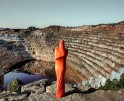
Overshoot #9: Liz Miller KovacsDecember 13th, 2025
-
Overshoot #8 – Arturo SotoNovember 15th, 2025
-
Overshoot #7 with Ayda GragossianOctober 11th, 2025
-
Overshoot #6 with Siobhan AngusSeptember 13th, 2025