South Korea Week: Lee Gap-Chul: Conflict and Reaction
©Lee Gap-Chul_Conflict and Reaction, Baby on his mothers’s back_1998
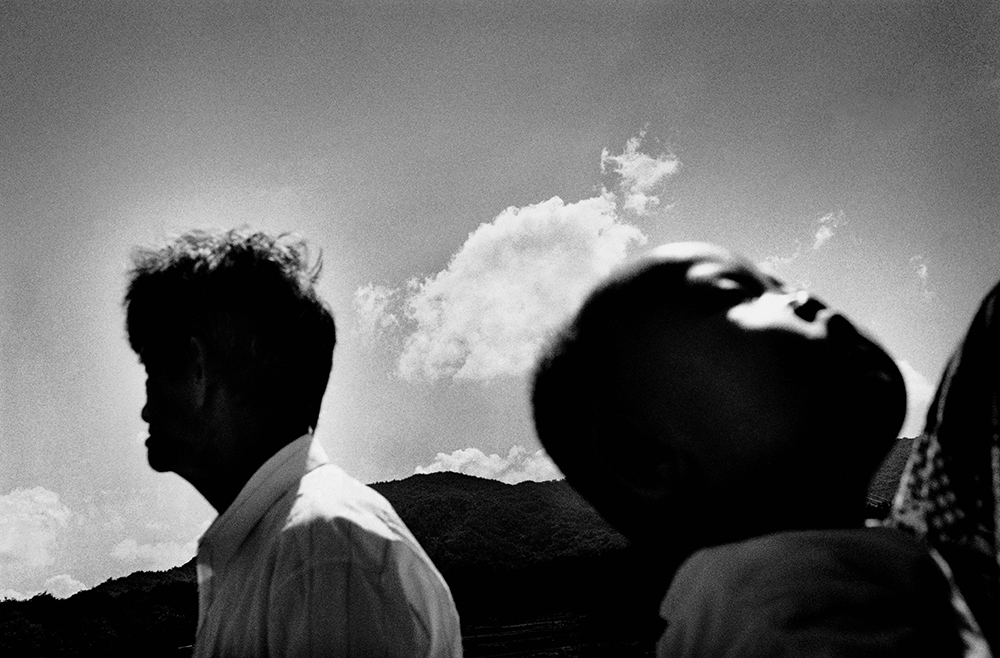
Lee Gap-chul’s photography begins by dismantling the aesthetics of “stillness in motion.” Rather than staring at a static subject, his lens tracks the raw and persistent flow of Qi (vital energy) that courses through the veins of the Korean people. His seminal series, “Conflict and Reaction,” documented over several decades since the 1980s, stands as one of the most thrilling chapters in the history of Korean photography.
Within his frames, horizons collapse, figures are boldly cropped, and focus blurs into grainy abstractions. Yet, this intentional “imperfection” is precisely the device that reveals the most authentic Korean vitality. He captures the shamanic eruptions hidden behind Confucian solemnity—the raw energy leaping from the grounds of funerals, village festivals, and everyday marketplaces. For Lee, photography is not mere documentation; it is a trance-like ritual, an encounter with an invisible spiritual realm.
His work transcends the boundaries of documentary photography, reaching into the collective unconscious of a nation. In an era of polished digital perfection, Lee Gap-chul reminds us of the power of the “animalistic instinct”—the moment when the camera becomes an extension of the soul to seize the flickering essence of existence.
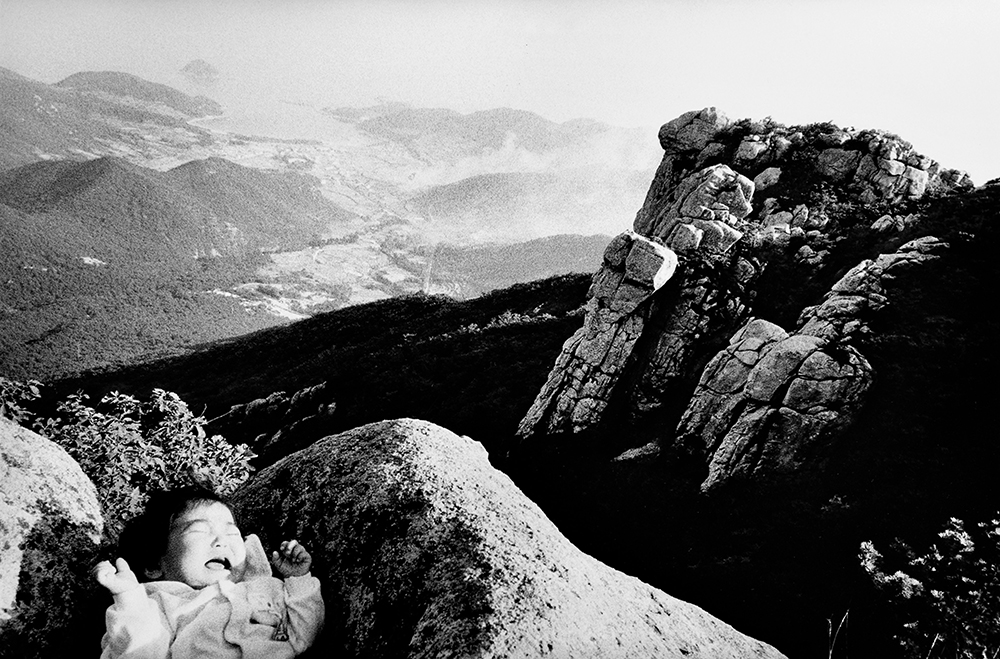
©Lee Gap-Chul_Conflict and Reaction, Cryingchild_1993
Lee Gapchul unveils his new series Conflict and Reaction, a contemplative exploration of the inner worlds of humans, nature, and community. The images of a woman emerging from a cave and a man seemingly floating atop a tree evoke the fragility of human existence amid the vast forces of nature and a profound reverence for the natural world. Faced with an overwhelming world, humans either submit to nature or offer rituals of conquest. This moment of conflict between natural order and human desire gives rise to a reverent and accepting response, or “reaction.” Through this dynamic, Lee invites a renewed contemplation of the relationship between humanity and the natural environment. The tensions of conflict and reaction experienced in his photographs metaphorically express the spiritual resonance of time and force embedded in nature permeating the human psyche, awakening both a humility before nature and an indomitable will to transcend it.
-Work description Busan International Photo Festival 2025 by Lee Jeongeun
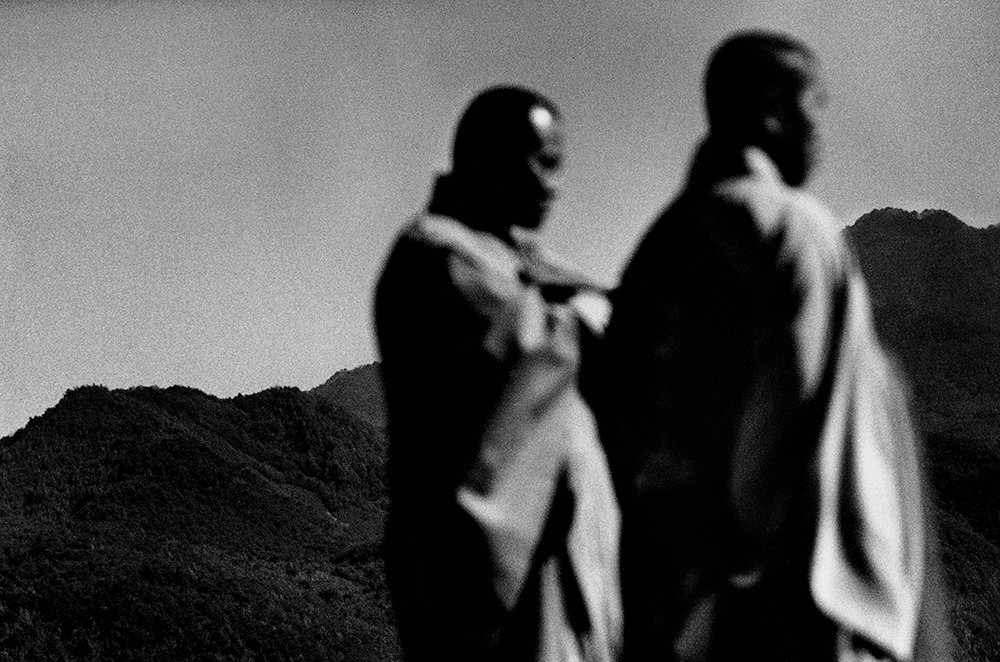
©Lee Gap-Chul_Conflict and Reaction, Distant mountain_1997
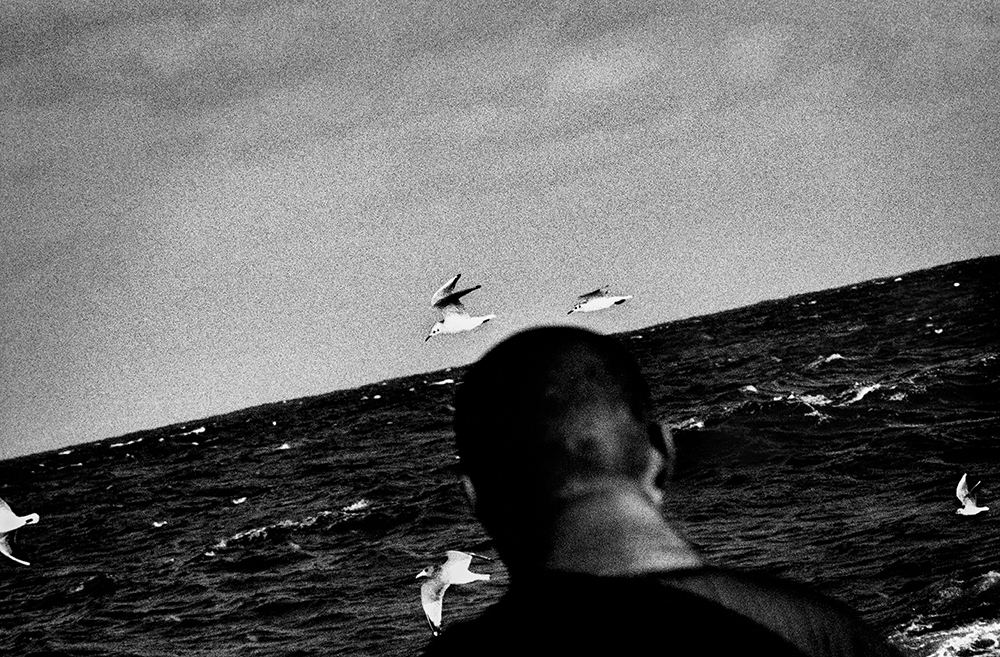
©Lee Gap-Chul_ Conflict and Reaction, Dreaming of deliverance_1993
A stop. But life still goes on.
Lee Gapchul’s photographs are about landscapes. But the landscape in his work is not something ordinary. It is the scenery of life. It reminds us of certain special moments or events of our own life. When we pick up one of his photographs and look at it, we could be shocked as if our head was hit by something.
‘Where did I see this scene? …… Ah! I remember. I saw it at the end of my father’s funeral. This must be my brothers’ faces at the moment when we gathered together around a fire in the garden and burned out the clothes of funeral. ‘
When you look at his photograph, surprisingly, it seems you have an encounter with some forgotten experiences of your past. In general, we aren’t fascinated by the photographs which freeze the moments of our life. Even though they are beautiful, we could not find joy and pain of life. We could only be impressed by the vivid feeling of life through the photograph to the extent that it is well expressed. When we see the photos of a beautiful riverside landscape, we could have feelings that we are walking along the riverside. In those kind of photographs, it’s difficult to find the moments of joy, sadness, pain, despair and hope hidden in our mind.
But Lee gap-chul’s photographs are different. His works reveal the beauty of landscape and we are overwhelmed by it. Human figures or things in his landscape strain our minds. It pulls ourselves as viewer into that space of photo, and it makes us triumph as the figures in photo, provided us a meeting with things in photo. His photography is a kind of magic. It has a capacity to translate synthetically all emotions of life.
Usually, photography is a battle of light. The messages delivered by things in photo, are alive or dead by direction and contrast of light. Then, the intensity of message or impression is, really transported by this light. But I thought, in whatever reason, Lee gap-chul has ignored the lights. Because, he wants to express not the mere formal scene of our lives, but the real living contents of existence. He did not pull out our hidden emotions using the camera. He cut them off with a painful gaze. Look at this. This is our forgotten, hidden sad life. We had a thrill, fear or tears with his photos because his works show our sad emotions cut off beautifully.
In his works, clear shape is rare. It means he ignored the light. What he wants to struggle is not the light, but our life. His will to take such moment of daily life in photograph makes a difference with the other photographers in this country.
I have displayed his work on the wall of my classroom in school. Sometimes, I look at it with a distance or stand close to it or just imagine how it was with my eyes closed. But I don’t remember well whether there is a cherry blossom or common tree. It might be somewhere like rice paddy or patch where our women dressed in black and white gathered together. There are some branches of tree disturbing our women’s shapes, so those branches appeared as dispersed with a vague, it looks like the shadows of branches drawn down to the bottom, lightened with a thin moonlight. Over those shadows of branches, there are some women wearing a white towel on their heads. Although it’s clear there are women wearing a black skirt, a white blouse, a white towel on their heads, none of them looks clearly. What are they doing now? I don’t know exactly what they are doing but something must have happened to these women. There must be something imminent to happen to them. Through his works, we found ourselves more strained, we come to feel as if we become those persons in that photo.
A black head seemed to be someone’s face. Otherwise the white towel seemed to be someone’s face. This photograph in which everyone seems like talking about something, invokes more and more a deep inspiration for me. This mystic inspiration might be our unique emotion. His work does not show beautiful scenes of meaningless and dried lives in daylight. It presents deep inner aspects of more complex life hidden within a daylight.
As long as life goes on, we feel our life is very dirty, ugly and uncertain. Everyone thinks life should be simple and clear, but in reality, it is not like that at all. Because it goes towards death closer and closer. How difficult it is to understand real feelings that those secular faces have in their mind? So everyone is dreaming of deliverance and hope to escape from these secular desires like a sole tree. But nobody can run out of this secular world. That’s life. Life is painful. Life should embrace death, so life is a real one. Brightness embraces darkness. Pain and delight are neighbors. Lee gap-chul is a distinctive artist treating our life from a solid angle. Our unique emotions made by him, acquired a universality added to his own personality.
Once we see his works, the scenes of this secular world look somewhat strange. A tree, a walking person, buildings, running cars and me as a spectator looking at these things. The world is a strange place like this. This feeling that the world we live in could be a strange place make us see the world and ourselves in a different way. And I think this is the ‘Art’. Photograph is a stopped moment. A freezing moment. But after that, life still goes on. Lee gap-chul is a real artist who is aware of this truth.
-Kim Yong-Taek (poet)
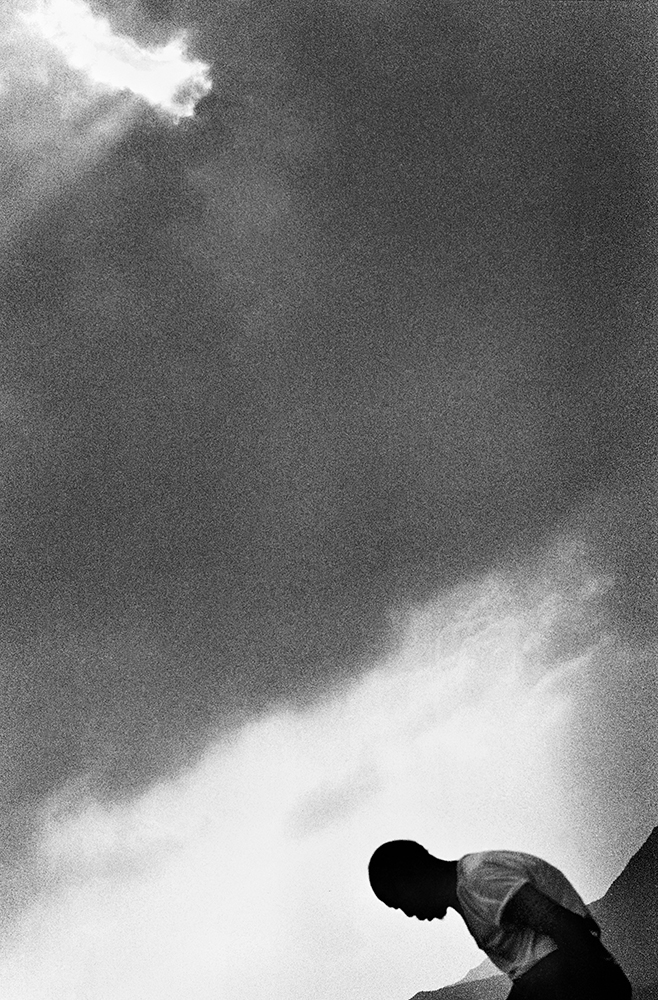
©Lee Gap-Chul_Conflict and Reaction, On the riverside of Seomjingang_1999
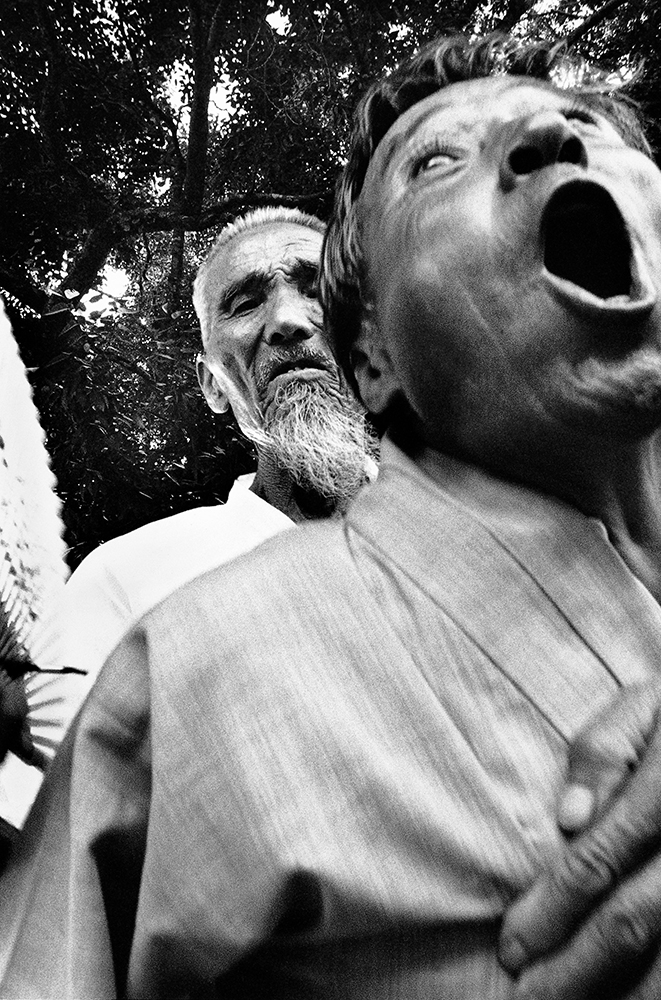
©Lee Gap-Chul_Conflict and Reaction, Father and son_1995
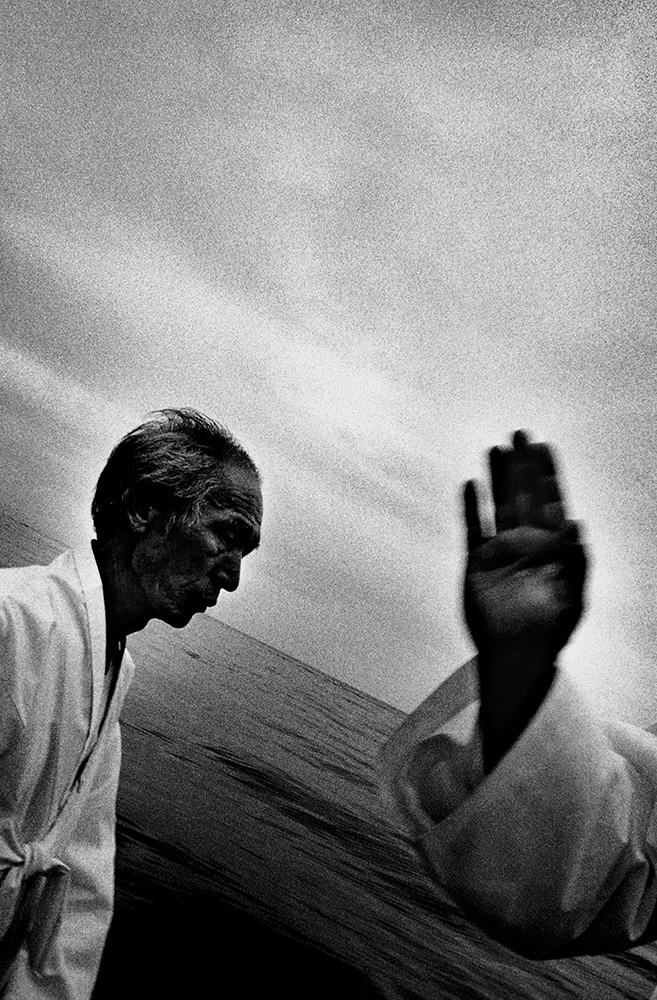
©Lee Gap-Chul_Conflict and Reaction, Good Haoul Ritual_1990
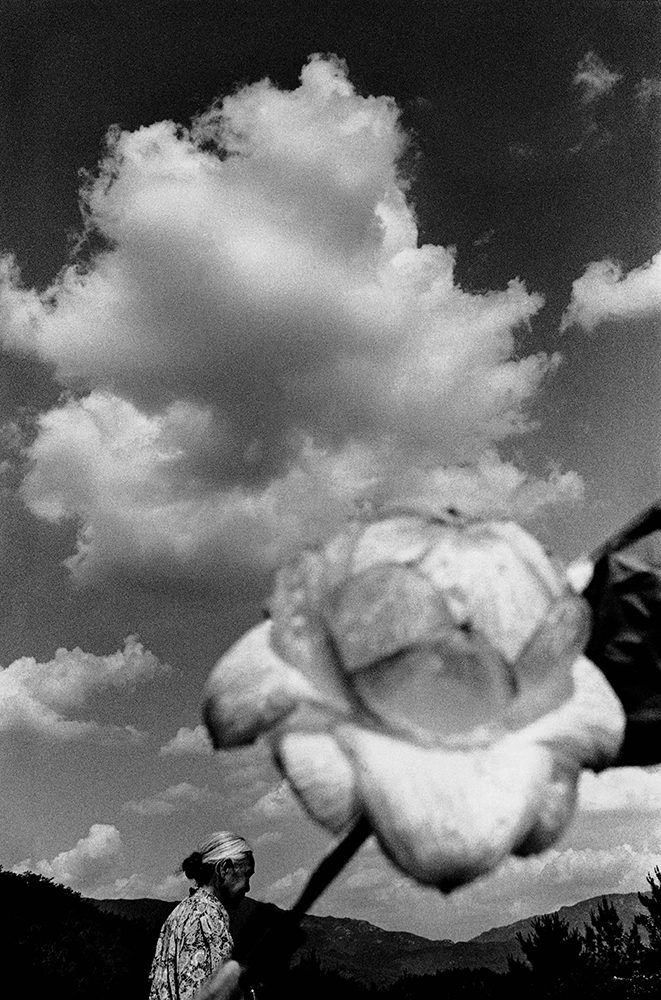
©Lee Gap-Chul_Conflict and Reaction, Letting father_soul go up to the skies_1996
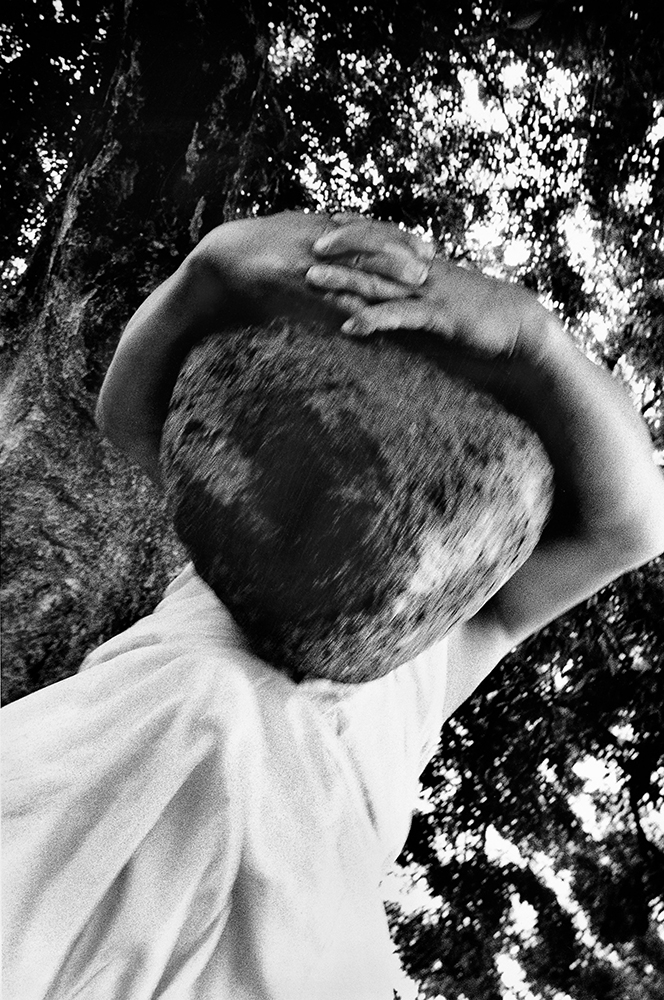
©Lee Gap-Chul_Conflict and Reaction, Man lifting up a menhir_1990
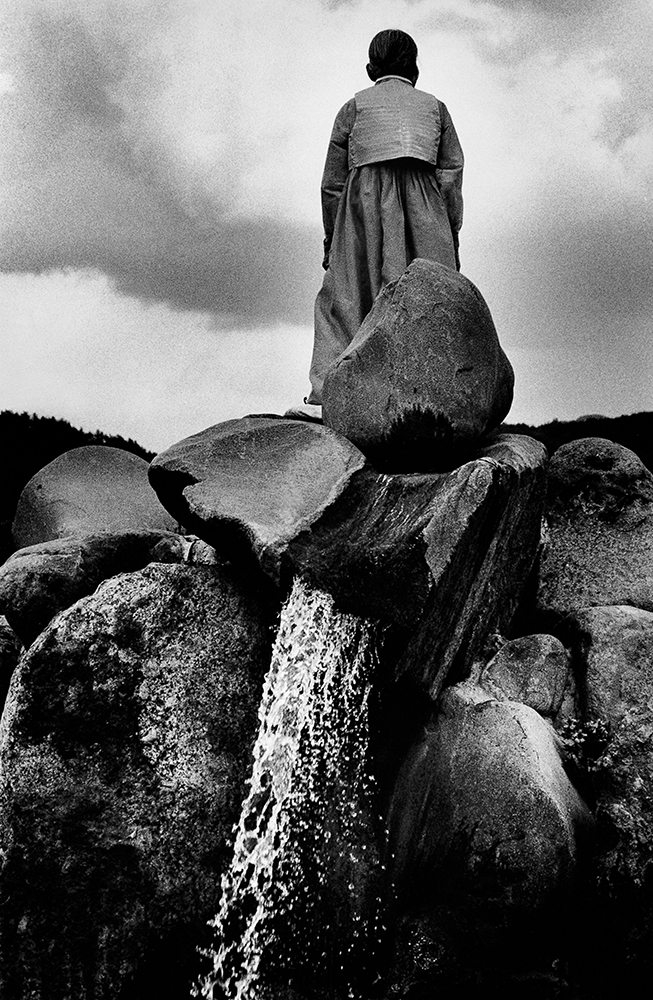
©Gap-Chul_Conflict and Reaction, Old woman sitting on the rock_1996
Lee Gap Chul
Born in 1959 in Hapcheon, Gyeongsangnam‑do, and raised in Jinju, LEE Gap Chul graduated from the Department of Photography at Shingu College in 1984. He has traveled to every corner of Korea, seeking out the deep emotions of jeong‑han, exuberant energy, and tenacious vitality embedded in the lives of ordinary people, and has devoted himself to capturing them in his photographs.
His work has been widely exhibited in Korea and abroad. Major solo exhibitions include The Land of the Others at Kyung‑in Museum of Fine Art in 1998, <Conflict and Reaction> at Kumho Museum of Art in 2002, and <Energy>at The Museum of Photography, Seoul in 2007, among many others. He has also participated in numerous international group exhibitions, such as <FOTOFEST 2000> in Houston, Texas in 2000, <Paris Photo> in France in 2005, and <Imaging Korea – Beyond the Land, People and Time> in Germany in 2016. Lee has worked as a represented photographer with Galerie VU’ in Paris, and he continues to journey across Korea in search of the spiritual depths and collective psyche that shape the Korean spirit.
Lee Gap Chul unveils his new series Conflict and Reaction, a contemplative exploration of the inner worlds of humans, nature, and community. The images of a woman emerging from a cave and a man seemingly floating atop a tree evoke the fragility of human existence amid the vast forces of nature and a profound reverence for the natural world. Faced with an overwhelming world, humans either submit to nature or offer rituals of conquest. This moment of conflict between natural order and human desire gives rise to a reverent and accepting response, or “reaction.” Through this dynamic, Lee invites a renewed contemplation of the relationship between humanity and the natural environment. The tensions of conflict and reaction experienced in his photographs metaphorically express the spiritual resonance of time and force embedded in nature permeating the human psyche, awakening both a humility before nature and an indomitable will to transcend it.
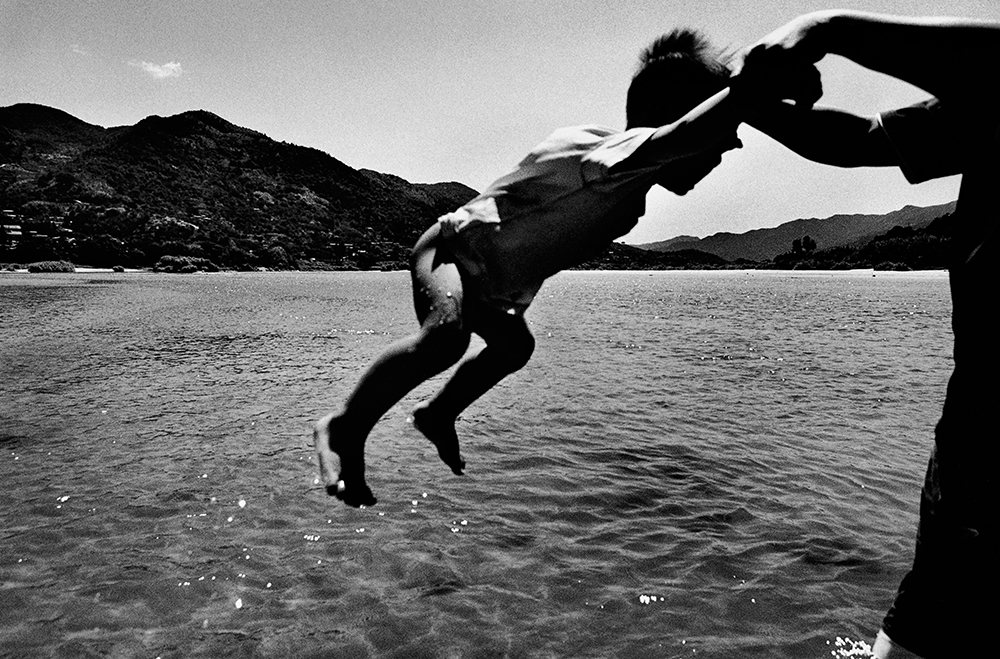
©Lee Gap-Chul, Conflict and Reaction, On the riverside of Seomjingang, 1999
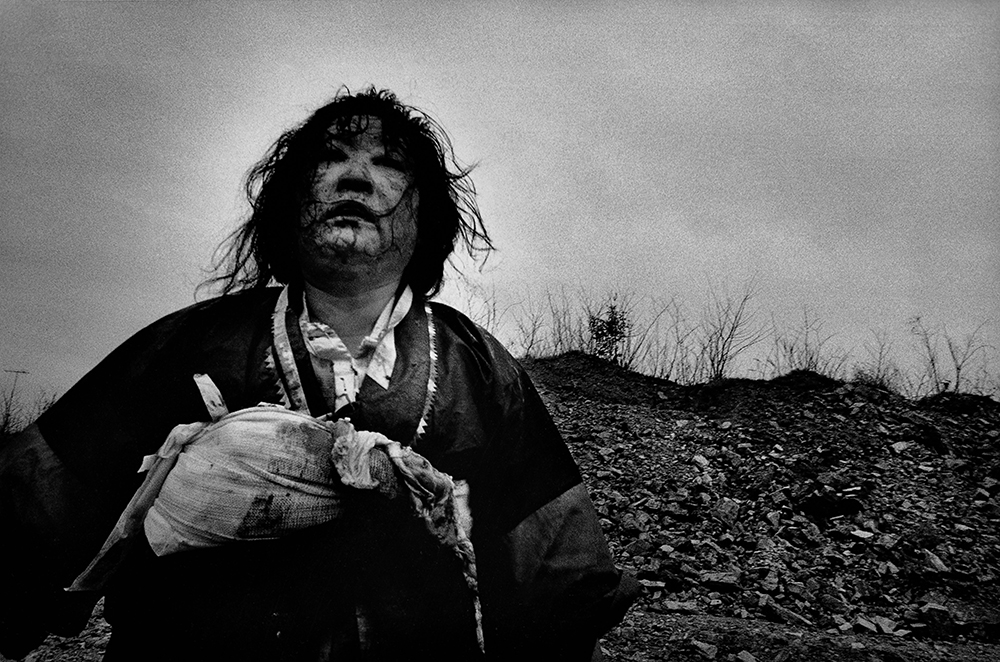
©Lee Gap-Chul_Conflict and Reaction, Shaman_1992
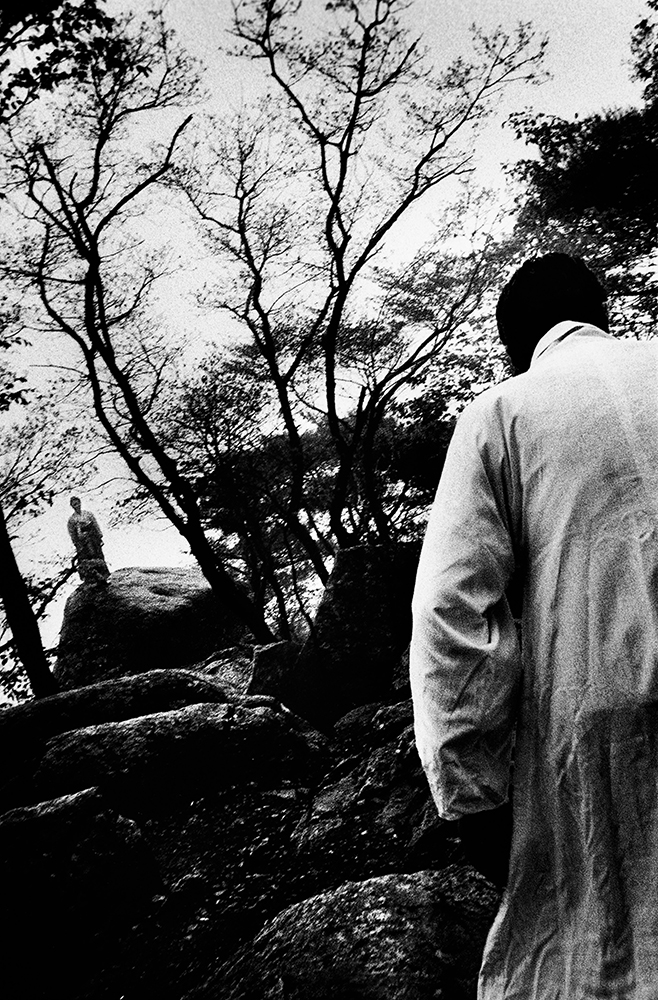
©Lee Gap-Chul_Conflict and Reaction, Two old people in the forest_1994
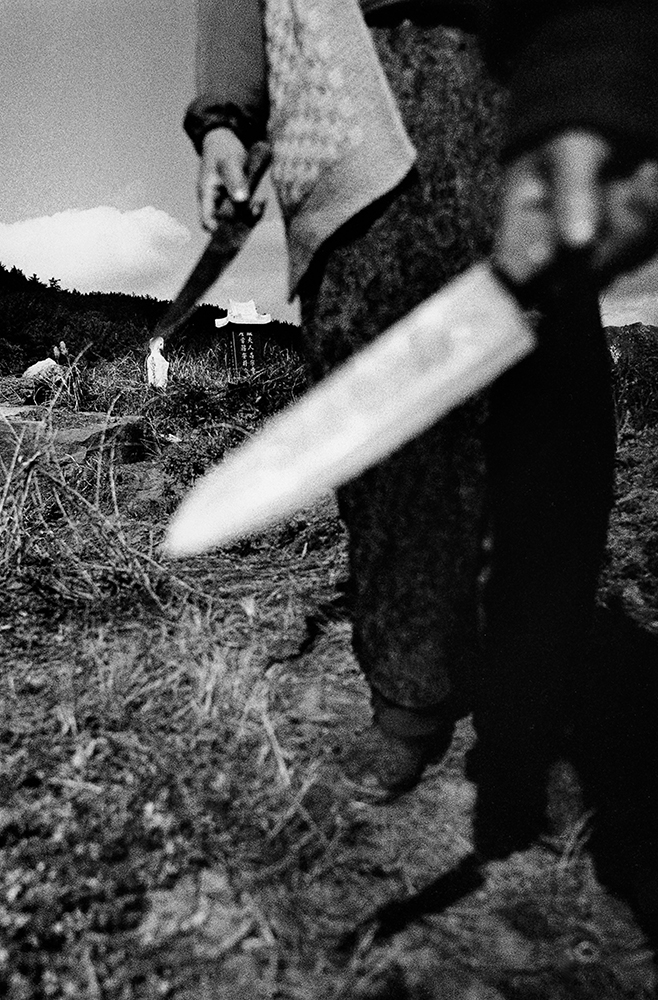
© Lee Gap-Chul_Conflict and Reaction, Woman on her way to field_1995
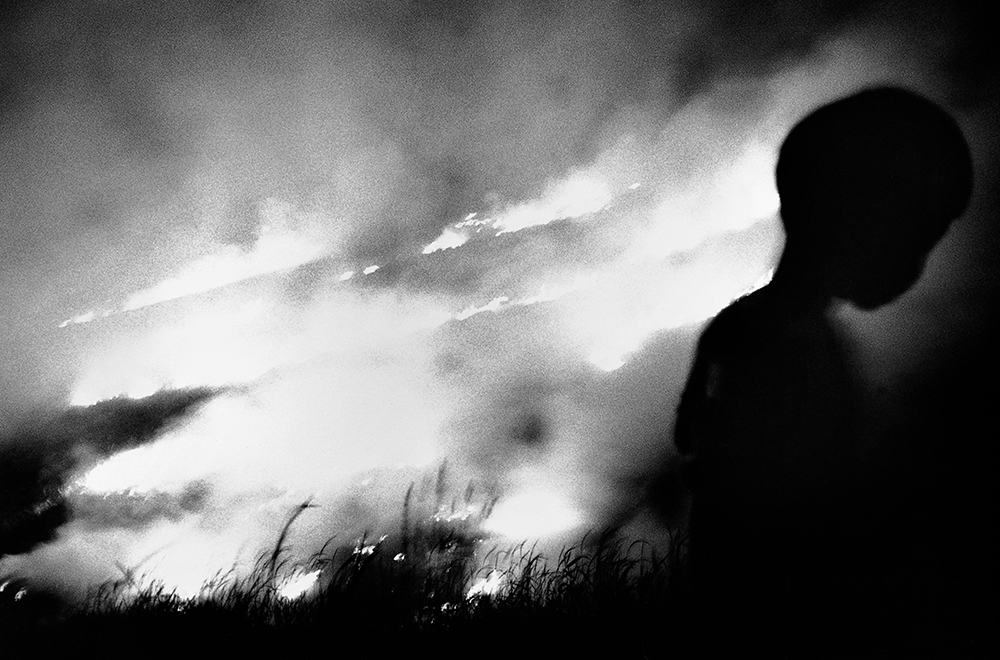
© Lee Gap-Chul_Conflict and Reaction, The last day of harvest_1991
Honbul, Undying Fire
Artistic Director, 2025 Busan International Photo Festival, Lee Il Woo
Present-day Korea has achieved splendid development that astonishes the world, and it abounds with vitality and changes to shape the future. Meanwhile, our memories of the past are fading like an old photo, and the unique spirit and culture that define our identity are overshadowed by grand agendas such as globalization and development. However, there are values that must be preserved and passed on in our culture. Carried down from the past, the values remind us of who we are and guide us toward what we should seek. It is for this reason that we constantly reflect upon our cultural heritage to apply values in it to our lives today. The 2025 Busan International Photo Festival, with the theme honbul (“soul fire”), turns its attention to the deep values of spirit embedded in the long history and unique culture of Korea as well as the cultural identity of Koreans. The festival’s exhibits invite us to reflect on our present reality, contemplate on the human condition, and discover the Korean worldview that has been passed down generation to generation. The exhibition features works by fourteen Korean artists — Kim Woo Young, Park Jin Ha, Sung Nam Hun, Yang Jae Moon, Woo Chang Won, Lee Gap Chul, Lee Sun Joo, Yi Wan Gyo, Lee Jong Man, Chang Sook, Cho So Hee, Han Chung Shik, and Hwang Gyu Tae — and six international artists — David Krippendorff, Henrik Strömberg, Rainer Junghanns, Ralph Tepel, Setsuko Fukushima, and Yana Kononova. The artists’ works compose a narrative of hope and insight uncovered in the abyss, complementing and overlapping each other like the pieces of a patchwork.
Lee Ilwoo
Lee IlWoo is an independent curator and director of the Korea Photographers Gallery.Key Curatorial RolesHe currently serves as Artistic Director of the 2025 Busan International Photo Festival, with the main exhibition ‘Honbul, Undying Fire’. His previous curatorial roles include Artistic Director of the 2017 Seoul Photo Festival ‘Community for Self-reflection; State, Individuals and Us’ and the 2016 Seoul Photo Festival ‘Seoul New Arirang – Like Thousand Miles of Rivers’. He served as Exhibition Curator for the National Museum of Modern and Contemporary Art’s ‘Han Chungshik: GOYO’ (2017), Chief Curator of the Arts Council Korea’s ‘Public Art + Regional Revitalization Project: Regeneration of Everyday Life’ (2015), Curator for the Daegu Photo Biennale ‘Full Moon’ (2014), and Curator of the Changwon Contemporary Art Festival ‘Cities of Ancient Futures’ (2013).Additional LeadershipHe was Executive Director of the Urban Gallery Project ‘Chungmuro Photo Festival ‘(2012), Director of Visual Art Center Boda (2009–2011), and ‘Asian Contemporary Art Magazine POINT’ (2010–2011).Early ExhibitionsPrior to curatorial work, Lee IlWoo participated in solo and international group exhibitions such as ‘Voice of Silence'(2010), ‘Stuffed Animal'(2009), ‘In-between'(2008), ‘Portraits’ (2007), and ‘UNTITLED’ (2006)
https://www.facebook.com/ilwoo.lee.58
http://www.bipf.kr/2025/
Posts on Lenscratch may not be reproduced without the permission of the Lenscratch staff and the photographer.
Recommended
-

BEYOND THE PHOTOGRAPH: Q&A WITH COMMERCIAL PHOTOGRAPHER ANDY MAHRMarch 22nd, 2026
-
Bryan Whitney: The Spiritual LightMarch 17th, 2026
-
The 2026 Lenscratch Student Prize is OPEN!March 16th, 2026
-
The 2026 LOVE Exhibition, Part 2February 14th, 2026
-

The 2026 LOVE Exhibition, Part 3February 14th, 2026