Leslie Sheryll: HERbarium – HER Choice
©Leslie Sheryll
This week we explore works made by female-identifying lens-based artists who explore issues affecting contemporary women. I’ve approached the projects this week thinking about these questions: How is this point in time different for female artists? What issues need to be addressed in our current climate?
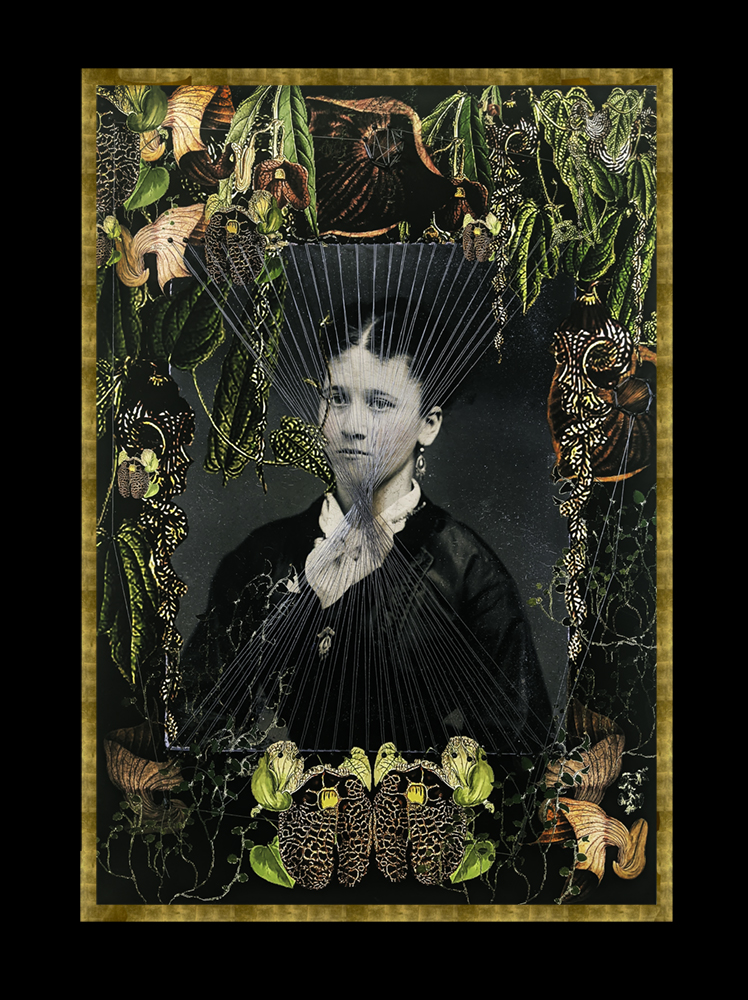
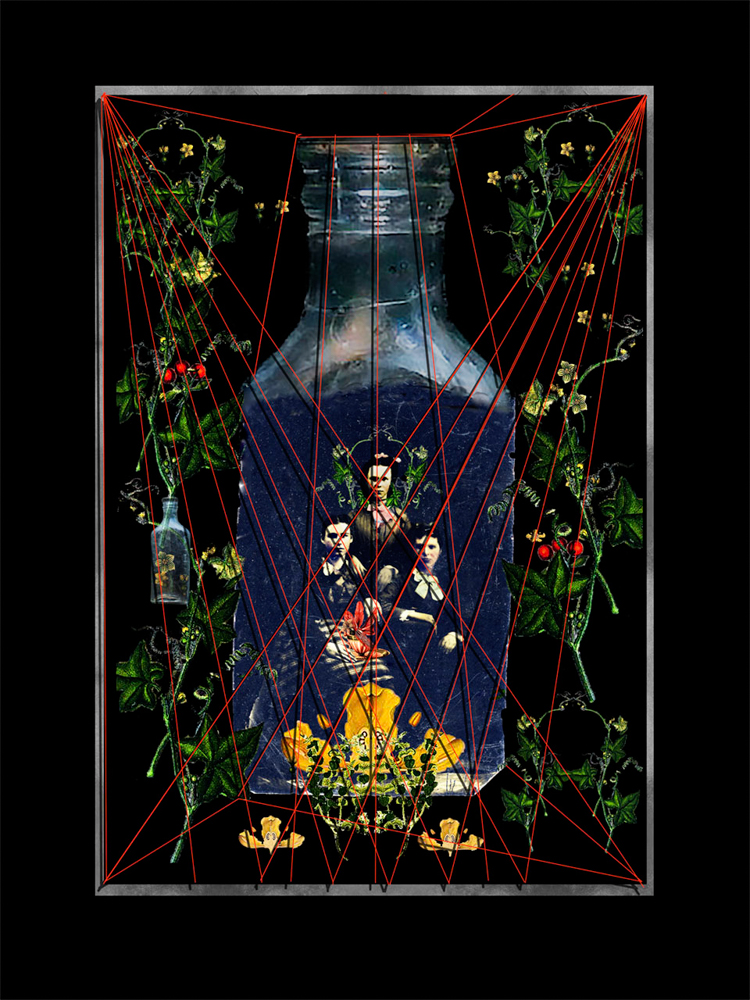
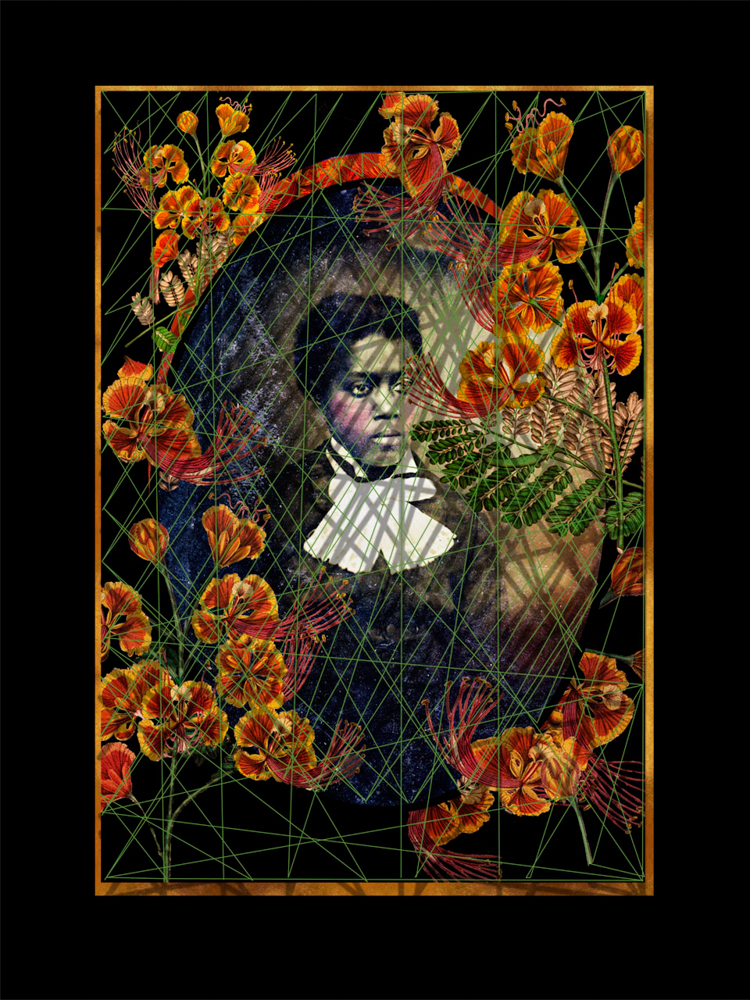
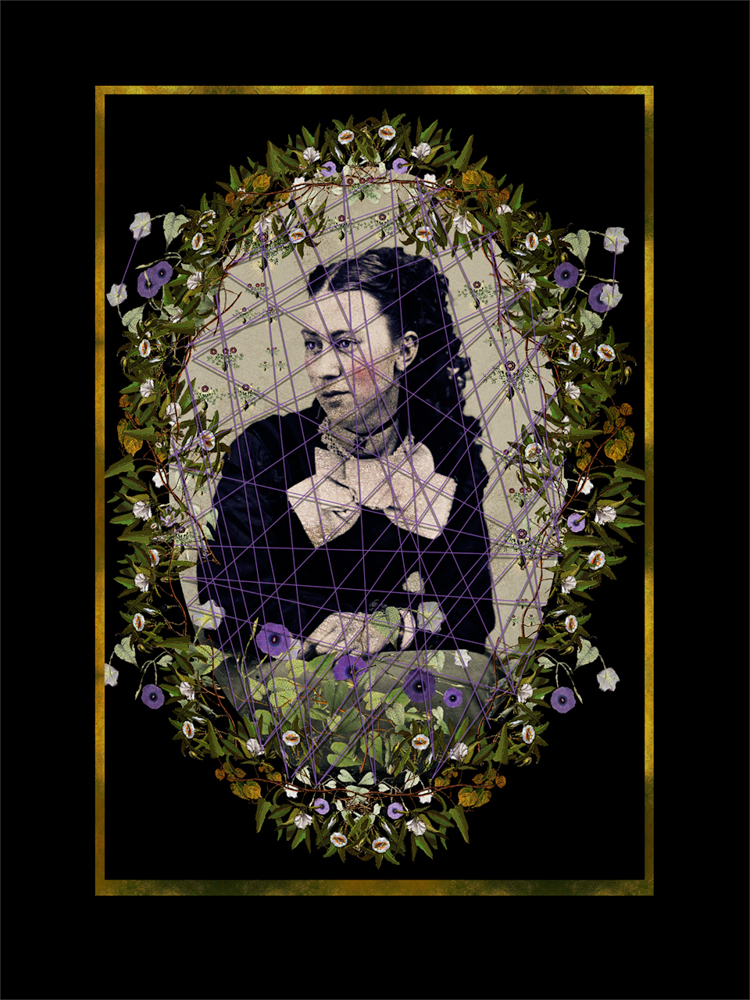
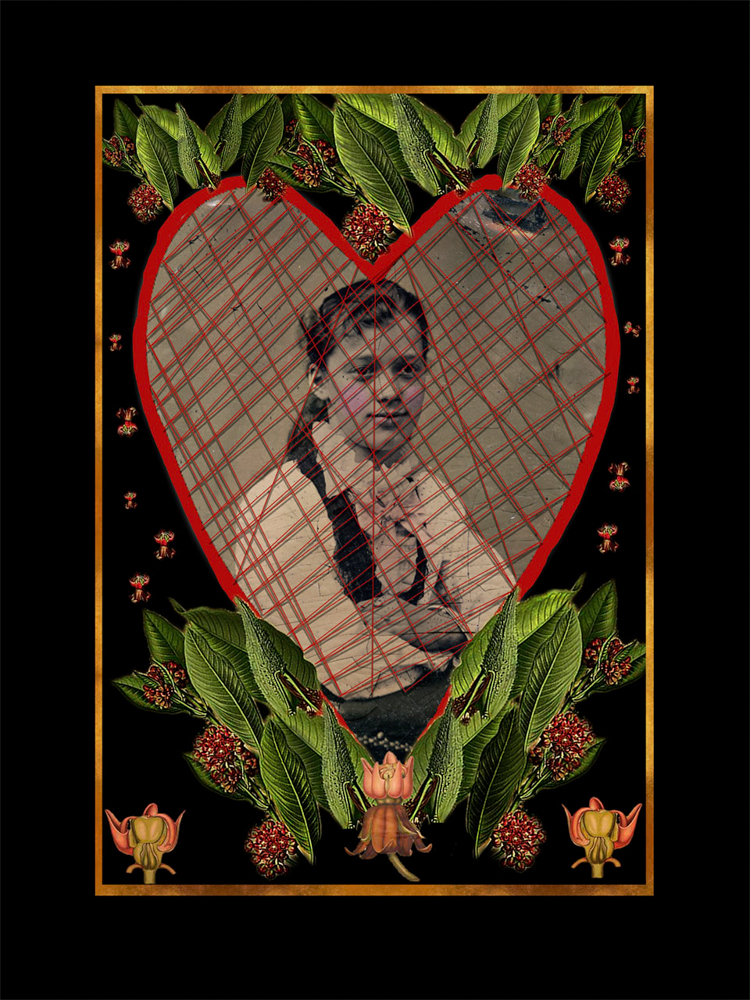
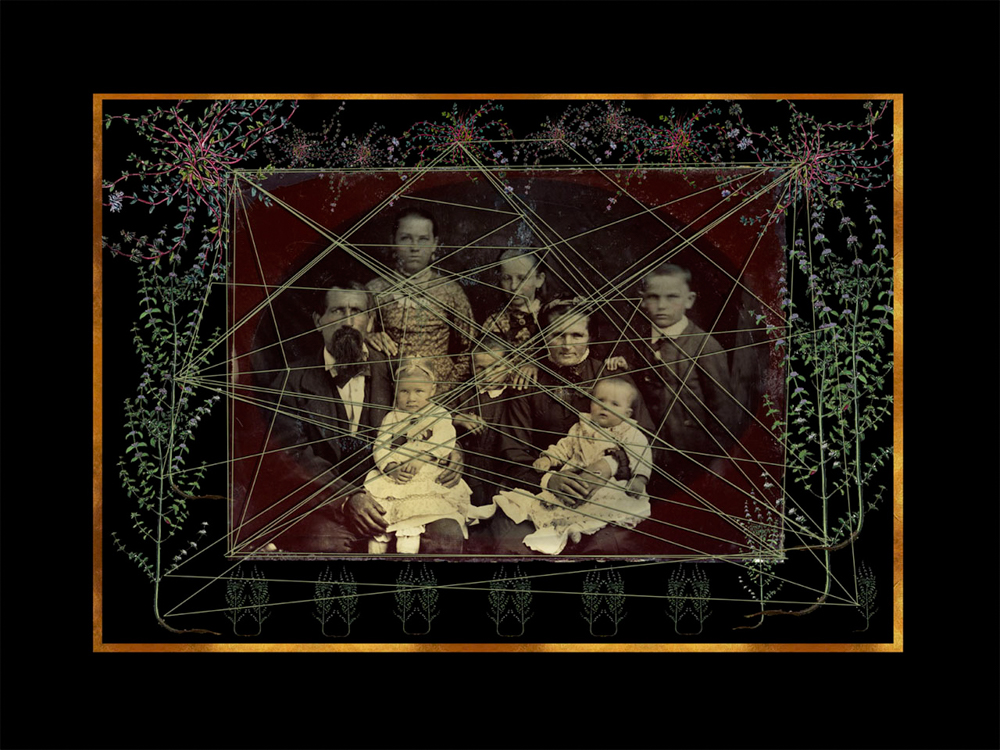
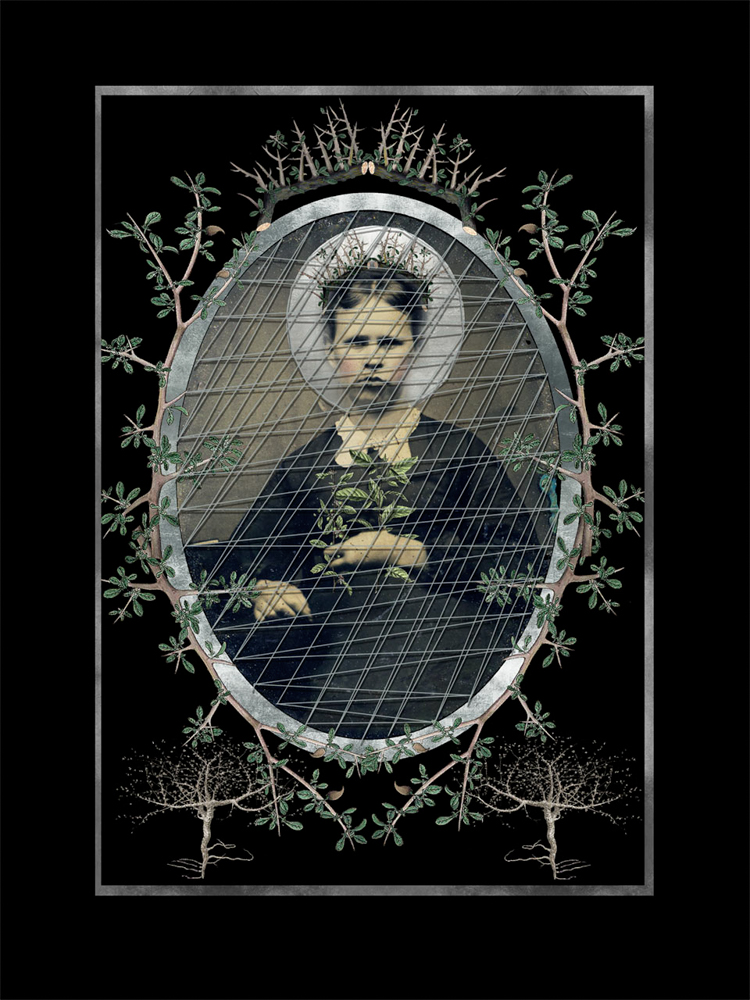
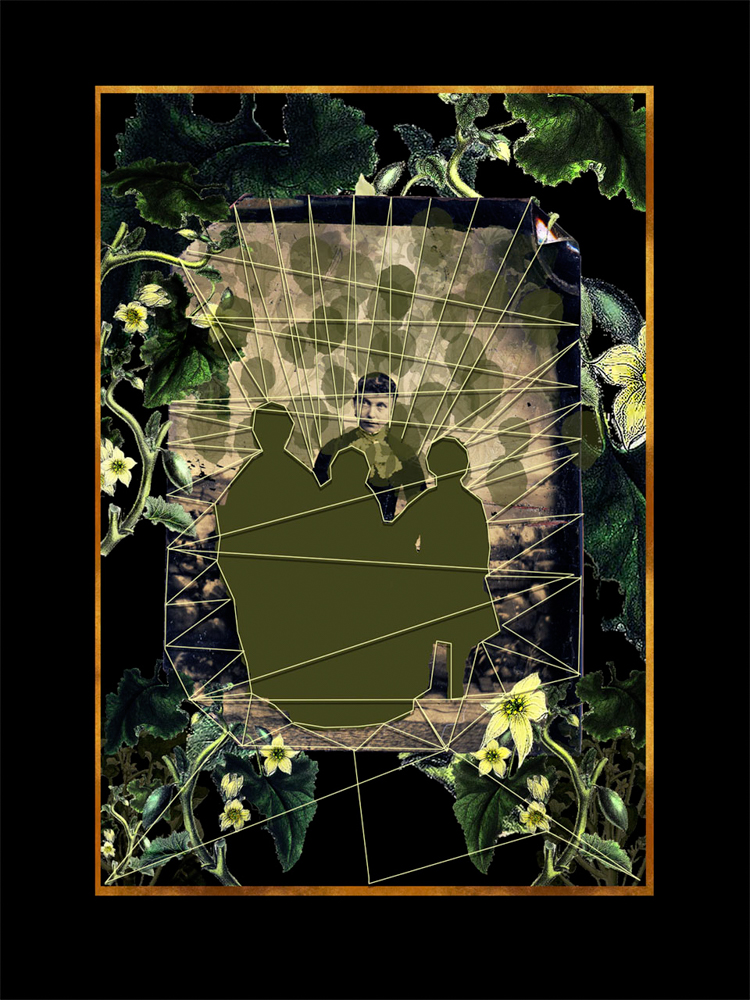
Today, I’m delighted to discuss Leslie Sheryll’s project, “HERbarium-HER Choice”. Sheryll’s images draw upon botanicals historically used for abortion or birth control, combined with found tintype portraits from over one hundred years ago. She creatively pins cords over the prints, creating 3-dimensional objects with a strong message about reproductive rights. I was fascinated with her approach to this subject and she graciously agreed to be interviewed to discuss the project. – Marcy Palmer
©Leslie Sheryll
HERbarium-HER Choice Statement
This series focuses on abortion rights and the diminishing options of a woman’s right to choose. In these images, I incorporate herbs and flowers that have been used as contraceptives, emmenagogue, or abortifacients by women throughout the centuries. Since the repeal of Roe VS Wade women may have no other choice than to resort to using these (often dangerous) herbal remedies once again.
– Leslie Sheryll
MP : Please tell us where you’re from and how you came to photography
LS: Most of my life growing up was spent in the Riverdale section of the Bronx. After college, in the midwest I moved to the Upper West Side of Manhattan and remained in the area until the year 2000 when my apartment was destabilized and I moved to Jersey City.
My introduction to photography came from my maternal grandfather, who was an amateur photographer and filmmaker. He had a darkroom and an editing studio in his basement, where my cousins and I would play with all of his equipment. When it was time for high school, I was accepted into The High School of Art and Design. In our first year, we were exposed to various art forms, including photography. I discovered that while I was not particularly skilled at drawing, I had a talent for capturing images through the lens of a camera. I continued with photography as my major at The Kansas City Art Institute, where I earned my BFA.
©Leslie Sheryll
MP: Themes of your work have revolved around equality and empowerment for women. How did these themes emerge in your work?
LS: During my college years, I became aware of my status as someone in the minority, being one of the few women in the Photo Department. Whether consciously or unconsciously, I began to explore biographies of women. These readings were not part of the curriculum, at that time my college did not offer Women’s Studies courses, nor did I even think of it as a subject.
My work dramatically changed direction by way of the 19th century when I began to collect vintage photographic tintypes featuring women. I scanned the tintypes and created large prints that focused on their faces. This process compelled me to examine each individual, I wanted to know more about their lives. At that time, I lived in an area originally built during the 19th century. I lived in an Italianate Brownstone on Paulmier Place, named after a woman, who was responsible for building some of the finer homes in the area. I was curious about the experiences of the women who may have lived in the same house as I did. The nineteenth century was a pivotal era in history, characterized by the industrial revolution, scientific advancements, and the rise of Darwinism. Darwin believed that women were inferior to men, this dramatically impacted the societal treatment of women. This era also coincided with the invention of the tintype, the photographic process that enabled me to connect with the faces of these women. As I learned about their lives, I saw how societal norms negatively affected every aspect of women’s lives. I also saw that these women possessed the resilience to endure. They found ways to challenge the patriarchal norms. The 19th century was the beginning of the Women’s Suffrage Movement. In each series that I create I try to express the power of female strength. I feel like I’ve learned about myself while researching these women of the past. They have an important message. Social issues that they fought for, that we have take for granted are being systematically stripped away. In this extremely scary time, we need to understand how to fight for our rights.
©Leslie Sheryll
MP: In HERbarium – HER Choice, your works are titled with specific plant names and names for the women. What is your process in terms of research? How did you decide on the names of the women?
LS: During the nineteenth century botany was one of the few social realms that was considered suitable for a proper woman to explore outside of the home. Botany wasn’t taken seriously as a science, simply put, men weren’t interested, yet. The more I learned about women and botany the more integral flowers, and plants became in my artwork. Women actually used botany as a subversive way to communicate. Many of my series use botany as metaphor. HERbarium-HER Choice is about a woman’s right to have an abortion. When I was in college, while on birth control I became pregnant. I was not ready for a child. If I hadn’t had access to an abortion my life would have dramatically changed.
The herbs and flowers in this series have been used as contraceptives, emmenagogue, or abortifacients by women throughout the centuries. The plants I use in my images are from vintage botanical illustrations that I scan and manipulate with Photoshop. I read books and researched the internet and learned that women have dealt with unwanted pregnancies since the beginning of time. Many of the plants and herbal recipes have been passed down from generation to generation, woman to woman. Some of these women were considered to be witches (that is another story & another series). Hippocrates recorded several methods of inducing abortion as early as the 4th century BCE. Even though these herbs have been used throughout history it doesn’t mean that they are safe. Many became ill or died using these methods. Will women be compelled to utilize these methods in the absence of access to a legal abortion?
Each of my women have a name. If a tintype came with a name I kept that name, if not I picked names that were popular during the 19th century. If I use that same woman in more than one series I always keep the same name. I like to think I am giving each woman her own identity, something that she didn’t have at a time when a woman’s thoughts were supposed to be the same as her husband or father.
©Leslie Sheryll
MP: You use different materials and imagery in beautiful and unique ways. How did you decide to bring the 3-dimensional cord and pin elements to the 2-dimensional images?
LS: Thank you for the compliment. I don’t specifically recall coming up with this idea, I work intuitively. The cord and pins are physical, they create an added emotional layer of entrapment.
©Leslie Sheryll
MP: What does it mean to you to be a female artist working with these issues right now?
LS: These women were trapped in a male dominated environment. Currently, our government is taking control of our bodies. Nobody should have that power. I am past the childbearing age. I am fighting for women in general. I am from a generation that grew up on protests, it’s important to have a voice, this isn’t a time for silence.
©Leslie Sheryll
©Leslie Sheryll
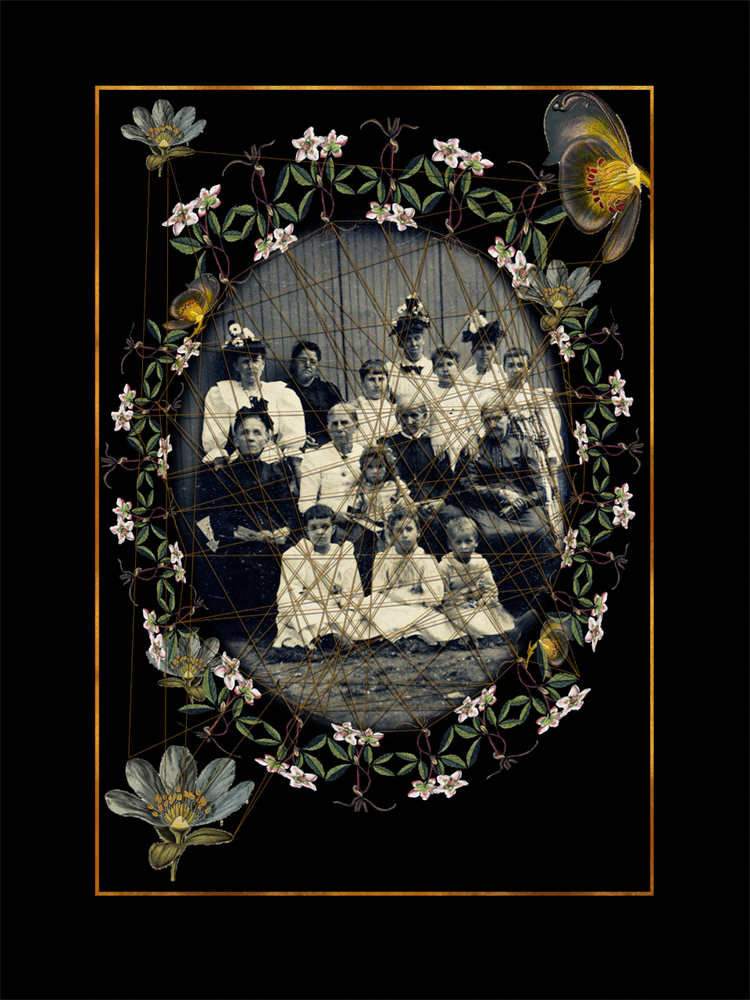
©Leslie Sheryll
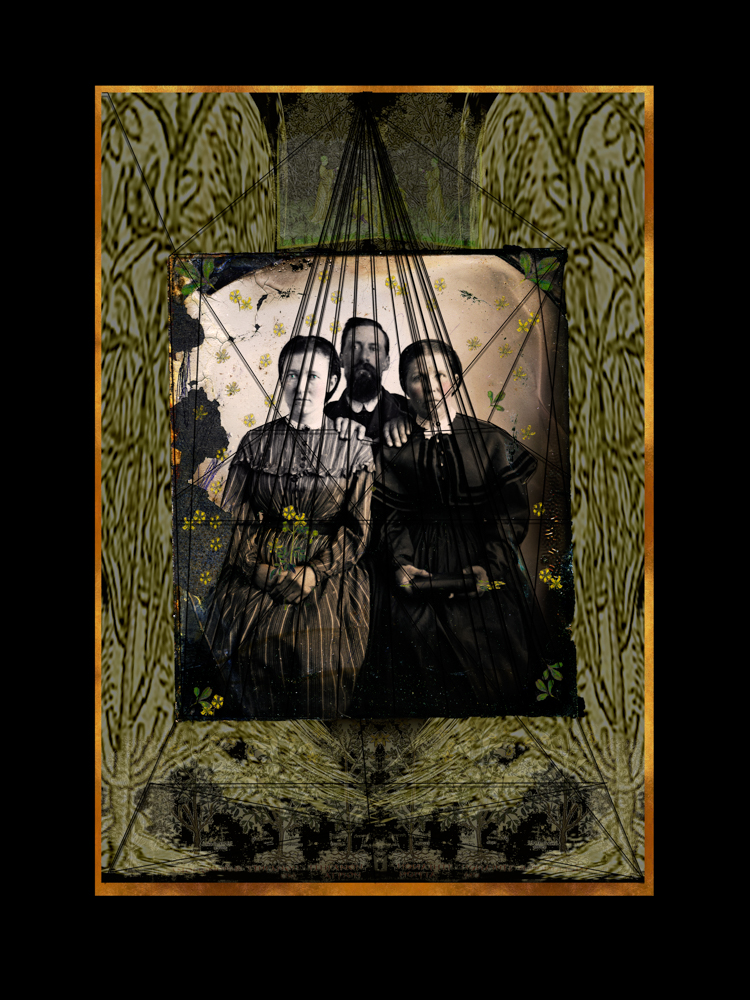
©Leslie Sheryll
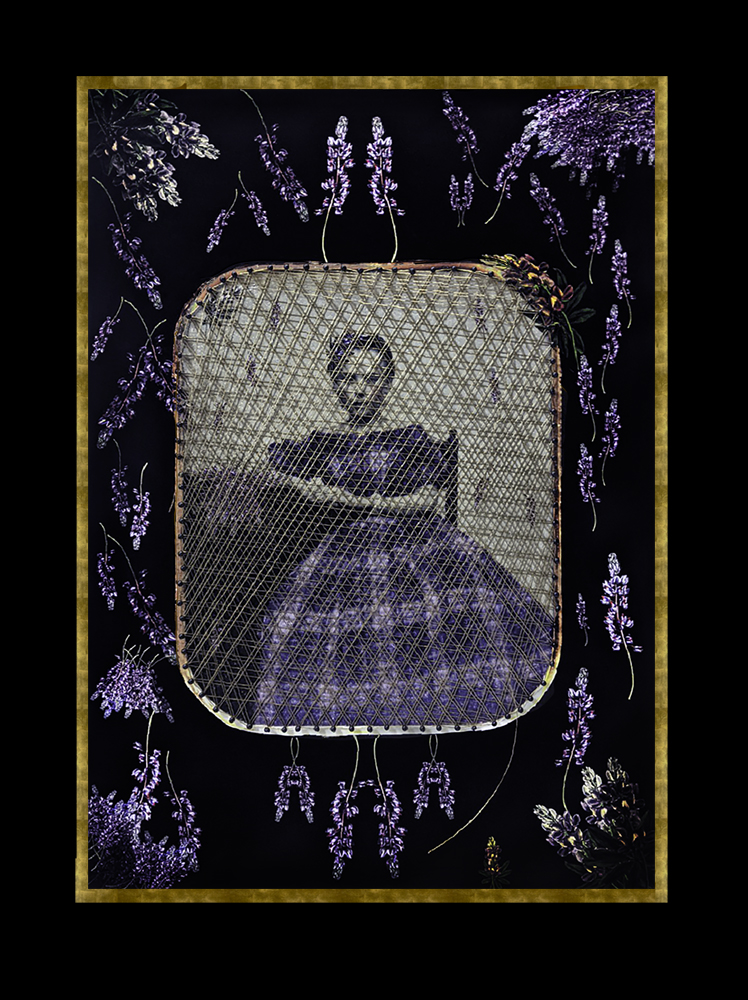
©Leslie Sheryll
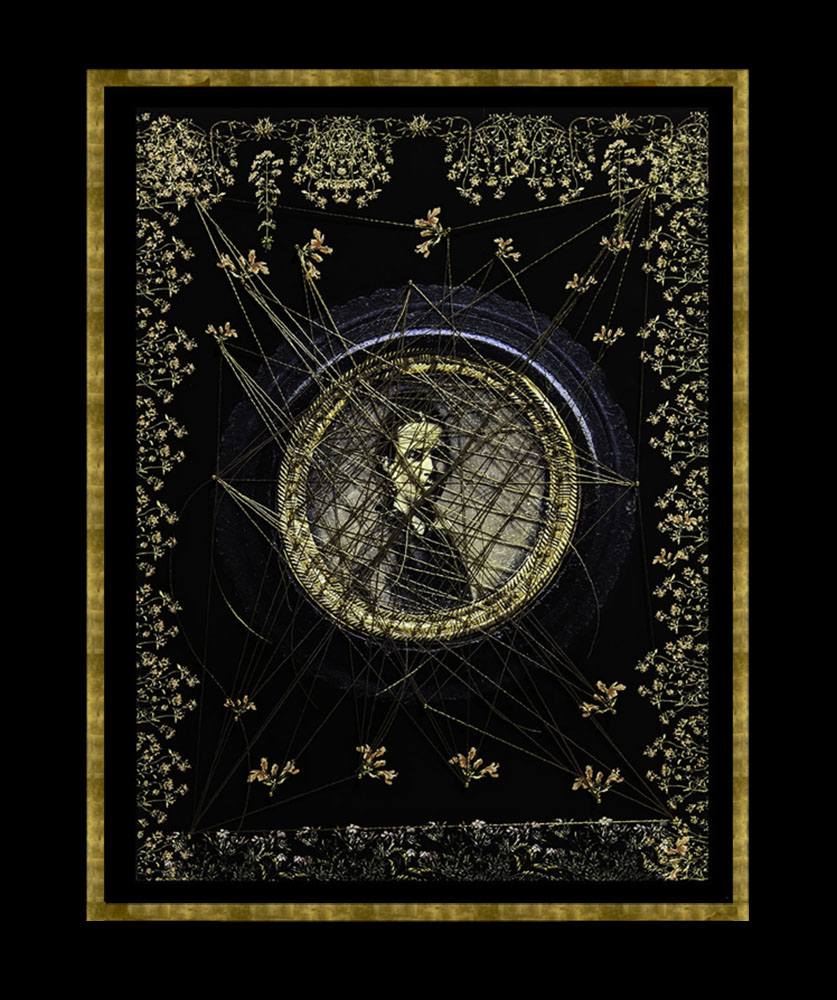
©Leslie Sheryll

©Leslie Sheryll
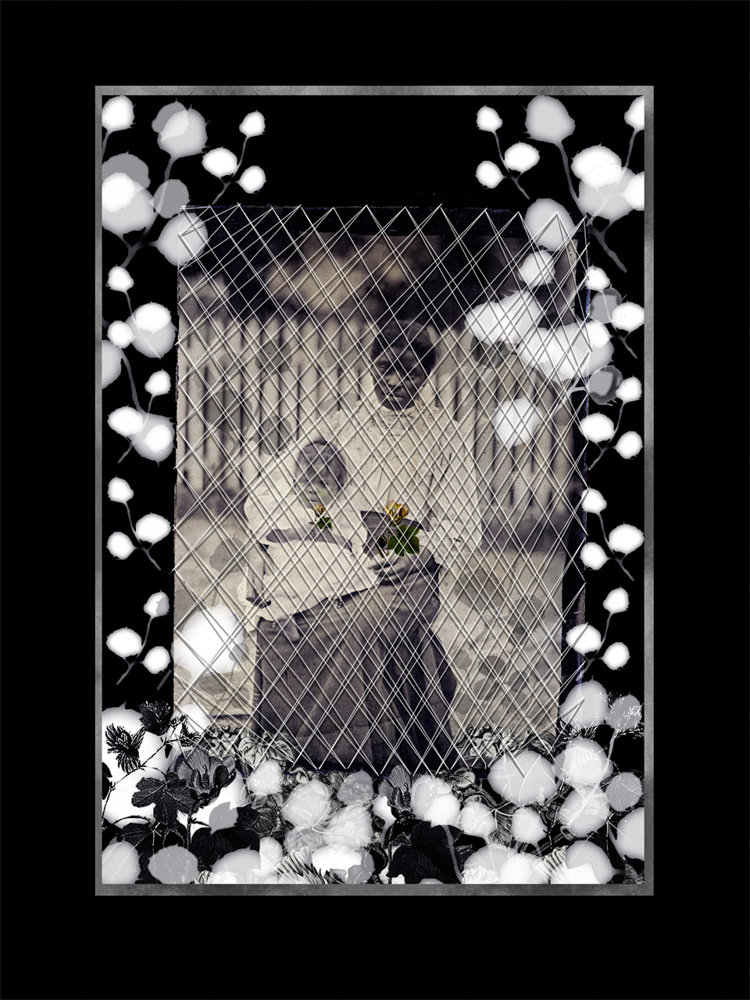
©Leslie Sheryll
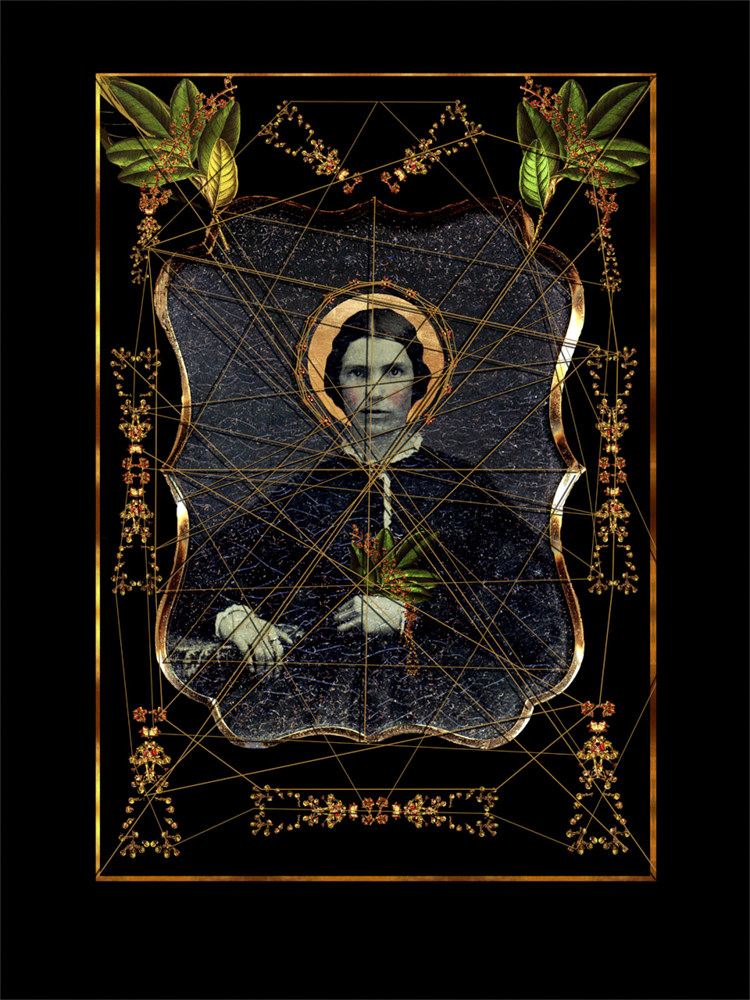
©Leslie Sheryll
Leslie Sheryll grew up in New York City and now resides in Jersey City, New Jersey. She was introduced to photography when she attended the High School of Art and Design in Manhattan. Sheryll continued her art education at the Kansas City Art Institute, where she received her BFA. Over the years, Sheryll has worked in various venues related to photography and the fashion industry. Her work has been in numerous group shows and publications in the U.S. and Europe. She was awarded a Monmouth Museum New Jersey Emerging Artist Solo Exhibition in 2024, 2020 International Photography Exhibition, Royal Photographic Selectors Spotlight Award, Bristol England, 2018 Julia Margaret Cameron Award for Women Photographers 11th Edition, 2018 PORTALS, Grand Prize winner, Juror Darren Ching of Klompching Gallery, 2018 The Photography Gala Awards, Women Seen By Women.
https://www.lesliesheryll.com/
Marcy Palmer is an American artist whose work explores themes of beauty, history, and social justice through the lens of nature and science. Influenced by the earliest practitioners of photography, as well as the Surrealist and Bauhaus movements, Palmer delicately balances contemporary and historical approaches to image-making and materials to communicate her ideas.
Marcy earned her M.F.A. in Photography & Related Media from the School of Visual Arts and a B.S. in Studio Art from Skidmore College. Her work has been exhibited at The Brooklyn Museum of Art, The Center for Photographic Art, The Griffin Museum of Photography, The Ogden Museum of Southern Art, and other spaces. Her work has been written about in The Boston Globe Sunday edition, D Magazine, and other publications. Her sold-out book, “You Are Eternity, You Are the Mirror” was published by Yoffy Press and recognized by Photo-eye, Deep Red Press, and The Luupe as a favorite photobook. Marcy also teaches photography at universities, art centers, and museums.
Posts on Lenscratch may not be reproduced without the permission of the Lenscratch staff and the photographer.
Recommended
-
Motherhood: Nadine Levin: Inconstant HarmonyMay 9th, 2026
-
Alison Chen: The Tenderness of TidesDecember 23rd, 2025
-

Ricardo Miguel Hernández: When the memory turns to dust and Beyond PainNovember 28th, 2025
-

Pamela Landau Connolly: Columbus DriveNovember 26th, 2025
-

KELIY ANDERSON-STALEY: Wilderness No longer at the Edge of ThingsNovember 19th, 2025