The 2025 Lenscratch Honorable Mention Winner: Erika Nina Suárez
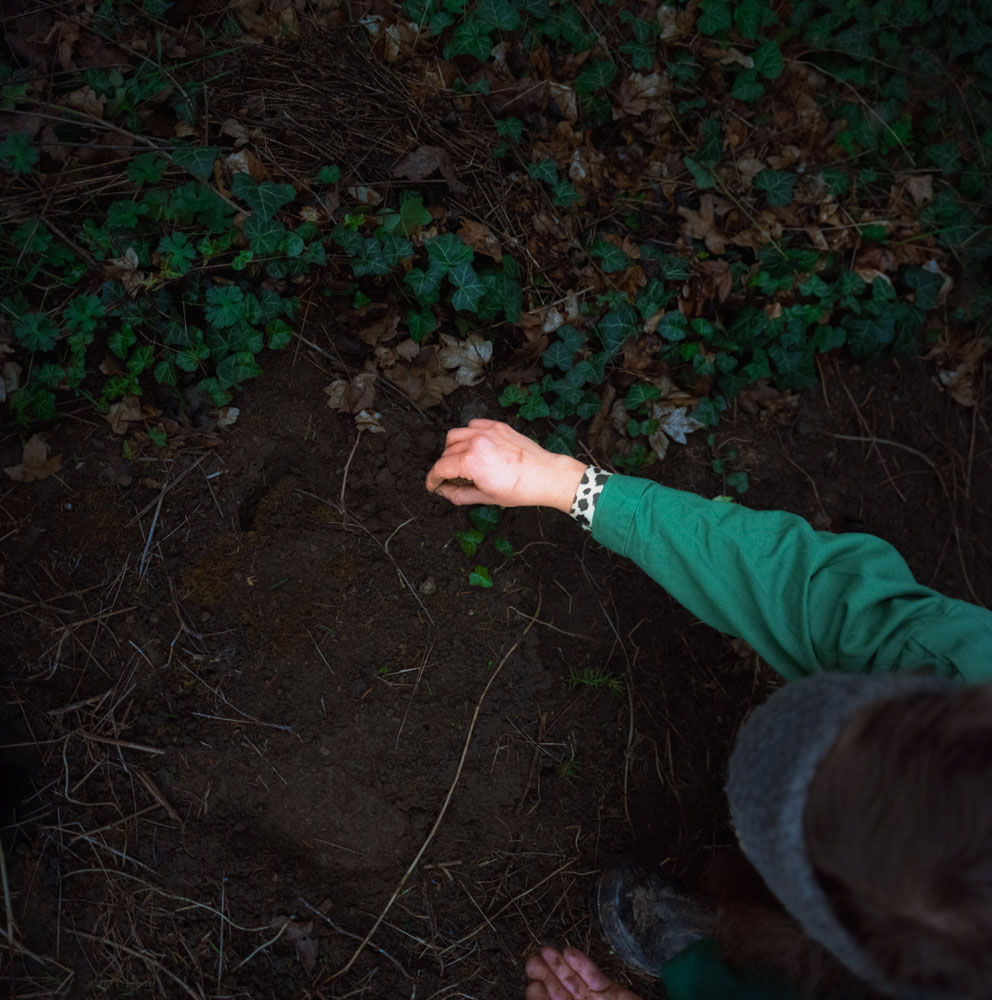
©Erika Nina Suárez, Planting Seeds, 2025
It is with pleasure that the jurors announce the 2025 Lenscratch Student Prize Honorable Mention Winner, Erika Nina Suárez. Suárez was selected for her project, Seasons In The Sun. She is currently is pursuing an MA in Photography at the Moholy-Nagy University of Art and Design in Budapest. The Honorable Mention Winners receive a $250 Cash Award, a feature on Lenscratch, a mini exhibition on the Curated Fridge, a Lenscratch T-shirt and Tote.
When I saw the work of Erika Nina Suarez, I was really attracted to it and so I jumped at the chance to interview her, and I’m so glad I did. Just like the images she creates, she is so thoughtful and introspective, and I loved hearing about her background, how she captures such intimate and intriguing portraits, whether of people or their environment, and how she works with light. Her series, Seasons In The Sun, is an ongoing project about young people in Hungary who have found city life inaccessible and are building community in the countryside. It makes me think; it reminds me of the back-to-the-land movement of my youth, the joyousness in shared beliefs, the importance of tending to the earth, and the wonder of life.
An enormous thank you to our jurors: Aline Smithson, Founder and Editor-in-Chief of Lenscratch, Educator and Artist, Daniel George, Submissions Editor of Lenscratch, Educator and Artist, Linda Alterwitz, Art + Science Editor of Lenscratch and Artist, Kellye Eisworth, Managing Editor of Lenscratch, Educator and Artist, Alexa Dilworth, publishing director, senior editor, and awards director at the Center for Documentary Studies (CDS) at Duke University, Samantha Johnson,, Executive Director of the Colorado Photographic Arts Center Kris Graves, Director of Kris Graves Projects, photographer and publisher based in New York and London, Elizabeth Cheng Krist, former Senior Photo Editor with National Geographic magazine and founding member of the Visual Thinking Collective, Hamidah Glasgow, Curator and former Director of the Center for Fine Art Photography, Fort Collins, CO, Yorgos Efthymiadis, Artist and Founder of the Curated Fridge, Drew Leventhal, Artist and Publisher, winner of the 2022 Lenscratch Student Prize, Allie Tsubota, Artist and Educator, winner of the 2021 Lenscratch Student Prize, Raymond Thompson, Jr., Artist and Educator, winner of the 2020 Lenscratch Student Prize, Guanyu Xu, Artist and Educator, winner of the 2019 Lenscratch Student Prize, Shawn Bush, Artist, Educator, and Publisher, winner of the 2017 Lenscratch Student Prize. Alayna Pernell, Artist, Lenscratch Editor, Educator, Epiphany Knedler, Artist, Editor for Lenscratch, Educator, Curator of MidWest Nice, Jeanine Michna Bales, Beyond the Photograph Editor of Lenscratch and Artist, Vicente Cayula, Social Media Editor of Lenscratch and Artist, and Drew Nikonowicz, Artist, winner of the 2015 Lenscratch Student Prize.
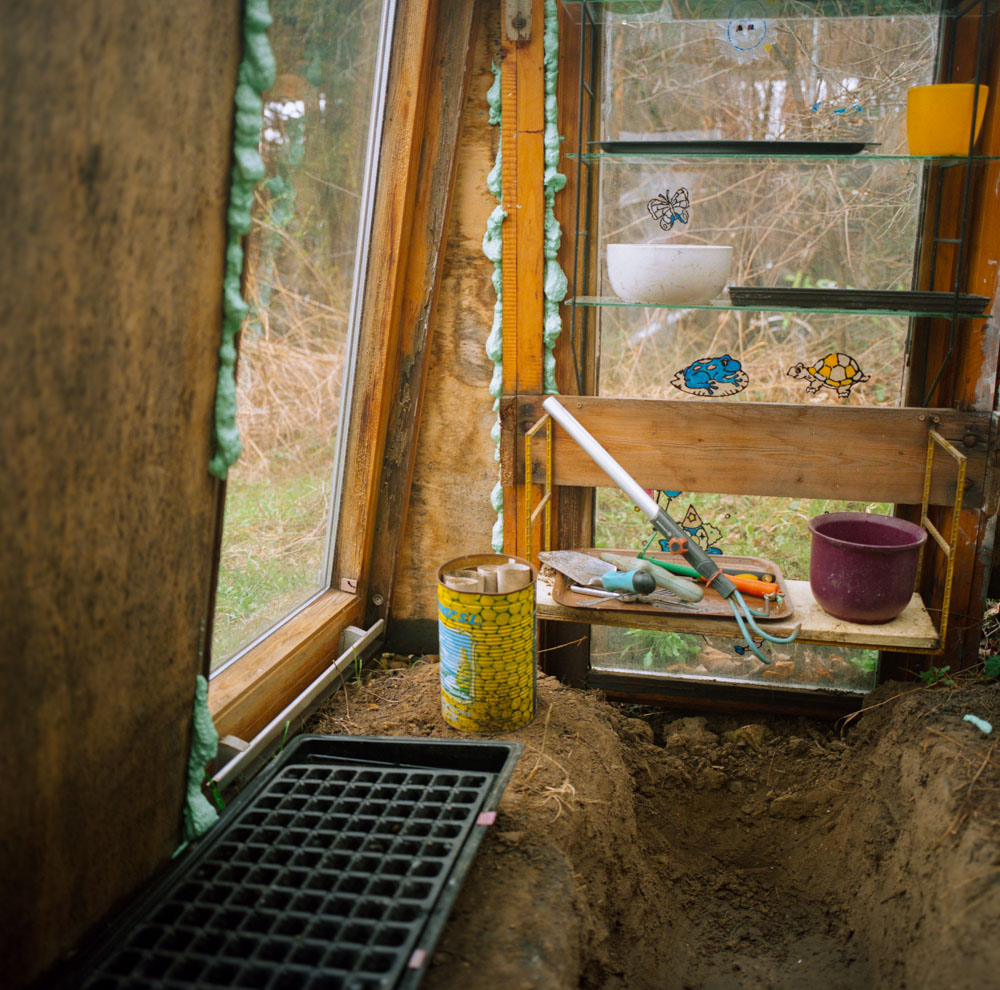
©Erika Nina Suárez, Greenhouse, 2025
Seasons In The Sun
My community has dreams that exist outside of your world. A world built on promises never meant to be kept, especially not by those of us left to deal with the destruction of generations who reaped the earth’s rewards first. We are young, and we just want to escape all of this. To farm. To grow things. To show up to parties with dirt under our fingernails. We’re assembling a life from scraps left behind, an existence that was never designed to be built by us in the first place. So, we’re rigging it.
At the center of this ongoing project is Lujza, a 25-year-old chef in Budapest with dreams of becoming a doula, transforming her garden into a birthing center, and growing more things as she ages. She dreams of this and of building a lifelong community. It’s the kind of vision that feels like it belongs to someone much older, but she carries it with a youthful sort of conviction. A conviction that is as deep as the plants she grows and carries to the restaurant she cooks in.
This series documents a growing movement among young people in Hungary who are roughly between 18 and 30 and have come to realize that a traditional life in the city is no longer accessible. Many young people were told that if they worked hard and got degrees, they could have what their parents did. But now, as adults, we see that world slipping further away. Some of us are choosing to step away and build a simpler life, acquired by any and all unconventional means, in order not to be crushed by rent increases, low-paying jobs, and the chokeholds of capitalism and bad government. Sometimes that means leaving the city. Sometimes it means seven roommates.
Lujza and I both exist outside of this trick mirror now. We plant, we grow, and we lie under the sun. I no longer want to climb a corporate ladder or work a 9-5 job when I have more time to tend to myself and have just enough to get by. Aren’t you wondering what we’re doing out here, when we could be with the rest of the world?
This is about Lujza, but also about all of us. It’s about imagining new futures from what we were never supposed to inherit. I’ve shared meals, beds, and sweat with thirty people under one roof. At nineteen, that was what community looked like. It also looked like bathing outside and building a greenhouse. It felt like fire, and pain, and absurdity. It’s a quiet act of rebuilding while the world around us cracks open.
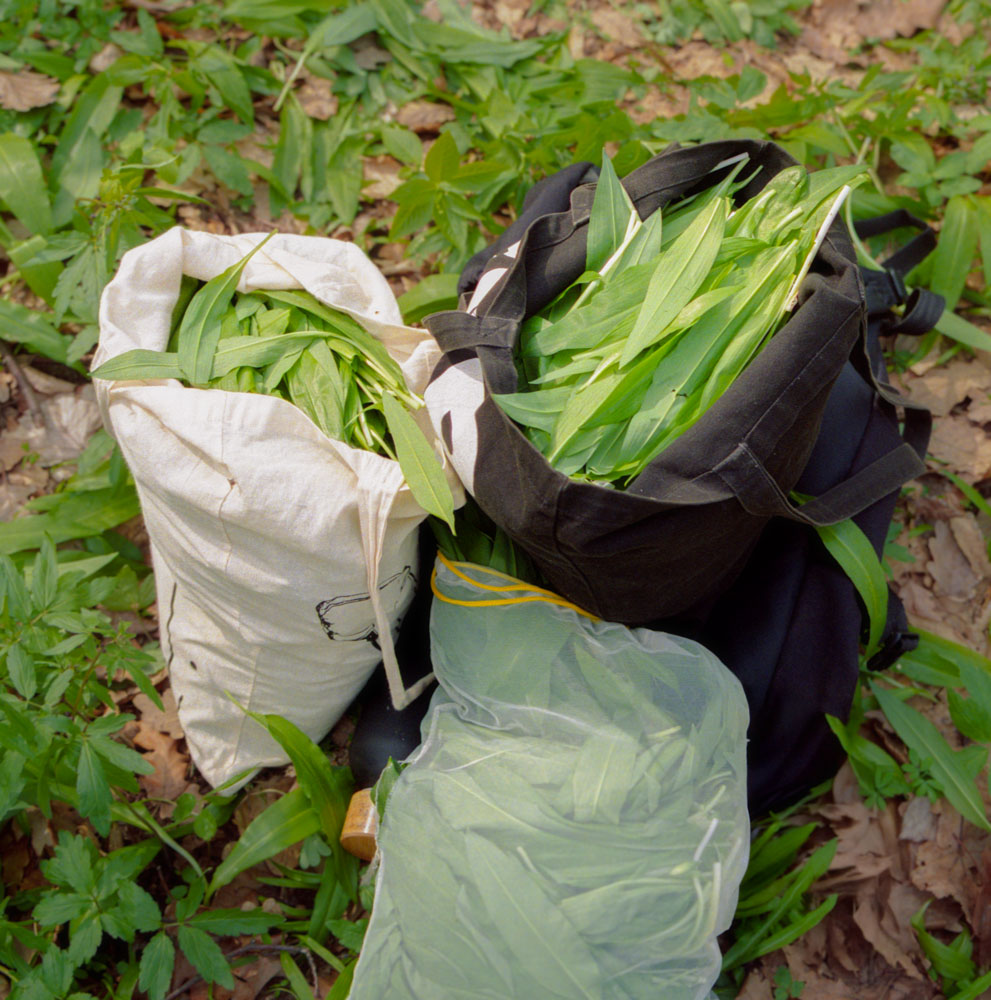
©Erika Nina Suárez, Bear Garlic 2025
Can you tell me a little about your background? Did you grow up in both Nicaragua and Hungary?
My parents met in English school in West Palm Beach after leaving their countries. My dad left Nicaragua because they wanted him to join the war with the Sandinistas at sixteen. My mom and grandparents came from Hungary after the uncertainty that followed the collapse of the Soviet Union.
I mention all of this because it shaped how I was raised and how I see the world. I think my story reflects something a lot of people in the United States experience. That feeling of being born somewhere, but also not fully belonging anywhere.
We spoke Spanish and Hungarian at home. Now that I’m older, I realize how much that shaped my identity, especially the sense that I never really fit in growing up in America. I spent most of my summers in Hungary as a kid, and I used to cry whenever we had to fly back to the US. My grandfather used to joke with my grandmother, “She loves it here too much. I think we messed up. One day she’s going to end up living here.”
I moved to Budapest last September.

©Erika Nina Suárez, Foraging in Tatabánya, 2025
When did you get your first camera? Do you remember anything about that? How it felt? The first images you made?
I think I got my first camera when I was around 20. Before that, I was lucky to have friends and professors who were nice enough to lend me their cameras for weeks or even months at a time. The images from New Guild were made during that period, using whatever camera I could get my hands on; it didn’t matter if it was digital or film. The first photos I ever made were of my friends in high school chilling on the beach or something, using a 35mm film camera my friend Grant let me borrow. His dad had a darkroom, and the first time I saw him working in it, that was sort of it for me.
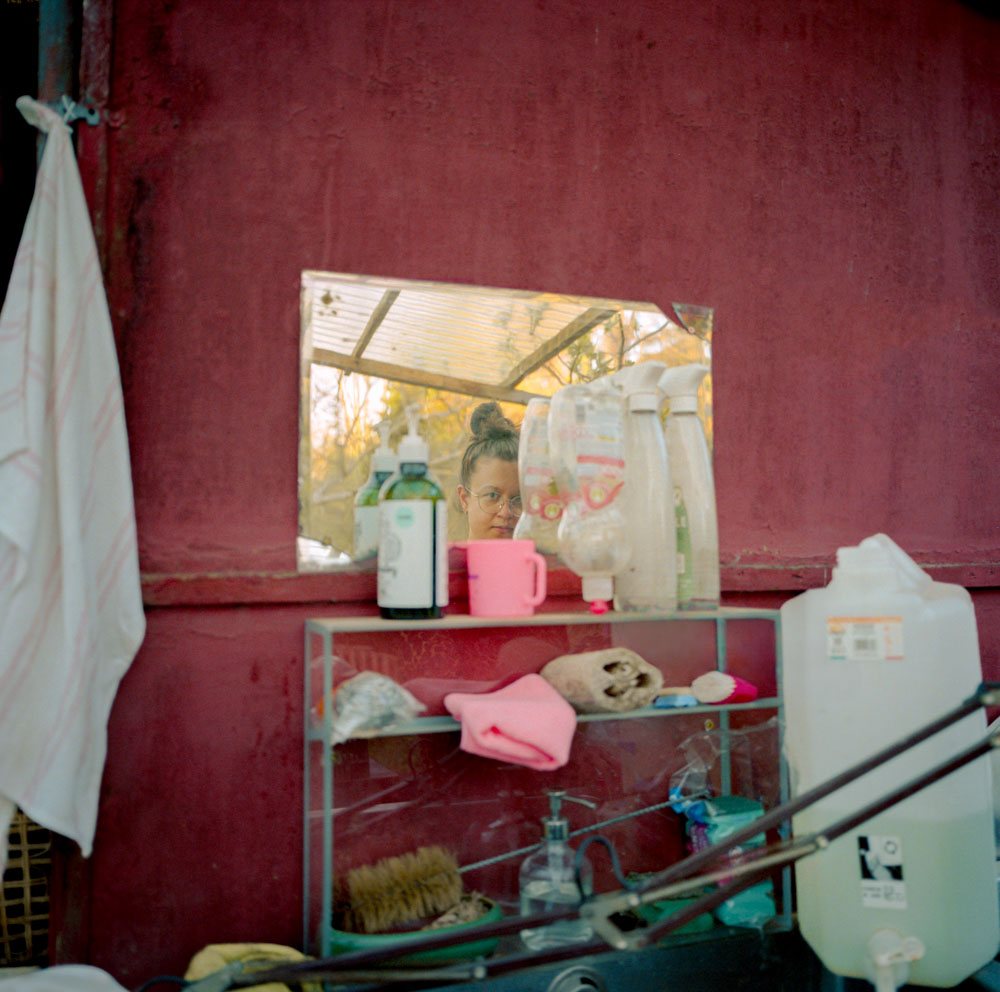
©Erika Nina Suárez, Outdoor Kitchen Sink, 2025
You are shooting your peers/friends, right? How do they feel about it? How do you go about that? Is your process with them collaborative in any way? What did you want viewers to take away?
Early on, when I started making photographs, I mostly stuck to photographing my friends who lived in the commune and my family who lived on a farm in Hungary. They didn’t care that I was taking photos all the time. I loved that period in the beginning so much because it let me explore mistakes, understand the medium, and reflect on relationships I already felt safe in. During that time, I was just happy to see my friends happy about a photograph I took of them. More recently, I’ve shifted to only photographing strangers, many of whom have since become close friends.
The way I work is always collaborative. Photography is such an intimate act, and I try to honor that intimacy by creating space for connection. What I’ve realized over time, and what I believe comes through in the images, is that I deeply love people. I make sense of the world by understanding others.
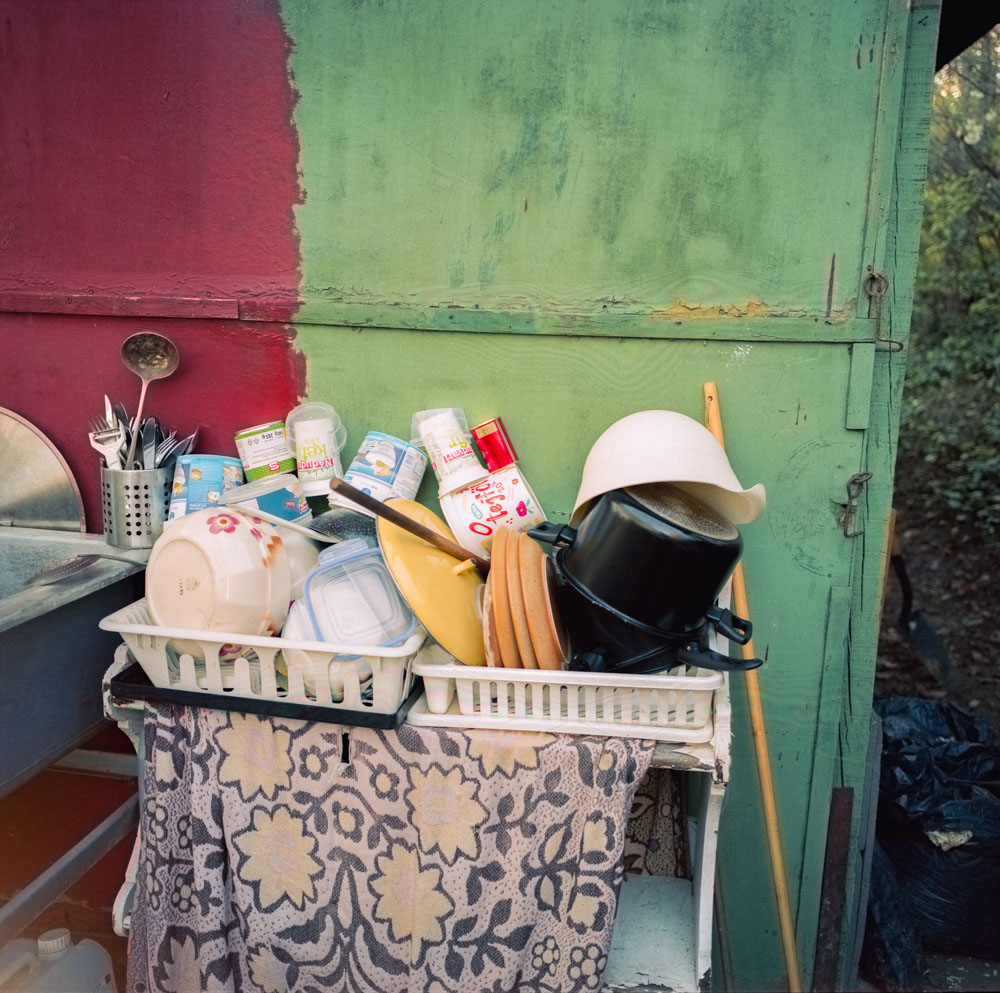
©Erika Nina Suárez, Clean Dishes, 2025
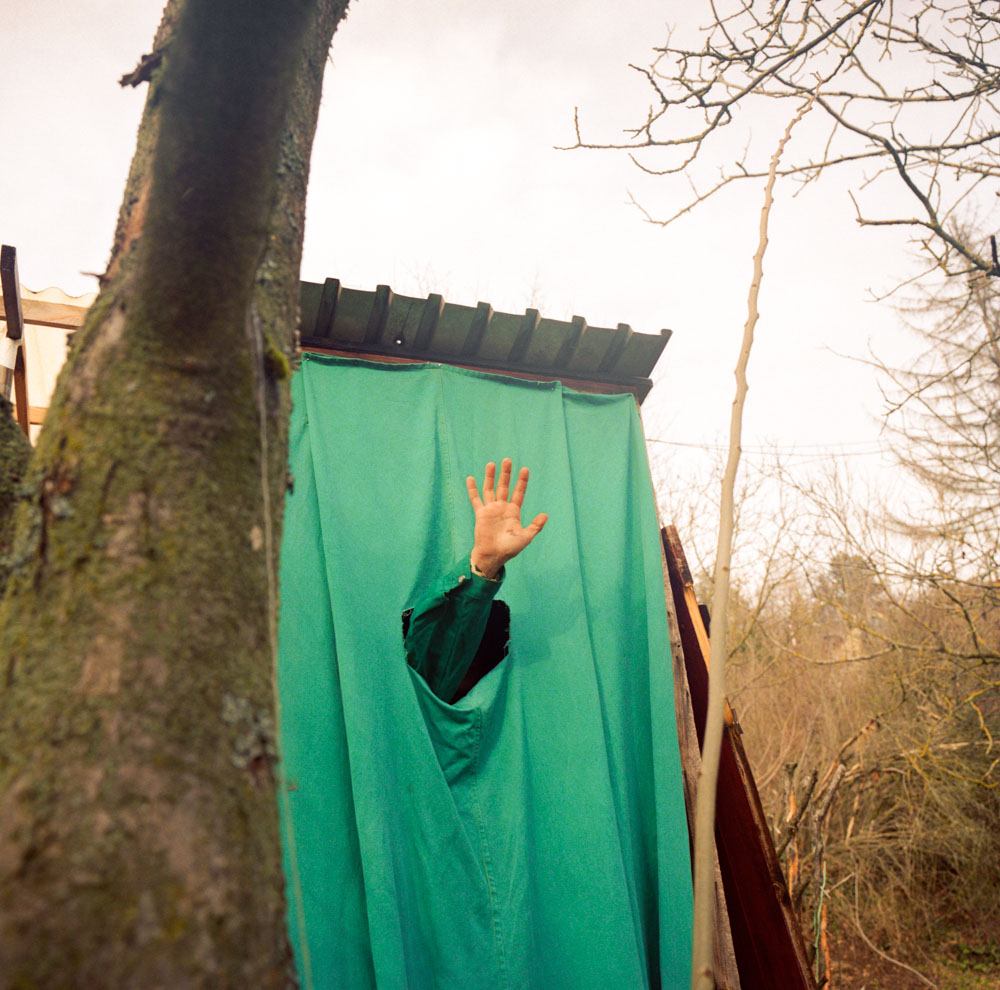
©Erika Nina Suárez, Outhouse, 2025
The light in your photos seems so deliberate and is incredibly beautiful. Can you tell me about that?
Thank you. Lighting is so delicious. Years ago, a professor told me that some of my photos reminded him of Philip-Lorca diCorcia. I kind of went mad with that thought. He told me I should never stop chasing that kind of light, and that’s stayed in the back of my mind ever since.
You can show who someone is through light, at a moment in time, through your eyes. I think it’s that simple.
I prefer natural light, but I spent a few years working in a studio after undergrad and as a lighting assistant, so I’ll use artificial light when it feels right. Both are beautiful in their own way.
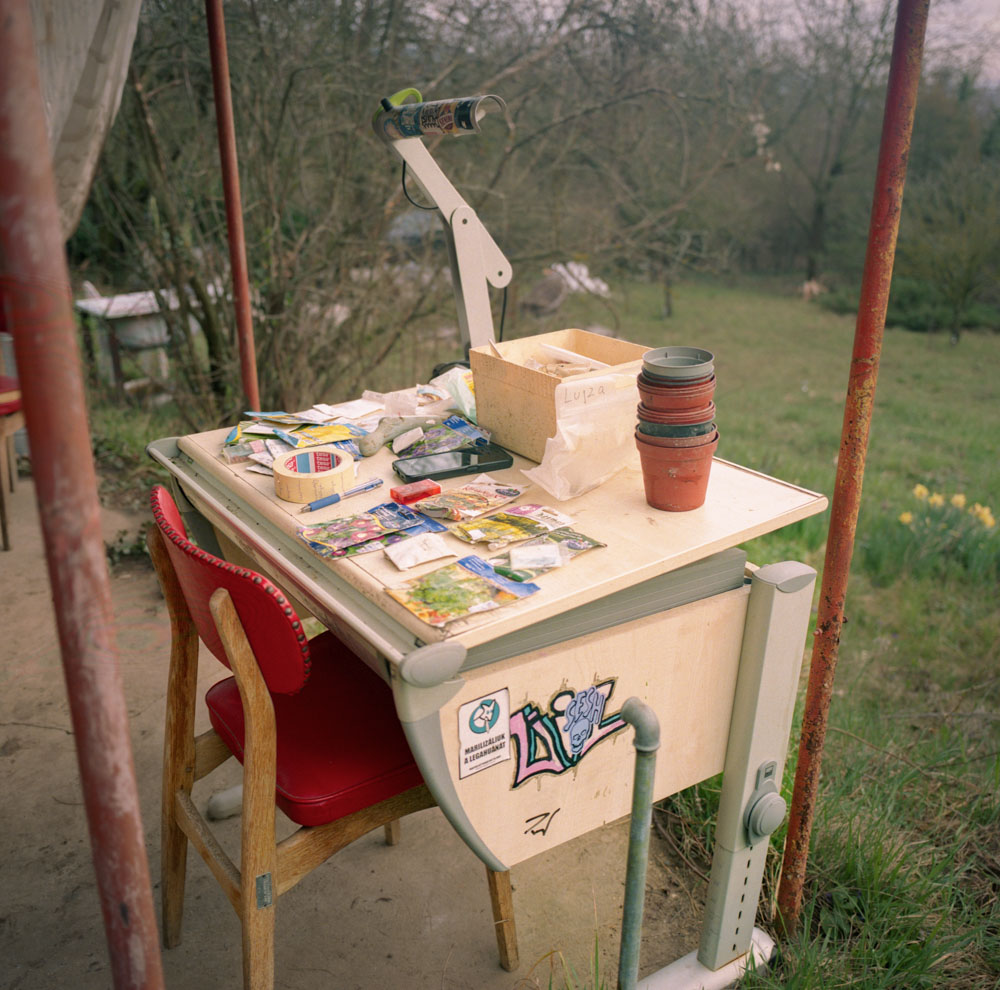
©Erika Nina Suárez, Seed Planting Desk, 2025
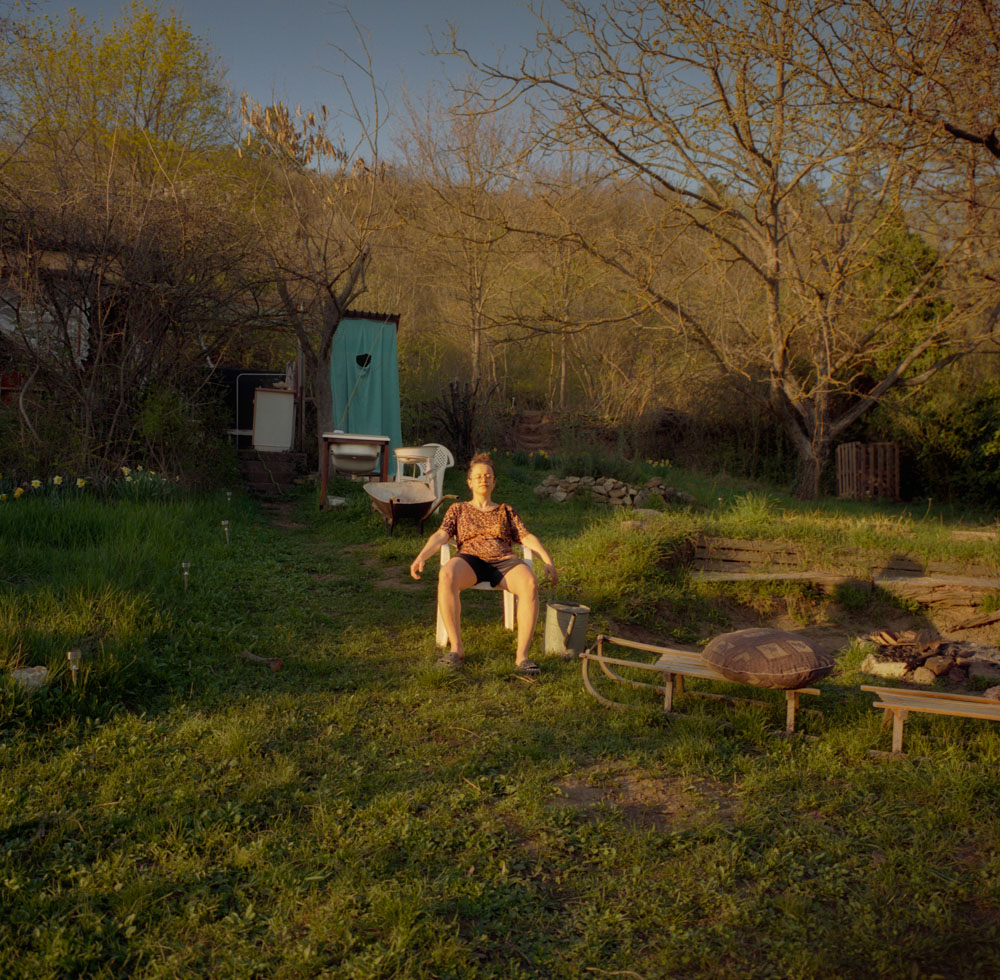
©Erika Nina Suárez, At The End of The Day, 2025
You have a lot of personal projects. Is there one more important to you than others? What sparks you to create? Do you always carry a camera with you?
Every new project feels like my baby when I first get into it. Right now, the project you’re seeing feels like the most important one, because it speaks to a possible future for young people. There’s so much uncertainty about what the future will look like, especially for our generation, and I think this work resonates because it touches on that curiosity and anxiety.
I’ve found my people here. My friends in Budapest have created this rare kind of community, one built on encouragement and a healthy sense of competition. We push each other to keep going and to go deeper. That kind of energy keeps me excited to create, and I hold onto it tightly. Being around people helps me figure out what I need to understand about myself. I need community.
And as much as making pictures is a huge part of my identity, I love experiencing things with my eyes and my body much more, so I leave my camera at home whenever I can.
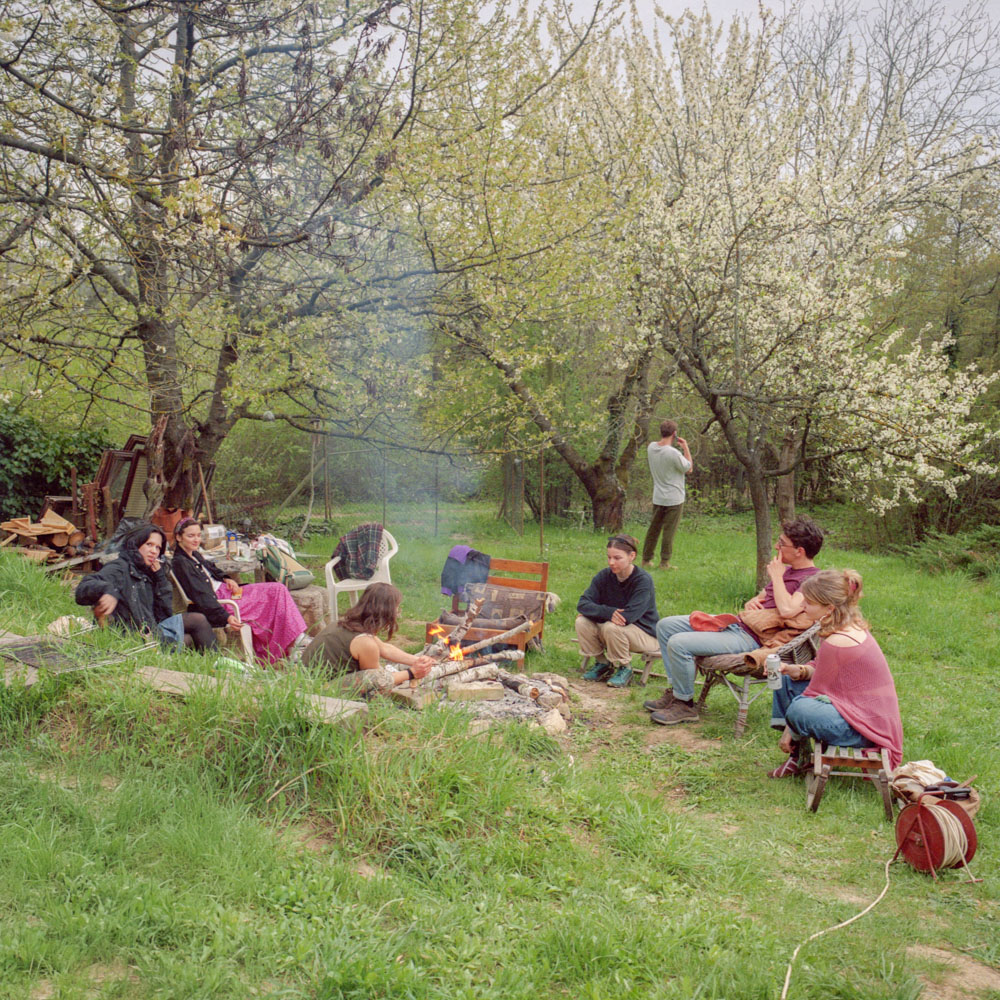
©Erika Nina Suárez, Spring Fire, 2025
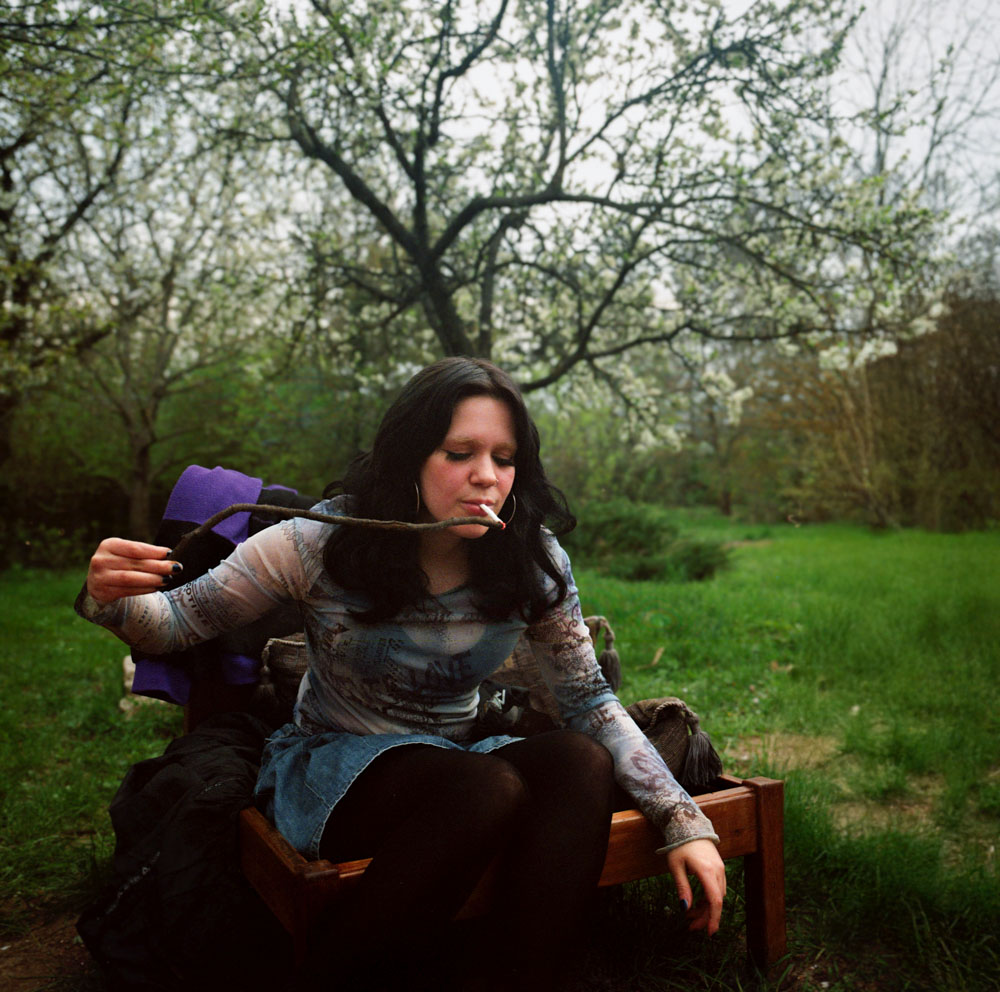
©Erika Nina Suárez, Petra, 2025
How did you get started shooting for major magazines and newspapers?
A lot of cold emailing. I’m talking like hundreds of emails to editors, most of which went unanswered. That’s really how it started. I still feel like I’m just getting started, especially now that I’m living in Budapest. It feels like I’m starting over from scratch again.
If I’m being honest, it’s been incredibly challenging to find consistent freelance work since finishing undergrad. The industry is hard to break into, and you have to get used to being ghosted or rejected more times than you can count. I’ve struggled a lot, but I’ve kept showing up, and I’m always open to new collaborations.
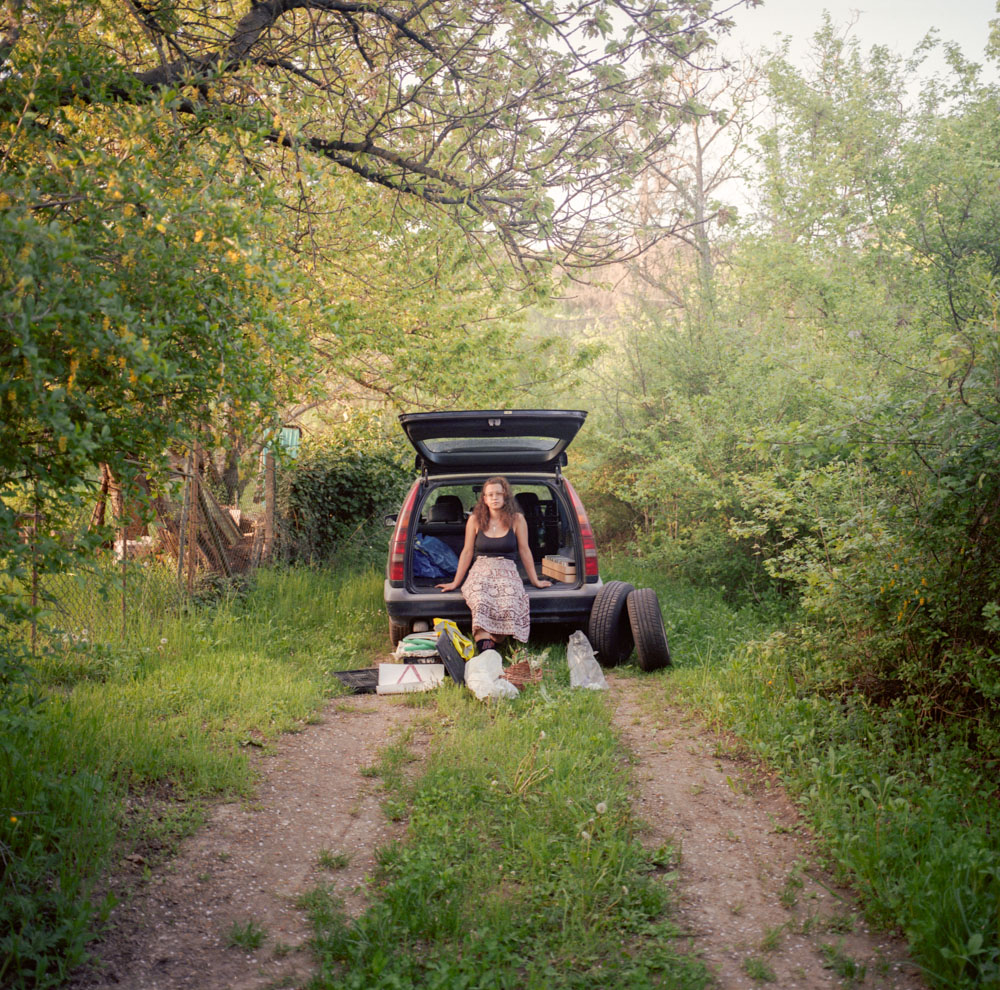
©Erika Nina Suárez, Transporting Herbs, 2025
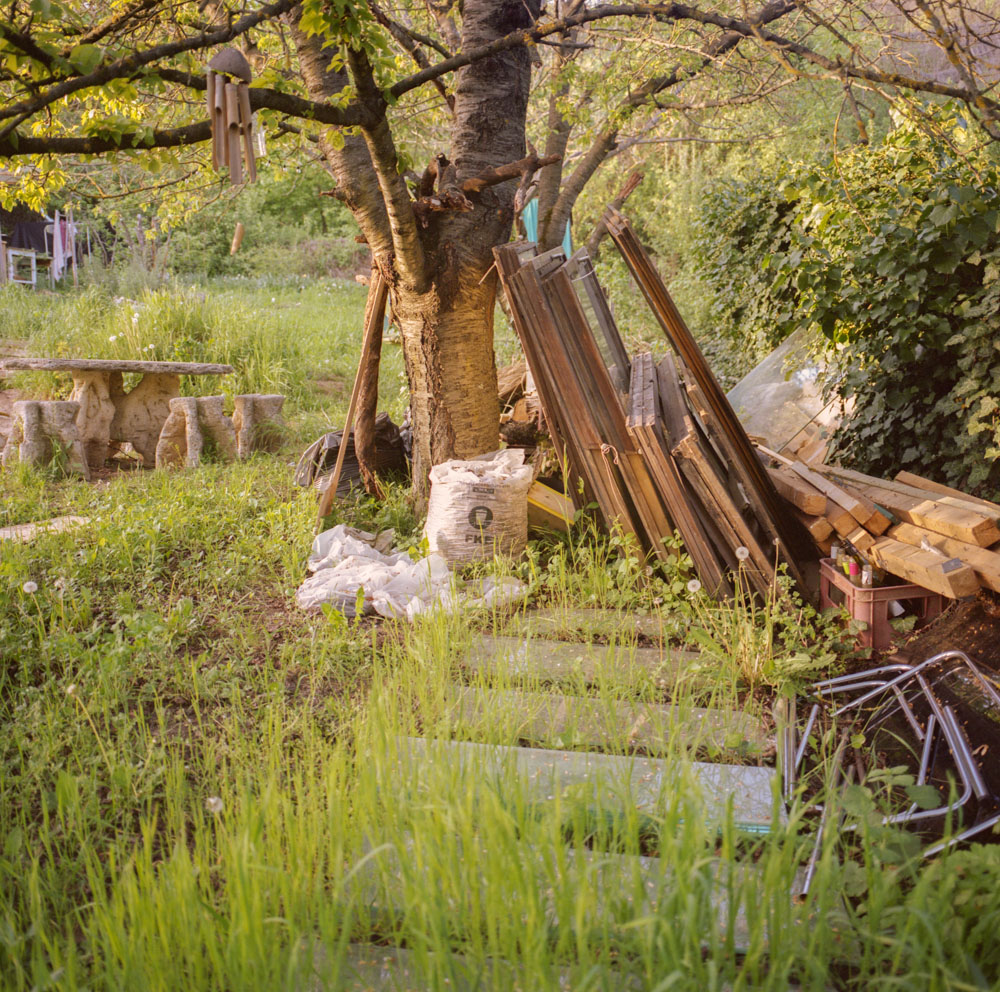
©Erika Nina Suárez, Future Windows, 2025
Anything else you’d like readers to know?
I love stories that let me nerd out about ecology, environmental issues, and portraiture. These are the themes I return to most often in my personal work, and they’re also the kinds of assignments that I enjoy the most.
So if you’re an editor reading this, congrats, you’ve made it to the end. I’m available, reliable, and only mildly haunted by unanswered emails. You can reach me at erikaninasuarez@gmail.com.
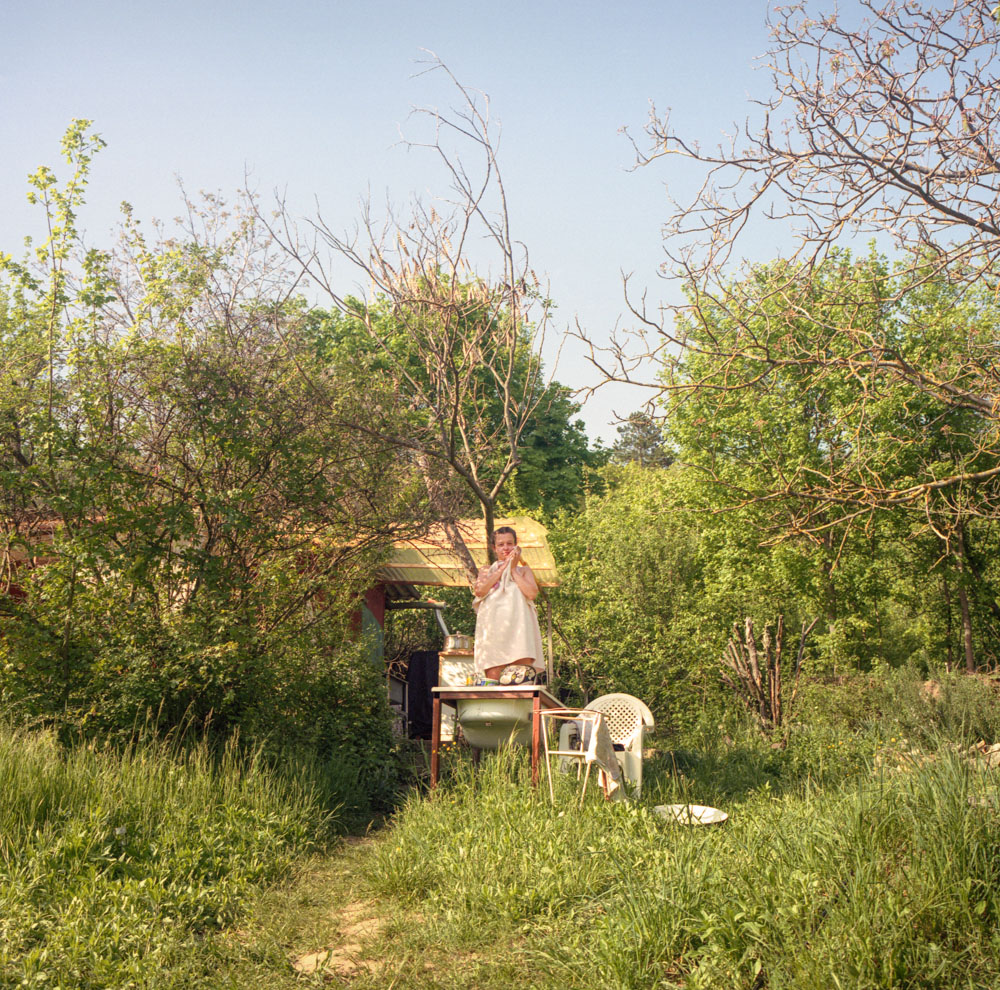
©Erika Nina Suárez, Finished Bathing, 2025

©Erika Nina Suárez, Herbs From Törökhegy, 2025
Erika Nina Suárez is a Hungarian-Nicaraguan artist currently living and working in Budapest, Hungary. She is also currently pursuing her MA in Photography at the Moholy-Nagy University of Art and Design. In her work, Erika focuses on the connections between people, land, and culture. She explores themes of community, tradition, and sustainability. Her practice blends documentary photography, storytelling, and portraiture.
Erika believes that building and nurturing lifelong relationships with the people she meets is fundamental to the outcome of her work. She sees this commitment as essential to uncovering the deeper truths within us and the cultural narratives she documents. Working with medium and large format photography for their depth and tactile presence, Erika explores layered themes of tradition, alternative communities, and youth culture.
Erika’s work has been commissioned and published by The New York Times, The Wall Street Journal, The Texas Tribune, The Texas Observer, and The Dallas Morning News. Her photographs have also been featured by Women Photograph, The Royal Photographic Society, The British Journal of Photography, Lensculture, and Lenscratch.
Instagran: @erikaninasuarez
Posts on Lenscratch may not be reproduced without the permission of the Lenscratch staff and the photographer.
Recommended
-

The 2025 Lenscratch Honorable Mention Winner: Erika Nina SuárezJuly 27th, 2025
-

The 2025 Lenscratch Honorable Mention Winner: Montenez LoweryJuly 26th, 2025
-

The 2025 Lenscratch Honorable Mention Winner: Ian Byers-GamberJuly 25th, 2025
-

The 2025 Lenscratch Honorable Mention Winner: Beihua GuoJuly 24th, 2025
-

The 2025 Lenscratch 3rd Place Student Prize Winner: Hannah SchneiderJuly 23rd, 2025