Linda Plaisted: Lost and Found
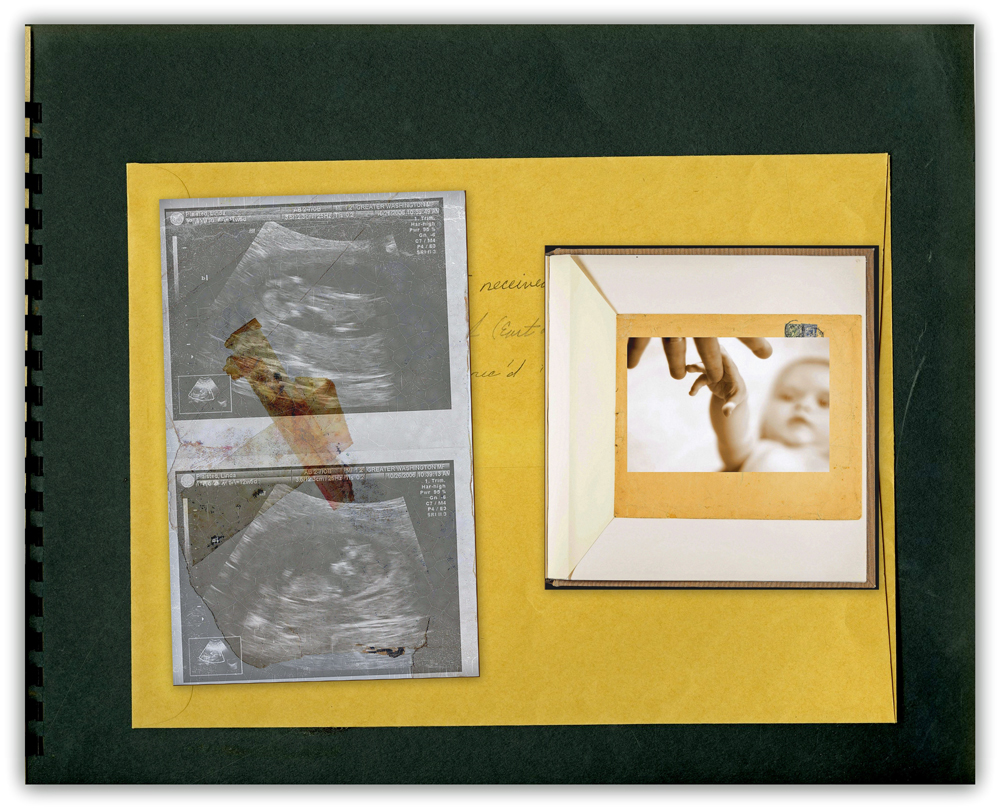
©Linda Plaisted, “40 Days and 40 Nights”, Diary entry- October 4, 2006 TWINS!!!!!! Yes indeed. It’s official. I’m 3 people in one! No wonder I’ve been so exhausted these past few weeks- so much more tired than when I was pregnant with Quinn. I am purely exhausted right now and I am SO ecstatic but also overwhelmed with racing thoughts about this unexpected development. SO very much to take in! Suddenly we have a family of FIVE! Suddenly this house is starting to seem too small…suddenly my car is not big enough to carry three kids. Three kids… From one to three, just like that. My official due date is May 10- Mother’s Day, but my doctor expects me to deliver early- around April 15, 2007. I’m over the moon, but still a bit gobsmacked… TWINS! PS- I could see them moving already! Baby A and Baby B! They were kicking and squirming and their little hearts were so strong and healthy! It’s all very encouraging and I am just so happy!
I cannot remember when I first came across Linda Plaisted’s work, but we have been insta-friends for at least the last few years. I love seeing what comes up on my feed, always a deep exploration of image and shape, bringing about thoughts of dreams. Linda has a very painterly approach to photography, experimenting with paper and ephemera in her world. I am always very drawn to this kind of approach where the photograph no longer represents truth but is used almost as an illustrative narrative. The work brings me back to my childhood in my parents’ art studio, where they would create mixed-media works with found objects, collage, and especially printmaking. The repetition of shape and design overlaid with pinpricks of light gives these images an otherworldly and ethereal quality. It’s always a small joy when I see new work by Linda.
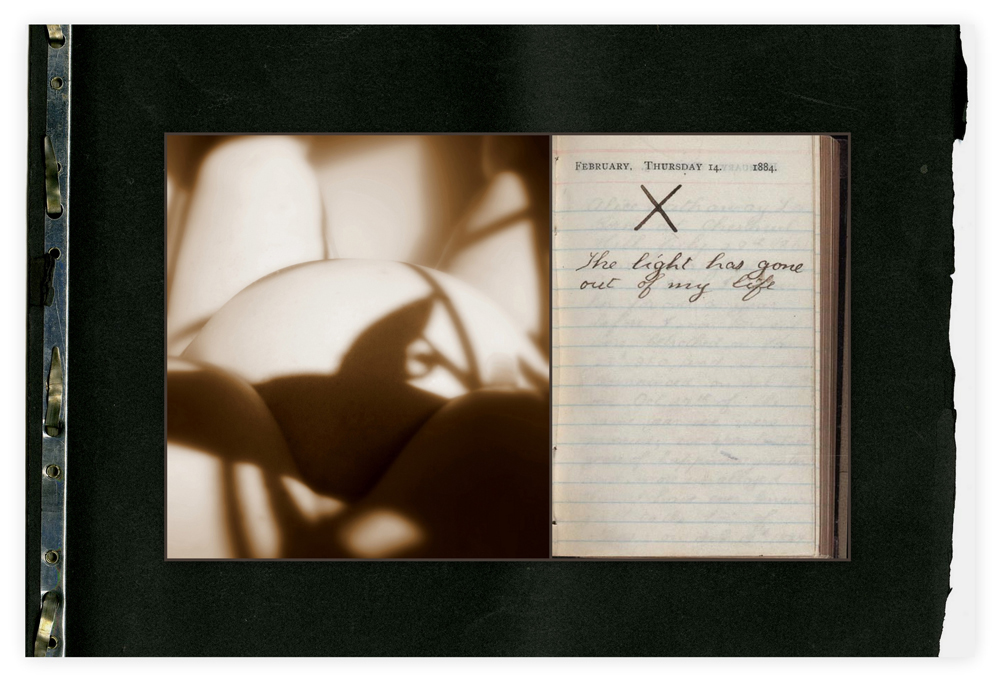
©Linda Plaisted, “December, Tuesday 5. 2006.” Diary Entry- The worst day of my lifetime. After the amnio, one of my babies is gone. No heartbeat. The horror of seeing her on the ultrasound screen- the stillness. The realization. All my amniotic fluid- gone. The other twin is fighting for her life but the prognosis is bleak. A real chance I’m going to die here in the hospital, completely immobilized. Where is hope? –That day I lost one of my twin daughters as a result of amniocentesis at 6 months gestation. The risk of “miscarriage” during amnio is less than 1%- or 1 in 1,000-43,000 procedures. The chances are higher if the mother is carrying twins. Never ever again tell me “the odds.” Never again say to me the word miscarriage. I carried those babies every day for 190 days before that moment with a mother’s fierce love and protection. A needle punctured my child. A needle punctured my entire life. My reason for having amniocentesis was twofold- I was 40 years old with this pregnancy and the risk of birth defects was much higher. More importantly, three years earlier, my son was born with a rare genetic condition called Galactosemia that can be fatal if the newborn ingests breast milk at birth. My husband and I are both carriers for the mutation, so we were advised to test to keep the twins “safe.” I knew as soon as the fateful needle pierced my abdomen, that something was wrong, but my innate mother’s instinct was pushed aside and dismissed by the male doctor. My entire body went cold as ice while I was on the table. There was a plummeting sensation. I got very shaky and nauseated. Everything felt entirely wrong- like my spirit/her spirit literally left my body and I could feel it being wrenched away. I was sent home as if nothing had happened. Later that night, I lost all the amniotic fluid for both babies. An emergency visit to my OB detected only one faint heartbeat. I was in a state of profound shock. The chances of any of the three of us surviving were bleak. My womb was likely to go septic and toxins spread throughout my system. Over the next week I lay in bed, waiting for a return visit from death. I cried until I burst every blood vessel in both of my eyes. My only will to live was to save my remaining daughter. I did nothing but drink gallon upon gallon of water to try and replenish amniotic fluid. I spent the next four months on strict bedrest, leaving the house only to visit a high risk pregnancy specialist. *The diary page image used in this piece is from The Library of Congress, marking the day the wife of President Theodore Roosevelt died during childbirth on Valentines Day, 1884. Alice was only 22 years old. Women’s reproductive lives are fraught with profound peril, which is why bodily autonomy is an inalienable human right.
Linda Plaisted is an award-winning American multi-disciplinary artist whose creative practices include photography, collage, painting and encaustic. Her work has been exhibited extensively across the United States and abroad. She has illustrated book and magazine covers for major publishers and contributed to publications such as Lenscratch, Shots Magazine and Artdoc Magazine. She is a 2025 Photolucida Critical Mass Top 50 Finalist, 2024 and 2023 Photolucida Critical Mass Finalist, and a Julia Margaret Cameron Award Winner.
Follow Linda on Instagram: @themanymuses
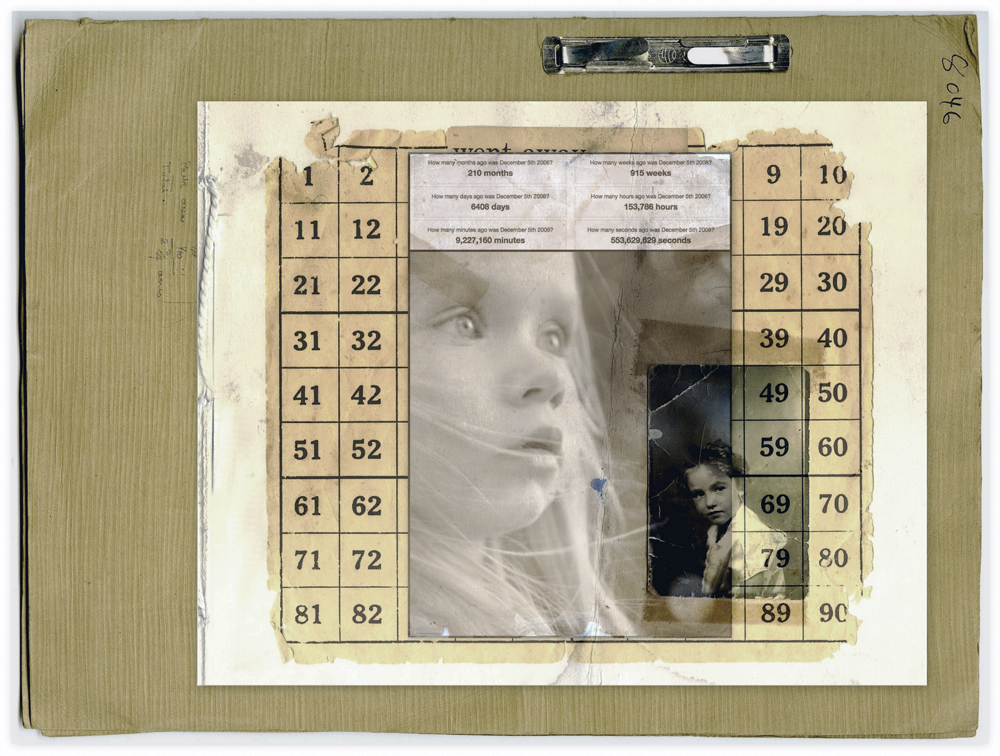
©Linda Plaisted, “Book of Days,” After the amnio went so horribly wrong in December, I did nothing but fight to keep the two of us alive. The hours and days since her death turned into weeks. Though complete bed rest was ordered, I was simultaneously expected to attend constant doctor visits, exhausting tests and incessant dehumanizing procedures. I did not sleep, I did not eat, I did not speak. I couldn’t even cry anymore. There was no time left for tears. I still had a 2 & 1/2 year old son who needed his mother. Compounding the tragedy, I wasn’t even allowed to pick him up because of the tenuous fragility of the remaining baby, and he wasn’t even allowed to sit on my lap and be held. My heart was broken in a thousand different ways and my soul was a purple bruise. It was Christmas Time, “the most wonderful time of the year,” yet there was no joy to the world.
Lost and Found
Approaching my work as both artist and historian, I use my unique visionary practices to champion women and the natural world, both now endangered species. Layering my original photography with found photos and collected ephemera, I create photographic mixed media pieces with translucent veils of narrative; layers of time and memory bleeding through one another, seeking a deeper truth.
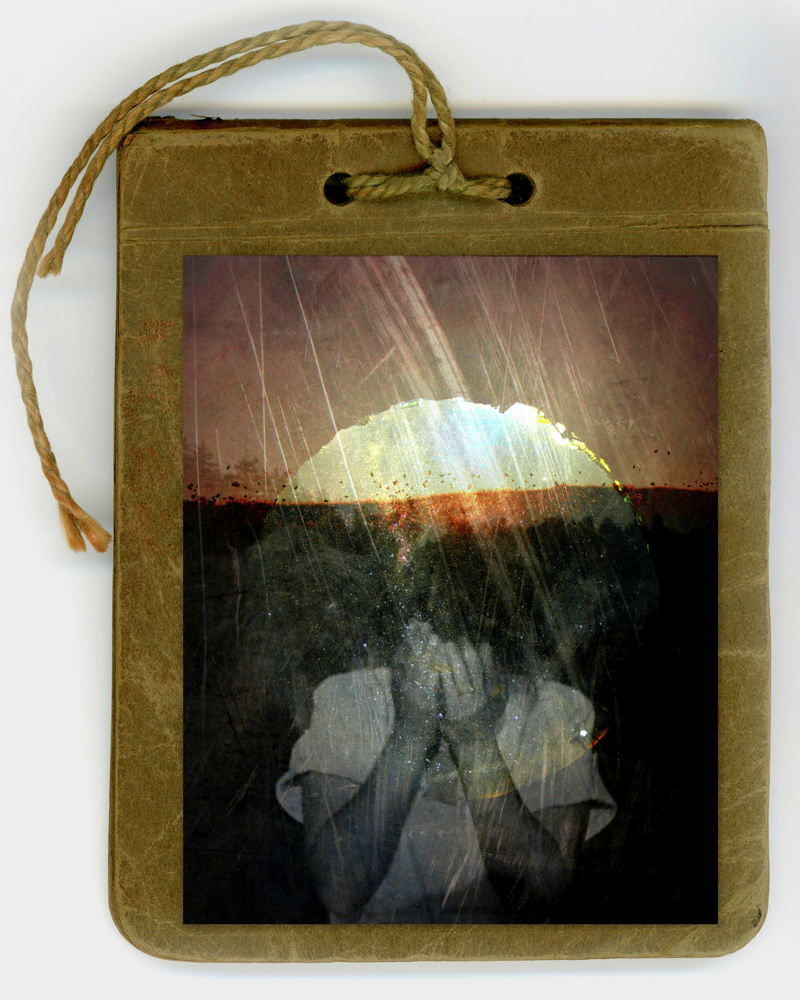
©Linda Plaisted, “Hanging On”, Wintering By Sylvia Plath They can only carry their dead. The bees are all women, Maids and the long royal lady. They have got rid of the men, The blunt, clumsy stumblers, the boors. Winter is for women —- The woman, still at her knitting, At the cradle of Spanish walnut, Her body a bulb in the cold and too dumb to think. Will the hive survive, will the gladiolas Succeed in banking their fires To enter another year? What will they taste of- the Christmas roses? The bees are flying. They taste the spring.
Epiphany Knedler: How did your project come about?
Linda Plaisted: Almost twenty years ago, I went through a traumatic pregnancy, suffering the loss of one of my twin daughters at six months gestation after a necessary amniocentesis procedure went horribly wrong. Fighting to keep myself and my remaining baby alive, then later giving birth to both twins- one living and one not, was a harrowing experience that left a deep psychic wound. As a result of this devastating loss, I spent the next decade and a half, functionally depressed and severed from my true creative expression. My series Lost and Found unveils the aftermath of profound loss on the mother and daughter who lived, and my experience of finding the courage to dive down into the underworld to retrieve my lost creative soul and bring it back to the land of the living. The catalyst for these old wounds breaking open again was the overwhelming cloud of collective grief hanging over society, being constantly bombarded by heartbreaking images of wars, political chaos and natural disasters. To process my own grief and overwhelm in the face of events past and present, I used photographs of my daughter layered with paper collage elements to reflect the ephemeral nature of memory and the fragility of life. After all, paper ultrasound printouts are all that I have left of the child I never got to hold. While each piece in the series came forth weeping, I now re-emerged from the underworld after that cathartic effort, into the light of my full creative power, having alchemized the darkness of grief into light.
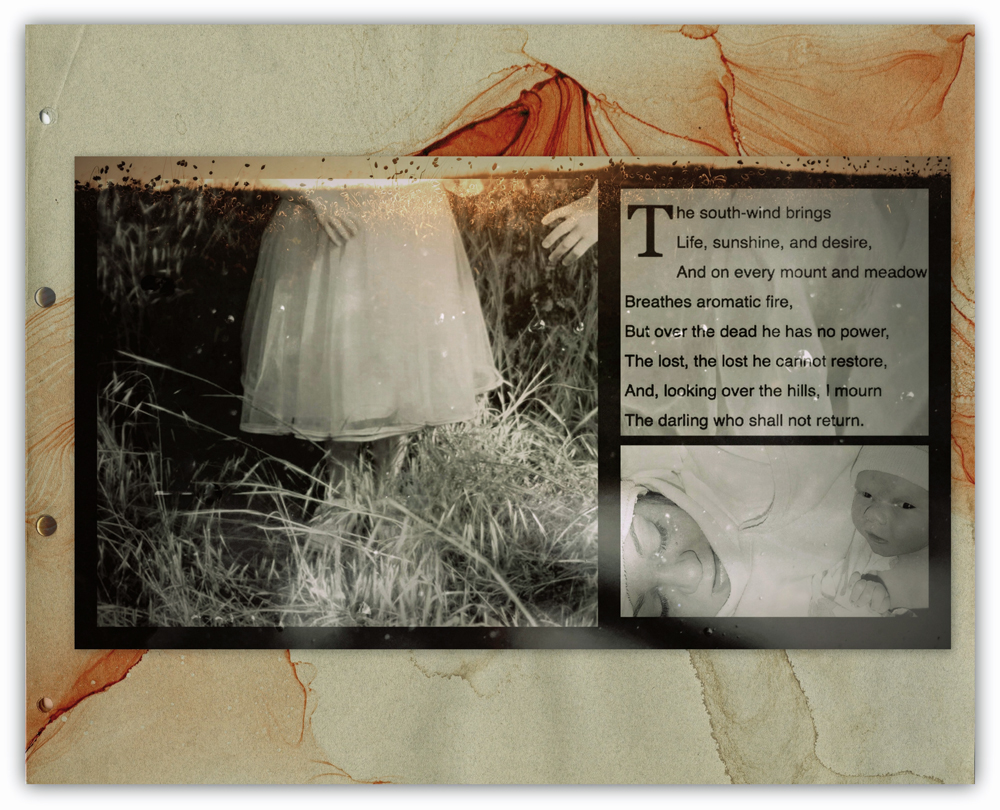
©Linda Plaisted, “Threnody,” “Threnody” is a poem by Ralph Waldo Emerson in which he mourns the death of his young son. My daughter who lived is named in his honor, since I spent the long days of that endless winter confined to bed reading; searching the pages for hope. This poem is a deeply personal expression of grief, as Emerson grapples with the profound sense of loss and sorrow that comes with the death of a child. Throughout the poem, he reflects on the fragility and impermanence of human life, and offers a powerful meditation on the nature of death and the human spirit. While “Threnody” is a deeply emotional work, it is also a testament to the power of art and language to give shape and meaning to the most profound and difficult aspects of human experience.
EK: Is there a specific image that is your favorite or particularly meaningful to this series?
LP: I think the image that has come to hold the most meaning to me is the last piece in the series, “Underworld.” It speaks to the enduring and inextinguishable desire of the human spirit to heal and triumph over adversity, even if it means turning to face our deepest fears; to piece together and re-integrate the fragments of our souls scattered by trauma and tragedy. Re-opening these old wounds so they could be healed was the most painful yet most courageous thing I have ever done.
Two great philosophers said it best:
“The wound is the place where the Light enters you.”― Rumi
“There is a crack, a crack in everything. That’s how the light gets in.” ―Leonard Cohen
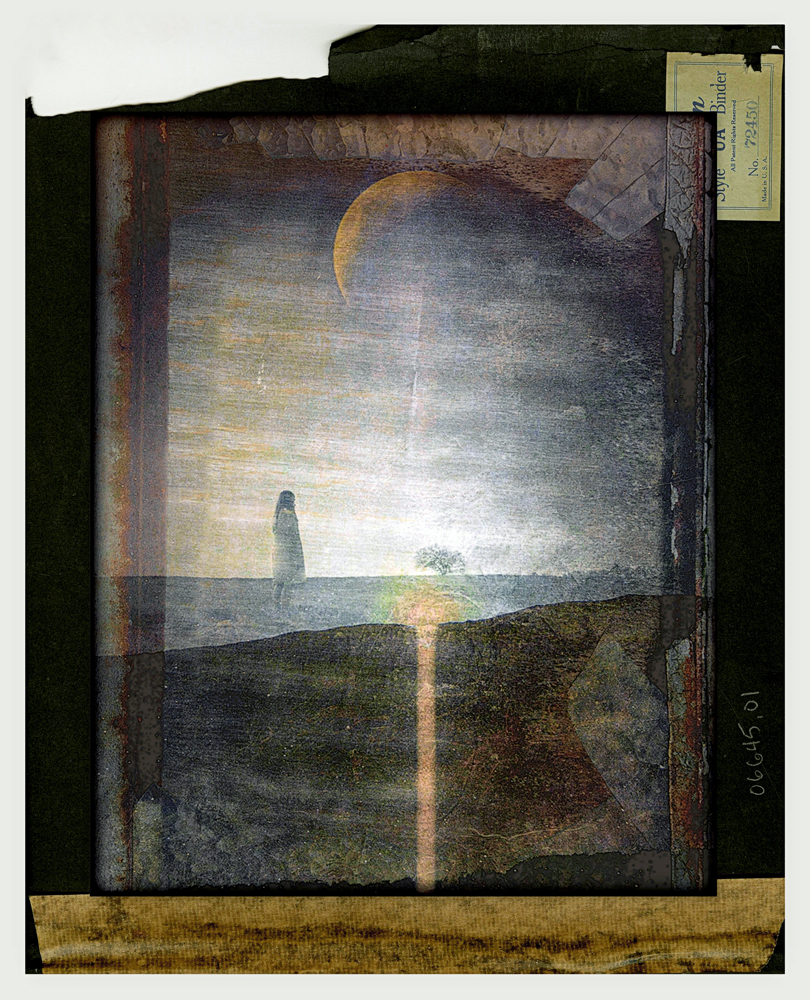
©Linda Plaisted, “Last Rite of Passage”, There is no sacred rite for the neverborn. There is no funeral service. No memorial, nor eulogy. No rite of passage from this world to the next. There is no grave. There are no sympathy cards, no flowers, no condolences. There is only the gaping hole in the world love was meant to inhabit.
EK: Can you tell us about your artistic practice?
LP: After all those years estranged from my creativity it took a massive amount of inner work to break me out of that megalithic creative block. As we speak, I am only a little over three years out of the frozen state I was in for so long. Here I am in my 50’s, a re-emerging artist- having to start all over again to rebuild my work from square one. After so many lost years, there is no time to lose. I now use my creative work as a daily therapeutic practice to process what is happening in my inner world and as cultural commentary on the world at large. Dr. Edith Eger, a Holocaust survivor and psychologist, believes that the opposite of depression is expression, suggesting that holding emotions inside can lead to illness, while expressing them can promote healing. My creative expression heals me daily and hopefully inspires others as well. Don’t ever give up on yourself. It’s never too late to be who you were meant to be.
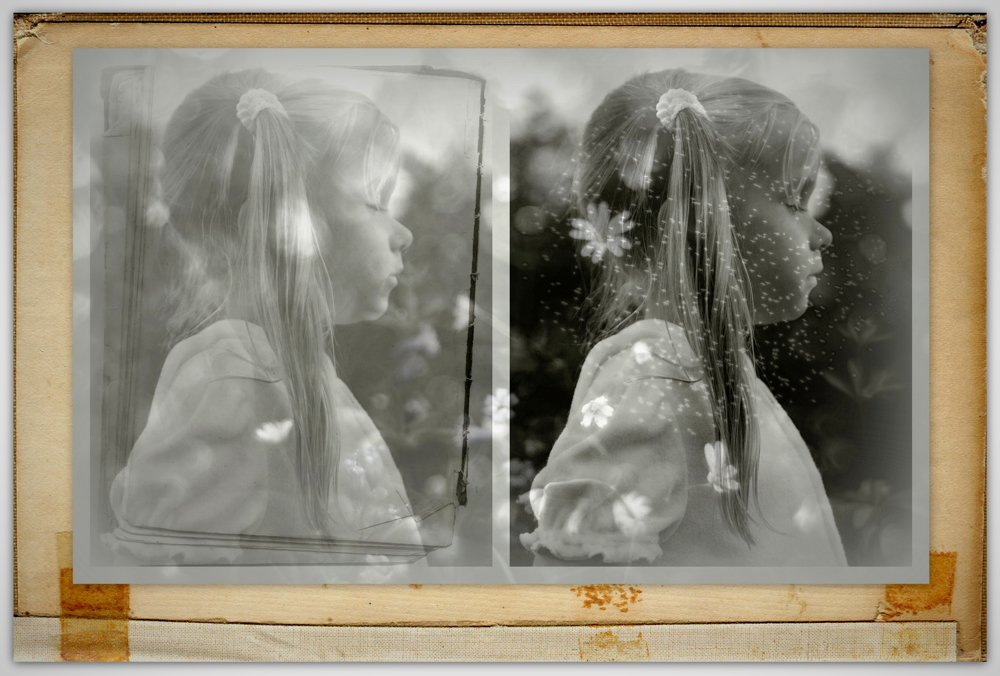
©Linda Plaisted, “To Save The Only Life That You Could Save”, Every choice has consequences. But they were my choices to make. My decision not to have children when I was younger, my decision to have my son in my mid thirties, and my twins at age 40. I was advised to have an amniocentesis due to my age and as a carrier of a potentially fatal metabolic disorder. There were life or death consequences no matter my choice. I decided not to look upon my daughter’s body after birth, instead to focus on my living baby. I chose to make April 23 a birthday for my daughter, not a funeral for the dead. I chose to go on living after she died to save the life of her sister. In the end, I had to save the only life that I could save — my own. You knew what you had to do, though the wind pried with its stiff fi ngers at the very foundations, though their melancholy was terrible. It was already late enough, and a wild night, and the road full of fallen branches and stones. But little by little, as you left their voice behind, the stars began to burn through the sheets of clouds, and there was a new voice which you slowly recognized as your own, that kept you company as you strode deeper and deeper into the world, determined to do the only thing you could do — determined to save the only life that you could save. -Mary Oliver
EK: What’s next for you?
LP: I am now working on part four of my long-term “Lost” body of work with a series called The Lost Landscapes – a collaboration with my younger self using photographs I shot 20 years ago layered with new photography and collected collage ephemera. In this new work, I go looking to find the scattered shards of myself still lost in these other dimensions, hoping to repair and integrate the past with the present. There are no maps to these lost lands, but I make the journey so that I can be whole again to face the next chapter of my life at this critical time in history.
This new series follows work I did in In 2023 called The Lost Years about my daughter losing her way during the pandemic. This was followed by Lost in Space in 2024 which explored post-pandemic isolation. In 2024 I created the series we are discussing in this interview- “Lost and Found” about the death of my twin daughter and the resurrection of my lost creativity. This project was a Photolucida Critical Mass Top 200 finalist in 2024.
My plans are to continue to make work that is real, authentic and vulnerable in a world increasingly more fake, artificial and sterile. To that end, I will be incorporating even more hands-on, hand-made elements such as analog collage, assemblage and mixed media work that synthesizes my background in fine art and photography.
It’s a profound moment to be an artist in the world at this time in history. I feel compelled to make art for these times, and yet my two main subjects- Women and Nature are on the endangered species list. The very act of creating work now makes me an accidental dissident. Hell, just being alive and awake as a woman in this world is a subversive act. I will go on telling the truth about my life. I will go on telling the truth about the world. I will go on.
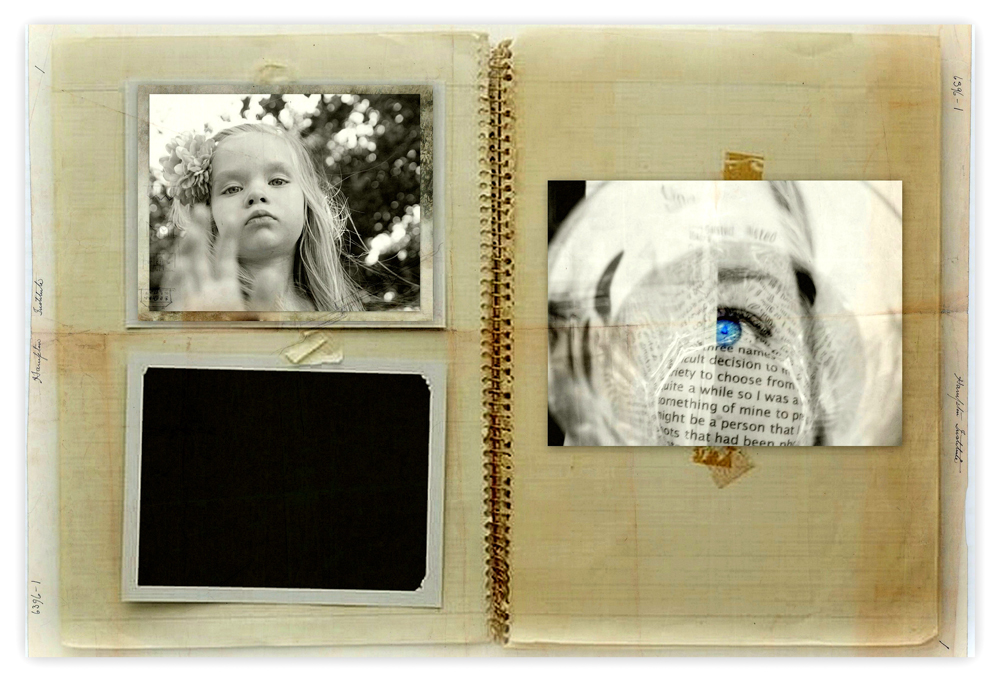
©Linda Plaisted, “The Lost Chapters”, I have no pictures of my daughter to show you. I never even got to see her, except on an ultrasound screen. There is no baby book to celebrate her milestones. No footprint, no lock of hair. Only this hole in my heart where she should be. Emerson, too, was born with a hole in her heart. Known medically as a patent ductus arteriosus, her heart did not develop properly due to the trauma of the amniocentesis event and death of her twin, so the tiny hole that should have closed at birth never did. Years went by and she developed other congenital defects from that fateful moment, including countless broken bones, chronic illnesses and developmental delays. The needle and the damage done… My daughter lost a lifetime with her soul companion and I lost all those years expressing the best part of my own soul — my creativity.
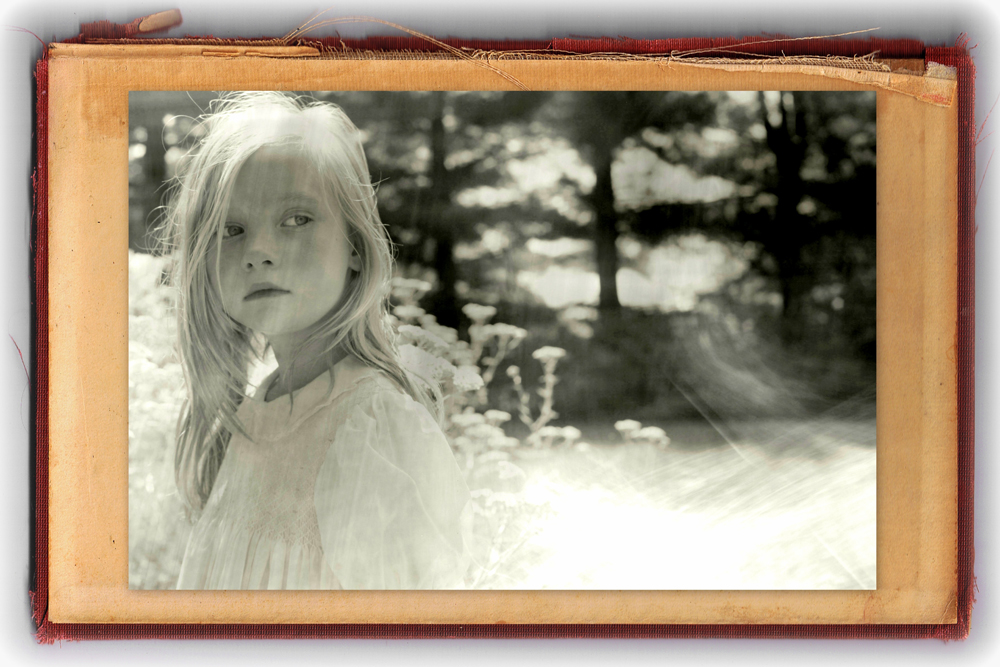
©Linda Plaisted, “Visionary”, We told Emerson about her sister when she was old enough to understand. She had many questions and also many times when she told us that Rowan was there with her. Throughout her childhood, it seemed that she was always searching for her other half everywhere she went. In preschool she befriended a little girl who looked almost exactly like her and even had a similar name. For years, she came home with other little substitutes, but no one could ever take the place of her lost twin.
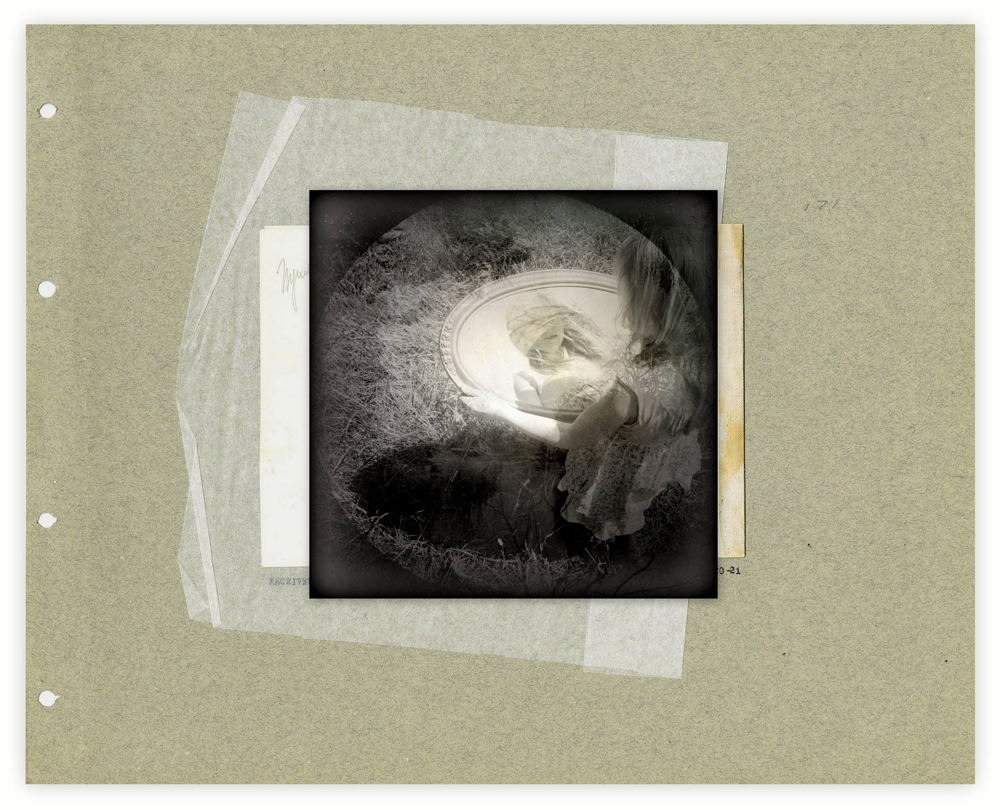
©Linda Plaisted,”The Girl Who Lived”, In the Harry Potter series, Harry is famously known as “The Boy Who Lived” because he was the only one to survive the Killing Curse, an unblockable spell, attempted by Lord Voldemort when Harry was a baby. He lost both parents and was himself visibly scarred for the rest of his life, but what did not kill him made him stronger. My Emerson is The Girl Who Lived. Oddly, it seems that title could apply to me too. Our wounds may not be as obvious as a zigzag scar across the forehead, but we have not escaped untouched by fate; both its curses and its gifts.
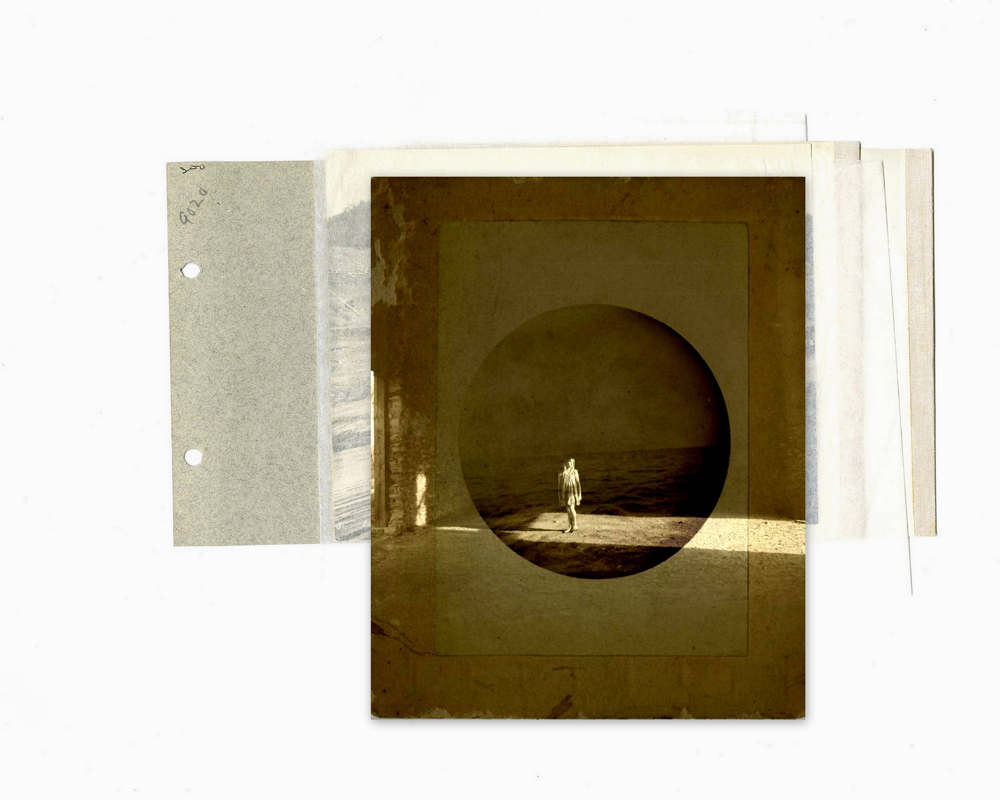
©Linda Plaisted, “Lost at Sea”, It took other powerful griefs to break me open from those years of suspended animation. It has only been since embarking on a heroine’s journey of healing that I have allowed myself to confront this long-repressed, ravaging ghost that has haunted us. Catalyzed by society’s overwhelming current zeitgeist of collective grief and despair, I have worked to incorporate the shadow aspect into my artistic practice. Unfelt feelings and ungrieved traumas are responsible for much of the dis-ease and dysfunction in our world. We are so often set adrift to face the world alone. It’s time to turn and face our past hurts so that we are better able to love ourselves and others, and to handle what the future brings; both the sorrows and the joys. In this work, I used photographs of my daughter layered with paper collage elements and newly-photographed image fragments to refl ect the ephemeral nature of our memories and the very fragility of our bodies and souls. Paper is so easily destroyed by fi re, fl ood and the ravages of time, yet ironically the repository of our most treasured holdings- records of birth and death, family photographs, scrapbooks and cherished letters. Like us, these fragile papers can be treasured for future generations or swept away in an instant.
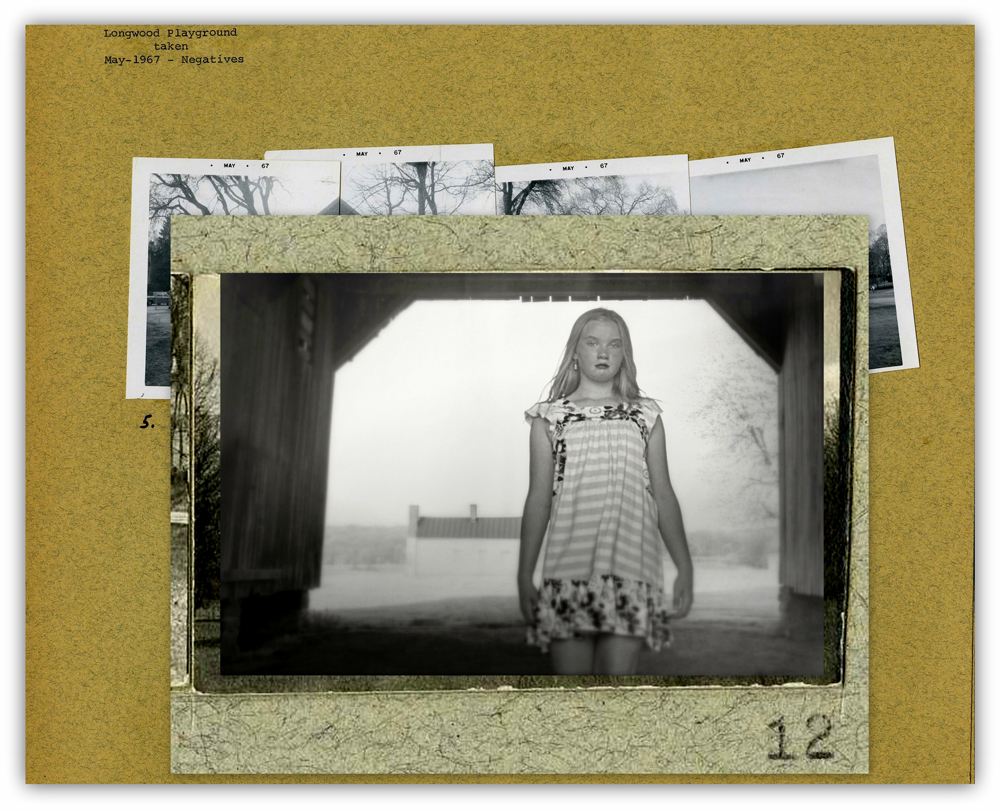
©Linda Plaisted, “The Last Day of Girlhood”, In this series, Lost and Found, I am re-interpreting photographs from my archives because, just as the shoemaker’s children have no shoes, my daughter does not like being photographed- by me or anyone else. This is a shame because she has an innate aesthetic sense for how to embody the moment in front of a camera. She is an old soul who has already experienced more loss and overcome more adversity than many twice her age and that imprint lingers. Sensitive like her mother, and fi erce, she will look you in the eye and demand answers. Her healing journey will be lifelong and I, born 40 years before her, will only be here to hold her hand for a brief part of the way. Emerson turns 18 and graduates from high school next month, so this is a full circle moment for both of us. My goal is to convince her to do a milestone photoshoot with me once again to mark this rite of passage, so that we can move on into the future together, come what may.
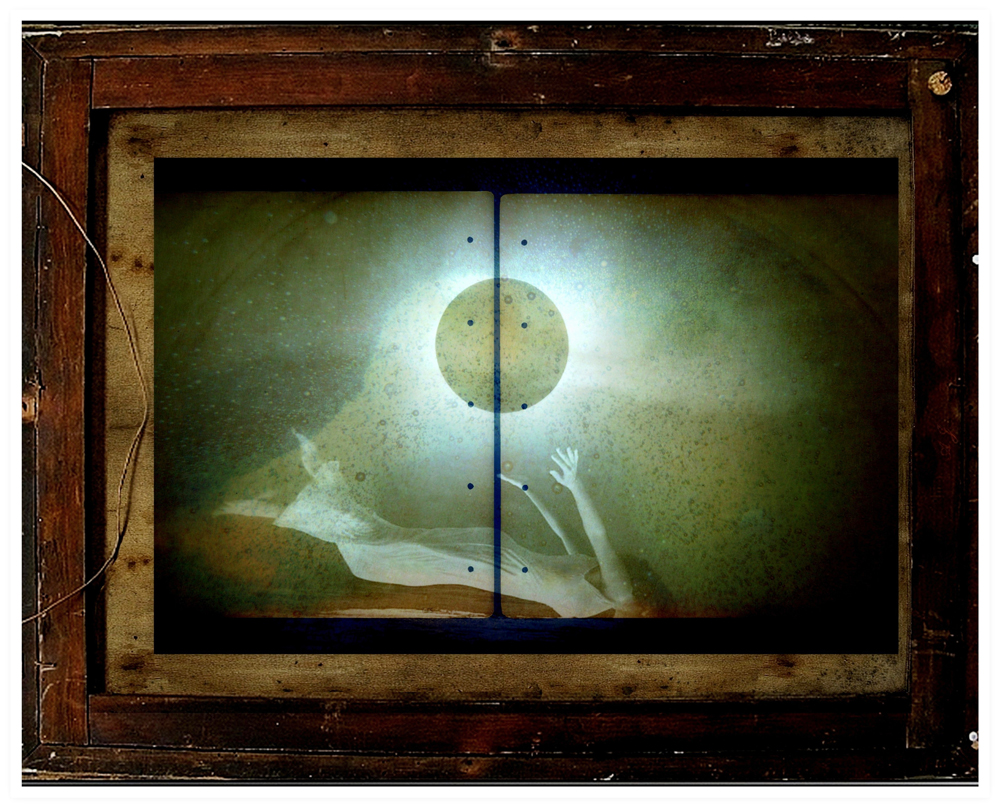
©Linda Plaisted, “Underworld”, All those years ago, the trauma of grief came down like a guillotine, completely severing my connection to self expression. Years passed- decades- and I thought that part of me was dead and gone forever. In the Autumn of 2022, when my firstborn son left home for college, I went back to school too. I began working on excavating my lost self, embodying my grief and working through all the years of repressed emotions. The months that followed were intensive dark work; haunting the underworld searching for my lost self. I practiced meditation, journaling, water exercise therapy, reading, research, time spent in nature, meetings, tearful zoom calls, finding my voice through singing, and somatic movement work to root out all the stored pain in my body. Slowly, I started to restore the broken connection to myself. I began taking tentative creative baby steps again, creating a new body of work for the first time in years- a series of images emerged about women standing up and stepping back into their power. At the beginning of 2023, I half-heartedly entered this work in a local show and was accepted. Then I entered a few regional shows- yes and yes. Then I created an unflinching new series about racial injustice and throughout 2023 I heard yes after yes from galleries and publications around the country. That series became a Photolucida Critical Mass fi nalist in my fi rst year back to creating again- a powerful affi rmation that I was back on my path. New series emerged. I sent those out into the world too. Inevitable rejections came along with the affi rmations, but there was momentum. There still is. What once was lost, now is found. After so many years living underground, I now wake up every day thankful to be creating; grateful to have found my way back to myself and into the light.
Epiphany Knedler is an interdisciplinary artist + educator exploring the ways we engage with history. She graduated from the University of South Dakota with a BFA in Studio Art and a BA in Political Science and completed her MFA in Studio Art at East Carolina University. She is based in Aberdeen, South Dakota, serving as an Assistant Professor of Art and Coordinator of the Art Department at Northern State University, a Content Editor with LENSCRATCH, and the co-founder and curator of the art collective Midwest Nice Art. Her work has been exhibited in the New York Times, the Guardian, Vermont Center for Photography, Lenscratch, Dek Unu Arts, and awarded through Lensculture, the Lucie Foundation, F-Stop Magazine, and Photolucida Critical Mass.
Follow Epiphany on Instagram: @epiphanysk
Posts on Lenscratch may not be reproduced without the permission of the Lenscratch staff and the photographer.
Recommended
-

Donna Gordon: 2025 Denis Roussel Award WinnerMay 16th, 2026
-

Cozette Russell in Conversation With Douglas BreaultMay 14th, 2026
-
Photography Educator: Savannah DoddApril 25th, 2026
-

EARTH WEEK: Meghann Riepenhoff: State ShiftApril 20th, 2026
-

Valentina Murabito: La Donna del MareApril 15th, 2026