Hillerbrand+Magsamen: nothing is precious, everything is game
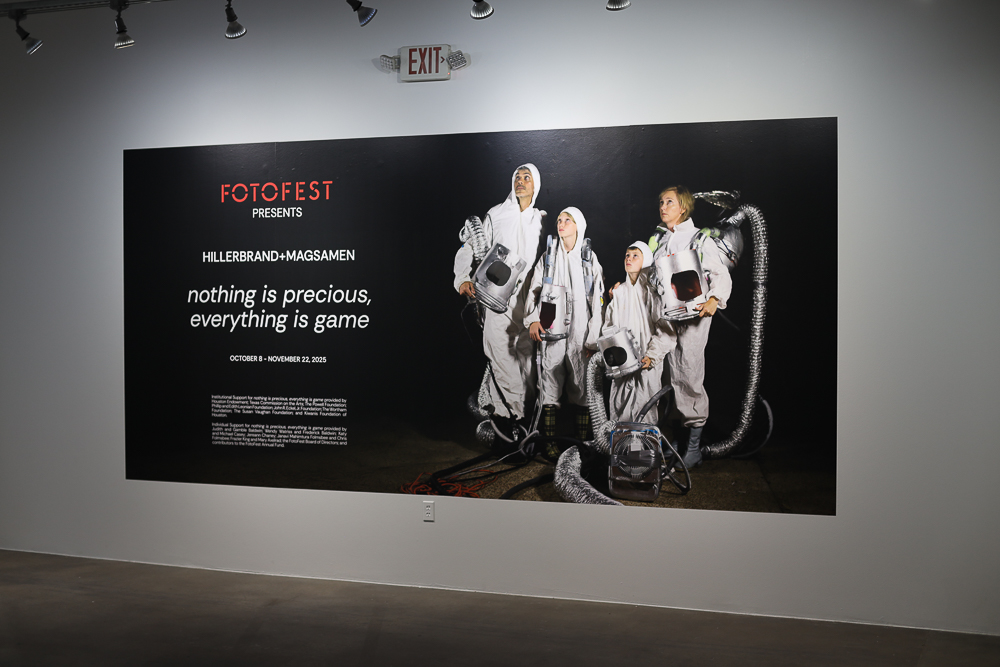
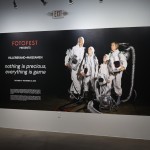
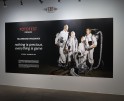
nothing is precious, everything is game, FotoFest, 2025. ©Hillerbrand+Magsamen
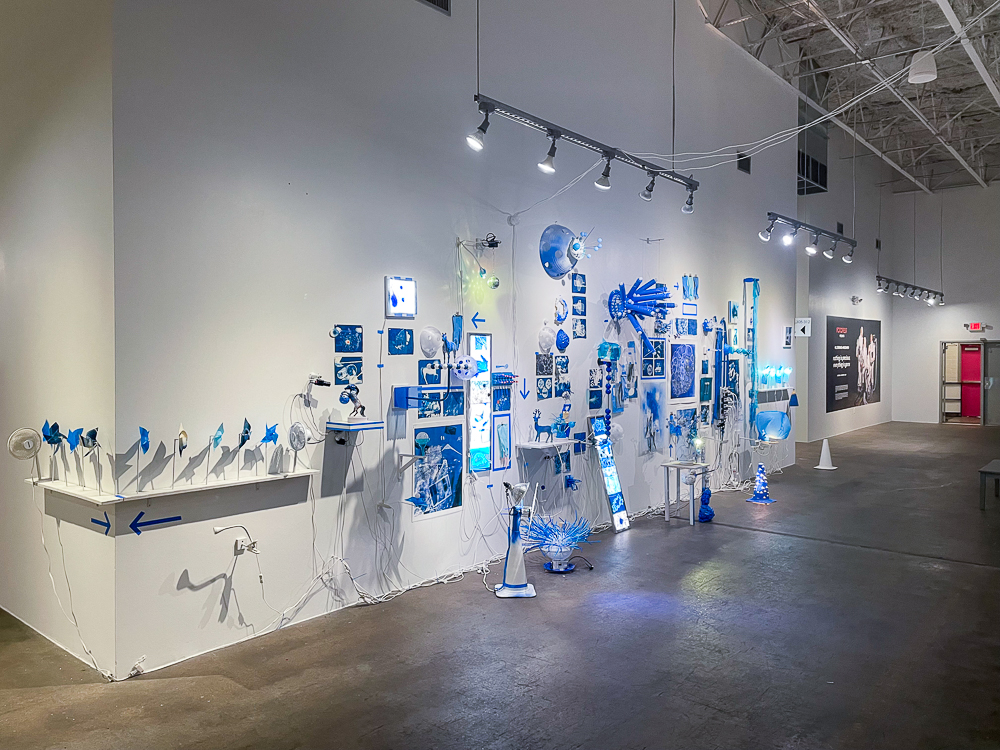
2. Baking Soda, Installation view nothing is precious, everything is game, FotoFest, 2025. ©Hillerbrand+Magsamen
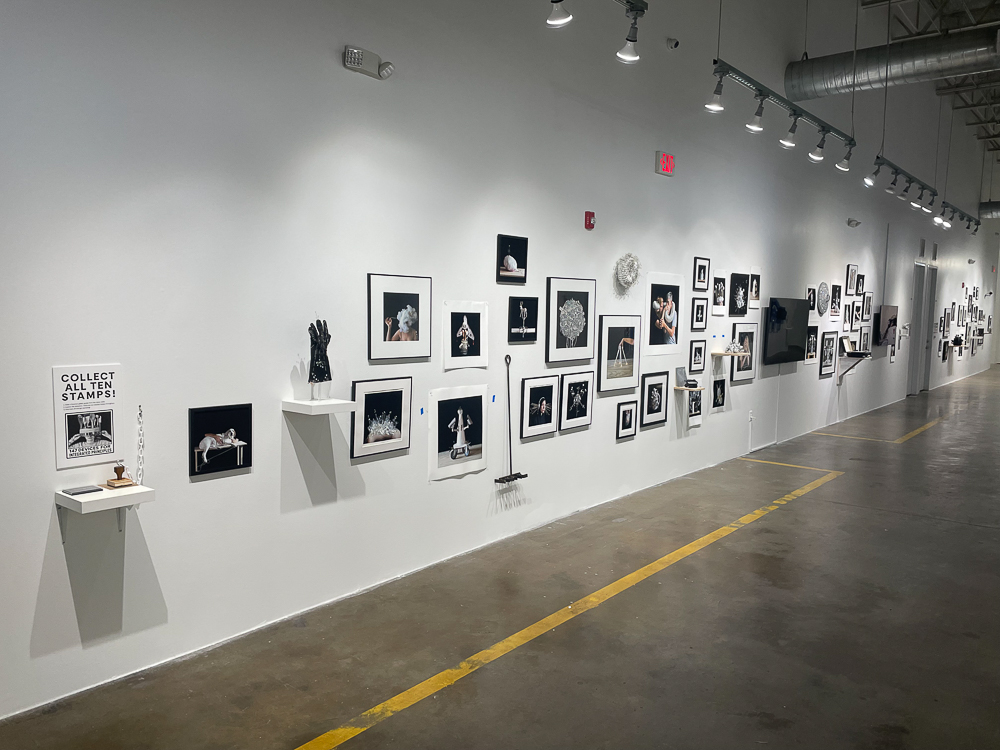
147 Devices for Integrated Principles, Installation view nothing is precious, everything is game, FotoFest, 2025. ©Hillerbrand+Magsamen
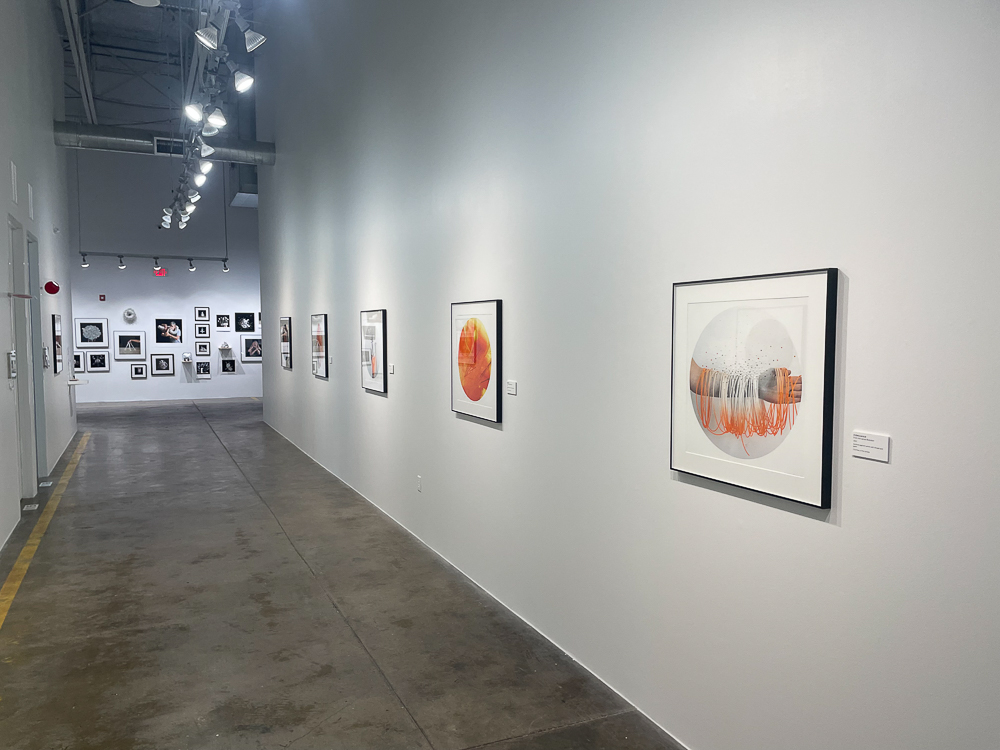
Re/Action, Installation view nothing is precious, everything is game, FotoFest, 2025. ©Hillerbrand+Magsamen
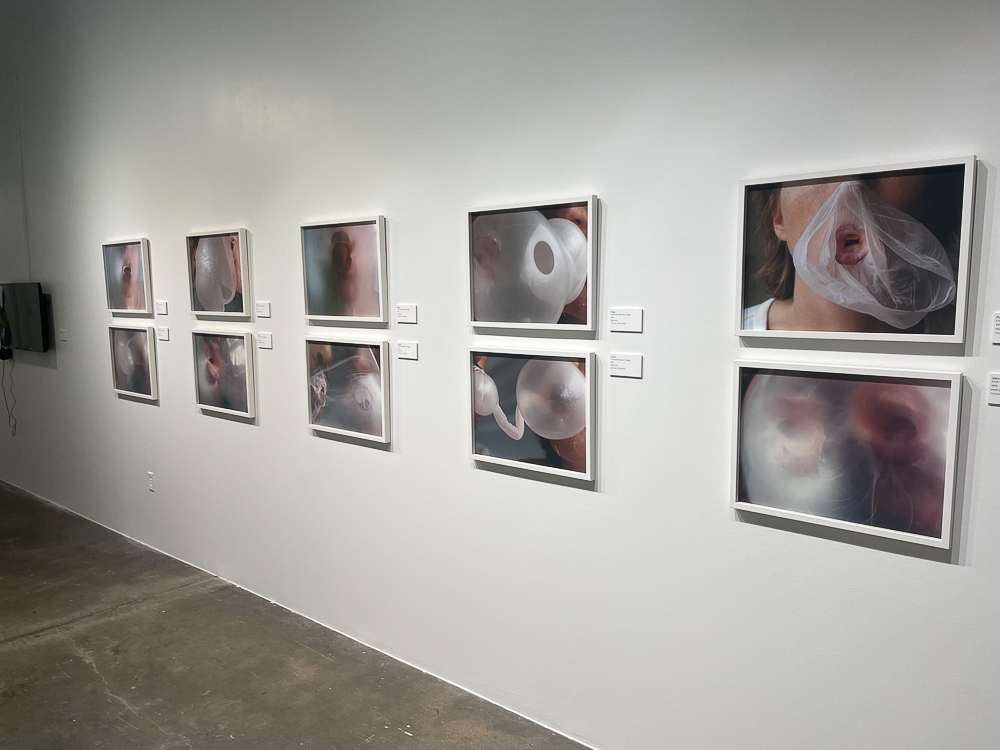
air-hunger, Installation view nothing is precious, everything is game, FotoFest, 2025. ©Hillerbrand+Magsamen
I remember the first time I was introduced to the creatively conceptual work of Stephan Hillerbrand and Mary Magsamen. They take the role of a parent and an artist and turned it on it’s head, creating work from what’s under their own roof with humor and intelligence, turning household items, family rituals, and domestic environments into profound reflections on art, life, and togetherness. Their creative practice embraces a playful and inclusive approach to artmaking, rejecting notions of elitist exclusivity in the art world. As a long time fan, I’m so happy to celebrate their work today and announce their first career survey hosted by Fotofest, nothing is precious, everything is game.
Today’s feature coincides with their 25-year retrospective, nothing is precious, everything is game, on view at FotoFest in Houston from October 8 – November 22, 2025. The exhibition surveys more than 140 works—photographs, videos, installations, and performances—that span the duo’s career. As part of the retrospective, they will also premiere their new live cinema performance, Mountains, created with playwright Kirk Lynn, at the Museum of Fine Arts, Houston on October 18, 2025.
Carried by this playful spirit, nothing is precious, everything is game unfolds through a collection of photographs, videos, sculptural objects, and performances spanning the artists’ career. Highlights include Air Hunger (2001), which explores intimacy and trust through the act of blowing and sharing chewing gum bubbles; House/Hold (2012), a series of staged family portraits reflecting on consumerism and suburban life; and Expand (2024), a project that transforms fragments of the artists’ own home into digitally processed images probing memory and transition.
nothing is precious, everything is game runs concurrently with an exhibition at George Bush Intercontinental Airport (IAH) titled 147 Devices for Integrated Principles, on view until January 2026. nothing is precious, everything is game and the IAH presentation are curated by Steven Evans and Madi Murphy.
For this special Lenscratch feature, their children, Luce and Emmett, have turned the tables—asking their parents a set of candid, funny, and tough questions about their practice, process, and life as artists. What follows is an interview shaped by family, curiosity, and a good dose of honesty.
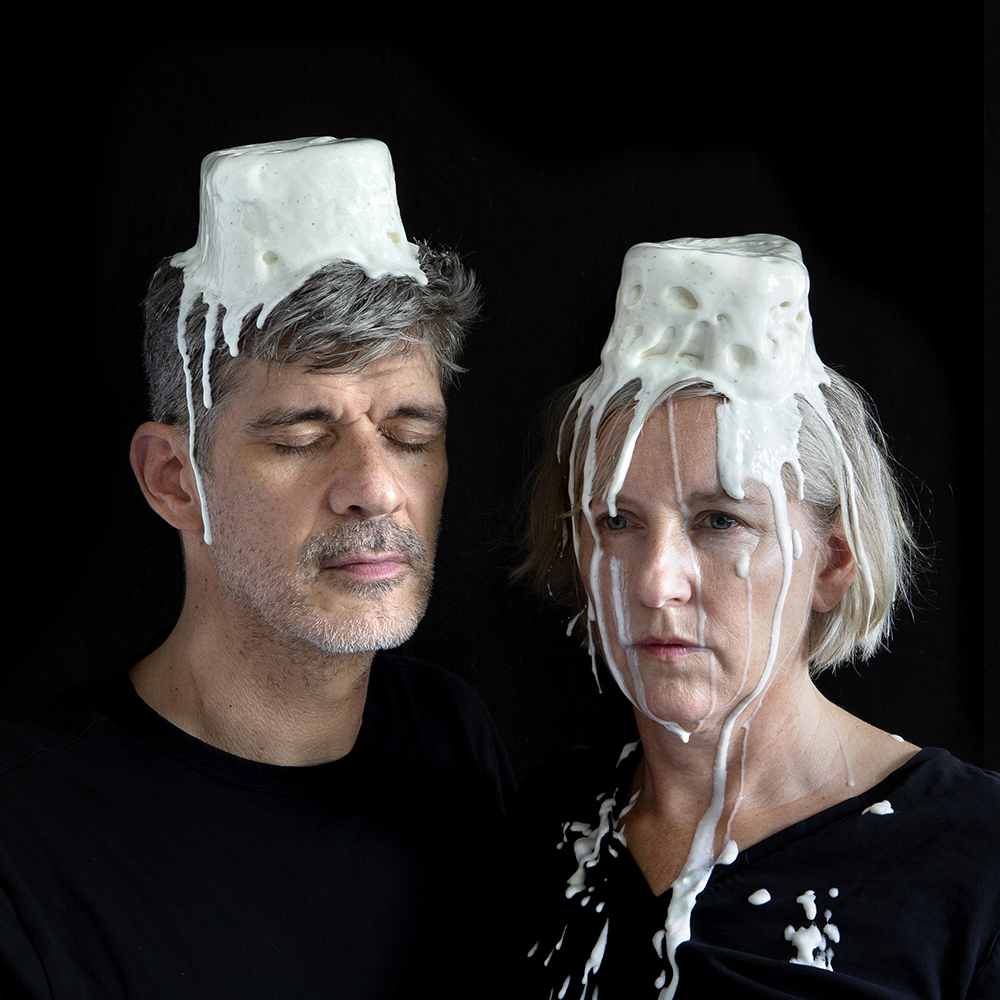
© Hillerbrand+Magsamen, Devices Restraining Contempt
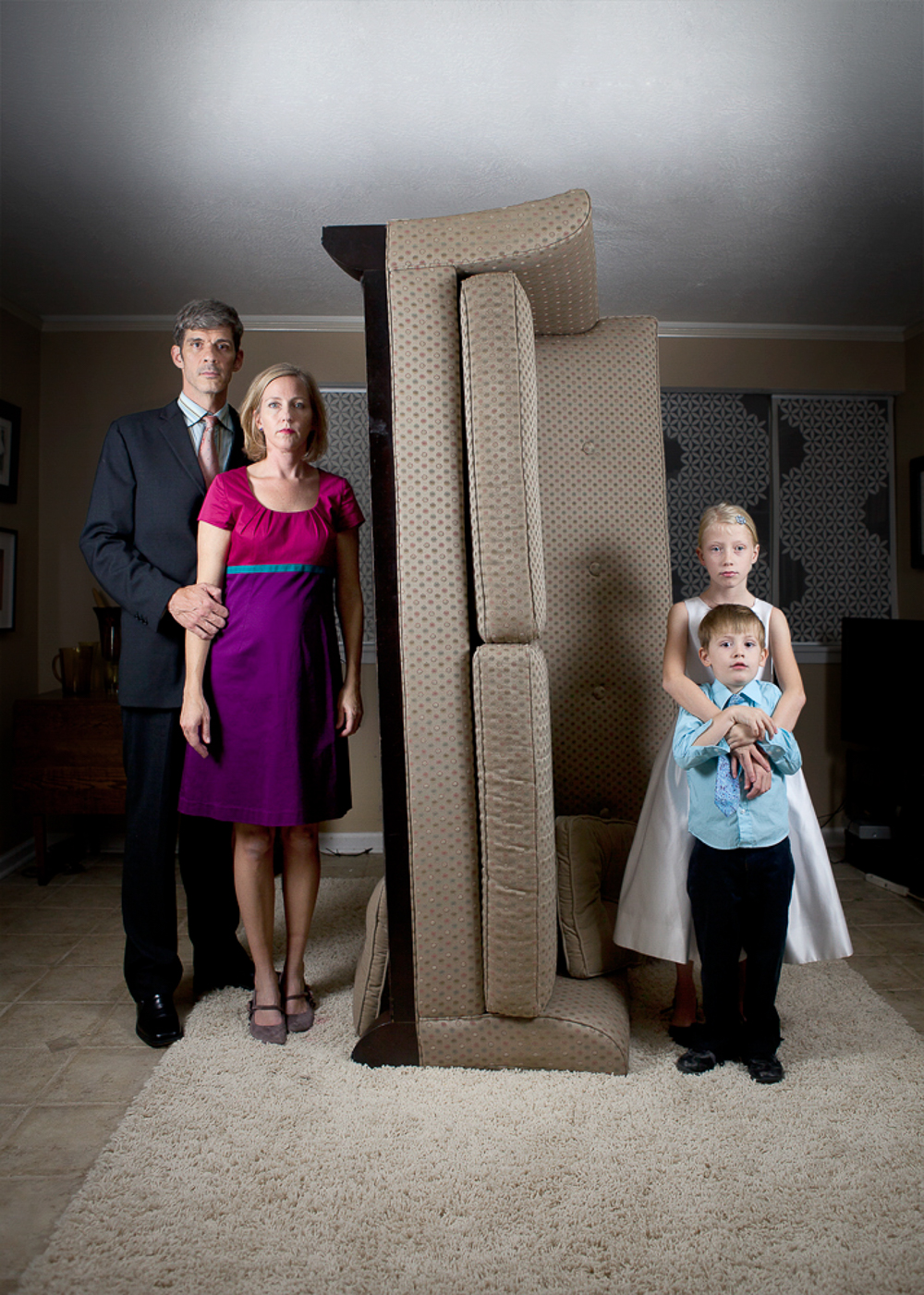
Mythology from the House/Hold series, 2012. ©Hillerbrand+Magsamen
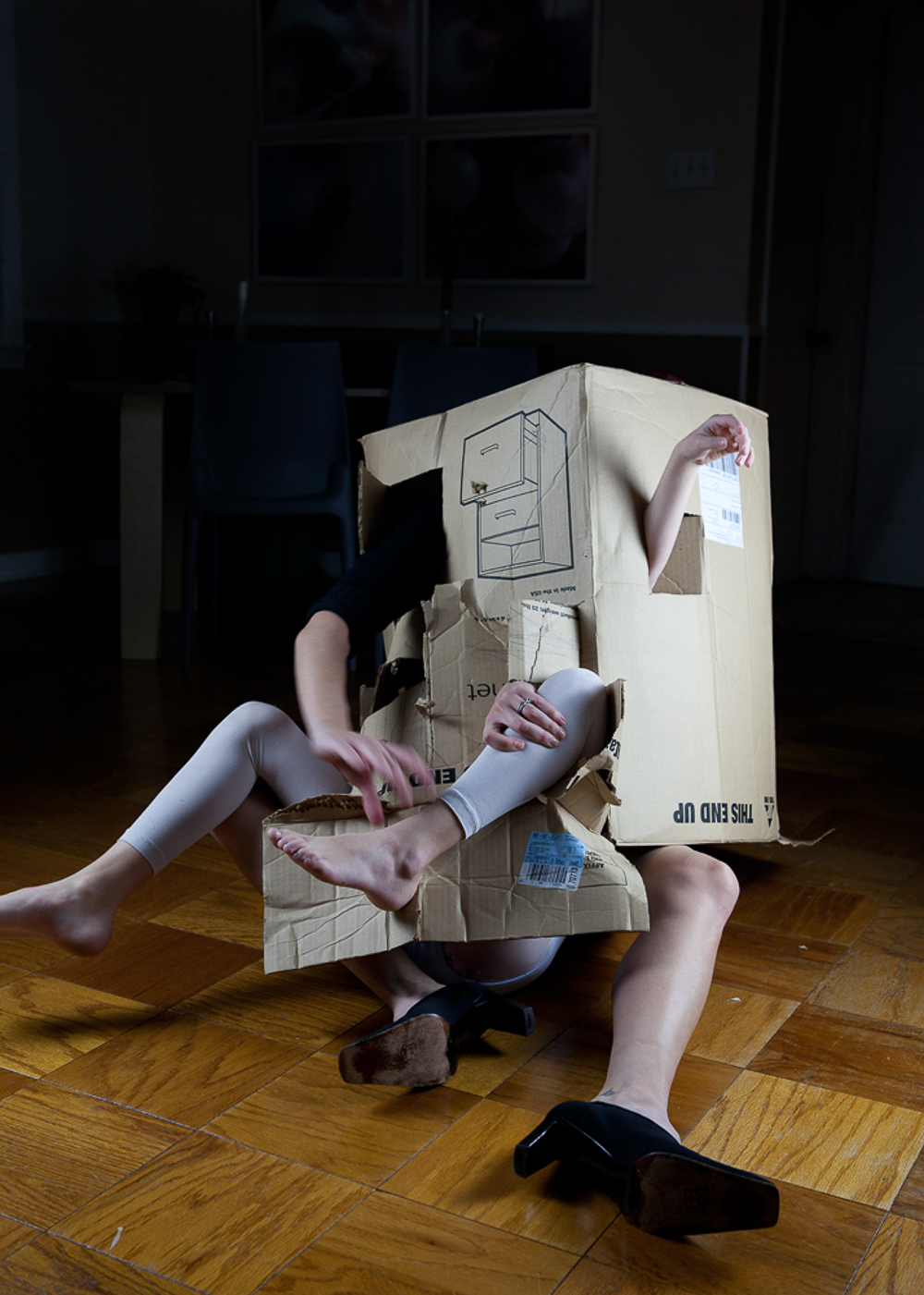
Pandora from the House/Hold series, 2012. ©Hillerbrand+Magsamen
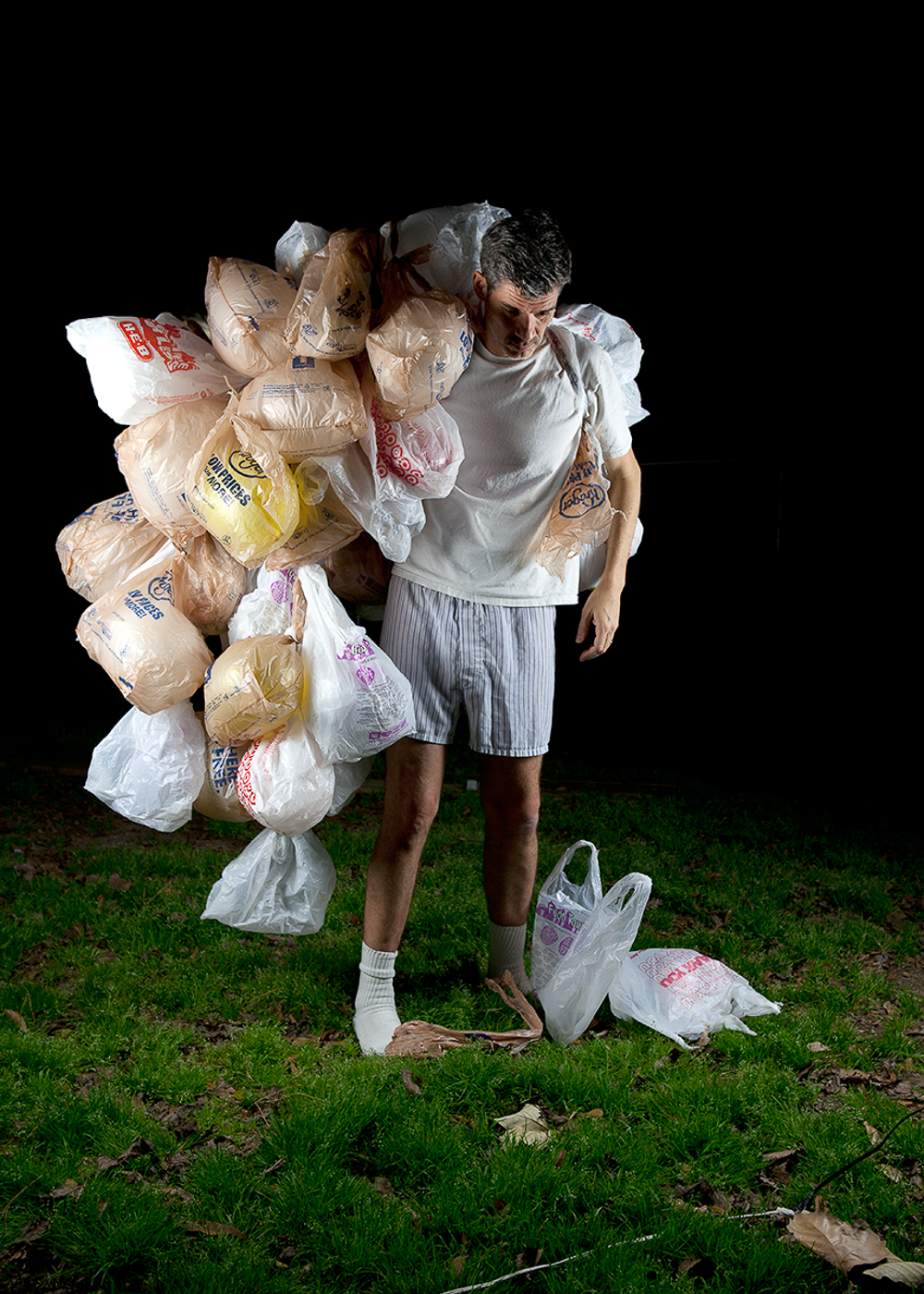
Perseus from the House/Hold series, 2012. ©Hillerbrand+Magsamen
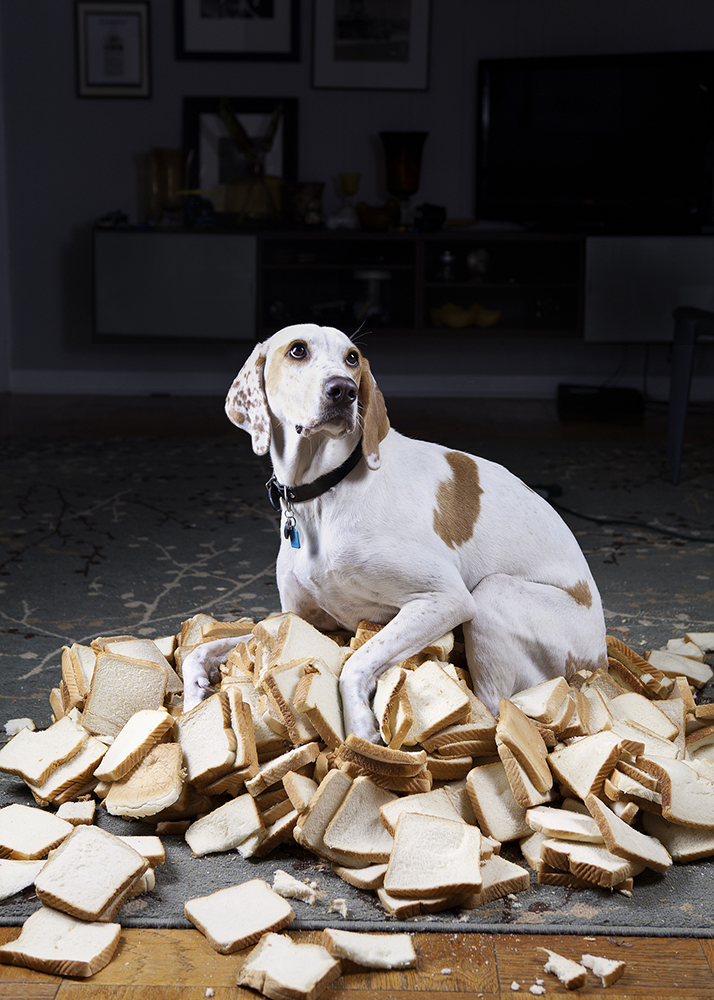
© Hillerbrand+Magsamen, HouseHold Cerberus
Hillerbrand+Magsamen is the collaborative husband-and-wife team of Mary Magsamen and Stephan Hillerbrand, who have worked together for over 25 years across video, photography, installation, and performance. Their work examines the complexities of family and identity, merging the real and the surreal to blur the boundaries between art and life. Often set within—and literally dismantling—their home, their projects transform everyday materials and domestic rituals into poetic acts of resilience and repair. Through this process, Hillerbrand+Magsamen reflect the contradictions of contemporary life with humor, tenderness, and a sense of both futility and hope.
Hillerbrand+Magsamen’s work has been presented at festivals including Ann Arbor Film Festival, Fusebox Festival (Austin, TX), CounterCurrent Festival (Houston, TX), and Diffusion Photography Festival (Wales, UK). Exhibitions include FotoFest (Houston, TX), Grand Rapids Art Museum (Grand Rapids, MI), Everson Museum (Syracuse, NY), and Center for Photography Woodstock (Woodstock, NY). They have received grants from Sustainable Arts Foundation, Austin Film Society, Houston Arts Alliance, and Experimental Television Center and participated in residency programs: Robert Rauschenberg Residency (Captiva, FL), Wassaic Projects (Wassaic, NY), Vermont Studio Center (Johnson, VT), I-Park (East Haddam, CT), Lower Manhattan Cultural Council (New York, NY), Experimental Television Center (Owego, NY), Elsewhere (Greensboro, NC), Lawndale Art Center (Houston, TX) and Santa Fe Art Institute (Santa Fe, NM).
Instagram: @hillerbrand_magsamen
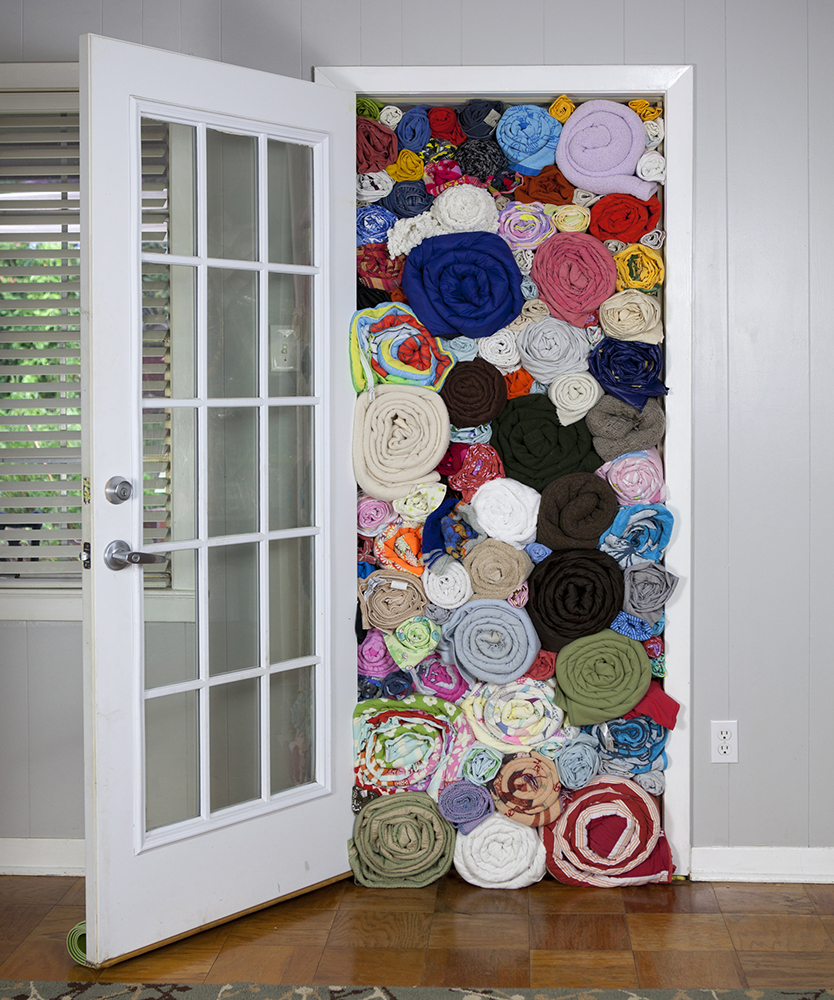
© Hillerbrand+Magsamen, Comfort Door Inside
What project did you have the most fun doing over the years — and what project was the least fun?
Honestly, every project we’ve ever done has both sides to it—we love it and we hate it at the same time. Take Higher Ground, for example. On one hand, it was hilarious and joyful—taking almost everything in our house to build a three-and-a-half-story spaceship in our backyard. How many families get to say they built a spaceship together? It was exciting, playful, and completely absurd. But on the other hand, we were doing it in the middle of a brutal Houston summer. Luce still talks about how miserable it was, wearing a space suit while June Bugs flew about. So it was both: the most fun and the least fun. That’s the truth of our process—it’s always a mix of delight and discomfort, and somehow that tension makes the work what it is. Another favorite project was the video Whole where we all used power tools and hammers to break through our walls. It was really fun to literally break apart our house with you all, but then we had to fix it too!
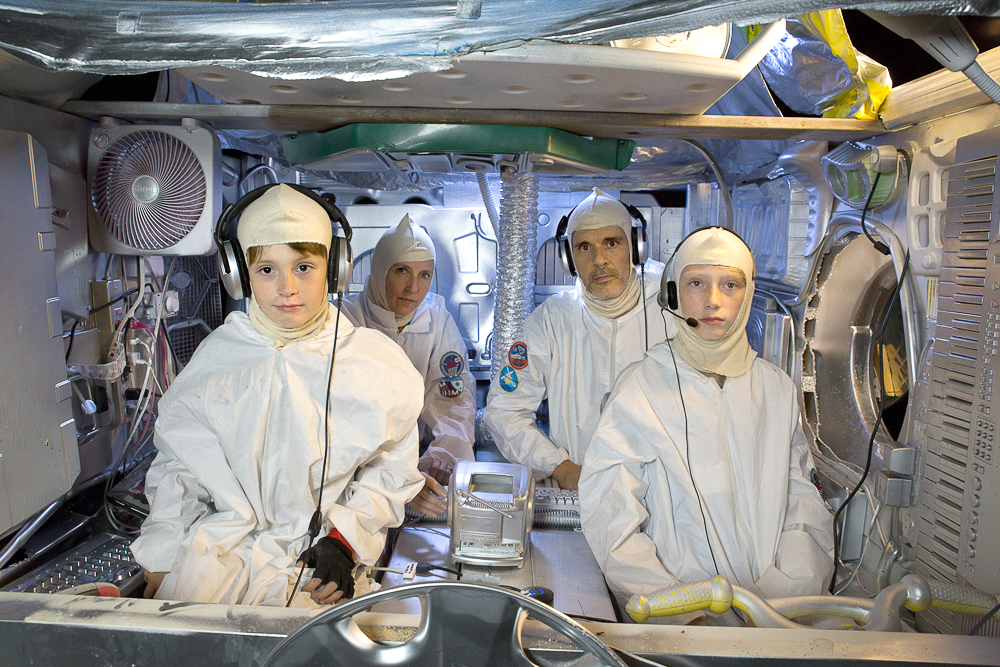
Higher Ground, HD Video, 2015. ©Hillerbrand+Magsamen
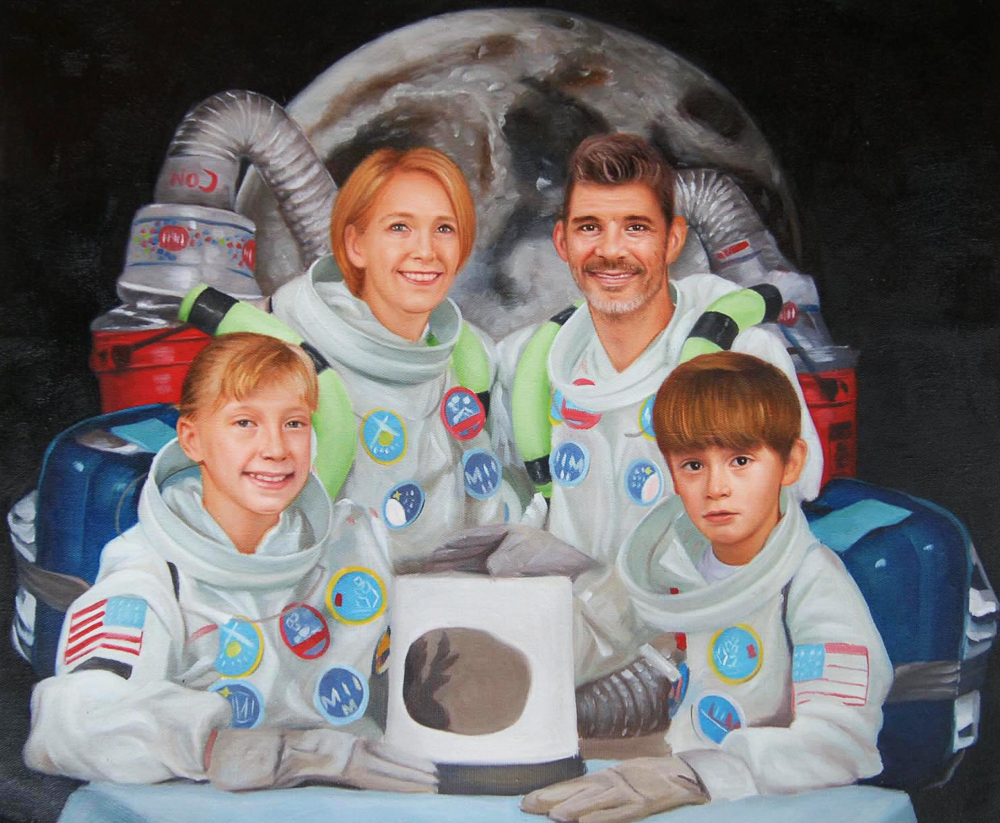
Higher Ground painting by “Melissa”, 2015. ©Hillerbrand+Magsamen
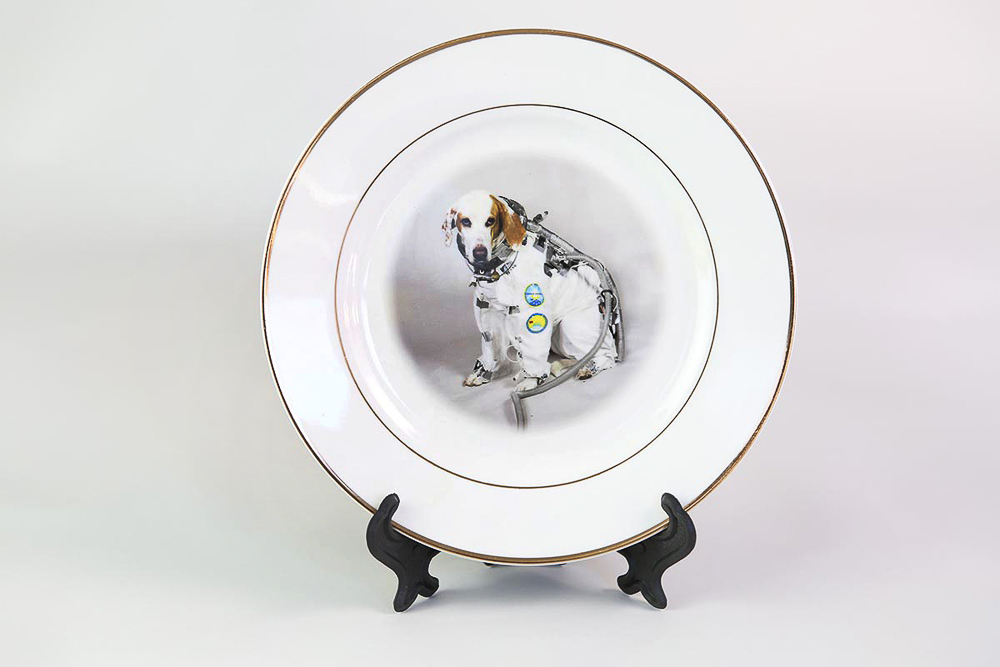
Higher Ground Space Dog, 2015. ©Hillerbrand+Magsamen
If you weren’t artists, what would our house look like?
If we weren’t artists, our house would probably be… a lot cleaner. Less cluttered, less half-finished projects stacked on the dining table. It might even look like a “normal” house with matching furniture that didn’t get absorbed into an artwork. But it also wouldn’t feel as alive. Our mess is part of our creativity—it’s the evidence of making. Without art, the house might look calmer, but it wouldn’t be us. There would also be a lot less art on our walls. We love to collect work from our friends.
Plus, Stephan is a world-class pile maker. There are piles everywhere—the studio, the garage, the living room—collections of strange things he picks up, like plastic scraps or even a jar full of flattened frogs he finds on his morning walks. And funny enough, you two have clearly inherited that instinct. Your rooms are filled with collections and little worlds—funny objects, toys, comic books, drawings, and your own creations. Different passions, but the same impulse to gather, group, and create. It’s like a family trait: we build worlds out of piles.
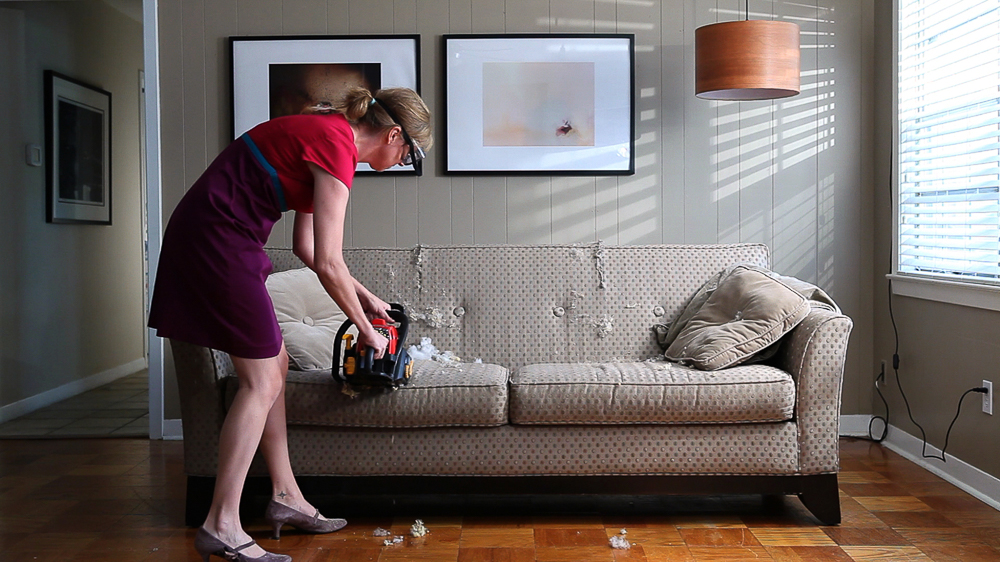
DIY Loveseat, HD Video, 2011. ©Hillerbrand+Magsamen
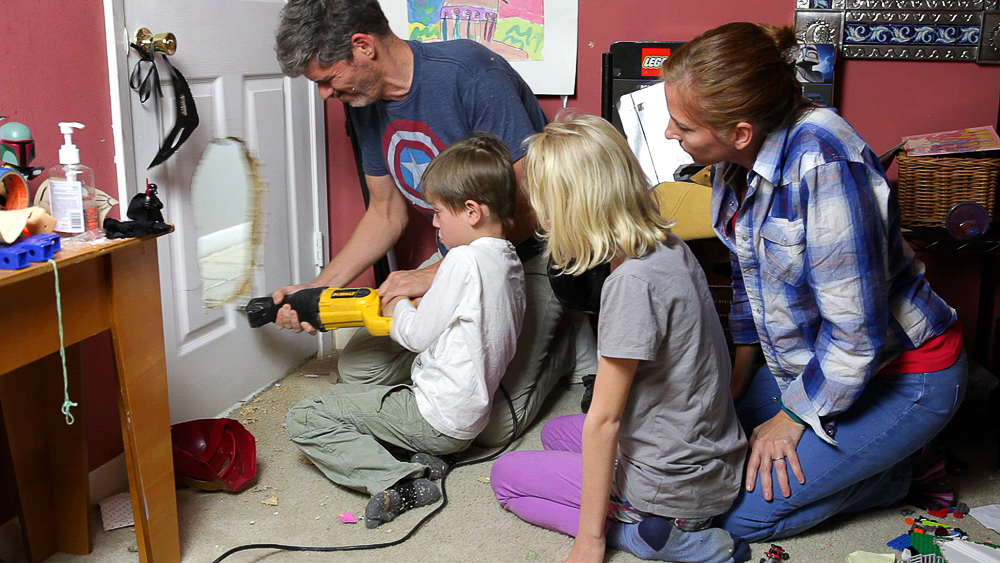
Whole, HD Video, 2012. ©Hillerbrand+Magsamen
Do you ever argue about what to make, and who usually “wins”?
We used to argue all the time—and we still do, but now we think of it more as “negotiation.” Collaboration is hard, but it’s also one of the most joyful parts of what we do. We always tell the story of our very first attempt at making something together, before we were officially Hillerbrand+Magsamen. We decided to make a video called Lick. At the time we were living in Brooklyn, and we went into Manhattan to use the editing facilities at Mary’s work, a post-production house. This was way back before laptops and home editing software—you had to go sit in front of these massive, high-end machines.
As soon as we started, we got into an argument about how it should be edited. Pretty quickly, we were both grabbing for the mouse, each of us wanting control. That’s when we realized: collaboration is about who gets to hold the mouse, and learning when to let go. Over the years, we’ve gotten better at trading control back and forth, but that push and pull is still at the heart of our work—and our relationship.
So, while we do have disagreements, its not about a “win” but more about making art that we both feel is successful visually and conceptually which is about working together.
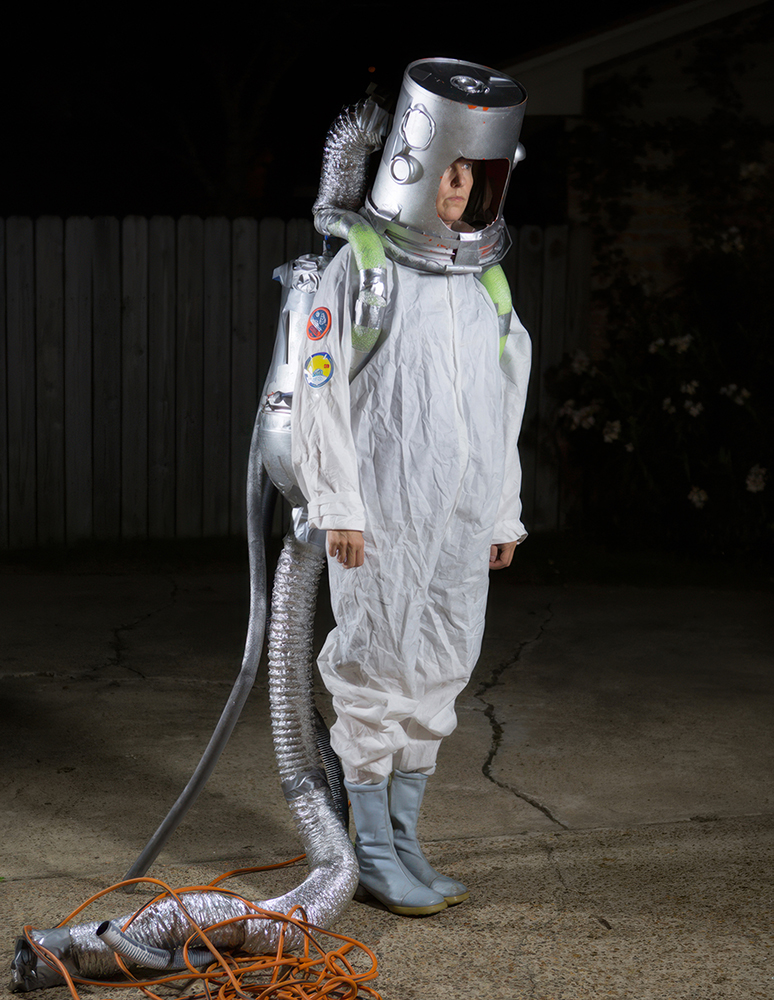
© Hillerbrand+Magsamen, Higher Ground Mom
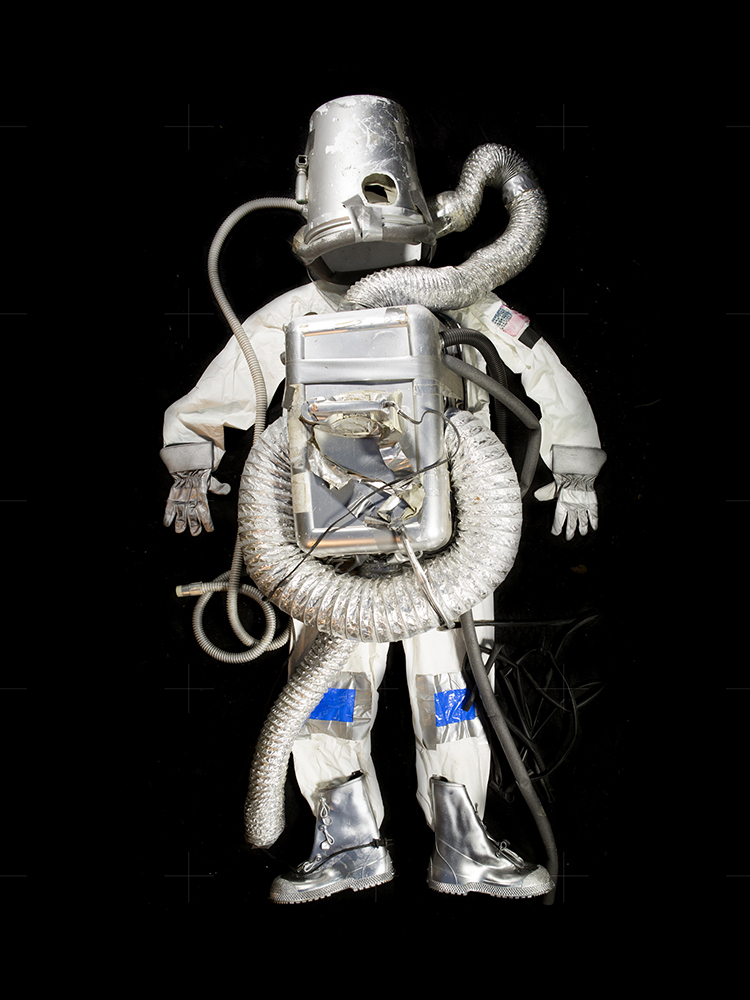
© Hillerbrand+Magsamen, Higher Ground Flight Suit
How do you decide what moments of our lives are too private to share?
We have thought about this very much throughout our career and recognize that it is a balancing act that has evolved. We tried to be respectful and to do that we approached this from the standpoint of keeping things more generic—so that it could be any father, any mother, any child, and it could happen in any house. We didn’t view our work as strictly autobiographical; but rather more fantastical. That allows us to draw from our own lives without exposing every private detail. What matters most is that the situations feel relatable and universal, not confessional. The personal is always there, but it’s transformed—shifted into something that others can step into and recognize as their own.
The Household photographic series was probably the closest we came to really opening the door into our lives. Sometimes we wonder if maybe we opened it a little too much. But it was such a magical and special time and you were both so patient and cooperative!
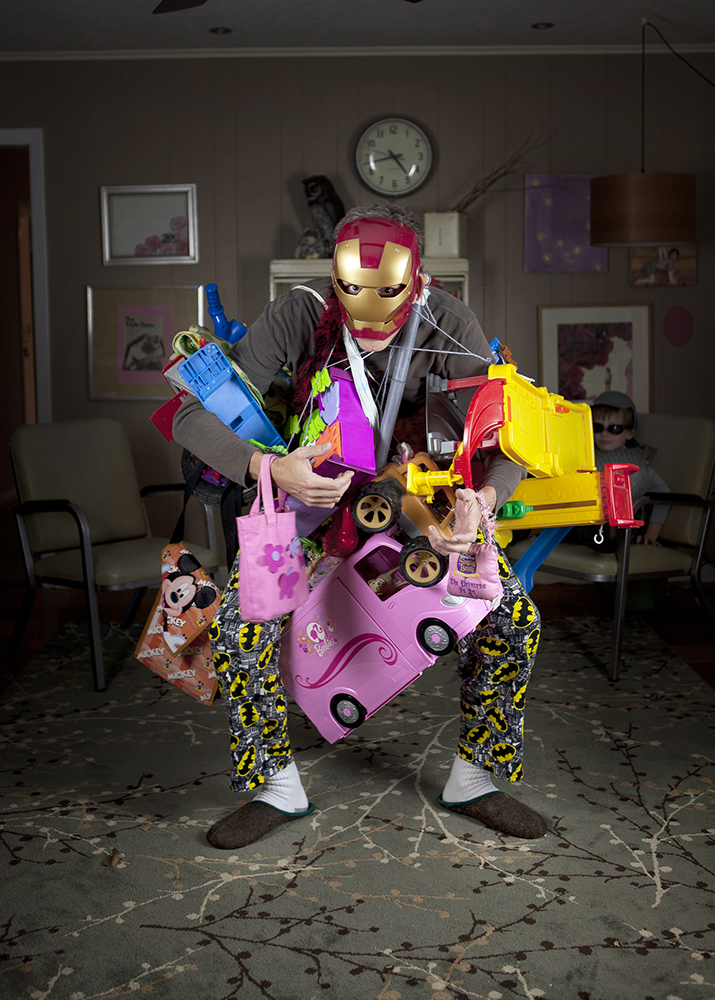
© Hillerbrand+Magsamen, The twelve tasks of Hercules
What role does destruction play within your creations?
The easy art answer is that destruction is part of our making. Cutting into walls, tearing apart furniture, smashing something open—it’s not about breaking for the sake of breaking. It’s about seeing what’s underneath, what’s hidden, what’s possible. It’s also that idea that nothing is precious – and it is exciting to use what is available and make something new out of something known – much like the surrealists did, or Marcel Duchamp with his readymades. There were many times when we were making Higher Ground or the Mandala photo series—where we used your toys—but sometimes they got ruined or spray-painted but we tried to replace those for you.
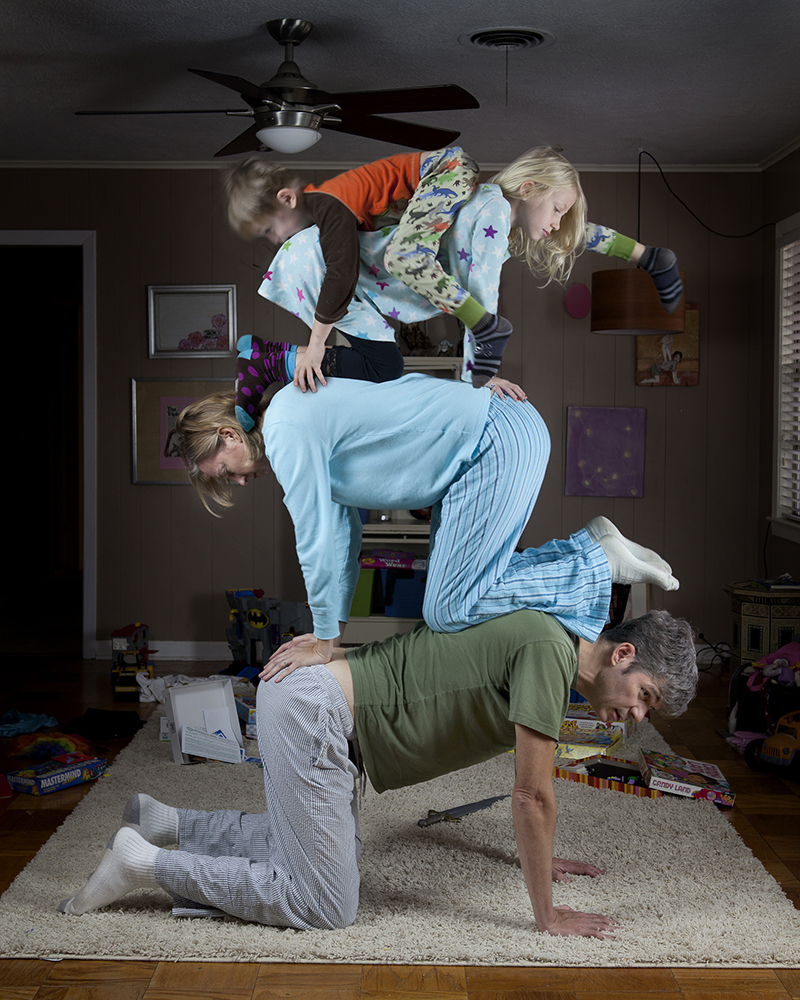
© Hillerbrand+Magsamen, Household Miranda
Are we (your children) collaborators, or do you think of us more as your subject matter?
This is a really difficult one. We’re going to have to answer it separately:
Mary: You’re both. You’ve always been collaborators—whether you were in front of the camera, holding a light, or rolling your eyes at our ideas. But you’ve also been subject matter, because our lives together have always been the center of the work and we have been interested in exploring the everyday and what our house, home, and family means through our art. I think too that this idea has evolved as you have gotten older. Perhaps you were more of subject matter as young children, but now you are definitely more of collaborators.
Stephan: That’s a hard question to answer because it happened in stages. At first, I think I saw you as subject matter—but not in a bad way. We were all subject matter: the house, the dogs, my partner, my life. I just wanted to make art with Mary out of what was right in front of us. And you both were—right there in front of us in such a beautiful way. But that shifted pretty quickly, because as you got older you started telling us when you did or didn’t want to be part of things. So we had to look around and find other things that were right in front of us. And the funny thing is—that’s just what growing up looks like, becoming your own person. Instead of telling your mom and dad you didn’t want to be a doctor or a lawyer, or that you didn’t like soccer practice anymore—you told us you didn’t want to be in front of the camera.
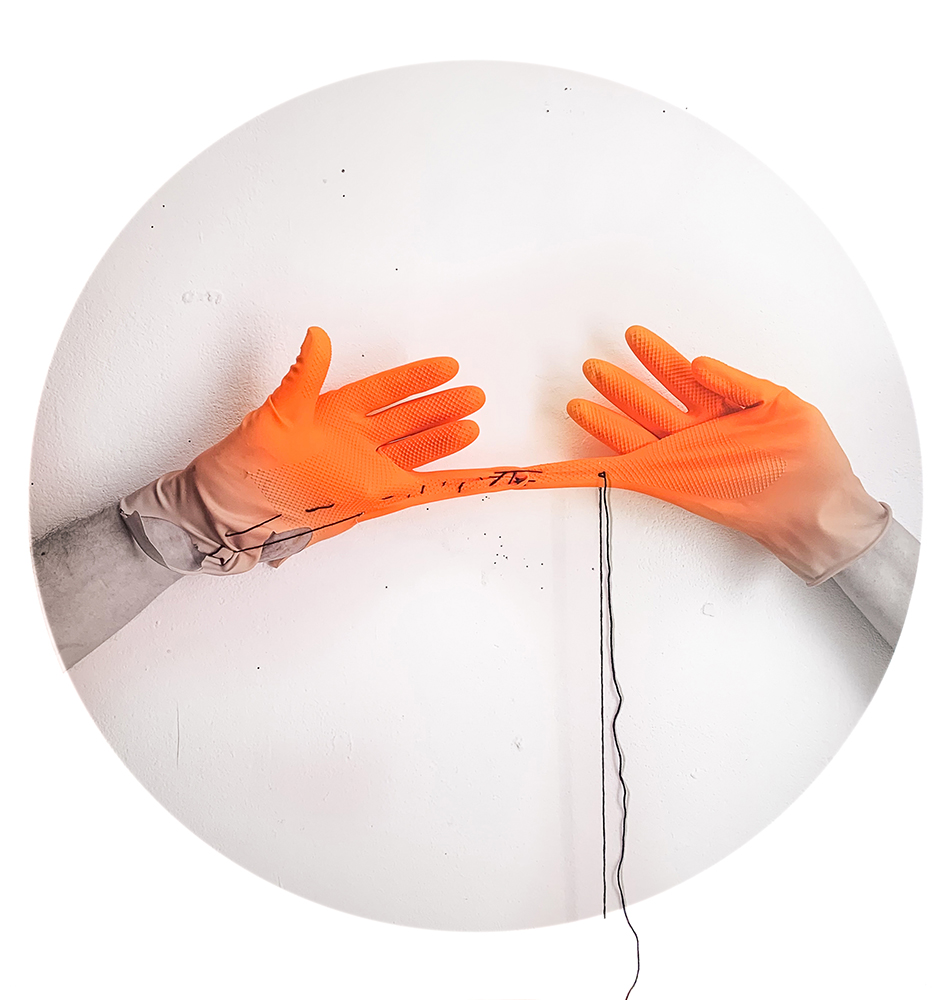
© Hillerbrand+Magsamen, ReAction Fusion
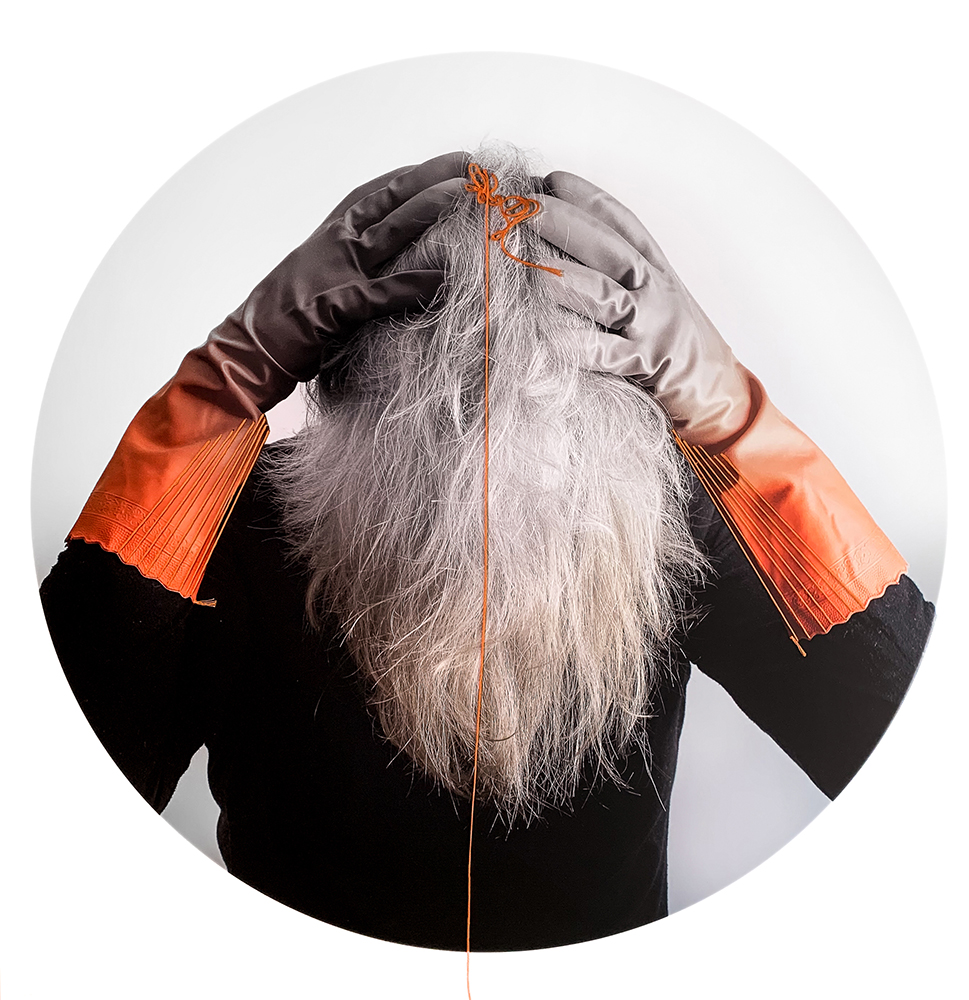
© Hillerbrand+Magsamen, ReAction Dissolution
What are your thoughts on permanence and its role in the home and your relationship with physical objects?
The way we feel about that has changed over time.
At first, when we started making work, we didn’t believe in permanence. Objects break, houses change, kids grow up. Everything shifts. That’s part of why we use everyday things in our art—they already carry a sense of wear, of impermanence. The home isn’t permanent either—it’s always in flux, always layered with memories and new changes.
But now, as we’ve gotten older, it’s harder to let go. Stephan sees this more, perhaps, than Mary—the house shows the wear of constantly living in it and making art in it. Walls aren’t patched up correctly from tunneling through them. Special objects got broken when we were moving lights around the house. Other things have gone missing because they got incorporated into a photograph for the Devices project. The list goes on and on, and it’s a little sad when we look back.
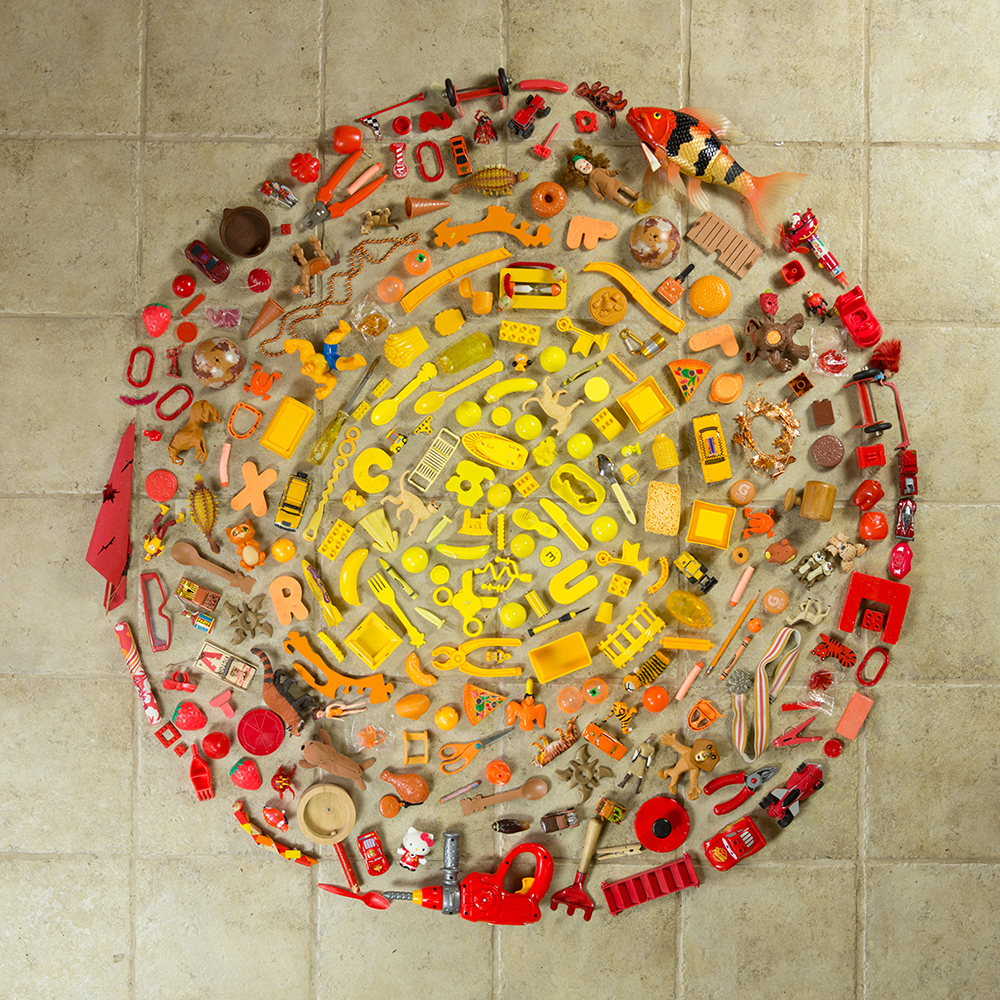
© Hillerbrand+Magsamen, Mandala Yellow to Red
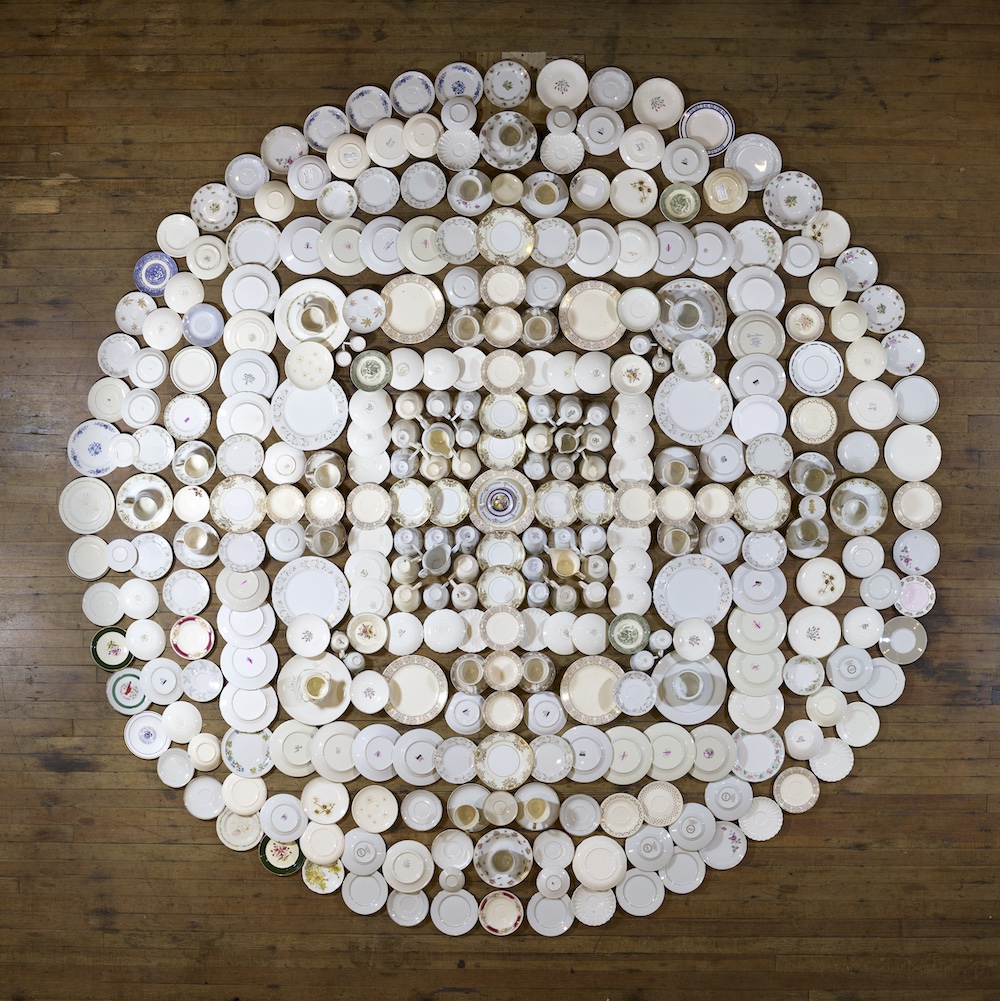
Mandala: Plates, 2018. ©Hillerbrand+Magsamen
Why is it important for you to use the home and all its facets as a base for your work?
Stephan loves the analogy that artists are like magicians. They have these wonderful tricks and when you really focus and watch them perform—of course, it feels like magic. You’re transported to another world. But after the performance, some magicians don’t want to tell you how the trick is done, and others do. It’s strange in the art world when someone creates that kind of magic, builds a world, but then doesn’t want you to be part of it. It becomes exclusive—only one person can own it, see it, touch it. Only one person gets to know how the trick is done.
Neither of us has ever wanted that. We’ve always wanted to focus on things that are accessible, that everyone can participate in, where everyone has an entry point. And for us, that’s our home. It’s where we live, where we love, where we struggle, and where everything begins. The home is universal and personal at the same time. Everyone has a connection to domestic life—whether they embrace it or resist it. By working from home, literally, we’re able to turn the most ordinary details—laundry, walls, toys—into something extraordinary. It keeps us grounded, and it reminds us that art can come from right where you are.
Our home and you both are the most important things to us and we believe in making art that speaks to our hearts. We wanted to make art that we care about and that reflected back to a larger audience and community.
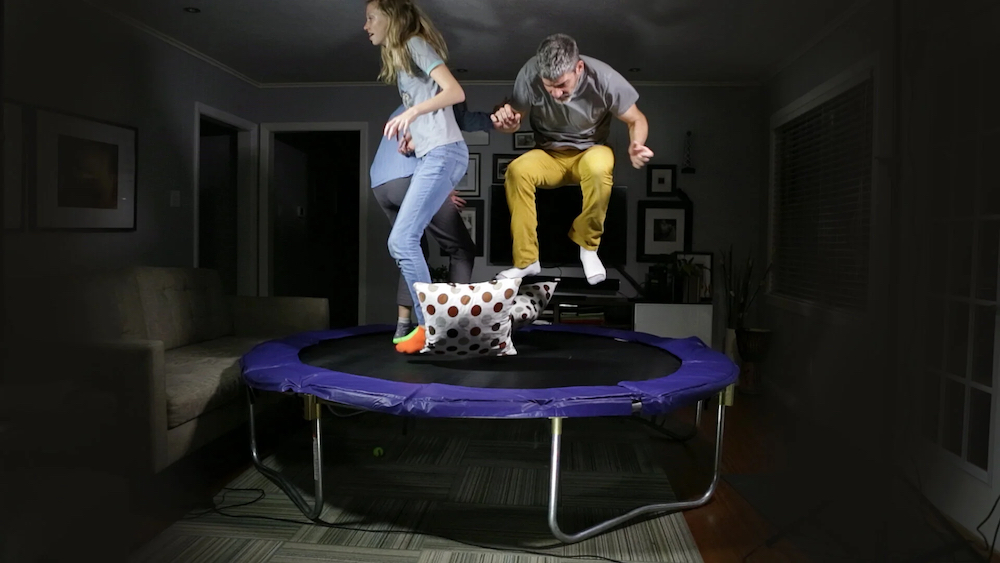
Home Balance, Inflatable Bounce House and Video, 2019. ©Hillerbrand+Magsamen
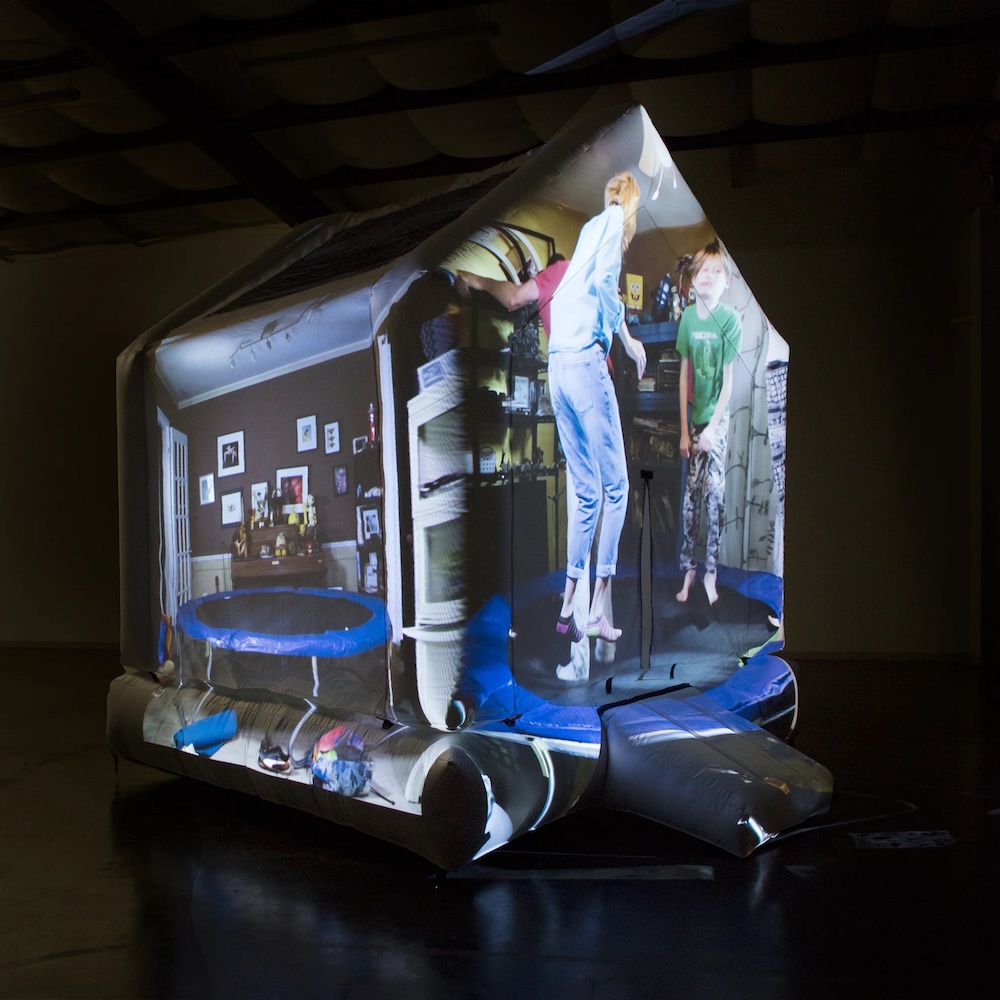
Home Balance, Inflatable Bounce House and Video, 2019. ©Hillerbrand+Magsamen
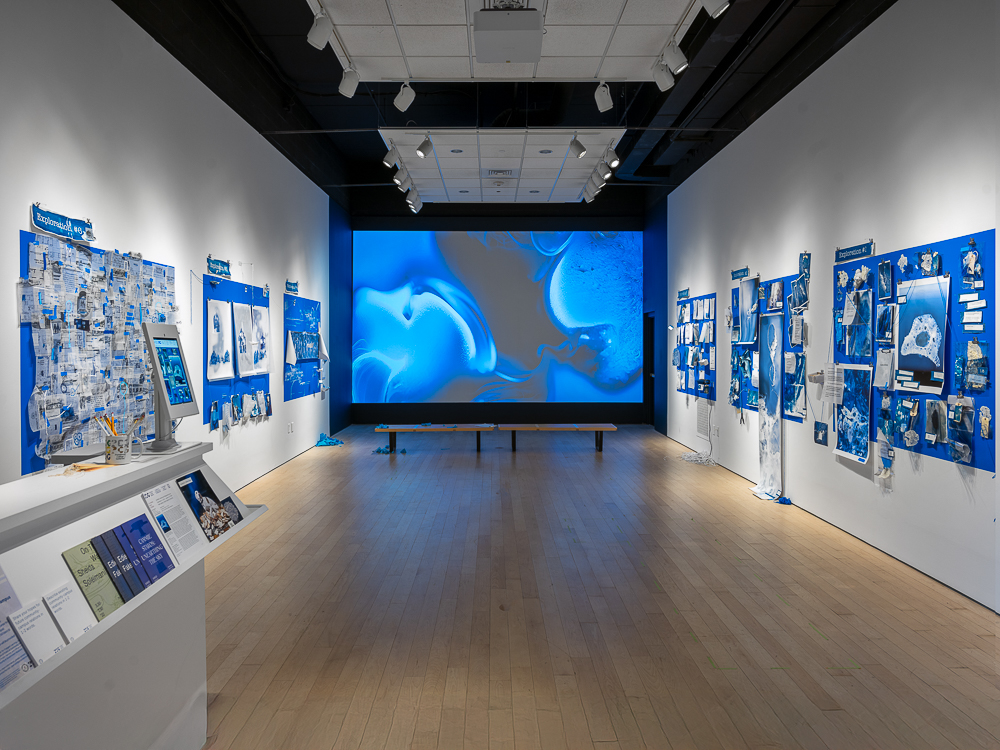
Expand, Installation View, 2024. ©Hillerbrand+Magsamen
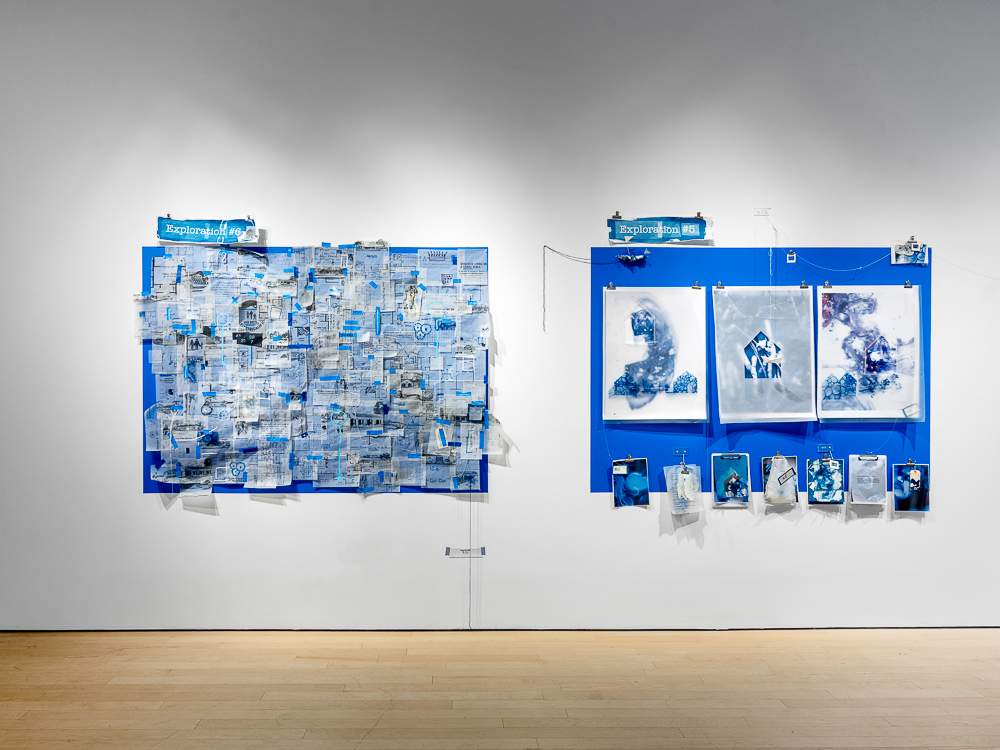
Expand, Installation View, 2024. ©Hillerbrand+Magsamen
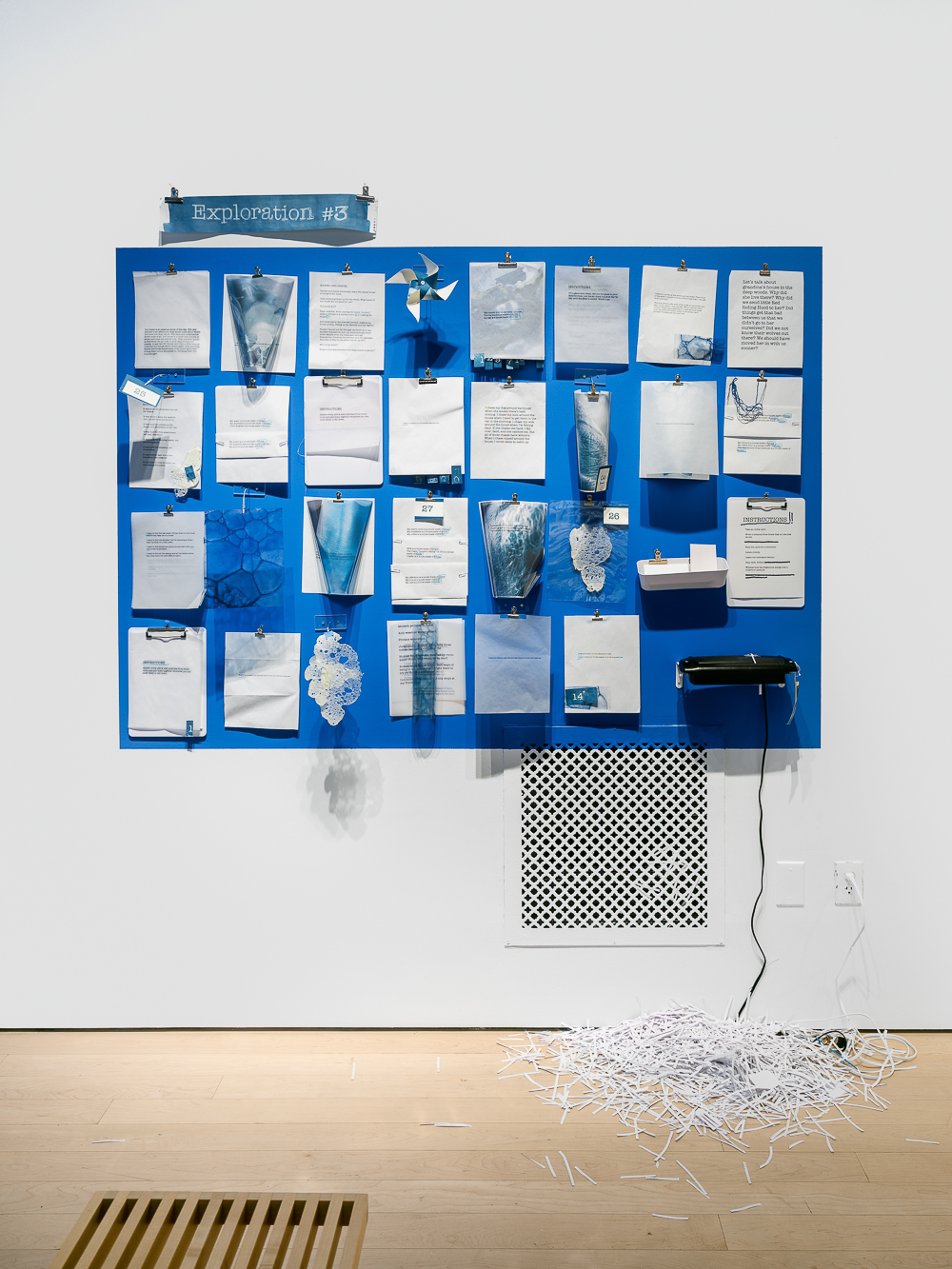
Expand, Installation View, 2024. ©Hillerbrand+Magsamen
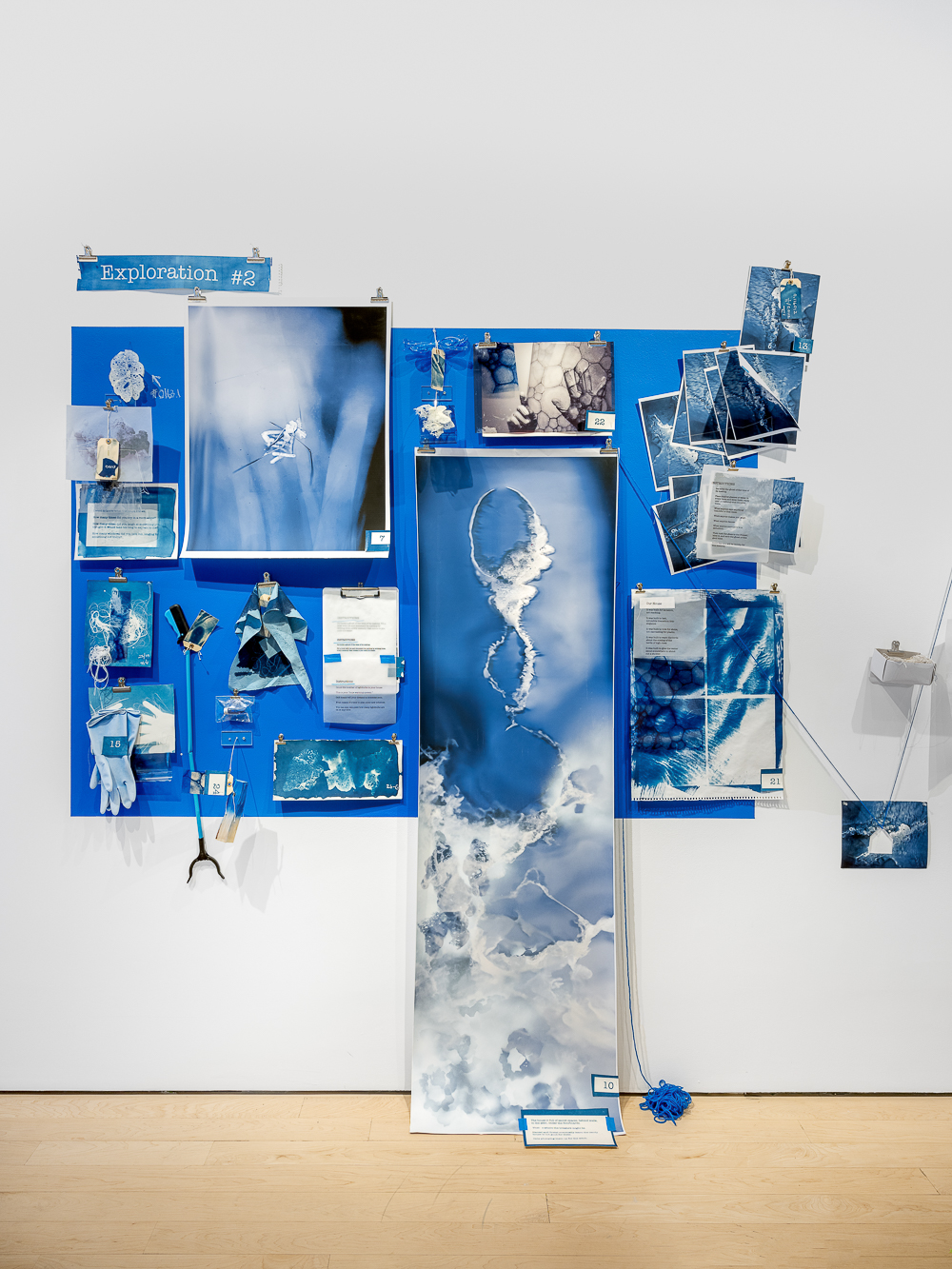
Expand, Installation View, 2024. ©Hillerbrand+Magsamen
Posts on Lenscratch may not be reproduced without the permission of the Lenscratch staff and the photographer.
Recommended
-
Hillerbrand+Magsamen: nothing is precious, everything is gameOctober 12th, 2025
-
BEYOND THE PHOTOGRAPH: Q&A WITH PHOTO EDITOR JESSIE WENDER, THE NEW YORK TIMESAugust 22nd, 2025
-
Christa Blackwood: My History of MenJuly 6th, 2025
-
BEYOND THE PHOTOGRAPH: Researching Long-Term Projects with Sandy Sugawara and Catiana García-KilroyMarch 27th, 2025
-

Dodeca Meters: Arielle Rebek, Kareem Michael Worrell, and Lindsay BuchmanFebruary 7th, 2025