Review Santa Fe: Elizabeth Z. Pineda: Sin Nombre en Esta Tierra Sagrada
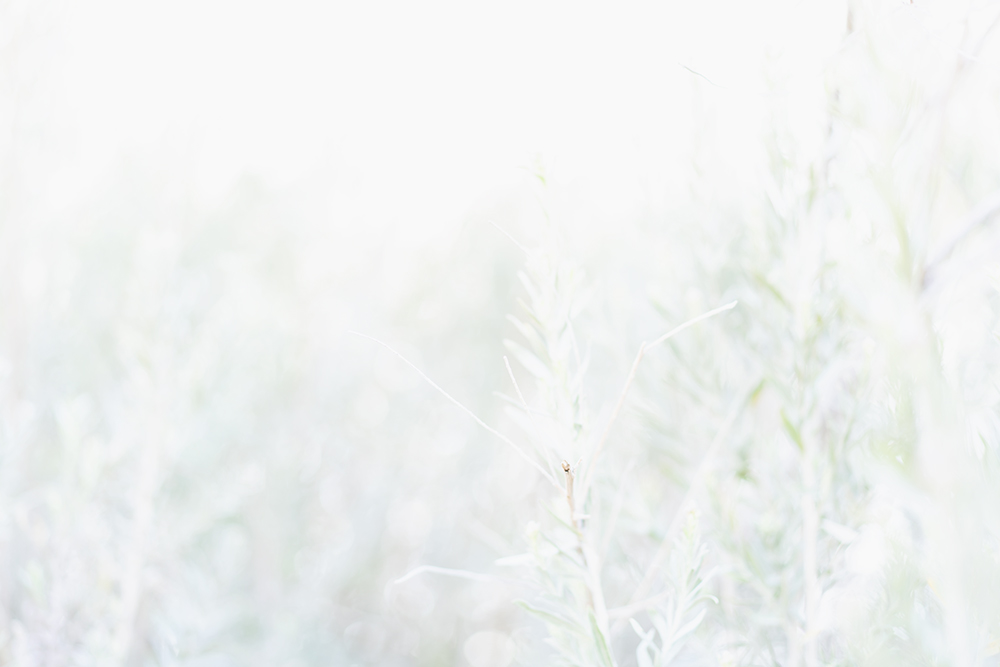
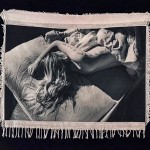
©Elizabeth Z. Pineda, Al Partir, 2022
In early November 2025, I was invited to CENTER’s Review Santa Fe. Being my first time in the Southwest and experience on the Reviewer side of the table, I wasn’t quite sure what to expect. As an educator, I love reviewing work; when others hear “critique,” they may shy away, but I love the experience of helping others through their ideas. Review Santa Fe is an incredibly welcoming experience, carefully cultivating meaningful projects and conversations. Living in a very rural area, this was an inspiring opportunity to see what is on the horizon of the photo world. I’m so excited to share a few of these projects over the first week of February.
Today, we’ll be sharing Elizabeth Z. Pineda’s Sin Nombre en Esta Tierra Sagrada.

©Elizabeth Z. Pineda, Búsqueda en Arivaca, 2022
Originally from Mexico City, Elizabeth Z. Pineda is an emerging artist. Her work explores complicated issues regarding immigration, identity, displacement, and migrant deaths that occur in the Arizona desert. Pineda speaks visually of community, touching on language barriers, culture, and society. Her practice is rooted in handmaking as an expression of her deep ties to the subject matter using historic and untraditional photographic, printmaking, papermaking, and book art processes.
Pineda’s work has been shown in solo and group exhibitions. It is currently being exhibited at the Phoenix Art Museum, 2024 Arizona Artist Awards (Phoenix, AZ), and at the Maltz Museum, El Sueño Americano / The American Dream (Beachwood, OH). Her work has been published in The Experimental Darkroom: Contemporary Uses of Black & White Photographic Materials by Christina Z. Anderson (Focal Press, 2022), and The World of Photography 2, Mediterranean House of Photography, (Fotonostrum Publishing, 2024). Pineda was awarded the Pat Mutterer award at The Arizona Biennial, Tucson Museum of Art, 2023. Her work received winner and honorable mentions in the 18th Julia Margaret Cameron Awards (JMCA) and honorable mentions in the 20th JMCAs. In 2022 her portfolio was named Outstanding Work by juror Christopher James for the Denis Roussel Award. Her project, Maíz, was selected as Center’s 2023 Personal Award Recipient by juror Amanda Hajjar and was selected as the inaugural recipient of the Jay and Susie Tyrrell Excellence in Works By Hand Award. Most recently she was one of two artists awarded the Lehmann Emerging Artist Award, 2024, by Phoenix Art Museum.
In addition to her studio practice, Pineda teaches photography as a faculty associate and works as Graduate Program Manager to support Art History, Art Education students at Arizona State University. Elizabeth resides in Surprise, Arizona. In her free time, she loves spending time with her family. Pineda holds an MFA from Arizona State University and is a member of Undoc + Collective.
Follow Elizabeth on Instagram: @elizabethzpineda_fotografia
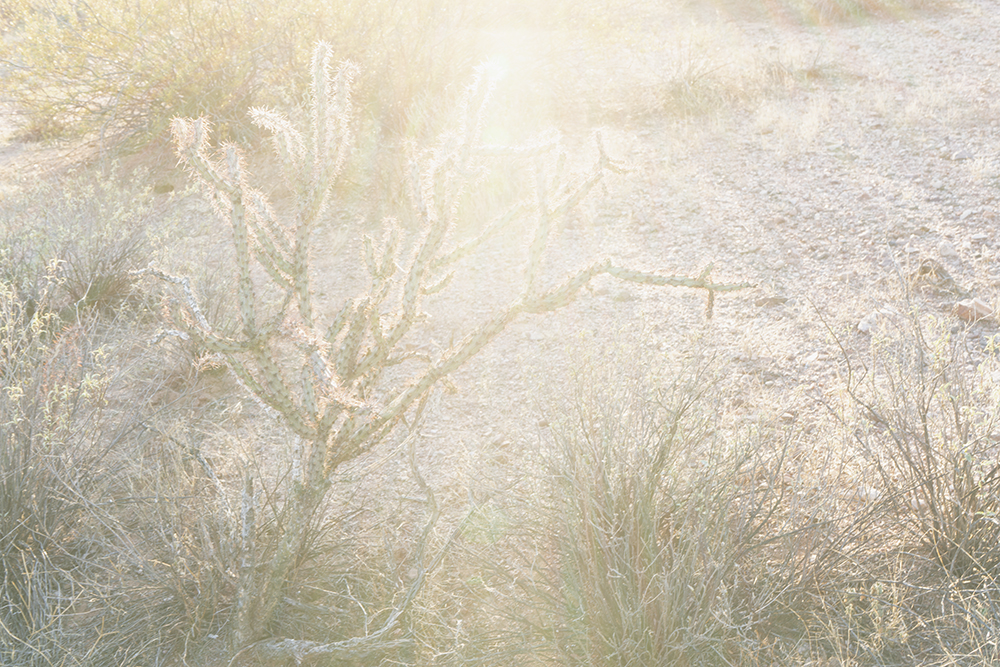
©Elizabeth Z. Pineda, Cholla, 2022
Sin Nombre en Esta Tierra Sagrada: Imagining Your Last Breath
In all its beauty, the Arizona desert has become a place that holds unimaginable despair and sorrow. The luminous landscape is one many migrants cross in desperate need of a new home, opportunity, and a better, safe life. Men, women, and children will take this path when all others are exhausted. They risk everything in pursuit of the American Dream. This journey, heartbreakingly, will often lead to death.
Late one night in March of 2021, I was researching migrant archives on the internet when I landed on Humane Borders’ page for Migrant Death Mapping. I had a map in my studio that was published 2-years earlier and clicked on download, thinking I would get the most recent map. Instead of a map, I received the HTML version of the record kept by the Pima County Office of the Medical Examiner and Humane Borders containing all of the information relevant to every migrant deceased body found in the Arizona desert. That night, in shock, anger, and pain, I wept and wept as I scrolled through the endless archive. That night, the numerous red dots on the map, were no longer just dots on a map, but human beings. That night, this archive became the heart of my thesis. That night, I vowed to give voice to the silent people who make up this living document and the tragedy of human loss in this terrain.
Imagining Your Last Breath is a meditative series of works rooted in the Arizona landscape. This body of work is one of a larger project, Sin Nombre en Esta Tierra Sagrada. The works honor the thousands of migrant lives lost while attempting to cross the Sonoran Desert. Branching off my personal immigrant experience, I aim to bring awareness to the unseen costs of immigration policies, give voice to these people, and bring light to their humanity.
Through evocative, non-representational works, I imagine and suggest the moments right before the migrants perish. Respectfully, I consider and reflect on the lives lost that ultimately reside within the desert soil.
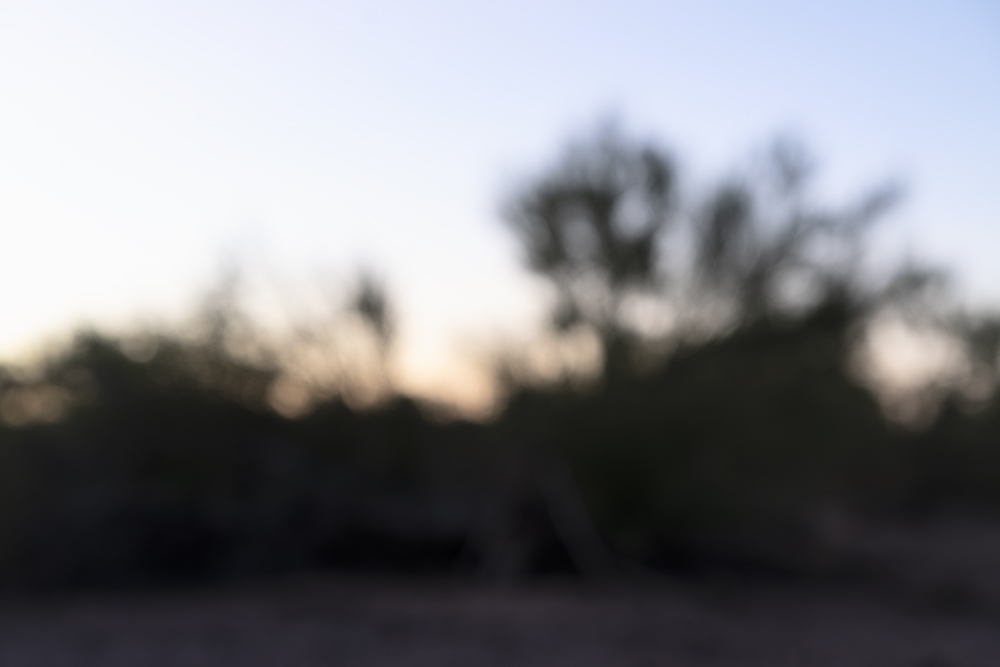
©Elizabeth Z. Pineda, Desierto Ironwood Forest, 2022
Epiphany Knedler: How did your project come about?
Elizabeth Z. Pineda: I was in graduate school when I started this project. An already challenging endeavor, the timing, it so happened, was an extra difficult one because it coincided with the Pandemic and the midst of shutdowns, during which much fear and loss were being experienced everywhere. Sin Nombre en Esta Tierra Sagrada, which Imagining Your Last Breath is part of, was made during this time. My heart, in a way, was already full of pain and grief.
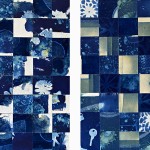
At the time, I was working on different bodies of work centered on themes of migration and loss. For one of them, I often went to the desert near my home to photograph and make large cyanotype prints of the landscape flora. Working in these locations was important to me because I consider the landscape as a witness to what happens in the terrain. While waiting for the cyanotypes to expose, I had time to reflect. My thoughts always centered on issues of migration, themes important and personal to me being an immigrant who was brought to this country as a child and remained undocumented for many years. I meditated about the reality of the undocumented person, how there is no safety zone for them. I pondered on the fact that for undocumented people, no matter where one stands in this country, one remains undocumented. I wondered what led them to make this difficult decision, the reasons they left everything behind: extended family, home, and belongings.
Trying to make sense of my thoughts, of the injustices these people face and the suffering of those who journey through the Arizona Sonoran Desert to arrive in the U.S., I imagined where their home was, who they left behind, what their sorrows and their hopes were. I mused about home: what home is, who has a right to a home, and who has a right to dictate what/where home can be. These thoughts always led me to consider the many immigrants who don’t survive the grueling walk through the harsh, foreign landscape. I began imagining their steps as I walked and wondered what it would feel like if I were making the journey.
Later, I contemplated this as I visited many areas of the Arizona desert Borderlands to research, make work, and be part of the landscape. Always yearning to be present with intent, I carried words in my mind like aliento (breath), suspiro (sigh), anhelo (longing), visibilidad, susurro (whisper), hogar, velo. As I traversed the land, I began wondering what the moment right before someone died would feel like. I thought about their last breath; what it would look like.
At home late one night, I was doing research, trying to find migrant documents of Latinos, like the many there are of those who arrived at Ellis Island. My search landed me on Humane Borders’ site of which I was aware, specifically the Arizona Migrant Death maps. I hesitated for a moment, then, thinking I would download a recent map (the one I had in my studio was a couple of years old), I went to the map search. Without specifying an option, I clicked on Search and then Download. That night, instead of the latest map, I received the HTML version of the map. Every set of two lines contained the data for every individual beginning with the year each death was reported and the unique identifier assigned to each set of recovered remains. This was followed by the name (when known), gender, age, reporting date, year of death, surface management, location, corridor, cause of death, condition code, body condition, postmortem interval, state, county, and corresponding latitudinal and longitudinal coordinates. That night, the red dots that mark the place where a migrant died changed forever in my mind; these were no longer mere red dots on a map but human beings. I had known this before, but now I would never again be able to ignore this truth. That night, I was transformed. That night, I sat horrified in deep pain as I looked at my screen and wept as I scrolled. I wept and scrolled. Wept and scrolled. That night, this archive, this document became the heart of my thesis work. That night, I vowed to give voice to this living document, comprised of silenced people who are no longer living.
For my thesis exhibition, Sin Nombre en Esta Tierra Sagrada, I completed 7 different works. Imagining Your Last Breath is a series of evocative photographs in which I imagine and suggest the moments right before the migrants perish. I wondered, what was the last thing they saw? What did their last breath look like? The images are an attempt to convey my grief as I contemplated the fragility of life and the ephemeral, final instants as the migrant’s bodies succumbed and a recognition and honoring of the numerous individuals who came in search of a better life, for whom the desert soil became their resting home.
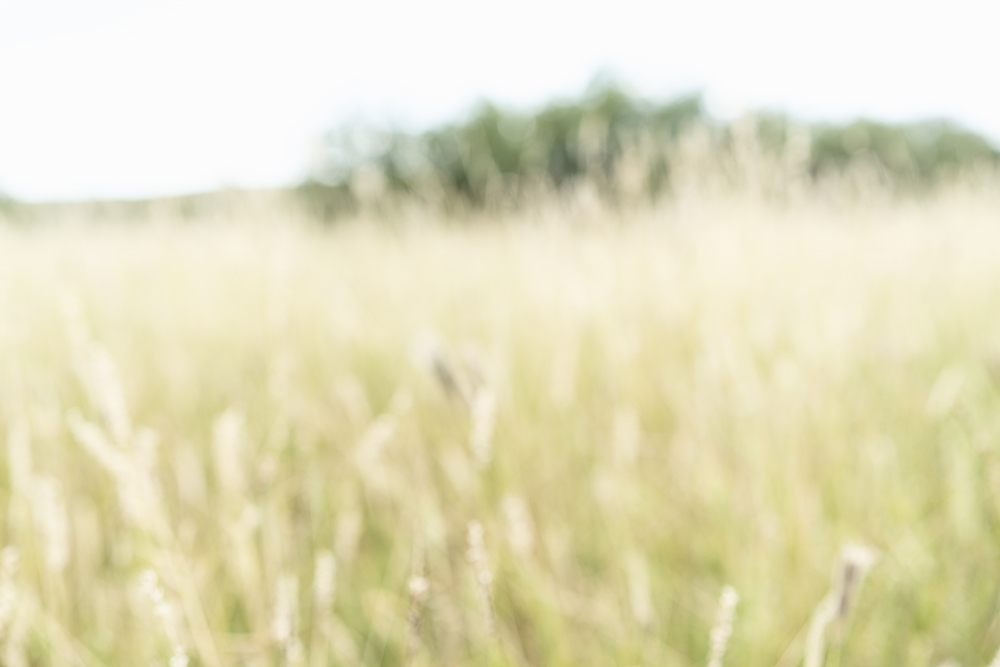
©Elizabeth Z. Pineda, El Campo Cienega, 2022
EK: Is there a specific image that is your favorite or particularly meaningful to this series?
EZP:
This is hard. I remember the day I captured the photographs and my feelings at the time, so it’s hard to choose. I hope it’s okay to select two… I am drawn to Maguey for a few reasons. The image is blurred, yet the maguey is somewhat recognizable against the purest blue sky and beating sun. I imagine that encountering this plant would bring comfort to someone seeing it out here because it’s a plant that people would recognize from their homelands. In my mind, I see someone being flooded with memories in their encounter with a plant also native to their hometown, their plot of land, or one they toiled with. Would its sight at this solemn instant bring comfort and relief from the horrible, imminent death at their door? Would it bring home and peace closer to them?
Ramas Rotas is another image that is meaningful. I remember the day I made it. How I was taken by the full, beautiful landscape. How spiny everything was. I walked into the brush to make my images and was instantly covered in tiny, itchy spines. Then I turned and saw this low-hanging branch. It was broken, but it continued to bloom. I was taken by the life that was still reaching its broken limbs. There was hope in this moment. Hope for change. A change I still wish for, even in these unprecedented, unimaginable times we are currently experiencing. I made the photograph full of this poignancy as a gesture of hope for the people who perish; one of release, reprieve in their passing. The image addresses these thoughts that engulfed me. My aim is to honor these people, to recognize them as the human beings they are. Individuals who suffered an unspoken tragedy.
To this day, 4,449 people have been confirmed to have perished in the desert homelands I live in. Scholars estimate that these numbers could be 3-4 times larger because large areas of the state cannot be searched; many people have never and will never be found.
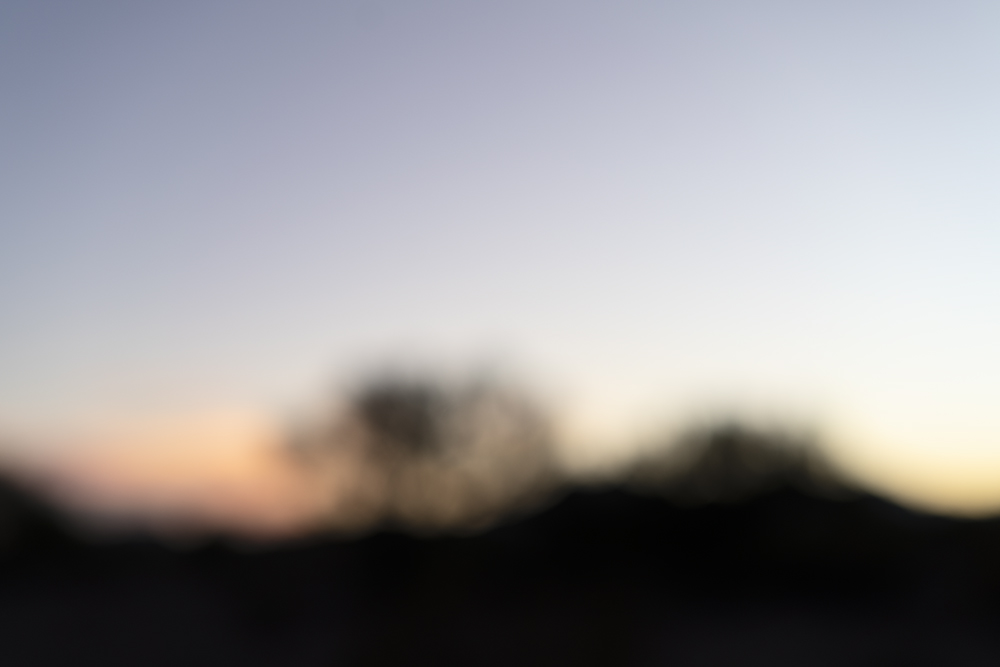
©Elizabeth Z. Pineda, El Desierto en la Noche, 2022
EK: Can you tell us about your artistic practice?
EZP: When I first began my journey in photography, I primarily worked in the wet lab making silver gelatin prints on fiber-based papers. In addition to my photographic work, this has evolved to include sculptural works, installation, video, and performance. I also have a great love of historic processes and printing on untraditional substrates.
My artistic practice is centered on giving voice to underrepresented people; through it, I examine themes of identity, belonging, erasure, memory, and time. Working with my hands is crucial to my work. Labor (through making) is also a very important part of my practice. Through my labor, I aim to honor the rich work ethic the migrant embraces on their path to perseverance, possibility, and growth.
For example, Sin Nombre en Esta Tierra Sagrada includes a set of 12 photogravures titled La Última Luz. These are traditional, dust grain on copperplate gravures, printed on silk gampi. I use this process thinking of memories of home and new landscapes, how they are etched in our minds. Moments that ultimately fragment as time passes. The multi-step process required to make these pieces is one that demands time and toil. One through which I mean to honor the migrants’ dreams, hopes, and their labor. An intent to acknowledge that it is the latter that will carry them to reach their goals, their vision of realizing a better life.
I often find myself working on different projects, making this a key aspect of my practice. Some of them are more finalized, some I can’t stop working on, and some are new things that I want to push further. I am also interested in learning and experimenting with new materials. This exploration is fundamental to the work I create. I want the extra layers of information to add to the significance of the work. For instance, I use corn husks in varied ways; from printing cyanotypes on the husks, to making handmade paper that I’ve printed digitally on, or used for a couple of book projects. The use of corn husks is key to imbuing the work with a sense of heritage, culture, and identity.
Finally, I also consider my role as an educator a part of my practice. This allows me not only to teach and encourage students to find their voice and cultivate their talent, but also to grow my practice and knowledge through my learning in the process.
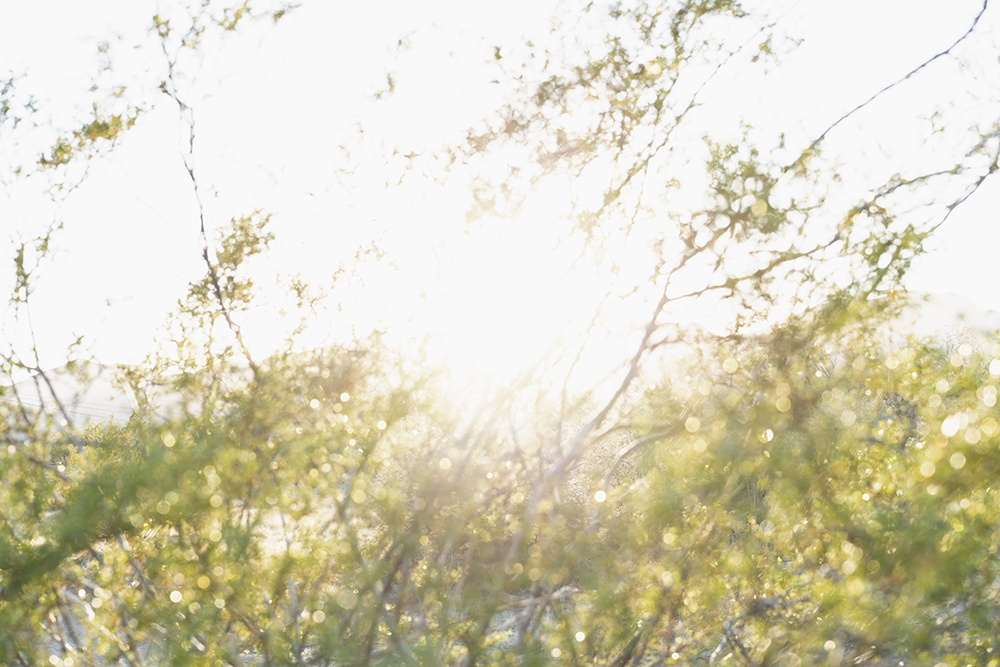
©Elizabeth Z. Pineda, En Esta Luz, 2021
EK: What is next for you?
EZP: Much has happened since I made this body of work. I feel incredibly fortunate. I have a few projects in mind that I haven’t started, and others I am continuing. I want to apply and participate in a residency, something I haven’t yet had the opportunity to do. I would love to attend one in Oaxaca, Mexico, a UNESCO World Heritage site. A place that is part of my roots, my mother being from Oaxaca. This would further my knowledge of both the culture and rich legacy I come from, and I wish to nurture my work with them. I am incredibly grateful for all of the opportunities I’ve had and look forward to seeing where things will lead me.
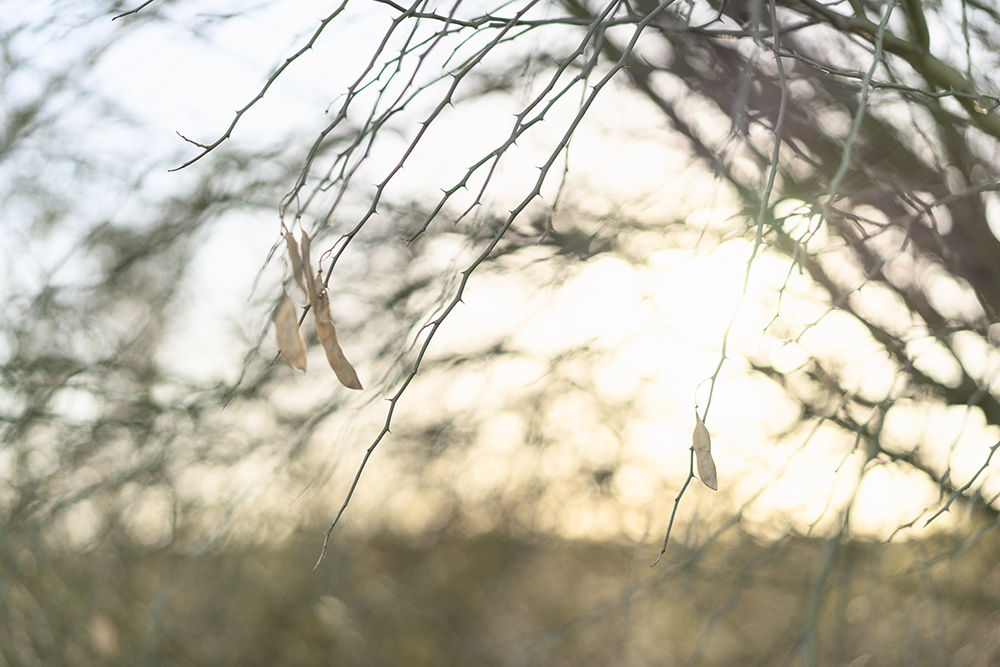
©Elizabeth Z. Pineda, Espinas del Palo Verde, 2021
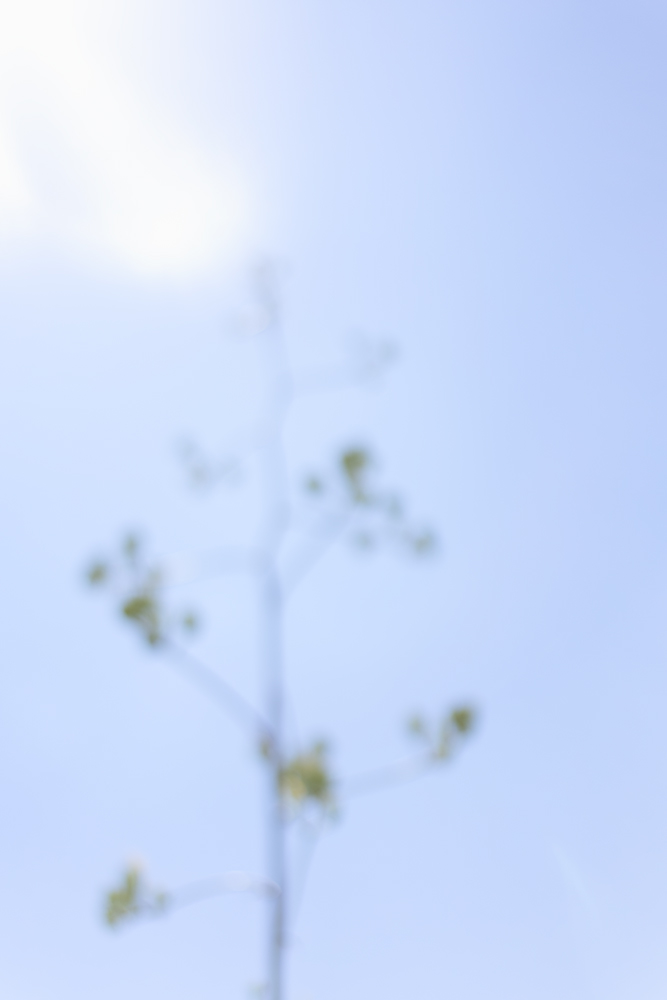
©Elizabeth Z. Pineda, Maguey, 2022
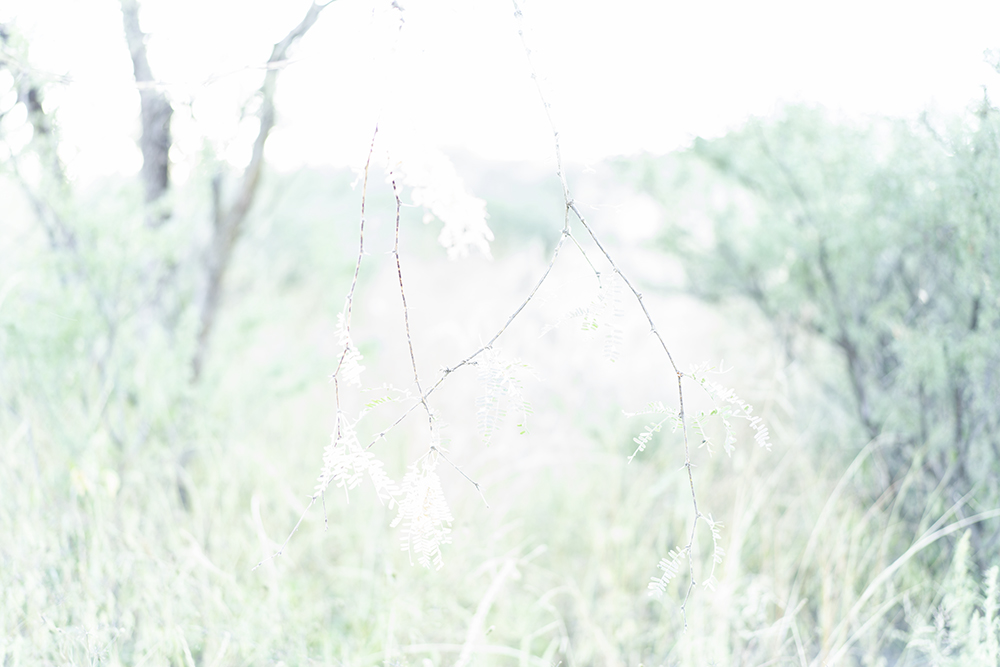
©Elizabeth Z. Pineda, Ramas Rotas, 2022
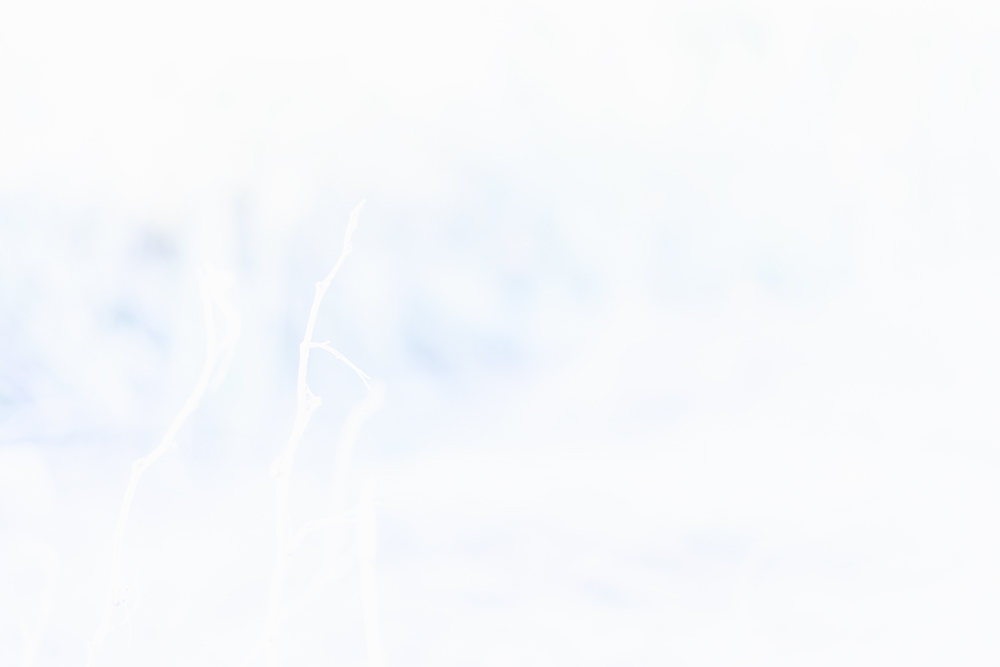
©Elizabeth Z. Pineda, Reverente, 2022
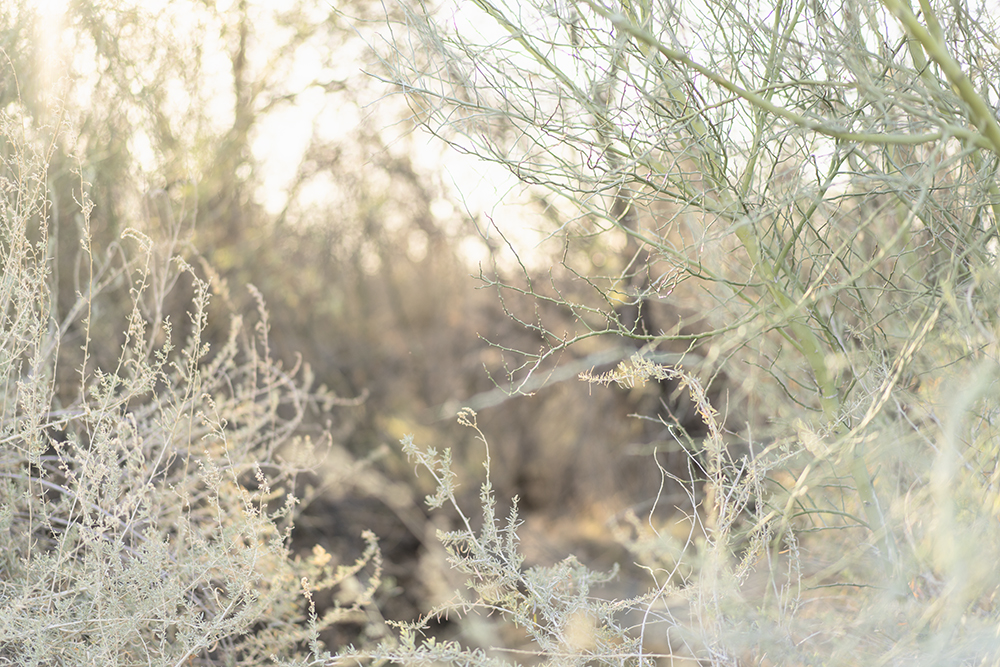
©Elizabeth Z. Pineda, Solemne, 2021
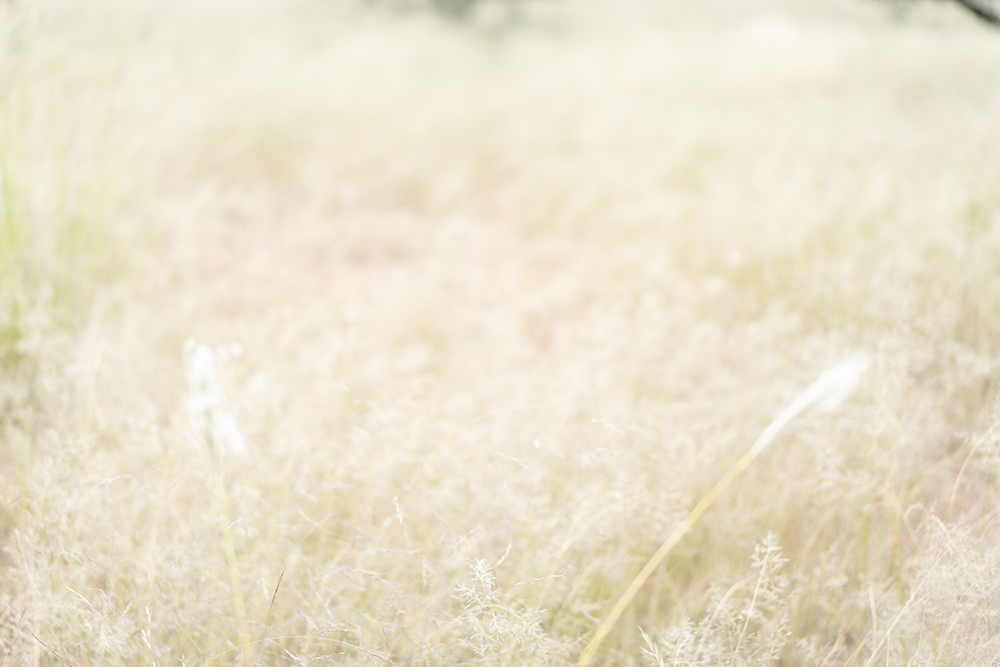
©Elizabeth Z. Pineda, Suspiros, 2022
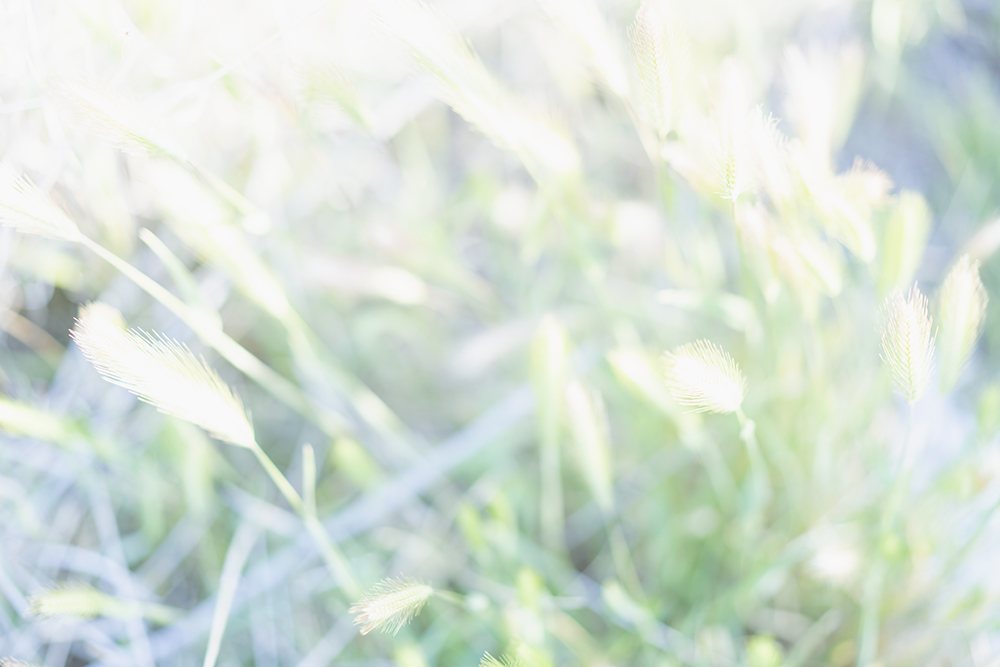
©Elizabeth Z. Pineda, Susurros, 2022
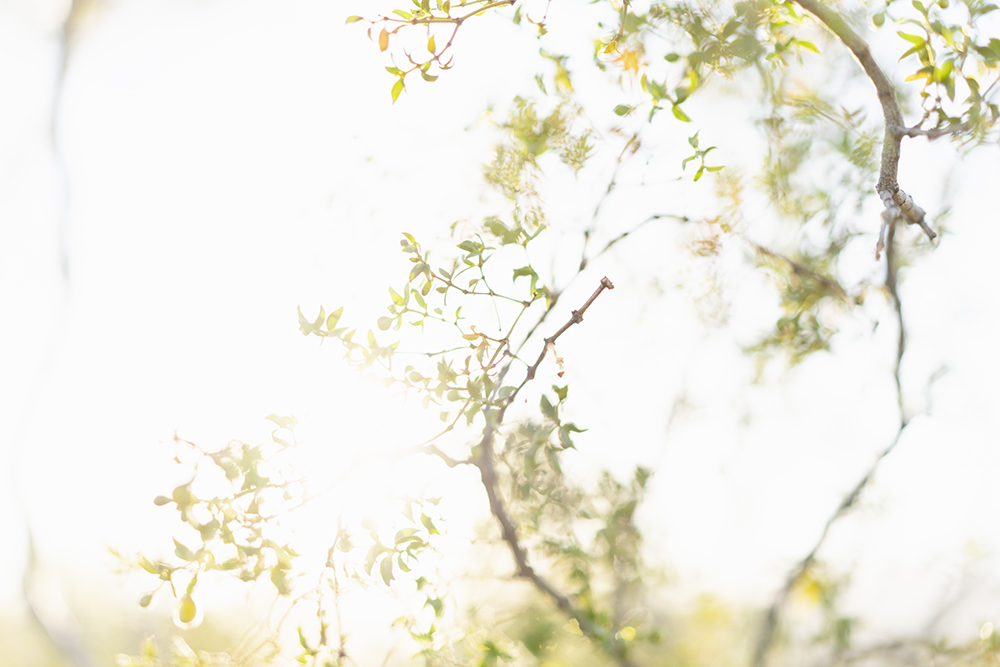
©Elizabeth Z. Pineda, Voy en Camino, 2021
Epiphany Knedler is an interdisciplinary artist + educator exploring the ways we engage with history. She graduated from the University of South Dakota with a BFA in Studio Art and a BA in Political Science and completed her MFA in Studio Art at East Carolina University. She is based in Aberdeen, South Dakota, serving as an Assistant Professor of Art and Coordinator of the Art Department at Northern State University, a Content Editor with LENSCRATCH, and the co-founder and curator of the art collective Midwest Nice Art. Her work has been exhibited in the New York Times, the Guardian, Vermont Center for Photography, Lenscratch, Dek Unu Arts, and awarded through Lensculture, the Lucie Foundation, F-Stop Magazine, and Photolucida Critical Mass.
Follow Epiphany on Instagram: @epiphanysk
Posts on Lenscratch may not be reproduced without the permission of the Lenscratch staff and the photographer.
Recommended
-
Craig Easton: An Extremely Un-Get-atable PlaceJuly 6th, 2026
-
The 2026 Paula Riff Award Winner: Angélica ArbulúJuly 3rd, 2026
-
The 2025 Paula Riff Award Winner: Marni MyersJuly 2nd, 2026
-
The 2024 Paula Riff Award Winner: Minwoo LeeJuly 1st, 2026
-
The 2023 Paula Riff Award Winner: Paula McCartneyJune 30th, 2026