CENTER AWARDS: Exhibitors Choice: Brittany M. Powell
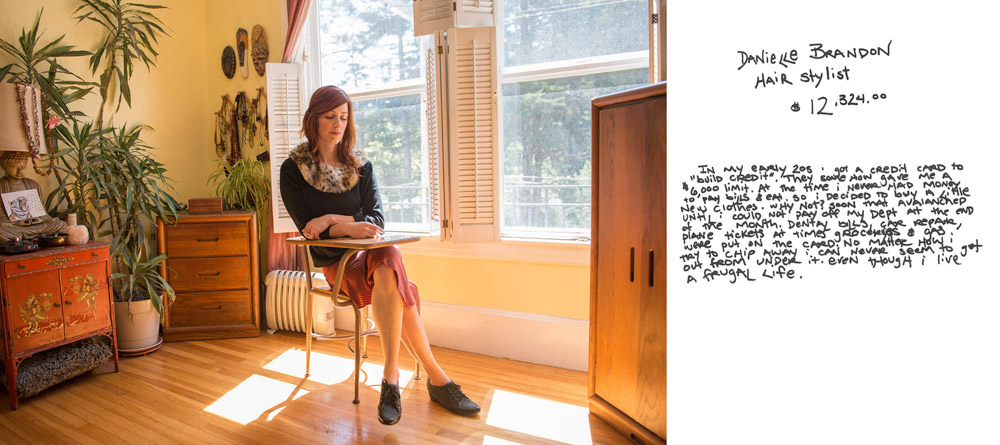
©Brittany M. Powell, Debt Portrait #1, San Francisco, CA
This week Lenscratch will be sharing the CENTER Awards winners and the statements by the jurors to help understand their choices.
Congratulations to Brittany M. Powell for her Second Place win in CENTER’s Exhibitor’s Choice Awards.
Brittany was born in Naples, Italy and grew up in the Washington DC area and New Orleans, LA. She moved to San Francisco in 1999 to study photography at the California College of the Arts. Since then, she has worked as a freelance and fine art photographer and filmmaker (www.brittanyMpowell.com), most notably on a two year project for National Geographic TV entitled the Voyage of the Plastiki. She was a regular contributor to the now defunct SF Bay Guardian, and her work has been published in the Washington Post, Slate Magazine, Fast Company, Featureshoot, Hyperallergic, USA Today, the Huffington Post, National Geographic, the San Francisco Chronicle, Yoga Journal, Chronicle Books, and Edible San Francisco.
Brittany earned an MFA from San Francisco State University and is presently an adjunct professor of photography and video at Napa Valley College. She has exhibited work at SF Camerawork, Root Division, SOMArts, Secession Gallery, California College of the Arts, San Francisco State University, Lobot Gallery, and has upcoming shows at the Headlands Center for the Arts, the Flux Factory, and Smack Mellon Gallery in New York. In 2013, she was the recipient of the Murphy Cadogan Contemporary Art Award, gifted by the San Francisco Foundation. In 2015, Brittany was a finalist for the Dorothea Lange Prize in documentary and was awarded fellowships from both the Vermont Studio Center and the Headlands Center for the Arts. Most recently, Brittany was the second place winner of the Exhibitor’s Choice Award at Review Santa Fe Photo Festival.
Brittany’s current project, The Debt Project, is a multi-media exploration of the role debt plays in both personal identity and the social structure in America.
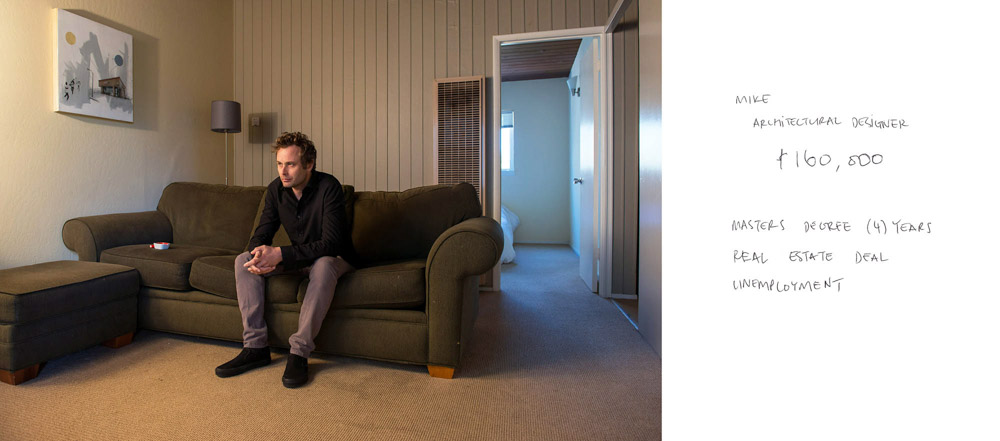
©Brittany M. Powell, Debt Portrait #8, Oakland, CA
EXHIBITOR’S CHOICE: Juror’s Statement
Rixon Reed, Director & Founder, Photo-eye Gallery, Photo-eye Bookstore
The overall quality of the submissions to Center’s Awards this year made it extremely challenging to choose only three bodies of work for the new Exhibitions Choice Awards. Each of the following projects could easily capture a viewer’s attention and spark their imagination when shown in galleries or on museum walls.
Brittany M. Powell’s, The Debt Project simply, but powerfully illuminates the reality of the current personal financial state of many individuals in our culture.
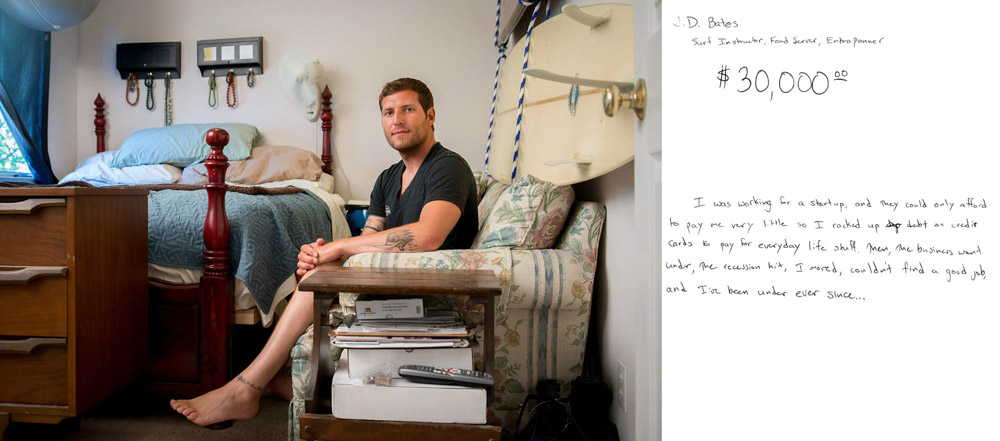
©Brittany M. Powell, Debt Portrait #11
The Debt Project
The Debt Project is a photographic and multimedia exploration of the role Debt plays in personal identity and the social structure in America.
In 2012, after struggling with a significant loss of income from my photography business following the 2008 economic decline, my debt skyrocketed, and I made the difficult decision to file for bankruptcy. This spurred my interest in investigating the role debt can play in our identity and how we relate to the world. The theme of debt is a loaded one — one that explores issues of identity, morality, class, politics and even subconscious psychology. Debt is publicly enforced and highly stigmatized, but is almost always privately experienced. It is, in many ways, an abstract form without material weight or structure, yet with heavy physicality and burden in a person’s everyday life.
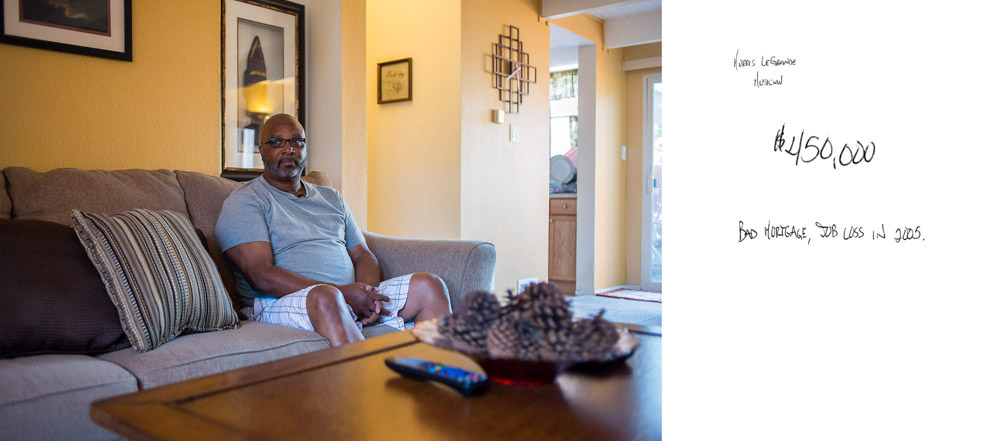
©Brittany M. Powell, Debt Portrait #12
I began this body of work by asking subjects to sit for a formal portrait in their own homes surrounded by their belongings, inspired by early Flemish portrait painting. I asked each person to answer a series of questions on camera about their debts and to hand write the amount of debt they are in and the story behind it. These “stories of debt” are included in the viewing of the work as documents that serve as a physical representation of the abstracted form of debt and its invisible role in our lives.
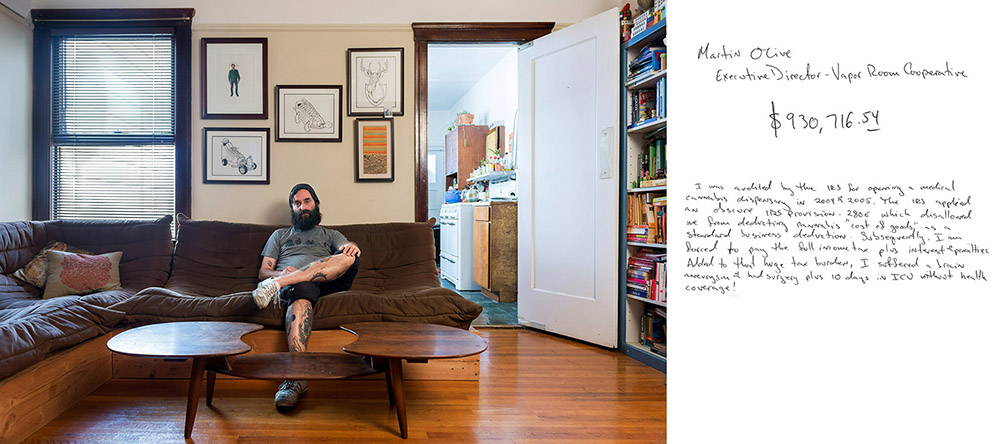
©Brittany M. Powell, Debt Portrait #10
My goal is to photograph and interview 99 subjects around the US to tell their stories of how Debt affects them in both their personal and social identities. To date, I have photographed and interviewed 45 subjects, in the San Francisco, New York City, Portland, Detroit and New Orleans metro areas. My goal is to encourage viewers to re-contextualize an abstract, often shamed experience, and raise cultural awareness and understanding about an issue that is largely American, but is also spreading internationally. It is my hope that by having a platform to openly discuss the issue of Debt, my project will encourage the questioning and reframing of our universal perception of Debt and how we contribute to its power and role in our social structure.
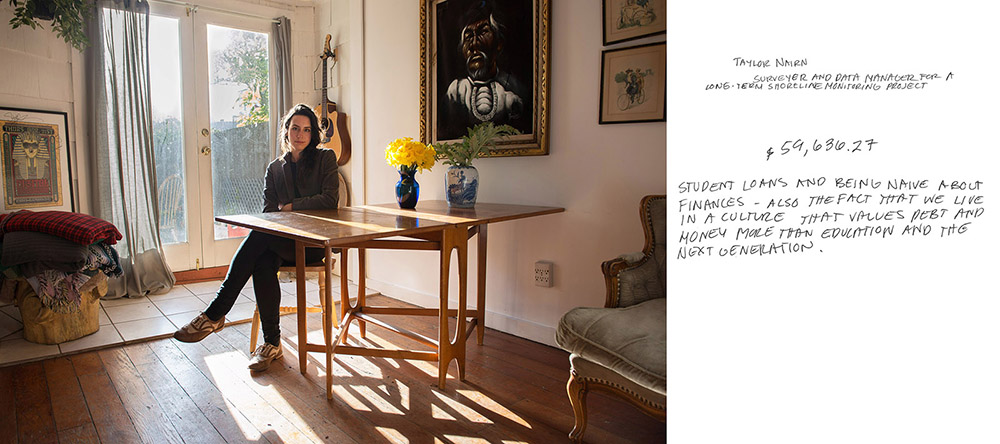
©Brittany M. Powell, Debt Portrait #4
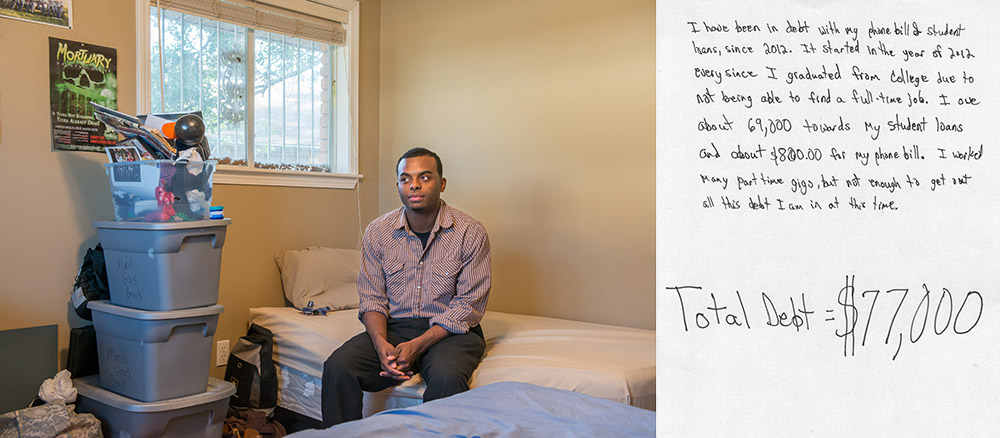
©Brittany M. Powell, Debt Portrait #38

©Brittany M. Powell, Debt Portrait #42
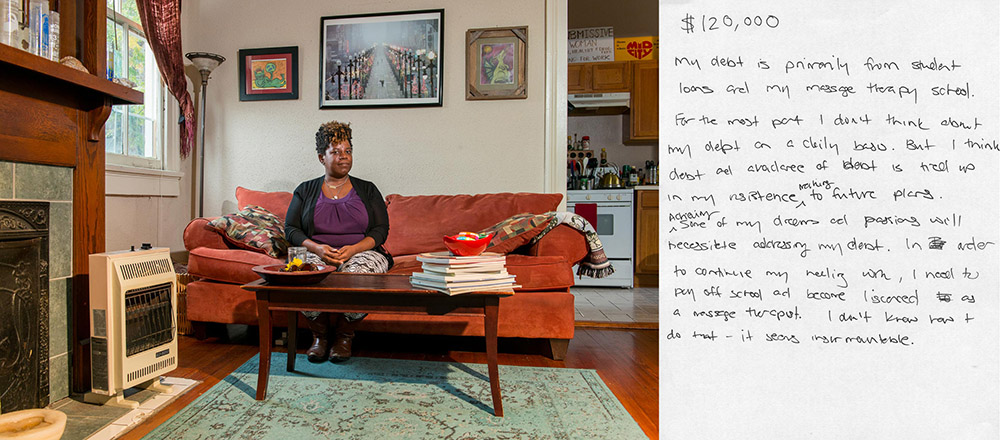
©Brittany M. Powell, Debt Portrait #43
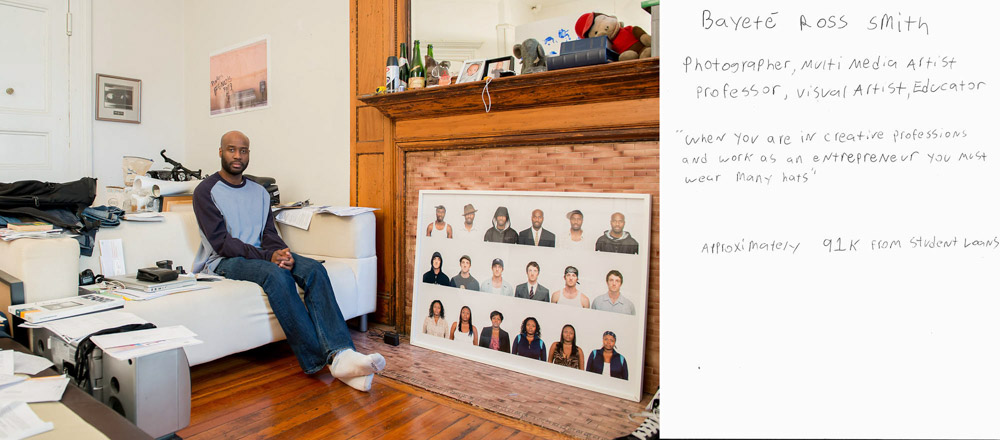
©Brittany M. Powell, Debt Portrait #14
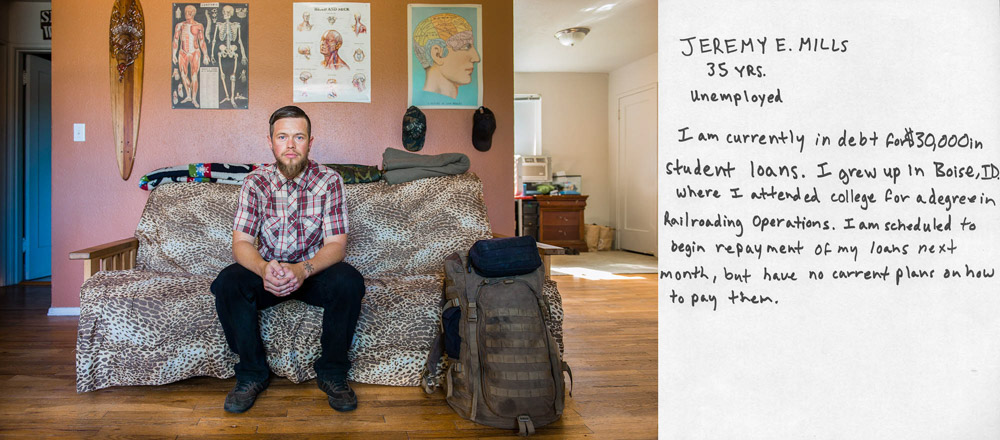
©Brittany M. Powell, Debt Portrait #22

©Brittany M. Powell, Debt Portrait #26
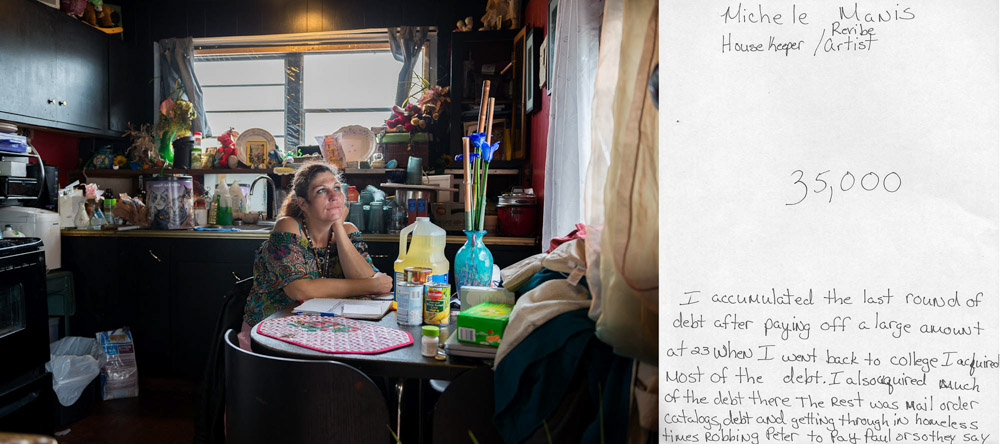
©Brittany M. Powell, Debt Portrait #32

©Brittany M. Powell, Debt Portrait #33
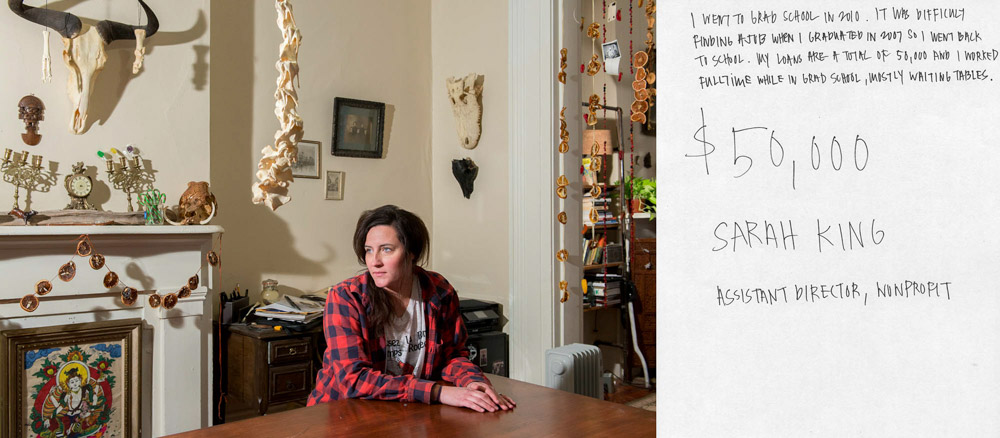
©Brittany M. Powell, Debt Portrait #39
Posts on Lenscratch may not be reproduced without the permission of the Lenscratch staff and the photographer.
Recommended
-

Zanele Muholi: 2026 Hasselblad Award LaureateMarch 13th, 2026
-

Shane Hallinan: The 2025 Salon Jane Award WinnerFebruary 12th, 2026
-

Greg Constantine: 7 Doors: An American GulagJanuary 17th, 2026
-

Yorgos Efthymiadis: The James and Audrey Foster Prize 2025 WinnerJanuary 2nd, 2026
-

Arnold Newman Prize: C. Rose Smith: Scenes of Self: Redressing PatriarchyNovember 24th, 2025