The CENTER Awards: Project Launch Grant Honorable Mention: Kathleen Clark
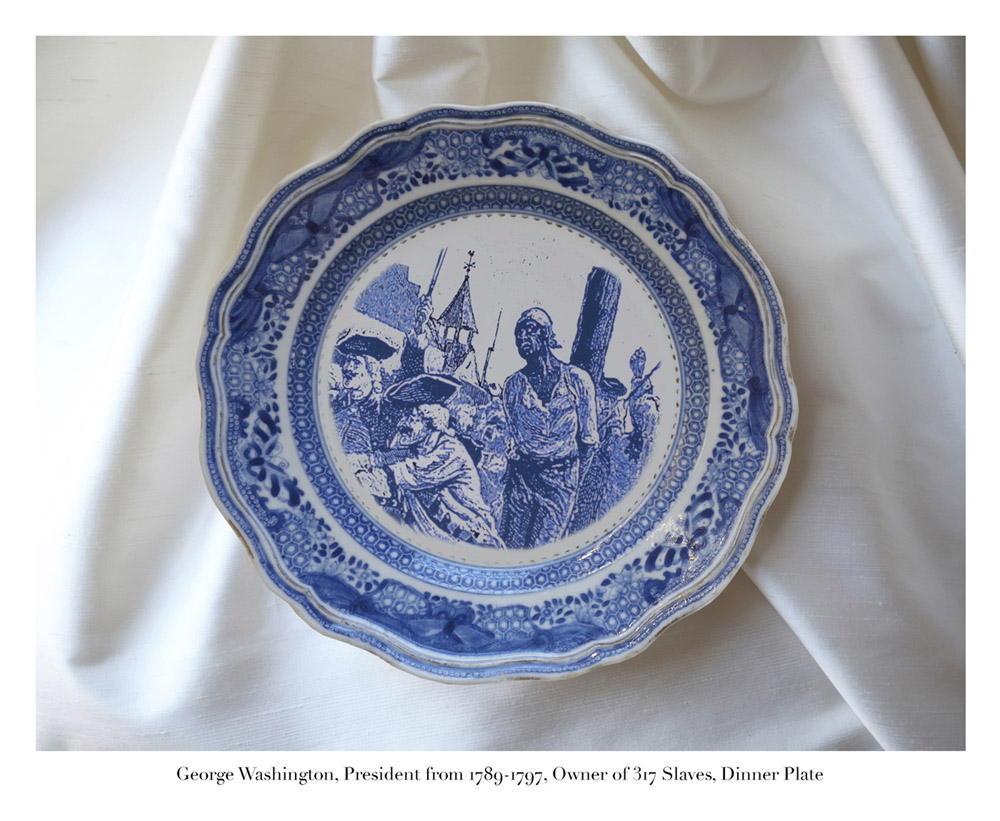
©Kathleen Clark, George Washington
Congratulations to Kathleen Clark for being selected for Honorable Mention for CENTER’s Project launch Grant recognizing her project, The White House China. The Project Launch is granted to outstanding photographers working on a fine art series or documentary project. The grant includes a cash award to help complete or disseminate the works, as well as providing a platform for exposure and professional development opportunities. This grant is awarded to complete or nearly completed projects that would benefit from the grant award package. The awards include $1,000 Cash Award, complimentary participation and presentation in the Review Santa Fe Photo Festival,and an online exhibition at VisitCenter.org
Juror Dr. Rebecca Senf – Chief Curator, Center for Creative Photography & the Norton Family Curator of Photography, Phoenix Art Museum shares her insights:
One of art’s great powers is its subjectivity. It is possible to love art that you alone love, and to despise art that is universally appreciated. (I’ve never been a fan of Wes Anderson movies, and I’m pretty sure I’m the only one.) This subjectivity is such a blessing when you come across a poem, podcast, novel, or work of visual art that speaks to you – to your very cells – and you feel connected, understood, and that you resonate with another human, through the experience of their creation.
I juried this Project Launch Grant while working from home, in self-isolation during the COVID-19 pandemic of Spring 2020. I looked at thousands of photographs, and read the words of hundreds of photographers. I treasured the opportunity to go with them to the places they had been – both literal and imaginative – through their work. I valued the way the artists had opened themselves to their audiences, embracing vulnerability and revealing themselves through their work. Art making is such an act of bravery; and in the context of social distancing, I so appreciated the way our artists create and express to allow the rest of us to share in and learn from their process.
While family and its construction feels so significant right now, my sense of the politics of our nation is looming large as well. What do we value? How do we resolve our differences? How will we address societal inequities that have been made so obvious in this moment of threat? Honorable mentions go to Kathleen Y. Clark (with her project White House China) and Kari Wehrs (with her body of tintypes called Shot), two women who, through the very construction of their work, have engaged creativity, conceptual rigor, and strong aesthetic effect to ask powerful questions about these issues.
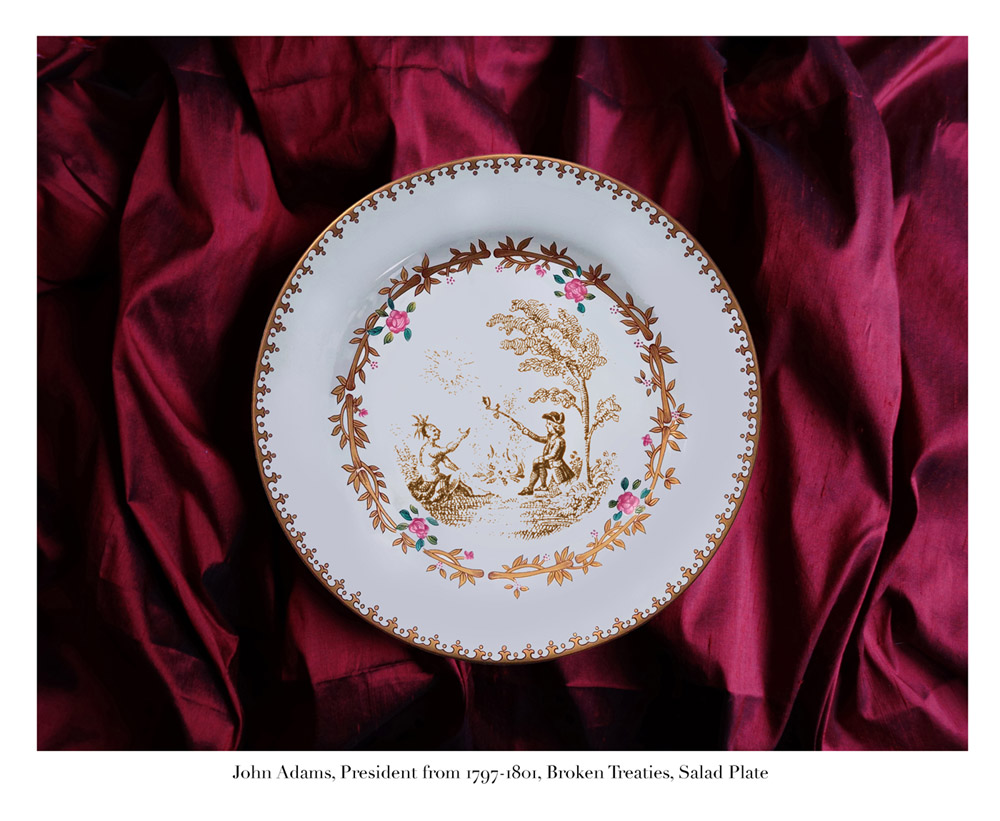
©Kathleen Clark, John Adams President
Dr. Rebecca Senf is Chief Curator at the Center for Creative Photography at the University of Arizona, in Tucson. Her B.A. in Art History is from the University of Arizona; her M.A. and Ph.D. were awarded by Boston University. In 2012, her book Reconstructing the View: The Grand Canyon Photographs of Mark Klett and Byron Wolfe was released by the University of California Press; in 2017, her book To Be Thirteen, showcasing the work of Betsy Schneider, was published by Radius Press and Phoenix Art Museum. Senf is an Ansel Adams scholar, and recently published a book on Ansel Adams’s early years, called Making a Photographer, copublished by the CCP and Yale University Press.
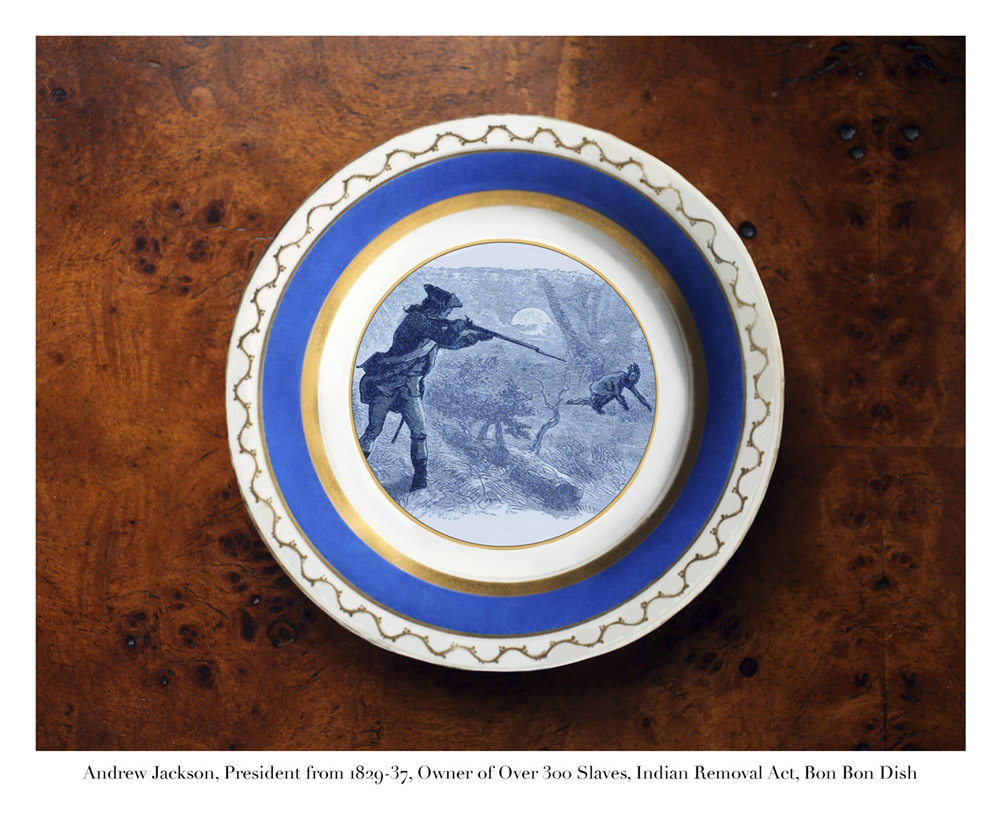
©Kathleen Clark, Andrew Jackson
The White House China
The White House China is a series of photographic and mixed media reconstructions based on the collection of dinnerware at the presidential residence in Washington, DC. Depictions of china are based on the official state and family china collections of the presidents they represent or that of their predecessors.
Aiming to correct certain historical omissions, I began this project to explore the iconography and incongruity of an America established through violent conquest yet framed by elegant theory. A country once perceived as a beacon for democracy has at its root, the constant struggle for social justice. Embedded in a patriotic narrative, the rise and economic glory of the United States was fueled by the eradication of indigenous people, enslavement of Africans and the exploitation of natural resources.The White House was no exception to this opportunism.
Inspired by early political illustrators who used their explosive imagery to reveal injustice behind the country’s facade of equality, these re-creations look at presidential contradictions and pivotal judgements made throughout the nation’s history. My intent is to shine a light on often-destructive events which happened by decision or neglect within each administration, providing a stark contrast to the assumption of civilization and culture set around historic dining tables.
The images are digital photographs of photographic assemblages. The dinnerware is not ceramic. Each piece was created by combining photographs of ceramics or digitally painted plate rim patterns with historical illustrations. These assemblages were then color printed and hand cut to make two-dimensional paper props which were re-photographed in real settings. I intend to show them as approximately.
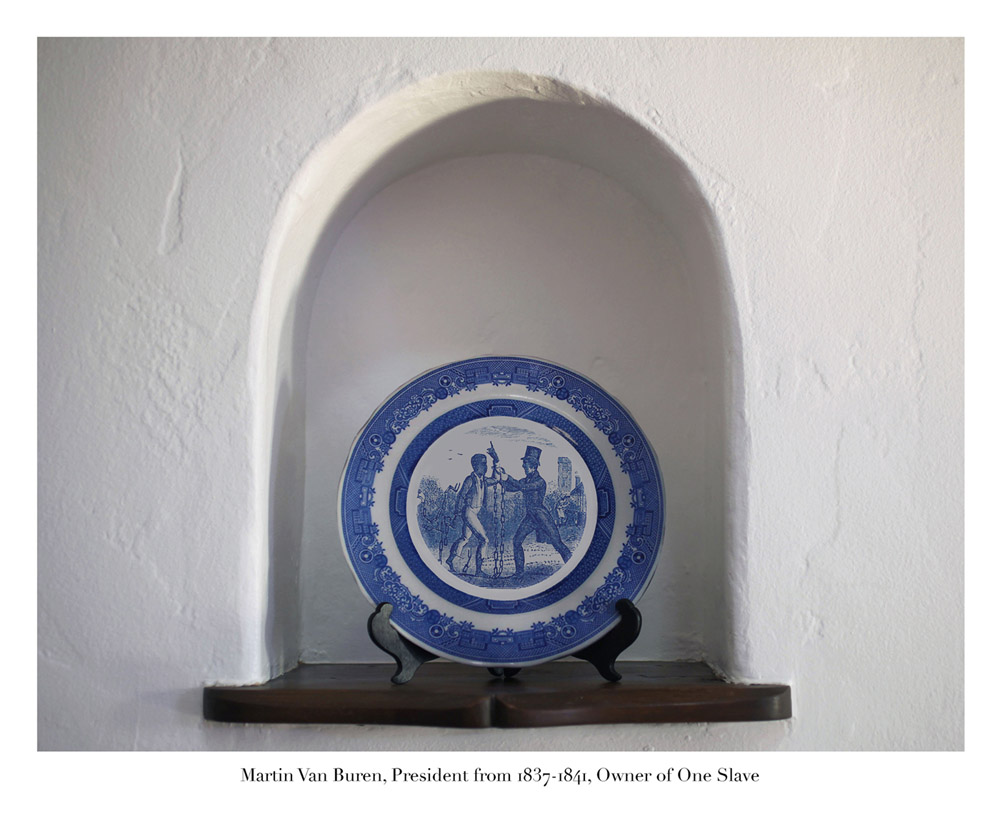
©Kathleen Clark, Martin Van Buren
An artist and photography editor, Kathleen Clark lives and works in Southern California. She was Director of the contemporary Los Angeles photography galleries Spot Photo Works and Clark | Oshin Gallery. In her personal work she utilizes photography and mixed media to explore themes of environment, language, home, family and history. She has exhibited works in galleries such as COCA in Seattle, the Portland Art Museum, Southern Exposure in San Francisco and LACE in Los Angeles. She has a Master of Fine Arts degree in studio art and photography, and served as faculty at Art Center College of Design and at the University of Southern California. In addition she was a recipient of commissions and grants for collaborative work (with The Girl Artists of Portland, Oregon) from the National Endowment for the Arts, the Oregon Arts Commission, Seattle Arts Commission, Bumbershoot Festival and the Metropolitan Arts Commission, Portland, Oregon. Kathleen was the longtime Photo Director of Los Angeles Magazine and LA Weekly newspaper and freelance photo edits for Sunset magazine. She works privately with fine art, commercial and editorial photographers in the editing of their work for books, portfolios and other presentations and publications in addition to developing and enriching overall bodies of work. She won numerous awards from the Society of Publication Design, American Photography and the City and Regional Magazine Awards. Kathleen Clark has served as a portfolio reviewer for Photo Lucida, Review Santa Fe, FotoFest Houston, Art Center College of Design, Palm Springs Photo Festival, The Lucie Foundation, Los Angeles Center of Photography, and Eyeist. As a juror, she served the Tokyo International Photography Awards, Critical Mass, the Center for Fine Art Photography and the International Photography Awards.
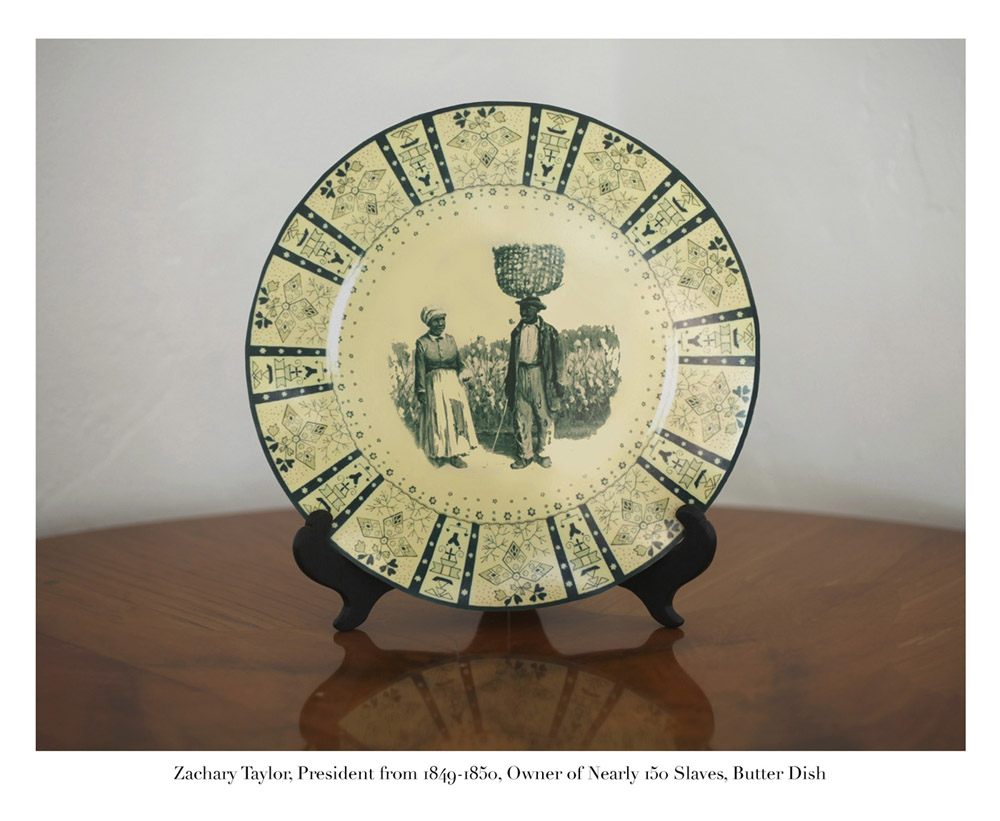
©Kathleen Clark, Zachary Taylor President
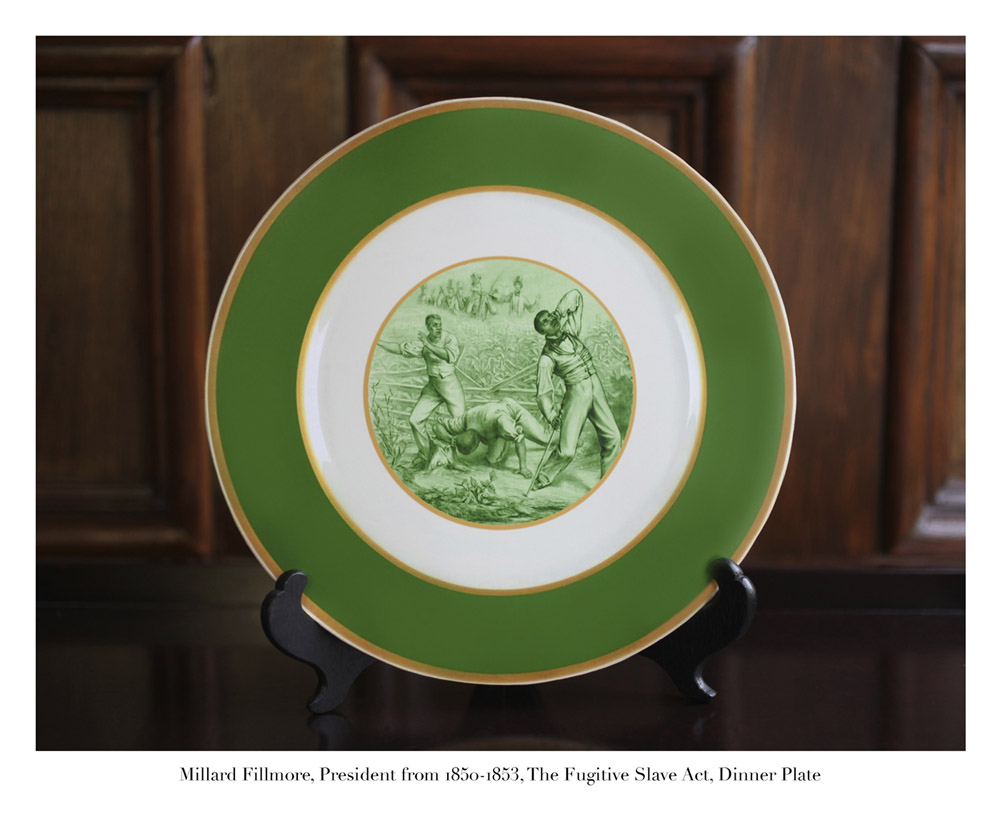
©Kathleen Clark, Millard Fillmore President

©Kathleen Clark, Chester A. Arthur
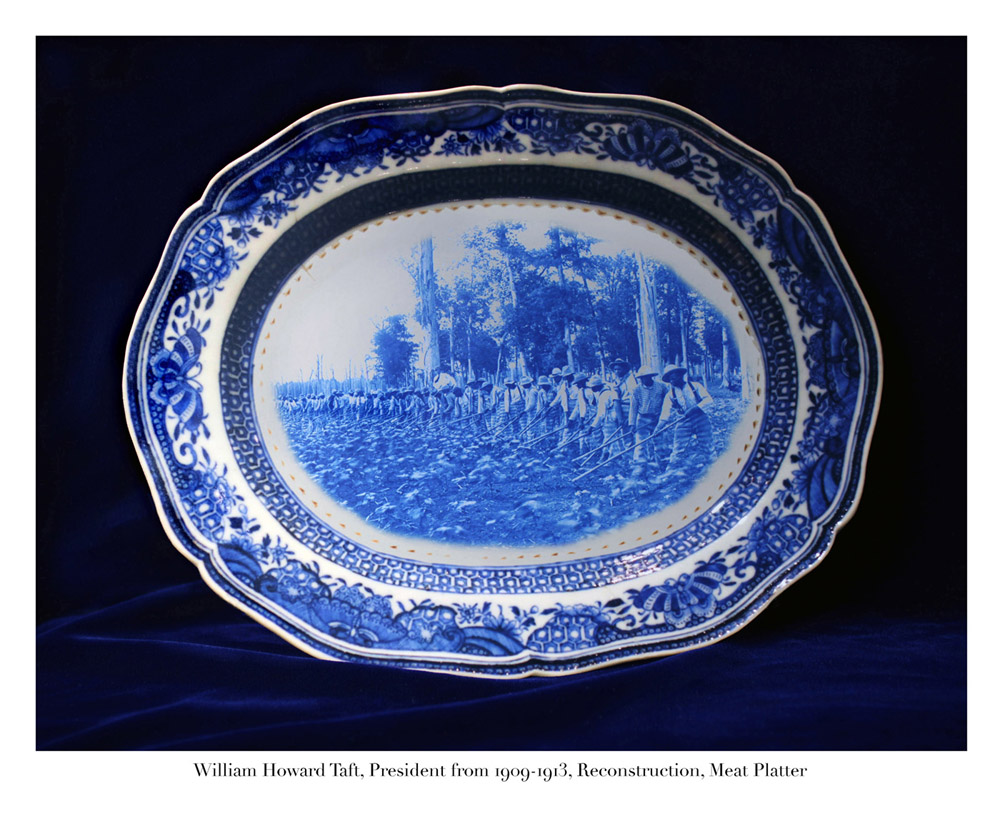
©Kathleen Clark, William Howard Taft
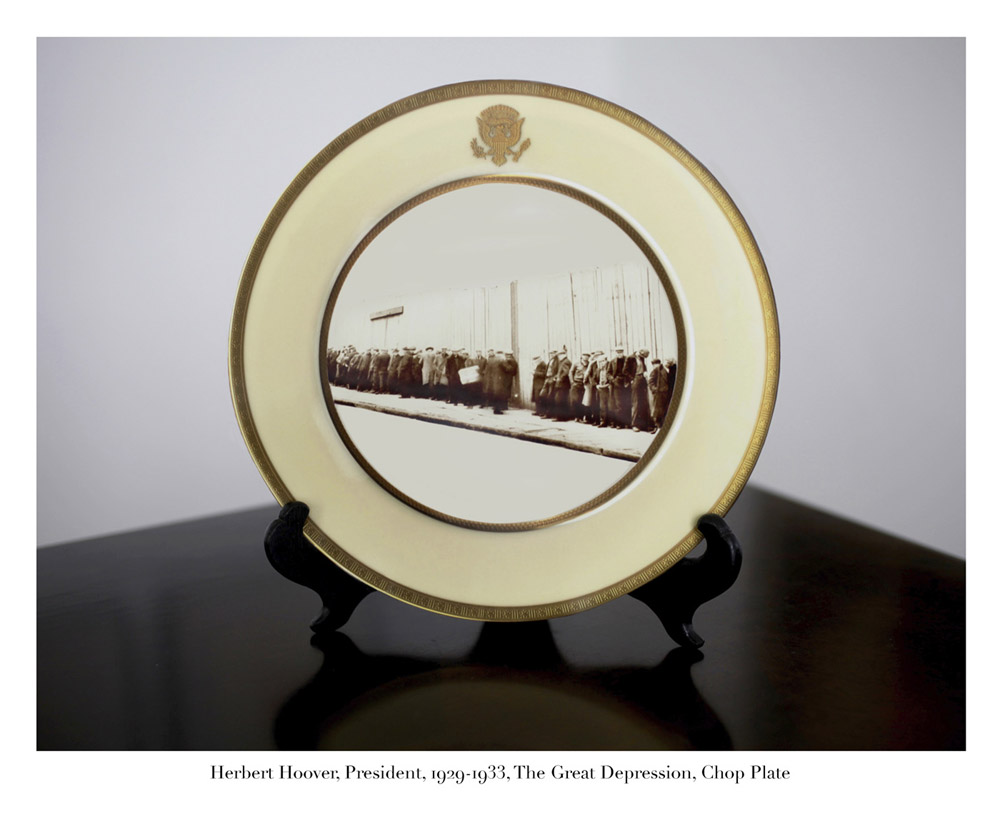
©Kathleen Clark, Herbert Hoover
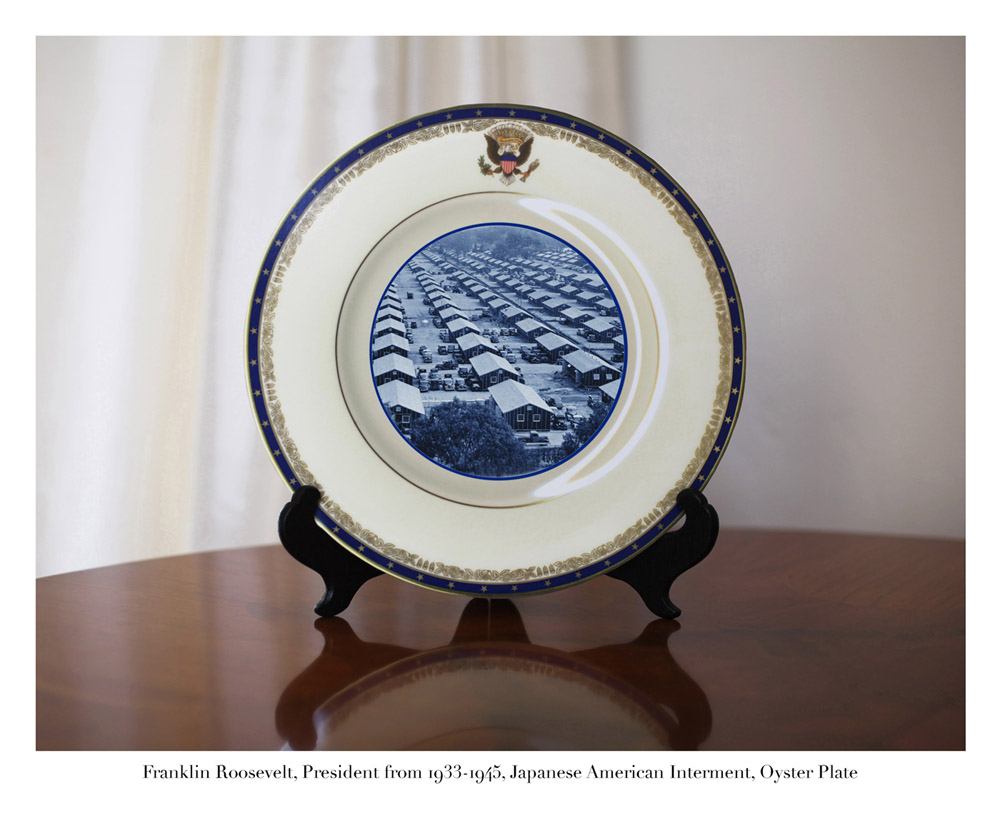
©Kathleen Clark, Franklin D. Roosevelt
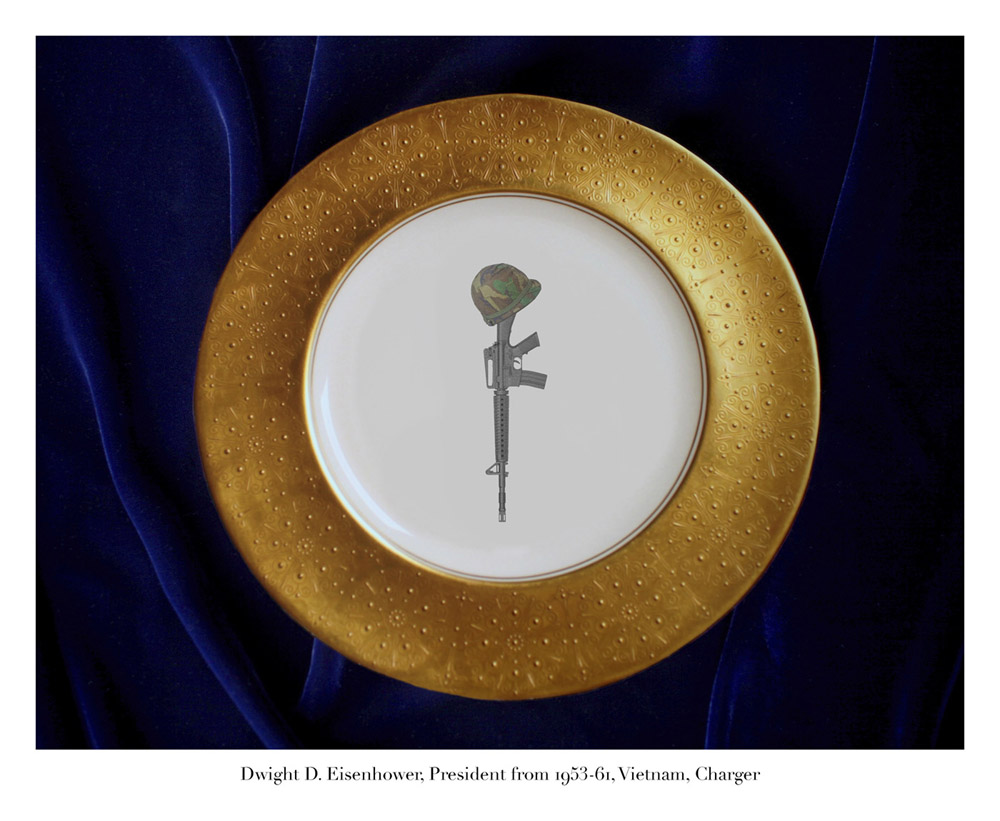
©Kathleen Clark, Dwight D. Eisenhower
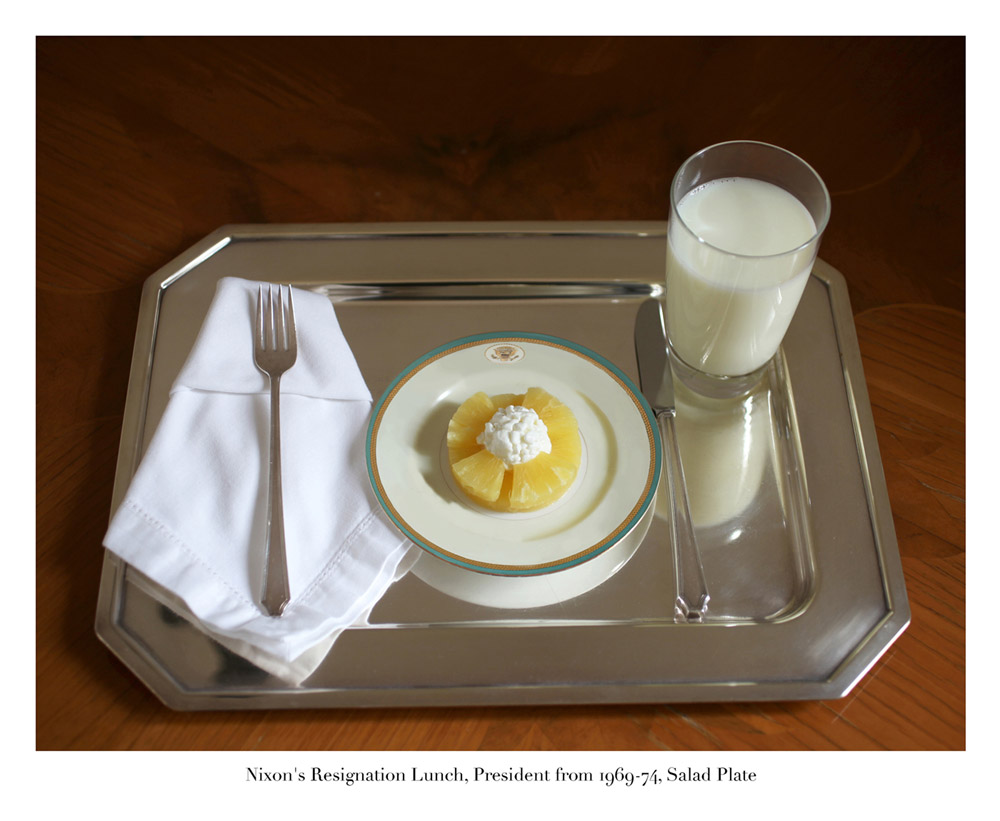
©Kathleen Clark, Richard M. Nixon
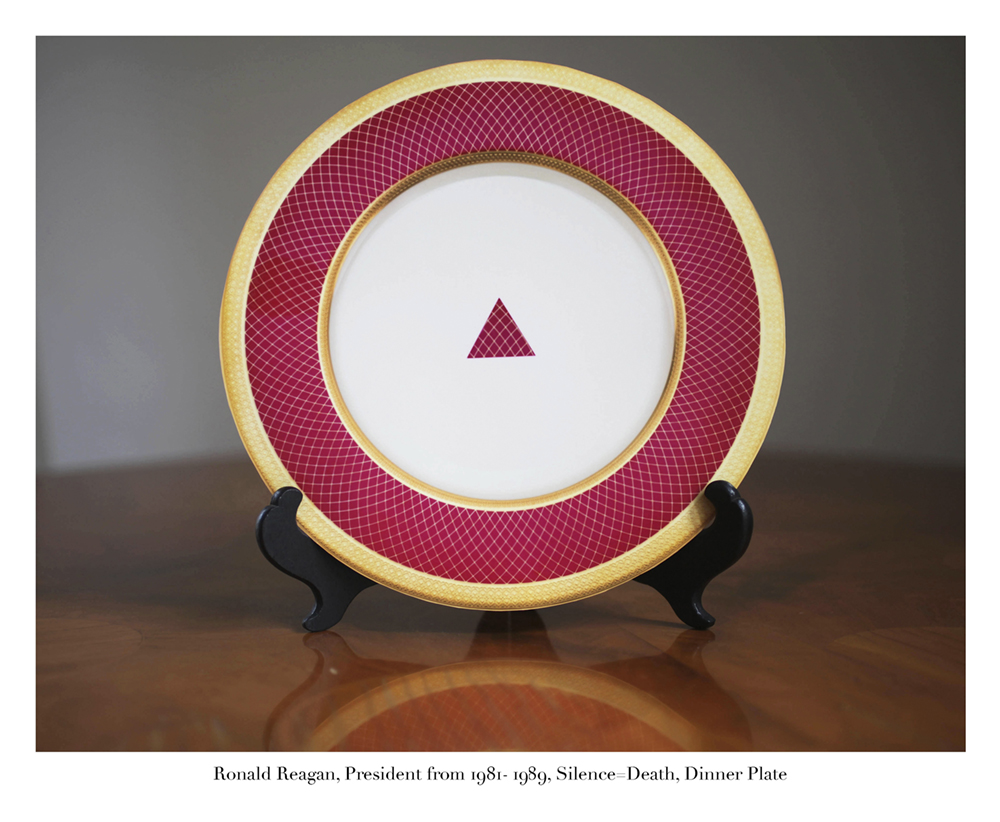
©Kathleen Clark, Ronald Reagan
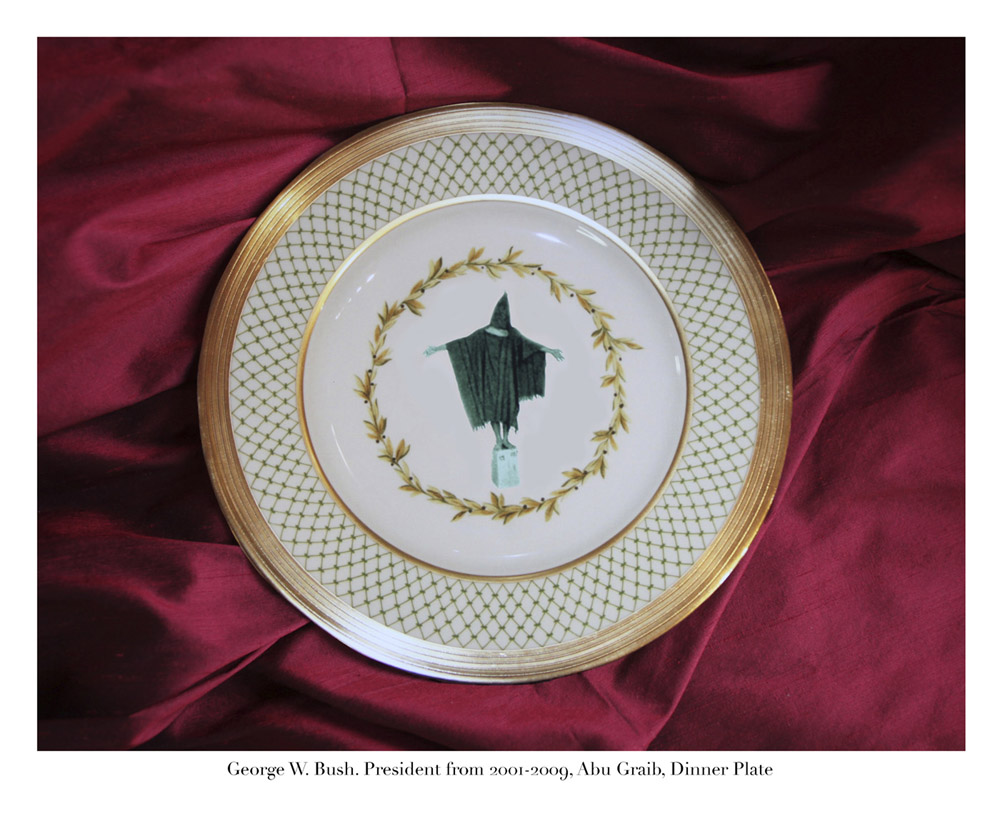
©Kathleen Clark, George W. Bush
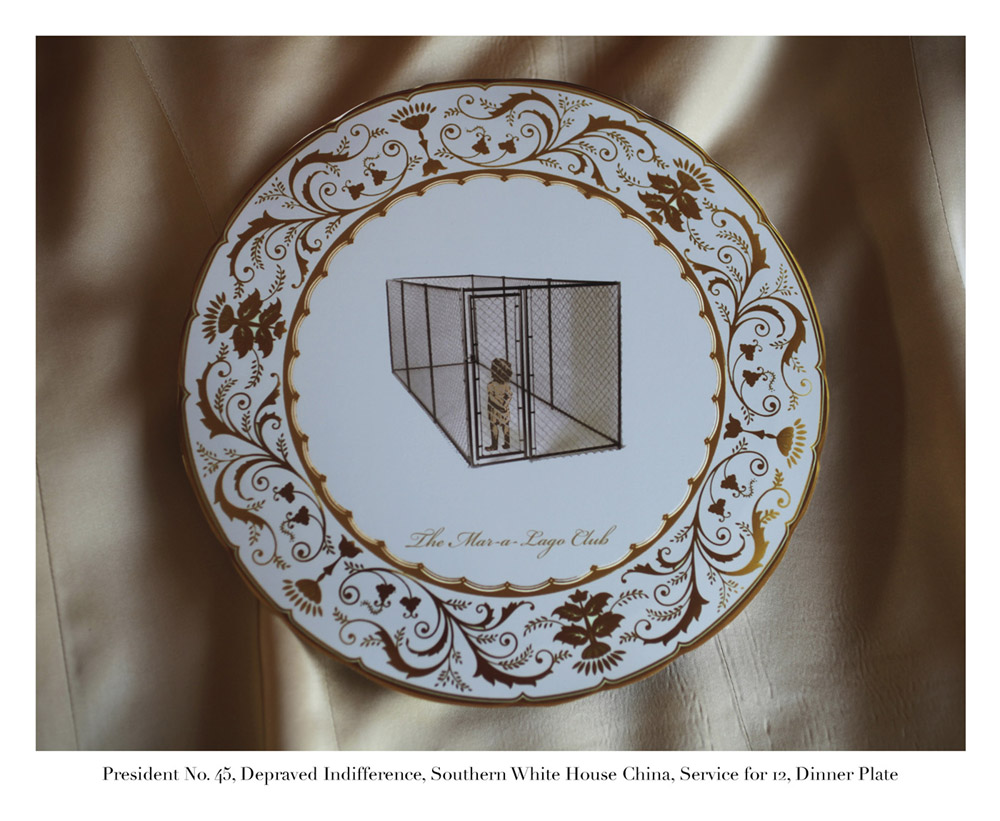
©Kathleen Clark, President No. 45
Posts on Lenscratch may not be reproduced without the permission of the Lenscratch staff and the photographer.
Recommended
-
The Museum of Fine Arts Announces Establishment of $50,000 Edelman Impact Award in PhotographyMay 31st, 2026
-

Donna Gordon: 2025 Denis Roussel Award WinnerMay 16th, 2026
-
Zanele Muholi: 2026 Hasselblad Award LaureateMarch 13th, 2026
-
Shane Hallinan: The 2025 Salon Jane Award WinnerFebruary 12th, 2026
-

Greg Constantine: 7 Doors: An American GulagJanuary 17th, 2026