Hamidah Glasgow: Beyond Resilience
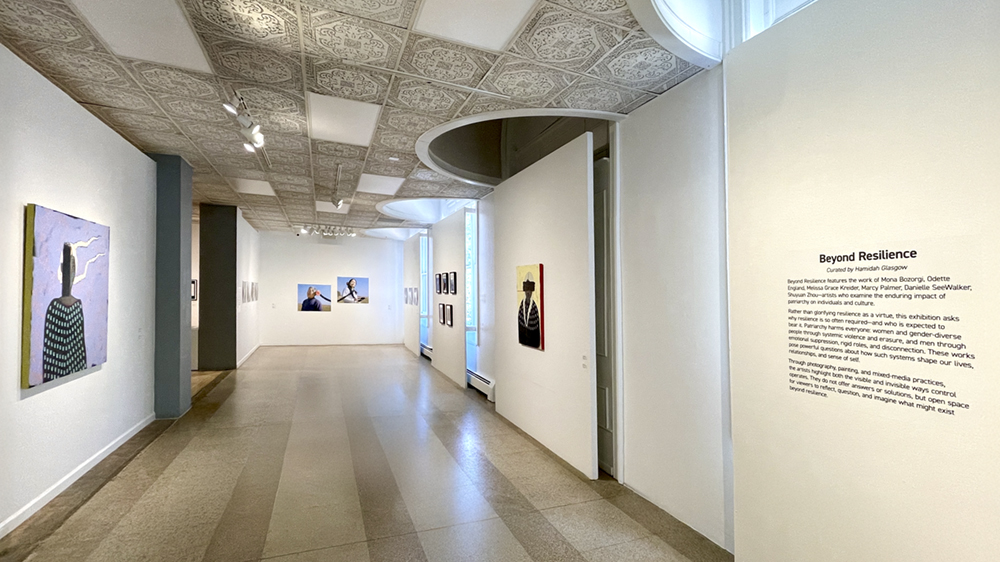
Exhibition “Beyond Resilience” at The Museum of Art Fort Collins, curated by Hamidah Glasgow. Works by Danielle SeeWalker, Shuyuan Zhou, Marcy Palmer
This week we explore works made by female-identifying lens-based artists who explore issues affecting contemporary women. I’ve approached the projects this week thinking about these questions: How is this point in time different for female artists? What issues need to be addressed in our current climate?
Hamidah Glasgow curated “Beyond Resilience” at the Museum of Art Fort Collins, which runs June 27 – Sept. 14, 2025. “Beyond Resilience” features works from six female-identifying artists regarding issues that affect women and begins a dialog that asks for a future of equity and freedom.
“On June 24, 2022, The Supreme Court reversed 50 years of legal protections for women’s right to bodily autonomy. That was almost exactly three years ago.
We have fought long and hard to gain equity under the law, and having our rights reversed was and continues to be a significant blow. I began to think about what bodily autonomy means beyond the legal system but within our social and cultural norms. Many of these accepted or tolerated ways that the patriarchy affects women asks women to be resilient in the face of unending violence and abuse. I wonder why women are asked to perform this way instead of society changing the systems that create the violence and abuse.
This exhibition was born of that inquiry. The show features work from women of diverse cultures; the harms they endure can be observed as commonalities that occur in every patriarchal society, albeit in different forms.
While the exhibited works do not propose answers, I hope that people will consider how we can create a different world for women and for men. One not of patriarchy but of equity. This exhibition isn’t anti-men; it’s pro-people—it’s a case for equity. I believe we can do better for ourselves and our children.”
– Hamidah Glasgow’s statement at the opening reception for “Beyond Resilience”.
I had the wonderful opportunity to discuss this show with Hamidah. In full disclosure, my work was included in the exhibition.
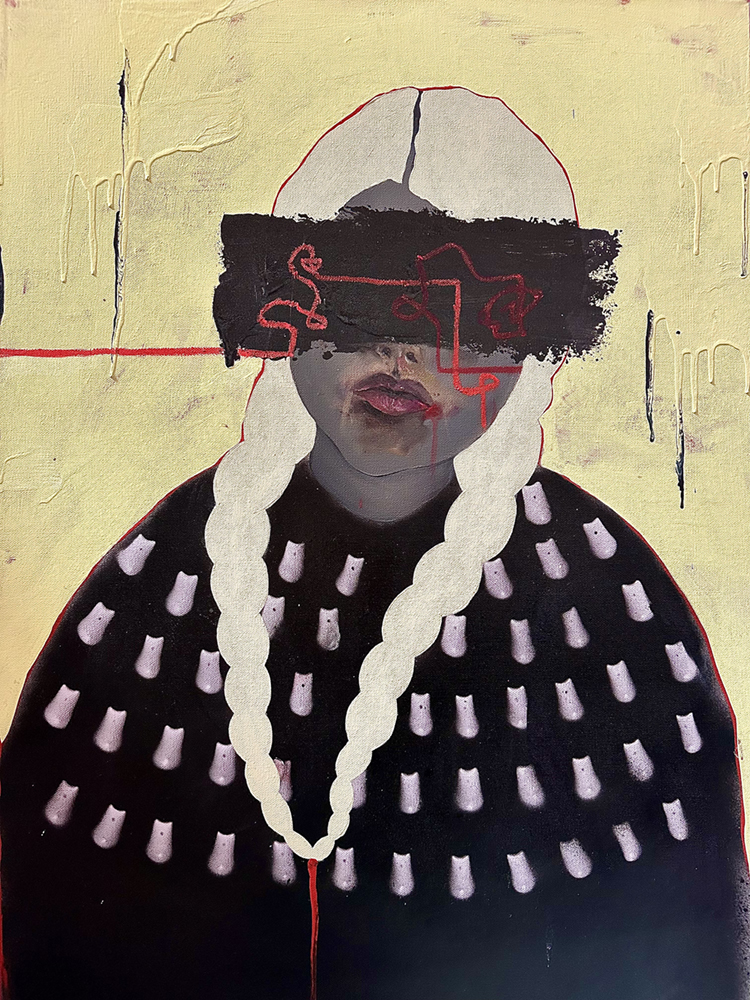
©Danielle SeeWalker
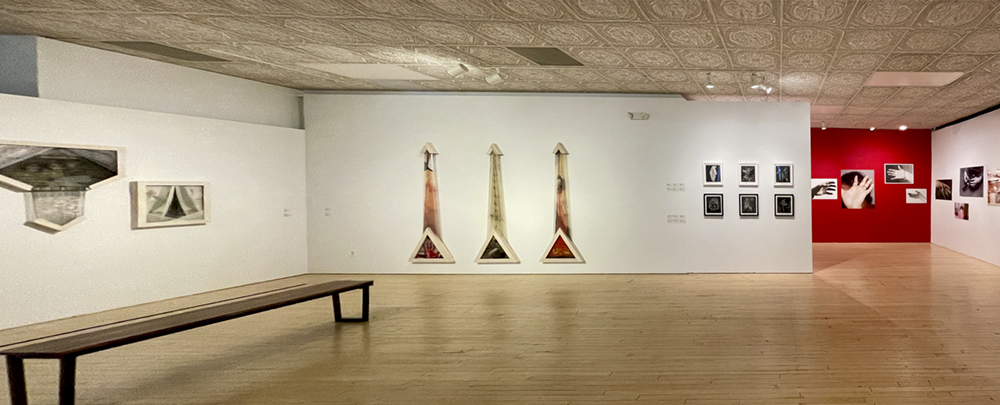
“Beyond Resilience” works by Mona Bozorgi, Marcy Palmer, Odette England
MP: How did you conceive of the concept for “Beyond Resilience”?
HG: I’ve been a feminist as long as I can remember, long before I had the language for it. As an adolescent, I wondered why my brothers could do things I was told I couldn’t do, like get a paper route. I wasn’t having that and fought to get my own paper route.
In the last several years, women’s rights in the United States have been repealed by the courts and other institutions. I wanted to create a show that looks at these systems of patriarchy that oppress anything other than white cis male identities. After seeing the phenomenal work being created by artists like Mona Bozorgi and Shuyuan Zhou, I began to develop the idea for an NEA grant. In the meantime, the Center for Fine Art Photography closed, and the possibility of the show was put on hold. When the Museum of Art, Fort Collins, reached out to host the show, I was excited to bring the works together and put on this exhibition.
Working as an independent curator has been a great joy. I get to do the parts of my old job that I loved and not the parts that wear on me. I have the utmost respect for Executive Directors, but that is a challenging job, and I am glad to have that experience in my past.
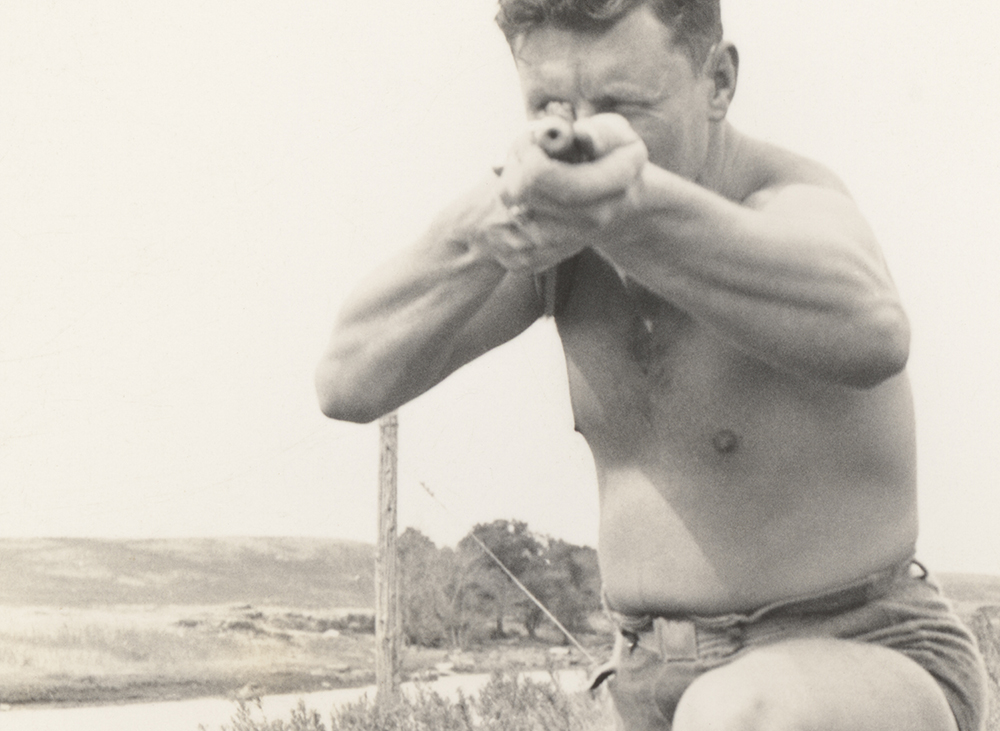
©Odette England

©Melissa Grace Kreider
MP: The artists in the show approach the theme in a myriad of ways with various media. Can you talk about this a bit?
HG: I have long been interested in photographic artists who push the boundaries of what we know of photography. So, these artists are a natural fit for my taste and sensibilities. Though some of the work is fairly traditional in the mode of creation, the content is not conventional at all.
Marcy Palmer’s images use historical processes to create images that speak about the methods women have used over time to avoid becoming pregnant or not remaining pregnant. They are the perfect combination of process and content, serving each other in an exciting way. The images are gorgeous, and the message is profound.
Mona Bozorgi’s work, which uses photographs sourced from demonstrators in Iran’s (ee-RON) Women, Life, Freedom movement, combines photography and sculptural elements to reflect the complexity of the subject matter and the interwoven struggle for women worldwide to throw off the control of patriarchy for autonomy and agency.
Danielle SeeWalker (Lakota) is a painter I have long admired for her honesty in bringing awareness to the rights of Native Americans. Including work that addresses the MMIWG catastrophe in the Americas was vital to me in making this show feel complete.
Melissa Grace Krieder’s work, showing us the prevalent yet mostly unaddressed crisis of domestic violence and sexual assault, is brave, distressing, and eye-opening. In a newspaper print piece of hers, the figure of 700,000 untested rape kits is quoted. How can a society that values its people equally allow this to happen, let alone persist?
Odette England uses snapshot-like images to put us in the place of the observer, the interloper, the victim, and the gazed at. The work is uncomfortable in a good way. She shows us how the language of guns and cameras/photography is eerily similar. Add some red lipstick from a bullet-like case, and it all comes full circle.
Shuyuan Zhou’s images of the female members of her family tell stories of girl babies left exposed to the elements, the strict roles allowed for women in society, and, ultimately, the connections across generations that women share.
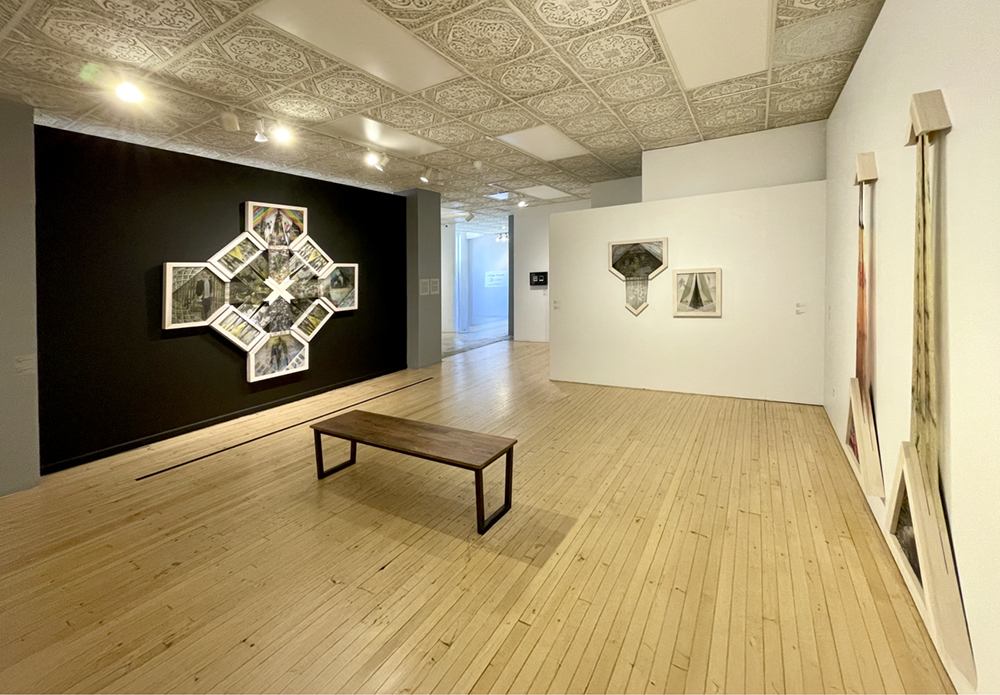
“Beyond Resilience” works by Mona Bozorgi, Melissa Grace Kreider
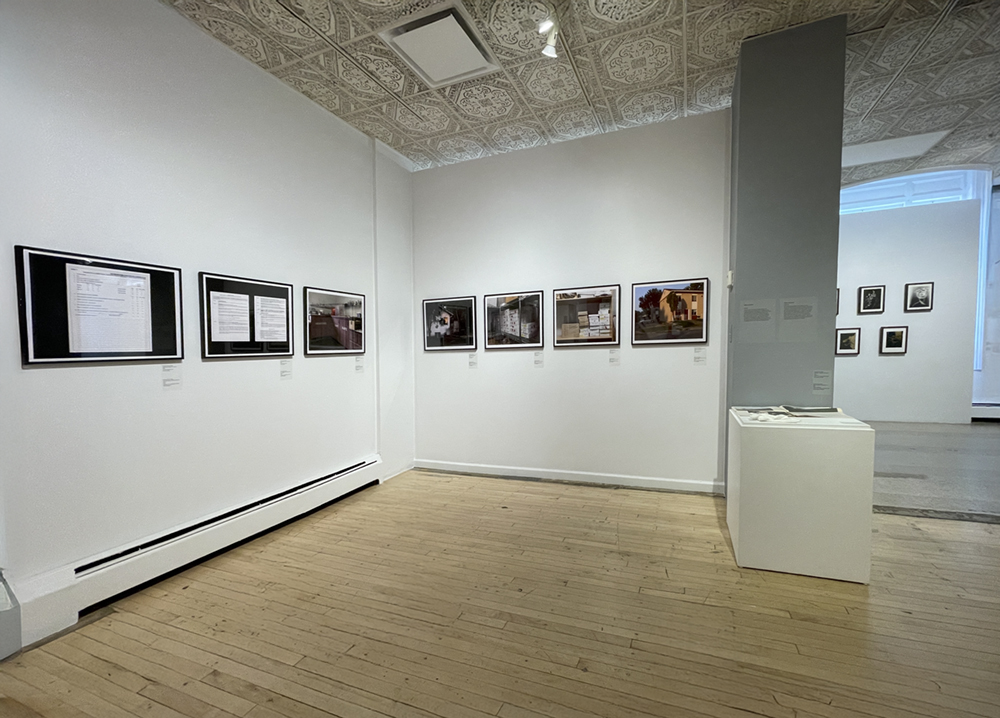
“Beyond Resilience” works by Melissa Grace Kreider, Marcy Palmer
MP: Were there any challenges or surprises in curating the show? What was the result of these?
HG: Trying to show the harmful ways of the patriarchy is difficult because it is an underlying belief system that informs society of how to function. If someone had made a body of work about the perpetrators of these abuses, I would have included that work. What we see is the result of the abuses, the avenues of control and manipulation that the patriarchy relies on to perpetuate itself.
The show doesn’t have answers, but I hope it allows space for reflection on what we have now and whether this is what we want for ourselves and our children.
MP: As we move forward in this political climate, is there something that you want people to recognize or is there something that you would like to communicate?
HG: If we don’t like the direction our country and the world are going, we need to do what we can to make a difference. I choose to do that through art, among other means, but we all have our strengths and methods to make a difference. This may sound corny, but Love is the way forward. Love for others, humans, animals, plants, and the earth. We all play a part in the way the world goes, from how we treat each other to where we spend our money and how we use our platforms.
“Beyond Resilience”, curated by Hamidah Glasgow, Museum of Art Fort Collins, June 27- September 14, 2025 featuring works by Mona Bozorgi, Odette England, Melissa Grace Kreider, Marcy Palmer, Danielle SeeWalker, Shuyuan Zhou.

©Melissa Grace Kreider
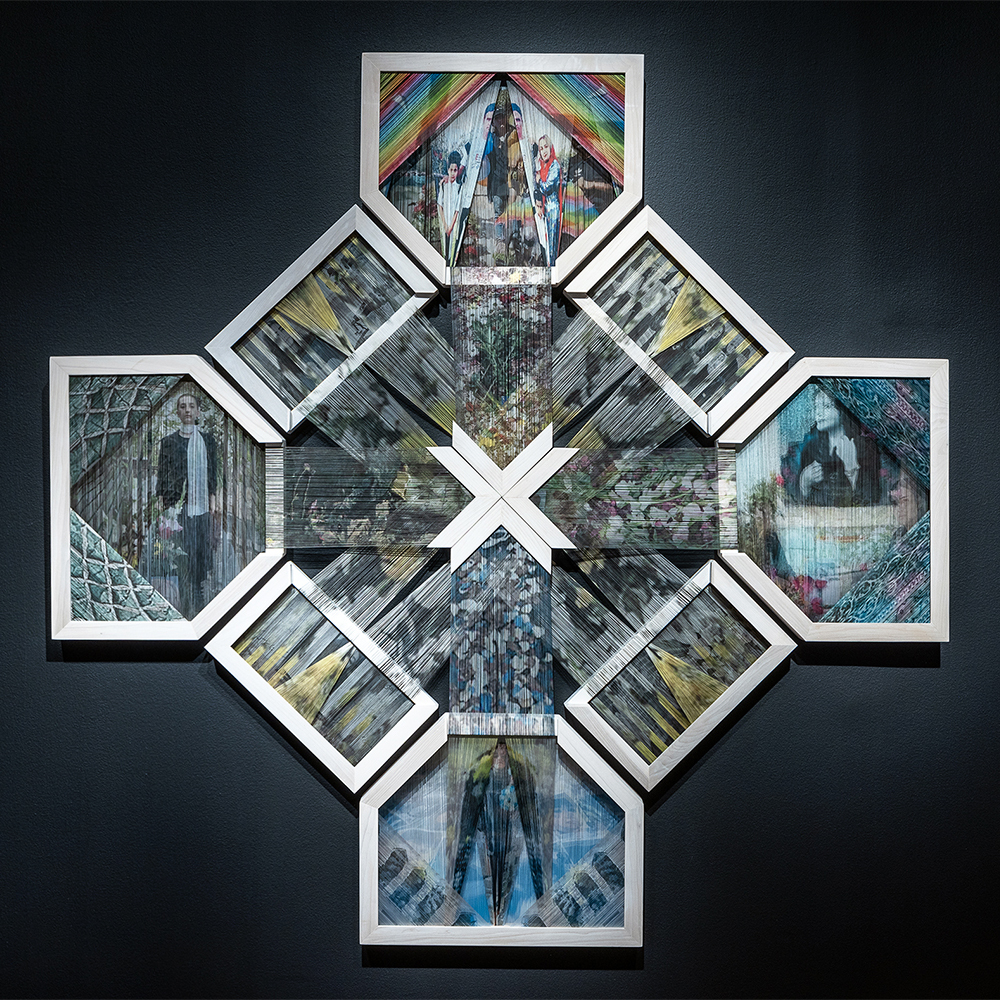
©Mona Bozorgi
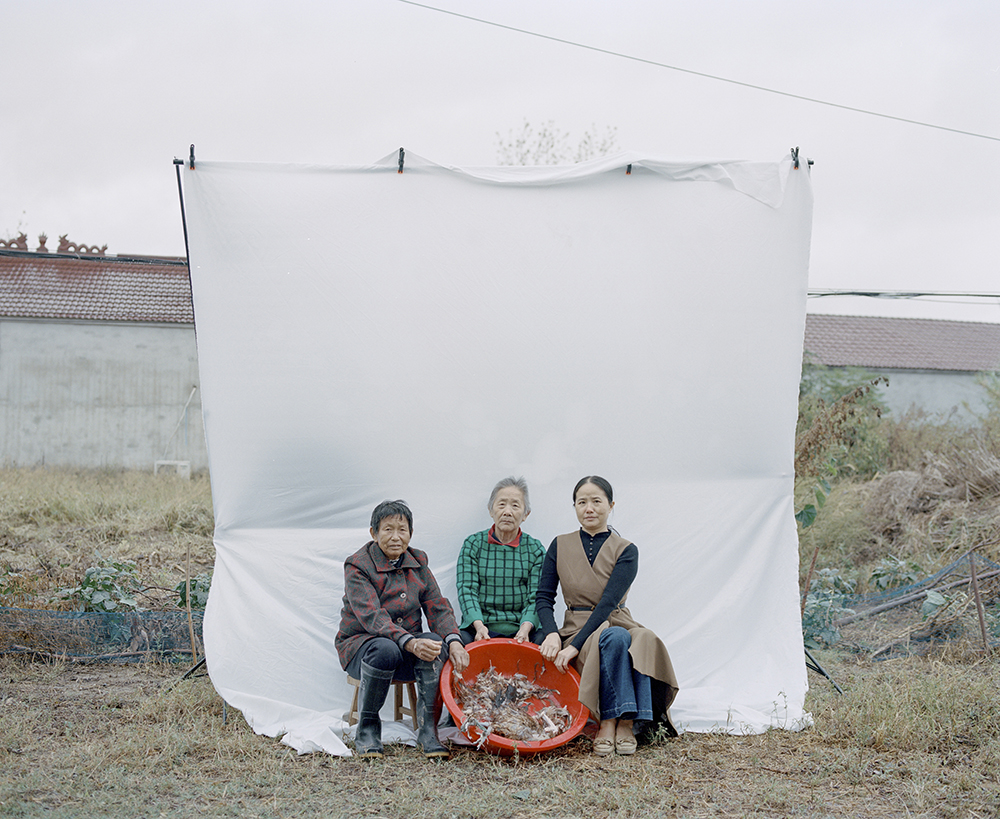
© Shuyuan Zhou
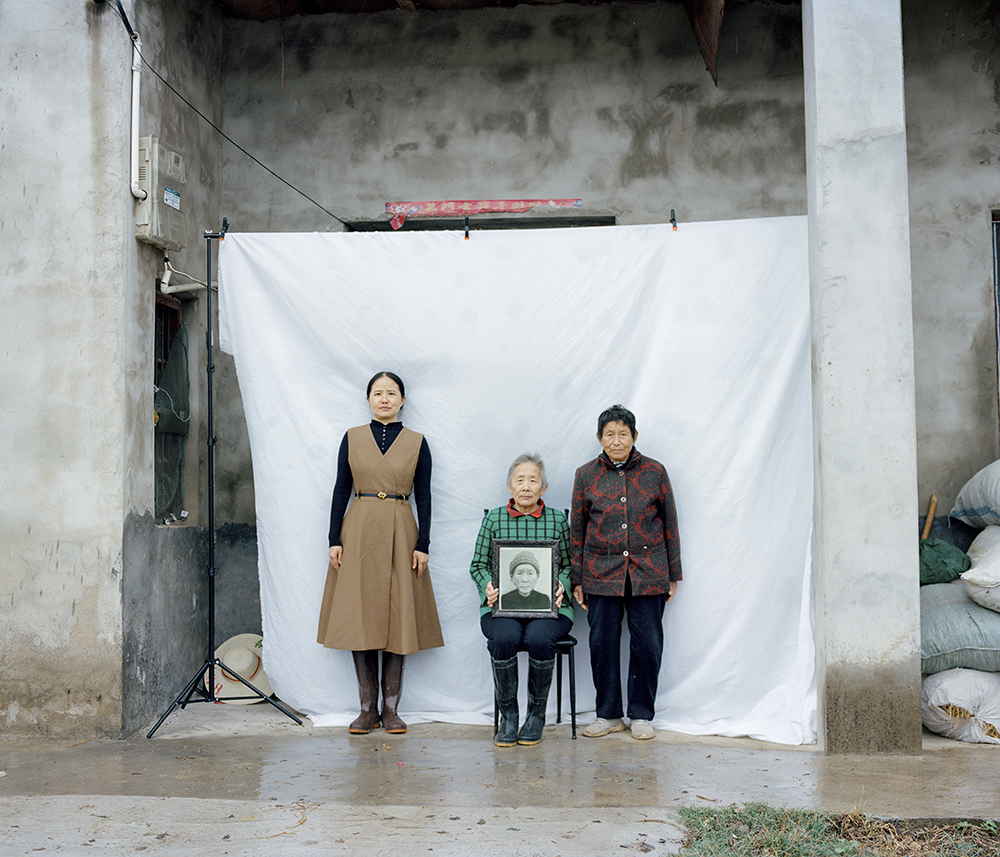
© Shuyuan Zhou
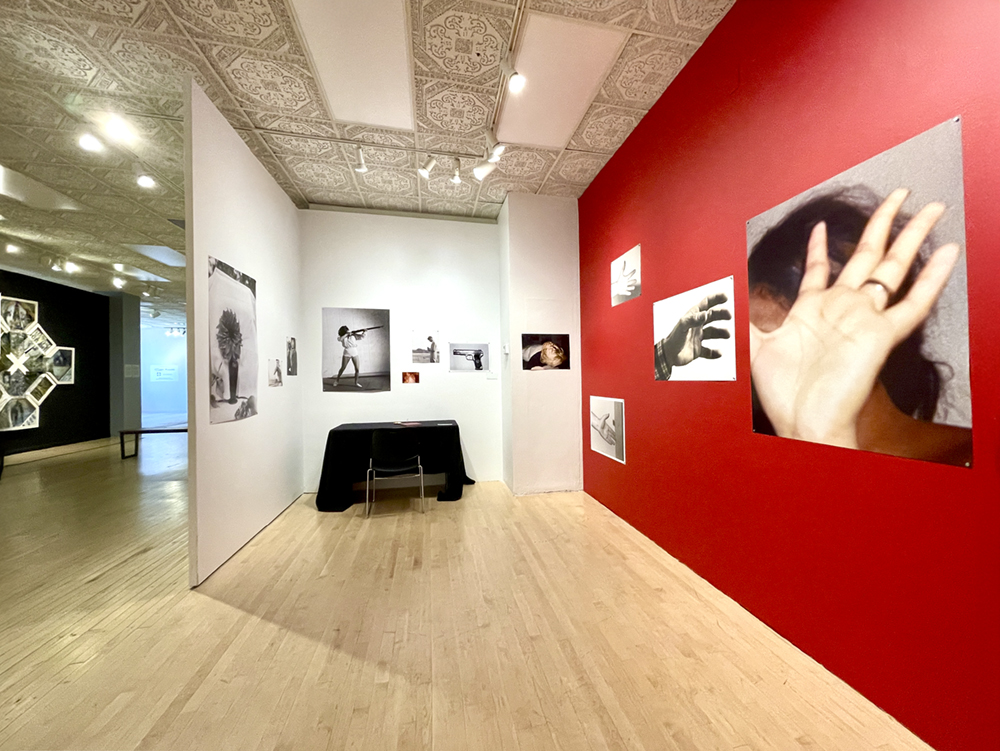
“Beyond Resilience” works by Odette England, Mona Bozorgi

©Marcy Palmer
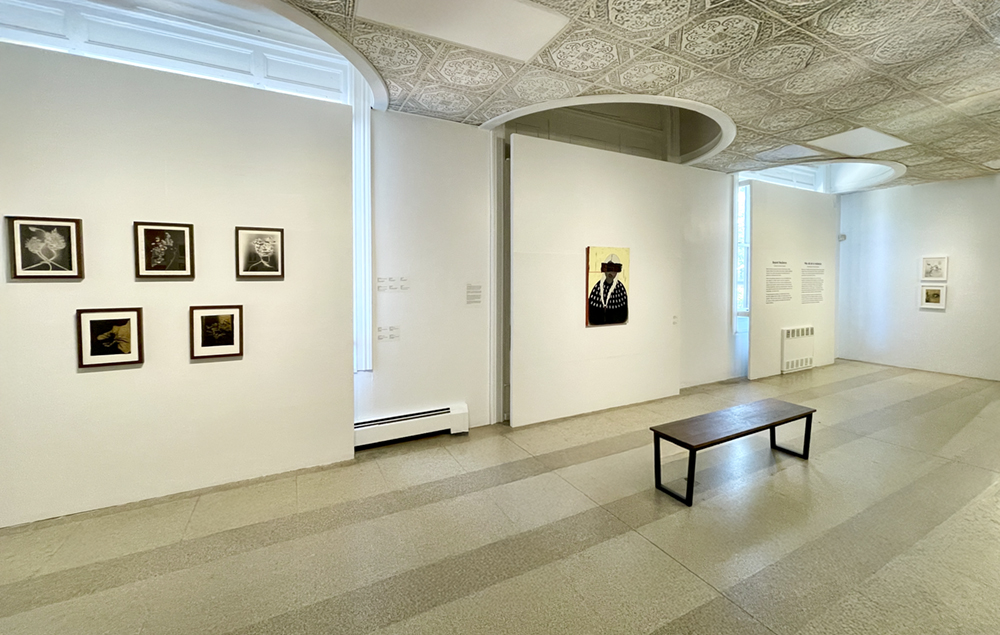
“Beyond Resilience” works by Marcy Palmer, Danielle SeeWalker
Hamidah Glasgow is an independent curator. She was the executive director and curator at the Center for Fine Art Photography in Fort Collins, Colorado, for sixteen years. She holds a master’s degree in humanities, specializing in visual and gender studies, and a bachelor’s degree in philosophy. Hamidah was a co-founder of the Strange Fire Collective and one of the founding board members of the Colorado Committee of the National Museum of Women in the Arts.
Marcy Palmer is an American artist whose work explores themes of beauty, history, and social justice through the lens of nature and science. Influenced by the earliest practitioners of photography, as well as the Surrealist and Bauhaus movements, Palmer delicately balances contemporary and historical approaches to image-making and materials to communicate her ideas.
Marcy earned her M.F.A. in Photography & Related Media from the School of Visual Arts and a B.S. in Studio Art from Skidmore College. Her work has been exhibited at The Brooklyn Museum of Art, The Center for Photographic Art, The Griffin Museum of Photography, The Ogden Museum of Southern Art, and other spaces. Her work has been written about in The Boston Globe Sunday edition, D Magazine, and other publications. Her sold-out book, “You Are Eternity, You Are the Mirror” was published by Yoffy Press and recognized by Photo-eye, Deep Red Press, and The Luupe as a favorite photobook. Marcy also teaches photography at universities, art centers, and museums.
Posts on Lenscratch may not be reproduced without the permission of the Lenscratch staff and the photographer.
Recommended
-
Jordan Tovin: A Shaw DiaryMarch 21st, 2026
-
Houston Center of Photography: THE VANGUARD,Rebel Girl, and Soft Heat…and a conversation with Anne MassoniMarch 12th, 2026
-
A Collaborative Photographic Exhibition by Heather and Ben Mattera: Weight of It AllMarch 7th, 2026
-
Binh Danh: Belonging in the National ParkMarch 4th, 2026
-
Landscape ReEnvisioned Exhibition At the Monterey Museum of ArtFebruary 26th, 2026