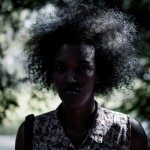
The 2025 Lenscratch Honorable Mention Winner: Montenez Lowery
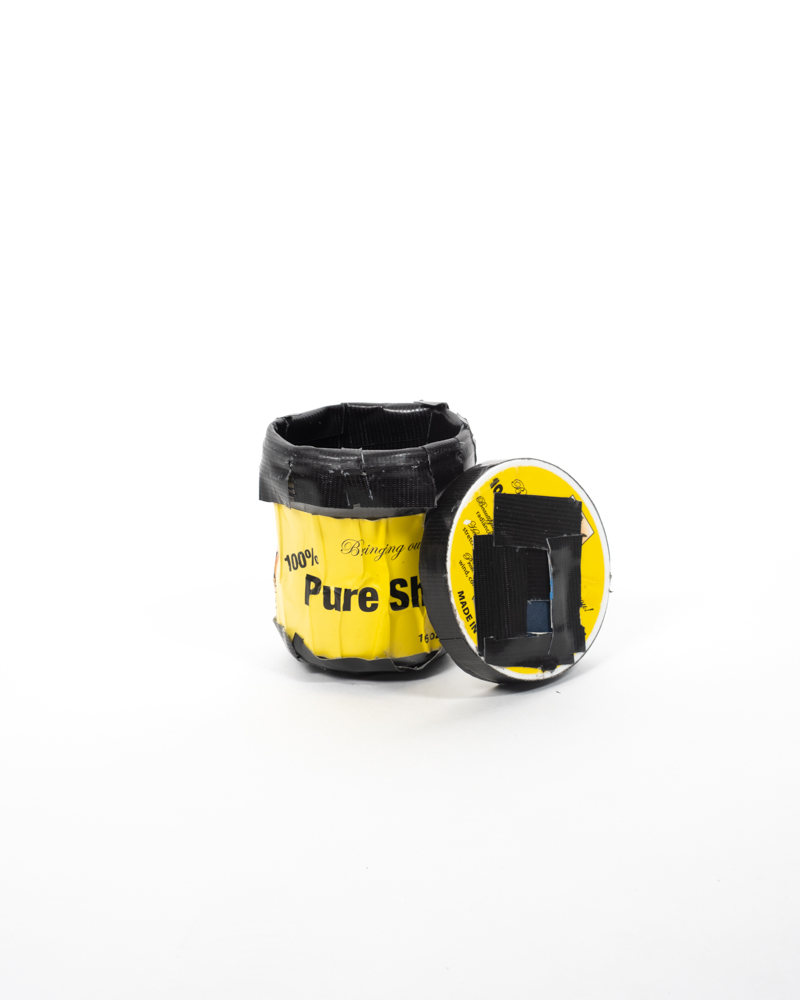
©Montenez Lowery, 100% Pure Shae Butter Container Pinhole
It is with pleasure that the jurors announce the 2025 Lenscratch Student Prize Honorable Mention Winner Montenez Lowery. Lowery was selected for his project, A Darktown Cakewalk. This summer, he graduated with a BFA in photography from Georgia State University. The Honorable Mention Winners receive a $250 Cash Award, a feature on Lenscratch, a mini exhibition on the Curated Fridge, and a Lenscratch T-shirt and Tote.
Montenez Lowery is a multidisciplinary Black American artist who grew up in Georgia. In his ongoing series, “A Darktown Cakewalk,” he skillfully weaves together pinhole photography, portraiture, still life imagery, and sound design—working in close collaboration with his subjects—to create a multifaceted series that explores identity, personal and collective histories, and the complexities of being Black in America today.
An enormous thank you to our jurors: Aline Smithson, Founder and Editor-in-Chief of Lenscratch, Educator and Artist, Daniel George, Submissions Editor of Lenscratch, Educator and Artist, Linda Alterwitz, Art + Science Editor of Lenscratch and Artist, Kellye Eisworth, Managing Editor of Lenscratch, Educator and Artist, Alexa Dilworth, publishing director, senior editor, and awards director at the Center for Documentary Studies (CDS) at Duke University, Samantha Johnson,, Executive Director of the Colorado Photographic Arts Center Kris Graves, Director of Kris Graves Projects, photographer and publisher based in New York and London, Elizabeth Cheng Krist, former Senior Photo Editor with National Geographic magazine and founding member of the Visual Thinking Collective, Hamidah Glasgow, Curator and former Director of the Center for Fine Art Photography, Fort Collins, CO, Yorgos Efthymiadis, Artist and Founder of the Curated Fridge, Drew Leventhal, Artist and Publisher, winner of the 2022 Lenscratch Student Prize, Allie Tsubota, Artist and Educator, winner of the 2021 Lenscratch Student Prize, Raymond Thompson, Jr., Artist and Educator, winner of the 2020 Lenscratch Student Prize, Guanyu Xu, Artist and Educator, winner of the 2019 Lenscratch Student Prize, Shawn Bush, Artist, Educator, and Publisher, winner of the 2017 Lenscratch Student Prize. Alayna Pernell, Artist, Lenscratch Editor, Educator, Epiphany Knedler, Artist, Editor for Lenscratch, Educator, Curator of MidWest Nice, Jeanine Michna Bales, Beyond the Photograph Editor of Lenscratch and Artist, Vicente Cayuela, Social Media Editor of Lenscratch and Artist, and Drew Nikonowicz, Artist, winner of the 2015 Lenscratch Student Prize.
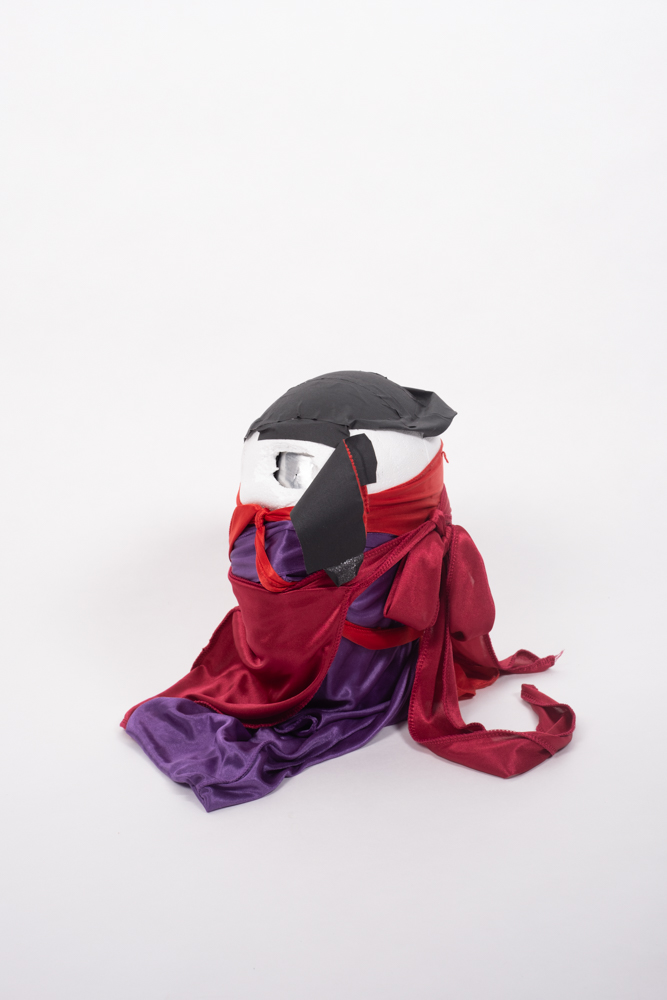
© Montenez Lowery, Durag Pinhole
A Darktown Cakewalk
A Darktown Cakewalk is a pinhole project that acts as a form of cultural preservation as I explore themes of loss, reclamation, and the significance of cultural artifacts in shaping personal and collective histories.
The project asks the subject to provide an item that they personally experienced to be appropriated and or stripped of its original context. I then turn said black cultural objects (i.e Nike shoeboxes and Eco-Styler gel containers) into pinhole cameras to create portraits of Black Americans in this attempt to recon
Through abstract pinhole photography and sound installation, the project critiques the cyclical nature of racism and cultural cannibalism, drawing inspiration from the minstrel show At A Darktown Cakewalk. Similar to the minstrel show’s history, photography—a medium that historically discriminated against Black people, both as subject and photographer—erased Black agency by framing us as “other” or by mechanically restricting the very nature of capturing darker skin tones. My project attempts to appropriate and colonize the very instrument to fill the gaps in an archive caused by photography’s discriminatory history while highlighting the historical and current appropriation of Black culture and confronting the lingering effects of such acts on Black Americans today.

© Montenez Lowery, Air Force One Shoe Pinhole
Tell us about your upbringing. Did it bring you directly to being an artist/photographer?
I grew up all around Georgia, born in Savannah and moving from place to place until my family eventually settled in Jonesboro. I was raised by an incredible, hardworking mother who always supported my dreams and ambitions. I started out as an illustrator, and after nearly failing my high school healthcare course, I decided to take art seriously haha. I’m the first in my family to pursue art, so my understanding of the art world was limited to the stereotypical “starving artist.” But I figured I’d rather starve than not make art, so I went to university to study it. Photography, though, thaaat came later.
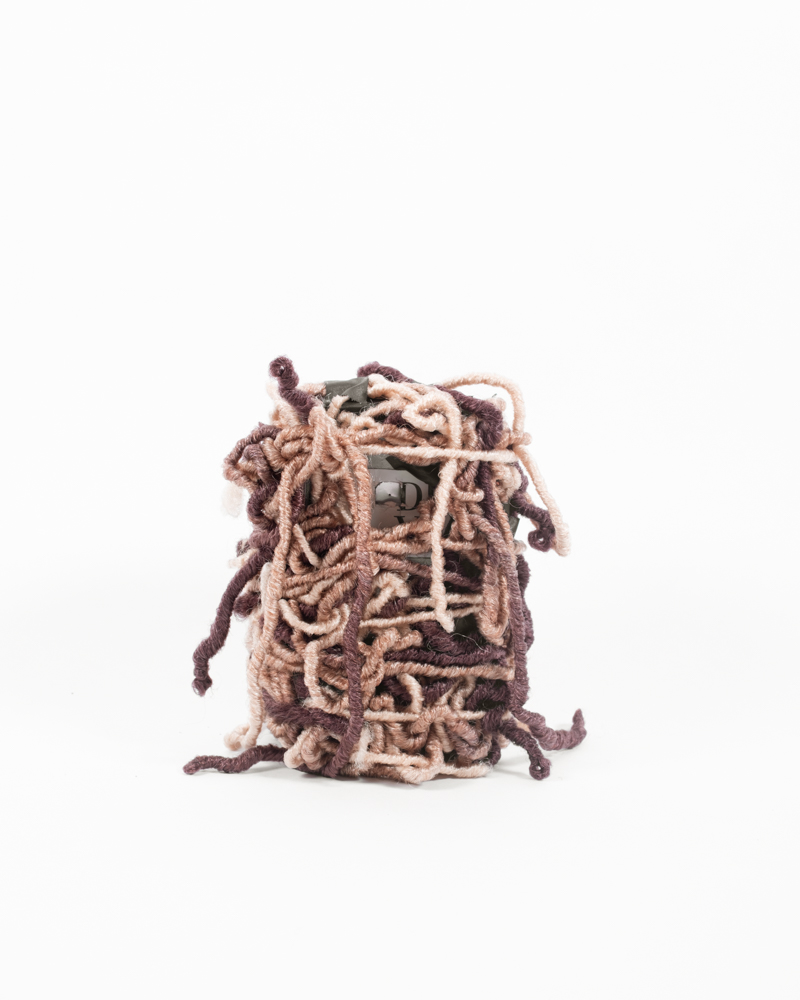
© Montenez Lowery, Loc’d DIVA Pinhole
Do you have any mentors or teachers, either current or growing up, that have inspired you? Or is there anyone else that you would like to acknowledge?
Absolutely! I’d love to shout out my favorite university professor, Jordan Putt. He’s not only incredibly kind, but also deeply knowledgeable about photography as a medium. His understanding of the photographic canon really helped expand how I thought about my own work. Often when making work I tend to let my imagination run wild, and my ambitions usually try to keep up, but Jordan was the one who helped ground those ideas. Not in a limiting way, but in a way that made sure every element served a purpose and “not a gimmick,” as he would say to me often. He was also really encouraging and challenged my stances because I can be pretty stubborn, and I deeply appreciated his guidance during my undergrad.

© Montenez Lowery, Ancestry DNA Box Pinhole
What school are you currently attending? What is your degree? When do you graduate?
I graduated from Georgia State University this summer for a BFA in photography!
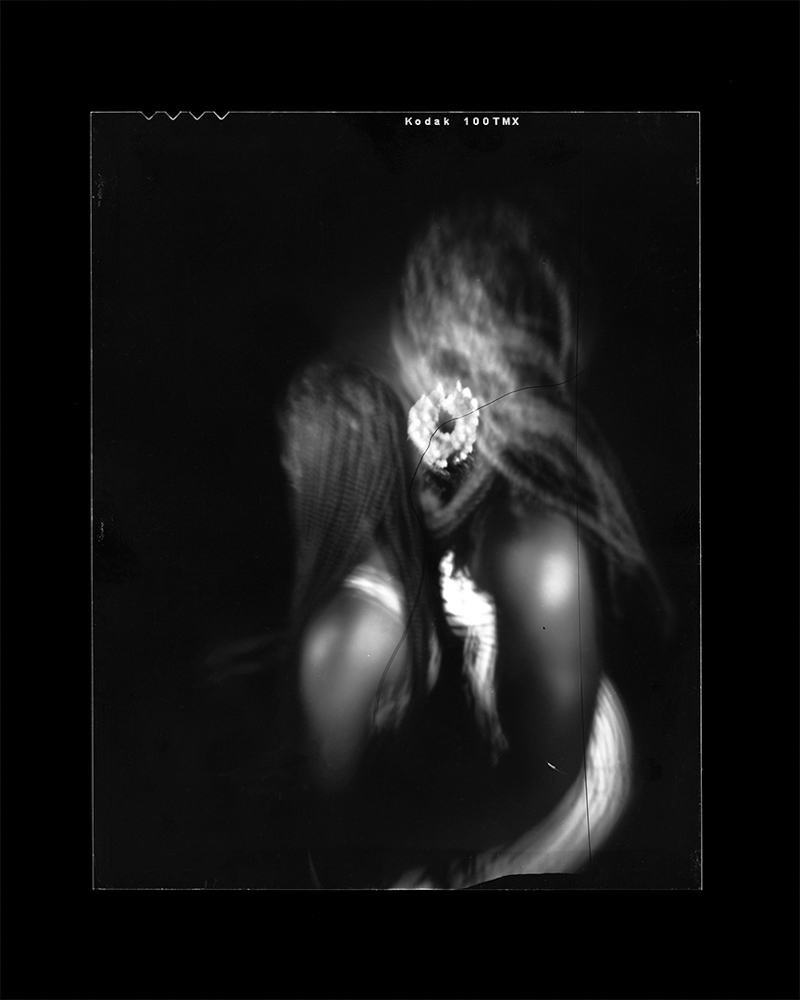
© Montenez Lowery, Aziza Hunt and Her Daughter Emoni, Locs Pinhole, hair from subject laid on film
What are your career plans after graduation?
I hope to work in Arts Administration! The sector lacks diversity from black and brown people and I aim to be an Executive Director/Art Director of an Arts Organization to help push for more diversity in the office. As well as using the position to amplify more black and brown artists.
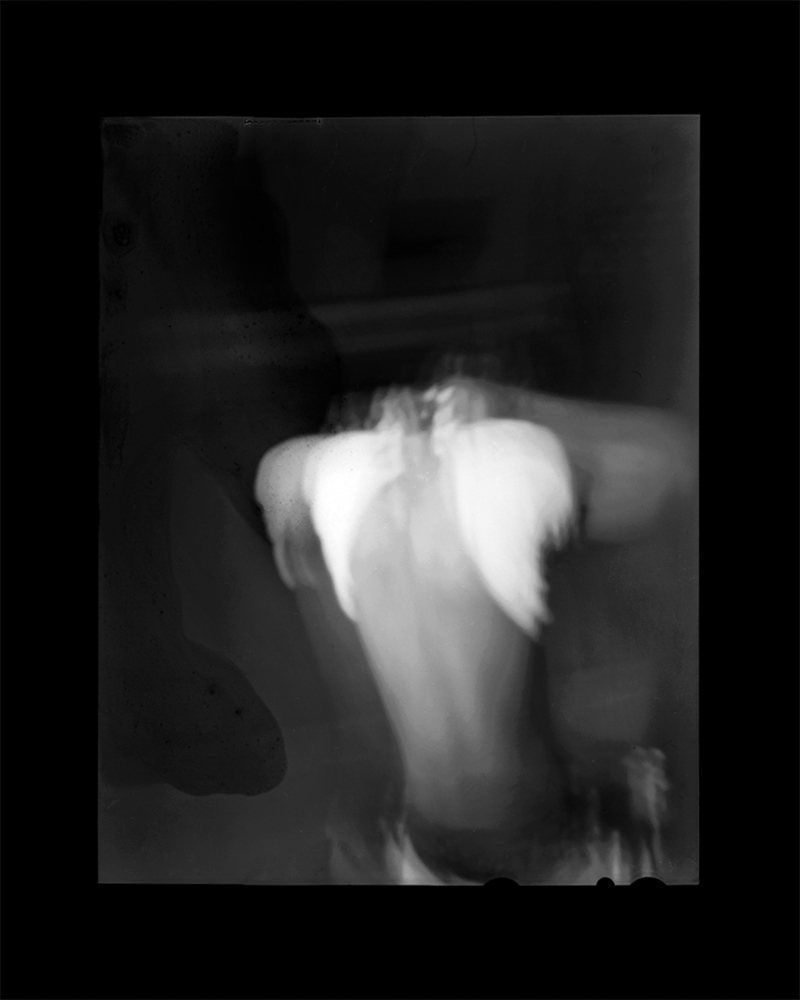
© Montenez Lowery,Jai Jefferson, Ancestry DNA Box Pinhole, Jai’s Spit on Film
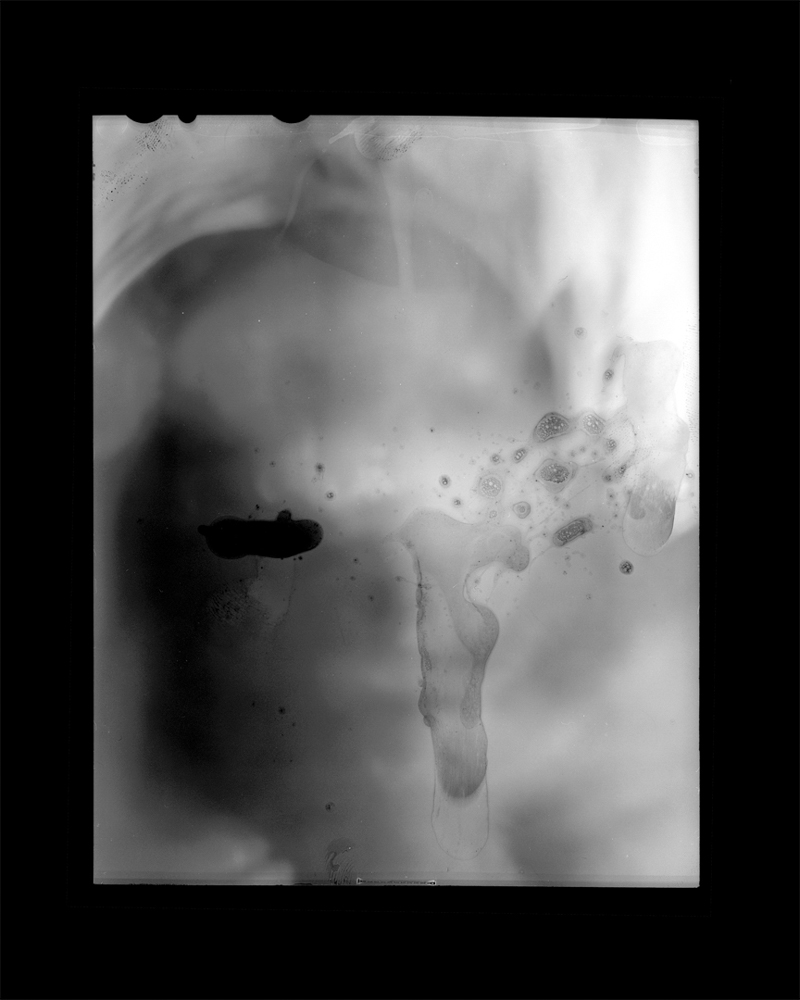
© Montenez Lowery, Jai Jefferson, Lowery_Ancestry DNA Box Pinhole, Jai’s Spit on Film (2)
Are you involved in any clubs or extracurricular activities that have had an impact on you as an artist/photographer?
I was president of ExLucis, a photo club at my university. Being in this position solidified my want to be in Arts Administration. I really liked how I managed a small group of people and we made so many art programs and even raised money for a local non profit.
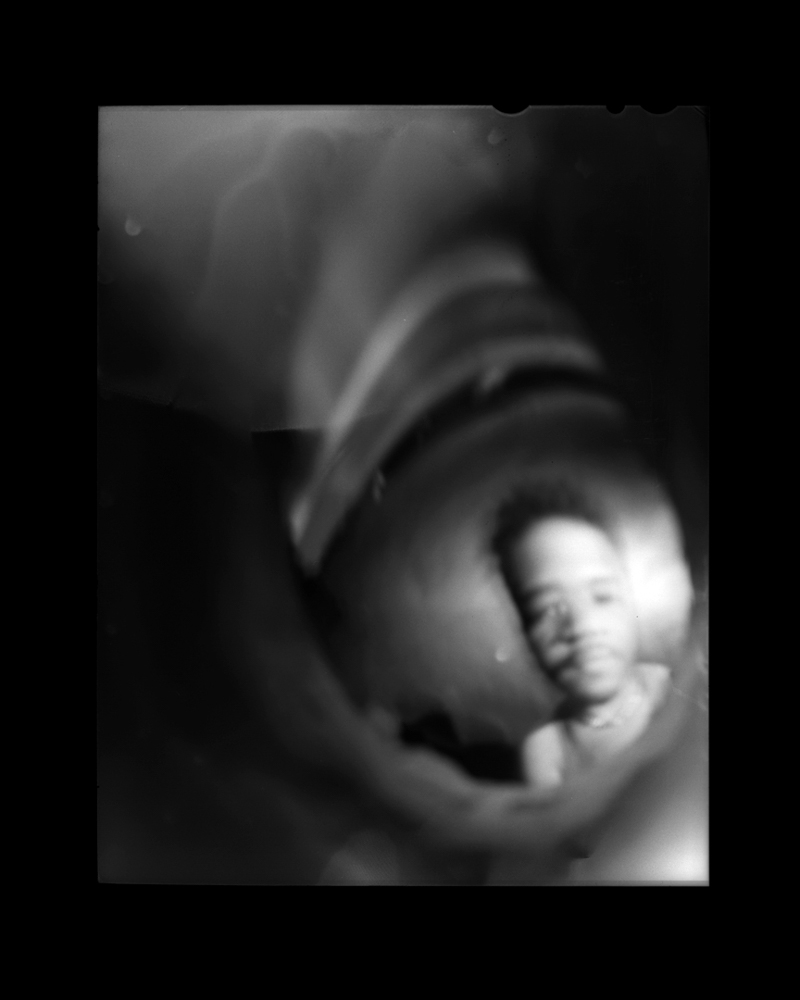
© Montenez Lowery, Keenan Mack, Air Force One Shoe Pinhole
If you could mentor with one artist who would it be and why? Also, what artists have inspired you in your artistic journey? (Maybe this question is better because I don’t think I can mentor anyone haha) If you could choose one artist to be your mentor, who would it be and why? Also, what artists have inspired you in your artistic journey?
If I could choose a mentor, it would be either Zora Murff or Tomashi Jackson. Both artists deeply inspire me, but in different ways. Zora Murff’s approach to photography, his sequencing, and especially his writing UGH it’s so thoughtful and rigorous. He’s bold, unapologetic, and has a clarity of vision that I really admire. There’s something in the way he critiques and engages with systems that I feel a deep kinship with. Tomashi Jackson, on the other hand, is just INCREDIBLE when it comes to material and process. Her work interweaves photography, painting, and archival material to create these large-scale pieces that engage with race and social policy. Her craftsmanship is incredible. She moves between mediums so beautifully, and everything feels intentional and clear. I really look up to her and hope my interdisciplinary practice can move with that same sense of confidence and precision one day.
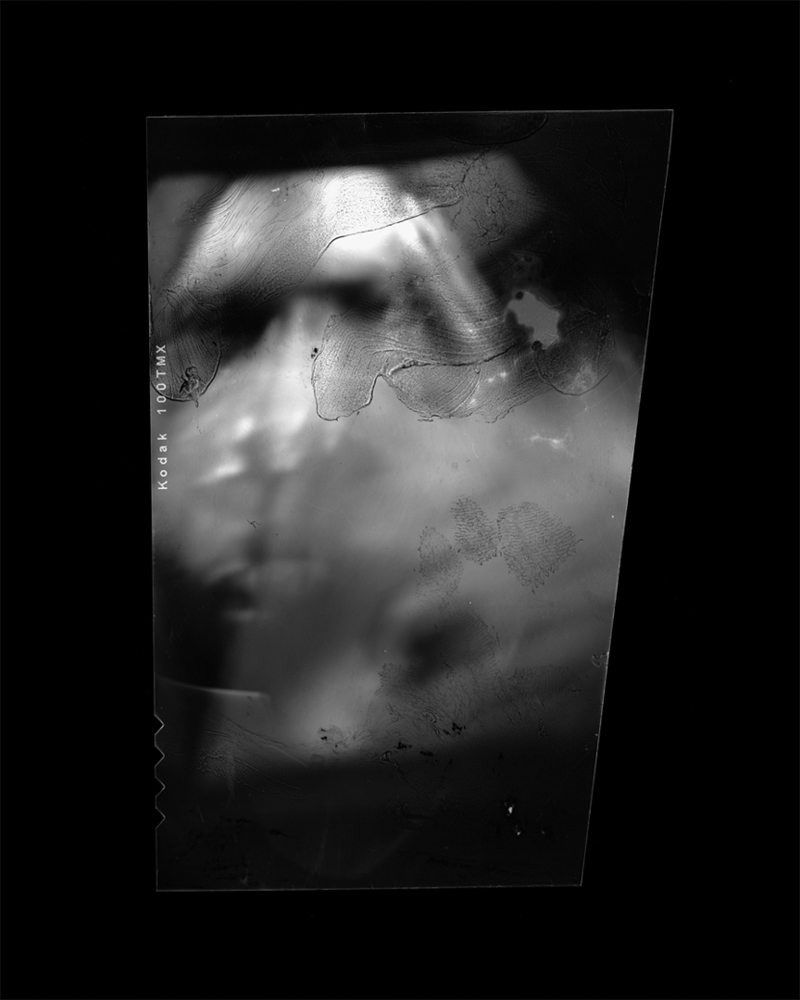
© Montenez Lowery, 100% Pure Shae Butter Container Pinhole, film smeared with shae butter
How did you come up with the concept behind your current body of work, “A Darktown Cakewalk (ADC)?”
ADC actually grew out of a video piece I created for my Video Art class. It was a compilation made from Internet Archive footage, splicing together nostalgic white Americana—things like domestic scenes, food ads, and family dinners with clips from Black cultural history to explore ideas of “cultural cannibalism” and appropriation. After making that, I wanted to expand it into a photographic series. But the video got heavily critiqued by some black peers when I was interning at Anderson Ranch, so I shelved it for a bit, either until I can rework it myself or find a place for it to exist as it is now. Then, the next semester, I took an alternative photography course, and we had a unit on pinhole cameras. I made my first one out of an Air Force One shoebox, and something just clicked. The material, the symbolism, blasé blasé, it all came together. From there, the project really began to evolve.
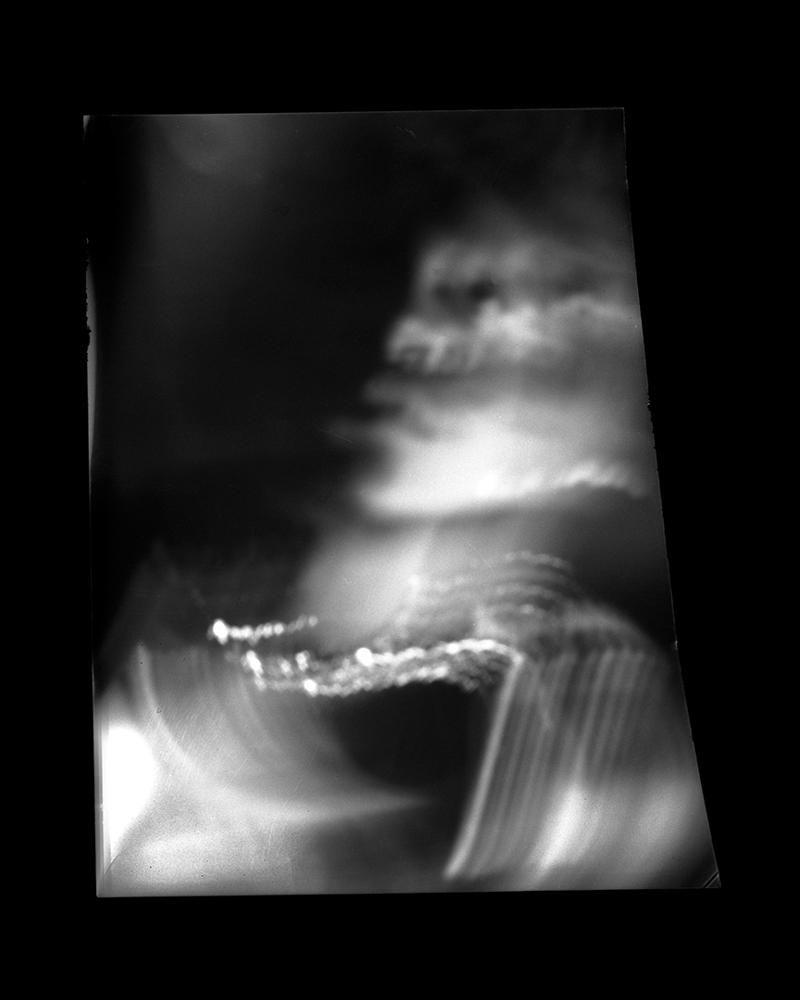
© Montenez Lowery, Koron Osborne, Durag Pinhole
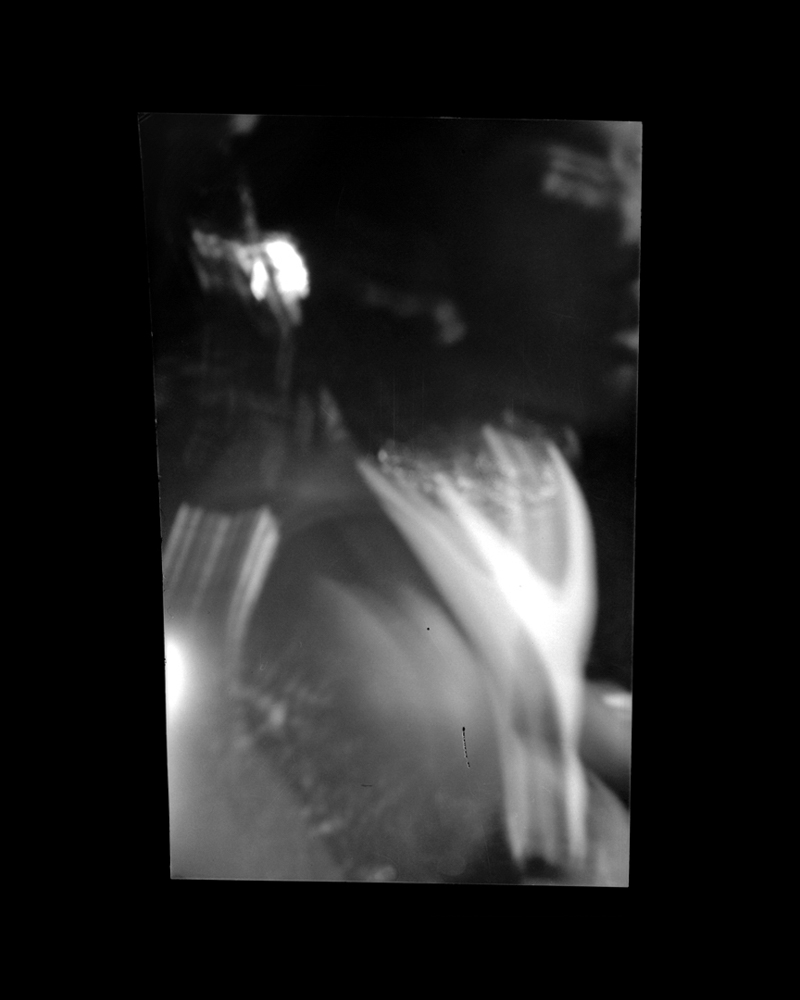
© Montenez Lowery, Koron Osborne, Durag Pinhole (2)
How do you choose your subjects for ADC? What would a typical interaction be like between you and your subjects in ADC (dialogue, working together to create each unique pinhole camera, collaboration aspect of film prior to exposure)?
The only real “requirement” for participation is that the person be Black! After that, it usually starts with a phone conversation where I introduce the premise. Most people ask for time to think about what object they might want to contribute something that can realistically be turned into a pinhole camera. I’m pretty flexible; I’ve worked with food items, electronics, you name it. I’ll try to make it work. When we meet up, they give me the object, and we record a conversation or interview. That serves two purposes: it helps us build rapport, and it becomes part of the sound installation I’m working on. These recorded conversations help bring another dimension to the work, one that feels more personal and rooted in the subject’s voice.
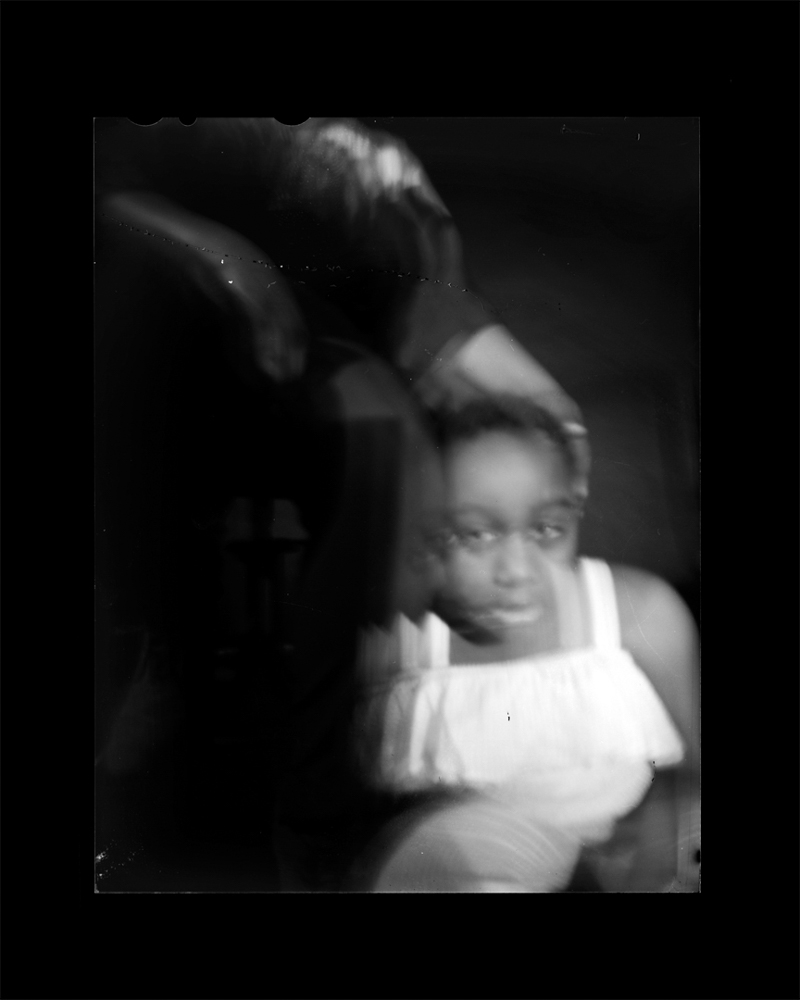
© Montenez Lowery, Marvelous Reeves and her GG Uhura Osborne
In this particular series, you are weaving together many artistic patterns from portraiture, to performative, to still life objects … were all of these your initial intent with the project? If not, did they develop as you worked through the concept?
Pretty much, yeah. Portraiture and performance have been part of my practice for a while, so it made sense to carry those through into this project. From the beginning, I knew I wanted to honor these cultural objects. Showing the subjects alongside their chosen items was always part of the vision. That said, things weren’t as clean or resolved in the early stages. As the project progressed, my presentation sharpened and my understanding of pinhole photography deepened, which allowed me to make better images. One thing that came later was the idea that ADC could also be a critique of the photographic medium itself. That perspective began to influence how I approached both the later images and the construction of the pinhole cameras.
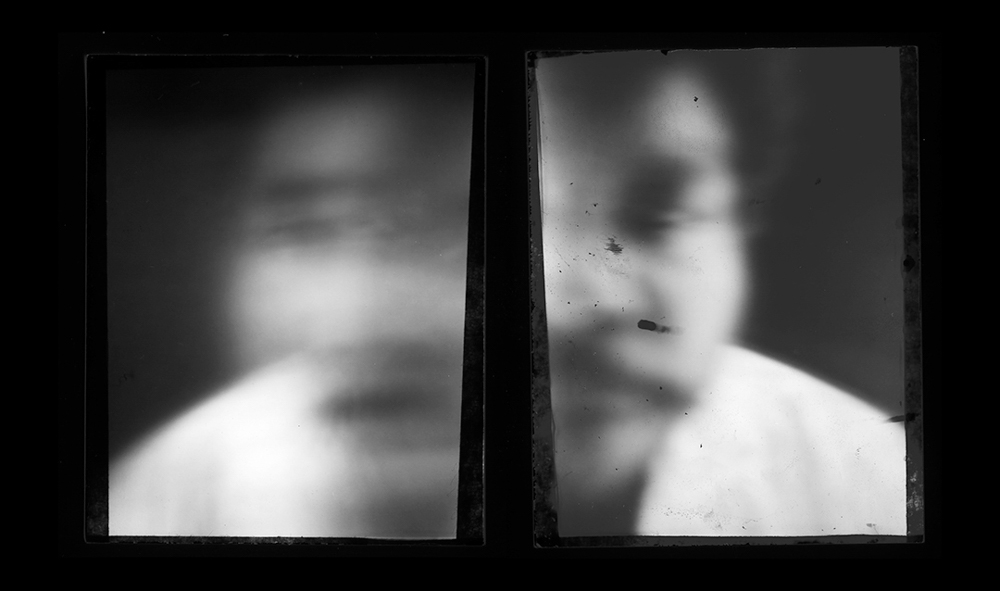
© Montenez Lowery, Self Portrait, Air Force One Shoe Box Pinhole
Why sound as part of the installation?
One of my main goals is to reconnect people with cultural objects that represent a significant part of their identity especially when that connection may have been lost or eroded. But since a good number of the images are abstracted or visually indirect, I felt like I was losing something in translation. That’s where sound comes in. The interviews help ground the viewer in the subject’s voice and lived experience. Then, through another course, I got introduced to cassette tape installations!! The idea to use self-decaying tapes felt like a perfect fit. Isn’t that cool!!? It allows the work to physically embody the idea of erasure over time. With these cassette installations, the audio changes each day of the exhibition. On day one, you might hear full stories, emotional recountings, but by the last day, the tapes have degraded, leaving behind fragmented words or silence. Some tapes stop entirely, as if the tape itself is exhausted, like they’re tired of being replayed over and over. It’s such a poetic way to express loss. Right now I’m still working on getting them to last longer than a day haha.
What do you hope to accomplish with the series?
I want black people to refall in love with the culture, to possibly have a newfound appreciation for these objects. There’s so much beauty in the mundane. For viewers outside the culture, I want them to get even just a small glimpse of what it feels like to love being Black not the spectacle, but the everyday.
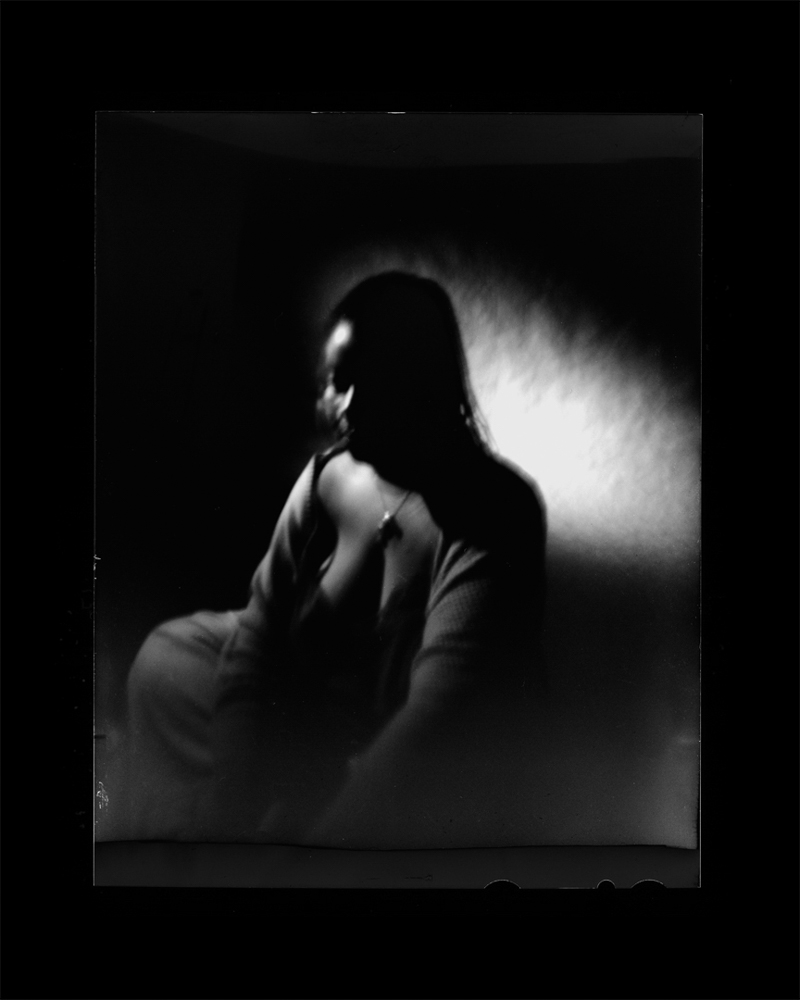
© Montenez Lowery, Taylor Jiles, bonnet pinhole
Who is the intended audience for the series?
The audience is anyone who wants to look at and or engage with black culture in a reflective way. Of course I care most about the opinions of Black people in regards to the execution of this series but I hope many groups of people find love in it.
Montenez Lowery is a multidisciplinary Black American artist working in Atlanta, GA, pursuing a photography degree at Georgia State University. His practice focuses on community, intimacy, and the Black experience. Utilizing pinhole photography, film photography, and mixed media, he explores identity, cultural memory, and the complexities of interpersonal relationships. His work invites critical reflection on personal and collective histories, sparking conversation and awareness around these themes while critiquing the medium itself. Lowery has exhibited at the Colorado Photographic Arts Center Student Biennial (Denver, CO), Ernest G. Welch Gallery (Atlanta, GA), and Fischer Photography Center at Anderson Ranch (Snowmass, CO). He is a Fall 2024 Student Project Award Finalist for the Film Photo Award and shortlist for the Sony World Photography Awards Student Competition.
Instagam: @montenez.l
Posts on Lenscratch may not be reproduced without the permission of the Lenscratch staff and the photographer.
Recommended
-

The 2025 Lenscratch Honorable Mention Winner: Erika Nina SuárezJuly 27th, 2025
-
The 2025 Lenscratch Honorable Mention Winner: Montenez LoweryJuly 26th, 2025
-

The 2025 Lenscratch Honorable Mention Winner: Ian Byers-GamberJuly 25th, 2025
-

The 2025 Lenscratch Honorable Mention Winner: Beihua GuoJuly 24th, 2025
-

The 2025 Lenscratch 3rd Place Student Prize Winner: Hannah SchneiderJuly 23rd, 2025