
Celebrating 20 Years of Critical Mass: Louie Palu (2005) and Lynn Saville (2006)

Photolucida is a Portland-based nonprofit dedicated to providing platforms that expand, inspire, educate, and connect the national and international photography community. Critical Mass, Photolucida’s annual online program, is designed to foster meaningful connections in the photography world. Open to photographers at all levels, anywhere in the world, participants submit a portfolio of 10 images. Following an initial pre-screening, 200 finalists are selected to have their work reviewed and voted on by up to 200 distinguished international photography professionals. From this process, the Top 50 are chosen, and a range of awards is presented. Submissions open each June.
In 2025, we celebrate the twentieth year of announcing the Critical Mass Top 50 finalists! We are honored to partner with Lenscratch to reflect on this history through a special series highlighting two artists from two different years in each post. Each featured artist offers a window into the diversity of projects and voices that make up Critical Mass—from documentary and narrative photography to conceptual, photo-based practices. These Q&As share the history, intention, and trajectory of the artists, pairing their Critical Mass portfolios with newer work.
For Critical Mass 2025, we received submissions from artists across 26 countries, tackling subjects in countless styles—from black-and-white and digital photography to chemigrams, cyanotypes, photographic sculpture, and textiles. Our esteemed jurors, representing a wide range of global perspectives, dedicate their expertise and thoughtful consideration to this process, often leaving feedback and encouragement for the artists.
Critical Mass continues to elevate emerging photographers, providing a platform that amplifies their voices to broader audiences and to the industry professionals who help shape careers. We are deeply grateful to everyone who makes this possible.
Louie Palu 2005
Canadian-born photographer and filmmaker Louie Palu has spent the last two decades investigating the intersections of labor, environment, and power. From his early monograph Cage Call: Life and Death in the Hard Rock Mining Belt to ambitious projects like Distant Early Warning and Political Year Zero – After Zero, his work fuses deep listening, rigorous research, and an unflinching eye for social and political realities. A former Photolucida Critical Mass Top 50 artist, Palu reflects here on his evolution as an image-maker, the projects that have most shaped him, and the lasting influence of Critical Mass on his career.
Louie (Luigino) Palu is a documentary photographer and filmmaker whose work focuses on social political issues such as war, human rights and poverty.
His work has appeared in festivals, publications, exhibitions and collections internationally. His project covering politics in Washington from 2019-2021 was selected for a World Press Photo award. He is a 2016-17 John Simon Guggenheim Foundation Fellow and a Harry Ransom Center Research Fellow in the Humanities at the University of Texas at Austin. He is the recipient of numerous awards including Pulitzer Center on Crisis Reporting Grants, 2011-12 Bernard L Schwartz Fellowship with the New America Foundation and Milton Rogovin Fellowship at the University of Arizona. He is well known for his work which examines social political issues such as human rights, conflict and poverty. He is currently working on a long-term project on the Arctic partnered with National Geographic Magazine, National Geographic Society and is a National Geographic Explorer. In 2019 his work was selected for the Arnold Newman Prize for New Directions in Photographic Portraiture. His work is held in numerous collections including the Smithsonian, U.S. Library of Congress and National Gallery of Art.
Louie graduated with an associate of the Ontario College of Art diploma and has an MFA from the Maryland Institute College of Art. Louie is on the faculty of the Kalish Visual Editing Workshop.
Louie is a member of the Content Authenticity Initiative (CAI) which promotes the authenticity of information, prevent disinformation and the provenance of photographs.
Instagram: @louiepalu
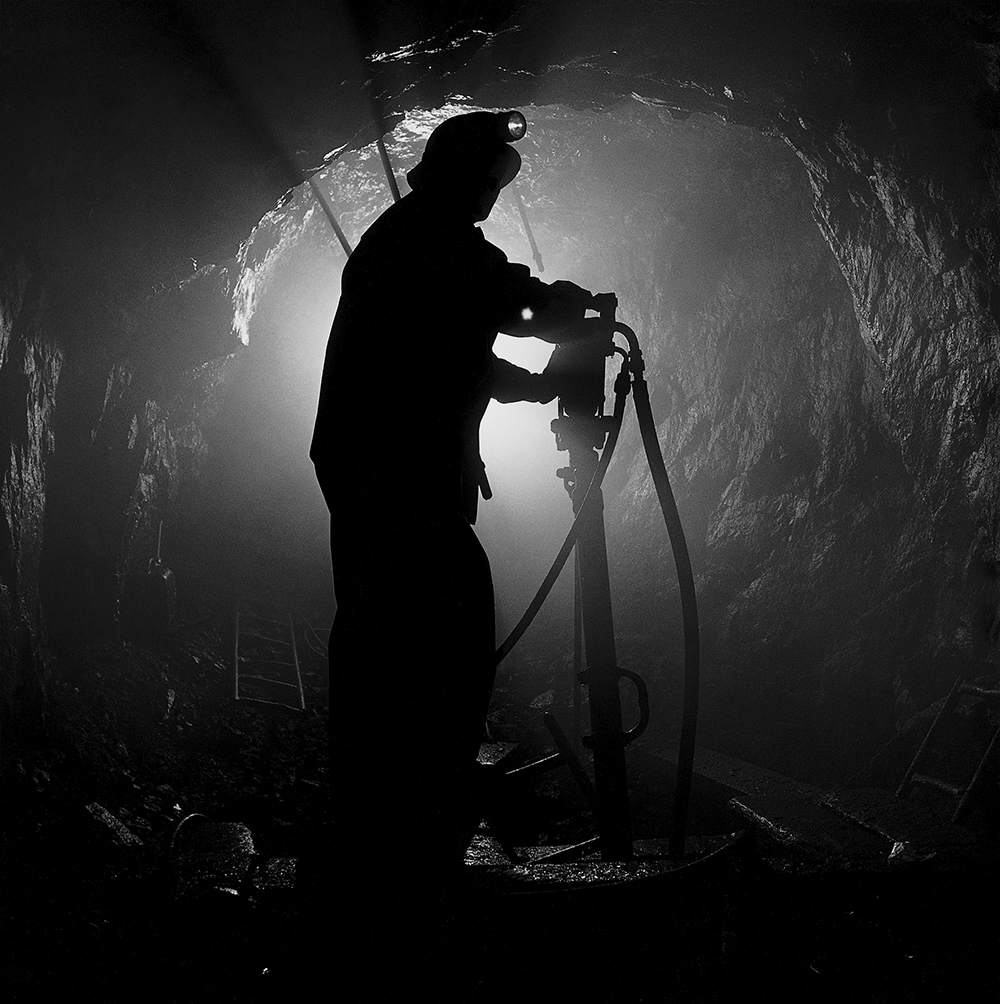
A miner after completing drilling in a shrinkage stope, 700 foot level, Cheminis Mine, Larder Lake, Ontario. Fromthe book Cage Call: Life and Death in the Hard Rock Mining Belt. An in-depth project spanning over 12-years examining communities in one of the richest mining regions in the world located in Northwestern Ontario and Northeastern Quebec in Canada. (Photo by © Louie Palu/Agence VU)
Q: How did you first discover Photolucida?
LP: I was in Oakland at a Ken Light workshop when another student mentioned portfolio reviews. I’d never heard of them, but the idea of meeting photographers and curators from around the world in one place was irresistible. I booked a spot that week. That trip changed my life.
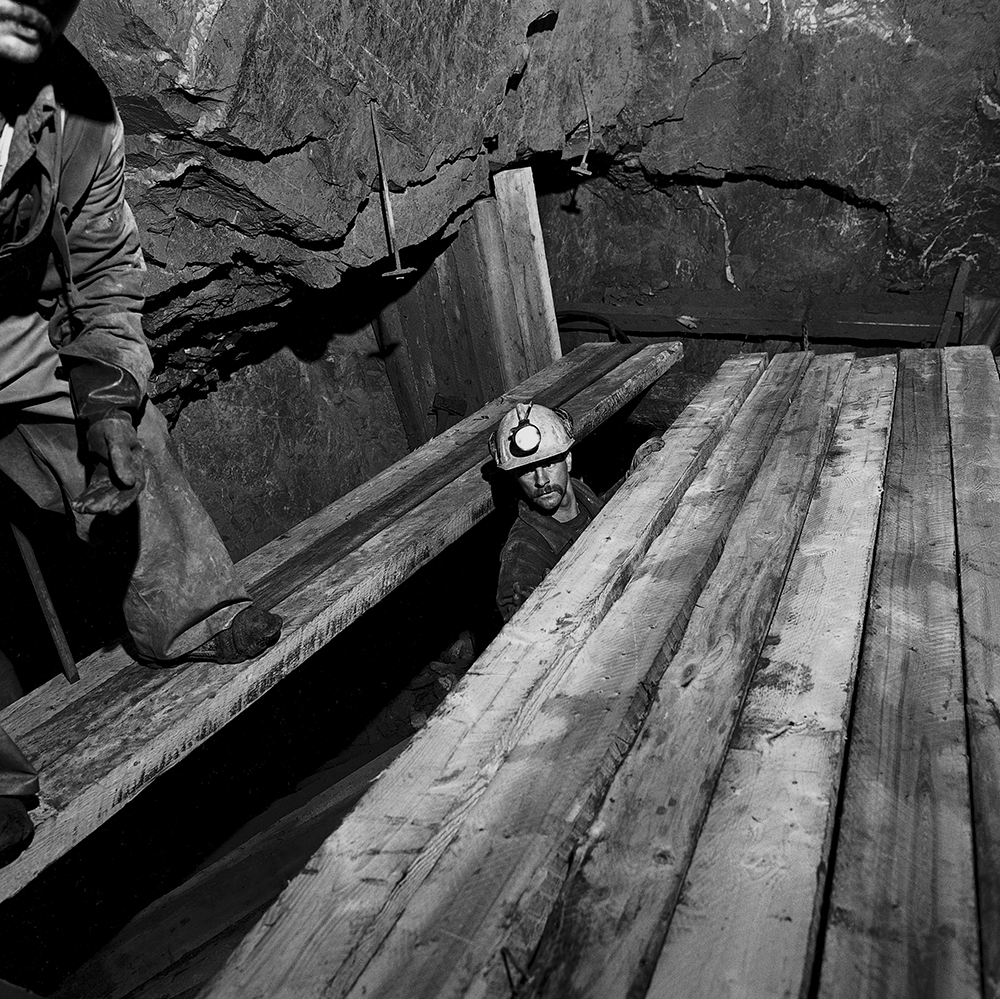
Ralph Schmidt and the late Guy Bruneau timbering a staging for drilling a breast in a shrinkage stope, 1300 foot level, Kerr Mine, Virginiatown, Ontario. From the book Cage Call: Life and Death in the Hard Rock Mining Belt. An in-depth project spanning over 12-years examining communities in one of the richest mining regions in the world located in Northwestern Ontario and Northeastern Quebec in Canada. (Photo by © Louie Palu/Agence VU)
Q: Your 2005 Critical Mass Top 50 portfolio, Cage Call: Life and Death in the Hard Rock Mining Belt, went on to become a Photolucida monograph. What drew you to miners and mining culture?
LP: After interning in New York with Mary Ellen Mark, I returned to Northern Ontario where my father worked in a quarry. Nearby was a gold mine. Canada is a world center of hard rock mining—gold, copper, nickel, uranium, silver—and my neighborhood was full of immigrant laborers, including my own family. Those themes of work and resource extraction were part of my identity, and I wanted to explore them.
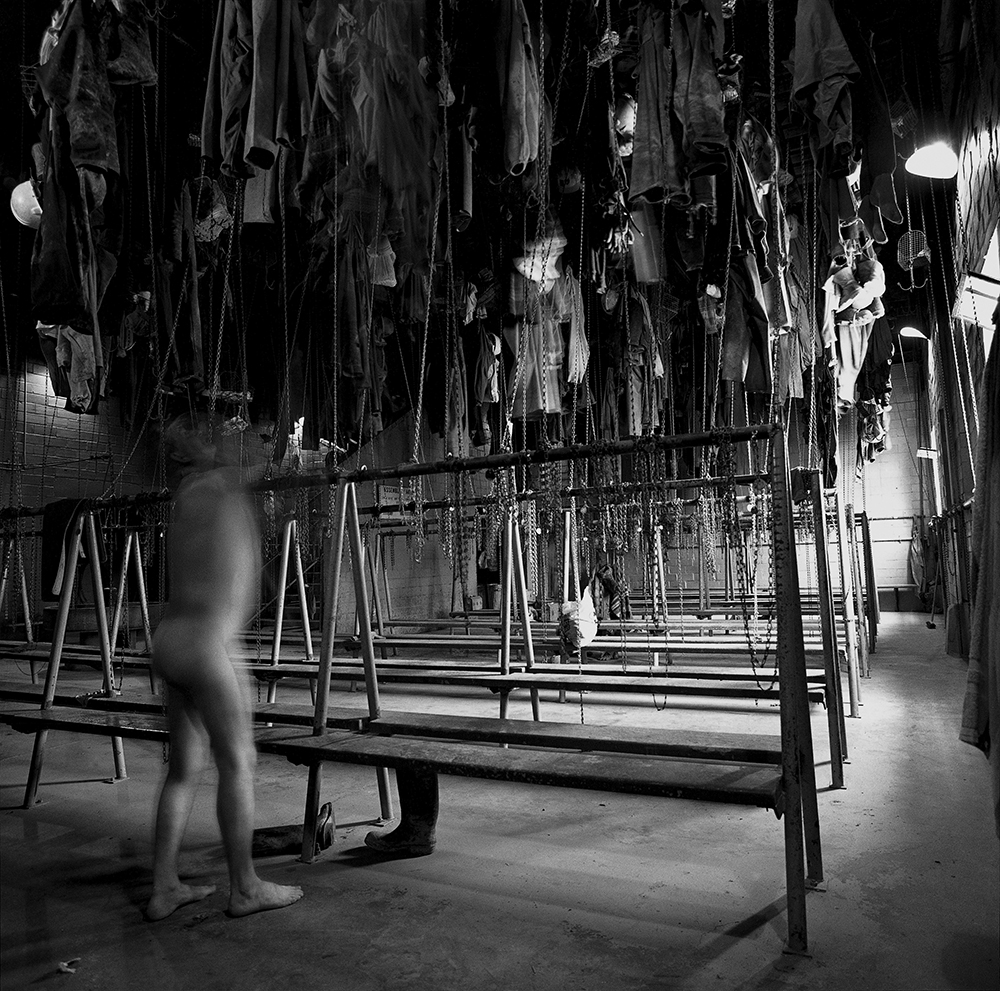
A miner in the Dry hanging his work clothes in the air to dry after shift, Kerr Mine, Virginiatown, Ontario. From the book Cage Call: Life and Death in the Hard Rock Mining Belt. An in-depth project spanning over 12-years examining communities in one of the richest mining regions in the world located in Northwestern Ontario and Northeastern Quebec in Canada. (Photo by © Louie Palu/Agence VU)
Q: What were you hoping to achieve with Cage Call?
LP: My goal was to create an archive—images that would tell a complete story of miners both underground and above ground. It was far beyond my skill set at the time. Access was hard, editing was harder, and I made plenty of mistakes. But in the end, I stuck with it, and I’m proud of how the work still resonates today.
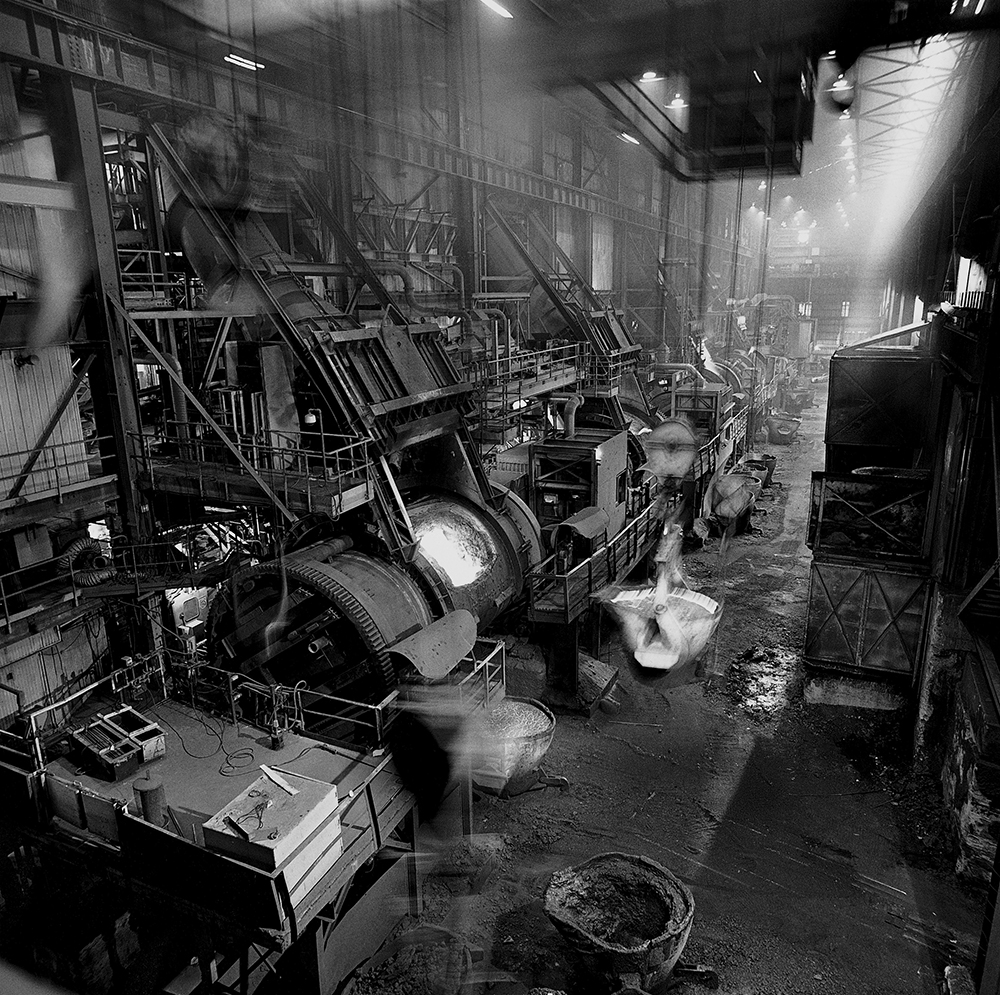
Converter aisle, Falconbridge Smelter, Falconbridge, Ontario. From the book Cage Call: Life and Death in the Hard Rock Mining Belt. An in-depth project spanning over 12-years examining communities in one of the richest mining regions in the world located in Northwestern Ontario and Northeastern Quebec in Canada. (Photo by © Louie Palu/Agence VU)
Q: How did that project shape the work you’ve done since?
LP: Cage Call became my blueprint. It taught me to listen—to people and to place—and it introduced me to the art of sequencing, how editing a book differs from editing for a magazine. At its core, it asked questions about power structures, and my later projects continue in that direction.
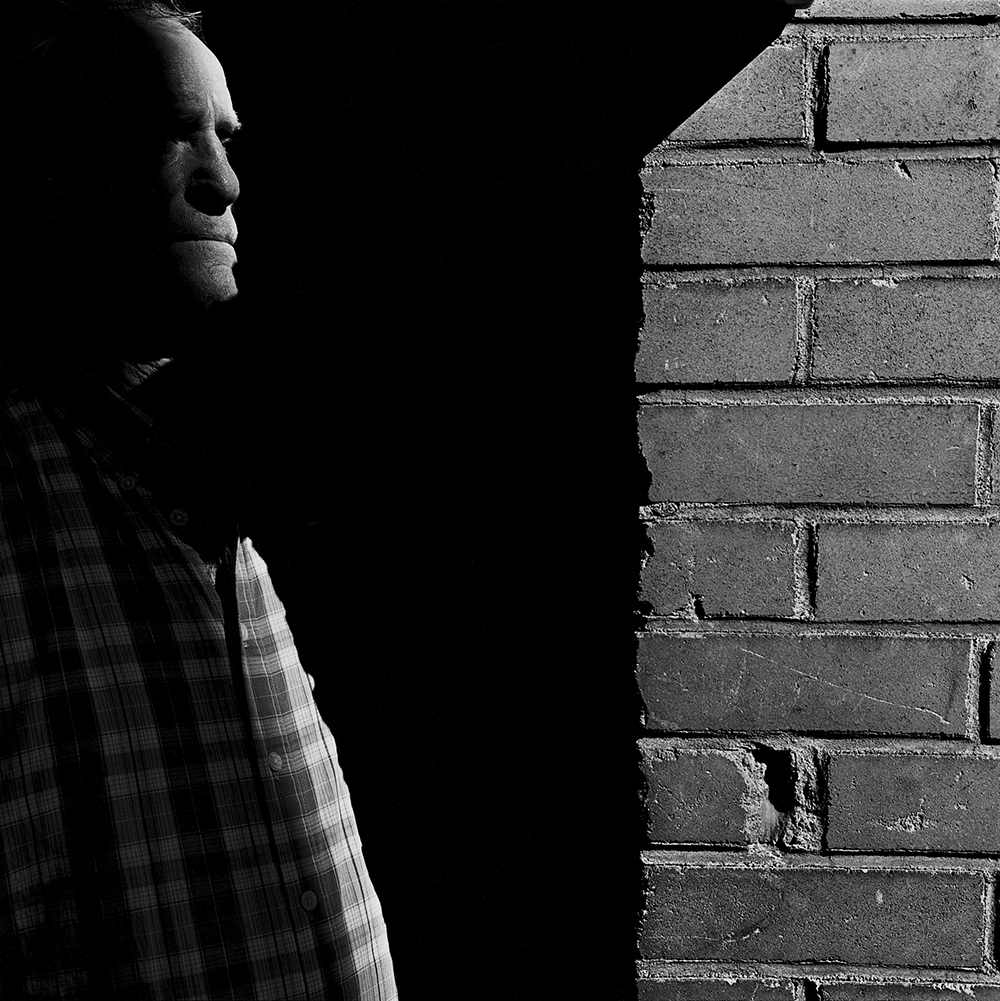
Tom Ranelli lifelong member of the Mine Mill Smelter Workers Union Local 598, the last Local of one of the most militant unions in North American history, Sudbury, Ontario. From the book Cage Call: Life and Death in the Hard Rock Mining Belt. An in-depth project spanning over 12-years examining communities in one of the richest mining regions in the world located in Northwestern Ontario and Northeastern Quebec in Canada. (Photo by © Louie Palu/Agence VU)
Q: Tell us about Distant Early Warning and Political Year Zero – After Zero.
LP: Distant Early Warning looks at the militarization of the Arctic amid climate change and Cold War legacies. It challenges how we picture the Arctic, insisting that nature is the ultimate power. I worked with Sarah Leen and Sadie Quarrier for five years on editing—it was like a PhD in big-picture thinking.
Political Year Zero began with Trump’s first impeachment but expanded to include the pandemic, George Floyd’s murder, and January 6th. I’ve shot nearly 2,000 rolls of film. Like Cage Call, it examines power structures while resisting familiar visual tropes.
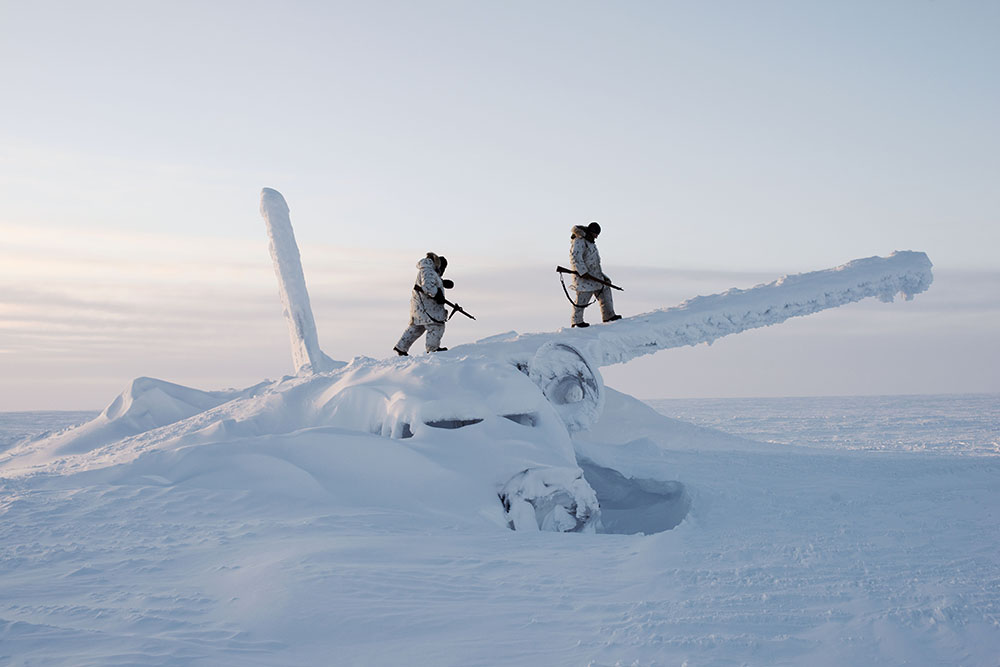
Canadian soldiers on reconnaissance walk on the wreckage of an airplane outside Resolute Bay in Nunavut, Canada. (Photo by © Louie Palu/Agence VU)
Q: How do you know when a project is worth pursuing?
LP: Honestly, projects usually find me. I read and research constantly, and my parents’ WWII stories instilled in me an awareness of threats to democracy and justice. Photography is how I respond. The discipline comes from my early years mixing cement for my father, a stonemason. That work ethic keeps me going.
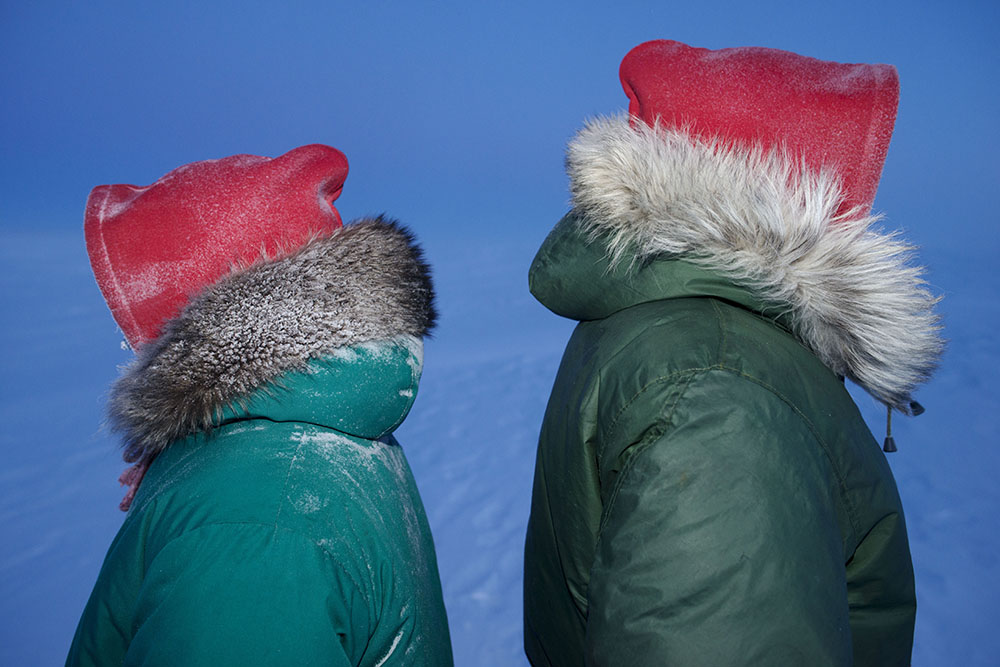
Canadian Rangers train non-indigenous soldiers in Arctic survival at below -60 degrees in Resolute Bay, Nunavut, Canada. (Photo by © Louie Palu/Agence VU)
Q: Of all your projects, which has been the most gratifying?
LP: The asbestos work. It’s small and not well known in the photo world, but it’s had the most impact. A Field Guide to Asbestos, published by Yoffy Press, was even cited in advocacy efforts that helped ban asbestos in Canada. Families of victims have told me it mattered—that’s what stays with me.
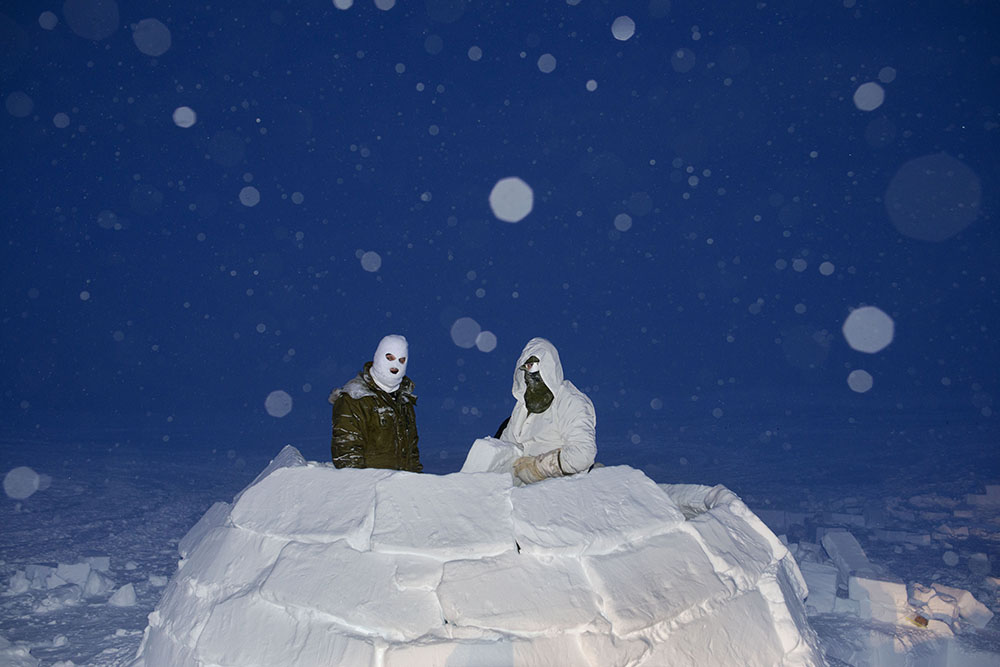
Non-indigenous Canadian soldiers build traditional Inuit igloo’s as an improvised survival shelter near a camp at the Crystal City in Resolute Bay, Nunavut, Canada. (Photo by © Louie Palu/Agence VU)
Q: Do you see yourself more as a photojournalist, documentarian, or fine art photographer?
LP: I’m a photographer and filmmaker working on social and political issues. Sometimes that’s documentary, sometimes photojournalism, sometimes art. I don’t think the “fine art” label means much anymore—each approach can be as artful as the other.
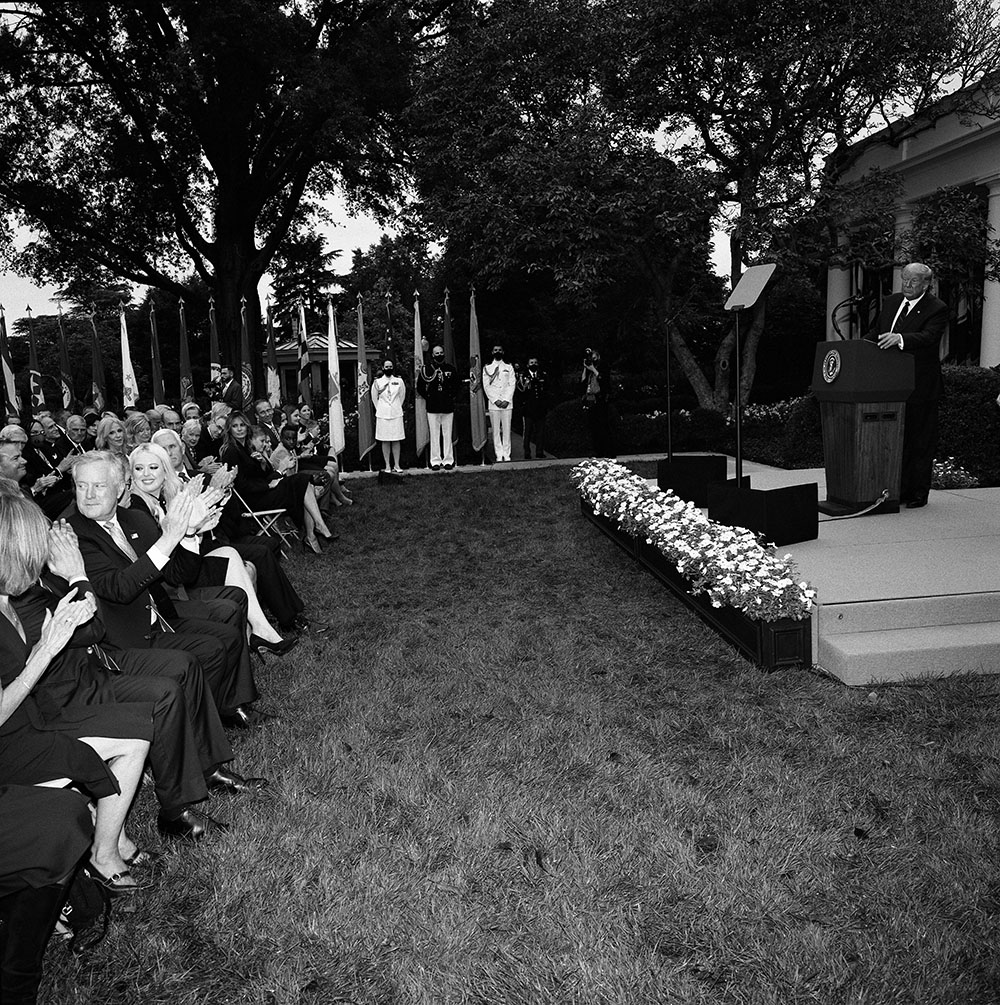
Front row at the White House in the Rose Garden President Donald Trump announcing Judge Amy Coney Barrett’s nomination to the U.S. Supreme Court. (Photo by © Louie Palu/Agence VU)
Q: Looking back, what role has Critical Mass played in your career?
LP: A huge one. The recognition, the community, the lessons—it all still shapes my practice twenty years later. That little monograph keeps opening doors.
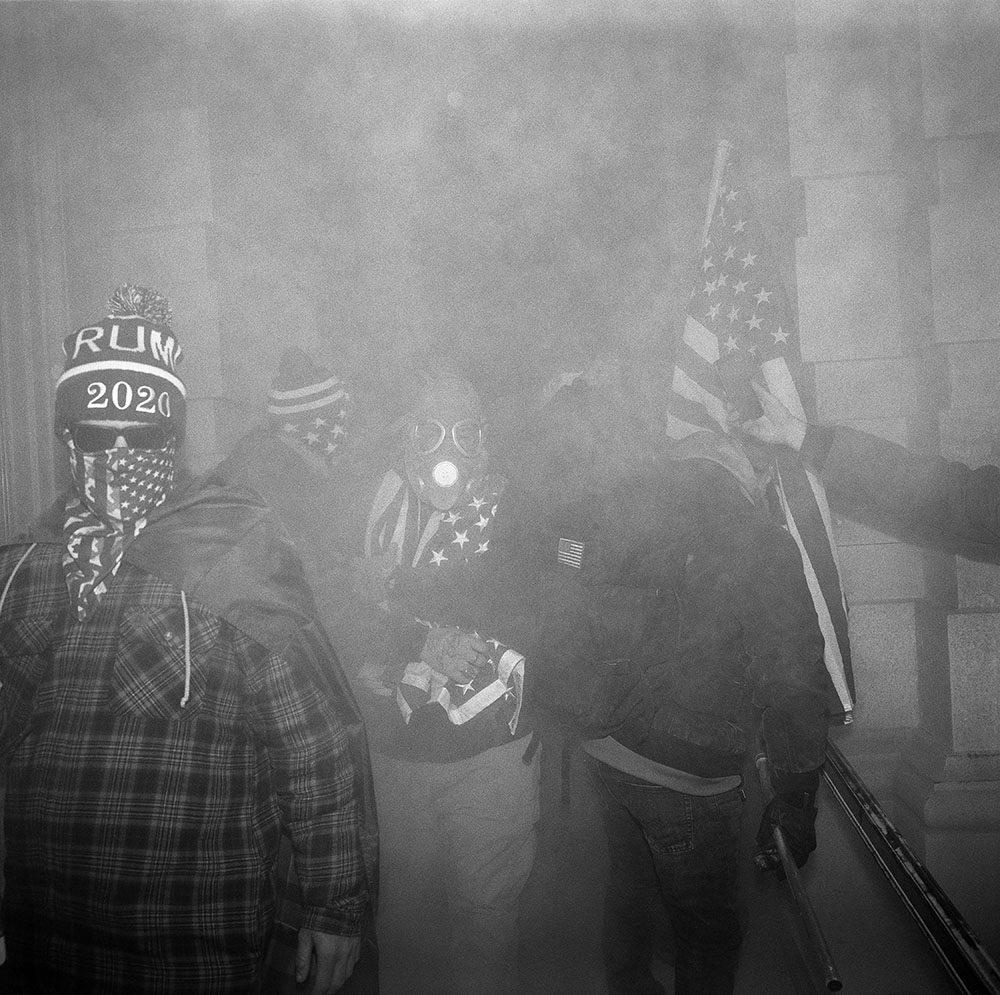
A Pro-Trump mob attacking the U.S. Capitol north entrance in a cloud of tear gas in Washington D.C. on January 6, 2021. (Photo by © Louie Palu/Agence VU)
Lynn Saville 2006
When the sun slips below the skyline and the city exhales into shadow, Lynn Saville begins her work. For decades, the New York–based photographer has wandered empty streets and glowing intersections, seeking out the drama of light, shadow, and reflection that emerges only after dark. Her images—at once hushed and electric—invite viewers into an urban landscape that seems to dream while the rest of the city sleeps.
Fine-art photographer Lynn Saville was educated at Duke University and Pratt Institute. Saville specializes in photographing cities and rural settings at twilight and dawn, or as she describes it, “the boundary times between night and day.”
Her photographs are published in four monographs: Acquainted With the Night(Rizzoli, 1997); Night/Shift, with an introduction by Arthur C. Danto (Random House/Monacelli, 2009); Dark City, with an introduction by award winning critic Geoff Dyer (Damiani, Bologna, 2015) and Lost: New York (Kris Graves Projects, New York, 2018). Saville’s photography is represented by the Yancey Richardson Gallery in New York and is in the permanent art collections of major museums, corporations, and individuals. She lives in New York City with her husband, the poet Philip Fried.
Instagram: @lynn_saville
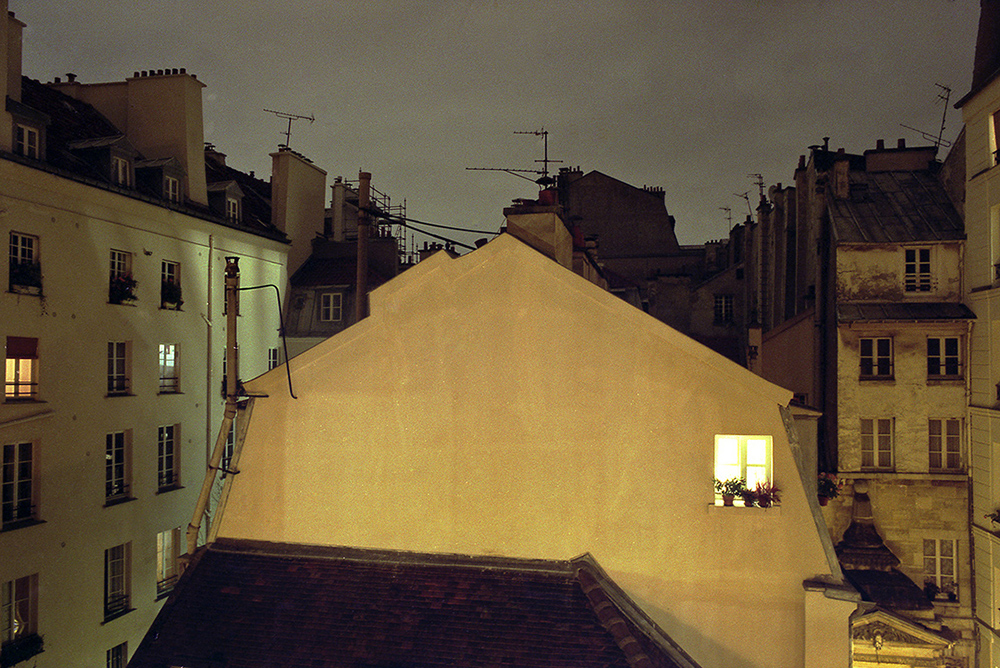
©Lynn Saville, Rue de Jarente
Q: Can you tell us how you first learned about Photolucida’s Critical Mass, and what motivated you to enter?
LS: I received invitations via email and kept seeing references to Critical Mass on social media. The jurors were so impressive—I was drawn to the idea that they would see my work, so I decided to submit my photographs.
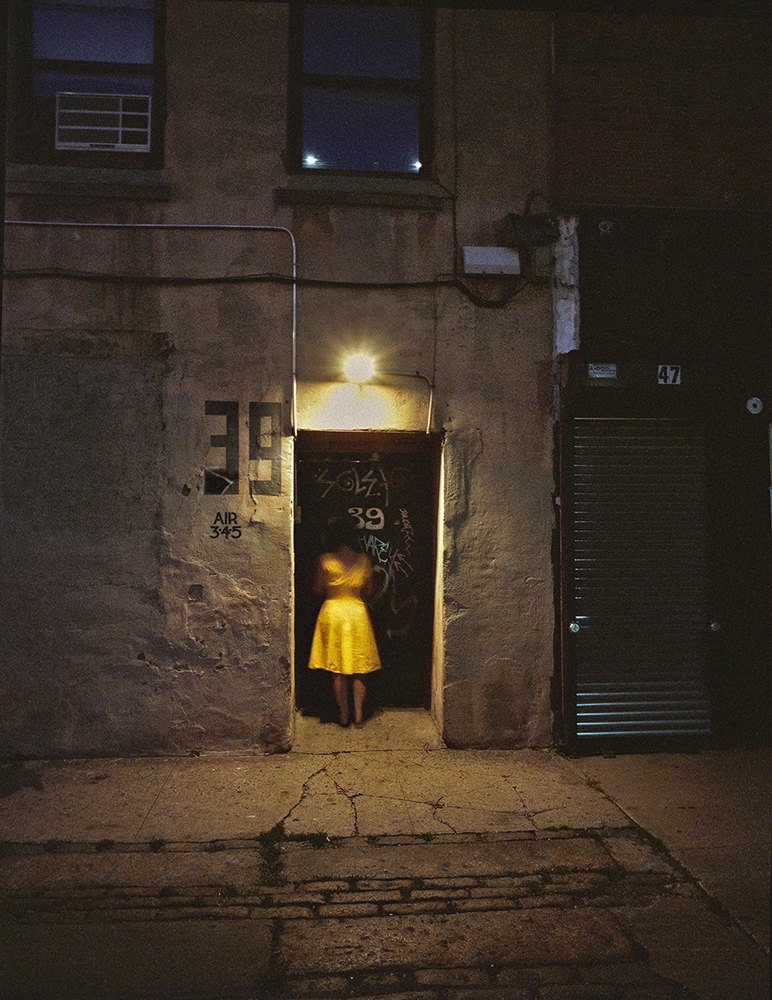
©Lynn Saville, Number 39
Q: Can you describe the origins of your 2006 Critical Mass Top 50 portfolio of urban night photography projects?
LS: My first encounter with New York City was at age five, and I was dazzled. I knew then that I had to move there one day. After graduating from Duke University, I moved to Brooklyn to study at Pratt Institute. That’s where I discovered photography and began photographing constantly—day and night, anything I saw. In classes with Philip Perkis, Arthur Freed, William Gedney, and others, I developed my interest in dramatic light and shadow. I photographed ballet dancers on stage, thinking about Degas’s paintings, and explored iconic places like Fifth Avenue near Central Park. I worked exclusively in black and white film at first, but several years later I began to explore color, which opened up entirely new possibilities.
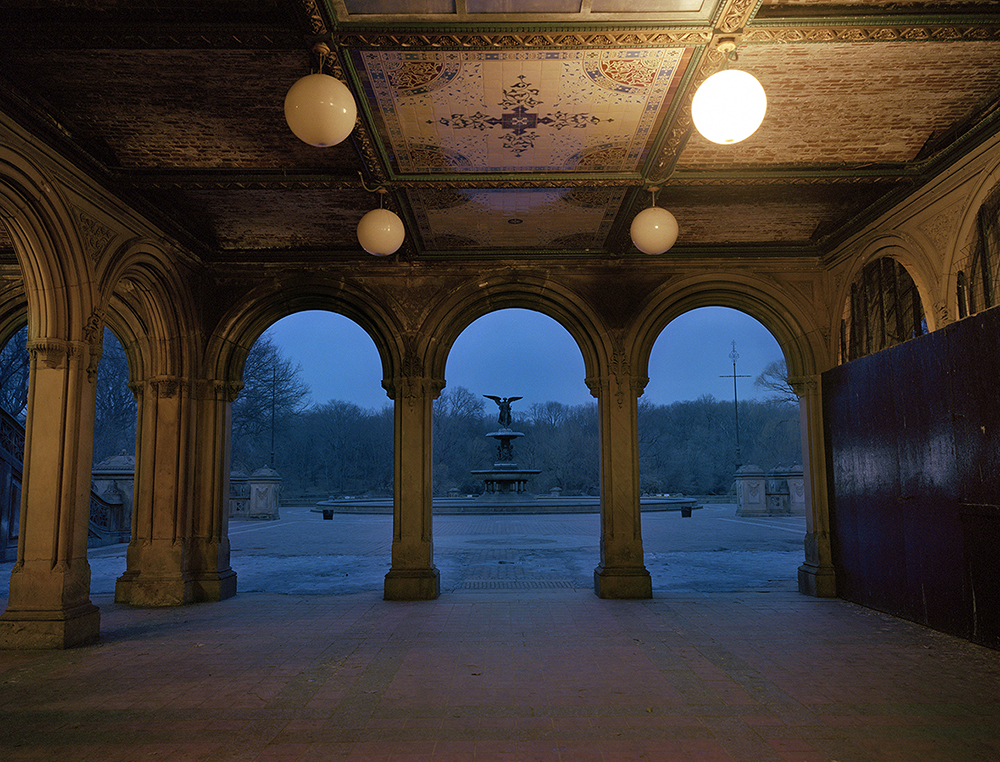
© Lynn Saville, Bethesda Fountain
Q: What is it about night photography and reflections that draws you in?
LS: I’m fascinated by how the city transforms as daylight shifts into twilight, moonlight, and artificial light. Shapes, contours, and geometric patterns emerge in ways they don’t during the day. Reflections are endlessly mutable—take a few steps and the entire scene changes. A glass wall might reveal what’s inside one moment, then reflect something across the street the next, or combine both at once. I’m often drawn to quieter places where there are few or no people, so the city seems to dream its own dreams. Still, when someone does wander through a scene, their presence often adds a subtle narrative layer.
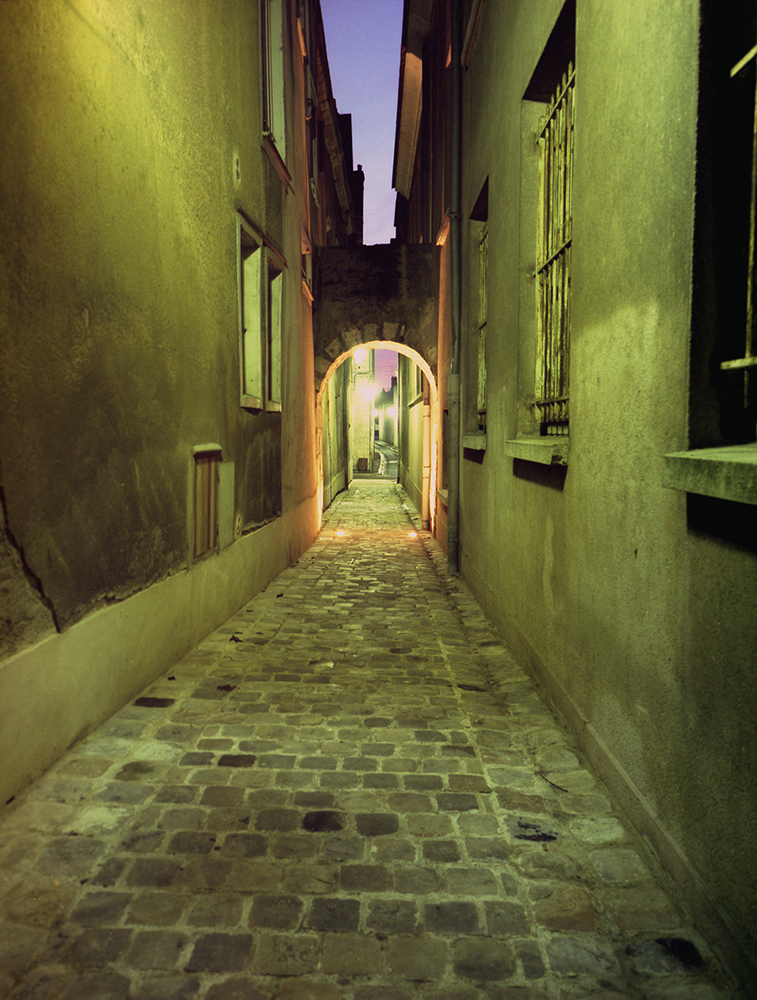
©Lynn Saville, Chartres
Q: Since much of your work takes shape in New York City, do you find yourself returning to familiar locations or constantly discovering new ones? What makes New York at night unique compared to other cities?
LS: I can honestly say I’ve never met a city I didn’t like—each one has its own distinct character. What I love about New York is its variety of neighborhoods and the interplay between public and private spaces. It’s a city built for walking, with excellent public transportation, and being surrounded by rivers and the Atlantic means there are bridges and ferries that add to its texture. Taxis, buses, helicopters, subways—so many layers of movement. Exploring New York is always fascinating, and often deeply romantic.
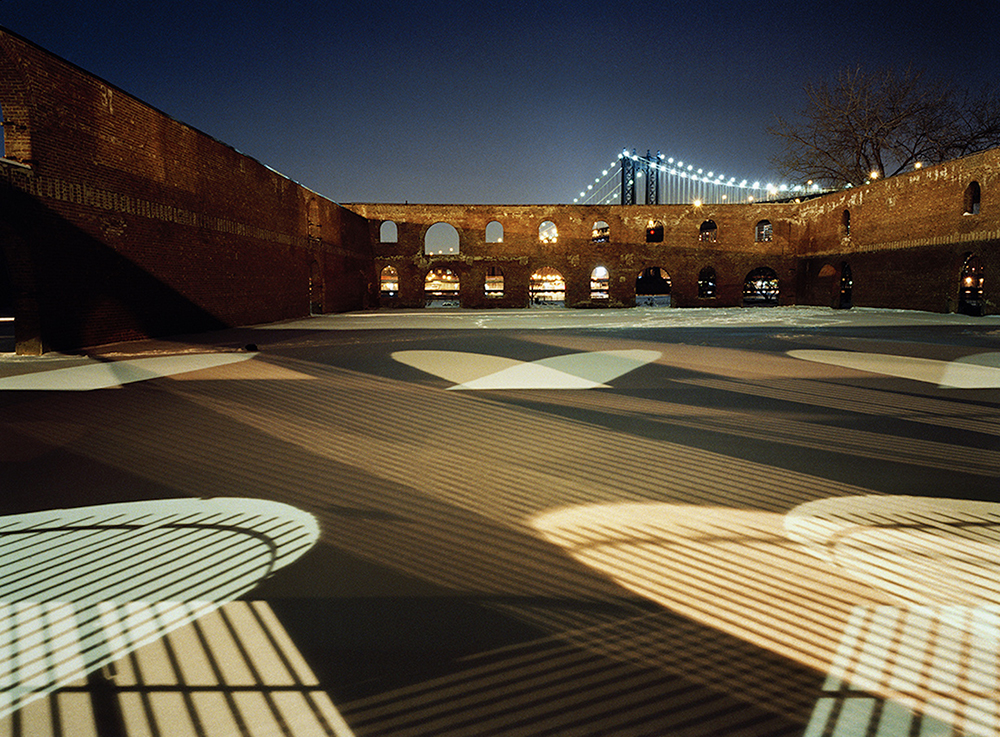
©Lynn Saville, Fulton Landing Warehouse
Q: You’ve published four books of your work: LOST: New York, Dark City: Urban America at Night, Night Shift, and Acquainted with the Night. Do you photograph with the idea of a book in mind, or does that decision emerge later? How do you know when it’s time to create the next book?
LS: I’ve always loved books, but I don’t begin a project thinking of one. I usually start with an instinct or curiosity about a place. Once I start seeing connections between images, I’ll explore those directions further. At some point, the work begins to take on a shape that suggests a book. It’s a very organic process.
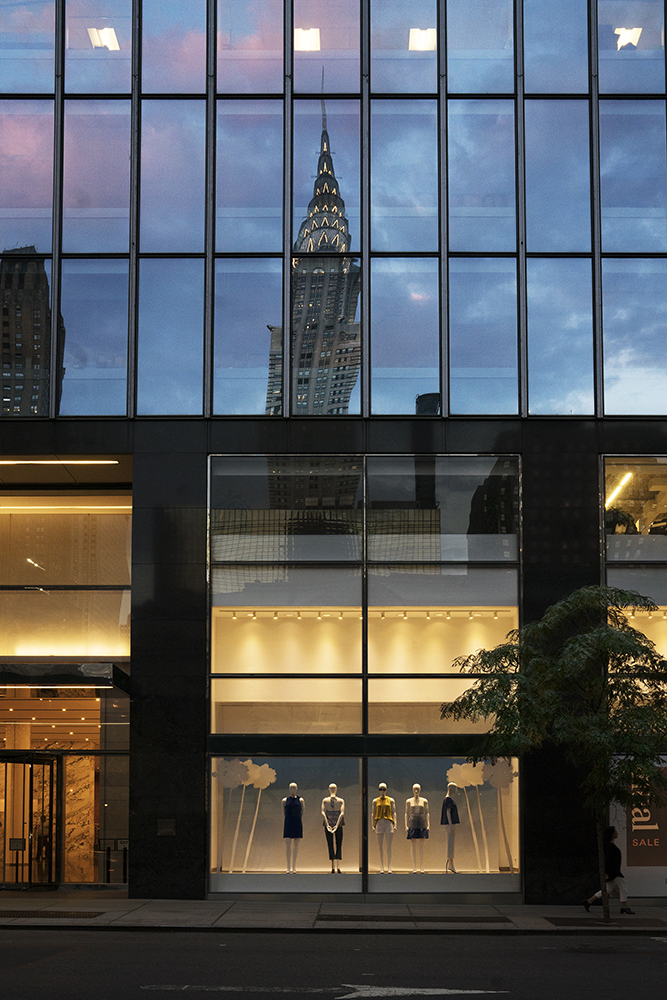
©Lynn Saville, Chrysler Building with Mannequins
Q: Since your work carries strong thematic threads, how do you define the beginning and end of a project or book?
LS: Books usually grow out of exhibitions. Once I’ve shown a series, I begin to imagine how it could live as a book—what scale, how many photographs, what sequencing. I’ll share ideas with friends and colleagues, and search for the right writer for an introduction or foreword. Each of my books has had a different publisher—Rizzoli, Monacelli, Damiani, and KGP (Kris Graves Projects)—and each collaboration was unique and rewarding. I’m deeply grateful to the editors, designers, and writers who shaped those projects with me.
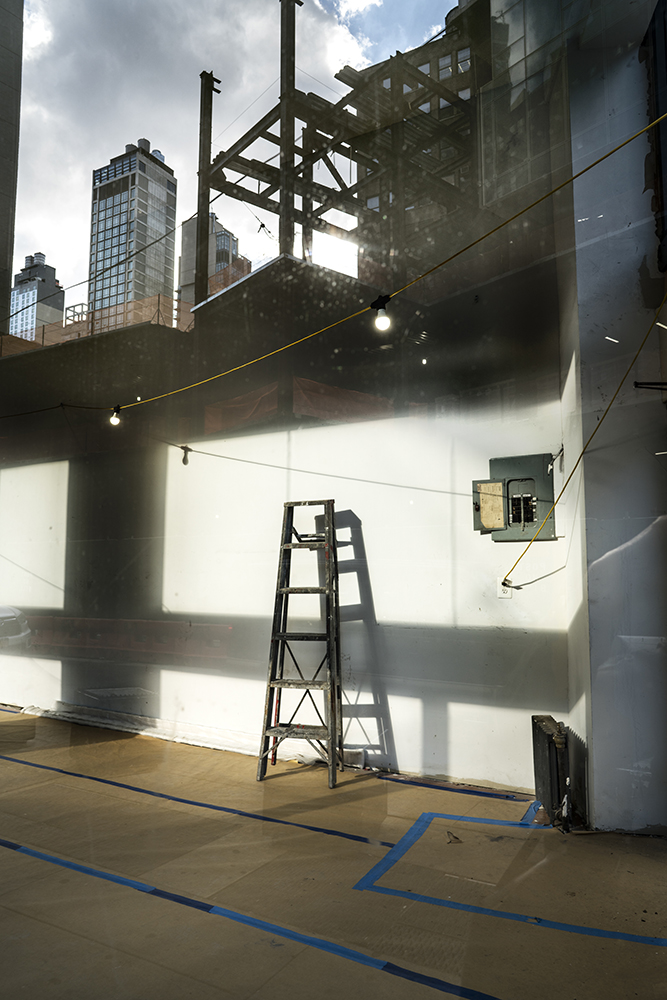
©Lynne Saville, Construction in Store Front West 29th St.
Q: Do you feel your work has changed since being named a Critical Mass Top 50 finalist in 2006? If so, in what ways?
LS: Absolutely. In 2006, I was still relatively new to color photography, having worked in black and white for many years. That period marked the beginning of photographing more internationally—Paris, Rome, London, Venice. Being named a Top 50 finalist gave my work greater visibility. Museums and galleries began showing my photographs more frequently, and people recognized my name. It was an honor that had a lasting impact.
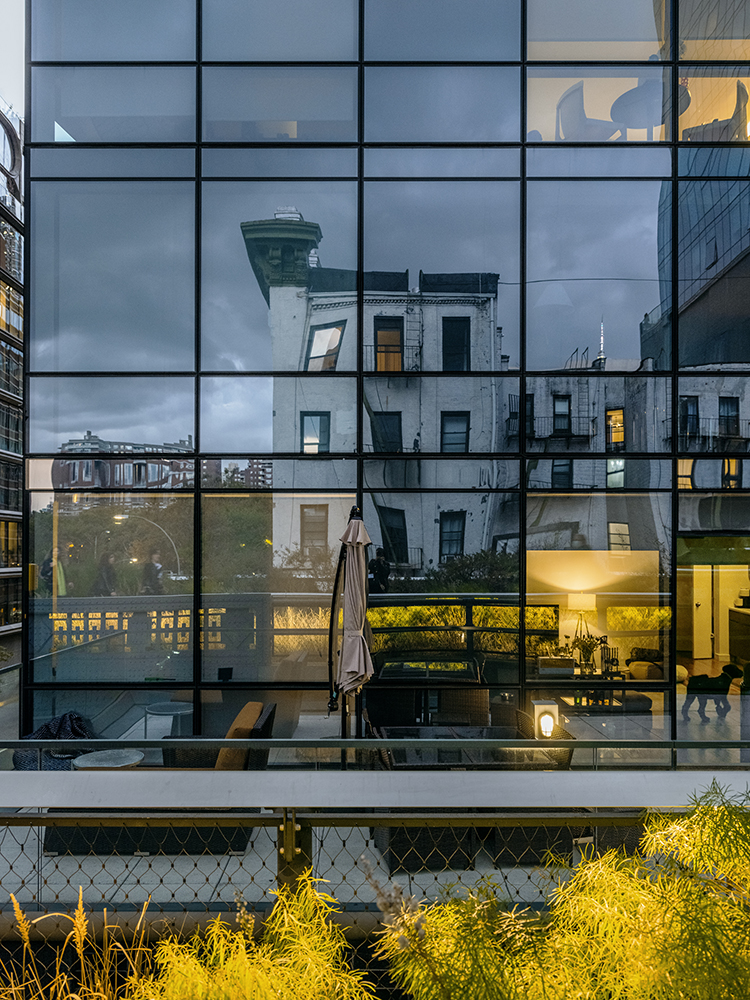
©Lynn Saville, Highline Reflections with Dog
Q: Many of your images are void of humans—are you walking the streets at night alone? Do you always feel safe in doing so?
LS: I often like to be “alone with the city.” That solitude lets me meditate on the cityscape and photograph with focus. But I’m careful. I avoid parks after dark, and if I do enter early in the evening, I stick to areas where I can see other people or traffic. If I feel uncertain, I change direction toward busier streets. At first, I resisted people wandering into my photographs, but later I realized how much they often add—introducing narrative and mystery—so now I welcome them.
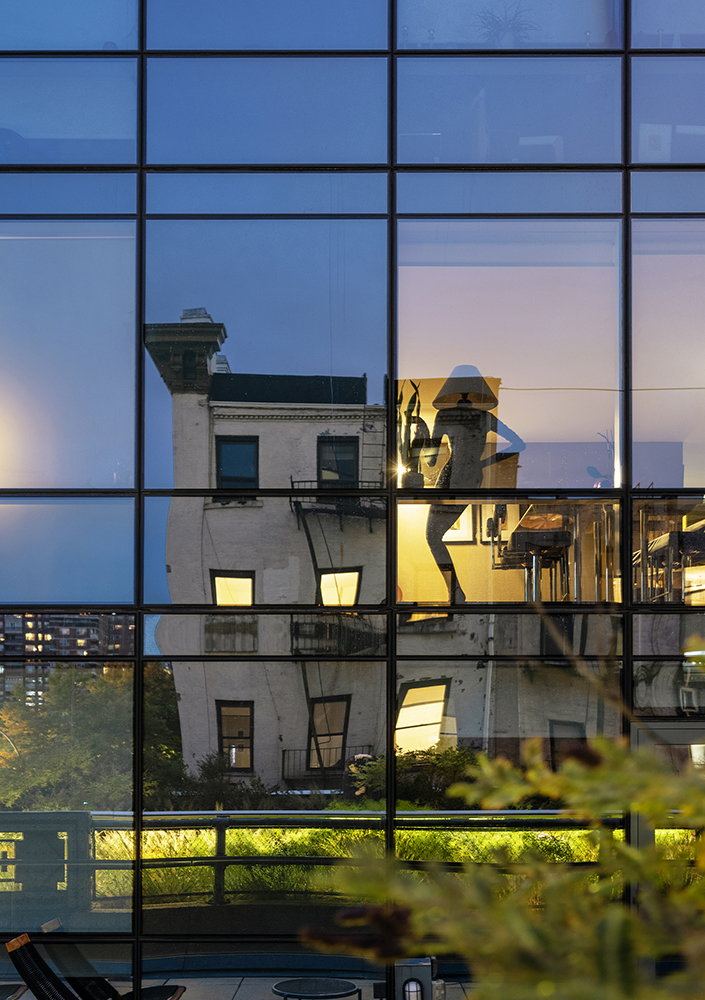
©Lynne Saville, Dance with Me
Q: At this point in your career, how often are you out photographing? Are you still inspired by similar scenes, or has what attracts you shifted over time?
LS: I’m out photographing about three to four times a week. I continue to explore new neighborhoods, but I also return to favorite streets. What amazes me is how much those familiar places change over time. Even a block I’ve photographed many times reveals something new on each visit. That mix of continuity and change keeps me inspired.
Q: Finally, did being recognized as a Critical Mass Top 50 artist create opportunities for you—either immediately after the honor or over the long term?
LS: Yes, very much so. I was offered solo exhibitions at several museums, and I was invited to present my work and lecture at institutions including ICP, SVA, Duke University, and the AIA. It was both validating and energizing for my career.
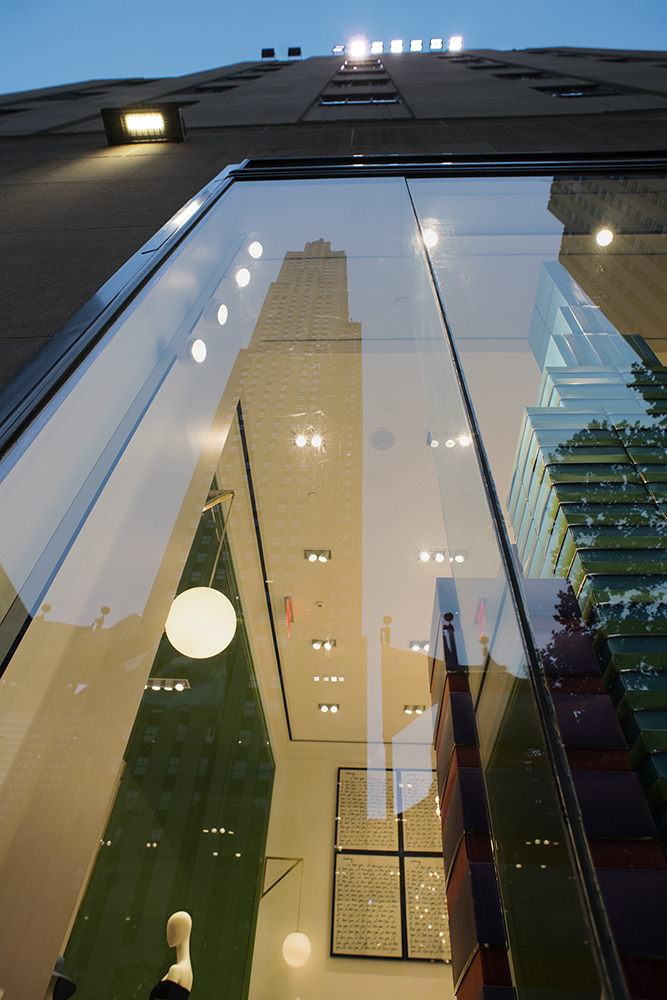
©Lynn Saville, Reflections at Rockefeller Center
Photolucida is a 501(c)(3) nonprofit organization. Our mission is to provide platforms that expand, inspire, educate, and connect the regional, national, and international photography community.
Instagram: @photolucida
Posts on Lenscratch may not be reproduced without the permission of the Lenscratch staff and the photographer.
Recommended
-
Zanele Muholi: 2026 Hasselblad Award LaureateMarch 13th, 2026
-
Shane Hallinan: The 2025 Salon Jane Award WinnerFebruary 12th, 2026
-
Greg Constantine: 7 Doors: An American GulagJanuary 17th, 2026
-
Yorgos Efthymiadis: The James and Audrey Foster Prize 2025 WinnerJanuary 2nd, 2026
-
Arnold Newman Prize: C. Rose Smith: Scenes of Self: Redressing PatriarchyNovember 24th, 2025







 and Lynn Saville (2006))