Jordanna Kalman: Index 2014-2024 & Men Asleep
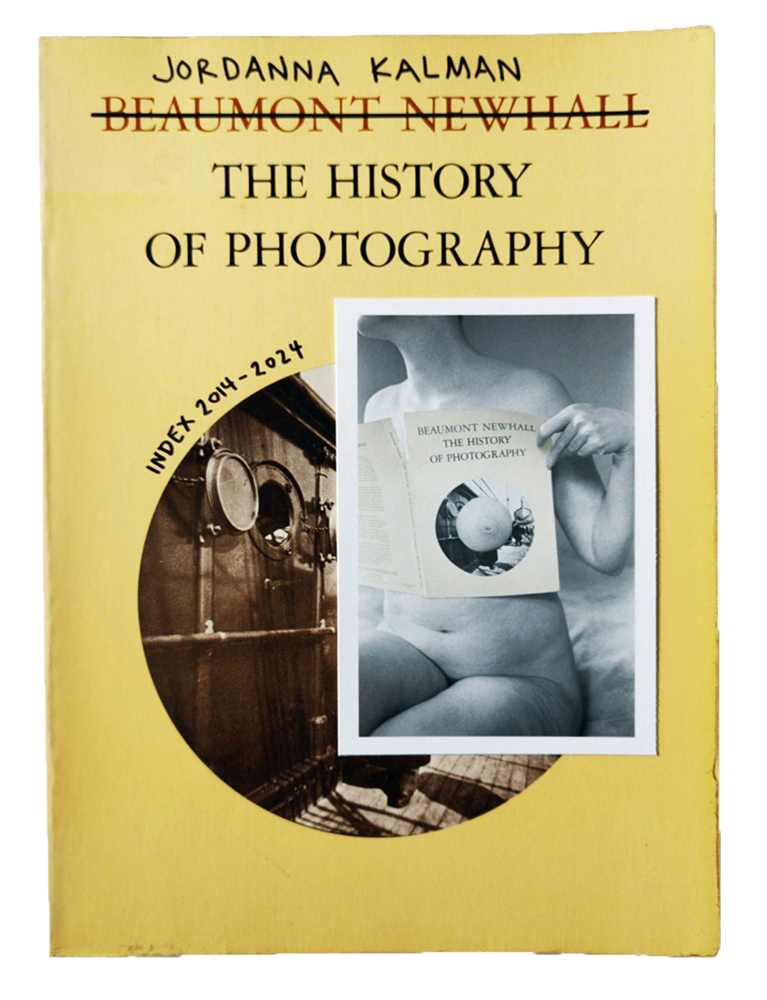
“Index 2014-2024″ © Jordanna Kalman
This week we explore works made by female-identifying lens-based artists who explore issues affecting contemporary women. I’ve approached the projects this week thinking about these questions: How is this point in time different for female artists? What issues need to be addressed in our current climate?
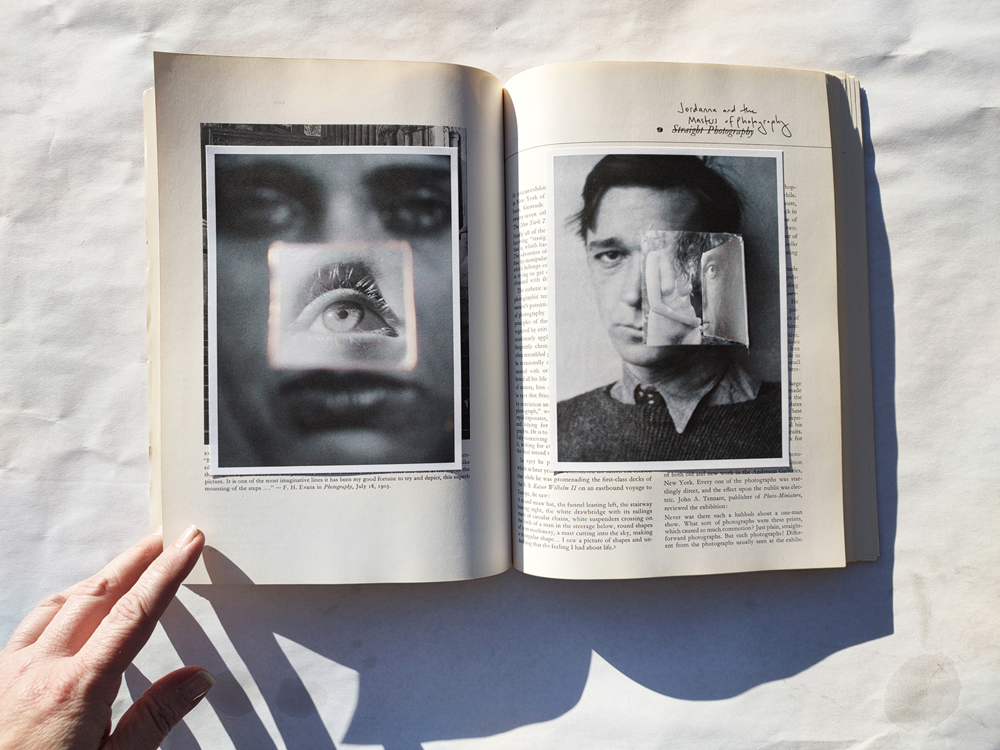
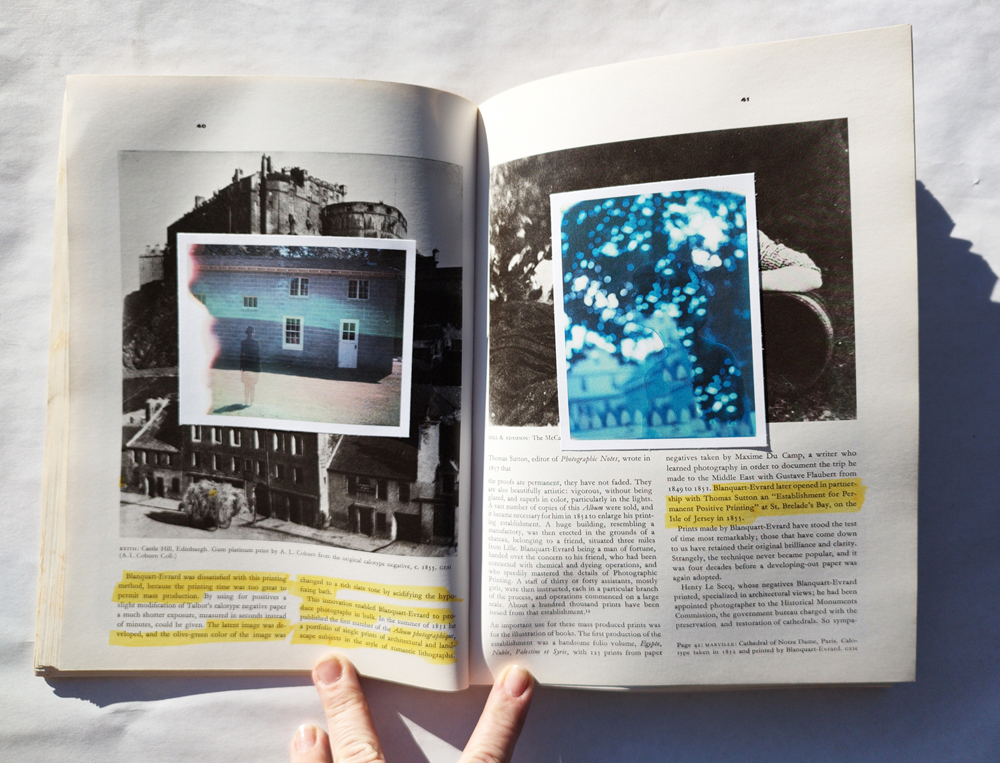
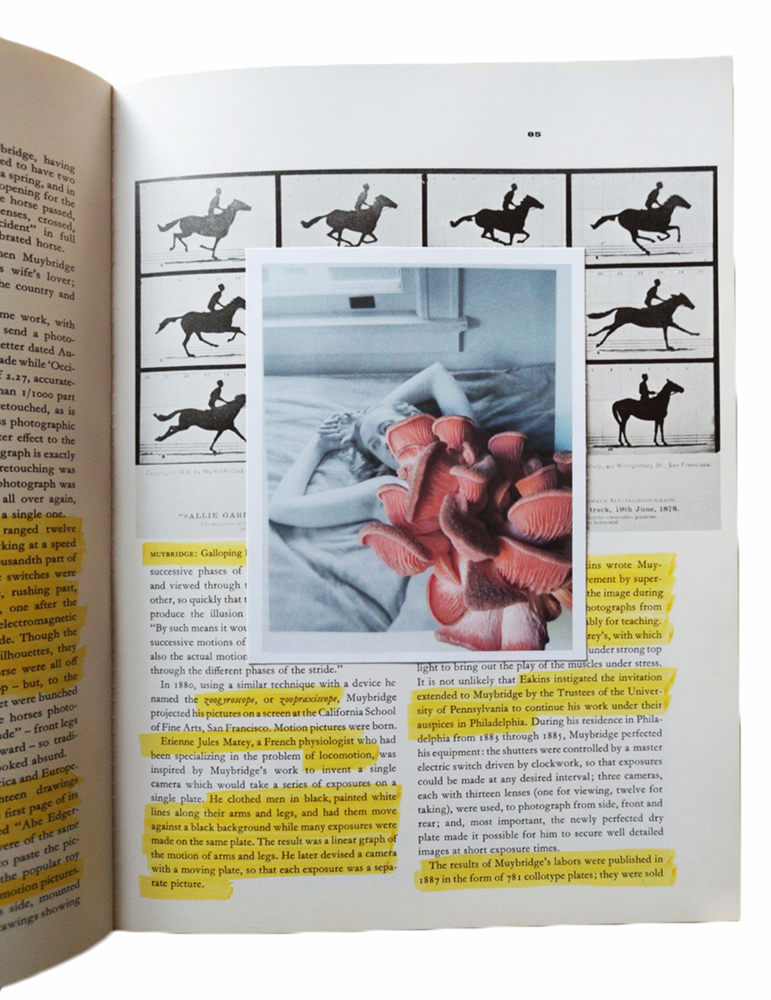
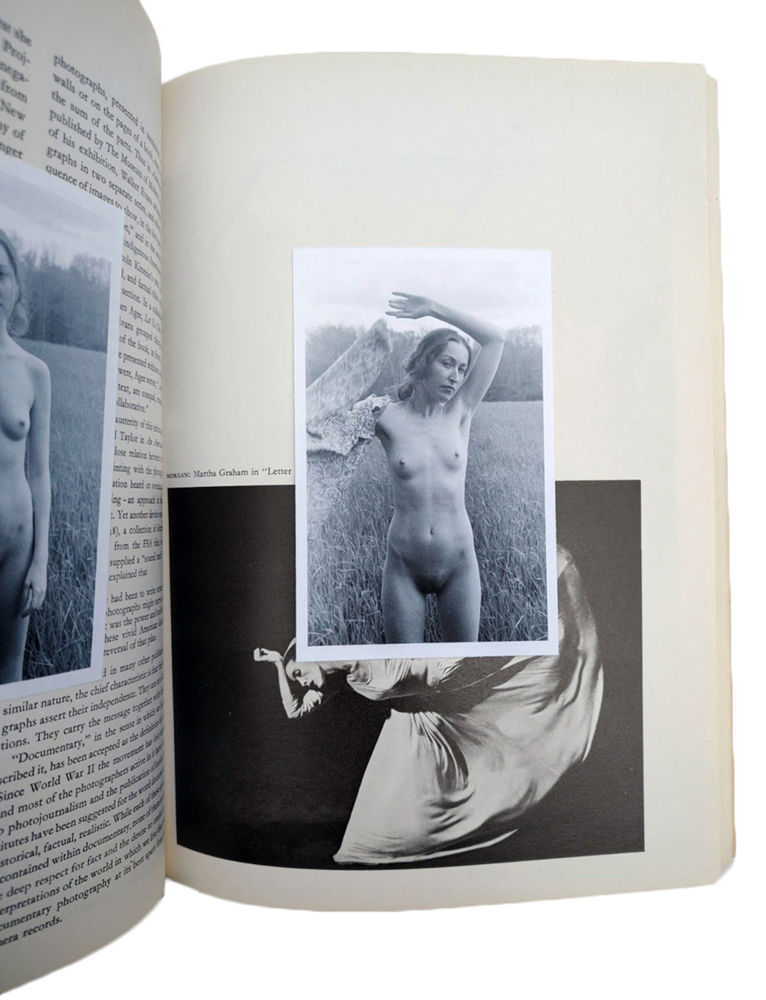
My experience of Jordanna Kalman’s book, Index 2014-2024, is that it is bold, thoughtful, and poetic. The size and pacing of Kalman’s images layered over the classic images in the Newhall book is aesthetically pleasing, with her voice steady, but not screaming over the original. Enough of the original images in the book are revealed to recognize but not get distracted by the classic works. Kalman carefully wrote by hand her titles and chapters and carefully arranged her images, giving a sense of the artist’s voice. Each book has hand applied images and text, making each one unique. This delicacy and directness in the work is well balanced, which can be difficult to achieve.
The book brings into context the place of women in photo history, as Kalman has pointed out, only thirteen photographs by women are represented in Newhall’s original book of three hundred photographs. Kalman’s works carry themes of feminism and a feminine perspective; this book actively asks for equity in the conversation of contemporary photography.
-Marcy Palmer
©Jordanna Kalman
Index 2014-2024 Statement
For the last five years or so, Jordanna Kalman’s work has focused on her relationship with the history of photography and her experiences navigating a male dominated art form and industry. A number of series interpret specific instances; for example, Keys, (2022) which expresses how she felt about being denied access to the darkrooms by the lab manager at school with the reason being, no joke, said directly to her face: “because you’re a girl.”
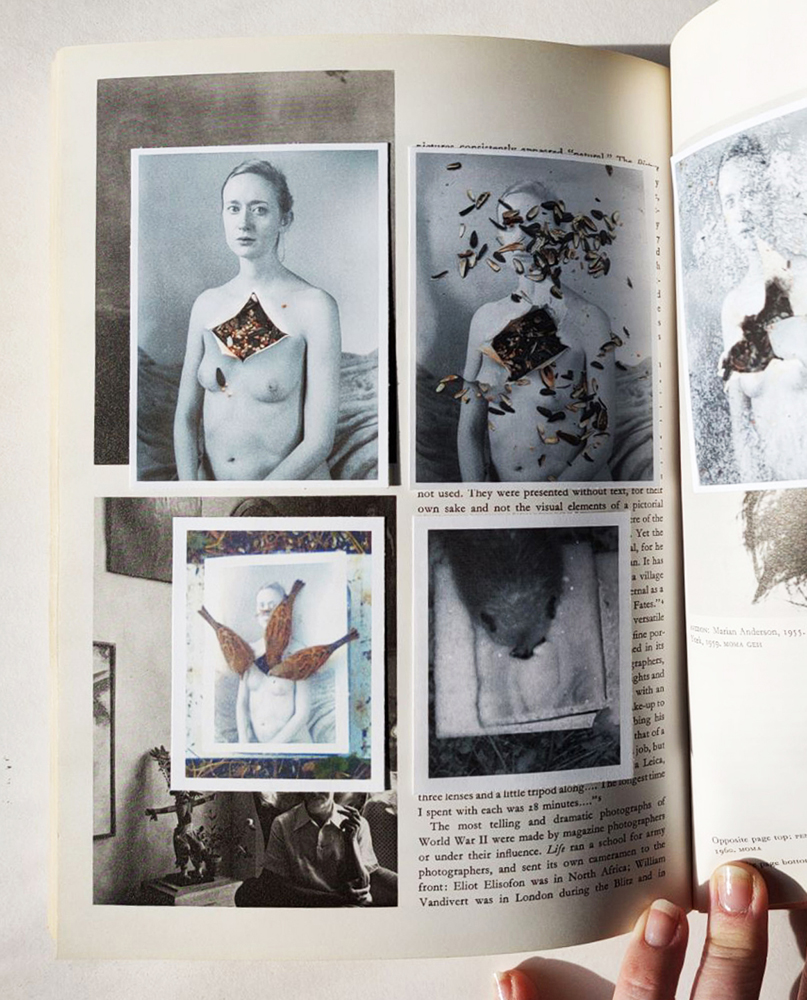
Other series are broader in their meaning, where Kalman manipulates her photographs of the female nude to represent the treatment of women by the photographic medium. Her series Little Romances (2015-2021) began as an effort to thwart online theft of her photographs by pornography websites and has evolved over the years into a visual shorthand to express other frustrations. Jordanna and the Masters of Photography (2019-ongoing) directly addresses the claustrophobia of being a woman photographer in a predominantly male environment.
It seemed like a natural step to dominate Newhall’s book with these works being that the edition has 300 photographs and a mere 13 of them are by women.
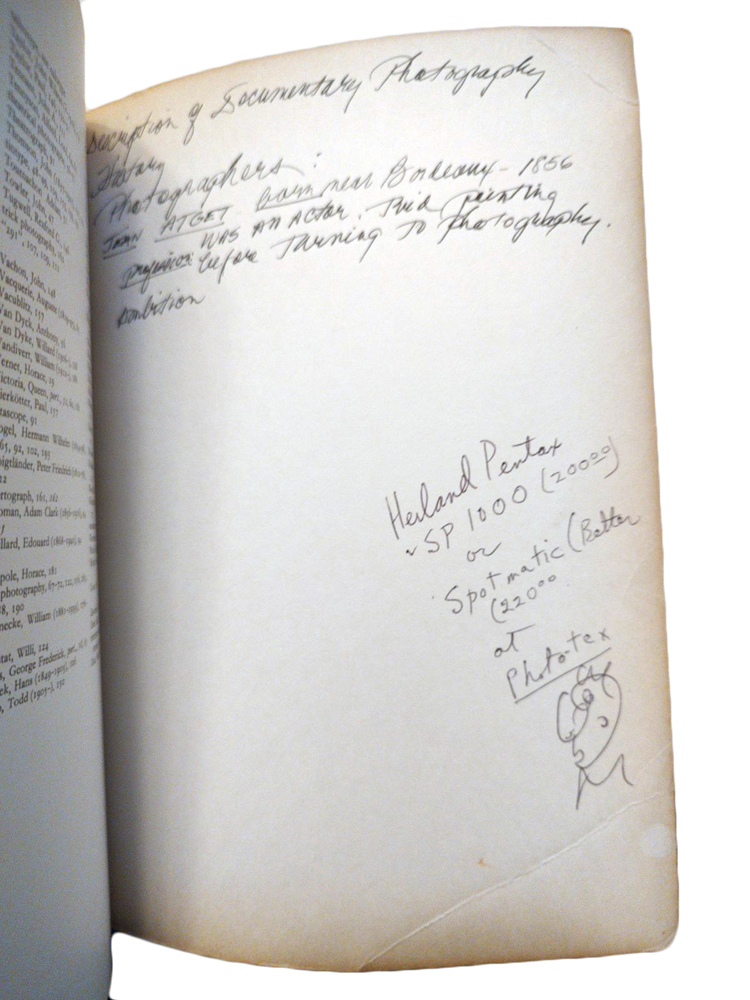
The books were acquired used so they have a history even before they are altered by Kalman. They have flaws and show wear, been underlined and highlighted, some were library copies and in some the previous owner has written their name at the front. There were seven different printings of the fourth edition, and the paper and printing quality varies greatly between them.
Each copy is unique and as Kalman tips in her pictures, the book grows, bulges into an almost sculptural object, mimicking many of her interventions with photographic prints.
Through its construction, Index 2014-2024 represents the demand for recognition and inclusion by a woman in the history of photography as well as challenging the formality of a typical monograph.
-Jordanna Kalman
©Jordanna Kalman
MP: How did you come up with the idea to use Newhall’s printed books for “Index”?
JK: For the last few years, I’d pick up a copy of the Newhall book anytime my local used bookstore had one because I was using photo history books in my work and I thought I could use them at some point for something. When I started to think about collecting the last ten years of my work into a book, I knew I didn’t want to make a typical monograph, and I realized I should use the Newhall. His book, The History of Photography was the one that was taught at school, and it’s a perfect example of how women are excluded from photo history being that it has 301 photographs in it and only 13 of them are by women.
©Jordanna Kalman
MP: I find it so interesting that each book is unique due to the variations in the printing of the publication and then layered on that, your prints and text tipped into the book. As you note, it becomes sculptural in a sense. Did you anticipate this aspect of it when conceiving of the book?
JK: I knew by tipping in my prints the book would be weird and get big but part of my motivation was to do something unconventional because my work is unconventional. I talk myself out of so many ideas for fear of being “wrong” which is a direct result of being told so all throughout school and my career. Making the book was one of those pure urges in artmaking where you go I HAVE TO DO THIS and fear & doubt are not present. A lot of the work over the last ten years has focused around women because the MeToo movement made me realize how insanely misogynistic everything is. I mean, I knew that already but hearing other women talk about it allowed me to come to terms with my own experiences and emboldened me to incorporate them into my work.
©Jordanna Kalman
MP: The theme of feminism runs through these works as well as the artist’s intervention with the photograph. What is your process for working? How do themes emerge for your projects? Do they stem from experience, media, conversations, or something else?
JK: I have a cyclical process where I’m absorbing everything around me, not actively thinking about a project, just taking it all in. Then something starts to spark my interest, I’ll research and begin to make photos and the project happens and then it’s done and I’m hit with an awful depression for a while and then I start absorbing again.
©Jordanna Kalman
MP: Where do you think women are in the contemporary landscape of the photo/art world? What do you think people should know or recognize in current times? In a separate conversation, Jordanna and I discussed the current backlash of the MeToo movement as seen in contemporary media and culture and she refers to that here.
JK: It’s tough for me to say where things are at photo world-wise because I pretty much stay in my little bubble. However, what I can tell you from my bubble is that vibes are down! Everything feels overwhelming right now and it’s hard to focus. Every woman I talk to is exhausted, angry, scared, all the feelings. It’s unbelievable how fast women’s rights are being stripped away and at the same time “male loneliness” is being reported on as an actual thing that we’re supposed to take seriously. Just in terms of the photo world I think people need to support people and institutions that are inclusive to everyone. There are so many different groups under the photo world umbrella, some of them are never going to include women (and/or people of color) so fuck ‘em, find a group that does or start your own.
©Jordanna Kalman
MP: What’s next?
JK: I’m working on a bunch of projects right now. I have a new book that’s almost done but the publishing deal fell through so I’m trying to figure out how to move forward with it. I’m trying to get a couple of zines done in time for the CPW book fair in August. Things feel bananas right now, I need to get centered, I need to make a list.
——–
Men Asleep Zine
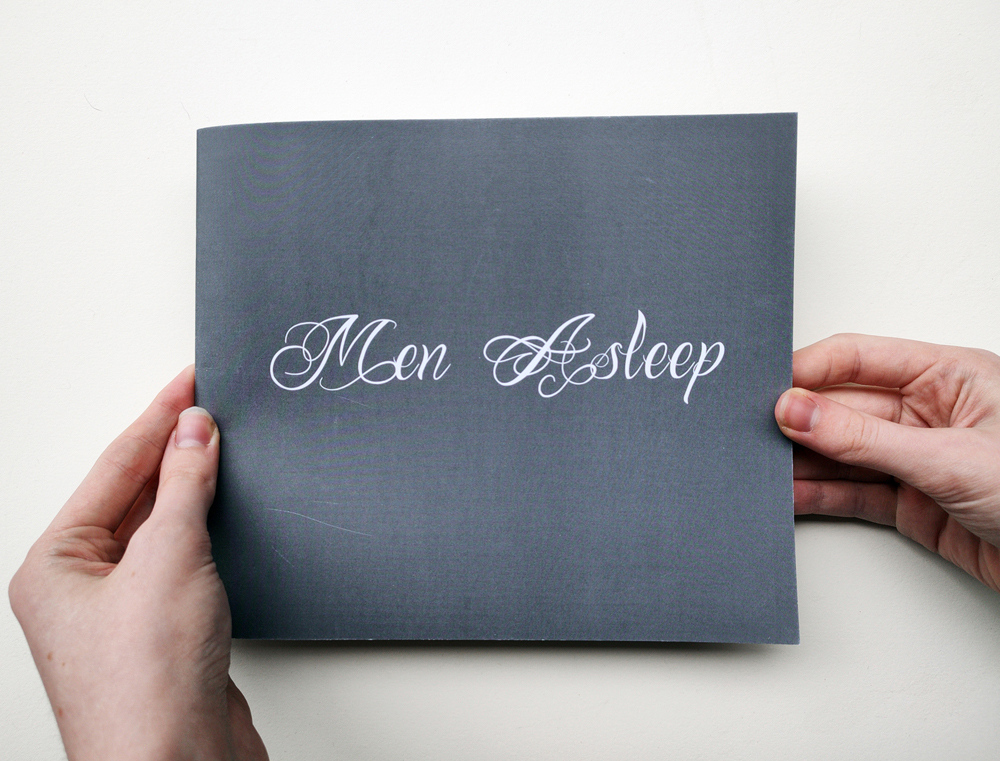
“Men Asleep” zine by Jordann Kalman
Men Asleep Statement
Since hearing about it last summer, I haven’t been able to stop thinking about the Gisele Pelicot case. She is a French woman whose husband, over the course of ten years, repeatedly drugged and raped her. He also invited random men- strangers, over to their house to rape her while she was unconscious.
In the midst of my horror, I thought about one time many years ago while I was working with a nude male model, he was laying down posing for a picture and he fell asleep. I was stunned and didn’t know what to do– should I cough loudly?
Should I leave?
Should I take a picture?
My art brain screamed Yes! He looks so beautiful!
But it felt like a violation, the absence of consent in that moment. I did it though,
I took one picture of his sleeping face, and I felt bad about it.
I wonder what it would be like to fall asleep like that. To not be worried about the possibility of being molested or exploited. There have been so many times in my life when I haven’t felt safe to sleep, the majority of which being in male company.
I wonder what a male photographer would do if a female nude model fell asleep during a shoot.
I asked one of the female models I work with about it and she screamed and ranted how unsafe that would be, how she could never.
It occurred to me that men don’t actively worry about being violated while they’re unconscious, what’s that like? I reached out to fifty photographers who are women, told them what I’ve just told you and asked them to send me a photograph of a man sleeping.
I had nineteen responses and from those I made a zine called Men Asleep.
-Jordanna Kalman
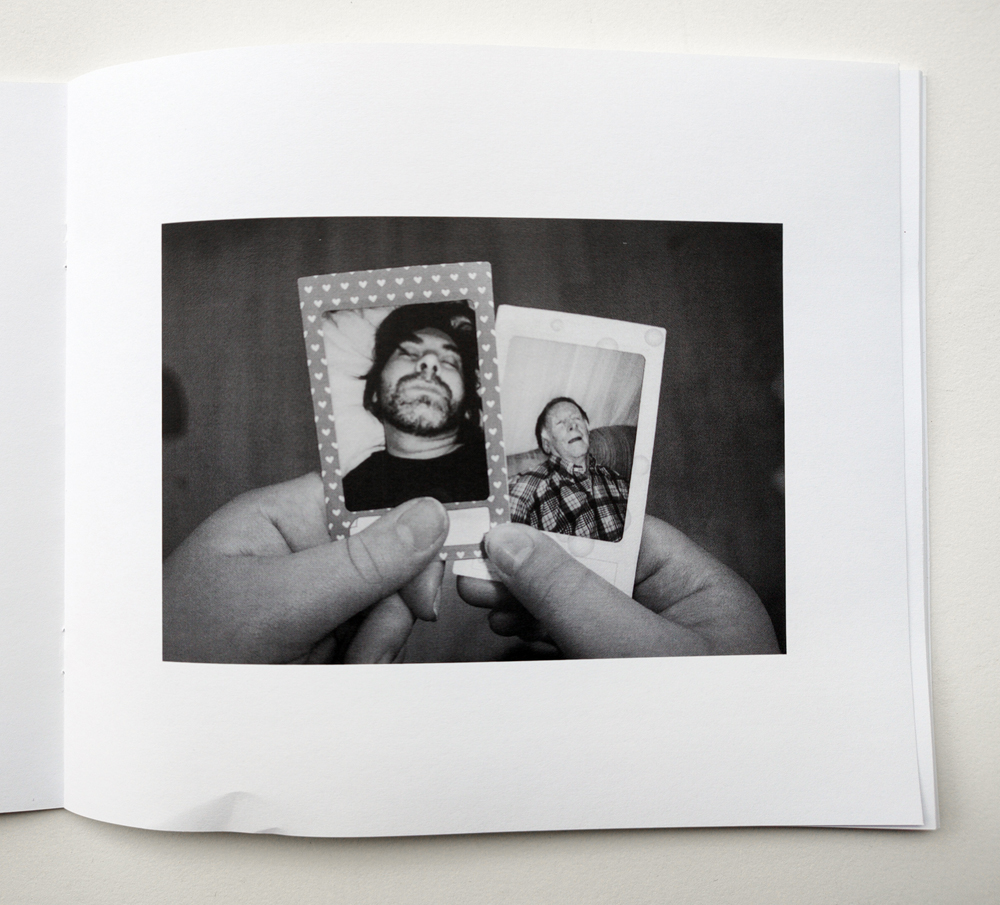
Image by Echo Green & Corinne Botz
I found “Men Asleep” to be tender and beautiful, which is a little bit unexpected because it was inspired by such a horrific case. The images are intimate, sometimes soft and dreamy, and they share a sense of safety and calm. Jordanna’s text at the end of the zine contrasts the images with personal stories of when the vulnerability of sleep wasn’t safe. This layers in experiences that many women share, many men don’t and points to an inequity of the sexes.
-Marcy Palmer
“Men Asleep” zine was edited and produced by Jordanna Kalman, it is 40 pgs, black and white, published by Memory Version, and includes work by Aline Smithson, Allison DeBritz, Ashleigh Coleman, Cassandra Klos, Christa Blackwood, Echo Green & Corinne Botz, Elena Helfrecht, Em White, Emma Hartvig, Emily Sheffer, Gigi Gatewood, Jocelyn Allen, Jordanna Kalman, Katherine March Driscoll, Madeline Cass, Natalie Krick, Odette England, Paula McCartney, Sarah Palmer, Selina Roman, Stacy Mehrfar.
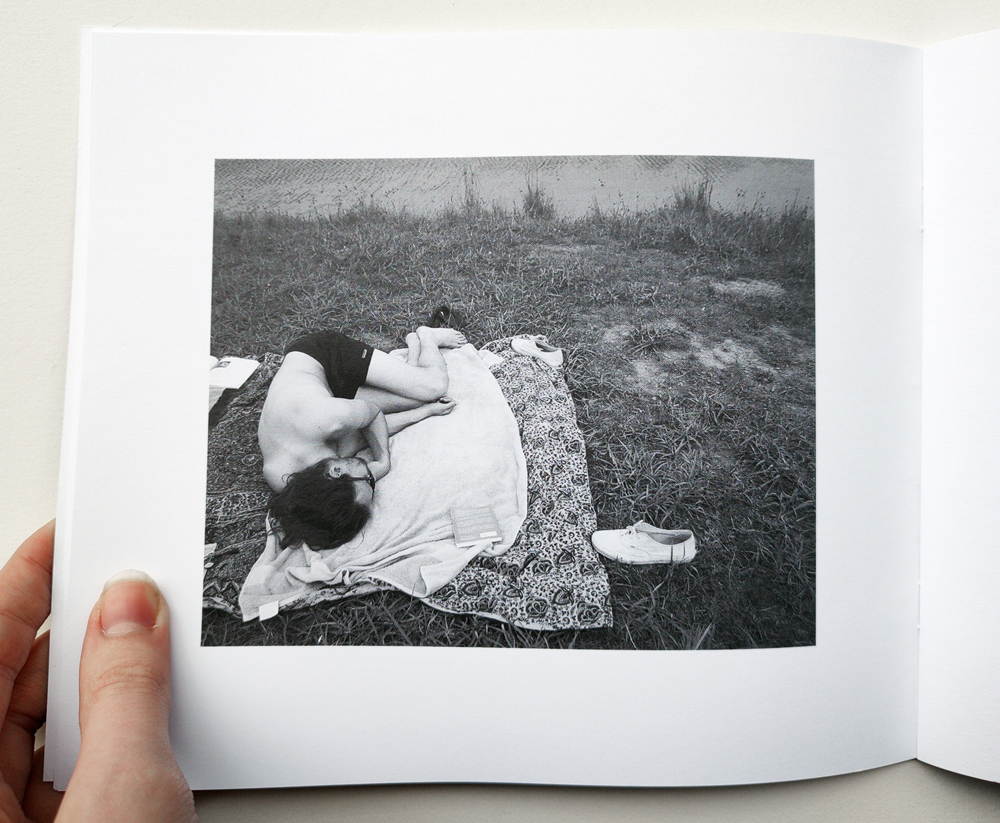
Image by Katherine March Driscoll
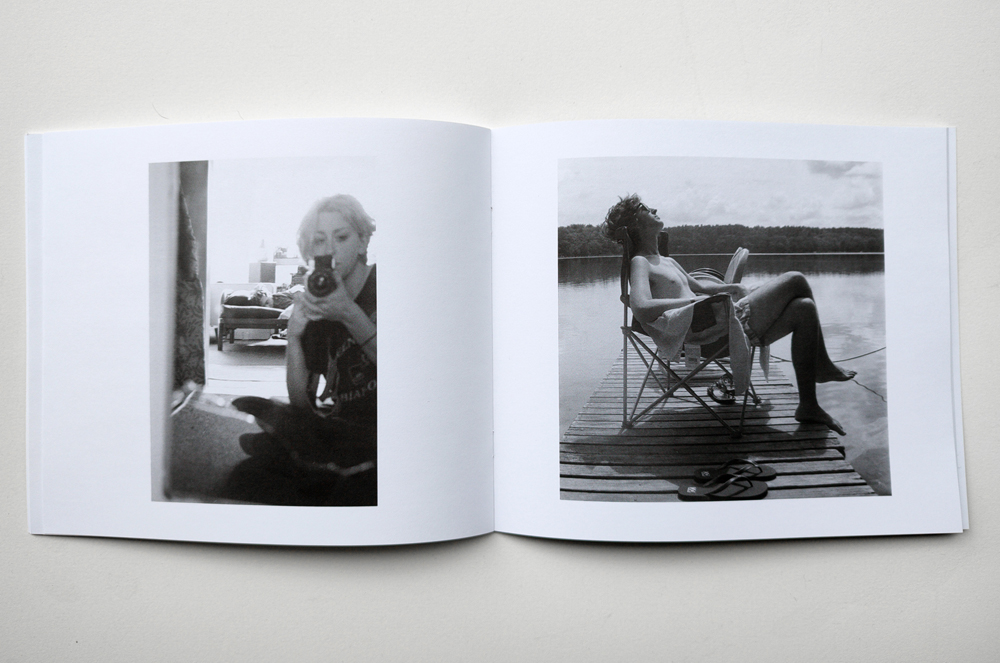
Images by Jordanna Kalman (left) and Aline Smithson (right)
—-
Jordanna Kalman is a photographer from the Hudson Valley, NY. She has exhibited nationally, internationally and extensively online. Her practice entails finding the best way to express visually whatever it is she’s feeling at that particular time. Most recently she has been reckoning with her relationship with the male dominated history of photography and has self-published a book spanning ten years’ worth of her series using the seminal text The History of Photography by Beaumont Newhall to house her work. In addition to her artistic practice Jordanna writes about inequalities in the photo industry and produces collaborative projects and publications in tandem.
Jordanna works on many different things very slowly all at once.
https://www.rabbitandsparrow.com/
—-
Marcy Palmer is an American artist whose work explores themes of beauty, history, and social justice through the lens of nature and science. Influenced by the earliest practitioners of photography, as well as the Surrealist and Bauhaus movements, Palmer delicately balances contemporary and historical approaches to image-making and materials to communicate her ideas.
Marcy earned her M.F.A. in Photography & Related Media from the School of Visual Arts and a B.S. in Studio Art from Skidmore College. Her work has been exhibited at The Brooklyn Museum of Art, The Center for Photographic Art, The Griffin Museum of Photography, The Ogden Museum of Southern Art, and other spaces. Her work has been written about in The Boston Globe Sunday edition, D Magazine, and other publications. Her sold-out book, “You Are Eternity, You Are the Mirror” was published by Yoffy Press and recognized by Photo-eye, Deep Red Press, and The Luupe as a favorite photobook. Marcy also teaches photography at universities, art centers, and museums.
Posts on Lenscratch may not be reproduced without the permission of the Lenscratch staff and the photographer.
Recommended
-
Ryan McIntosh and Yogan Muller: Tracy HillsJune 19th, 2026
-

Andrea Birnbaum: Spilt MilkJune 14th, 2026
-

Amy Gaskin: Marilyn Forever! Marilyn Monroe—A Symbol of HopeMay 30th, 2026
-

HANDMADE ARTIST BOOKS WEEK: VERONIKA SCHÅPERSMay 29th, 2026
-
HANDMADE ARTIST BOOKS WEEK: Ryoko AdachiMay 28th, 2026