
Celebrating 20 Years of Critical Mass: Caleb Cole (2009) and Manjari Sharma (2010)

Photolucida is a Portland-based nonprofit dedicated to providing platforms that expand, inspire, educate, and connect the national and international photography community. Critical Mass, Photolucida’s annual online program, is designed to foster meaningful connections in the photography world. Open to photographers at all levels, anywhere in the world, participants submit a portfolio of 10 images. Following an initial pre-screening, 200 finalists are selected to have their work reviewed and voted on by up to 200 distinguished international photography professionals. From this process, the Top 50 are chosen, and a range of awards is presented. Submissions open each June.
In 2025, we celebrate the twentieth year of announcing the Critical Mass Top 50 finalists! We are honored to partner with Lenscratch to reflect on this history through a special series highlighting two artists from two different years in each post. Each featured artist offers a window into the diversity of projects and voices that make up Critical Mass—from documentary and narrative photography to conceptual, photo-based practices. These Q&As share the history, intention, and trajectory of the artists, pairing their Critical Mass portfolios with newer work.
For Critical Mass 2025, we received submissions from artists across 26 countries, tackling subjects in countless styles—from black-and-white and digital photography to chemigrams, cyanotypes, photographic sculpture, and textiles. Our esteemed jurors, representing a wide range of global perspectives, dedicate their expertise and thoughtful consideration to this process, often leaving feedback and encouragement for the artists.
Critical Mass continues to elevate emerging photographers, providing a platform that amplifies their voices to broader audiences and to the industry professionals who help shape careers. We are deeply grateful to everyone who makes this possible.
Caleb Cole 2009
In their work, Caleb Cole moves between imagined identities and urgent acts of remembrance, using photography as a space to question belonging, empathy, and memory. Their 2009 Photolucida Critical Mass Top 50 project Other People’s Clothes transformed thrifted garments into portals for invented characters—embodying solitude, longing, and the complexities of identity through their own body as a stand-in. More recently, in In Lieu of Flowers, Cole turns to the fragile medium of anthotypes to honor transgender lives lost to violence, creating portraits destined to fade as both ritual and warning. Across these projects, they ask: who are we to one another, and how can imagination and care connect us across absence, time, and community?
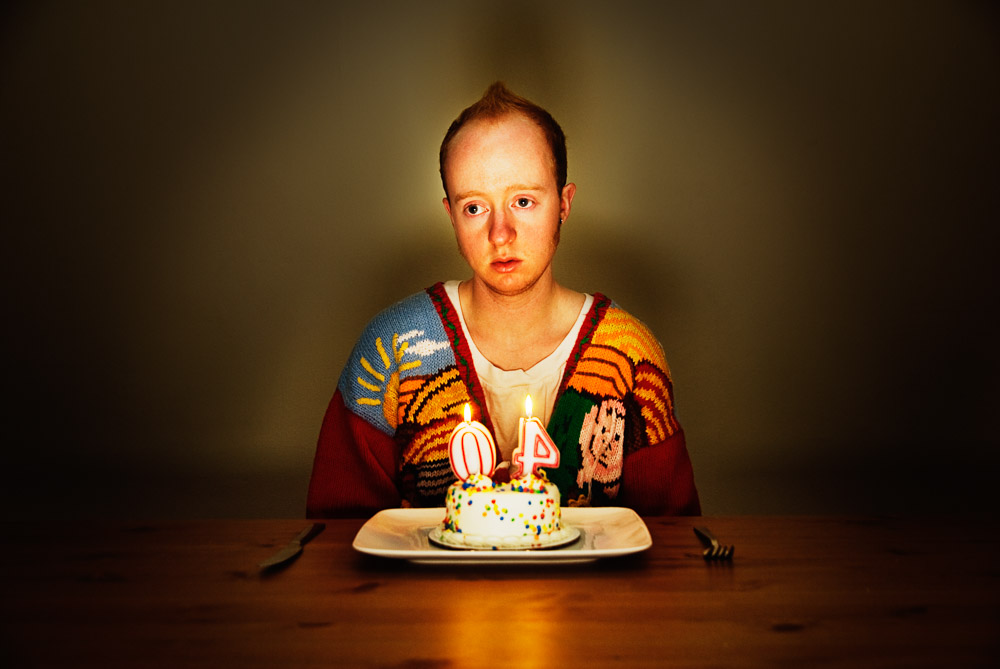
©Caleb Cole, Birthday Girl, from Other People’s Clothes
Caleb Cole is a Midwest-born, Boston-based artist whose work addresses the opportunities and difficulties of queer belonging. Using collage, assemblage, photography, and video, they bring secondhand objects and media together for chance encounters, deliberately placing materials from different time periods into conversation with one another as a means of thinking about a lineage of queer culture while resisting a singular progressive genealogy. Caleb has received an Artadia Finalist Award, Hearst 8×10 Biennial Award, Massachusetts Cultural Council Fellowships, Magenta Flash Forward Foundation Fellowships, and Photolucida Critical Mass Finalist awards, among other distinctions. Caleb exhibits regularly at a variety of national venues and has held solo shows in Boston, New York, Chicago, and St. Louis, among others. Their work is in the permanent collections of the Museum of Fine Arts Boston, Virginia Museum of Fine Art, Museum of Fine Arts Houston, Newport Art Museum, Davis Art Museum, Brown University Art Museum, and Leslie Lohman Museum of Art. Caleb currently teaches at Boston College and Lesley University.
Instagram: @calebxcole
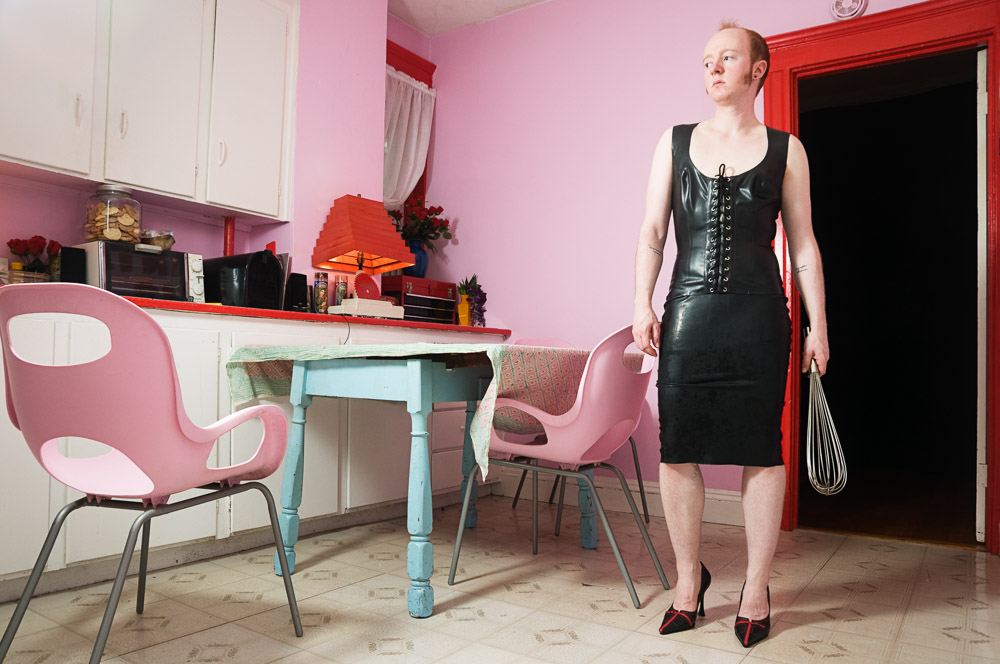
©Caleb Cole, The Pink Kitchen, from Other People’s Clothes
Q: Your 2009 Top 50 project Other People’s Clothes explores imagined identities through clothing, setting, and narrative. How did this project begin, and what did you hope to uncover through it?
CC: Other People’s Clothes began in 2007, soon after I moved from Indiana to Boston. I didn’t know many people there, but going to thrift stores felt both familiar and comforting. It also connected me to my mother, who had passed away in 2005. As a child, we often went to thrift stores and yard sales together, wondering what these objects revealed about the people who once owned them. In Boston, I found myself drawn to items I wanted to spend more time thinking about. Photographing with them allowed me to explore why certain pieces held my attention, and what stories they might carry.
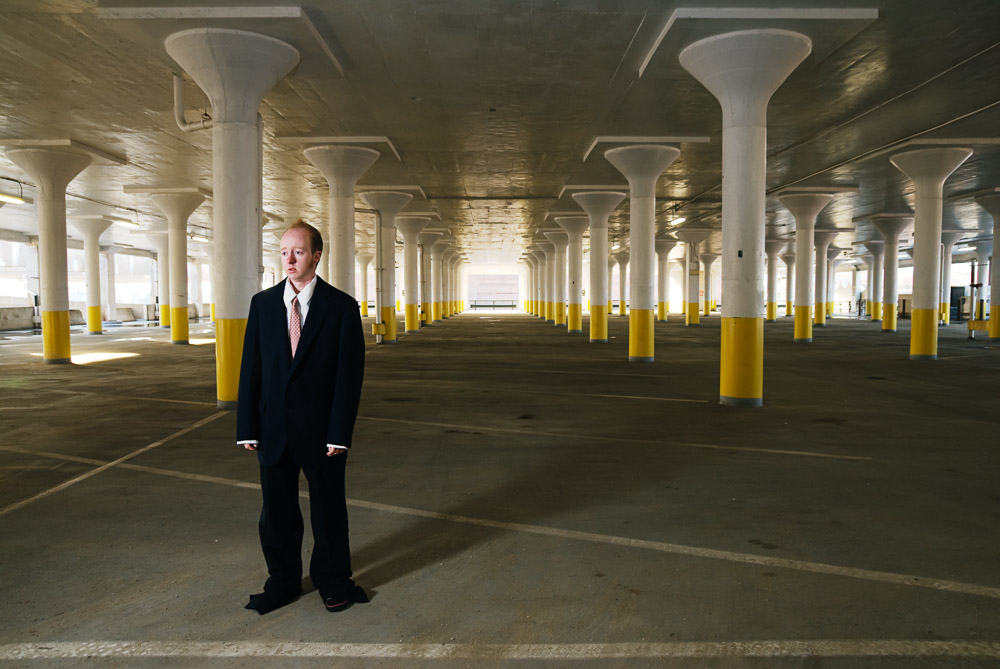
©Caleb Cole, Man in Parking Garage, from Other People’s Clothes
Q: The process behind Other People’s Clothes seems meticulous and layered. Did the story, the outfit, or the location usually lead the way, and how long did you spend building that body of work?
CC: In the beginning, I would start with found clothing, imagine the person who might have owned it, and then search for a location where that imagined figure might experience a private moment. As the project evolved, people began offering me access to their homes and workplaces. Sometimes a place sparked the character, other times the clothing led me to seek out a setting. The process taught me which self-imposed rules were essential and which could bend in service of the work’s larger meaning. I worked on Other People’s Clothes for five years, from 2007 to 2012.
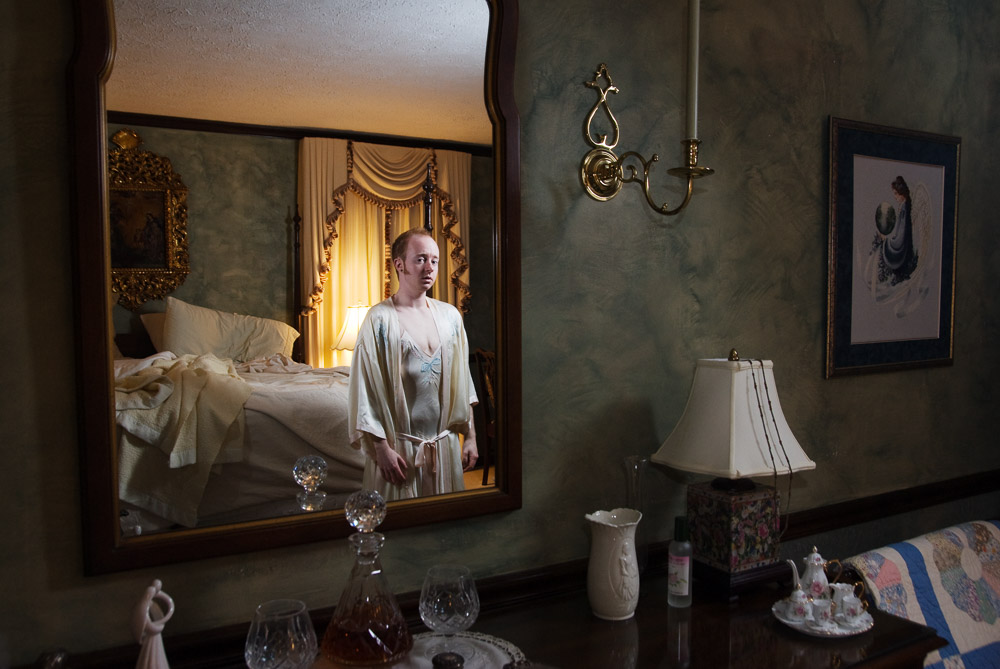
©Caleb Cole, The Silk Pajamas, from Other People’s Clothes
Q: Your own body becomes the stand-in for imagined characters in Other People’s Clothes. What did stepping into these roles teach you about empathy and the performance of identity?
CC: At the time, I thought I was connecting with others through these imagined characters—people who were alone, even if momentarily, and grappling with questions of identity, belonging, relationships, failure, mortality, and the fleeting nature of life. Later, I realized I was making these “other people” so I wouldn’t feel as alone in thinking about those same issues. Sharing the work, especially through Critical Mass, opened up unexpected connections with others who saw themselves in it. That space for empathy and personal projection remains central to how the work resonates.
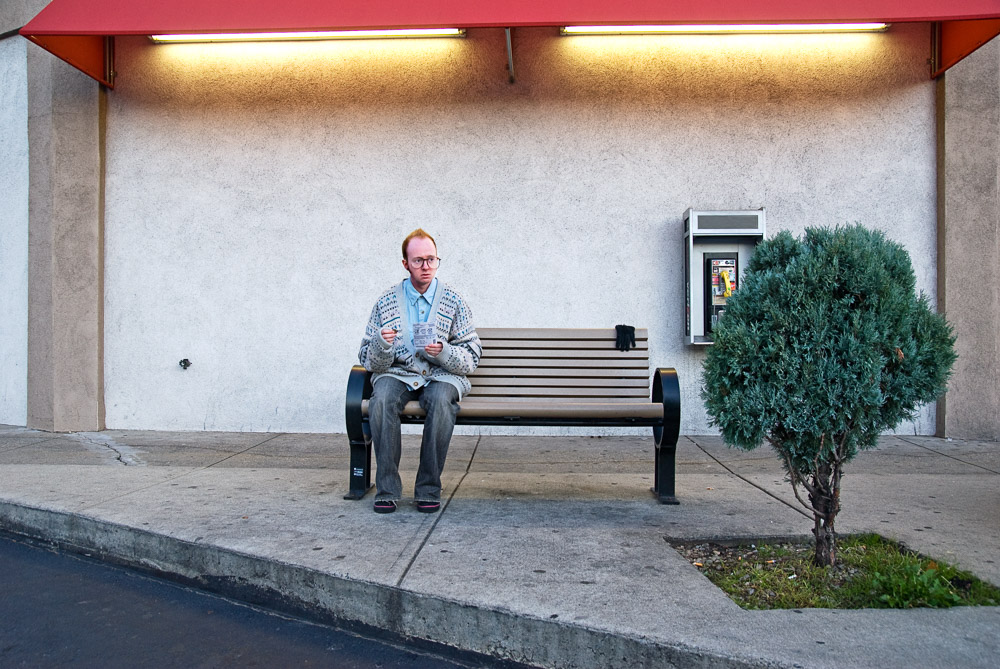
©Caleb Cole, Man with Lottery Ticket, from Other People’s Clothes
Q: In many ways, the project asks us to consider identity through stand-ins. How do you see those ideas connecting to your more recent series, In Lieu of Flowers, which also meditates on presence, absence, and memory?
CC: Both projects return to questions that run through much of my work: Who are we to one another, and what do we owe each other? What does it mean to belong, to be in community? I believe imagination and empathy are powerful tools—bridges between people of different backgrounds, between the living and the dead, between artists and audiences.
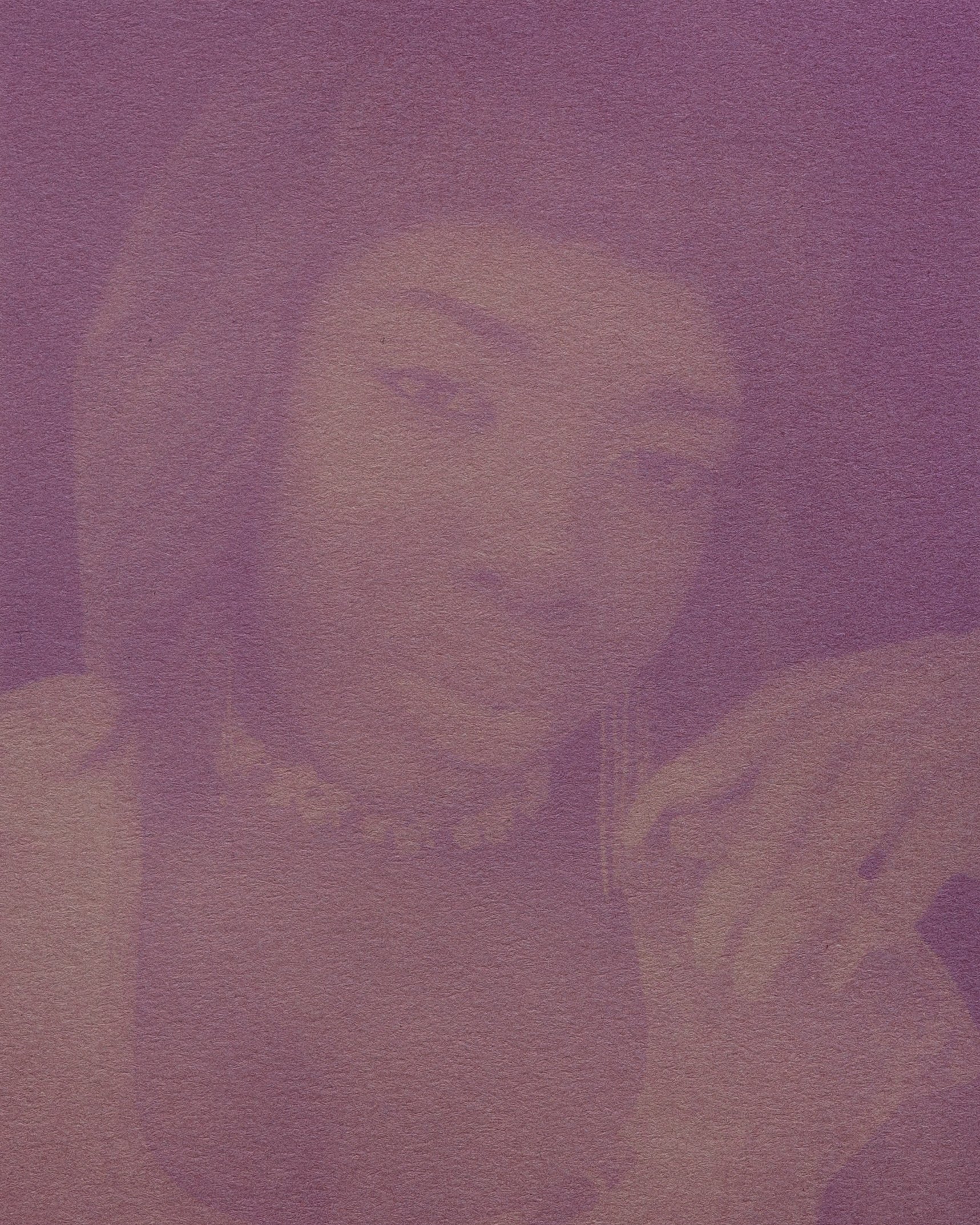
©Caleb Cole, Draya McCarty, from In Lieu of Flowers
Q: In In Lieu of Flowers, you use anthotypes, a process that ensures the images will eventually fade. How does impermanence deepen the meaning of these memorial portraits?
CC: I began this project in 2020 during quarantine. Covid deaths were rising daily, and at the same time, news of murdered trans people felt relentless. I didn’t know how to process the scale of loss, or how to mourn people I had never met. The anthotype process—slow to create, yet destined to fade—felt right for holding these contradictions. While online obituaries may exist indefinitely, they often pass by in seconds on a social feed. I wanted a process that required time, care, and sustained looking. The fading of the image mirrors the impossibility of holding onto the dead, while pressing urgency onto the living to act in support of trans lives now.
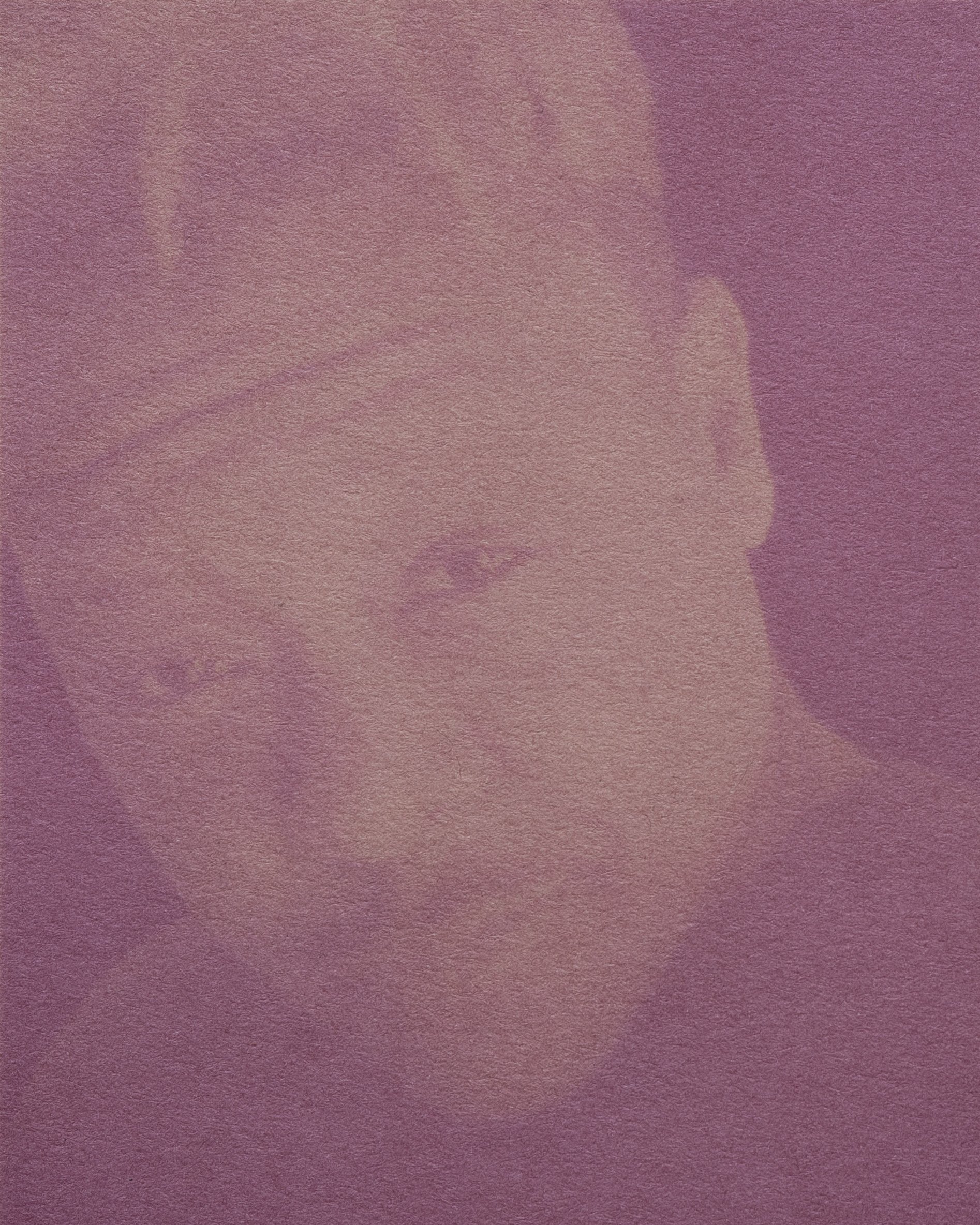
©Caleb Cole, Tony McDade, from In Lieu of Flowers
Q: You’ve described moving the prints daily into the sun as a form of extended witnessing. How has that ritual shaped your grieving process and your relationship with the subjects?
CC: Time, labor, and care are central. Anthotypes take days to weeks to expose, and the roses I use take months to grow. Each day I carry the printing frames outside in my arms, almost like an embrace, checking on them and holding them in my thoughts. It’s so easy to forget what isn’t in front of us, but this ritual keeps memory active. Even though it’s impossible to remember every individual, the attempt—the act of tending—is itself a form of mourning.
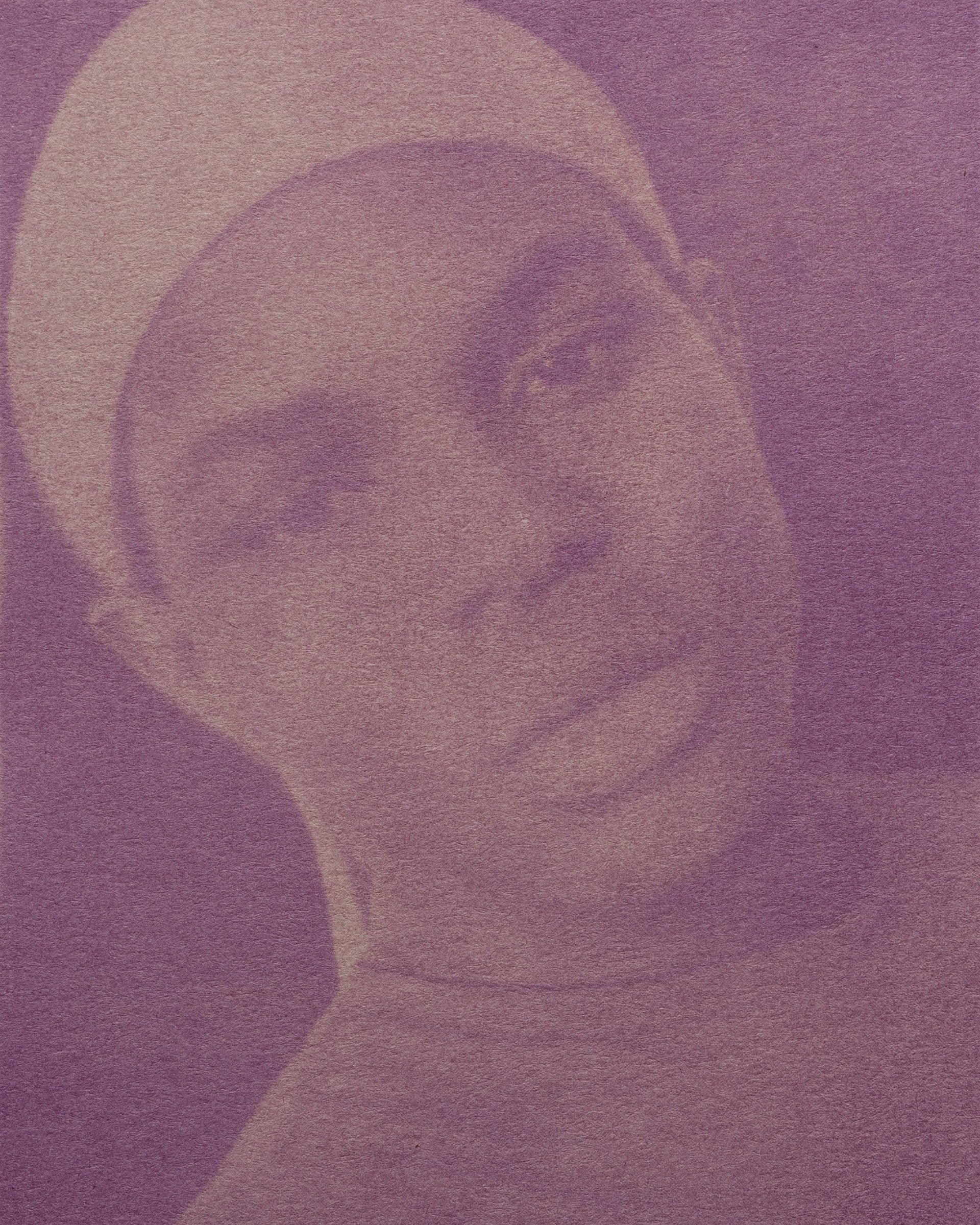
©Caleb Cole, Jaheim “Barbie” Pugh, from In Lieu of Flowers
Q: Many of the portraits are based on selfies taken by the individuals themselves. How does using their self-created images affect your sense of collaboration with them, even after their passing?
CC: It’s hard to know what people would want once they’re gone, but I chose selfies because these were the images they put forward themselves. Too often news reports use photographs, names, or language that these individuals never would have chosen. I tried to honor them as best I could. Many selfies radiate joy, showing the beauty and vibrancy of trans life—while simultaneously underscoring the enormity of what has been taken from families and communities.

©Caleb Cole, Serena Angelique Velázquez Ramos, from In Lieu of Flowers
Q: Both projects grapple with identity, memory, and vulnerability—one through imagined characters, the other through honoring real lives lost. What do you hope viewers carry forward from In Lieu of Flowers, both emotionally and politically?
CC: We’re living in a moment when transgender people are scapegoated for society’s ills, when administrations and legislators are working to erase us from public life. These efforts endanger us, but they cannot erase us. Unlike the inevitable fading of an anthotype, trans death is not inevitable—it is preventable. My hope is that viewers come away with both empathy and urgency: to see trans life as joyful, resilient, and worth protecting.
Q: Finally, did being recognized as a Critical Mass Top 50 artist create opportunities for you—either immediately after the honor or in the longer term?
CC: Absolutely. It’s one of the few opportunities where so many influential people see your work at once. I made valuable connections with curators and with fellow artists in my cohort. Critical Mass has also become a resource I use in my teaching, and I know others do the same. Over the years I’ve heard from many students and educators who first encountered my work through Critical Mass, and those connections continue to ripple outward.
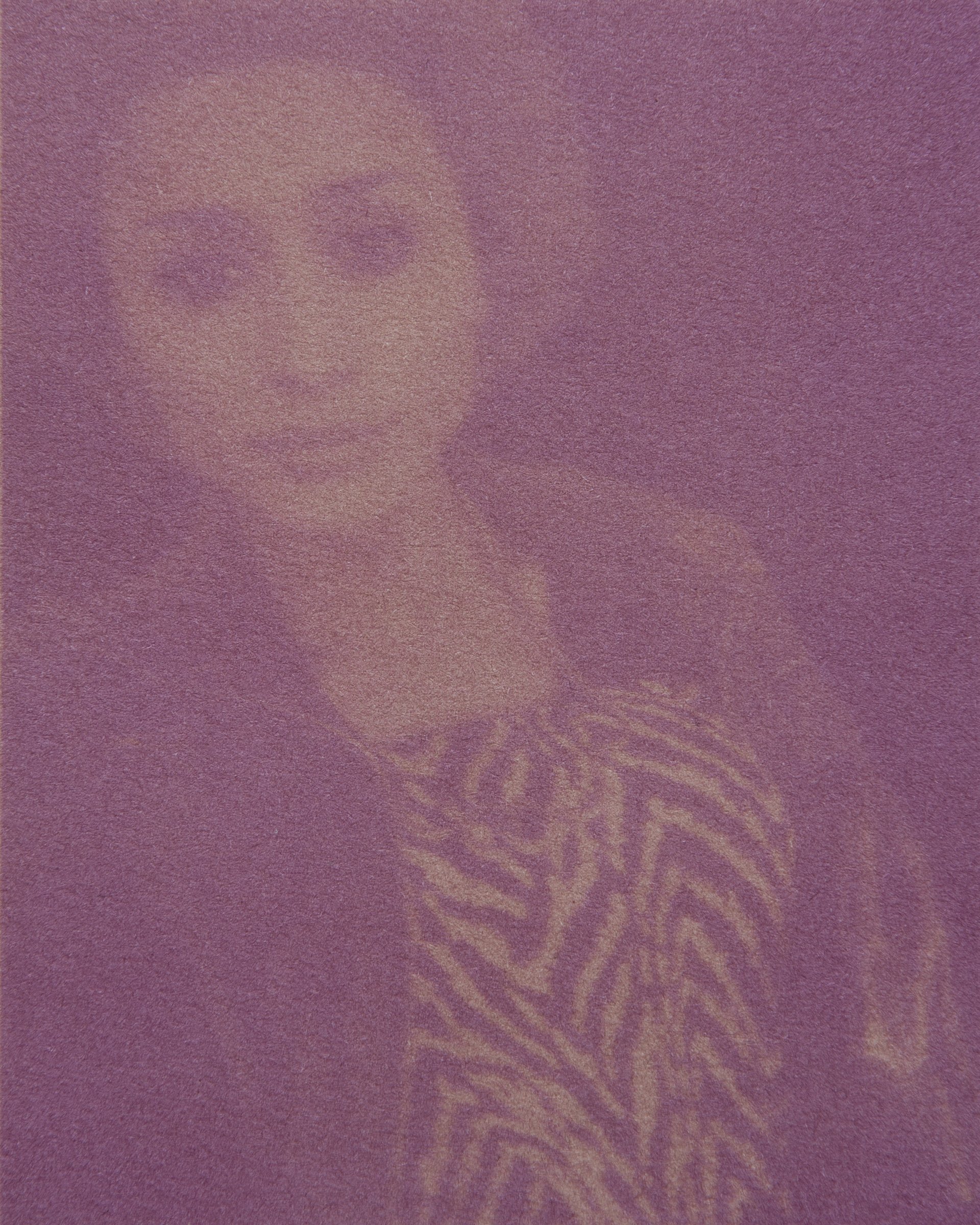
©Caleb Cole, Marilyn Monroe Cazares, from In Lieu of Flowers
Manjari Sharma 2010
For more than a decade, photographer Manjari Sharma has pursued projects that blur the line between portraiture and psychological inquiry. Their 2010 Critical Mass Top 50 project The Shower Series invited strangers into the most private of domestic spaces, transforming an ordinary bathroom into a stage for light, vulnerability, and conversation. What began as an experiment with a shaft of sunlight through a window grew into a five-year exploration of intimacy and trust, revealing the fragile yet profound connections that can form between artist and subject.
Since then, Sharma has continued to expand this investigation into new terrains, including the underwater world of Surface Tension, where bodies become landscapes shaped by water’s resistance and flow. Across these projects, one thread remains constant: a fascination with the human psyche and the ways photography can both witness and deepen our inner lives.
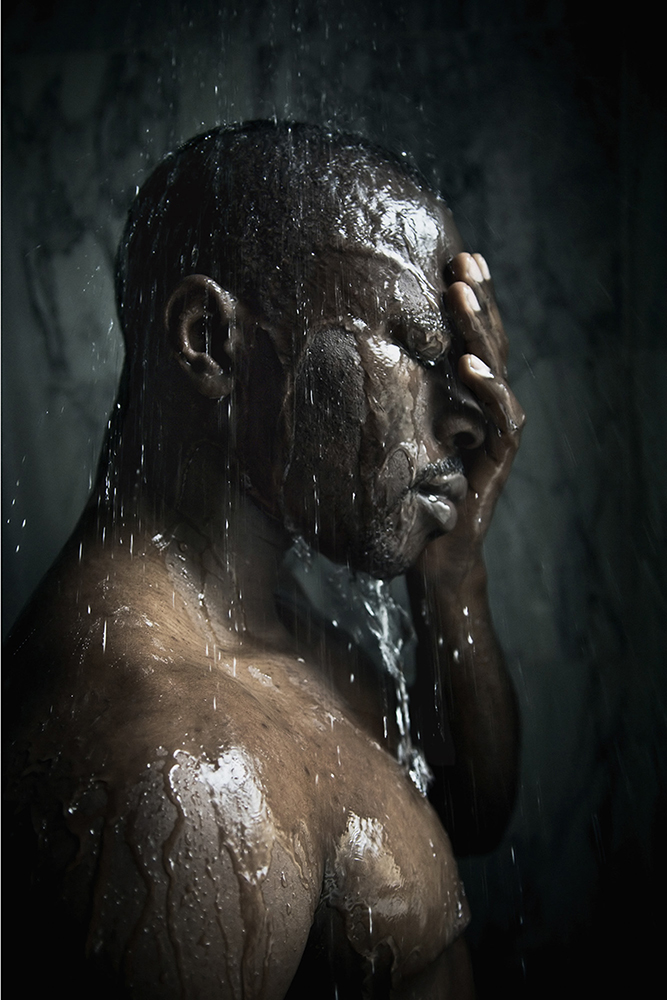
©Manjari Sharma, Ron, The Shower Series
Manjari Sharma is an internationally recognized LA-based Visual Artist exploring ritual, identity, memory, and mythology. Manjari was born and raised in Mumbai, India, and she uses photography, sound, motion, projection, and collage in her storytelling. Manjari’s project ‘Darshan’ (Published by Nazraeli Press) is a photographic re-imagining of Hindu deities that has garnered her wide critical acclaim. Her works can be found in The New York Times, Vice Magazine, CNN, LA Times, The Huffington Post, and NPR, to name a few, and her projects have been published and exhibited in galleries, museums, and festivals worldwide. Manjari is a proud recipient of the prestigious Pollock Krasner Foundation grant (2024), and her works are in the permanent collection of The MET, MFA, Houston, Carlos Museum, and Birmingham Museum of Art, amongst various private collections.
Manjari Sharma’s work is Represented by Assembly.
Instagram: @manjee
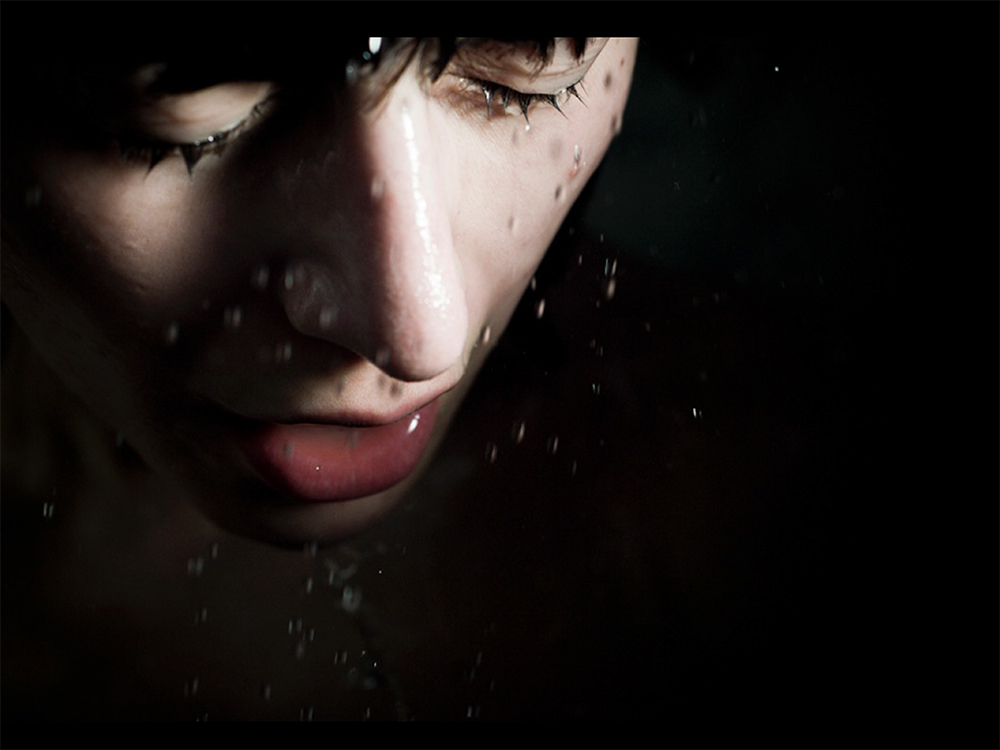
©Manjari Sharma, from The Shower Series
Q: Can you tell us how you first learned about Photolucida’s Critical Mass, and what motivated you to enter?
MS: I first learned about Photolucida’s Critical Mass because nearly every photographer I knew seemed to be encouraging me to apply. At the time, I was still figuring out where my work belonged in the broader field of photography, and the idea that there was this platform where a large group of curators, gallerists, and peers could see your work all at once felt incredibly exciting. What motivated me most to finally take the leap was that I had, for the first time, what I believed to be a cohesive body of work. I wanted to test whether the project could stand in such a competitive, international arena. For me, Critical Mass was both a challenge and a chance to step into a larger conversation about photography, and that was deeply motivating.

©Manjari Sharma, from The Shower Series
Q: Can you describe the genesis for your CM 2010 Top 50 project The Shower Series?
MS: The project began with something very simple—light. There was this very particular, almost magical, quality of light that entered my shower through a singular window at certain times of the day. I found myself adjusting my own daily rhythm around that light, even taking my showers at the times when it was strongest. At some point, I wondered what it would be like to make a portrait in that space. The idea was almost playful at first, but once I started inviting people in, the project deepened. It became not only about light and portraiture, but also about the conversations that unfolded in this unusual, intimate environment. The shower became both a studio and a stage, a space where vulnerability created unexpected honesty. Over time, the project grew from being an experiment in natural light to a profound exploration of connection.
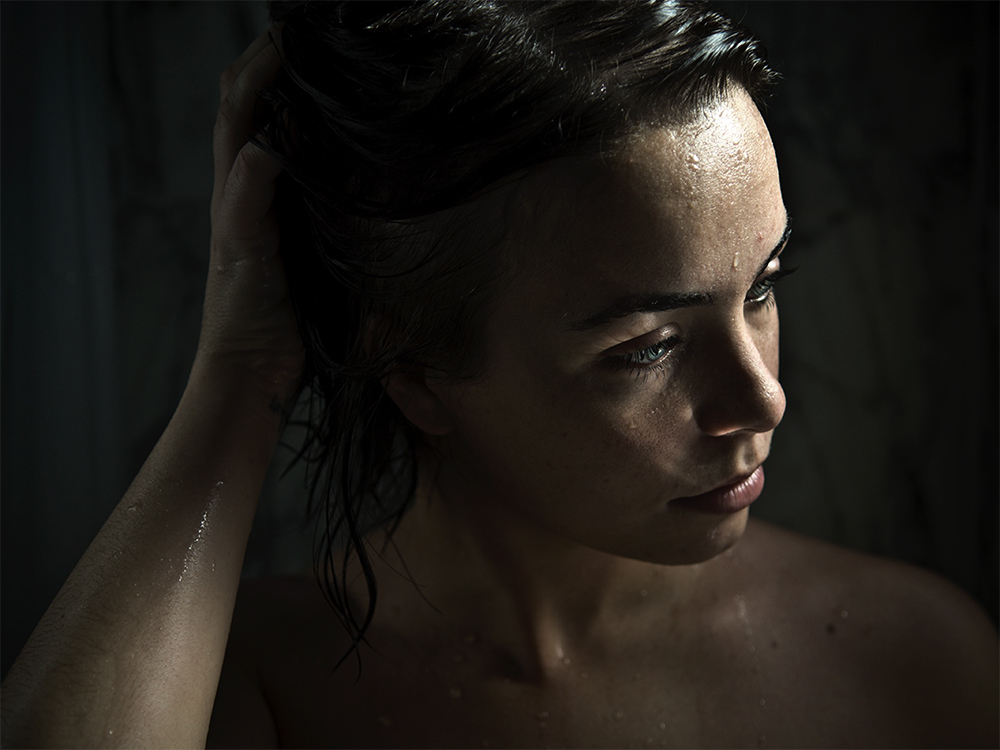
©Manjari Sharma, from The Shower Series
Q: The images in the series are very intimate. Inviting people into your shower to photograph them brings another level of vulnerability for both subject and artist. How did you become comfortable working in such an intimate way?
MS: Honestly, I wasn’t comfortable at first. It felt like a very strange request—to invite someone, often someone I didn’t know well, into my private space. But something powerful happened each time I took that risk. The photographs carried an intensity that I couldn’t have achieved in a more conventional setting, and the process of moving through discomfort toward trust became part of the work itself. What surprised me most was how quickly the dynamic shifted: strangers became collaborators, and often, by the end of the shoot, they felt like friends. I began to realize that intimacy doesn’t always have to be uncomfortable—it can be generative, even liberating. That discovery helped me grow more comfortable, and eventually I came to embrace intimacy as central to my practice.

©Manjari Sharma, from The Shower Series
Q: Did the space always seem safe for you and for them to be open with one another? Was this your first project that revealed this kind of closeness?
MS: For me, the space always felt safe because it was my home—it was familiar, and that gave me a certain grounding. But the intimacy of the setting also meant that emotions could surface quickly, and sometimes those emotions were very heavy. There were moments when subjects shared grief, loss, or deep vulnerabilities, and that could feel overwhelming. Still, I think the space fostered trust more often than it threatened it. It was the first time my work revealed such closeness in both physical proximity and emotional connection, and that shaped me as an artist. I began to recognize how much common ground there is in human experience. Whether people were talking about joy or sadness, triumphs or struggles, there was always a shared thread of humanity that made the work feel safe and purposeful. Those discoveries gave me confidence not just in the project, but in people themselves.
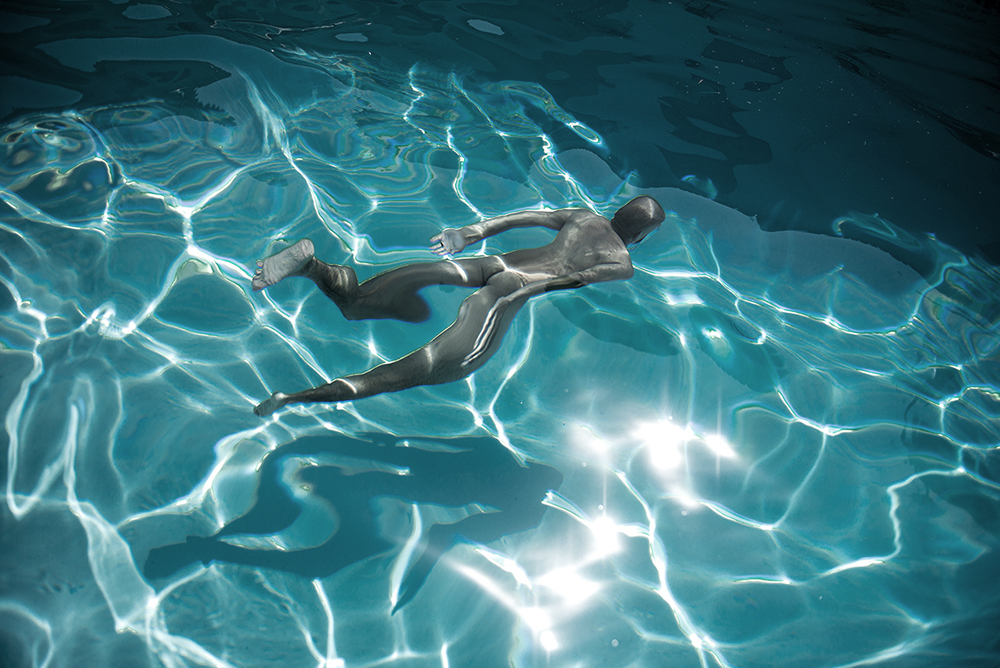
©Manjari Sharma, from Surface Tension
Q: How did you find the people you included in the series? Were most of them strangers? How long did you work on the series and how did you know when it was finished?
MS: I found participants in a very organic way. Sometimes it was a matter of being in a social setting and gravitating toward someone I was curious about, the way you naturally do when you feel drawn to a person in conversation. Often, these were people I didn’t know well, or even complete strangers, though there was usually a thread of trust—someone who knew someone, a second- or third-degree connection. The project went on for nearly five years, and in a sense, I could have kept going indefinitely. Each new subject brought a different story, a different kind of energy to the work. It only ended because I had to move out of that apartment, and with it, I lost access to that shower. Looking back, the ending feels poetic. The project was tied to that particular place, and when the space disappeared from my life, so too did the possibility of continuing the series.

©Manjari Sharma, from Surface Tension
Q: Was there anything about The Shower Series that led you to your newer work, Surface Tension? Beyond the element of water, is there a deeper connection?
MS: Absolutely. Surface Tension was born directly out of The Shower Series. I was in a residency in Santa Barbara where I initially started photographing in another shower, but the work began to feel like a repetition of something I had already done. Then I shifted to the pool, and everything changed. The connection between the two projects lies in my ongoing interest in vulnerability and the inner landscapes of my subjects. In the shower, that inner life was revealed through conversation and facial expression. Underwater, the body itself became the landscape—the way it moved, twisted, and transformed in response to water’s resistance. Both projects deal with exposure, with giving up control, and with the psychological states that emerge when someone surrenders to a unique environment.
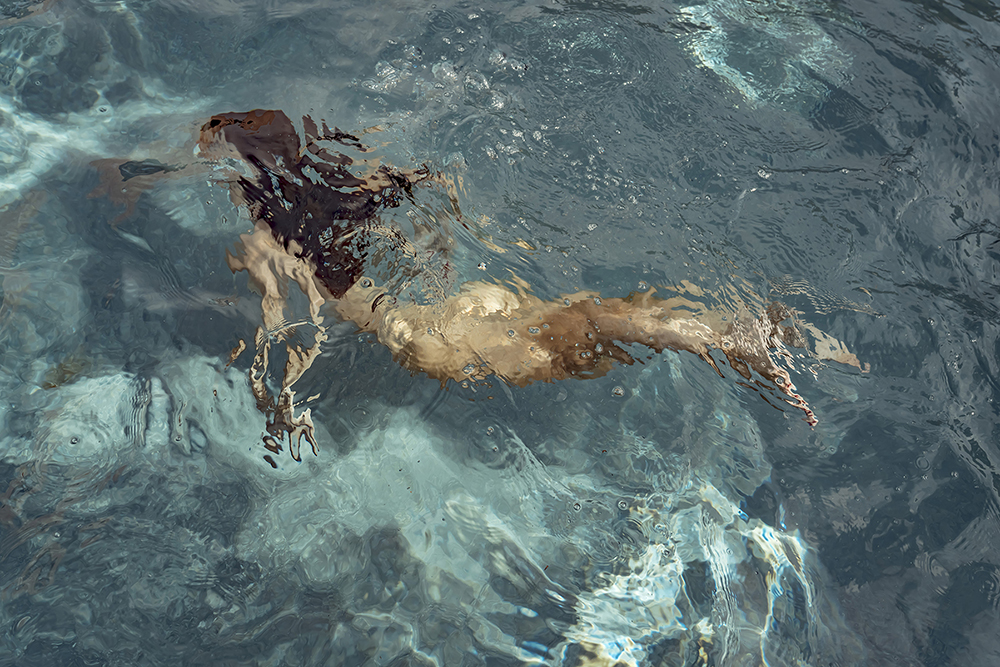
©Manjari Sharma, from Surface Tension
Q: In both projects you’ve mentioned conversation with your subjects. How much of your process is about delving into the psychological life of others, and how does that translate into the images?
MS: For me, conversation is at the heart of portraiture. It isn’t just about small talk to put someone at ease—it’s about creating a real exchange. The dialogue becomes a bridge to trust, and when trust is present, it shows up in the body language, the expression, even the energy of the image. Over time, I realized that what I’m really photographing is not just a person’s appearance but the psychological space we enter together. Photography allows for that kind of deep witnessing, and I think viewers can feel it too. When someone looks at one of these portraits and senses honesty, it’s often because of the conversation that unfolded before or during the moment of exposure.
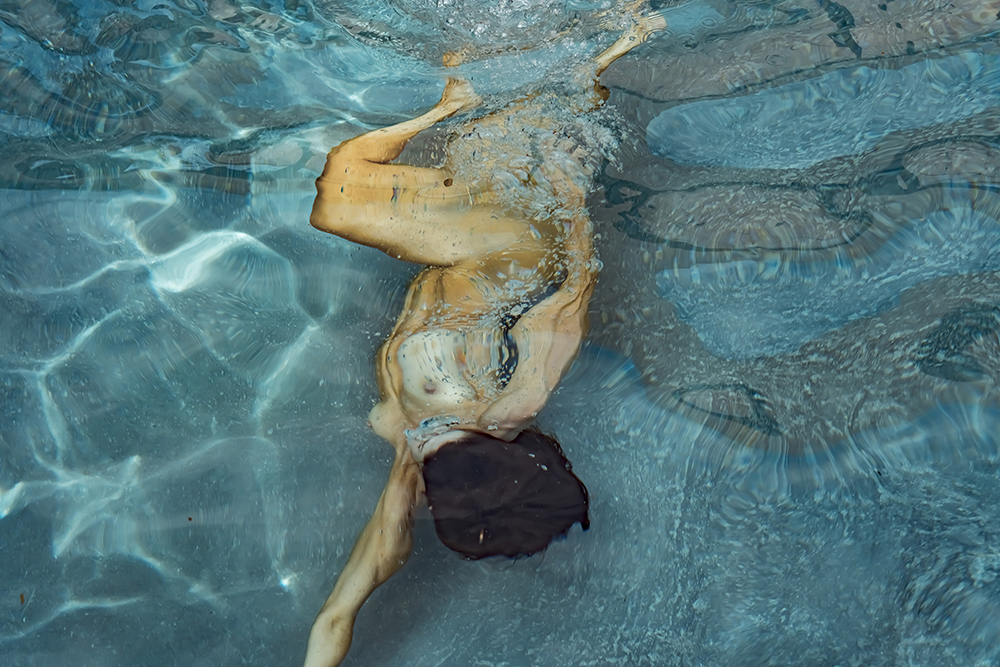
©Manjari Sharma, from Surface Tension
Q: Can you describe your trajectory as an artist from your first Critical Mass Top 50 project The Shower Series until now?
MS: Recognition from Critical Mass came at a pivotal moment. It validated the risks I was taking and encouraged me to trust my instincts. From that point forward, I felt I had the license to pursue my investigations more deeply—whether by turning the lens outward toward the world or inward toward myself. Years later, I was invited to a residency at The Squire Foundation in Santa Barbara, where I expanded The Shower Series, inspired in part by the extraordinary architecture of the shower in that space.
Since then, I’ve explored projects that continue to ask questions about vulnerability, connection, and shared humanity. My path has not been linear so much as spiral—revisiting certain themes with new layers of understanding each time. What Critical Mass offered was confidence: the belief that I could take bigger risks and follow ideas that once felt too ambitious. That shift continues to shape my practice today.
Q: Finally, did being recognized as a Critical Mass Top 50 artist create opportunities for you—either immediately after the honor or in the longer term?
MS: It’s difficult to trace specific outcomes to that one moment, but what Critical Mass does so well is give your work visibility among a truly broad and influential group of people in the field. That visibility matters, not only for career opportunities but for feeling like you are part of a larger community. For me, that sense of belonging was just as valuable as any external opportunity. It created a feedback loop—I felt supported, and in turn, I wanted to support others. That’s why, when I was later invited to serve as a juror myself, it felt so meaningful. Writing thoughtful feedback for applicants was my way of giving back, because I remembered how much those words meant to me when I was just starting out. The experience has been full circle—beginning as an applicant full of hope, receiving recognition, and eventually contributing to the growth of others.

©Manjari Sharma, from Surface Tension
Photolucida is a 501(c)(3) nonprofit organization. Our mission is to provide platforms that expand, inspire, educate, and connect the regional, national, and international photography community.
Instagram: @photolucida
Posts on Lenscratch may not be reproduced without the permission of the Lenscratch staff and the photographer.
Recommended
-

The 2026 Student Prize Honorable Mention Winner: Luke RosingAugust 6th, 2026
-
The 2026 Lenscratch 3rd Place Student Prize Winner: Diana SosnowskaAugust 5th, 2026
-

The 2026 Lenscratch 2nd Place Student Prize Winner: Em WallAugust 4th, 2026
-

The 2026 Lenscratch 1st Place Student Prize Winner: Mehrdad MirzaieAugust 3rd, 2026
-
Student Prize: Top 25 to WatchAugust 2nd, 2026









 and Manjari Sharma (2010))