Andrew D. McClees in conversation with Amanda Sauer
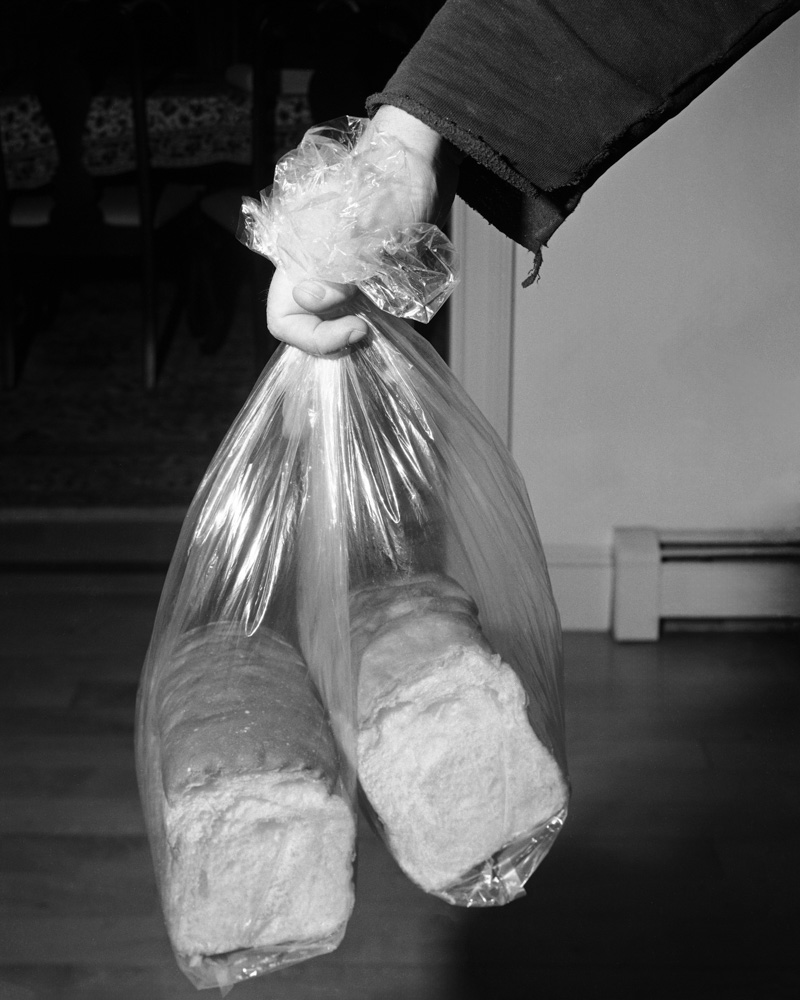
© Andrew D. McClees, from “AVALANCHE”
Andrew D. McClees (b.1992, Lewiston, ME) is a lens based conceptual artist. He received an BA in television writing and producing from Columbia College Chicago (2014) and went on to work in film and television as associate producer and assistant. After exiting the film and television industry, and returning to Maine in 2020, McClees turned his focus to photography, then lens based art, earning an MFA from the Hartford Art School’s International Photo Program (2024).
In 2026, McClees released a now sold-out risograph artist book a river, passed examining the decline of post-industrial America and the dissolution of the Franco-American Community. a river passed is in the collections of The Bates College Museum of Art, The Franco American Collection at USM, The Penumbra Foundation Archive, and The Athens Photo Research Center. McClees released his debut monograph AVALANCHE in November of 2026 at Paris Photo with Los Angeles based publisher Deadbeat Club. McClees’s debut solo exhibition runs at Interloc in Thomaston, ME, October through December of 2026.
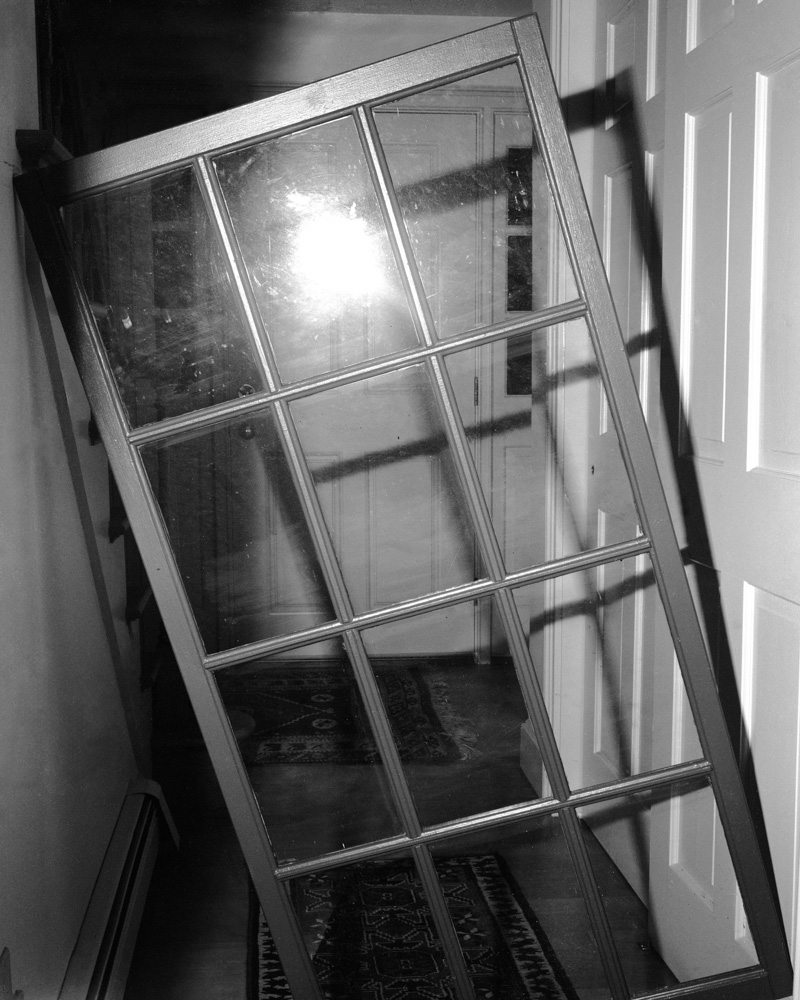
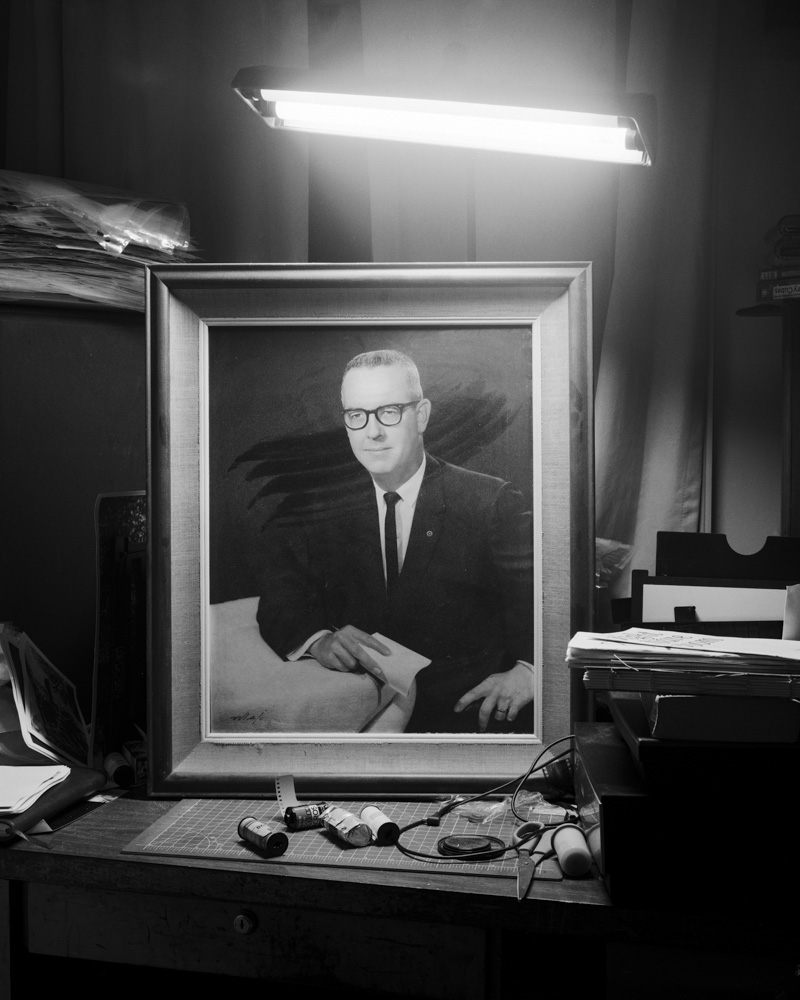
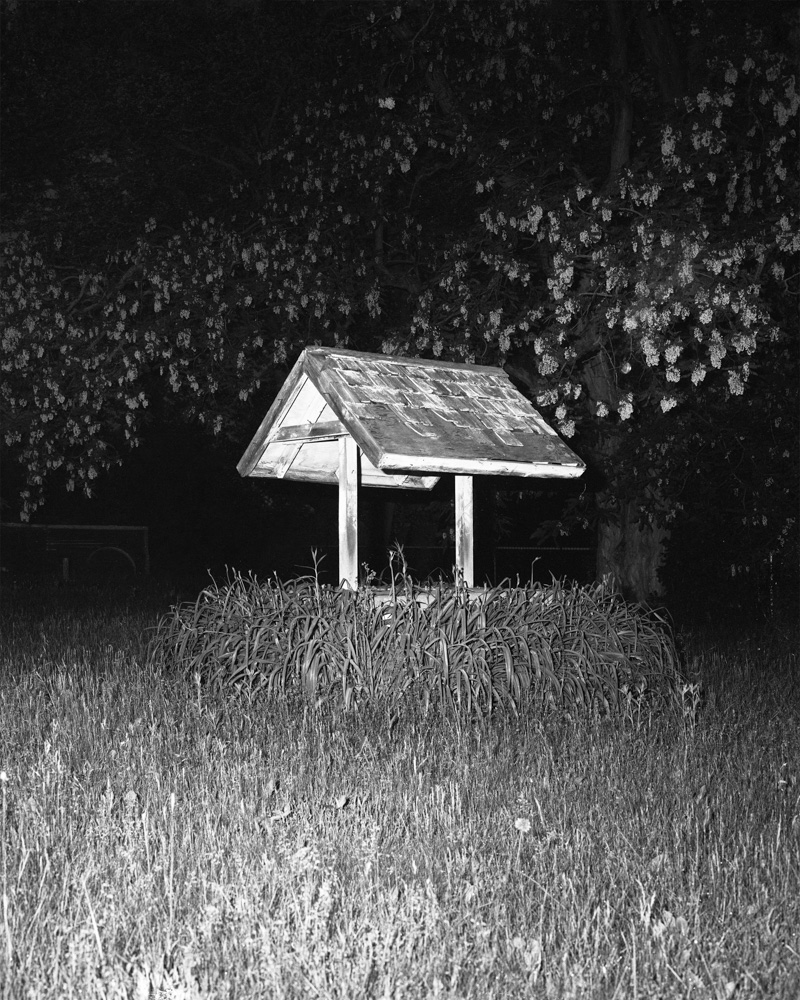
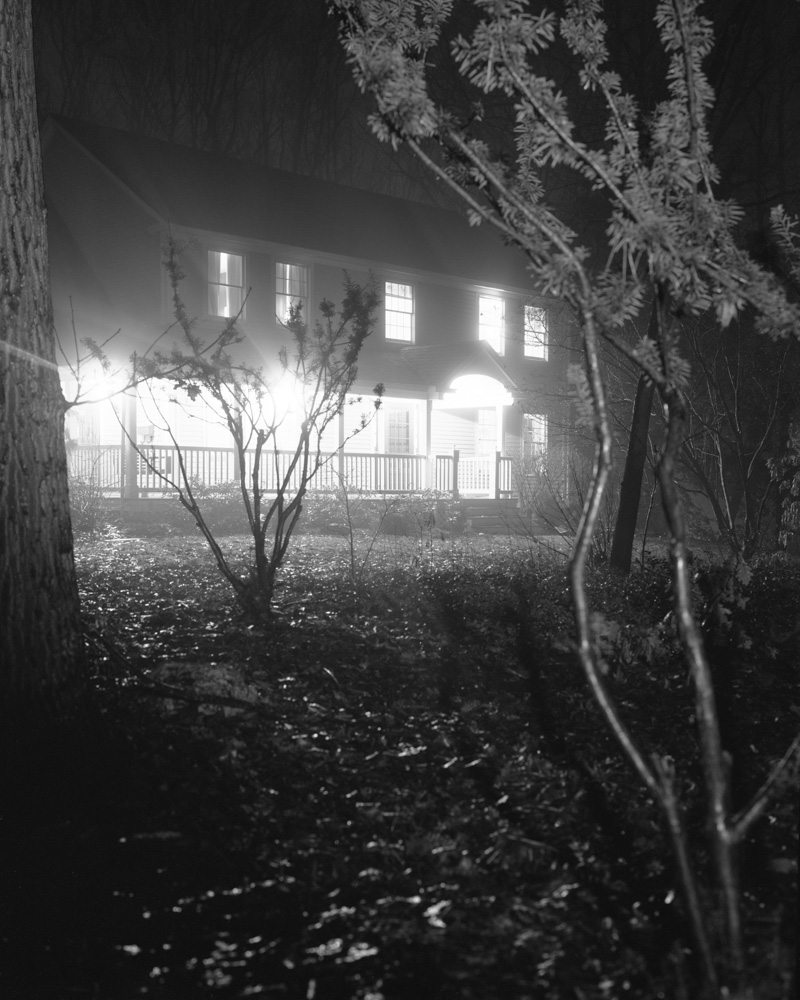
AVALANCHE is a set of conceptual art pieces made via the view camera that talk about family, isolation, and the failure to escape. By deliberately employing and then subverting the protocols of photography – truth, light, and classical beauty – McClees constructs critical arguments about these experiences, using poetic logic. The images take the form of heavy silver prints (both in the book, and on the wall), with a luminous feeling to capture the uncanny glow of incandescent bulbs late at night. More often than not the images take the structure of jokes, sometimes with no punchline, to pull the images into the subtly absurd.
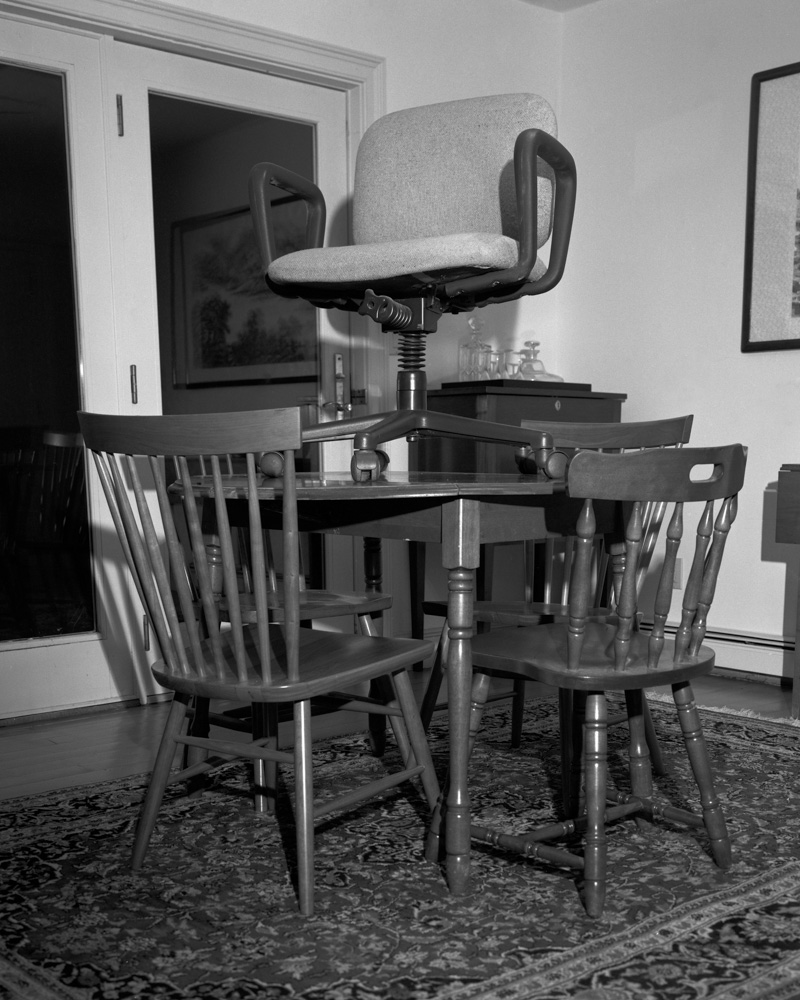
© Andrew D. McClees, from “AVALANCHE”
AS: Congratulations Andrew, AVALANCHE is just gorgeous! Each photograph is printed in silver on black paper, which gives this shimmering abstract quality to the images – almost dreamlike. But the images are unsettling, there’s an uneasiness to the sequence, an underlying tension. Can you tell us a little bit about the background of the project?
ADM: Thanks Amanda!
Most of AVALANCHE was shot during my first year of grad school ( August 2022-2023); with a couple subsequent batches of pictures for it made in the fall of 2023, then the fall of 2024. The project came from a push by my advisors and critics to “be vulnerable;” for me that meant staying inside my childhood home, and making images of my family and about my home-life, or what my childhood or adolescence was like – I say “was like” because I’ve blotted out and can’t remember most of it – but I know it was unpleasant.
In other words, the work in AVALANCHE is essentially me using the view camera to re-interpret and reconsider my less-than-great childhood/adolescence.
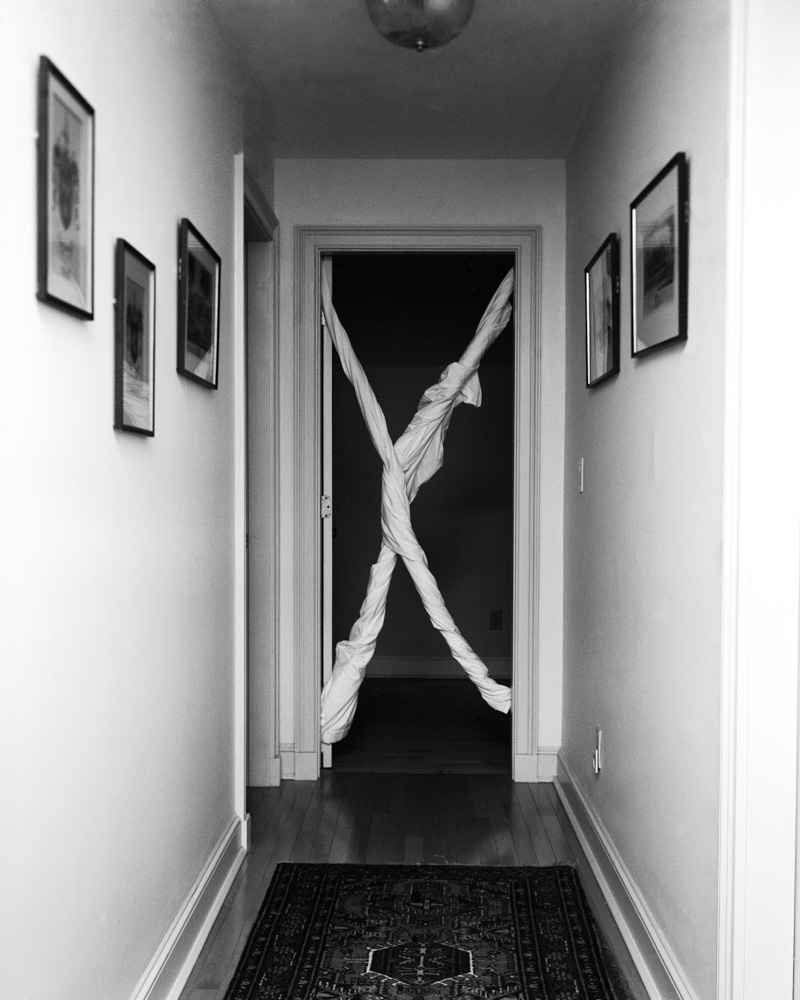
© Andrew D. McClees, from “AVALANCHE”
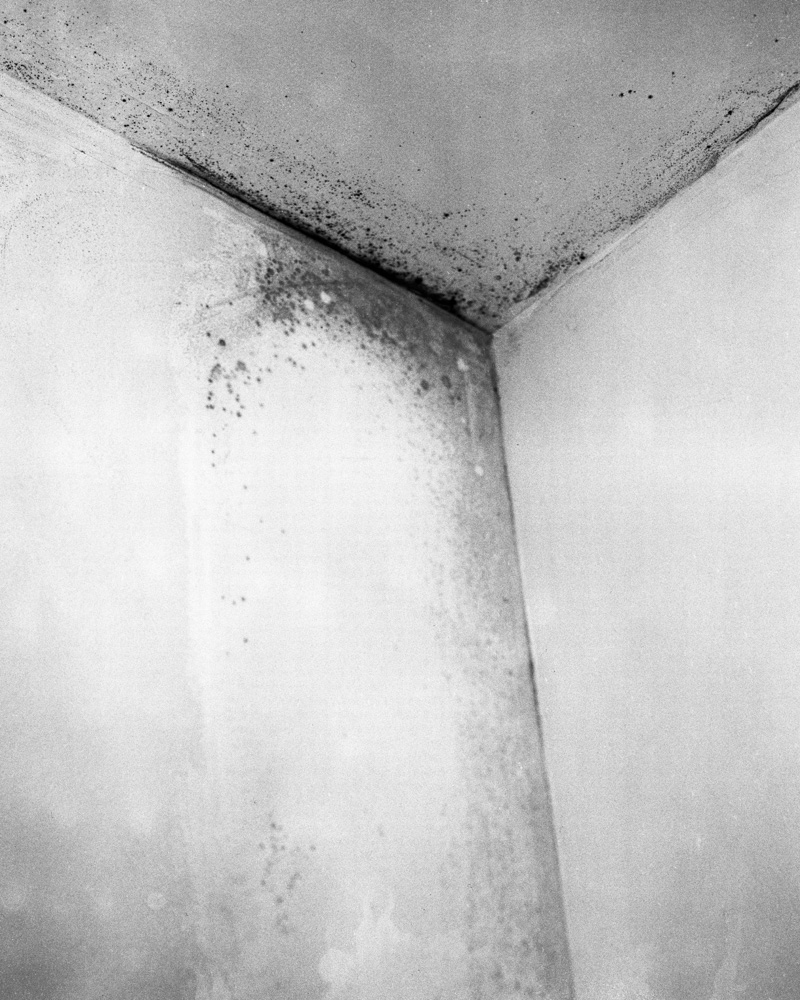
© Andrew D. McClees, from “AVALANCHE”
AS: The work is conceptual, rather than documentary, but it feels intimate. It’s interesting that this project is re-imaging a time in your life that you don’t remember in much detail, but is there, below the surface. I can see how a professor can encourage a student to “be more vulnerable” but figuring out how to follow that advice must have been confusing or challenging. What hesitations did you have when taking your work into this realm? Are there specific photographs that have symbolic or other significance?
ADM: This is conceptual work, it’s not documentary. My line of thought is that “truth” is largely a shared construct, and these images are my personal assertions and questions, and are entirely subjective creations that may be inspired by “real life” but aren’t documents of it.
I’m not a touchy-feely person. I like to deal with thoughts and concepts. I struggle to identify specific feelings within myself; being told to “be vulnerable” is close to a “does not compute.” My workaround was to use a physical materialist model for myself: Vulnerability is the split-second interval before you’re kicked in the face and choosing not to flinch. Images have to give me that sense of “this could hurt me,” to meet my standards for stakes now. I figured this out while having a mental breakdown in my darkroom, printing for the summer session.
The easy photograph to point at is the archival photo I made of myself at 16 near the end of the second act. My first-year advisor suggested that I look through my archive; being spiteful I thought, “oh, I know exactly what to pick.” I hunted down the negative from high-school because I couldn’t think of anything more vulnerable that I could make in a short turnaround than that photo. In the process of finding the negative (by subsequently restricting myself to shooting exclusively inside my home), and being in a hot isolated darkroom for days on end, the project came together. Taking a slight step back, I think the actual turning point is the photo of the fist-hole in the drywall in my bedroom. That was the first real “vulnerable” image I got pointed towards, but I didn’t really have the right mindset to listen, when I first made it.
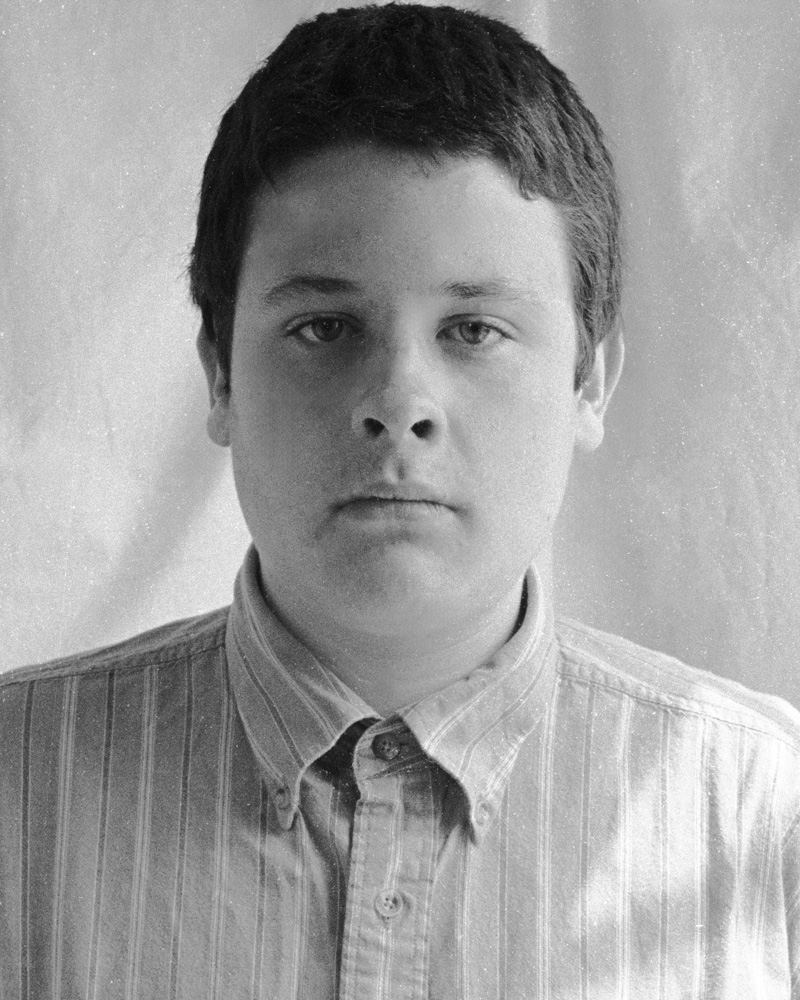
© Andrew D. McClees, from “AVALANCHE”
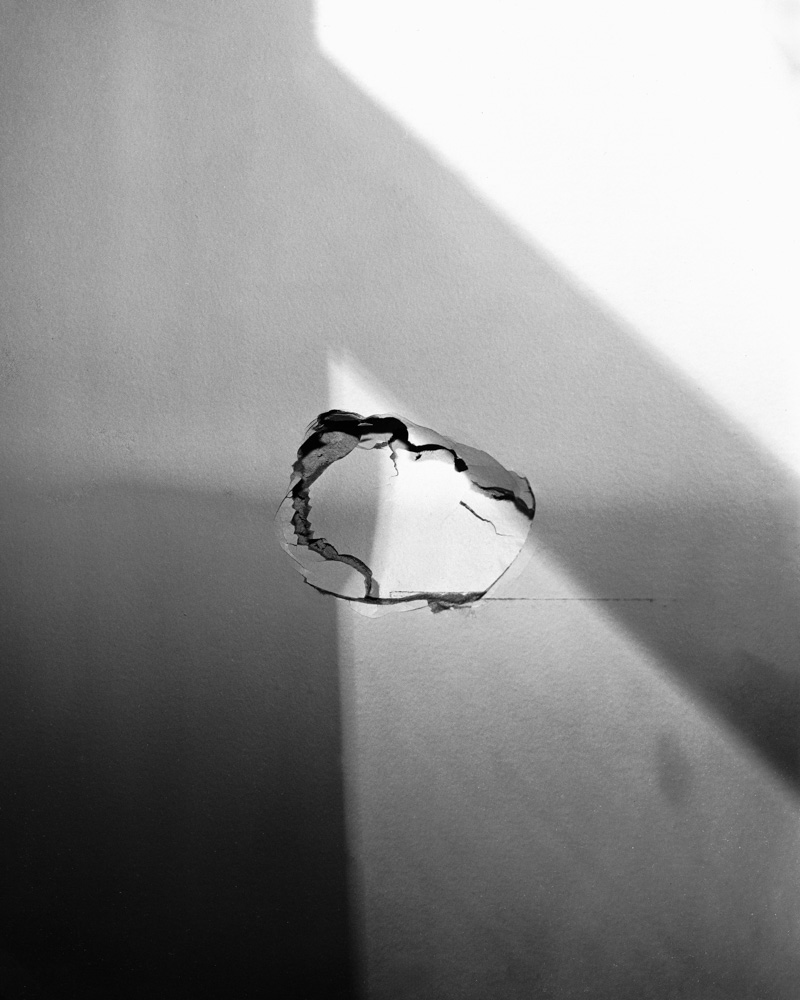
© Andrew D. McClees, from “AVALANCHE”
AS: “This could hurt me” is a really high bar, and one can feel this intensity compounding the deeper you get into the book. I was going to ask you about the self-portrait…I can see why it might be a classically “vulnerable” photograph but it also portrays your power as the artist. It’s revealing that even back then you used the camera to construct images, in this case your own image, even if you weren’t quite aware yet of where this will lead you in the future. The timing of the portrait within the sequence of the book feels really important; it provides a momentary break and clue to accessing a more personal understanding of the work. This becomes more evident when you encounter the contemporary self-portrait at the very end of the book: for me it suggests that your artistic coming of age was the escape, the way out of that time and place. Does this resonate with you?
ADM: I’m glad that internal rigor comes through on the page – I really work hard to maintain that high bar. That’s a really good catch – actually, that image is a crop of a full photo where I’m holding a sign that says “do you know me?” – which gets into that constructed image thing. I cropped it for the book because as an adult it was too easy, too on the nose, to use un-intervened.
God, I wish art had been my escape, but aging out of high school was. If you mean the portrait of me at the end, it’s not an escape either. It was the last picture I made for the book, in 2024. The image is a partial reinterpretation of the poster for End of Evangelion, where two small figures sit in front of an enormous head. I wanted the same feeling of being small in front of something huge, with the giant head being mine and my old teddy bear’s, so the viewer is taken out of our heads for the first time in the book and has to look at us from outside.
I actually failed photography in high-school because I refused to hand in the “correct” photo. Because I saw no real future for myself, my academics were bad, and I couldn’t meet the bar into a good undergrad art program for a different medium. Going to “art school” or a respectable small liberal arts college was off the table, and I gave up on art. I spent most of my time inside watching anime, playing video games, and listening to music. When I graduated, I actually went to study business, dropped out, tried to go to music school, realized I wasn’t talented enough, transferred into the television department and got a degree in television, and worked in the industry. I didn’t really pick the camera up in a serious way again until I was 23-24.
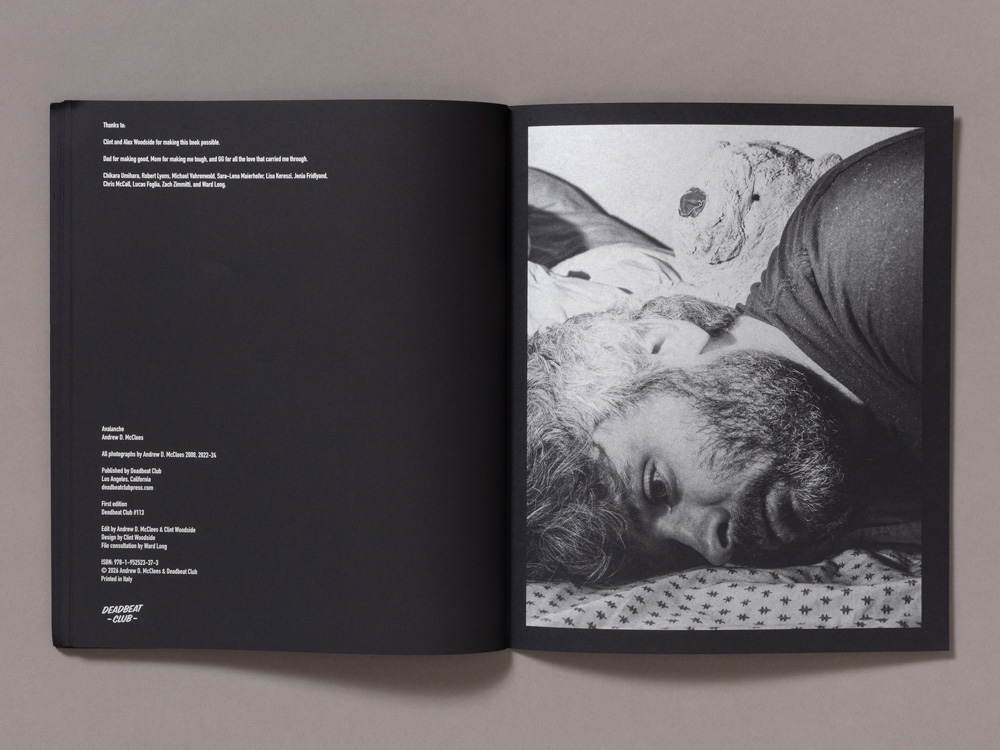
© Andrew D. McClees, “AVALANCHE”
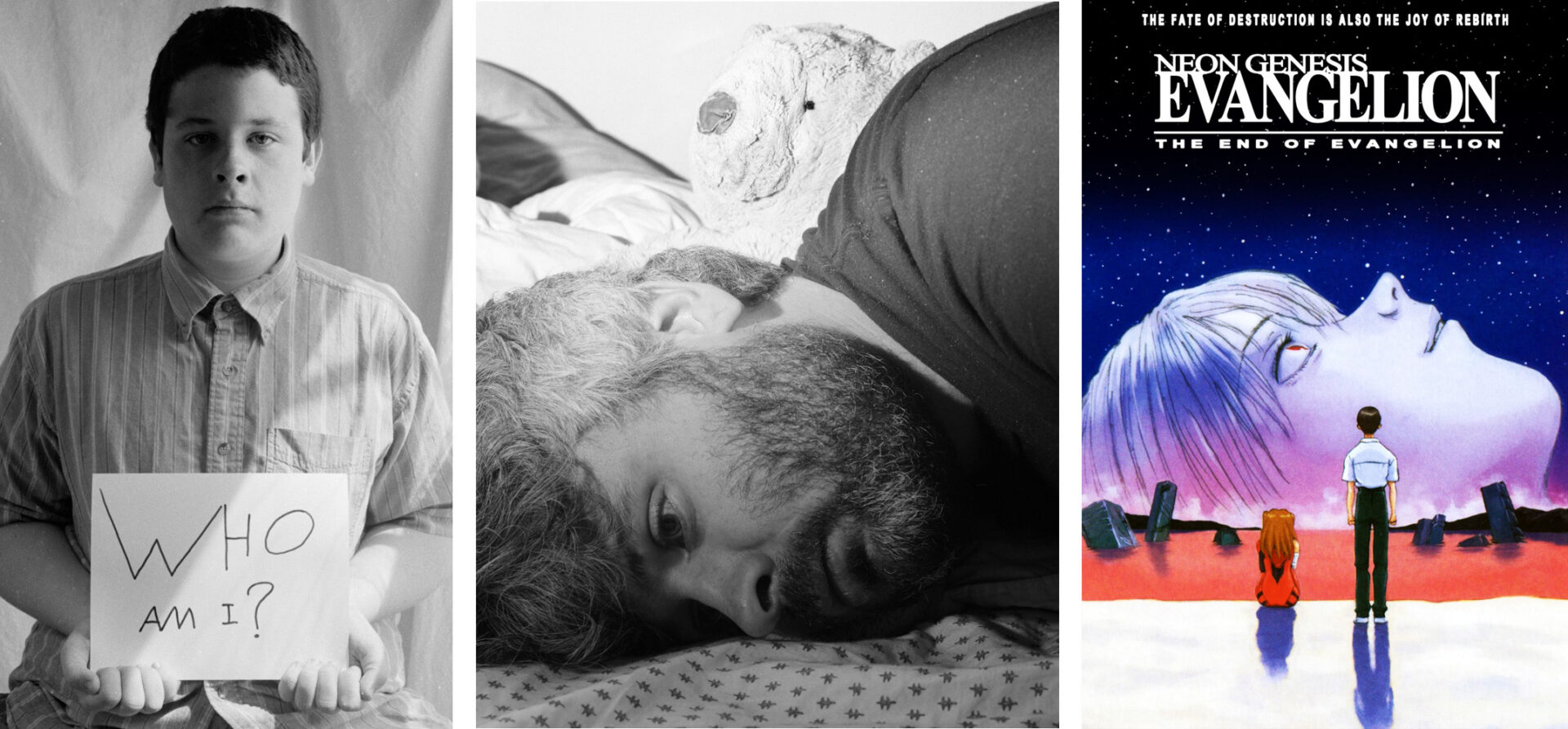
© Andrew D. McClees; © Andrew D. McClees from AVALANCHE; Poster for Neon Genesis Evangelion
AS: Thank you for sharing your journey; it’s so interesting to see the evolution of your self-portraits and better understand how these images contextualize AVALANCHE. What are some of the other important influences, photographic or otherwise, that helped you get to this final book?
ADM: I tend to take influence like a blender, and while there are some easy callouts (like Evangelion), most of my influences are hard to trace back through the slurry – so here’s a grab bag relevant to AVALANCHE:
Michael Schmidt’s Waffenruhe, Mike Mandel and Larry Sultan’s Evidence, the paintings of Eric Fischl, and the collected work of Mike Kelley.
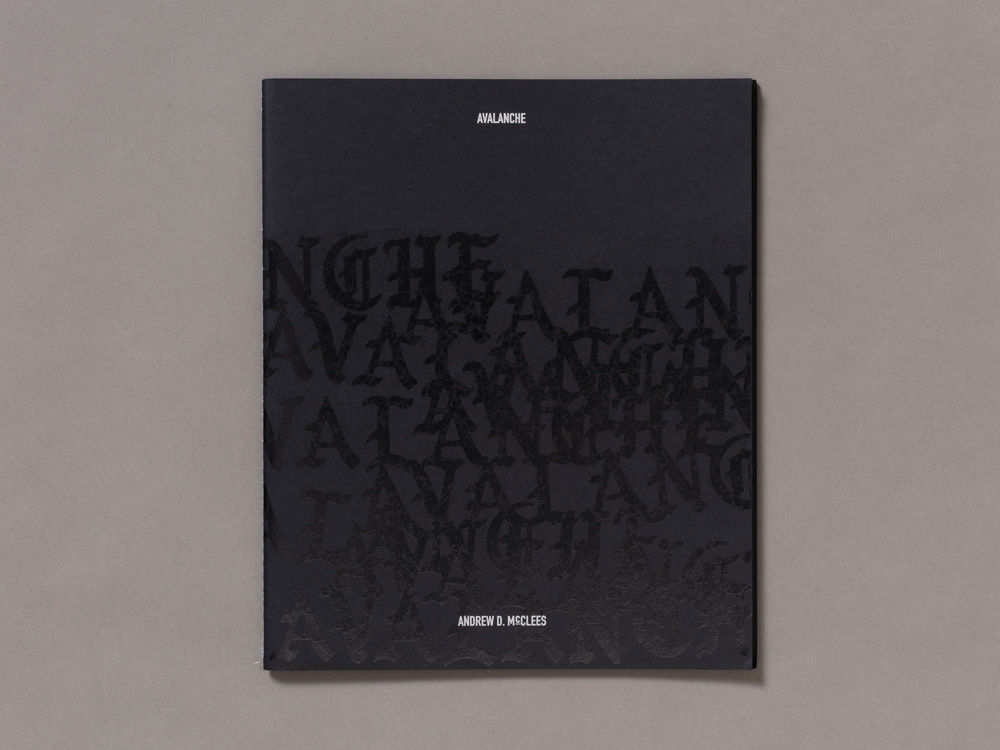
© Andrew D. McClees, “AVALANCHE”
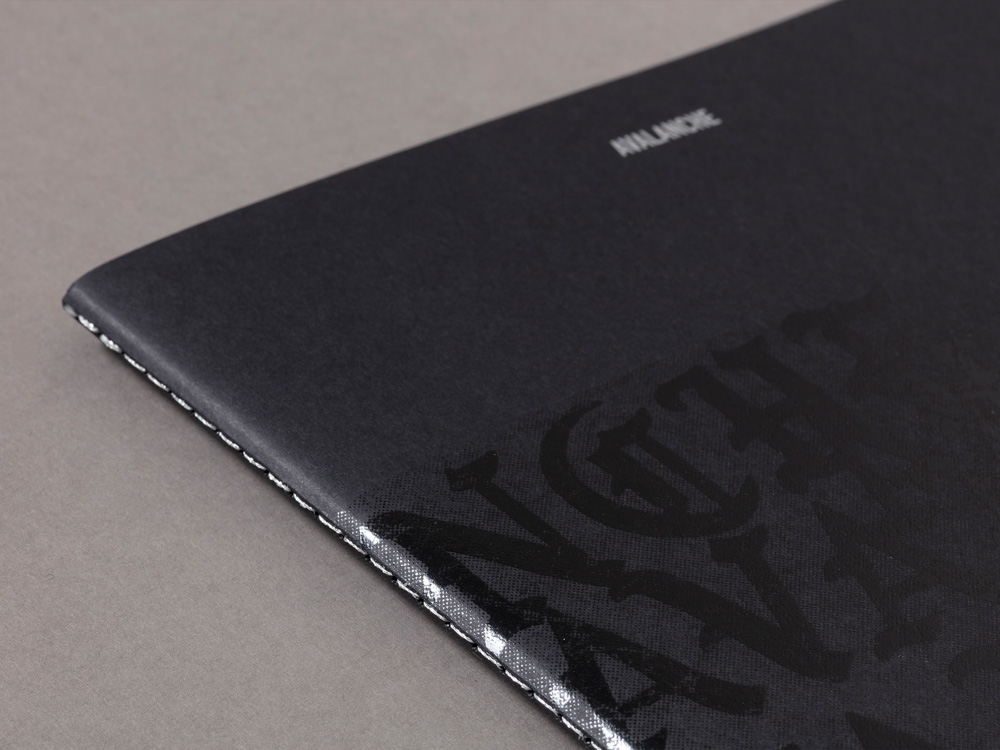
© Andrew D. McClees, “AVALANCHE”
AS: I like your description of your influences going through a blender. This is an interesting list of “ingredients” and I can see how each contributes a particular tasting note. Your book really doesn’t look like any of these, it has its own aesthetic…it’s a little goth, a little film noir, a little punk – but also extremely elegant. The silver ink on black paper is stunning. Did you always know that you wanted this work printed that way? Can you tell us about the process with Deadbeat Club, what choices and compromises (if any) did you need to make?
ADM: That sounds dead on to me in terms of a genre split between goth and punk, getting specific I think it shouts out extra hard to the Emo/Screamo records of the early aughts. The playlist in the reader that comes with the collector’s edition covers all of it. I’ve put this playlist on Spotify so anyone can listen.
I didn’t always know I wanted silver-on-black printing, but I’ve always loved books with “odd” printing, and so it helps make the book-object more separate from the installation. When Clint asked if I was up for it, it was a snap “yes.” The book feels relatively close to my early silver gelatin prints, which I was making on expired paper. There was a potential other way of printing where we would’ve done like a standard duotone, then used a black overprint around the edges to make the black pages. But this looked odd to me as a darkroom printer – having two different hues of black (the border being different from the image), so the choice was easy to make.
Clint and Alex “got” the book. I’m no designer or bookmaker; they really understood the work and transformed my extremely rough dummy into an object that took the basic idea – one signature, soft cover, stitched – into a compelling book-object. There was a little back and forth on a couple images in the sequence when we went into the final check. I had put in some alternate takes that I liked more at the time, but the originals (which ended up in the book) were definitely better.
© Andrew D. McClees, from “AVALANCHE”
AS: And how does it feel to have the book out in the world?
ADM: I’m overjoyed to have the book out in the world – there is nothing I’d change about it. The big dopamine hit and relief crash (for me) came when Deadbeat Club officially signed on to do the book back in 2025 – the book has largely been “resolved” since then (huge thanks to Clint and Alex for all their hard work on the book), and I’ve kept making stuff – so now that the book has hit shelves and is shipping, I’m sort of a level removed from the book, even if I do love it, and continue to be excited about it.
Because AVALANCHE deals with immediate family (and neither of my parents are dead, and some of the assertions made aren’t exactly flattering towards either one of them) I know I’m supposed to feel guiltier or more on edge, but I don’t. This book is good, the statements are more about the family system than they are my parents – here images of my parents serve as symbols more than literal depictions of my parents. A big part of the process of making the book was essentially me and my dad finally coming to terms, which is reflected in the thank you block at the end.
© Andrew D. McClees, from “AVALANCHE”
AS: This work really found the perfect home with Clint and Alex at Deadbeat Club but it was probably a journey to get there. Do you have any advice for others looking to find a publisher for their first photobook?
My thoughts and attitude on finding a publisher are more business-y than average and are heavily informed by my time in Hollywood when I worked as a script reader, who’d recommend projects to my bosses. My advice is to be really honest with yourself about the following five questions:
- Who is or is not a good fit for the work that you make; do you fit into a lineup?
Do your research about who makes what, and what they publish. I knew more or less from the jump that AVALANCHE would more-or-less fit into a few specific publishers’ lineups, but really Deadbeat was the one. My thought experiment is to picture my work next to the work of other people currently being sold by a given publisher.
- Does your work have a broad but specific niche?
Very uncomfortable question, but: what makes you “different” or have “a voice” that’s unique? For me, I don’t know anyone using Evidence references to stage slant-joke reconstructions of a shitty childhood. I do know there are a lot of people who had relatable experiences even if this isn’t how they’d articulate it.
- Does your book really need an audience larger than 50-100 people?
There’s a lot of very niche, very good books in this category, it is not a “less than” thing to make something for a niche audience. I actually released a risograph artist-book in February called a river, passed with a run of 60 that is really great and is super important to me, but I don’t think (or care if) it needs a wide release at this particular juncture. I just wanted a good collection of friends, family, and mentors to have it, alongside an institution or two of direct relevance.
- Do you have a connection to a publisher (friend, portfolio review, contest)?
Most publishers don’t take unsolicited submissions, and if they do, it often ends up in a slush pile, where it sits for a while and gets written off. I got to Deadbeat Club through a portfolio review, and had an assist from a mentor.
- How long can you wait to see the book out in the world?
Sometimes books take a long time to be perfected, sometimes you need to wait for the world to be ready for your product. Other times you just need to put something out for personal closure. No judgments here – I’m sitting on both ends of the spectrum.
You might end up self-publishing or make a proof of concept if you feel the need to immediately get the work out with no oversight, which is rewarding in its own right.
The work is the goal.
© Andrew D. McClees, from “AVALANCHE”
AS: This is really valuable advice, thank you for sharing with us! What are you working on now?
ADM: I’m not 100% sure in what order things will reach the public, but I wrapped shooting AVALANCHE sister project, Idylls, in September. AVALANCHE is the childhood I spent indoors, and Idylls is a search for the outdoor childhood I didn’t have. The shorthand I use is “Michael Schmidt listens to Deafheaven’s Sunbather.” I have a couple things where I’m in various stages of making pictures (including a couple color-based projects). I’m also really getting into the exhibition side of things, so I’m working out ways to stretch into sculpture and install with my images.
AS: Very exciting! Thanks so much for sharing with us!
AVALANCHE is for sale at Deadbeat Club’s website (Special Edition + Standard Edition) and other fine retailers of photobooks, such as Photo Eye and Baltimore Photo Space.
Instagram: @andrewdmcclees, @amandajsauer
© Andrew D. McClees, from “AVALANCHE”
Posts on Lenscratch may not be reproduced without the permission of the Lenscratch staff and the photographer.
Posts on Lenscratch may not be reproduced without the permission of the Lenscratch staff and the photographer.
Recommended
-
Andrew D. McClees in conversation with Amanda SauerNovember 19th, 2026
-
Arthur Jafa: I Am TonyNovember 15th, 2026
-
Pamela Landau Connolly: Mirror, MirrorNovember 6th, 2026
-
Valerie Yong Ock Kim: Only the BonesNovember 5th, 2026
-
I’m So Happy You Are Here: Japanese Women Photographers from the 1950s to Now at ICPNovember 3rd, 2026