Stephanie Dupre Routh: The Atlas of Things
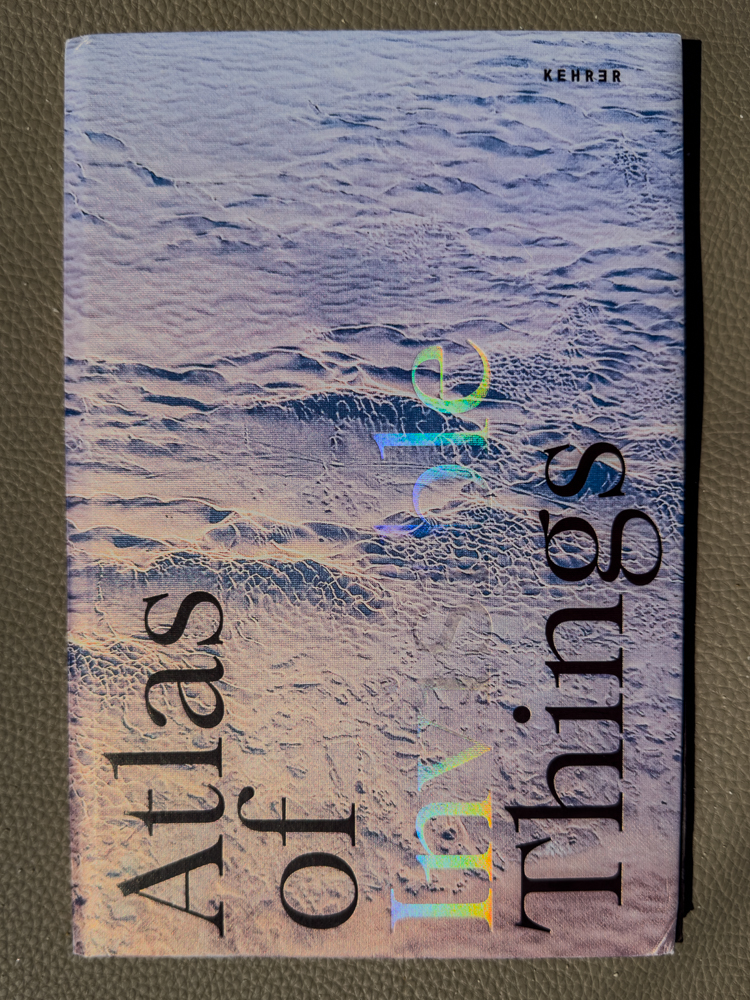
©Stephanie Dupre Routh, Cover of Atlas of Invisible Things, published by Kehrer Verlag
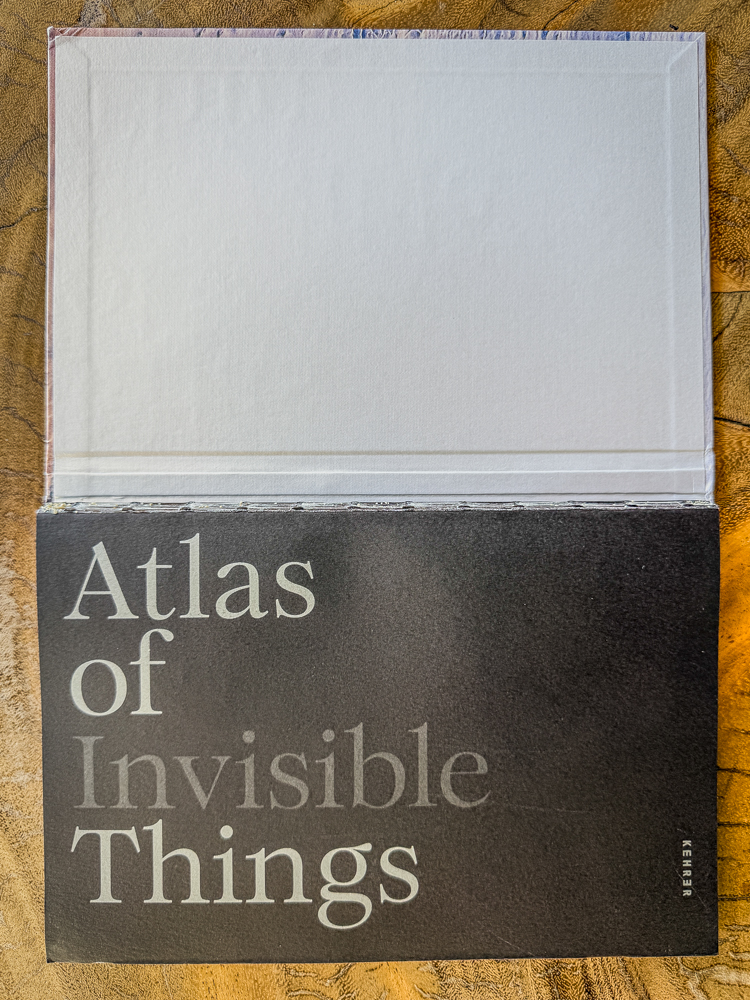
©Stephanie Dupre Routh, Interior of Atlas of Invisible Things, published by Kehrer Verlag
In Stephanie Dupre Routh‘s new monograph, Atlas of Invisible Things, published by Kehrer Verlag, photography becomes a space where certainty begins to dissolve. This echoes my own experience with travel–the traveller is in a suspend state of new realities, shifting time and memory.
Routh creates a world where truth, fiction, and imagination coexist, asking us to reconsider what we think we know about a place. Rather than approaching the cities as documentary subjects, the work uses them as psychological and cultural frameworks. The photographs and accompanying long-form essay invite to ponder: Did this really happen? Is this remembered, imagined, reconstructed, or something in between? By bringing photographs and text together, Atlas of Invisible Things creates multiple entry points into a deliberately unknowable narrative, asking us to consider not only what is visible, but what remains unseen or imagined.
An interview with the artist follows.
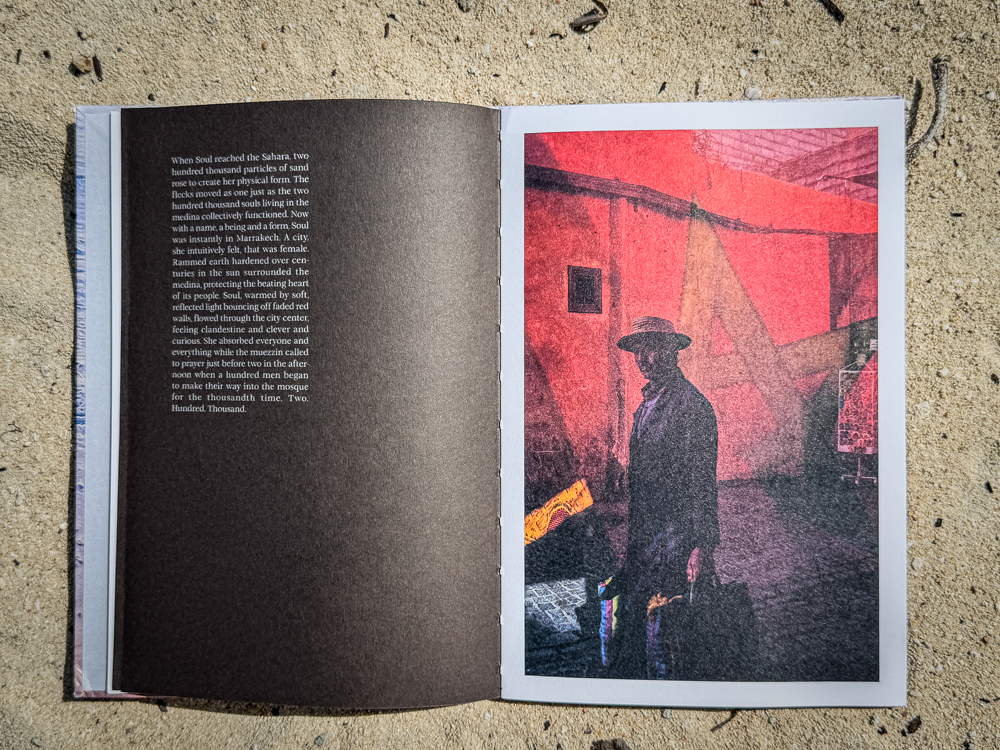
©Stephanie Dupre Routh, Spread from Atlas of Invisible Things, published by Kehrer Verlag
Stephanie Duprie Routh uses photography for narrative storytelling and conceptual art. Her work explores womanhood, essence of place, and transitory states of being human. Using layers and interventions, she creates new ways of seeing and considering self.
Published by RAW, Forbes, FRAMES, PDN, National Geographic Traveler and by independent reviewers, Routh’s award-winning work exhibits in the USA, Japan, Italy, Spain, and India. She has three books: “Where the Ocean Drinks the Sky” (2021-two sold-out editions, PUSH), “Daydream in Memories of Youth” (2024, Generation Press), and “Atlas of Invisible Things”( 2026-Kehrer Verlag).
Routh’s work is in permanent collections: The Wittliff Collections, CENTER Image Library & Archive, Texas A&M University, Concordia University, Austin-Bergstrom International Airport, and The Loren (Lady Bird Lake & Pink Beach). She’s recognized by Paris Photo Prize, Julia Margaret Cameron, IPA, LensCulture, and nominated for a Leica Oskar Barnack Award.
She travels worldwide for assignments, commissions, and personal projects.
IG: @StephanieDuprieRouth
Publisher: Kehrer Verlag
@kehrerverlag
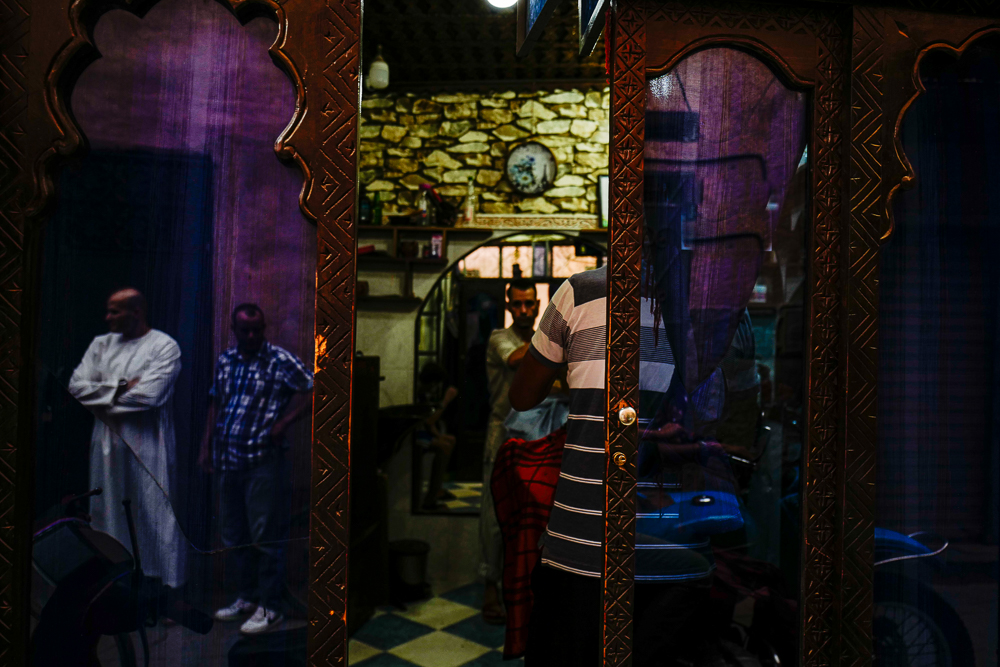
©Stephanie Dupre Routh,from Atlas of Invisible Things, published by Kehrer Verlag
Atlas of Invisible Things
Atlas of Invisible Things explores place, gender, and time across two cities through photography and a long-form essay. By blurring fact and fiction, I try to challenge perceptions of history and identity. Weaving past echoes, present moments, and future insights into an immersive narrative, I can create a questions that can be applied to both the text and imagery: Is this real? Did this event happen? Was it conjured from imagination or replicated in true form?
Rather than documenting place as a travelogue, I use each city as a framework for examining how environment, culture, history, and personal experience shape perception. The two cities function independently while also informing one another, allowing connections and contradictions to emerge across geography and experience. What I encounter becomes source material, but observation is only the starting point. Fact is combined with fiction to question the distinction between what happened, what is remembered, and what is imagined.
I am interested in how we assign characteristics to people, places, and experiences, and how those associations influence what we believe we understand. In Atlas of Invisible Things, I use gender as an abstract concept. The gender-shifting between the literal, symbolic, and psychological, allows me to examine identity as something formed through both individual experience and inherited cultural narratives.
Time operates similarly. Past, present, and future are not treated as separate or sequential states but as overlapping influences. History persists in contemporary environments, while present experiences alter our understanding of the past and shape how we imagine the future. Photography is particularly relevant because it records a specific moment while immediately transforming that moment into history. Photography can be used to create a scene as well as document a reality. This is important for the project because invisibility is an underlying concept throughout.
The combination of photography and an essay extends these ideas beyond a single form. Each medium contributes a different way of experiencing the narrative and provides multiple points of entry into the work. Rather than directing the viewer toward one interpretation, Atlas of Invisible Things creates a layered environment in which place, gender, time, history, and identity can be reconsidered through both observation and imagination.

©Stephanie Dupre Routh,from Atlas of Invisible Things, published by Kehrer Verlag
Tell us about your growing up and what brought you to photography….
I grew up watching my grandfather and father photograph mostly family events. When I graduated high school my parents gave me a camera. I started photographing and took a few darkroom and photography classes as electives in college. My dad started sharing images with me that he took while traveling-either for pleasure, at the request of Uncle Sam, or for work. I saw it as kismet! The images I had been making up to that point were always ‘in the world’. When I was in my first career, I used photography as a a way to relax on the weekends. Fast forward 10 or 15 years when I decided to go back to school to get a Masters degree in Photography. I turned my focus towards photography as my full-time creative profession and here I am.
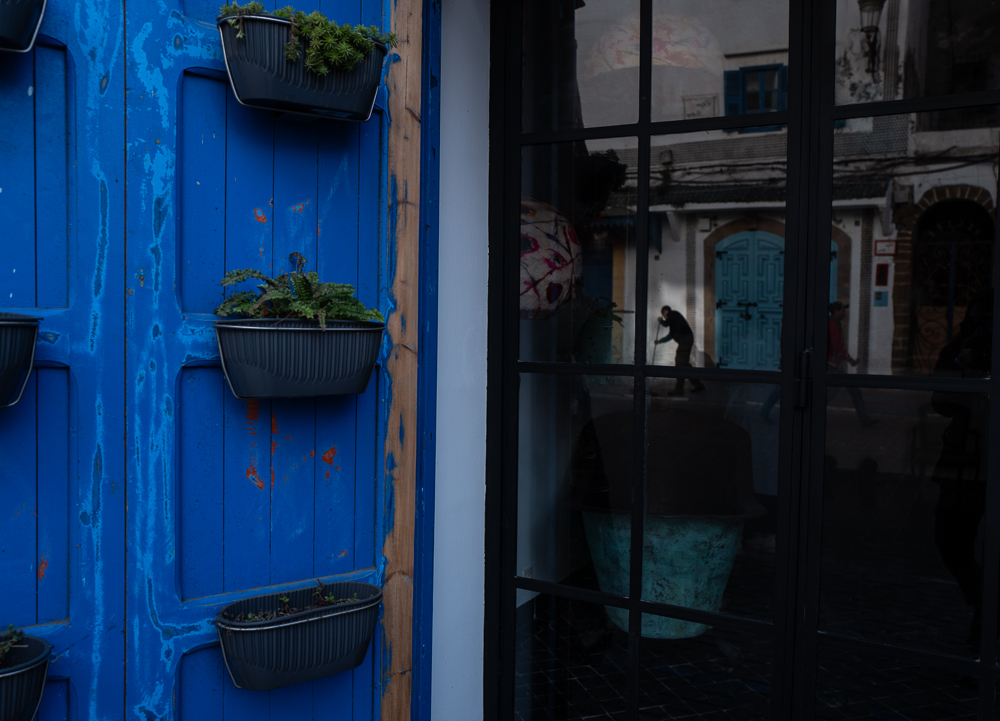
©Stephanie Dupre Routh,from Atlas of Invisible Things, published by Kehrer Verlag
Congratulations on the new book! How did it come about?
I have been to Morocco several times in different capacities, each time learning something new. I have a strong sense of curiosity when I visit and I want to photograph Morocco as I feel it. I try to move away from expected imagery, instead focusing on the unknown of the place because I still have a lot to understand about the country and its culture. Atlas of Invisible Things became a nexus of my trips, emotions, and thoughts about cities I have visited.
I worked on the images during multiple trips to Morocco, visiting many cities that aren’t included in the book. On one of those trips, in Marrakech, I began writing the essay. I returned to Morocco after the text was done to photograph again. I wanted to be sure I felt the project was done. I was in communication with Kehrer Verlag about another project during the time I was working on the Morocco work. I decided to pitch Atlas to them and they agreed to publish the work.
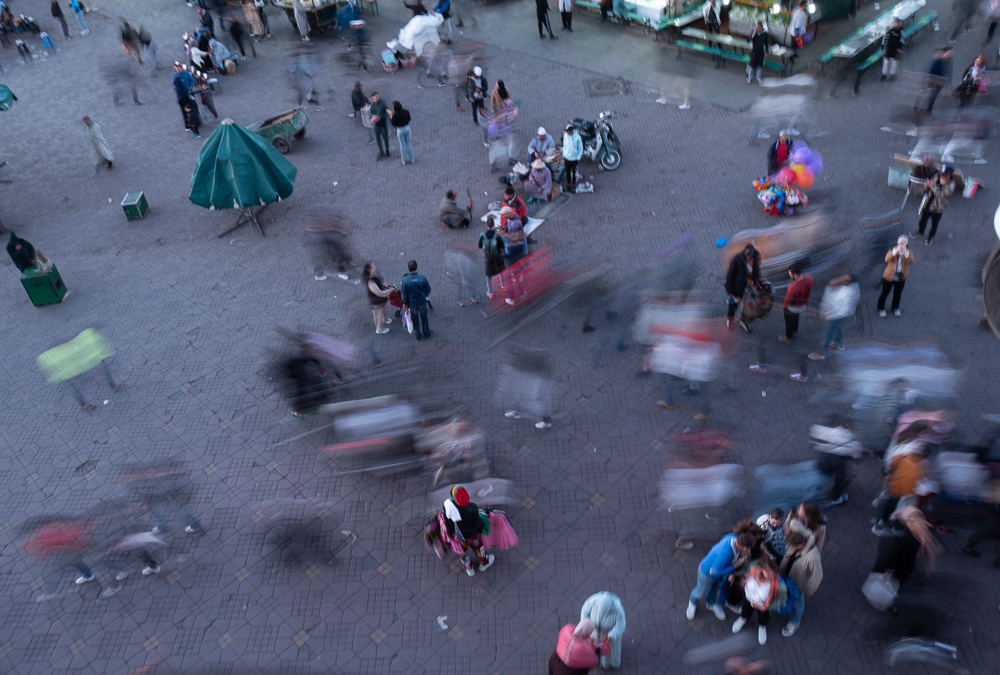
©Stephanie Dupre Routh,from Atlas of Invisible Things, published by Kehrer Verlag
The title Atlas of Invisible Things immediately suggests mapping something that cannot necessarily be seen. What are the “invisible things” you were trying to locate or make visible through this project?
In the book–both in imagery and essay–there are references to invisibilities. I wanted to use double entendre to leave the questions open to interpretation. For example, ‘Atlas’ is both a map and a mountain range in Morocco. I leave it to the viewer to decide which, or both, are being brought into the project. Another invisible topic is the gender-assignment to the cities. Gender in people can be identified but in inanimate objects, it is assigned through language. Latin-based languages detail everything has having a gender. When cities talk about their ‘sister city’ abroad, they assign a gender. I wanted to bring this to light by suggesting cities emanate a gender feeling that is not dependent on physicality.
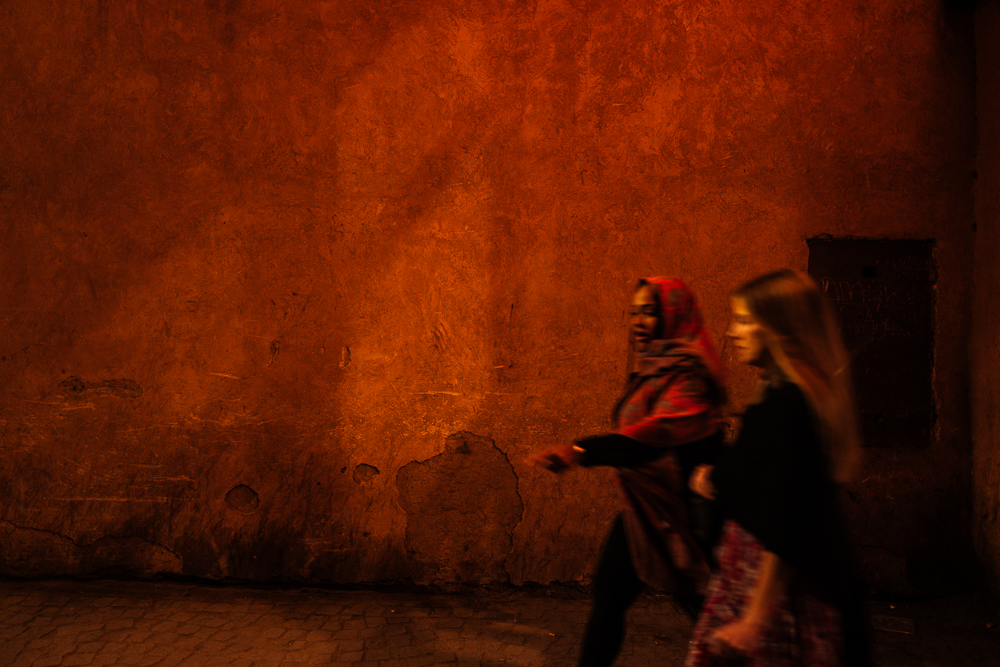
©Stephanie Dupre Routh,from Atlas of Invisible Things, published by Kehrer Verlag
You work between two cities, but this is not a traditional exploration of place. What drew you to these particular cities, and how did you begin to see them as spaces for memory and imagination?
I have been to many cities in Morocco but Marrakesh kept calling me back. It is there (and another city not in this project) where I find a lot of creative energy. Essaouira was new to me. I expected it to have the same creative vibe as Marrakech but the energy there was very different. It was relatively easy for me to see Marrakech as a container for memory. Having been there numerous times, I had developed my own memories. I still don’t know or understand everything about it but I can walk the same path, regurgitating my own memories as fodder for moving forward in my creative endeavors there. In Essaouira, I had to use my imagination to get past this “wall”–a feeling of being turned upside down in my freedoms and how I see. It took considerably more time in Essaouira to find my footing to make images that I felt were both artistic and narrative. Now, I have memories in Essaouira as well. The invisible connections made in my mind between the two cities based on my memories and experiences helped in the formulation of the narrative.
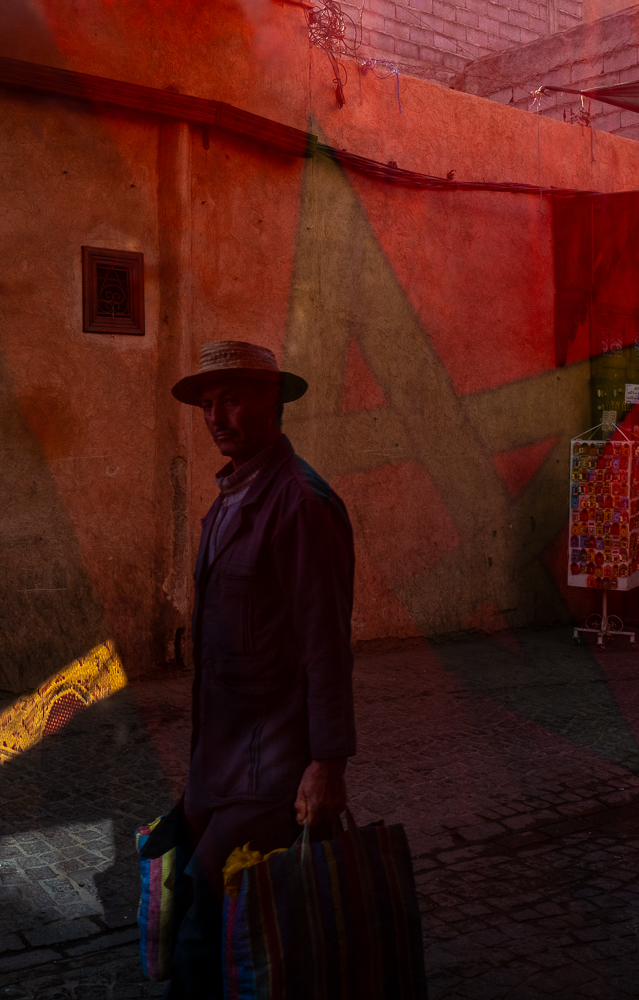
©Stephanie Dupre Routh,from Atlas of Invisible Things, published by Kehrer Verlag
Throughout the book, you deliberately blur the line between fact and fiction. How do you decide when to follow something you encounter in the real world and when to invent it? Is uncertainty part of the experience you want to create for the viewer?
I always follow something I encounter in the real world. I am curious and I like to wander aimlessly. When I am photographing, I shoot images that are more authentic but I also play with photographing the world in the most complicated way I possibly can. It is a challenge to myself to see if I can invert meanings from the reality of our existence. In the beginning of a project with text, the images almost always come before the words. The invention begins when my imagination starts to insert itself into the project. Sometimes, the invention is out of necessity to complete the narrative. Most of what I invent is something that could only be possible in a mystical world. For example, conjuring a creature out of sand that can relay feelings and experiences may be possible but is probably not a realistic occurrence.
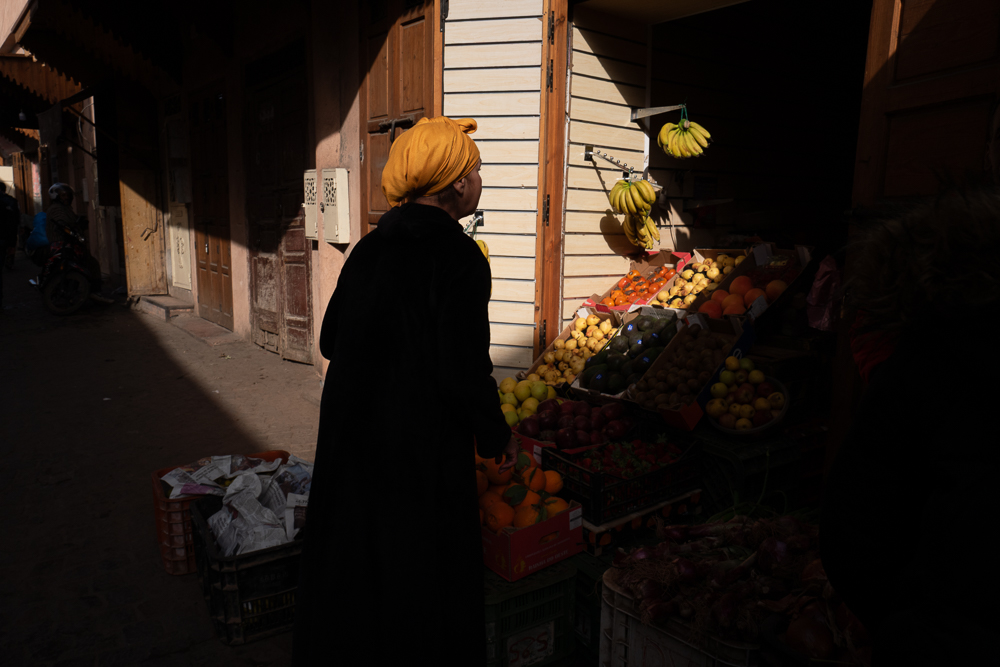
©Stephanie Dupre Routh,from Atlas of Invisible Things, published by Kehrer Verlag
How do you think photography’s particular relationship to time shapes this project?
Photography is an interesting medium. It can be incredibly accurate or deceiving. It captures time in the present moment but immediately forces the moment into the past. Because Atlas of Invisible Things sways between the past, present and future, it uses nostalgia and current events while interjecting the ideas of what might be in the past or future. Photography is a great tool to present time in a way that the viewer can read—like an accordion stretching and shrinking as time collapses into itself or expands beyond what is thought possible.
There is a recurring question in the work: “Is this real?” What interests you about creating that uncertainty for the viewer? Do you hope viewers ultimately find an answer, or is the question itself the point?
The uncertainty is absolutely paramount. I like open-ended questions. I want the viewer to ask more questions after they encounter the work rather than having more answers. I think this approach opens peoples minds to new ideas and asks them to reconsider what they know or how they perceive the world.
What do you hope changes for the reader after spending time inside Atlas of Invisible Things?
I hope readers will think of Morocco outside of the stereotypical ideas. I also want the readers to reconsider their thoughts about gender identities— considering the identity label as a collection of actions rather than physical attributes. Most of all, I want the viewer to feel like they really enjoyed the story, the images, and would read it again.
Posts on Lenscratch may not be reproduced without the permission of the Lenscratch staff and the photographer.
Recommended
-
Stephanie Dupre Routh: The Atlas of ThingsOctober 13th, 2026
-
John Baer: The Extraordinary Ordinary: A Memoir in Photographs, 1945–1954October 12th, 2026
-
Nata Drachinskaya: BINOMOctober 6th, 2026
-
Book Talk: Text as Structure in the PhotobookOctober 3rd, 2026
-
Brynne Quinlan in Conversation with Douglas BreaultSeptember 27th, 2026