Shawn Clover
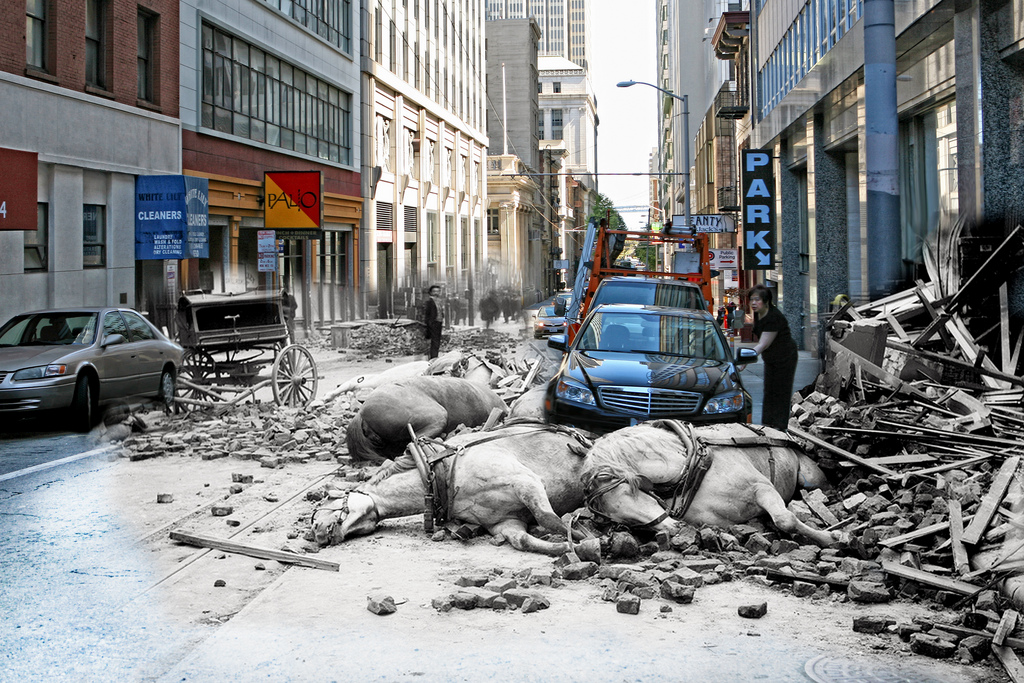
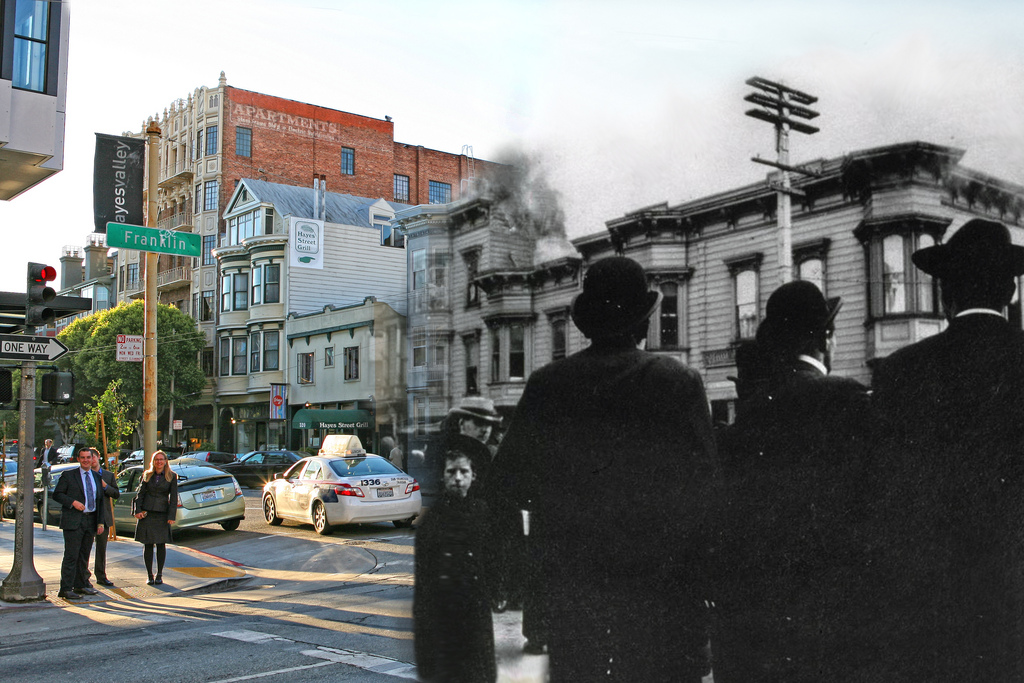
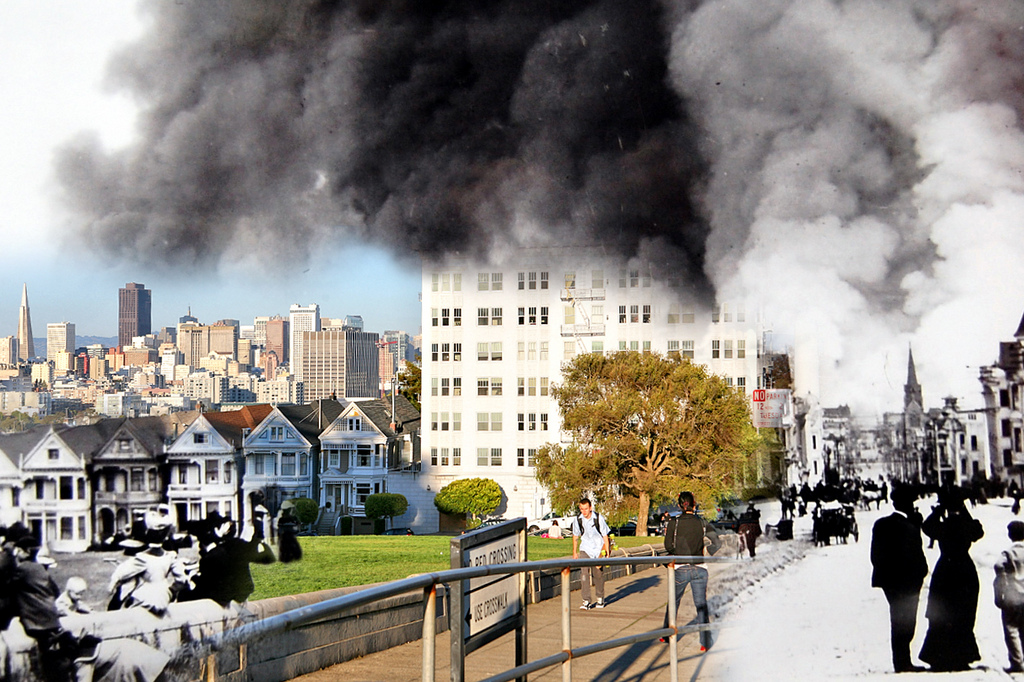
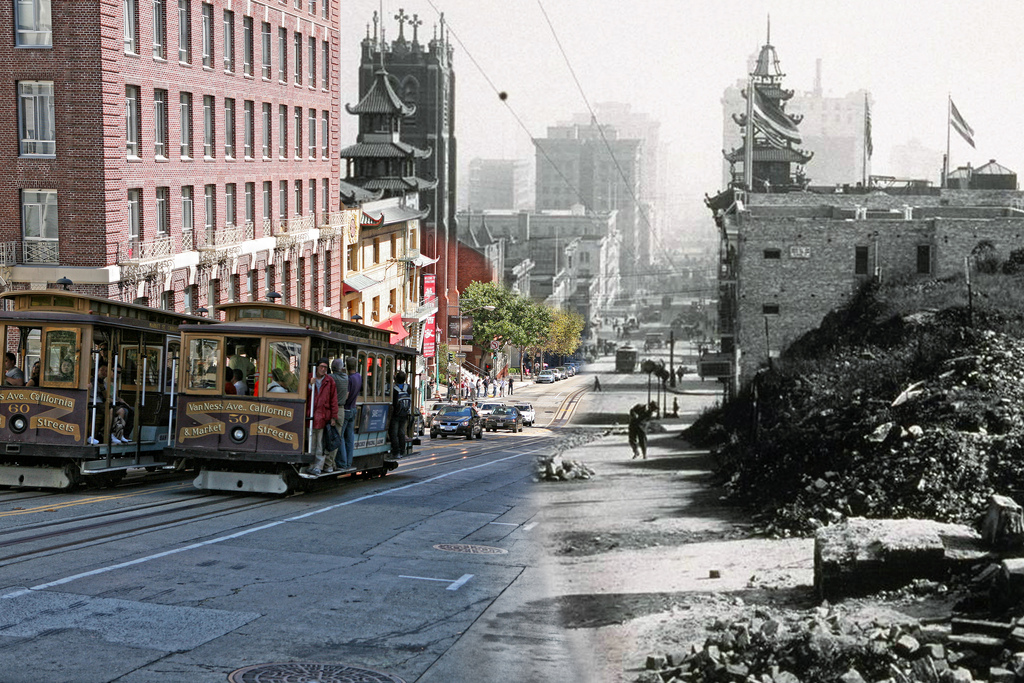
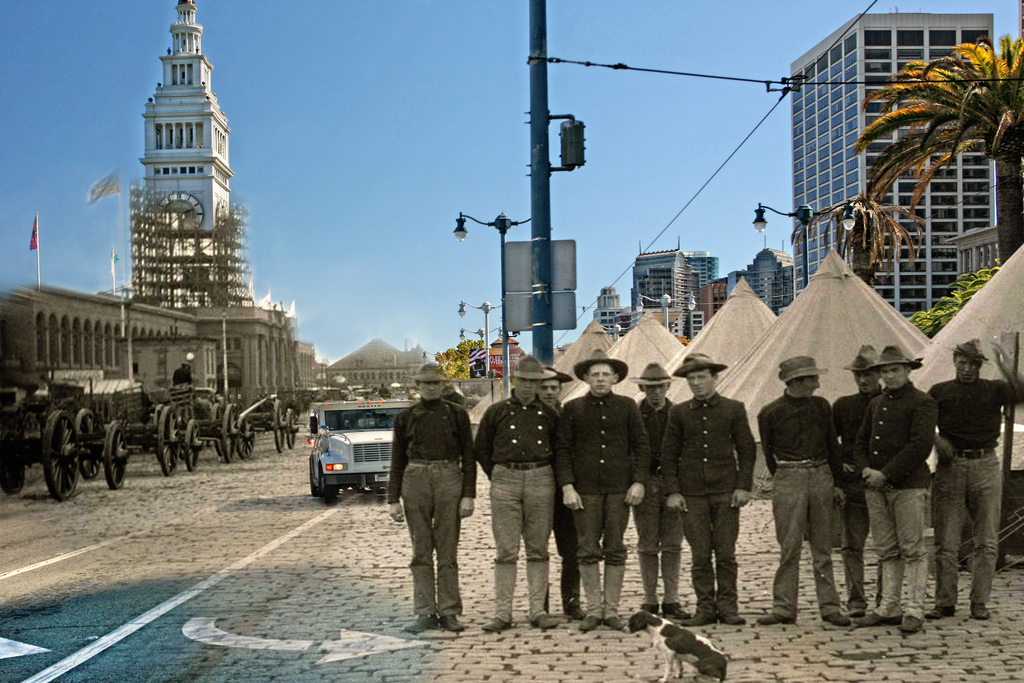
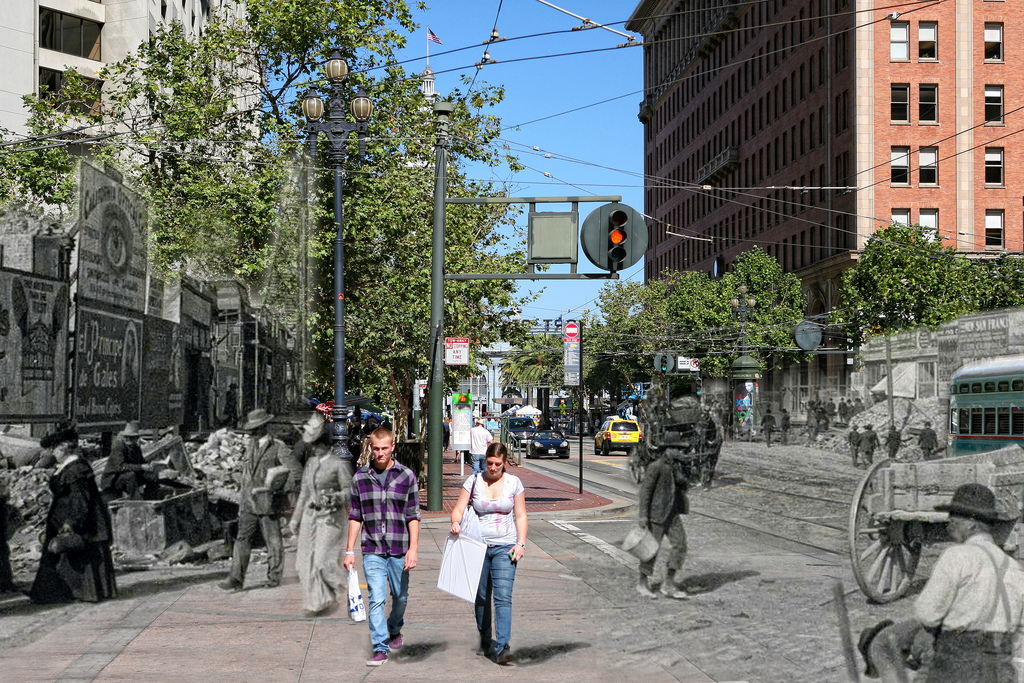
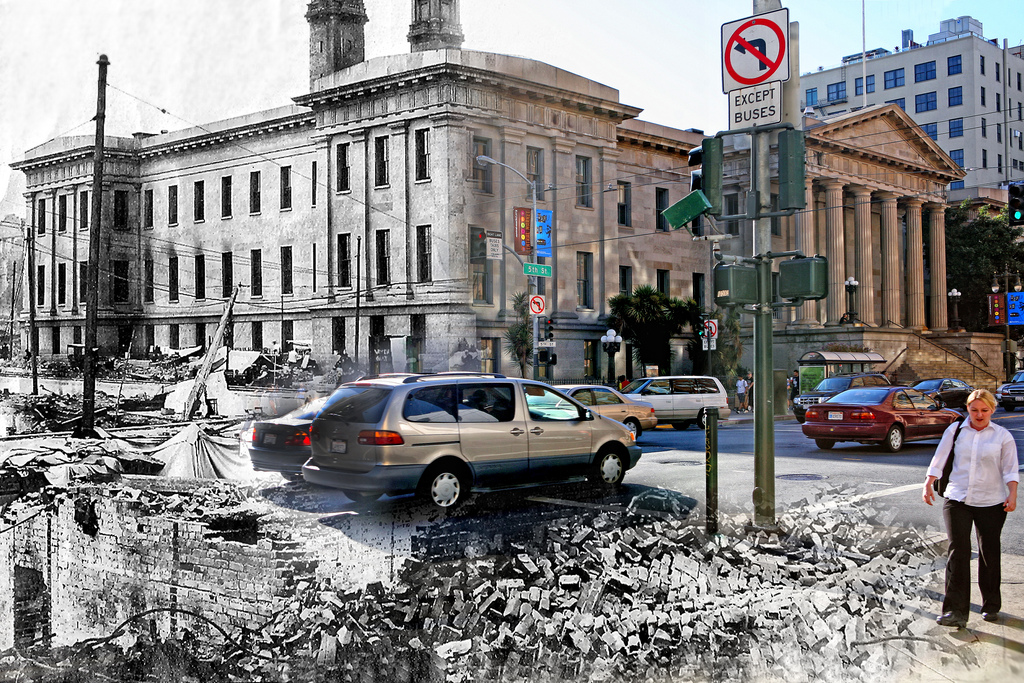
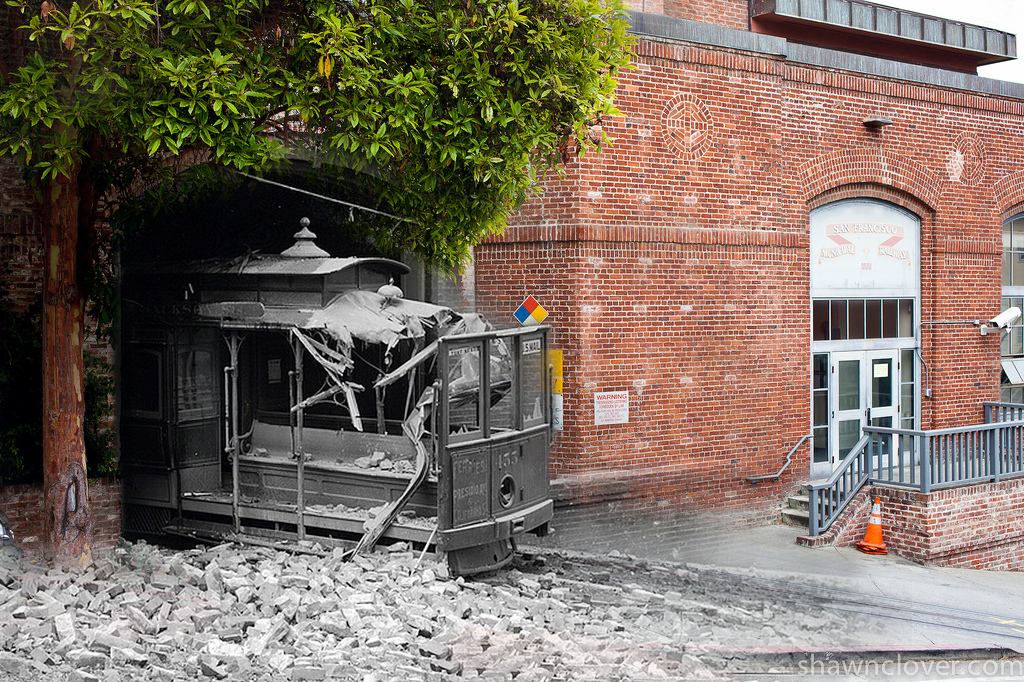
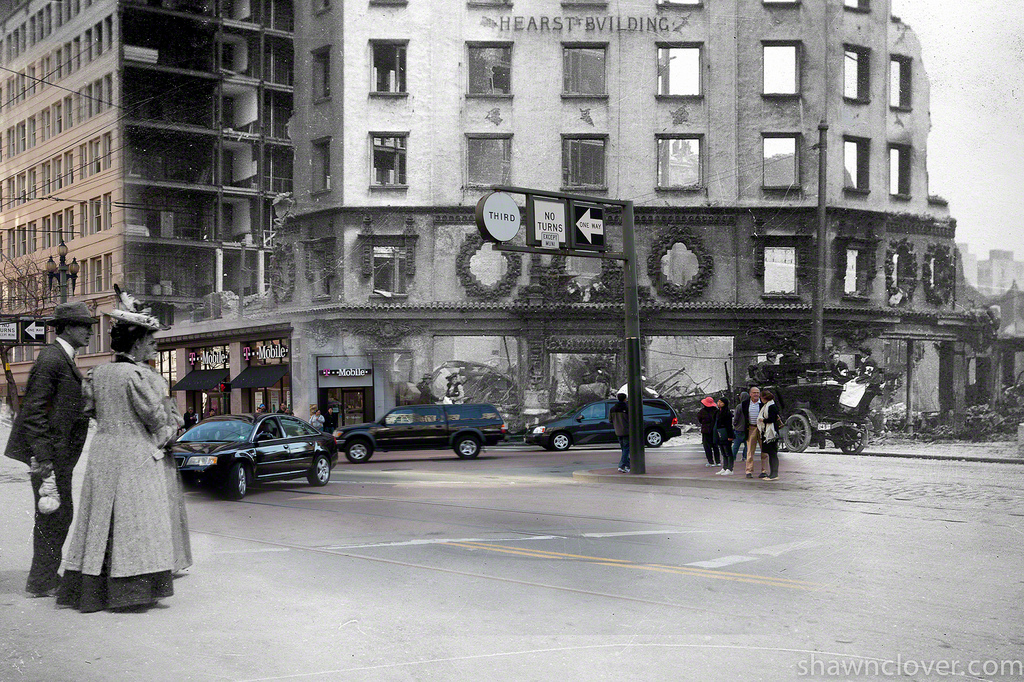
Now comes the fun part. Where was the exact spot the photographer stood? What was the equivalent focal length of his camera’s lens combined with the film medium? How high off the ground was the camera? Where was the sun in the sky? Everything needs to be precise when layering two photos on top of each other. My original idea was to tear away a piece of the modern photo to expose the 1906 photo, but after playing around a bit, everything seemed more interesting when the two were softly blended together.
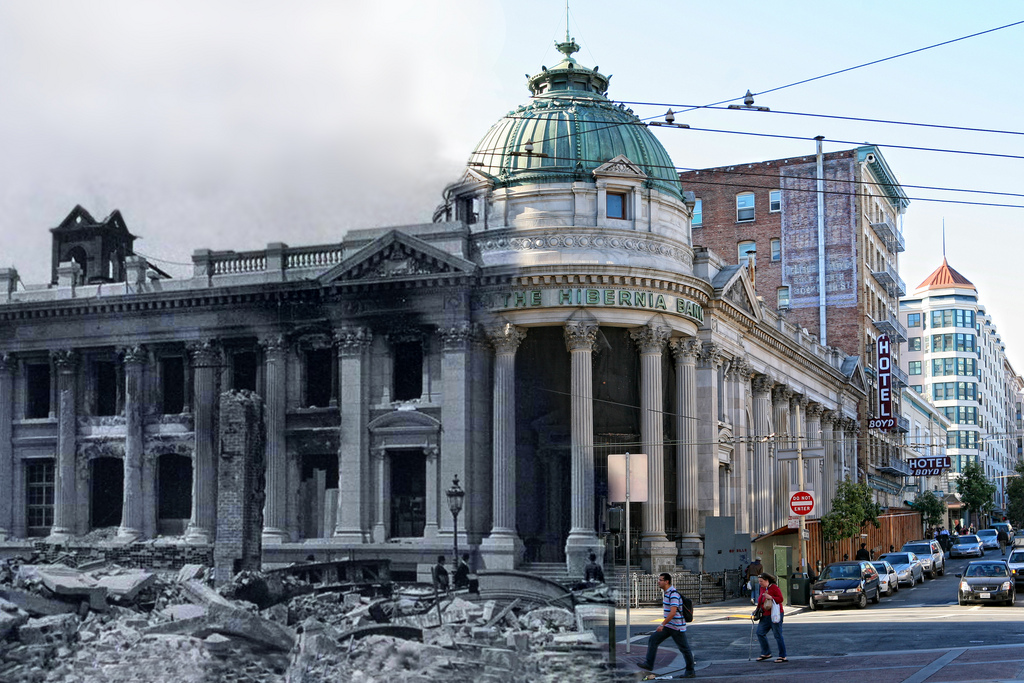
To put these photos together, I first create a catalog of historical photos that look like they have potential to be blended. Unfortunately most of these photos end up on the digital cutting room floor because there’s simply no way to get the same photo today because either a building or a tree is in the way. Once I get a good location, I get everything lined up just right. My goal is to stand in the exact spot where the original photographer stood. Doing this needs to take into account equivalent focal length, how the lens was shifted, light conditions, etc. I take plenty of shots, each nudged around a bit at each location. Just moving one foot to the left changes everything.





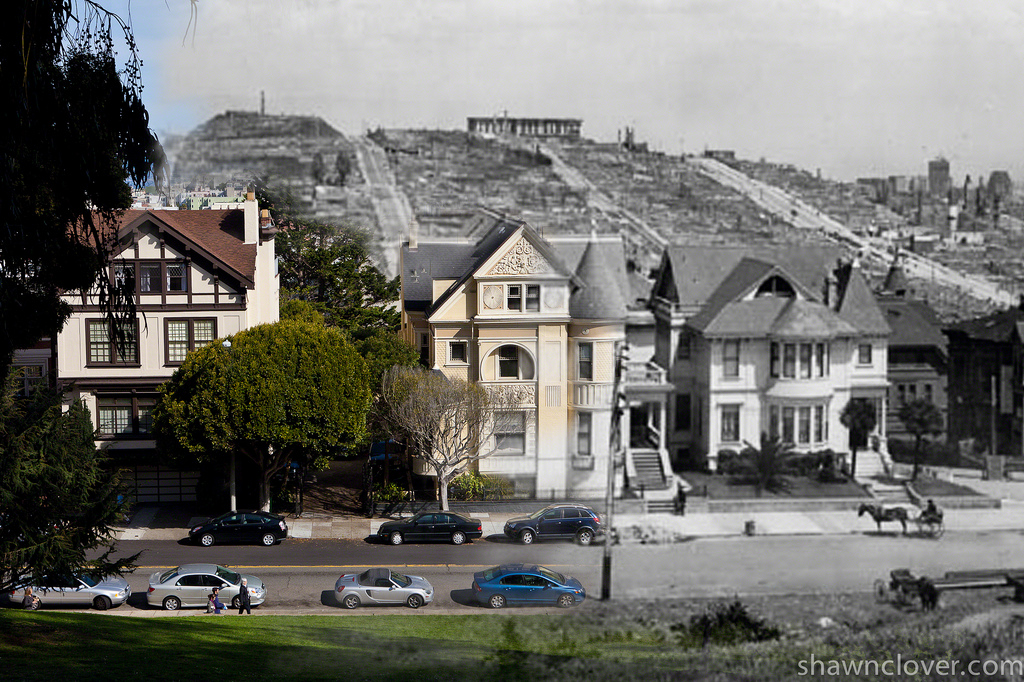
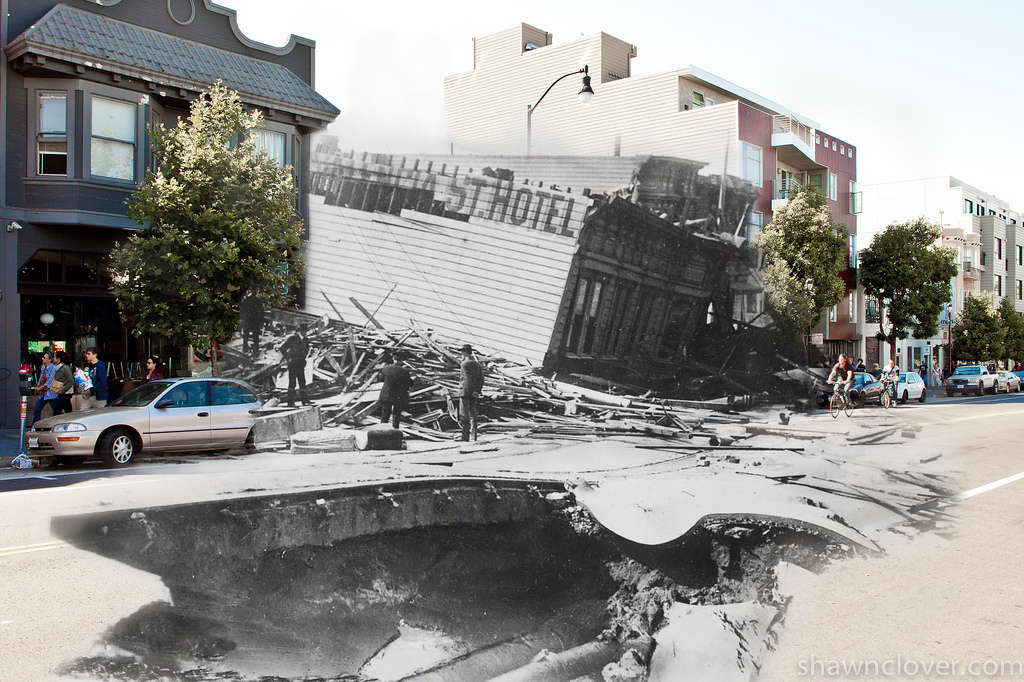
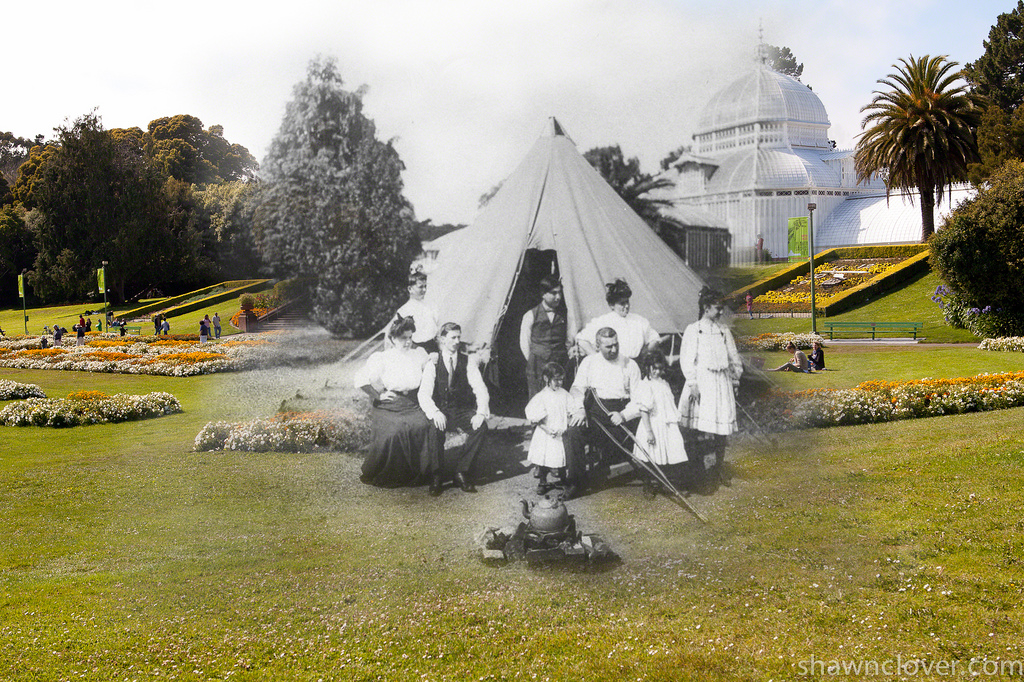
Posts on Lenscratch may not be reproduced without the permission of the Lenscratch staff and the photographer.
Recommended
-

BEYOND THE PHOTOGRAPH: Q&A WITH COMMERCIAL PHOTOGRAPHER ANDY MAHRMarch 22nd, 2026
-
Bryan Whitney: The Spiritual LightMarch 17th, 2026
-

The 2026 Lenscratch Student Prize is OPEN!March 16th, 2026
-
The 2026 LOVE Exhibition, Part 2February 14th, 2026
-

The 2026 LOVE Exhibition, Part 3February 14th, 2026