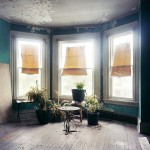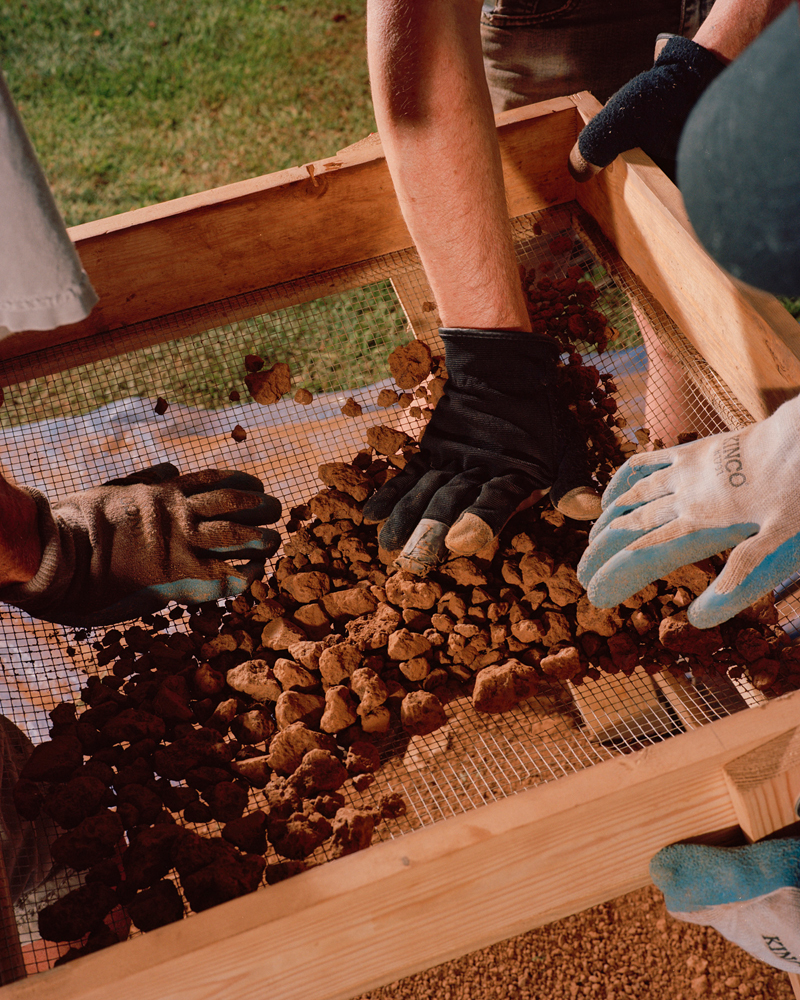
©Ian Byers-Gamber_Archaeology, Holly Grove (Hands) 2024
It is with pleasure that the jurors announce the 2025 Lenscratch Student Prize Honorable Mention Winner, Ian Byers-Gamber. Byers-Gamber was selected for his project, I Come Creeping. He is currently pursuing the visual art MFA at Rutgers University. The Honorable Mention Winners receive a $250 Cash Award, a feature on Lenscratch, a mini exhibition on the Curated Fridge, a Lenscratch T-shirt and Tote.
Ian Byer-Gamber’s researched-based project, I Come Creeping, examines a powerful uprising that took place in 1921. This fascinating exploration comes at a significant time in our country’s current struggle again authoritarianism. Byers-Gamber reminds us that in moments of upheaval, ordinary people often invent extraordinary ways to protect and recognize one another. In an age of deepening inequality and cultural amnesia, such histories carry important lessons—not only about collective resistance, but also about the forms through which it is remembered, recorded, and reimagined.

An enormous thank you to our jurors: Aline Smithson, Founder and Editor-in-Chief of Lenscratch, Educator and Artist, Daniel George, Submissions Editor of Lenscratch, Educator and Artist, Linda Alterwitz, Art + Science Editor of Lenscratch and Artist, Kellye Eisworth, Managing Editor of Lenscratch, Educator and Artist, Alexa Dilworth, publishing director, senior editor, and awards director at the Center for Documentary Studies (CDS) at Duke University, Samantha Johnson,, Executive Director of the Colorado Photographic Arts Center Kris Graves, Director of Kris Graves Projects, photographer and publisher based in New York and London, Elizabeth Cheng Krist, former Senior Photo Editor with National Geographic magazine and founding member of the Visual Thinking Collective, Hamidah Glasgow, Curator and former Director of the Center for Fine Art Photography, Fort Collins, CO, Yorgos Efthymiadis, Artist and Founder of the Curated Fridge, Drew Leventhal, Artist and Publisher, winner of the 2022 Lenscratch Student Prize, Allie Tsubota, Artist and Educator, winner of the 2021 Lenscratch Student Prize, Raymond Thompson, Jr., Artist and Educator, winner of the 2020 Lenscratch Student Prize, Guanyu Xu, Artist and Educator, winner of the 2019 Lenscratch Student Prize, Shawn Bush, Artist, Educator, and Publisher, winner of the 2017 Lenscratch Student Prize. Alayna Pernell, Artist, Lenscratch Editor, Educator, Epiphany Knedler, Artist, Editor for Lenscratch, Educator, Curator of MidWest Nice, Jeanine Michna Bales, Beyond the Photograph Editor of Lenscratch and Artist, Vicente Cayuela, Social Media Editor of Lenscratch and Artist, and Drew Nikonowicz, Artist, winner of the 2015 Lenscratch Student Prize.
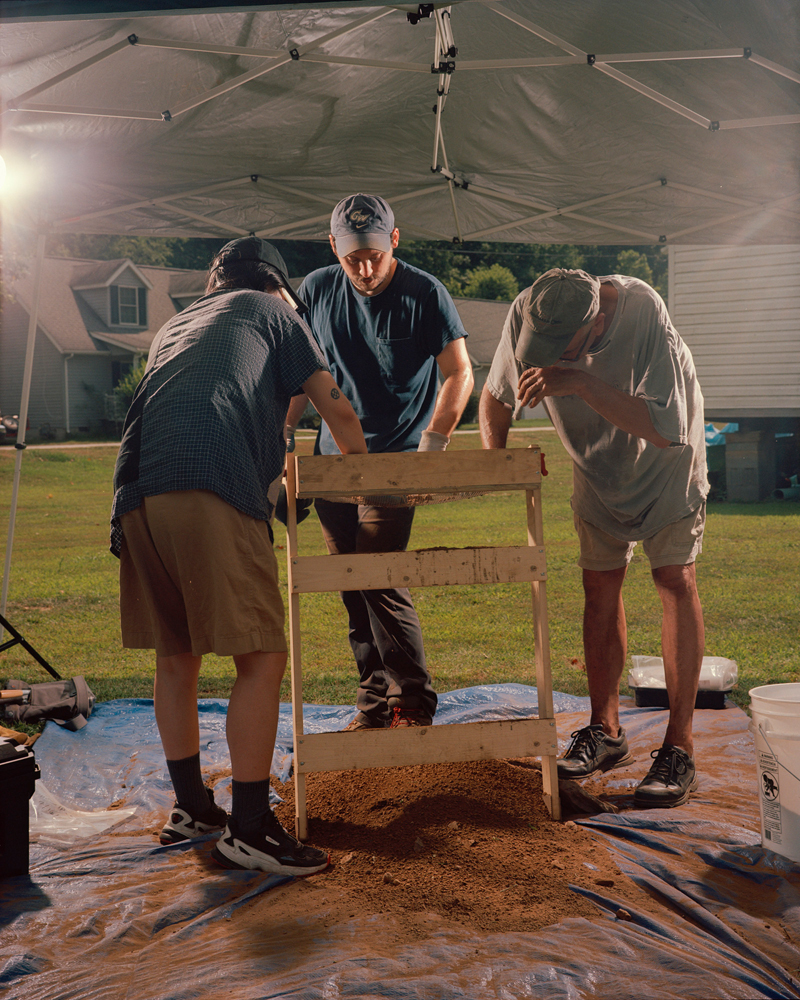
©Ian Byers-Gamber, Archaeology, Holly Grove, 2024
I Come Creeping
Mustering during 1921’s Battle of Blair Mountain, 10,000 racially‑integrated, largely‑Socialist striking coal miners greeted each other, “I come creeping.” The shibboleth distinguished and protected them from the private police, sheriffs, and strikebreakers of their robber baron bosses.
In the hypercapitalist present day, such histories of violent uprising offer fresh lessons—on the power of the people, and the means we have to liberate ourselves.
Practice Statement
My research interests arise from long-standing bonds with friends, colleagues, and oft-visited institutions. As the camera helps me gain access to non-public spaces, my photographs record my subject and my own involvement. Invested in the slow processes of large-format and darkroom production, the act of photography becomes a research method. While archives and institutions necessarily arise from and reproduce imperial power, I investigate these forms, searching for the cracks in their foundations: spaces of radical potential, opening to possible futures. I aim to turn the camera against its imperialist past. Grounding my research in an artistic subjectivity—a subjectivity inseparable from my community—enables the liberatory political imagination that motivates me.
I examine and experiment with exhibition conventions to draw suspicion on the exhibition form itself. To disturb the conventional museum experience I ask the audience to question its expectations of institutional looking. In a recent show on the West Virginia mine wars, I evoked the modern art museum by installing a restrained, documentary-style photograph of a West Virginia landscape, generously matted in a thin black frame; across the room, I installed staged and lit tableau photographs of contemporary leftists in custom artist frames, made of red oak and embellished with bullet casings. These framing strategies challenge the immanent authority of the museum. This is why I appropriate institutional forms: to turn them against themselves.
In seeking out and producing liberatory moments, my work suggests new ways of engaging with our cultural institutions and archives, marking new paths on their imperial blueprints.
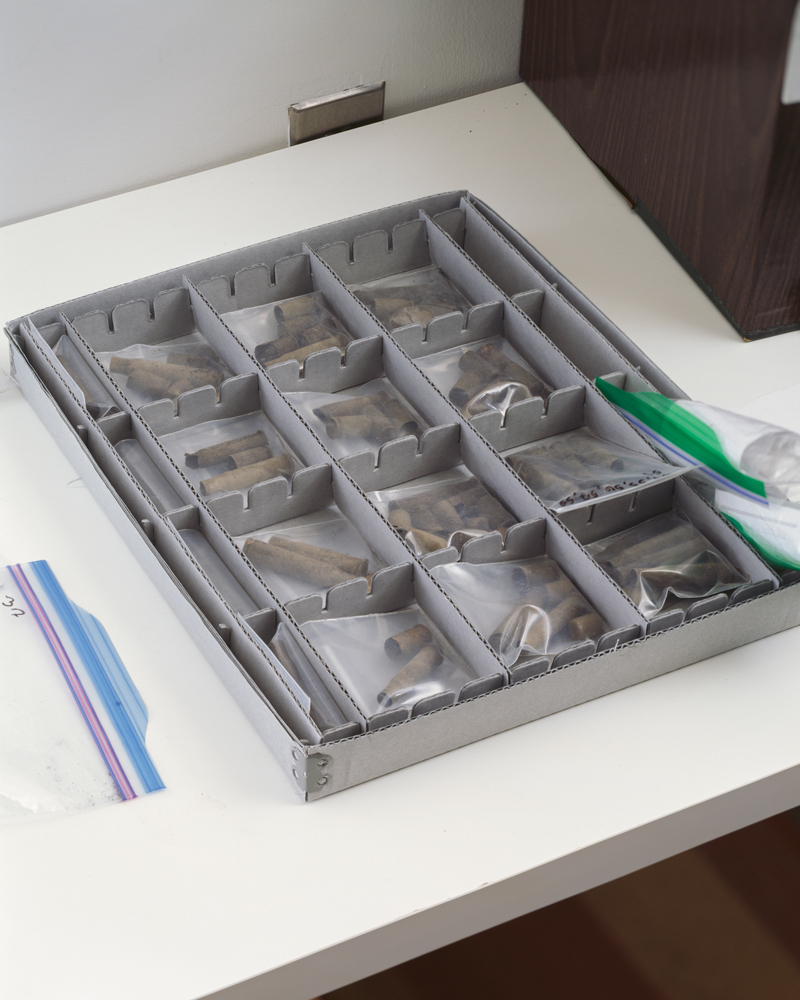
©Ian Byers-Gamber_Casings in the Mine Wars Museum Research Room, 2024
Tell us about your growing up and what brought you to photography.
I grew up in Bloomington, IN, enjoying art but not really interested in making it. That continued into undergrad, where I enjoyed some video, photography, and sculpture classes but was drawn toward working around art. I interned at the Pomona College Museum of Art (now the Benton) during their first Getty Pacific Standard Time show, It Happened at Pomona, and got an incredible crash course on post-war art in Los Angeles. That’s where I was introduced to some early favorites like Lewis Baltz (and the New Topographics) and Chris Burden. While still in school, I began working for Machine Project, an art space in Echo Park run by Mark Allen, making video documentation of performances and events. The broader community of artists I’d met through Machine Project and Pomona then began asking me to document their work, and all of a sudden, that was how I paid the bills. This introduction to photography–as a documentarian, working with art and artists–paradoxically made me reluctant to try making art of my own; surrounded by work that I loved, it felt hard to imagine what my own work could possibly contribute. Things started to change when I purchased my first set of strobes–going from video documentation of a performance, just trying to make the best of what was available, to being able to carefully and slowly craft a photograph.
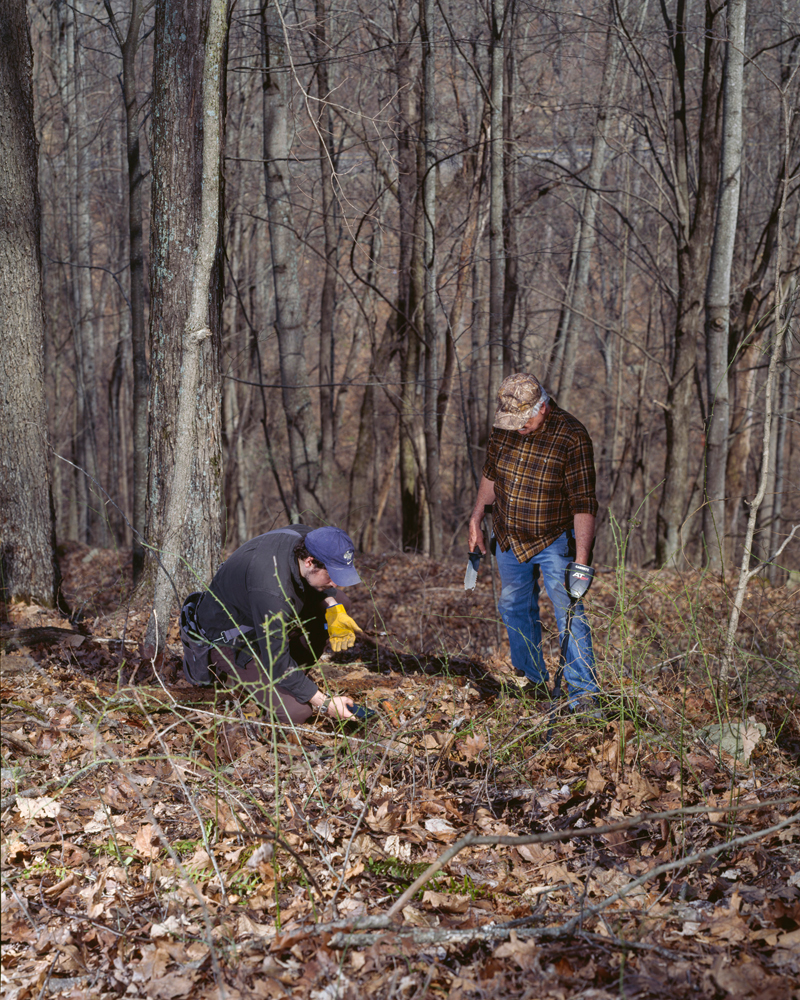
©Ian Byers-Gamber, Ethan and Kenny, Blair Mountain, 2024
You had a very active photography career prior to getting an MFA, what kind of work were you drawn to prior to grad school?
Right around the same time I got a set of strobes, I also purchased a Mamiya RB67 off Craigslist. At the same time that I was embracing the control offered by strobes, I began to see that film offered, for me, the perfect balance of uncertainty and magic for what I wanted out of image making. After learning the medium format camera and taking some darkroom classes at LACC, I began to feel more comfortable taking photos for myself–though I still felt reluctant calling any of it art. My first concerted project came out of volunteering for the Bob Baker Marionette Theater. They were being evicted from their home of half a century, but because of historic preservation status with the city of Los Angeles, there were legal mitigations required of the landlord–literally to mitigate the cultural and historic loss to the city. Sounds nice until you think about how it’s just an avenue of legitimization for capitalist destruction. Anyway–one of these mitigations was to commission large format photos of the soon-to-be-demolished architecture, and the theater convinced the developer to hire me, so I bought my first 4×5. Making those photos, I realized that the official archive would only record the architecture, which was not what I thought made the theater “worth” preserving. I thought that the people and the puppets embodied the real magic of the place, and I wanted to attempt to extend this archive to include them.
This project really guided the way I made art prior to graduate school – I tried to make work that celebrated my arts community and the aspects of arts institutions that I thought were successful or exciting.
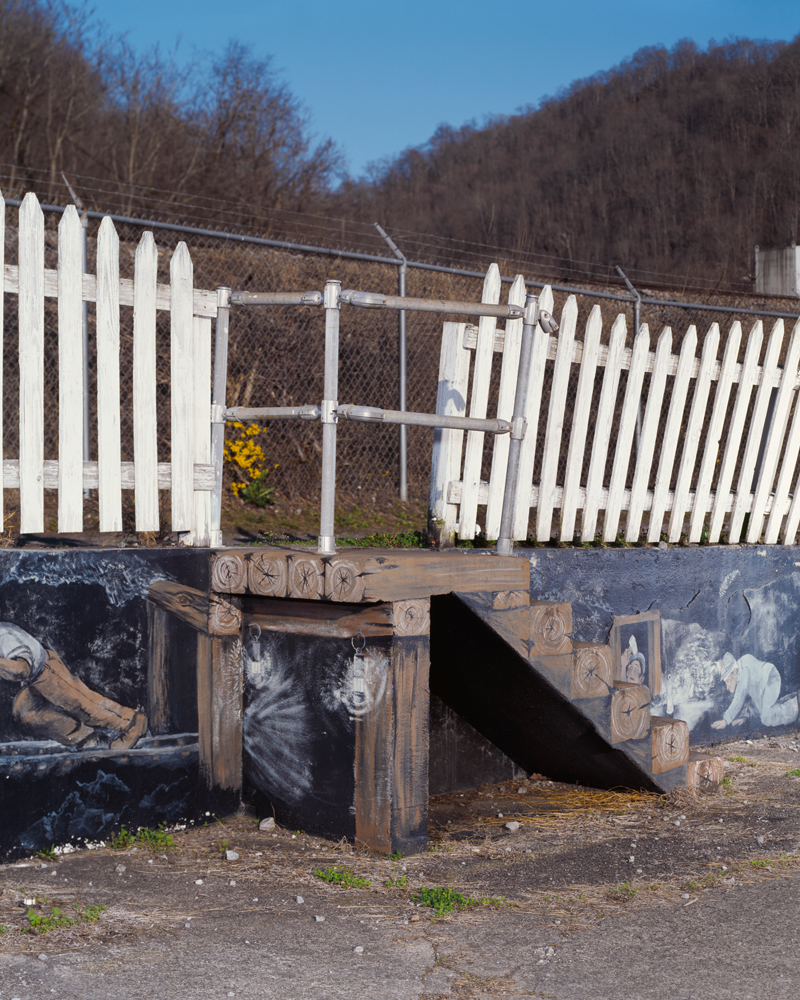
©Ian Byers-Gamber, Faux Bois, Matewan, WV, 2024
Has working towards an MFA changed the way you work and see?
Going to graduate school forced me to really consider my approach to artmaking. Prior to school, I made work sporadically, as opportunities arose in my daily life. I’d photograph some behind-the-scenes magic at a gig for a stuffy institution, or, if I happened to be traveling past a site of interest, I’d make time to photograph there; photographs of opportunity. When I got to Rutgers, though I’d anticipated the change it would entail, I quickly realized that I couldn’t wait for ideas and subjects to arise serendipitously, like I always had, or I probably wouldn’t make anything at all before graduating. I’d never lived on the east coast, and didn’t have the robust community or long personal connection that I’d always had with my subjects. After some floundering, I realized that I could use my political commitments to find new community, and felt like if I was careful along the way it wouldn’t be disingenuous to make art about that process. This is how I came to make work about the West Virginia Mine Wars.
The time, space, and equipment offered by Rutgers also allowed me to experiment with form outside of photo-making. I began to think more holistically about subject matter, thinking about where photography fails, or what framework can best support a photo on display.
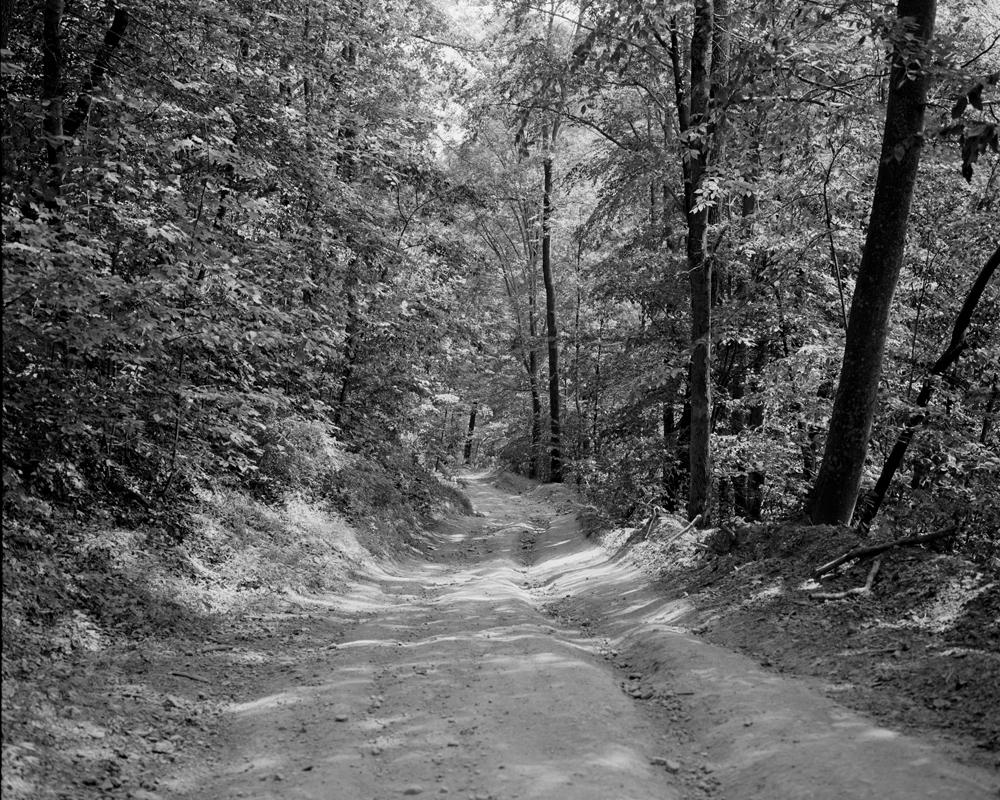
©Ian Byers-Gamber, Hatfield McCoy Trails Number 10, 2024
Is there a mentor or educator that you would like to acknowledge?
Didier William immediately understood what I wanted to do with my work and challenged me to get there through productive critique and guidance.

©Ian Byers-Gamber, Matewan, WV from the site of the original railroad depot, 2024
Your research-based practice is multi-layered and rich. You state: “While archives and institutions necessarily arise from and reproduce imperial power, I investigate these forms, searching for the cracks in their foundations: spaces of radical potential, opening to possible futures.“ This is a fascinating perspective, can you share any examples?
I’m excited by institutions, or particular people and tendencies within institutions, that actively work against normative modes of art and historical presentation. I want to celebrate spaces welcoming and inclusive for people not traditionally welcome in white, western art institutions. One of my favorite examples is the City Museum, in St. Louis. The City Museum is both a museum of architectural salvage from the golden age of United States industry—a time when workers were treated even worse than they are today—and a gigantic art installation that doubles as a labyrinthine playground. In general, I think that play offers a productive entrée into difficult topics, but the City Museum is introducing anyone, especially children, to an example of how amazing art can be to experience. While it can’t do everything, I believe there is potential in art for radical inspiration, and these kinds of places are where it lives.
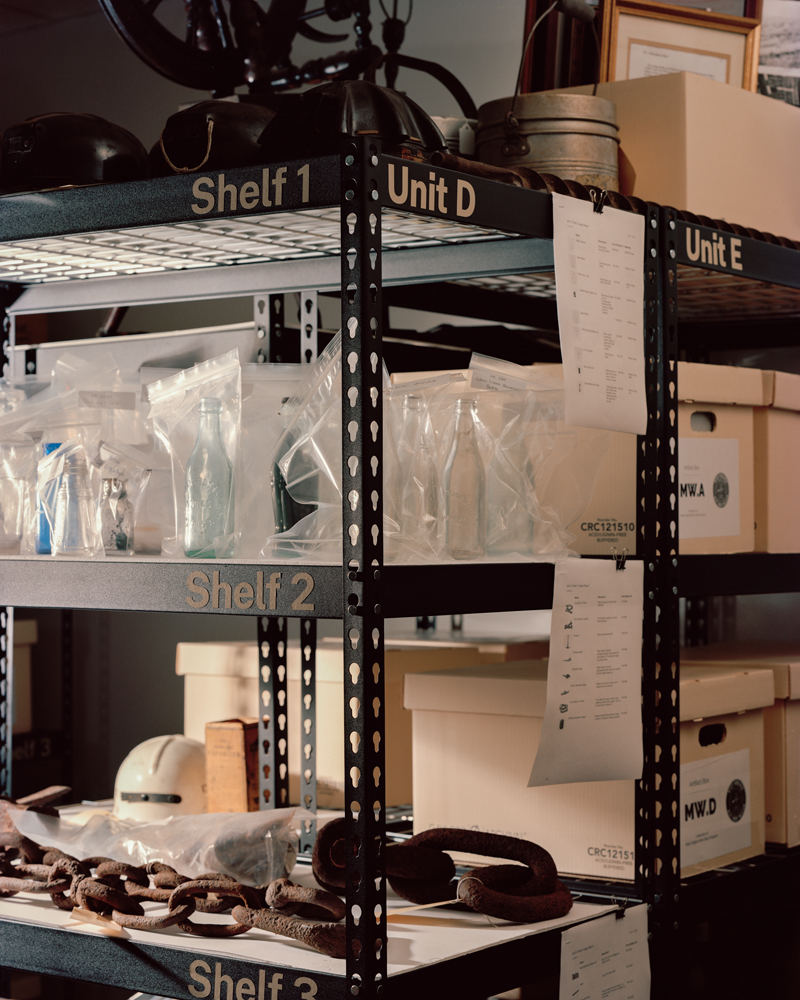
©Ian Byers-Gamber, Mine Wars Museum Archives, 2024
Do you have any advice for starting a research-based project? What brings you to the subject matter and how do you stay engaged?
I think the key has always been letting my curiosity run wild. I’m always paying attention to those around me, looking for threads that I might be interested in. For my thesis project at Rutgers, the thread turned out to be this piece of inspirational history about the Battle of Blair Mountain that I first heard about while organizing in Los Angeles in 2020. I was just doing some casual research about the history and found an online exhibition by the West Virginia Mine Wars Museum. It felt serendipitous to find an institution working with this history that I was also interested in, so I scheduled a visit to the area and a tour of the museum. The museum folks are so generous and kind with their time while making photographs there I felt like I was also finding that community that I missed when I left LA. I’m not sure how it will be moving forward, but I’m going to try and stay open and curious.
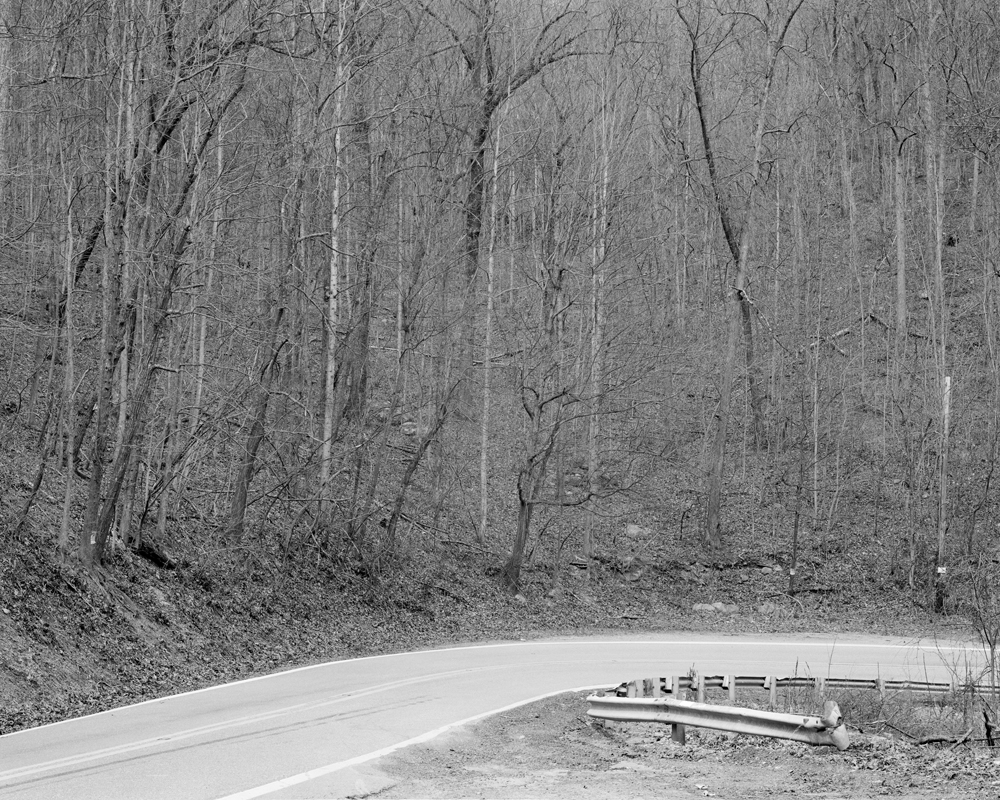
©Ian Byers-Gamber, On Blair Mountain, 2024
What do you want the audience to take away from “I Come Creeping?”
I think first and foremost, I Come Creeping functions as a didactic project, or even agitprop. The West Virginia Mine Wars are a leftist organizing history intentionally left out and erased from history books. My desire is to help share it as widely as possible, as well as to uplift the folks in West Virginia already working to do the same. At the same time, I want to demonstrate the liberator avenues this history can take in the present, its power as inspiration and example. The determination, resilience, and actions of the miners and their comrades are lessons we can learn from today.
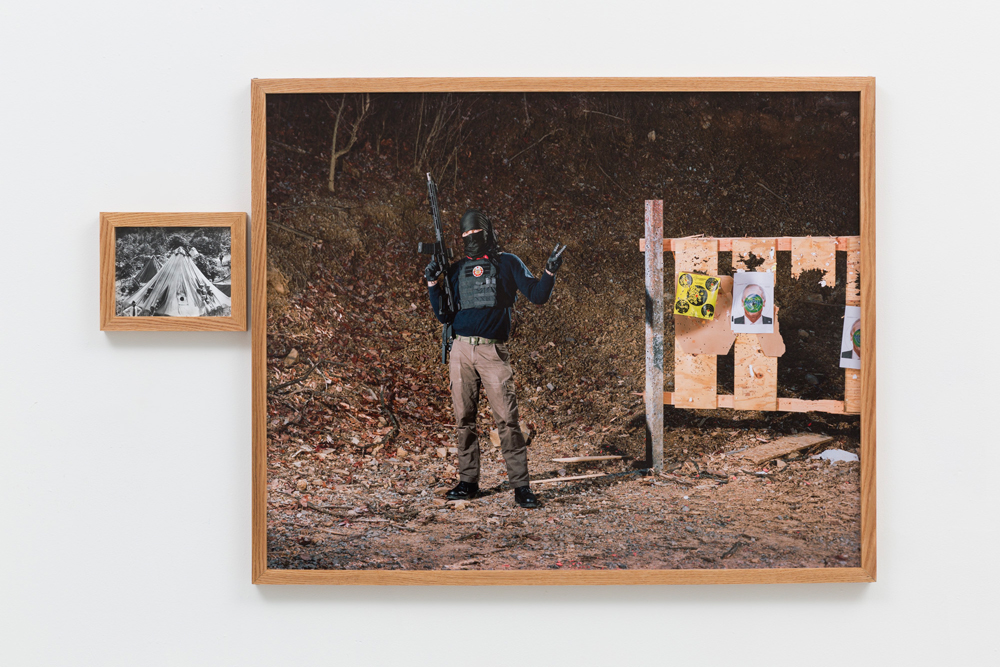
©Ian Byers-Gamber, Self Portrait, 2024 Archival inkjet print on Canson Photo HighGloss, artist frame (red oak, spent 9mm casings), silver gelatin contact print from digital negative of Library of Congress-held glass plate negative (call number LC-F82- 7375, originally titled “Tents, Lick Creek, W.Va., [4/12/22]”)
Installation is an important part of your process. Can you share some examples of an installation that elevated the work or made the viewer see it differently?
For I Come Creeping, I wanted to leverage institutional display modes and the common associations and assumptions we carry with us when engaging with institutions. By pairing different photographic approaches with different framing methods, I wanted to alert the viewer to the ways they look at art. A variety of framing styles in a single show calls attention to the act of framing itself, and the viewer’s cultural associations for various presentations regarding truth, historicity, representation. For example, for the more documentary black and white photographs in the installation, I chose metal frames with generous matting to evoke the institutional power of a modern art museum. I knew, however, that I wanted the color photographs to feel more accessible, like a roadside museum. After experimenting with small prints and vinyl directly on the wall, I came to the realization that they should be postcards for free takeaway. They’re now photographs that, rather than precious objects, are for holding, examining, keeping—even, hopefully, sharing.
Other installations and sculptural elements suggested themselves as I went through the photographs I made and considered where they fell short of the story I wanted to tell. I placed school textbooks in antique vitrines, treating them as artifacts in their own right to physically demonstrate Blair Mountain’s erasure from American history. I cast bullet holes in a building wall in Matewan, WV, and transposed a plaster positive into the gallery wall. I also built an arcade machine which allows the viewer to commit industrial sabotage by blowing up a coal tipple, thus implicating them in the act. I feel like these sculptural turns help round out the story I am working to tell.

©Ian Byers-Gamber, Smilin’ Sid Marker, 2024
What and who is inspiring you lately?
I’ve had really fruitful conversations with artists William Camargo and Jamil Baldwin recently!

©Ian Byers-Gamber, Specter, Phillips-Sprague Mine, 2024
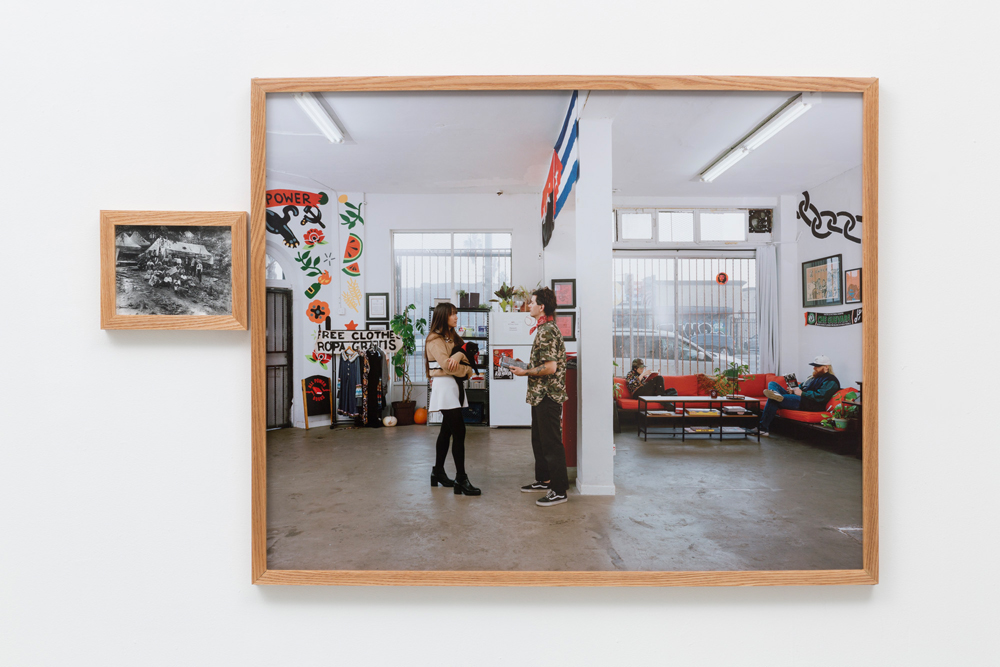
©Ian Byers-Gamber, Transmission, 2024 Archival inkjet print on Canson Photo HighGloss, artist frame (red oak, spent 9mm casings) silver gelatin contact print from digital negative of Library of Congress-held glass plate negative (call number LC-F82- 7372, originally titled “Group of striking union miners & the families living in tents, Lick Creek, W.Va., [4/12/22]”)
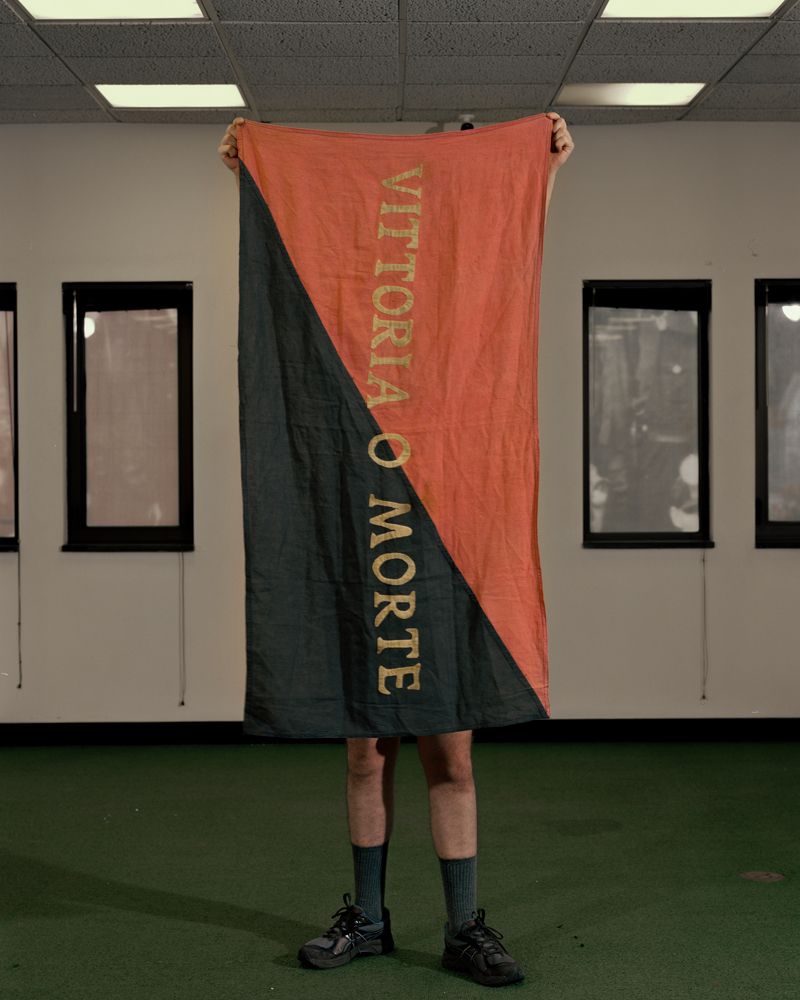
©Ian Byers-Gamber, Victory or Death, West Virginia Mine Wars Museum, 2024
Ian Byers-Gamber is a Philadelphia based artist and art documentarian with roots in Bloomington, IN and Los Angeles, CA. He holds an MFA from Rutgers University. Through photography, sculpture, and installation he investigates silenced histories and hidden archives. Byers-Gamber makes work in the service of a liberatory politic, celebrating community within and around the institutions that shape how we engage with the world.
Instagram: @bamblerdander