The 2025 Lenscratch 1st Place Student Prize Winner: Jordan Tovin
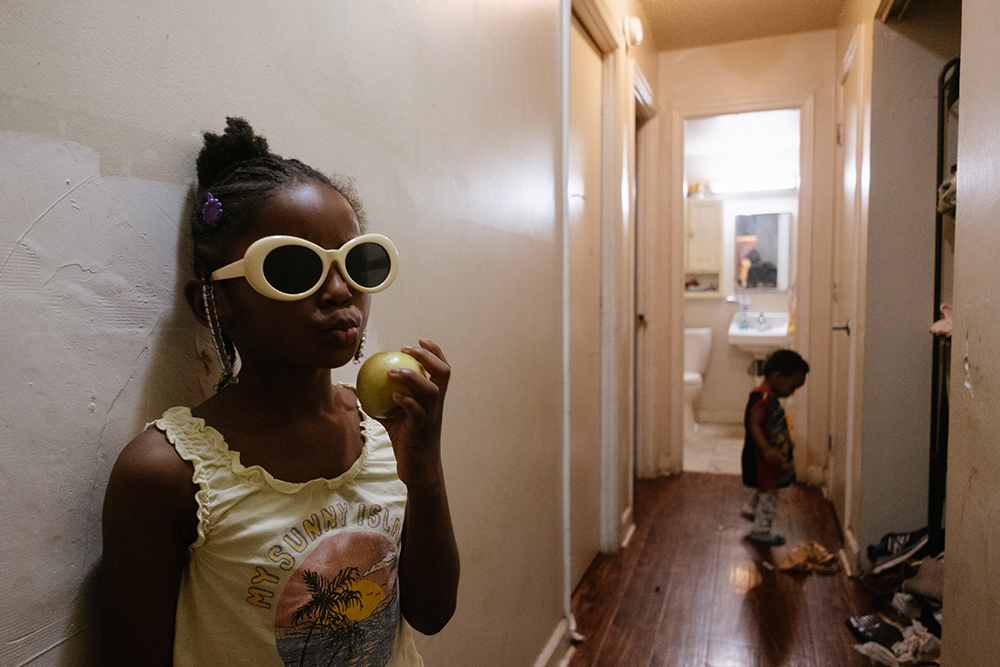
©Jordan Tovan, Billie’s Apple, Billie eats an apple in the hall while playing with her brother Nyles on February 21, 2025, in Washington, D.C.
It is with pleasure that the jurors announce the 2025 Lenscratch Student Prize 1st Place Winner, Jordan Tovin. Tovin was selected for his project, Shaw Diary. He is currently pursuing a BFA in photojournalism at the Corcoran School of Art and Design in Washington, D.C. The 1st Place Winner receives a $1500 cash prize, a review session with Crista Dix, a seat at the New England Portfolio Reviews, and a family membership from The Griffin Museum of Photography, a review session with Samantha Johnson of the Colorado Photographic Arts Center, a review session with Rotem Rozental, a seat at the Exposure Reviews, and a membership from the Los Angeles Center of Photographya $750 Gift Certificate toward portfolio printing at The Image Flow, a $500 Gift Certificate from Freestyle Photo Supplies, a seat at the Exposure Reviews from the Los Angeles Center of Photography, a mini exhibition on the Curated Fridge, a collection of books from St.Lucy Books, a collection of books from Kris Graves Projects, a collection of books from Zatara Press, a collection of books from Workshop Arts and Luminosity Lab, a year long mentorship with Aline Smithson, a feature on Lenscratch, and a Lenscratch T-shirt and Tote. Needless to say, we are so grateful to our amazing sponsors.
It is with great excitement that we celebrate Jordan Tovin as the 2025 Lenscratch Student Prize Winner.
His project continues a legacy of attentive observation—documenting communities and individuals with both compassion and curiosity. Through the thoughtful use of portraiture, ephemera, and a variety of cameras, Tovin creates a layered and expansive narrative.
In Shaw Diary, he follows a multigenerational family embedded in a community undergoing transformation, offering a deeply personal and resonant story of place, identity, and change.
 An enormous thank you to our jurors: Aline Smithson, Founder and Editor-in-Chief of Lenscratch, Educator and Artist, Daniel George, Submissions Editor of Lenscratch, Educator and Artist, Linda Alterwitz, Art + Science Editor of Lenscratch and Artist, Kellye Eisworth, Managing Editor of Lenscratch, Educator and Artist, Alexa Dilworth, publishing director, senior editor, and awards director at the Center for Documentary Studies (CDS) at Duke University, Samantha Johnson,, Executive Director of the Colorado Photographic Arts Center Kris Graves, Director of Kris Graves Projects, photographer and publisher based in New York and London, Elizabeth Cheng Krist, former Senior Photo Editor with National Geographic magazine and founding member of the Visual Thinking Collective, Hamidah Glasgow, Curator and former Director of the Center for Fine Art Photography, Fort Collins, CO, Yorgos Efthymiadis, Artist and Founder of the Curated Fridge, Drew Leventhal, Artist and Publisher, winner of the 2022 Lenscratch Student Prize, Allie Tsubota, Artist and Educator, winner of the 2021 Lenscratch Student Prize, Raymond Thompson, Jr., Artist and Educator, winner of the 2020 Lenscratch Student Prize, Guanyu Xu, Artist and Educator, winner of the 2019 Lenscratch Student Prize, Shawn Bush, Artist, Educator, and Publisher, winner of the 2017 Lenscratch Student Prize. Alayna Pernell, Artist, Lenscratch Editor, Educator, Epiphany Knedler, Artist, Editor for Lenscratch, Educator, Curator of MidWest Nice, Jeanine Michna Bales, Beyond the Photograph Editor of Lenscratch and Artist, Vicente Cayuela, Social Media Editor of Lenscratch and Artist, and Drew Nikonowicz, Artist, winner of the 2015 Lenscratch Student Prize.

Shaw Diary
They are the blocks that built the city’s rhythm—shaping its culture through food, music, language, and love. What they gave was never transactional; it was an offering, rooted in pride and place, meant to anchor a city that was always changing. Today, the families who gave D.C. its soul are the ones being pushed to its margins.
In Shaw, one multigenerational family stands as a mirror to this transformation. Long settled in the neighborhood, they navigate the tension between memory and development, community and displacement. My hope is that—despite my status as an outsider in this community—by weaving together my pictures with theirs, we can highlight that this family’s story is not isolated, but echoes the experiences of countless others who remain, resisting erasure. This project, created in collaboration with them, bears witness to their daily lives as they adapt, endure, and preserve what still belongs to them.
“We’re an average family trying to live through this whole situation, and we still try to be fly,” the mother of this family, Reece, told me. “We do. We still try to make sure we have our Uggs, our Jordans, and… and our North Faces on, but that shit hard… That shit hard.”
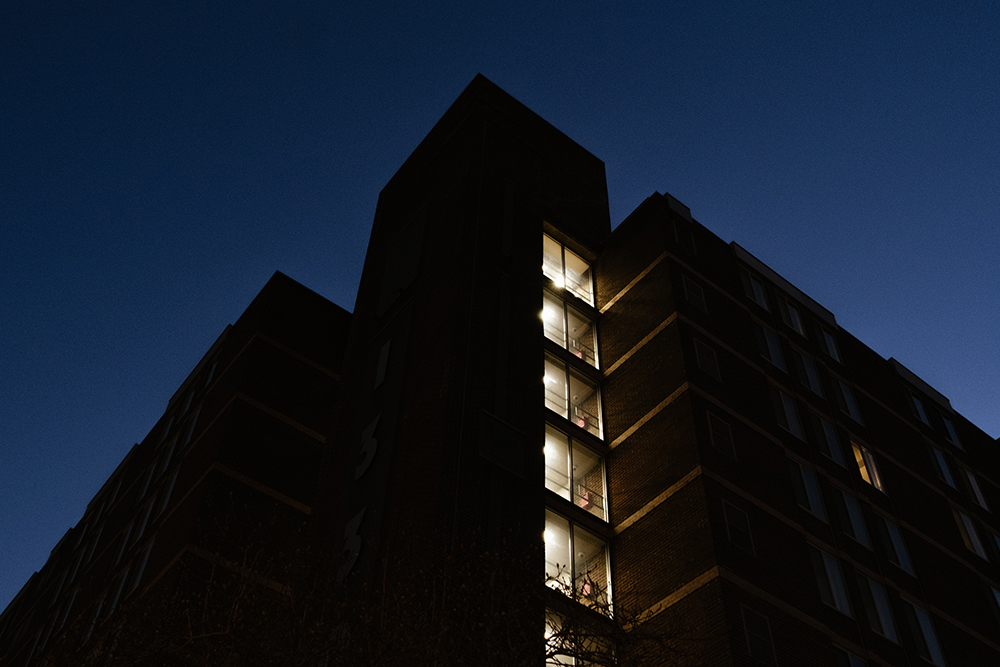
©Jordan Tovin, 1330 Apartments, 1330 Apartments is located on the corner of 7th and O St., at the heart of the Shaw neighborhood in Washington, D.C., as seen on February 17, 2025.
Congratulations on winning the 2025 Student Prize!! Tell us about your growing up and what brought you to photography….
Well thank you, first of all, for this recognition and this opportunity—I’m honored. I first found photography by discovering my mother’s film camera in the attic during my sophomore year of high school. I was lucky to have a friend who was enrolled in the film class at my school at the time and could teach me how to put film through the camera. And then it wasn’t long before I had the magic darkroom moment where I saw my image appear in the developer for the first time which many people rightfully cite as being the moment they get hooked. After that, the darkroom became where I’d go before school, after school, and to some of my teachers’ dismay, during school—I was just obsessed. At the time, I’d skip classes to go to the darkroom, thinking I was slick, but upon graduating, I realized the faculty knew exactly where I was.I guess they also saw how passionate I’d grown about the medium, so they’d just let me go.
Meanwhile, my time in the darkroom was cut short by the pandemic—which, of course, sent us all home. While at home, I wasn’t able to develop film. I tried, but, despite the mixed advice I was getting about developing at home, my mom wasn’t thrilled about the chemistry being poured down the drain. Instead, she told me to write to my granduncle who, by coincidence, taught photography at the University of Jacksonville before he passed to see if he had any digital cameras that he’d lend me while stuck at home. We became penpals during the pandemic, and he’d send certain cameras for me to experiment with while also giving me feedback on my pictures. It was through all this experimentation with photography that my infatuation with it grew and, as I’ve said, morphed into this outlet during the pandemic. And then, the night that Biden won, I was able to convince my dad to drop me off in downtown Atlanta to photograph the celebrations. That was my first taste of photojournalism beyond my duties on my high school yearbook staff, and that night I realised it was what I wanted to pursue as a career.
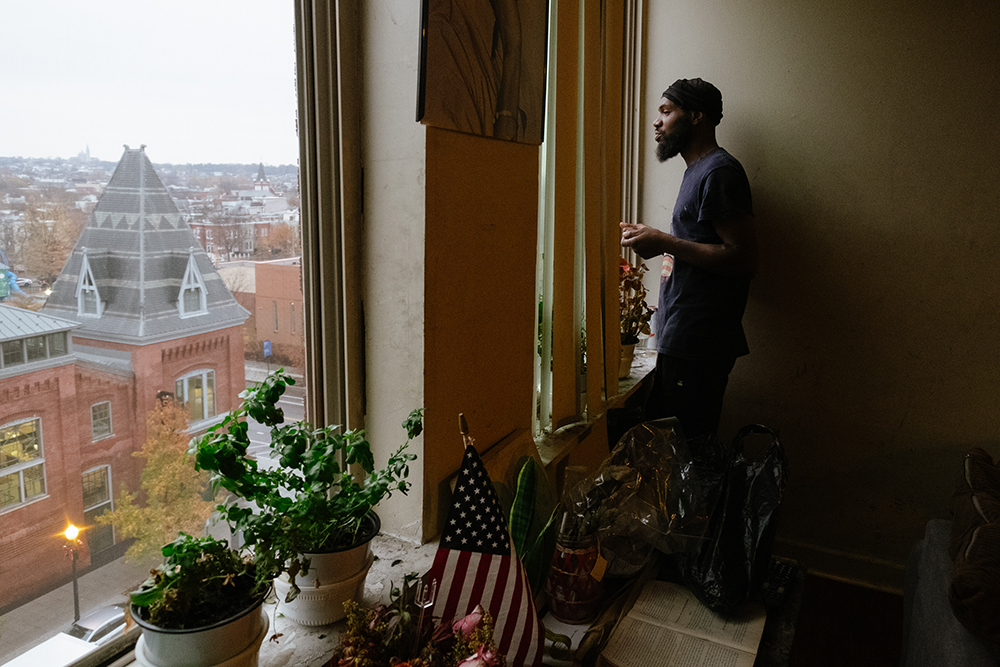
©Jordan Tovin, Brad in the Apartment, Brad overlooks his neighborhood from his apartment on P and 7th St. on December 1, 2023, in Washington, DC.
What sparked your documentary focus?
Short answer—the ability to connect with people 100%. After deciding to go to college in Washington, D.C., I thought I wanted to become a political photographer, but I found making pictures hundreds of feet from a podium frustrating. That’s not to say it can’t be done with grace, I know plenty of clever photographers who make new and exciting work in the political sphere, and I think what they do is super important. But I think that lack of connection is why it ultimately lost its luster to me—that lack of interaction between myself and the person who was in front of the camera. I tried to use my Polaroid as a way to bridge that gap when photographing politics, and while it worked to a degree, my newfound love for documentary photography began to steer me away from politics. It was through conversations I had with many of my peers and professors that I realized that I wanted to work within that documentary tradition. I think it’s being able to connect with people, learn from those with experiences that differ from mine… that’s whatsparked my focus.
©Jordan Tovin_Billie Drawing 2
Your bio notes that you are staff photographer for George Washington University. Can you tell us the focus of that position?
Yeah, I am one of several staff photographers at George Washington University, and we help photograph for the marketing and communications team. So my colleagues and I will take on several assignments every week—and that can range from a petting zoo to a
Senator visit.
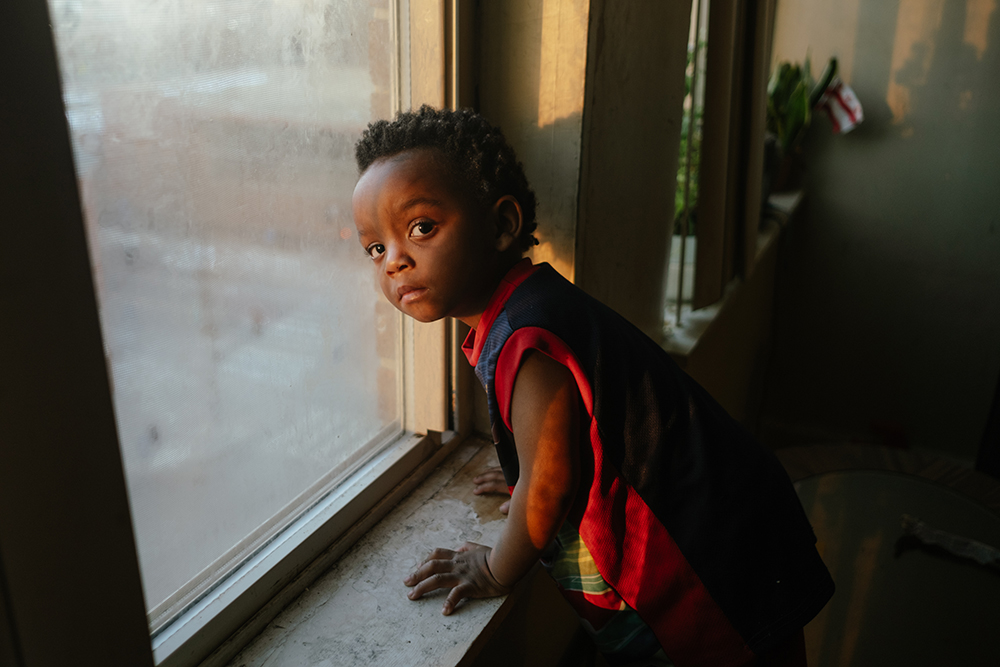
©Jordan Tovin, Nyles in the Windowsill, Nyles pauses from staring out his window after climbing on top of their family’s coffee table on January 26, 2025, in Washington, D.C.
I really appreciate the variety of elements you use to tell stories–particularly the scanned objects that add another layer to the work. How do you select these additional visuals?
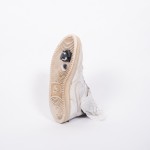
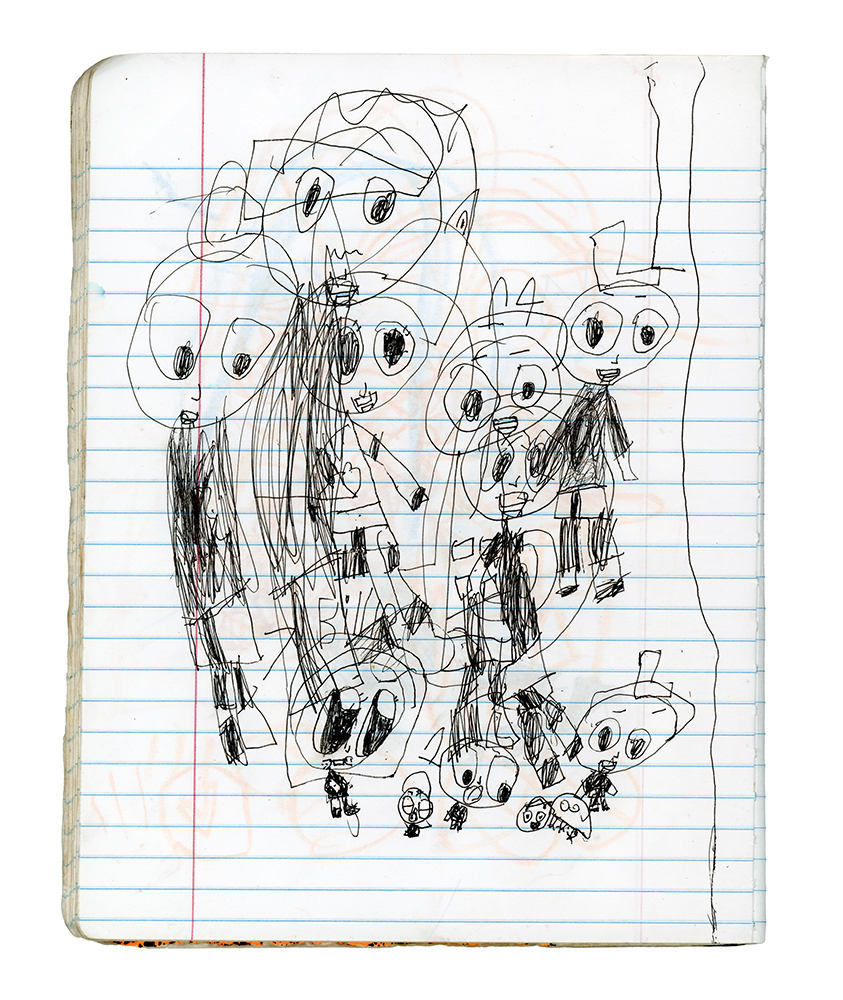
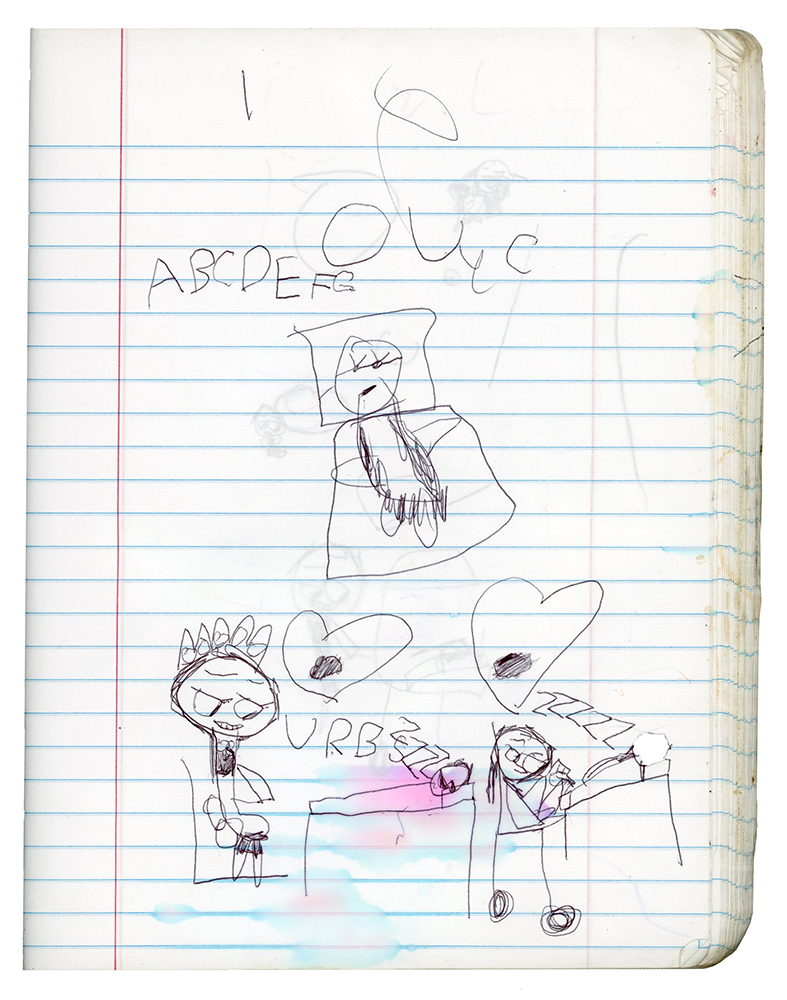
Well thank you—I consider myself very fortunate to have such wonderful mentors, friends, colleagues, and professors who have pushed me since I arrived in Washington. One of the topics we discuss in our photojournalism program at the Corcoran is how photographs have limitations. I think this most often gets played out in the ongoing discussion about people including or omitting captions from their work. As idealistic as it would be for one photograph to do it all, maybe a story, project, work, etc. calls for something more. For A Shaw Diary, of course I wanted to tell this family’s story, but I also wanted them to be involved in telling their own story. How could I not just make pictures that incorporated their perspective, but actually include their perspective outright? In addition to giving the family disposable point and shoot cameras, with the parents’ permission, it felt important to include some of the kids’ drawings that echo scenes that occur both at home and in the wider neighborhood. My choice to incorporate scans stemmed from the need for, above all, perspective, but also nostalgia. For me, at least, I associate a lot of nostalgia with the diaries, journals, sketchbooks, and mementos from my youth. After I decided to use Billie’s composition notebook as a metaphorical vessel for the story, I thought it was important to incorporate various elements that emulated a lot of nostalgia.
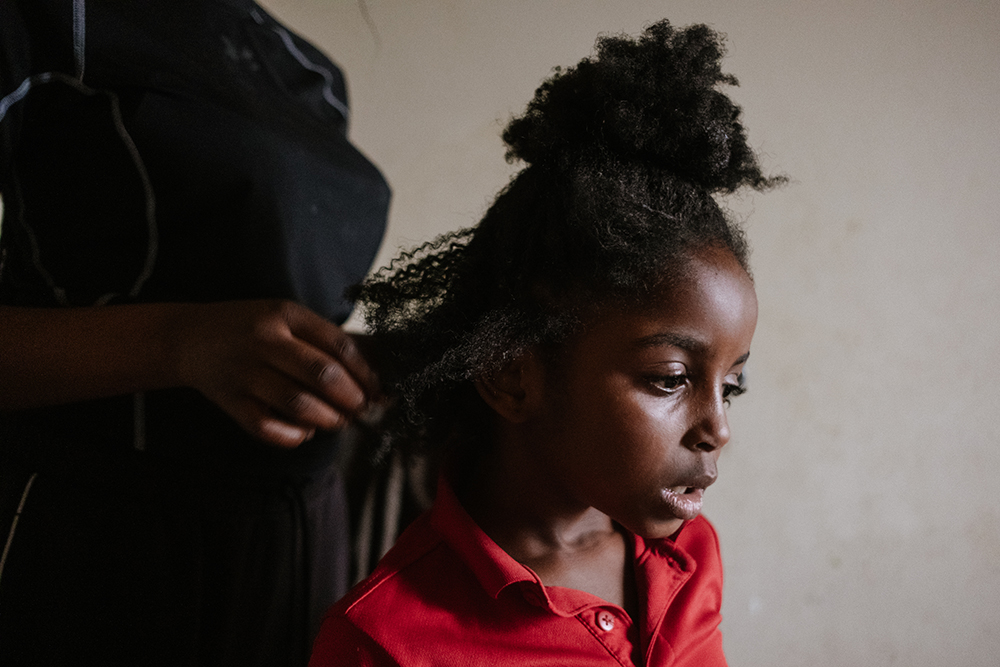
©Jordan Tovin, Party Ready, Nyelle does Billie’s hair after school for her Hello Kitty themed pj slumber party later in the evening on March 28, 2025, in Washington, D.C.
Your blog Field Notes is a fascinating look at how you process what is in front of you. In one post you ask these questions:
How do you stay honest without perpetuating a (negative) stereotype? How do you make engaging pictures while not beautifying someone else’s unfortunate circumstances? Is it even your place to call them unfortunate circumstances just because they deviate from what you consider to be the norm? How do you not make the work that’s exploitative in nature, despite it not being your intention, while not paying or rewarding those in your photographs? How do you avoid risking the ‘integrity’ of the story while also being human?
These are important considerations of documenting others. What conclusions have you arrived at?
Well shoot, I’m not sure I’ve arrived at any finite conclusions. I’m positive that however I answer this question, my answer will change a few months or years from now. I’d say that when it comes to my practice, I try to constantly reevaluate my approach to make sure I’m staying true to my ethics above all else. For me, it goes back to the last question the most often—what’s my role in this as a journalist versus as a human, and do they necessarily need to be different? I’m sorry to answer this question with a question, but there’s no answer I can give that definitively applies to every situation—because it’s always different. I can say that for me, it always becomes more complicated when kids are involved. But I think something that’s unique about not just this question but all of these ethical questions that surround photography is that the only wrong answer to them is not asking them in the first place.
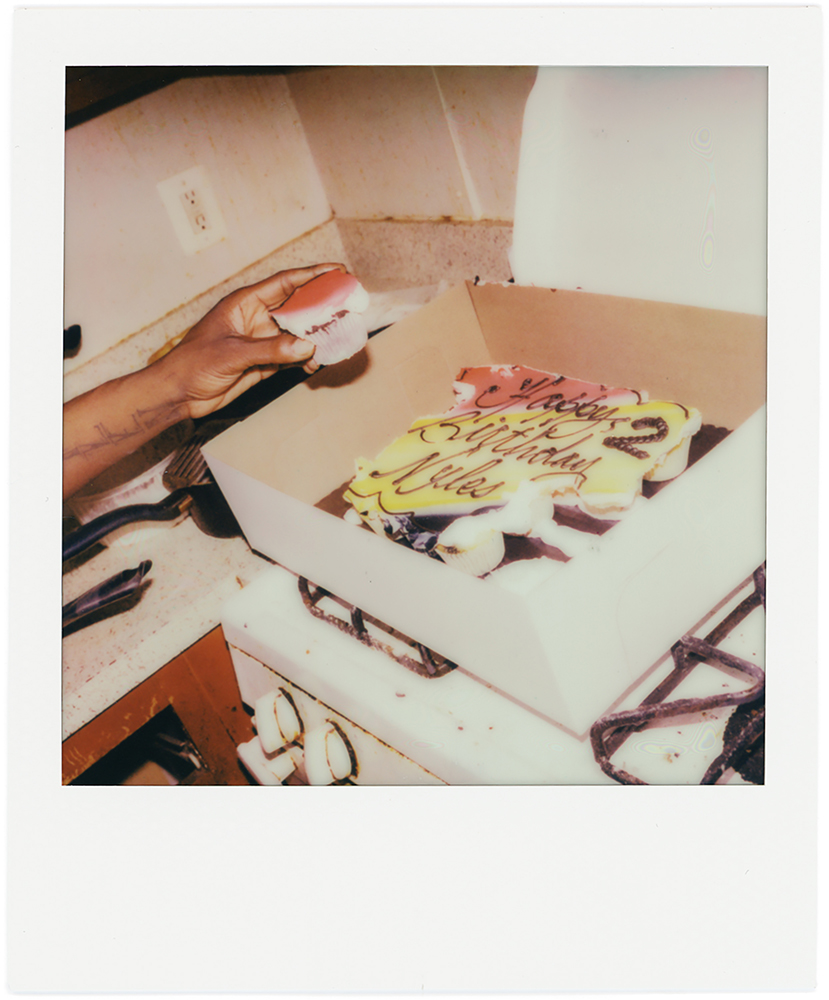
©Jordan Tovin, Birthday Party, Brad grabs a cupcake during Nyles’ birthday celebration in Washington, D.C., on April 13, 2025.
Do you have a mentor or a professor that you would like to acknowledge?
Yes! My granduncle Darrel Joseph for helping me find photography. I’d also love to thank Chris Greenway, May Engelhardt, Jennifer Knox, Michelle Frankfurter, Matt Eich, Astrid Reiken, & Susan Sterner for helping me grow both as a person and a photographer.
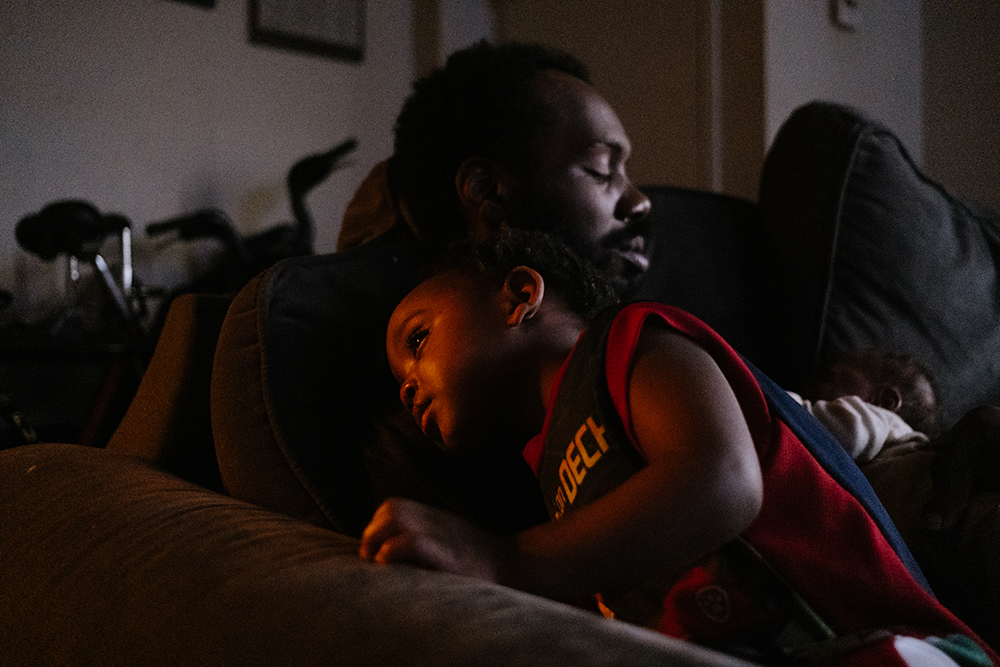
©Jordan Tovin, Upset, Nyles cries on his father’s shoulder after getting upset for not being able to hold his younger brother, Brent, in their apartment on January 26, 2025, in Washington, D.C.
Who or what is inspiring you lately?
I mean, a lot of people inspire me, so that’s a pretty long list. Sophie Crumb, Jess Hilliard, Basquiat, Keliy Anderson-Staley, Bob Dylan, Dan Eldon, Peter Beard, Wendy Ewald, Jay-Z, Allen Ginsberg, Miranda Barnes, Eugene Richards, Alex Webb, Brenda Bazán, Sabrina Santiago, Bob Seger, Ben Brodie, Adali Schell, Denis Dailleux, Tracy Chapman, Jonas Bendiksen, Wolf Böwig, Edward Hopper, Ada Limón, Patrick Bienert, Wendell Berry, Michael Swensen, Matt Mallams, and Joni Mitchell, to name a few.
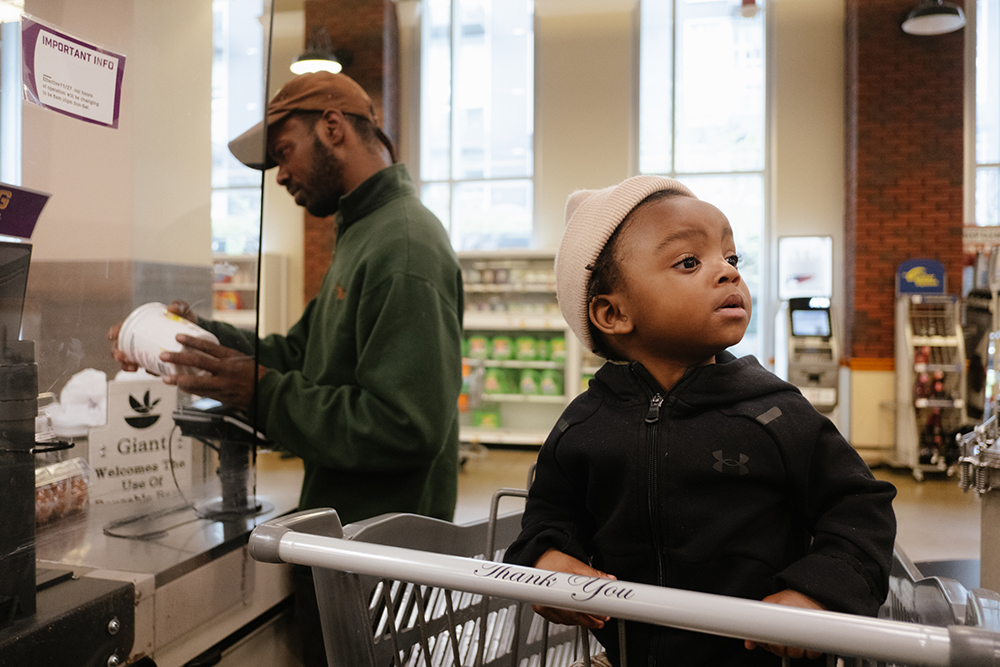
©Jordan Tovin, Shipping, Nyles waits while Brad convinces a Giant employee that eggs and cheese are covered by his food stamps before going back home for Easter dinner on April 20, 2025, in Washington, D.C. Brad was successful.
What would be a dream assignment?
Off the top of my head, the Nathans Hot Dog Eating Contest seems like a super fun assignment to me. I’d also love to make pictures of Timket in Ethiopia one day—it seems like such a joyous event. On a more serious note, Paolo Pellegrin captured what it’s like for some of the injured who were able to leave Gaza and receive medical treatment for the New York Times. And while the content of the work itself is super upsetting, being in that situation is such a unique opportunity… the work was just so impactful.
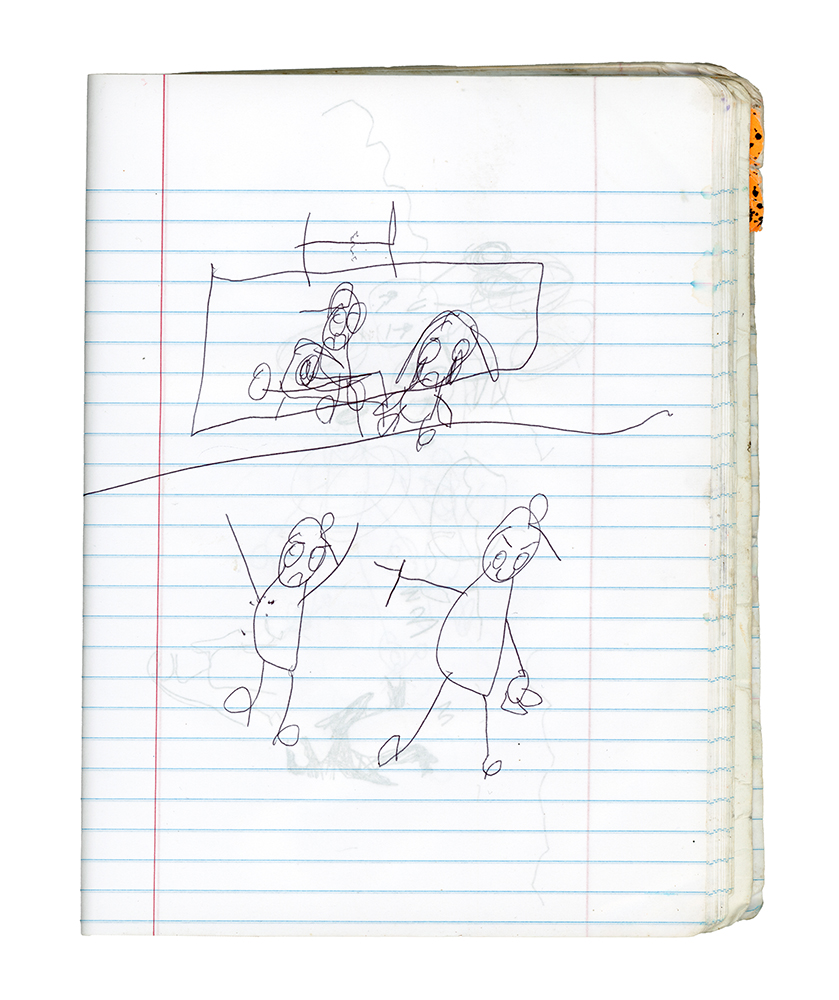
©Jordan Tovin, Braylen Drawing
What does the future hold for you?
Well I was fortunate enough to be selected as a Luther Rice Undergraduate Research Fellow at George Washington University this year, so I’m working with two galleries in D.C. and my faculty mentor, Susan Sterner, in preparation for two exhibitions of this project during the school year.
Once I get that into motion, I will begin working the third issue of Jaywalk, my self-published magazine that I use to publish my documentary work. I’m actually in the process of designing the second issue that will include the project I have been working on in Kentucky while working on Boyd’s Station Project 306.36 this summer. Aside from that, I am excited to continue working on my thesis project that will culminate in a group exhibition at the Corcoran Gallery of Art in April of 2026. That project is all about the grassroots effort to ensure that a local music genre, Go-Go, survives into future generations and overcomes the lasting effects of its past criminalization. I’ve been working with many local artists and organizations in D.C. since August of last year, so I’m very excited for how that project will turn out. In terms of the future future, I hope to be able to make work for as long as I can. I would also like to teach one day, so I imagine I’ll go back to school eventually.
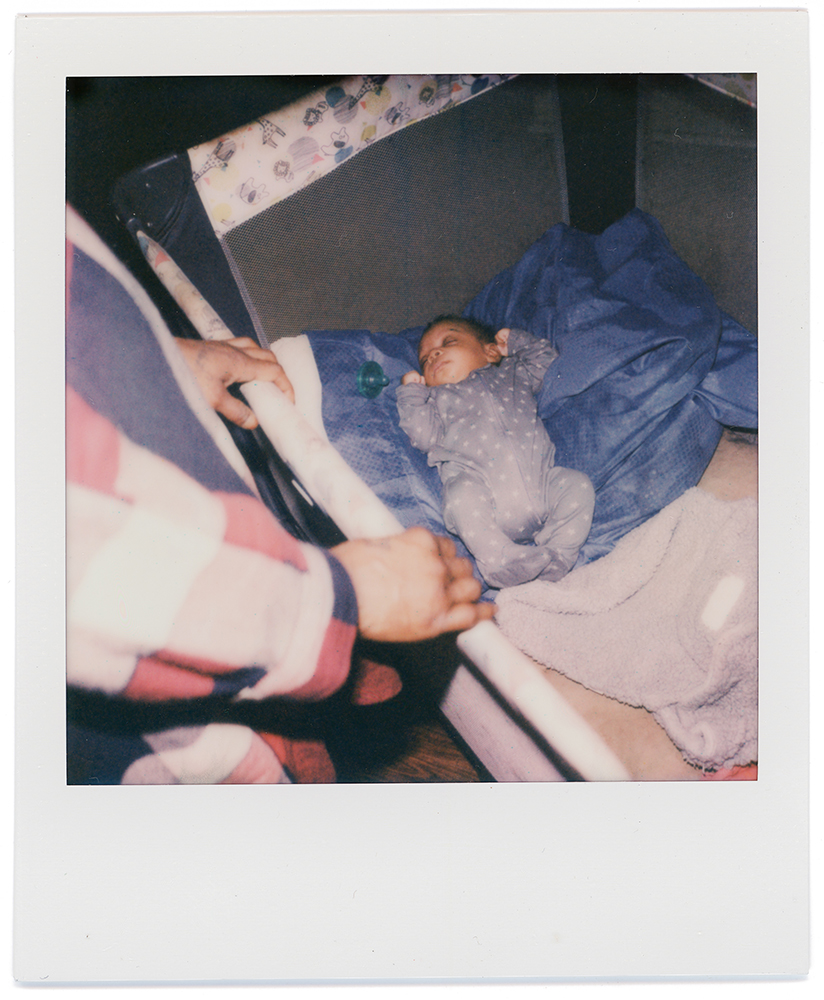
©Jordan Tovin, Brent’s Nap, After changing his diaper, Reece watches her son Brent fall asleep in his crib on February 21, 2025, in Washington, D.C.
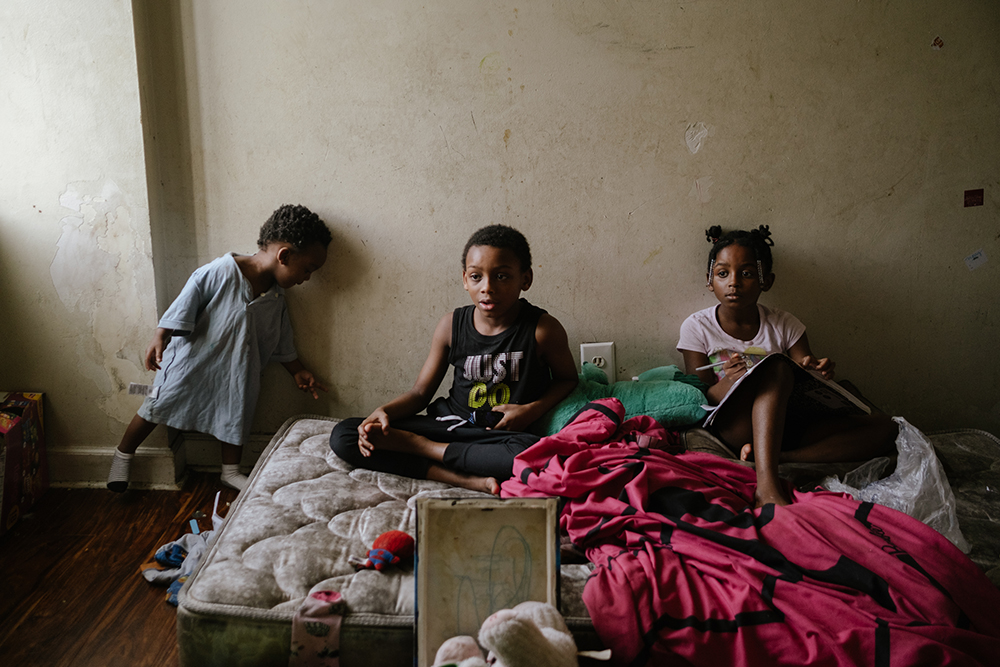
©JordanTovin, Watching YouTube, Nyles, Braylen, and Billie watch Youtube in their bedroom on January 25, 2025, in Washington, D.C.
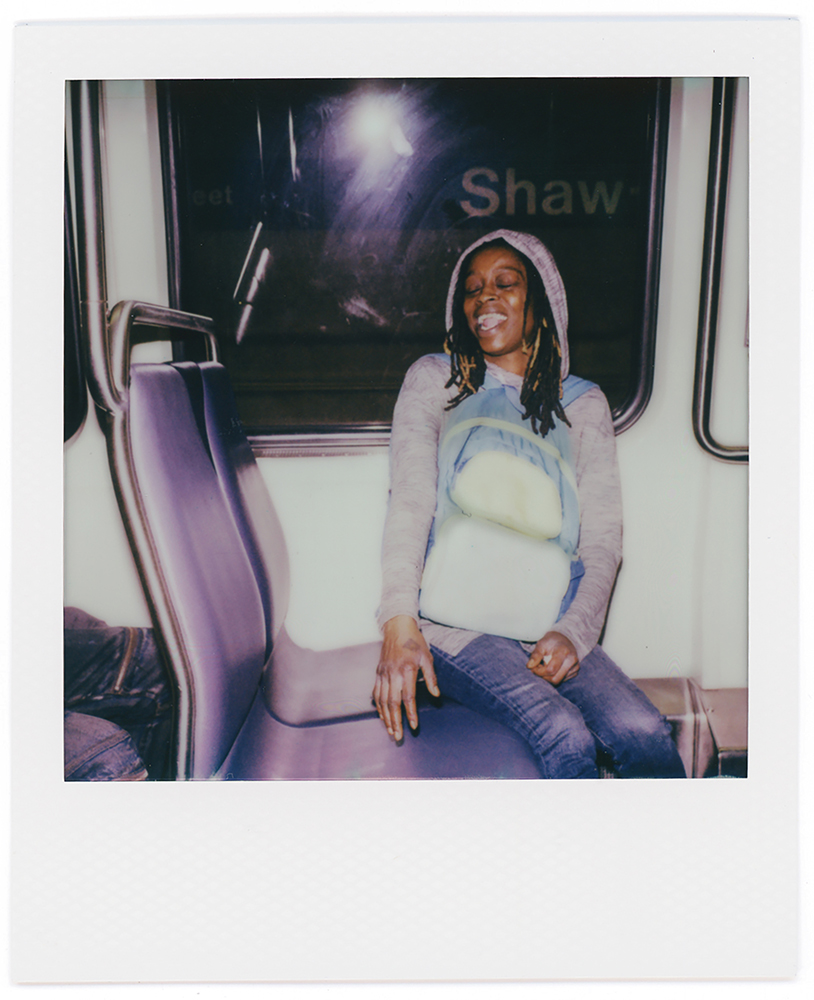
©Jordan Tovin, Train Ride, Reece, Brad, and Nyles take the train back to Mt. Vernon Station after getting weed in Columbia Heights on April 20, 2025, in Washington, D.C.

©Jordan Tovin, Too Liittle Weed, Brad calls his dealer after thinking the balls of K2, a form of synthetic marijuana, he bought seemed too small on April 8, 2025, in Washington, D.C.
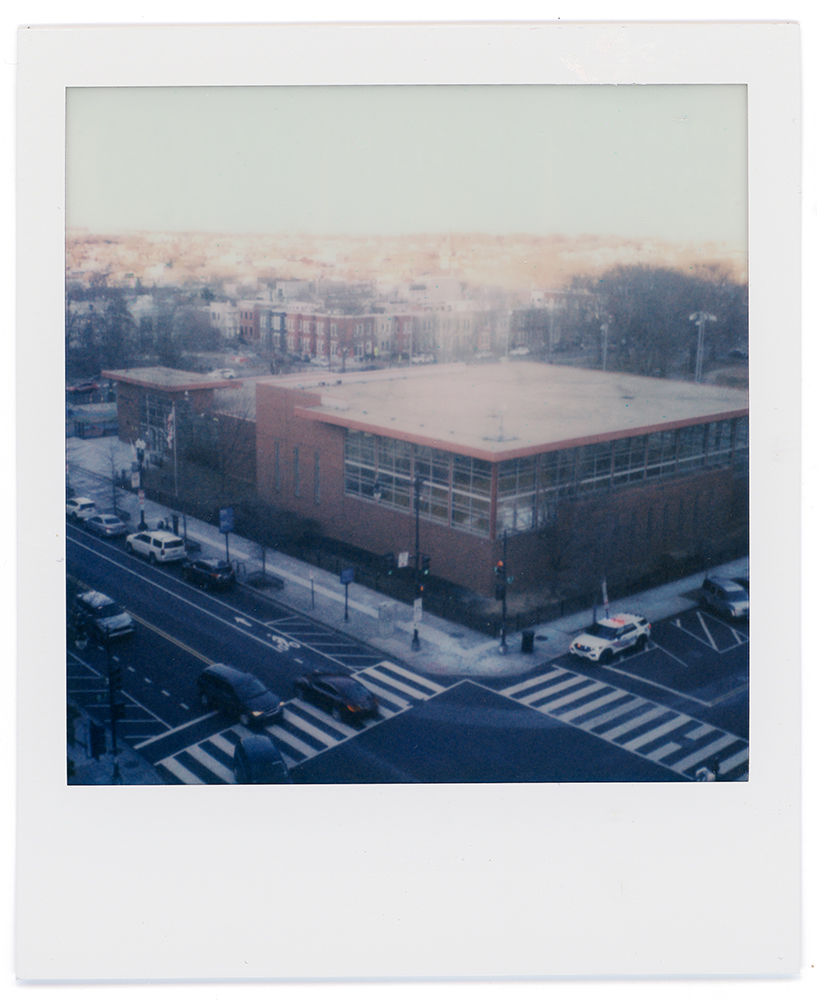
©Jordan Tovin, Shaw View, Tovin_Shaw_View.jpg The view from the family’s apartment overlooks the Kennedy Recreation Center and the Shaw neighborhood. “Why is the cop parked there?” Billie asked. “Mom says it’s because of the guns. Sometimes you hear them go pop pop pop,” she said, answering her own question.
Jordan Tovin (b. 2004, Atlanta, GA) is a documentary photojournalist pursuing a BFA in photojournalism at the Corcoran School of Art and Design in Washington, D.C. His work focuses on everyday experiences that reveal the dynamic and nuanced intersection of history, community, and culture through long-term visual narratives. Since discovering his passion for photography—that began as an outlet for his restlessness during the pandemic—Tovin appreciates the medium’s ability to bring people together, a theme he tries to incorporate into his work.
Instagram: @jordan.tovin
Posts on Lenscratch may not be reproduced without the permission of the Lenscratch staff and the photographer.
Recommended
-

The 2025 Lenscratch Honorable Mention Winner: Erika Nina SuárezJuly 27th, 2025
-
The 2025 Lenscratch Honorable Mention Winner: Montenez LoweryJuly 26th, 2025
-

The 2025 Lenscratch Honorable Mention Winner: Ian Byers-GamberJuly 25th, 2025
-

The 2025 Lenscratch Honorable Mention Winner: Beihua GuoJuly 24th, 2025
-

The 2025 Lenscratch 3rd Place Student Prize Winner: Hannah SchneiderJuly 23rd, 2025