Guggenheim 2026: Chris Aluka Berry
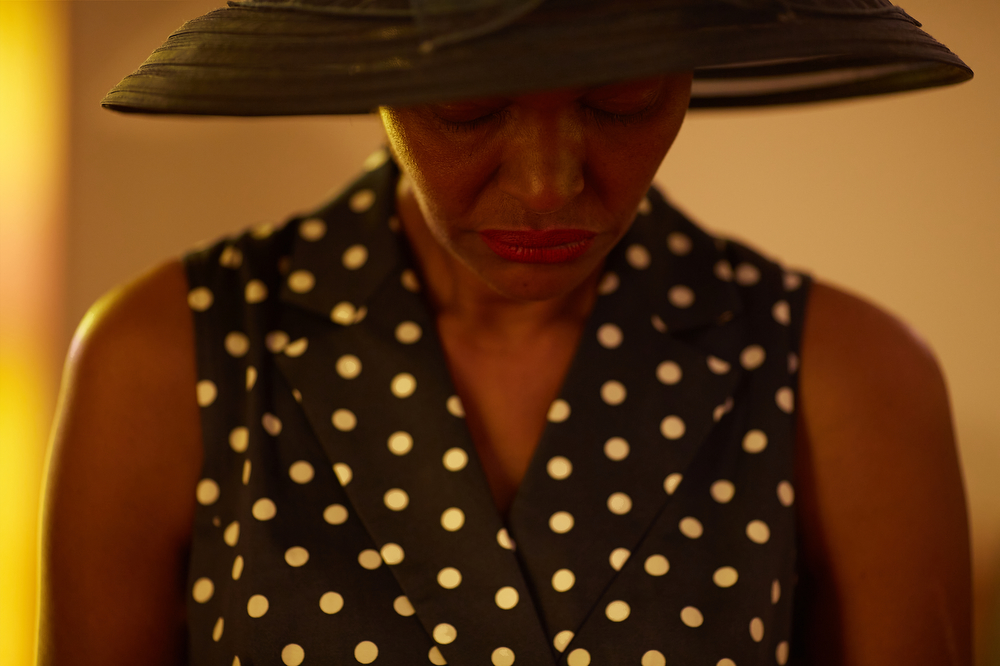
© Chris Aluka Berry. Myra Haynes in prayer at Travis Chapel Methodist Church in Cleveland, GA, October 16, 2016.
Over the next few months, we are featuring the work of many of the 2026 Guggenheim Fellows as a way to celebrate their achievements and understand legacies and projects that have brought them this tremendous recognition.
The Board of Trustees of the John Simon Guggenheim Memorial Foundation announced their appointment of the 101st class of Guggenheim Fellows, including 223 distinguished individuals working across 55 disciplines. Chosen through a rigorous application and peer review process from a pool of nearly 5,000 applicants, the Class of 2026 Guggenheim Fellows was tapped based on both prior career achievement and exceptional promise. As established in 1925 by founder Senator Simon Guggenheim, each Fellow receives a monetary stipend to pursue independent work at the highest level under “the freest possible conditions.”
“Our new class of Guggenheim Fellows is representative of the world’s best thinkers, innovators, and creators in art, science, and scholarship,” said Edward Hirsch, award-winning poet and President of the Guggenheim Foundation. “As the Foundation enters its second century and looks to the future, I feel confident that this new class of 223 individuals will do bold and inspiring work, undaunted by the challenges ahead. We are honored to support their visionary contributions.”
Chris Aluka Berry is a 2026 Guggenheim Fellow. He is a documentary photographer based in the Appalachian Mountains of North Carolina. Raised in the American South by a white mother and a Black father, his upbringing fostered a lasting awareness of race, belonging, and representation—concerns that continue to shape his work and the stories he tells.
Berry’s education began at The State newspaper in Columbia, South Carolina, where he was named South Carolina News Photographer of the Year four times and received the Ambrose Hampton Award for Outstanding Journalism and the Judson Chapman Community Journalism Award. After leaving the paper, he built a freelance career in Atlanta, producing work for Reuters, NPR, The Los Angeles Times, and The New York Times, as well as global corporate clients. His photographs have been exhibited nationally and are held in permanent collections throughout the United States, including the Smithsonian National Museum of African American History and Culture, the Asheville Art Museum, the Museum of Contemporary Art of Georgia, and the High Museum of Art in Atlanta.
What does it feel like to learn you have won a Guggenheim Fellowship?
“It was early in the morning. I was checking my email. And I see it’s from the Guggenheim fellowship. And it says that I got it. My girlfriend’s name is Maia, and I scream – Maia! Maia! That’s all I could say. She thought something bad had happened. I kept screaming her name, and she comes around. I show her the email, but it still didn’t feel real,” says photographer Chris Aluka Berry.
Berry, one of 19 photographers who was selected to be a 2026 Guggenheim fellow, grew up in the American South. He had a Black father, who died when Berry was a teenager, and a white mother. Being biracial, especially in the South, was extremely difficult. But as he struggled to navigate the many complexities of his racial identity, he realized he had a special window into both worlds, an insight he learned to share through his photography.
Berry spent six years photographing Black communities in Appalachia, families who have been ignored by a culture that sees Appalachia as mainly white. This long-term engagement is apparent in every photograph. The images are intimate and revealing. He avoids stereotypes, because the stories he tells are deeply researched and emotionally resonant. He connects with his subjects, producing images that are unexpected, dramatic, loving, sad and joyful.
He is also an engaging storyteller, with an eye and ear for intriguing people and places, perhaps from his days as a photojournalist. One of the many stories that lingers with me involves a 140-year-old structure on a hilltop in Georgia – the Rock Springs Camp Meeting, considered holy ground by the local Black community that gathers there annually for worship, fellowship and rejuvenation.
Berry’s efforts to document and preserve these stories resulted in the book, “Affrilachia: Testimonies,” (University Press of Kentucky, 2024), which focuses on Black communities in Georgia, North Carolina, and Tennessee, especially the elders.
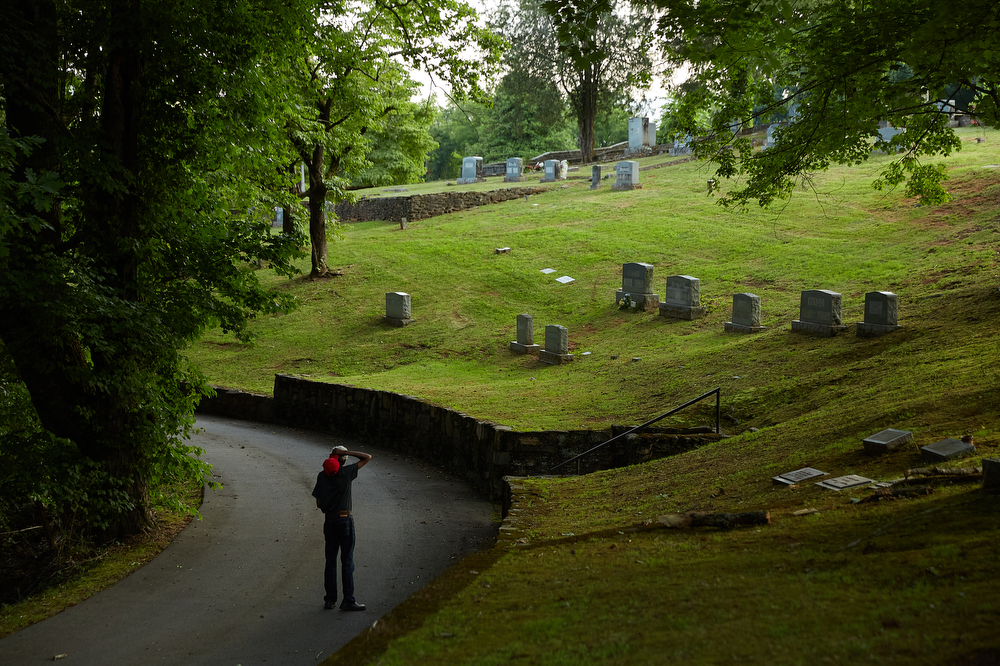
© Chris Aluka Berry. William “Tank” Coward’s daily walk takes him by Keener Cemetery in Sylva, NC. He remembers when the cemetery was surrounded by a Black community. June 25, 2016.
In the interview that follows, Berry speaks passionately about the ways that photography can give voice to the voiceless. It is this passion that kept him going during the many years when the outside world showed little interest in his project.
The Guggenheim describes its fellowship as offering “support to exceptional individuals in pursuit of scholarship in any field of knowledge and creation in any art form, under the freest possible conditions.” What does that mean for Berry? He describes how it has given him new confidence and a spotlight, and how it will enable him to expand his project. He now plans to produce a new body of work – “Affrilachia: Generations” that will include Alabama, South Carolina, North Carolina, West Virginia and Tennessee, and will also explore the world of younger Blacks in Appalachia. He also intends to work on a personal project called “Beyond.”
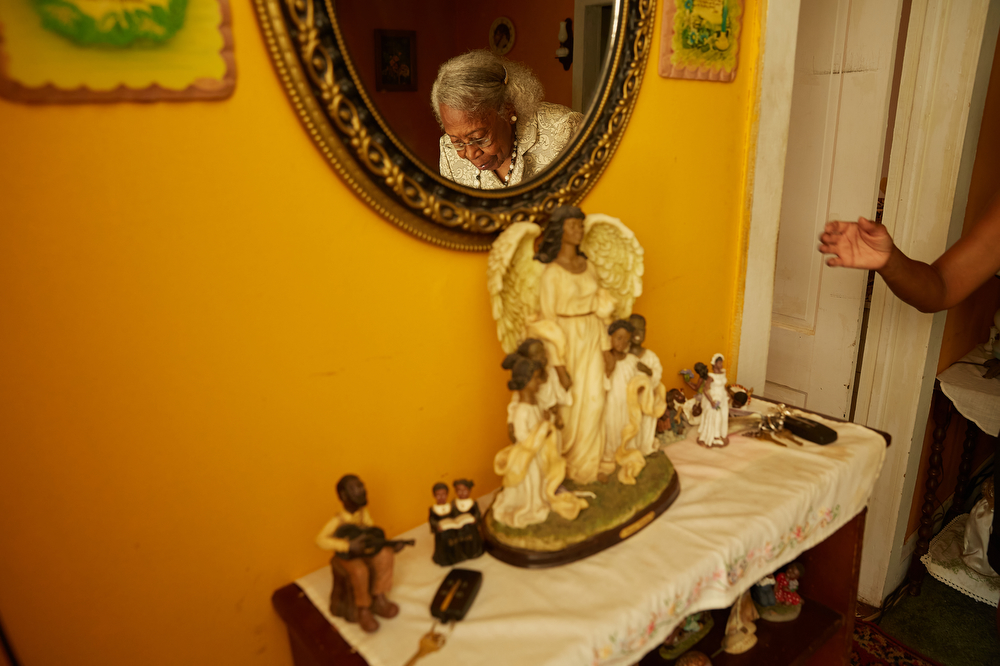
© Chris Aluka Berry. Bessie Smith Carter, 98, leaves home for Mount Zion Baptist Church in the Texana community of Murphy, NC. July 23, 2017.
He also describes his previously unsuccessful attempts to get a Guggenheim Fellowship, and why he thinks his 2026 application was successful. And he generously agreed to share the career narrative he submitted as part of his Guggenheim application in the hopes it may help other photographers who plan to apply. You can find it after the interview.
At the start of the interview, I asked Berry if he preferred to be called Chris or Aluka. He replied, “People call me both. I prefer Aluka. My father made that name up. It’s an acronym that means “All Love. Understanding. Kindness Always.”
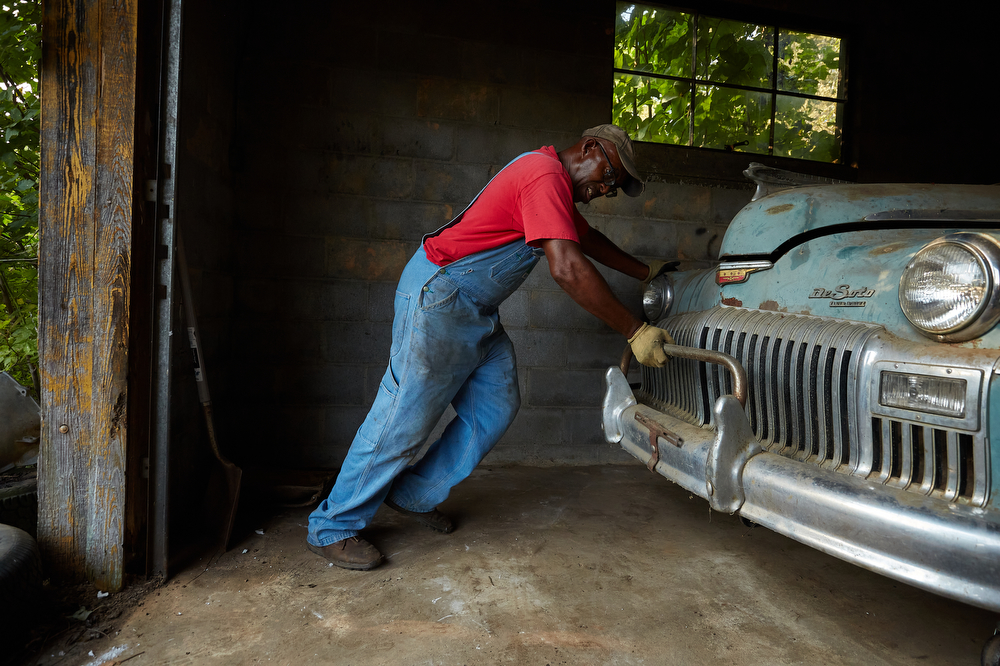
© Chris Aluka Berry. Six months after his father’s death, Timmy Joe Jenkins moves an old DeSoto Coupe that hasn’t run for years while cleaning out his father’s mechanic shop in the Oak Springs community of Cleveland, GA. August 28, 2018.
His first monograph, Affrilachia: Testimonies (University Press of Kentucky, 2024) is an historical artifact that honors, represents, and celebrates the Black people whose history and existence has greatly contributed to the broad tapestry of Appalachia. “Affrilachia,” a term first coined in 1991 by Kentucky poet Frank X Walker, refers to the cultural contributions of African Americans who live in Appalachia, a largely mountainous region stretching over thirteen states from Mississippi to New York. Although Black Americans have greatly influenced the cultural landscape of this region, their stories, trials, and triumphs are often undocumented because Appalachia is perceived as wholly white.
In this book, Berry gives voice to the broad spectrum of African Americans who have lived in the Appalachian region over the centuries. He spent six years in western North Carolina, northeast Georgia,and eastern Tennessee, immersing himself in the communities and lives of Black Appalachians to present the diversity and commonalities of the people in the region. His intimate and revealing photographs capture African Americans in various settings — churches, homes, revival services, family gatherings, and home-going celebrations.
Chris@AlukaStories.com
Instagram: @alukastories
www.alukastorytellingphotography.com
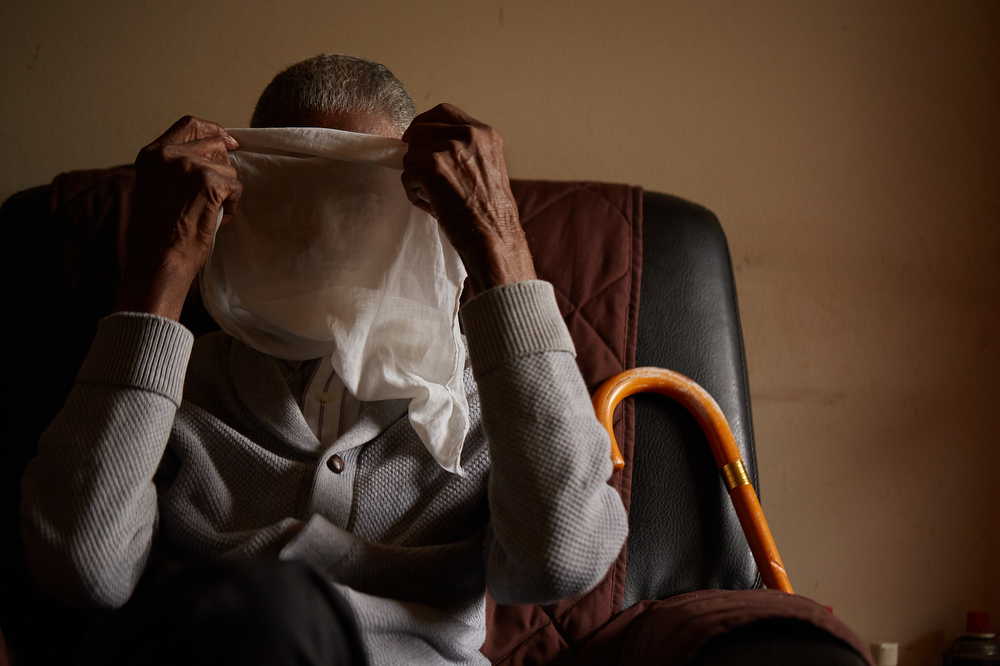
© Chris Aluka Berry. Deacon B.C. Mance, 103, at his home in Toccoa, Georgia. “I made this photo early in the project. It was serendipity, the way I captured the veil over his face in the split second he flung it upward, but it has become an important symbol that reappears in the work. Hidden faces, whether obscured or looking away, represent how Affrilachians have been overlooked in Appalachian, as well as American, narratives,” said Berry. March 4, 2017.
First of all, congratulations on being selected a Guggenheim fellow. That’s extraordinary. How does it feel?
I had applied five times in 10 years. My application got better every year. This year, I knew it was stronger than it had ever been, but I also knew the competition was steep. So I thought I probably wouldn’t get it. It still feels like a dream. There’s still a part of me that doesn’t believe it. And you know, I was talking to another gentleman who got the fellowship this year as well. And I think there are a bunch of us that are still like — did this really happen?
What did receiving a Guggenheim Fellowship mean to you at this stage of your career?
What the Guggenheim means for me at this point in my life is very simple. It means that I am on the right path. It means that my work is respected, that it’s at a high level. You know, I’m not the best photographer in the world. Never will be. But it means that people might look back and say, wow, that Aluka guy was doing something that was meaningful. It was more than just pretty pictures. It had substance.
It also lets me know that documenting Black life in the mountains does matter. Because I almost gave up so many times. I just felt like no one cared about this. So the fact that some folks up in New York said, hey, we care about Black folks in the mountains, we think their stories need to be told – that was important. And in addition to that it also allows me to finish my other project “Beyond,” which is a completely different type of work.
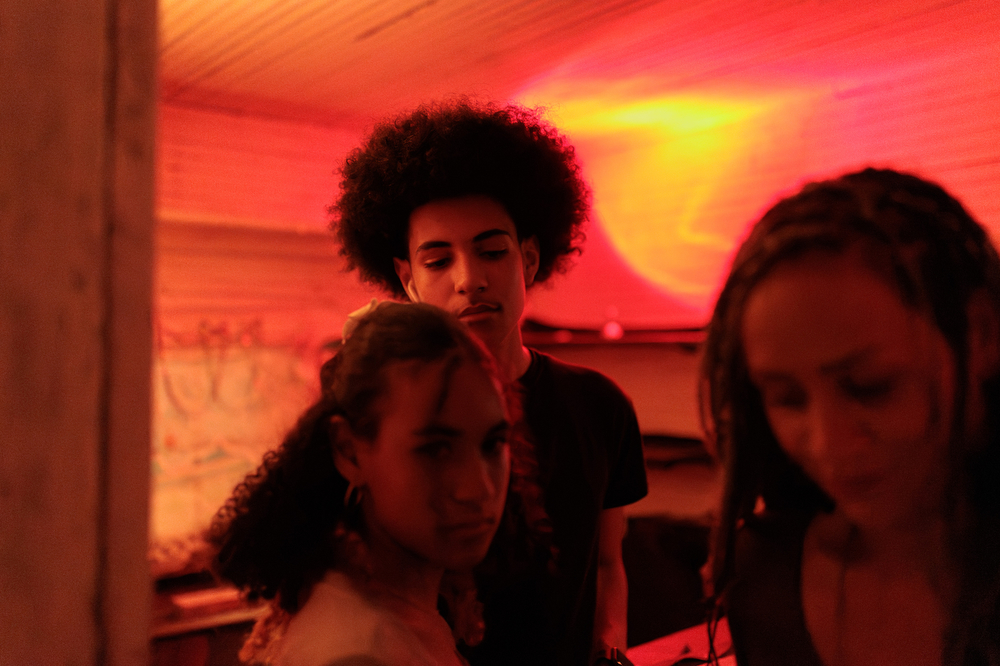
© Chris Akula Berry. “Homecoming After Party” Siblings Leah Moore, 15, and Dominic Moore, 17, attend the Moatstown Homecoming after party with their aunt, Myowne Moats, in the former Moatstown School in Dunmore, West Virginia. The school was the educational hub for the community until integration. August 16, 2025.
You mentioned that this application was a lot stronger than your previous ones. Why was it stronger?
It was a thousand percent stronger. And I’ll tell you why. First, the people who wrote me letters of recommendation – I had the strongest lineup I could ever want. I had Aaron Bryant from the Smithsonian National Museum of African American History and Culture. I had Greg Harris at the High Museum, the premier museum of art in the Southeast. I had Stacy Kranitz, one of the most talented photographers out there right now. And then I had Dr. Bill Turner, the foremost scholar on Black studies in the mountains. So I had two amazing curators from very respected institutions, a highly respected photographer and a wonderful scholar.
In addition to that, the photography has gotten stronger over the years. It’s gotten deeper. I was able to show a larger breadth of my work. Also I don’t know if this made a difference, but in the past, my captions were very short. This time I wrote narrations. I sat down with Maia, and she said, tell me about this photo. And I talked about why I made it, how I made it, and why it was important to this narrative and important to me. And the next thing you know, I had captions that were 200 words long. The whole thing became a lot more personal.
And I was straight up about the fact that I don’t have the big degrees. I’m not a professor at some institution. I was raised poor and somewhat self-taught.
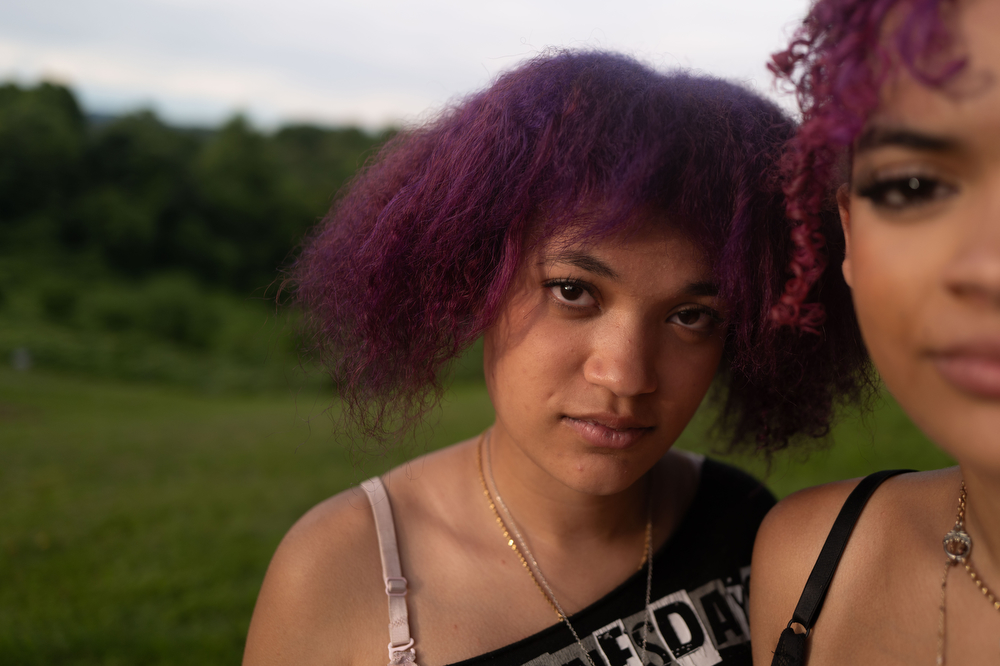
© Chris Aluka Berry. Kaydra Jackson, 20, left and her sister Richiyah Jackson, 16, at the Juneteenth celebration in the Texana community in Murphy, North Carolina, June 20, 2026.
What is your plan for your Guggenheim Fellowship year?
I’m working on “Affrilachia: Generations.” I’m expanding geographically into Alabama, South Carolina and West Virginia. (The first book focused on Georgia, North Carolina, and Tennessee.) And it’s another opportunity to show people the diversity here. I was recently photographing a drag queen in West Virginia. In the first book, there weren’t any queer or gay folks represented.
The Guggenheim giving me money means I will no longer have to sleep in my car, as I did sometime on the first book. I would camp out in people’s yards. I’d eat sardines, so I didn’t have to pay for meals. Now I have enough money to pay for meals. I have enough money to get a hotel room if I need to. I have enough money to turn down a commercial job so I can do what I love.
I’m also working on “Beyond,” which was formerly entitled “Fear, Death and the Other Side.” This is a personal project I’ve been working on for more than 20 years which is very heavily symbolic and metaphorical. And what’s beautiful is that when I go to photograph these rivers where the Africans and Spaniards came through in the 1500s, I will be shooting for Affrilachia, but at the same time, I’ll be shooting for “Beyond,” because water is a thread that goes throughout “Beyond.” But you’ll look at these two photos and you will not think they were made in the same place. In one, I’m telling other people’s stories. In the other, I’m expressing myself, my fears and my hopes.
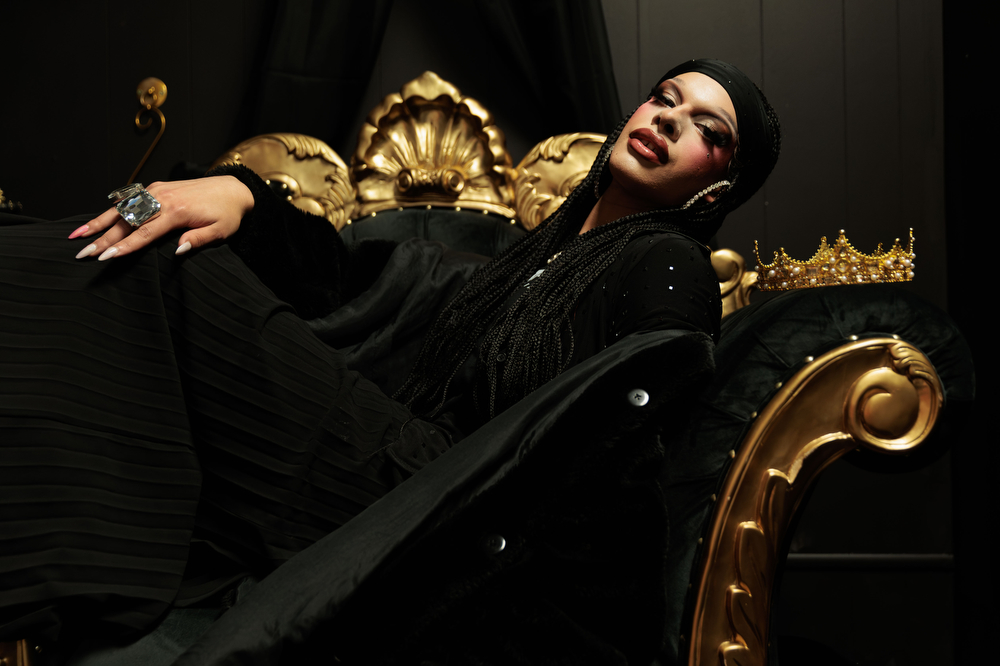
© Chris Aluka Berry. Drag queen, Nyshyne Frieson, of Huntington, WV poses for photos during a Hip Hop event in Charleston, WV. May 2, 2026.
What sort of impact do you see the Guggenheim having on your career and how it evolves?
I feel like, all right, you got the Guggenheim. That’s great. But what are you going to do with it? You know, do you just get the Guggenheim, and that’s like the best thing you ever do in your whole life? Or do I take this opportunity to start to make things happen, and make my work grow to the next level?
I’m almost 49 years old. And a question I’ll ask photographers or any kind of artists. Have you made your best work already? Because I think about different musicians and all types of artists. A lot of times they made their best work when they were 30 years old. Well I want to make my best work when I’m 70 years old.
I live here in these mountains. And your goal is to get to the top of the mountain. But then when you get to that top of the mountain and you look out, all you see is mountains for as far as the eye can see. Publishing a book was a mountain. Going way back, getting on the staff of the newspaper was a mountain. All these things were little mountains. The Guggenheim is a big mountain. But now I’m looking out, and all I see is all these new mountains. I see people who have gotten Guggenheim’s, and then they’ve shown their work at the MoMA, the Whitney, in Europe and in solo exhibitions. And I ask myself: Is that the path that I want to be on?
It seems like if you don’t keep pushing, those people, the curators, aren’t going to just come to you. So it feels like you’ve got to keep pushing. But you know I read the Tao Te Ching almost every day, and there’s this one verse that says, when you know when enough is enough, then you realize you are truly rich. And so I’ve been asking myself, is the Guggenheim enough? Is that enough to satisfy my ego? I hate ego. I fight against it. But the fact of the matter is we all have one, you know. So I’ve decided that I’m not going to worry about MoMA. I’d loved to have my work there one day, but I’m not going to worry about any of those things. This is enough – for me to have this money to go do my work. So I’m just going to take this time and do my work.
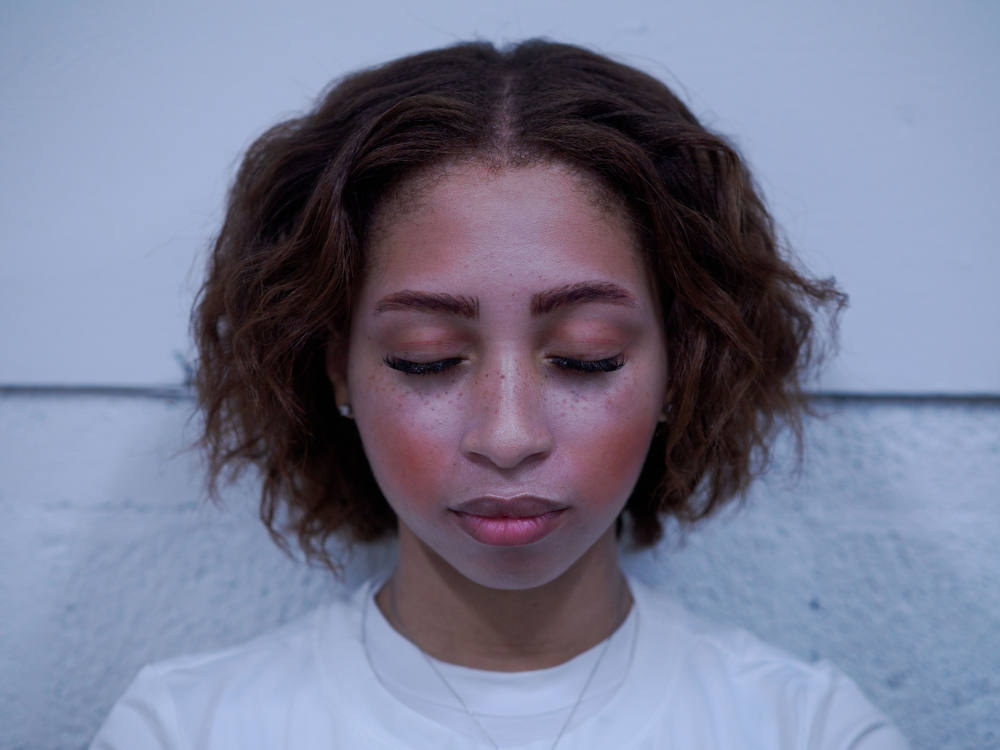
© Chris Aluka Berry. Amara Leak, 25, closes her eyes in prayer at the Juneteenth celebration in the Texana community of Murphy, NC. June 20, 2026.
How did you sustain your practice at a time when there wasn’t a lot of interest in your project from editors you pitched? How did you climb those mountains?
It sounds cliche. I wish I had a better way to say it. I think it all just comes down to trying to feed your soul. Right? And feed your body. I got to keep food on the table. I got to keep a roof over my head. So I’ve got to do all kinds of work that does that. And maybe that’s doing Santa Claus photography at the country club. You know, maybe it’s something that doesn’t really have a whole lot of meaning to my heart or to my spirit.
When I was at the State newspaper, it was considered a really great newspaper. We were very visual, did a lot of things. And I freelanced for seven years before I got hired full time. When I got hired full time, that was a big step. And then the highest award you could get was South Carolina News Photographer of the Year. I didn’t think I could ever get it. And then one year I got it. And in the time I was at that newspaper, I was photographer of the year four times and runner up three times. So those were all little mountaintops. But then I got laid off from the newspaper. I got laid off on a Friday. On Monday, I was on the front page of the New York Times. Above the fold.
Still for the longest time, I had to focus on feeding my body. And my soul started to dry up, especially as far as my creative side. I play a lot of music and my music keeps me going creatively. But Affrilachia is what has kept my soul alive especially those times I wanted to give up. I care about black history. I care about representation. I care about racial stereotypes. I want to do my small part as a photographer. And this is the thing that’s been keeping me going.
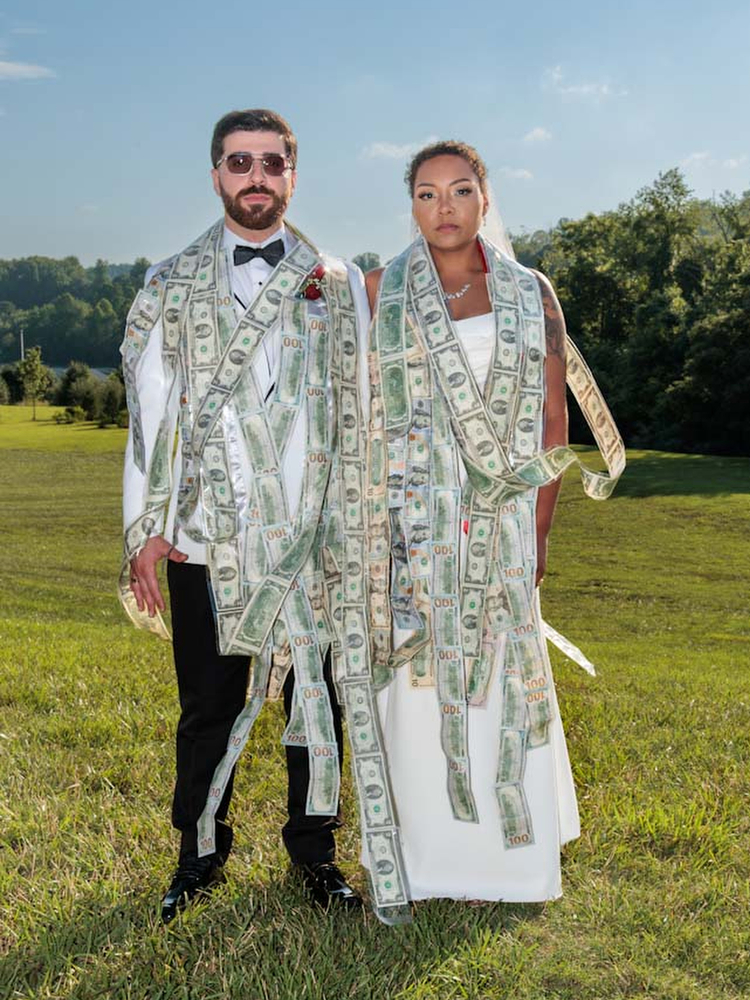
© Chris Aluka Berry. Recently married, Sinan and Alona Gonul after Takı Töreni, the Turkish tradition of friends and family pinning money onto the bride and groom’s sashes to provide them with an immediate financial nest egg. Jonesborough, TN, June 11, 2026.
One of the things you talk about is that you could have been hardened by the racism but you learned to navigate the world with empathy and resilience. How did that influence your approach to this project.
My father at a young age taught me that manners will take you where money won’t. And I photographed billionaires and millionaires and people who didn’t know where they were going to sleep. And I treated them all with respect.
As a child, I tried to be a peacemaker. I wish I looked more Black, because I’m so tired of having to tell people that my dad’s Black, and a lot of people don’t believe me. They want to think I’m Italian or Latino or whatever. I can’t tell you how many times I’ve been around a bunch of white people here in the South, and they tell me some racist story because they think I’m white. I’ve heard some craziness. And then same on the Black side. I’ll be hanging out with some Black people, when a white person comes around. Everybody acts like everything’s cool. And then that white person will walk away, and they’ll be like – man, you know, that so and so. So I get to hear both sides. And I feel like I can really walk the line and I can understand why this person has these feelings and why that person has those feelings. It gives me a greater understanding of maybe how I can bring those people together.
You know, my dad was a drug dealer and had been incarcerated. His name was Frank Berry, and he died when I was 17. A lot of people called him doc because he was a good talker and a very intelligent man. My dad was a dark-skinned Black man. He kind of looked like Chuck Berry. He was born in the 30s. He experienced all kinds of terrible stuff. My mom tells me about the KKK burning a cross in the yard, and all these things my dad had to deal with. What happened to my dad was what happened to a lot of Black men. Black people just couldn’t get the kinds of jobs that white people could get. And then when crack cocaine started in the late 70s and 80s, my dad fell into that trap. And it’s a trap. If my dad hadn’t gotten addicted to those drugs, it would have turned out a lot better for him. But he taught me a lot of things. If I could bring one person back from the dead, it would be my father, just to spend the day with him, because there’s so many stories I don’t know. He was so much more than a pimp and a drug dealer.
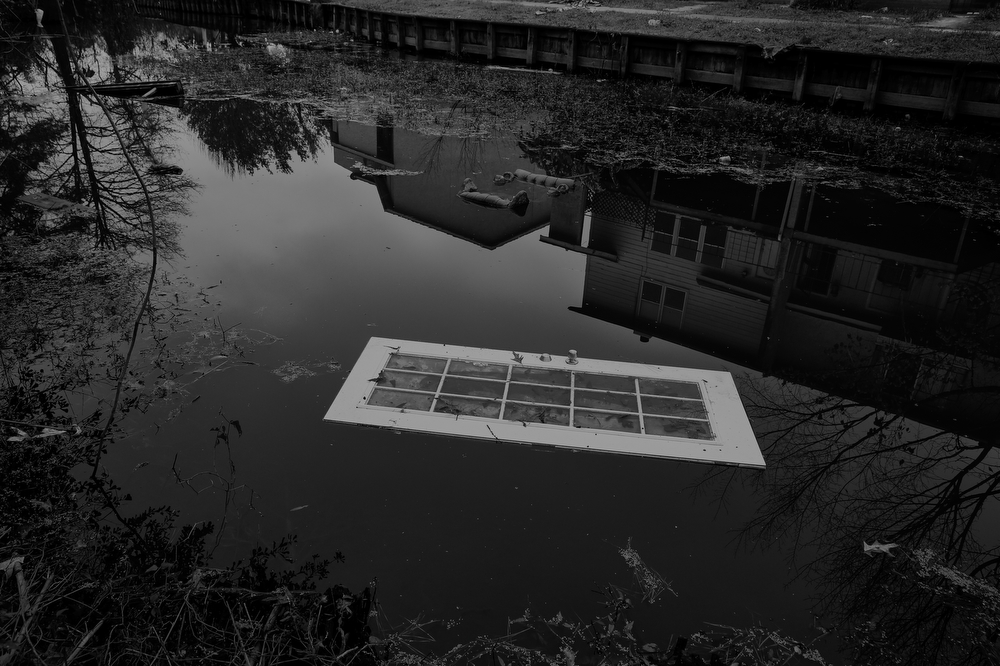
© Chris Aluka Berry. “Portal,” Houston, Texas, December 29, 2017
Talk about your evolution as a photographer.
The hardest thing for me Is making photos that don’t look like they should go in a newspaper. I’m not interested in the decisive moment. I’m really interested in those nuanced moments that happened before or after the decisive moment. In the first book, I shot through curtains and veils and different things to represent that black communities have been in these mountains for hundreds of years, but they’ve been underrepresented. And I will shoot people where the focus is on the trees. And in my mind, the trees represent the ancestors, they represent all the stories that we’ll never know.
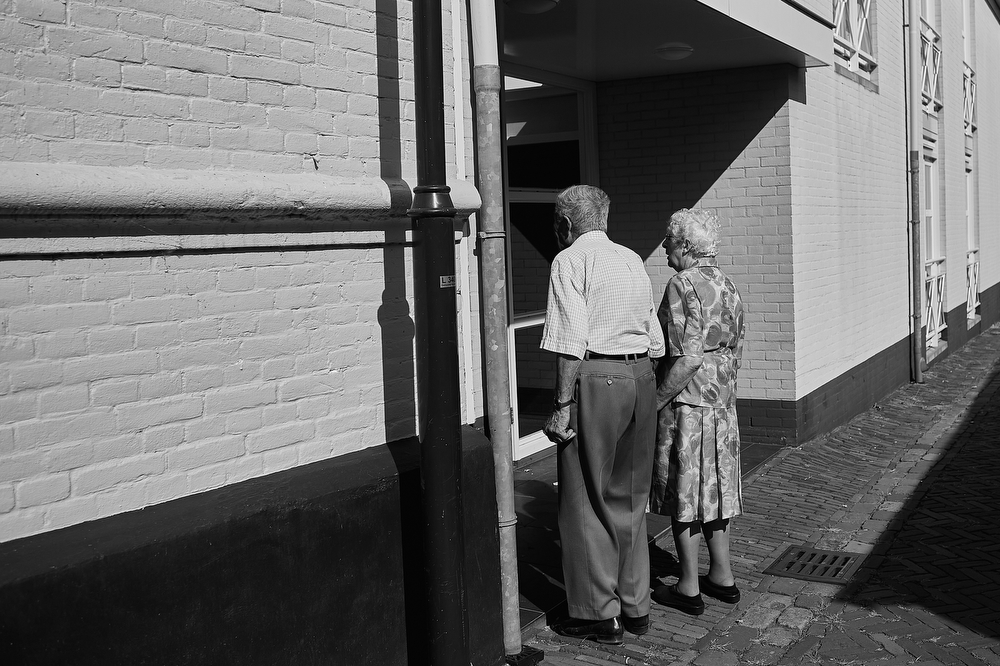
© Chris Aluka Berry. “Heaven’s Gate,” Muiden, Netherlands, September 3, 2019
How did you get your book published?
I had been working on this project for several years. It’s been a dream of mine to publish a book ever since I saw Robert Frank’s “The Americans.” That was the beginning of my photographic education back in 1999, when my assignments editor Chuck Dye gave me a copy of “The Americans.”
There was a woman named Marie Cochran, who started the Affrilachian Artist Project. Marie was instrumental in introducing me to different communities. And Marie knew the folks at University of Kentucky and knew that they were looking for books that represented diversity in the mountains. She sent them to my website. They fell in love with the photos. They didn’t have anything like this in their roster. And so they reached out to me and said, we want to publish a book. We’ve almost sold the first 2000 copies, and we’re about to do a reprint.
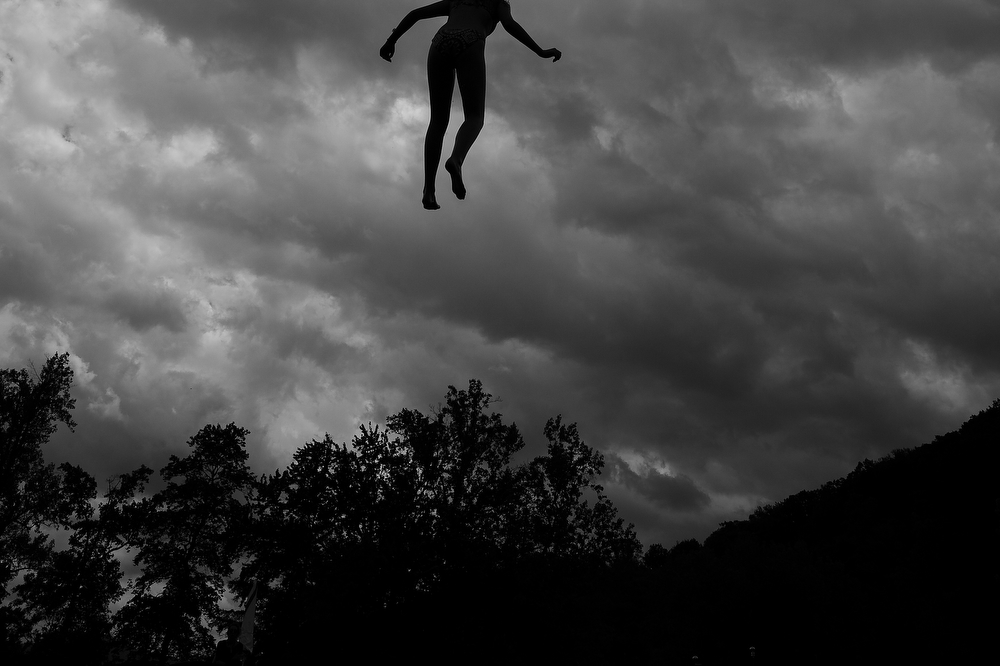
© Chris Aluka Berry. “Rapture,” Black Mountain, North Carolina, May 14, 2016.
Who were photographers who influenced you. You’ve mentioned Robert Frank and “The Americans.”
Robert Frank had something to say. That’s what stood out to me the most about the book “The Americans.” I want my work to have something to say. And I also was heavily influenced by Eugene Richards. What stood out to me was the rawness and intimacy of his photos and his use of available light. And then I really got turned on by Alex Webb. I really love Webb’s use of color and composition.
When you look at my work, no one is going to say, oh, I see Eugene Richards there, or I see Alex Webb or Robert Frank. But it’s their work that is going through my head. I also really love Rebecca Webb’s work. When I look at Alex Webb’s work, my eyes are satisfied. When I look at her work, my heart is satisfied. Her work makes me feel something. I can’t really explain it.
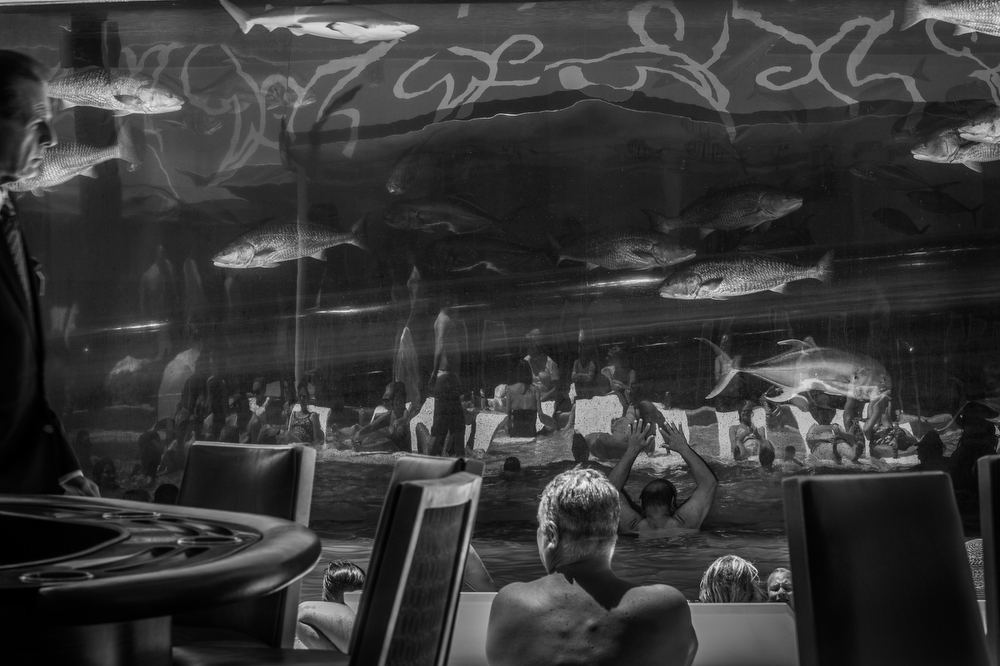
© Chris Aluka Berry. “Purgatory,” Las Vegas, NV, June 12, 2016.”
What has been the impact of your first book?
To see somebody look at the work and start crying, and hug me and say, “Man, I feel like I’m being seen.” That’s been the most beautiful thing. I was talking to this woman the other day, a black woman in Tennessee. And she said she had been at the Smithsonian African American Museum, and she had seen Affrilachia for sale. And she said she felt seen.
That’s why I’m doing the second book. I never planned on doing the second Affrilachia book. My plan was that my next book was going to be “Beyond.” And then I wanted to do something on strong women in Appalachia across all races. But then I started doing these book talks and people would come up to me afterwards and say, have you gone to this place? Did you know about that place? People started inviting me to their communities. And then I realized – there’s a lot more histories to be told.
I was talking to a mentor of mine, Ann Miller Woodford. I told her I climbed this mountain and I feel like I have to climb this next mountain. I’ve got this pressure on me. Because of the Guggenheim, I’ve got this light on me right now. That’s why you’re interviewing me. Are you going to come back and interview me two years from now? Who knows. But this time next year there will be a whole new class of Guggenheim fellows. So I feel like I need to strike while the iron is hot. But she told me – you climbed this mountain. Enjoy being on the being on the top for a minute. And on this next mountain, she said, you don’t have to run up the mountain. You can take a nice easy pace. You can even sit down every once in a while and just take a breath of fresh air. And so I’m trying to remind myself of that.
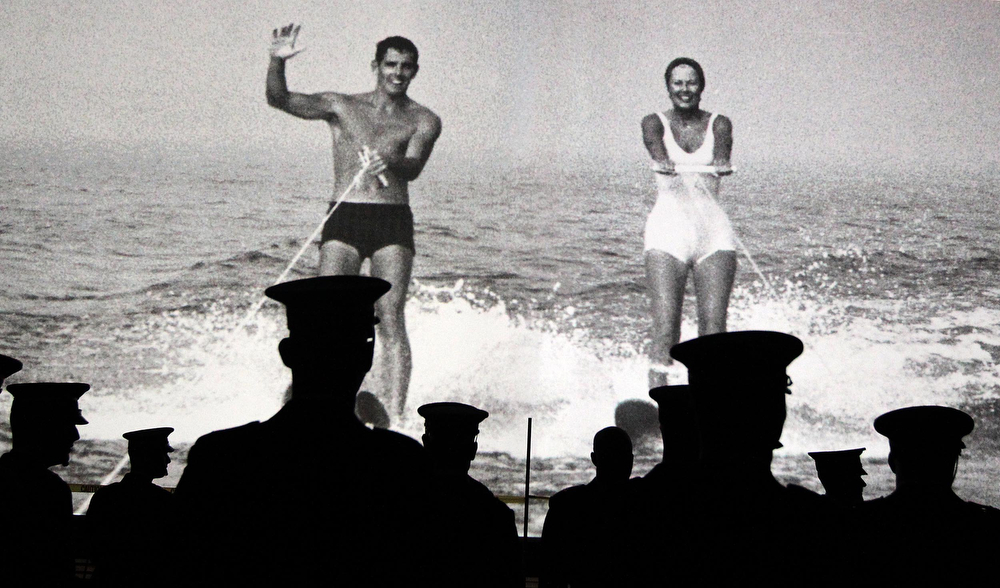
© Chris Aluka Berry. “Hello from the Otherside,” Columbia, South Carolina, September 21, 2012.
CAREER NARRATIVE by Chris Aluka Berry: Essay submitted as part of his Guggenheim Fellowship application. He is generously sharing it with Lenscratch readers because he thought it might be helpful for future applicants.
I was raised in the American South by a Black father and a white mother, learning early on what it meant to live between worlds. Overt racism and the complexities of identity weren’t abstractions. They were daily realities. As a child I remember my mother telling me about the Klan burning a cross in our yard. I know what it feels like to be punched in the face because of how I look, and to fight back when my brother was attacked for looking Black. These moments did not harden me. Instead, they taught me how necessary it is to navigate those divides with understanding and resilience. They made me sensitive to questions of race, representation, and erasure, which shape the decisions I make with my camera. Although my father died when I was a teenager, he left me with a lesson that has guided my life and work: “Manners will take you where money won’t.” Respect, humility, and trust—earned slowly—are the foundation of my practice. They allow me to enter lives and linger, to witness the gestures, glances, and everyday intimacies that reveal our shared humanity.
I often describe myself as self-taught, but that phrase softens the truth. We were poor. I couldn’t afford college or risk the weight of student loans. I bought a camera instead, devoured every book I could find, and learned to see through trial, failure, and persistence. My real education began in 1999, freelancing for The State newspaper in Columbia, South Carolina. I shadowed ten staff photographers, asked endless questions, and absorbed everything I could in the darkroom, studio and field. My assignments editor, Chuck Dye, handed me Robert Frank’s The Americans. His advice was simple: “Get the shots we need for the paper, then shoot for yourself.” The frames I made after I got the safe shots for the paper, those were the ones that mattered most to me. They helped me find my voice and became the foundation for the work I pursue today.
In 2005, I became a staff photographer. I fell in love with long-form essays, sometimes writing the story alongside the image. I pursued stories that showed communities bound together by survival—prisons, drug rehabs, and migrant labor camps. I wanted the viewer to cross that invisible line between observer and participant, to recognize the humanity that binds us all, across class, color, and circumstance.
Recognition followed. I was named South Carolina News Photographer of the Year four
times (2007, 2008, 2010, 2012), runner-up twice (2009, 2011), Judson Chapman Community
Journalism Award (2008), Ambrose Hampton Journalism Award (2007). In 2013, I was selected
for the inaugural New York Times Lens Blog Portfolio Review, and that cracked the door to
something new. I moved to Atlanta and started freelancing for The New York Times, Reuters, and others. My work appeared in Time, NPR, The Atlantic, Wired, and beyond. Editors appreciated my eye, but more than that, they trusted my ability to capture intimacy with an empathic heart.
Still, I wanted something deeper. I needed a project to sink into, one that wasn’t dictated by the news cycle or a quick turnaround. In 2015, I found it. I began exploring Black history in the Appalachian Mountains and what I discovered shocked me. Appalachia, as it’s portrayed, is white. White faces. White voices. White history. But dig a little deeper, and you find another truth: Africans were there with the Spaniards in the 16th century, long before the Scots-Irish settlers moved into the region. Much later, after Emancipation, Black communities came to represent 10% of the region’s population. Now, fewer than 3% remain. And in many cases, they’ve vanished, almost without a trace.
As a documentary photographer, I work with what exists, what I can see and feel in real
time. I could not reconstruct what is gone, but I could document what remained—the elders who stayed, the churches that survived, the stories that have been passed down. For over six years,across western North Carolina, northern Georgia, and eastern Tennessee, I photographed these communities and collected oral histories through video and audio. I asked: What sustains these lives? What binds them to land, to memory, and to one another? Why have they been excluded from broader narratives of Appalachia and America?
In 2016, the We Shall Overcome Fund, through the Highlander Research and Education
Center, supported this work. It culminated in Affrilachia: Testimonies, published by University Press of Kentucky in 2024—the first documentary photography book to honor Black
Appalachian communities. The book combines more than 100 photographs with poetry by Kelly
Elaine Navies and historical essays by Dr. Maia Surdam. It is both a corrective and a
preservation, revealing a multiracial Appalachia too often ignored.
The response has been profound. People wept, embraced me, thanked me for making
their lives visible. Exhibitions, lectures and interviews at universities, museums, libraries, radio stations and historical societies have affirmed the necessity of this work. Affrilachia has opened new doors, as well. In 2025, I became chief videographer for Dr. Bill Turner’s Kentucky-centered documentary, Black Women of Appalachia, and worked with the nonprofit Black in Appalachia in West Virginia, recording oral histories and preserving community memory.Importantly, back in April 2022, I relocated to Marshall, North Carolina, to be closer to the work. Living in the mountains that I document allows me to be present more often, to build deeper trust, and to witness life as it unfolds. From here, I will work on Affrilachia: Testimonies, Volume II, a monograph that University of Georgia Press is eager to publish.
The urgency of this work cannot be overstated. We live in a climate where Black history is under siege—challenged in classrooms, banned from libraries, threatened in public memory. My photographs push back against that erasure. They show that Black history is not marginal to Appalachia, nor to America. They open space for dialogue about the diversity of both Black and Appalachian culture. They create the possibility for understanding, reconciliation, and recognition.
Posts on Lenscratch may not be reproduced without the permission of the Lenscratch staff and the photographer.
Recommended
-
Guggenheim 2026: Chris Aluka BerryOctober 7th, 2026
-
The 2026 Center Awards: Callanan Excellence in Teaching Award: Andrew PattesonSeptember 18th, 2026
-
The 2026 CENTER Awards: The Me and Eve Award: Peter TehSeptember 17th, 2026
-
The 2026 Center Awards: ENVIRONMENTAL AWARD: Volodymyr VoznyySeptember 16th, 2026
-
The 2026 Center Awards: Personal Award: Ville VarumoSeptember 14th, 2026