Guggenheim 2026: Jonathan Michael Castillo
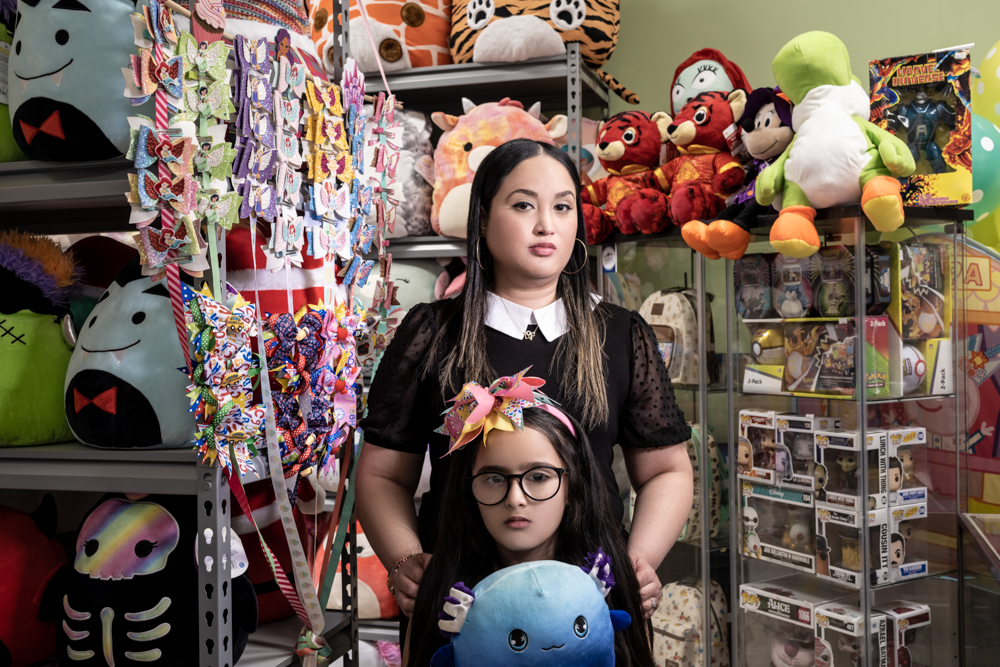
©Jonathan Michael Castillo, Erika and Debby, A Plus Items and More, Chicago (Kilbourn Park) – 2022, from Immigrant Owned
Over the next few months, we are featuring the work of many of the 2026 Guggenheim Fellows as a way to celebrate their achievements and understand legacies and projects that have brought them this tremendous recognition.
The Board of Trustees of the John Simon Guggenheim Memorial Foundation announced their appointment of the 101st class of Guggenheim Fellows, including 223 distinguished individuals working across 55 disciplines. Chosen through a rigorous application and peer review process from a pool of nearly 5,000 applicants, the Class of 2026 Guggenheim Fellows was tapped based on both prior career achievement and exceptional promise. As established in 1925 by founder Senator Simon Guggenheim, each Fellow receives a monetary stipend to pursue independent work at the highest level under “the freest possible conditions.”
“Our new class of Guggenheim Fellows is representative of the world’s best thinkers, innovators, and creators in art, science, and scholarship,” said Edward Hirsch, award-winning poet and President of the Guggenheim Foundation. “As the Foundation enters its second century and looks to the future, I feel confident that this new class of 223 individuals will do bold and inspiring work, undaunted by the challenges ahead. We are honored to support their visionary contributions.”
In the modest details of Jonathan Michael Castillo’s project Immigrant Owned, quiet pride and hard work shine through. His portraits pay tribute to the immigrant owners of small businesses whose dreams and labor built the shops that are embedded in the urban landscape. He situates the owners within their exuberant displays, handiwork and orderly spaces, where they appear enshrined. Castillo’s project casts light on the diversity and cultural textures that make Chicago—and America—vibrant.
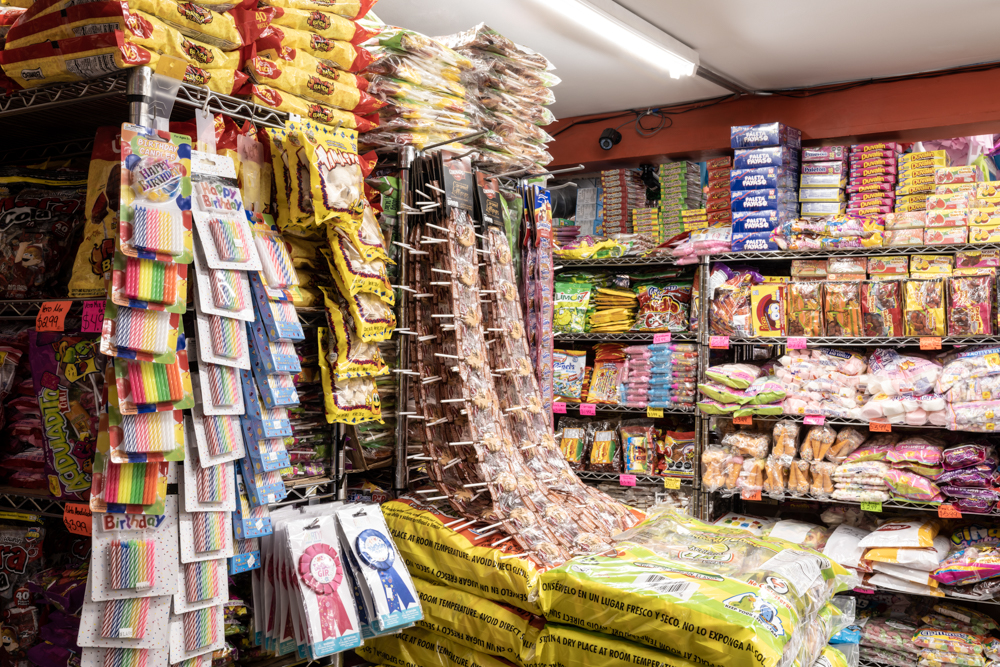
©Jonathan Michael Castillo, Todo de Mexico Minimarket, Chicago (Little Village) – 2021, from Immigrant Owned
Immigrant Owned
America has always been a place of promise and potential. People from all over the world for generations have immigrated to this country for a fresh start and a better future for their children. Small businesses and an entrepreneurial spirit have long been part of the integral fabric of thriving American communities. Working at a small business or starting one, is a very common entry point into the American economy and jobs market for immigrants who are new to the United States. It’s easy to take for granted the local hair salon, convenience store, laundromat, or hardware store in your neighborhood, many of which are owned or operated by immigrants. My interest is in building relationships that explore the roots of immigrant business, the local and specific spaces that give character to any neighborhood. These places are where people carve out space for themselves, their families, and new immigrants on their own terms. Through portraiture and photographs of interior spaces, my work renders an essential and often overlooked part of the American economy. Many people think that immigrants come to the United States to “take”, but the reality is they contribute to our economy by creating jobs and paying taxes. Immigrants take enterprising risks and are the embodiment of the American dream. My work is a reminder that immigrant owned businesses are as American as it gets.
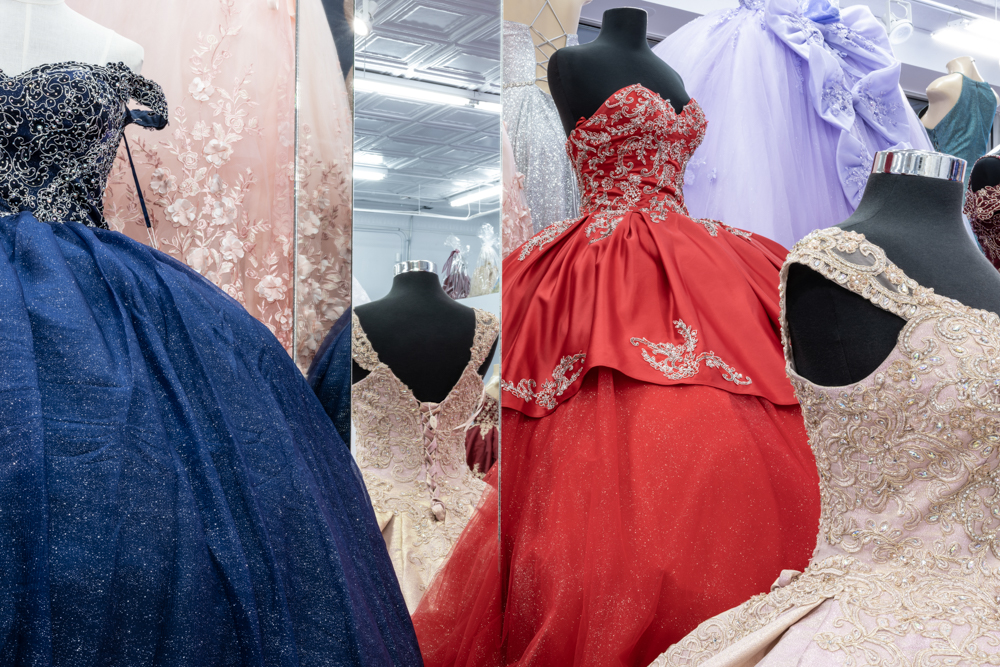
©Jonathan Michael Castillo, Jaime Kids Fashion, Chicago (Little Village) – 2021, from Immigrant Owned
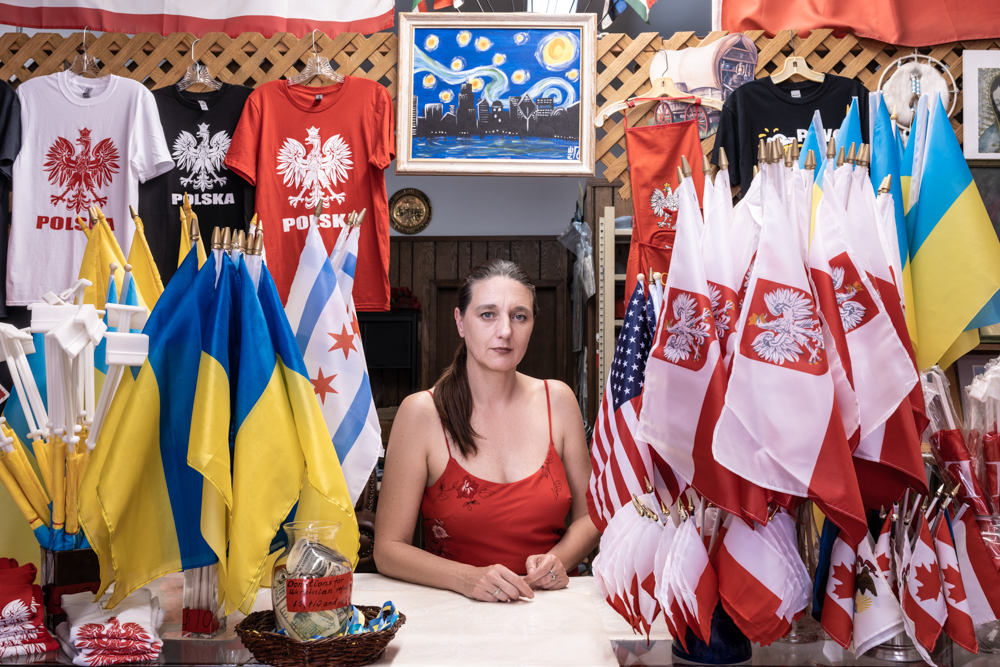
©Jonathan Michael Castillo, Joanna, Polish Vibes Gift Gallery, Chicago (Belmont Central) – 2022, from Immigrant Owned
Thank you Jonathan for agreeing to answer a few questions about this award.
What did receiving a Guggenheim Fellowship mean to you at this stage of your career?
JMC: Receiving a Guggenheim Fellowship scrambled my self-assessment of my career stage. I’m middle age now at 43, but age doesn’t translate cleanly into career stage. I only finished my MFA in 2019 and have been balancing my personal practice against freelance work and teaching as an adjunct since graduation. I’ve never had a major museum solo show and I don’t have gallery representation.
All my friends will tell you how I hustle and apply to as many opportunities as I can find. It’s a lot of work but anyone who’s trying to build a career in the arts knows what this is like. Scouring tons of open calls, being on tons of mailing lists, keeping all your application materials handy and ready so you can apply to 30, 40, 50 or more things a year. If you’ve done a good job, you might be able to expect 4 to 5 things to come through in a year.
I have made a lot of work, particularly since moving to Chicago in 2017 for graduate school. I have also exhibited a lot locally. My most significant accomplishments pre-Guggenheim have to be my public art commissions for the city of Chicago, and the Diane Dammeyer Fellowship post grad school. At the beginning of 2026, I still considered myself as “early career” or “emerging” and I was honestly completely shocked when I found out I had been selected.
When I applied in late 2025, I spent a lot of time preparing as solid an application as I could muster, but I was really just applying to get the experience of what the application process involves, knowing that people spend many years applying for this award. Getting a Guggenheim Fellowship means I’m surely no longer “early career” or “emerging,” so that means it’s moved me to the next stage of my career even if I have no idea what that looks like yet. I did definitely break into tears when I got the news though.
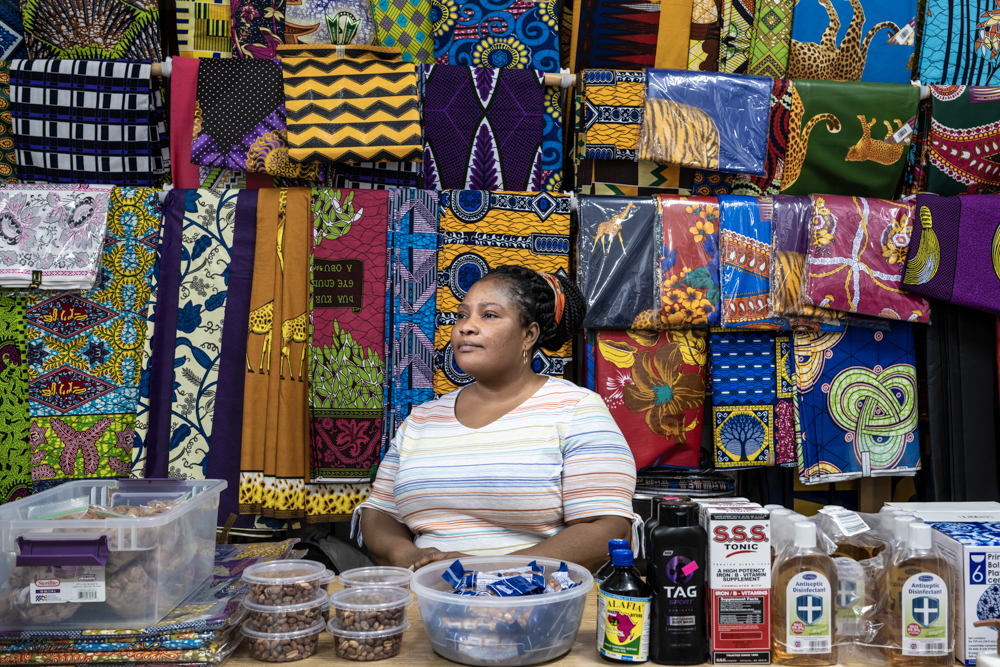
©Jonathan Michael Castillo, Dora, Kaneshie Supermarket, Chicago (Uptown) – 2022, from Immigrant Owned
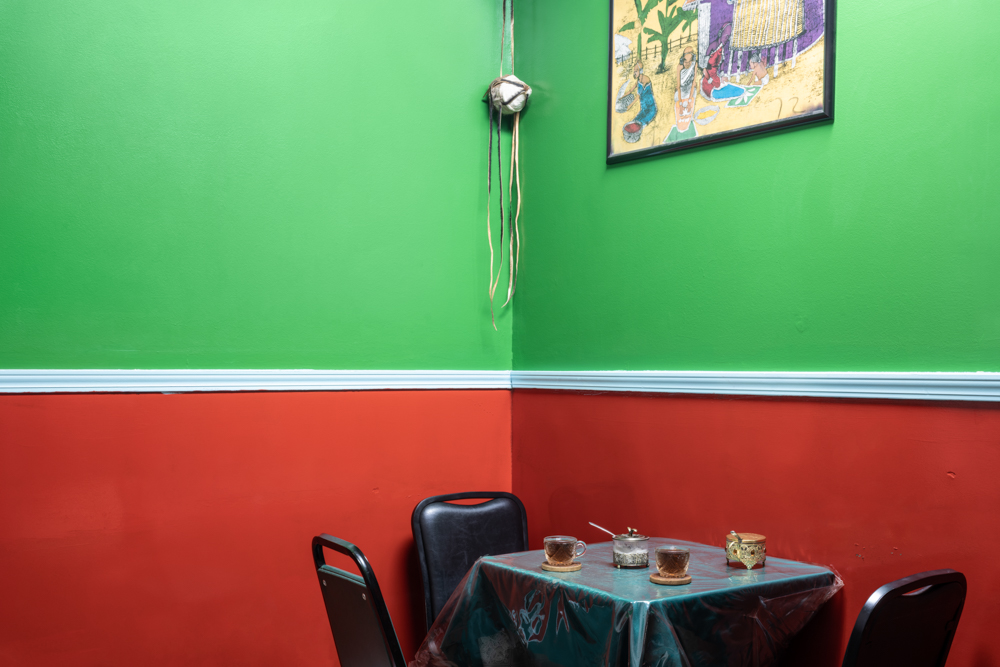
©Jonathan Michael Castillo, Dora, Tesfa Ethiopian Cuisine, Chicago (Uptown) – 2022, from Immigrant Owned
Did the fellowship validate something you already knew about your work, or did it change how you see your practice?
JMC: The fellowship hasn’t changed the work I’m making or the plans I have to make new work. It did really make me feel like my work is being appreciated more broadly than I imagined it was. I do think that the fellowship has given me some more confidence about what is possible for my practice.
There are so many photographers who I look up to who have received a fellowship in prior years. To now be listed alongside them on the foundation’s website is taking some getting used to. I’ve had a lot of success in Chicago but I’m originally from Los Angeles and I’ve long wanted to get back there to make some new work and get some of my work exhibited there. All of that feels much more doable now. The fellowship is helping me accomplish those plans and develop new goals.
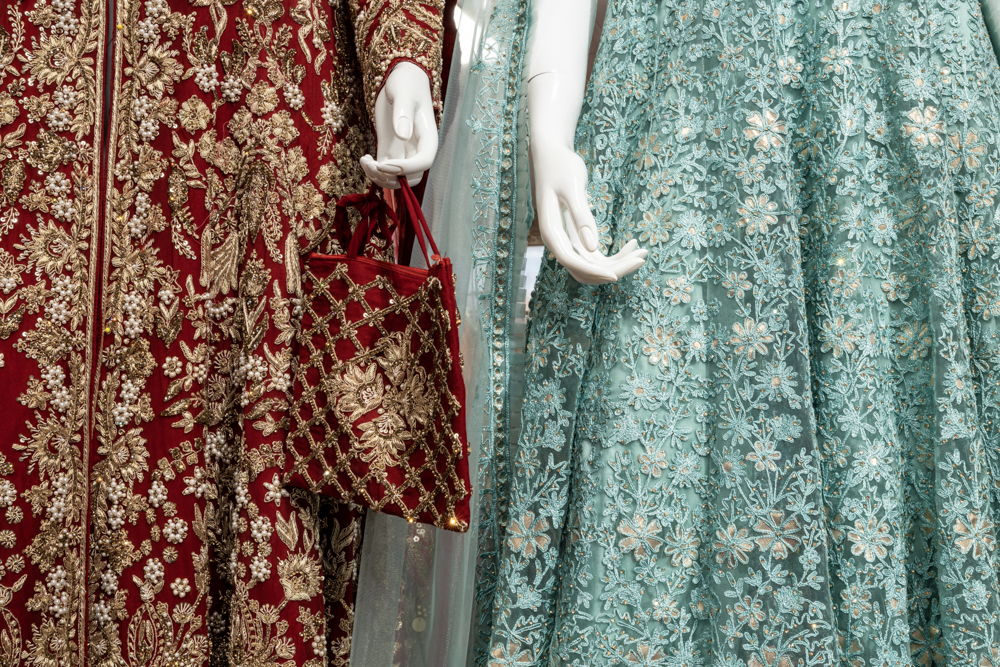
©Jonathan Michael Castillo, Chandni Exclusive, Chicago (Little India) – 2021, from Immigrant Owned
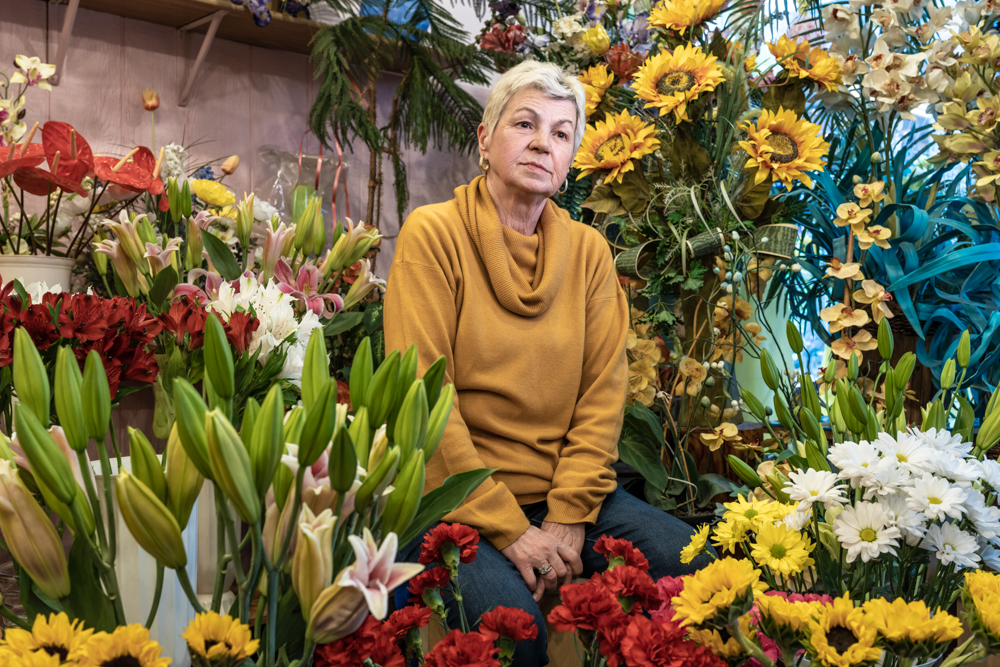
©Jonathan Michael Castillo, Stanislawa, Szarotka Flowers, Chicago (Avondale) – 2022. from Immigrant Owned
How are you using the freedom or access the fellowship provided?
JMC: Most of the people who get a Guggenheim are already full time-professors at a university somewhere when they become fellows. About two thirds of fellows have a full-time academic appointment before they become Guggenheim Fellows. In those cases, someone with a full-time teaching job will often take a sabbatical and have support from their institution. They have healthcare and keep either their full salary or a partial salary while they take a year off from teaching to pursue their work.
I don’t think it’s simple enough for me to say that the fellowship has suddenly given me more freedom. When I applied for the fellowship, I was an adjunct faculty a Columbia College Chicago, typically teaching one class and freelancing to make ends meet. It was working but it was always a hustle. Right around the same time I got the fellowship, my wife lost her job and we lost our healthcare. As someone with a chronic illness, getting healthcare this year has been a top priority.
Even before I knew I was getting the fellowship, I was actively applying for full-time teaching positions. I ended up getting a full-time visiting assistant professor position at Indiana University Bloomington this summer, which I’m extremely grateful for. I do now have great healthcare and the position really compliments my goals for my fellowship work. I had planned to make work outside of Chicago for my fellowship term in other cities and towns. Being based in southern Indiana has made it easier to access new places. I don’t really have the ability to take off a year from teaching and freelance to focus solely on making new photographs but I am well-situated to make some good progress this year and in coming years thanks to the support of the Guggenheim Fellowship.
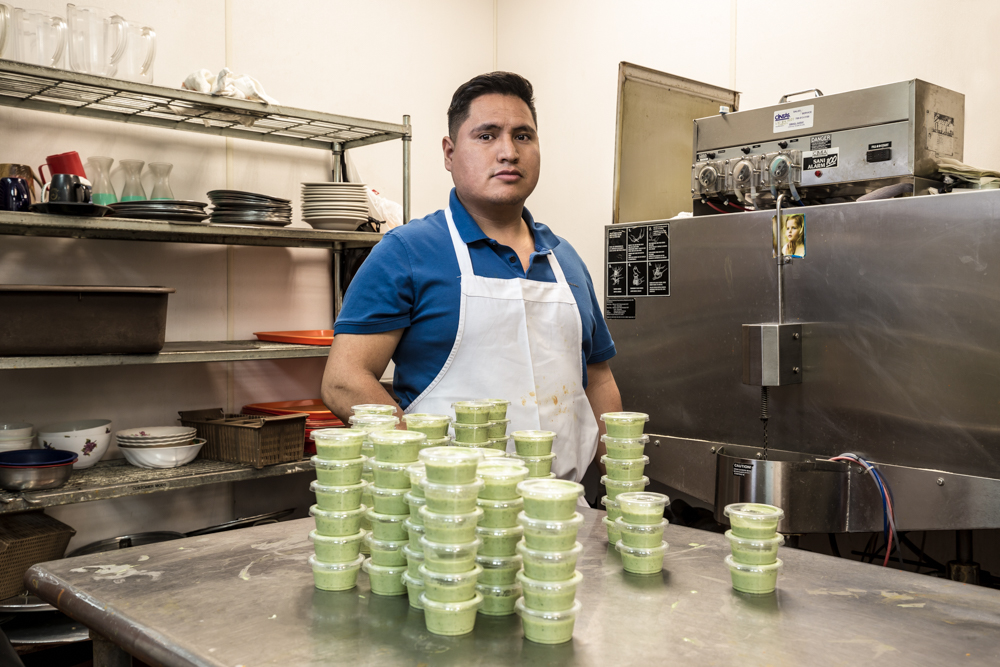
©Jonathan Michael Castillo, Rocky, Khan Barbeque Restaurant, Chicago (Little India) – 2019, from Immigrant Owned
What has sustained your practice over the years?
JMC: I really love photography first and foremost, but If I had to do this alone, I would probably have given up a long time ago.
I made up my mind back around 2008 that I was going to change my major in community college and just full-bore pursue a career in photography. I had spent almost 8 years in community college taking a class or two a semester without really finding what I wanted to do with my life. I kept coming back to the photo lab at Moorpark College and taking one more class or retaking a class just for lab access.
As soon as I realized that a career in photography was possible, I started taking all the related classes for my major. Suddenly, I was a full-time student getting good grades and winning scholarships. I finished two associates degrees in Photography and Photojournalism. I found myself surrounded by other talented students and had several very supportive professors.
Then, I transferred to California State University Long Beach to finish my BFA and had to do it all over again in 2010 because almost none of my classes would transfer. Again, I met a bunch of great peers and had a number of very supportive teachers. I assisted some well-known photographers during my time in school as well.
I worked in LA for a few years then moved to China on a whim, after losing a job doing e-commerce at a terrible company that shall remain nameless. I went to China to temporarily take over some work for a close friend I had met in community college. After a couple years in South China, I moved to Chicago for graduate school.
Columbia College Chicago is where I really committed to making my personal work and pursuing a career as an artist. Chicago really was the right place for me to be for graduate school and after. In graduate school, I met lifelong friends from my cohort, professors who became mentors, and plugged into the larger art world of the city. It’s really all these people I’ve been surrounded by for about 18 years now – spanning multiple schools, many different cities and across continents – who have helped me stay focused and excited about photography. My community is what sustains me and my practice. I hope that I help other people sustain theirs too.
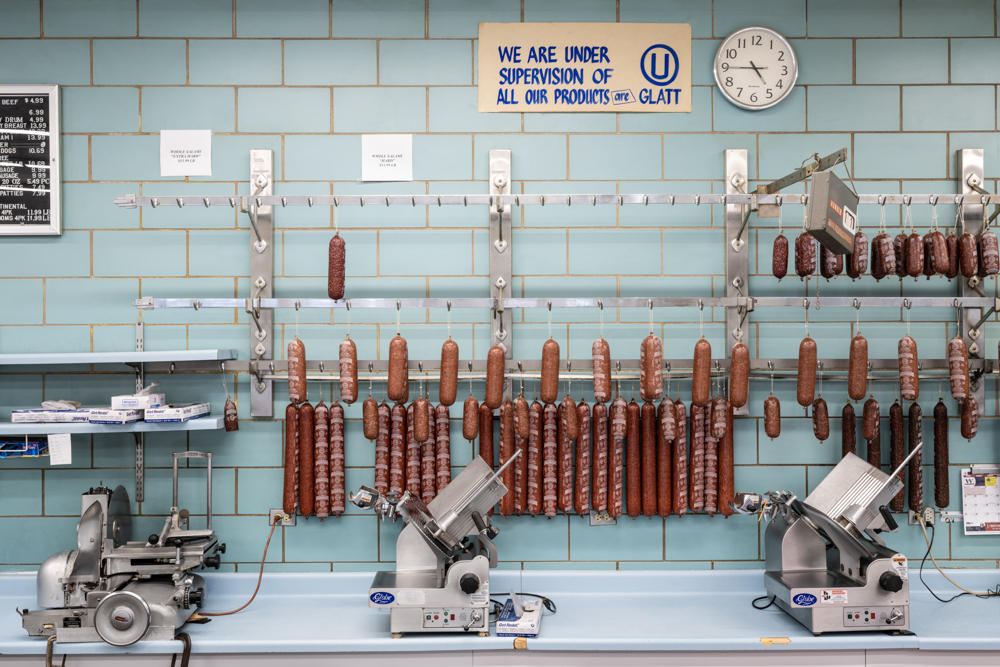
©Jonathan Michael Castillo, Rocky, Romanian Kosher Sausage Co., Chicago (Rogers Park) – 2022, from Immigrant Owned
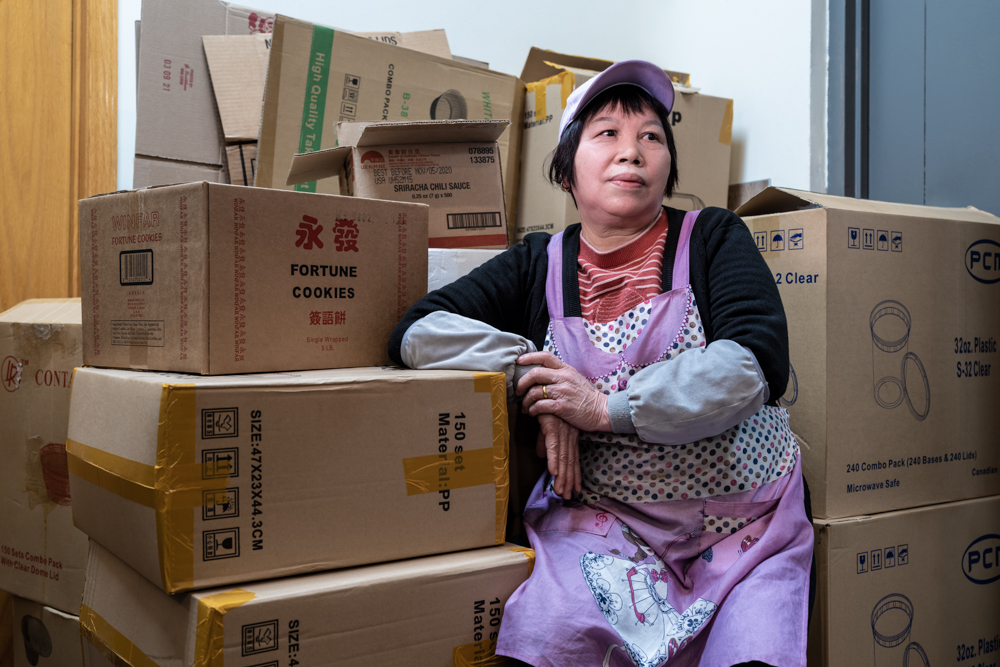
©Jonathan Michael Castillo, Yuzhen, Yummy Yummy Noodles, Chicago (Chinatown) – 2022, from Immigrant Owned
What advice would you give to photographers who are going through the process of applying?
JMC: I think the advice I would give applies to anyone applying to any opportunity, not specifically a Guggenheim.
First, you should be applying to lots of opportunities not just a select few. I try to apply to so many things that by the time the rejection or acceptance letter arrives I’ve probably applied to a dozen new opportunities. This helps me be less invested in specific outcomes and thus less disappointed when I’m rejected. Most of your applications will be rejected, it’s just simple math. No one likes rejection so this is one of my ways of dealing with it.
After you’ve built up this tolerance to being rejected, you’ll naturally have a lot of practice preparing applications and your applications will be better, which will increase your acceptance-to-rejection ratio.
It’s really important to look deeply at all the guidelines and materials you will be asked to prepare. Serving on juries for smaller awards taught me that if there is something that is being asked of an applicant, it’s being scored or considered in some way. For example, the Guggenheim application asks for a career narrative, a list of works, and a statement of plan. You also need four recommenders to write letters on your behalf, all in addition to your portfolio. Each of those things is an opportunity to further your consideration, so you should take each of them seriously.
You should do some research and then not be afraid to ask questions to get things clarified if you are unsure of anything. I think I emailed the people at the Guggenheim Foundation 2-3 times to clarify whether certain things were acceptable for my application. They always responded and were very helpful with the process, but keep those questions short and professional. When I was applying I noticed that there was the option of sending in a physical portfolio if you are applying in the Photography category. I can’t say with certainty that digital-only applications are penalized, but I am certain that if you send in nice prints and try and take full advantage of that opportunity, it can certainly help you. Just imagine being a juror yourself: Would you rather be looking at nicely made physical prints and printed books, or would you rather be looking at JPGs and PDFs on a screen?
Additionally, you have the option of sending in books of your work in addition to your main portfolio. If you have the option to show more work to the jury, you should take it.
They also allow you to optionally submit video work. If video is not something you normally do, maybe there is a video you can make to give context to how your work is normally displayed or installed. Try and think creatively for how you can get the most out of each of those optional submissions and how you can tie everything together to give people the best understanding possible of your work.
Lastly, remember that there is no application fee and every time you apply you will get better at applying. If this kind of thing is difficult for you, find someone who can help you write, be a sounding board for your ideas, and give you feedback. Or start a critique group with friends who are also applying. Everything is easier and more fun when you have friends to join you on the ride.
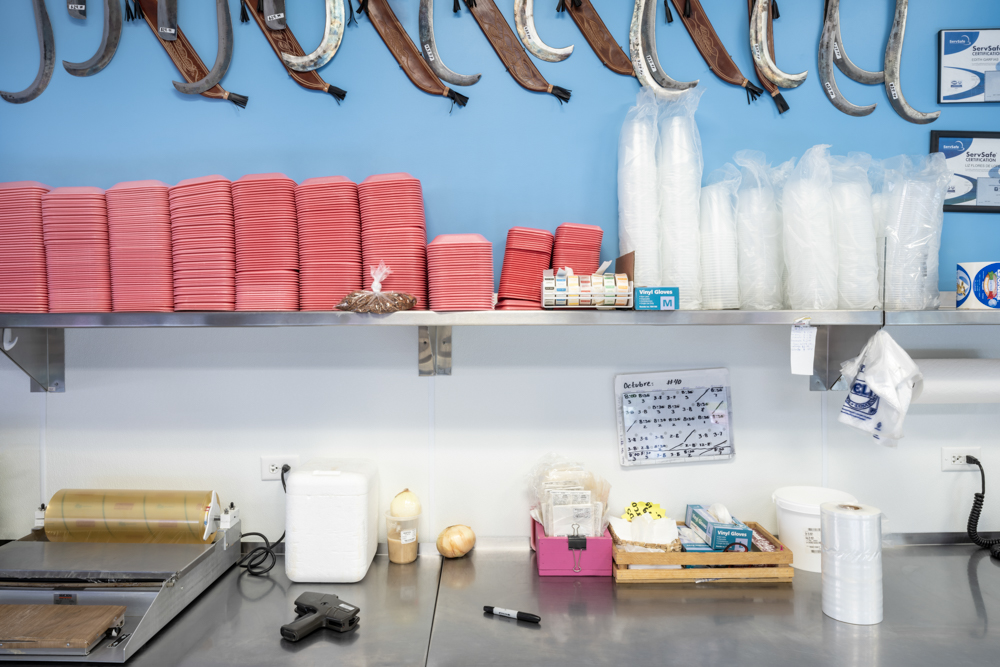
©Jonathan Michael Castillo, Cremeria La Ordeña 2, Chicago (Albany Park) – 2021, from Immigrant Owned
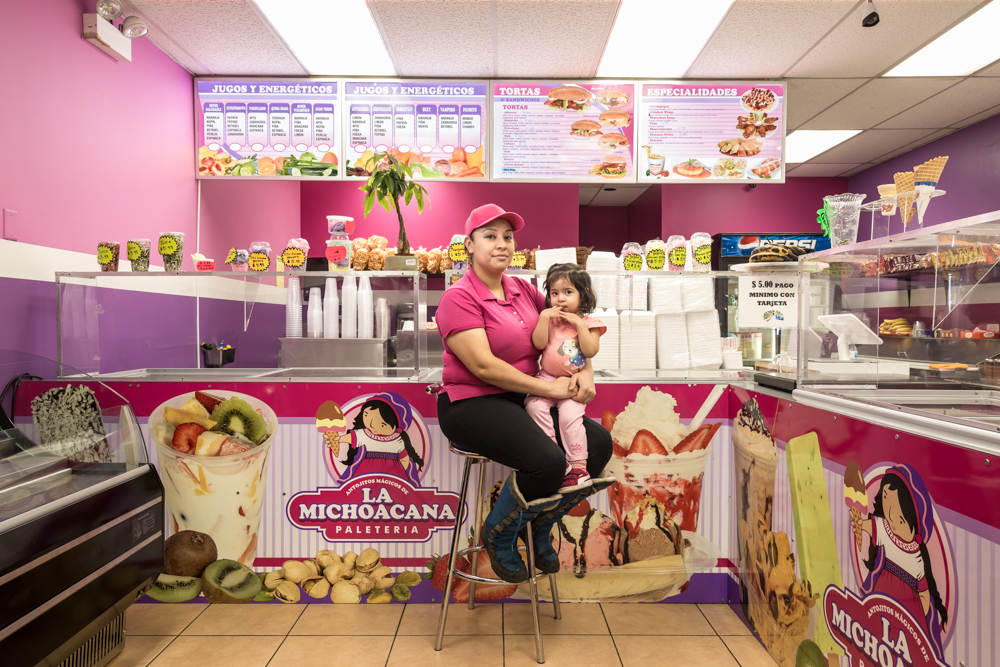
©Jonathan Michael Castillo, Maribel and Maya, La Michoacana Paleteria, Chicago (Kimball) – 2018, from Immigrant Owned
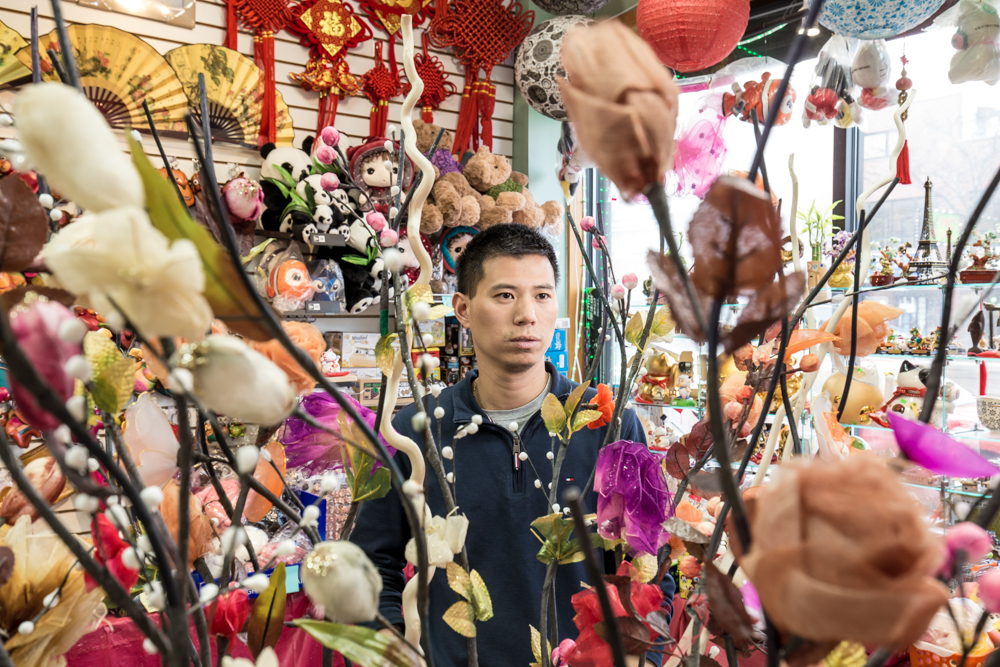
©Jonathan Michael Castillo, Will, Ni Yi Xuan Gift Shop, Chicago (Chinatown) – 2019, from Immigrant Owned
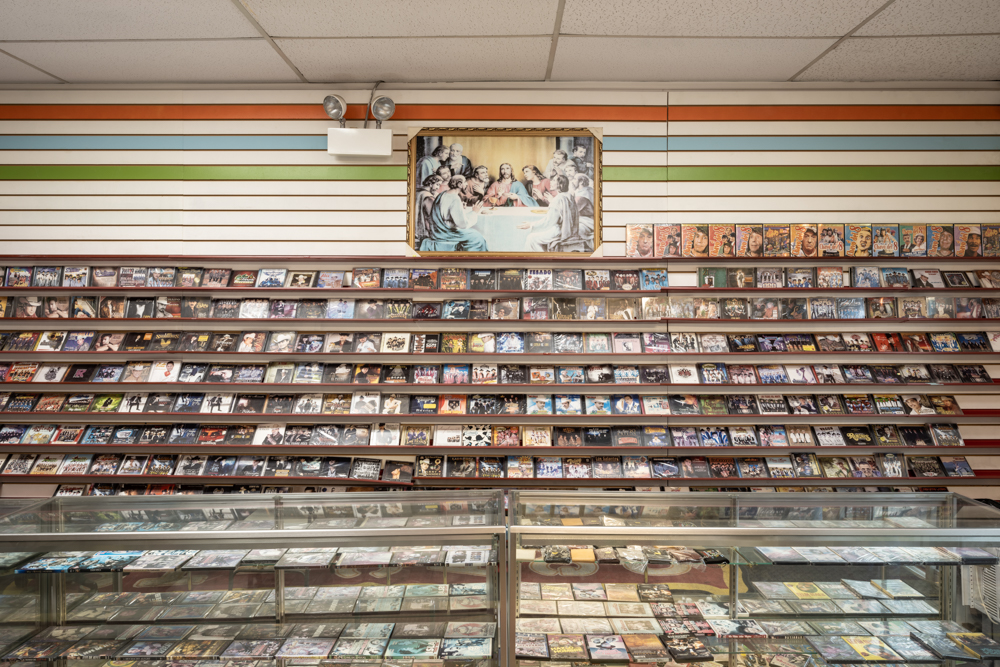
©Jonathan Michael Castillo, Discoteca Flores, Chicago Suburb (Cicero) – 2023, from Immigrant Owned
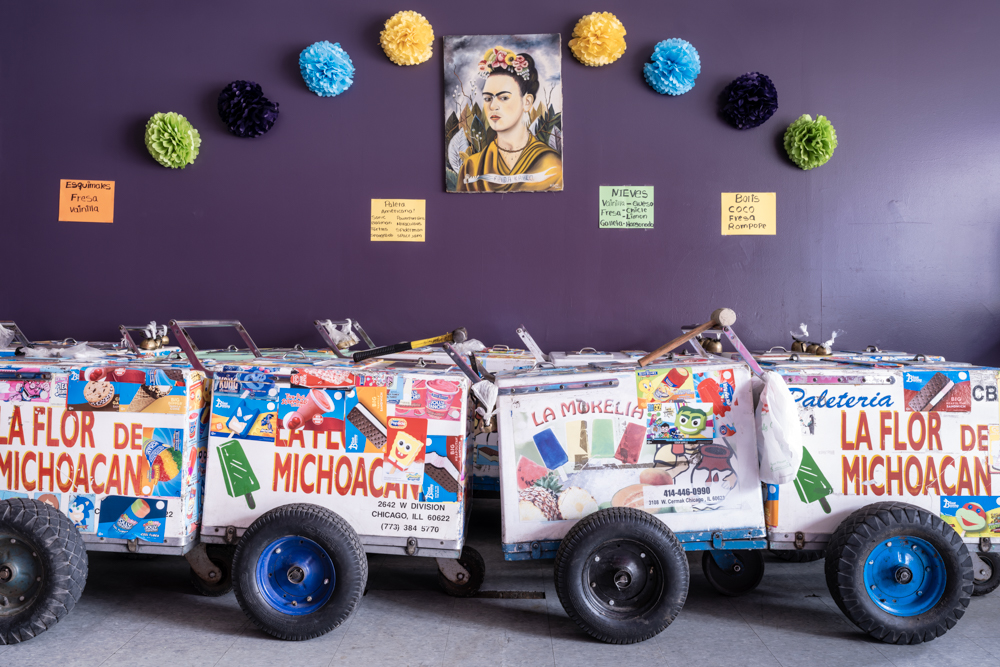
©Jonathan Michael Castillo, Paleteria Y Nieveria La Morelia, Chicago (Marshall Square) #1- 2023, from Immigrant Owned
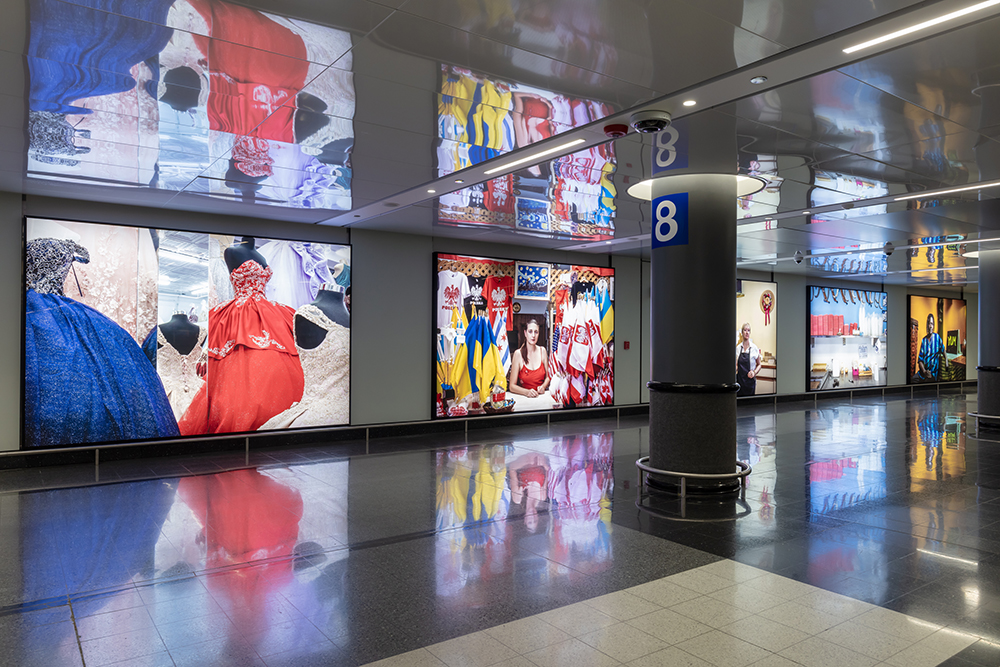
O’Hare International Airport, T5 Baggage Claim, Permanent Installation for the City of Chicago (DCASE) – 2024 (5 of 17 Lightboxes) ©Jonathan Michael Castillo
Jonathan Michael Castillo is a photographer, visual artist, and educator whose practice spans photography, video, installation, and handmade paper to examine immigration, labor, debt, and the systems of government that shape everyday life. He is a 2026 Guggenheim Fellow in Photography and the 2026 Joyce Foundation Artadia Awardee. He was the 2019-2021 recipient of the Diane Dammeyer Fellowship in Photographic Arts and Social Issues.
Jonathan was included in the 2021 Hyde Park Art Center’s Ground Floor Biennial in Chicago and was a finalist for the WMA Commission in Hong Kong. His work has been featured with The New Yorker, Wired, The Chicago Tribune, and CBS: Los Angeles. He has been interviewed on the BBC’s “World Update” and Los Angeles public radio stations KPCC and KCRW. Jonathan was commissioned to create a large-scale permanent installation of his work at O’Hare International Airport as part of the Terminal 5 expansion project. In 2023 he was commissioned to make work for the city of Chicago’s Citywide Plan in partnership with the Department of Cultural Affairs and the Department of Planning and Development. Work from that project was installed at Midway International Airport, City Hall and the Chicago Cultural Center.
Exhibitions include Opening Passages at the Chicago Cultural Center and A Lion for Every House at the Art Institute of Chicago. His work is held in the collections of the Block Museum of Art at Northwestern University, the DePaul Art Museum, and the Illinois State Museum, among others. His monographs include Car Culture (Skylark Editions, 2022) and Flags, Food & Faith (City of Chicago, 2025). Castillo proudly holds an AA and two AS degrees in Photography and Photojournalism from Moorpark College where he got his start in photography, a BFA in Photography with a minor in Anthropology from CSULB and an MFA in Photography from Columbia College Chicago.
Instagram: @joncastillophoto
Posts on Lenscratch may not be reproduced without the permission of the Lenscratch staff and the photographer.
Recommended
-
Guggenheim 2026: Jonathan Michael CastilloNovember 16th, 2026
-
Honorable Mention Art + Science Competition: Ann CuttingNovember 13th, 2026
-
Honorable Mention Art + Science Competition: Seth CookNovember 12th, 2026
-
3rd Place Art + Science Competition: Kari VarnerNovember 11th, 2026
-
2nd Place Art + Science Competition: James AsavaNovember 10th, 2026