Dana Smessaert: In the Blue Light, I Died
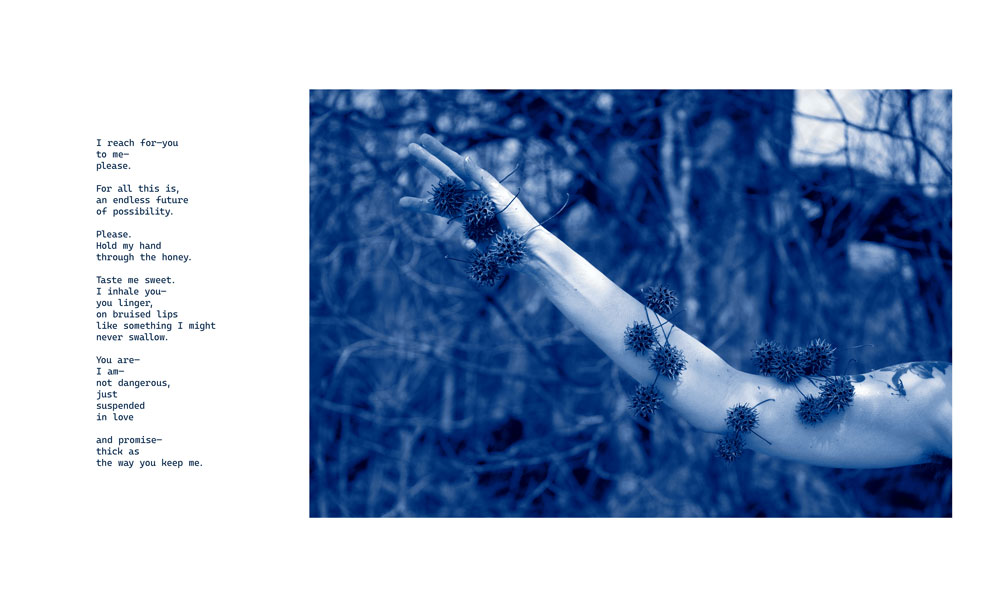
©Dana Smessaert, To Have, To Hope, In the Blue Light, I Died Series, 2025
I met Dana Smessaert in the Gray Gallery a week before classes started at East Carolina University. We had lunch together, and honestly, we didn’t separate until two and a half years later, sharing a studio space, duplex, and breakfast on the weekends when we both graduated. As Midwest transplants to the South, we explored the local barbecue, art, and history. Over the past few years, it’s been exciting to see Dana explore more interdisciplinary work, particularly expanding their research into design and alternative photographic processes. I’ve been watching them create this new series of cyanotypes, and am so excited to see it all come together. In the Blue Light, I Died is a poetic exploration of trauma, grief, and continued existence.
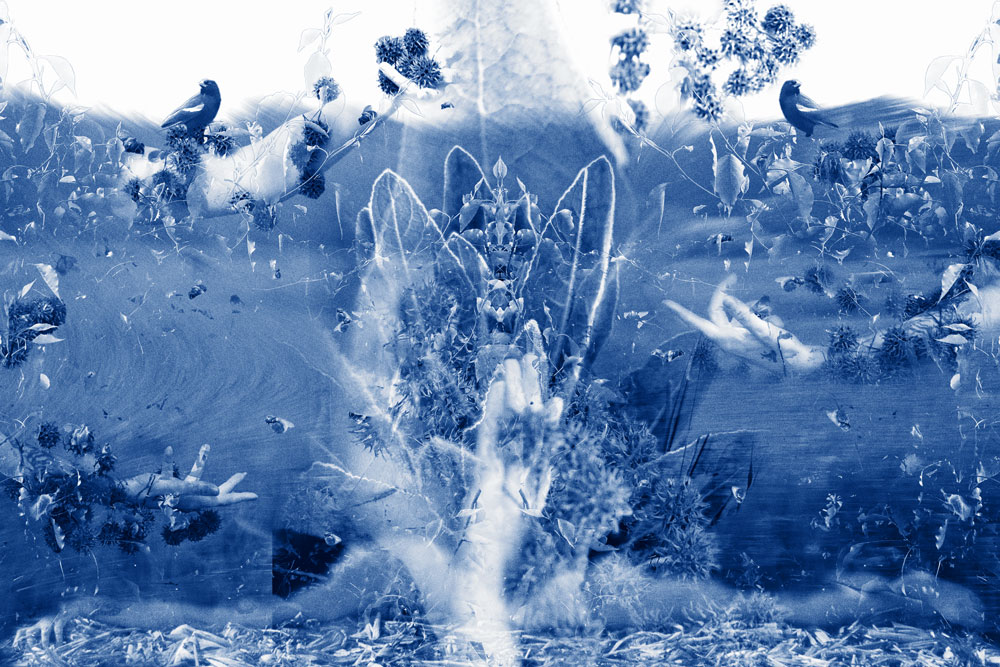
©Dana Smessaert, Sacred Death Vignette, In the Blue Light, I Died Series, 2026
Dana Smessaert is a photographer, designer, and writer who explores themes of history, change, and melancholy in their work. They received their MFA in Photography from East Carolina University and are currently a Lecturer of Graphic Design at Indiana University South Bend. Dana serves on the Pride Caucus Leadership team for the Society of Photographic Education, as well as a juror for the SPE Media Festival. They have shown at the Affordable Art Fair in New York City, Stove Works Gallery, and Laramie County Library Books Arts Invitational. Dana will be a panelist at SPE National Conference in Minneapolis speaking on Teaching Art History in a Post-AI World.
Follow Dana on Instagram: @_damnitdana.studio
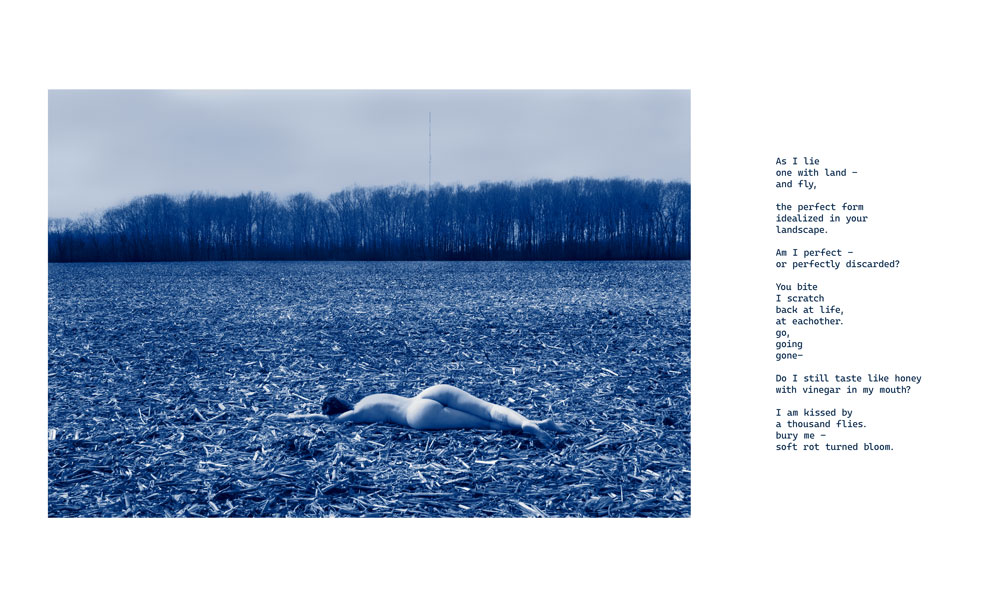
©Dana Smessaert, ὠφέλεια (pron. o-fel’-i-ah), In the Blue Light, I Died Series, 2025
In the Blue Light, I Died
In the Blue Light, I Died explores the immense weight of heartbreak, grief, spiritual death, and rebirth in community. Through poetics, constructed tableaux, and collage, I draw on the poetics of magical realism, Greek myths, and death. The weight of the color blue in its mysticism, the blue of distance in painting, Solnit’s writing, and my personal experiences inform the work’s title. The story drifts between the love affair between the soul of the Earth and Humanity, the immense pain of loving an imperfect thing. Through all the violence and inconceivable futures, we stare into the blue, hoping one day we will find ourselves on the other side. Through the camera as a scrying device, poetics and disjointed tableaux, I explore the death of self and the power of learning to embrace community.
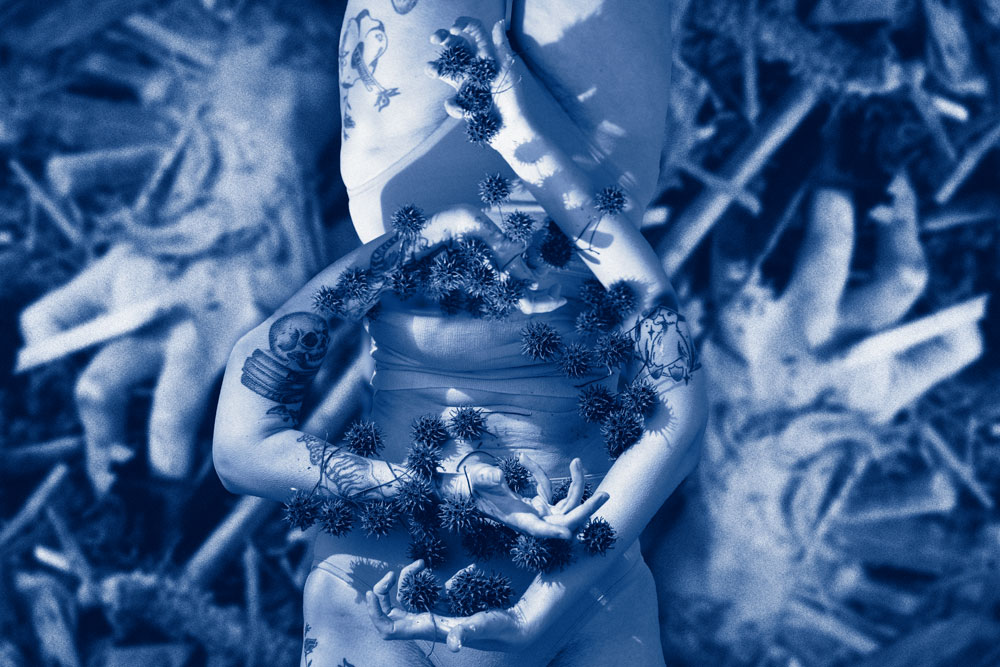
©Dana Smessaert, Acheron Dive Vignette, In the Blue Light, I Died Series, 2025
Epiphany Knedler: How did your project come about?
Dana Smessaert: This project had been a thought in my head for about 3 years before I made the first version of it, which isn’t seen here. I had been really stuck in finding new work since graduating along with a lot of personal grief and loss happening that prevented me from being able to make new work. The title, In the Blue Light, I Died had been floating around in my head for awhile, initially I thought it was an essay, a photobook, or poems. I never really thought about it being images but more so a project inspired by images.
In 2022 I visited Athens, Greece for the first time. I fell in love with the art scene in the city and how there was so much encouragement to make art just to make it, without the pressure of purpose. I had gone through a lot of emotional distress there, and I say sometimes that I actually died there, metaphorically/spiritually. In 2023 I was able to return to Athens, my way to reclaim that first experience again, and so I was reborn there as well. During these visits I really started to think about the polarization of rural and city life, the western fetishization of Greece’s history, and where the western world bastardizes their ideologies. I started to think about borders and the idea of the Land as an entity. Of gods and death, depression and grief. I had so much in me to process that I became very stuck, both in life and creatively. When present on the series I mention the idea of the camera being a scrying device. This idea of the mirror which historically has been used for centuries as a scrying method. That without the mirror photography actually might be soulless. The romantic thing right is when you look through a camera with a mirror there is a moment where the subject and photographer are meeting in this mirror, a moment of friction. I think this can be used in a spiritual sense when thinking about image making. The best way I have come up with to describe this project is in the phrase, “to love an imperfect thing.” Which can mean so much, from a lover to yourself to a community.
As I said I hadn’t been making new work, and it was during a new years show in 2024 I decided to make a piece for this series to test it out. I ended up getting energized by the artists and community I had started to meet. It reminded me so much of what I loved in Athens. Funny enough it was in my hometown of South Bend, IN, a place I hadn’t lived in over 10 years. I started to lean into poetics and allegory again in my work. I had this vision of me covered in sugargum pods (I used wig glue to keep them on, it was a mess!!) and being covered in flies (thanks to my friend who gave me their windowsill dead flies). It was also the first nude I had ever done in my work, and unfortunately I needed the images to be taken ASAP in fear I would abandon the project. Which was mid March in northern Indiana, I was probably on the cusp of hypothermia by the end. The whole time I kept thinking this is why they do this in the southwest.
The project explores death, love, anger, and rebirth. The images take you through this love story, between the Land and humanity, death and life, and you and a partner. It is all these things. As much as I didn’t want it to be about a personal relationship it is, and its okay. Most of the writing and editing I was listening to Ethel Cain’s ‘Perverts’ and ‘Willoughby Tucker, I’ll Always Love You’ albums, so if you want a playlist for this, that is my rec. It is probably the most fluid work I have made, in the literal sense, it is in constant motion of meaning, depending where you are at when you read and look at it. From the calm of the images with poems to the tumultuous collages. Plunges in and out of the underworld of your soul.
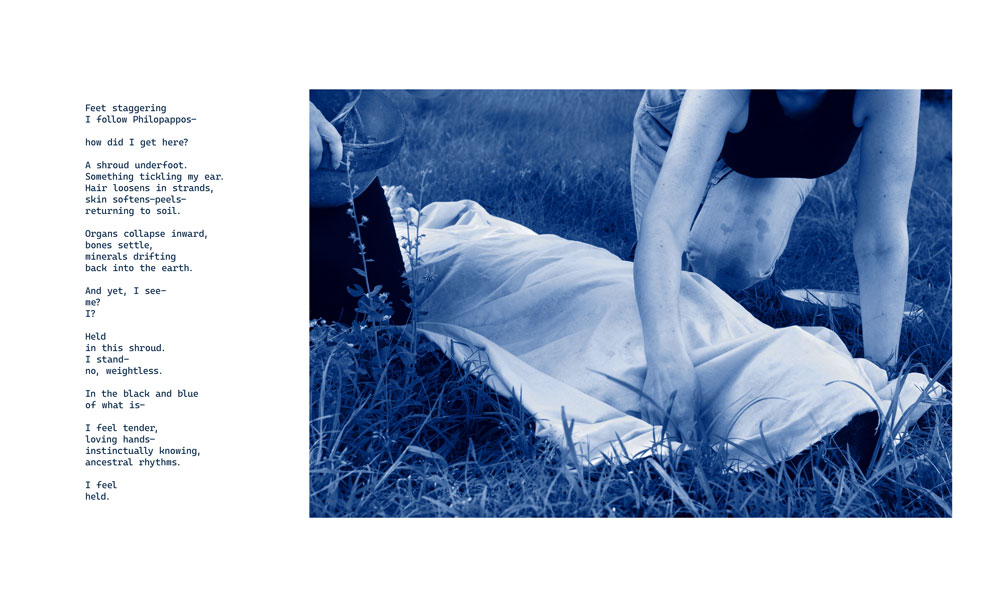
©Dana Smessaert, Shrouded, In the Blue Light, I Died Series, 2025
EK: Is there a specific image that is your favorite or particularly meaningful to this series?
DS: The image ‘Laid to Rest’ is probably my favorite of the series, the images from the field were not planned. I had been walking in this protected meadow for meditation. One day I found this imprint of what looked like a deer or some large animal made in the tall grass. I just knew it had to be in the series. An imprint of rest left on the land. The poem along with it talks more about this aftermath, what is to come. As a community as an individual looking for hope in a world watching the genocide of the palestinian people and in our own US communities not being able to afford survival needs. The poem literally asks if we can make it through with love, or is it the right and loving thing to do, to accept humans should gracefully accept our exit, to feed the earth.
The other which I feel like I have to talk about because of the name ‘ὠφέλεια (pron. o-fel’-i-ah)’ I wanted there to be homages to my time in Greece, while the work isn’t directly about the socio-political issues of Greece there are influences. This is the most direct with the use of the language, but other titles and poems refer to the land and such. I originally wanted to name this piece Ophelia from Hamlet, because at the time there was that horrible Taylor Swift song which got the essence of that character wrong. Ophelia was a character who refused to take agency for herself, a leaf on the wind almost. I am not a historian of Shakespear so don’t come at me, but when I was doing research I didn’t realize the name originated from Greek, and in Greek it means, to benefit, profit, advantage, or help/assistance. I loved that in relation to the character but also to how I was feeling at the time. I felt I had given up agency but also there is a benefit to accepting the truth to things, to circumstances and admitting failures.
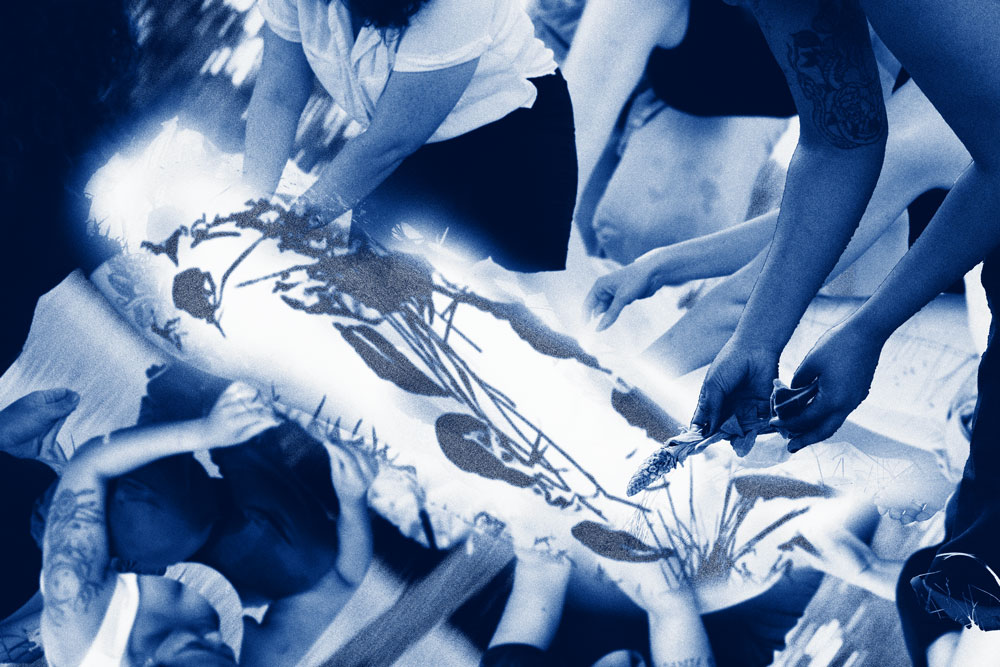
©Dana Smessaert, Dismemberment Vignette, In the Blue Light, I Died Series, 2026
EK: Can you tell us about your artistic practice?
DS: For me it is still very much a slow process of just noticing. After an MFA or any large completion of a project you need time to be open to experience again, to live. This is where I have been sitting lately. Living in depression and grief the last 4 years has changed the way I make art. I have been working on accepting the stillness I need in making art or writing. I had recently given a talk about my art journey for my new position and I called the time before this project the space in between, things I don’t call art but are probably art. It truly is in the formal qualities of art making that kept me moving forward through the haze. I focused on beauty, light, and composition in all images I took, mostly on my phone, but some with my camera. In looking back and during the untangling of what this project is, I found out the henri-cartier Bresson stopped taking images later in life, that he focused on drawing and strictly formal. Isn’t it weird we never learn that? For some reason that information gave me such relief in my own lulls. It also got me curious about the importance of strictly formal work for the mind and creative process of artists. As photographers we don’t do sketches pre say, but the long term practice of even my phone photos with intention for a more formal image got me thinking about our every day creative practices.
I do feel like my creative practice is shifting or maybe I’m trying to find the new language to describe what has already shifted. One thing that is constant is collecting interesting things/ideas/whatever research I find and mentally connecting these “islands” to each other to create a body of work. Sometimes it seems there is no relation but somehow in the end it all ends up informing my creative decisions.
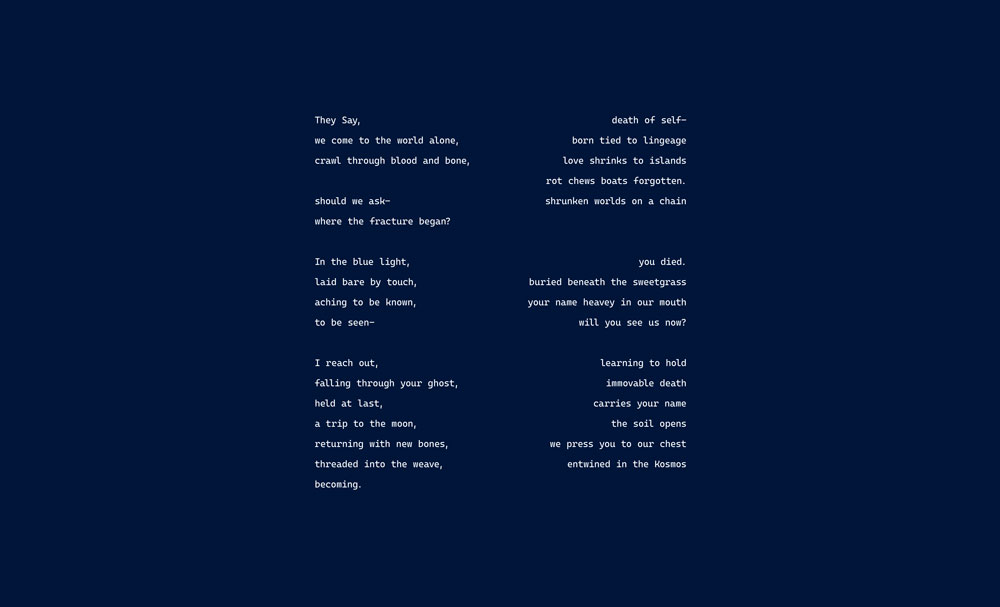
©Dana Smessaert, In the Blue Light, In the Blue Light, I Died Series, 2025
EK: What’s next for you?
DS: Right now I am working on more of a meditative piece, currently it’s called, ‘Sorry, I Mixed the Chemicals Too Soon,’ mainly cause I made my cyanotype chemicals way too early when I was still measuring and taping my boarders and I didn’t have a dark spot to hold them. I was just excited to start working with chemistry again and this upcoming project. I am definitely in a spot where In the Blue Light, I Died has served its purpose for me. The next project will be a combination of cyanotype exposures and charcoal drawings. I have been wanting a more immediate making experience and to move away from the computer, even film right now. Embracing the imperfections of a rushed process, to be frantic in the work. The title is also kinda a side joke, I am trying to make sure I am not experiencing limerence right now, and I read that creativity and making art is a solution to this state of being. So mixing the brain chemicals too soon as well. I don’t know if I truly believe that’s where I am at but it’s a fun way to make sure so why not play with that theory.
Outside of making, I will be at SPE National Conference in Minneapolis speaking on a panel about AI and the future of art history as well as a reviewer for the East Carolina University portfolio thrown down.
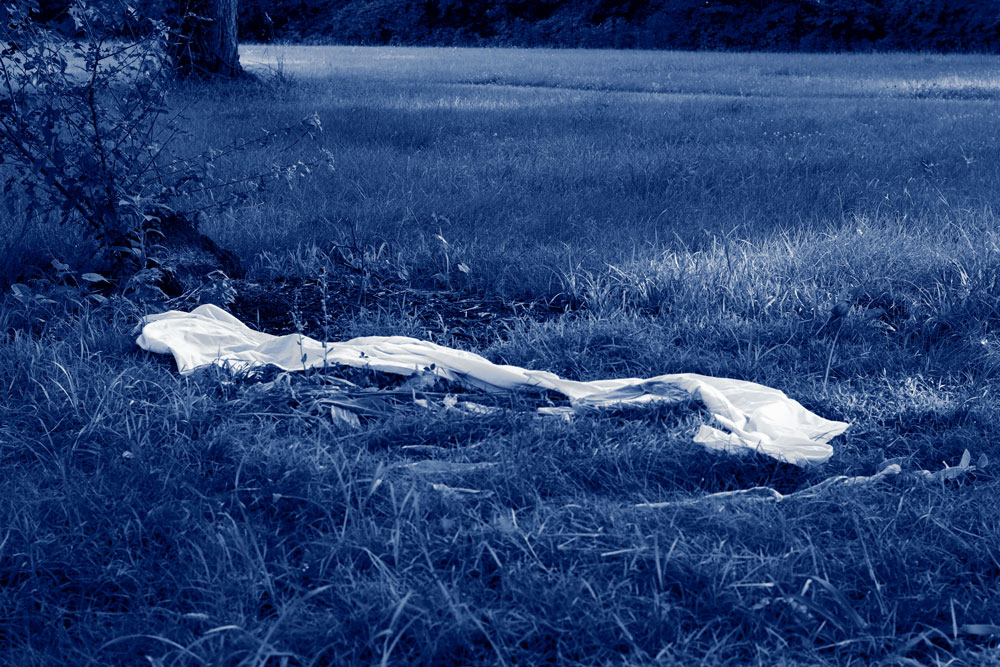
©Dana Smessaert, Woven In, In the Blue Light, I Died Series, 2025
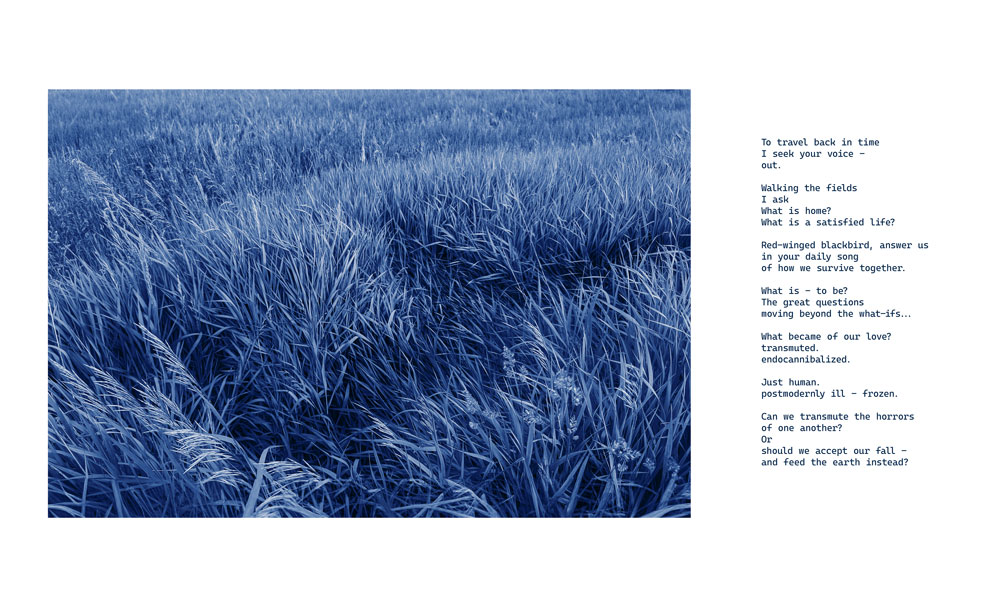
©Dana Smessaert, Laid to Rest, In the Blue Light, I Died Series, 2025
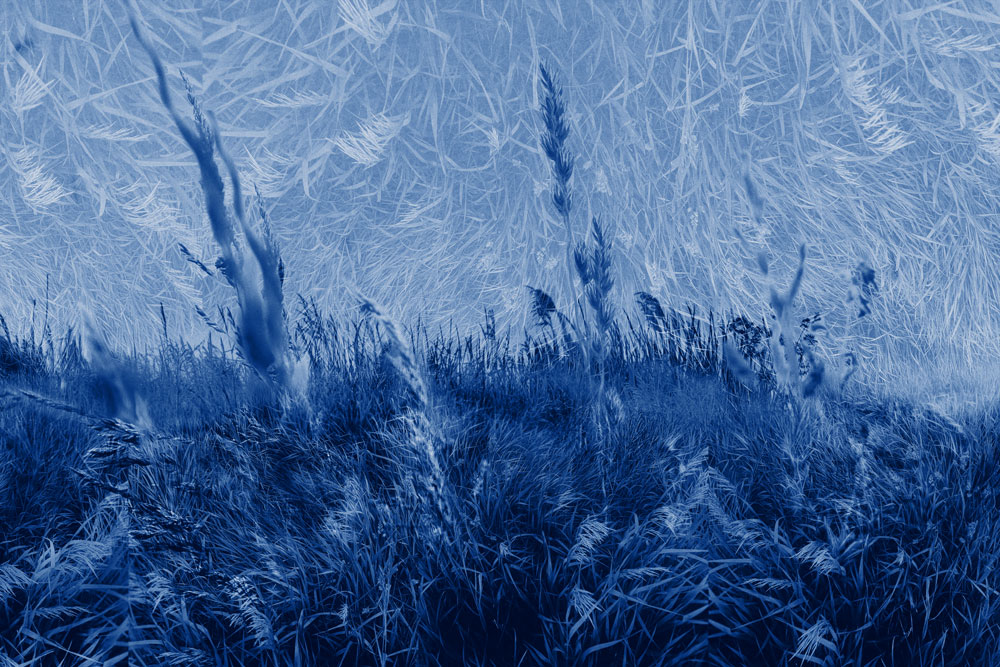
©Dana Smessaert, Coming Home Vignette, In the Blue Light, I Died Series, 2025
Epiphany Knedler is an interdisciplinary artist + educator exploring the ways we engage with history. She graduated from the University of South Dakota with a BFA in Studio Art and a BA in Political Science and completed her MFA in Studio Art at East Carolina University. She is based in Aberdeen, South Dakota, serving as an Assistant Professor of Art and Chair of the Art Department at Northern State University, a Content Editor with LENSCRATCH, and the co-founder and curator of the art collective Midwest Nice Art. Her work has been exhibited in the New York Times, the Guardian, Vermont Center for Photography, Lenscratch, Dek Unu Arts, and awarded through Lensculture, the Lucie Foundation, F-Stop Magazine, and Photolucida Critical Mass.
Follow Epiphany on Instagram: @epiphanysk
Posts on Lenscratch may not be reproduced without the permission of the Lenscratch staff and the photographer.
Recommended
-
Dana Smessaert: In the Blue Light, I DiedOctober 30th, 2026
-
Piper Smith: The Way of FlowersOctober 27th, 2026
-
Arron Levi Foster: Almost, EverythingOctober 26th, 2026
-
Tree Week: Venessa Monokian: As the Glow GrowsOctober 22nd, 2026
-

Alexa Frangos: (Re)arrangingOctober 14th, 2026