Margaret Stratton: WildFire Prophecies
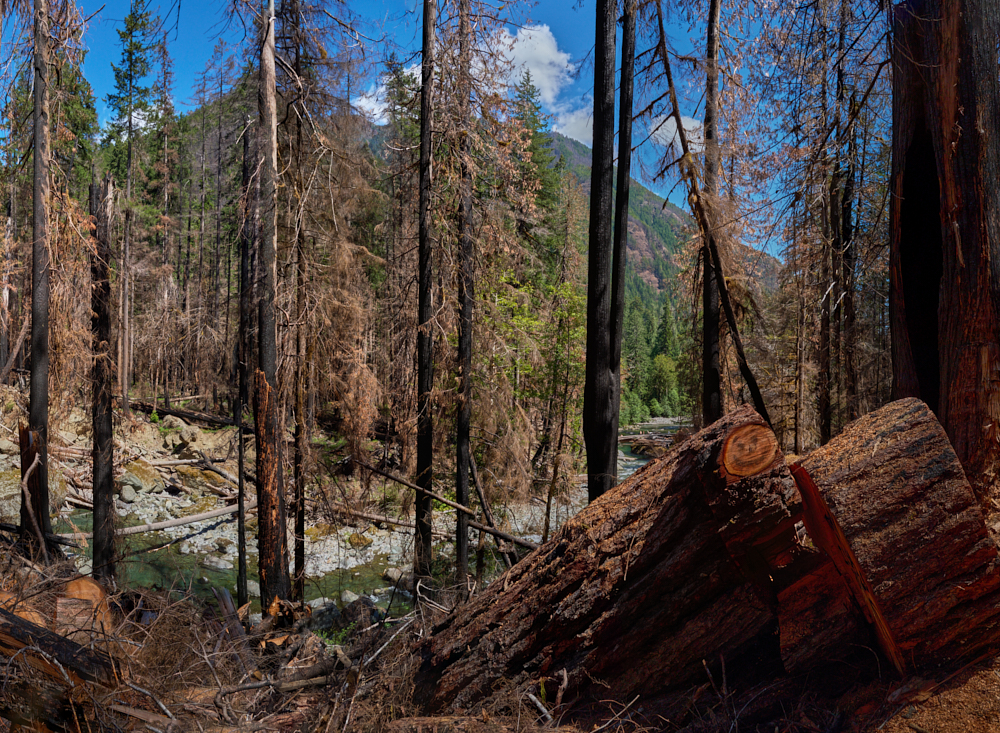
©Margaret Stratton, Bear Gulch Fire, Olympic National Park, August 2026
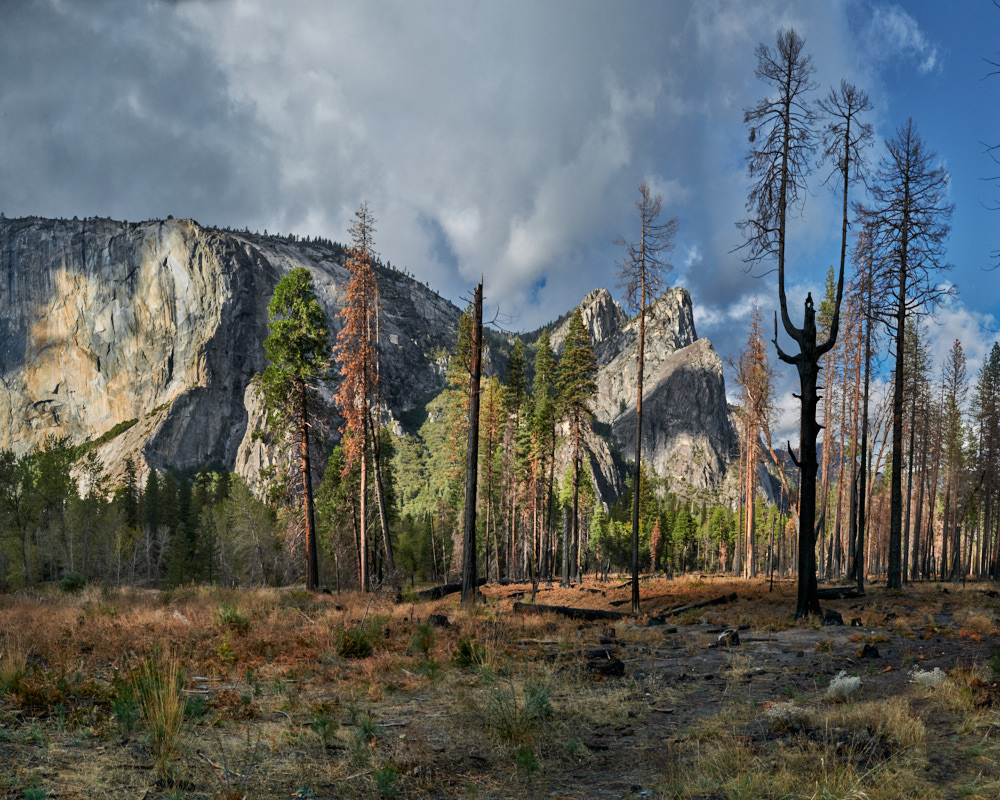
©Margaret Stratton, Three Brothers, Yosemite National Park Nov 3 2022
In Margaret Stratton’s WildFire Prophecies, decades of photographing the American West become a record of a landscape transformed by fire. Drawing on the artist’s experience as a former Forest Service firefighter, the work moves beyond the spectacle of wildfire to confront its aftermath: charred forests, scarred trees, and the eerie silence of places that once was full of life. Through these photographs, WildFire Prophecies challenges the romanticized imagery of the American West and calls attention to the lived reality of a climate crisis that is neither distant nor abstract, but unfolding in the landscapes we call home.
A conversation with the artist follows.
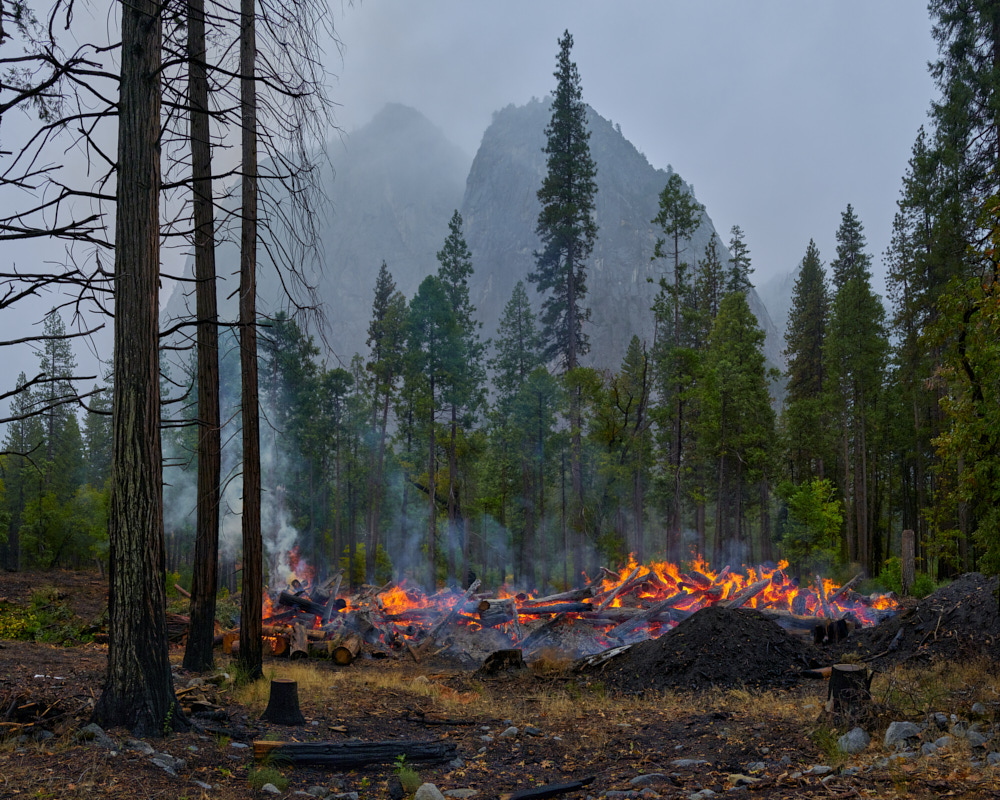
©Margaret Stratton, Prescribed Fire, Yosemite National Park Nov 6 2022
Margaret Stratton has been awarded two National Endowment for the Arts Awards (1991, 1995) and three regional National Endowment for the Arts/Rockefeller Awards in Photography, Video and New Genres, (1987,1989,1990). Other awards include a Seattle Arts Commission “Public Works” Award, Best New Film/Video of 1995 from the Canadian Film Board, and Directors Award from The Black Maria Film Festival in Los Angeles.
Her photographs and videos have been shown nationally and internationally, including at New York University, Nathan Cummings Foundation, New York; The Smithsonian Institution and The Corcoran Gallery, Washington D.C; The Harvard Film Archive, Cambridge, MA; The Museum of Contemporary Photography, Chicago; Center for Creative Photography, Tucson; The Berlin Film Festival, Berlin; Camerawork, San Francisco.
Publications include: The Living and the Dead, The Neapolitan Cult of the Skull, University of Chicago Press, 2010; Here Is New York: A Democracy of Photography; Scalo, New York, 2002; Contact Sheet #110, Detained in Purgatory; Lightwork, Syracuse, 2001; Lesbian Art in America, Rizzoli Press, 2000; Art, Document, Market, Science: Photography’s Multiple Roles, Museum of Contemporary Photography, 1998.
Collections include, The Library of Congress, Washington, DC; Ellis Island Museum, New York; Center for Creative Photography, Tucson; George Eastman House, International Center for Photography and Film, Rochester, New York; Museum of Contemporary Photography, Chicago; TIAA/CREF, New York; Seattle Arts Commission, Seattle, Washington.
Stratton was awarded a 2024 Guggenheim Fellowship for Wildfire Prophecies: Lands in the Public Trust.
Instagram: @margaretstrattonphotography
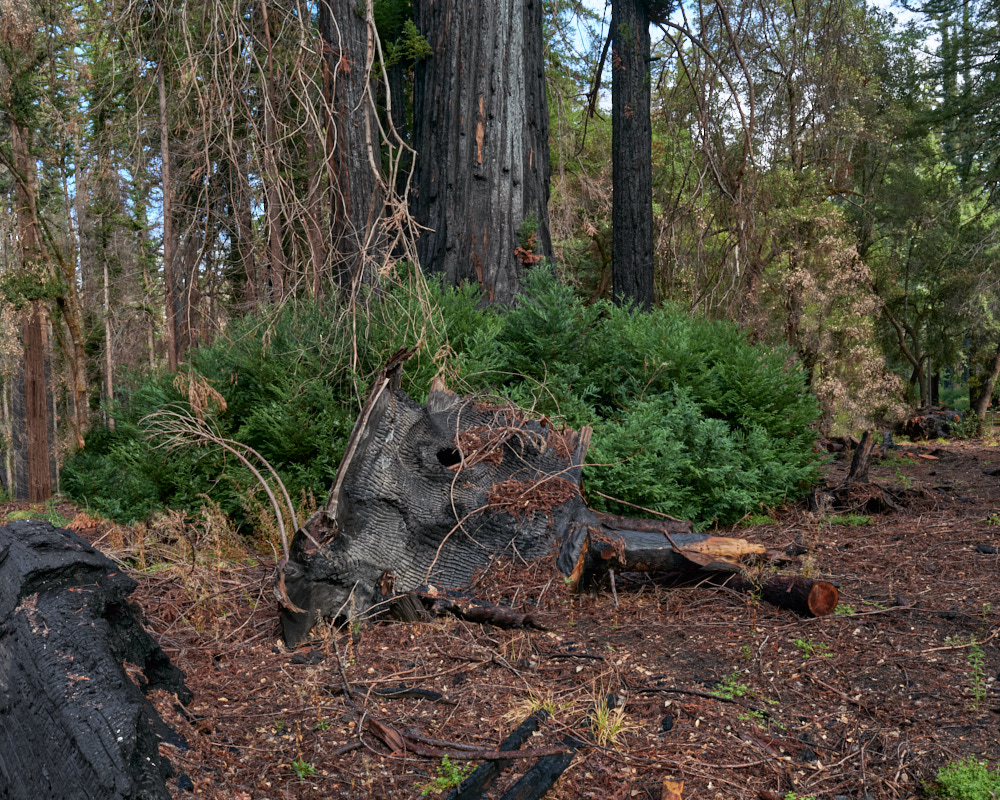
©Margaret Stratton, Artifact, Big Basin, Redwood State Park Nov 2 2022
WildFire Prophecies
Lands in the Public Trust is the result of my decades-long recording of western landscapes through the camera lens and the accompanying presentiment that the West would someday be destroyed by fire. The title, WildFire Prophecies, is inspired by that foreboding, and by the sense that we now may be witnessing the ancient prophecy that in the final apocalypse, the world will be destroyed by fire.
Re-entering the forests has brought me face-to-face with an unparalleled crisis: more and more of our forests are vanishing into char and ash. As a former Forest Service firefighter, I am astonished by the scope of the burnt forests. And as my feet touch the blackened ground, I look around me and see the silhouettes of lifeless trees. Even though they have perished, they continue to stand tall. Their skeletal remains are stark against the heavens, and their bark shows burn scars. There is no heat or smoke, and it is strangely quiet.
A profound sorrow fills my mind, and I am in awe. Not of the forest’s beauty but by the other-worldly sense that I am inside a ruined cathedral that will never exist again. I begin to see signs of life, but my heart still aches for the trees that lived here were five hundred to a thousand years old. When I make the photographs closest to my heart, I see a tragic, sublime beauty through my lens. I am studying both physical FireScapes, and how wildfires are conceptualized by the American public. Popular culture messages about nature do not always correspond with the realities of our imperiled natural world. Matter of fact they often refute it. This work hopes to elevate climate change dialogue so that it fosters truth over political gamesmanship and inspires people to take positive action. It is important for Americans to understand this is not a distant problem, happening to other people, that other people must solve. Photographic evidence of the depredation of our landscapes is an important tool. Viewers can become witnesses, absorbing the nuances of fire damage in a photographic print. This is our home; this is the only home we have.
I hope is that my images of wildfires will allow the general public to view the tragic minutia of our fire damaged forests. What people usually see on the internet or on televised news are the all too familiar scenarios of wildfire as spectacle. These news videos of wildfires evoke the tragic beauty of glowing orange skies over blackened horizons and dramatic red fire retardant, and ariel water drops from B-52 airplanes. I intend that my photographs help raise consciousness about the realities of what we are losing every time a forest fire rages out of control.
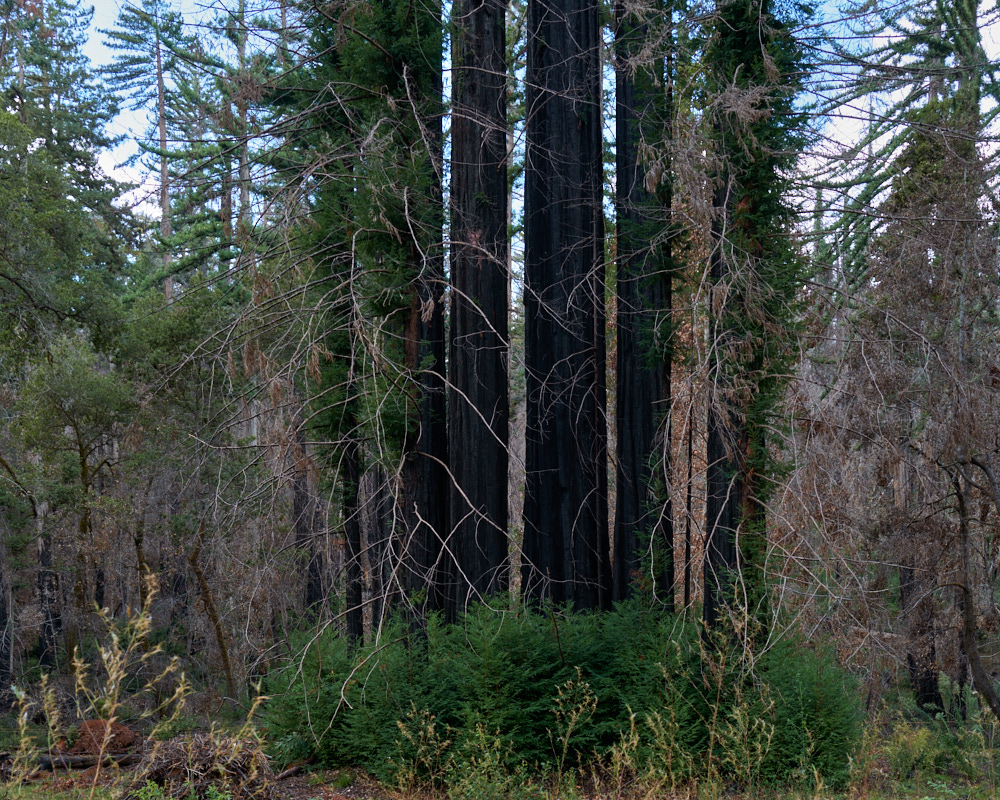
©Margaret Stratton, Burnt Sequoia Grove, Big Basin, Redwood State Park, Nov 2 2022
Tell us about your growing up and what brought you to photography…
When I was in the third grade I went to a girl scout camp outside Seattle. My mom bought me a plastic green girl scout camera. I was forever changed by taking a photograph of a dragonfly on a rock. First the hunt, sneaking up on it and taking the snapshot before it flew away. Second the anticipation of waiting for the print at the drug store and last viewing the picture and finding out how camera optics rendered the enormous bug, a tiny shape on the rock. I thought about that for years.
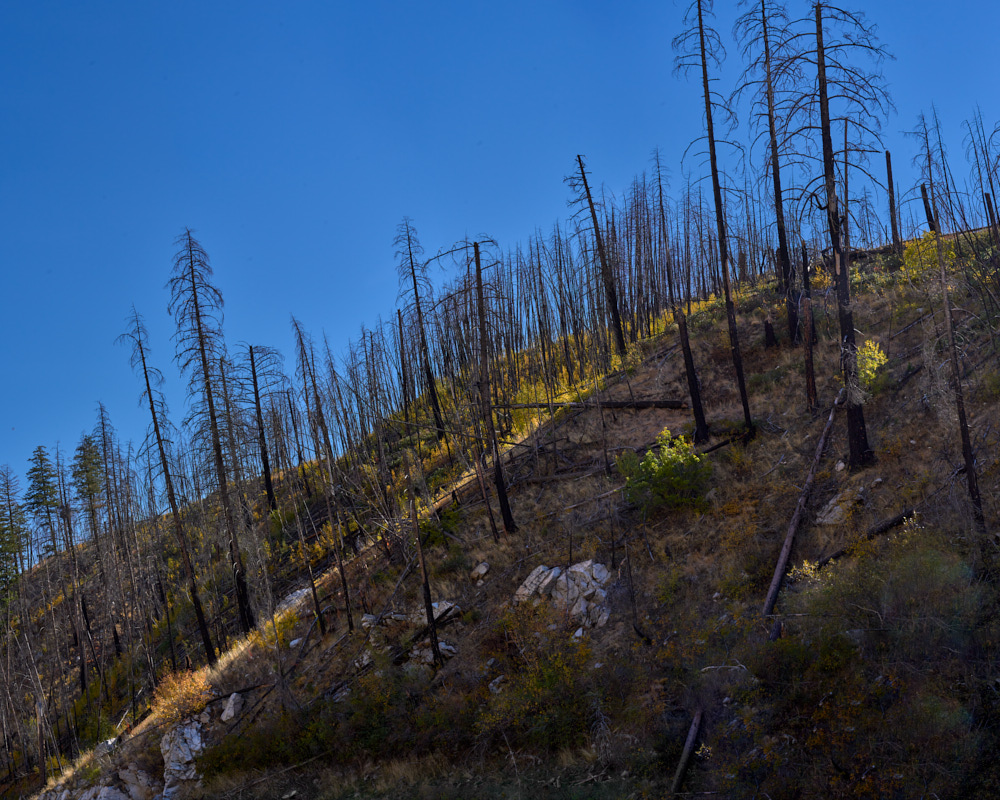
©Margaret Stratton, Canyon Slope, Finley Canyon October 6 2024
Having worked as a Forest Service firefighter, how has that firsthand experience shaped the way you photograph burned landscapes today?
I participated in a run-amok fire resulting from a drip torch burn instigated by our crew at the Wind River Ranger Station. The concept that a fire you helped set went on to destroy miles of healthy forest made me literally sick. It wasn’t called Wind River for nothing. This made me see how fragile a forest really is, and it taught me to look at small details and to take responsibility for forest health. In a fire the wind is a huge unknown. I was “mopping up” a fire in the Rouge River in Oregon when the wind changed, and we were surrounded by burning trees. We got out via a rockslide, but I found There is a sense of delayed motion after a fire. Fire is so busy and afterwards it’s so quiet and eerie. So to photograph fires now is revisiting familiar terrain.
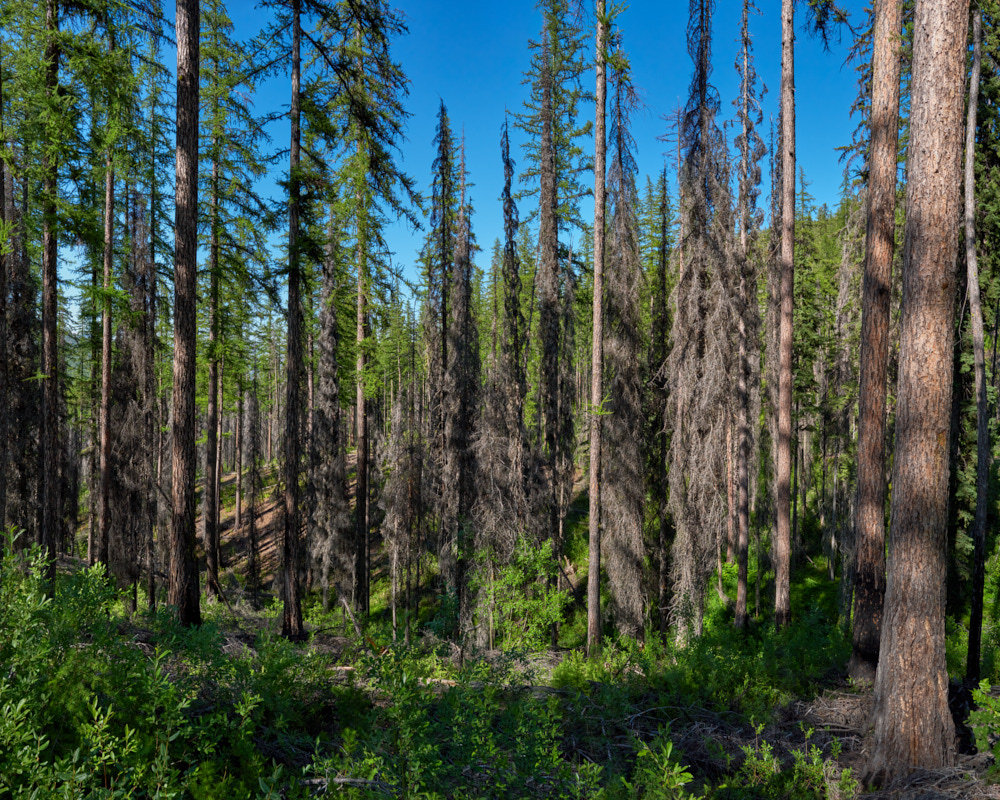
©Margaret Stratton, Scorched Larch Trees, Okanogan NF June 29 2025
You describe entering a burned forest as feeling like “a ruined cathedral.” Can you talk about the emotional and spiritual experience of standing in these places?
As my feet touch the blacked ground, I look around me and see the silhouette of lifeless trees. Even though they have perished, they stand tall. Their skeletal remains are stark against the heavens, and their bark shows burn scars. There is no heat or smoke, and it is strangely quiet. A profound sorrow fills my mind, and I am in awe. Not of the forest’s beauty but by the other-worldly sense I am inside a ruined cathedral that will never exist again. There is an immense silence, no sounds of birds and the wind is still, no leaves crackle underfoot and the few plants reemerging seem outnumbered by the charcoal-colored hillsides. I begin to see signs of life, but my heart still aches, the trees that lived here were five hundred to a thousand years old. When I make the photographs closest to my heart, I see a tragic, sublime beauty before my lens.
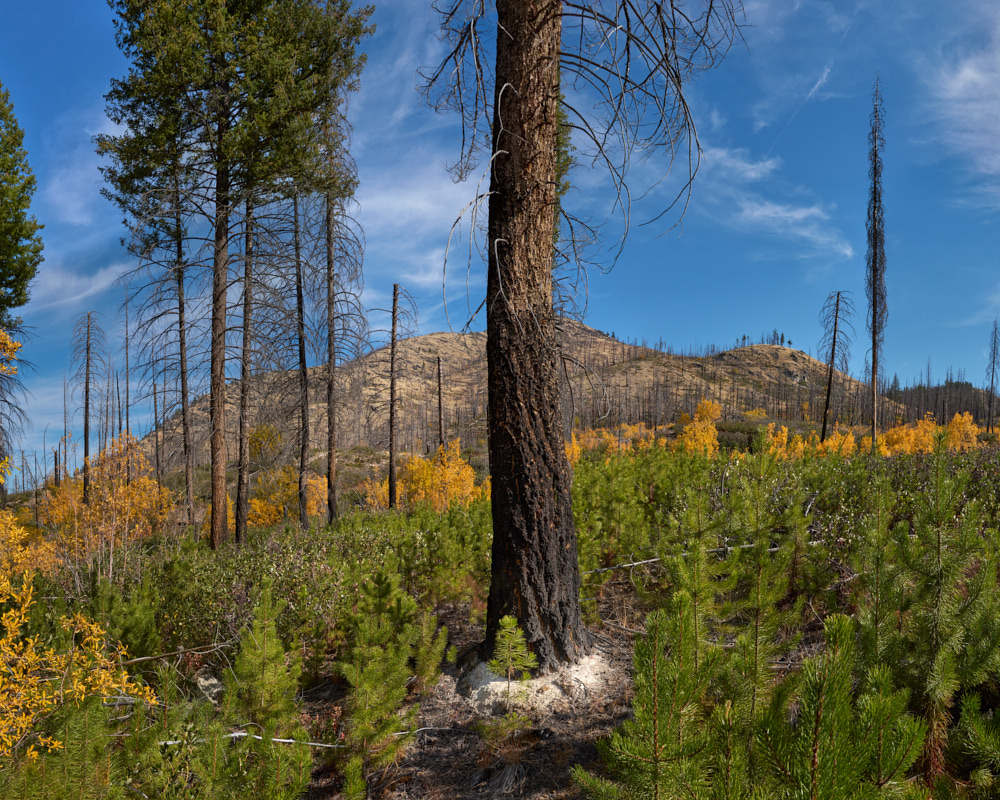
©Margaret Stratton, Pondarosa Seedling , Okanogan National Forest Oct 15 2024
You write about the gap between popular perceptions of wildfire and its ecological realities. What misconceptions do you most hope this work will challenge?
My ideas about fire have changed over the years as the fires themselves have changed. After being a “grunt” on a couple of crews I knew that real fire suppression is dirty sweaty smokey dangerous even futile work and it upset me to see it glorified on the evening news as spectacle. Bright glittering flames lining burnt hills at night, like volcanos waiting to erupt and swooping helicopters and B-52 planes dropping cascades of water and fire retardant do not tell the real story.
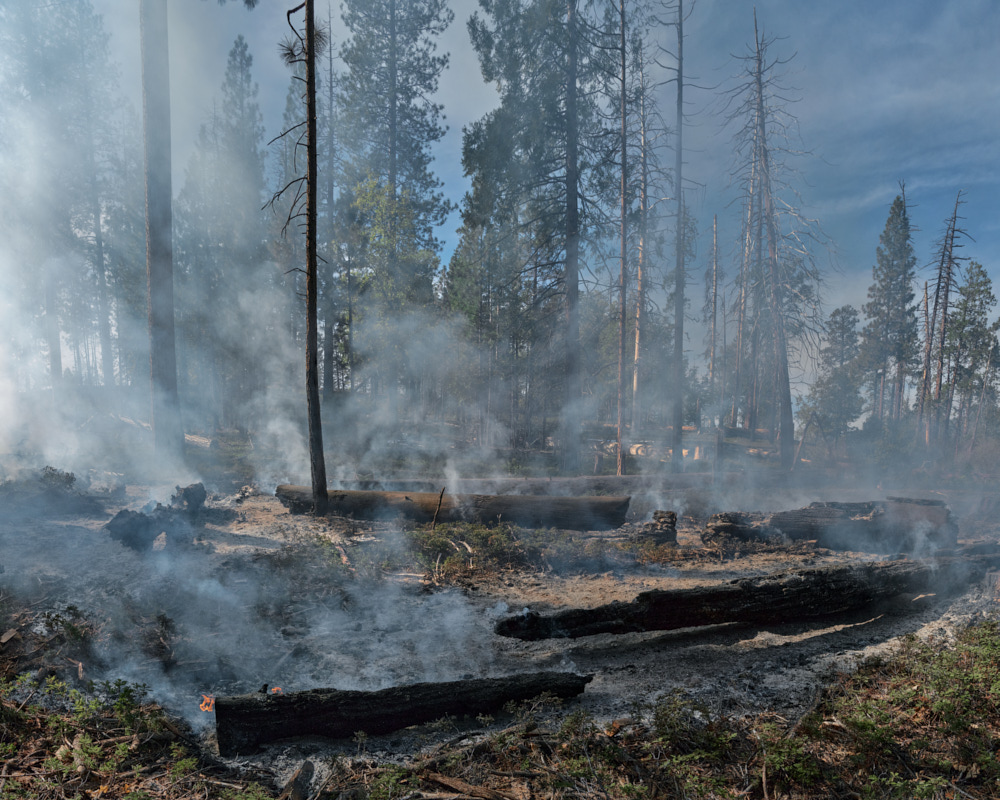
©Margaret Stratton, Prescribed Fire 16, Yosemite National Park Nov 6 2022
Many of the trees you photograph are hundreds, even thousands, of years old. How does knowing their history influence the way you compose and edit your photographs?
I don’t think it does. As historical beings our forests are eternal even after death, as they stand, first as glories and secondly as ruins. When I photograph them, the burnt trees become compositional elements. Part of me checks out and sees their charred forms, (bodies) as remains, as such they are elegiac and despite their tragic end they never entirely lose their radiance. They are the embodiment of transformation. I realized after you asked me these questions that making these images returns me to my origins as a black and white photographer which I was for decades before digital. The stark elements of the burnt forest are about shape and form and are classic studies in aesthetics. But the longer I make these photographs and see repeated miles of these ancient beings turned to darkness I feel the devastation as a mark the world is ending. Surely the world I enjoyed as a child is ending. After living my adult life marooned in the Midwest I have returned home to ashes and that breaks my heart.
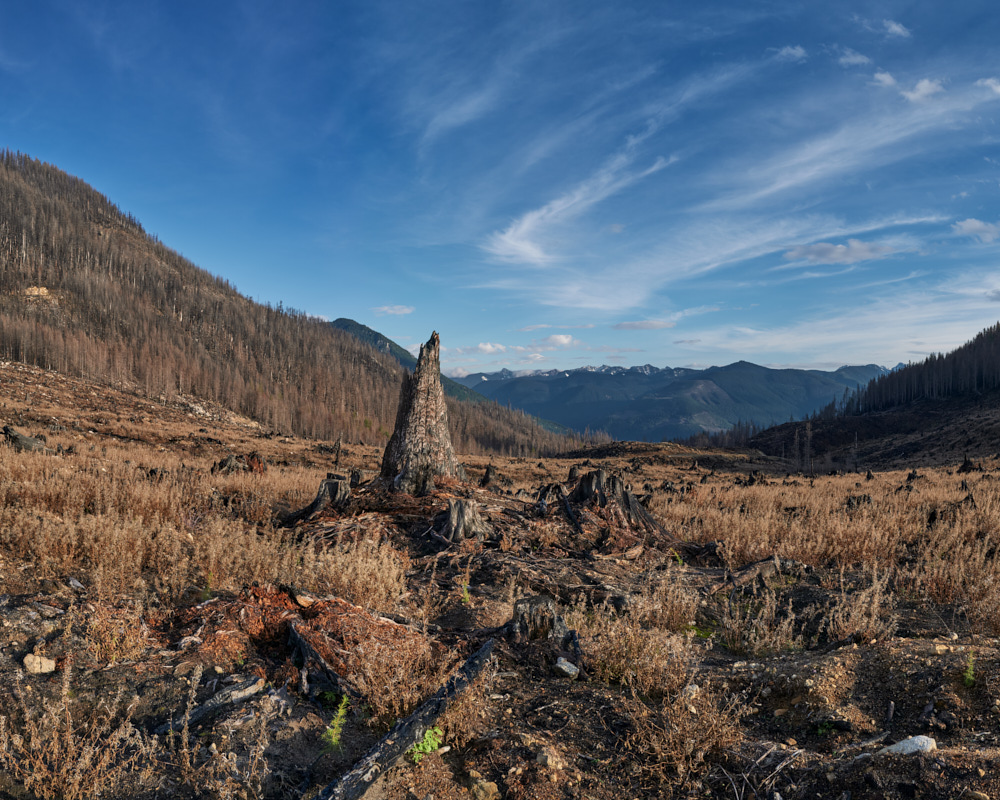
©Margaret Stratton, Conical Stump, Bolt Creek Fire Baker, Snoqualmie NF Nov 18 2023
After documenting these changing forests over decades, have your own ideas about conservation, stewardship, and humanity’s relationship to the natural world evolved?
I have been watching our forests burn since the 1970’s. The fires are getting worse, and the blackened landscape seems to grow larger. We have not proved to be good stewards. Looking at the long cycle of eternity the forests will return, with or without human beings. We do not control planetary cycles, and the natural world continues on its journey without us. Leaving a desiccated landscape for future generations is a crime against nature. We do have a hand in how this fragile ecosystem came to exist. To be humanitarians we have to leave the forests alone but that’s not possible in so many ways. What precipitated the dearth of forests is caused by technological change, and it’s so infantile it has yet it has yet to become the solution to fixing our forests. If that is even possible.

©Margaret Stratton, Burnt Hillside Bolt, Creek Fire Baker, Snoqualmie NF Nov 18 2023
Lands in the Public Trust reminds us that these forests belong to all of us. What do you hope viewers carry with them after experiencing this work, and what role do you believe photography can play in inspiring environmental action?
That is a complicated question, unfortunately in the US the forests do not belong to everyone. Our state and national parks belong to us technically, but they are logged and developed at the whim of the government. I could write a longer response to that issue, but I will refer to my own images. Photographs of the burnt forest are often arresting and the beauty of the ruin, (a long-held fascination of human attention), speaks to cycles of birth and death they can be compelling. The answer is further complicated because I want people to see hope in the rejuvenation the forest displays after a fire. That is the inherent cycle of wildfire in the landscape. Fire creates a new canvas for a renewed environment. It’s equally essential that people see the actual condition of a destroyed forestland. In a normal fire cycle the larger species of trees are resilient due to fireproof characteristics of their bark, including Doug Fir, Hemlock and some Cedars. Fire helps sprout the seeds in the cones in Giant Sequoia, and the ubiquitous Lodgepole pine trees of the West. The problem now is due to forest neglect, Wildland Urban Interface building (WUI), drought and climate change the fires are so hot they kill everything with no possibility of renewal.
As for your question I hope my photographs will be a reality check to help people lobby for healthier forests, in part by advocating for brush control and prescribed burning.
We need to lobby for a political sea change that can help the natural world heal. But the ongoing drought is also a cycle of the natural world and that means more fires no matter how conscious we are. What we can do is make the American Landscape a voter issue.
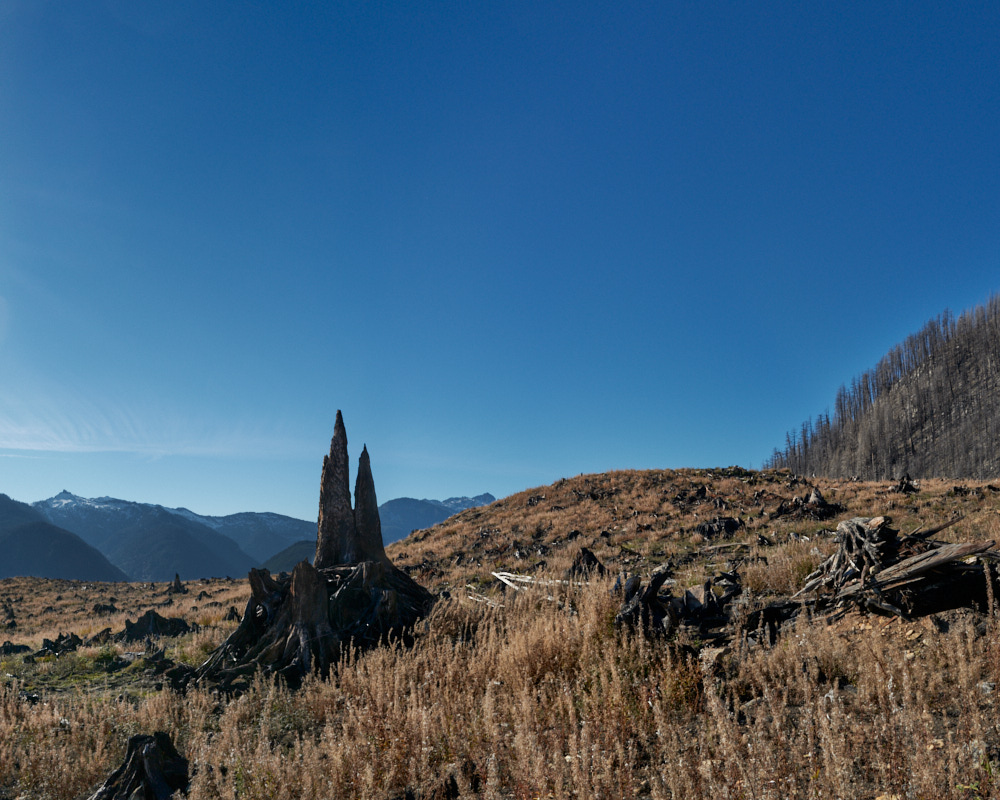
©Margaret Stratton, Grand Fir Stump, Bolt Creek Fire Baker Snoqualmie NF Oct 30 2023

©Margaret Stratton, Vista Forest Service Rd 44, Okanogan NF October 16 024
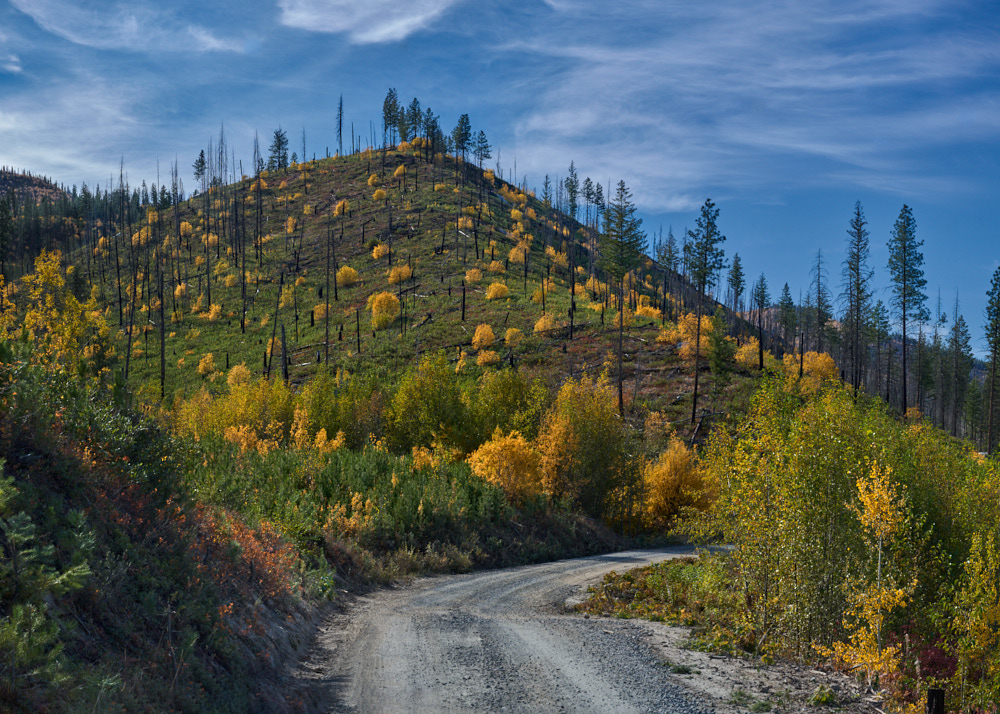
©Margaret Stratton, Recovering Hillside Okanogan NF October 13 2024
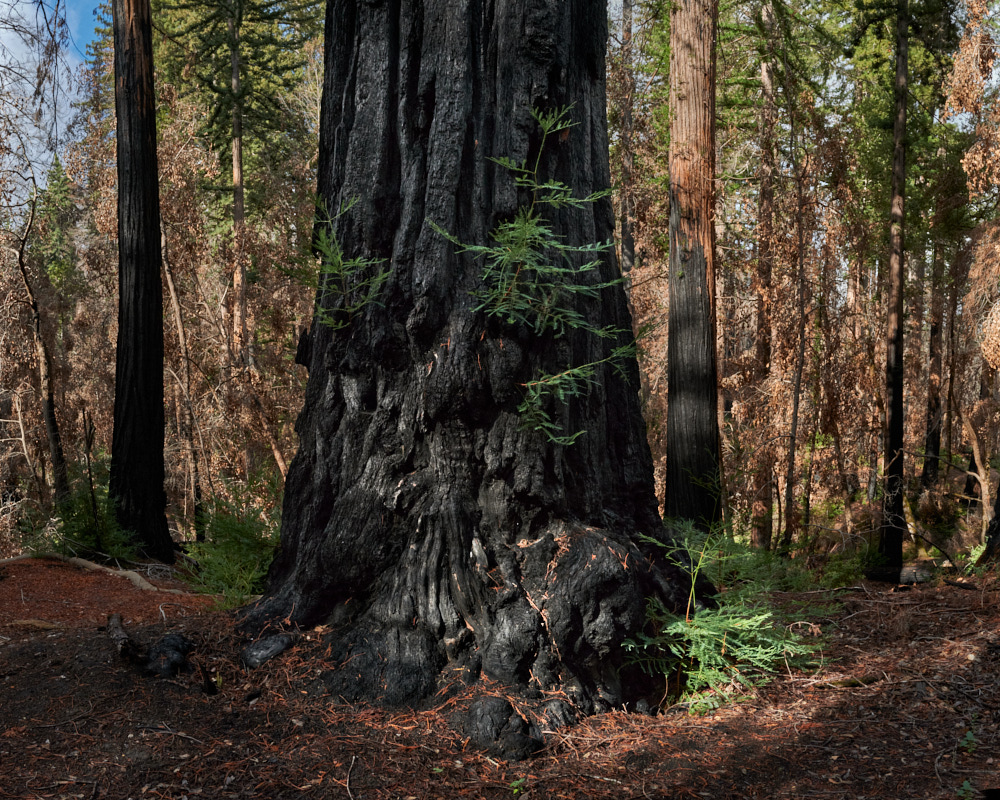
©Margaret Stratton, Burnt Sequoia Trunk Big Basin Redwood State Park Nov 2 2022

©Margaret Stratton, Decimated Woodland Bolt Creek Fire_Baker Snoqualmie NF Oct 30 23
Posts on Lenscratch may not be reproduced without the permission of the Lenscratch staff and the photographer.
Recommended
-

Photography Educator: Lupita Murillo TinnenOctober 16th, 2026
-
Moonsung Lee: Lyrical AttentivenessOctober 10th, 2026
-

Guggenheim 2026: Samantha AppletonOctober 9th, 2026
-
Guggenheim 2026: Chris Aluka BerryOctober 7th, 2026
-
Connor Archambault in Conversation with Douglas BreaultOctober 5th, 2026