Shawn Bush: Angle of Draw
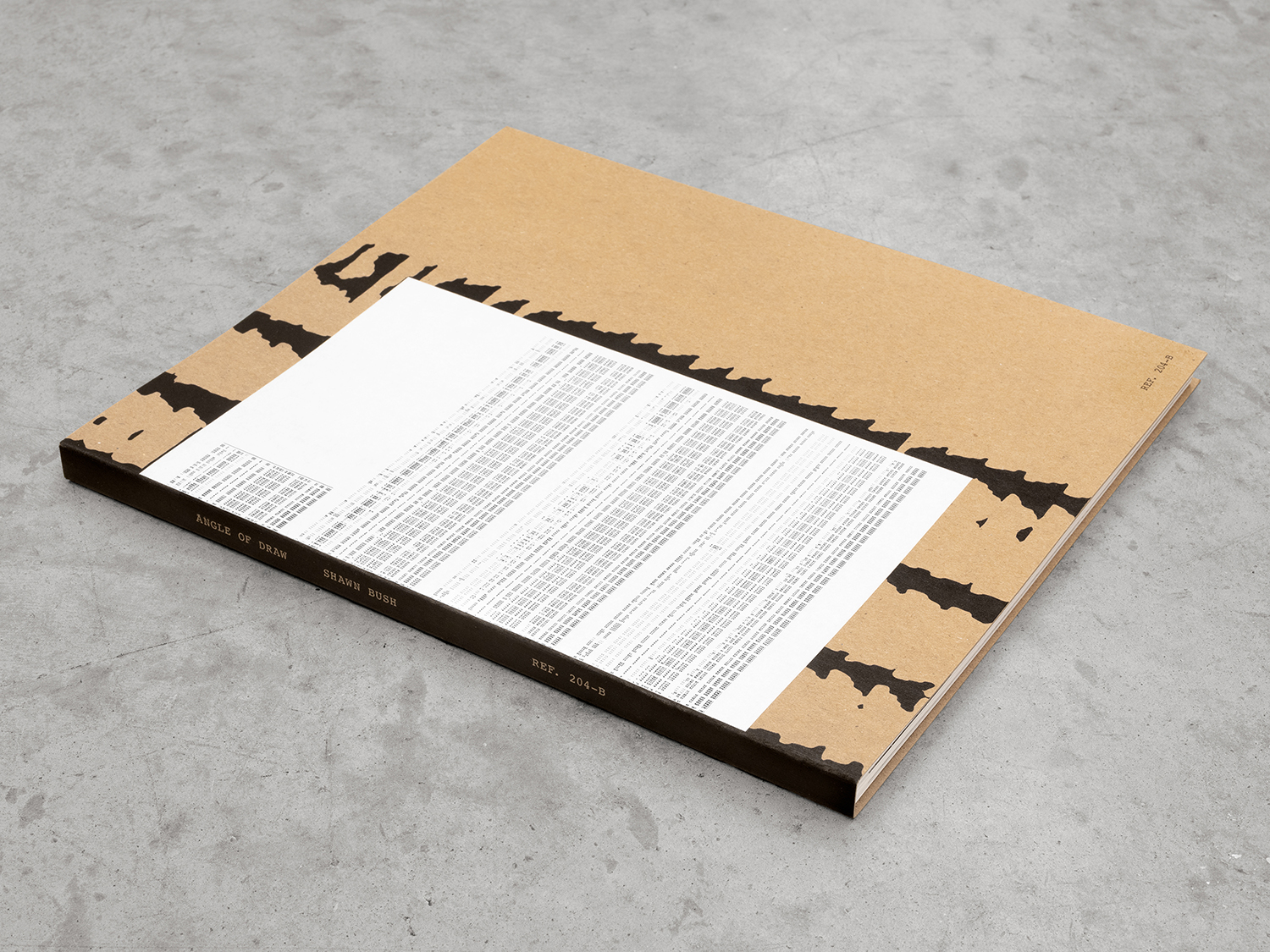
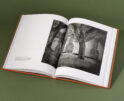
©Shawn Bush, BOUND VOLUME SHOWING KRAFT COVER, AFFIXED CATALOG SHEET, PRINTED REMNANTS, AND TITLE SPINE from the book Angle of Draw
Landscape photography is often considered as a way to consider the vista in front of the lens, but landscapes are rarely neutral. They are mapped and measured, developed and transformed, into resources long before we encounter them through a camera. In addition, the land holds invisible histories that the camera can’t always witness.
Shawn Bush has just released a new monograph, Angle of Draw, produced between 2019 and 2025. The book examines the systems that shape how land is seen and understood. Landscape photographs are brought together with survey diagrams, industrial archives, corporate imagery, and instructional materials. Through multiple exposures, rephotographed source material, and constructed environments, the work reveals the structures of measurement, extraction, and control that often remain hidden within the landscape image.
The artist book extends this idea into its physical form. Its fifty-four plates are organized through administrative classifications and housed in removable kraft shipping covers, accompanied by inserts, transfer records, protective materials, and industrial catalog paper. The book becomes both publication and logistical object.
Angle of Draw asks us to reconsider the photograph not as a neutral view of the land, but as part of the systems through which land is measured, represented, valued, and transformed.
A conversation with the artist follows.
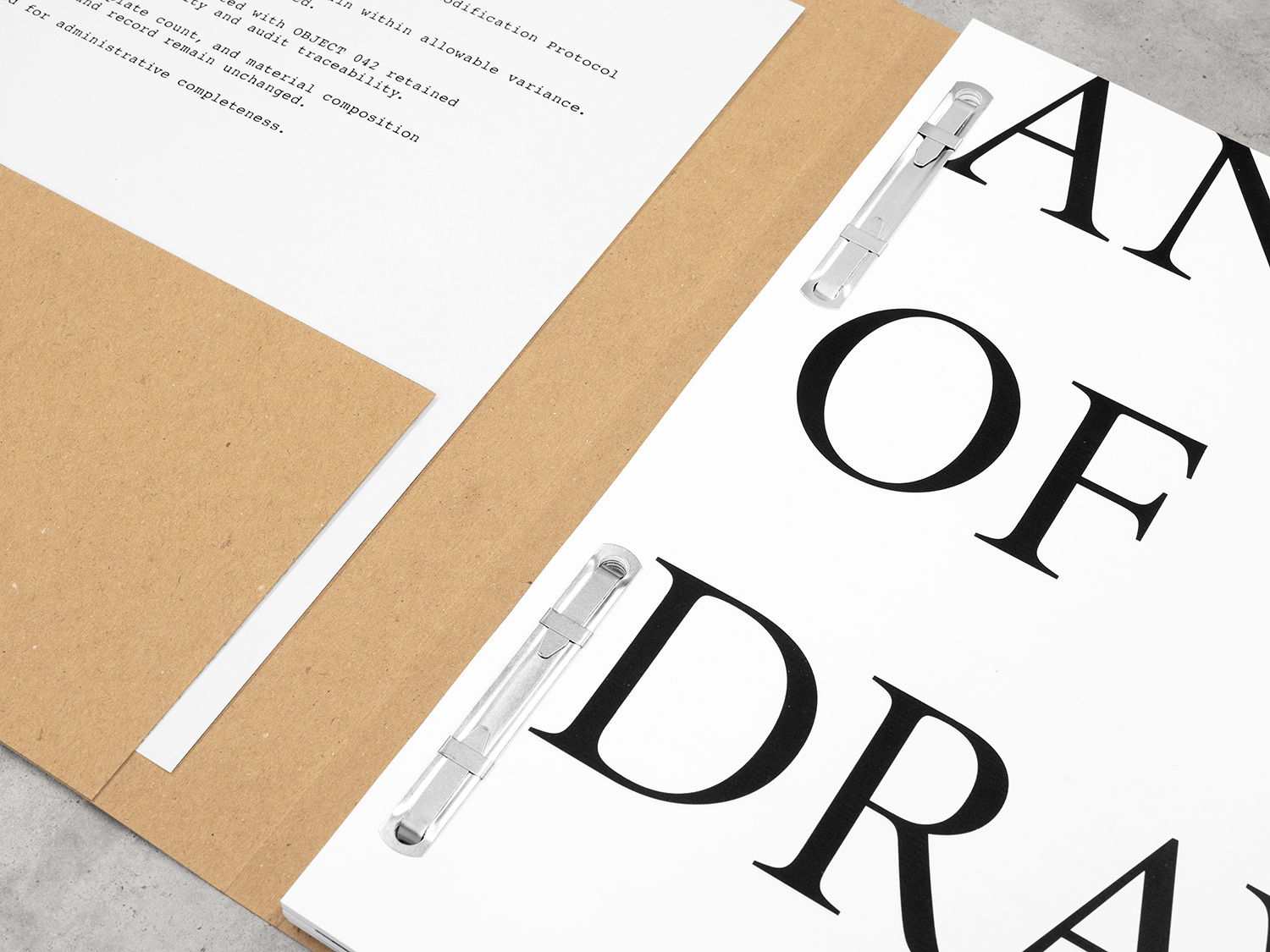
©Shawn Bush, DETAIL OF DISASSEMBLED VOLUME SHOWING COVER BOARDS, LOOSE ADMINISTRATIVE SHEET, AND TITLE PAGE BINDING from the book Angle of Draw
Angle of Draw
I developed Angle of Draw between 2019 and 2025 to examine how systems of representation administer perceptions of land, energy, and environment. The work reorganizes landscape photographs, survey diagrams, industrial archives, and corporate photographic materials through structures drawn from survey grids, instructional manuals, imaging protocols, and frameworks for quantification and management.
In addition to straight photographic construction, my large-format process uses in-camera masking and multiple exposure to collage directly onto a single sheet of film. Rephotographed source material, constructed studio elements, and observed landscapes become physically consolidated within the shared substrate of the negative. I treat the negative as an industrial surface and artifact, a site where images are aligned, segmented, layered, and made operational. Changes in registration record the procedures used to mask each sheet of film in the pitch-black interior of a film-changing room.
This attention to photographic process and material structure continues in the book. Fifty-four plates are organized through procedural titles and administrative classifications. Punched pages, metal fasteners, a removable recycled cover, an amendment insert, a material-transfer record, corrugated container, and industrial supply catalog paper used as void fill position each copy as both a publication and a logistical object.
Corporate archives reveal how institutions use technical images and administrative language to make land measurable and available for commercialization. These anthropocentric systems concentrate wealth and decision-making while distributing environmental risk. – Shawn Bush
Congratulations on Angle of Draw! Can you share your publishing journey. Are the books all handmade?
My interest in books began as an undergraduate through my mentor, Paul D’Amato, and grew in graduate school, where I was pushed to use my design and handmaking skills to produce books with material treatments I was not seeing in the independent publishing market. That eventually led me to start Dais Books. Most Dais titles are printed and bound elsewhere, with covers and other material interventions produced in my studio to create the final book.
With Angle of Draw, I wanted the book’s production to remain continuous with the material logic of the photographs. I deliberately limited myself to materials, machinery, and production methods associated with corporate offices and industrial distribution. Early conversations about publication clarified that conventional production structures would require simplifying elements such as the punctured pages and exposed metal binding. Because these features determine how the book functions and connect it to working documents, administrative records, and systems of material transfer, I chose to produce this version myself and establish the work on its own terms.
I designed, printed, collated, punched, trimmed, bound, numbered, packed, and shipped the edition from a small office. The books are handmade, but the labor is intentionally closer to repetitive administrative production than to the preciousness traditionally associated with a handmade book.
The physical labor was mine, but the project was not developed in isolation. A close group of people provided essential feedback over several years, especially Shane Rocheleau. Their criticism helped me arrive at a book whose images, structure, and circulation operate as one complete argument.
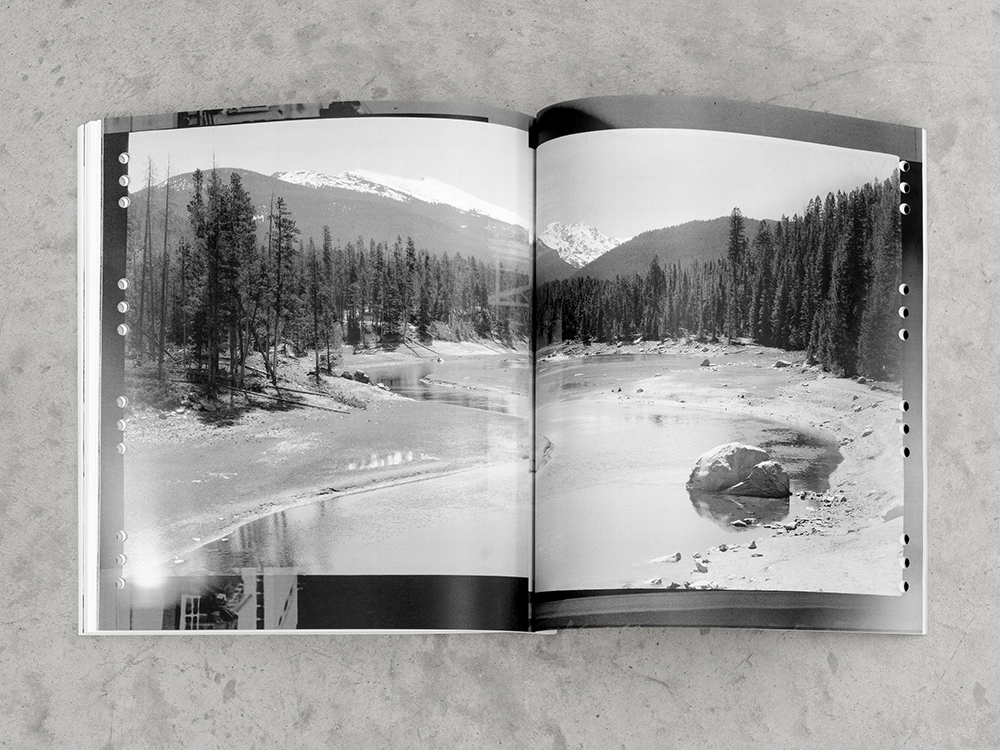
©Shawn Bush, FULL-BLEED MOUNTAIN LANDSCAPE SPREAD INTERRUPTED BY REGISTRATION BANDS AND DRILLED MARGINS from the book Angle of Draw
The work challenges the idea of the landscape photograph as a neutral view. When did you first become interested in the systems of measurement, classification, and control that exist behind the landscape image?
The investigation began somewhat indirectly while I was living in California and making A Golden State. I was thinking about how media and inherited images of the American West project worth onto land rather than simply describe it. How representation helps determine what becomes desirable, profitable, protected, or expendable. That question stayed with me, but it gained urgency when I moved to Wyoming, where vast rivers, mountains, and open vistas are physically intertwined with oil and gas infrastructure.
That tension is embedded in my daily experience. During my short commute to work, I see a pristine mountain in one direction. Driving home, I see an oil refinery. These are not two separate versions of Wyoming or the American West. They occupy the same landscape. The narrative changes depending on the direction of gaze, much like a camera.
Continual exposure pushed me to look beyond what a landscape photograph depicts and toward the structures of representation that precede and support industrial use: surveys, maps, technical images, property divisions, corporate archives, and systems of measurement. Landscape photography has never simply described land. It has also helped name, divide, classify, and claim it. That is also the function of process photography within industry. The camera isolates an operation so that it can be observed, measured, cataloged, controlled, and repeated. Image-making and extraction are similar in that both isolate a portion of the world, assign it value, and convert it into something that can be possessed, circulated, or used for social, economic, or political gain.
Angle of Draw grew from recognizing that a photograph can appear to celebrate a landscape while also participating in systems that make it legible and available to power. I wanted to make images in which those functions could not be separated. The result is a call and response between land as image and land as resource, or commodity.
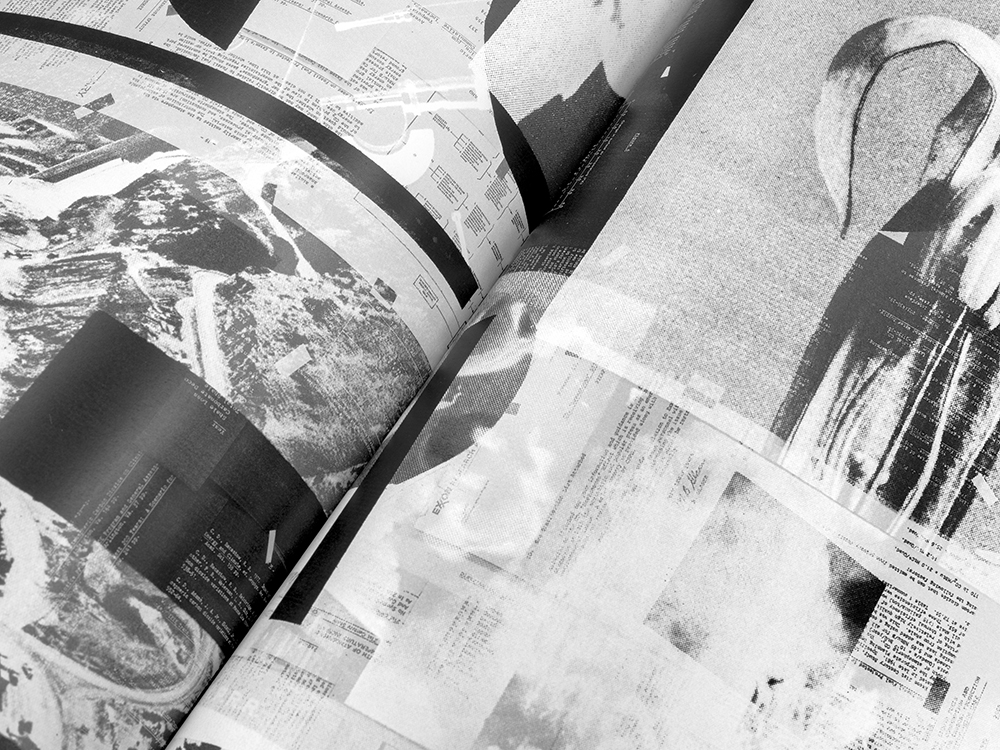
©Shawn Bush, OBLIQUE DETAIL OF LAYERED LARGE FORMAT COMPOSITE COMBINING EXTRACTIVE LANDSCAPE, TECHNICAL DOCUMENTS, AND PHOTOGRAPHIC FRAGMENTS from the book Angle of Draw
For this project, you combine landscape photographs with survey diagrams, corporate imagery, archives, and instructional materials. What is the result when these very different forms of photographic language share the same space?
I hope the result provides a more complete picture of how photography has operated within industry, as a form of assessment and control and as a tool for shaping public perception.
The book does this by combining several series that approach the same underlying conditions from different vantage points. Angle of Draw makes up the bulk of its visual content, with accents from subordinate projects developed in parallel with the primary works. Administrative texts and diagrams are used throughout the book, reflecting structures already present within the collaged photographs. In this way, image, text, document, and object begin to operate within the same system.
This is especially present in PERCEPTION MANAGEMENT PROTOCOL, which shows a selection of images drawn from my Land, Sea & Air series. In making the photographs, I physically collage positive and negative versions of a leaked internal energy industry dossier with rephotographed illustrations from The Encyclopedia of Photography and The Prop Builder’s Molding & Casting Handbook. In the series, instructional language for constructing and controlling the image meets administrative language for governing land.
I am interested in the point where photographic construction and environmental control begin to mirror one another. Corporate visual propaganda presents the interaction of industry and nature as a balancing act, where each appears to support the other. Landscapes are absorbed into company names, websites, and advertisements until extraction, both physical and photographic, can appear natural, neutral, necessary, or even environmentally responsible.
When these different languages occupy the same space, I want their synthesis to reveal the intentions embedded within each of them. One teaches us how to construct and control an image. The other reveals how photographs can help control land and the perception of its use.
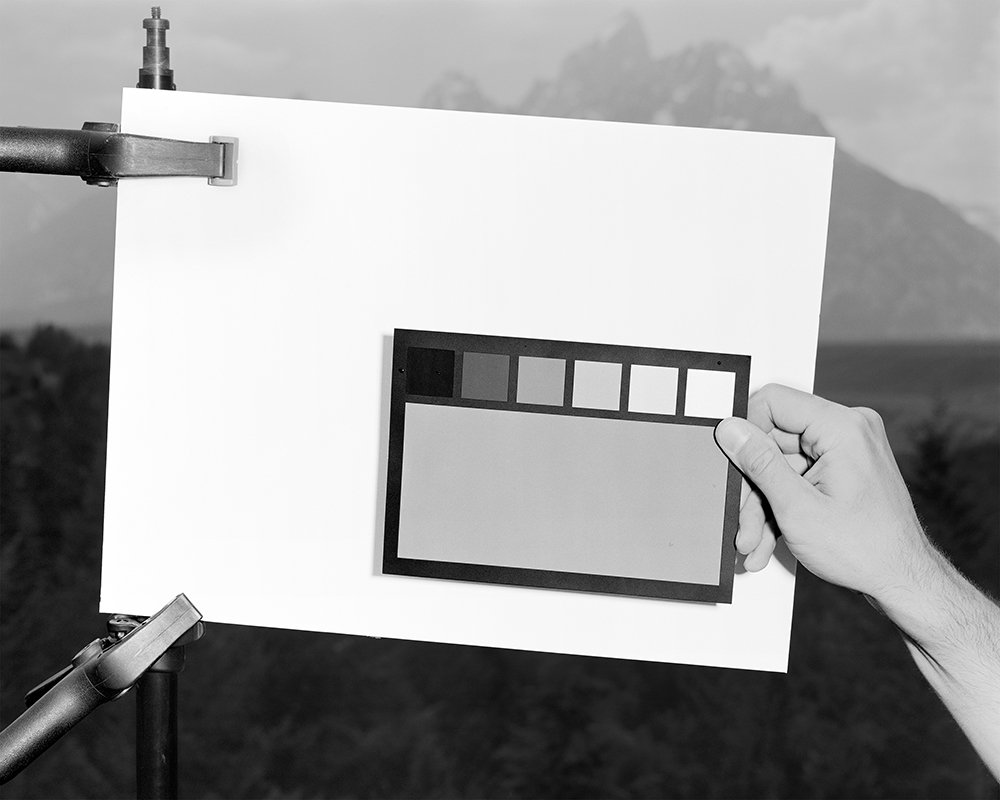
©Shawn Bush, After Ansel, No.2 from the book Angle of Draw
Can you speak to the title, Angle of Draw?
The title is useful because it carries direct and indirect references, a structure that occurs frequently throughout the book. The direct reference is to the mining industry. Angle of draw is a term used to describe the relationship between the edge of an underground mine and the outer limit of surface subsidence. It measures how removing material below ground can pull the visible landscape into its void. Consequence extends beyond established boundaries.
Angle also refers to perspective and the position from which something is viewed, through the camera but also through the body behind it. Draw suggests the pull of the mine, but also the act of drawing a weapon. Similarly, a camera is aimed at a target, and the resulting image has potential to produce consequences beyond the moment of capture.
I do not equate making a photograph with the physical violence of mining the Earth, but I see them as analogous forms of extraction. Both begin by targeting and isolating something, establishing boundaries around it, determining what can be taken, and then taking it. The title synthesizes these meanings into a single phrase.
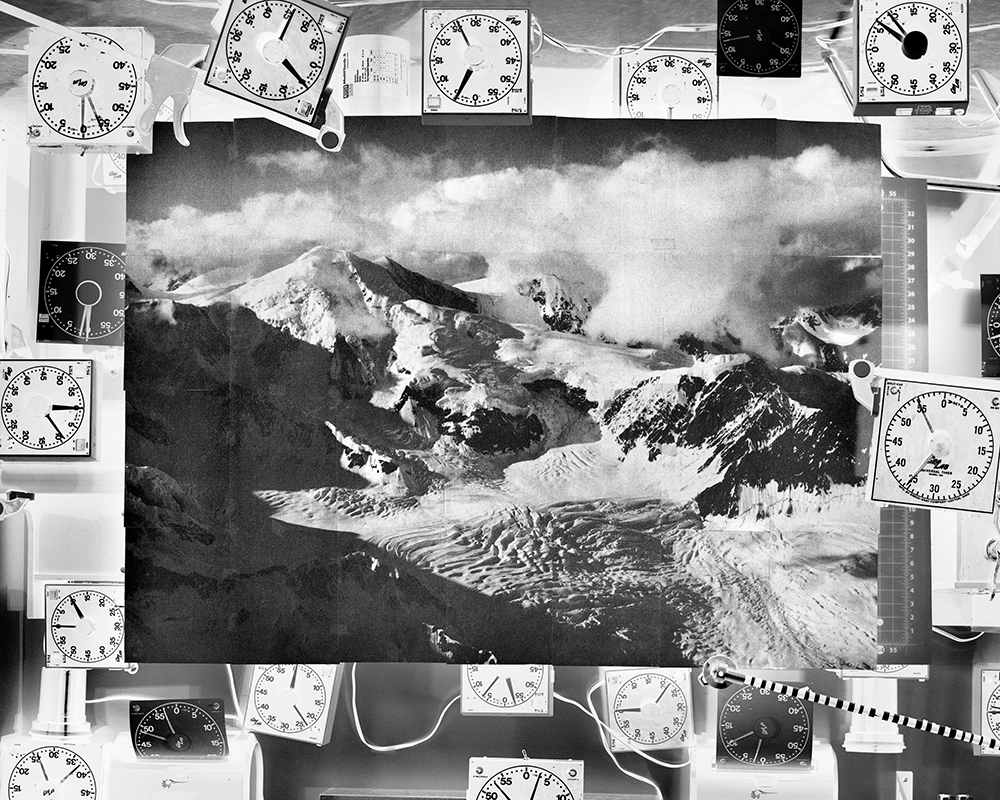
©Shawn Bush, Contact Sheet for a Broken World from the book Angle of Draw
You use in-camera multiple exposures, rephotographed source material, and constructed studio environments. Why are these particular photographic strategies important to your investigation?
I consider myself a recycler. I return to images, diagrams, and ideas that have been treated as fixed, then reframe them under different conditions. Recycling is important to me in relation to sustainability, but also as a method of reinvestigation. When a source is cropped, inverted, rephotographed, or placed in a new relationship, its authority and intended function begin to shift.
Collage allows me to change those relationships in ways that I could not through a single exposure. Through the collaging process, I am able to make certain pieces of information larger, louder, or more difficult to ignore. I work in-camera with foam masks and directly on large-format film with paper masks. Across multiple exposures, masks are introduced and removed, consolidating rephotographed sources, constructed elements, and observed landscapes onto a single negative. They become photographically bound within a silver-bearing negative through this process. Each exposure is cumulative and cannot be undone. There is permanence to the actions set in place.
In the Land, Sea & Air series, I combine data reports with reproduced photographic illustrations intended for technical instruction. The shapes of the paper masks refer directly to forms found within the report data, seen in the background of each piece. The original data is often too small to remain legible and becomes a textural ground, but still determines how information is distributed across the photograph.
Constructed environments are equally important because I am interested in how ideas and mythologies are created. Photographic apparatuses that hold, measure, calibrate, and control implicate the medium itself. They also provide an entry point for understanding that this project is as much about photography as it is about land, industry, and systems of power.
Similar to collaging, the studio allows objects, reproductions, props, archival images, and functioning equipment to occupy the same space in a negative. I use that instability to pull from established formulas of visual propaganda, creating delayed recognition and controlled confusion. In Contact Sheet for a Broken World, a darkroom sink, functioning timers, rephotographed timers, archival imagery, and studio equipment create uncertainty about which elements are objects, which are images, and which are simulations of either. The completed photograph is presented in its photographic inverse as an additional strategy of destabilization.
These strategies allow the investigation to be physically built into the negative. The work is not solely about photographic construction and environmental control. It is also made through acts of masking, registration, and repetition.
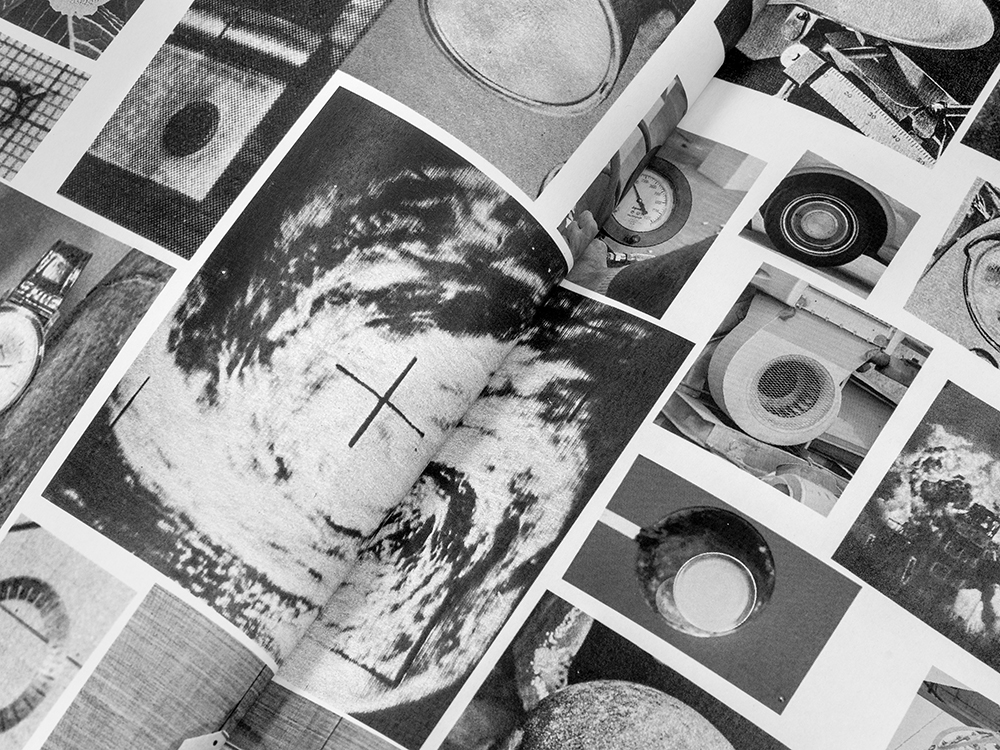
©Shawn Bush, OBLIQUE DETAIL OF ARCHIVAL COMPOSITE CENTERED ON STORM IMAGERY, GAUGES, APERTURES, AND MEASURING DEVICES from the book Angle of Draw
The photographs are described as “operational elements”. Can you talk about what you mean by this, and how you want the viewer to experience the photographs as part of a larger system?
I use the term operational elements because I do not want the photographs to be understood as isolated or self-contained images. Each performs a task within the structure of the book. Some measure, some instruct, some classify, some conceal, and some persuade. Their meaning depends on how they operate together within a larger system of capitalist extraction.
In my office, I have a Canon AE-1 that has been completely deconstructed, with every component mounted to a board. Taken apart, the individual pieces reveal a structure that is normally concealed. The camera can’t perform its original function. I think about the photographs and plate list similarly. Each image provides a partial view, while their relationships expose a larger structure that no single photograph could hold.
The term also refers directly to the photographic tools and instruments that recur throughout the book. These objects standardize photographic production by converting light, time, and tone into measurable and reproducible conditions. Including those tools in the frame positions photography as a system of procedures rather than a straightforward way of looking.
I want the viewer to assemble the larger operation by moving among these elements and materials. Meaning accumulates through sequence, repetition, interruption, and material selection. The book ends without a clear conclusion because the system it describes has no natural ending. Closing the book does not end the operation. Within a profit-driven model, the only end comes when extraction is no longer profitable.
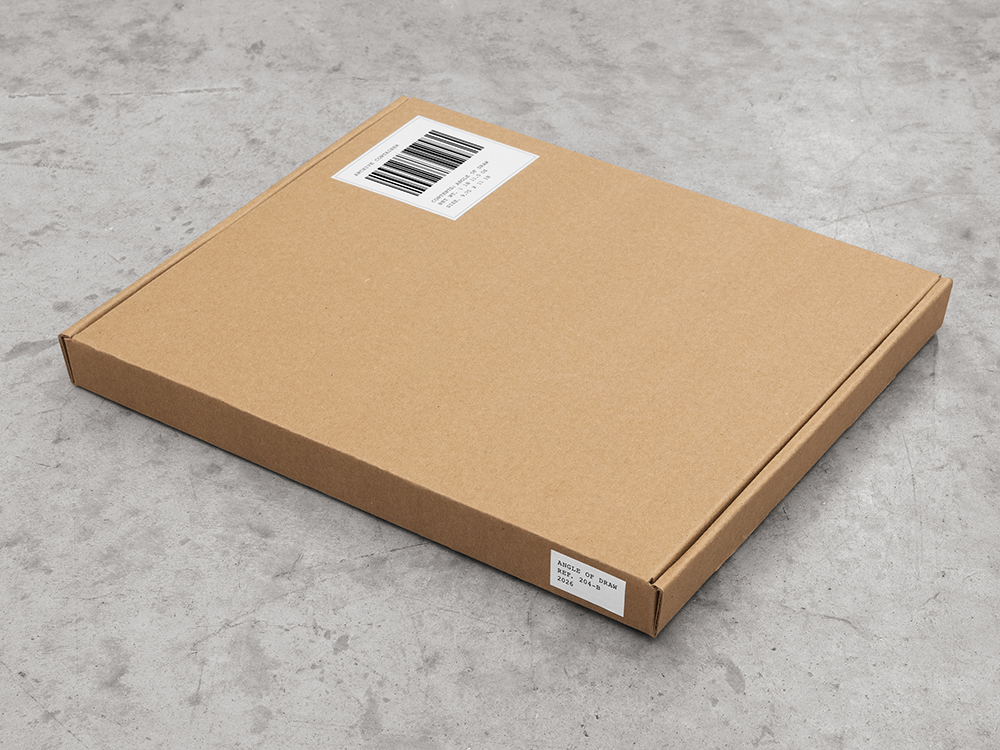
©Shawn Bush, CORRUGATED CONTAINER, FRONT OBLIQUE VIEW from the book Angle of Draw
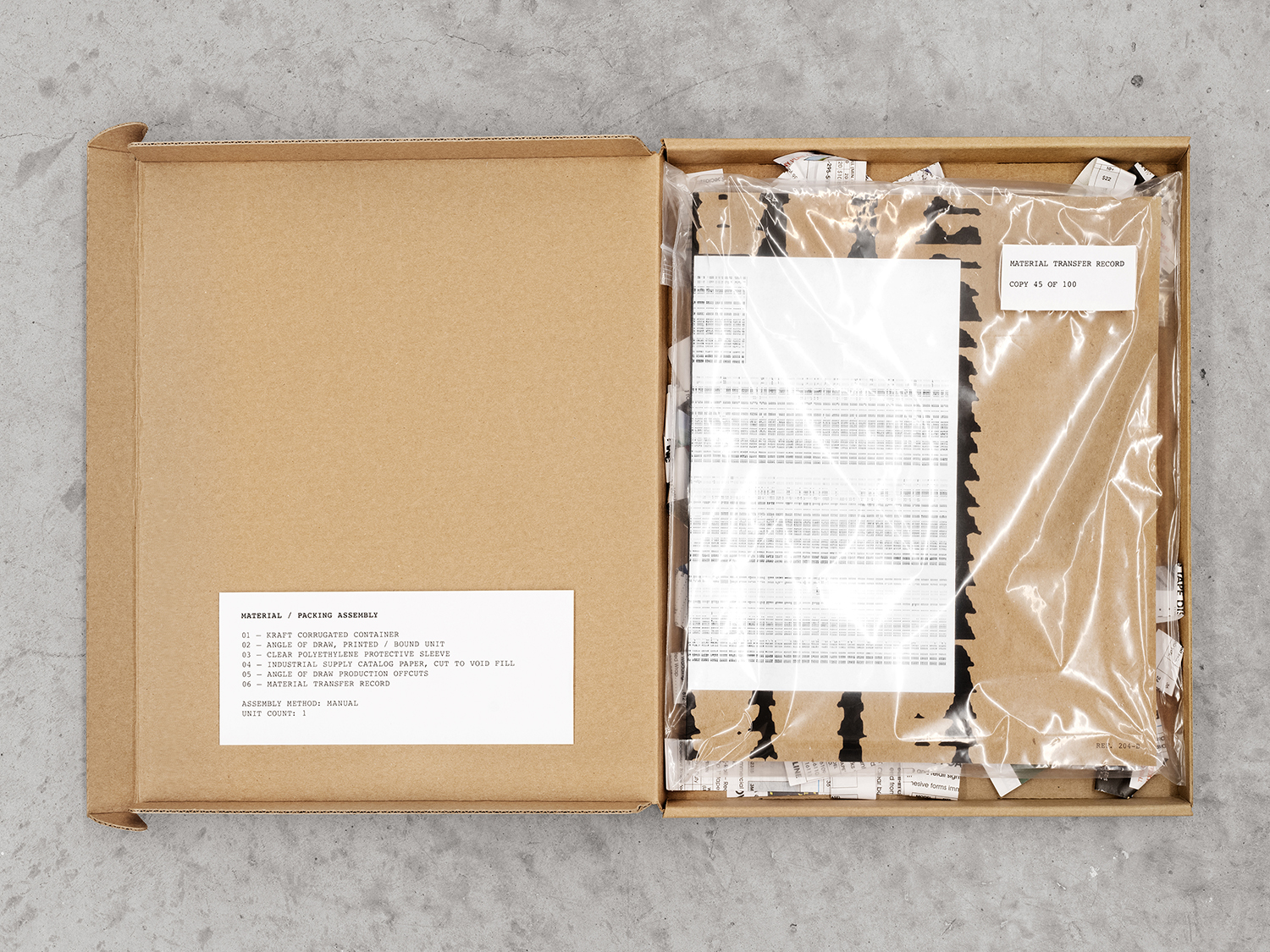
©Shawn Bush, OPEN CONTAINER WITH COMPLETE MATERIAL ASSEMBLY from the book Angle of Draw
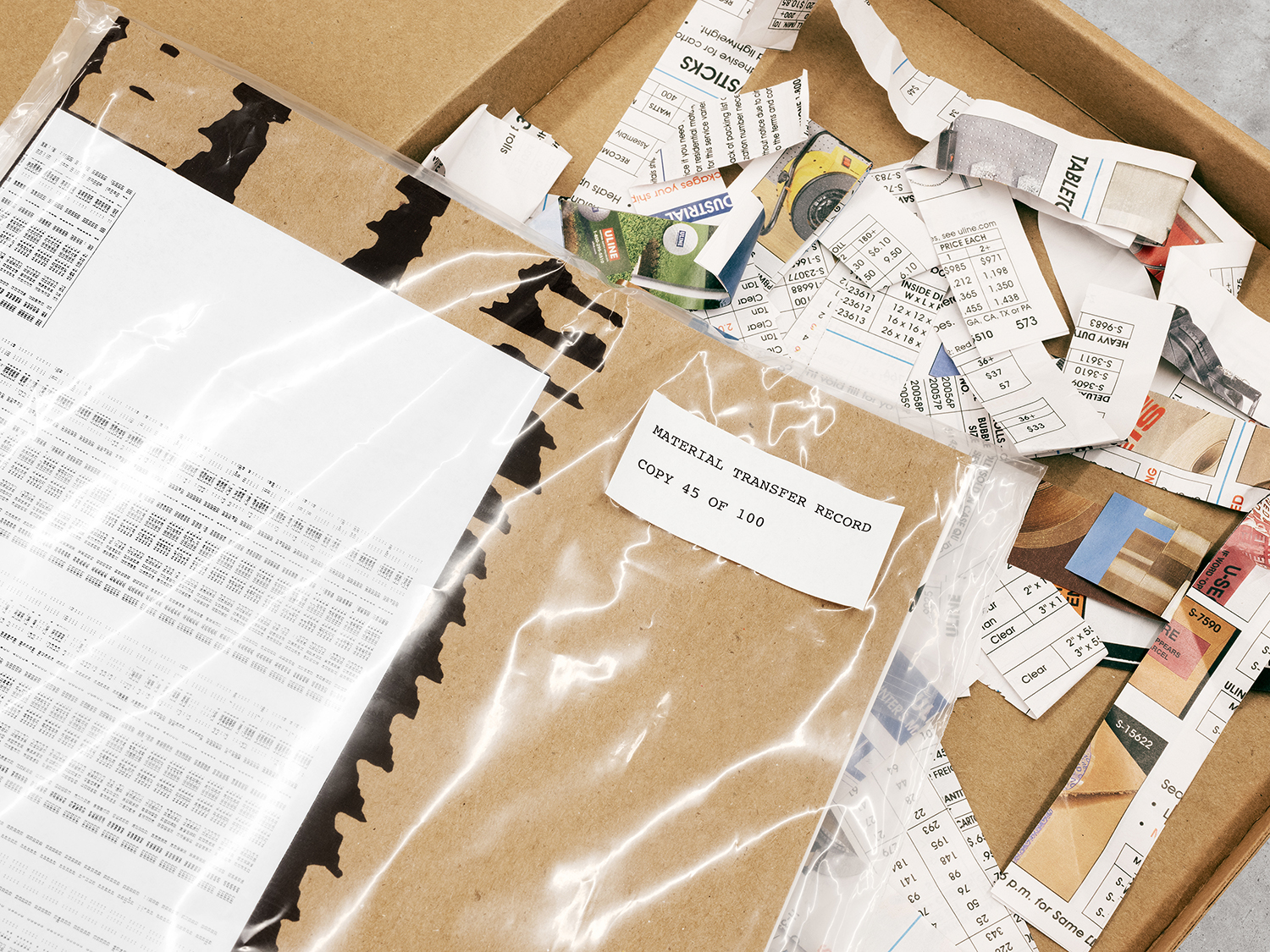
©Shawn Bush, DETAIL OF SLEEVED NUMBERED COPY AND INDUSTRIAL CATALOG PAPER USED AS PACKING MATERIAL from the book Angle of Draw
The physical book is almost as important as the photographs themselves, with shipping materials, transfer records, industrial catalog paper, and administrative classifications. How did the book’s material form develop alongside the photographic work?
The physical book functions as part of the work rather than simply as a container for the photographs. The images examine how land and visual information are measured, classified, controlled, and circulated. The book’s materials allow those processes to be physically encountered by the reader.
Because part of my practice is rooted in bookmaking, meaning often comes through handling materials and working with printing processes. Touching, folding, puncturing, and trimming paper allows me to understand what resonates with both my hand and the content. Testing different printing methods helps me understand which process best communicates intent.
The recycled shipping-pad cover, perforated pages, exposed metal fasteners, transfer record, amendment sheet, protective sleeve, corrugated container, and industrial catalog packing paper all originate in administrative or commercial systems. They are used to store and revise information, or to protect and transport goods for purchase. Viewed together, they position the book as a publication, working document, and logistical object.
The book’s form developed through producing the edition myself. Many ideas failed because of the material and printing limitations I established in the office. Those failures were not separate from the development of the book. They made the final object more complete. What I expected to produce in one month, ended up taking over four. That duration allowed the structure to change in response to how the materials reflected the content and behaved in practice. Outsourcing labor would not have allowed me to respond directly to the materials as the object developed.
I wanted the book’s logic to carry from the moment the box is opened through the final page and amendment. Before the reader encounters the first photograph, they are already handling the systems that organize and circulate it. The material form completes the understanding of the whole.
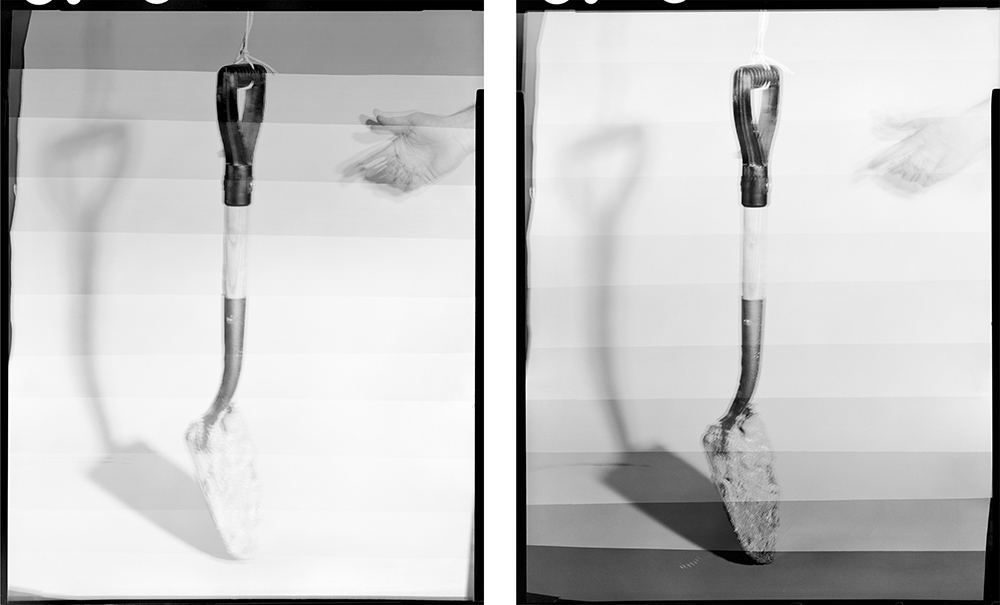
©Shawn Bush, Litmus Test no.1 and Litmus Test no.2 from the book Angle of Draw
How did this six-year project change over time?
It began with extensive experimentation and a basic problem. How could I make photographs about industry and landscape without singularly producing photographs of industrial sites and landscapes? I knew that without some form of intervention, a conventional photograph could be separated from my intentions and used to support the same industrial narrative I wanted to question.
That concern pushed me toward archive investigation, studio construction, in-camera masking, and multiple exposure. I began bringing landscape, archive, data, and image together within the same negative. Over time, the focus shifted. I became less interested in only representing what industry does to land and more interested in how photographs, diagrams, and data help industry describe, organize, and normalize its use. I wanted to move closer to the internal logic of those who create industrial protocols, rather than remain a photographer observing these industries from afar. Photography became both my subject and the structure through which I examined extraction.
Initially, I wanted every photograph to contain its own context. As the project later developed into a book, I realized that too much context resolved the images too quickly. Controlled confusion became important, reflecting how visual propaganda operates within the work. Context could also accumulate through sequence, repetition, administrative language, and material. What began as a question about how to represent extraction became an investigation into how representation participates in extraction.
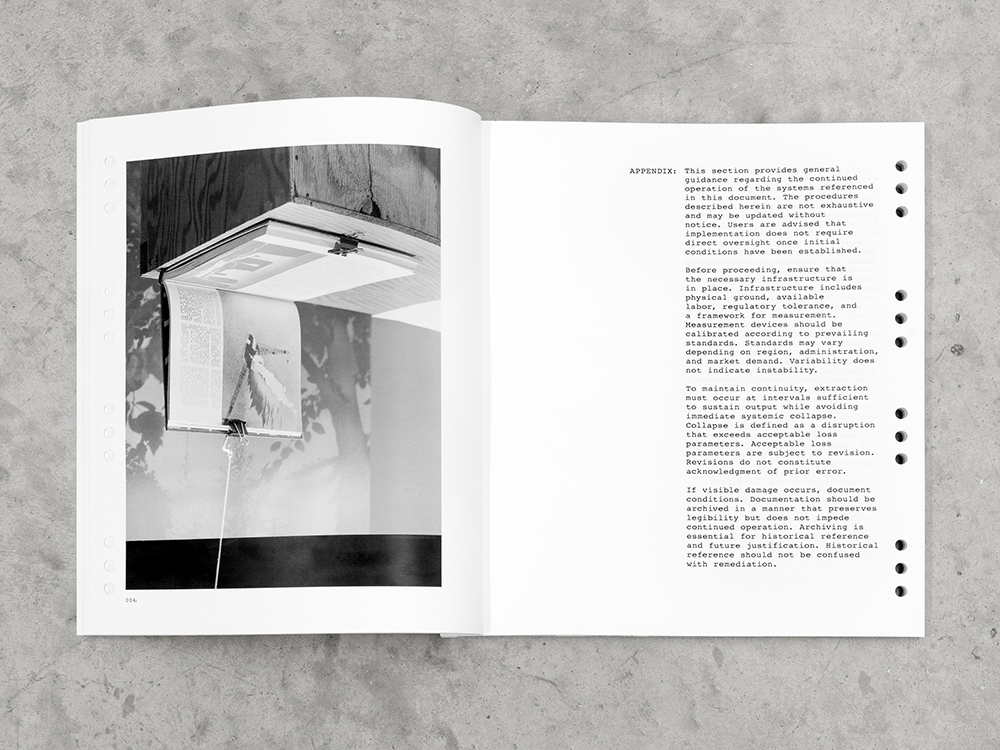
©Shawn Bush, INTERIOR SPREAD PAIRING AN INVERTED INSTALLATION PHOTOGRAPH WITH APPENDIX TEXT ON SYSTEMS, EXTRACTION, AND ACCEPTABLE LOSS from the book Angle of Draw
What interests you about bringing the visual and material language of corporations and institutions into an artist’s book?
Corporate and institutional language performs authority through the appearance of neutrality. Classifications, codes, diagrams, forms, and transfer records appear objective, yet determine how risk and value are understood and accessed. Bringing that vernacular into the book allows me to borrow its authority while exposing how that authority is constructed. I wanted it to become the architecture.
The book is meant to be a book, but also a world, or an entry into one. I am not describing these systems from the outside. The viewer enters through their procedures, classifications, materials, and protocols. The coldness of that vernacular sets the tone and forces the book into tension with the document and the logistical object.
That tension prevents the book from claiming moral distance from its subject. The paper, ink, metal binding, protective sleeve, corrugated container, and fuel used to transport the edition are all products of the industrial and commercial systems the work examines. If the book is critical of photography and capitalist extraction, it has to implicate itself. Concealing its own dependencies would reproduce the same appearance of neutrality it questions. Its materials, printing processes, and distribution methods must carry evidence of its own participation within these systems.
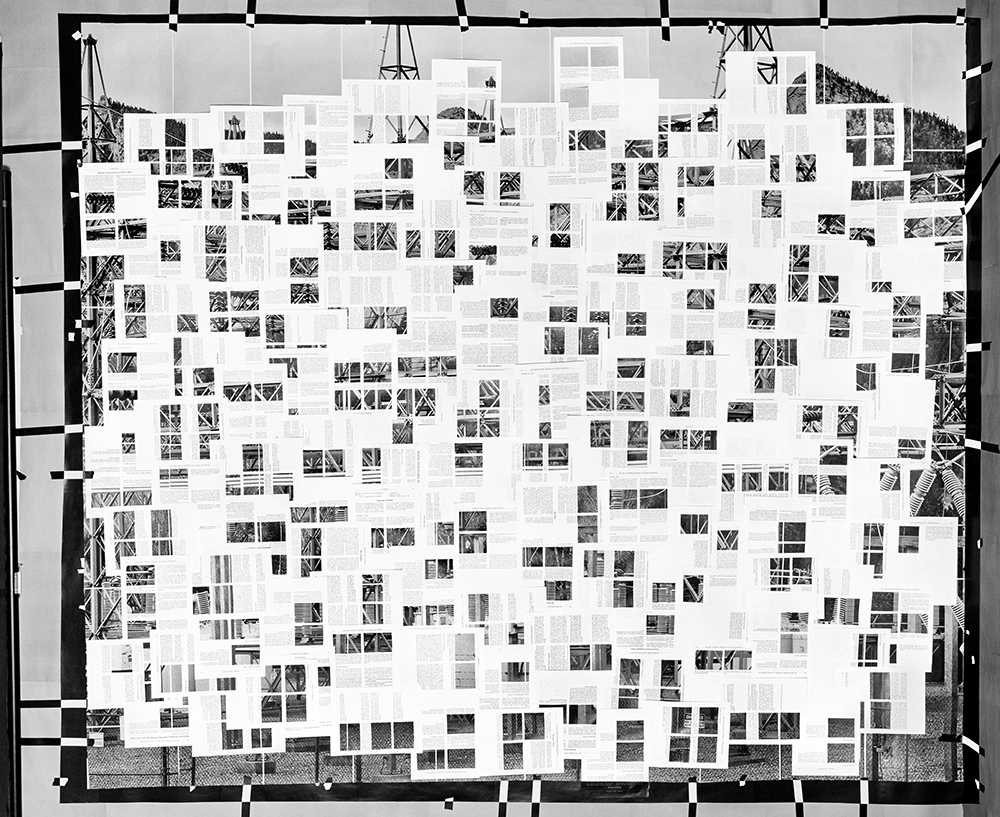
©Shawn Bush, Antarctica No.1 from the book Angle of Draw
How does this work connect to your previous projects?
Formally and visually, Angle of Draw is a departure from my previous two books. Every photograph was made on 4×5 or 8×10-inch film. The work is entirely black and white, and many of the images are composites produced through masking with multiple exposure. The conceptual concerns continue a longer trajectory within my practice.
In A Golden State, I examined how images project worth onto land and shape how it is perceived. In Between Gods and Animals, I examined the American straight white male’s pursuit of sustained power and the institutions which enforce and conceal it. Angle of Draw brings those concerns together by asking what happens when authority over land and authority over its representation are concentrated in the same hands. Extraction is both physical and photographic.
The shift in visual language follows the conceptual one. I construct the photographs using their logic as a filter. I wanted the images to appear less objective and become more brutal. To be felt before they are fully understood.
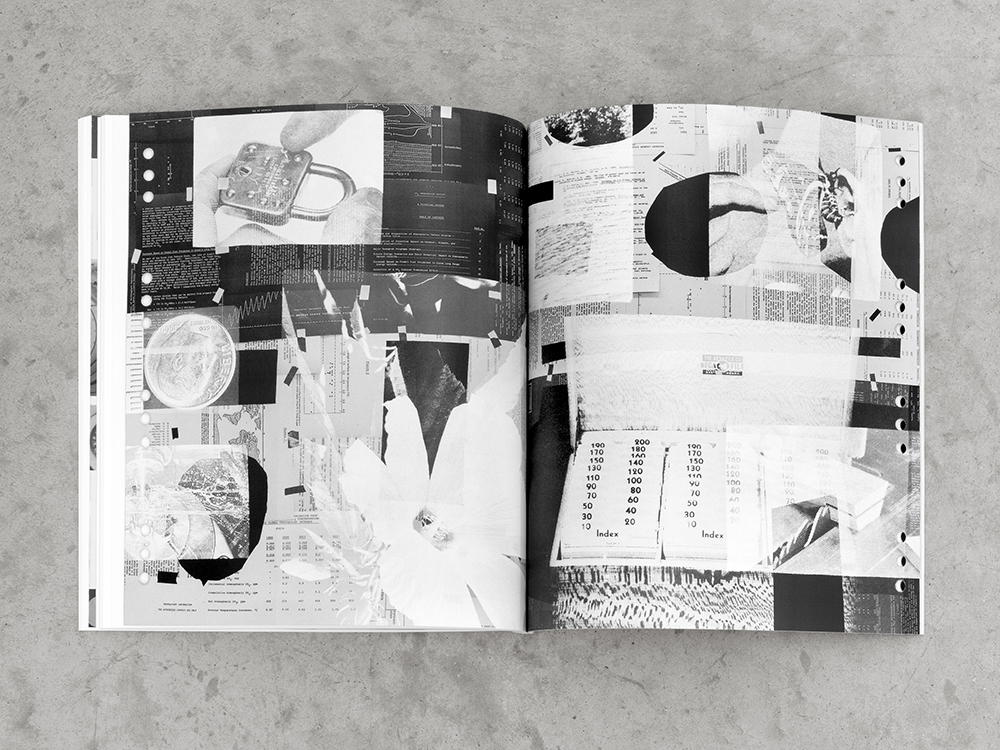
©Shawn Bush, FULL-BLEED LARGE FORMAT COMPOSITE COMBINING USER MANUAL ILLUSTRATIONS, TECHNICAL DOCUMENTS, AND INDEXED DATA from the book Angle of Draw
Do you have any book signings or events coming up?
There are no formal book signings currently planned, although I am happy to sign copies acquired directly. Each book is already numbered and editioned, and single signing requests can be made by email.
At this point, I am more interested in what the book can initiate beyond a signing event. I have been developing ways for its photographic, administrative, and material language to operate at an architectural scale. Larger installations would allow its images, texts, materials, and systems to occupy the same physical environment and change in response to the site.
From October 15 through November 20, 2026, I will exhibit work from my Land, Sea & Air series at the University of Northern Colorado. Several of those photographs appear in the PERCEPTION MANAGEMENT PROTOCOL section of the book. I will give an artist talk on October 22, 2026 that expands on the research behind that series and the in-camera and on-film masking process used to construct the photographs.
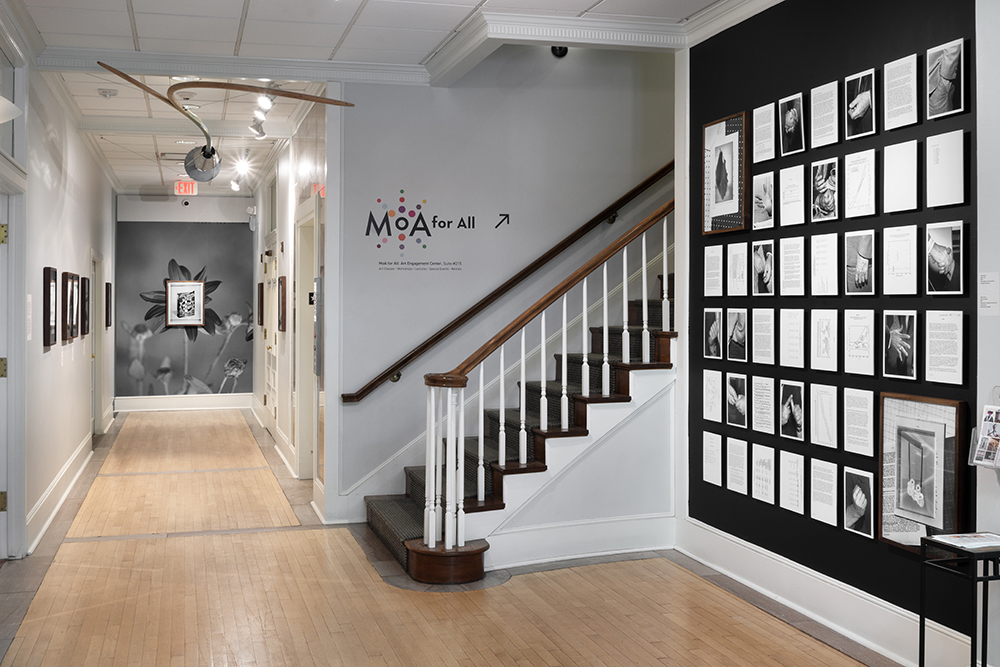
© Shawn Bush, Installation view of Angle of Draw, Museum of Art Fort Collins, Fort Collins, Colorado, 2025
View extended book documentation [PDF]
Order book direct through artist at https://shawnbush.com/angle-of-draw
___________________________________________________________________
Shawn Bush constructs photographic systems that examine the relationships between landscape, industry, and civic identity. Working across book form, installation, and time-based media, he treats images not as isolated representations but as structural components within broader visual architectures. His projects reorganize familiar landscape tropes such as mountain, monument, infrastructure, and survey into sequences that expose how visual coherence stabilizes political, economic, and environmental hierarchies.
Bush approaches photography as both an indexical and extractive process—one that isolates, transforms, and reorganizes fragments of the world into systems of meaning. Through repetition, sequencing, and spatial arrangement, his projects examine how image conventions naturalize power while also creating opportunities for disruption and reinterpretation. He is the founder of Dais Books and teaches at Casper College in Casper, WY.
https://www.instagram.com/shawnbushstudio
Posts on Lenscratch may not be reproduced without the permission of the Lenscratch staff and the photographer.
Recommended
-
Bego Antón: All of Them WitchesOctober 15th, 2026
-

Stephanie Duprie Routh: The Atlas of ThingsOctober 13th, 2026
-
John Baer: The Extraordinary Ordinary: A Memoir in Photographs, 1945–1954October 12th, 2026
-
Nata Drachinskaya: BINOMOctober 6th, 2026
-
Book Talk: Text as Structure in the PhotobookOctober 3rd, 2026