The 2021 Paula Riff Award: Katie Shapiro
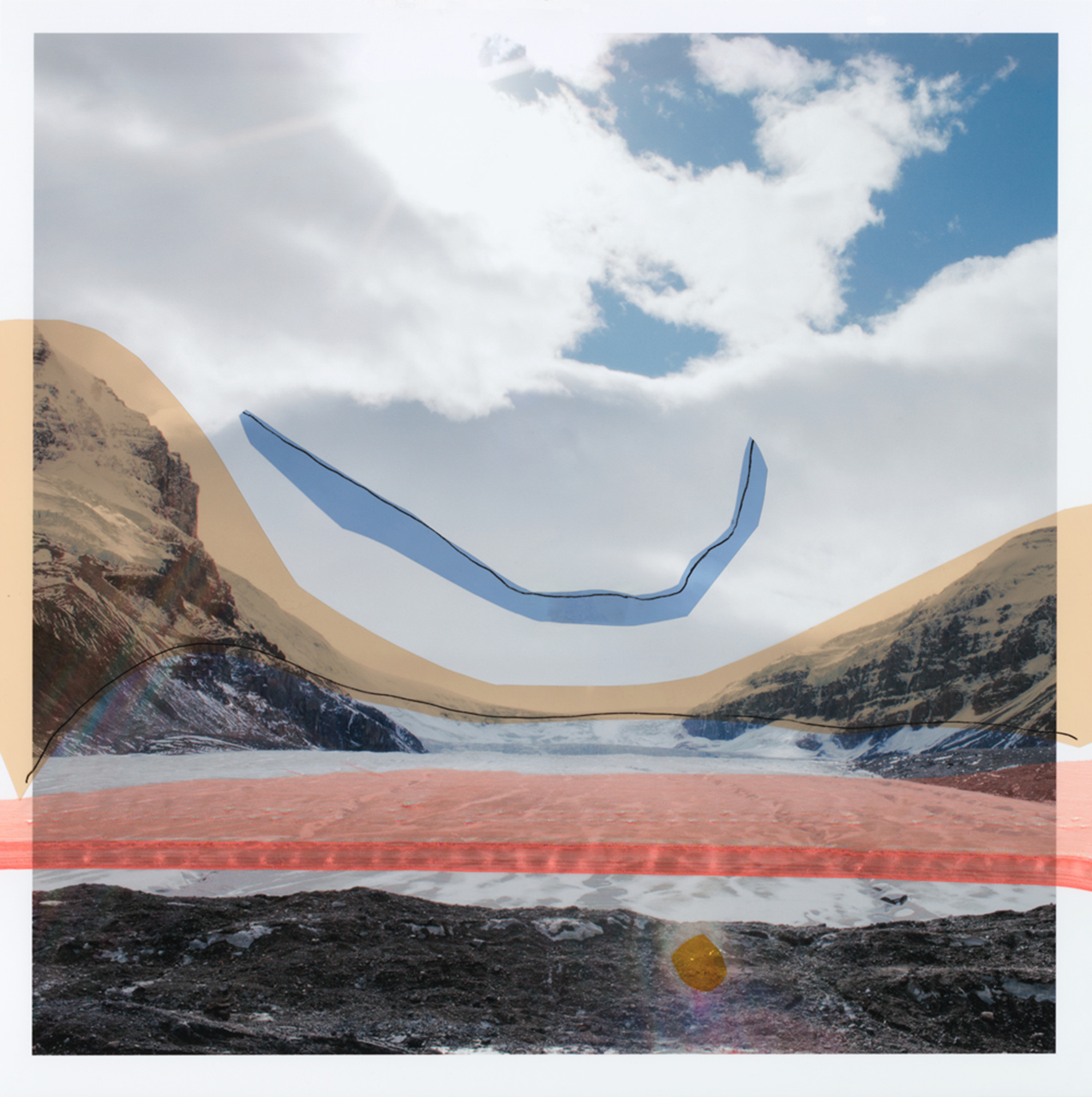
©Katie Shapiro, Athabasca Glacier Smile, Inkjet print with photographic gels and tape
Congratulations to artist Katie Shapiro for receiving the 1st Annual Paul Riff Award, jurored by Brenton Hamilton. The Paula Riff Award was created by the Center for Photographic Art and LENSCRATCH in 2021 as a way to celebrate and continue the legacy of artist Paula Riff. Paula was an innovator, using lensless photography and historical processes to create objects of remarkable beauty. A huge thank you to our juror who took on the herculean task of considering over 800 submissions to the award from across the country and around the world–entries from Iran, Brazil, India, Argentina, Italy, Russia, China, Japan, Austria, France, Canada, Norway, Germany, Thailand, the Czech Republic, South Korea, Serbia, Mexico, Bangladesh, the Ukraine, the Philippines, and Vietnam to name a few.
Brenton Hamilton states about Shapiro’s work: “Katie Shapiro’s work struck me immediately for its joy and innovation and its marriage of painterly concerns and extra photographic qualities. It is simultaneously an observation and a dreamscape, extending our notions of the world around us as an imagined space. I’d like to think that Paula would revel within Shapiro’s exuberance and her bold experiments in a special kinship between image-makers. Brava ! Katie and this fine vital work.”
Born in 1983, Katie Shapiro received an MFA from the University of California, Irvine in 2015 and a BFA in Photography from CalArts in 2007. Her practice is centered on the ineffable, and visualizing things that cannot be seen. Her work has been exhibited internationally, including at Kopeikin Gallery, Los Angeles, The Armory Center, Pasadena, Christopher Grimes, Santa Monica, Joan, Los Angeles and Aperture Gallery, New York. Her work has received coverage in Artforum, the Los Angeles Times, and New York Magazine and is housed in private collections as well as in the permanent collection at the Huntington Library. She’s been an artist in residence at the Banff Centre and at Bullseye Glass in Pasadena. Shapiro lives and works in Los Angeles. IG @katieshapirostudio
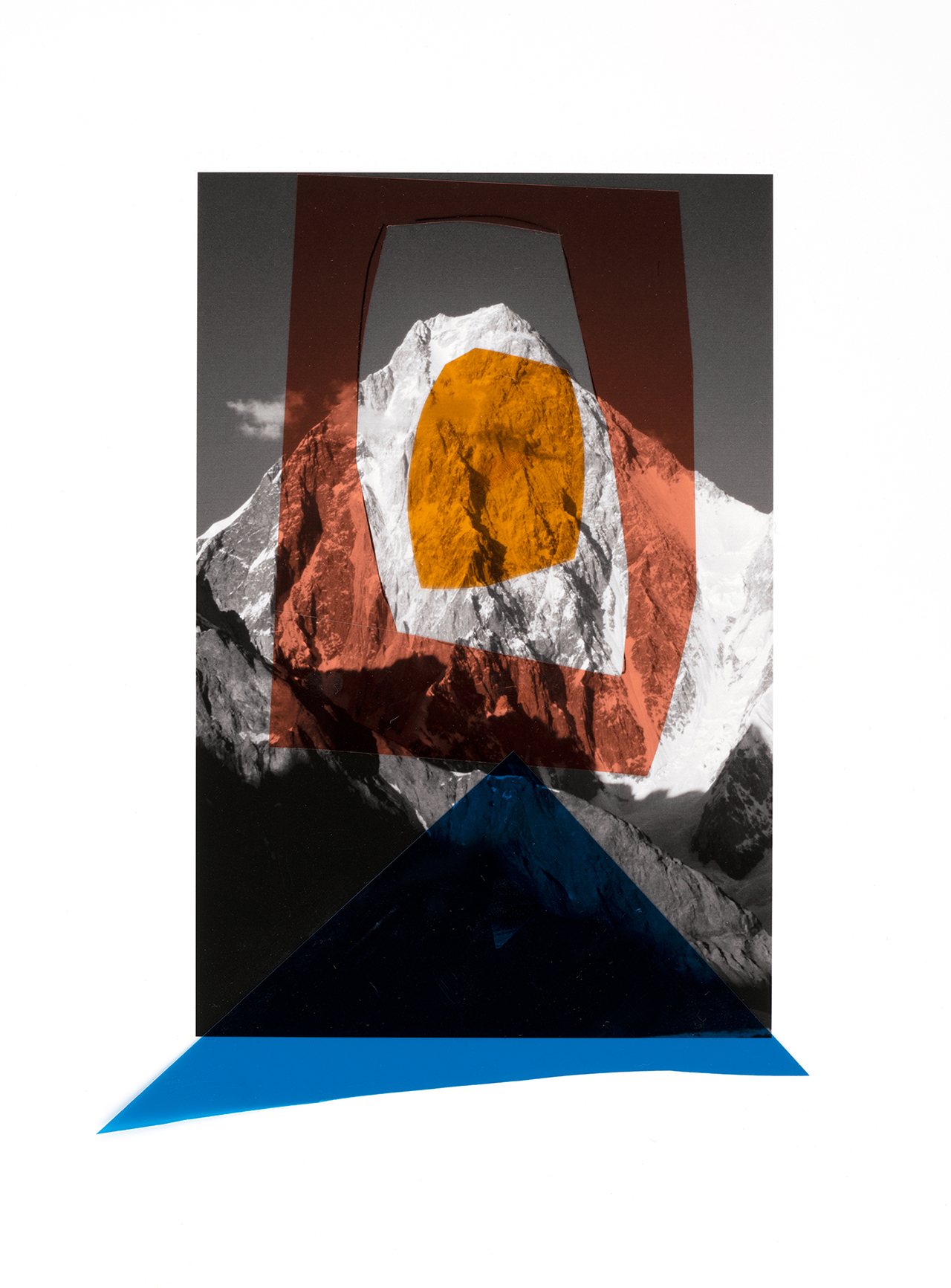
©Katie Shapiro, Gasherbrum, Inkjet print with photographic gels and tape
My interests as an artist lie within invisible forces in the universe, and my hope is to arrive at evocative, multi-layered works that speak to the complexity of our human experience in its myriad personal, historic, and cosmic dimensions. I’m working at pushing my photographic practice to encompass sculptural elements that create more experiential works that blur the lines of what a photographic image can do, and to play with form and image. My recent interests have been in earthly metaphors, specifically energy vortices, impact craters, and high mountain elevations which speak to our human experience by looking at marks on the earth, as well as phenomenon’s that are outside of our range of perceptions. My continued exploration in my practice is to create immersive works that use photography to push our understanding of the medium and bring it into a new place. – Katie Shaprio
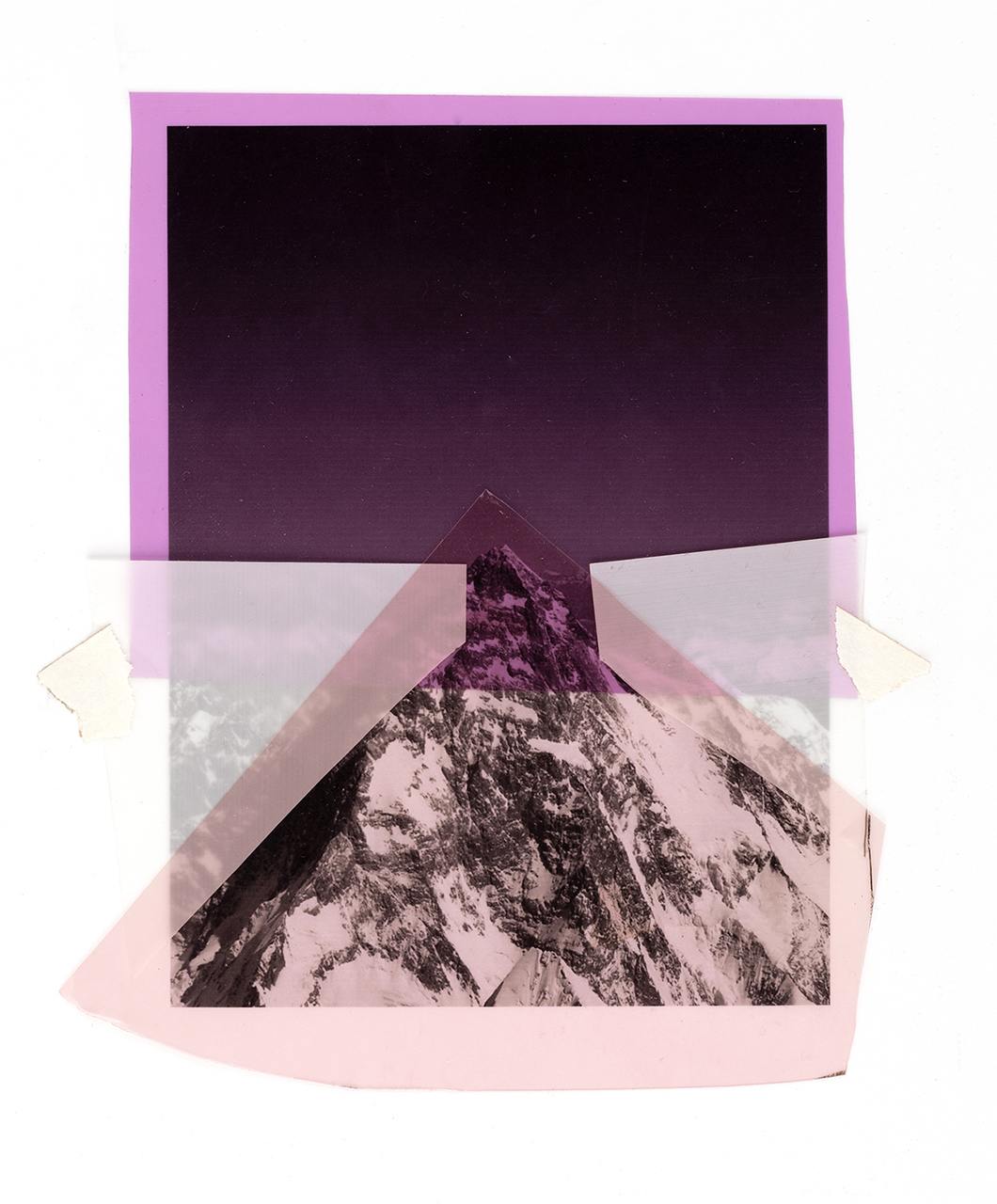

©Katie Shapiro, Mount Everest, Inkjet print with photographic gels and tape
Tell us about the landscape of your childhood and what brought you to photography?
I did a lot of solo sports growing up, gymnastics, figure skating, track and tennis. When I was in middle school, I took a photography class and my dad lent me his Nikomat camera. He taught me how to use it and I became obsessed. I went to a pretty arts heavy school and they offered darkroom photography and I would soon find myself during my lunches and free periods in the darkroom (in addition to class time). It was my refuge, my happy place, my freedom and my home.
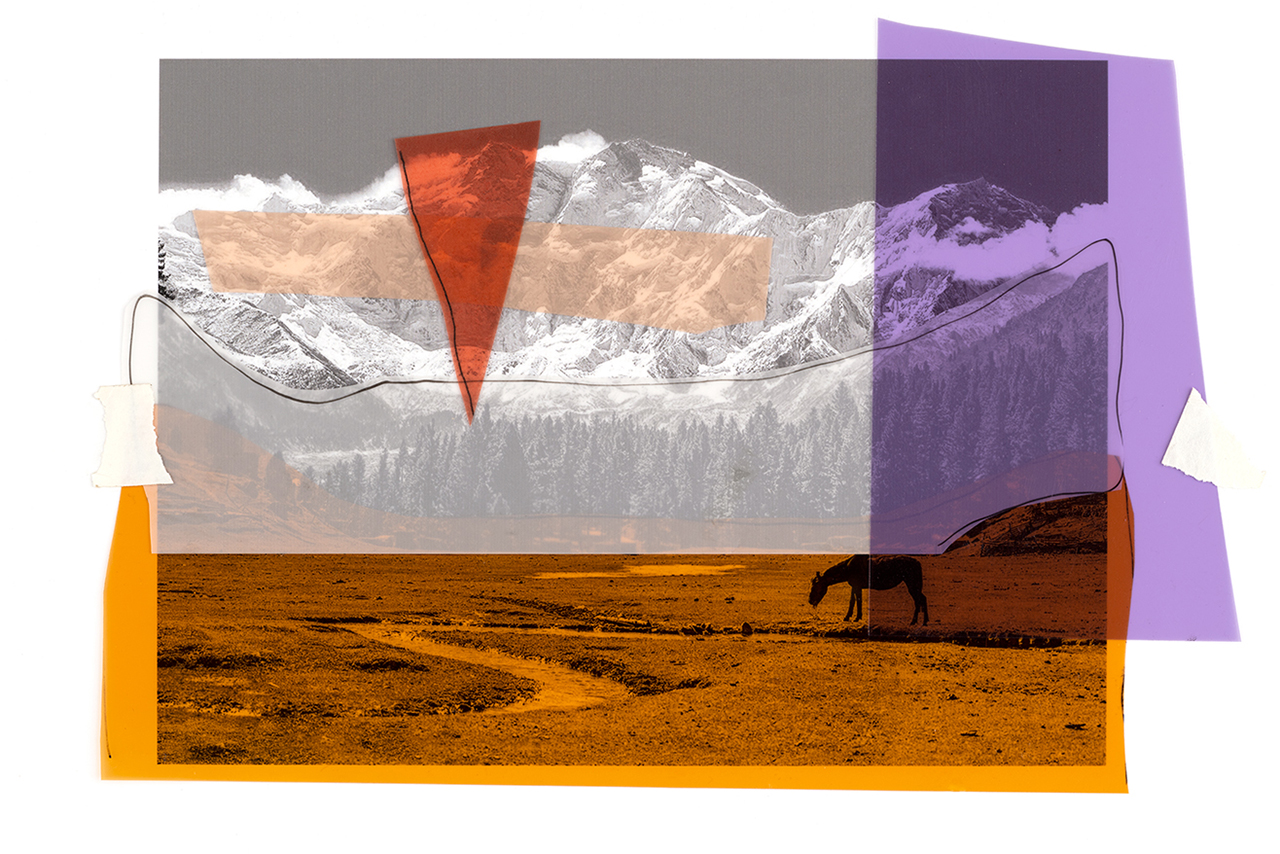
©Katie Shapiro, Nanga Parbat, Inkjet print with photographic gels and tape
Speaking of landscape, in going through your various projects, there is a consistent focus on the land. What brought you to be the subject matter and made you want to return again and again?
That’s a great question – I think environments can be so effective on your feelings. A place can transform you. The California coast has always had a big and strong effect on my psyche and has pulled me back time and time again to reflect and recover from city life. I can get tired and worn and need renewal every now and again and I find that in the land and the ocean.
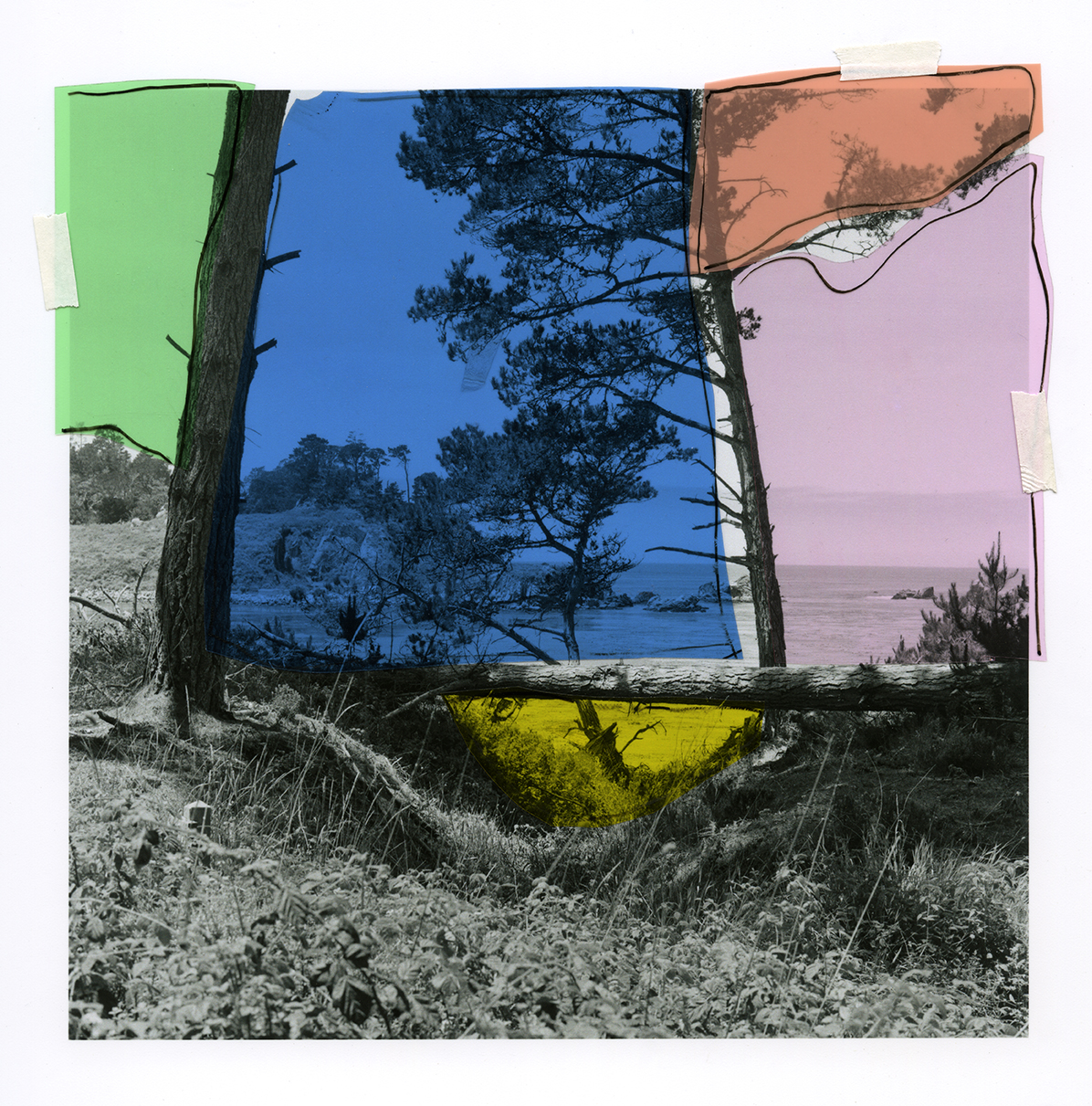
©Katie Shapiro, Peaced Out, Inkjet print with photographic gels and tape
What artists are currently inspiring you?
I’ve been looking and thinking about Matisse’s cut outs. Vanessa Brown makes great sculptural pieces, Valerie Green is making work that I can really connect to. Fay Rays recent sculpture show was quite impactful for me. I also am really interested in what Michael Henry Hayden is doing with painting.
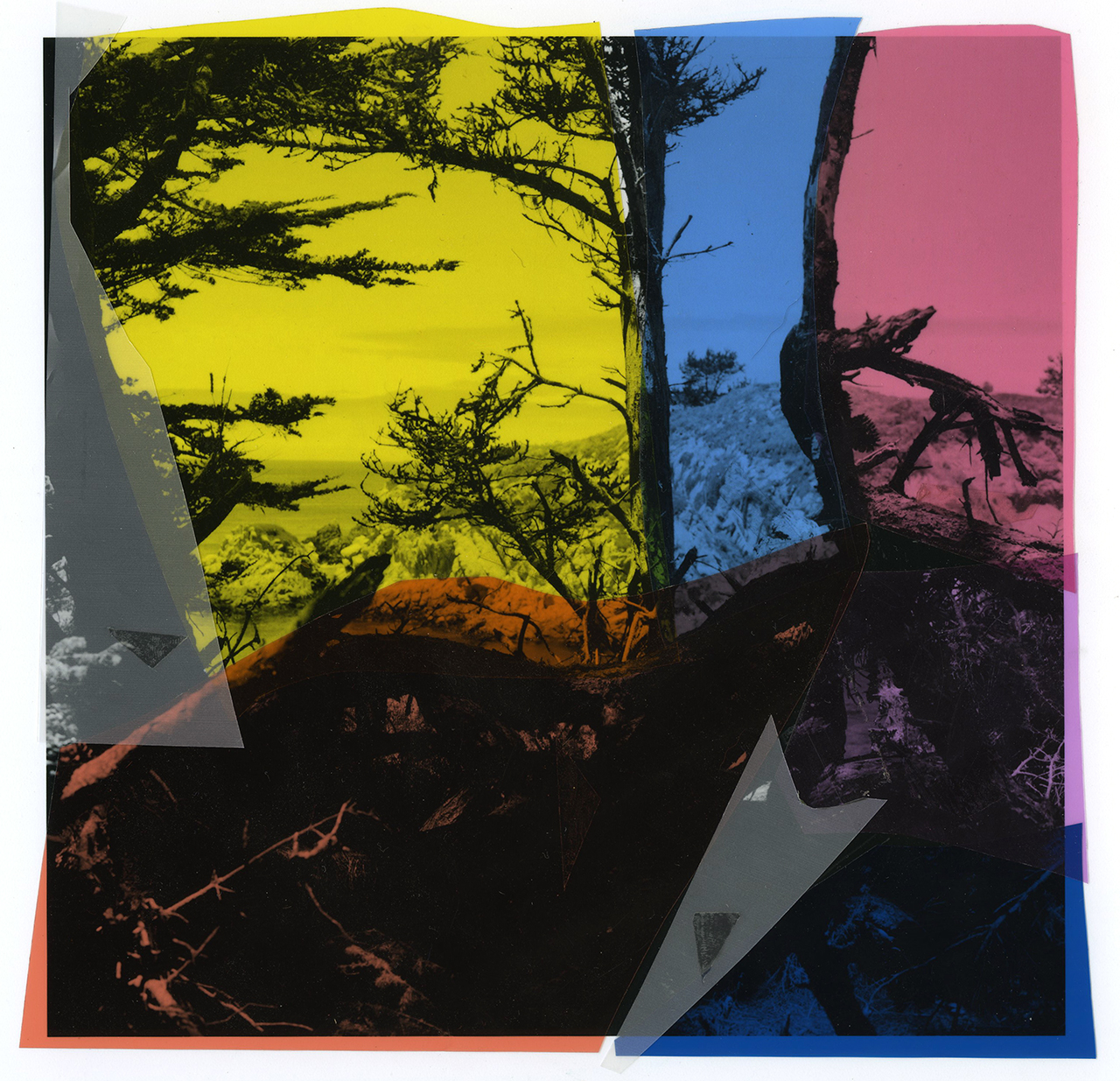
©Katie Shapiro, Point Lobos, Inkjet print with photographic gels and tape
Tell us about motherhood and making art–the newest work made during the pandemic feels very playful. Do your children want to get involved?
Oh thank you! Yes it did feel playful, and a bit heavy at the same time, there’s a bit of a dichotomy going on in my work. A lot of it comes from a deep and sometimes dark place, but in execution it comes out colorful and explosive. Maybe it’s my way of combating the darkness – I don’t really know. My kids love coming into my studio, when I let them! I don’t really like them coming in because it doesn’t feel safe! There’s xacto knives and scissors and dangerous things everywhere, for a 2 and almost 4 year old it’s not the most kid friendly place.
How did you come to work with gels?
I started working with them in graduate school at UC Irvine for my thesis work. I was working with the subject of energy vortexes and wanted something to represent the invisible forces of nature, so gels we’re sort of a perfect solution that worked for me like painting, but with a photo tool. They added color and shapes while still being see through to the picture behind which was just what I was looking to use to represent the invisible.
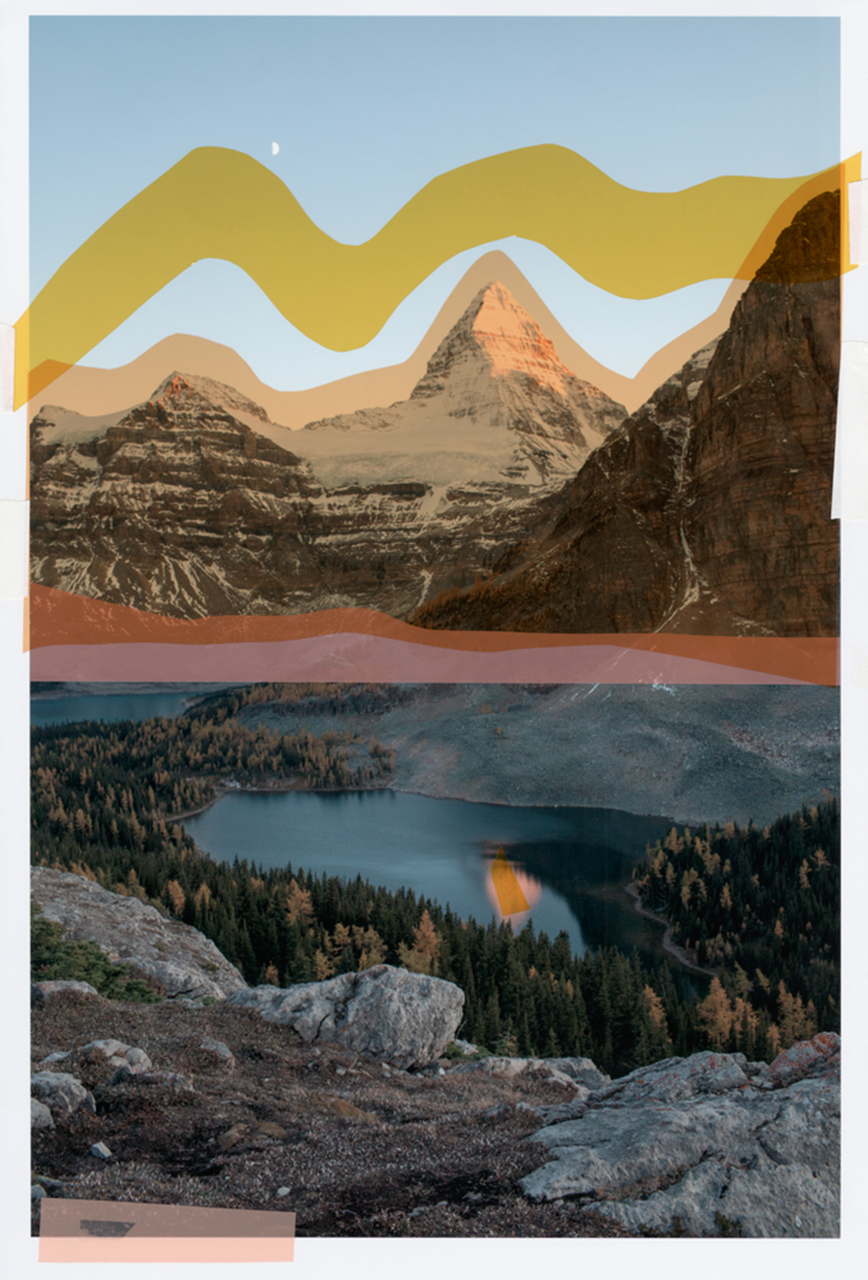
©Katie Shapiro, Rainbow Mt Assiniboine, Inkjet print with photographic gels and tape
What are you working on now?
I’ve been returning to some older photograms I made in grad school and making some new photographs with them by adding gels to them. It’s been fun to reinvigorate some older work.
And finally, describe your perfect day–and because Paula was a foodie, tell us what you are eating!
My perfect day involves sleeping in, then going to the beach with my family and friends, and eating oysters! My current favorite restaurant is Found Oyster in East Hollywood, I can’t get enough of it!! I am seafood obsessed!
Posts on Lenscratch may not be reproduced without the permission of the Lenscratch staff and the photographer.
Recommended
-

Greg Constantine: 7 Doors: An American GulagJanuary 17th, 2026
-
Yorgos Efthymiadis: The James and Audrey Foster Prize 2025 WinnerJanuary 2nd, 2026
-
Arnold Newman Prize: C. Rose Smith: Scenes of Self: Redressing PatriarchyNovember 24th, 2025
-
Celebrating 20 Years of Critical Mass: Cathy Cone (2023) and Takeisha Jefferson (2024)October 1st, 2025
-
Celebrating 20 Years of Critical Mass: George Nobechi (2021) and Ingrid Weyland (2022)September 30th, 2025