Daniel Dorsa : To Skip A Sinking Stone : In Conversation with Tracy L Chandler
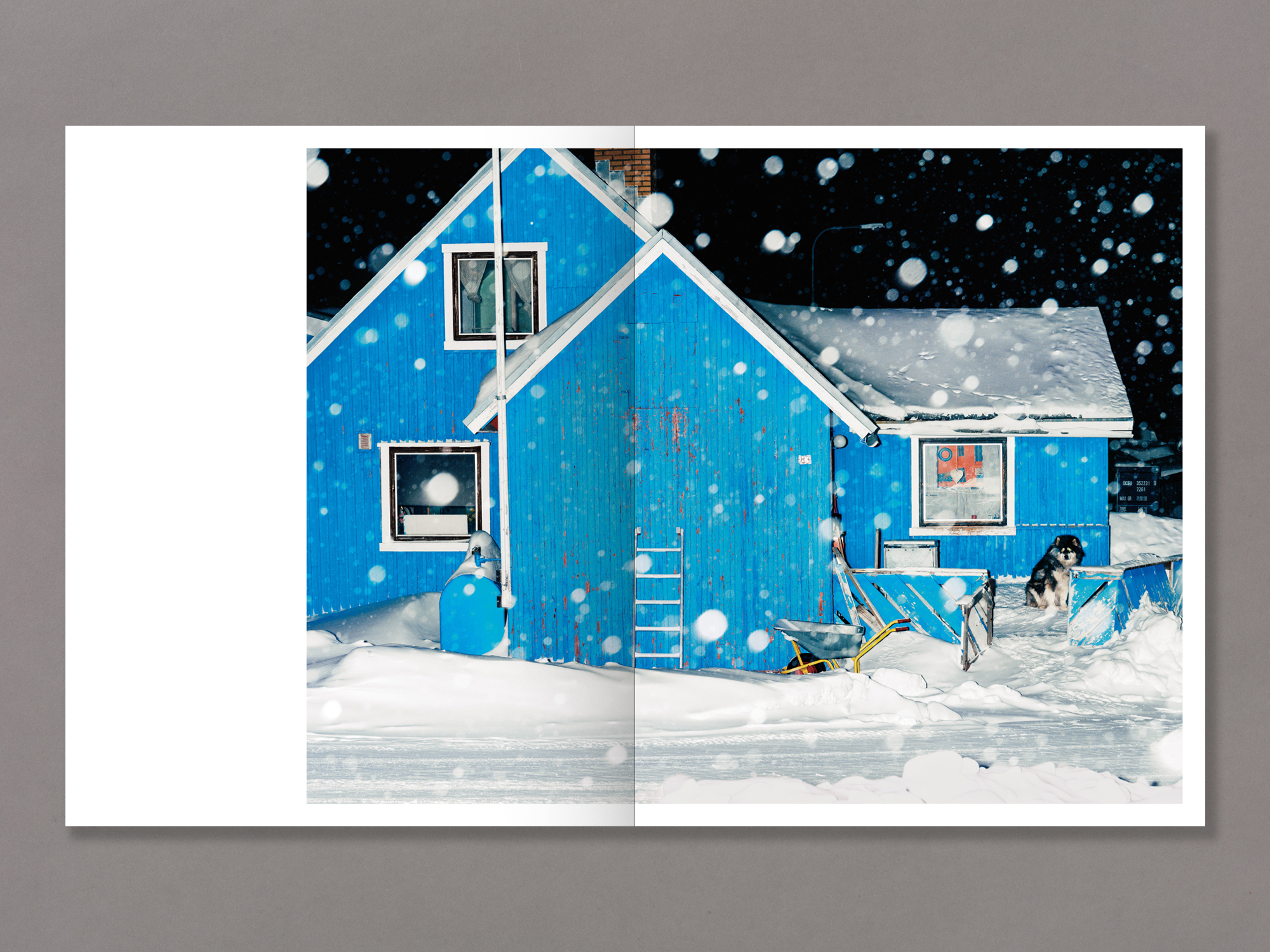
© spread from To Skip A Sinking Stone by Daniel Dorsa / Deadbeat Club
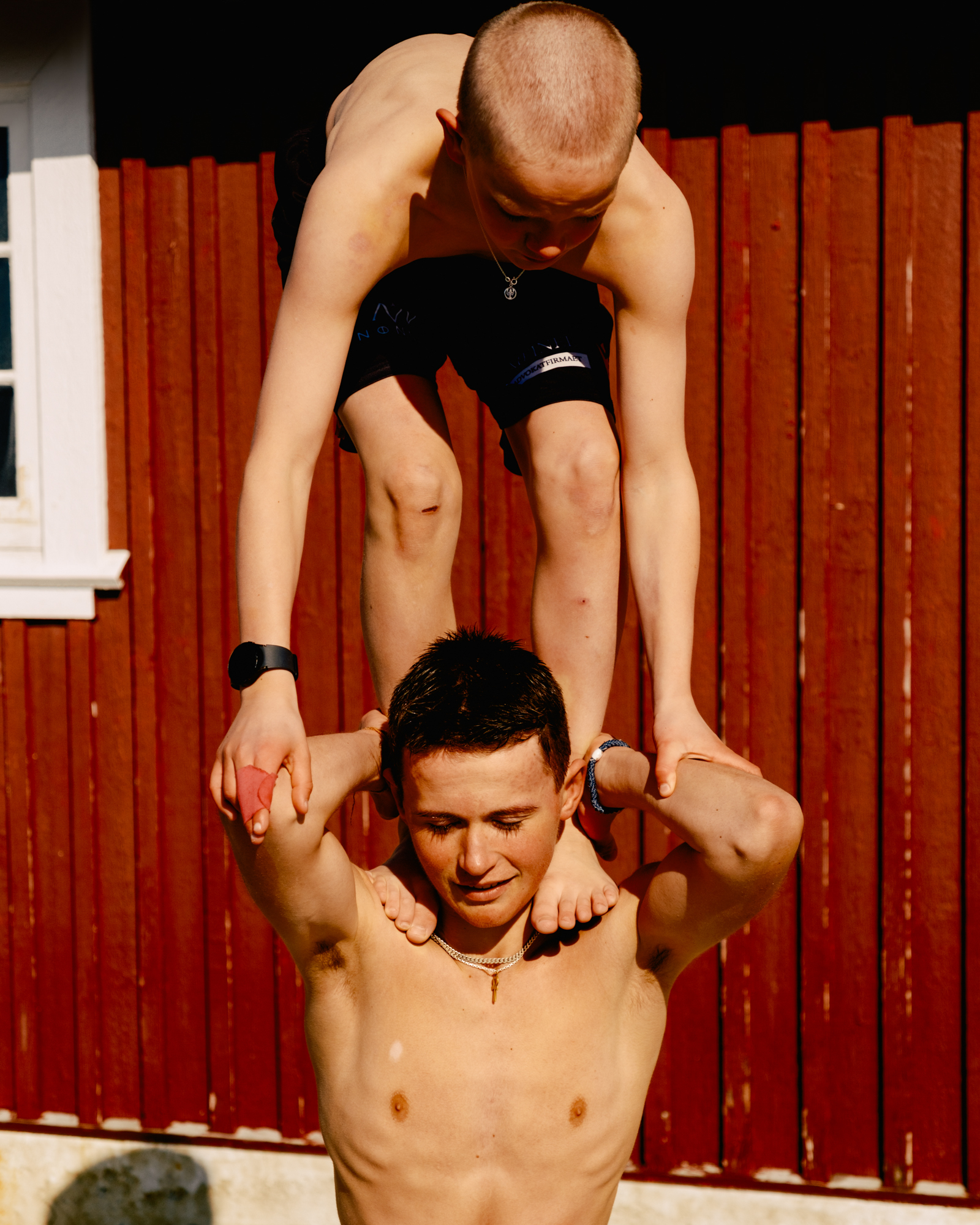
© Daniel Dorsa from To Skip A Sinking Stone / Deadbeat Club
Daniel Dorsa and I have orbited the same Los Angeles photo world for years and share a publisher in Deadbeat Club, but our real common ground is an unlikely first teacher, skateboarding, that way of reading a place with your whole body, seeing it not for what it is but for what it could be. I recognized that wiring all through To Skip a Sinking Stone, Dorsa’s first book with Deadbeat Club. He first went to Greenland in 2023 to photograph the S.I.L.A. research group, a team studying the melting ice sheet and named for the Inuit concept Sila, the physical world and a spiritual way of living inside it in a single word. He came with a magazine pitch that never got picked up, went anyway, and over three years the assignment fell away and something more personal took its place.
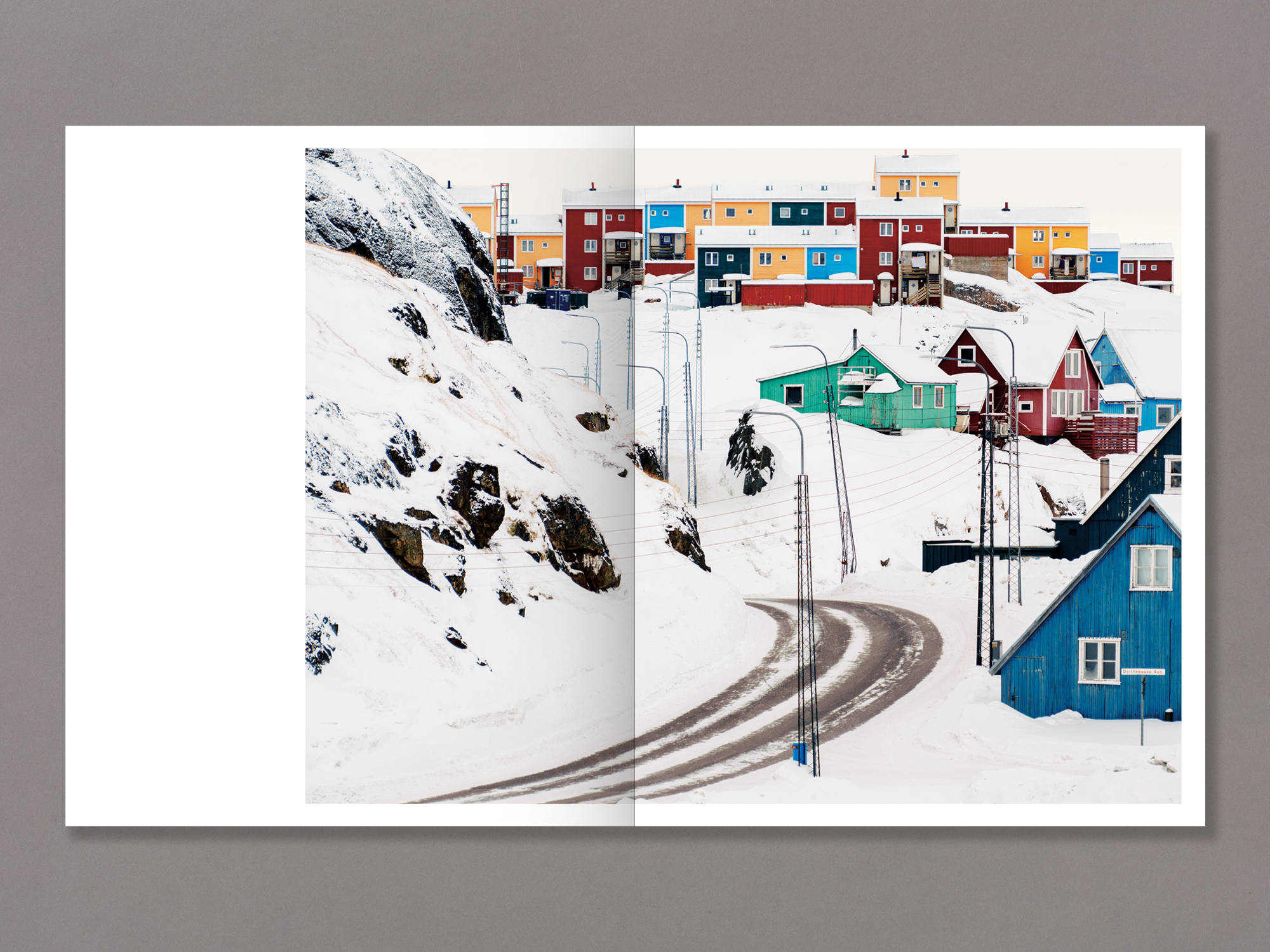
What he made is a book of contradictions held on purpose: vivid color against a stark white, sweet warmth against a harsh freeze, an ice sheet he came to call a demi-god surrounded by the ordinary, stubborn life of a community. The title hangs over all of it: something light trying to stay in motion over something going under, too vast to contend with, but we try just the same.
The following is a conversation between Tracy L Chandler and Daniel Dorsa.
© spread from To Skip A Sinking Stone by Daniel Dorsa / Deadbeat Club
TLC: We’ve crossed paths plenty in the LA photo world and now share a publisher, but I realized I’ve never asked your origin story: I understand you started, like me and a lot of our friends, in skateboarding. I’d love to hear how that early way of being-in-the-world-with-a-camera still lives in how you work now, because I can feel it in this book, a willingness to explore through harsh places and understand the world from the bottom up. When you’re out somewhere like Greenland, can you feel that instinct still moving in you?
DD: Skating is and will always be my first love. Besides being fun and challenging, it always gave me a reason to explore different parts of the city or to travel. That sense of exploration and learning to feel a place stems from that. Once I picked up a camera in high school, that feeling transferred naturally.
I always try to come at it with a sense of openness and let the place tell me what to see. I don’t like to do too much research at the start of a project or exploration of a place. I want there to be an organic connection and relationship built around a place and people. The moment it’s forced is the moment when making photographs doesn’t really work anymore. The spark fades and the allure of a place dissipates.
I’m glad you felt that in the book. At the start of making this work, I was really burnt on commissions. I kind of forgot what it was like to make images strictly for myself with no goal other than photographing what I connected with. This project woke me up, I guess.
© spread from To Skip A Sinking Stone by Daniel Dorsa / Deadbeat Club
TLC: “Let the place tell me what to see.” Yes, exactly. I love that the openness comes before the knowing for you. Skating taught me that same way of looking. When you come up on foot, learning a city block by block, you stop seeing things for what they’re meant to be and start seeing them for what they could be. A curb isn’t a curb. A stair set isn’t a stair set. It’s potential, and it’s yours. That wiring never really leaves you. It just moves over to the camera, and then a whole new place becomes this field of possibility. And you get there through your body… Like it’s the interaction itself that makes the place reveal itself to you.
So take me back to the very beginning. How did you end up in Greenland? I know the way in was the S.I.L.A. group somehow, but I’d love to hear how that access actually came to you, and what made you say yes to it.
© spread from To Skip A Sinking Stone by Daniel Dorsa / Deadbeat Club
DD: Back in 2022, my friend from high school, Chelsey Bomar, went to Greenland and was posting photos on her Instagram. Chelsey has always been a musician and overall creative person, but she surprised me by saying she went back to school to get her PhD in microbiology and she was a part of a research group studying the ice sheet melt. I found it fascinating and eventually talked to her about everything she and her colleagues were doing in Greenland. They were doing this macro to micro on how the water from the ice sheet melt changes over the course of the landscape. Chelsey’s research was about documenting how the microbes in the water itself changes from the source to the ocean.
I decided I wanted to pitch a story about her group and the work that they do. No one picked up my pitch. While it was slightly discouraging, I decided to go anyway and thought maybe a publication would be more interested in it after I shot it.

© spread from To Skip A Sinking Stone by Daniel Dorsa / Deadbeat Club
TLC: Okay, I love this, because there’s a funny tension sitting right under it. Your whole thing is openness, letting the place tell you what to see, not over-researching. But the way in was through scientists doing this incredibly precise work, measuring how the microbes in the meltwater change all the way from the ice sheet down to the ocean. And on top of that, you showed up with a pitch in your pocket, a story you already wanted to tell.
So what happened when you actually got there? How did the real place compare to the one you’d built in your head?
© spread from To Skip A Sinking Stone by Daniel Dorsa / Deadbeat Club
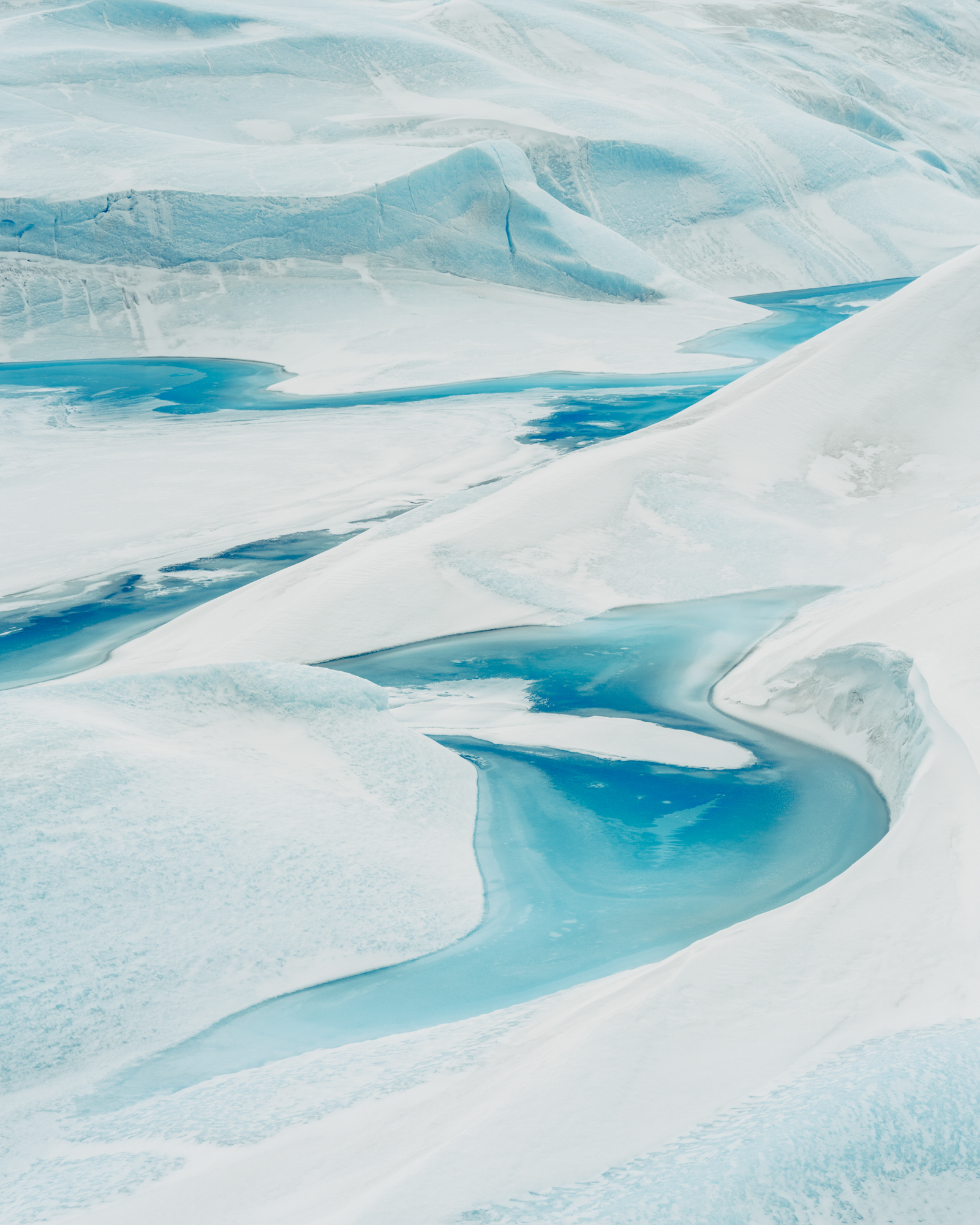
DD: That tension was really only felt for myself at the beginning of the trip. I had all of these ideas of what it would look like (the landscape, the work people were doing, etc.), but the reality of it was very different. I had to confront the idea pretty early on that my idea wasn’t up to snuff and that’s when I let the rest of that first trip just take me. The reality was that the work these scientists were doing is extremely important, but not visually interesting. The landscape that occupied them was interesting though and I got hung up on how intense the ice sheet was the first time I saw it. I had a visceral reaction to seeing it the first time and I couldn’t let it go internally. But, I was still so hung up on trying to make my original work that I ignored those feelings on a conscious level.
I spent 7 weeks in Greenland working on this with no specific goal. The lack of goal was really hard to deal with at first, but learning to accept it about halfway through allowed me to consider my own feelings towards the place. The more I slowly let go of those preconceived ideas, the more I was able to find threads I was interested in. I wrote A LOT after that first trip because I knew I had images I liked, but didn’t really know what they meant for me. Morning pages for about 6 months helped me dig into the experiences that I still held and it allowed me to come back the following year with a more sculpted point of view and understanding on how I wanted to approach making work.
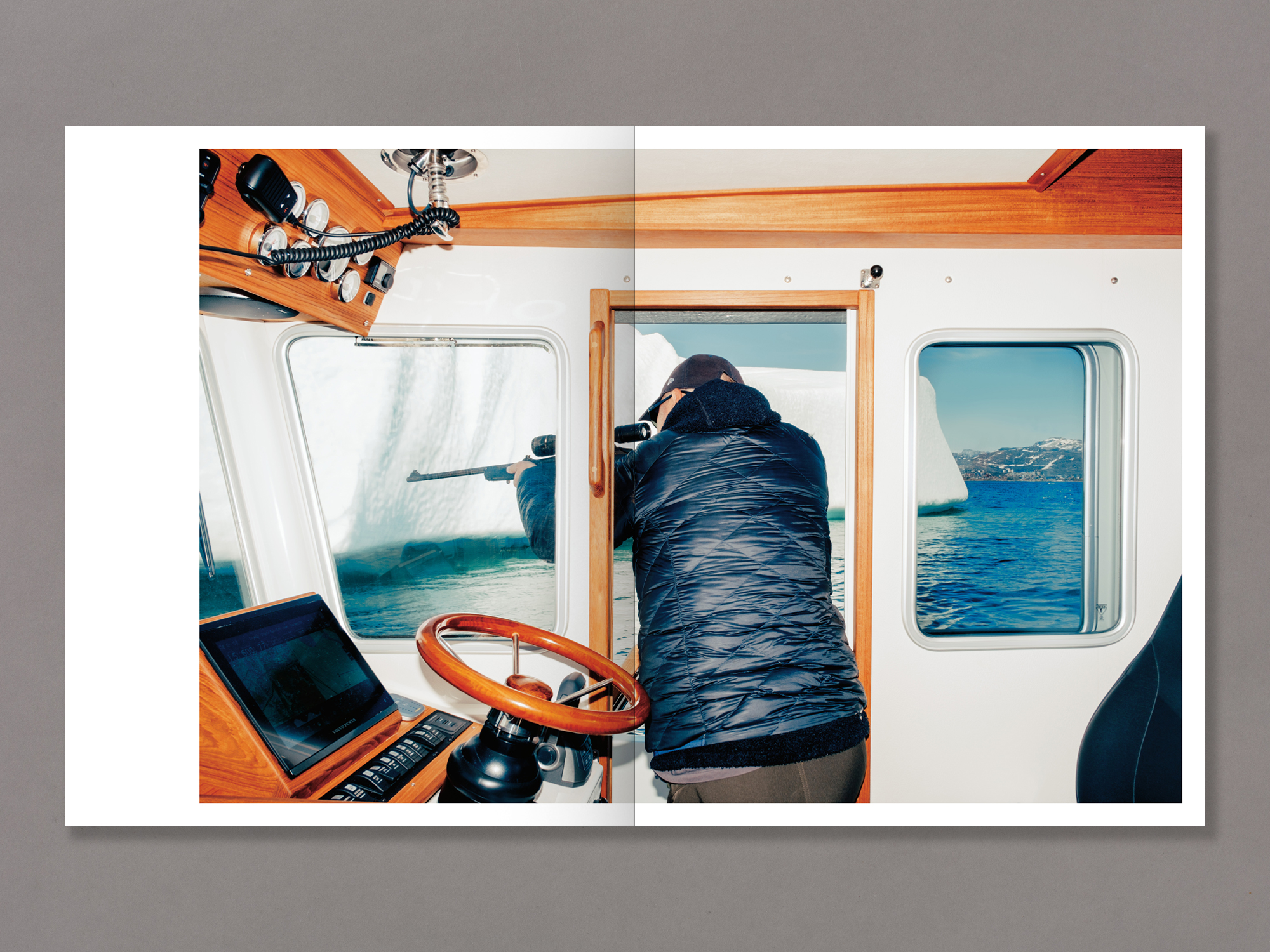
© spread from To Skip A Sinking Stone by Daniel Dorsa / Deadbeat Club
TLC: Dude, morning pages. I do them too, religiously. There’s something about that first clearing, getting the planning, thinking brain out of the way so whatever’s actually underneath can rise up. You almost have to tire out the part of you that wants to make sense of things to get really honest about what is there. It’s kind of funny, too. We’re supposed to be the visual ones, but so often it’s the writing that lets us actually see what we made.
So I’m curious what your pages surfaced. You said you had this visceral reaction to the ice sheet that first time, but you kept overriding it because you were still chasing the idea you came in with. When the writing finally cleared that away, what was waiting underneath? What were those first few images that caught you?

© spread from To Skip A Sinking Stone by Daniel Dorsa / Deadbeat Club
DD: I’m glad you’re a fellow morning pages follower! I haven’t done them in a little bit, but now I’m inspired to start back up. Fifteen minutes every day in the morning!
The writing really helped me realize that there was this natural tension in the work I had and in the ideas that I was confronting. I decided to live in the tension and to put contradictions together in the same project. Life is messy and grey so why not keep it together.
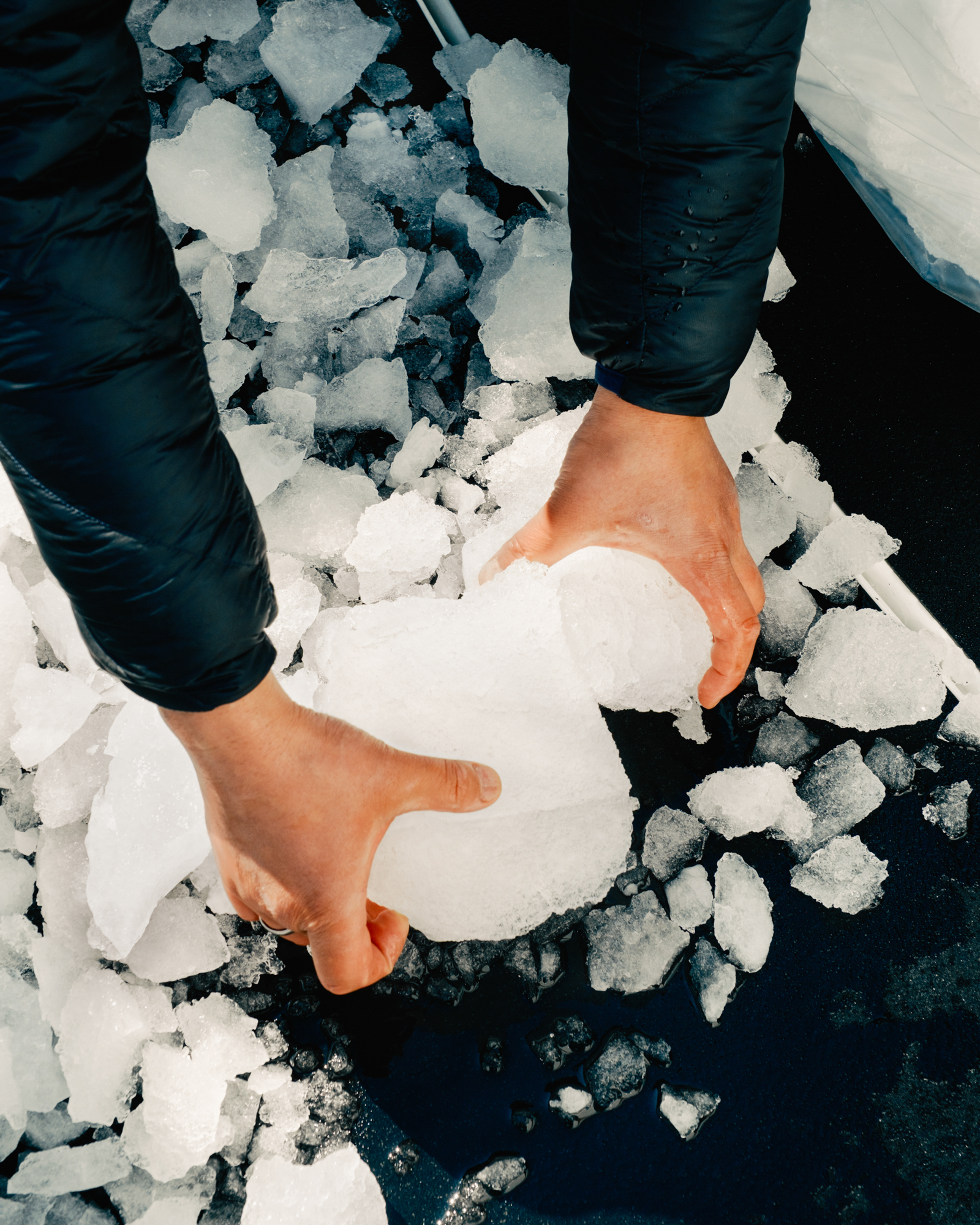
I kept coming back to this idea that the ice sheet is its own living organism, an omnipresent force in Greenland. Not only does it affect the world’s largest island by changing weather patterns and eroding the surrounding landscape, it now is slowly affecting the world at large as it slowly melts away. That reaction to seeing it the first time struck me with both fear and awe. It’s an entity to be respected. Eventually, I came to think of it as a demi-god. And it’s funny to think that we as humans are both killing this god and trying to save it.
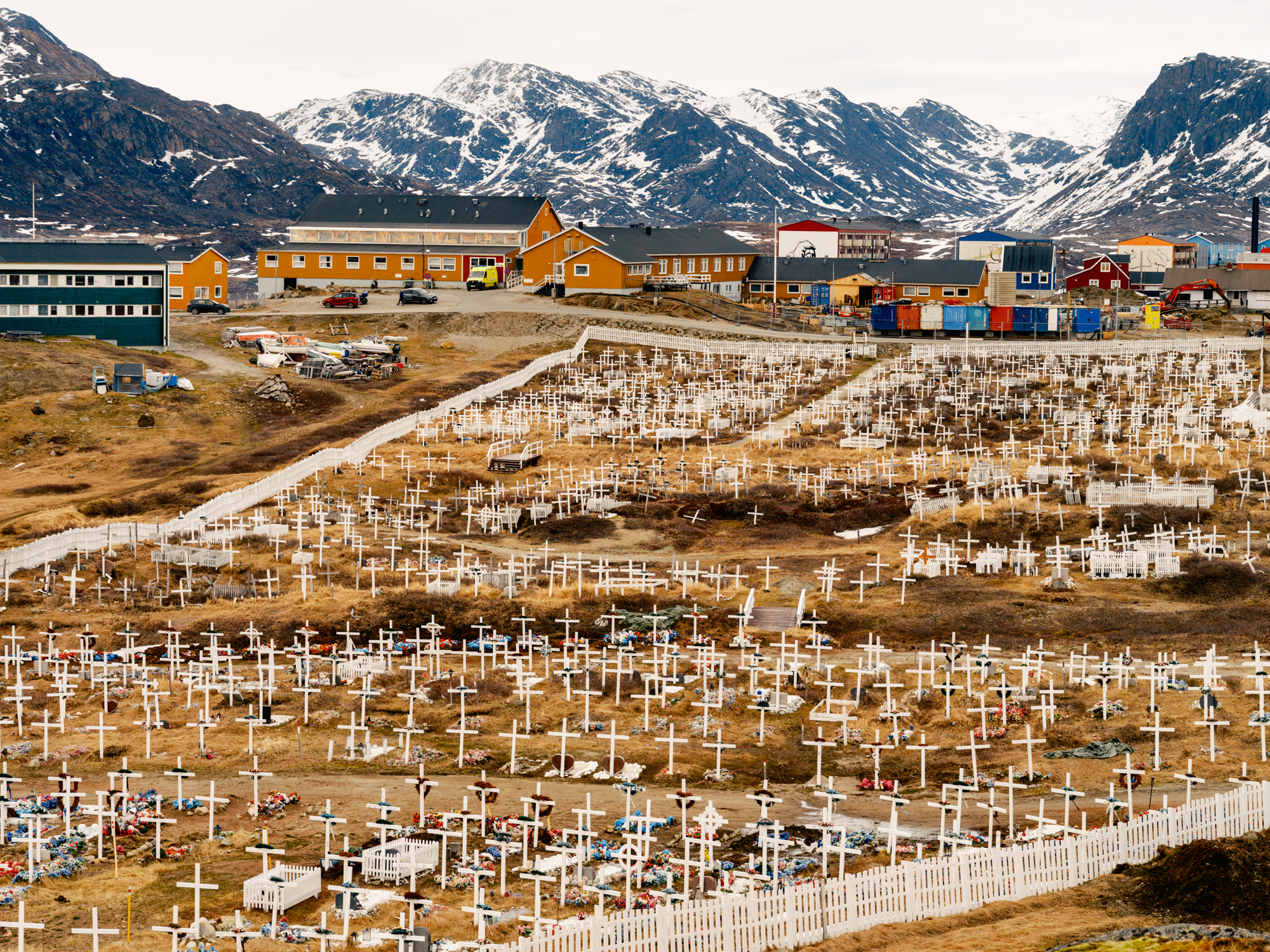
© spread from To Skip A Sinking Stone by Daniel Dorsa / Deadbeat Club
TLC: Well said. It is funny. And sad really. Nature as a Demi-god. As if something that size were ever ours to control either way. At least personally.
Photography lives right in that same contradiction for me. When I’m in front of something too big to actually take in, the camera becomes a way to make the thing bite-size, to cut all that immensity down into a frame I can hold. Almost like pretending I have some control over something I have none over.
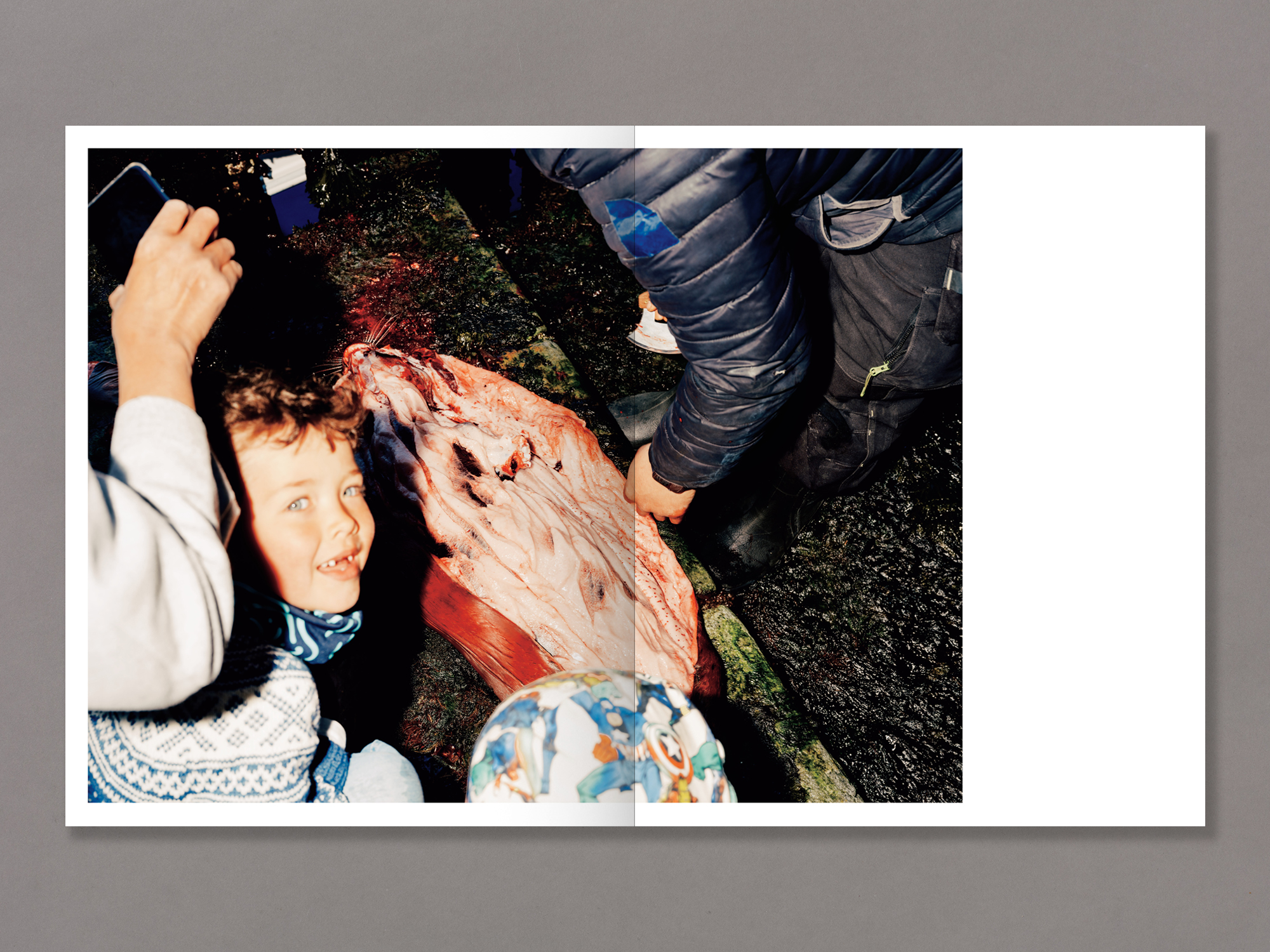
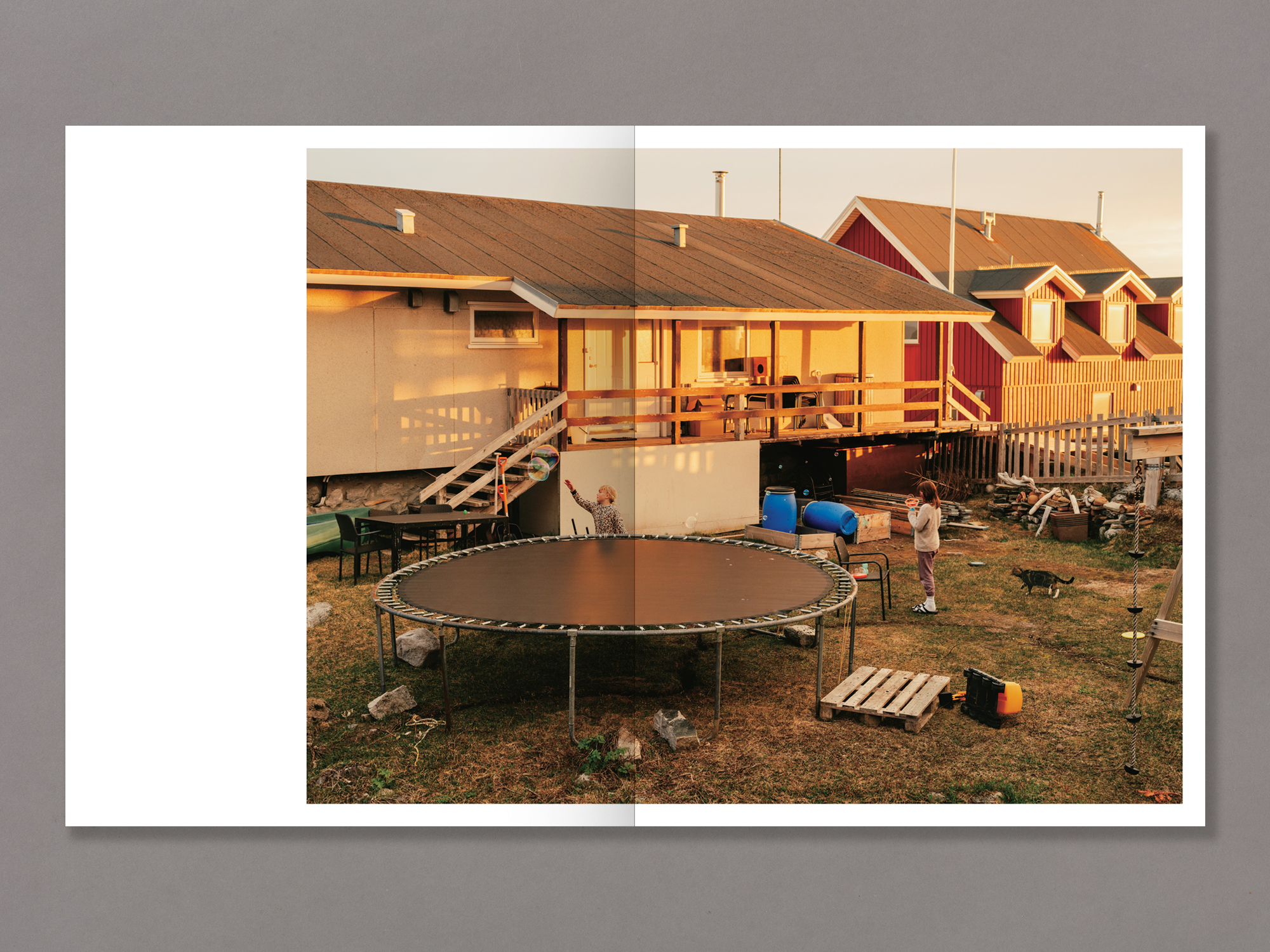
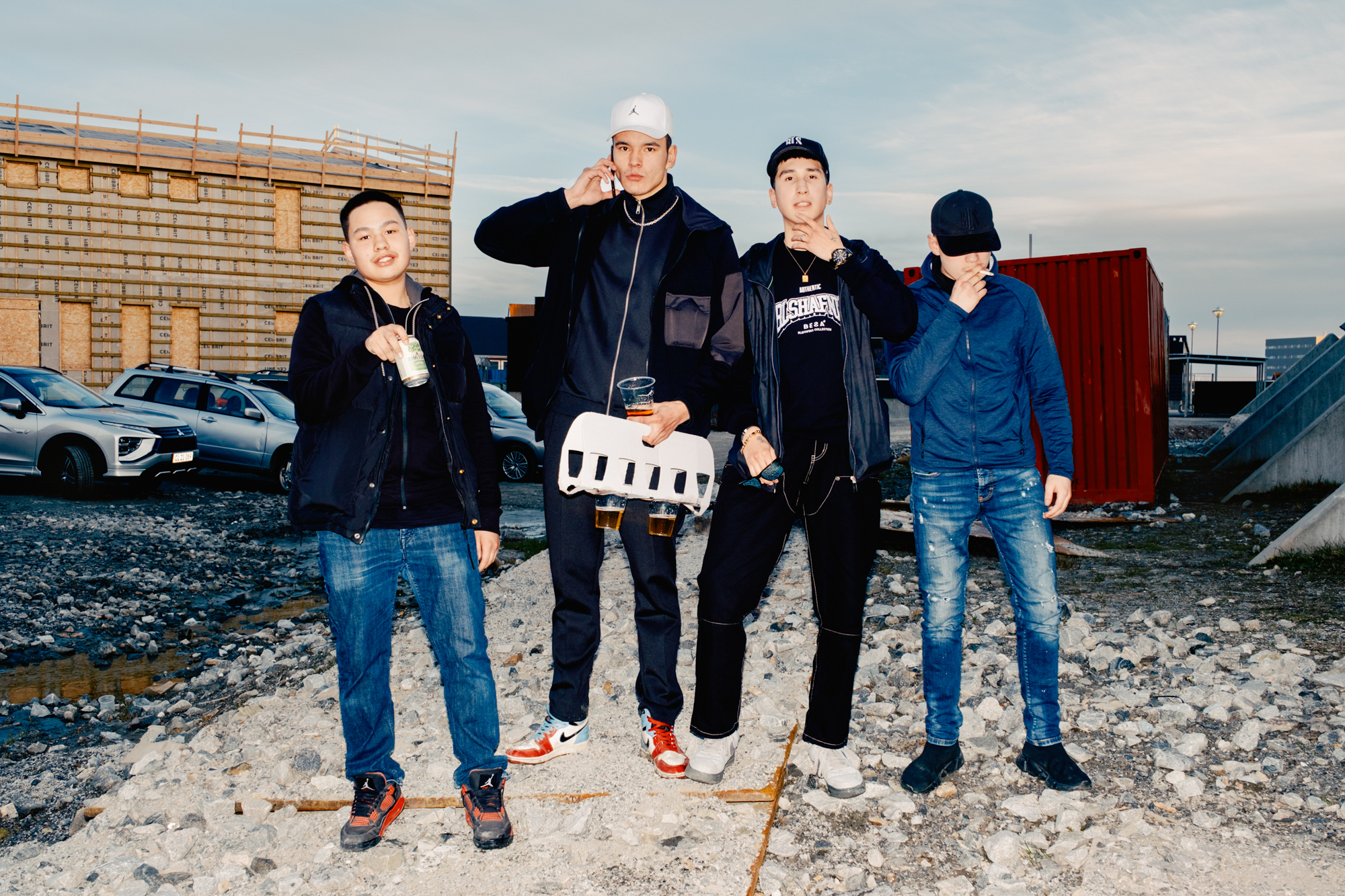
Which is really what the scientists are up to too, trying to take the measure of something that might be past measuring. But for a project that began with the ice and the science, the book turns out to be so full of people. The kids playing soccer in the snow, the dancers mid-step, all those young faces. So how does the community live inside all of this for you, going about an ordinary day right underneath a force the scientists are measuring and that you’d come to think of as a god?
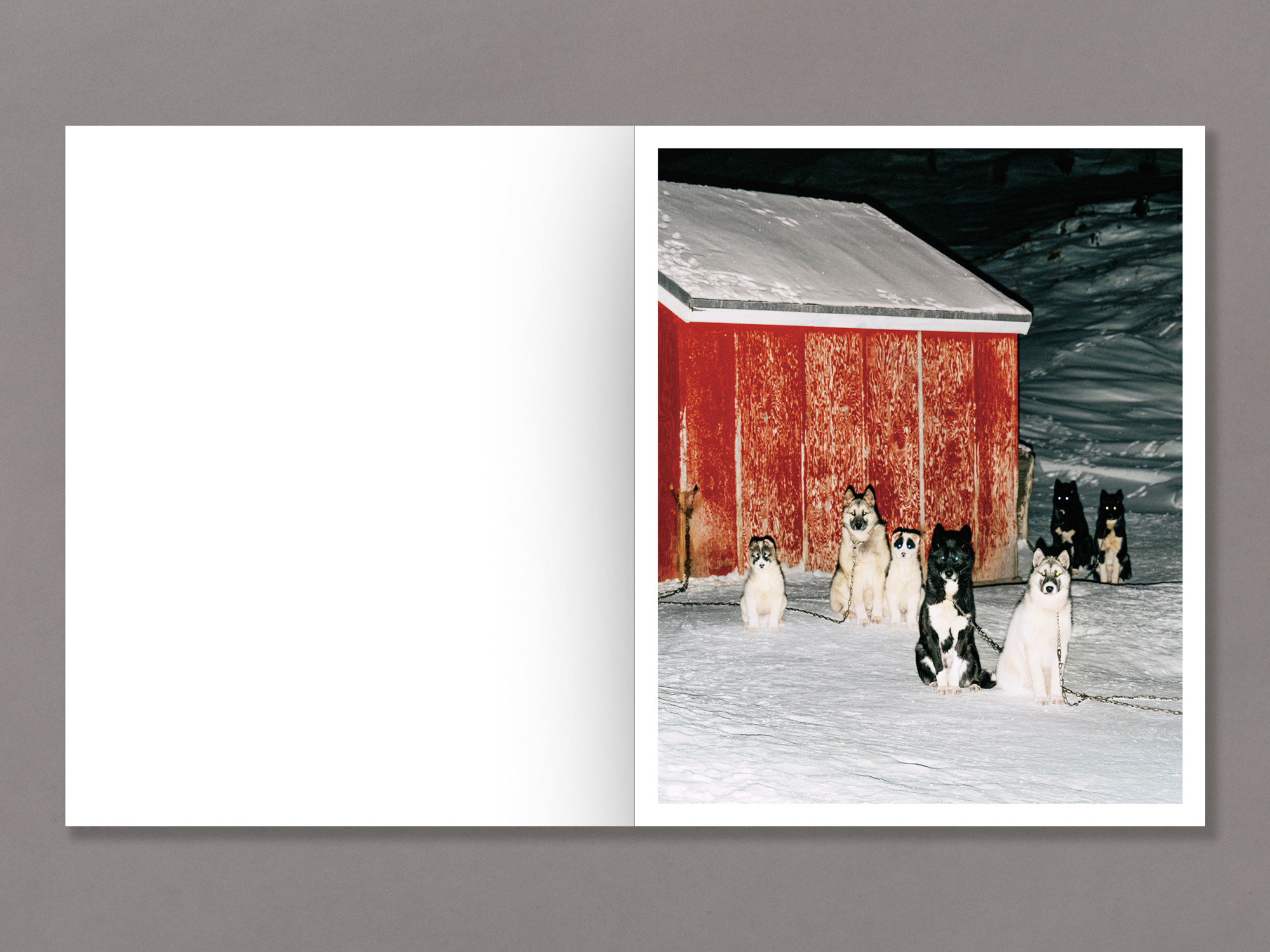
© spread from To Skip A Sinking Stone by Daniel Dorsa / Deadbeat Club
DD: That’s a good question. I’m always interested in how people respond to their environment and vice versa. There’s always an ongoing conversation happening between the natural world, the built world, and the people that occupy those spaces. With that being said, I became fascinated with how people navigate traditional ways of living with modernity. I wrote in my morning pages a line that said, “These images are a record of a land caught between preservation and transformation, where ancient rhythms meet new realities.” People here are in the moment of change and it’s interesting to be there with them.
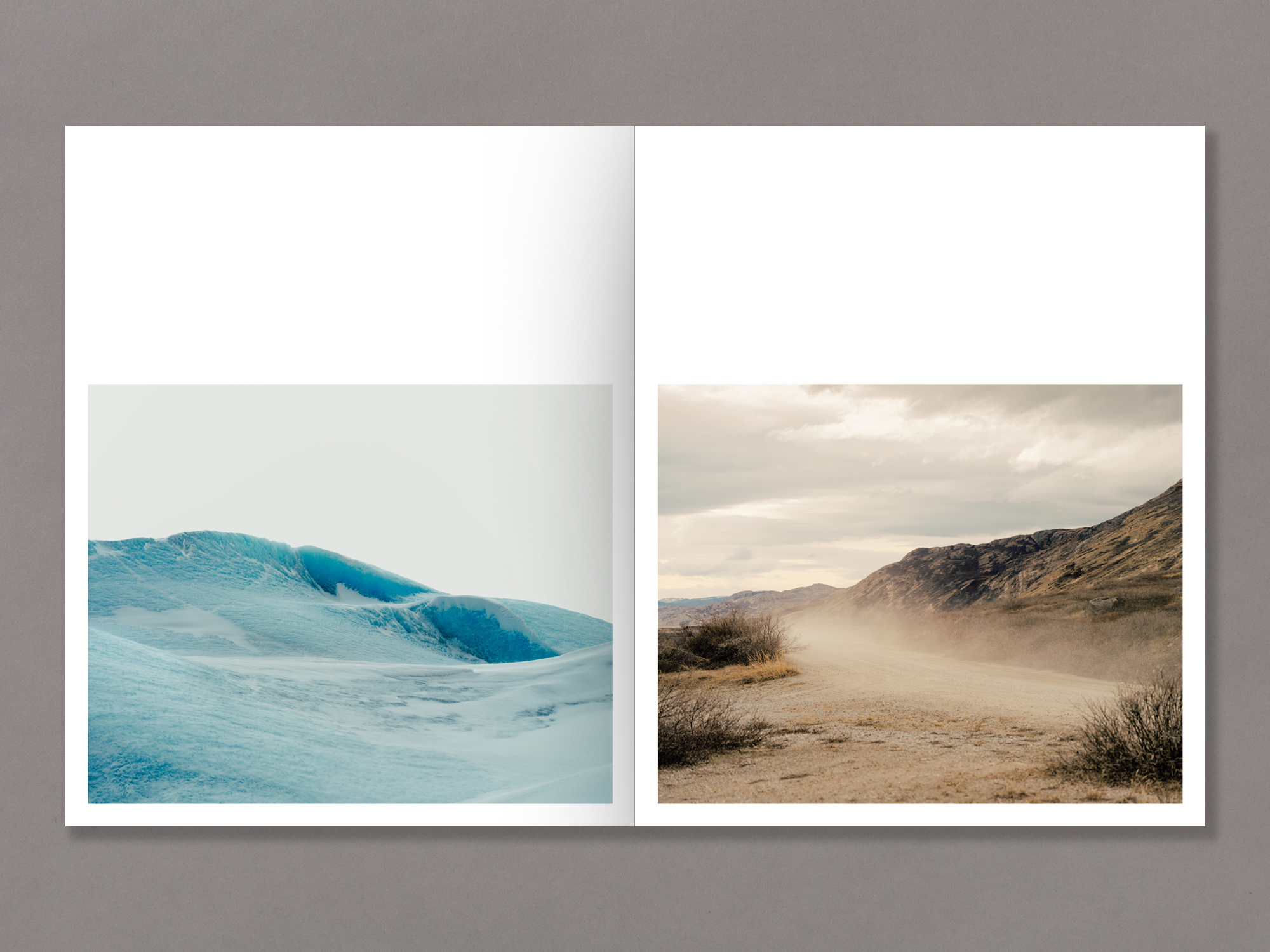
© spread from To Skip A Sinking Stone by Daniel Dorsa / Deadbeat Club
TLC: I love that line. Is there a specific photograph that does that for you… like where the collision is in the image itself and not just in the words around it? I ask because half the time I find the photograph got there before I did. It knew the thing before I could say it.
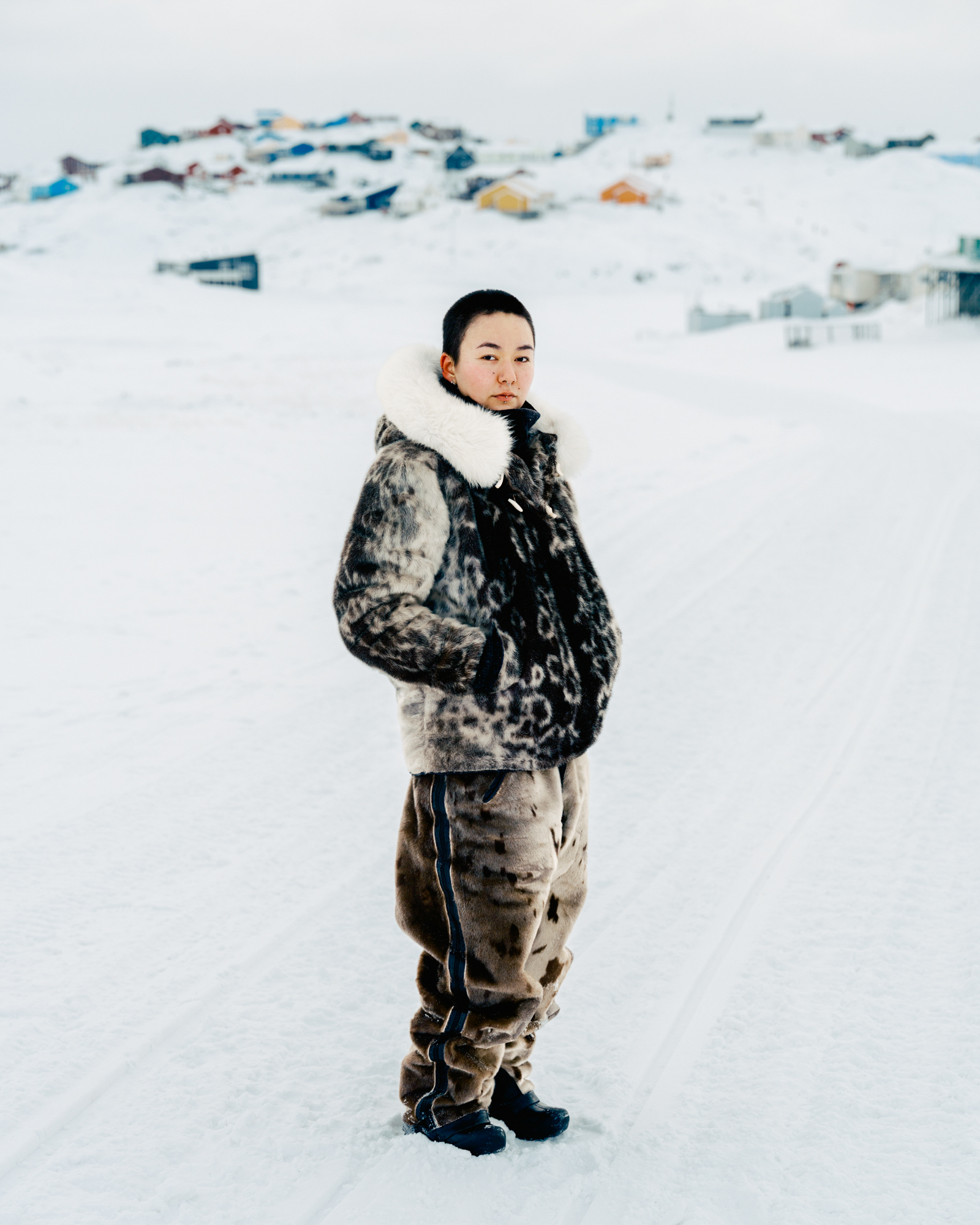
DD: The one image that comes to mind is a portrait of Nava. She’s a young, openly queer woman who helps run her step-mother’s hostel in Sisimiut. I spent a day photographing her at her home, out snowmobiling, and with her father’s sled dogs. At the end of our time, she asked me if I could photograph her in her traditional furs. Normally, I’d avoid trying to make that kind of image as it’s a bit on-the-nose and maybe “exoticizes” people in a way that is stereotypical. But of course, I was happy to make this since she was so generous with her time. It ended up being my favorite portrait in the book. Her openness and her pride in what her heritage means created a perfect combination to represent this.
© spread from To Skip A Sinking Stone by Daniel Dorsa / Deadbeat Club
TLC: Nava, I love that she asked you for it. What a gift.
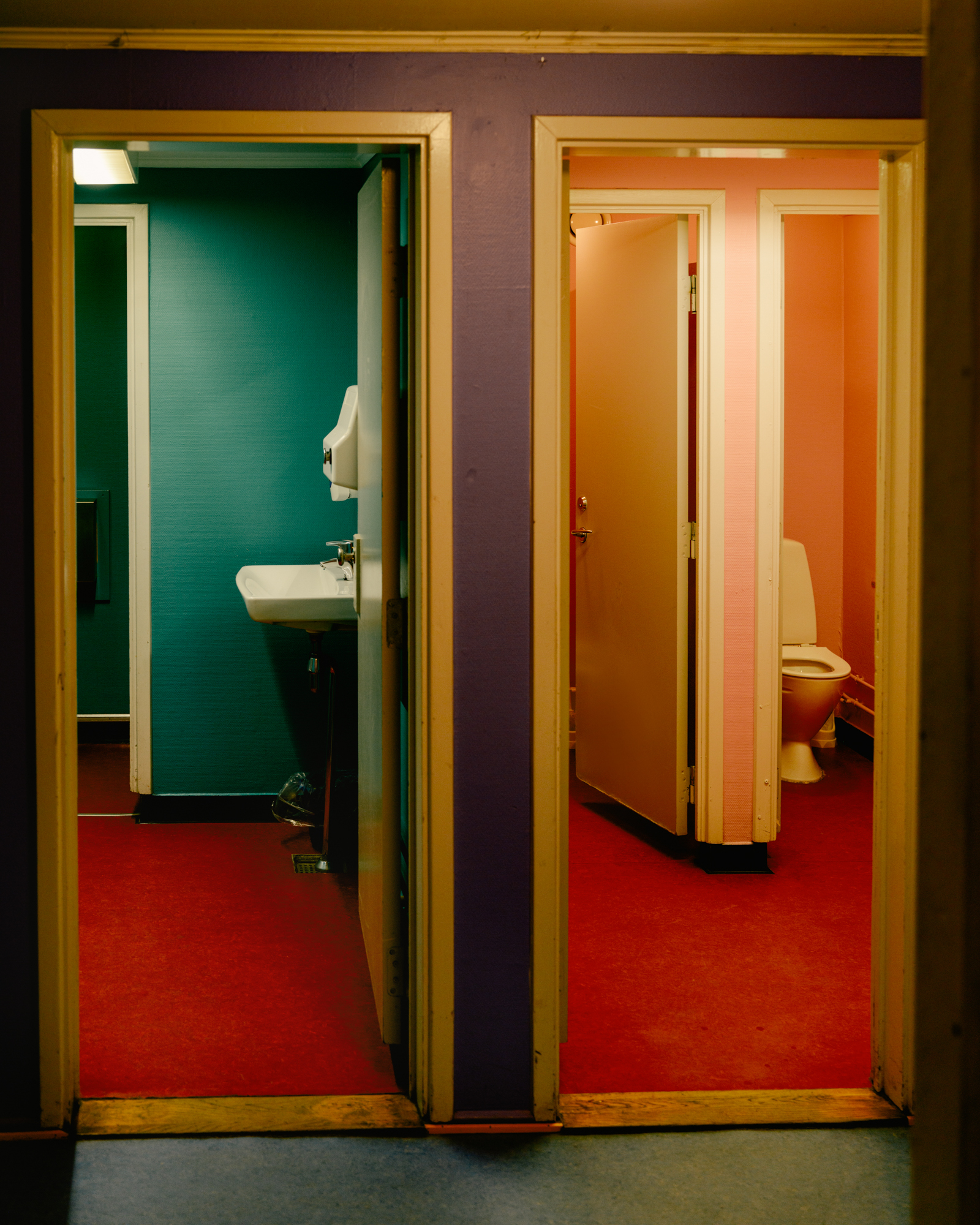
That portrait is actually where I want to get into color with you. So much of the book works hard with bright primary color, the reds and yellows and blues against all that white. It’s so graphic, almost loud. But Nava’s is the opposite. It’s soft, the tones all muted, so much more subtlety to it. How much of the color was conscious during the making, and how much of it came together in the edit?
© Daniel Dorsa from To Skip A Sinking Stone / Deadbeat Club
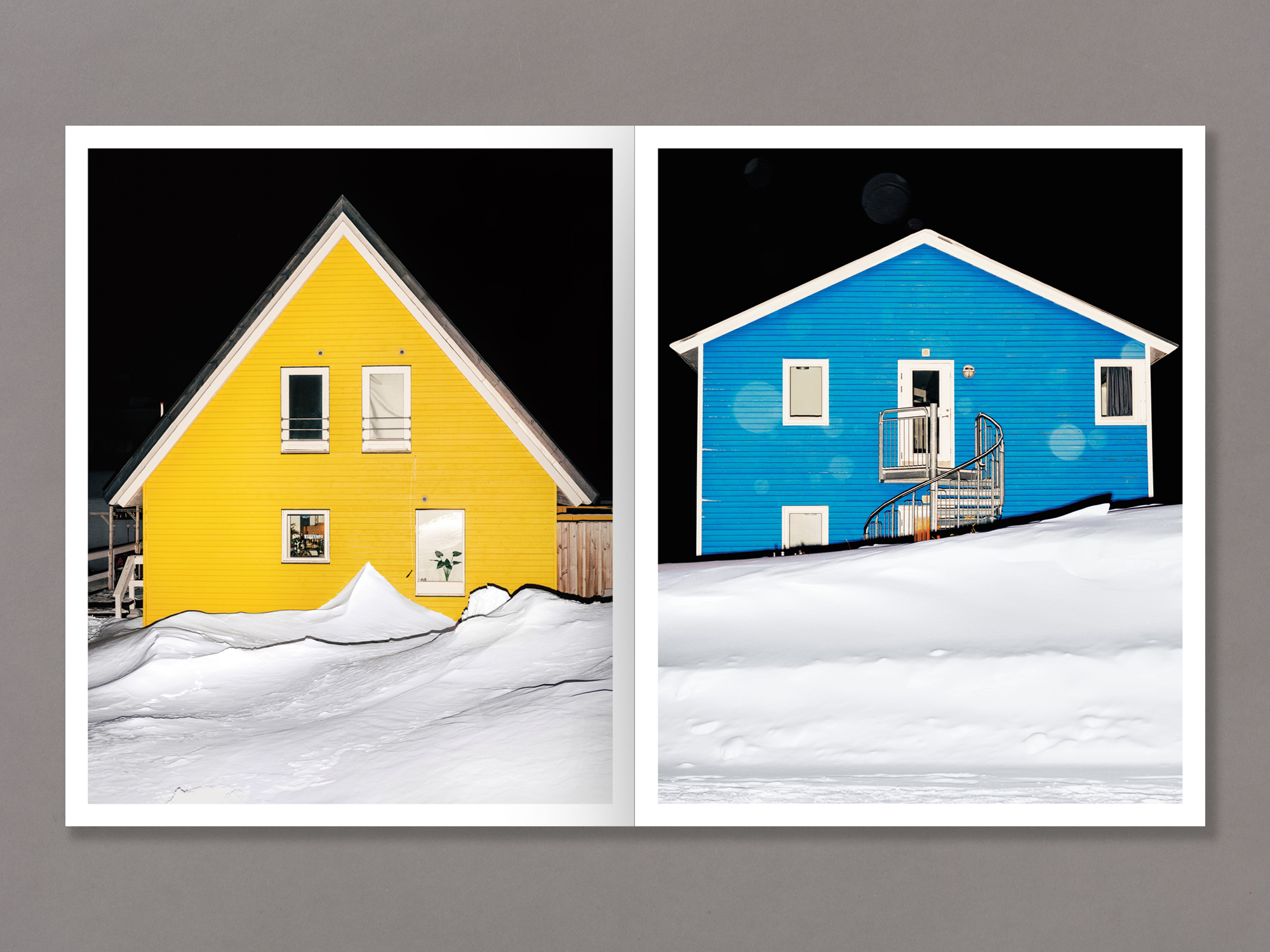
DD: I’d say 80% in the making and 20% in the edit. Color is very important to my work and oftentimes I make images just because the color in person strikes me. I used to work in a more subtle way for color toning, but in the last few years I’ve leaned into bolder colors and more graphic images.
The 20% in the edit though came from sequencing the book with Clint and Alex at Deadbeat. One of the notes Clint gave me was that having a “template” for color and toning helps bring connectivity to a project. With our final selects made, I went through and fine-tuned each image for there to be a consistent throughline between types of images. Some of them were a bit more bold and contrasty, some a bit more subtle and muted. But the images within those categories feel aligned and together. This also helped with the pacing of our sequence when we needed to move things faster or slow things down.
© Daniel Dorsa from To Skip A Sinking Stone / Deadbeat Club
TLC: That note from Clint is such a good one, the idea that a consistent color template is what quietly stitches a whole project together. It’s like music with a rhythm. But sometimes you have to interrupt that rhythm, break it, catch the viewer by surprise just when they think they know what’s next.
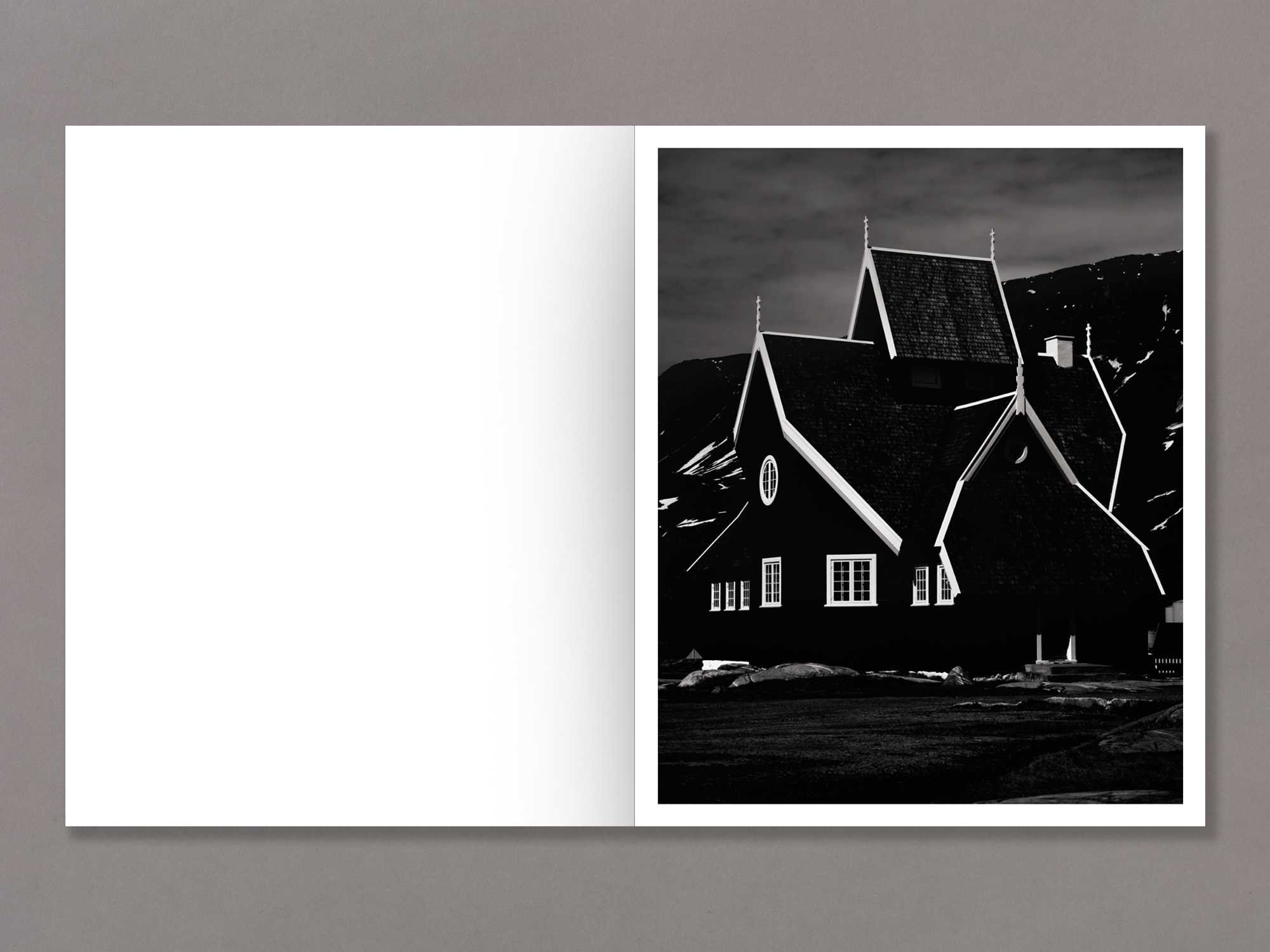
Which makes me curious about the black-and-white frames. You’ve got this color throughline running through everything, and then every so often one of them just lands in the middle of it. They almost feel like a rest in the music, the sound dropping out for a beat. What are they doing in the rhythm for you?
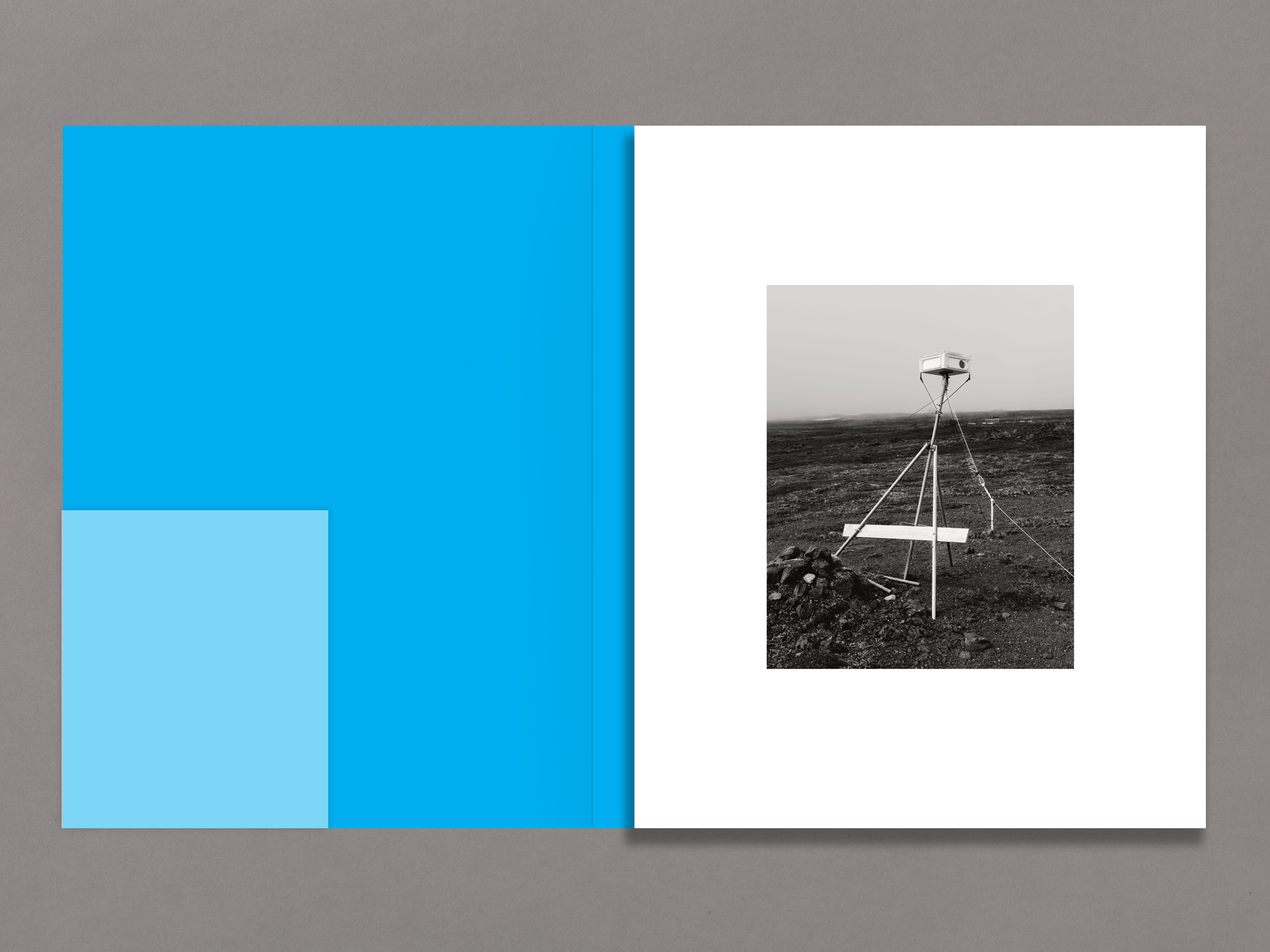
DD: I think you picked up on the intention. They are definitely breaks. Also, I thought of them as these monolithic themes. No people are in the black-and-white images, just simpler images that have a very easy to understand theme (natural world, domesticity, scientific research, tradition). I like sequences that take you on a rollercoaster, but even rollercoasters have moments of calm.
© Daniel Dorsa from To Skip A Sinking Stone / Deadbeat Club
TLC: They don’t read as calm to me at all. Quiet, yes, but there’s something a little sinister in them, something lurking down in all that shadow. And because they’re black-and-white, they take me out of the present, almost out of time. They leave me uneasy, and I kind of love that.
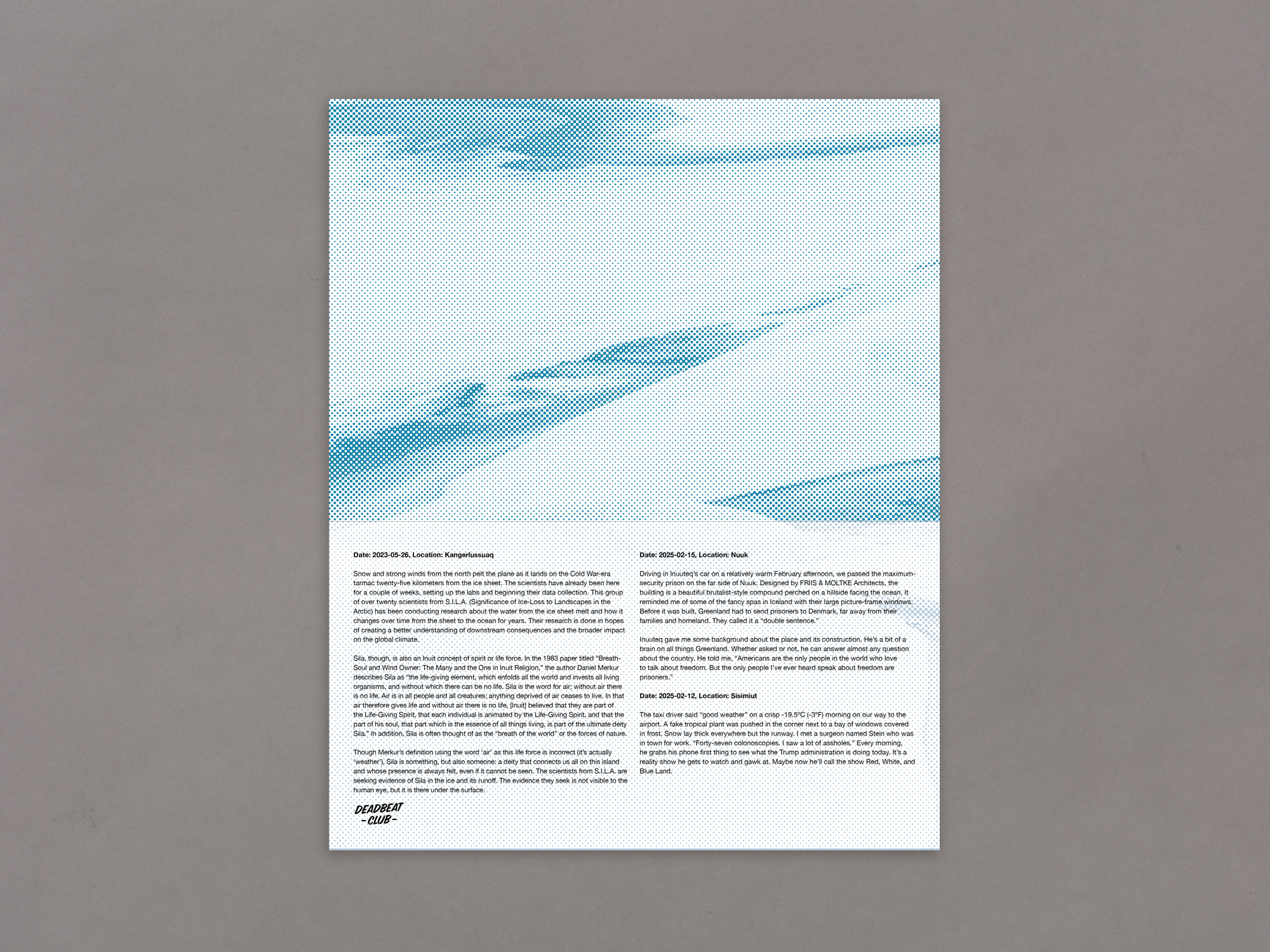
That swing is kind of the whole book, isn’t it, from an almost sweet warmth to a harsh freeze. Which makes me wonder what kind of container and design can hold all of that together. With this book, the thing that stops me is that the text lives on the outside of the cover, the words right there on the exterior. That’s not how it usually goes. Was that something you walked in wanting, or did it come out of working with Clint and Alex?
© Daniel Dorsa from To Skip A Sinking Stone / Deadbeat Club
DD: Design is really important to me and I often think it’s a bit of an afterthought for photography books. When Clint and I started talking about design my only rule was not to have a tipped-in photo cover. While there isn’t anything wrong with that (it’s classic after all), I did want to do something a little different. Clint came up with the idea of doing a half-toned silkscreened cover with a vellum book wrap. Originally, we were going to just do name and title on the vellum, but it didn’t feel right. Around the same time, we realized we were going to hit our page count and it didn’t include any of the writings I had which I thought was really important to include. Clint came up with the great idea of just using the vellum to hold the text block. Conceptually, I loved the idea that all of these stories and thoughts wrap the book. Text is really precious, especially if you have very little of it. Putting it all out there ends up making it feel a bit more like texture that you can choose to engage with or not. Great job on that one, Clint!
TLC: It’s like the insides are on the outside. With these journal entries, you’ve put the most intimate stuff right on the skin of the book. It’s all right out there but also the easiest thing to skip past.
And the title… To Skip a Sinking Stone. I have this image of something struggling to stay in motion under the weight of its own gravity. Too vast to really contend with, but we try just the same. What does that title hold for you now, and has it changed from the far side of all these trips?
© Daniel Dorsa from To Skip A Sinking Stone / Deadbeat Club
DD: You nailed it. Climate change and the melting of the sheet is the underlying tension throughout the project. A land trying to reclaim itself. With that, the title reflects that these problems are too large for any one of us to do anything about individually and it requires collective action to solve. But despite the existential threat, there’s joy and life to be had even in a harsh place. It’s been wonderful spending time in such a unique place during a transitional period.
While I was on my trips, I would listen to a lot of music on my long walks. I’d often come back to an album by a friend, Jordan Lee, who goes by Mutual Benefit. The album “Skip a Sinking Stone” covers similar themes as to this. I reached out to Jordan to see if he would be down to let me use the title for my book and I’m thankful he said yes. Thanks Jordan for the inspiration!
© Daniel Dorsa from To Skip A Sinking Stone / Deadbeat Club
To Skip a Sinking Stone by Daniel Dorsa is available in standard and limited special editions from Deadbeat Club.
Daniel Dorsa is an American photographer currently based in Los Angeles, CA. His work explores the relationships between people, the environments they inhabit, and the landscape that connect them. Rooted in the tension and harmony between the natural world and the built environment, Dorsa’s imagery reflects a curiosity about how these forces shape human connection. Dorsa’s work has been featured in the British Journal of Photography, Boooooooom, and Der Greif, among other publications. To Skip a Sinking Stone is his fourth book and his first with Deadbeat Club Press, following Paradise (2021), The Sun Was Gold Like A Yolk Dripping (2023), and Lupine (2025).
Follow Daniel Dorsa on Instagram
Tracy L Chandler is a photographer based in Los Angeles, CA. Her monograph A POOR SORT OF MEMORY is available from Deadbeat Club.
Follow Tracy L Chandler on Instagram.
© Daniel Dorsa from To Skip A Sinking Stone / Deadbeat Club Press
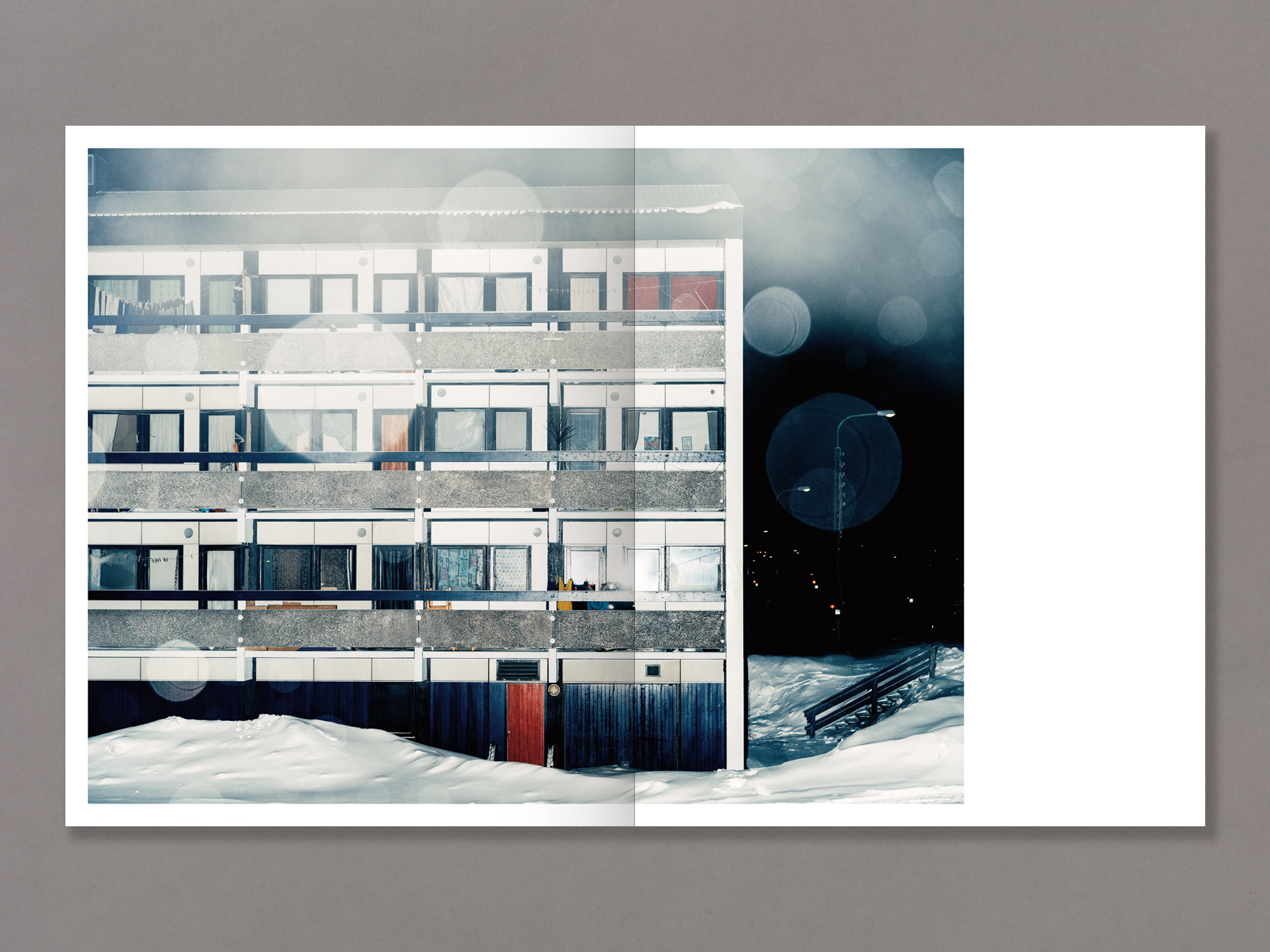
© Daniel Dorsa from To Skip A Sinking Stone / Deadbeat Club
Posts on Lenscratch may not be reproduced without the permission of the Lenscratch staff and the photographer.
Recommended
-

Claire Beckett: Defense LanguageJuly 26th, 2026
-
Reuben Radding: Heavenly ArmsJuly 23rd, 2026
-
Zackery Hobler: Beneath Two SkiesJuly 20th, 2026
-

Danielle L Goldstein: TransienceJuly 19th, 2026
-
Laurie Lambrecht: tēxēreJuly 17th, 2026