Vaune Trachman: Now IS Always
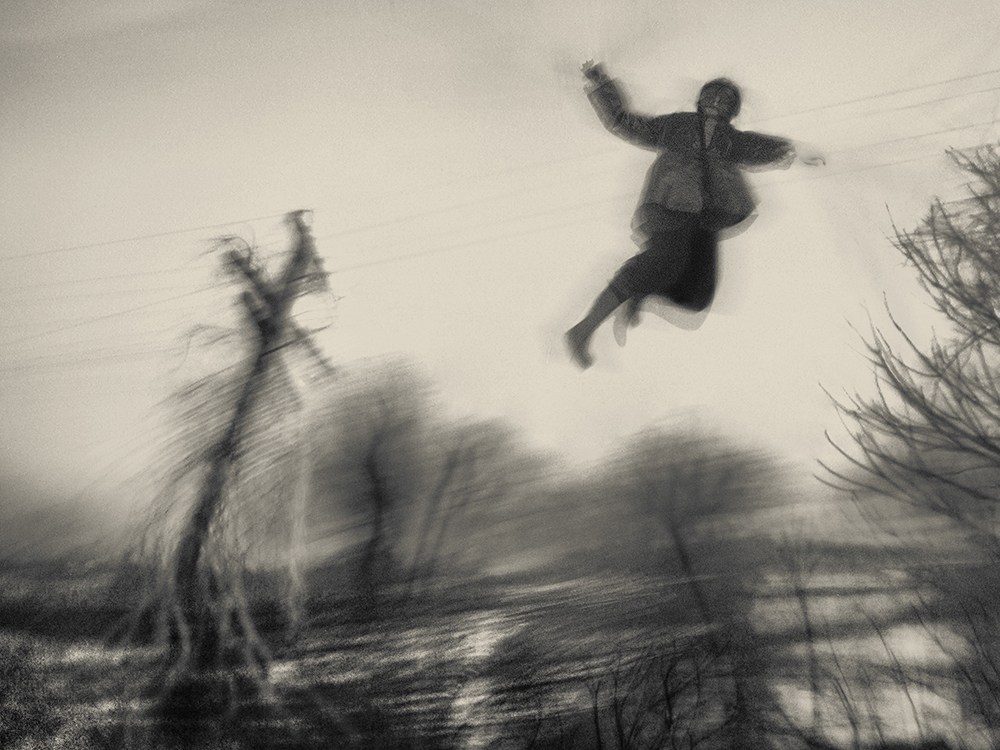
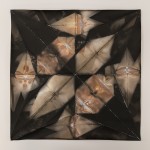
©Vaune Trachtman, Bound 14.25” X 17.5”, 2021 / Edition of 8 In many of my images, I combine my images with film that my father shot in Depression-era Philadelphia. Here, I’m working with a photo I took from a train window north of New Haven, Connecticut, and a vernacular snapshot my father took of a boy pretending to be run over by a Ford Model AA truck. This was the first image where I transformed the original composition into something new.
The picture possesses the kind of whimsy that puts me in mind of Marc Chagall’s canvases. What is remarkable is the extent to which the photogravure elicits our own joy, our own floating. There is no need to reconcile the discrepancy between the magical world of the photo and the 1930s; I would argue we are in perpetual need of the lightness the image conjures. Vaune magically releases the facts of the original photograph and transforms it into a timeless vehicle of glee, one that, again, pushes against documentary conventions and the physical laws of the world-from Major Jackson’s foreword to the book NOW IS ALWAYS
Vaune Trachtman’s exquisite series of photogravures have just been released in a new book, NOW IS ALWAYS which includes a foreword by Major Jackson, one of the leading voices in contemporary literature. Published by Tusen Takk Press and printed by Trifolio in Verona, Italy, all copies are signed by the artist. You can order the book HERE.
Trachtman’s book traces a life shaped by early loss and sustained by the practice of photography, exploring how grief and memory inform a singular visual language. Through her dreamlike images, the artist weaves together her father’s 1930s negatives and her own photographs, and includes handwriting and mark-making to conjure collapsed, layered time. Her plate reproductions showcase her commitment to the non-toxic direct-to-plate photopolymer gravure process illuminating how technique and materiality become a means of holding the past.
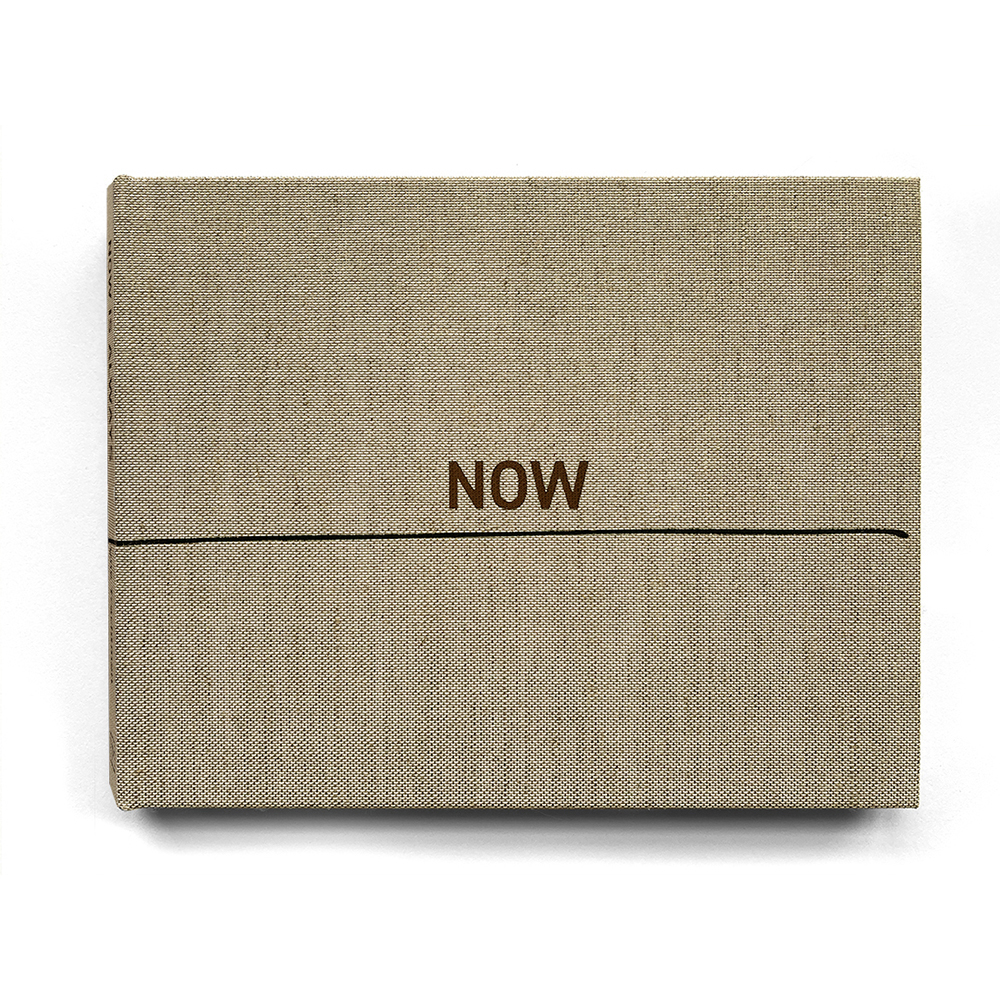
©Vaune Trachtman, Trade book cover (NOW)
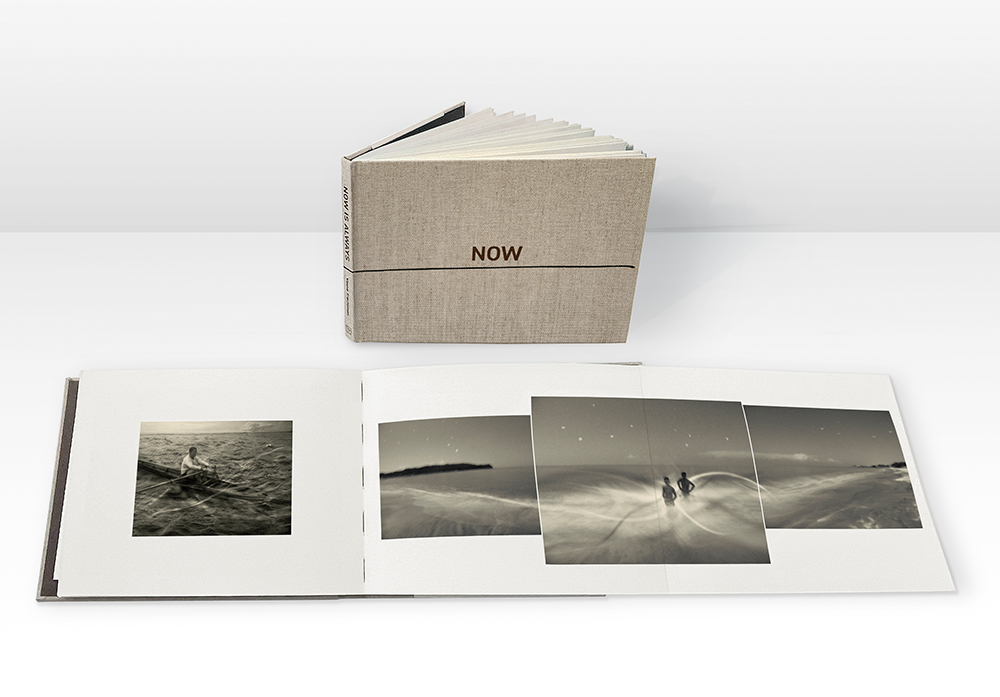
©Vaune Trachtman, Gatefold, with Scull on the left and Strand on the right
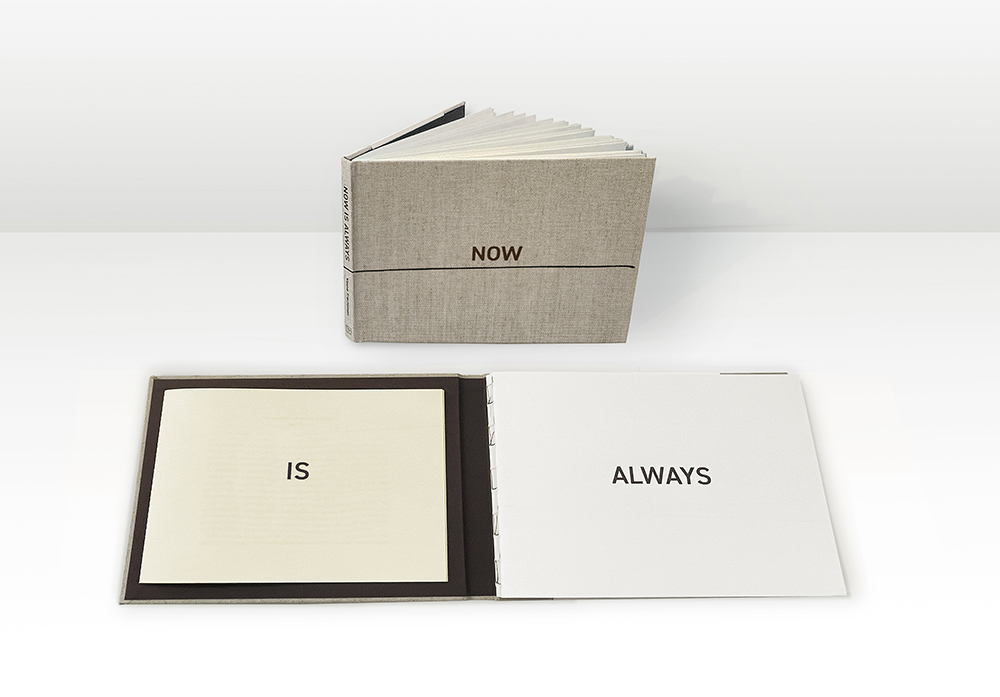
©Vaune Trachtman, Open to show the text section (IS) on the left and the plate section on right (ALWAYS).
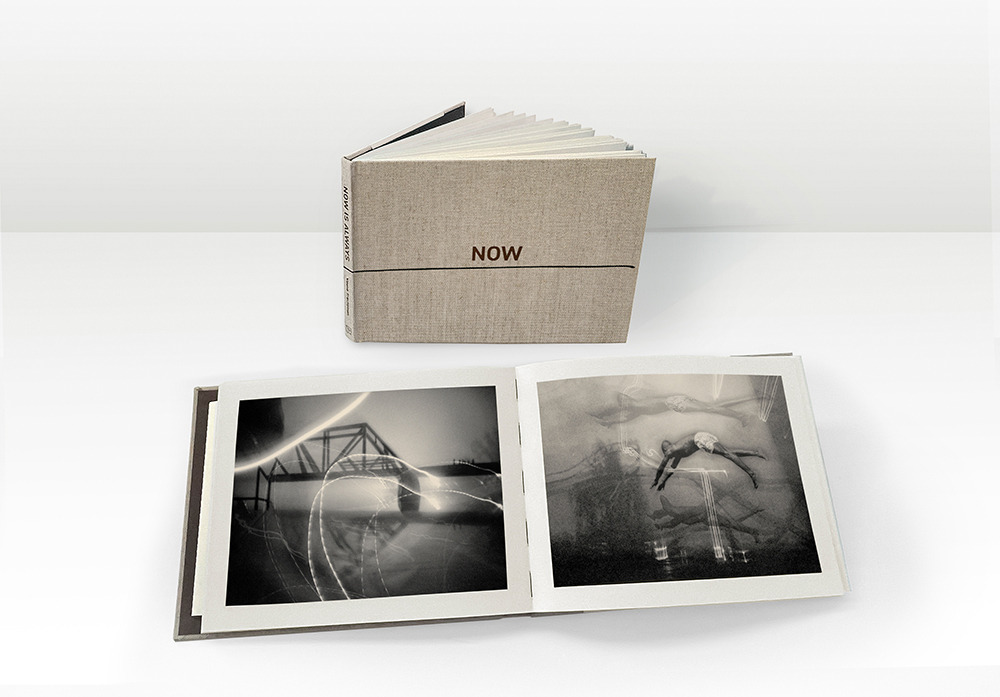
©Vaune Trachtman, Spread of Trussed (left) and Divers (right)
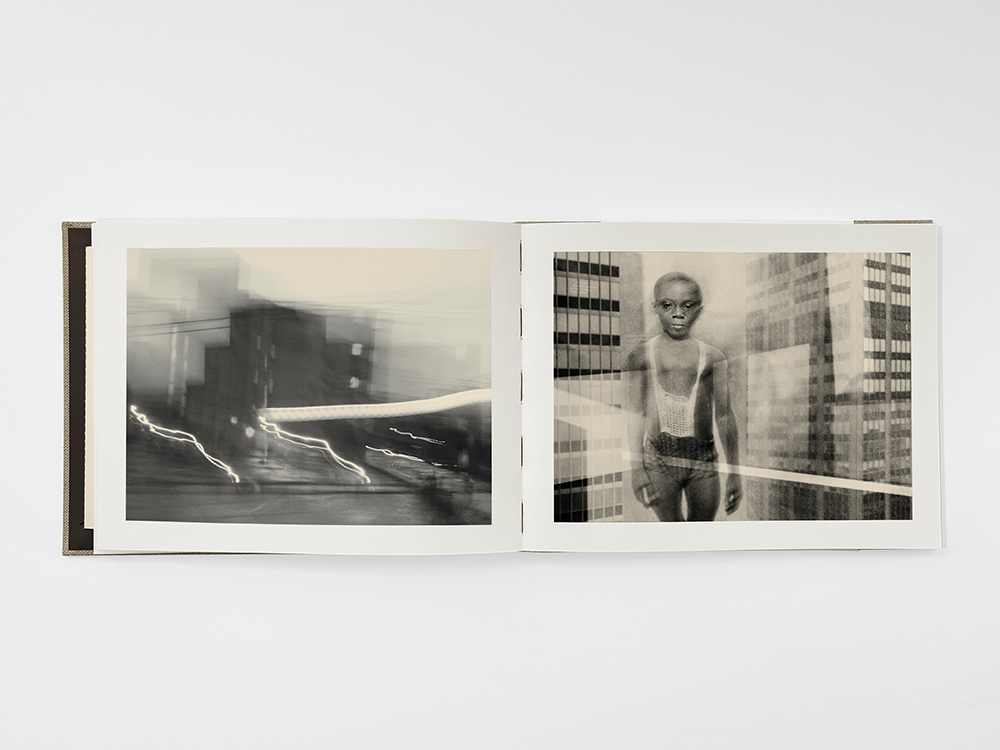
©Vaune Trachtman, Spread of Co-op City (left) and Singlet (right)
COLLECTORS EDITION
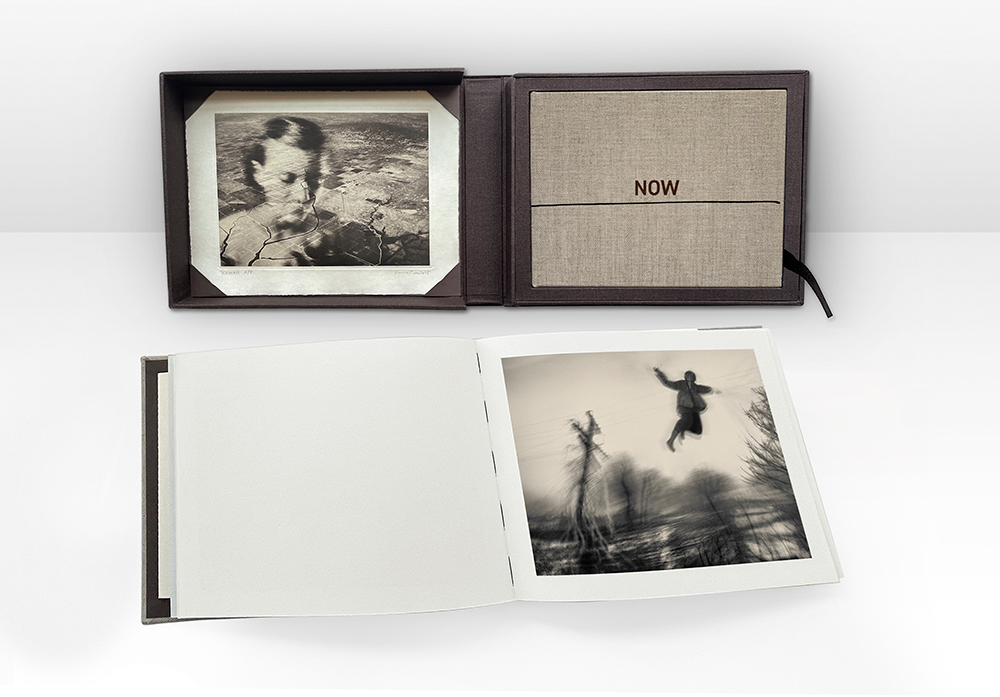
©Vaune Trachtman, Collector’s Edition, which includes the book (right) and a limited edition, signed plate of Reverie (left) housed in a custom-made clamshell case. Spread shows the image Bound.
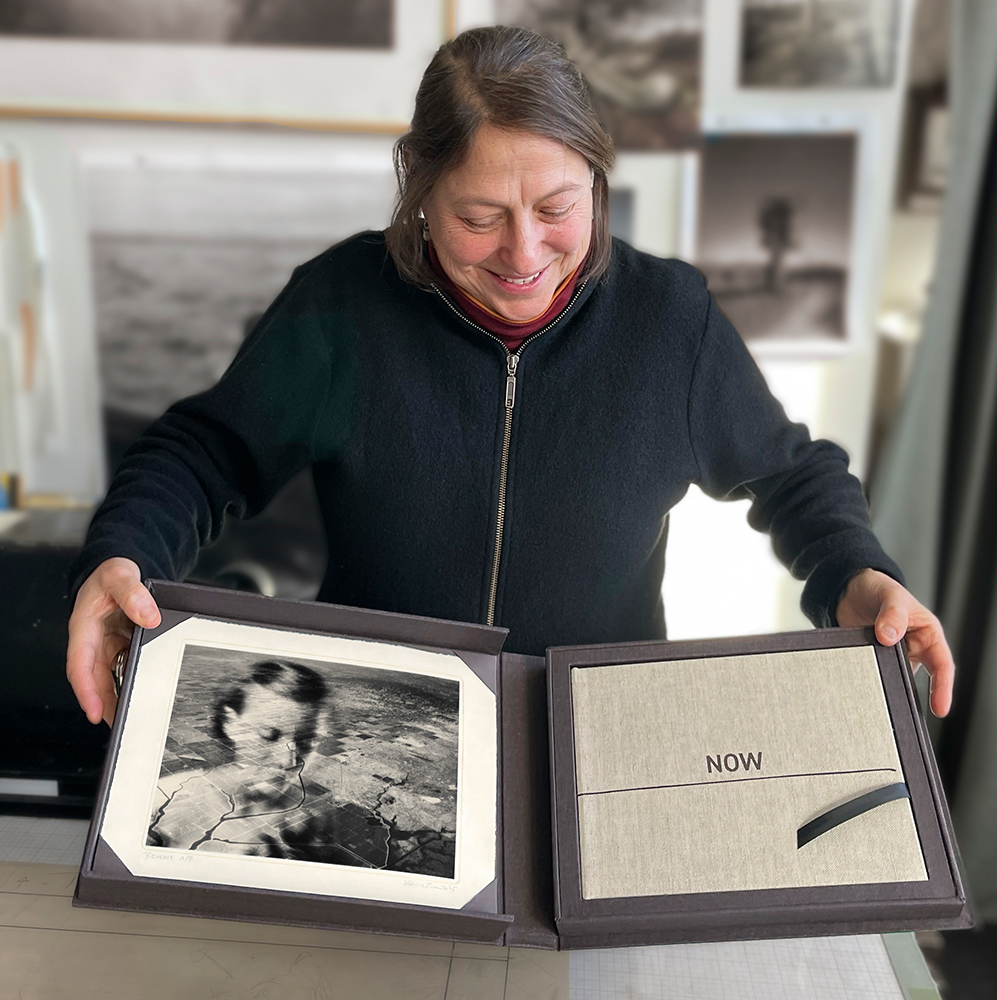
©Vaune Trachtman, Vaune Trachtman holding the Collector’s Edition of NOW IS ALWAYS in her studio.
About the work
My parents died when I was young– my father when I was five and my mother when I was 15. After that, I was rarely in one place for very long, but photography always helped keep me rooted and stable. It’s taken me a long time to understand that much of my work has been a constant, usually unconscious exploration and evocation of what it feels like to have lost them at such an early age. We all have our particular circumstances in life, of course. I think mine are at the heart of what leads me to photograph liminal, dreamlike spaces, to combine my father’s 1930’s negatives with my own images, and to explore mark-making and text.
I think that’s also part of the reason I’m interested in the non-toxic direct-to-plate photopolymer gravure process. I’m always on the lookout for moments that contain something larger than themselves; the picture I want to make is of an instant in time that is full of other times. The DTP method helps me feel like I’m doing that. I love that I can achieve the tonal richness of the earliest gravures without their toxicity, and that I can conjure up the early chemists of photography and have a conversation with them about what photography can be. I also love that this process requires physical effort—the rubbing of plates, the turning of the press—and that working with paper and ink is tactile and elemental.
In my work, I want to create a feeling of collapsed-yet-expanded time. I want the viewer to look at the past, and I want the past to look right back. I want the viewer and the subject to each feel the gaze of the other. And by working with archival images and handwriting, I also want to integrate layers of technology and image-making history. I want to feel like I’m not only drawing with light, I’m drawing with time.
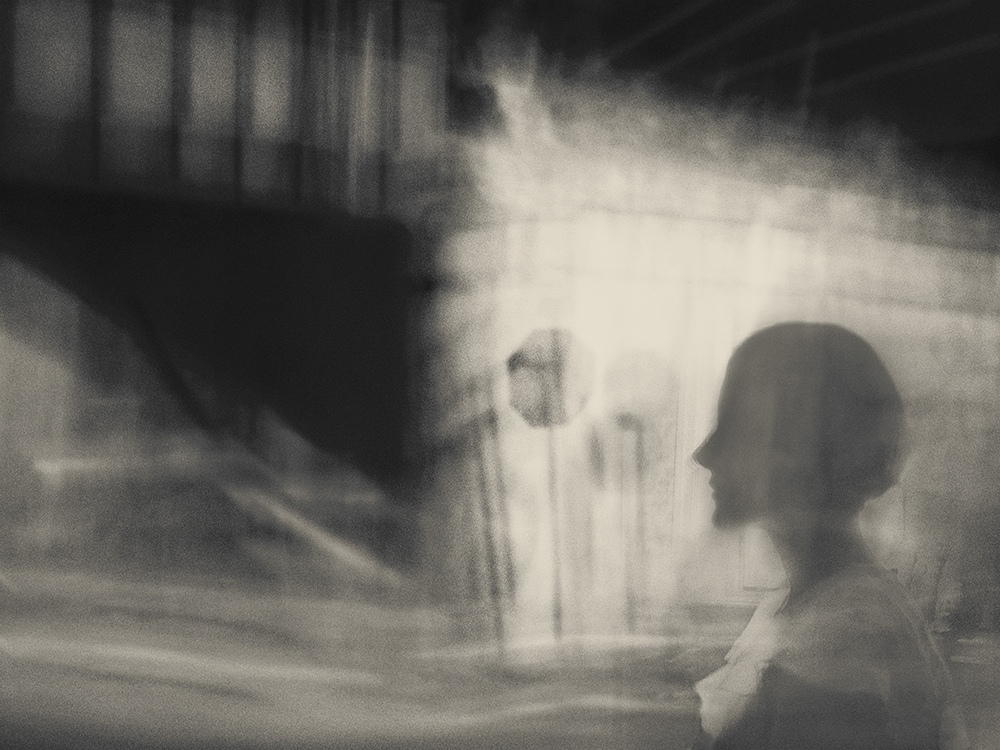
©Vaune Trachtman, Trestle 28” X 34”, 2021 / Edition of 6 Trestle was my first attempt at incorporating the people from my father’s negatives into my own images, in a collaboration across time. Trestle combines photos taken nearly 100 years apart, and it helped set the tone for the work that would become NOW IS ALWAYS. The image combines a Depression-era negative of a young woman in Philadelphia with an image of mine taken in the small mill town of Housatonic, Massachusetts.
Vaune Trachtman is a photographer and printmaker whose work honors historic processes while avoiding toxic chemicals. Formerly a master printer of silver-gelatin prints and asphaltum-based photogravures, she began to feel that her immune system was being compromised by those processes. She now makes gravures with little more than light and water. Her images explore the evanescence of dreams and memory, resulting in a “fleeting, wondrous, sacred habitation” (Od Review) and “works that seem more like emanations than photographs” (Boston Globe).
Work from her series NOW IS ALWAYS led to her selection for the Photolucida Critical Mass Top 50, and her printmaking earned the Olcott Family Award in The Print Center’s 97th ANNUAL International Competition. NOW IS ALWAYS was also named a Top Portfolio by Rfotofolio and an Outstanding Work by the Denis Roussel Awards. Its creation was supported by the Vermont Arts Council and the National Endowment for the Arts. She has had solo shows at the Griffin Museum of Photography, the Vermont Center for Photography, and Deerfield Academy.
Vaune was born in Philadelphia and now lives in Brattleboro, Vermont. She received her BA from Marlboro College and her MA from New York University and the International Center for Photography. Her studio is in an old textile mill overlooking the Connecticut River.
Instagram: @vaune.art
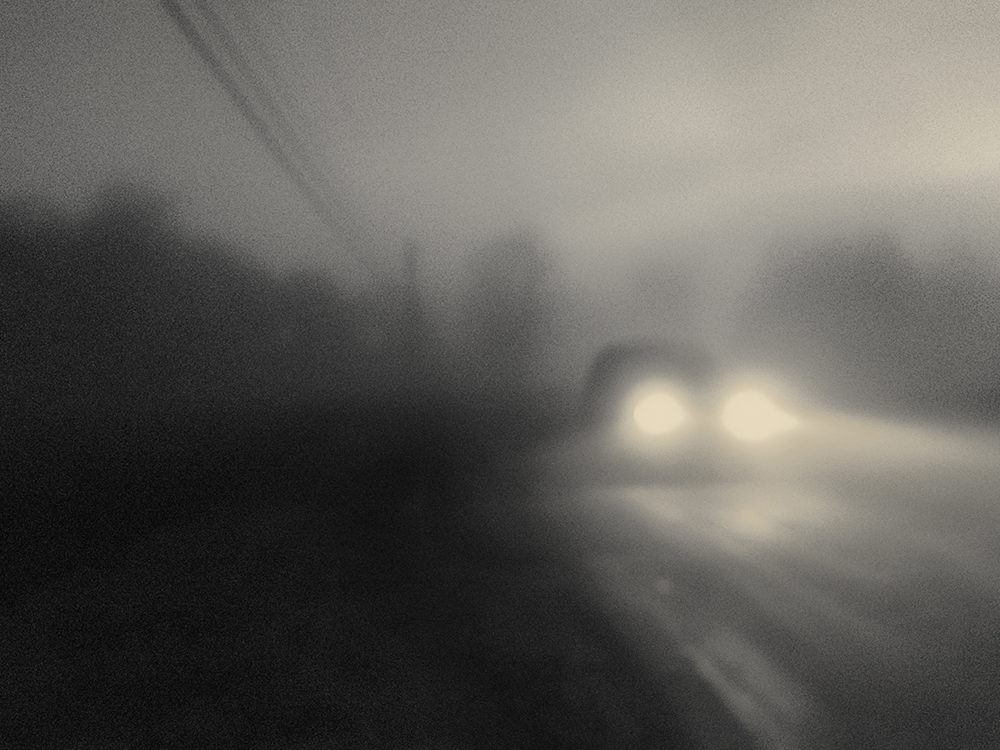
©Vaune Trachtman, 1. Dirt Road 15” X 19”, 2019 / Edition of 5 Dirt Road is one of the first gravures I made using the direct-to-plate photopolymer gravure process. As I worked to master this non-toxic way of making gravures, I concentrated on photographing bridges, highways, trestles and roofs. In my printmaking, I wanted to preserve some of the energy left behind by those who build and pass through these liminal spaces, and our lives. Dirt Road was the beginning of this exploration.
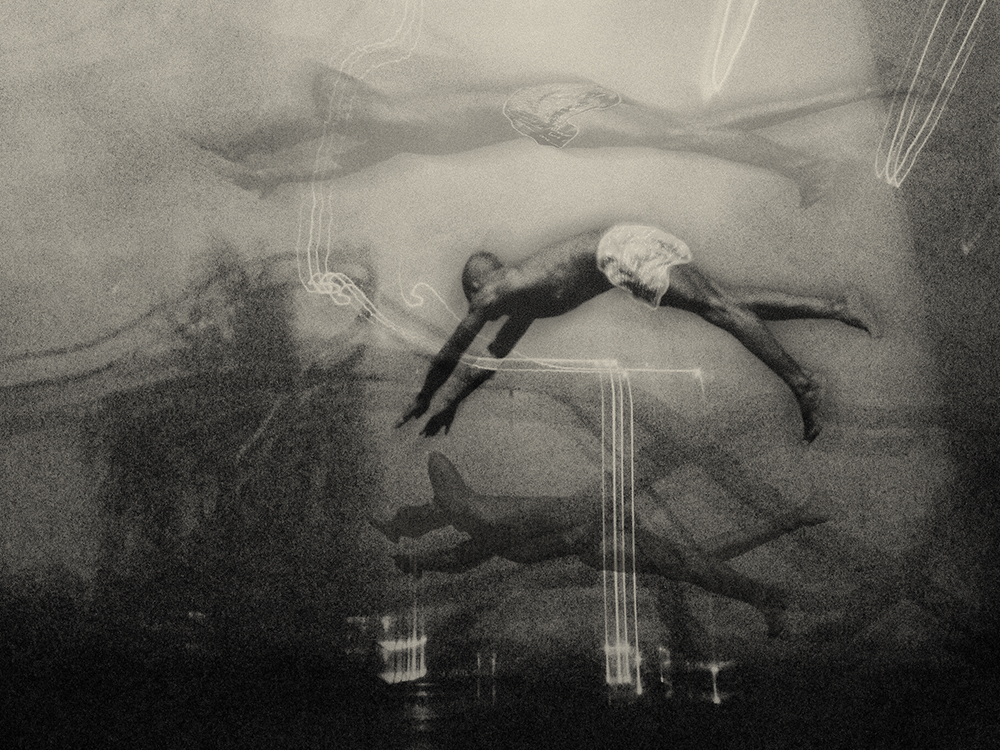
©Vaune Trachtman, Divers 19.5” X 24”, 2023 / Edition of 8 Divers pointed me toward the use of handwriting as a graphic element. The source material here comes from two blended photos I took in Jamaica, combined with a vernacular photo of a diving youth that my father took in the late 1950s. My father was an investigative reporter for the Philadelphia Inquirer in the 1950s and 60s, and I’ve added his handwritten notes for a story about integration into the swim trunks. This blending of imagery, text, and history opened the door to my own investigation of handwriting, mark-making, and memory.
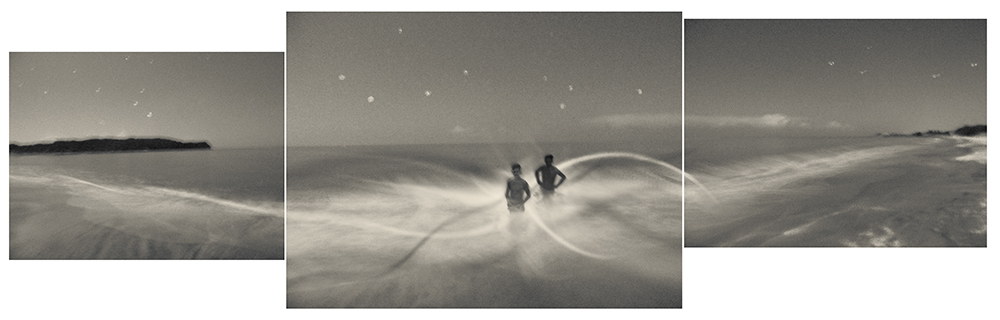
©Vaune Trachtman, Strand 16” X 42.5”, 2021 / Edition of 6 Strand is a triptych made of three different plates, which in the book is treated as a gatefold. Critic Suzanne Révy writes of Strand: The spirals recall strands of DNA, alluding to the attachment between ancestors and their descendants, and asks the question, can our DNA carry the memories of those who have passed on?
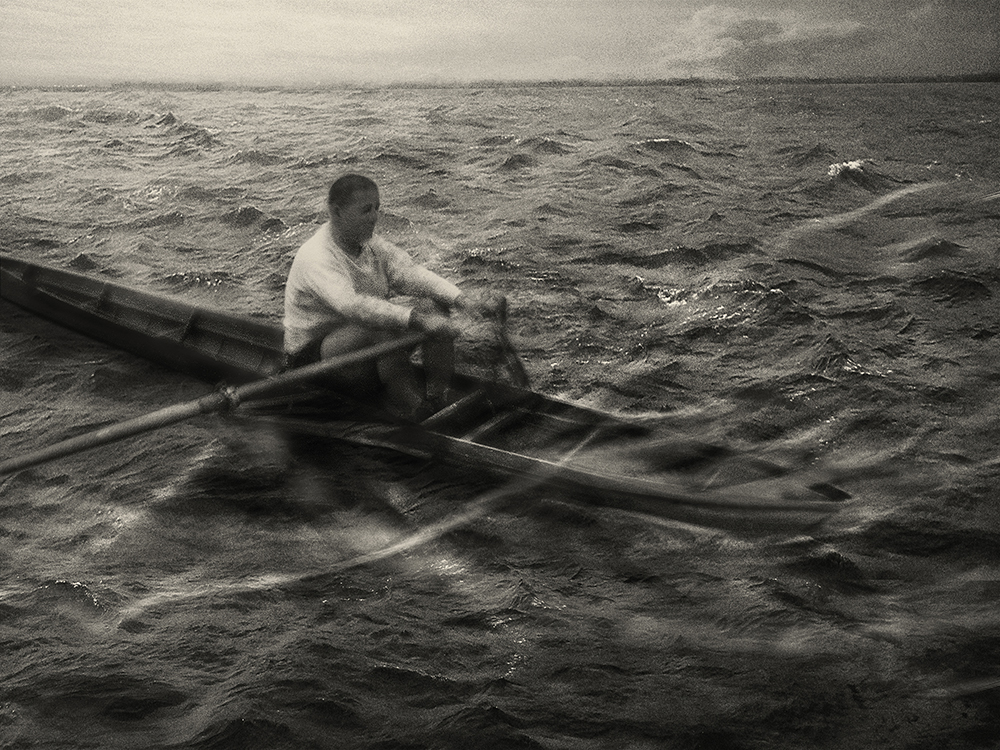
©Vaune Trachtman, Scull 13” X 16”, 2021 / Edition of 8 One day more than 30 years before I was born, my father must have handed his camera to a friend, because in the archival negatives I found four photos of my father rowing on the Schuylkill River. My father died when I was five, and I never really knew him. Those four photos are the only ones I have of him as a young man. I mention this because the question many of us ask when working with archival material—particularly that of a personal nature—is, “What is my responsibility to this material? What am I to make of this? What happens when the private becomes public?” I think the answers are found in Art. And so the Schuylkill becomes an ocean, with a nearly faceless figure about to leave the frame. My hope is that even personally grounded images such as Scull have resonance beyond my life and my experiences. Because we all have oceans. We all have people leaving our lives
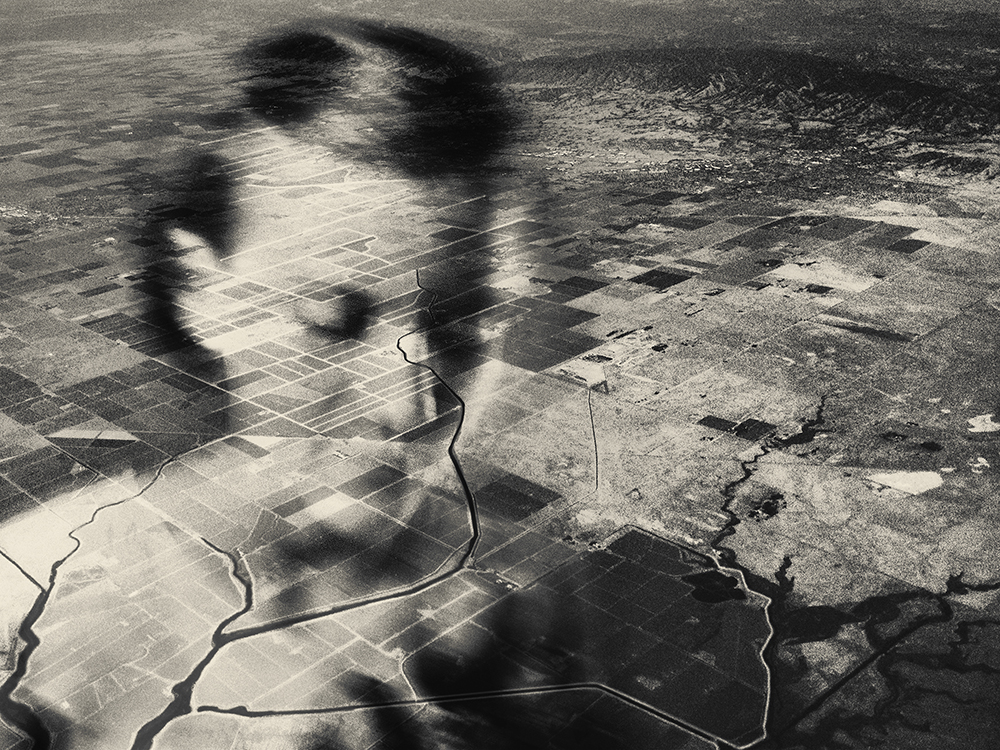
©Vaune Trachtman, Reverie 28” X 34”, 2021 / Edition of 6 My father’s father owned a drugstore on the corner of 19th and Girard in Philadelphia, and the family lived upstairs in what I imagine was a cramped apartment. I assume the original photo of the woman was taken there.
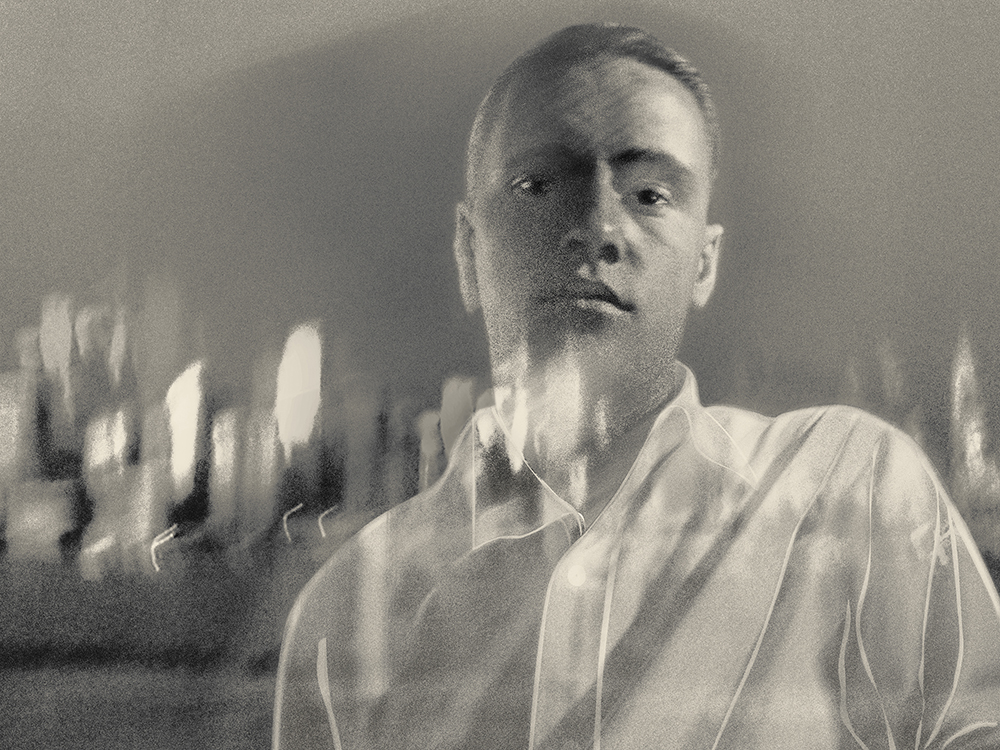
©Vaune Trachtman, Yoke 19.5” X 24”, 2021 / Edition of 8 In Yoke, I experimented with drawing the outline of the young man’s clothes, which seemed to make his expression more evocative. Doing so made me think about the power of a line and a mark.
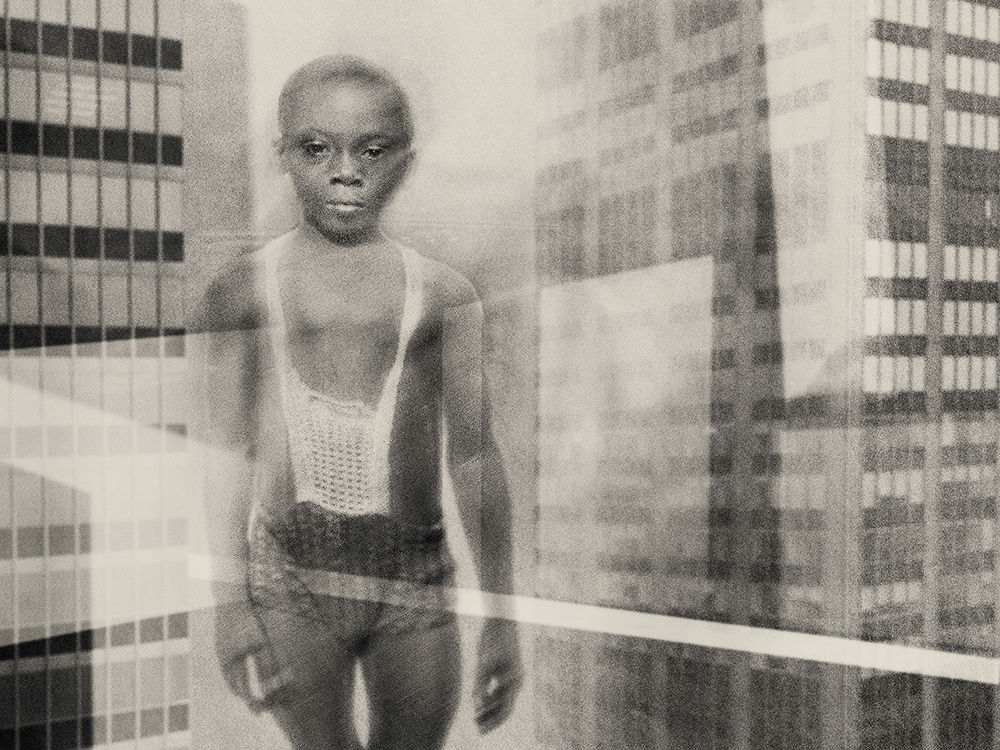
©Vaune Trachtman, Singlet 28” X 34”, 2021 / Edition of 6 One afternoon on the corner of 19th and Girard in Philadelphia, probably in 1932, my father took a photo of a young person in a simple summer garment. Nearly 90 years later, I was given the negative, which I combined with my image of mid-town Manhattan. In Singlet, I want to make that child and his clothes unforgettable. And by combining images taken almost a century apart, I also want to integrate layers of technology and image-making history. In this and other pieces, I want the viewer to look at the past, and I want the past to look right back.
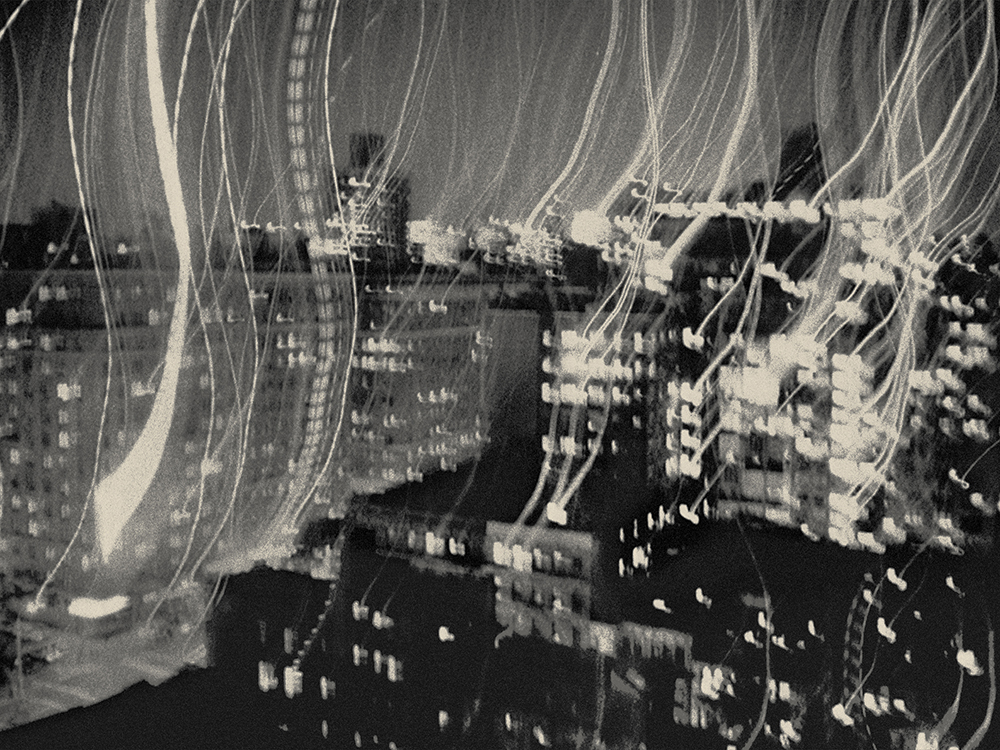
©Vaune Trachtman, Prayer 15” X 19”, 2019 / Edition of 5 About Prayer, Collier Brown wrote in The Od Review: In one of my favorite photographs by Vaune Trachtman, lights from a thousand city windows weave upward into the night. If you go by the photograph’s title, Prayer, the commercial district suddenly sheds its steel carapace. And out of that dead bulk, something like an urban ziggurat appears. But even without the title, the transitory reach of light from living room to constellation creates a sacred contract with the image. Strange things like this happen all the time in Trachtman’s work.
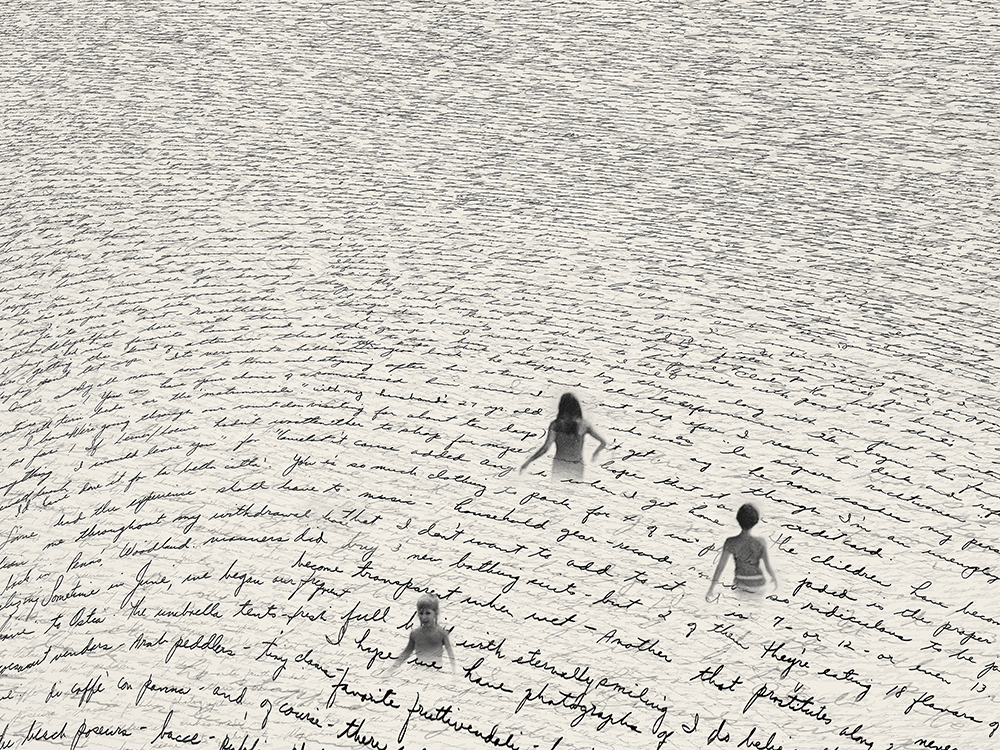
©Vaune Trachtman, Tabula 19.5” X 24”, 2024 / Edition of 6 After working with archival negatives, I started experimenting with turning handwriting into water (and later, wind). Here, the source material consists of family snapshots taken by my father shortly before his death, along with letters my mother sent from Rome to a Philadelphia friend. After my father died, my mother emptied out the bank account, moved the family to Italy, and tried to start over. We lived there for a year as we recalibrated our lives without him. That’s me, my brother, and my sister, wading into a sea of her correspondence from Rome.
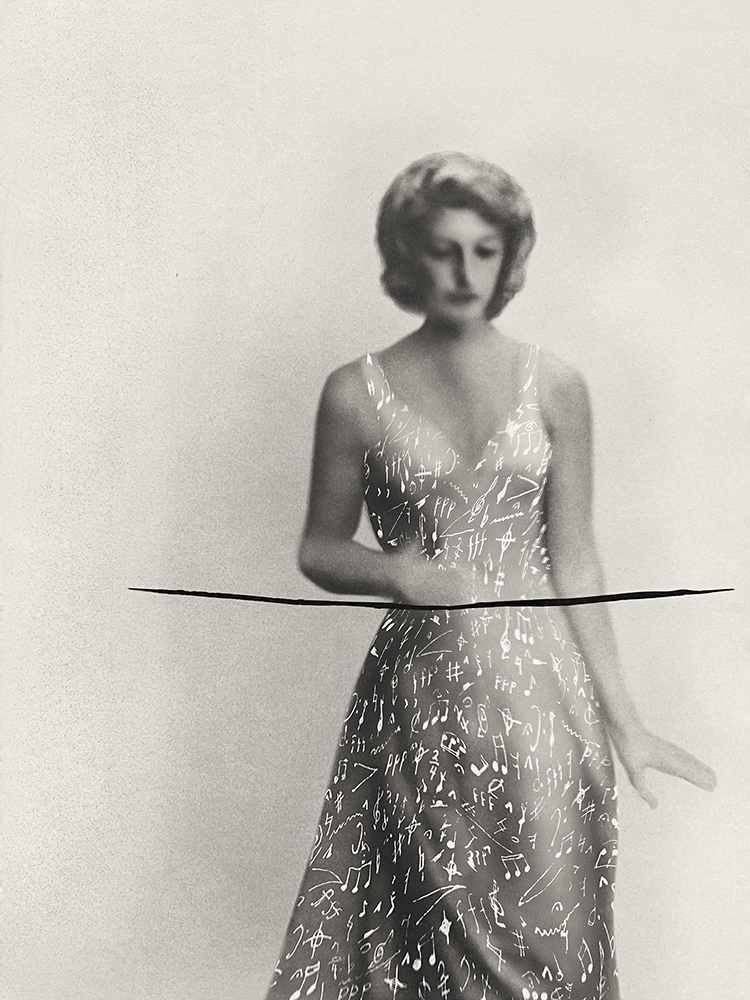
©Vaune Trachtman, Caesura 19.5” X 24”, 2024 / Edition of 6 Here, the source material is a snapshot of my mother. Her dress is constructed from doodles I took from her junior high school music composition notebook. The line comes from one of the marks my father made in his reporter’s notebooks. A caesura is a pause—a break in rhythm in poetry or music. My mother was a talented mathematician and musician who set her career aside to raise a family. After my father died, she returned to work, a single mom raising three children on her own.
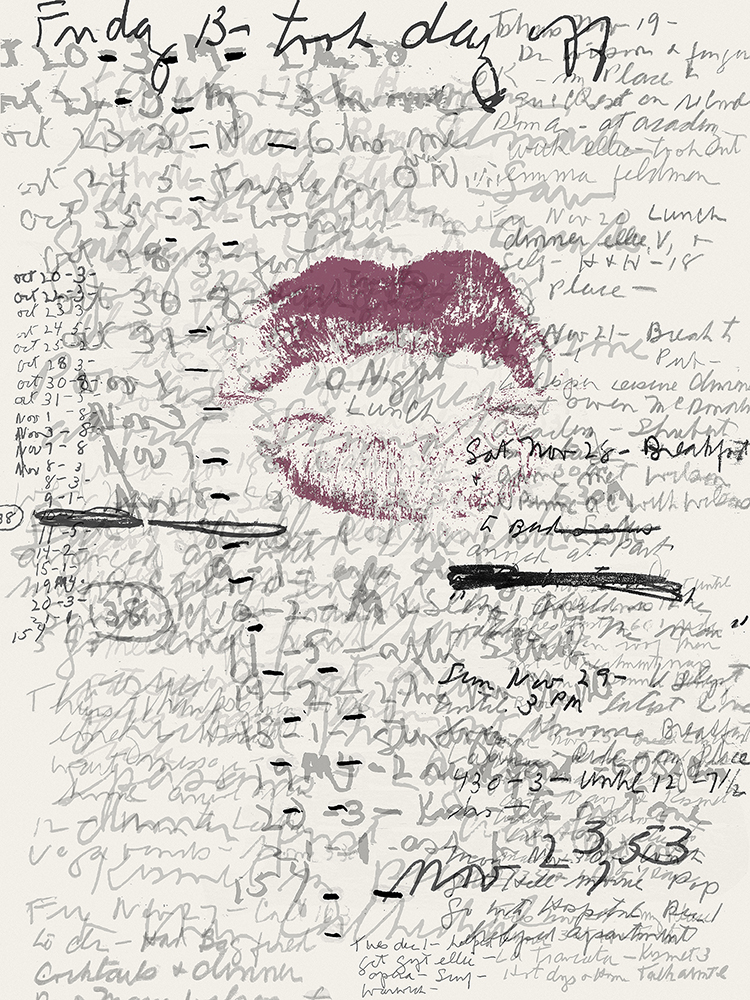
©Vaune Trachtman, Palimpsest 19.5” X 24”, 2024 / Edition of 6 One of my favorite discoveries I made when sifting through the correspondence and ephemera my parents left behind was a piece of paper my mother had kissed and given to my father. I matched that with notes he’d written about their time together that same day. The term “palimpsest” refers to a surface that’s been written on, erased, and written over again—often with traces of the original still visible. This image plays with that idea: layering gesture, impressions, and longing into a single surface.
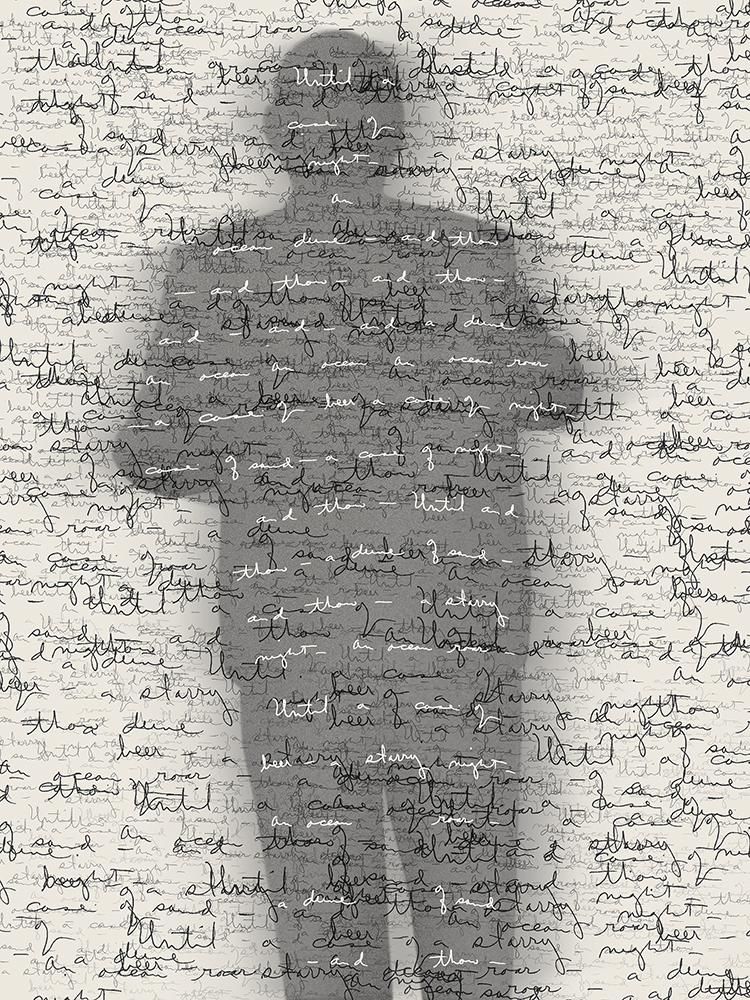
©Vaune Trachtman, Until 19.5” X 24”, 2024 / Edition of 6 Until contains a recombinant/cut-up poem (white text) built from love letters my mother sent to my father shortly after they met, along with a silhouette derived from an archival photo of my father from the 1950s.
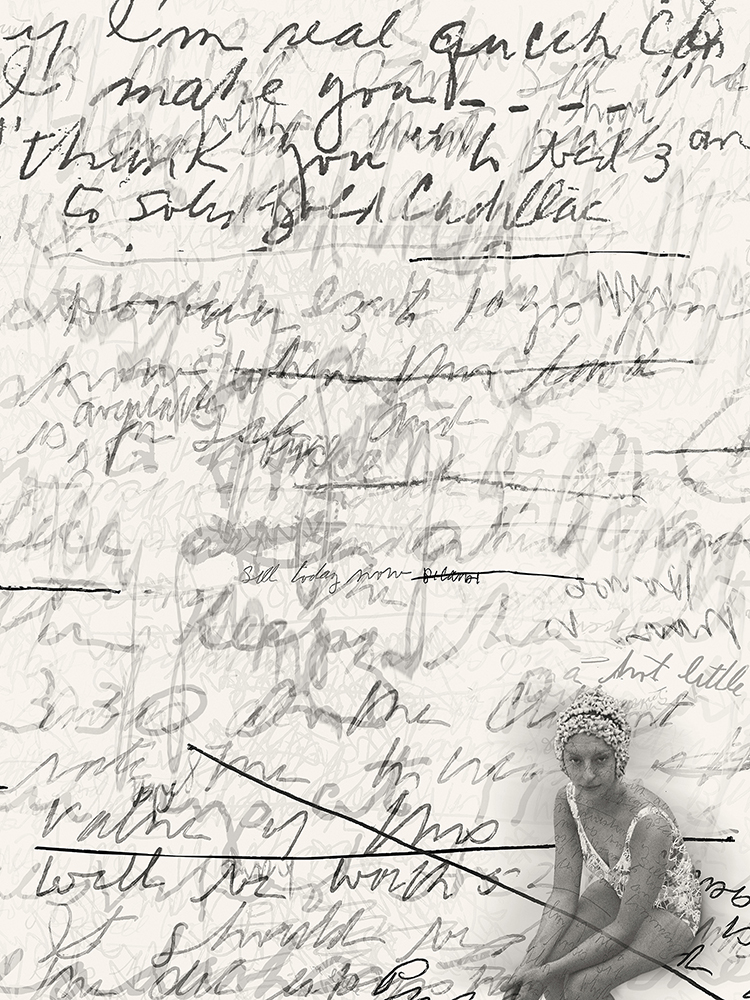
©Vaune Trachtman, 15. Pentimento 19.5” X 24”, 2024 / Edition of 6 Here, the source material is an image of my mother in a bathing suit, and my father’s handwritten notes about her when they were first dating The word pentimento refers to the visible trace of something that has been altered or covered over. Love and relationships can have this quality too, as can memory—what we remember is often a copy of a copy of an experience. In this print, I’m interested in the tension between the hardness of the handwriting as it records information about my mother, the seeming softness of her figure, and the intensity of her gaze as she holds her ground, refusing to be blotted out.
Posts on Lenscratch may not be reproduced without the permission of the Lenscratch staff and the photographer.
Recommended
-
Craig Easton: An Extremely Un-Get-atable PlaceJuly 6th, 2026
-
The 2026 Paula Riff Award Winner: Angélica ArbulúJuly 3rd, 2026
-
The 2025 Paula Riff Award Winner: Marni MyersJuly 2nd, 2026
-
The 2024 Paula Riff Award Winner: Minwoo LeeJuly 1st, 2026
-
The 2023 Paula Riff Award Winner: Paula McCartneyJune 30th, 2026