Vital Impacts: Tatsiana Chypsanava: Te Urewera – the Living Ancestor of Tūhoe people
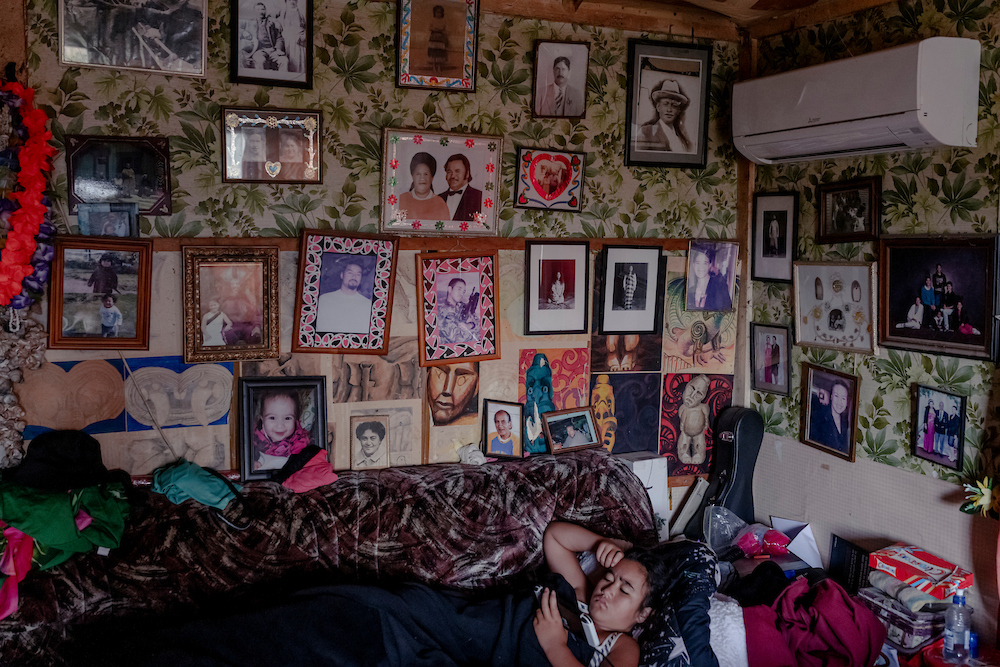
©Tatsiana Chypsanava, Ruiha Te Tana (12) relaxes at her grandfather’s home in Ruatoki, New Zealand. Built by an ancestor in 1916, the homestead serves as a living archive of Tūhoe history. The wall of photographs visually represents Te Tana’s whakapapa, or genealogy, a cornerstone of Māori culture. Whakapapa connects individuals to their ancestors, land, and tribal identity, providing a sense of belonging and continuity, in Ruatoki, New Zealand, on January 26, 2022.
Now in its third year, Vital Impacts has awarded seven environmental photography fellowships totaling $50,000 and eleven year-long mentorships to visionary photographers illuminating the profound and often fragile connection between people and the planet. As support for indepth environmental storytelling declines and the urgency of these stories continues to grow, Vital Impacts champions the artists whose images spark empathy, inspire action, and remind us of our collective responsibility to protect the Earth we call home.
Vital Impacts is thrilled to announce the 2026 recipients of $50,000 in Environmental Photography Fellowships, honoring the legacy of visionary leaders including Dr. Jane Goodall, DBE, Dr. Sylvia Earle, Hindou Oumarou Ibrahim, Chico Mendes, Madonna Thunder Hawk, E.O. Wilson and Ian Lemaiyan. Fellows were selected for their locally rooted storytelling that highlights solutions and community resilience. In addition, 11 emerging photographers will participate in year-long intensive mentorships, developing their craft and vision.
This year’s judging panel included Alessia Glaviano, Head of Global PhotoVogue, Azu Nwagbogu, Founder and Director of African Artists’ Foundation and Lagos Photo Festival Evgenia Arbugaeva, National Geographic Storytelling Fellow and Academy Award Nominee, Kathy Moran, Deputy Director of Photography at National Geographic and Pat Kane, Vital Impacts Environmental Jane Goodall Fellowship Winner.
Tatsiana Chypsanava (Aotearoa, New Zealand) has just been awarded the Dr. Sylvia Earle Fellowship to continue her long-term documentary project with Ngāi Tūhoe, the people of Te Urewera, focusing on their leading model of Indigenous guardianship over ancestral lands and its contribution to global conversations on Indigenous sovereignty and environmental justice.
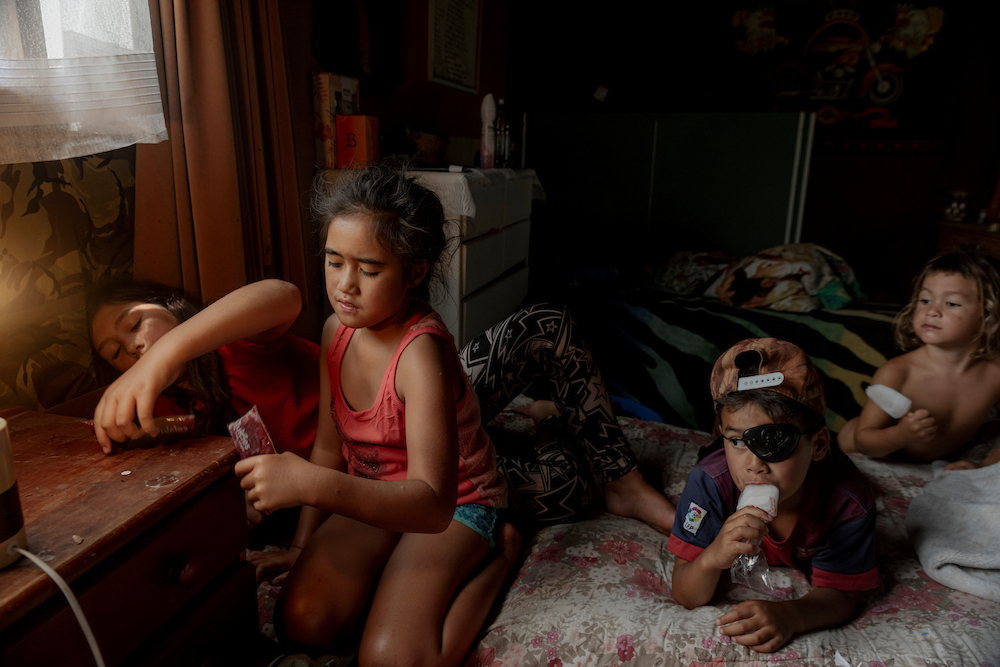
Tatsiana Chypsanava (b. 1980, Belarus) is a documentary photographer based in Aotearoa New Zealand. Descended from the Komi peoples of the Northwest Ural, she champions diversity in visual storytelling through her membership in Diversify Photo and Women Photograph.
A grantee of the Pulitzer Center (2023) and Wellcome Trust (2020), Chypsanava has honed her craft through prestigious programs including the Eddie Adams Workshop (2021), Missouri Photo Workshop (2022), and Foundry Photojournalism Workshop (2023).
Her work has appeared in leading publications including The New York Times, Wall Street Journal, and New Zealand Geographic. In 2025, she received the World Press Photo Award (Long-Term Project, Asia-Pacific Oceania region) for her series “Te Urewera – The Living Ancestor of Tūhoe People.”
Instagram: @tatsiana_chypsanava
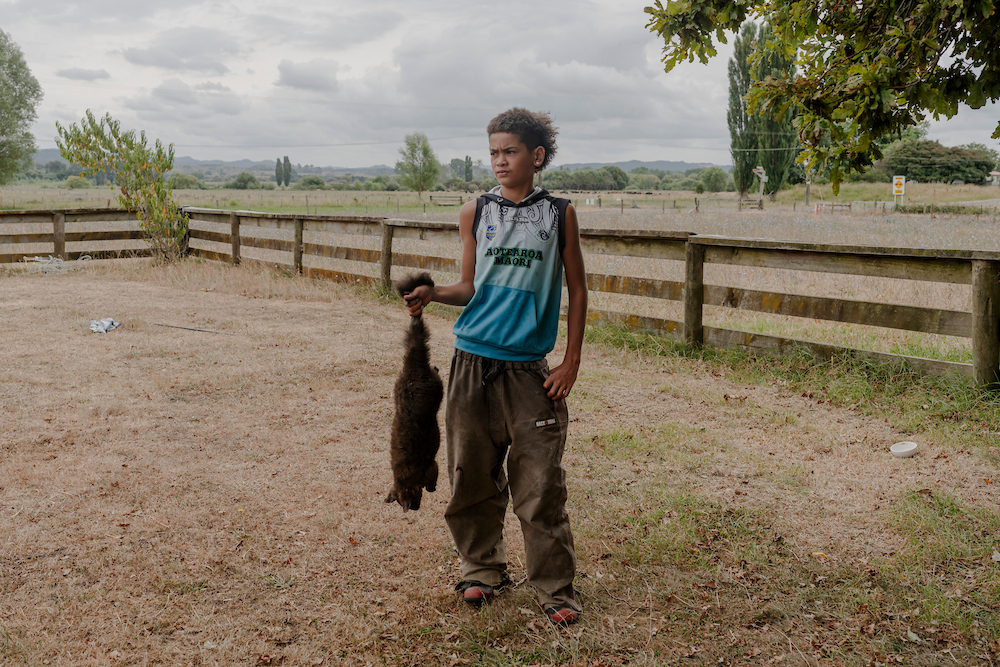
©Tatsiana Chypsanava, Tapu Teepa (10) holds a brushtail possum trapped in the mountainous ridges near the family farm in Ruatoki, New Zealand. Possums were introduced to New Zealand from Australia in the 19th century, in an attempt to set up a fur trade. They are now considered New Zealand’s most damaging invasive pest, because of the havoc they wreak on farms and native forests, and fur can be sold in town for NZ$100 (US$57) a kilo, in Ruatoki, New Zealand, on January 24, 2022.
Te Urewera – the Living Ancestor of Tūhoe people
The project aims to create a multi-faceted exploration of Te Urewera and the Tūhoe people through a long-form photo essay, which will serve as the core element. This essay will feature my photography capturing the deep connection between the Tūhoe community and their ancestral land. Accompanying this visual narrative will be insights from Dr. Pounamu Jade Aikman, providing historical and cultural context, tailored for both digital and print formats to maximize accessibility.
I have been embedded in the Tūhoe community since 2014, building trust and developing working methods rooted in transparency and respect. This long-term engagement ensures authentic storytelling and a collaborative process throughout the project. An audio component will enhance the experience, featuring recordings of forest sounds and Tūhoe elders sharing traditional knowledge in Te Reo Māori with English subtitles. Drone footage will highlight the ecological significance of Te Urewera, complemented by video interviews with community members sharing personal stories about their relationship with the land.
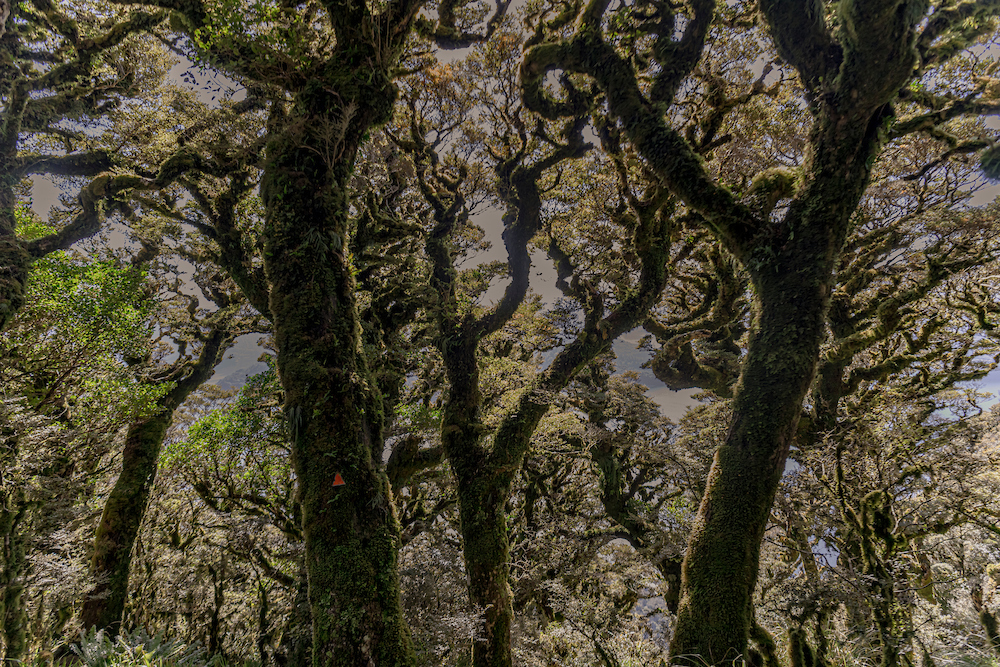
©Tatsiana Chypsanava, Lake Waikaremoana Great Walk is run and serviced by the Tūhoe people since 2014, in Waikaremoana, New Zealand, on April 23, 2024.
A historical timeline will illustrate Te Urewera’s journey and legal recognition, using archival images, scientific observations, and recorded oral histories spanning the last century. The project emphasizes bilingual presentation in English and Te Reo Māori, highlighting the role of language preservation in maintaining Indigenous knowledge. Ultimately, this initiative will culminate in a multimedia story and website that offers a rich educational narrative celebrating the unique bond between the Tūhoe people and Te Urewera. A final chapter will also be produced for a forthcoming book to further explore and document this story in print.
In addition to collaboration with the Tūhoe tribal office in Ruatāhuna, Dr. Pounamu Jade Aikman is a key partner. As a writer, he will provide critical historical and cultural insights from his doctoral research on Tūhoe resistance and state violence. His role includes conducting interviews with Tūhoe community members and contributing to narrative development, ensuring accurate representation of Tūhoe perspectives. His connections within the community and expertise in Indigenous issues will enhance the project’s depth regarding Te Urewera’s legal personhood and broader implications.
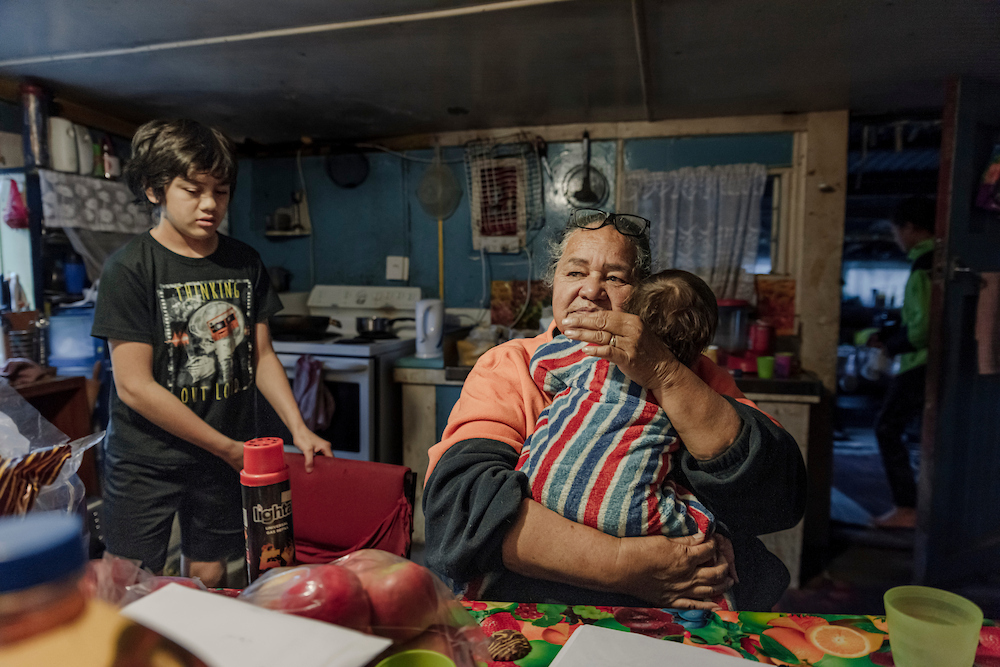
©Tatsiana Chypsanava, Carol Teepa (64) sits in her kitchen in Ruatoki, New Zealand, with her youngest grandchild, Mia, and her whāngai son, Wanea, one of more than 20 children she adopted according to Māori whāngai custom, to strengthen traditions and family ties. Whāngai children often maintain relationships with both birth and adoptive families. This open arrangement helps preserve cultural heritage and strengthens family ties, in Ruatoki, New Zealand, on September 2, 2017.
We will gather feedback and measure impact through multiple methods: analyzing reach and engagement metrics of published stories; conducting surveys and interviews with the Tūhoe community to assess perceptions of accuracy and involvement; tracking inquiries from policymakers and conservation organizations about the Tūhoe model; assessing awareness of Te Urewera’s legal personhood among environmental groups; and monitoring Tūhoe youth participation to evaluate engagement and interest in conservation initiatives.
Our distribution and engagement strategy prioritizes collaborative storytelling and community control over information. While many organizations focus on broad digital outreach via standalone websites, we will partner with established media platforms such as National Geographic and major international news outlets. This approach ensures global reach while maintaining the integrity and authority of our messaging, particularly regarding Indigenous-led conservation efforts.
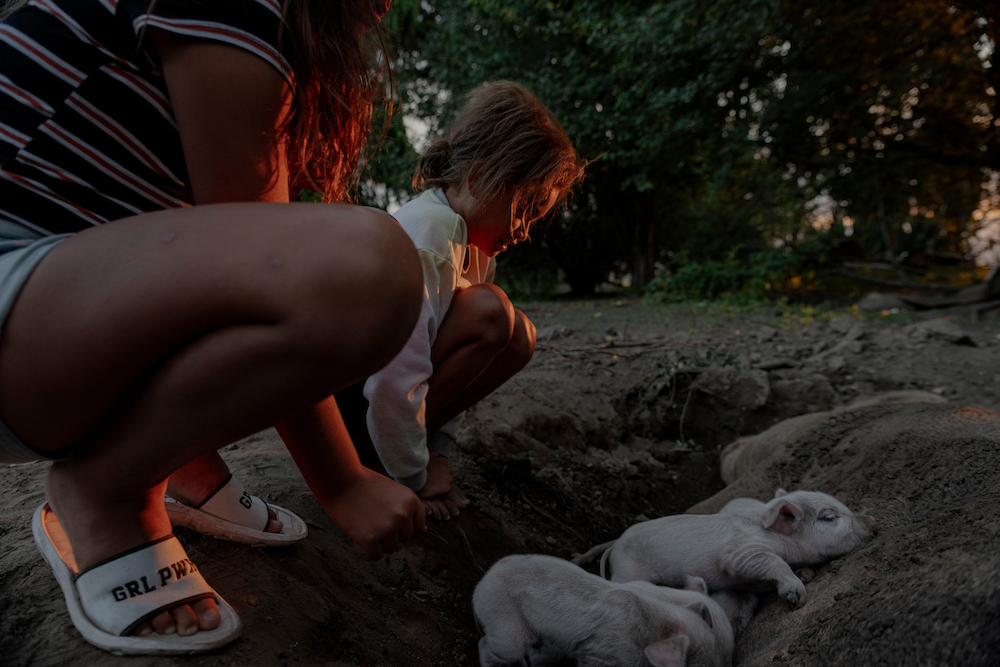
©Tatsiana Chypsanava, Children from the Teepa family gather around to watch the newborn piglets at the family farm in Ruatoki, New Zealand. For them, this farm is not just a place: it is their birthplace and the only home they have known. The Teepa family farms, distributes, and barters meat within the Ruatoki Valley, in Ruatoki, New Zealand, on February 4, 2019.
We are targeting environmental advocates, policymakers, and academic communities, particularly those interested in Indigenous rights and sustainable practices. The audience will gain insights into successful models of Indigenous-led conservation, innovative legal frameworks for environmental protection, and the integration of traditional knowledge with modern science to combat climate change. Regionally, the story can influence New Zealand’s environmental policy; internationally, it can serve as a model for adaptation in other contexts. Social media campaigns will further highlight key findings, ensuring that the Tūhoe retain control over the narrative surrounding their community. This dual approach amplifies reach while fostering deeper connections between Indigenous communities and global audiences, setting a precedent for future conservation initiatives.
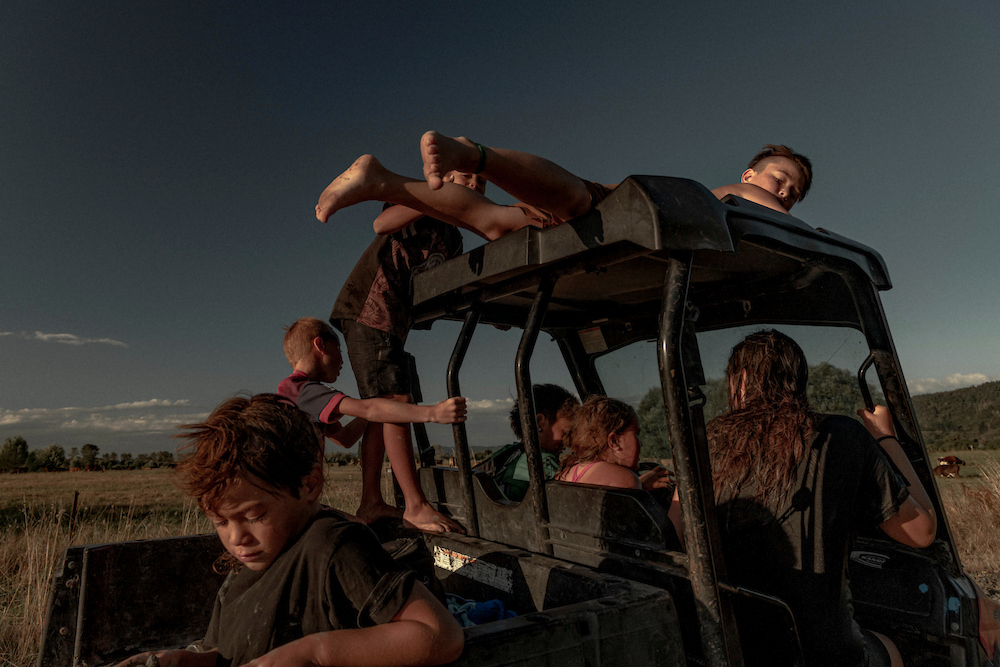
©Tatsiana Chypsanava, Children from the Teepa family drive the younger siblings home, after a swim in the Ōhinemataroa (Whakatane) River, in Ruatoki, New Zealand. Tūhoe children are taught independence and to care for other family members, in Ruatoki, New Zealand, on January 27, 2022.
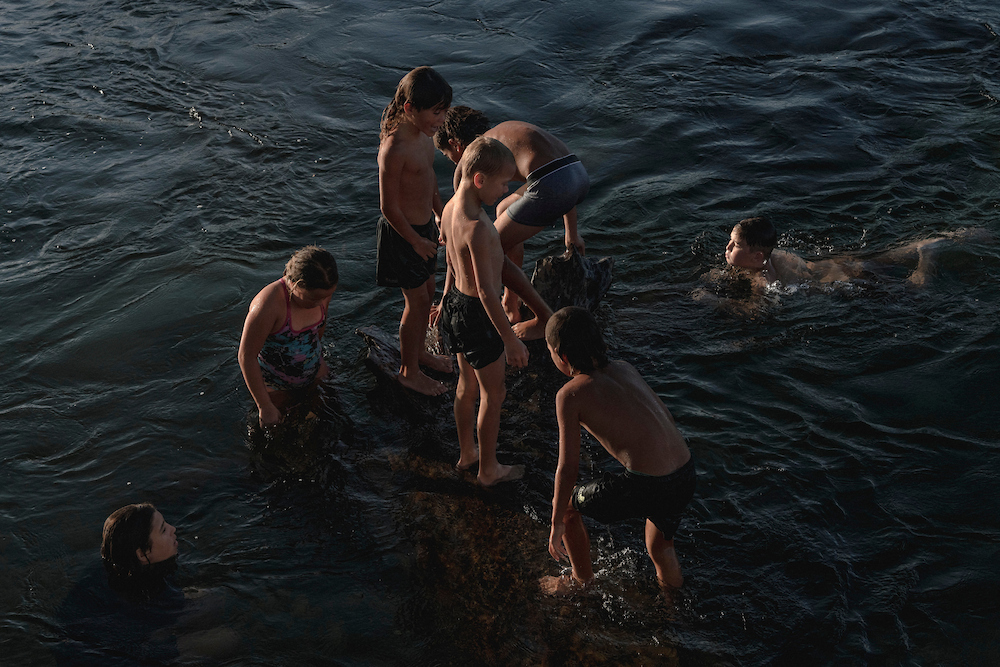
©Tatsiana Chypsanava, Children of the Teepa family and their cousins swim in the Ōhinemataroa (Whakatane) River, in Ruatoki, New Zealand, watched over by older Teepa siblings, in Ruatoki, New Zealand, on January 27, 2022.
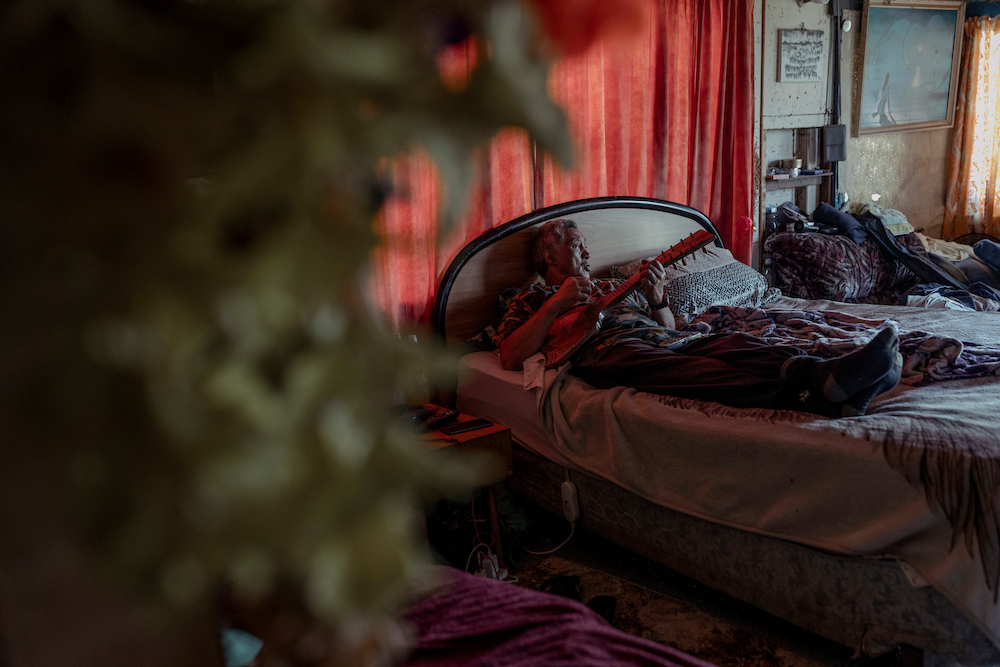
©Tatsiana Chypsanava, John Rangikapua Teepa (68) plays the ukulele in his bedroom at home, in Ruatoki, New Zealand. He suffers from poor health and spends most of his time resting, while trying to help on the farm very early in the day. Like many Tūhoe, John Teepa spent a few decades living in the city, away from his ancestral land, in Ruatoki, New Zealand, on January 26, 2022.
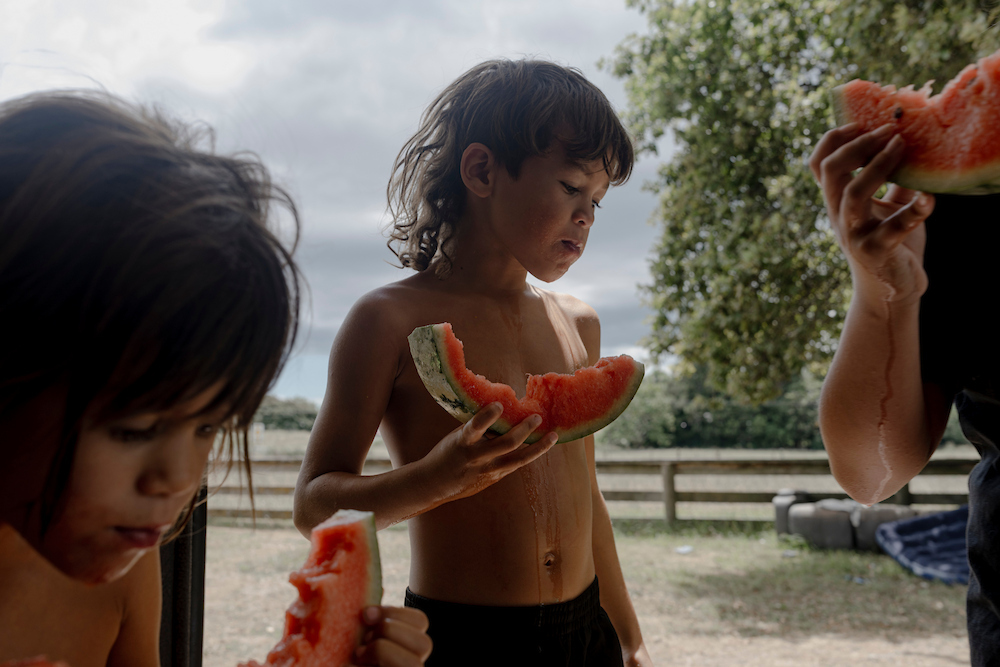
©Tatsiana Chypsanava, Teepa children share a watermelon on the family farm in Ruatoki, New Zealand. John Rangikapua Teepa and his wife Carol have raised more than 20 children adopted according to the Māori whāngai custom, to strengthen traditions and family ties. Whāngai children often maintain relationships with both birth and adoptive families. This open arrangement helps preserve cultural heritage and strengthens family ties, in Ruatoki, New Zealand, on January 27, 2022.
About the Fellowships
Vital Impacts is dedicated to supporting visual storytellers who capture compelling, solutions-focused environmental stories at the local level. We are grateful to be able to offer one $20,000 fellowship and six $5,000 fellowships to help bring these vital stories to life. Fellows have twelve months to develop their projects, with support from Vital Impacts to publish and showcase their work.
“Our aim is to support and nurture the next generation of environmental storytellers through grants and mentoring programs,” said founder Ami Vitale “We aspire to create opportunities for these emerging voices to explore complex environmental issues with originality and nuance at this critical moment.”
The 2026 Mentorship Recipients
In addition to the grants, ten emerging photographers from diverse regions will participate in an intensive mentorship program designed to enhance their storytelling skills and artistic vision.
Over the span of twelve months, these individuals will have the opportunity to engage in one-on-one sessions with industry experts, renowned photographers, and influential photo editors. Through these sessions, participants will refine their storytelling skills, receive guidance on navigating the industry, and establish vital connections.
Over the past fifty years, Earth’s wildlife populations have declined by nearly three-quarters, a profound shift that challenges us to rethink how we care for the natural world. Yet even in the face of these losses, there is extraordinary reason for hope. Around the planet, communities, scientists, and storytellers are working together to reimagine solutions, restore ecosystems, and protect the places we all depend on.
Vital Impacts is a women-led 501c3 non-profit founded in 2021 by Ami Vitale and Eileen Mignoni to advance conservation through visual storytelling, community partnership, and strategic investment in local solutions. We harness the power of art, visual journalism, and community partnerships to support conservation and illuminate pathways toward a more resilient future. Central to our work is investing in storytellers. More than 1,000 journalists across 87 countries have received mentorship through our programs, gaining the tools and support to report on environmental issues with depth, sensitivity, and solutions-driven focus. Their stories bring global visibility to local challenges and to the people working creatively to solve them.
This storytelling network is paired with deep community engagement. Through partnerships, Vital Impacts has raised $3.5 million for local conservation initiatives. These resources help safeguard critical ecosystems, support community-led conservation, and ensure that those working closest to the land have the support they need to succeed.
We are also cultivating the next generation of environmental stewards. Our in-person student programs have reached 30,000 young people, inviting them to see themselves as active participants in shaping a healthier, more compassionate world. By connecting students with powerful stories and the people behind them, we spark curiosity, agency, and a lifelong commitment to caring for the planet.
At the heart of Vital Impacts is the belief that stories transform understanding and that understanding drives action. By elevating local voices, bridging science and narrative, and directing resources where they create lasting change, we are building a global community of people who recognize that restoring the planet is not only possible but already underway.
Instagram: @vital.impacts
Executive Director: Ami Vitale
Ami Vitale is a National Geographic Explorer at Large, award-winning photographer, writer, documentary filmmaker, and the founder of Vital Impacts. Her work explores the vital connections between people, wildlife, and the planet. With nearly three decades of experience working in over 100 countries, Ami uses storytelling as a tool for conservation, empathy, and action.
Her career began in conflict zones, where she witnessed firsthand how environmental degradation—including resource scarcity, displacement, and climate instability—profoundly affects human lives. These early experiences shaped her conviction that environmental and social issues are inseparable, guiding her toward long-term, solutions-focused work that highlights resilience, collaboration, and possibility.
Her work has been recognized with numerous honors, including Conservation International’s Lui-Walton Innovators Fellowship, the Lucie Humanitarian Award, the Missouri Honor Medal for Distinguished Service, the Daniel Pearl Award for Outstanding Reporting, and six World Press Photo awards. She is an honorary fellow of the Royal Photographic Society and an inductee into the North Carolina Media and Journalism Hall of Fame.
Through both her nonprofit leadership and her own creative work, she remains deeply committed to empowering emerging voices and advancing a more hopeful, solutions-driven future for our planet.
Instagram: @amivitale
Posts on Lenscratch may not be reproduced without the permission of the Lenscratch staff and the photographer.
Recommended
-

Alessandra Bobba: A Family Journey, A Lifetime of LoveJuly 10th, 2026
-

Robin Dahlberg: Breaking PointJuly 7th, 2026
-

Mark Edward Harris: NORTH KOREAJune 15th, 2026
-
Elizabeth Li: Three GorgesJune 13th, 2026
-

Amy Gaskin: Marilyn Forever! Marilyn Monroe—A Symbol of HopeMay 30th, 2026