
EARTH WEEK: Arko Datto: Final Wave (Chapter II)
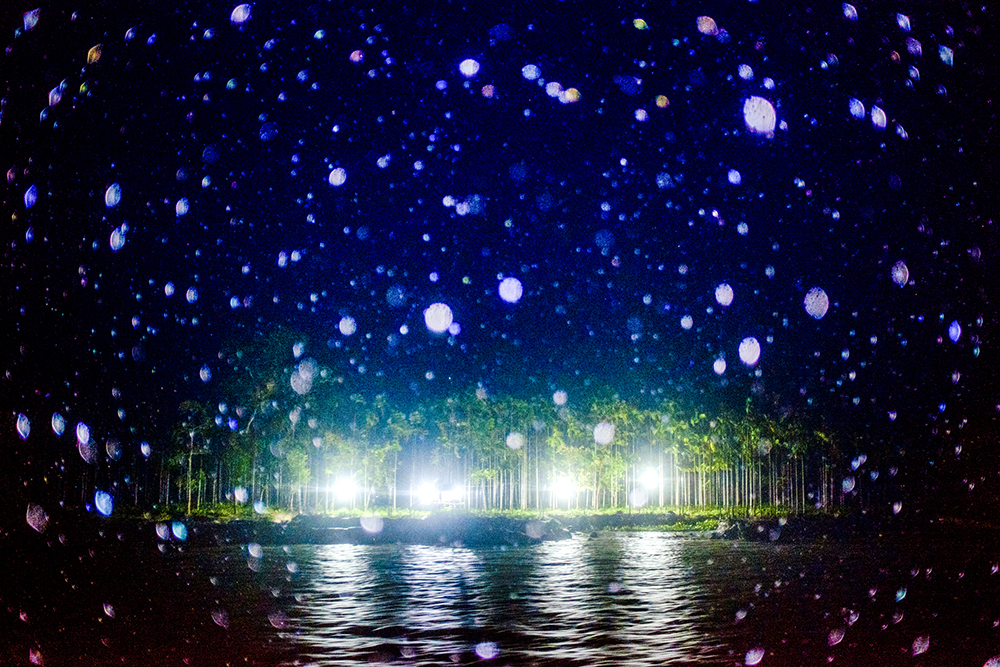
©Arko Datto, On a stormy night, land is finally in sight.
Each year during Earth Week I curate a collection of photographic projects from artists who are working to make the often-invisible nature of the global climate and the ecological crisis more visible using conceptual, lens-based art techniques. The arts – and the visual arts in particular – have a unique capacity to confront audiences with uncomfortable truths, provoke meaningful discussion, foster empathy, and inspire individuals to take action on today’s most pressing issues.
Today, we’re looking at Arko Datto’s project, Final Wave (Chapter II).
These bodies of work are linked by this thematic lens: making the often-invisible nature of the global climate and the ecological crisis more visible using conceptual, lens-based art techniques.
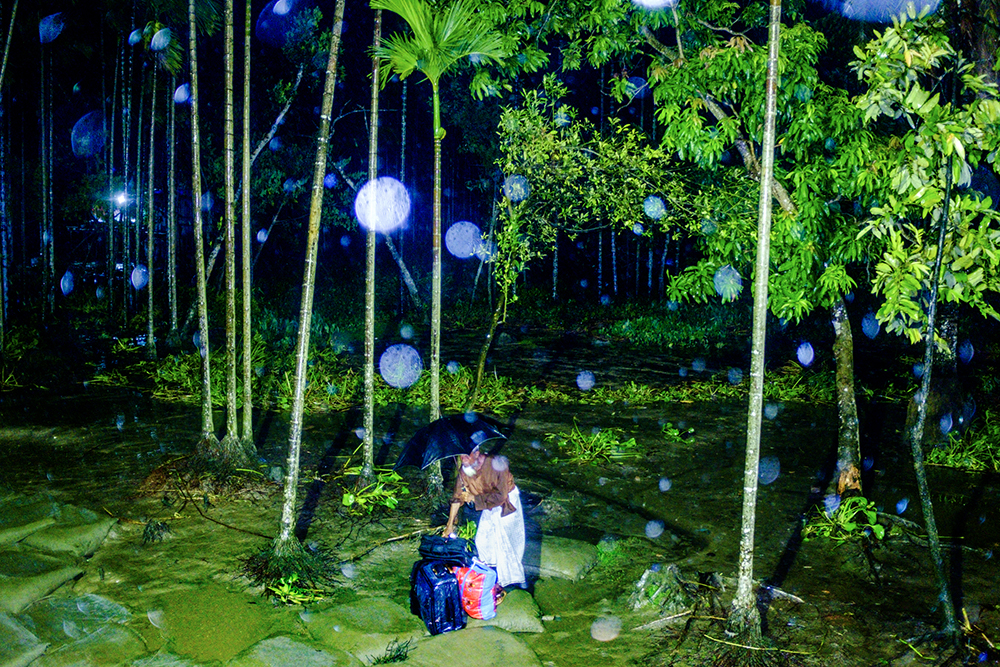
©Arko Datto, A man alights unto an eroded landscape, pinned down to place by sandbags.
Final Wave (Chapter II)
The Ganga-Brahmaputra-Meghna Delta, comprising Bangladesh and West Bengal (India) is the world’s largest delta. It empties into the Bay of Bengal and is also home to the Sunderbans. Due to human induced climate change, three-fourths of the Delta risk destruction from anthropogenic stress factors. Rising sea levels and swelling of rivers have led to the submerging of many Sunderban islands while several more risk disappearance. The increase in salinity levels from inundations and storm surges threatens the health of the mangroves, soil and crop quality, the availability of freshwater fish species, depriving families of their main protein source while also adversely affecting livelihoods.
Increased intensity of tropical cyclones like Aila, Hudhud and Sidr have destroyed property and life. Migrating with families, many have ended up being the first environmental refugees in both countries. Mangrove cover depletion will result in loss of the protective biological shield against cyclones and tsunamis: major cities of Kolkata and Dhaka will be exposed to environmental catastrophes.
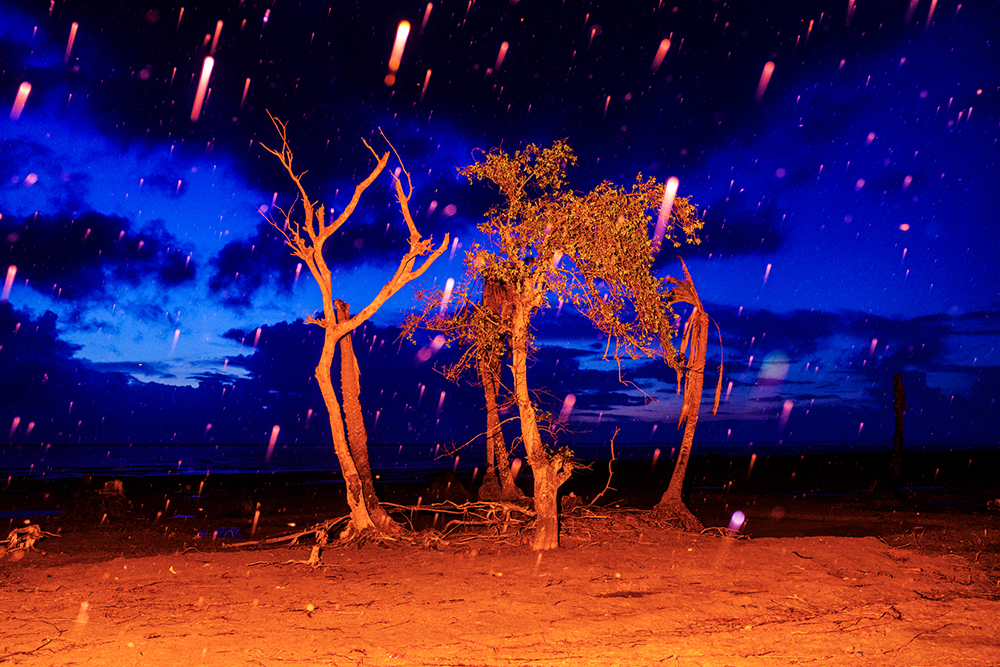
©Arko Datto, A cold rain pours upon a desolate landscape at end of day.
When this happens, my city, family and friends will go too: this fear propels my sense of urgency and motivation.
The Sunderbans are ecologically crucial in mitigating climate change effects by carbon sequestration. Its destruction will exacerbate this.The major brunt of the climate change war is borne by the inhabitants of the Delta, who have one of the smallest carbon footprints in the world because of their sustainable ways of living. An enunciation of a vernacular dystopia Many have recounted to me stories of horror of sleeping neighbours being carried away by a raging river in the dead of night or of the sea coming and breaking down the walls of their own homes. The setting sun comes coded with its own signs of terror. The coming night and enveloping darkness presents a unique challenge to the people, where they fight an invisible, omnipotent adversary. Countless others live out their daily lives in the shadows of the precise knowledge of when their houses will get destroyed and their lives uprooted during the next monsoonal tides.
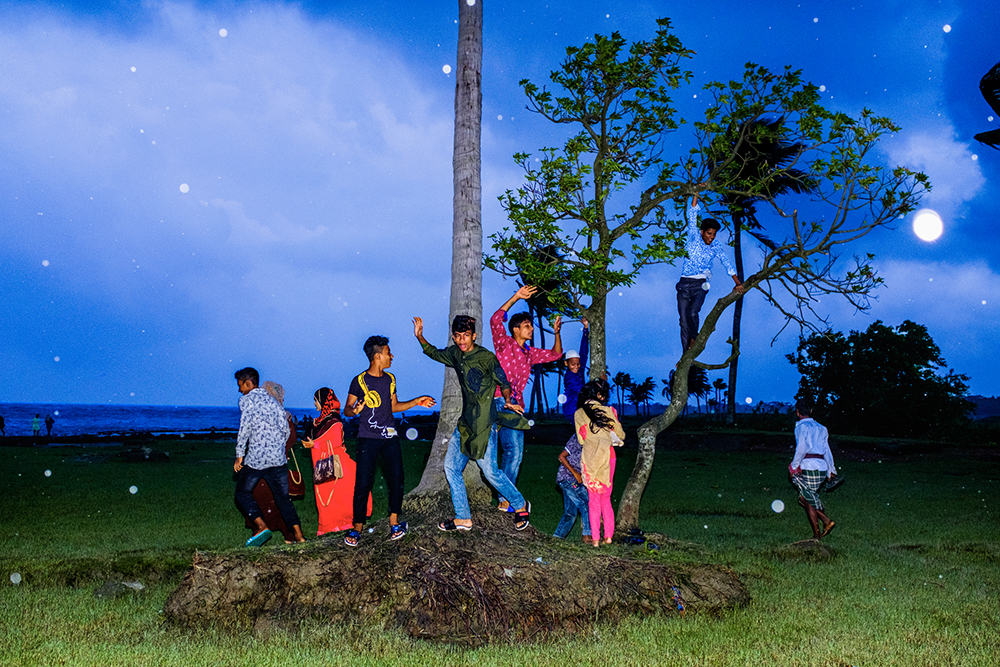
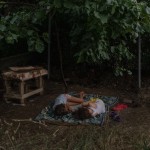
©Arko Datto, A sudden thunderstorm erupts during Eid.
This work explores the precarious existential and physical state of being in these lands that are gradually giving way to water, through an exploration at night time. Dystopia has many readings in today’s world, from techno-fascism to surveillance states to hyper- industrialised futuristic societies: the project proposes an alternative recourse to explore what a dystopia could mean in the face of impending environmental apocalypse in more traditional non-urban settings, seen through the filter of an apparent normalcy in the lives lived around these waters. It seeks to build an equivalence between the global war on terror and the battle against climate change, which both deal with invisible yet omnipresent omnipotent enemies that can strike anytime anyhow anywhere, thereby attempting to locate climate change in relation to the ever-present narrative of the war on terror. Climate change in the Delta has reduced the inhabitants to a paradigm of catastrophisation processes, where they teeter on the brink of environmental collapse. Catastrophisation as a theoretical concept has been propounded by the American-Iraeli philosopher Adi Ophir in relation to manufactured conditions in conflict zones where a complete humanitarian collapse is kept in abeyance while simultaneously engineering a situation that hovers precariously close to it. I propose to expand the scope of catastrophisation theory to the domain of climate change and especially in relation to the Bengal Delta, where abject poverty, sea level rise and corrupt local governmental practices collude to keep the denizens in a destitute state of catastrophisation from which they are unable to extricate themselves.
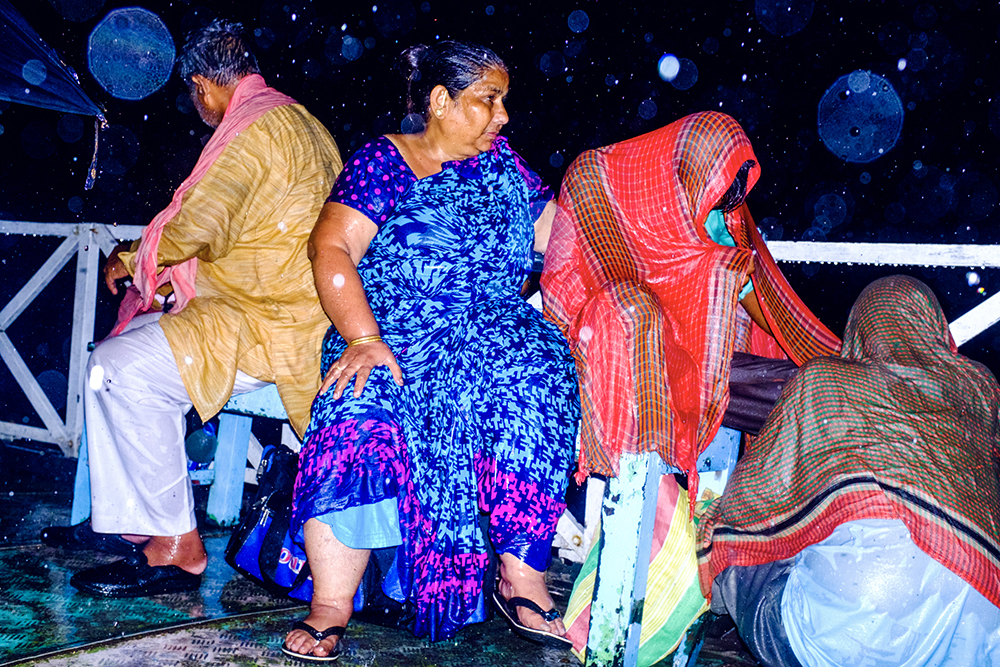
©Arko Datto, Sitting strong on the boat through wind rain and wave.
An environmental refugee once told me, “bereft of our land and livelihood, we are all but ‘shunyo rajas’ (kings of a bereft land) in this erstwhile land of plenty.”
This unfolding crisis concerns us all and its mitigation is our collective responsibility.
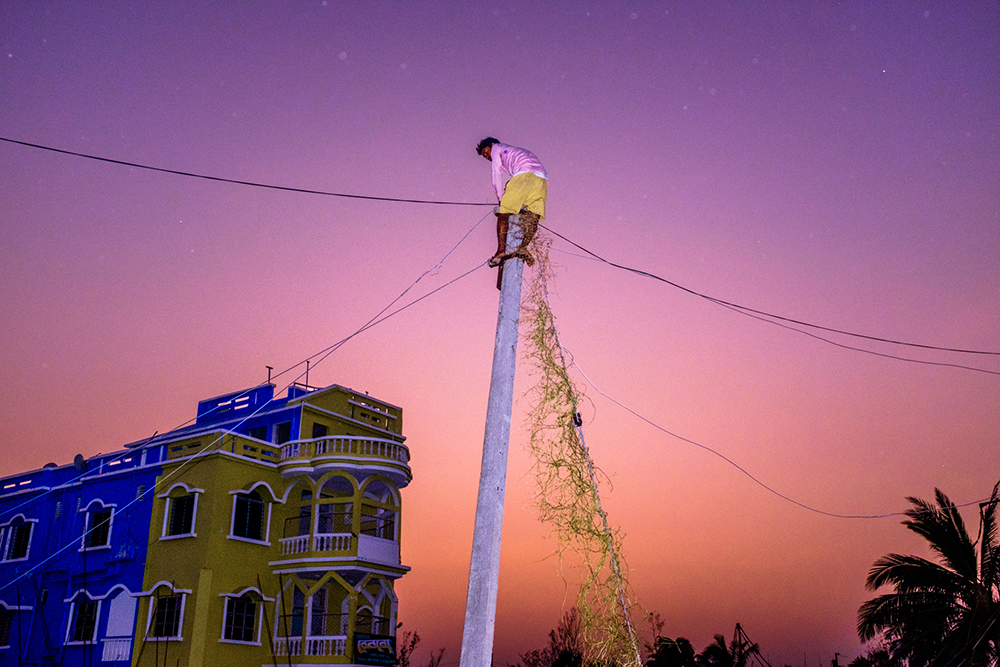
©Arko Datto, Navigating electricity post-cyclone.
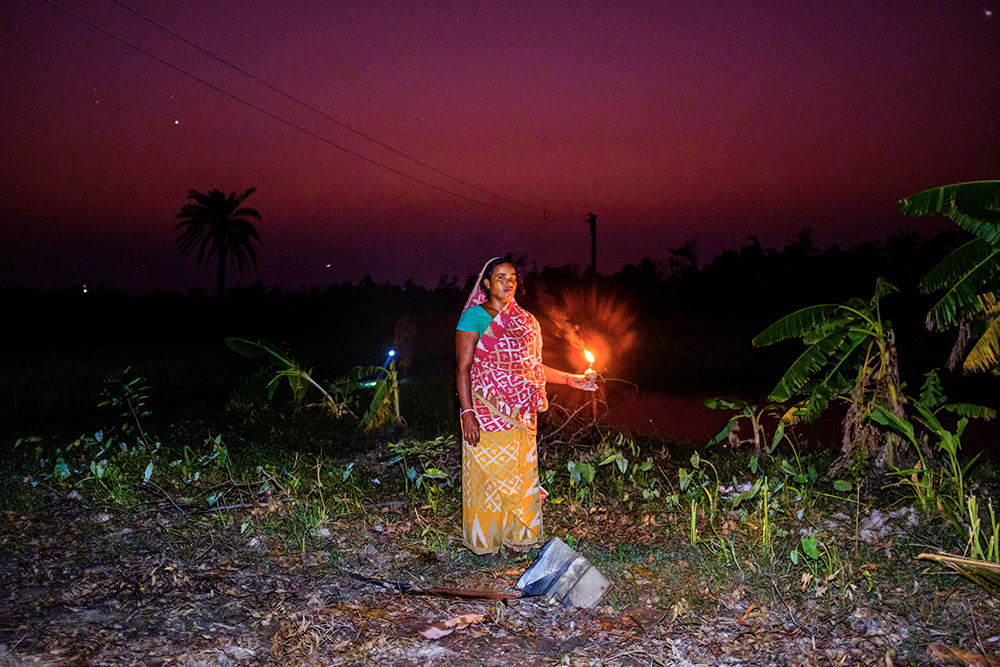
©Arko Datto, Managing the lack of electricity after the storm.
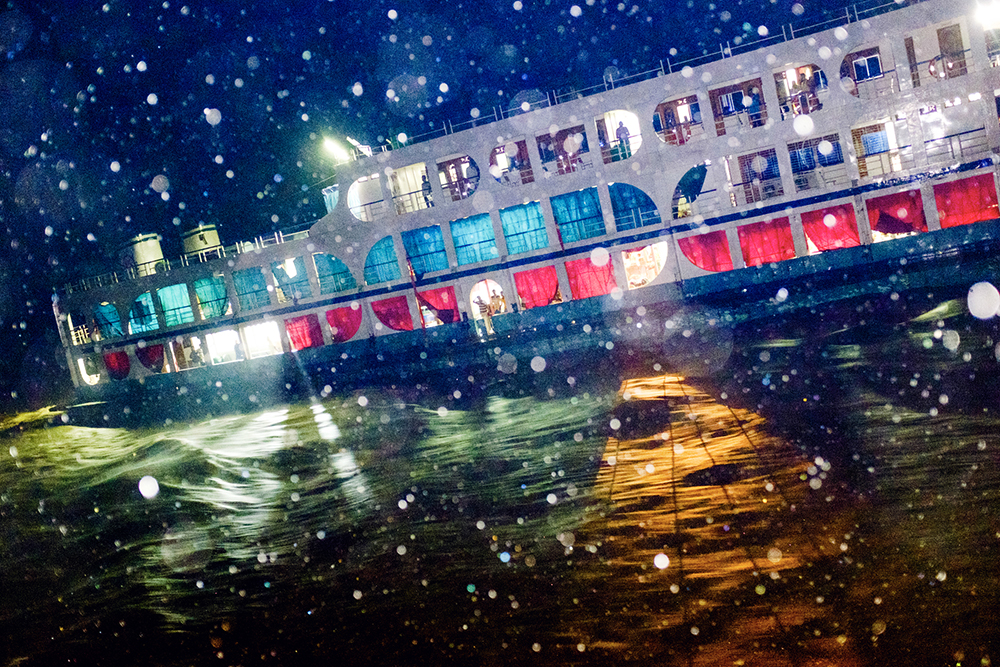
©Arko Datto, A perilous journey across immense waterscapes at dead of night.
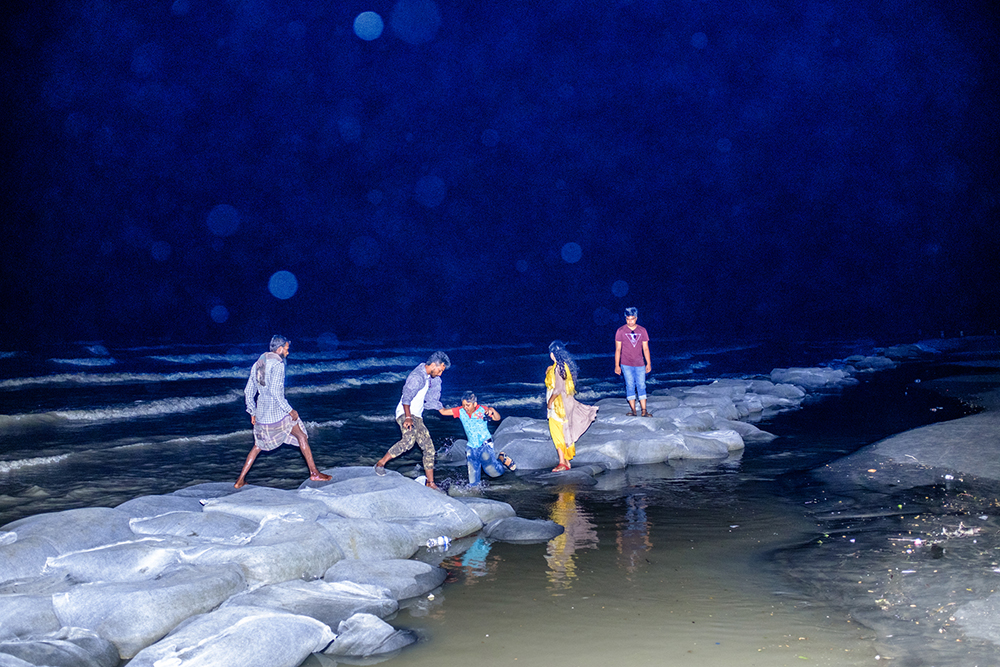
©Arko Datto, Navigating sandbags that shore up a defence against the incoming sea.
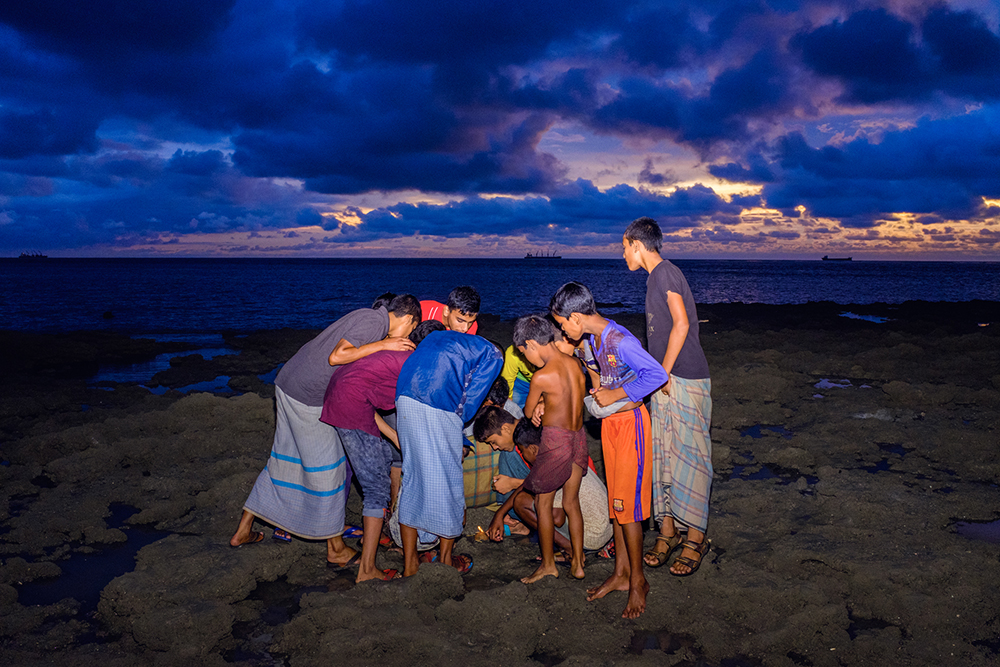
©Arko Datto, Along the shoreline, teenagers burn escaping methane gas.
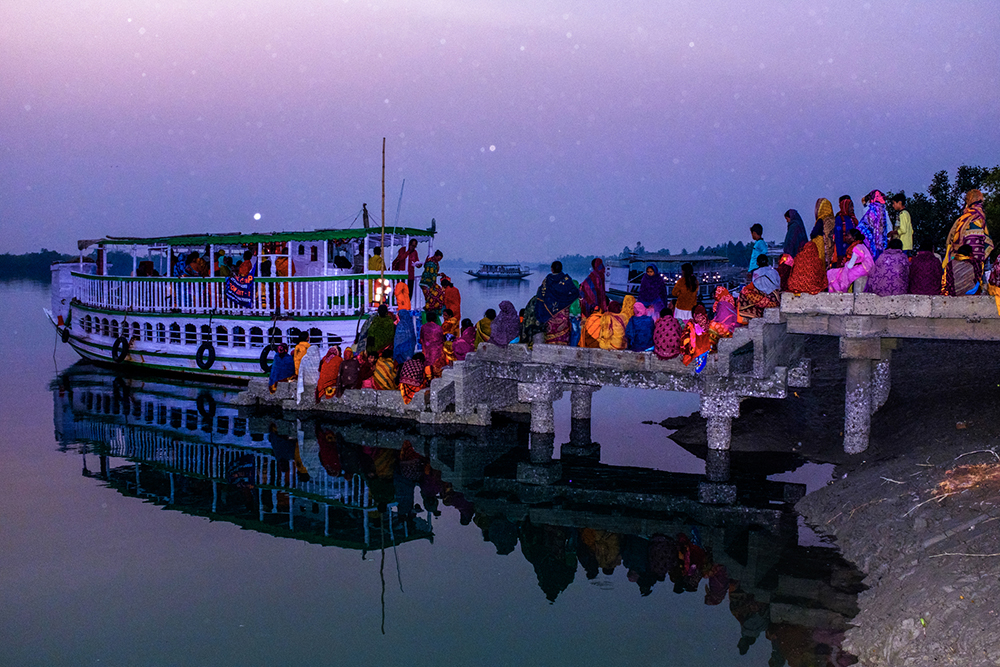
©Arko Datto, Night falls around the doctors’ boat while patients await their turn. Many have been waiting for over a day in this remote region with limited access to healthcare resources. On the other side are the core Sunderban reserves.
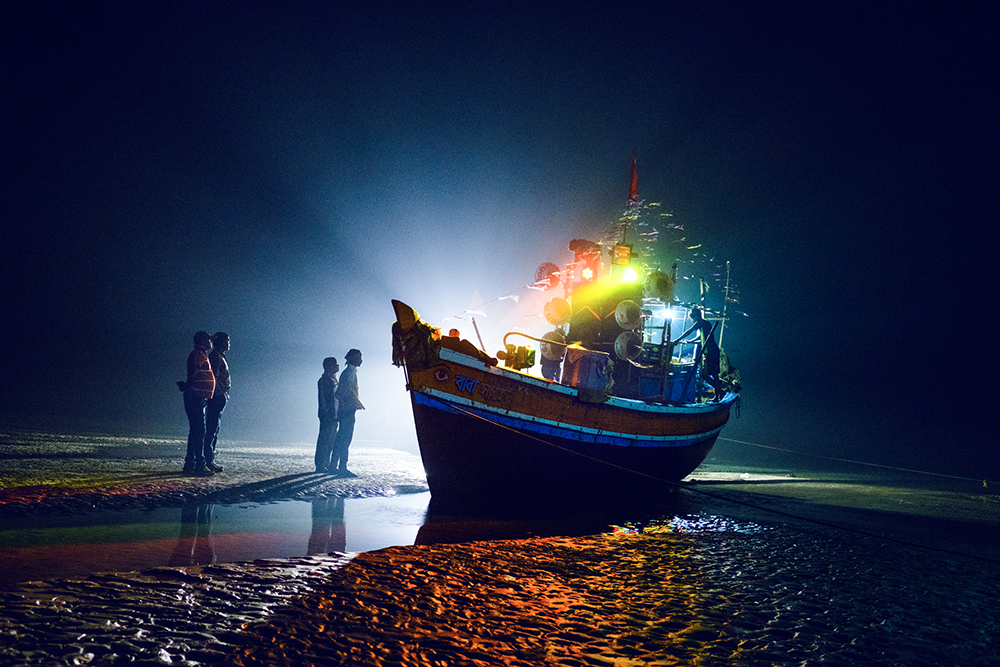
©Arko Datto, Bedecked boats returning from a pilgrimage wait in the shoals for the tide to return so that they can head back home to their village.
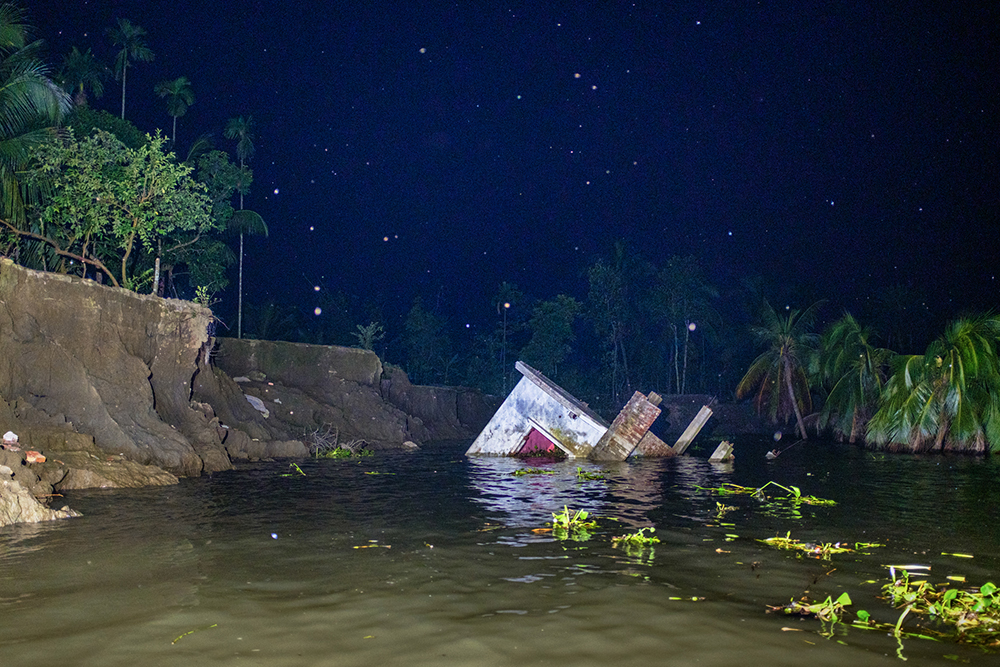
©Arko Datto, The tip of a house juts out after its demise into the waters.
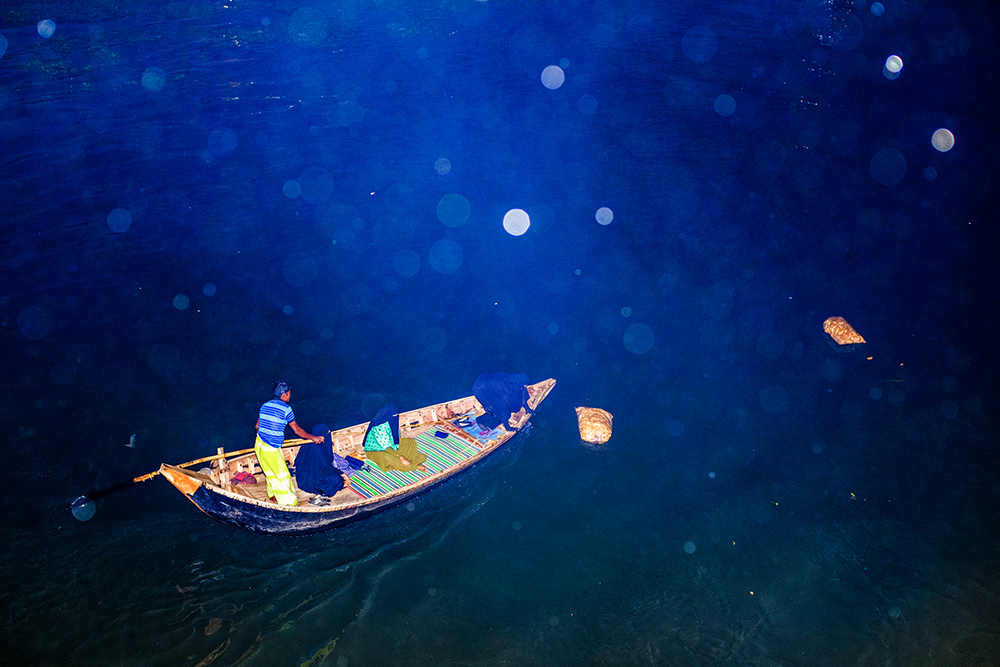
©Arko Datto, Retrieving floating sacks of food.
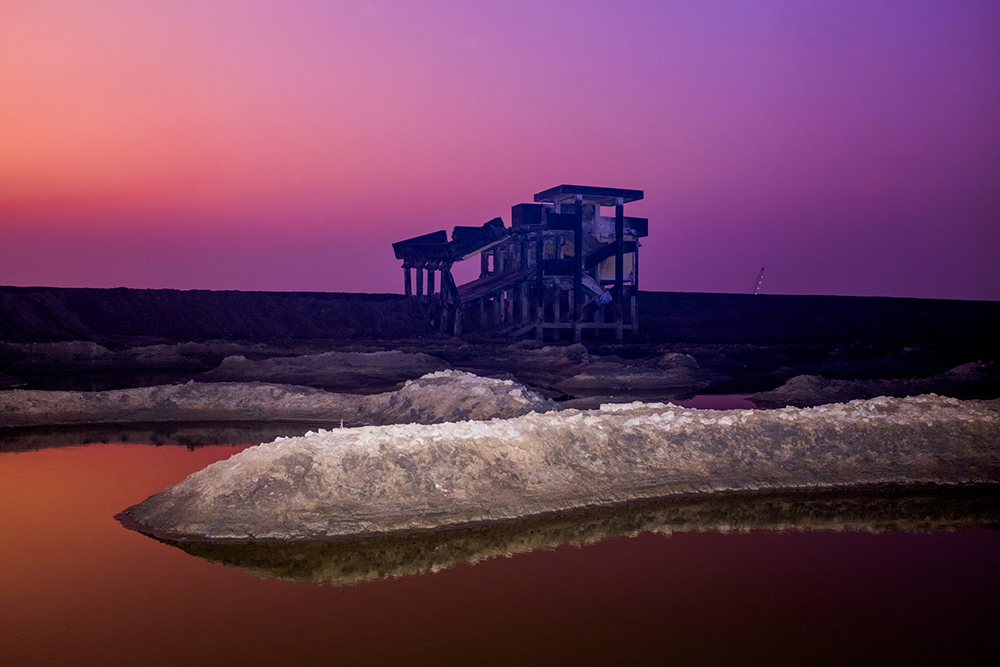
©Arko Datto, Ruins of a school along the sea with cranes from an upcoming thermal power station construction site visible in the background.
Before contemporary art, Arko Datto was preparing for a doctorate in mathematical physics. Shifting from equations to images, he brings an analytical yet deeply human perspective to the dilemmas and contradictions of our time.
His varied work spans forced migration, techno-fascism, digital surveillance, disappearing islands, nocturnal geographies, forming interconnected inquiries into the existential pressures shaping the contemporary moment. His projects unfold over several years, allowing him to build layered, immersive, and complex narrative worlds.
By continually developing diverse visual languages, narratives, and styles, Datto pushes the boundaries of both still and moving images. His practice incorporates photography, film, video, and installation, drawing from documentary traditions while embracing the essayistic, experimental, and oneiric. Across mediums, he seeks to challenge, subvert, and consistently propose new ways of seeing.
His long-term personal projects and commissions are published in TIME, National Geographic, The Atlantic, New Yorker. He received grants from Prince Claus Fund, Pulitzer Center for Crisis Reporting, IDFA Bertha Fund. Recent shows have been at Fotografia Europea, Light Work, SFO Museum, Fotomuseum Den Haag, Hamburger Bahnhof. He has published three photo books: Pik-nik (Editions Le bec en l’air, 2018), Mannequin (Edizioni L’artiere, 2018), and Snakefire (Edizioni L’artiere, 2021). As a curator, he has been associated with Galleri Image, Kochi Biennale, Obscura Photography Festival and Chennai Photo Biennale.
Instagram: @arkodatto
Posts on Lenscratch may not be reproduced without the permission of the Lenscratch staff and the photographer.
Recommended
-

Alessandra Bobba: A Family Journey, A Lifetime of LoveJuly 10th, 2026
-
Robin Dahlberg: Breaking PointJuly 7th, 2026
-
Mark Edward Harris: NORTH KOREAJune 15th, 2026
-
Elizabeth Li: Three GorgesJune 13th, 2026
-

Amy Gaskin: Marilyn Forever! Marilyn Monroe—A Symbol of HopeMay 30th, 2026













)