The 2026 Center Awards: Callanan Excellence in Teaching Award: Andrew Patteson
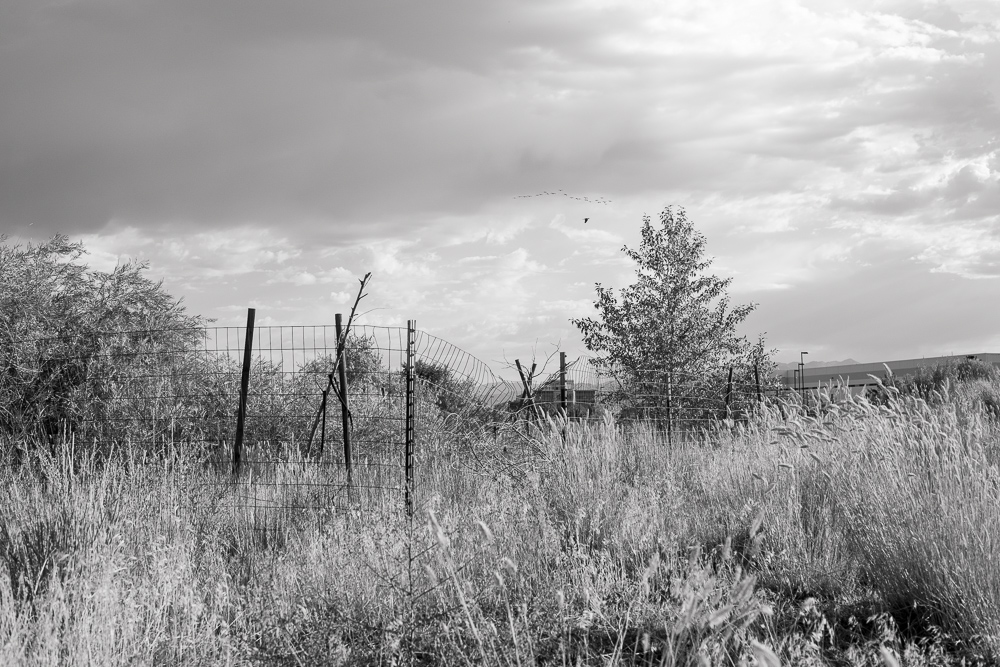
©Andrew Patteson, Restoration Zone – from the One Thousand Years project

ABOUT THE CALLANAN EXCELLENCE IN TEACHING AWARD: Established in 1998, the annual Callanan Excellence in Teaching Award honors a high school, college, or postgraduate teacher’s dedication and commitment to their students and the photographic field. Educators in all areas of photographic teaching are eligible, including but not limited to fine art, documentary, history and criticism. EDUCATORS MUST POSSESS: A genuine passion for teaching, an ability to excite students to learn, respect for students as individuals and an enduring artistic curiosity.
Congratulations to Andrew Patteson for receiving the Callanan Excellence in Teaching Award. His project, One Thousand Years: A Meditation on Memory and Forgetting at the Midvale Slag Superfund Site is featured below.
The award package includes $5,000 USD, Review Santa Fe invitation – tuition not included, and Professional Development Seminars access.
JUROR: Eric T. Kunsman, Photographer, Book Artist, & Assistant Professor, Visual Communications Studies Department, National Technical Institute for the Deaf, Rochester Institute of Technology (RIT)
What became clear in reviewing Andrew Patteson’s (“Patty,” as his students and alumni fondly call him) nominations is not a single defining moment but a pattern that repeats across students with different backgrounds, different levels of confidence, and different expectations of what a classroom might offer them. His teaching doesn’t rely on spectacle or intensity; instead, it builds through consistency, attention, and a willingness to stay engaged with students beyond the point where most courses end.
Students describe someone who pays close attention to how they work and where they hesitate. That awareness translates into a kind of teaching that feels calibrated rather than imposed. He pushes, but not blindly. He recognizes when a student needs structure and when they need space, and that distinction shows up repeatedly in the letters. There is a clear sense that students are not being moved through a system; they are being worked with as individuals developing at different speeds.
What stands out most is how often students reference time, projects that continue after the semester, conversations that carry forward, and feedback that stays with them long enough to affect future decisions. His influence doesn’t peak during critique or at the end of a course; it accumulates over time. That accumulation is what gives his teaching weight.
There is also a strong connection between his own engagement with photography and how he teaches it. Students are not only learning how to make work; they are learning how to stay in it, question it, and keep it moving when it stalls. That kind of curiosity is not presented as something separate from teaching; it is embedded in it.
Taken together, the nominations describe an educator who doesn’t position himself at the center of the classroom, but whose presence is felt in how students begin to guide their own work more independently. The impact is not always immediate, but it is sustained, and that persistence remains what ultimately defines it.
Juror Bio:
He is a photographer and book artist based in Rochester, New York. Eric works at the Rochester Institute of Technology (RIT) as an Assistant Professor in the Visual Communications Studies Department at the National Technical Institute for the Deaf and is an adjunct professor for the School of Photographic Arts & Sciences. He also owns Booksmart Studio, a fine art digital printing studio that specializes in numerous techniques and services for photographers and book artists on a collaborative basis. Eric also serves as a board member for CEPA Gallery in Buffalo, NY.
Eric holds his MFA in Book Arts/Printmaking from The University of the Arts in Philadelphia and holds an MS in Electronic Publishing/Graphic Arts Media, BS in Biomedical Photography, BFA in Fine Art photography, all from the Rochester Institute of Technology in Rochester, New York. In addition to lectures, he offers workshops on topics such as his artistic practice, digital printing, and digital workflow processes. He previously provided industry seminars for the highly regarded Printing Applications Lab at RIT prior to its closure. His photographs and books are exhibited internationally and are in several collections. He currently owns Booksmart Studio, a fine art digital printing studio specializing in various techniques and services for photographers and book artists on a collaborative basis.
Eric is a recipient of the 2025 CENTER Santa Fe’s Callanan Excellence in Teaching Award, 2025 Center for Photographic Art Grant Recipient- Juror’s Choice, and 2024 JGS Fellowship for Photography Recipient from The New York Foundation for the Arts. His work has been exhibited in over 40 solo exhibitions at notable venues, including the Nicolaysen Art Museum, Hoyt Institute of Fine Art, and Los Angeles Center for Digital Art, as well as numerous university galleries. His work has also been a part of over 150 group exhibitions over the past four years, including exhibitions at the Center for Photography, A. Smith Gallery, SPIVA, San Luis Obispo Museum of Art, Spartanburg Museum of Art, Atlanta Photography Group, CEPA Gallery, Site: Brooklyn, Colorado Photographic Arts Center, Philadelphia Photo Arts Center, and many more.
He was a 2022 nominee for Prix Pictet- Humans; named one of 10 B&W photographers to watch of 2018 by BWGallerist; B&W Best Photographers of the Year 2019 by Dodho Magazine; won the Association of Photography (UK) Gold Award for Open Series in 2019; Finalist, Top 200 Critical Mass 2019, 2020, 2021; Top 15 Photographers for the Rust Belt Biennial; and LensCulture’s New Visions Award 2025, Critics’ Choice 2022 and B&W Jurors’ Pick 2021. His Project Felicific Calculus was also awarded a Warhol Foundation Grant through CEPA Gallery in Buffalo, NY.
Eric’s work has also been published in publications such as Bloomberg Businessweek, LensWork, Dodho, Harpers, The Washington Post, All About Photo, Loupe Magazine, Analog Explorations, B&W Photography, Analog Explorations, All About Photo, Black+White Photography (UK), and Dek Unu. He has also been featured in online articles by All About Photo, AARP, F-Stop Magazine, Analog Forever Magazine, Catalyst: Interview, Texas Photo Society, and others.
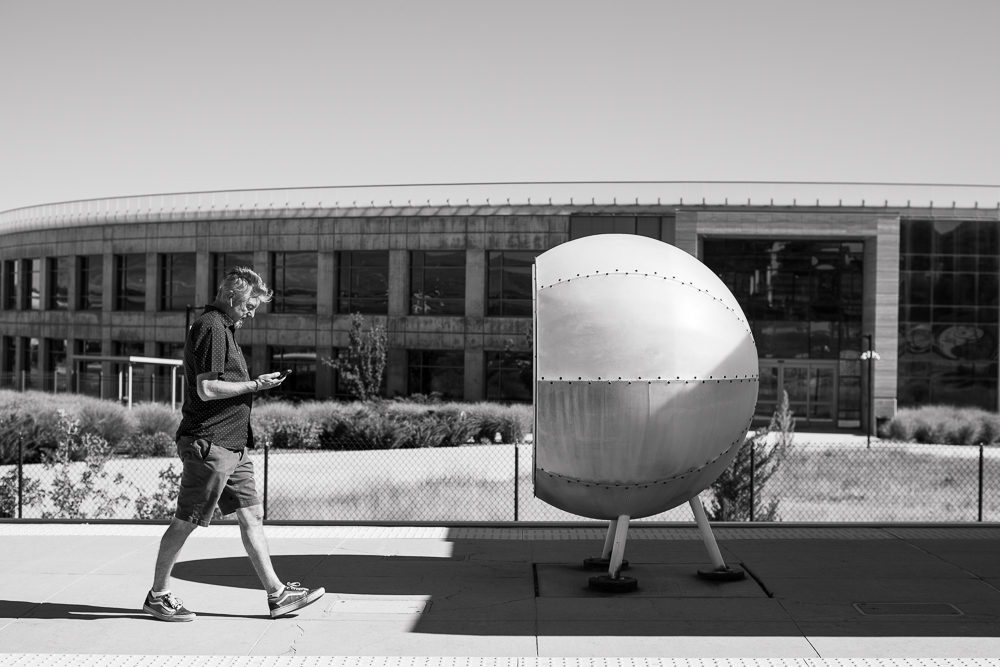
©Andrew Patteson, Vortex – from the One Thousand Years project
One Thousand Years: A Meditation on Memory and Forgetting at the Midvale Slag Superfund Site
On the eastern bank of the Jordan River, near the center of the Salt Lake Valley, lies Midvale Slag, a 446 acre parcel of land that was a locus of lead and copper smelting operations from 1871 to 1958. After the smelters were shut down, most of the 446 acre site sat abandoned for decades, a wasteland of our own creation, gradually leaching lead, arsenic, and other toxins into the soil and groundwater. From 2004-2006 the site was “remediated” and then removed from the Superfund list; it is now built out with commercial properties, corporate parks, and over 1,200 townhouses and apartments.
The remediation work included grading the slag heaps flat, and then “capping” the site with at least 18 inches of new soil. Work was done to stabilize the banks of the Jordan River in an effort to slow the runoff of toxic materials. Monitoring wells were installed throughout the site for required ongoing testing of contaminant levels in the aquifer below. Various regulations were put in place to protect public health, because over two million tons of contaminated material still remain at the site.
The successful redevelopment of the Midvale Slag site is seen by the involved agencies as a great success; the EPA celebrates the “collaboration and dedication at the federal, state, and local level [required] to transform a once contaminated land into a thriving development.” The strategies used will be an example to guide future redevelopment plans at some of the over 1,300 Superfund sites nationwide.
Active restoration of the aquifer below the site was considered, but eventually rejected as “impracticable”. A 1997 EPA study found that the groundwater beneath one area of the site contained arsenic at “an extremely elevated concentration” of 1,300,000 parts per billion (ppb). The maximum amount of arsenic allowed in drinking water is 10 ppb. Because active restoration is not being pursued, it is likely that the groundwater below the site will still be unsafe to drink one thousand years from now. Over the centuries, these contaminants will gradually seep into the Jordan River as it flows northward to Great Salt Lake.
As I walk these seemingly ordinary sidewalks and trails, I am struck by the invisible truth that seems to be pulsing just below the surface: we laid to waste this once-sacred riparian land with the toxic byproducts of last century’s progress. We then buried our sins, and built a new layer of economic growth on top.
When I first learned about this site, I was alarmed that people were living and working here, with only a veneer of new soil to separate them from the blighted land below. After further research, I have come to believe that the short-term danger to people here is likely low. The far greater danger will unspool over decades and centuries — it will come from being able to forget what we have done.
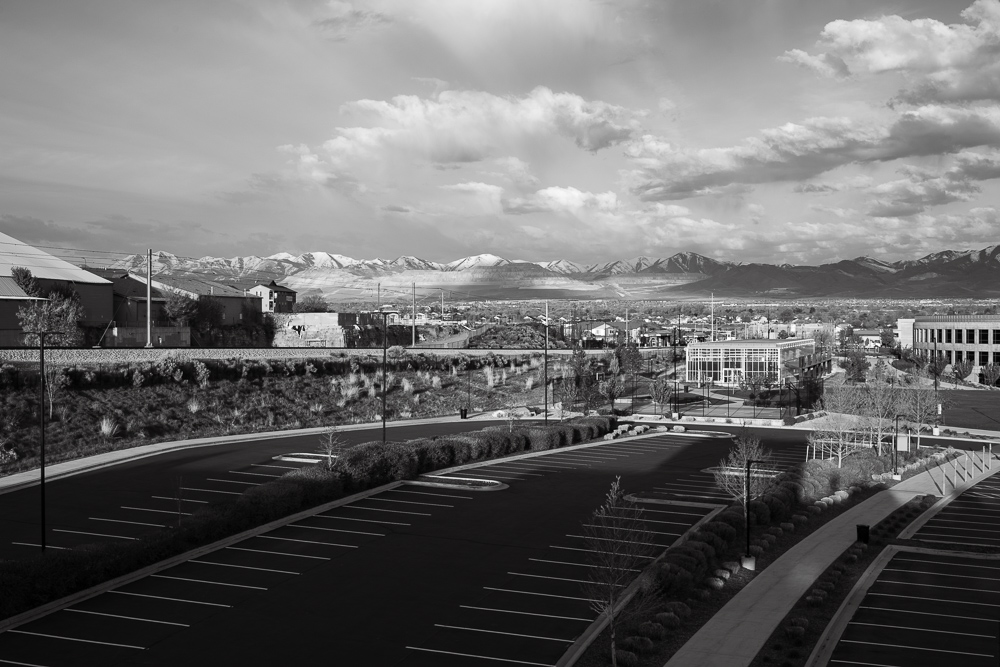
©Andrew Patteson, Bingham Canyon Mine – from the One Thousand Years project
“He is not only a great teacher but simply a great person. He continues to connect with students after graduation and takes time out of his holiday breaks to open up the darkroom for alumni to utilize and meet up with one another. He fosters community in a genuine and meaningful way. My fondest memories of high school are the hours I spent in the darkroom and I truly can’t imagine a more deserving individual for this award than Andrew Patteson.”
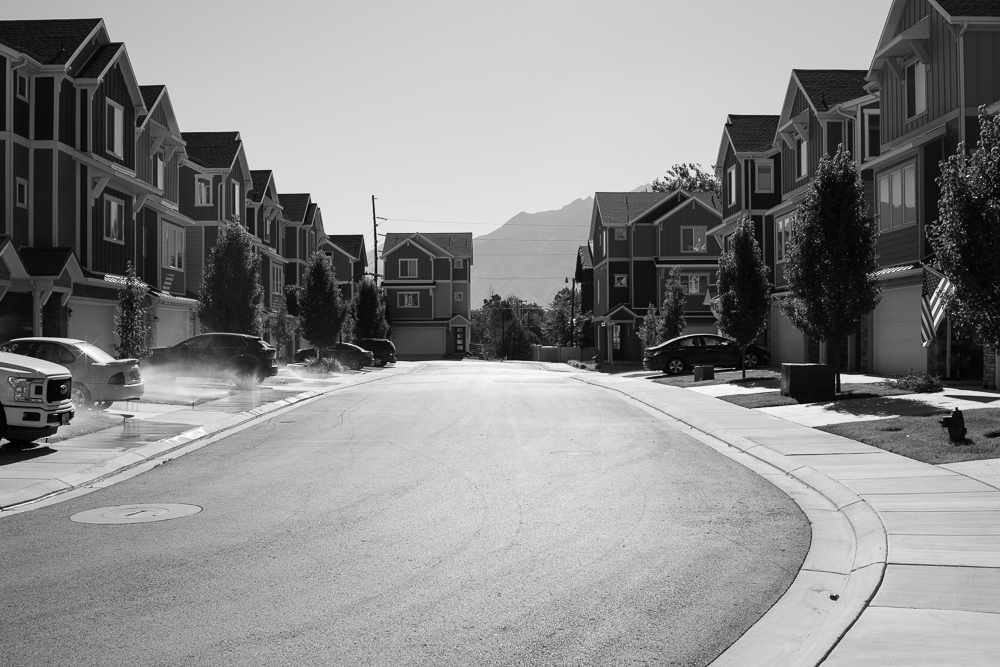
©Andrew Patteson, July Cloudless Sky – from the One Thousand Years project
“He brings so much presence and care to every single project, student, and photograph that he looks at. Always asking a deeper question or holding silence when needed.”
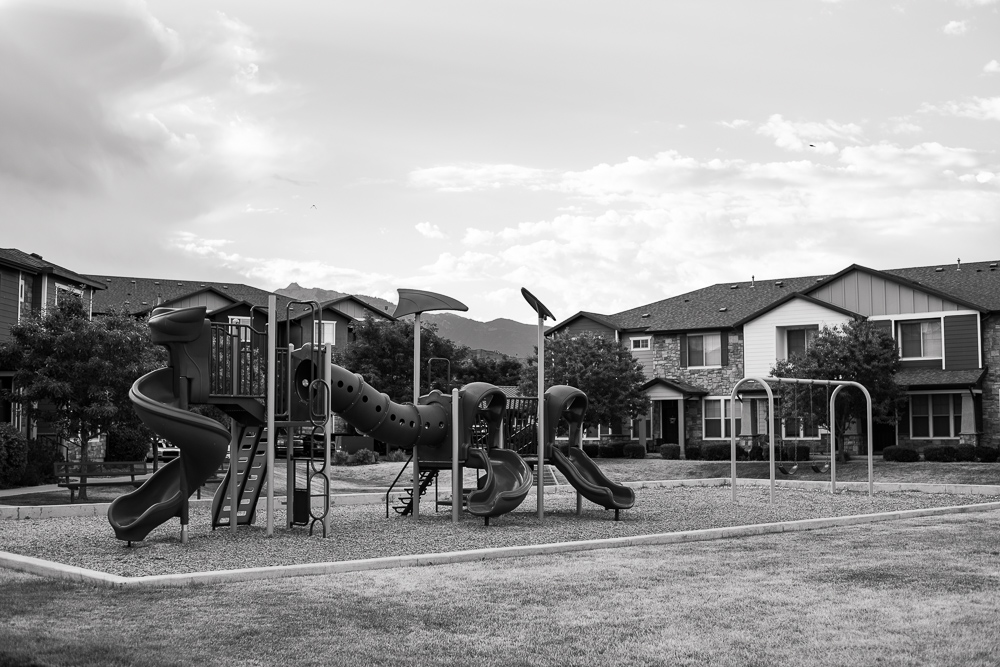
©Andrew Patteson, Playground – from the One Thousand Years project
“He would push us to try new things and keep learning and improving. He would be a calm presence when we needed to vent. It’s no surprise students spent many many hours in the welcoming environment of the photography studio that he curated.”
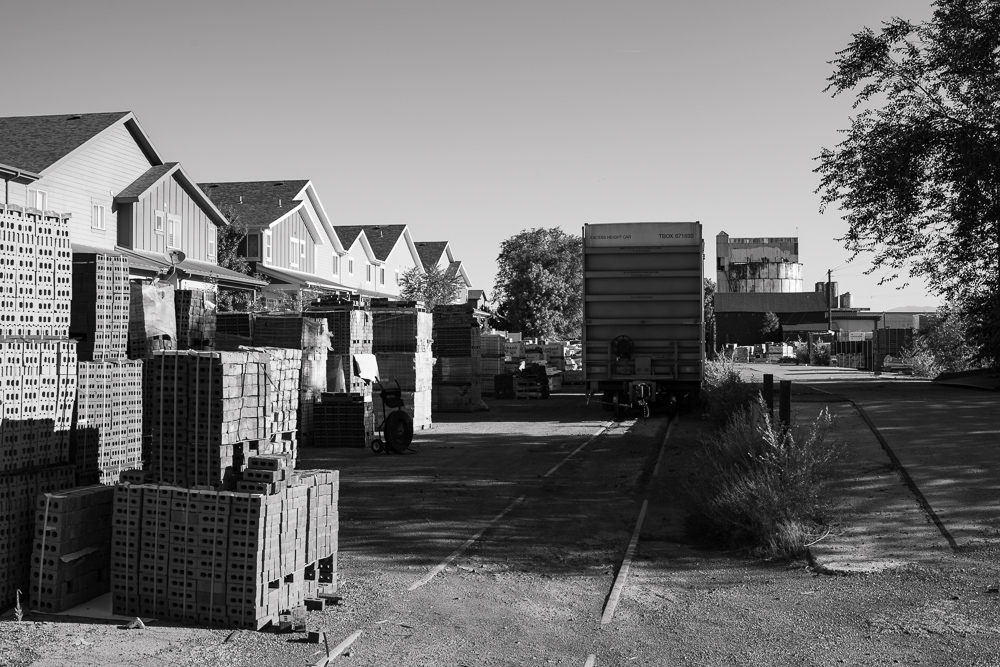
©Andrew Patteson, Trainyard and Townhouses – from the One Thousand Years project
“A hushed rapture is perhaps the best way to describe the atmosphere of Andrew’s classroom. Soft spoken and thoughtful with his words, he guides his class through with his deep passion for photography, good light, and the act of seeing.”
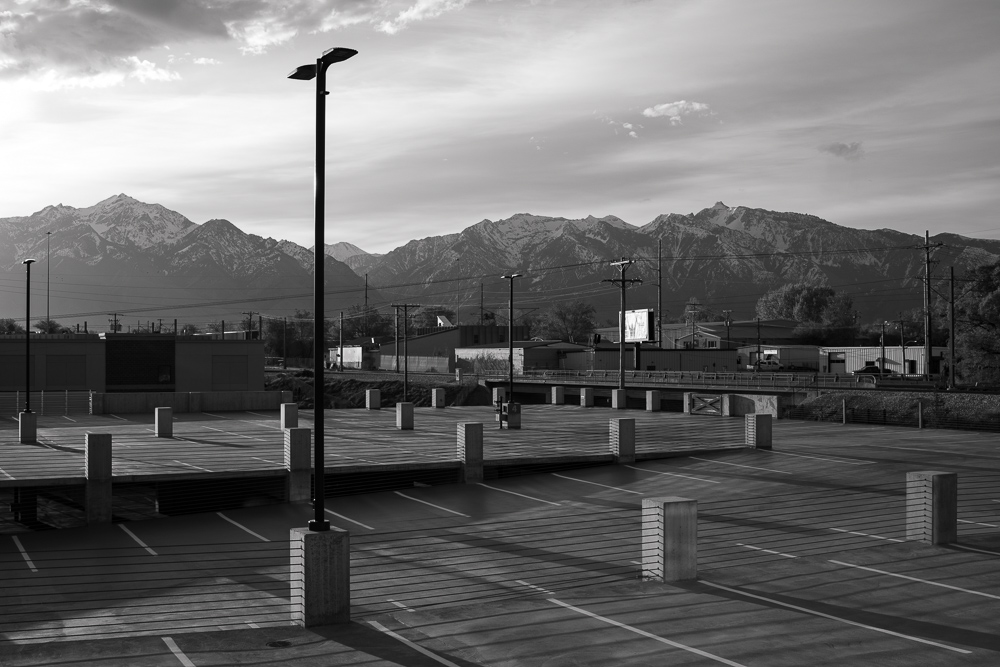
©Andrew Patteson, New Parking – from the One Thousand Years project
Andrew Patteson is an artist and teacher living in Salt Lake City, Utah. He grew up in Florida and has also lived in North Carolina and in Ohio, where he earned his MFA.
His photographic work has been featured in local and regional exhibitions across the country, and was selected for the limited edition portfolio DE|MARCATION: A Survey of Contemporary Photography in Utah. His photographs can be found in private and public collections, including the Center for Creative Photography in Arizona and the Utah Museum of Fine Arts.
Since 2007 he has worked at Waterford School, a Pre-K to 12 independent school. He and his colleague run a high school photography program that many consider to be one of the finest in the nation.
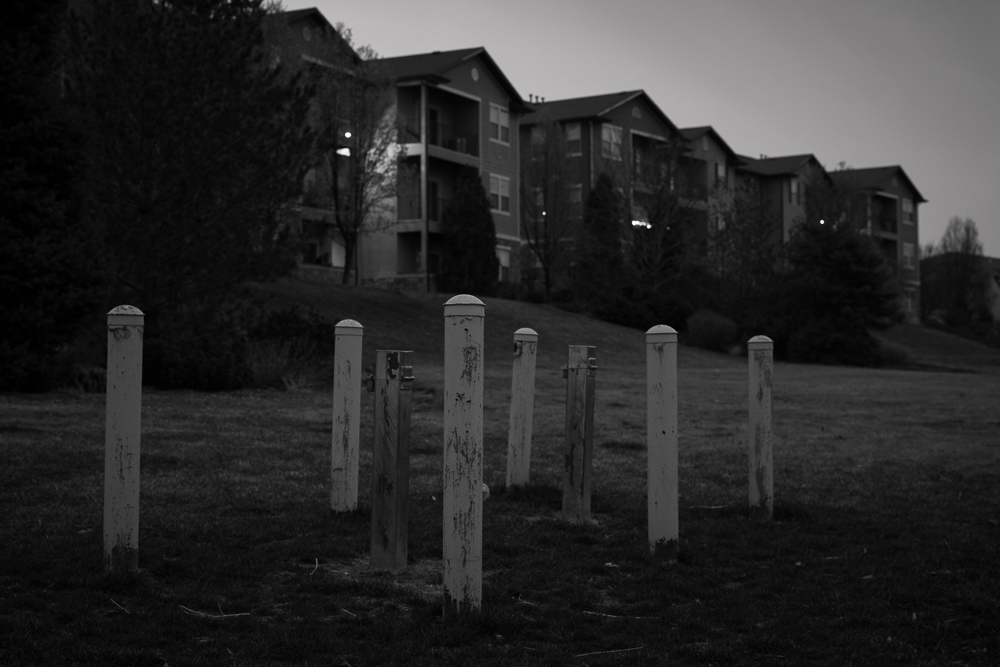
©8. Andrew Patteson, Groundwater Monitoring Wells – from the One Thousand Years project
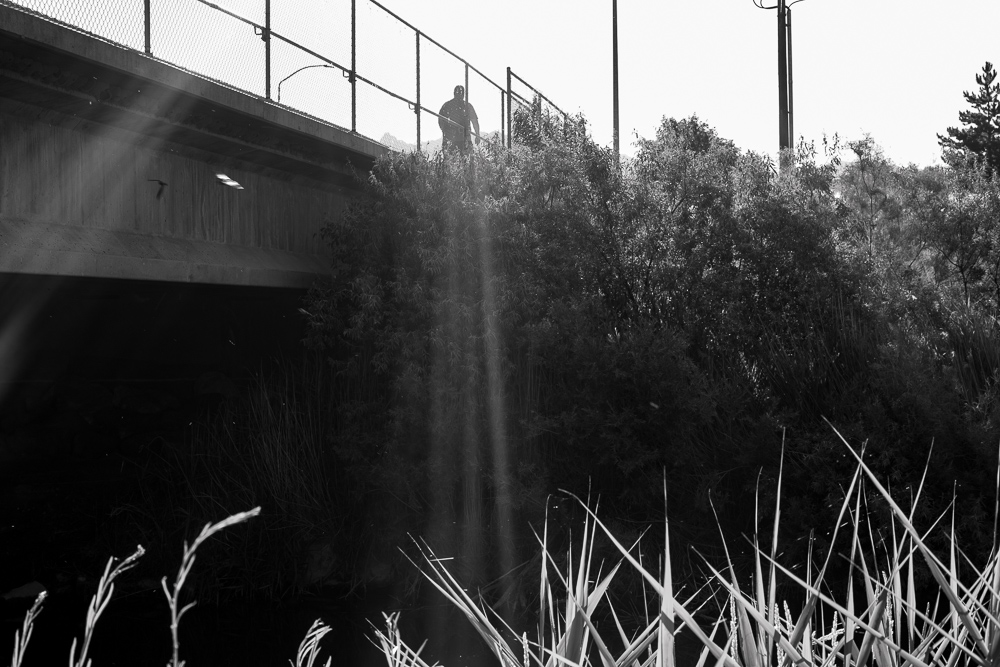
©Andrew Patteson, Bridge Across the Jordan – from the One Thousand Years project
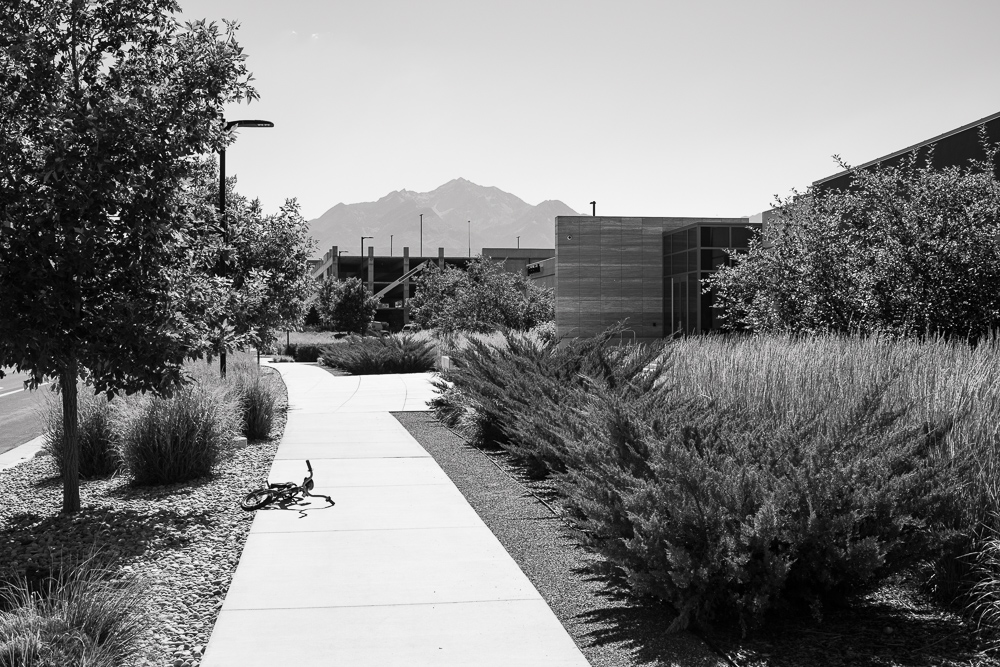
©Andrew Patteson, Bicycle – from the One Thousand Years project
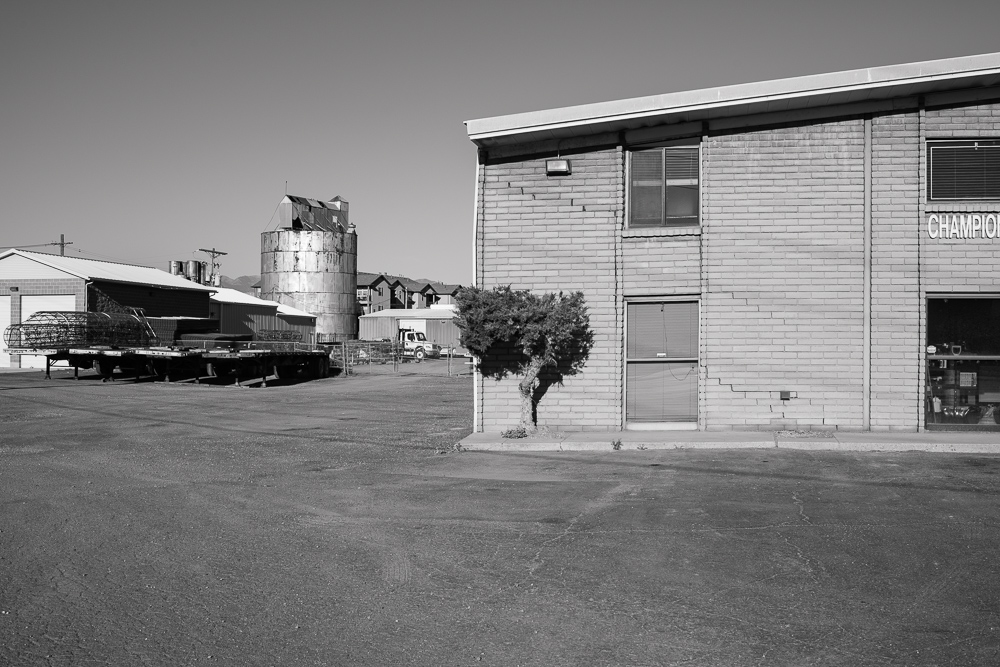
©Andrew Patteson, Transition – from the One Thousand Years project
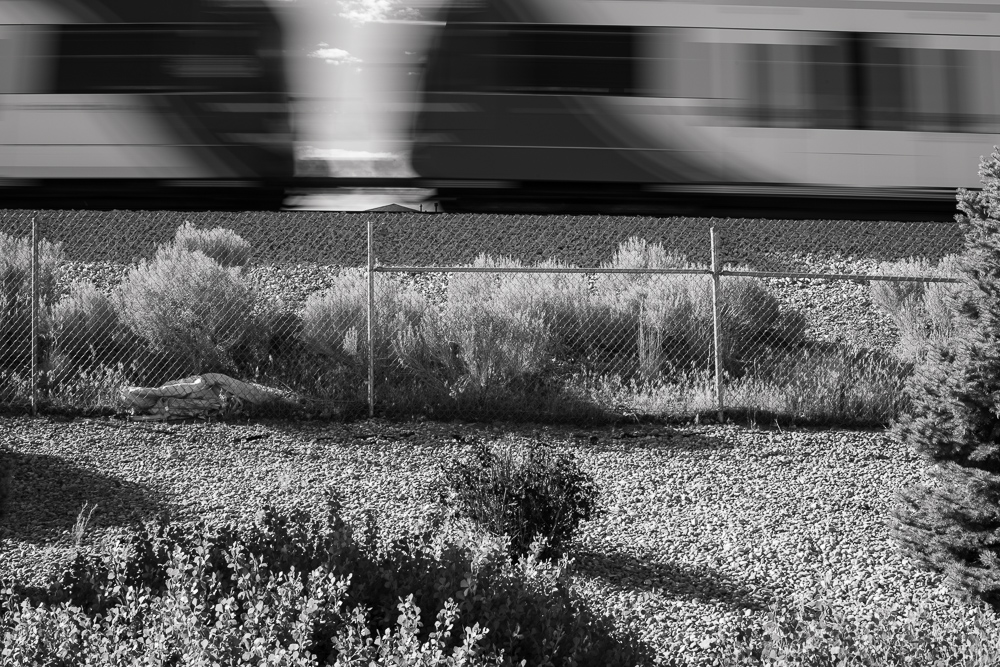
©Andrew Patteson, Light Rail Line – from the One Thousand Years project
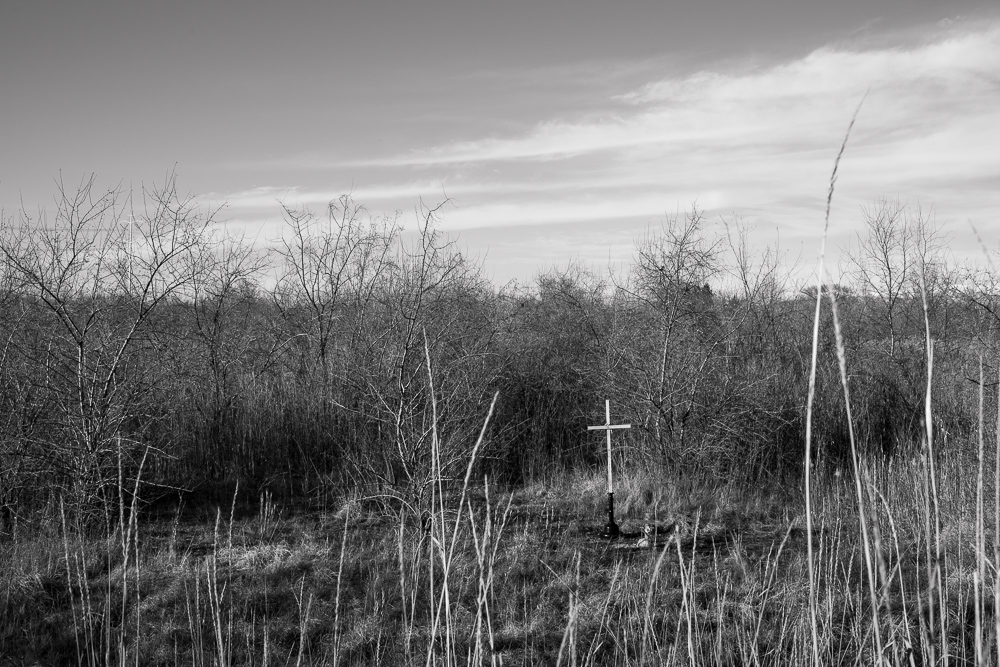
©Andrew Patteson, Crosses – from the One Thousand Years project
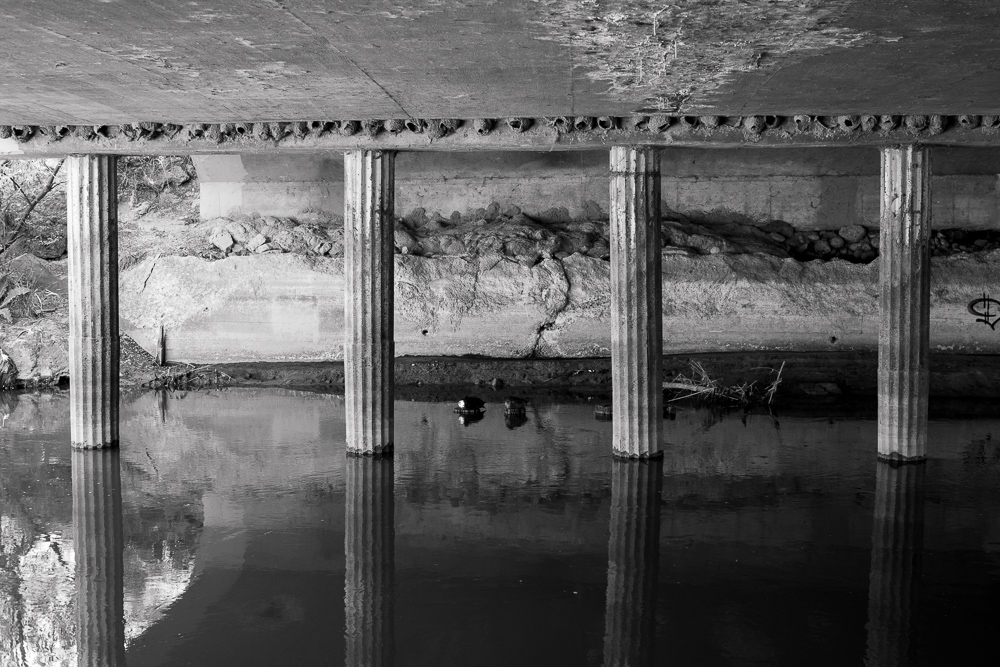
©Andrew Patteson, Fluted Columns – from the One Thousand Years project
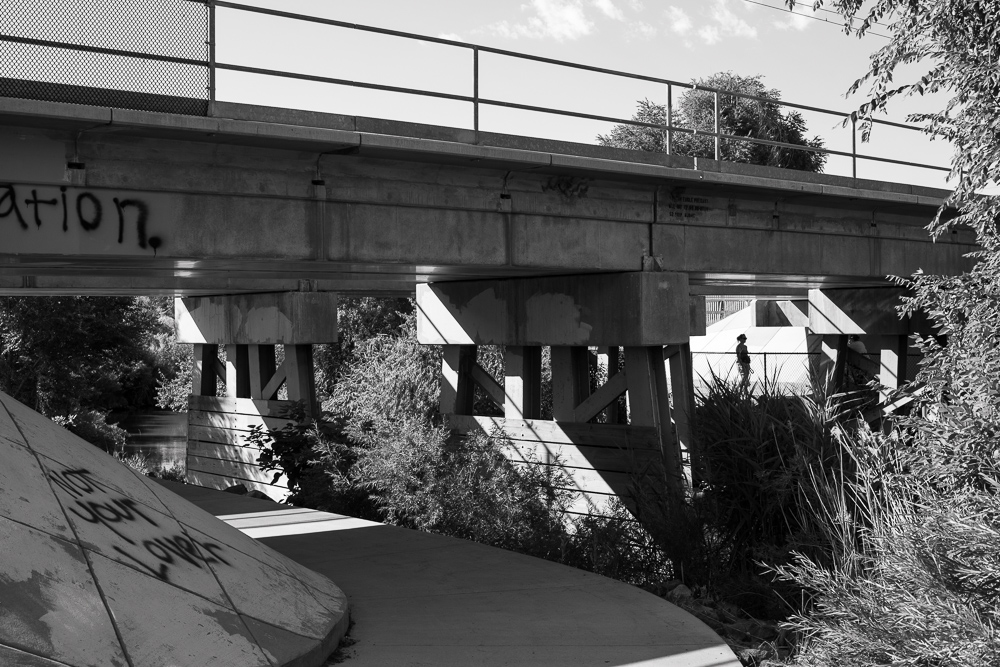
©Andrew Patteson, Not Your Lover – from the One Thousand Years project
Posts on Lenscratch may not be reproduced without the permission of the Lenscratch staff and the photographer.
Recommended
-
The 2026 Center Awards: Callanan Excellence in Teaching Award: Andrew PattesonSeptember 18th, 2026
-
The 2026 CENTER Awards: The Me and Eve Award: Peter TehSeptember 17th, 2026
-
The 2026 Center Awards: ENVIRONMENTAL AWARD: Volodymyr VoznyySeptember 16th, 2026
-
The 2026 Center Awards: Personal Award: Ville VarumoSeptember 14th, 2026
-

The 2026 Center Awards: The Project Development Grant: Leonard SuryajayaSeptember 13th, 2026